




Putting a saltwater fish in a freshwater tank (or vice-versa) is a fast track to disaster.
But what if we told you there are biological superheroes in the animal kingdom, incredible creatures that spit in the face of these rules? These are the fish that can live in both fresh and saltwater, the ultimate survivors of the aquatic world.
The core of the problem is a little process called osmoregulation, which is just a fancy way of saying how animals balance their internal salt and water levels. In freshwater, a fish’s body is much saltier than the water around it, so water is constantly trying to flood into its cells. To survive, they have to continually pump out massive amounts of watery urine and use special cells in their gills to pull precious salt into their bodies.
In the salty ocean, the opposite happens. The sea is saltier than the fish, so their bodies are constantly losing water. To cope, they must drink saltwater continually, produce very concentrated urine, and use their gills to pump out excess salt.
For most species, their bodies are built for one system or the other. But the fish we’re about to meet are the masters of both. They are nature’s ultimate shape-shifters, and their stories are nothing short of epic. Let’s talk about fish that can live in fresh and saltwater.
Fish That Can Live in Fresh and Saltwater
1. Atlantic Salmon

Atlantic Salmon is a magnificent, silver-flanked athlete that is perhaps the most famous example of a diadromous fish—creatures that migrate between fresh and saltwater as part of their life cycle.
Their journey is the stuff of legend, a powerful saga of instinct, survival, and the return home against all odds. They are born in the clear, calm freshwater rivers and streams of North America and Europe, but they hear the call of the great, vast ocean.
The life of a salmon is a tale of two worlds. They hatch from eggs buried in the gravel of a riverbed and spend their first few years as young fish, known as parr. Then, a magical transformation begins.
As they prepare to head to the sea, their bodies undergo a physiological overhaul called smoltification. Their kidneys and gills completely rewire themselves, switching from a system designed to retain salt to one that pumps it out.
This is where their story becomes truly awe-inspiring. After years at sea, an internal compass, thought to be guided by the Earth’s magnetic field and an incredible sense of smell, tells them it’s time to return home. They navigate across thousands of miles of open ocean to find the exact mouth of the river where they were born.
Then begins the grueling upstream battle. They stop eating and dedicate all their energy to swimming against the current, leaping over waterfalls, and dodging predators. This journey is a race against time to reach their spawning grounds, lay their eggs, and ensure the next generation of these incredible animals begins its own epic life cycle.
2. European Eel

Eels are catadromous—they do the exact opposite. They spend the majority of their lives in the freshwater rivers, streams, and lakes of Europe and North Africa, only to embark on a mind-boggling journey into the heart of the ocean to breed.
For up to 20 years, the National Geographic mentions that these eels live secretive lives in freshwater, growing slowly and hunting at night. But when the time comes, they undergo a stunning transformation. Their eyes enlarge to see better in the deep, dark ocean water, their skin turns silvery, and their bodies become packed with fat reserves for the long trip ahead.
They leave their freshwater homes and swim thousands of miles to a single, mysterious location in the middle of the Atlantic: the Sargasso Sea. This vast expanse of floating seaweed is the only known spawning ground for both European and American eels, and what happens there is still shrouded in mystery.
Once in the Sargasso Sea, the adult eels spawn and then die, their epic life’s purpose fulfilled. Their tiny, leaf-shaped larvae, called leptocephali, are born into the ocean and begin their own incredible journey. They drift on the ocean currents for up to three years, slowly making their way back towards the coasts of Europe.
As they approach the coastal waters and estuaries, they transform again into “glass eels,” which are transparent and tiny. They then push their way into freshwater rivers and streams, where they will grow into adults and spend their lives, continuing this ancient and mysterious cycle.
The European Eel’s ability to survive in such a wide range of environments is genuinely remarkable.
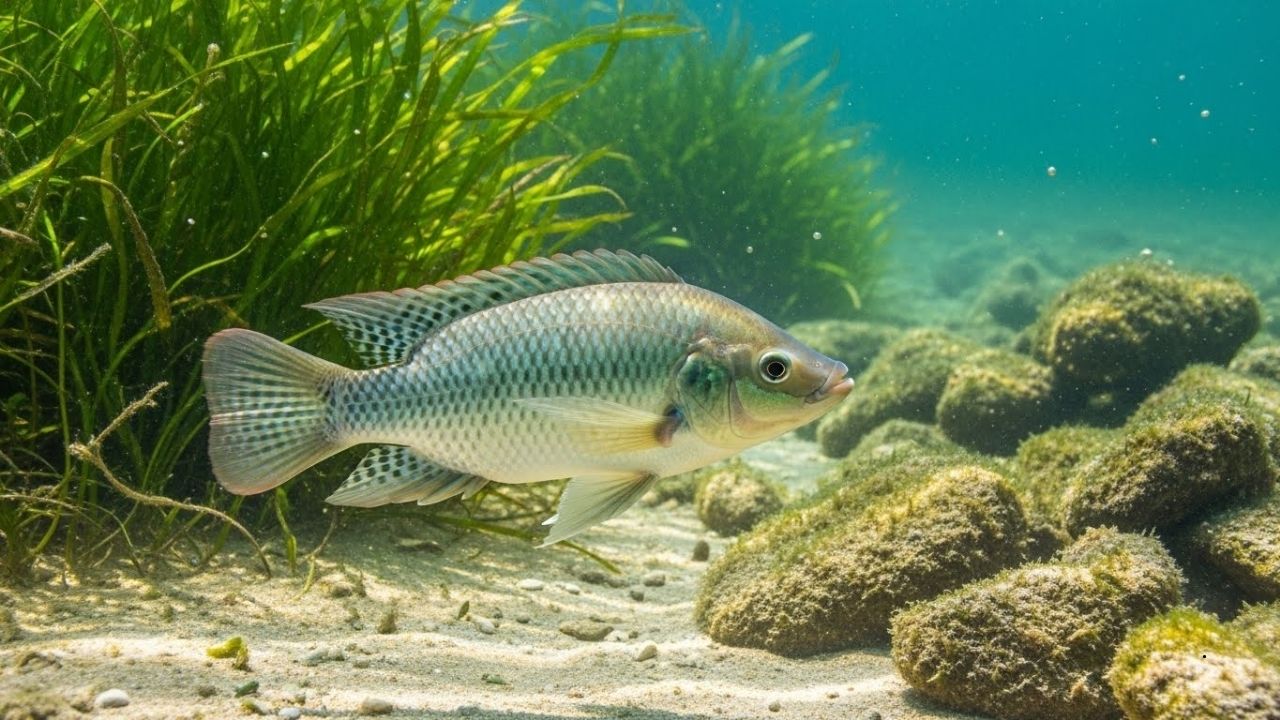
3. Nile Tilapia

Not every fish that can live in fresh and saltwater is a dramatic long-distance traveler. Some, like the Nile Tilapia, are simply masters of tolerance.
You might know Tilapia as a popular fish on dinner plates around the world, and the reason it’s so common is its incredible hardiness. This fish is the ultimate survivor, able to thrive in conditions toxic to many other species. While its native habitat is the freshwater systems of Africa, particularly the Nile River basin, its superpower is its ability to handle salt.
Unlike the dramatic, one-time transformations of salmon and eels, the Tilapia’s adaptation is more about on-the-fly adjustments. These fish can live happily in pure freshwater. Still, they can also be acclimated to live in brackish water—that slushy mix of fresh and salt found in estuaries—and can even tolerate full-strength saltwater. This makes them incredibly versatile.
The secret to the Tilapia’s success lies in its highly efficient gills and kidneys. These organs are like a sophisticated water-processing plant that can quickly change its function. When in freshwater, they work hard to absorb salt. But if the environment becomes salty, they can reverse the process and start pumping out excess salt.
4. Bull Shark

Now, let’s talk about the undisputed heavyweight champion of freshwater-invading marine animals: the Bull Shark. When you think of sharks, you picture the vast, blue ocean. But it laughs at that limitation.
Of all the hundreds of shark species, they are the most notorious for their ability not just to visit but to live in both saltwater and freshwater for extended periods. They have been found thousands of miles up freshwater rivers, including the Mississippi River in the United States and, most famously, the Amazon River in South America.
They are perfectly comfortable cruising through murky river water, often hundreds of miles from the nearest sea. So how do these quintessential marine predators pull it off? Unlike the other fish on this list, bull sharks have a unique and ingenious trick up their sleeve.
Their kidneys are incredibly efficient at recycling urea—a waste product found in their blood—and other salts. This allows them to maintain a higher internal salt concentration than the surrounding fresh water, preventing their cells from being flooded.
This physiological superpower allows it to dominate two separate realms. In the ocean, they are a formidable apex predator. In freshwater, they are apex predators on a whole other level, competing with creatures that have never had to deal with a shark.
5. Barramundi

Let’s head down under to meet one of the most prized sport fish in Australia and Southeast Asia: the Barramundi. Also known as the Asian Sea Bass, this silvery predator is famous for its explosive strikes, acrobatic leaps, and delicious, flaky flesh.
But beyond its reputation among anglers, the Barramundi has a fascinating double life, allowing it to thrive in both fresh and saltwater environments. It’s another catadromous species, much like eels, meaning it’s born in the saltwater but grows up in the freshwater.
The Barramundi life cycle begins in the salty coastal waters, bays, and estuaries. During the monsoon season, large adult Barramundi gather to spawn, releasing millions of tiny eggs into the sea. After they hatch, the small larvae and juvenile fish instinctively know they need to find a safer place to grow.
They ride the tides and floodwaters into freshwater rivers, swamps, and lagoons, often traveling many miles inland. Here, in the relative safety of freshwater, they will spend the next few years of their life growing into formidable predators.
What makes the Barramundi’s story even more interesting is that they are sequential hermaphrodites. This means they actually change their gender! They all mature as males, spending their first few years in freshwater. Then, after a few years, they begin their journey back towards the saltwater estuaries.
6. Flounder

When you think of a Flounder, you probably picture a weird, flat fish with both eyes on one side of its head, camouflaging itself on the sandy ocean floor. And you’d be right! But these masters of disguise are also quite experts at handling changing water conditions.
While most Flounder species are primarily marine, many spend a significant portion of their lives in the fluctuating environments of estuaries and river mouths, where freshwater from rivers mixes with saltwater from the ocean.
Unlike the long-distance migrators, a Flounder’s life is a masterclass in local adaptation. They live in a world where the water’s salinity can change dramatically with every tide. As the tide flows in, their environment becomes almost as salty as the open ocean.
When the tide goes out, and the river’s flow dominates, the water can become nearly fresh. To survive here, a Flounder must constantly adjust its internal balance.
Their gills and kidneys are constantly ready to absorb or excrete salt as needed to match the surrounding water. This makes them ideally suited to life in these dynamic coastal zones, which are among the most productive ecosystems on the planet.
They can take advantage of the abundant food in these areas without worrying about the changing salinities that would stress or kill many other fish species.
7. Striped Bass

Known to anglers as “stripers” or “rockfish,” these powerful, silver-sided predators are famous for their fighting spirit and their impressive migrations along the coast.
As per ASMFC, the Striped Bass is another classic anadromous species, spending most of its adult life patrolling the saltwater of the Atlantic Ocean but making a crucial journey into freshwater to complete its life cycle.
For most of the year, adult Striped Bass are true marine animals. They chase schools of baitfish up and down the coast, from North Carolina to Canada, growing large and strong in the rich ocean environment.
They are a cornerstone of the coastal ecosystem and a beloved sport fish. But each spring, an ancient instinct kicks in. They leave the ocean and begin pushing into major freshwater rivers, such as the Hudson, the Delaware, and those flowing into the Chesapeake Bay. This is their annual pilgrimage to spawn.
Like salmon, their bodies must adapt to the drastic change from saltwater to freshwater. Their kidneys and gills switch gears to start retaining salt and expelling excess water. They travel far upstream to lay their eggs, which need the freshwater current to stay suspended as they develop.
Conclusion
From the legendary leap of a Salmon to the stealth of a Bull Shark in a river, the world of fish that can live in fresh and saltwater is filled with some of the most incredible survival stories on our planet. These animals, technically known as euryhaline organisms, have evolved breathtaking physiological solutions to a fundamental chemical problem.
They are the shape-shifters, the rule-breakers, and the ultimate adapters of the aquatic realm. Their ability to cross the invisible barrier between freshwater and saltwater allows them to undertake epic migrations, exploit unique habitats, and display a level of resilience that is truly awe-inspiring.
The next time you see a river flowing into the ocean, remember the amazing diadromous fish and other travelers who call both worlds home. They are a living, swimming testament to life’s boundless ingenuity.
