




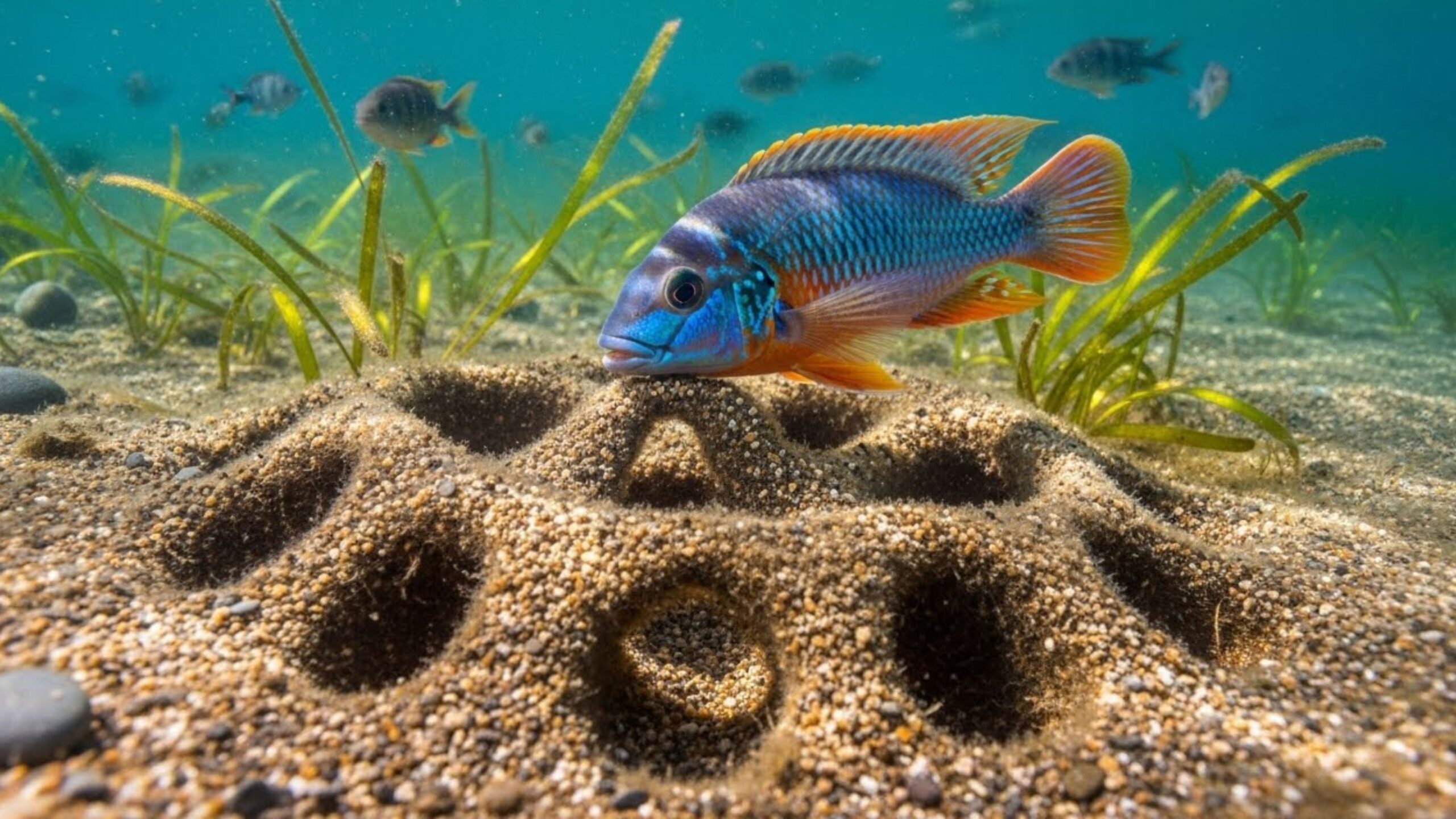
When you think of an animal architect, what comes to mind? A beaver building a dam? A bird weaving a nest? You probably don’t picture a fish, but get ready to have your mind blown! The underwater world is filled with incredible builders, and we’re not just talking about piling up a few rocks. We’re diving deep into the world of fish that build detailed nests, showcasing the excellent engineering and artistry that happens beneath the waves.
This isn’t just random behavior; it’s a critical part of their survival, driven by the instinct to attract partners and protect the next generation. From simple pits to mind-bogglingly intricate masterpieces, the structures these fish create are a testament to the wonders of nature. So, let’s explore the work of these unsung aquatic architects.
7 Fish That Build Complex Nests
1. Three-Spined Stickleback
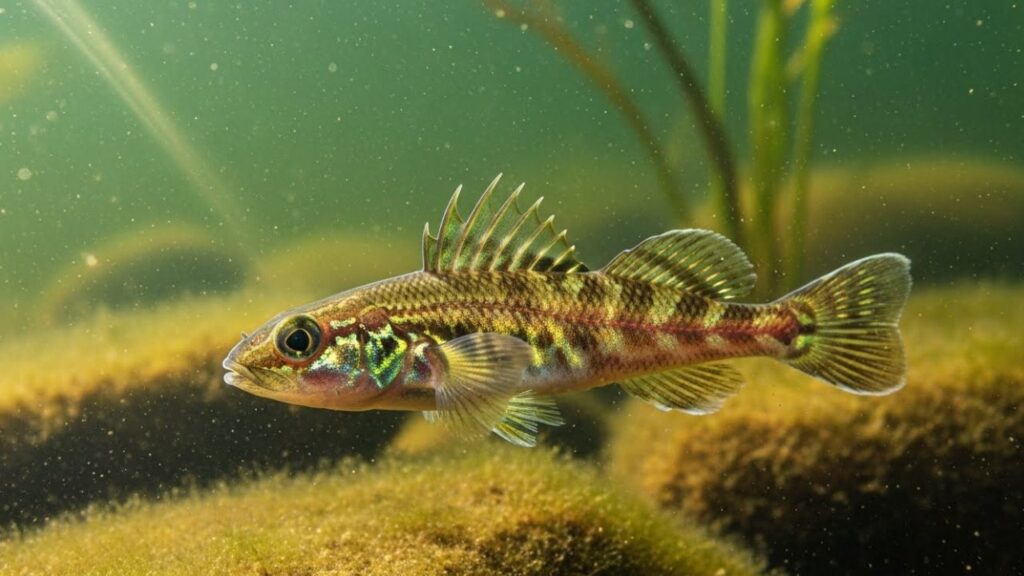
The Three-Spined Stickleback is a master of nest construction. The male fish is the sole architect, and his goal is singular: build a home so impressive that a female can’t resist moving in. His dedication to this task is something to behold, a behavior observed by scientists for centuries.
He starts by gathering bits of plants and other debris.
But here’s the cool part: he glues it all together! The male stickleback secretes a sticky protein from his kidneys, called spiggin, which acts as powerful underwater cement. He weaves and glues these materials together to form a small, sheltered dome or tunnel, a perfect little nursery to protect his future offspring.
Once the nest is complete, it’s showtime. The male performs a “zig-zag dance” to catch the eye of a passing female fish. If she’s impressed by his moves and the quality of his construction, she’ll inspect the nest. Her approval is the ultimate prize. A single male might convince several females to lay their eggs in the same nest, turning him into a very busy single dad.
After the female deposits her eggs, her job is done. The male takes over completely, fiercely guarding the nest from predators. He diligently fans the eggs with his fins, ensuring they get a constant supply of oxygen-rich water. This dedicated parenting ensures the healthy development of the young, making the stickleback a textbook example of an architectural provider.
2. Blue-Spotted Jawfish
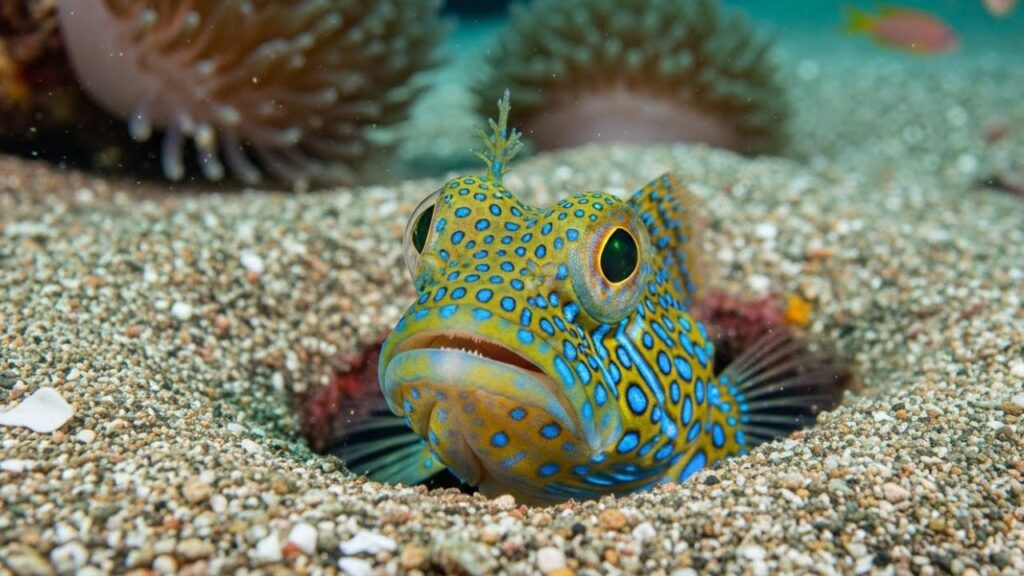
This charismatic little fish lives on the sandy ocean bottom, where it excavates a burrow that serves as both a home and a nest. They are meticulous builders, and their process is fascinating to watch.
The construction of their burrow is a labor of love. The jawfish uses its large mouth like a shovel, scooping up mouthfuls of sand and spitting them out to form a tunnel. But it doesn’t stop there. It then searches the surrounding area for larger pieces of shell and coral, which it carefully places around the entrance of its burrow.
This burrow is the jawfish’s entire world. It hovers vertically above the entrance, keeping a watchful eye out for food and danger. At the slightest threat, it darts back into its hole tail-first with lightning speed. The burrow is more than a home; it’s a fortress essential to its survival and reproduction.
When it’s time for spawning, the burrow becomes a nursery, but with a twist. After the female lays her eggs, the male gathers them up—not into the nest, but into his mouth! He will hold the entire clutch in his mouth for a week or more until they hatch.
3. African Cichlid
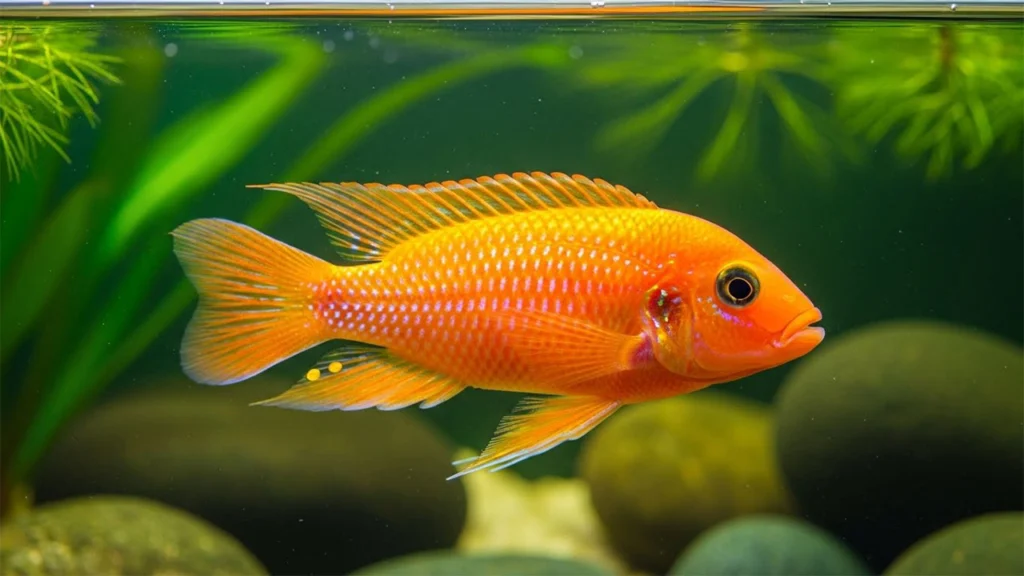
The term “African Cichlid” encompasses a massive, diverse group of fish, many of which are avid builders. While their nests might not look as fancy as others, the effort and purpose behind them are just as intense.
The male fish is typically the one who takes on this landscaping project. He will choose a territory on the lakebed and begin the arduous process of moving sand and gravel, one mouthful at a time. He might create a simple depression, a conical pit, or a large, flat clearing.
This frantic digging isn’t just about housekeeping; it’s a powerful signal to attract females. A large, well-maintained pit demonstrates the male’s strength, health, and ability to hold a prime territory. The nest becomes a stage for his courtship display, where he’ll flare his fins and show off his vibrant colors to any interested females that swim by.
The female fish is a harsh critic. The size, shape, and location of the pit can all influence mate choice. If she approves of his work, she will lay her eggs in the center of the nest he has built.
4. Oscar Fish
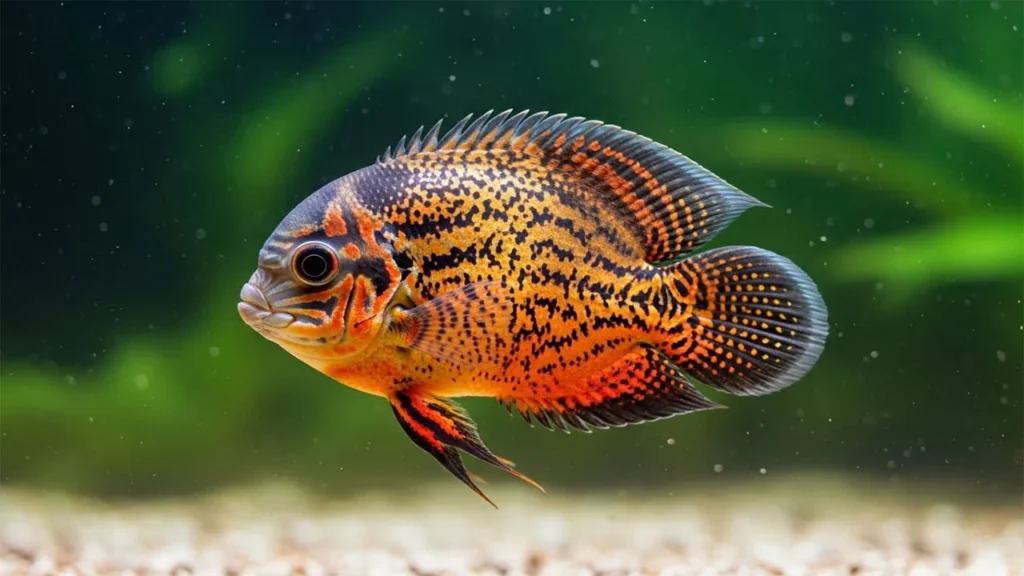
Anyone who has kept an Oscar knows this fish has a big personality and a flair for… redecorating. While they don’t build a nest from scratch using external materials, their preparation for spawning definitely qualifies as a significant construction project.
The beginning of Oscar nest construction involves finding a large, flat rock or a clear patch of the substrate. Then, the bonded pair gets to work. Both the male and female fish will use their mouths to meticulously scrub the surface clean, removing any algae, dirt, or debris.
This teamwork is crucial to their bonding and reproduction. It’s a straightforward way to share responsibility as they prepare the perfect site for their future family. This intense cleaning and clearing behavior is a sure sign to aquarists that eggs are on the way.
Once the site is prepared to their satisfaction, the female will lay hundreds or even thousands of adhesive eggs on the clean surface. From that point on, both parents become ferocious defenders of their nest. They will guard the eggs and, later, the free-swimming fry, chasing away any other fish that dares to come close.
5. Dwarf Gourami
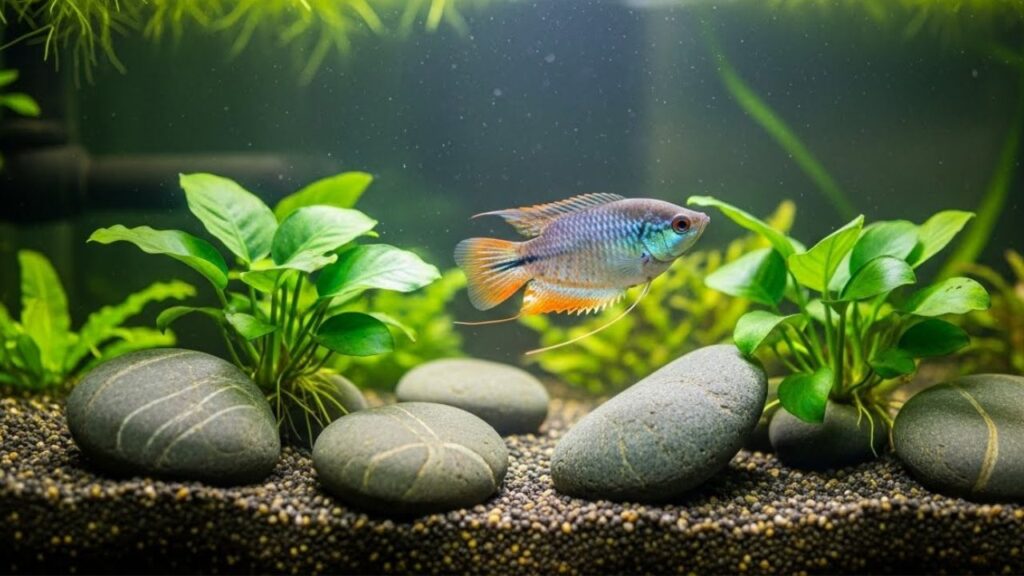
The Dwarf Gourami, a popular and colorful aquarium fish, is a calm fish, according to The Spruce Pets. It builds its home out of thin air! The male of this species is a bubble nest builder, constructing a floating raft of bubbles that serves as a haven for his eggs and fry.
To create this masterpiece, the male Dwarf Gourami will gulp air from the surface and coat it with a special saliva, making the bubbles stronger and longer-lasting. He then spits these bubbles out, usually under a floating leaf or in a quiet corner of the tank.
He works tirelessly, adding bubble after bubble, often incorporating bits of floating plants to give the structure more integrity.
Once the bubble nest is ready, the male’s focus shifts to courtship. He will perform an elaborate dance to attract a female, guiding her underneath his floating creation. The embrace that follows is a delicate affair: the female releases her eggs, which float upwards. The male diligently collects any that stray and places them securely within the bubble nest.
6. Tilapia
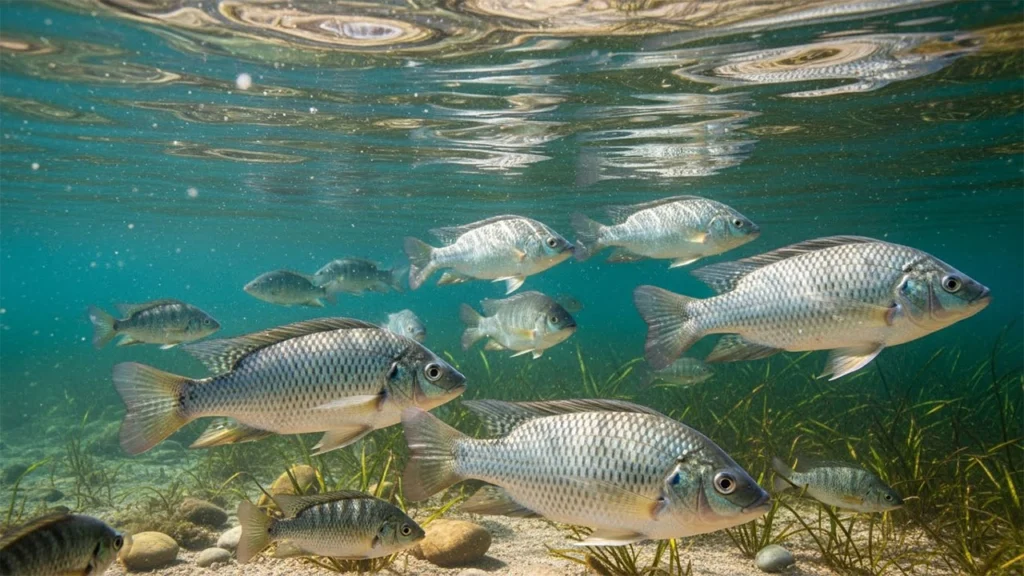
Britannica calls Tilapia a freshwater species; they are known around the world, often as a food source, but in their natural habitat, they are also dedicated parents and builders. Like their cichlid cousins, many Tilapia species are pit-nesters. The guy fish takes on the role of excavator, forming a home that he hopes will be worthy of a partner.
The process is straightforward but requires immense effort. The male uses his mouth and body to dig a large, often perfectly round, crater in the sand or mud. The size of this nest is a direct advertisement of his fitness. A bigger, cleaner, and more symmetrical nest is more likely to attract a discerning female fish.
This pit is the centerpiece of his territory, which he will defend aggressively from rival males. When a female approaches, he will use a combination of vibrant color displays and specific swimming patterns to lure her into his crater for spawning. The whole behavior is a high-stakes competition to pass on his genes.
7. The Japanese Pufferfish
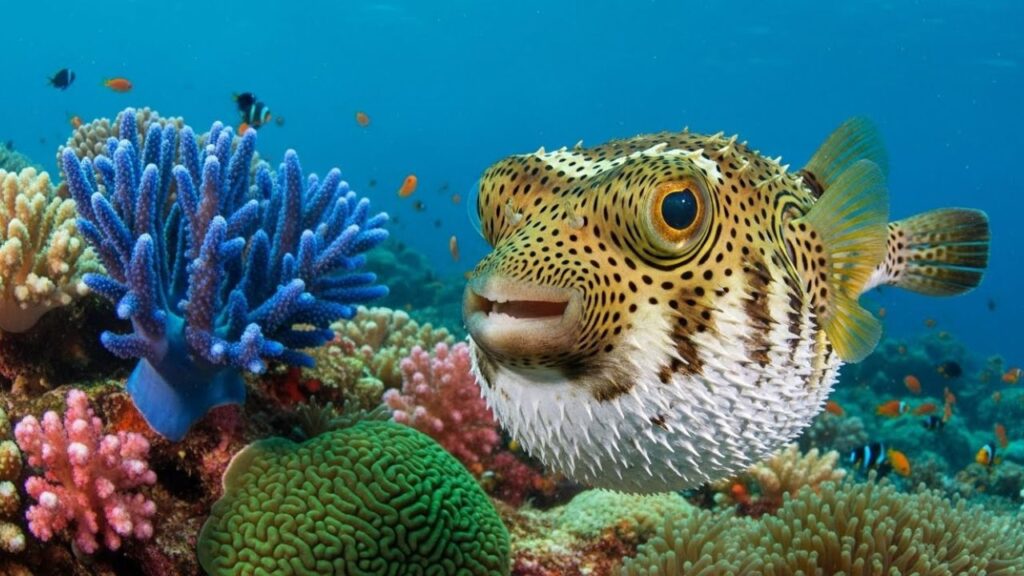
This small species of marine pufferfish found off the coast of a Japanese island is phenomenal. For years, divers were baffled by the discovery of immense circular geometric structures on the sandy seabed, some measuring over 2 meters in diameter. These “mystery circles” were so perfect that they were assumed to be a natural phenomenon.
The truth, when it was finally found and captured on video, was almost unbelievable. The artist is a tiny male pufferfish, no more than 12 centimeters in length. Using only his small body and tirelessly flapping fins, he works 24 hours a day for over a week to construct this masterpiece on the seabed. He meticulously carves huge geometric circular structures, even decorating the outer ring with shells. He carves each ridge in a nearly straight line from the center outwards, pressing his soft belly into the sand to create the fine details.
This incredible feat of engineering, documented in scientific reports and a groundbreaking paper in the journal Science, is all done to entice mates. The complex design is not just for show. Researchers hypothesized that the ridges and valleys, carved at a precise angle, function to funnel fine, soft sand toward the center of the circular layout.
The female fish is the ultimate art critic. She will carefully inspect the pufferfish nests, and the quality of the design will directly influence mate selection.
Conclusion
From the simple glue-and-stick nest of the Stickleback to the breathtaking sand mandala of the Japanese pufferfish, the world of nest-building fish is far more complex and fascinating than most people imagine.
This behavior, driven by the fundamental needs of reproduction and protection, has resulted in an incredible diversity of strategies and structures. The conclusion is clear: fish are not just passive swimmers in our oceans and rivers. However, these intricate behaviors and the delicate habitats they depend on are now at risk from the growing pressures of climate change.
