




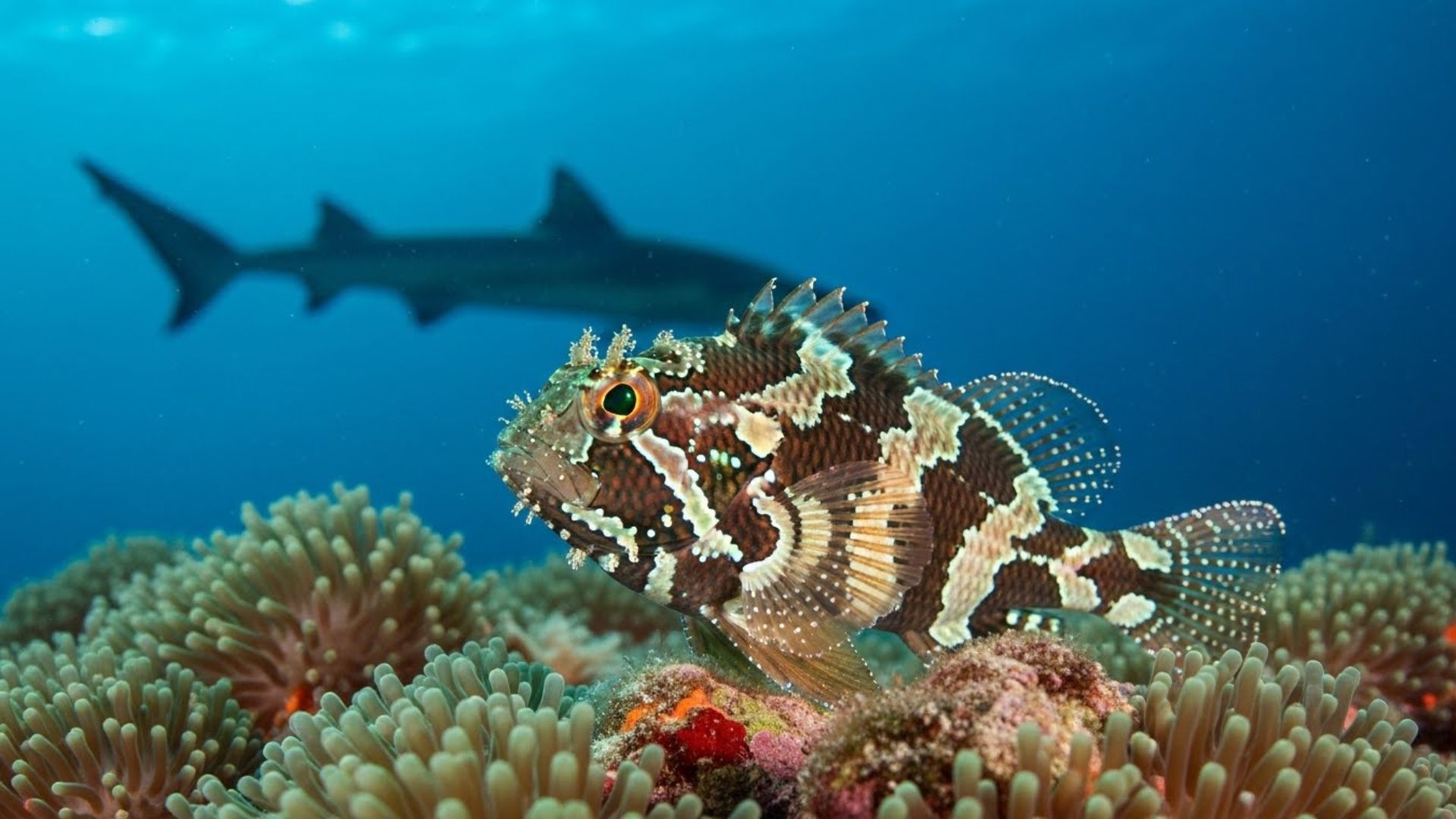
Have you ever played hide-and-seek and found the perfect spot where no one could find you? Well, imagine playing that game every single day, but if you get found, you get eaten! That is life in the big, blue ocean.
For many small fish and sea creatures, staying alive means being smarter, faster, or just plain invisible. It’s a harsh world down there, but nature has given some animals super cool tricks to stay safe.
These aren’t just regular swimmers; they are the ninjas of the sea. Some use crazy colors to disappear, while others look like scary monsters to frighten bullies away. You will see how they use the sand, the coral reefs, and even seaweed to their advantage. It is a constant battle for survival, and these guys are winning.
In this blog, we are going to explore seven incredible species that have mastered the art of avoiding capture. From spiky balls to invisible mats on the floor, these creatures will blow your mind. We will learn how they avoid predators, how they hunt, and why you might swim right past them without ever knowing they are there.
Fish That Are Masters of Avoiding Predators
1. Stonefish
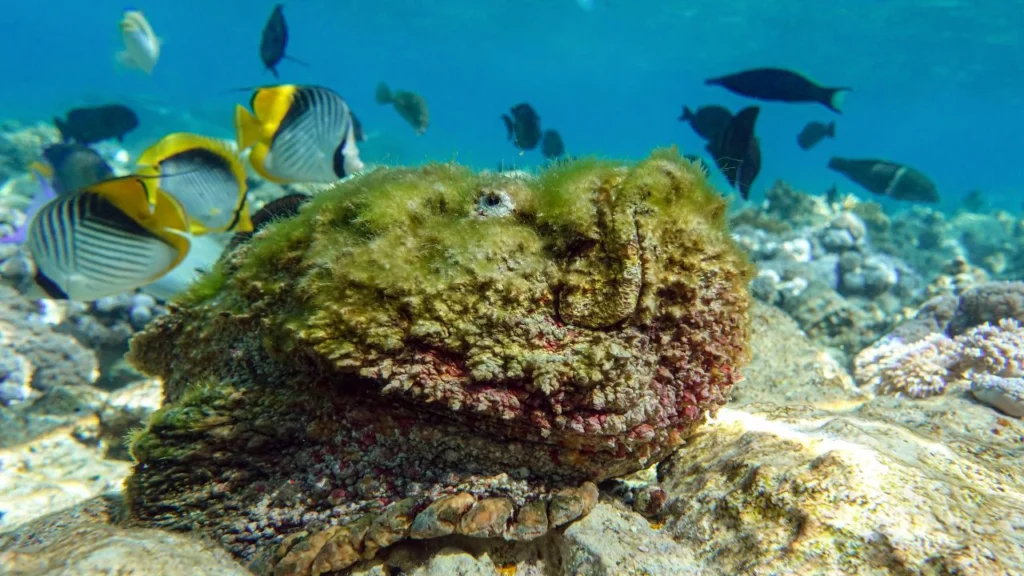
If there were a prize for the grumpiest-looking rock in the ocean, the Stonefish would win it easily. These guys are the ultimate masters of disguise because they look exactly like a rough, algae-covered stone sitting on the bottom of the sea.
They don’t swim around much; instead, they sit perfectly still among the rocks and coral, waiting for unsuspecting prey to swim by. Because of their bumpy skin and dull colors, they blend seamlessly into their surroundings, making them nearly impossible to see.
But the Stonefish isn’t just hiding; it is also packing a serious weapon.
It is widely known as the world’s most vicious fish. Along its back, it has a row of sharp spines that stand up when it feels threatened. If a hungry shark or a clumsy human steps on it, those spines inject a super-strong poison. This defense is so dangerous that most predators know to stay far, far away.
The Stonefish is an expert at ambush predation. It doesn’t chase its food; it lets the food come to it. When a little fish gets close enough, thinking it is just swimming past a rock, the Stonefish opens its giant mouth. With lightning-fast strikes, it sucks the prey in before the poor fish even realizes what happened. This ability to strike from plain sight makes them terrifyingly effective hunters.
You can find the reef stonefish hiding in the shallow waters of the Indo-Pacific region. They are a perfect example of how patience pays off in the animal kingdom.
2. Leafy Seadragon
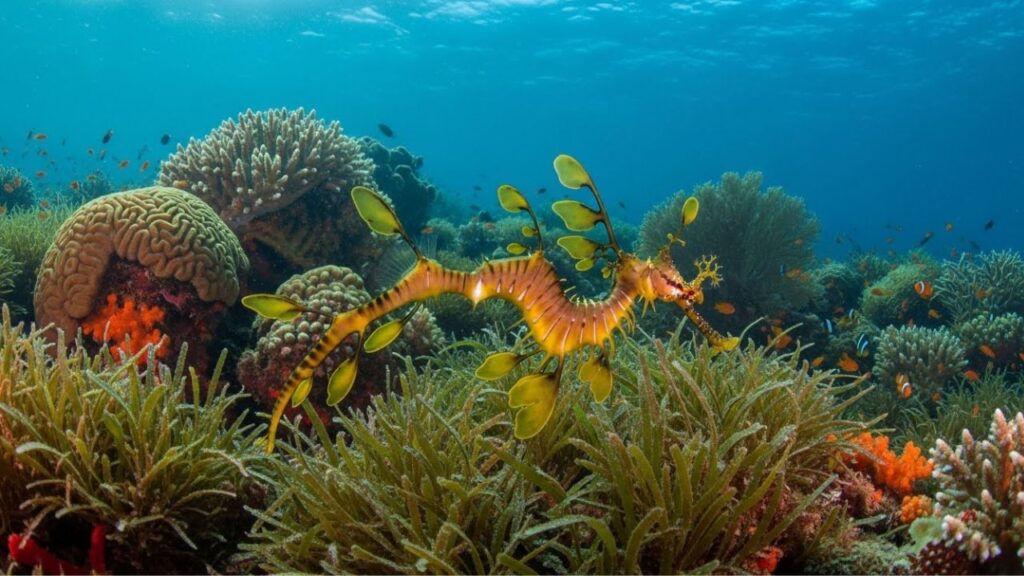
Imagine a piece of floating seaweed that suddenly starts moving on its own. That is precisely what the Leafy Seadragon looks like! These beautiful creatures are related to seahorses, but they look much fancier.
Their bodies are covered in long, leaf-like appendages that sway in the water just like plants. When they are drifting near kelp or seagrass, they become almost invisible to hungry fish looking for a snack.
The Leafy Seadragon lives in the calm waters around Australia. They are very slow swimmers, which might seem like a problem, but their disguise is so good that they don’t need to be fast. They use tiny, transparent fins to steer themselves, moving so gently that they don’t disturb the water. This helps them avoid detection by predators who rely on movement to find food.
Unlike other sea creatures that might fight back, the Leafy Seadragon relies entirely on deception. They don’t have big teeth or poison; they have their amazing body shape. They drift along with the current, looking like a harmless clump of vegetation. This allows them to sneak up on their favorite food, tiny shrimp, and suck them up with their long snouts.
Sadly, because they are so unique and beautiful, they are sometimes taken by divers or collectors. However, in the wild, their ability to mimic the algae growing around them is their superpower. As they cannot swim away from trawling nets, they are frequently caught as bycatch and are facing critical population declines due to overfishing.
3. Pufferfish
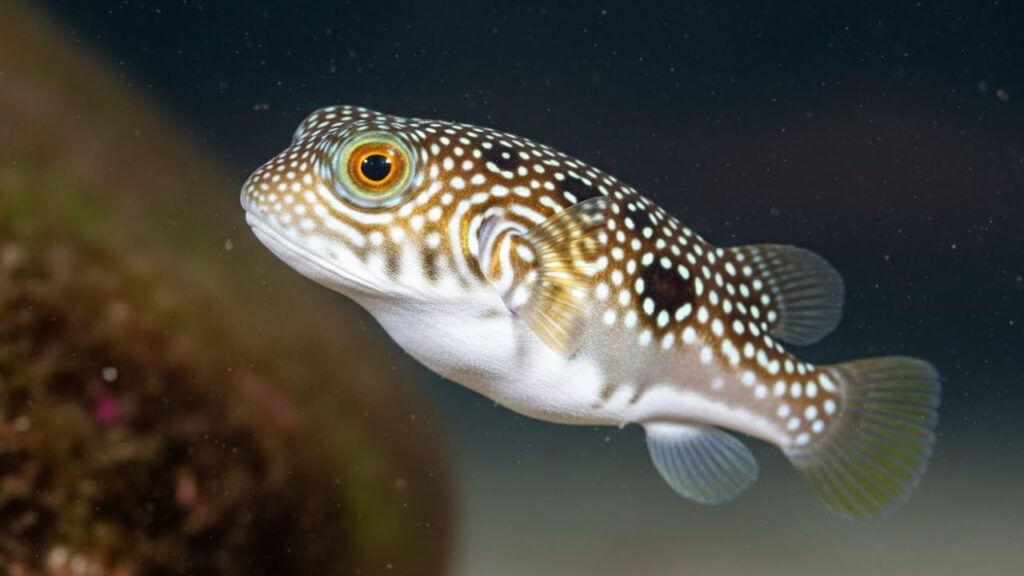
The Pufferfish is one of the funniest and most famous fish in the sea. When they swim around normally, they look cute and a little clumsy. But if a predator tries to eat them, they have a surprise ready.
They can quickly swallow large amounts of water (or air if they are out of the water), puffing up like a giant balloon. This sudden change in size can instantly scare off attackers.
But getting big isn’t their only trick. Many species of Pufferfish are covered in sharp spines. When they inflate, these spines stick straight out, turning the fish into a prickly, unswallowable ball. Imagine trying to eat a cactus—that is what a predator faces when it tries to bite a puffed-up Pufferfish! It makes swallowing fish nearly impossible for sharks or other big hunters.
If the spikes don’t work, the Pufferfish has a chemical weapon, too. Most Pufferfish contain a deadly toxin that makes them taste terrible and can even kill the animal that eats them. This makes them one of the most poisonous vertebrates in the world.
4. Lionfish
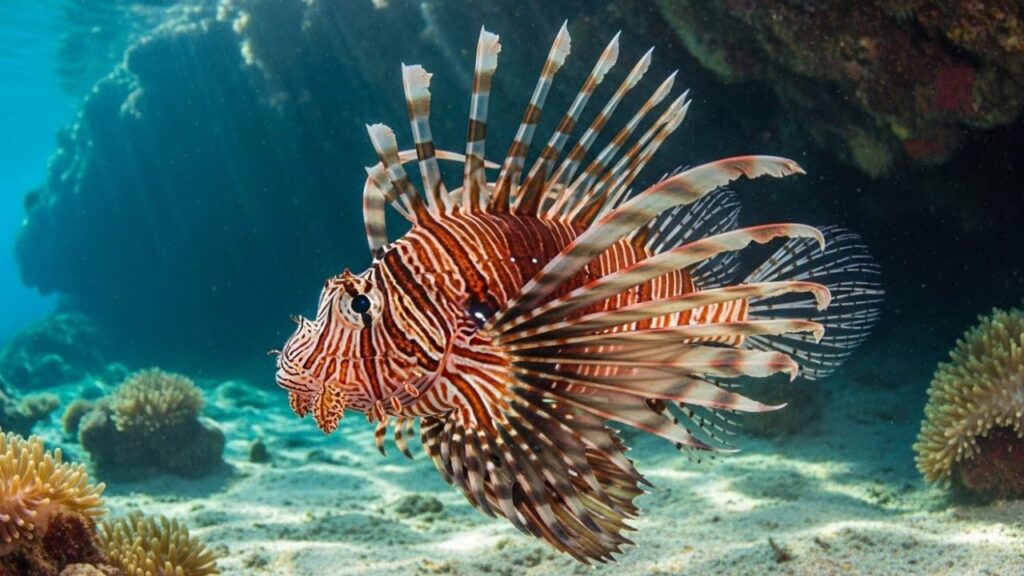
The Lionfish is like the show-off of the coral reef. With its bold red and white stripes and long, flowing fins, it is impossible to miss. But don’t let its beauty fool you; this fish is dangerous. Those beautiful fins are hiding sharp, venomous spines.
The bright coloration is actually a warning to other animals: “Don’t touch me, or you will regret it!”
Lionfish are not afraid to swim out in the open. They don’t need to hide in the sand because they know they are protected. If a predator gets too close, the Lionfish will turn its back and point its venomous spines right at the attacker. It is an obvious message that says, “Back off!” This confidence allows them to rule their territory without much fear.
These fish are also incredible hunters. They use their large, fan-like fins to corner little fish against rocks or coral branches. Once the prey is trapped, the Lionfish strikes quickly. They are invasive in some parts of the world, like the Atlantic, because they are so good at hunting and have very few natural predators there. They are eating machines that can clear out a reef very fast.
5. Ghost Pipefish
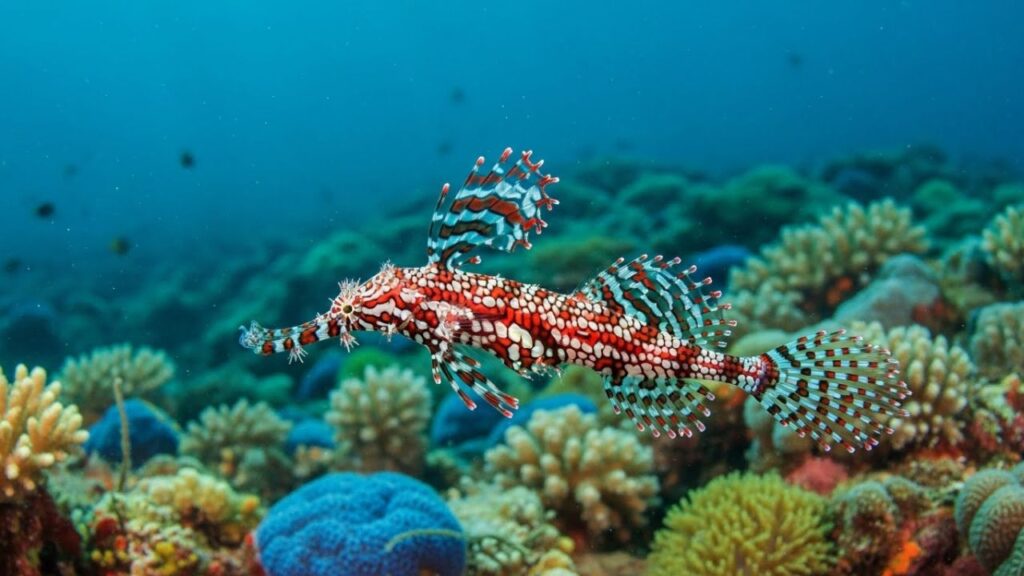
The Ghost Pipefish is a true master of hiding in plain sight. These tiny creatures are related to seahorses and pipefish, but they look even stranger. Britannica says they often float upside down, with their heads pointing downward.
Their bodies are covered in spikes and patterns that make them look exactly like the coral, sponges, or seagrass they live near. You could stare right at one and not even know it.
There are various species of Ghost Pipefish, and each one mimics a different part of its environment. Some look like dead leaves, while others look like hairy algae. They change their color to match their host perfectly. This extreme camouflage allows them to remain undetected by both the things they want to eat and the things that want to eat them.
They are not strong swimmers, so they rely on drifting. They hover motionless in the water, waiting for tiny crustaceans to swim by. Because they look like a piece of the reef, their prey comes right within striking distance without being scared. It is a very smart way to hunt without using much energy.
Divers love finding Ghost Pipefish because they are so rare and hard to spot. They are seasonal visitors to the reef, appearing for a short time to breed and then disappearing again.
6. Flounder
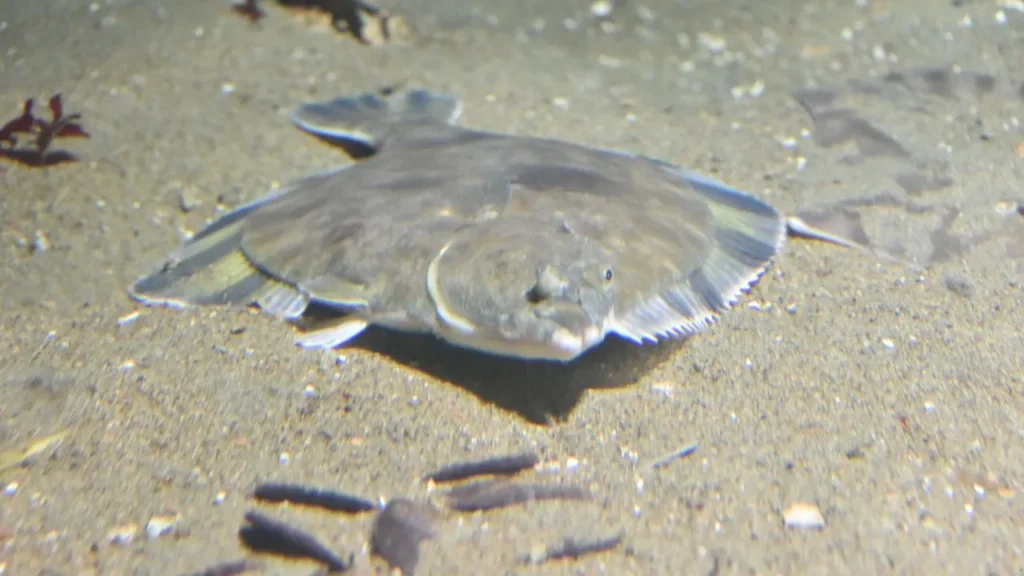
The Flounder is the champion of the sandy floor. This flatfish spends most of its life lying on the bottom of the ocean. But it doesn’t just lie there; it disappears. The Flounder has amazing skin that can change color and texture to match the sand, mud, or gravel beneath it.
It is like a chameleon, but even faster and more accurate.
When a Flounder settles down, it wiggles its body to bury itself slightly in the sand. Only its two eyes, which are both on top of its head, poke out to watch the world. This allows the Flounder to see prey swimming above while remaining completely hidden. It is the perfect setup for a surprise attack on unsuspecting shrimp or small fish.
This ability to change isn’t just for hunting; it is crucial for survival. Sharks and rays swim over the sand looking for food, but they often swim right over the Flounder without noticing it. By matching the patterns of the ocean floor, it avoids becoming lunch. It is a simple but brilliant strategy.
Flounders start life looking like normal fish, but as they grow, one eye moves to the other side of their head, and they start swimming sideways. It sounds weird, but it works perfectly for their lifestyle. They are the ultimate ambush predators of the sand, proving that lying low is a great way to get ahead in life.
7. Scorpionfish
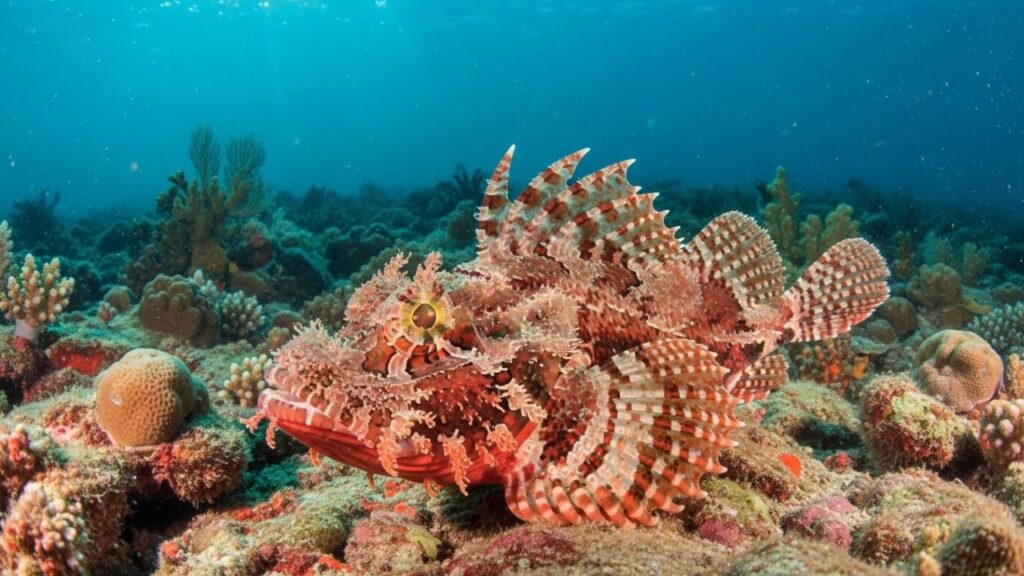
Just like their cousin, the Stonefish, Scorpionfish are experts at looking like something they are not. They have weird flaps of skin, tassels, and mottled colors that make them look like a piece of coral or a rock covered in algae.
They sit very still on the reef, trusting their disguise to keep them safe. They blend in so well that divers often have to look twice to see them.
Scorpionfish are also venomous fish, as per Oceana. They have sharp spines on their back that can deliver a painful sting. This protects them from larger fish that might try to take a bite. They don’t need to swim away from danger; they raise their spines and stand their ground. It is a bold move, but it works.
These fish are patient hunters. They wait for hours for a small fish or crustacean to wander close. When the moment is right, they open their mouths and create a vacuum that sucks the prey in. It happens so fast that the prey doesn’t stand a chance. This technique is called suction feeding, and Scorpionfish are masters at it.
They are a fascinating part of marine life, showing us that sometimes the most dangerous things are the ones you can’t see until it is too late.
Conclusion
The ocean is a wild place where every animal is trying to survive. From the toxic spikes of the Lionfish to the invisible skin of the Flounder, these creatures have developed incredible ways to stay safe. They use camouflage, poison, and trickery to avoid predators and catch their dinner. It is a constant game of hide-and-seek, with the stakes life and death.
By understanding how these animals live, we can appreciate the beauty and complexity of the underwater world. Whether it is the mimic octopus changing its shape or the hairy frogfish luring prey, nature is full of surprises.
Next time you look at a picture of a coral reef, look closer. You might just spot one of these masters of disguise hiding in the shadows.
