




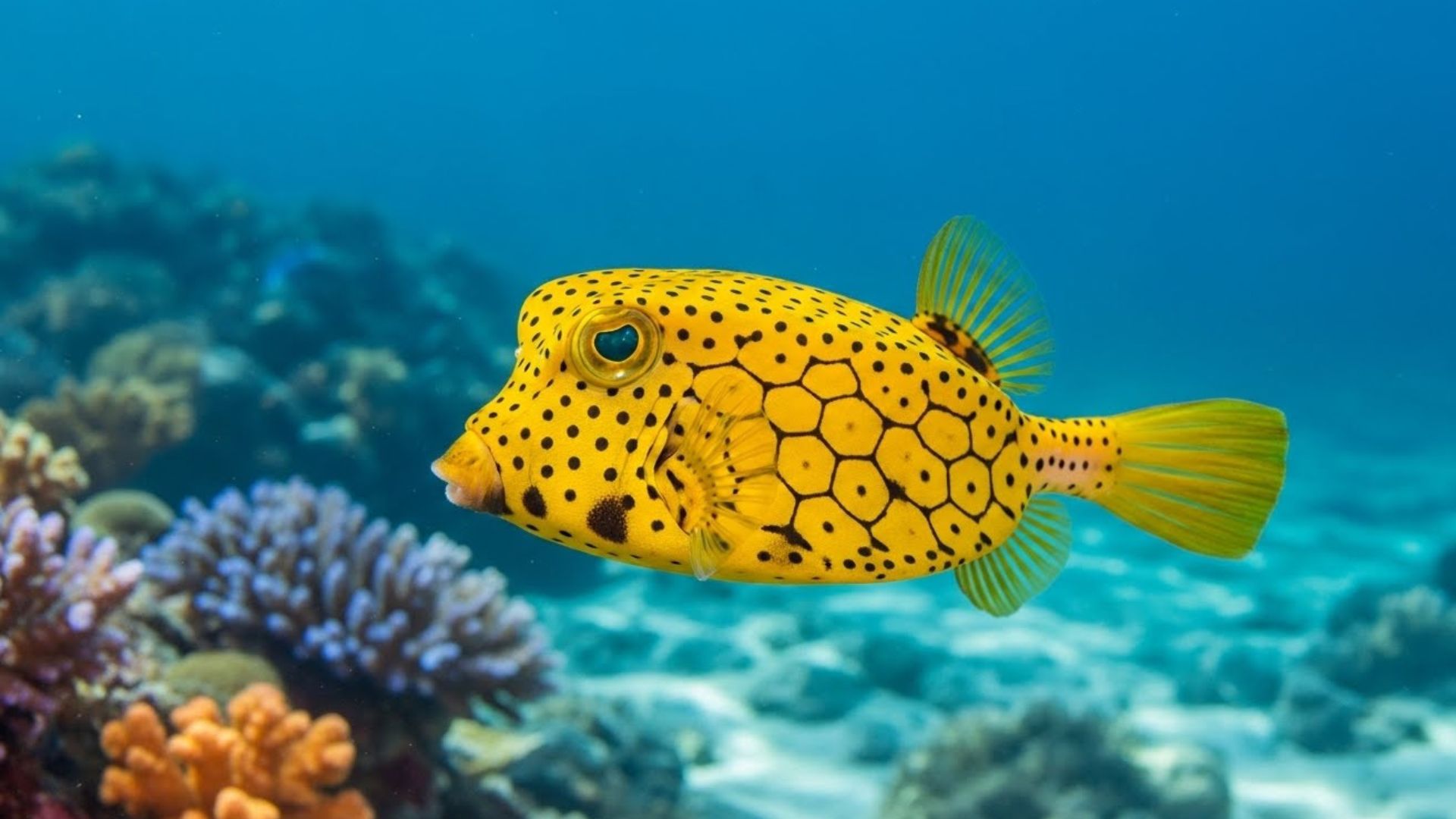
The world’s oceans cover more than 70% of our planet, yet much of their depths remains a mystery. Down in the dark, and even in plain sight, evolution has been running a spectacular experiment. The result? A stunning collection of unusual creatures that defy our expectations of what a fish should look like.
These are not mistakes of nature. The fish that are known for their unusual shapes are actually masters of survival. Every strange curve, bizarre appendage, and weird body plan is a purpose-built tool for feeding, hiding, or finding a mate in some of the most challenging habitats on Earth.
From the shallow seagrass beds to the crushing pressure of the deep sea, these fish species remind us that function always triumphs over form. So, let’s dive in and meet seven of the strangest fish whose amazing shapes will make you see the ocean in a whole new light.
Fish That Are Known for Their Unusual Shapes
1. Leafy Seadragon
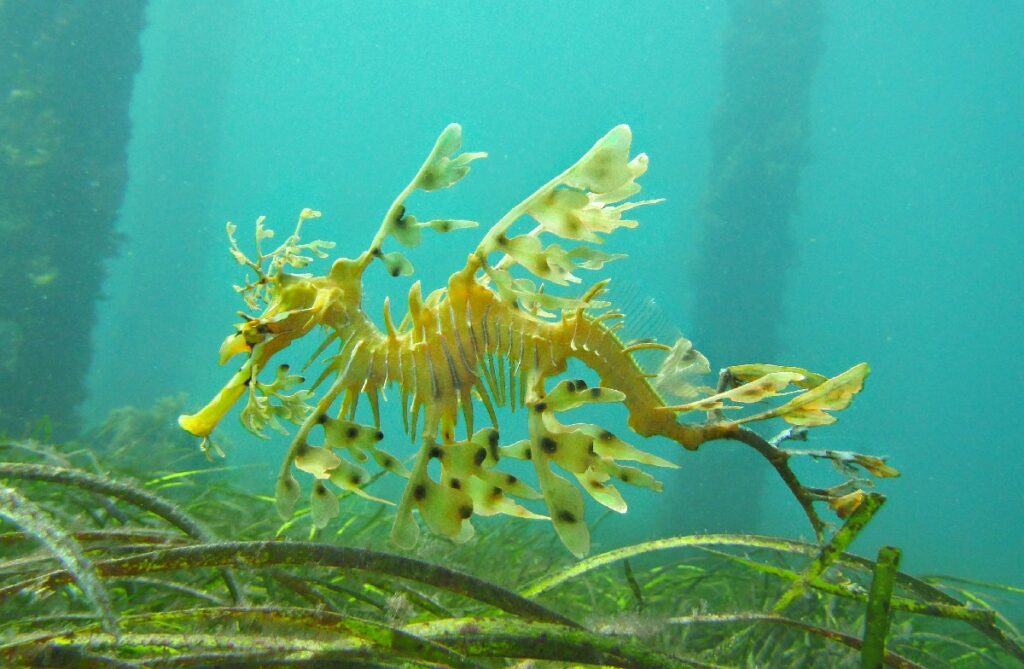
Is it a piece of floating seaweed or a living animal? With the Leafy Seadragon, it’s hard to tell.
This beautiful fish, a relative of the seahorse, is a true master of camouflage, as per National Geographic. Its entire body is adorned with intricate, leaf-like appendages that mimic the kelp and seagrass it calls home.
These “leaves” aren’t for swimming; they are purely for show. The leafy sea dragon propels itself with tiny, transparent dorsal and pectoral fins that are almost impossible to see as they ripple. This allows it to drift almost invisibly, waiting for unsuspecting prey like small crustaceans and other invertebrates to float by.
Native exclusively to the temperate waters off southern and western Australia, this delicate creature faces threats from habitat loss and illegal collection for the aquarium trade. Its unusual appearance is a perfect defense mechanism, but it also makes it a highly sought-after, and therefore vulnerable, species.
2. Seahorse
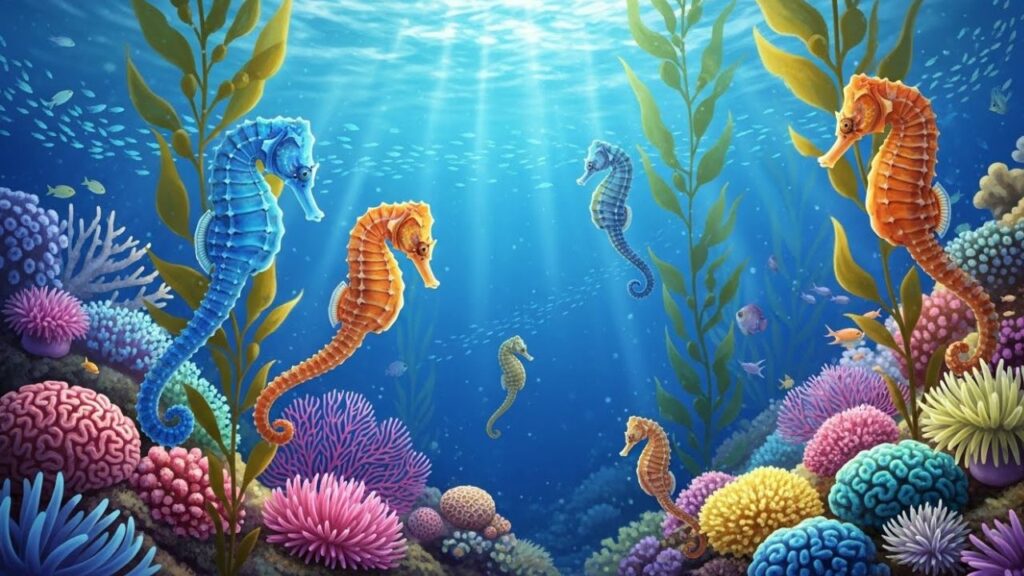
Famous and beloved, the seahorse is without a doubt one of the most iconic fish with an unusual shape.
Instead of swimming horizontally like other fish, it maintains a curious, upright posture. Its horse-like head and curved body truly make it look like a creature from a storybook.
One of its most striking features is its prehensile tail, which it uses to grip onto seagrass and coral, preventing it from being swept away by currents. Seahorses are very slow swimmers, relying on stealth and camouflage to ambush their food. They suck in small prey with their long snout in a lightning-fast motion.
But the seahorse’s most famous trait is its unique reproductive process. It is one of the few species in the animal kingdom in which the male carries the young. The female deposits her eggs into a specialized brood pouch on the male’s abdomen, where he fertilizes them and holds them until they hatch as tiny, perfect seahorses.
3. Yellow Boxfish
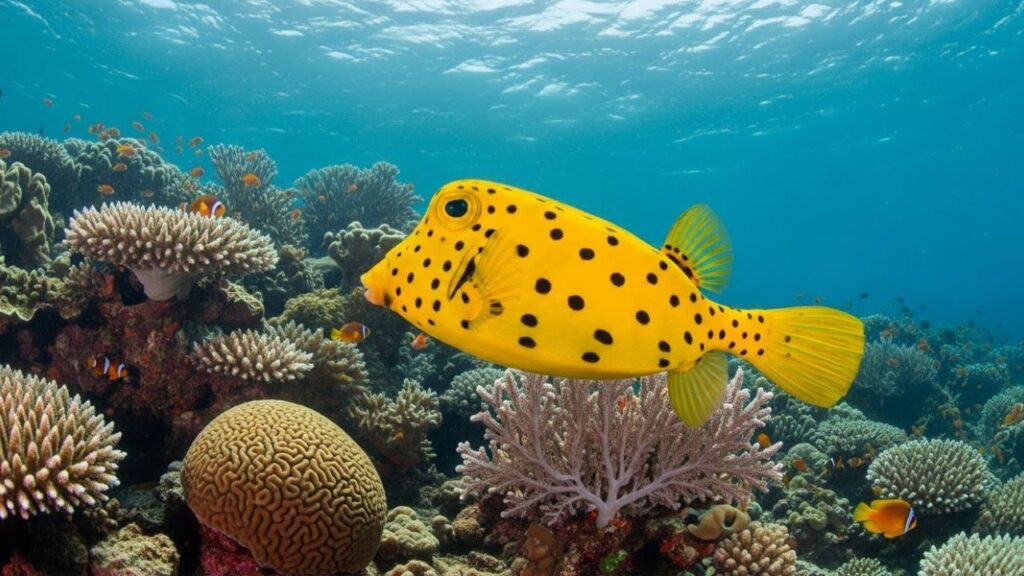
If nature ever decided to play with building blocks, the Yellow Boxfish would be the result. This looking fish has a rigid, box-like shell (called a carapace) formed from fused, bony plates.
Its shape is so unusual that it seems almost comical, but this geometric body is a brilliant piece of engineering.
The cube shape provides incredible protection, acting like armor against predators. While it makes the boxfish a slow and sometimes clumsy swimmer, its rigid frame is surprisingly stable in turbulent reef waters.
When threatened or stressed, this fish has another trick: it can secrete a potent, poisonous toxin called ostracitoxin from its skin, deterring predators that get too close.
This fish’s shape is so aerodynamically efficient that it inspired engineers at Mercedes-Benz. They developed a concept car, the Bionic, modeled after the boxfish to minimize wind resistance. It’s a fun reminder that nature often solves complex problems in the most unexpected ways.
4. Ocean Sunfish
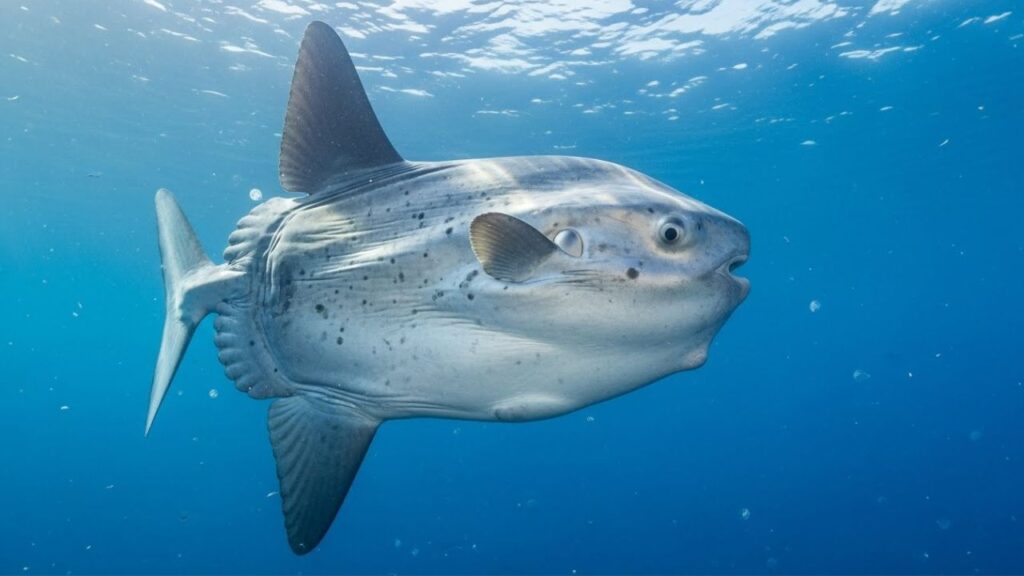
The Ocean Sunfish, or Mola mola, holds the title for the world’s heaviest bony fish, weighing up to an incredible 2.5 tons. Oceana notes that its shape is among the most bizarre in the entire ocean.
Laterally flattened like a pancake with enormous dorsal and anal fins, it looks as if its entire back half was chopped off.
This strange body plan is ideally suited to its lifestyle. The Mola mola spends its time drifting through the open ocean, feeding primarily on jellyfish and other gelatinous creatures. Its massive fins propel it through the water, while a modified, rudder-like fin called a clavus steers it from the rear.
These gentle giants are famous for “sunning” themselves. They often float on their side at the surface, possibly to warm up after deep dives into colder water or to allow seabirds to pick parasites from their skin. Seeing one of these massive, unusual creatures at the surface is an unforgettable experience.
5. Scalloped Hammerhead Shark
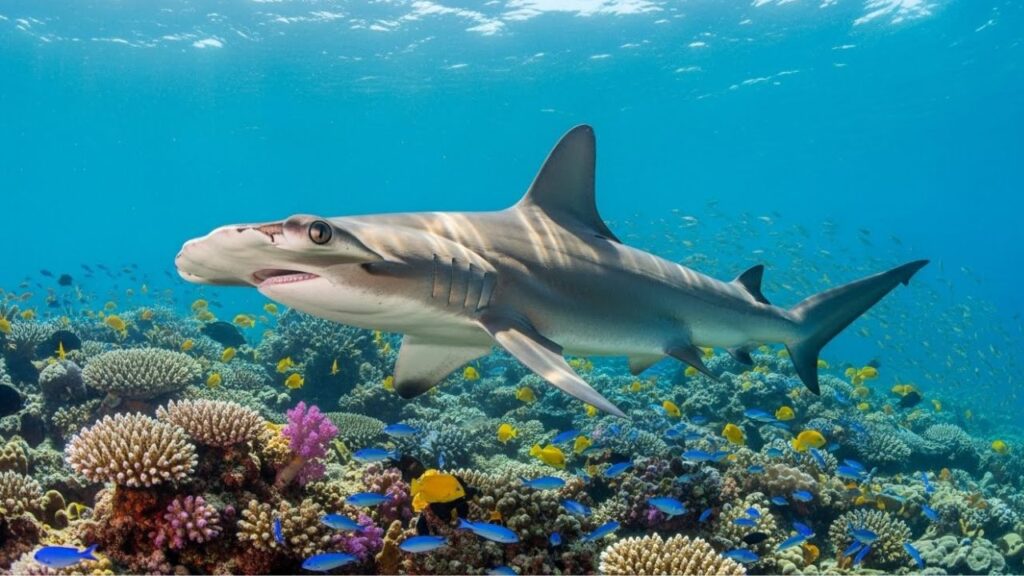
Among all the sharks in the ocean, the hammerhead’s silhouette is unmistakable. The Scalloped Hammerhead gets its name from the wavy, scalloped front edge of its bizarre, hammer-shaped head, known as a “cephalofoil.” This is not just a weird ornament; it’s a high-tech sensory organ.
The broad head spreads its eyes and nostrils far apart, giving it an incredible sensory advantage. This provides a broader field of vision and superior ability to locate the source of a scent.
The cephalofoil is also packed with electroreceptors, allowing the shark to detect the faint electrical fields of prey like squid and small fish buried in the sand on the ocean floor.
These sharks are known for their unique social behavior: they often form massive schools during the day and hunt alone at night. Sadly, this incredible species is Critically Endangered due to overfishing and demand for its fins. Its unusual shape makes it a target, highlighting the urgent need for conservation.
6. Trumpetfish
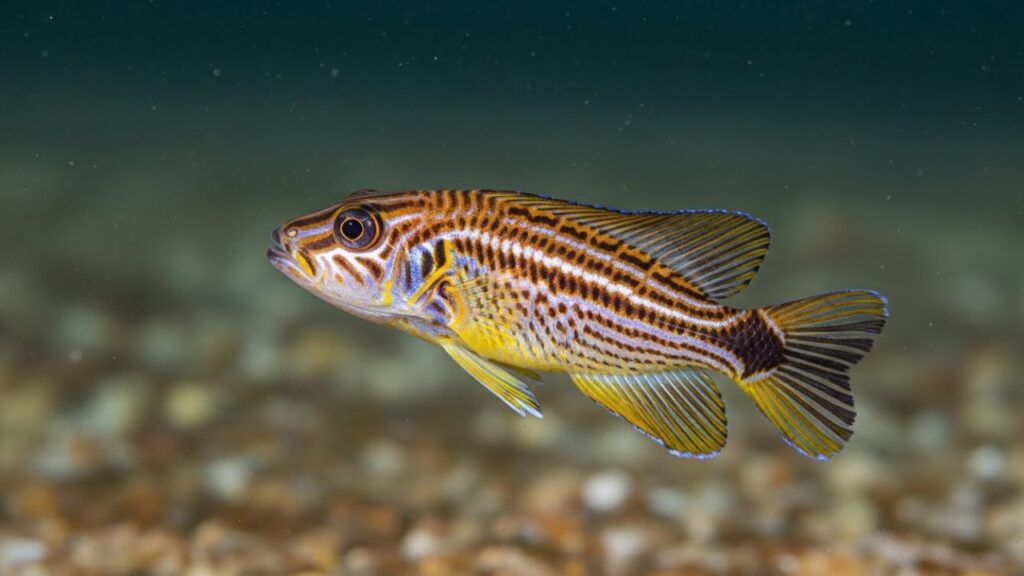
Long, lean, and stealthy, the Trumpetfish is the ultimate ambush predator of the coral reef. Its body is highly elongated and rigid, resembling a floating stick or a piece of pipe. This unusual shape is key to its hunting strategy.
A Trumpetfish can hang motionless in the water, often vertically, to blend in with vertical corals like sea whips and pipe sponges. It can also change colour to match its surroundings. From this hidden position, it waits for small fish or crustaceans to pass by.
Found in tropical reef systems from the Indo-Pacific to the Atlantic, its range includes the vibrant coral gardens of the Western Pacific Ocean. When prey is in range, its long, tubular snout acts like a vacuum, rapidly expanding its mouth to suck the unsuspecting prey in.
Sometimes, a Trumpetfish will use a larger, non-threatening fish (like a parrotfish) as a moving blind, shadowing it until it can get close to its own food. This clever behavior, combined with its strange body, makes it one of the most effective hunters on the reef.
7. Red-Lipped Batfish
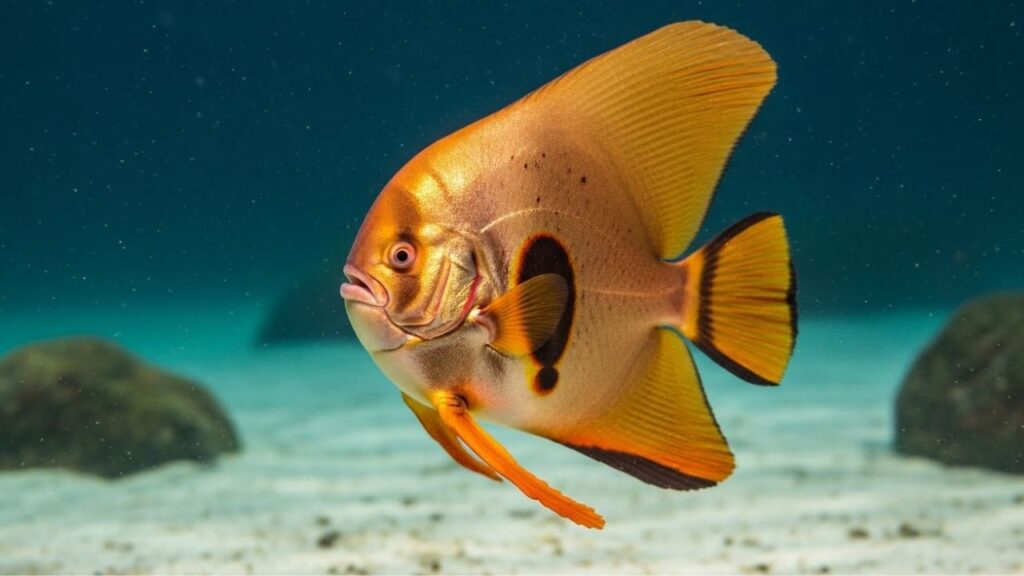
Get ready to meet one of the weirdest fish on the planet. Found on the ocean floor around the Galápagos Islands, the Red-Lipped Batfish looks like it’s ready for a night on the town. The science focus mentions its most striking feature as, without a doubt, its pair of luscious, bright red lips.
Scientists aren’t entirely sure of their purpose, but it’s thought that they may be used to attract mates or recognize members of their own species.
But the weirdness doesn’t stop there.
This deep-sea fish is a terrible swimmer. Instead, it uses its modified pectoral and pelvic fins to “walk” or prop itself up on the seafloor. This unusual method of movement is perfect for bottom-dwellers that spend their lives searching for food in the sand.
To top it all off, the Red-Lipped Batfish has a special lure on its head (an illicium) that it can extend to attract prey like small fish and invertebrates. It’s a member of the anglerfish family, which includes other strange creatures like the hairy frogfish, but this batfish’s pouty look makes it truly one-of-a-kind.
Conclusion
From the leafy sea dragon’s perfect camouflage to the red-lipped batfish’s modified fins for walking, these unusual species show us that evolution is the ultimate artist and engineer. Each of these fish, known for their distinctive shapes, is a living testament to adaptation. Barreleye fish, Stargazer fish, Asian sheepshead, and Giant oarfish are also some fish with unusual shapes.
Their bodies are not “weird” by accident; they are highly specialized solutions for survival in a competitive world. They teach us that there is no single “right” way for a fish to be.
Whether it’s to catch food, avoid predators, or attract a mate, these creatures have evolved forms stranger and more wonderful than we could ever imagine.
