




When you think of “intelligence” in the animal kingdom, your mind probably jumps to dolphins, chimpanzees, or maybe even a clever crow. Fish, for many people, are just beautiful, simple creatures that swim around in their watery world.
But what if we told you that the ocean and rivers are filled with geniuses? The world of fish is far more complex and fascinating than most of us realize. Marine science is constantly revealing incredible secrets about these aquatic animals, challenging everything we thought we knew.
The diversity of fish is staggering.
But while some fish impress us with their incredible age, others blow us away with their brainpower. Let’s dive in and meet some of the most intelligent fish swimming beneath the waves.
Fish Known for Their High Intelligence
1. Manta Ray
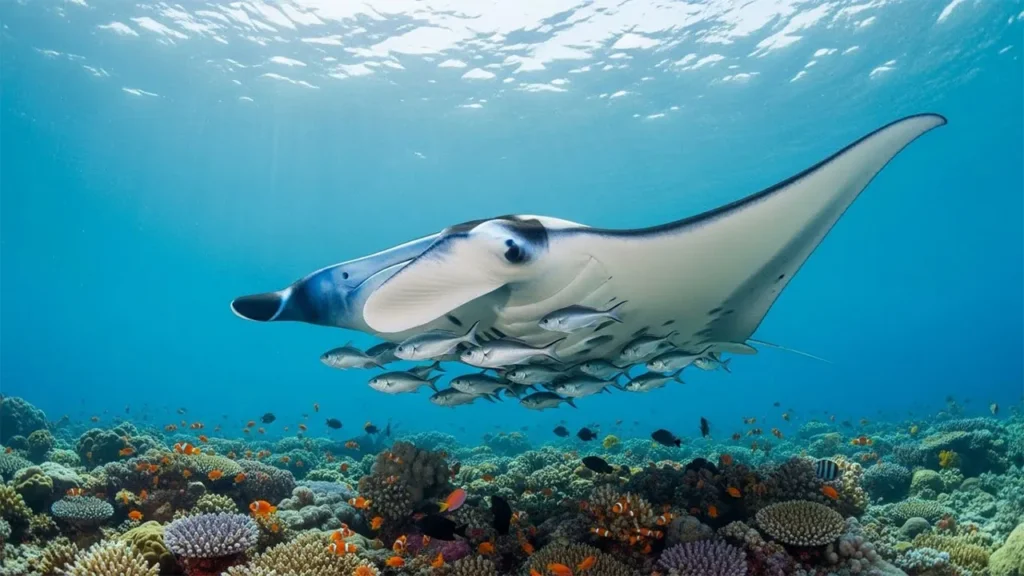
Manta rays are the gentle giants of the ocean, gliding through the water with an elegance that is mesmerizing to watch. But beyond their impressive size, they possess one of the largest brains of any fish, especially in proportion to their body weight.
This isn’t just for show; their big brains fuel some truly remarkable cognitive capacities that have left scientists and divers in awe. Their intelligence, compared to that of other fish, is so profound that it often draws comparisons to that of mammals.
One of the most exciting discoveries about manta rays is their potential for self-awareness. It exhibits strong behavioral evidence of self-recognition in a mirror test, making it a very strong candidate for self-awareness.
These cartilaginous fish are not only the smartest fish in the ocean, but they are also incredibly social and curious animals. They are known to interact playfully with scuba divers, seeking out bubble streams and even seeming to ask for help when they are entangled in fishing lines. This curiosity about their natural habitat and the creatures in it points to a high level of intelligence.
This intelligence also plays a crucial role in their survival. This fish species has excellent memories, which they use to create mental maps of their vast ocean home.
2. Cichlids
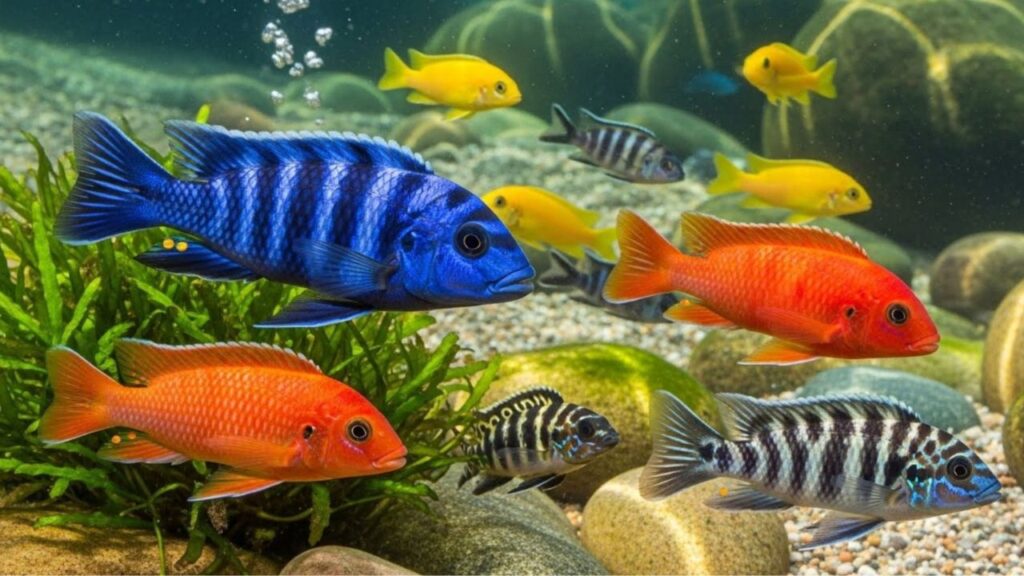
If you’ve ever owned a freshwater aquarium, you may have encountered a cichlid. This incredibly diverse family of fish, with thousands of species, is known for its vibrant colors and, surprisingly, its complex personality and intelligence.
Cichlids are not passive swimmers; they are active, strategic, and have social lives that could rival a soap opera. Their behaviors have been the subject of much research in experimental biology.
One of the most compelling signs of intelligence is their dedication to their offspring. Unlike many other species of fish that lay eggs and paddle away, many cichlids are devoted parents. They fiercely guard their eggs and newly hatched fry from predators.
Cichlids also live in complex social hierarchies. In a tank or in the wild, they establish a “pecking order” where each fish knows its place. This requires them to recognize individuals, remember past fights or interactions, and navigate a web of social relationships.
Furthermore, this fish is an excellent learner. Scientists have successfully trained them to associate different colors with rewards, and they can remember these lessons for long periods. They are problem-solvers, capable of figuring out how to get to a piece of food that is partially hidden.
3. Wrasses
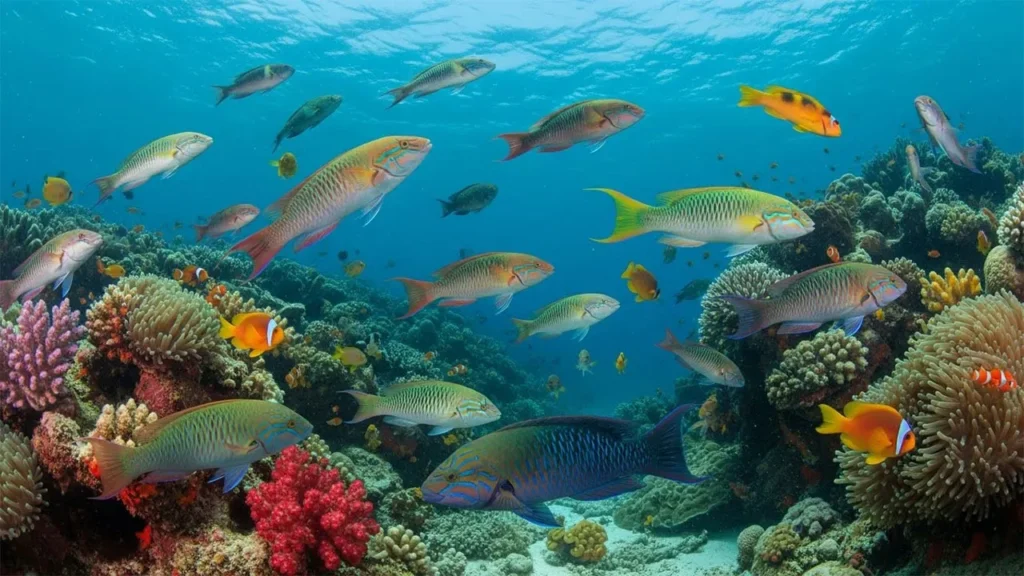
Wrasses are a colorful and energetic group of fish commonly found around coral reefs. While many are beautiful, one particular member of the genus, the cleaner wrasse, stands out for its incredible intelligence.
These small fish run “cleaning stations” where larger fish, including big predators like groupers and even some sharks, come to have parasites removed. This interaction is far more complex than a simple feeding behavior; it’s a sophisticated business transaction.
Britannica says this is one of the smartest fish with advanced cognition, easily found in tropical and temperate seas.
The most mind-blowing thing about some wrasses is their ability to use tools. This is a sporadic behavior in fish. For example, the tuskfish, a type of wrasse, has been observed digging up a clam, carrying it to a specific rock, and repeatedly smashing it against the rock until it breaks open.
4. Goldfish
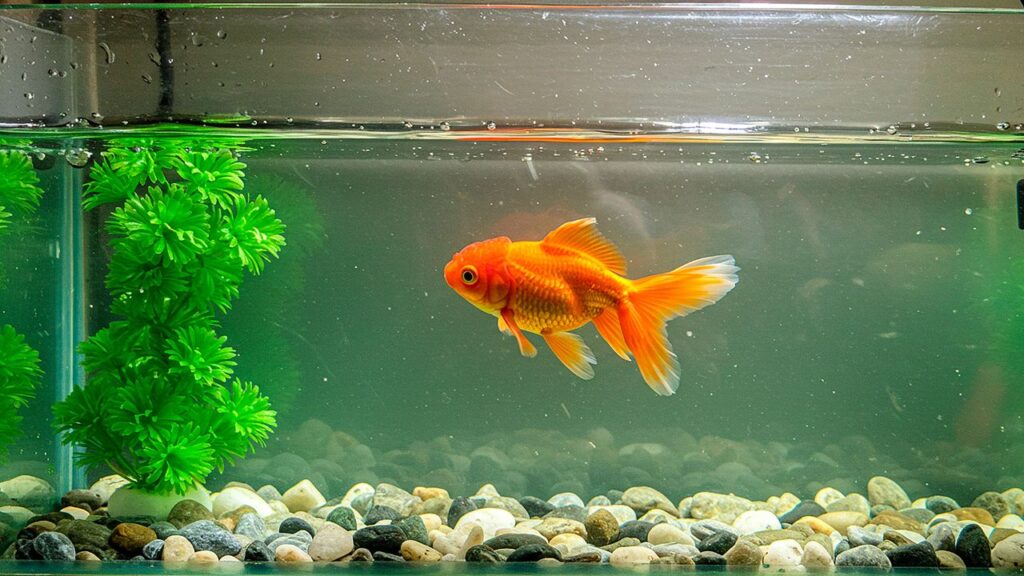
Ah, the humble goldfish. It’s probably the first pet fish many of us ever had, and it’s the victim of one of the biggest myths in the animal kingdom: the “three-second memory.” Let’s be clear, this is entirely false.
Goldfish are far more intelligent than they are given credit for, and their cognitive capabilities are surprisingly robust. The idea that they forget everything in an instant is not supported by science.
This learning ability goes beyond simple sounds. PetMD says Pet owners and hobbyists have successfully trained their goldfish to perform a variety of tricks. With a bit of patience and positive reinforcement (usually with food), goldfish can learn to swim through hoops, push a tiny soccer ball into a net, and even pull a lever to release food.
So, while a goldfish might not be solving physics problems like an archerfish, its intellect is still remarkable. Their capacity to learn, remember, and adapt to their environment is a key part of their life history. Their brainpower is a survival tool, helping them remember where predators lurk and where food is commonly found.
It’s time we give these common household pets the intellectual credit they deserve.
5. Channel Catfish
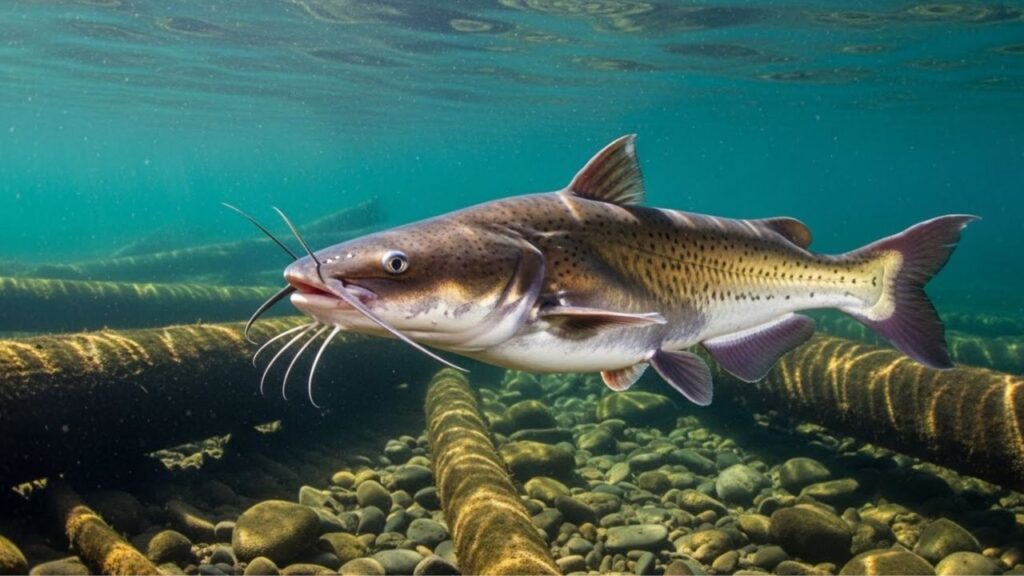
Often associated with southern cooking, the channel catfish is another species whose fish intelligence is vastly underestimated.
Their brainpower is geared towards incredible sensory perception and even cooperative strategies.
The most notable feature of a catfish is its “whiskers,” which are technically called barbels. These are not just for show; they are powerful sensory organs covered in taste buds. A channel catfish has elevated levels of taste receptors all over its body, but they are most concentrated on the barbels.
This allows the catfish to “taste” the water around it, effectively creating a 3D map of smells and tastes to locate food, even in complete darkness or murky water. This is a sensory superpower that requires significant brainpower to process.
Channel catfish, unlike many fish, also communicate using sound. They can produce a range of grunts and creaks by grinding their bones together. These sounds are used to warn off predators, defend territory, and communicate during reproduction.
This acoustic communication adds another layer to their aquatic lives, proving that these seemingly simple fish engage in complex interactions that require a sharp mind to navigate their freshwater habitat.
6. Archerfish
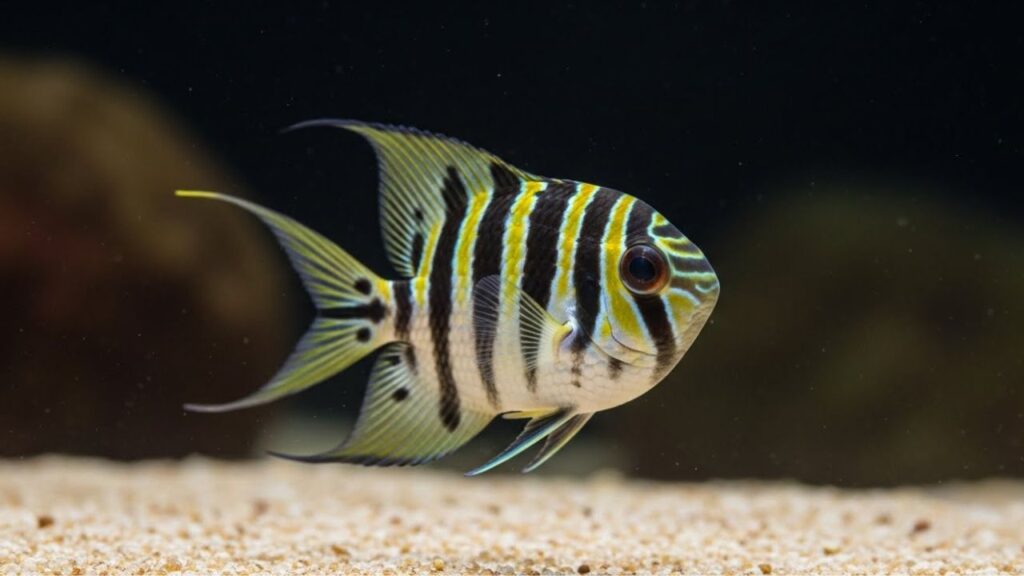
The archerfish is the sharpshooter of the aquatic world, having a skill so unique and impressive that it almost seems like a superpower.
Found in mangrove estuaries, this fish with an impressive brain mass has evolved an extraordinary hunting technique: it spits jets of water with incredible accuracy to knock insects and other small prey off leaves and branches above the water’s surface.
The intelligent behavior of the archerfish lies in its capacity to solve a complex physics problem every time it hunts. When looking up from the water into the air, light refracts, or bends, which means the insect isn’t actually where it appears to be. The archerfish has to calculate this angle of refraction and adjust its aim accordingly.
This skill is not entirely innate; it is learned and perfected over time. Young archerfish are not very accurate, but they get better with practice. What’s even more remarkable is that they can learn by observing others. They excel at social learning, often observing other fish to learn new foraging techniques and navigate complex social hierarchies.
It not only solves problems well, but its brain can also process information to make its shot even more effective. They can shoot down moving targets and have been observed leading their prey, meaning they shoot at where the insect will be, not where it is. Phenomenal spatial awareness, for sure!
7. Galaxias
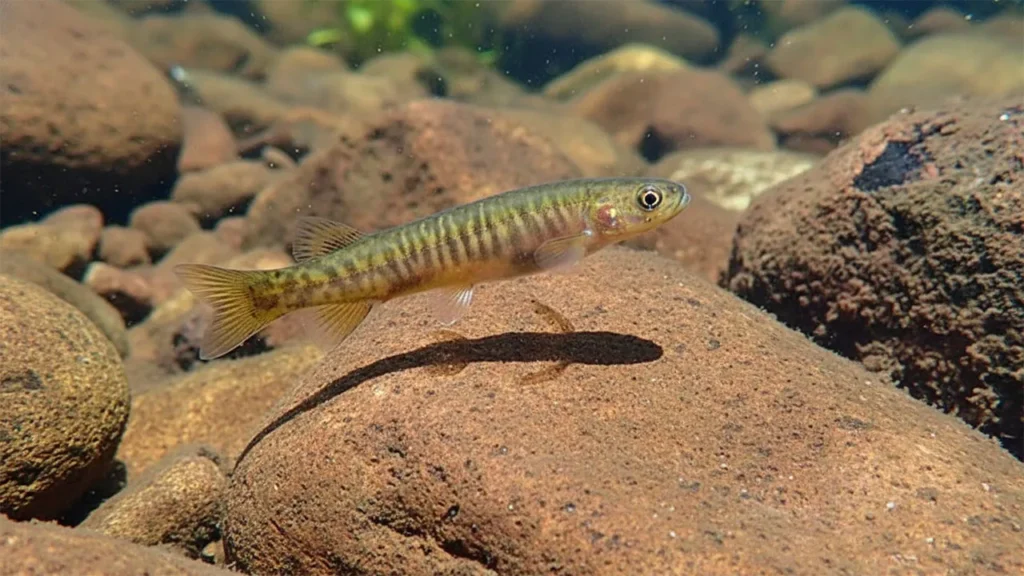
The Galaxias family of fish might not be as well-known as the others on this list, but their intellect is demonstrated through sheer grit and navigational genius.
Primarily found in the Southern Hemisphere, particularly New Zealand and Australia, these small freshwater fish perform incredible feats of migration that require both physical prowess and a sophisticated mental map of their surroundings.
Many species of Galaxias are known for their amazing capability to climb waterfalls. To reach their preferred spawning grounds upstream, these fish must fight their way up rushing water, clinging to wet rock surfaces with their fins and wriggling their bodies.
This isn’t just a brute-force climbwith a small body size; it requires problem-solving. The fish must find the best path with the least amount of flow and navigate complex, three-dimensional obstacles. This journey is a testament to their incredible determination and specialized biology.
This waterfall-climbing behavior suggests that these creatures possess remarkable spatial memory and cognitive mapping capabilities. They often return to the same streams where they were born to produce their own young. This means they must remember a long and challenging route, navigating a complex river system to find their way home.
Conclusion
From the self-aware Manta Ray to the tool-using Wrasse and the sharp-shooting Archerfish, it’s clear that the world of fish is brimming with brains.
Apart from them, the Oscar fish, Betta fish, Betta splendens, and the Elephant-nose fish also possess remarkable intelligence and exhibit advanced problem-solving skills. The Elephantnose fish can even recognize human faces by combining visual cues with its extraordinary capacity to sense a person’s unique electrical signature.
As marine science advances, more comments from scientists help learning more about the hidden depths of fish cognition and the underwater world. This growing body of research not only deepens our appreciation for these amazing animals but also underscores the urgent need for conservation. Protecting our oceans and rivers means protecting these intelligent beings and the complex ecosystems they inhabit.
The next time you see a fish, remember: you’re not just looking at a pretty swimmer; you’re looking at a survivor, a strategist, and a thinker.
