




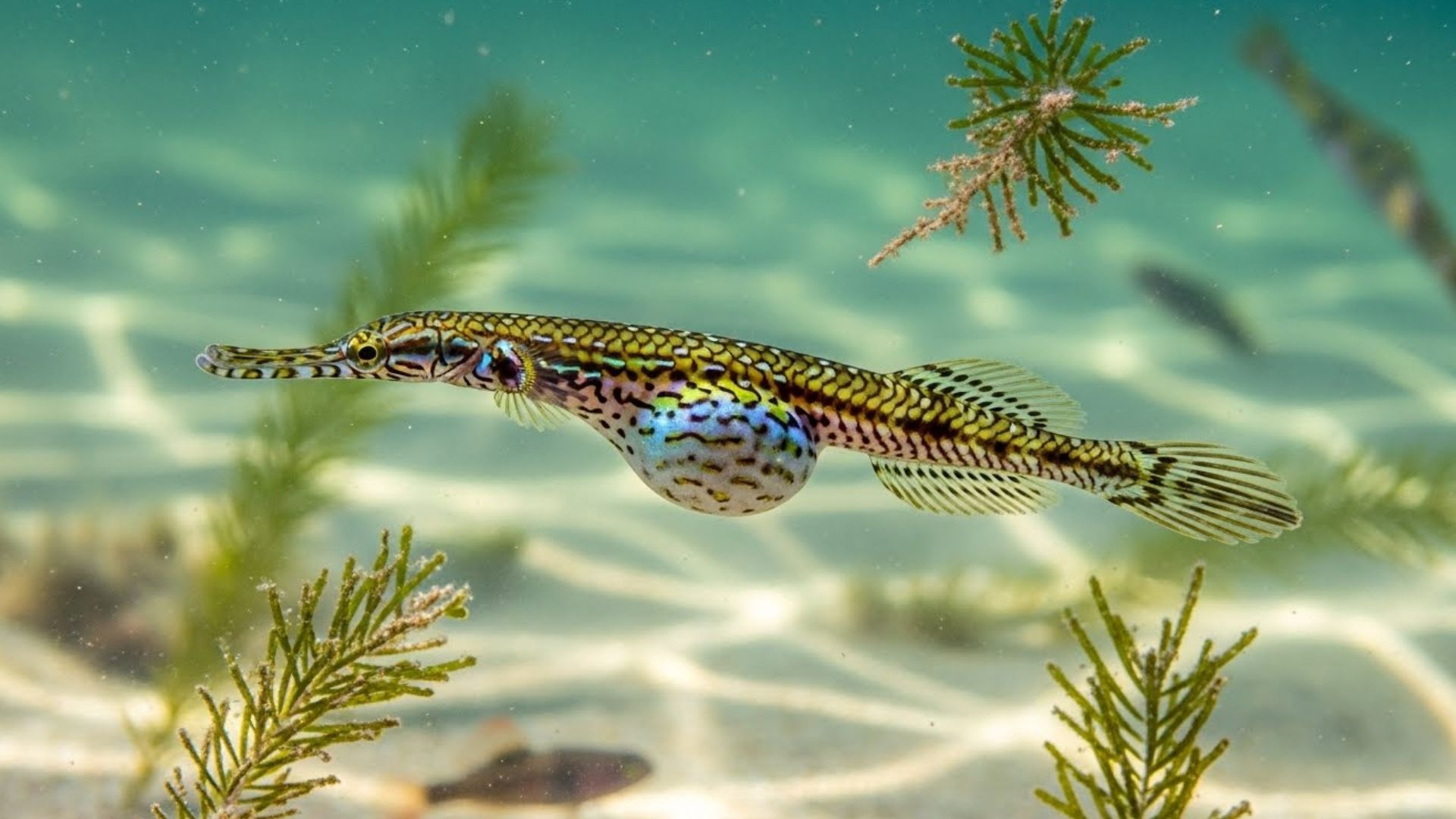
When people think about pregnancy, fish are rarely part of the conversation—let alone male fish. Yet in the ocean, lakes, and seagrass meadows, some of the most fascinating fish have completely rewritten the rules of reproduction. Among these fascinating fish, a select group stands out for one extraordinary reason: the males get pregnant.
Fish known for male pregnancy challenge what we think we know about biology, evolution, and parental roles. In these species, the male does far more than fertilization. He carries fertilized eggs, nourishes growing embryos, regulates their environment, and eventually gives birth to live young.
This is not a rare accident of nature but a finely tuned evolutionary strategy that has emerged within the family Syngnathidae. This sex role reversal reshapes courtship, competition, and mate choice in ways that continue to fascinate researchers.
Below, we explore several fish species in which male pregnancy is not only real but also essential to survival, highlighting the remarkable diversity of reproductive strategies in the underwater world.
Fish Known for Male Pregnancy
1. Gulf Pipefish
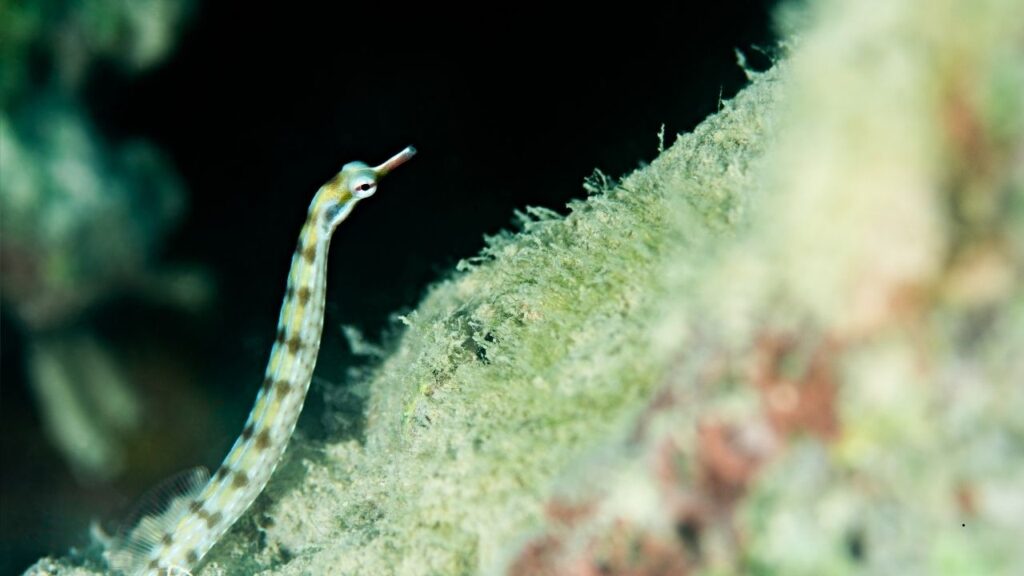
The Gulf pipefish is one of the clearest examples of sex role reversal in the ocean. In this species, the male becomes pregnant by receiving eggs from a female into his brood pouch, a specialized structure designed entirely for reproduction. Once the female deposits her eggs, the male fertilizes them and seals them safely inside his body.
Inside the male’s brood pouch, the eggs develop in a controlled environment rich in oxygen and nutrients. Blood vessels line the pouch walls, allowing efficient nutrient exchange and waste removal. This pseudo-placenta-like structure mimics some functions of mammalian pregnancy, even though it evolved independently.
What makes Gulf pipefish especially interesting is that the male actively controls which embryos survive. If food becomes scarce or if the female mate is less desirable, the male may reabsorb nutrients from growing embryos. This makes pregnancy a dynamic process, not a passive one.
By the time the male pipefish gives birth, the newborn offspring are fully formed and ready for life in the surrounding water. As per the Florida Museum, this heavy investment means males can only carry a limited number of eggs at once, making pregnancy a valuable and costly commitment.
2. Pygmy Seahorse
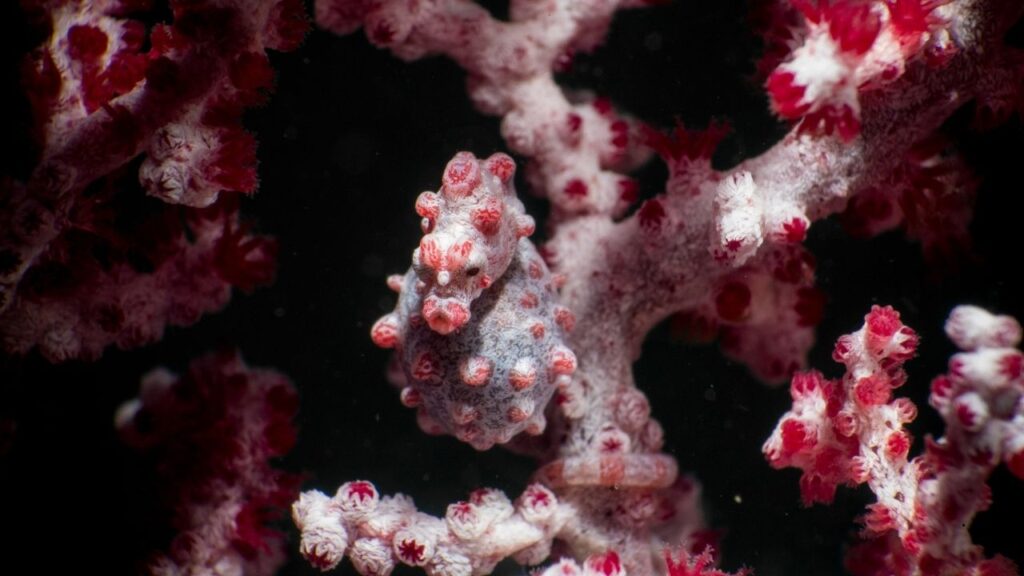
Male seahorses are perhaps the most famous examples of male pregnancy, and pygmy seahorses are no exception. During courtship, females transfer their eggs into the male’s brood pouch, located on the underside of his body. The male then fertilizes the eggs internally.
Once inside the male’s pouch, the fertilized eggs are protected and nourished. The pouch regulates oxygen levels, salinity, temperature, and nutrient flow, functioning in ways similar to a mammalian uterus, though without an actual womb. Seahorse dads take this responsibility seriously, investing enormous energy into pregnancy.
The gestation period lasts several weeks, during which the male’s body undergoes hormonal changes. As birth approaches, muscular contractions begin, and the male gives birth to dozens or even hundreds of baby seahorses in a dramatic release.
Despite this effort, there is no parental care after birth. The tiny offspring drift away immediately, yet their survival rate is higher than that of many fish because of the protection provided during pregnancy. For seahorse populations, this strategy is crucial for long-term survival.
3. Tiger-Tail Seahorse
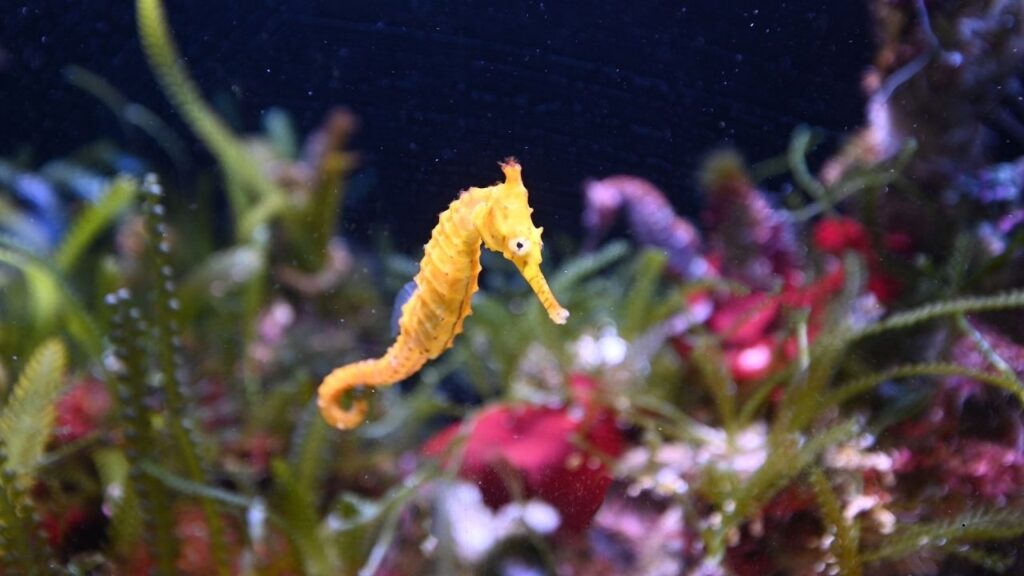
The tiger-tail seahorse offers another stunning example of seahorse male pregnancy. After an elaborate courtship dance, the female deposits her eggs directly into the male’s brood pouch using an ovipositor. The male then fertilizes the eggs inside his pouch.
Inside the pouch, the newborn embryos receive nutrients and oxygen through specialized tissue rich in vessels. This environment supports embryo development much like a mammalian placenta, despite arising through entirely different evolutionary pathways.
Pregnancy in tiger-tail seahorses lasts several weeks. During this time, the male reduces swimming activity and focuses energy on carrying and protecting his developing offspring. Late pregnancy is marked by visible swelling of the pouch and increased movement from within.
When birth finally occurs, the male gives birth through strong muscular contractions, releasing fully formed young. These baby seahorses are immediately independent, marking the end of an intense reproductive cycle for the male.
4. Dusky Pipefish
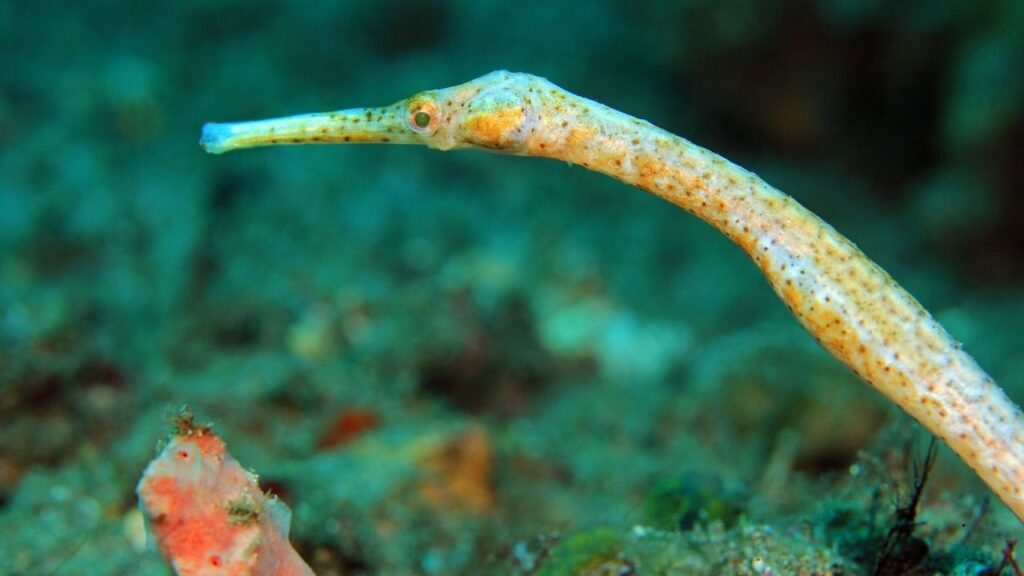
Dusky pipefish add complexity to the story of male pregnancy. In this species, males and females look nearly identical, yet reproductive roles are very distinct. Like other pipefish, males carry fertilized eggs in a brood pouch and provide all post-zygotic care.
The female deposits eggs into the male’s pouch, sometimes from multiple females in a single breeding season. This means that one male can simultaneously carry developing embryos at different stages of development. Pregnancy becomes a balancing act between capacity, nutrition, and survival.
Researchers studying dusky pipefish have found that females often choose mates based on the male’s ability to carry eggs successfully. Male fitness, therefore, becomes a key factor in mate choice, reversing the usual pattern seen in many animals.
When the male gives birth, the offspring are released as free-swimming young, fully formed and ready to survive on their own. This strategy allows rapid reproduction while maintaining high embryo survival.
5. Ruby Seadragon
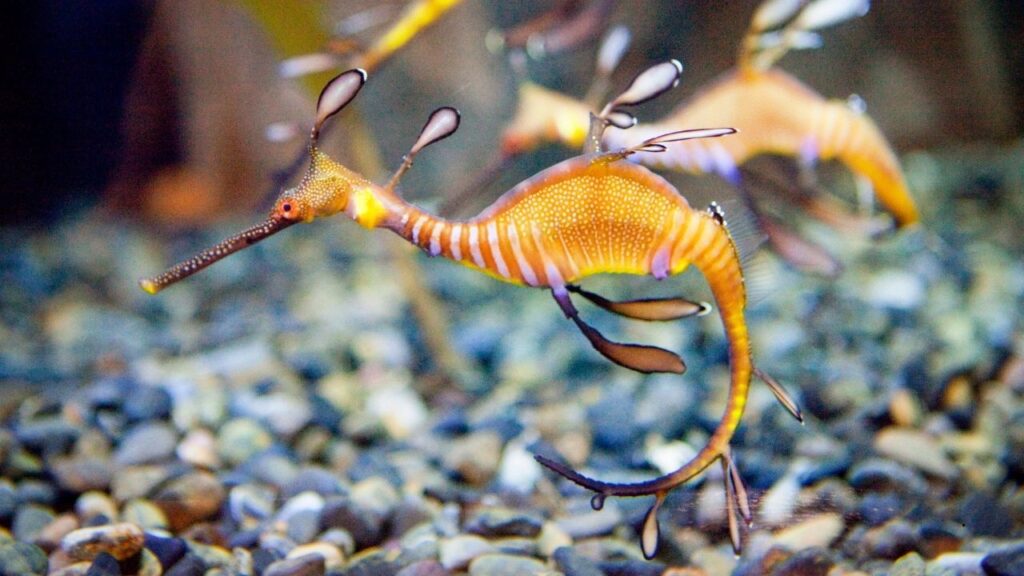
Ruby seadragons, close relatives of seahorses and pipefish, as mentioned by the Ocean, take male pregnancy in a slightly different direction. Instead of a closed pouch, the male carries eggs on a brood patch along his tail. The female attaches unfertilized eggs directly to this area, and the male fertilizes them externally.
Once attached, the eggs are held securely by spongy tissue rich in blood vessels. Over several weeks, the male incubates the eggs, supplying them with oxygen and nutrients while protecting them from predators and environmental stressors.
The male’s prehensile tail plays a critical role in stabilizing the eggs as they develop. Throughout pregnancy, the male adjusts his behavior, limiting movement and avoiding risky habitats.
When the eggs hatch, the male releases miniature sea dragons into the water. These tiny offspring are immediately independent, marking the end of one of the ocean’s most visually stunning examples of male pregnancy.
6. Broadnosed Pipefish
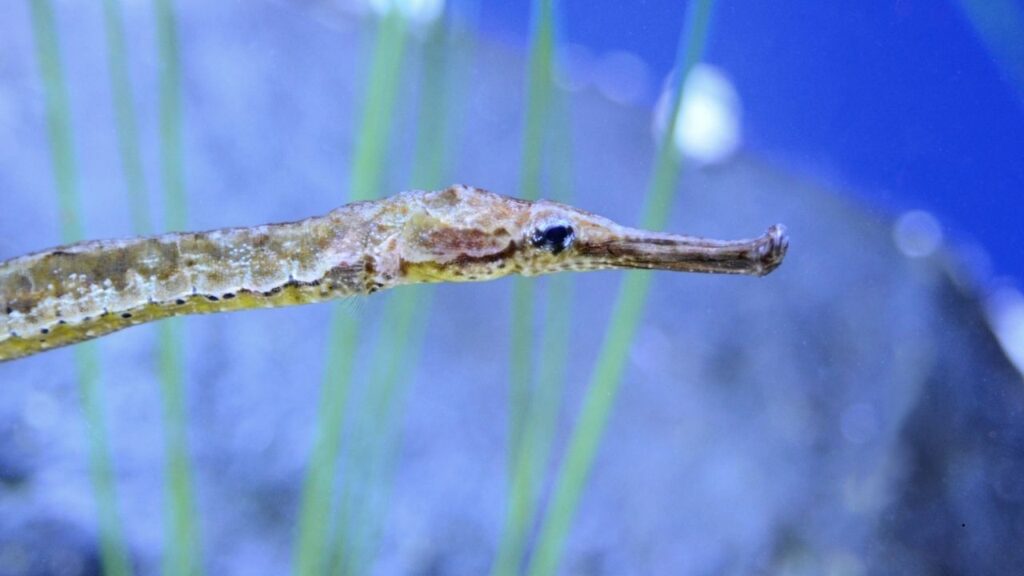
Broadnosed pipefish take male pregnancy to an advanced physiological level. Their brood pouch is fully enclosed and highly specialized, providing a controlled environment for developing embryos. After courtship, the female deposits her eggs into the male’s pouch, ensuring paternity.
Inside the male’s pouch, fertilization occurs, followed by weeks of gestation. The pouch actively regulates oxygen, nutrients, salinity, and waste removal, functioning as a true pseudo-placenta—this level of care rivals aspects of mammalian pregnancy.
As pregnancy progresses, the male’s body undergoes hormonal and physiological changes. Smooth muscles in the pouch prepare for birth, and nutrient transfer increases during late pregnancy.
When the time comes, the male gives birth through intense muscular contractions, releasing fully developed young. This investment allows for fewer eggs but much higher survival rates.
7. Lined Seahorse
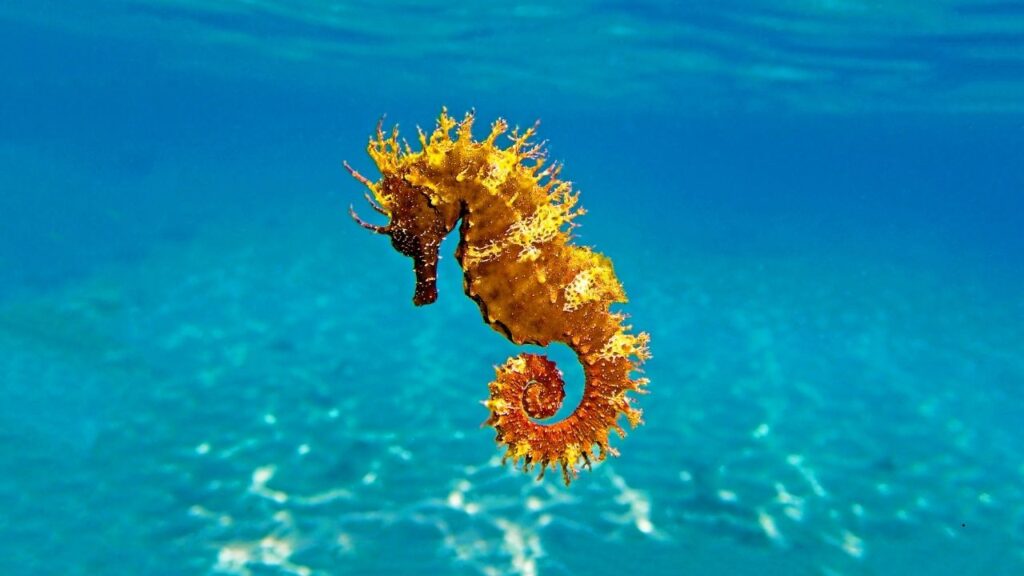
The lined seahorse is another iconic example of male pregnancy within the genus Hippocampus. After fertilization, eggs are transferred into the male’s brood pouch, where they are protected and nourished for several weeks.
During pregnancy, the male’s pouch provides oxygen, nutrients, and immune protection. This reduces egg loss and allows female seahorses to produce more eggs almost immediately after transfer, maximizing reproductive output.
The male member of the species of seahorses gives birth to live young, known as fry, and releases them into the surrounding water. Although the offspring face heavy predation, their survival rate is higher than that of species that abandon eggs immediately.
This continuous cycle of pregnancy allows seahorses to reproduce efficiently throughout the breeding season, making male pregnancy a powerful evolutionary strategy, as per the Marine Sanctuary.
Conclusion
Male pregnancy in several species is one of nature’s most remarkable evolutionary innovations. Across pipefish, seahorses, and sea dragons, males have evolved the ability to carry, nourish, and give birth to young, altogether redefining traditional reproductive roles.
These species demonstrate that pregnancy is not limited by sex but shaped by survival, energy efficiency, and evolutionary pressure. By shifting the burden of pregnancy to the male, females can produce more eggs, while males ensure a higher survival rate for developing offspring.
Understanding the fish that opt for male pregnancy helps us better understand reproduction, evolution, and parental care across animals. It also highlights how fragile these systems can be, as many of these species face habitat loss and population decline.
In the underwater world, pregnancy is not always about who produces the eggs—it’s about who carries the future of the species, sometimes quite literally.
