




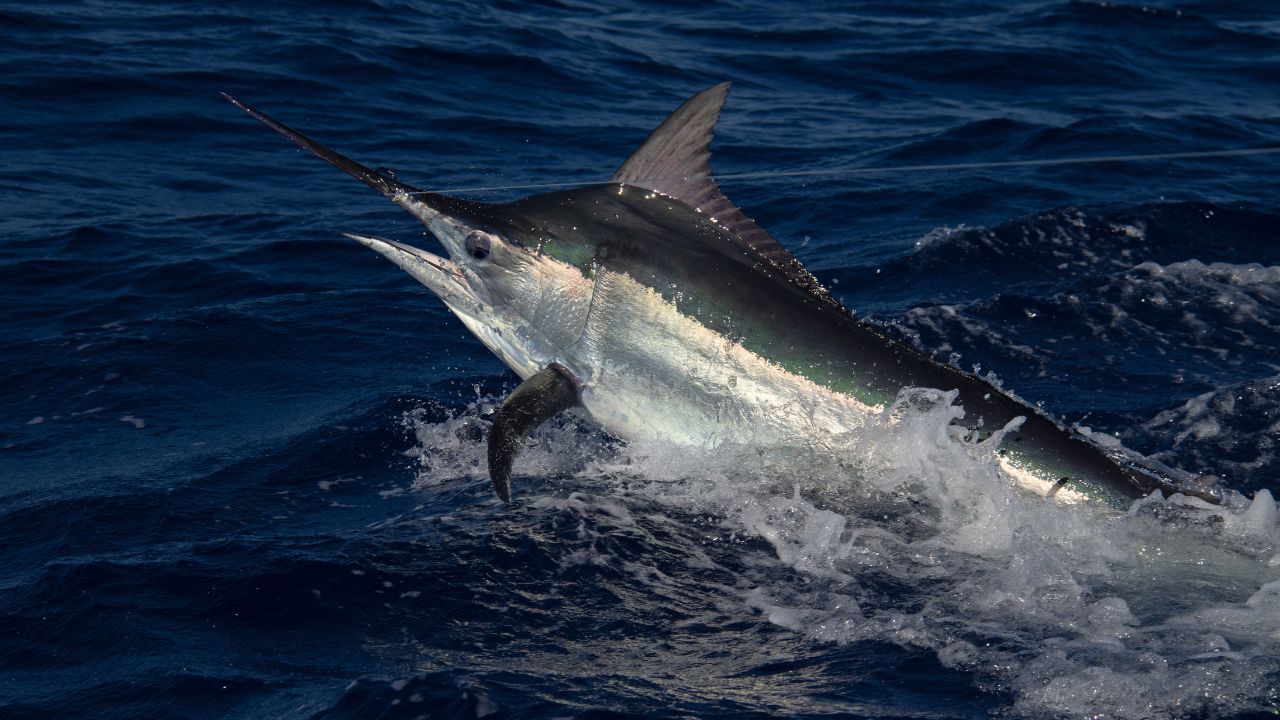
When we look at the ocean, we often think of it as a calm, relaxing place. But below the surface, it is a high-speed racetrack. In this vast world, speed is not just a luxury; it is the key to survival. Whether escaping a hungry mouth or trying to catch a meal, the fastest fish in the ocean are marvels of biological engineering.
These creatures have evolved over millions of years to slice through the water with minimal drag. Their bodies are built for power, allowing them to accelerate like sports cars. From the tropical reefs to the chilly depths, let’s dive in and meet the speed demons that rule the planet.
Here is a look at the champions of the underwater sprint.
Fastest Fish in the Ocean
1. Sailfish
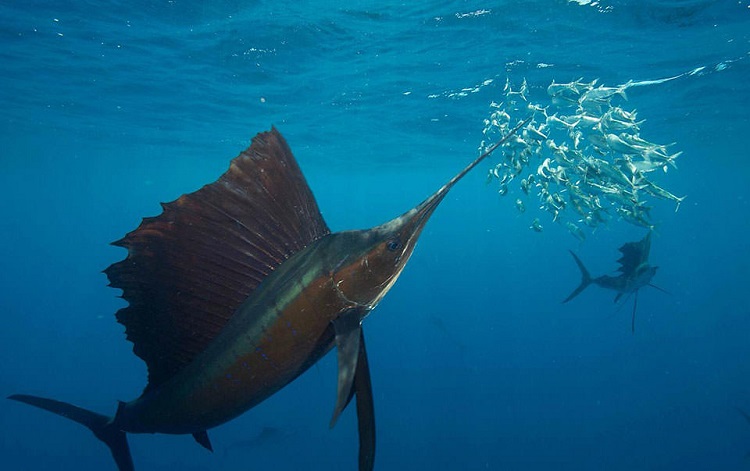
The Sailfish is widely considered the holy grail of speed among anglers and scientists alike.
Easily recognized by the massive, sail-like dorsal fin on its back and its long, spear-like bill, this fish is a member of the billfish family. They are stunning to look at, often flashing iridescent blue and purple colors when they get excited. They mostly inhabit the tropical and subtropical waters of the Atlantic, Indian, and Pacific oceans.
When it comes to velocity, this fish is a record-breaker. They can reach speeds of up to 68 miles per hour (110 km/h). However, they don’t swim this fast all the time. They use short bursts of speed to ambush schools of sardines or anchovies.
When they swim normally, Britannica says they fold their sail down to become more aerodynamic, only raising it to herd smaller fish into a tight ball called a “bait ball.”
Seeing this fish in action is a true adventure. They are commonly found off the coast of Florida, where the warm Gulf Stream flows. Their ability to slash their bill through the water to stun prey before eating it is unique.
Because they are so fast and acrobatic, often jumping clear out of the water, they are a favorite challenge for sport fishermen who want to see them fight on the line.
2. Black Marlin
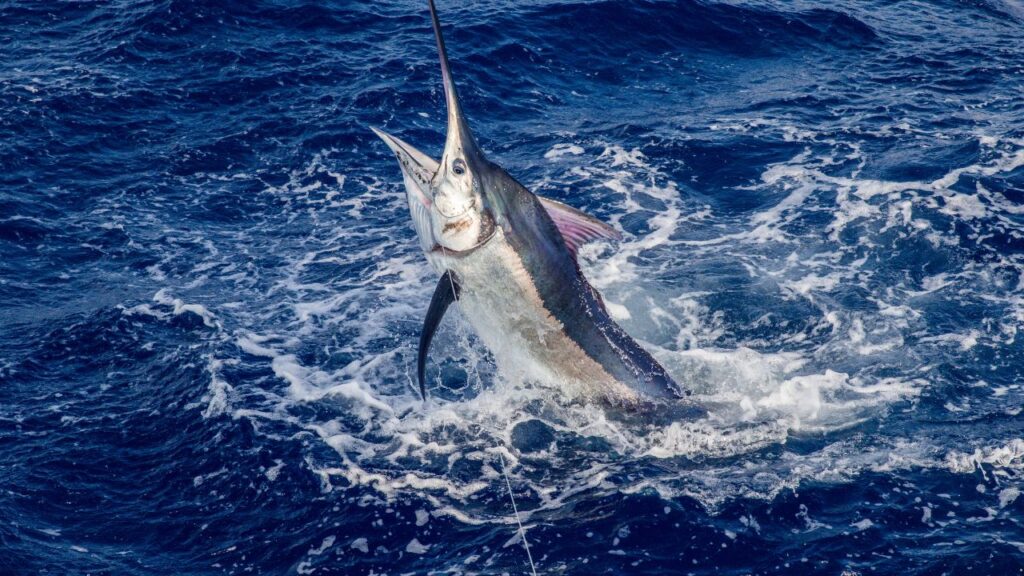
The Black Marlin is a giant of the sea and is one of the largest species of bony fish in the world. This fish is built for pure power.
Unlike other marlins, their pectoral fins are rigid and cannot be folded flat against their body. This makes them look like a fighter jet underwater. They are truly apex predators, sitting at the top of the food chain.
There are claims that this fish might actually be faster than the sailfish. Some reports suggest they can reach an incredible speed of up to 80 miles per hour (130 km/h) when they are stripping line off a fishing reel. While science is still debating the exact top speed, there is no doubt that their powerful muscles allow them to explode through the water with terrifying force.
These fish generally live in warmer waters but will dive deep to find food. They spend much of their time in the open ocean, far from land. Because of their size—some weighing over 1,500 pounds—they don’t have many natural enemies once they are fully grown. They use their size and speed to hunt tuna and mackerel, overtaking them with ease.
3. Swordfish
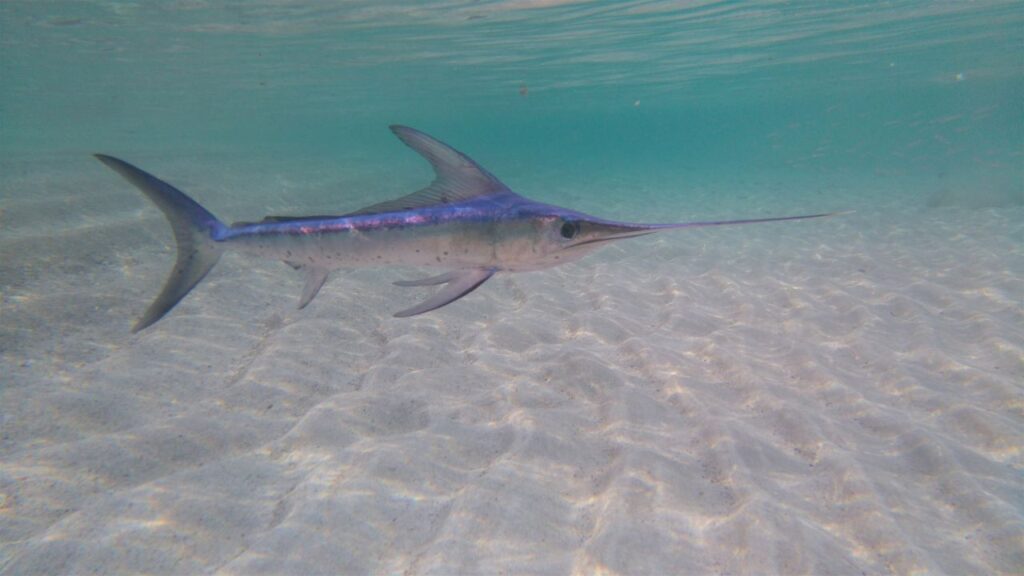
The Swordfish is famous for its long, flat bill that resembles a sword. This streamlined shape is perfect for cutting through the water.
They are tough animals that can withstand huge changes in temperature.
While they are the fastest swimmers when hurting, they are also endurance athletes. They can reach remarkable speeds of around 60 miles per hour (97 km/h). What makes them special is their hunting strategy. They use their sword to slash at schools of fish or squid, stunning them or cutting them into pieces before they eat. They are not picky eaters and will consume almost anything they can catch.
Swordfish often stay in very deep waters during the day and come to the surface at night to feed. They have special organs near their eyes that warm their brain and eyes, allowing them to see better in the dark, cold depths. This adaptation gives them a huge advantage over prey that moves more slowly in the cold.
They are solitary hunters, rarely seen in groups.
4. Wahoo
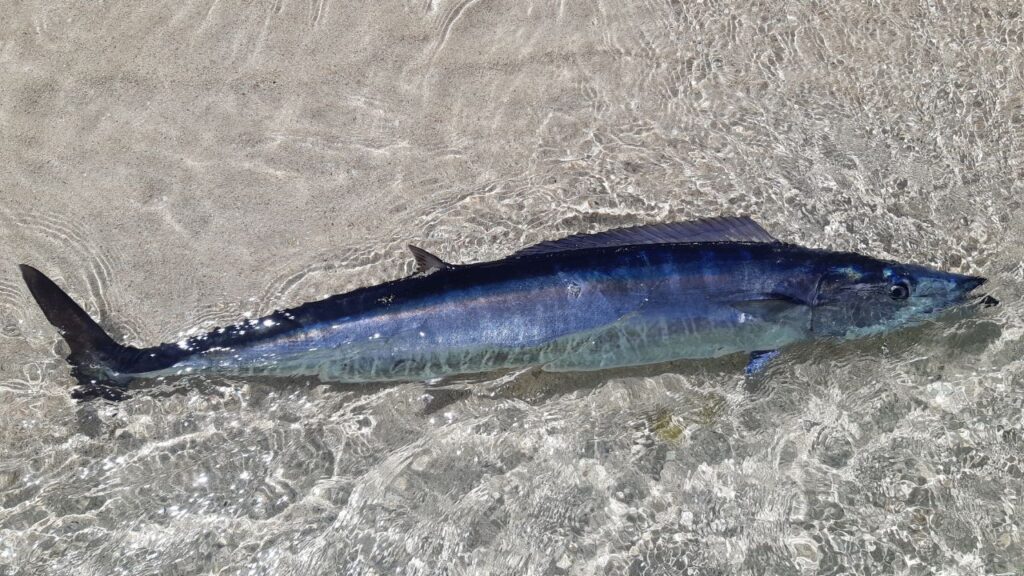
The Wahoo is a favorite among fishermen because of its delicious meat and fantastic speed.
It is a scombrid fish, which means it is related to the mackerel and tuna families. They have a long, torpedo-shaped body with tiger-like stripes along their sides. They are found in tropical and subtropical waters worldwide. The name “Wahoo” is fun to say, but the fish is a serious predator.
Wahoo’s speed is legendary, as per the DEQ. They have been clocked at nearly 60 miles per hour (96 km/h). Their swimming speed is aided by a tail that vibrates at an incredible speed. Unlike other fish that might track prey for a long time, the Wahoo is an ambush predator. They hang in the water and then launch themselves like a missile when food passes by.
Their feeding habits are violent and efficient. They have razor-sharp teeth that act like scissors. They tend to bite the tail off their prey first to immobilize it, then circle back to finish the meal. They usually hunt alone or in small, loose packs.
If you are fishing and your line suddenly screams off the reel, it is likely a Wahoo making a run for it.
5. Yellowfin Tuna
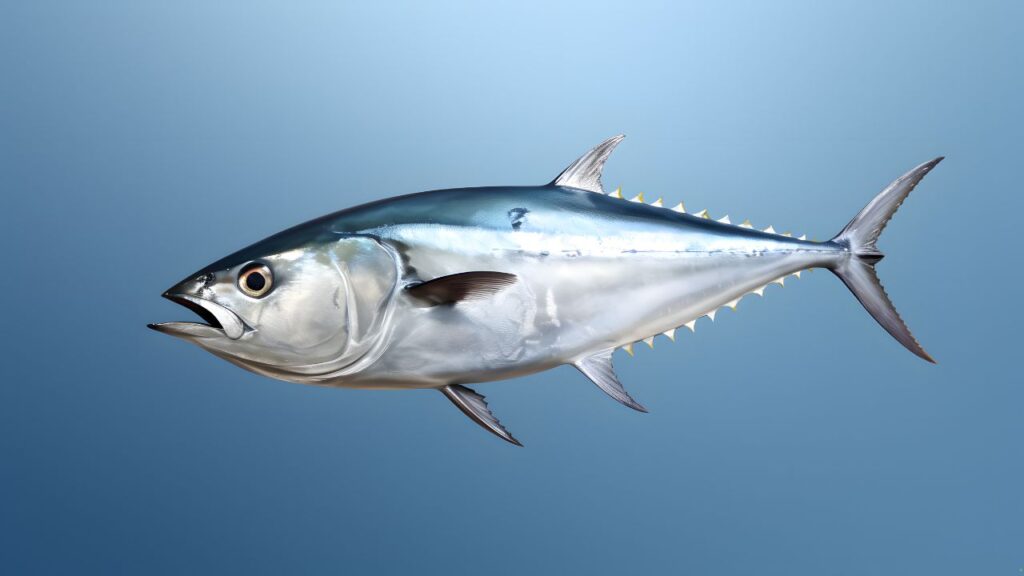
Yellowfin Tuna are beautiful, strong fish named for the bright yellow, sickle-shaped fins on their bodies.
They are found in the open waters of tropical and mild waters worldwide. They are highly social and often swim in massive schools, sometimes mixing with dolphins. This schooling behavior helps protect them, but it also makes them vulnerable to large fishing nets.
When hunting prey, the Yellowfin is a machine. They can swim at speeds of up to 47 miles per hour (75 km/h). One of their favorite snacks is the flying fish.
When it leaps out of the water to escape, the tuna can track it from below and catch it the moment it lands. This hunting strategy requires excellent vision and agility.
These tuna are constantly on the move. They have a unique biological trait where they must keep swimming to breathe; if they stop, they die. This constant motion requires a lot of energy, so they eat a lot. They are predators that feed on bait fish, crustaceans, and squid. Their red muscle allows them to swim for long periods without getting tired.
6. Mako Shark
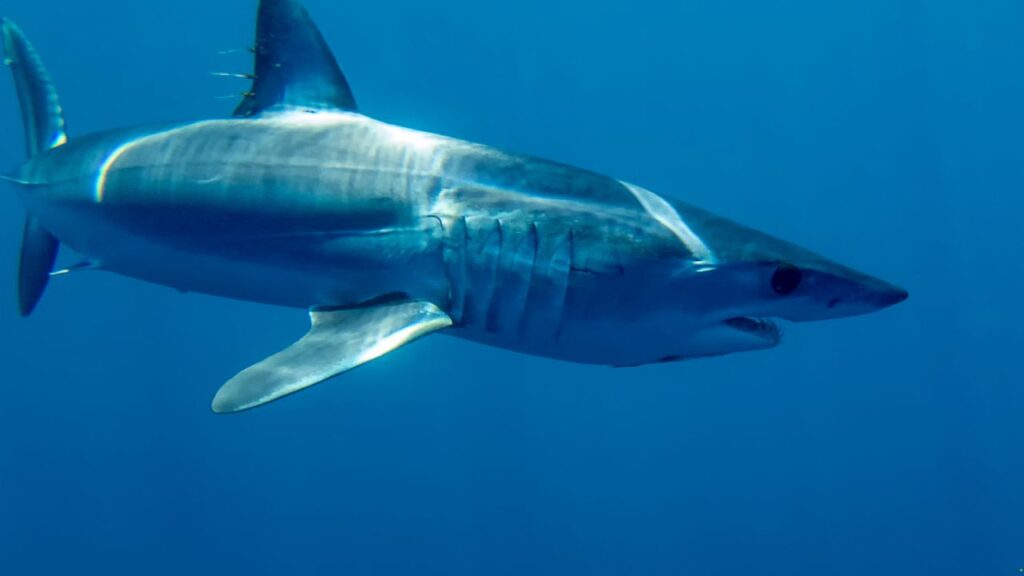
The Shortfin Mako shark is the shark world’s speedster.
With a pointed snout and large, black eyes, it looks terrifyingly fast even when it is sitting still. They are found in tropical and temperate waters, from the warm Caribbean to the cooler waters off Nova Scotia. They are apex predators famous for their ability to leap high into the air when hooked.
The fish’s body is designed for hydrodynamics. Their skin is covered in tiny tooth-like scales called denticles that reduce drag and allow them to accelerate instantly.
A Mako can reach 45 miles per hour (72 km/h), with bursts even faster. This speed is necessary because their favorite foods are bluefin tuna and swordfish, both of which are fast swimmers.
Unusually for a shark, the Mako is endothermic (warm-blooded). This means they can keep their body temperature warmer than the surrounding water. This helps their muscles work more efficiently, giving them the energy to chase down fast prey in colder water. They are aggressive hunters and often attack from below, biting their victim’s tail to disable it.
7. Atlantic Bluefin Tuna
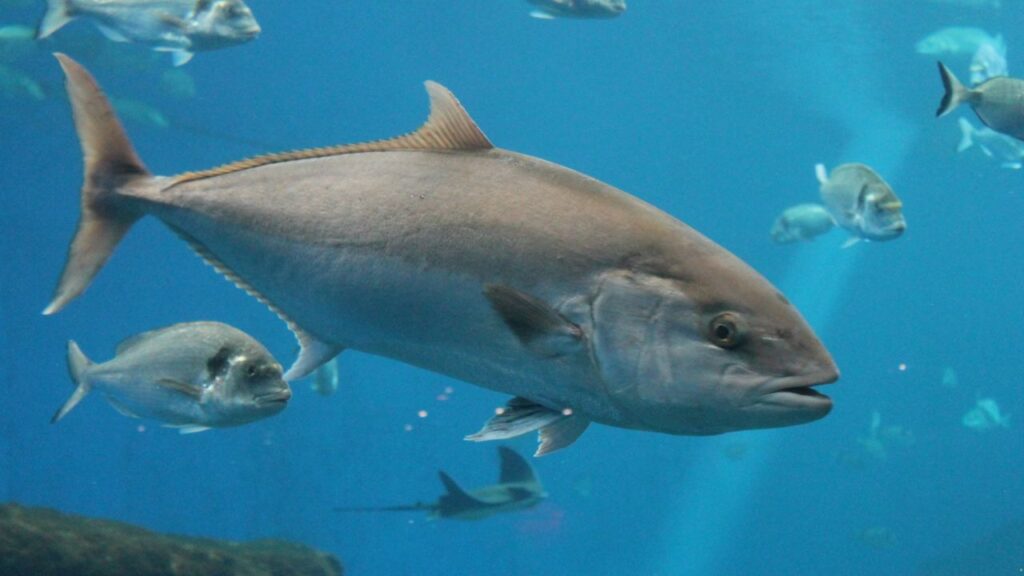
The Atlantic Bluefin Tuna is the king of the tuna family. They are massive, tank-like fish that can live for 40 years.
Found in the Atlantic Ocean, they migrate thousands of miles between feeding and breeding grounds. They are highly prized for sushi, which has unfortunately led to severe overfishing. They are one of the most commercially valuable fish in the sea.
Despite their bulky size, they can reach impressive speeds of 43 miles per hour (70 km/h). They can retract their pectoral fins into slots in their body to become more streamlined. Their powerful muscles are so strong that if you hooked one, it would feel like you hooked a submarine. They are built for both speed and endurance.
They live in tropical and gentle waters but can dive into very deep waters—over 3,000 feet down—to hunt. Like the Mako, they are warm-blooded, which allows them to hunt in the freezing waters. They eat herring, mackerel, and eels. Their survival depends on their ability to find vast schools of fatty fish to fuel their massive bodies.
Conclusion
The ocean is full of wonders, but the fastest fish are truly in a league of their own. From the acrobatic Sailfish to the mighty Bluefin Tuna, these animals prove that nature is the ultimate engineer. Their impressive speeds are not just for show; they are essential for the balance of the marine ecosystem. They keep prey populations in check and serve as indicators of ocean health.
However, their speed cannot outrun human impact. Overfishing and habitat destruction threaten their existence. It is up to us to ensure these species remain in the wild, not just in history books. If we respect their lives and manage our resources wisely, we can ensure that future generations can experience the thrill of seeing them.
