




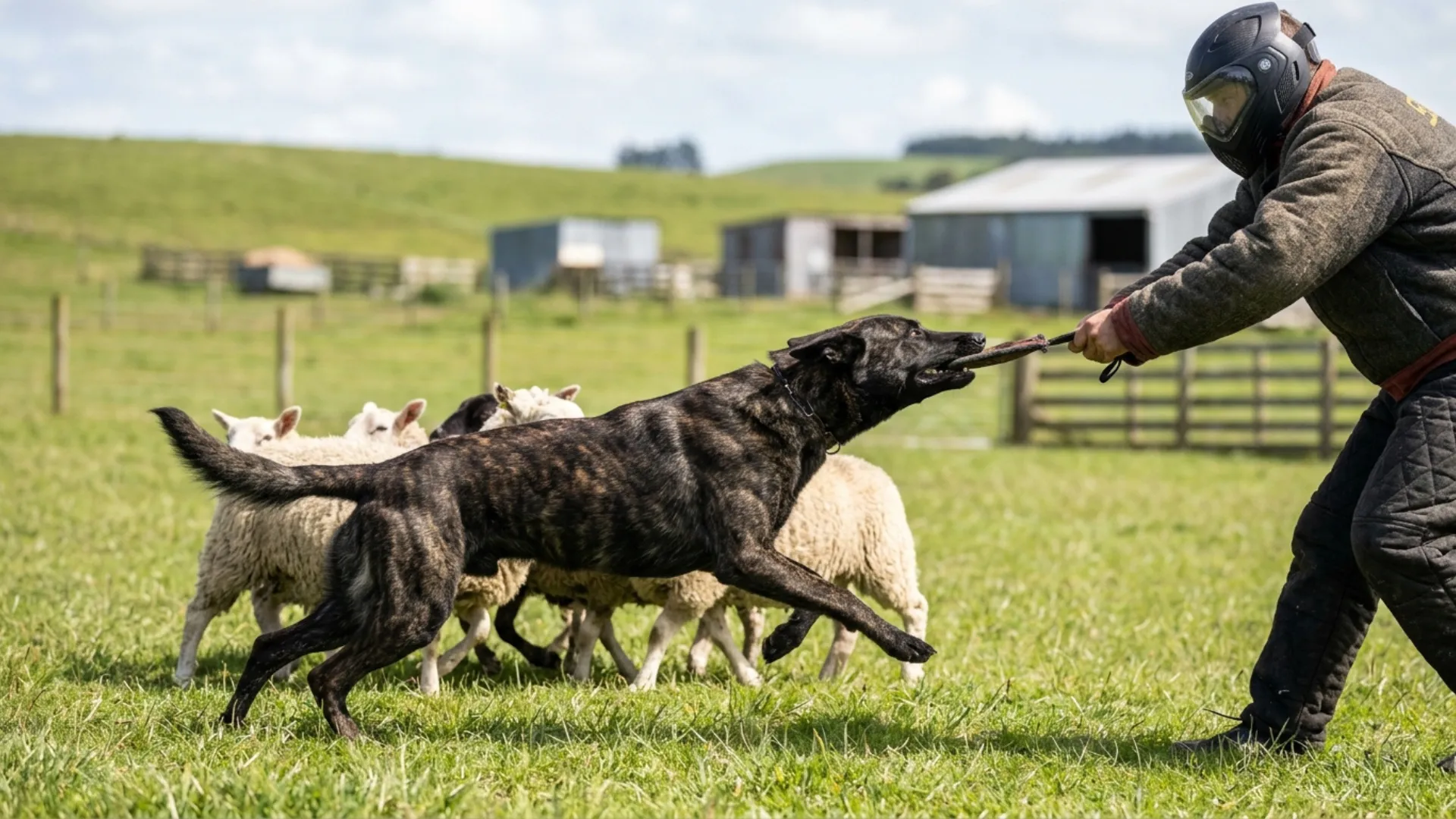
Managing livestock or protecting property sounds straightforward until daily pressure begins to build. Animals drift, boundaries get tested, and staying alert from morning to night is not always possible for a single person.
That gap is where the right working dog changes everything. Not just any dog, but one built for focus, stamina, and controlled strength. These dogs do not hesitate when movement needs direction or when a situation feels uncertain. They respond with purpose, shaped by generations of work rather than chance.
Selecting the right one is not about appearance or size alone. It is about reliability when conditions are unpredictable and when consistency matters more than anything else. The breeds selected for this role bring a level of discipline that cannot be improvised.
Ahead, you will find working dogs known for their herding precision and natural protective instinct, carefully matched to real-world demands.
Key Takeaways
Some dogs react to situations, while others seem to anticipate them before anything shifts out of place.
German Shepherds and Belgian Malinois step in with sharp focus and controlled strength, responding fast when direction matters most.
Dutch Shepherds and Belgian Tervurens carry that same discipline, shifting between tasks without losing rhythm or control.
Spend a little more time here, and you will start noticing which of these working partners truly match real-world demands.
Top Power‑Packed Working Dog Breeds Ideal for Herding and Protection
1. German Shepherd
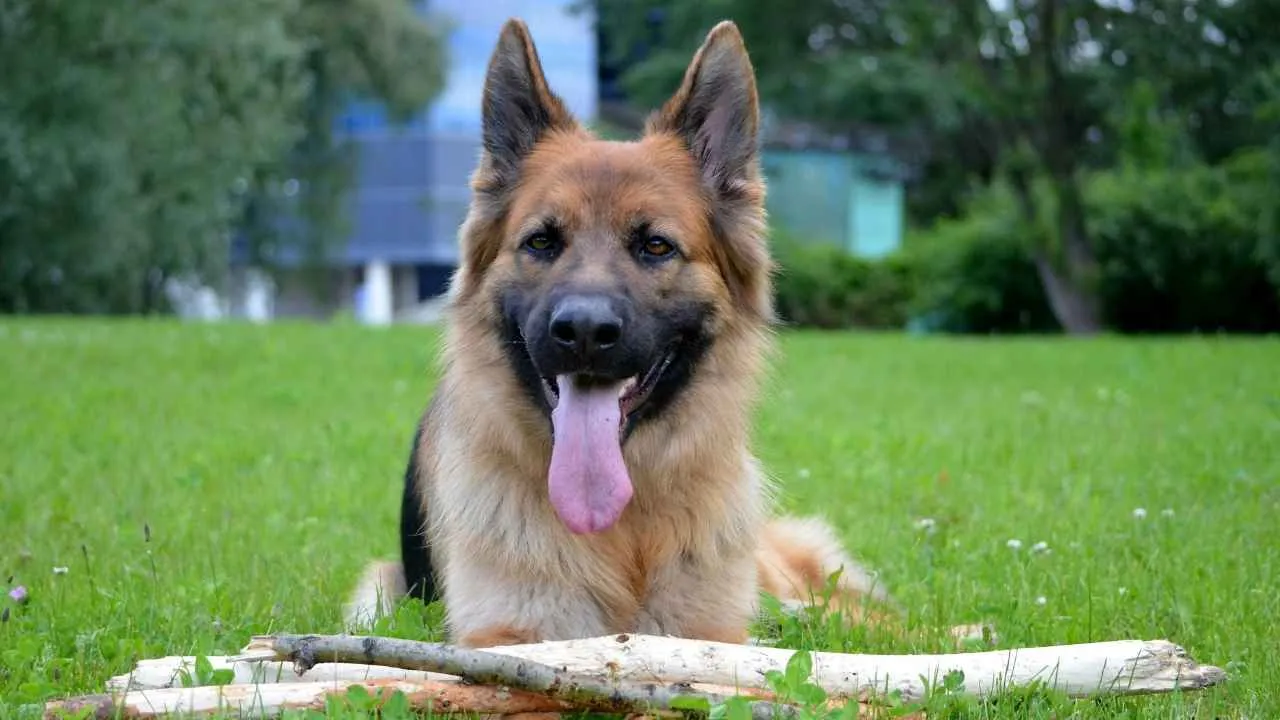
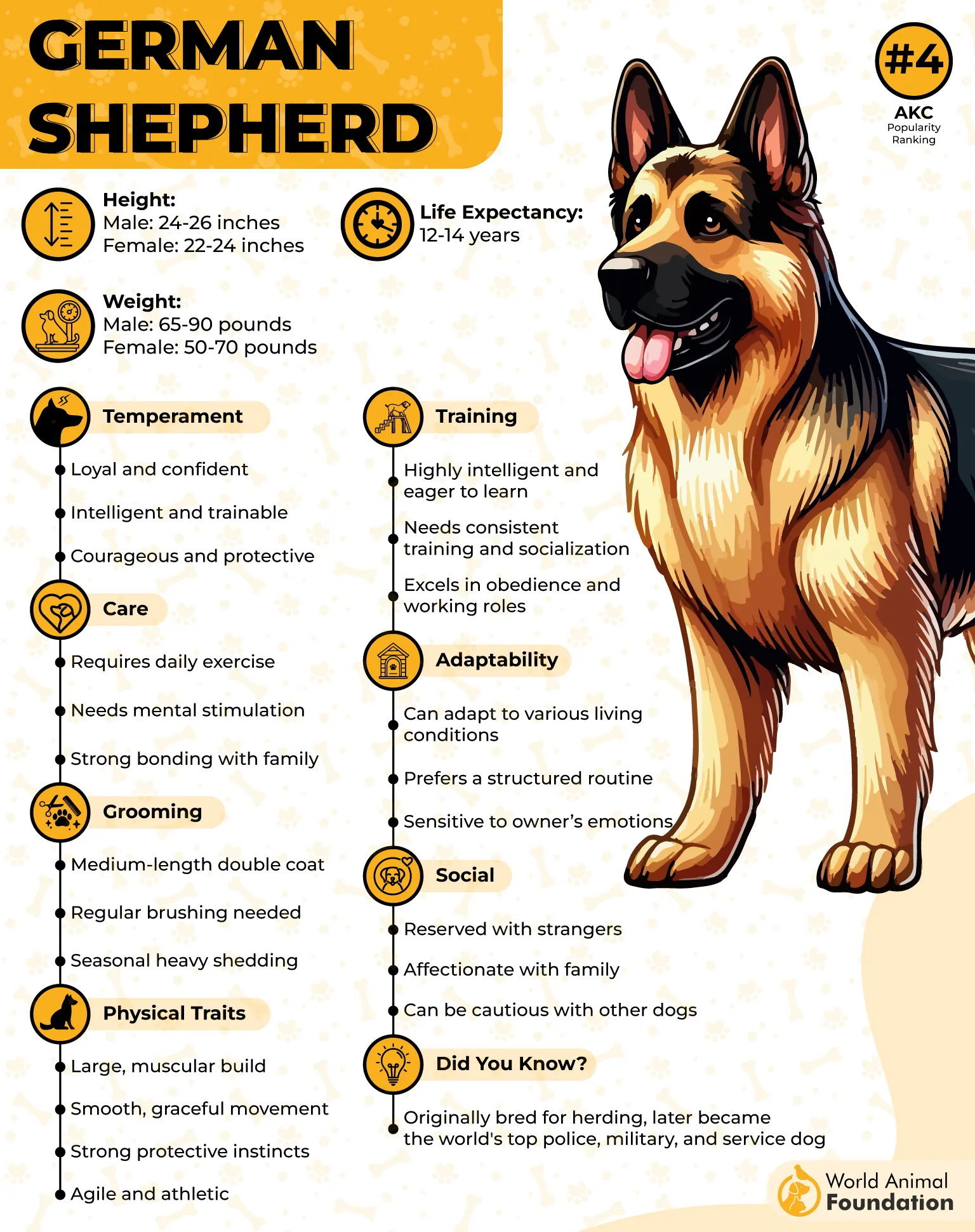
The German Shepherd combines a muscular frame with agility, creating a dog that handles physically demanding tasks with precision.
Its intelligence connects closely with action, allowing quick understanding of complex commands. This blend places it naturally in roles requiring discipline and response.
Work-driven mindset
This herding breed connects strongly with structured tasks, often performing best when given clear direction and purpose. According to PetMD, its role in patrol, detection, and rescue work reflects a strong link between instruction and execution.
That connection appears through task-focused behavior:
Handles scent-based detection tasks
Responds accurately during patrol routines
Engages in search-focused assignments
Energy directed through purpose
It operates with high energy tied to its herding roots, often seeking outlets that involve both movement and mental focus. Without regular engagement, that energy shifts into restless or disruptive patterns. Daily structured activity channels this drive into controlled output.
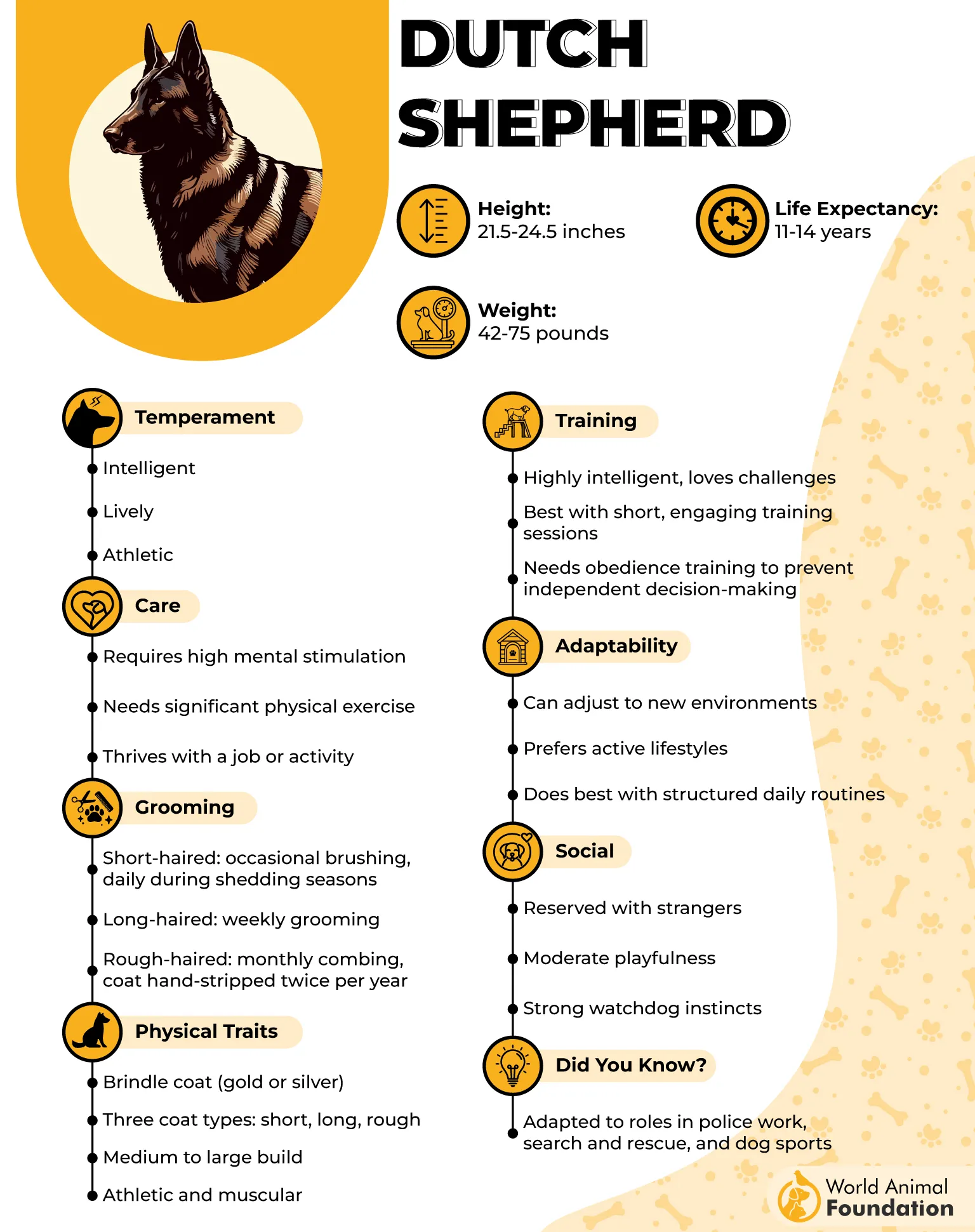
2. Dutch Shepherd
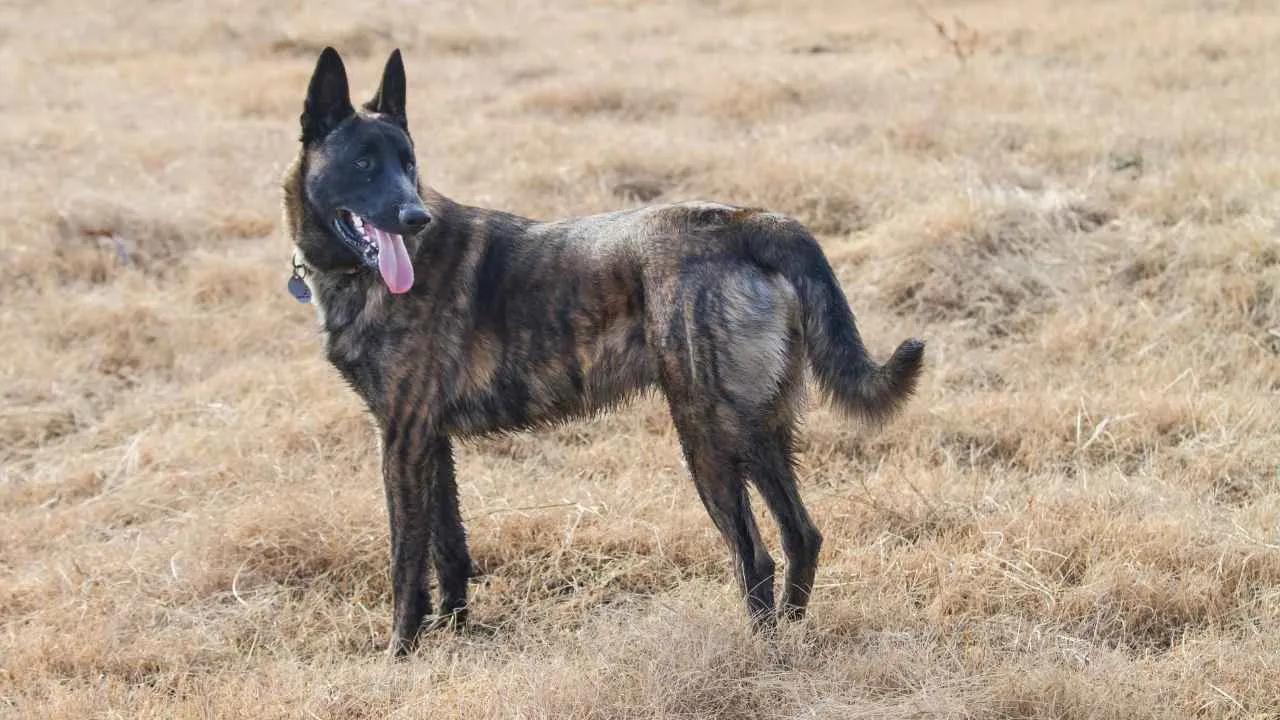
The Dutch Shepherd emerged in rural Dutch regions, assisting with herding livestock, guarding property, and even pulling carts across farmland.
Its role demanded a dog that could switch between tasks without hesitation. This wide functional range shaped a working style built on adaptability and precision.
Task handling across roles
This energetic dog transitions between responsibilities such as tracking, guarding, and coordinated fieldwork, supported by strong scent detection and sharp awareness. Its use in search-and-rescue and as a police dog reflects this multi-role capability.
That working range becomes clear through:
Tracks scent with strong accuracy
Responds quickly during structured tasks
Adjusts between guarding and active work
Behavior shaped by constant engagement
It reacts to inactivity with restless habits like digging or attempting to herd other animals within the home. Its alert nature also leads to vocal signals when someone approaches, even in routine situations. Regular engagement keeps these tendencies directed toward purposeful activity.
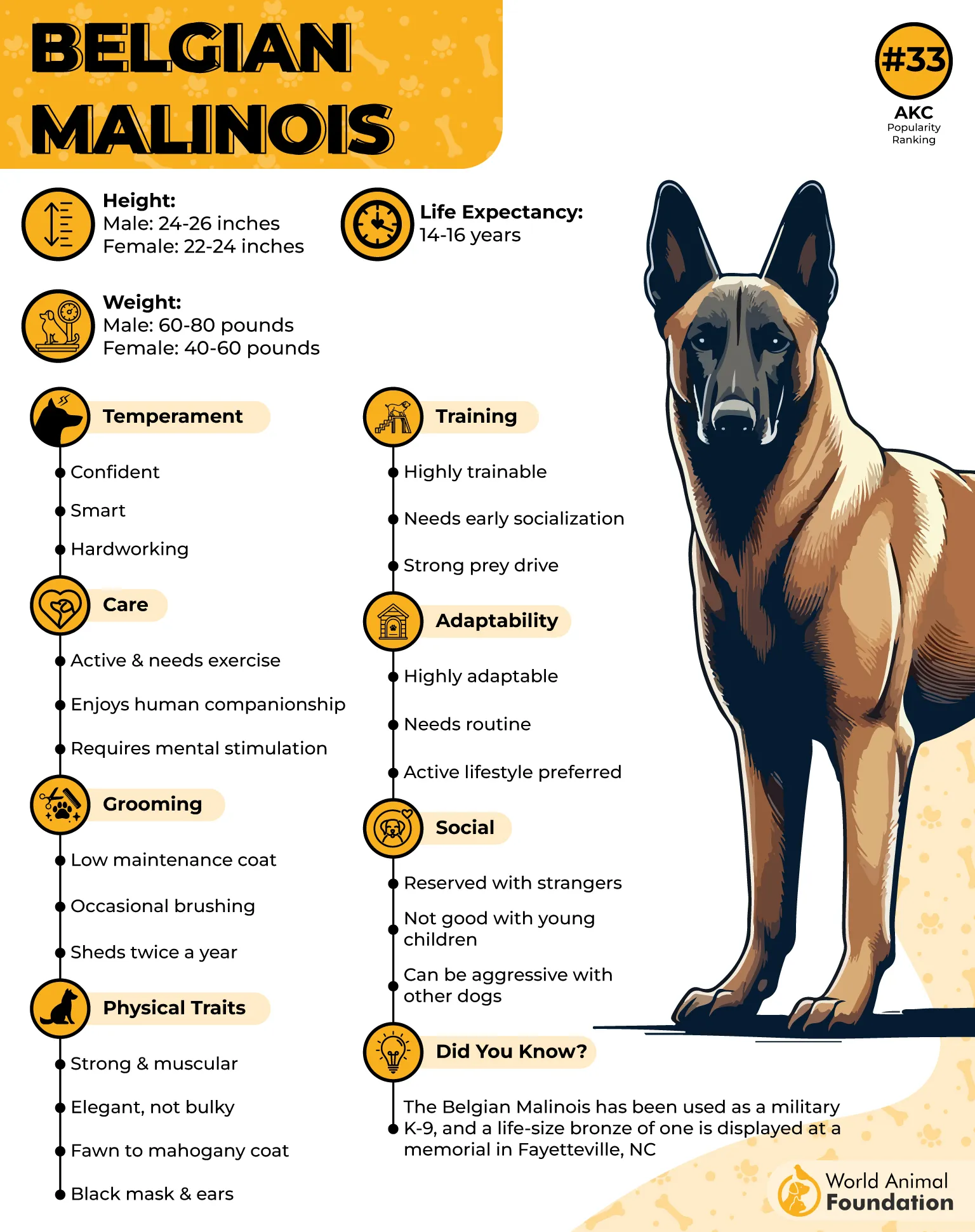
3. Belgian Malinois
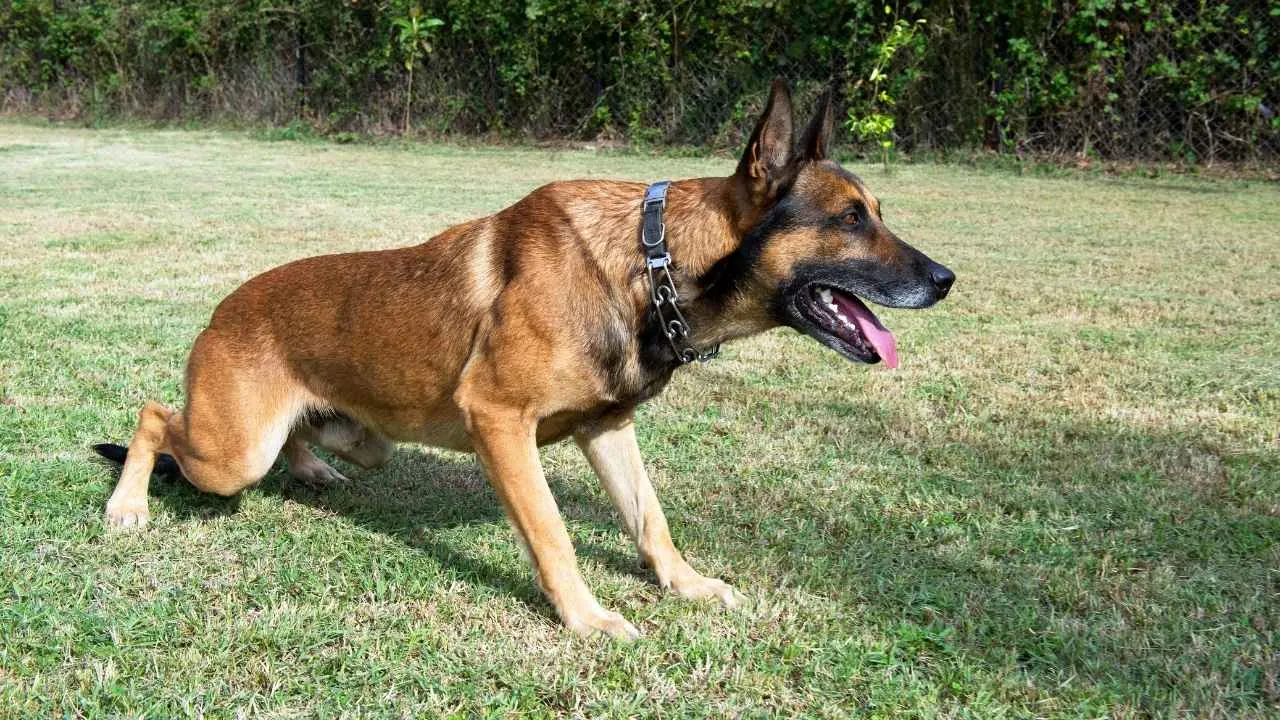
The Belgian Malinois was originally bred as a shepherding dog, later refined for guarding livestock with a strong focus on intelligence and agility.
Its role expanded into police and military work, where control and response matter, as per Omlet. This shift reflects a dog built for demanding, task-driven environments.
Task focus and operational style
This herding dog breed approaches work through intense concentration, staying engaged with tasks that require both mental input and physical response. It responds quickly to structured direction and remains committed once a task is assigned.
This working style becomes clear through:
Handles complex tasks with fast response timing
Engages deeply in problem-solving activities
Maintains focus during extended training sessions
Energy directed through purpose
The Belgian Malinois operates with high energy and requires proper physical and mental stimulation beyond basic walks. Its need for movement connects closely with running, structured drills, and active engagement. Without direction, this energy shifts into restless or overactive behavior.
4. Belgian Tervuren
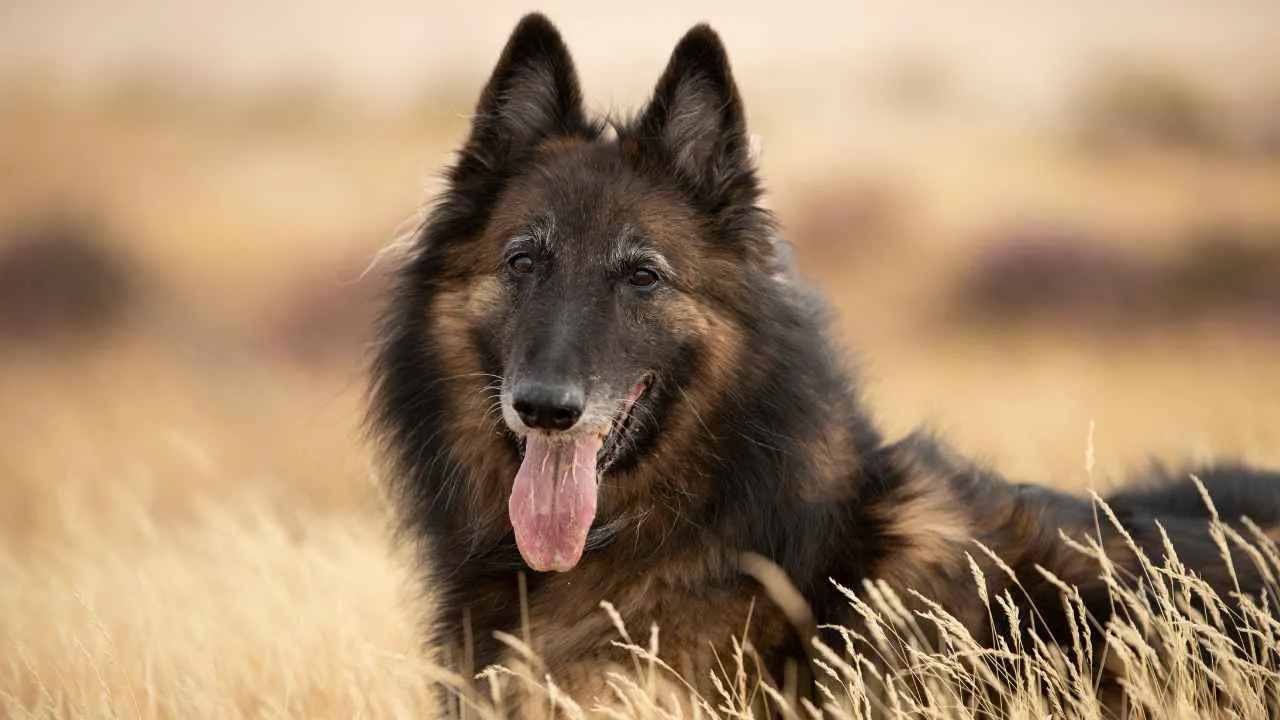
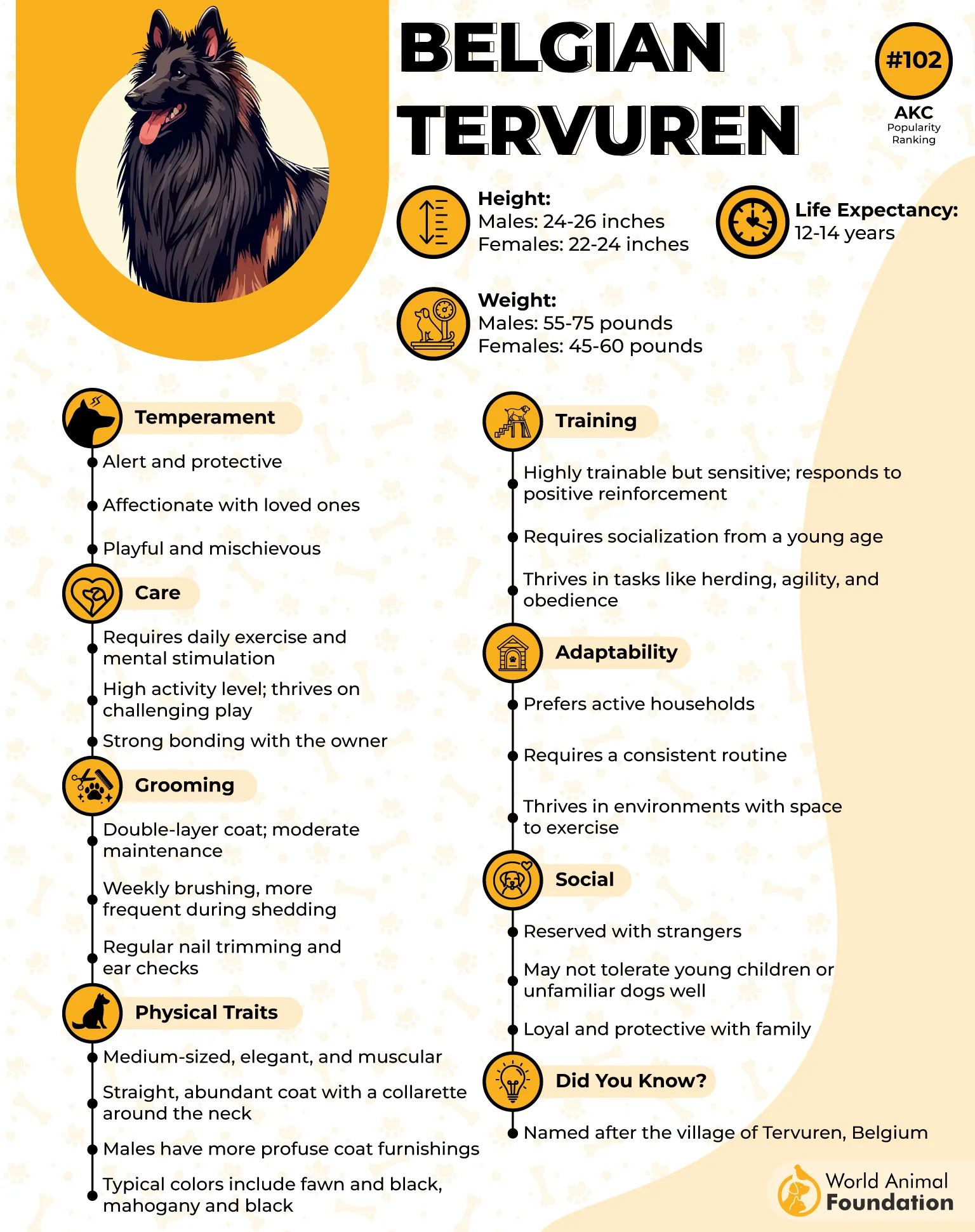
The Belgian Tervuren brings a sharp, active mindset paired with strong physical energy, shaped for herding and guarding roles. Its intelligence connects directly with a need for ongoing tasks rather than passive living. This creates a dog that stays mentally engaged alongside physical activity.
Work-focused engagement style
This intelligent dog responds best when given structured tasks, often channeling its energy into organized activities and training routines. Its eagerness to respond to guidance links closely with its working nature.
That focus appears clearly in how it operates:
Excels in obedience and agility work
Tracks scents with steady concentration
Handles herding trials with controlled precision
Learning pattern and instinct control
It learns quickly when guidance remains consistent, responding well to positive reinforcement methods. Its herding instincts may extend toward children or smaller animals, requiring structured redirection. Regular engagement through training and activity helps refine this natural behavior.
5. Entlebucher Mountain Dog
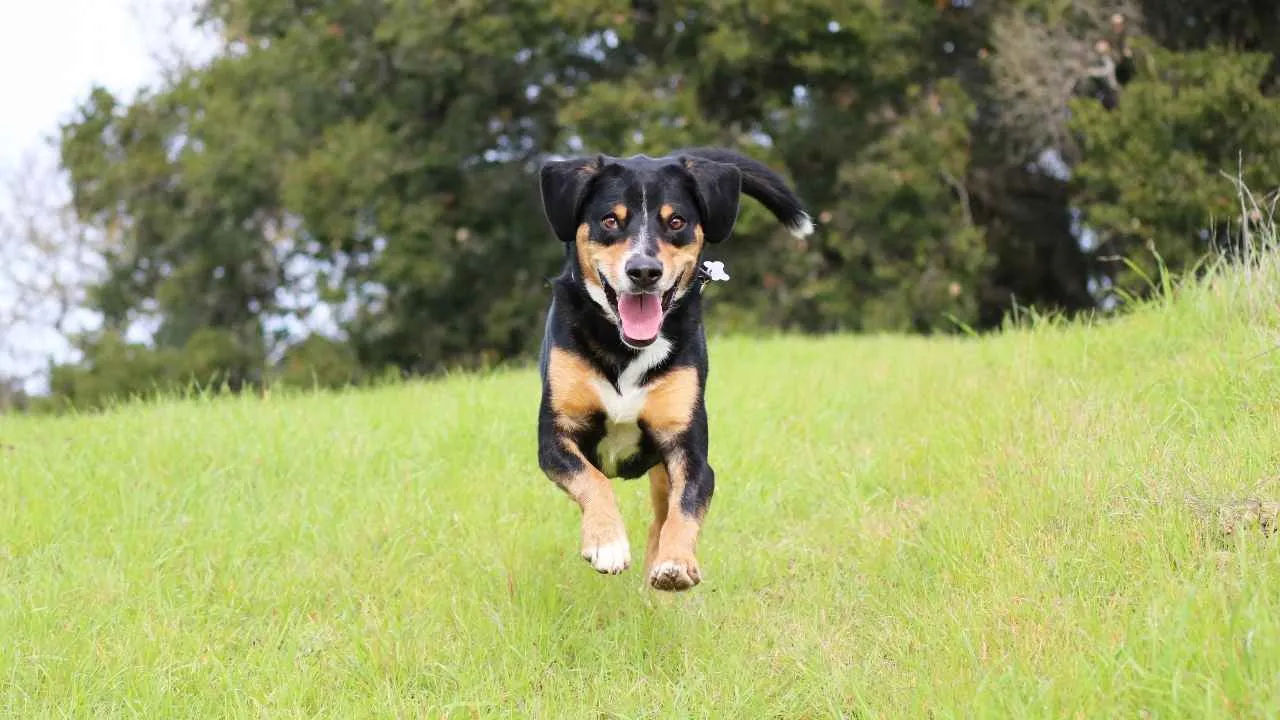
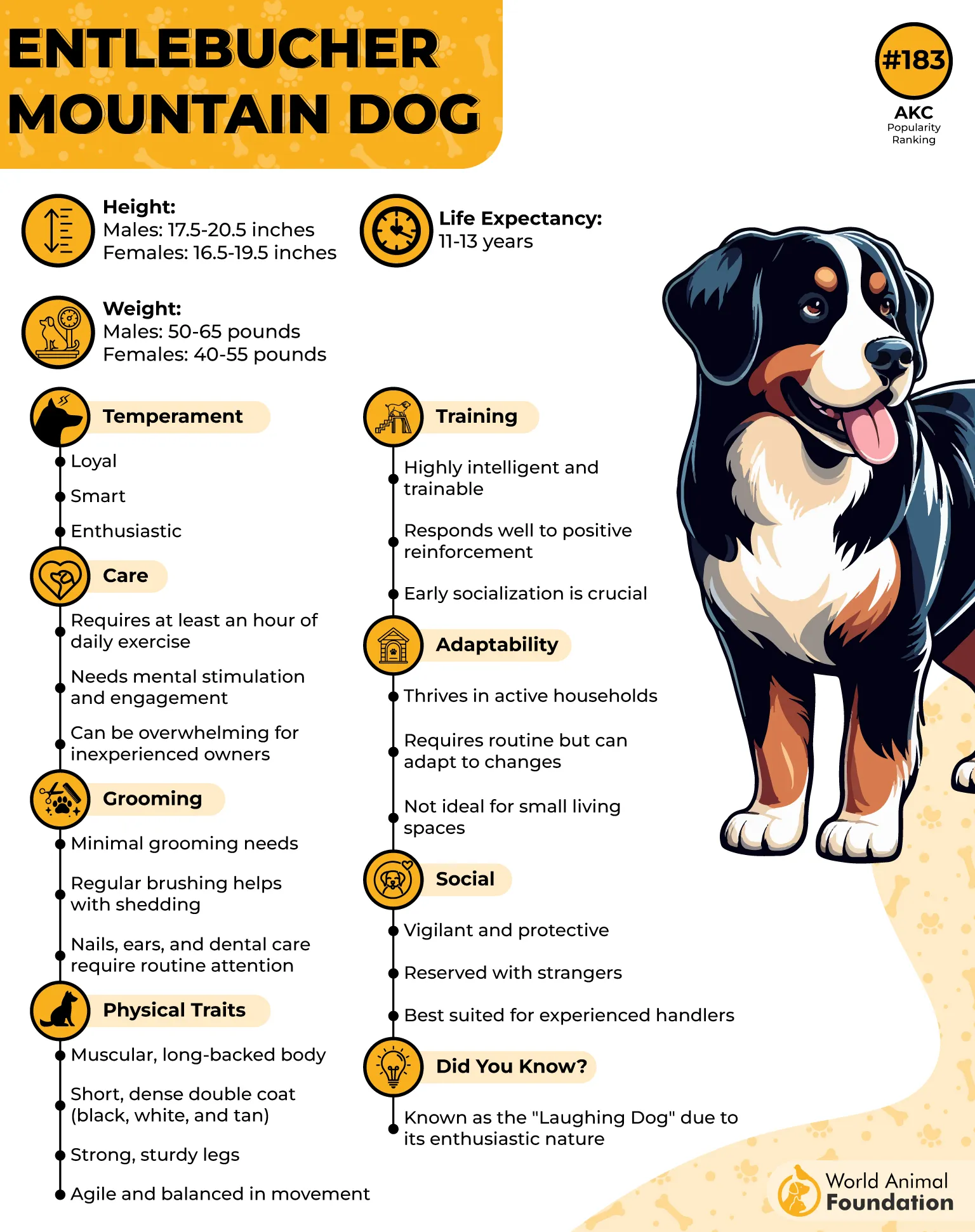
The Entlebucher Mountain Dog comes from the Swiss Alpine regions, where it handled cattle across steep and rocky terrain. Its compact frame allowed control and quick direction changes during herding work. The tri-colored coat and lively expression match a bold, energetic working presence.
Herding behavior in action
It approaches tasks with quick thinking and close engagement, often staying near livestock or people it is focused on. It’s natural herding instinct extends into daily life, especially in active households.
This instinct appears in clear patterns:
Redirects the movement of smaller animals or children
Stays closely aligned with group activity
Reacts quickly to shifting direction
Personality within the home
This mountain dog brings a playful, expressive nature, often described as having a lively and humorous personality, as VCA Hospital noted. It bonds strongly with familiar people, while taking time to adjust to strangers. Its affectionate side becomes more visible once trust builds.
6. Bouvier des Flandres
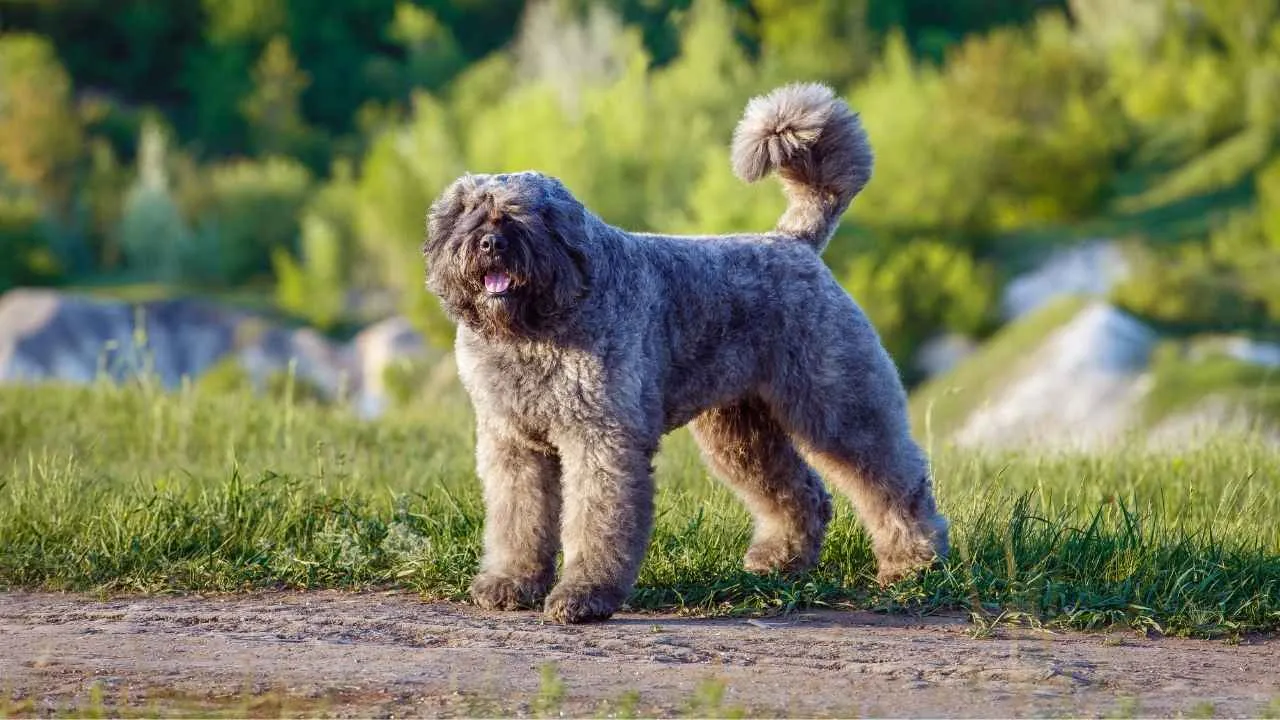
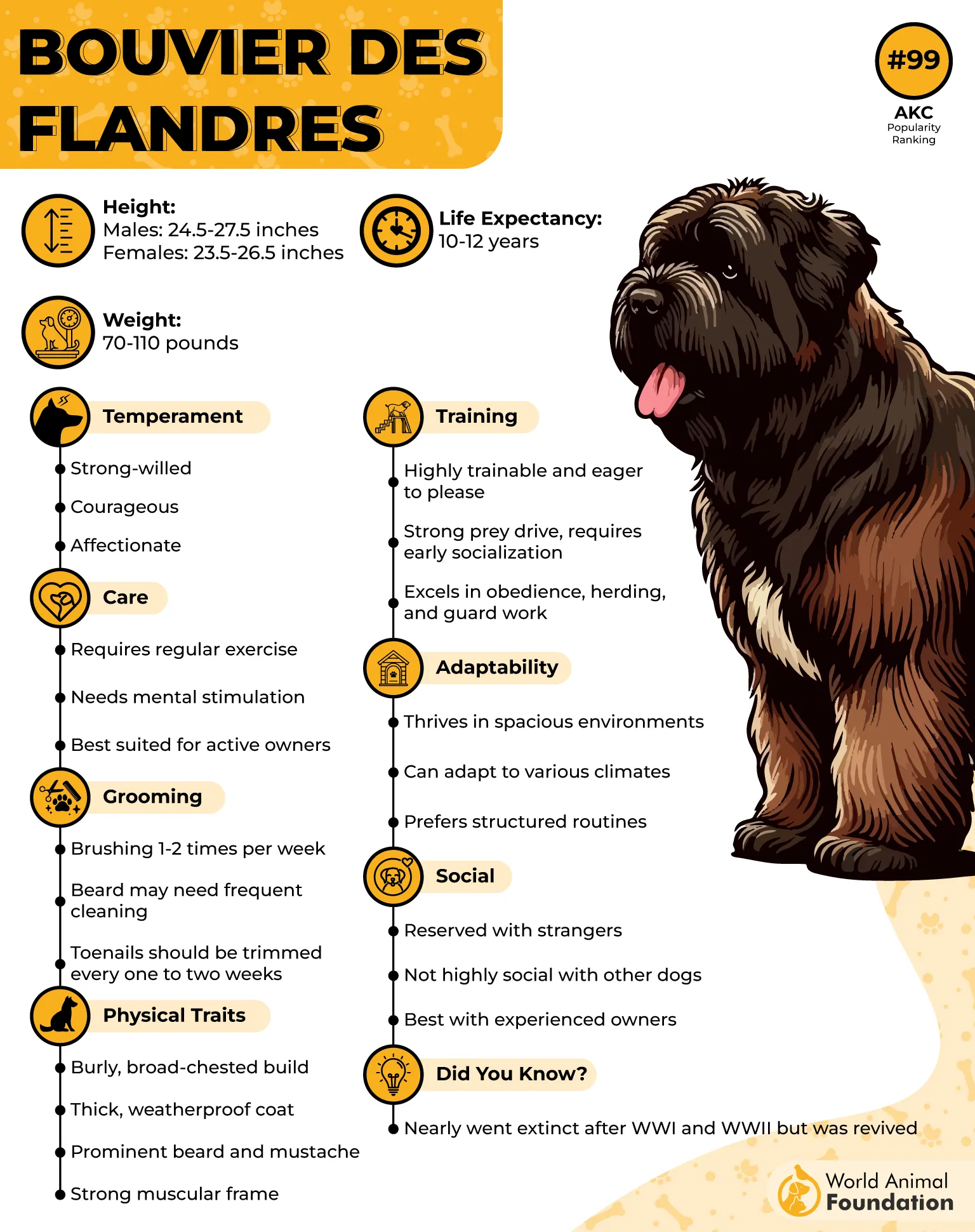
The Bouvier des Flandres worked alongside farmers, handling cattle and pulling loaded carts across demanding terrain. Its large, powerful frame reflects a dog shaped for labor that requires both strength and control. This working role ties physical power directly to daily tasks.
Task-driven behavior in action
This guarding breed engages best when given purposeful activity, using both mental focus and physical effort to stay balanced. Its herding role connects closely with structured movement and controlled energy.
This becomes clear in how it handles work:
Directs livestock through steady pressure
Pulls heavy loads with controlled force
Engages fully when given defined tasks
Energy that demands direction
It is a loyal companion and requires extended physical and mental engagement, often needing long sessions of activity each day. Without this outlet, its unused energy shifts toward destructive behavior. Activities like herding, running, or structured sports align with its natural drive.
7. Beauceron
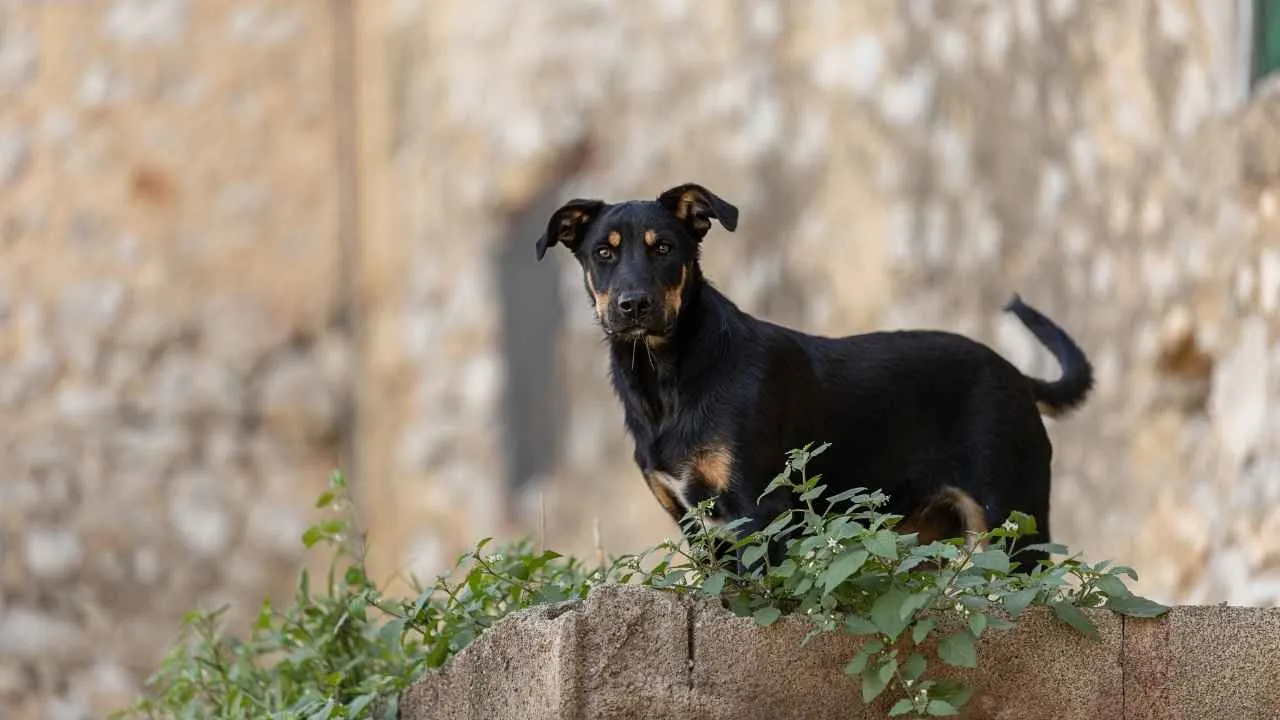
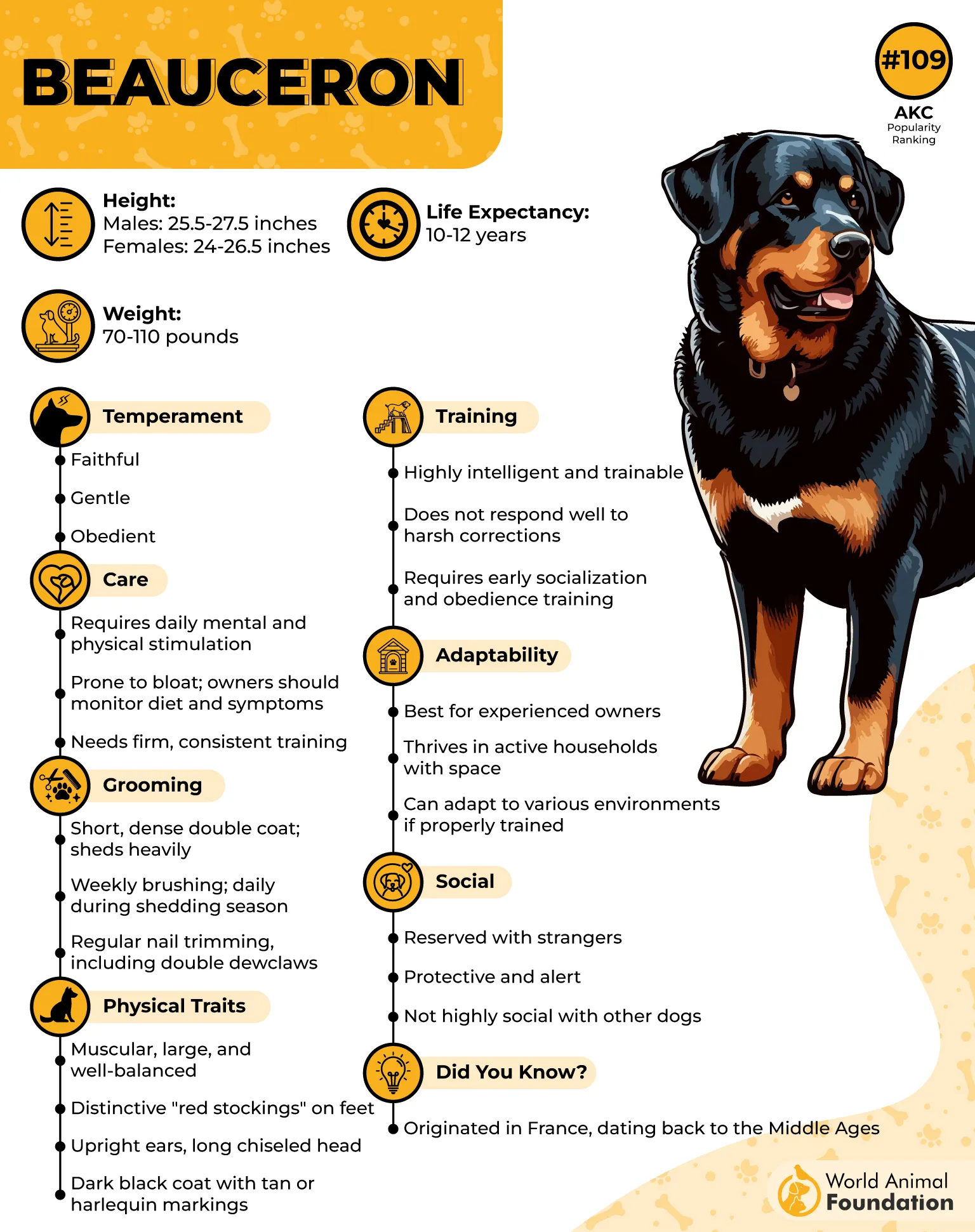
The Beauceron comes from France with a working history going back to the 1500s, originally developed for herding and guarding sheep.
It later took on multiple roles, including farm work and protective duties in structured environments. This background shaped a breed built around responsibility and task awareness.
Structure shaped for herding and control tasks
The Beauceron carries a large athletic frame designed for long hours of work in farm life. Its strength and coordination supported herding work, along with military roles such as messaging and detection.
That working foundation reflects in clear functional traits:
Strong frame supports extended farm tasks
Balanced movement aids herd control work
High learning ability supports structured training
Herding and daily behavior patterns
The Beauceron stays alert in active surroundings and often shows natural herding behavior, especially around movement within the household. It responds best when given clear direction, which links back to its farming background. In routine settings, it fits well into an active family environment.
Conclusion
Working dogs show their value in moments where consistency matters more than instruction. Their presence is shaped through repetition, instinct, and years of selective breeding focused on real tasks like protecting livestock. In herding fields and protective roles, they reduce pressure on handlers by taking responsibility for movement, boundaries, and early response, as seen in popular herding dog breeds.
What stands out is not intensity but reliability across changing conditions. These breeds adapt to long days, shifting environments, and unpredictable demands without losing focus. With proper training, many fit well into dog sports.
Selecting one is less about control and more about trust that is built through action, where behavior speaks louder than expectation in practical settings; each day it shows.
