




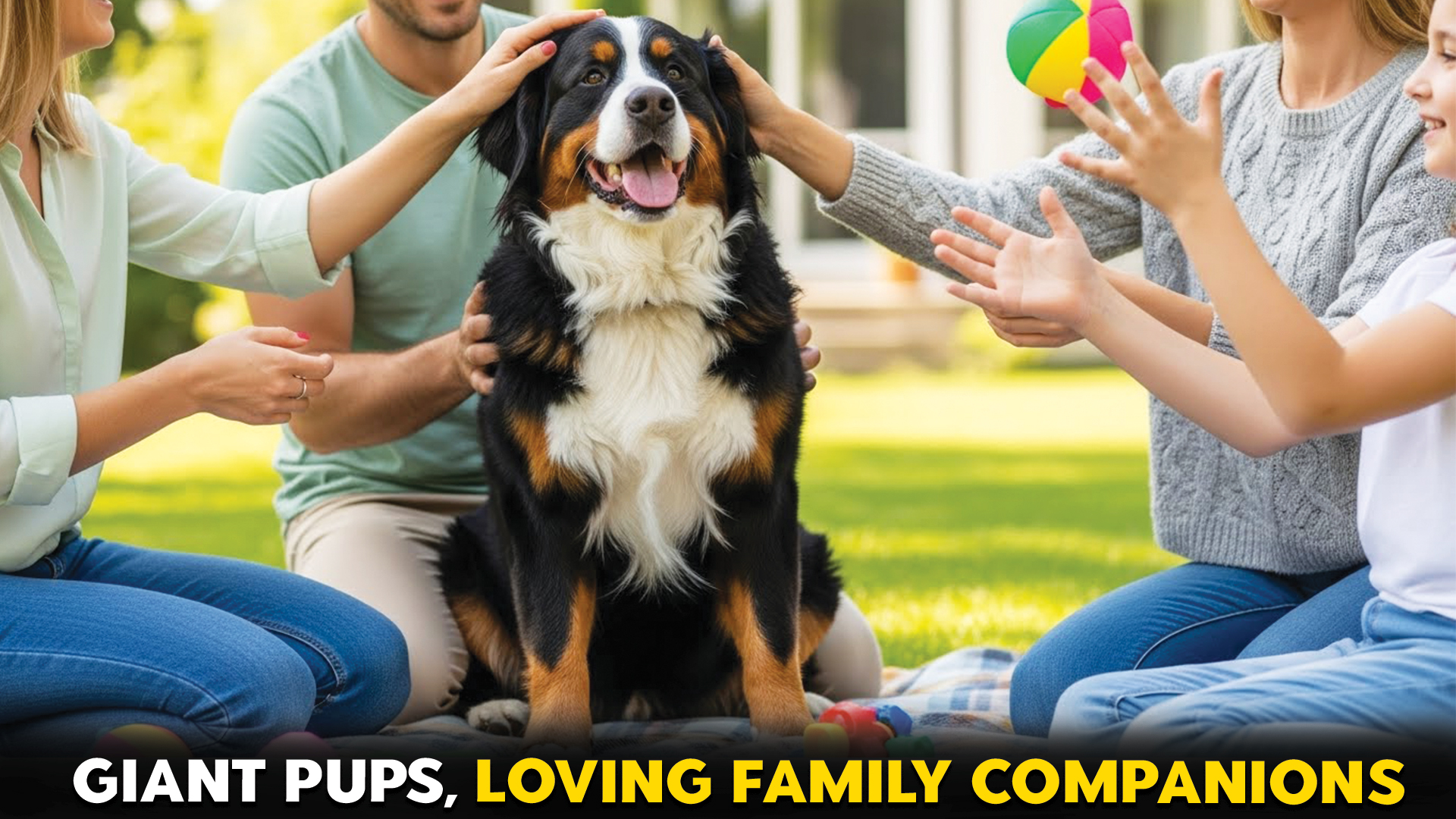
Big hugs, muddy paws, and hearts that fill the whole house today.
If your family life is loud, sweet, and a little chaotic, big dogs can feel like home. The right giant dogs bring a calm vibe, silly smiles, and that steady “I’ve got you” energy.
Still, giant dog breeds are not just oversized cuddle buddies. They eat more, take up more couch, and need clear rules. But why bother with that? Because when the match is right, you get real family dogs with big love and steady manners.
This blog will walk you through 7 giant dog breeds that suit big family life, plus care tips you can actually use.
Wonderful Giant Dog Breeds for a Big Family Life
1. Newfoundland
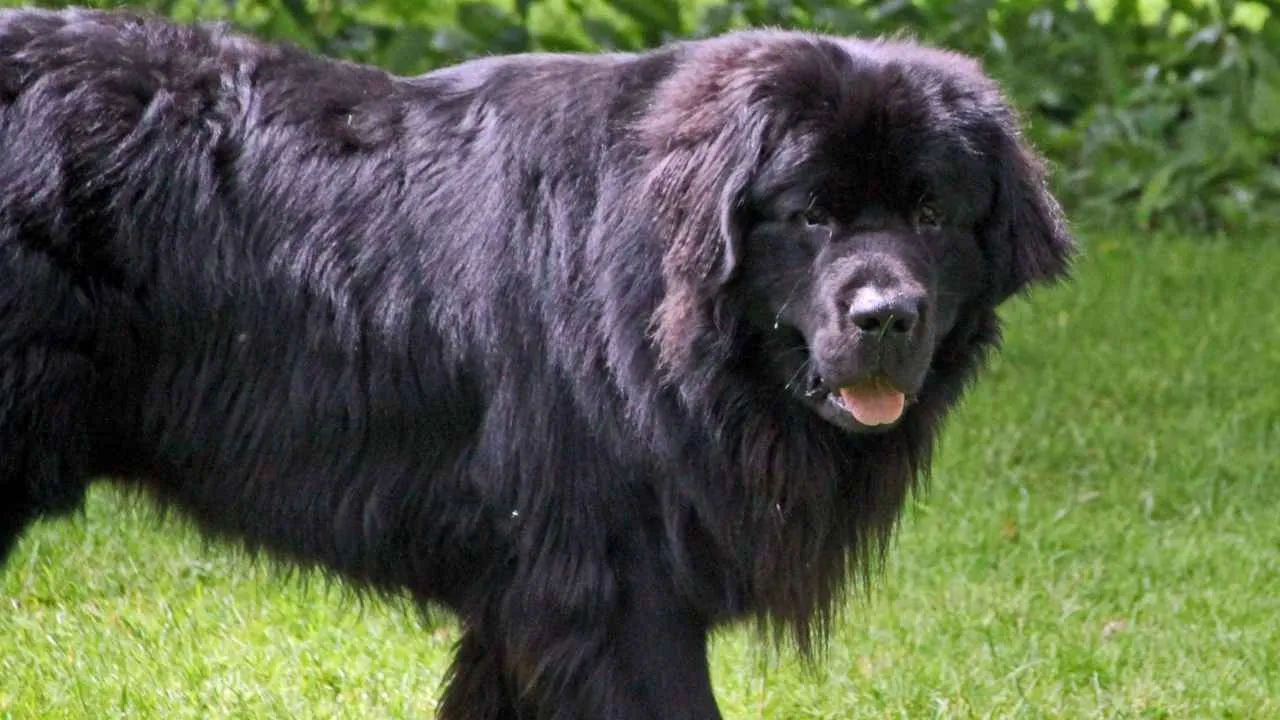
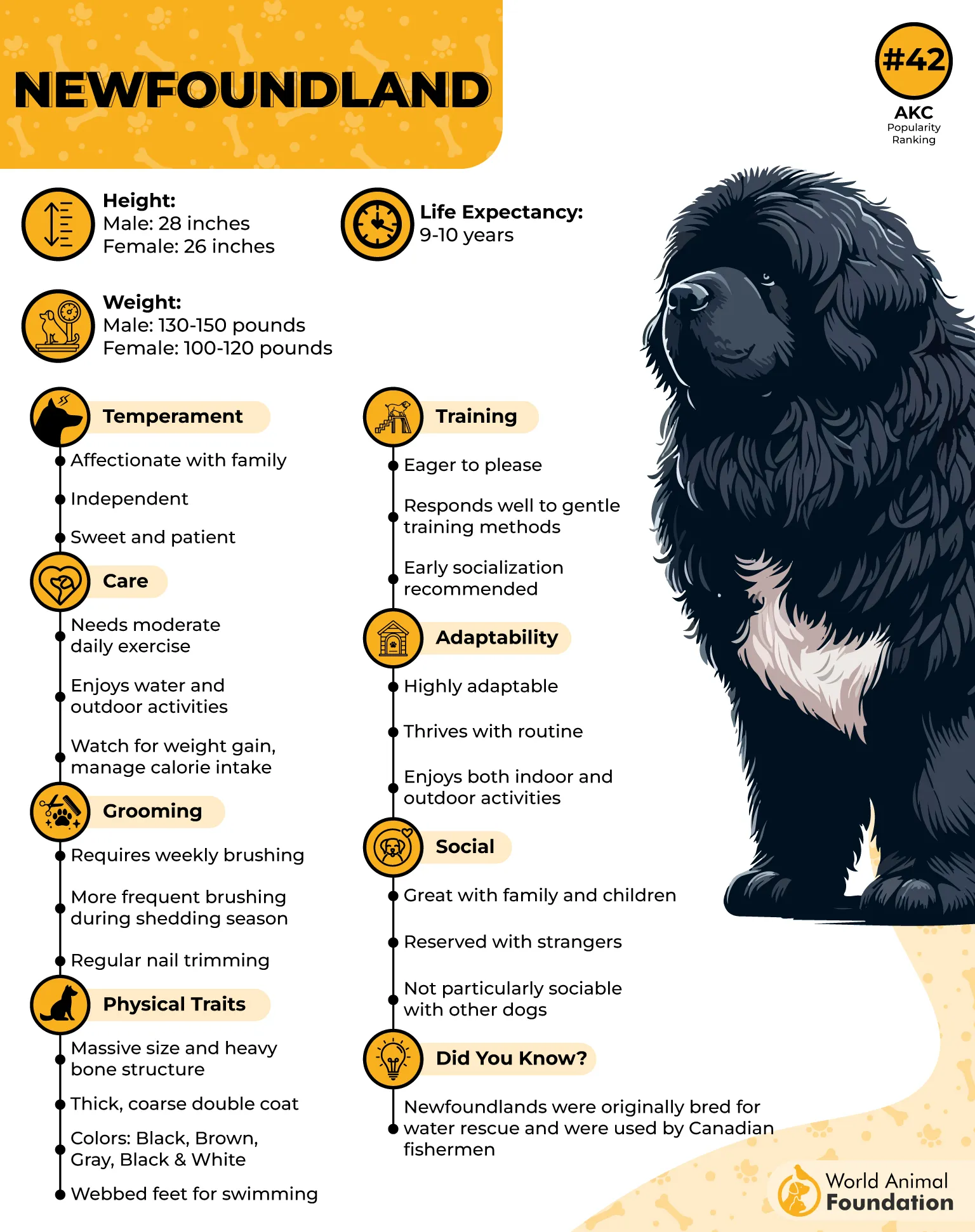
According to AKC, Newfoundlands were originally bred to help fishermen, so water feels like their happy place. Many have waterproof coats and strong swimming skills, which can turn lake days into joy.
Their affectionate nature makes family time feel warmer, and their calm presence can settle a busy room fast. They are famously gentle, so they often fit a household that wants a steady, kind mood. If you have small dogs, do slow intros.
These large dogs are powerful, so early training matters. Start simple: sit, stay, and polite greetings at the door. Large dogs do best when everyone uses the same cues. Consistent training helps them move safely around small children and visitors.
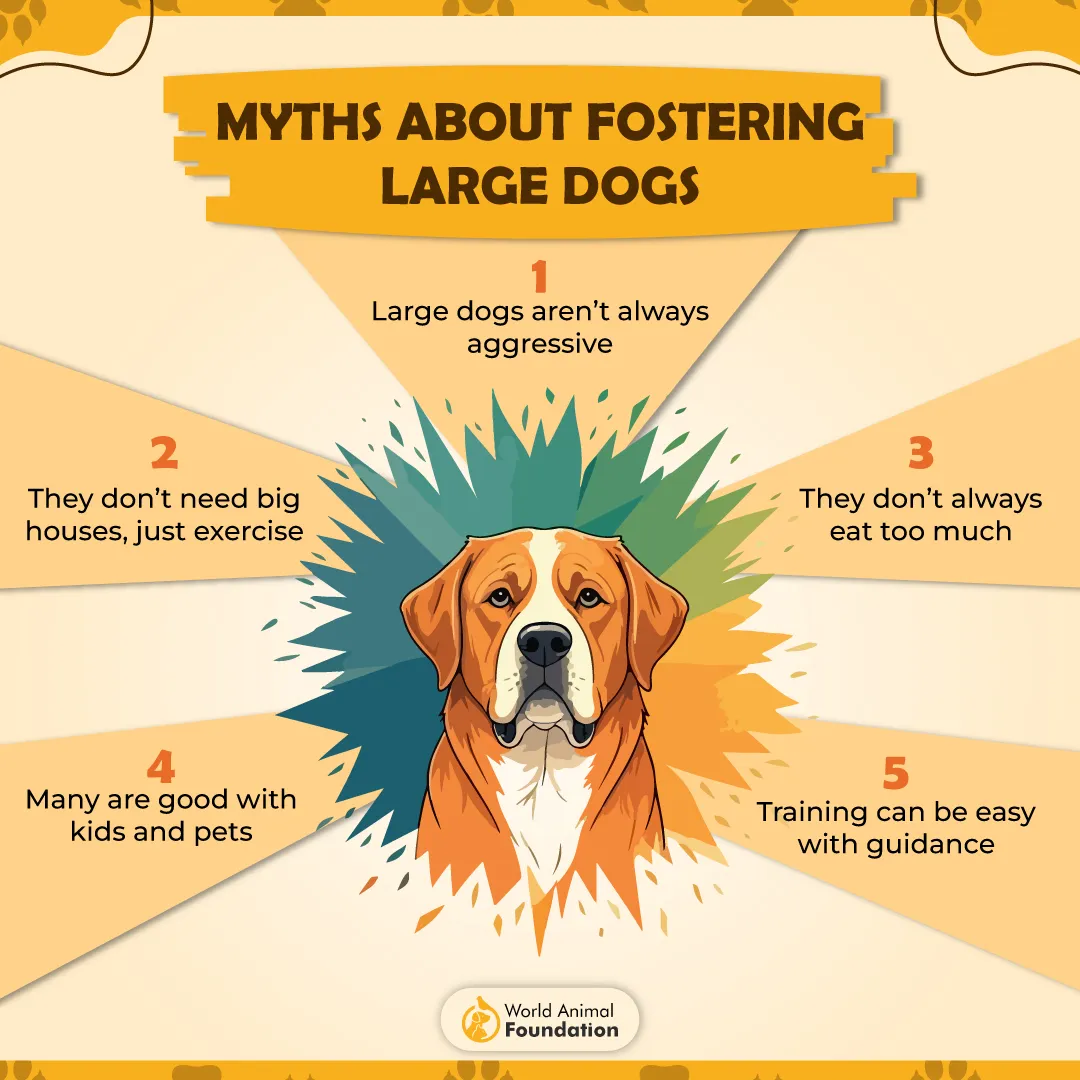
They also crave human interaction. If they are left alone too much, they can get bored and clingy. Mental stimulation, like easy scent games or a stuffed food toy, keeps their brain busy without stressing their joints. These large dog breeds do best on non-slip floors, so rugs help.
Grooming is part of the deal. Expect regular grooming and frequent grooming during shedding seasons. Keep an eye on health issues like hip dysplasia and heart concerns, and talk with your vet about a smart plan to stay healthy.
Here’s the good part: when raised with patience, these gentle giants can become loving companions who make a big home feel safer.
Gentle water play is a great exercise
Teach “wait” before stairs and doors
A cool spot indoors helps on warm days
2. Bernese Mountain Dog
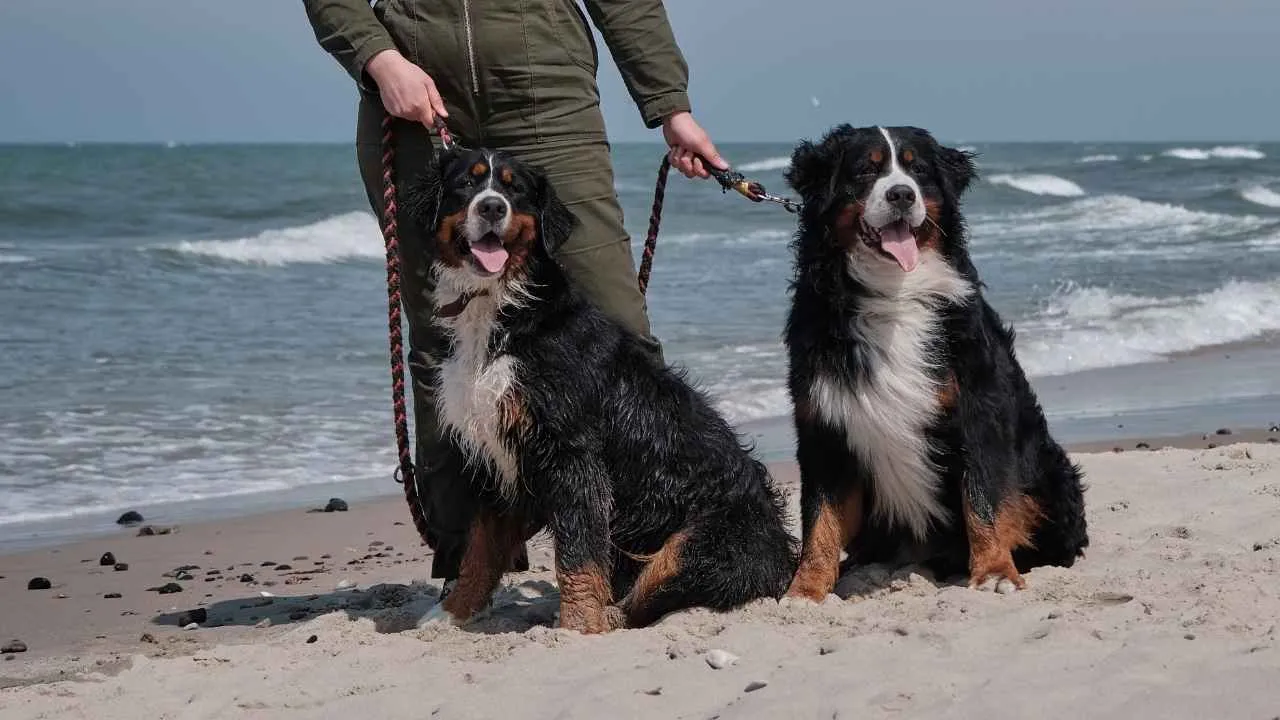
The Bernese Mountain Dog is one of those big dog breeds that sticks close like your favorite hoodie, and it is one of the big dog breeds that loves being part of your moments. Their affectionate nature shows in small ways: leaning in, following you room to room, and lighting up when the kids get home.
They are working dogs from Switzerland, built to pull and help on farms, so they like having a job, even if that job is “carry the soccer bag.”
Their coat is thick, and they handle cool weather well. Plan for regular grooming, and be ready for loose hair on sweaters. Daily walks and light play help their body and moods. Keep sessions fun, not intense.
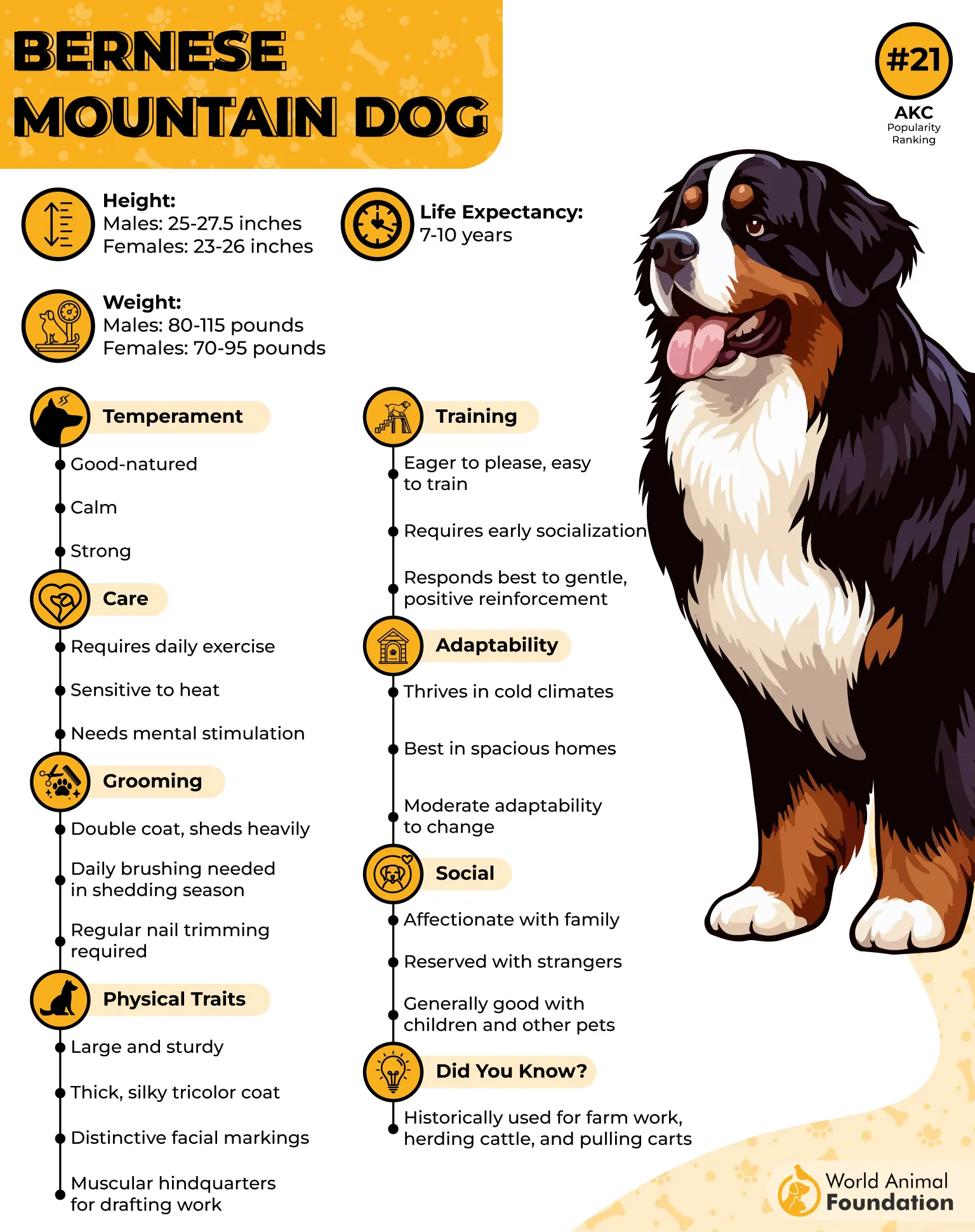
They are sweet-tempered, but they still need good manners, because a happy bounce can knock over snacks and knees. Short, upbeat lessons help them stay polite. This breed loves teamwork, and large dogs thrive on clear family rules.
Health issues matter with this breed, so choose responsible breeding and get vet checks early. Watch for hip dysplasia and other concerns your vet flags.
Sounds crazy, right? This gentle breed can be both sturdy and sensitive. Give them kindness, structure, and plenty of family time, and you may get an ideal dog who brings a friendly rhythm to family life. They do best with more space and cool shade.
Loves learning simple tricks with kids
Enjoys steady routines and a cozy corner
Can be shy at first with new guests
3. Irish Wolfhound
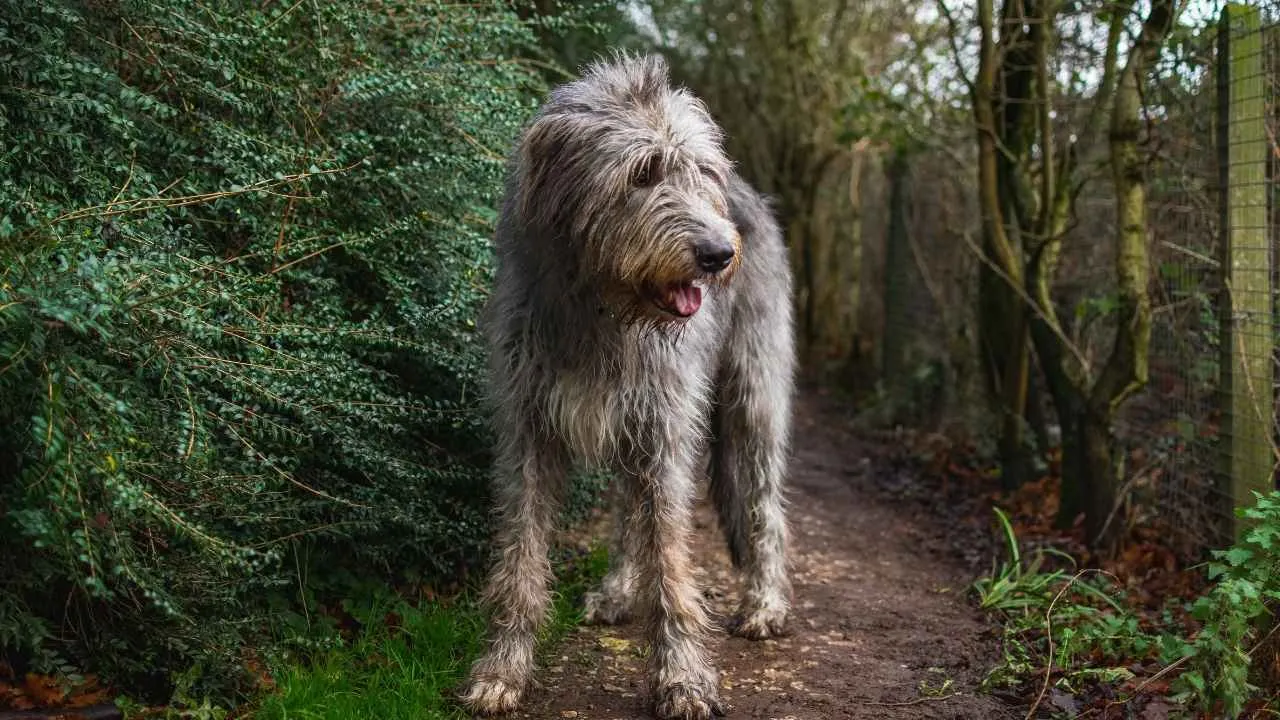
Irish Wolfhounds have an intimidating size, but their vibe is usually peaceful. That intimidating size can surprise guests, so teach a calm hello. These giant dogs were bred long ago for hunting, yet in modern homes, they are known for a gentle disposition and a relaxed style.
When you want a big friend who can chill while the house is buzzing, this breed can feel like a warm blanket with legs. Big dogs like this need gentle handling from day one.
Because they grow fast, the right training should start early, but keep it gentle. Short sessions, praise, and clear rules work well. They can have an independent streak, so patience wins.
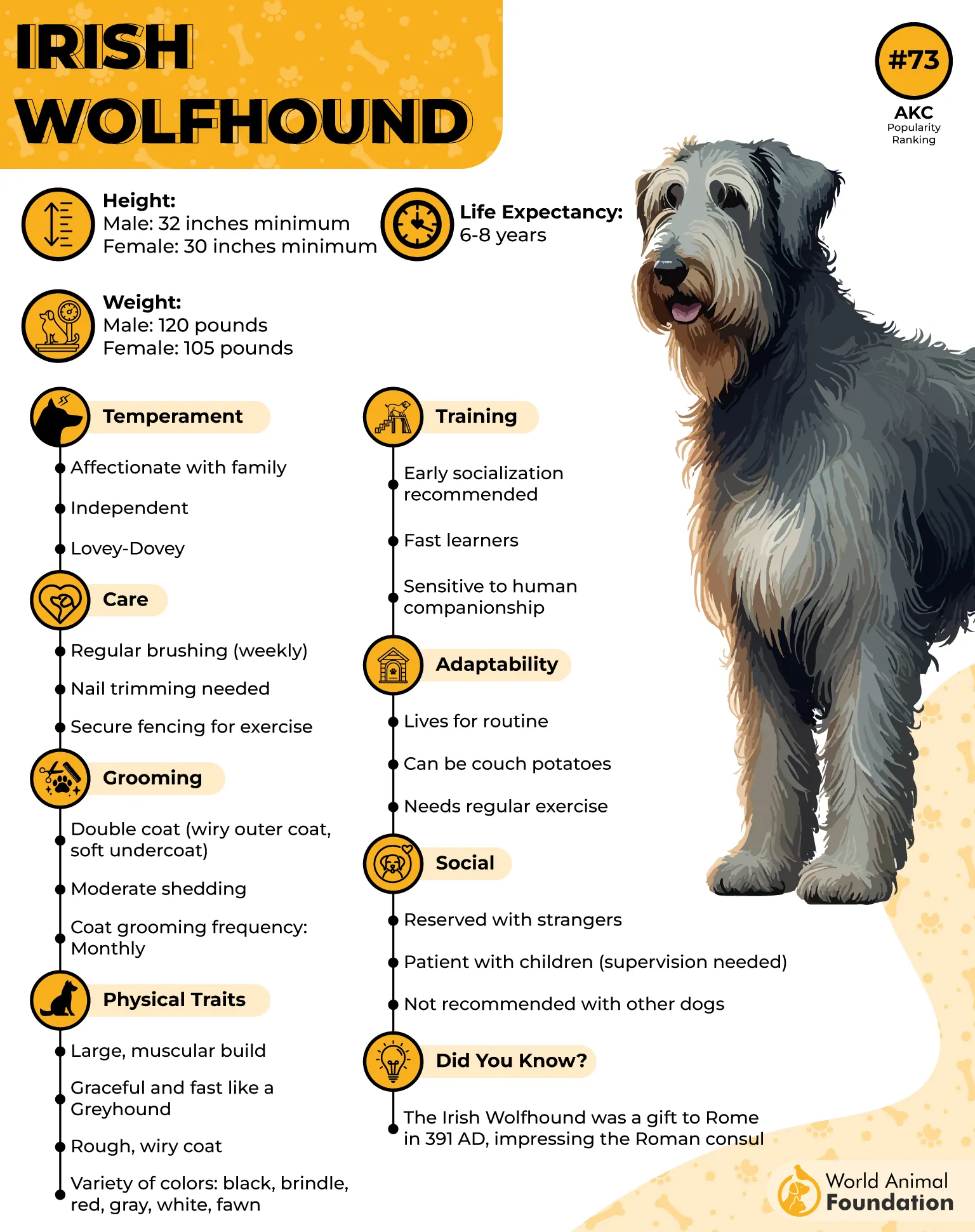
Give them ample living space to stretch out, and safe spots where kids know to give them a break. Many are incredibly loyal to their people, and they can notice human emotions in a quiet, comforting way.
Life expectancy for this breed is shorter than that of many large dog breeds, so health planning is important. Talk to your vet about heart checks, bloat prevention, and joint care. Because of their massive frames, add a grip on stairs. Regular exercise matters, but think smooth and easy, not nonstop running.
But wait, there’s more! With calm handling, this breed can be well-suited to gentle outdoor adventures that keep everyone smiling.
Needs soft beds and room to sprawl
Benefits from gentle leash skills early
Best with calm games over rough play
4. Saint Bernard
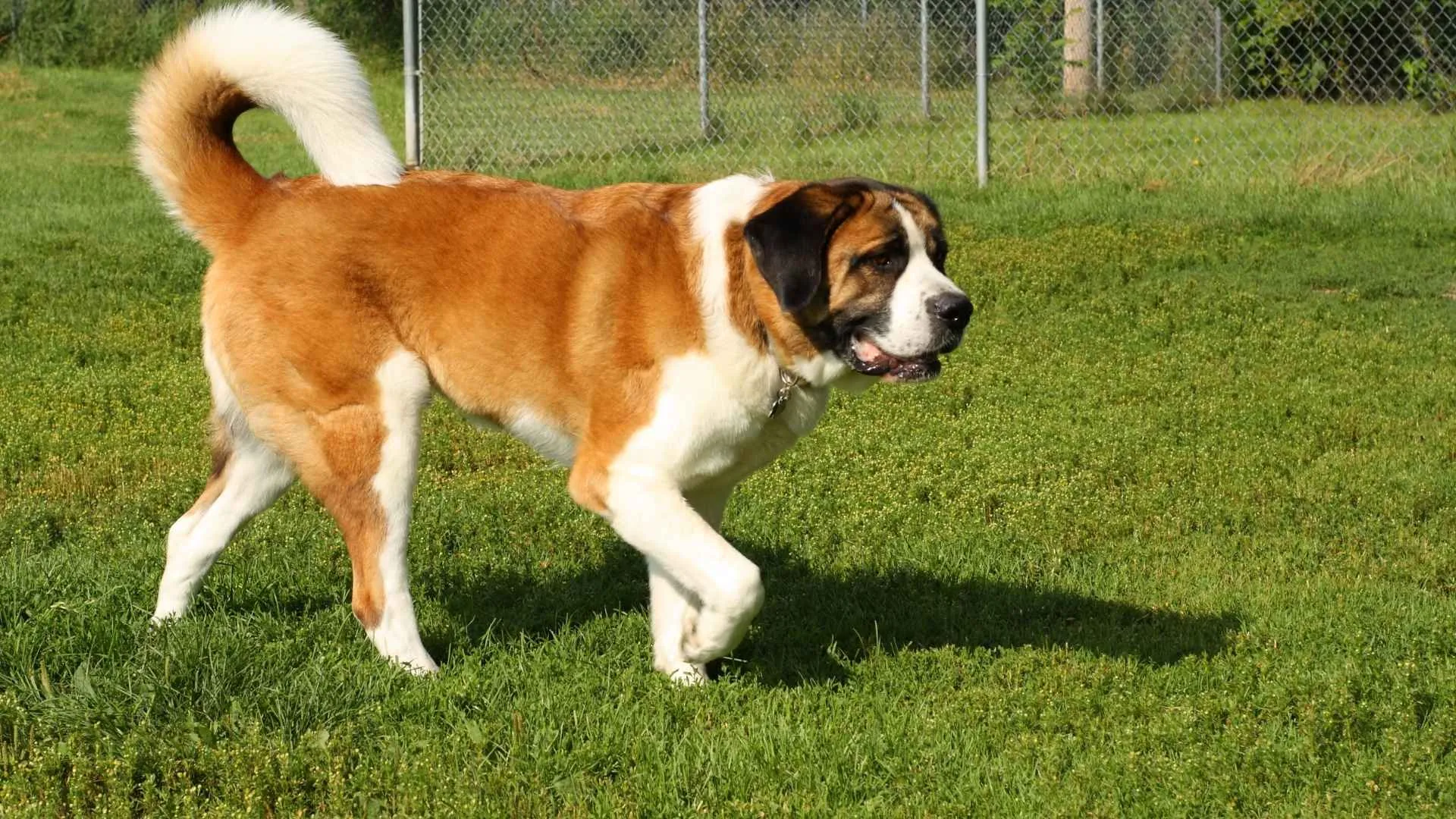
Saint Bernards are giant dog breeds with a big reputation for helping people in the Alps. Even if your home has zero snow, their calm temperament can still fit family life.
Many are patient and careful with children, which is why some people call them nanny dogs. They can look like guard dogs, but their real magic is steady kindness and a watchful, calm look.
PetMD notes that this breed needs early training because those massive dogs do not stay small for long. Teach loose leash walking and polite door manners.
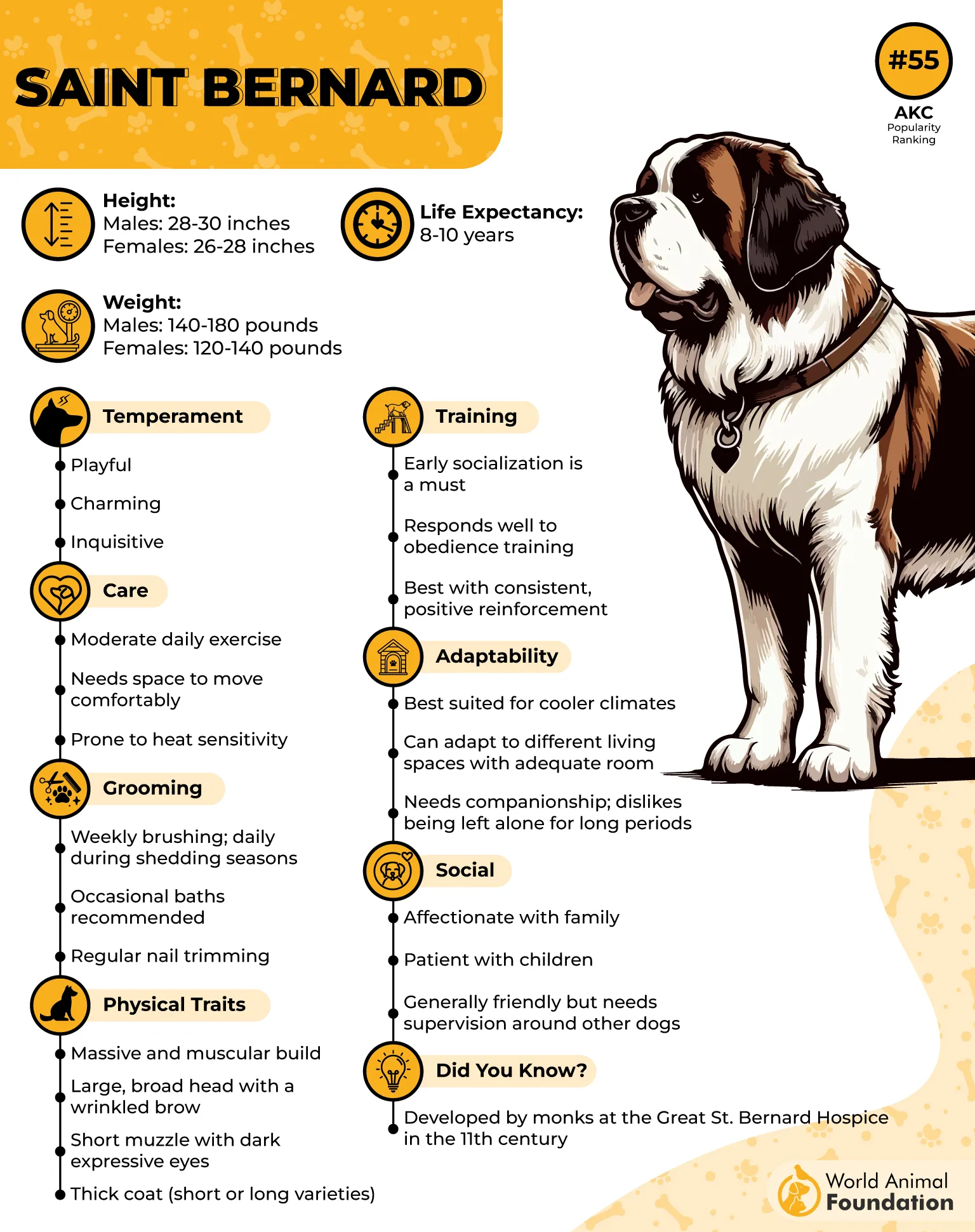
Large dogs in busy homes need calm door habits, and this breed learns them well. They respond well to praise and gentle limits. They drool, so keep towels handy and move on.
Their coat can be smooth or rough, and the rough type can look a bit like a lion’s mane around the neck, which kids usually find hilarious. Both need brushing. Regular grooming keeps mats away and helps you check skin and ears.
Watch for hip dysplasia, eye issues, and bloat risk as part of their health issues list. Here’s the best part! In the right setup, their steadiness has even helped some Saints work as service dogs and rescue dogs.
Thrives on steady routines and kindness
Enjoys short play bursts and long naps
Likes cool rooms and shaded yards
5. Dogue de Bordeaux
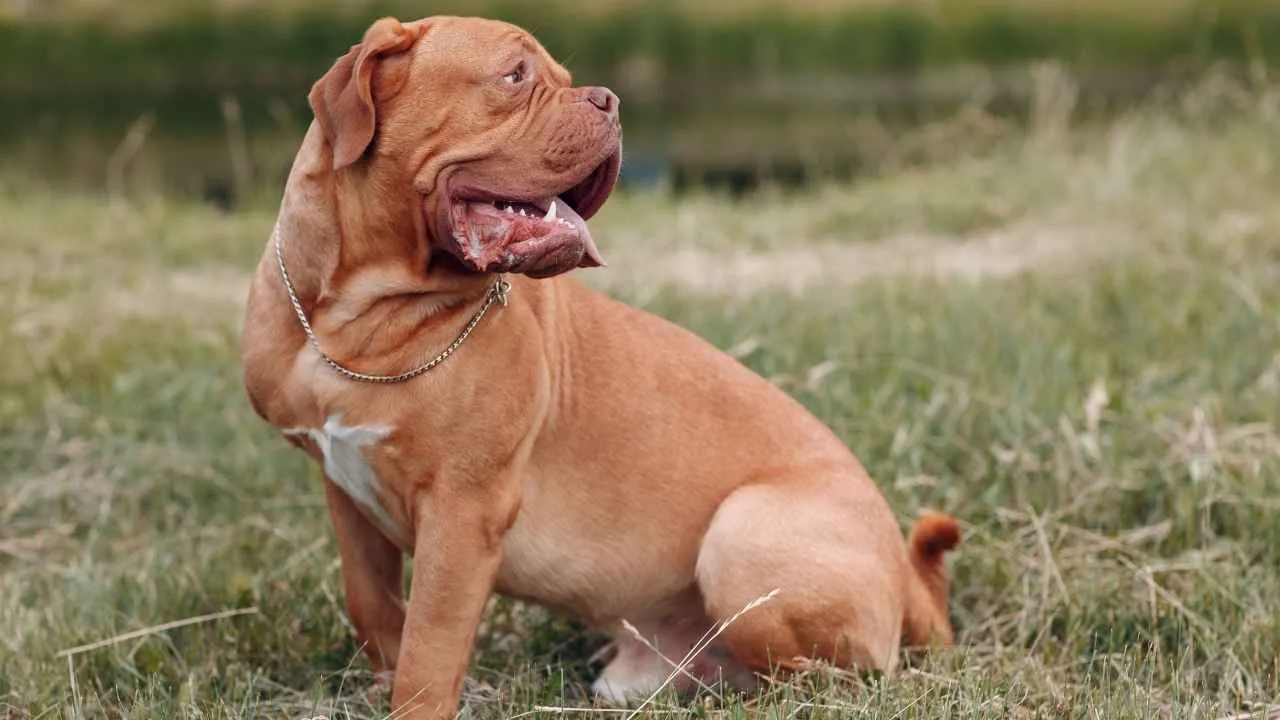
The Dogue de Bordeaux is a powerful breed with a serious face and a soft center. Many owners describe these giant dogs as extremely loyal once they bond.
Their protective nature can be strong, so this is a breed for families who want a close, devoted buddy that also watches the home, the way good guard dogs do. With calm handling, they can be excellent family pets for confident potential owners.
Social time is key. Invite calm visitors, reward good choices, and keep introductions smooth. Consistent training is not optional here because this breed can be stubborn. Focus on leash skills, “leave it,” and calm greetings.
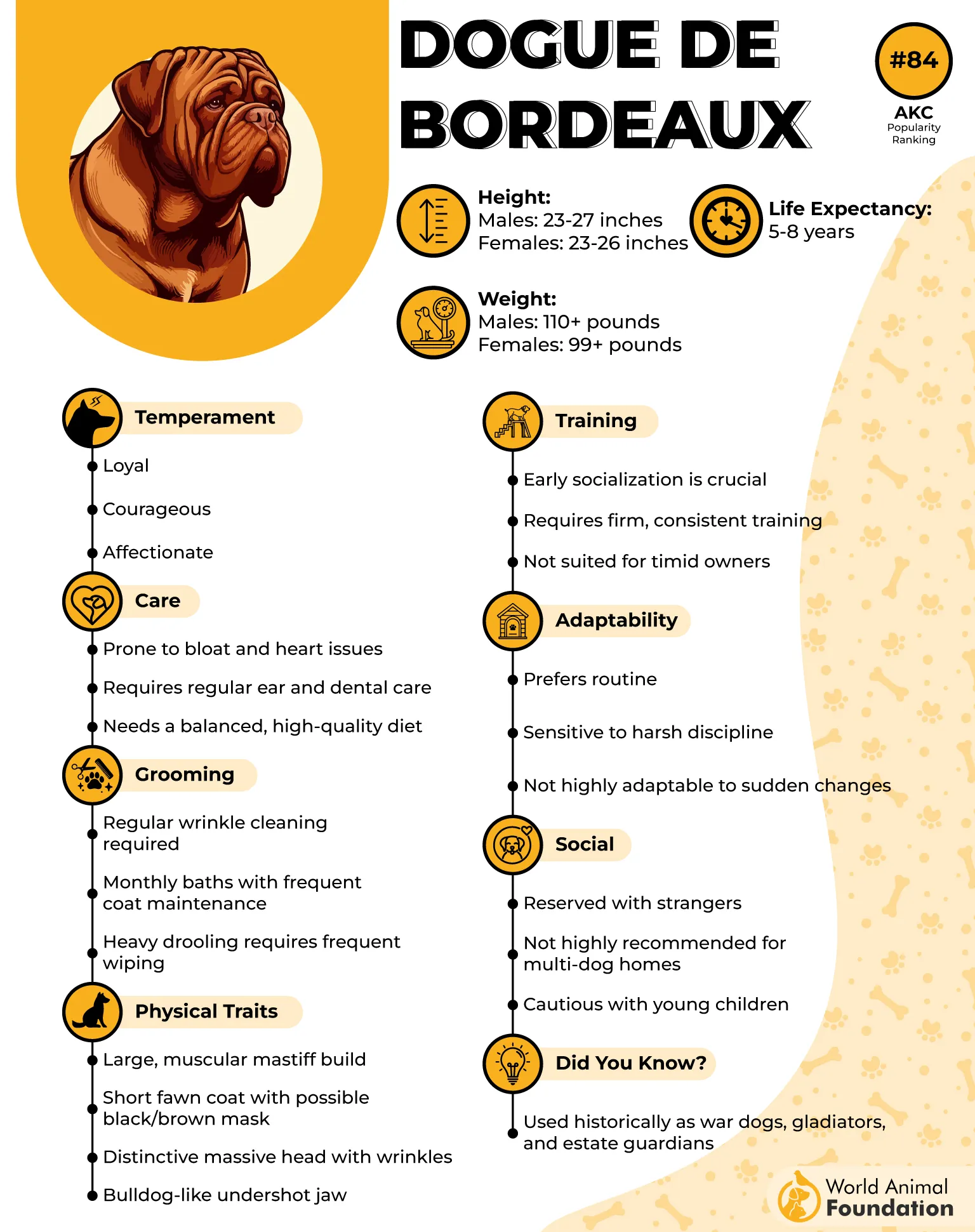
They can be polite with other dogs when socialized early, but it is best to stay mindful and avoid chaotic dog parks. Quiet streets and structured walks suit them.
Their short coat is easy, but their face folds need cleaning. Keep an eye on breathing and heat, since their build can make hot days rough. Health issues can include joint strain and heart concerns, so regular vet visits help them stay healthy.
Here’s the good part: when you earn their trust, their affectionate nature makes family life feel close-knit.
Needs firm, kind rules from day one
Prefers calm walks over wild sprints
Loves close contact with the family
6. Great Dane
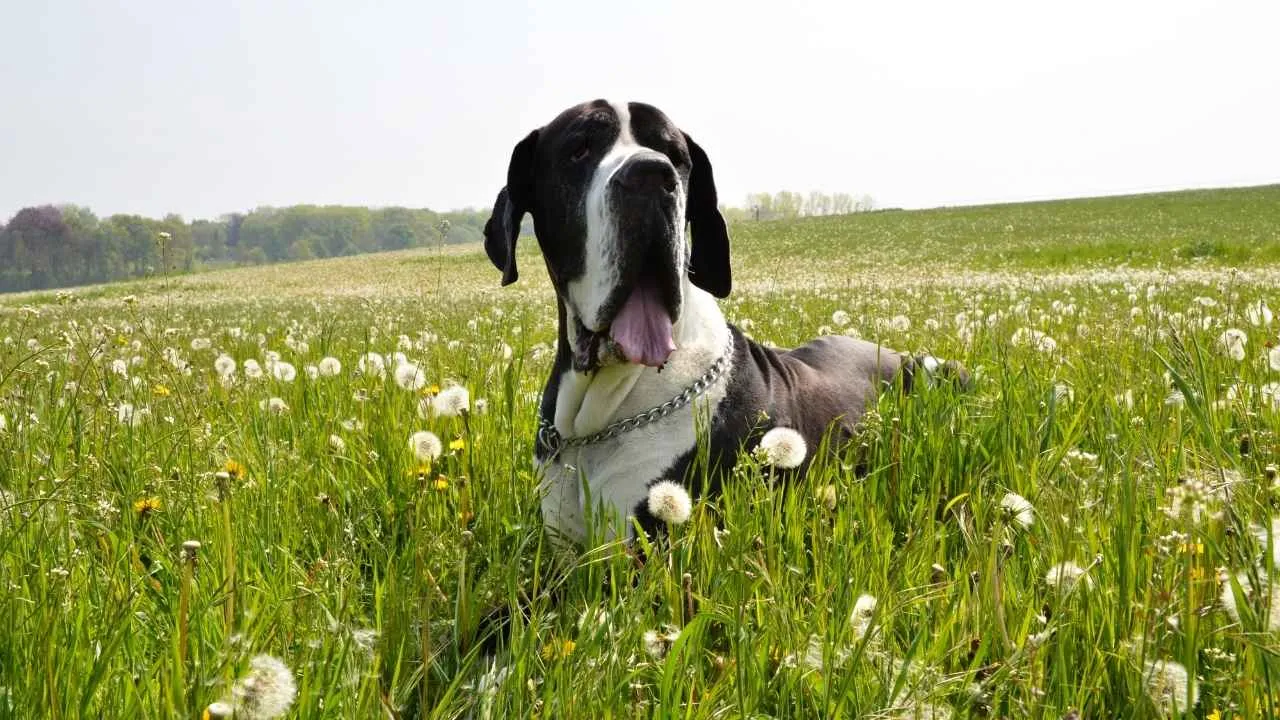
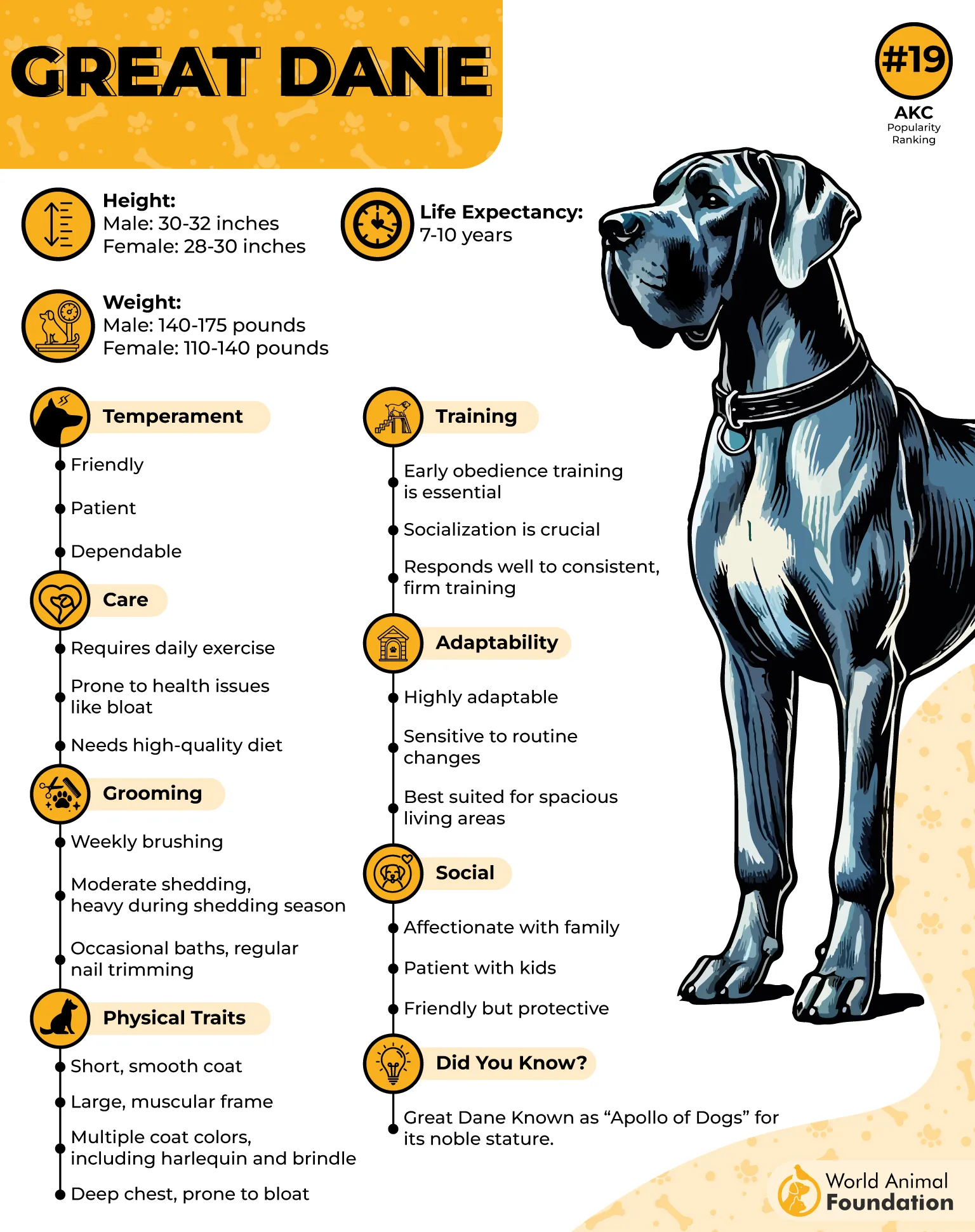
Great Danes are giant breeds that often act like goofy teens in a huge body. As per WebMD, they are affectionately called the “Apollo of dogs” in many homes, and many people see them as gentle giants. Their intimidating appearance can stop strangers in their tracks, yet many are famously gentle at home.
They tend to crave human contact, affection, and being near their people. If you want big dogs that feel like a best friend who follows you everywhere, this breed fits that mood. This breed likes check-ins, because dogs get lonely fast.
Training should be friendly, clear, and steady. They respond well to firm, consistent training methods, especially when started young. Teach calm greetings and no jumping, because those paws can reach counters like it is nothing.
Give mental stimulation with simple puzzle feeders and short learning games. When kids help with training, it builds trust and teamwork in a fun way. With a calm setup, many can share space with other pets, but supervision is smart.
Because they are large breeds, joint care matters. Ask your vet about growth pace, diet, and signs of hip dysplasia.
Keep exercise moderate with daily walks and safe play, plus a little fun for outdoor adventures when the weather is mild. Sounds crazy, right? This tall breed still tries to be a lap dog.
Likes soft beds and quiet corners
Benefits from early leash manners
Enjoys calm indoor play with breaks
7. Great Pyrenees
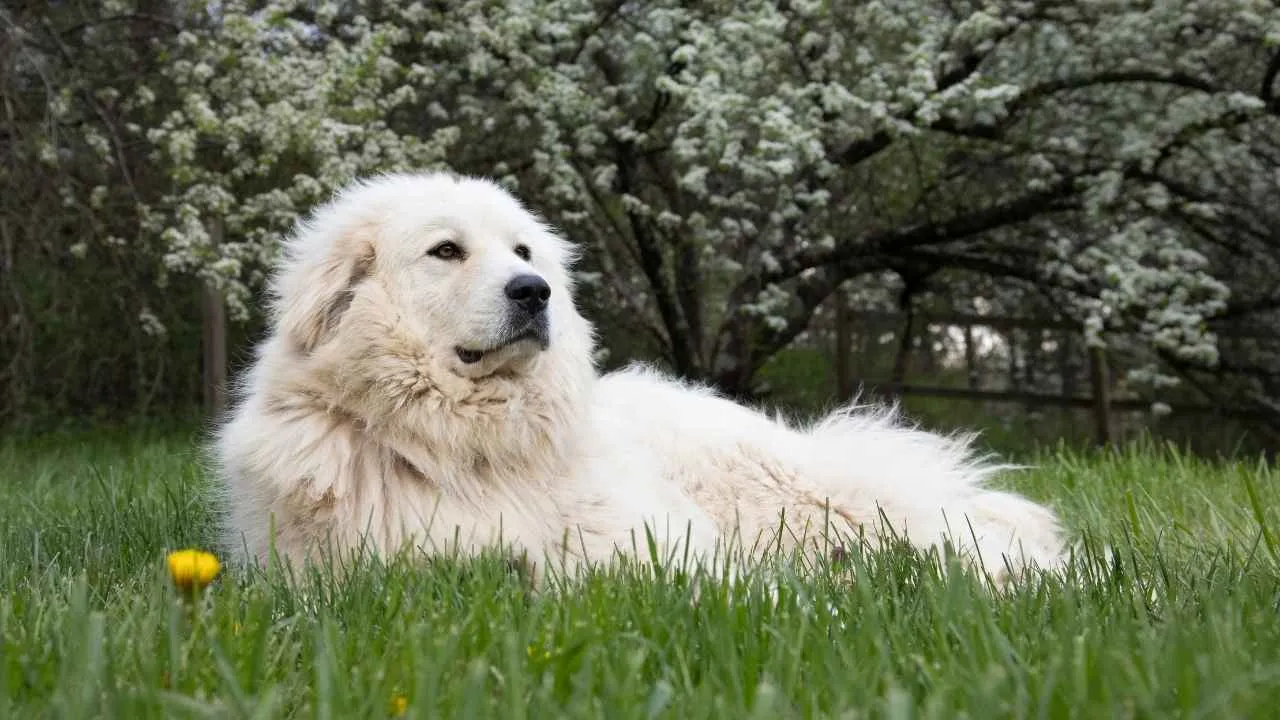
The Great Pyrenees is one of the giant dog breeds that was bred to protect livestock in the mountains. That history shows up as protective instincts and a steady, alert style. Many people choose this breed because it can be both mellow and serious.
In a big family, they can feel like a calm guardian who watches over everyone, especially after dark. Big dogs with a guarding history need steady routines.
They have a thick double coat that is made for cold and for getting dirty, then shaking it off like magic. Still, you will need regular grooming.
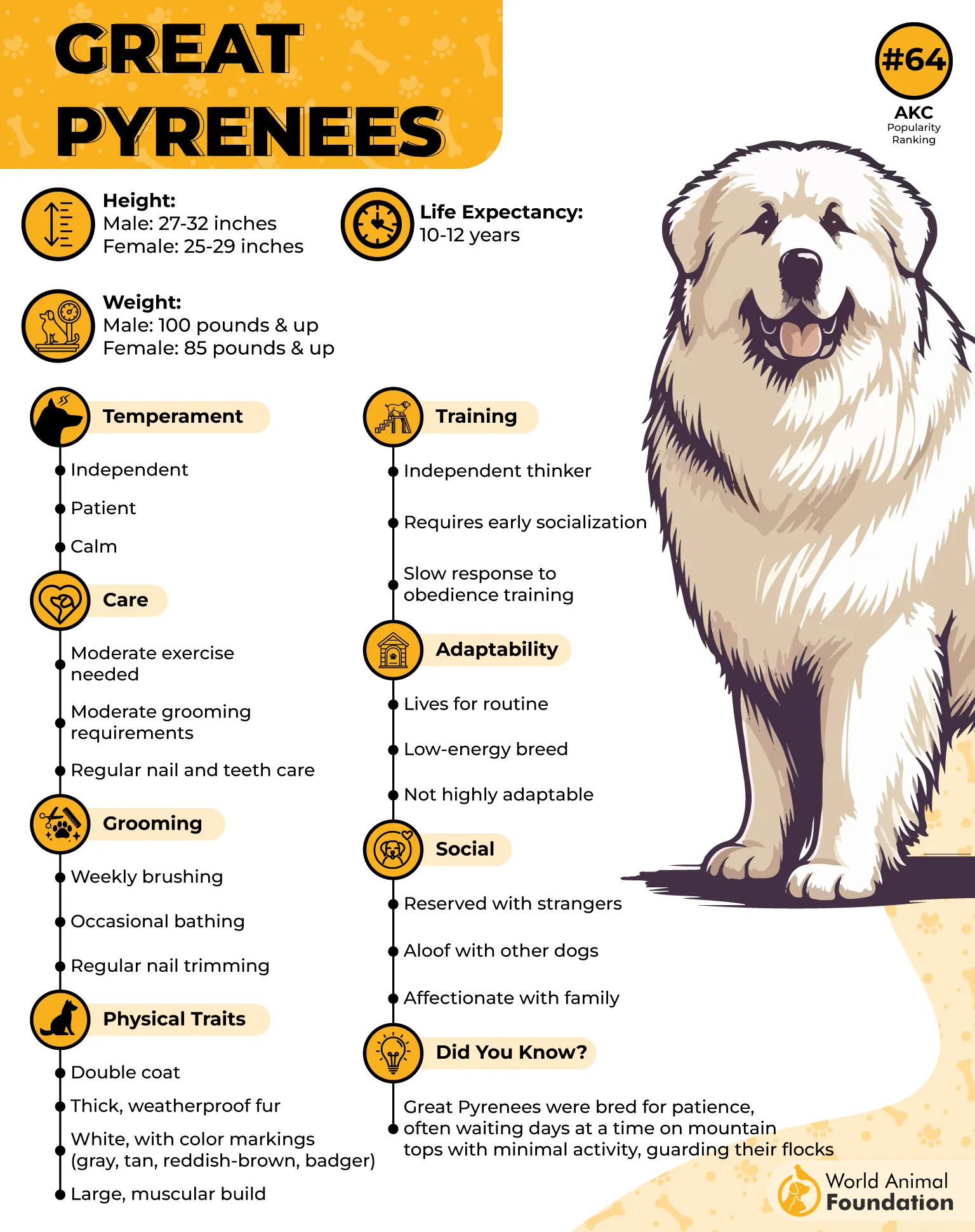
Brushing helps control shedding and keeps the coat from tangling behind the ears and legs. Some Pyrs bark at night, so plan early training around quiet cues and a calm bedtime routine. Reward silence.
This breed often needs more space and a secure yard. Their protective instincts can kick in with strangers, so socialize early and keep rules clear. They can do well with other pets when raised with them, but careful introductions matter.
Watch for health issues like hip dysplasia and bloat, and plan regular vet checks. Here’s the good part: with patient care, these giant dogs can be great companions and steady family dogs.
Does best with a fenced yard and shade
Enjoys slow hikes and calm outdoor time
Teach a “place” cue for doorbells
Conclusion
Living with giant dogs is a daily adventure, and also a daily choice. These dogs can bring big comfort to big families, but they need planning. Think about food, time, early training, and the budget for care.
Also, think about ample living space, because massive frames need room to turn without bumping little heads. If you can offer regular exercise, simple rules, and warmth, you can build a home where big dogs thrive.
Meet the breed in person, talk with ethical breeders or rescue dog groups, and pick the breed that matches your routine.
And here’s the best part! When you choose with care, your next dog can become a calm, loyal part of the family.
