




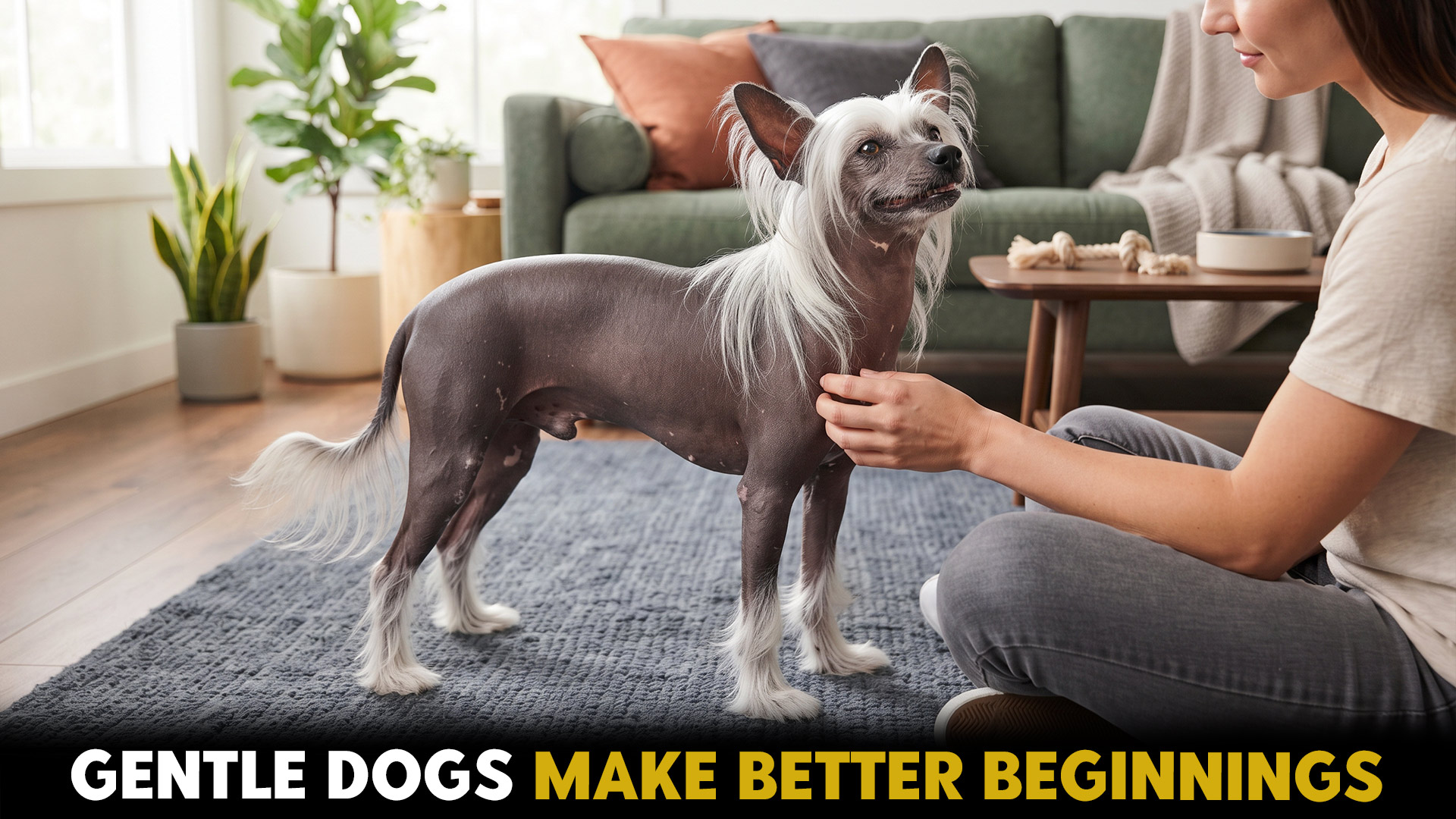
Picking your first dog is an exciting time, but if you don’t get it right, then those first few months can be very tough. Each breed is unique in its temperament, level of activity, grooming needs, and training methods. An easy-going, happy breed can still have instincts that need to be dealt with by an experienced owner.
If you are new to the dog scene, do not go out looking for a dog that has no requirements because you will never be able to find a dog like that. Rather, find a particular dog with a balanced temperament and low grooming needs that can be compatible with your lifestyle.
Some dogs are very adaptable with the right training, while others are naturally people-oriented and respond well to positive reinforcement. Some small dogs have lower space requirements, while highly intelligent breeds may need more room and mental stimulation.
Let’s check out seven puppies that can make the first-ever dog ownership experience much more enjoyable and easy. All these pups are special in some way or another, so let’s get started!
Wonderful Dog Breeds for Beginner Dog Owners
1. Pug
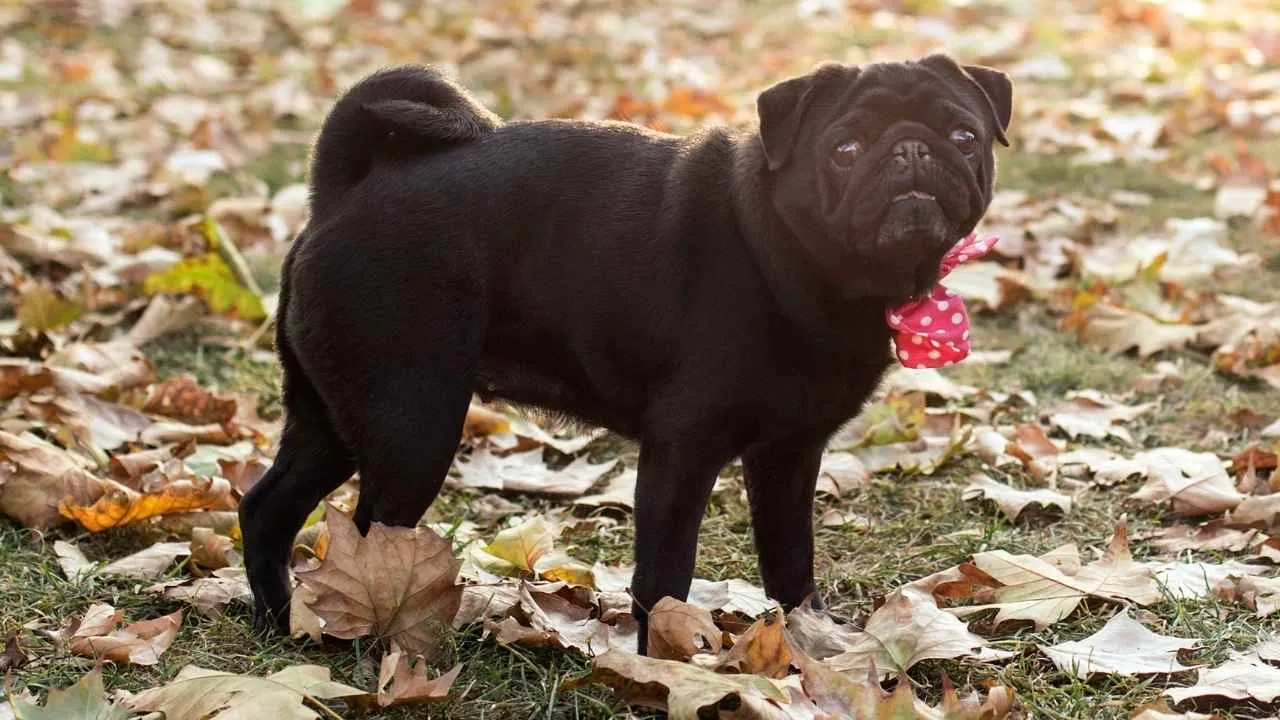
The Pug has a big personality in a small package. It is playful, affectionate, and often wonderfully mischievous. Having a Pug in one’s home is like having a little comedian.
Pugs were originally bred to be companion dogs. They were never used in a demanding role, like herding and hunting. They prefer to be with their families instead of taking part in outdoor activities.
These pups like to stroll from room to room and follow their owner everywhere they go. They will eventually lie down for a long nap right next to you! This makes these small dogs attractive for those who do not want a very independent dog.
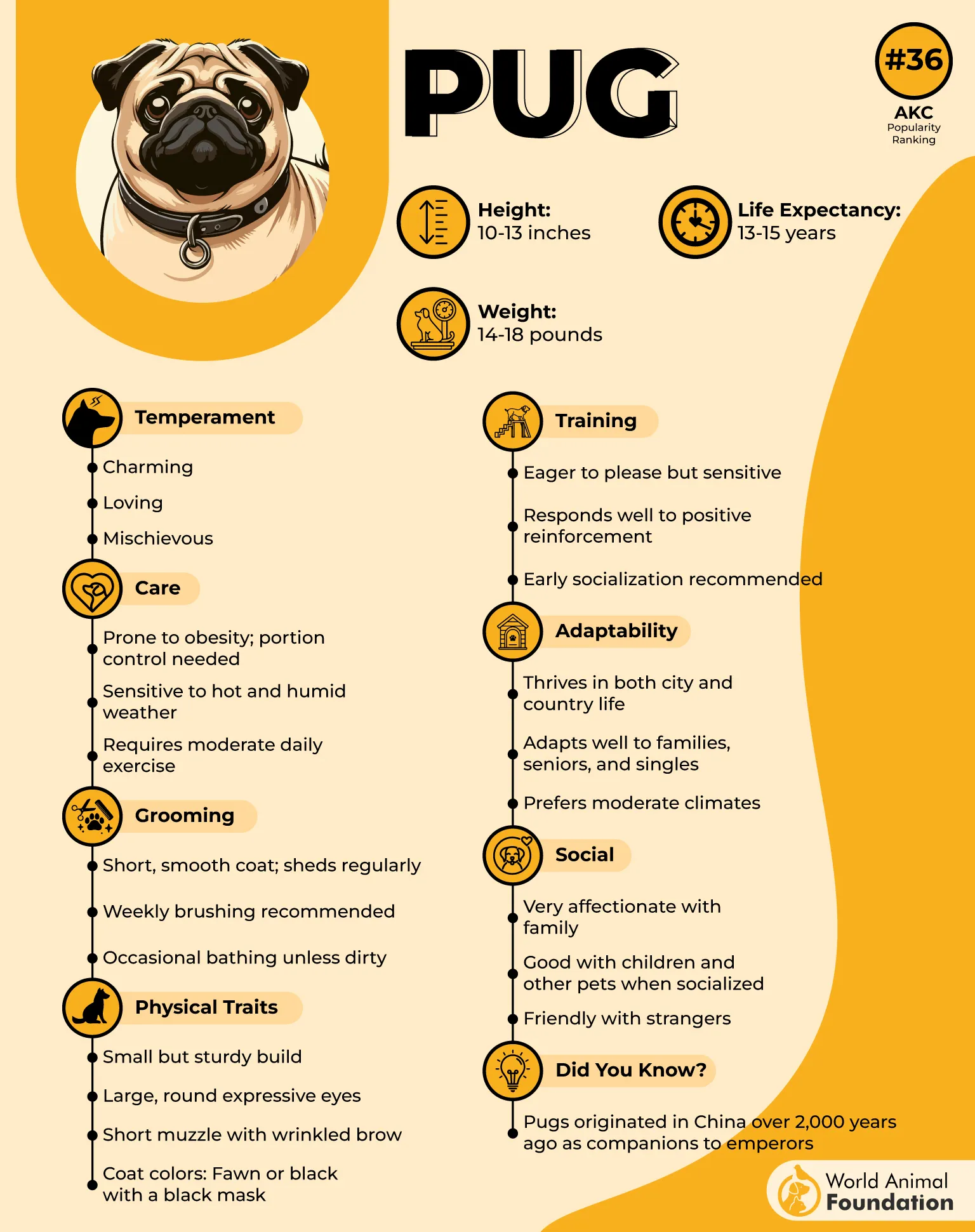
These pups should not be given intense exercise. Taking a short stroll or an indoor play session is usually sufficient for this low-maintenance breed. Owners need to take precautions in hot weather, because of their short muzzle, as stated by the American Kennel Club.
A new owner should also learn about food management. Pugs can be very enthusiastic eaters and may become overweight if food portions and the amount of treats are not monitored.
2. Lowchen
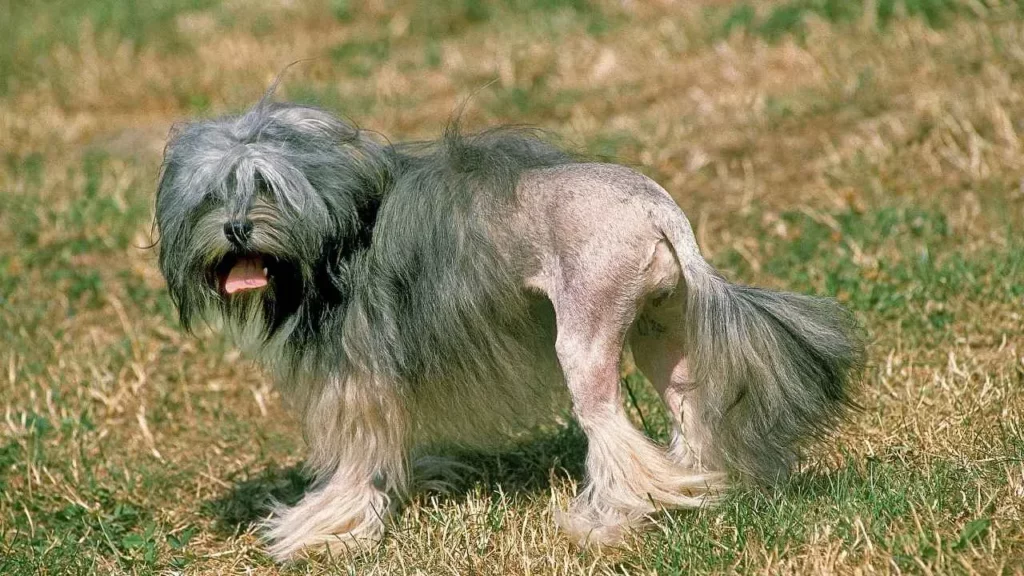
The Lowchen is an interesting breed to consider for a new puppy owner who would like to adopt something a bit more unique. The German name “Little Lion Dog” refers to the traditional lion-like trim that the breed is known for.
Do not be fooled by the fancy hairstyle. This pup is a spirited and self-assured little dog. The Lowchen loves to be around its loved ones and is generally positive towards getting to learn new tricks.
Obedience training can be rewarding due to its high intelligence. Basic sessions can be turned into trick training and agility courses. These activities offer more than just physical movement to this high-energy dog. They provide the dog with something to do do in a pair with its owner.
This dog can also be good at adjusting to various homes. It does not need a big space to stay happy. This is the best dog to take on a short stroll around a dog park. Mental stimulation is equally important for this puppy.
Grooming is the main commitment for this pup. Regular brushing is necessary to prevent tangles. If the traditional look is desired, then owners will need to keep the lion trim that gives the pup that specific royal look. First-time owners should contact a reputable breeder to adopt this pup.
3. Italian Greyhound
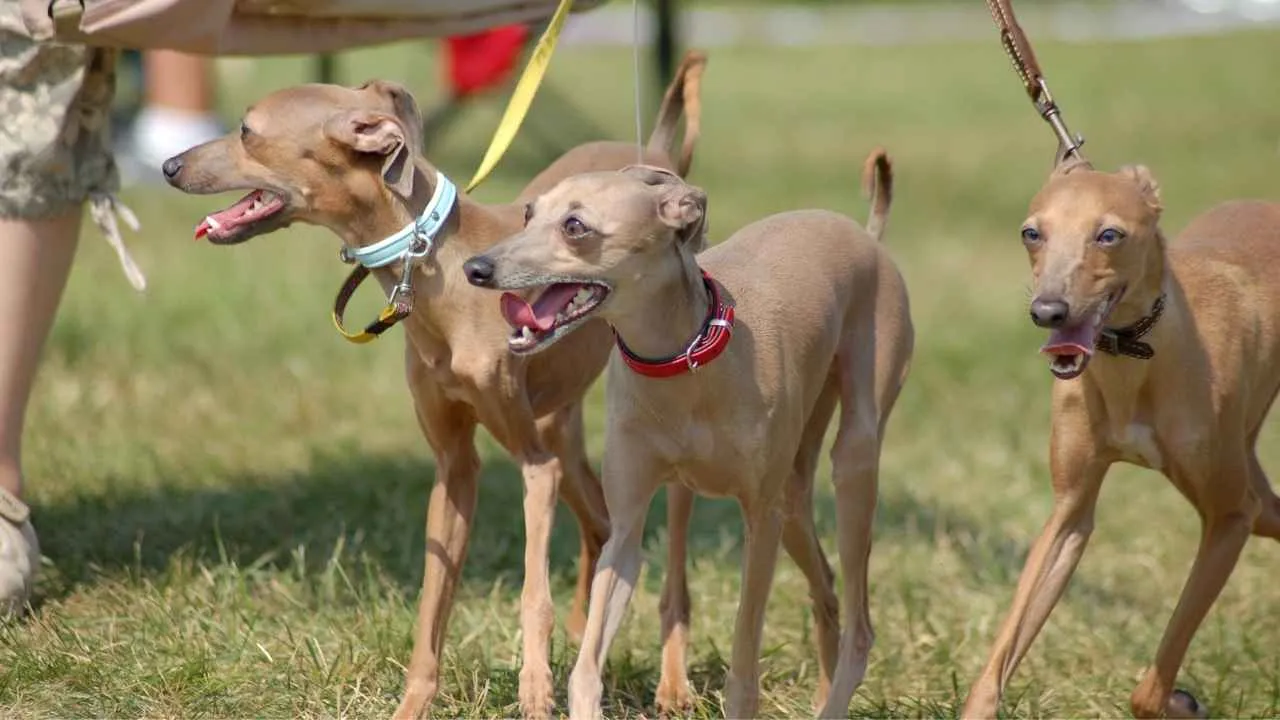
Although the Italian Greyhound may appear fragile, its history shows that it is a surprisingly athletic breed. The archaeological records indicate that there were dogs similar to this pup around 2000 years ago. It has also been linked to royal courts throughout Europe.
This miniature sighthound has a high speed, as stated by The Italian Greyhound Rescue Charity. It is naturally inclined to observe and pursue motion, and new owners should be mindful about leash safety. It is a much safer alternative to the dog running free in an open yard around kids and other animals.
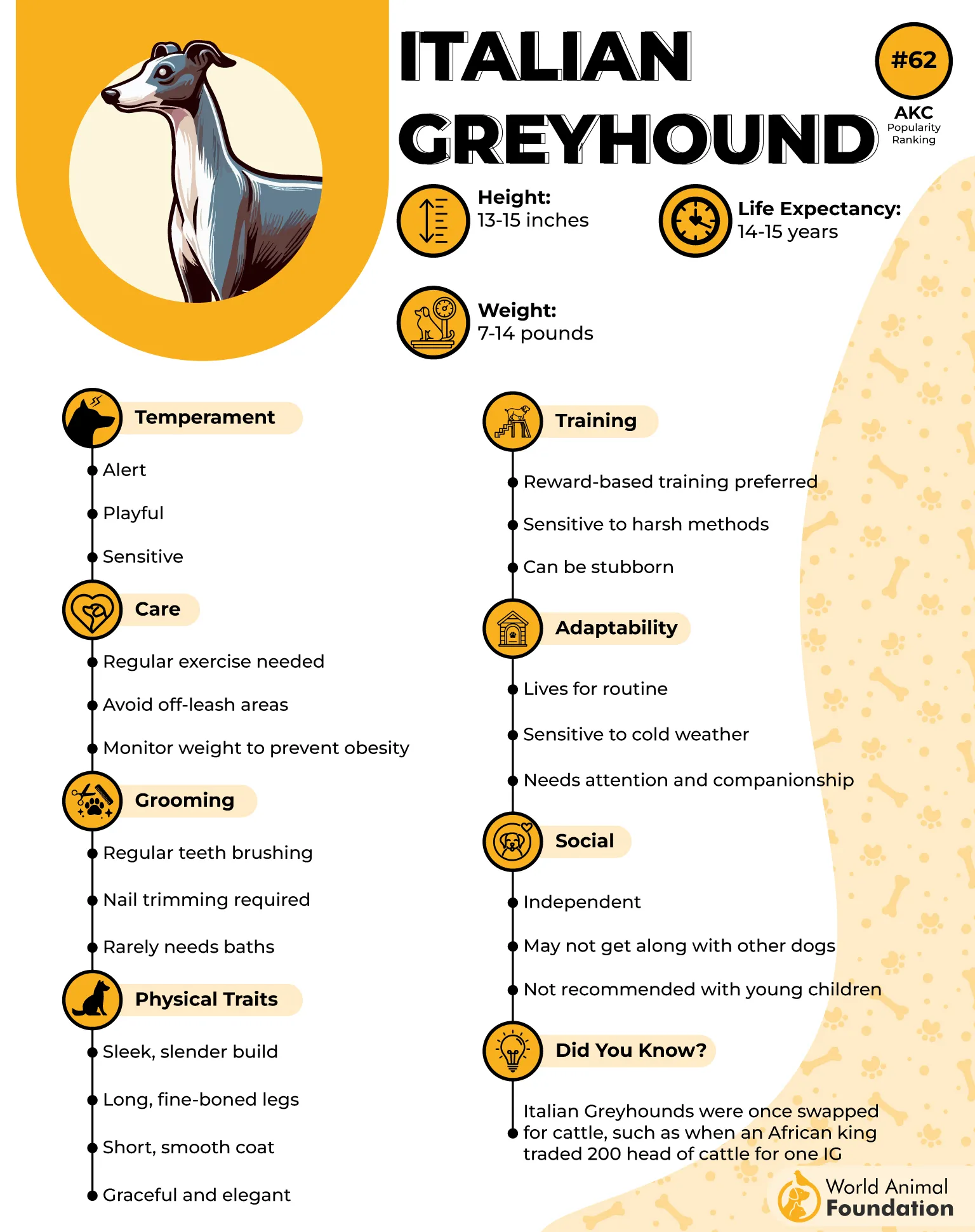
At home, these extremely active dogs are quite different. They love to be snuggled and loved by their family members. They have a short coat which does not require regular grooming, unlike other breeds with long hair. They will, however, need nail trimming with a grinding tool to avoid discomfort.
These pups will need warm blankets and doggy sweaters in winter to keep them warm since their short coats do not provide enough insulation. A healthy dog will require daily exercise in an outdoor space.
These small breeds can only have a friendly temperament with one individual, which is why they are best suited to people who live alone.
4. Chinese Crested
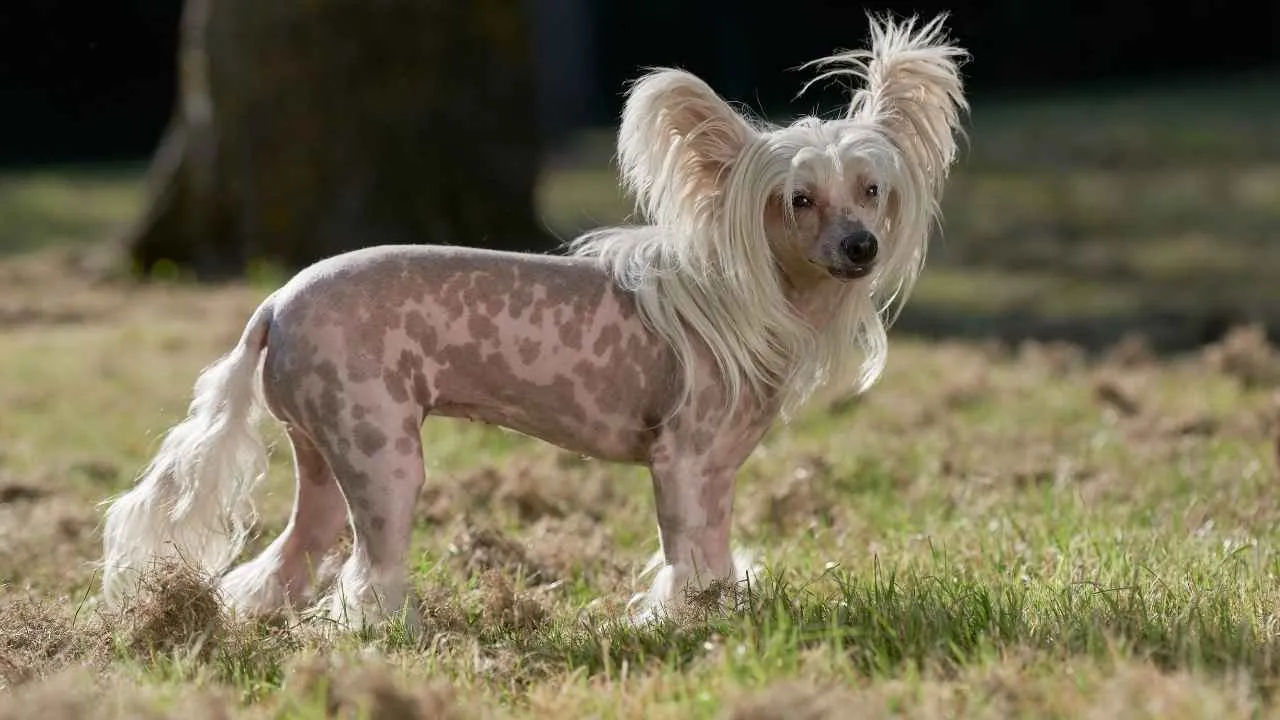
New owners of the Chinese Crested have an unusual option, as it is available in two different varieties: the Hairless and the Powderpuff. The smooth-skinned hairless variety is covered with hair on its head, feet, and tail. Powderpuff’s body is covered with a soft, flowing coat. This means that the grooming needs of both are very different.
The Hairless variety needs protection from environmental exposures to prevent certain skin-related health issues. Sunburn and cold weather can be challenging for this variety, so owners should ensure proper skincare apart from coat care. The Powderpuff needs regular brushing to prevent matting.
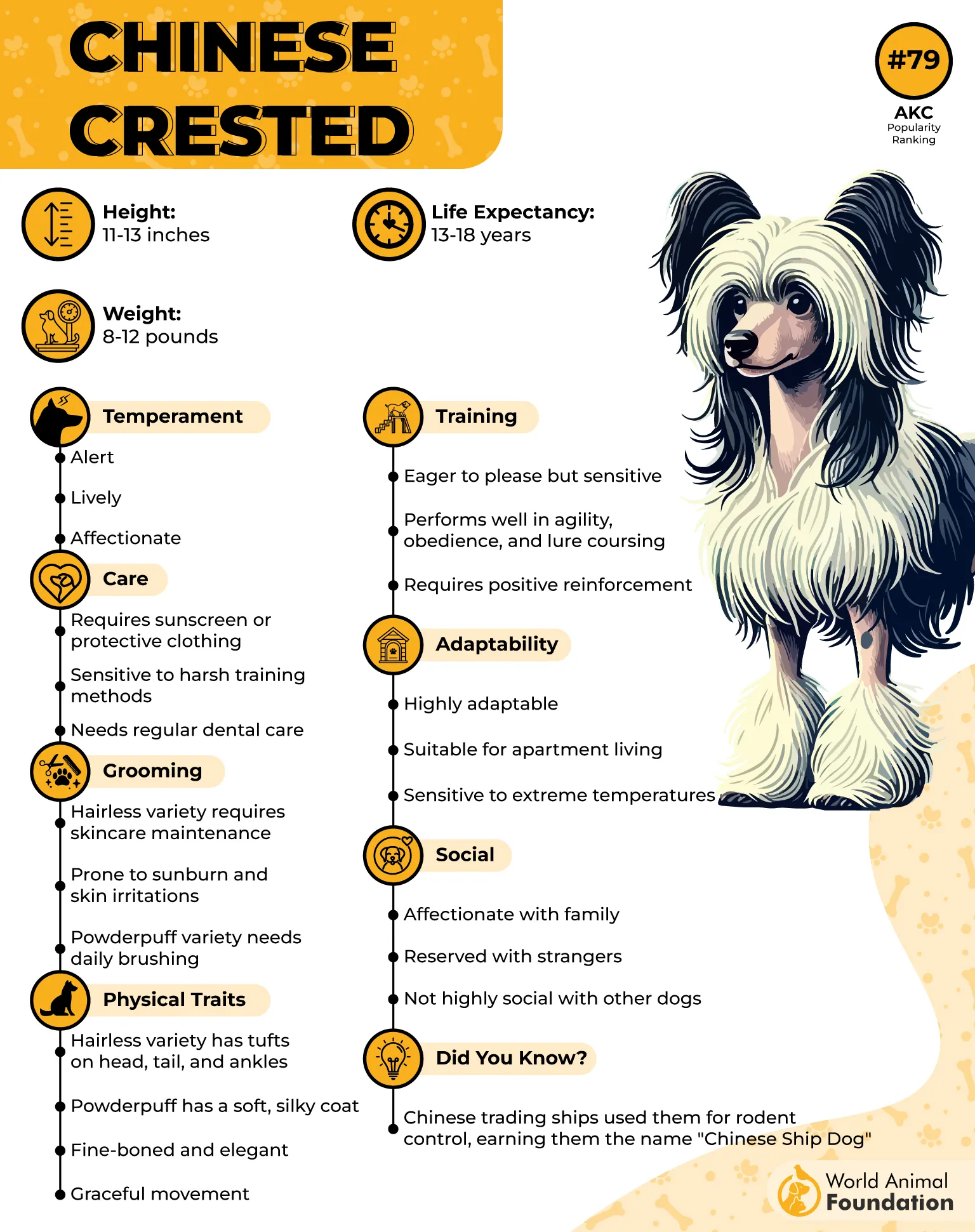
Both varieties are fond of people. They can stay happy without getting daily exercise, unlike other dogs that might require a lot of exercise. Indoor activities including puzzles and interactive games can be valuable forms of brain exercise.
Dental care is very important for these small pups as they are more susceptible to dental issues. Brushing teeth and veterinary dental exams are important aspects of regular care.
5. Russian Tsvetnaya Bolonka
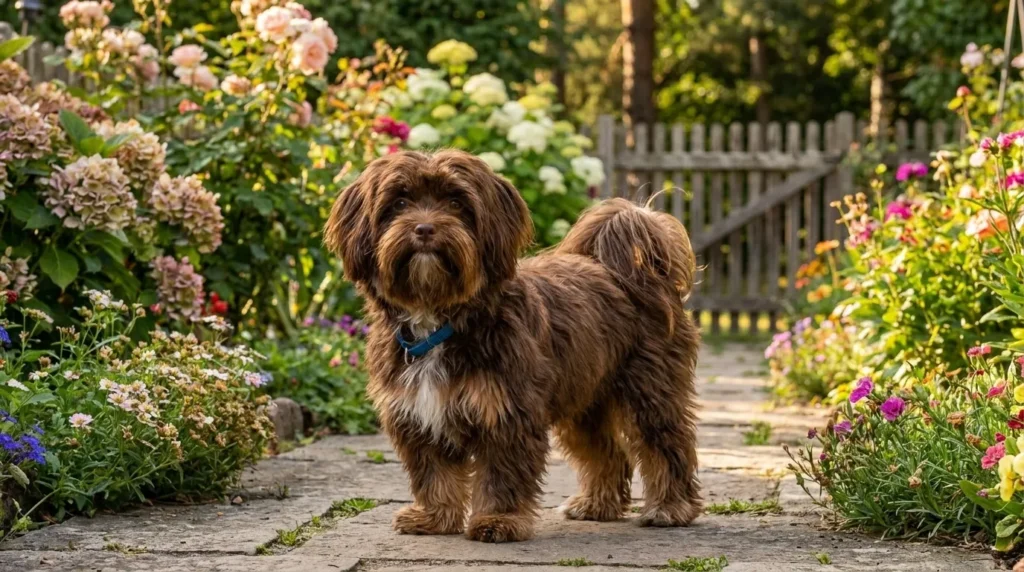
One of the newest discovered options on this list is the Russian Tsvetnaya Bolonka. The translation of its name is “Russian colored lapdog”. This great companion was created in Russia as an intensely loyal dog and can be traced back to the 1950s.
It was developed alongside several small companion breeds such as the Maltese, Bolognese, and the Shih Tzu. The Bolonka was intended to be a pet and is not a breed that is expected to work. This history is reflected in its flexible personality.
These dogs are comfortable in both small apartments and larger homes, unlike large dogs that can only fit in big spaces.
It has an unusual coat. The hair is thick, wavy, or curly and comes in a variety of colors rather than being solid white. While the breed is a low-shedder, this doesn’t mean that grooming is not required. Regular brushing is needed to keep the curls in good condition.
Bolonki are intelligent and attentive. With proper training and early socialization, they can be involved in obedience, rally, tracking, and agility. Contact a good rescue organization to find a healthy pup for your home.
6. Border Terrier
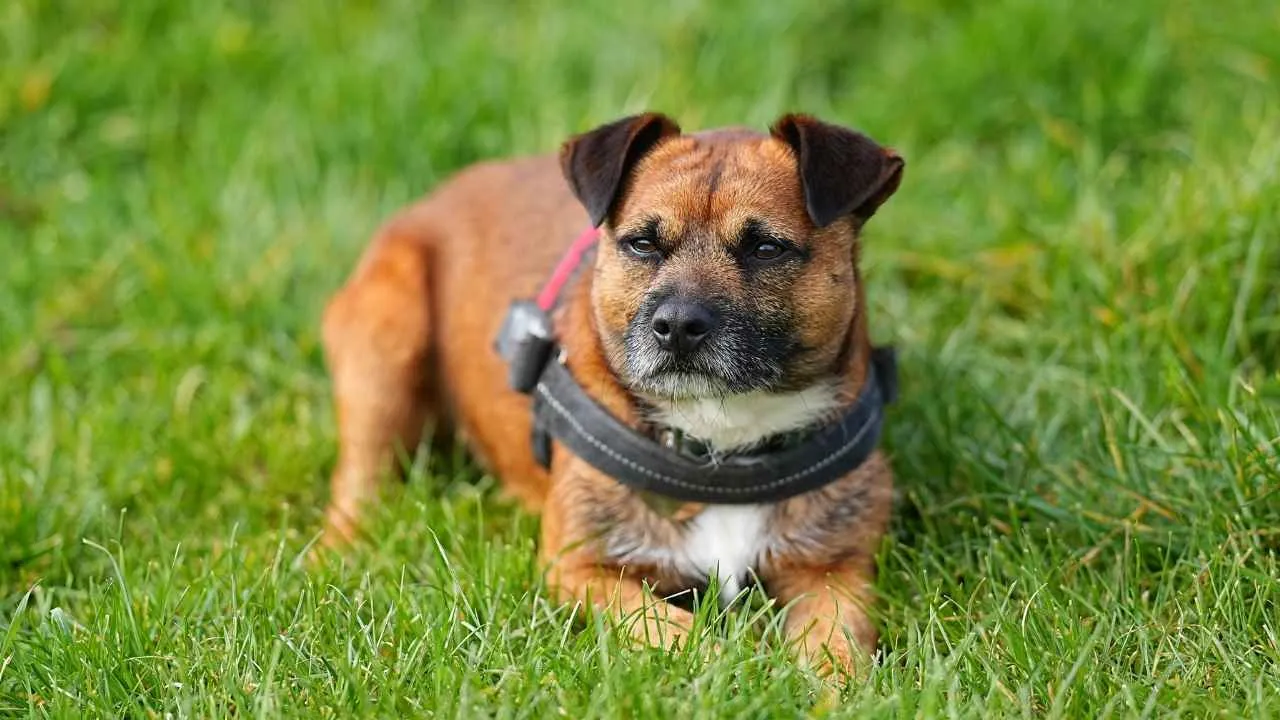
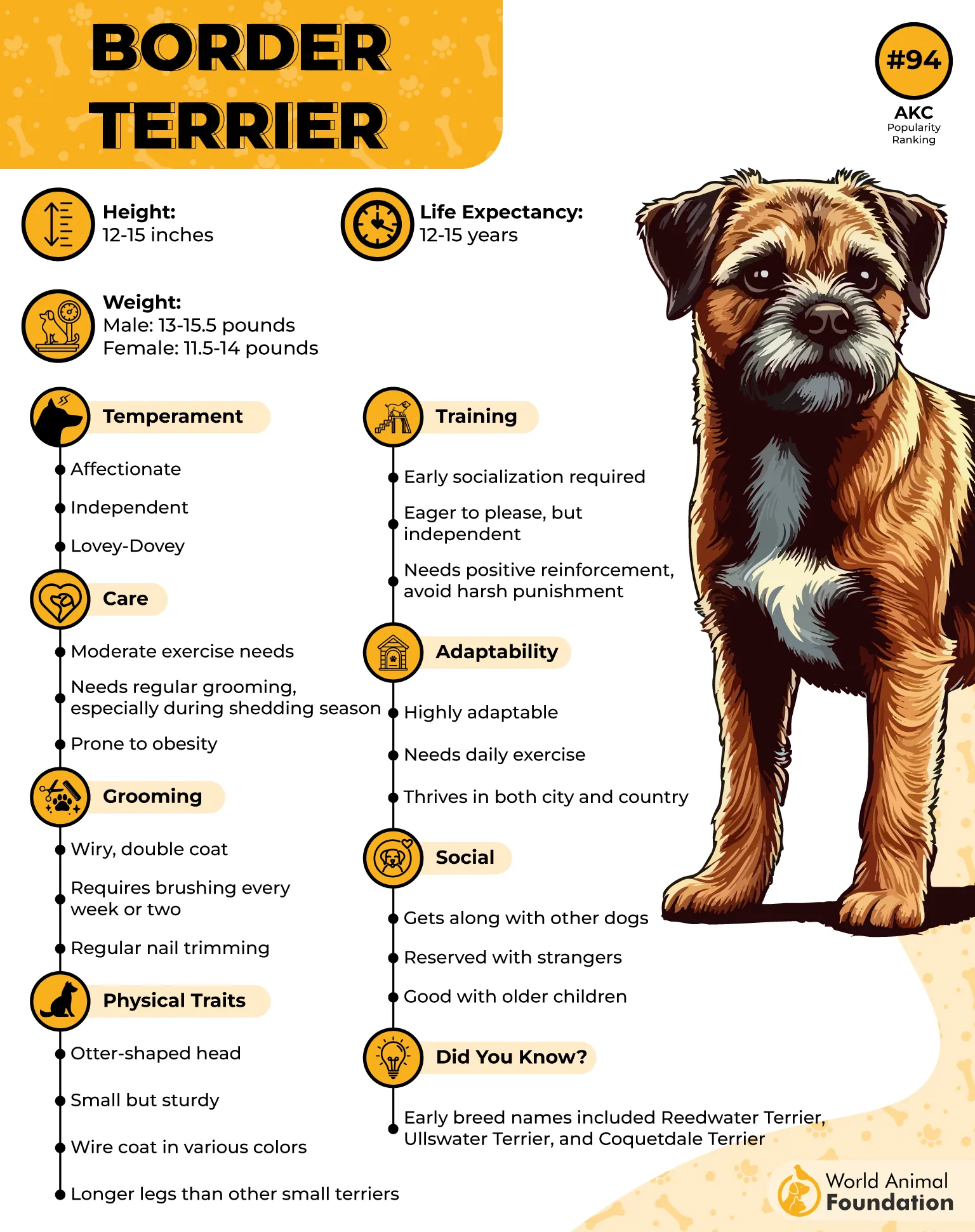
According to Britannica, the Border Terrier was developed for heavy-duty work on the England-Scotland border. It was originally used by hunters to pursue foxes. This history explains its confidence, stamina, and strong natural hunting instincts.
For a novice, this means that the Border Terrier is more than just a showy lapdog. It requires activities to train its body and mind. Scent games can be a good way to keep it active.
Placing treats throughout the house and yard helps the dog to practice its innate search instinct. Other activities like obedience work can also offer extra stimulation.
It has a practical, hard, wiry coat that is designed to be resistant to harsh weather and provide protection. Hand stripping the fur can help to preserve its natural structure.
Early-age socialization and obedience training sessions are necessary for Border Terriers, or else they might develop destructive behaviors. They can only be off-leash in a securely fenced area.
7. Cavalier King Charles Spaniel
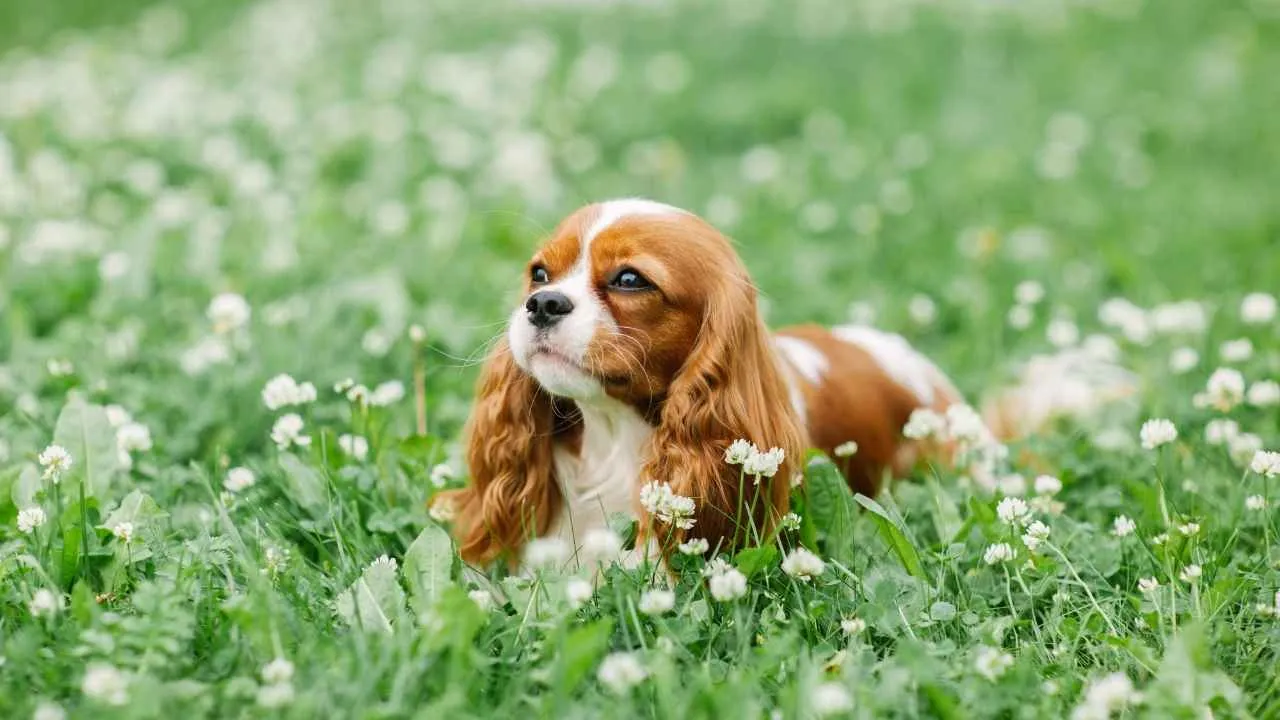
The Cavalier King Charles Spaniel is the best dog breed for first-time pet owners seeking a dog that is both playful and loving. It is able to engage in leisurely slow-paced activities as well as more energetic ones.
While it is a beautiful dog to look at, its Spaniel genes give it great athleticism. Cavaliers like to go for walks, retrieve small game and take part in obedience competitions. They are also very people-oriented. They are excellent around children and the elderly.
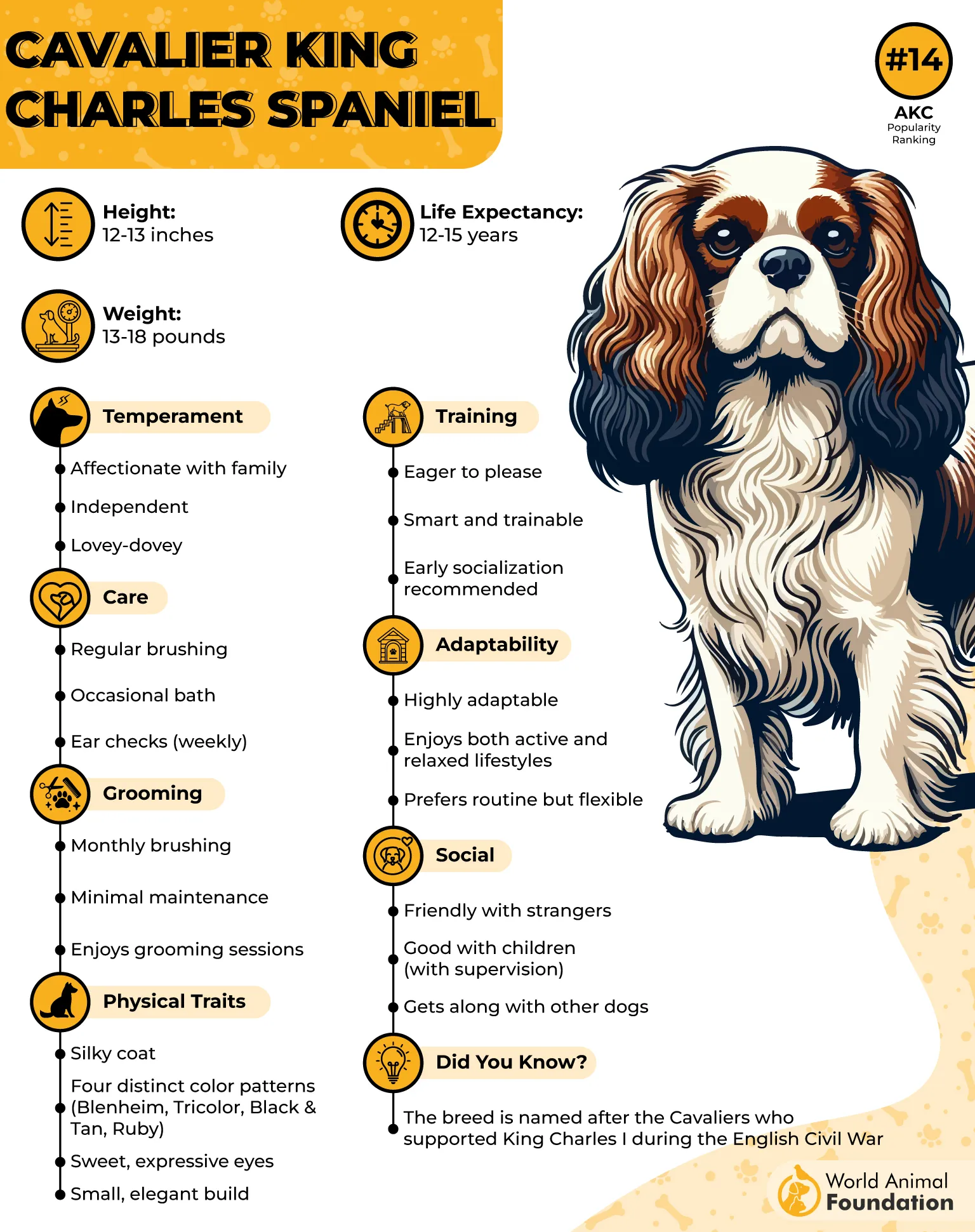
Training them is much easier than with certain breeds. Positive reinforcement training methods can be used to make them develop good habits.
They have long ears which should be checked regularly and cleaned properly. Regular ear checkups should be a part of your routine because their ear shape can decrease airflow around the ear canal.
Frequent brushing is also important for the feathered coat. Ears, legs, chest, and tail need to be kept free of tangles. Cavaliers do best when they have a good amount of time to be with their families.
Conclusion
You do not have to know everything right off the bat when you become a first-time dog owner. It takes patience, preparation, and knowledge to learn about the animal you want to take home.
The best dog is the one that can match your schedule, has moderate grooming needs and low exercise needs. Responsible ownership begins before the dog’s arrival. Do your research and talk to good breeders, visit reputable shelters, and understand the needs of the dog you are thinking about adopting.
There will still be errors. The first training session may not go as planned, and the dog may even chew on your favorite shoe, but be patient, and everything will be fine because these cute moments are the best part of your journey.
