




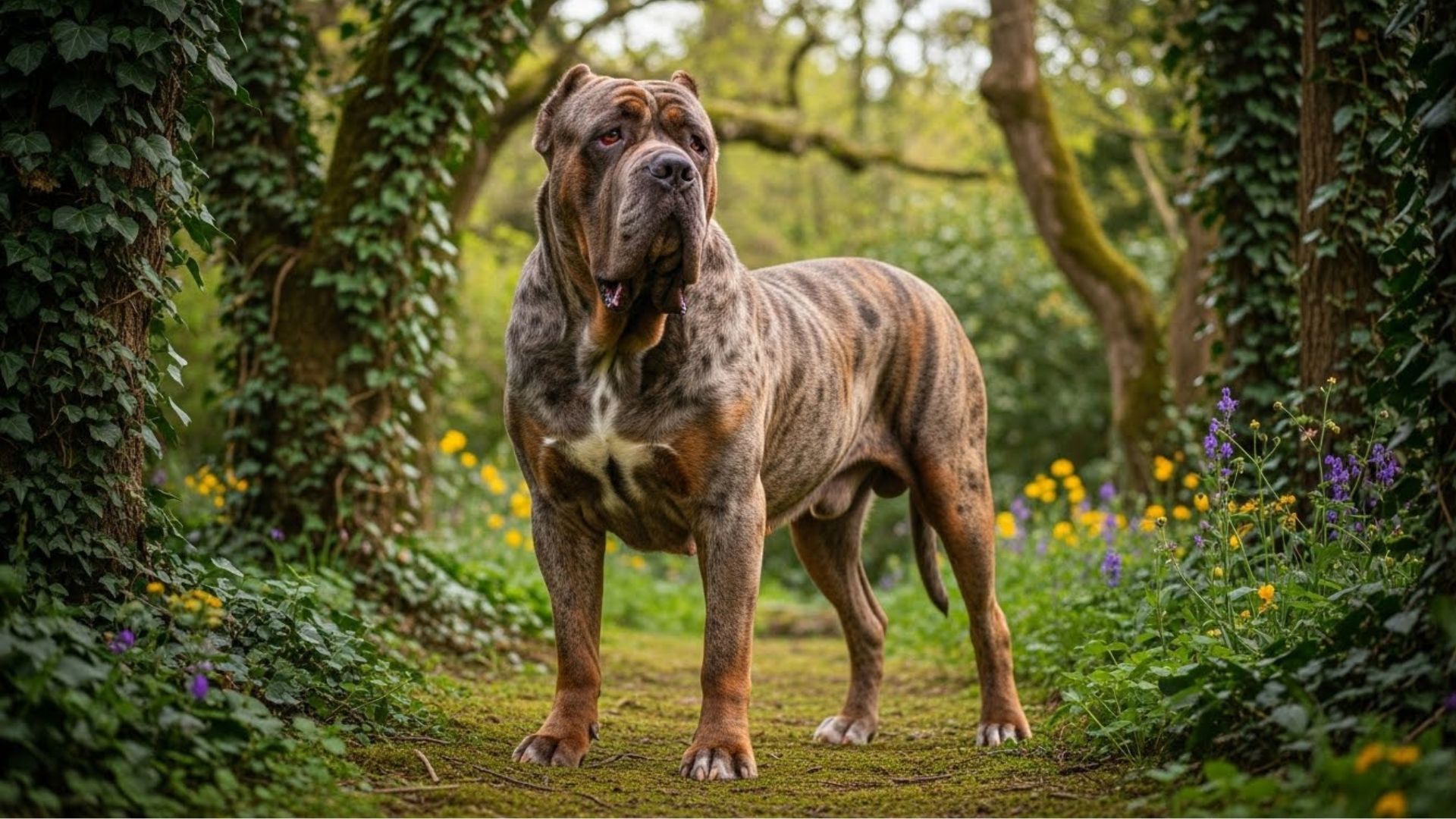
There’s something truly special about discovering rare dog breeds most people have never heard of—especially the giant ones with big frames and even bigger hearts.
Their gentle companionship often contrasts beautifully with their impressive size. For many pet parents, meeting one feels like finding a loyal, steady friend in a noisy world.
The American Kennel Club (AKC) explains that large dogs often have shorter lifespans because rapid growth puts pressure on their bones, joints, and organs.
This fast development can lead to age-related health issues more commonly than in other breeds. Understanding this helps pet owners provide the extra care and support these dogs need.
Studies also show that giant pups face mobility challenges and a reduced life expectancy as they grow older. This is why experienced dog owners focus on early socialization, mental exercise, and consistent training.
With this awareness, families can offer these remarkable dogs a life filled with comfort, safety, and love.
Unusual Giant Dog Breeds You Probably Haven’t Heard Of
1. Neapolitan Mastiff
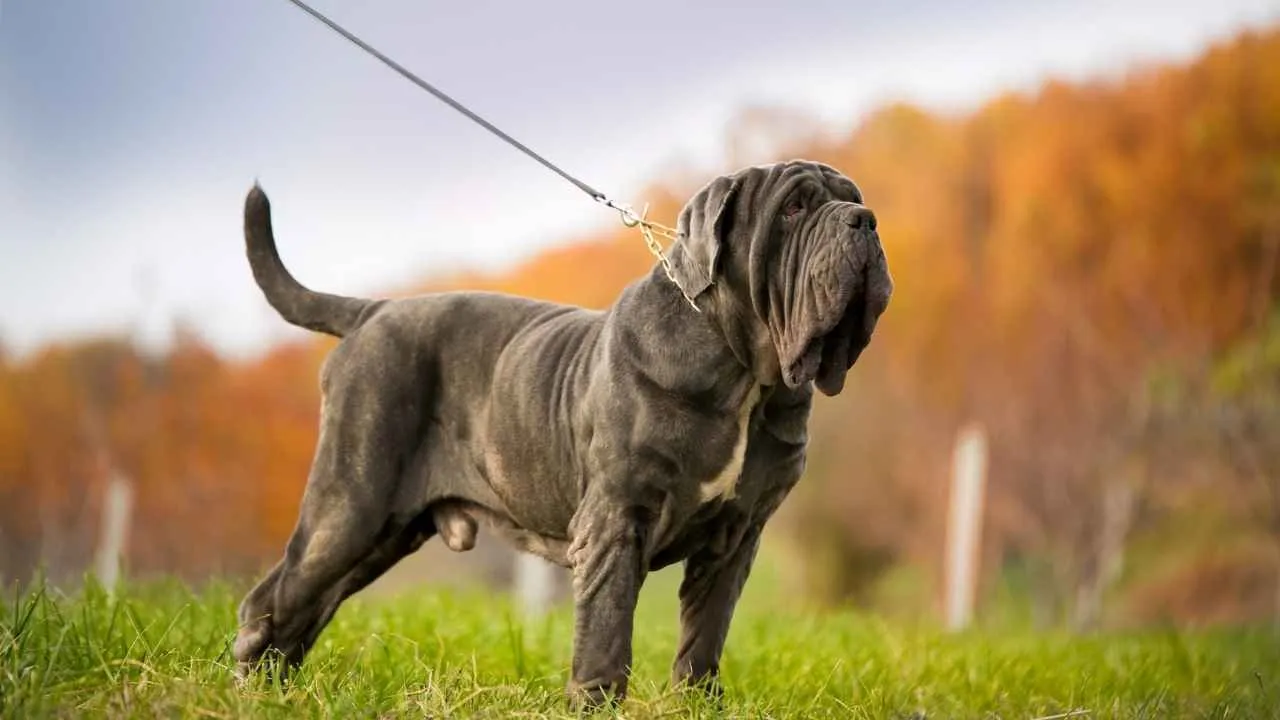
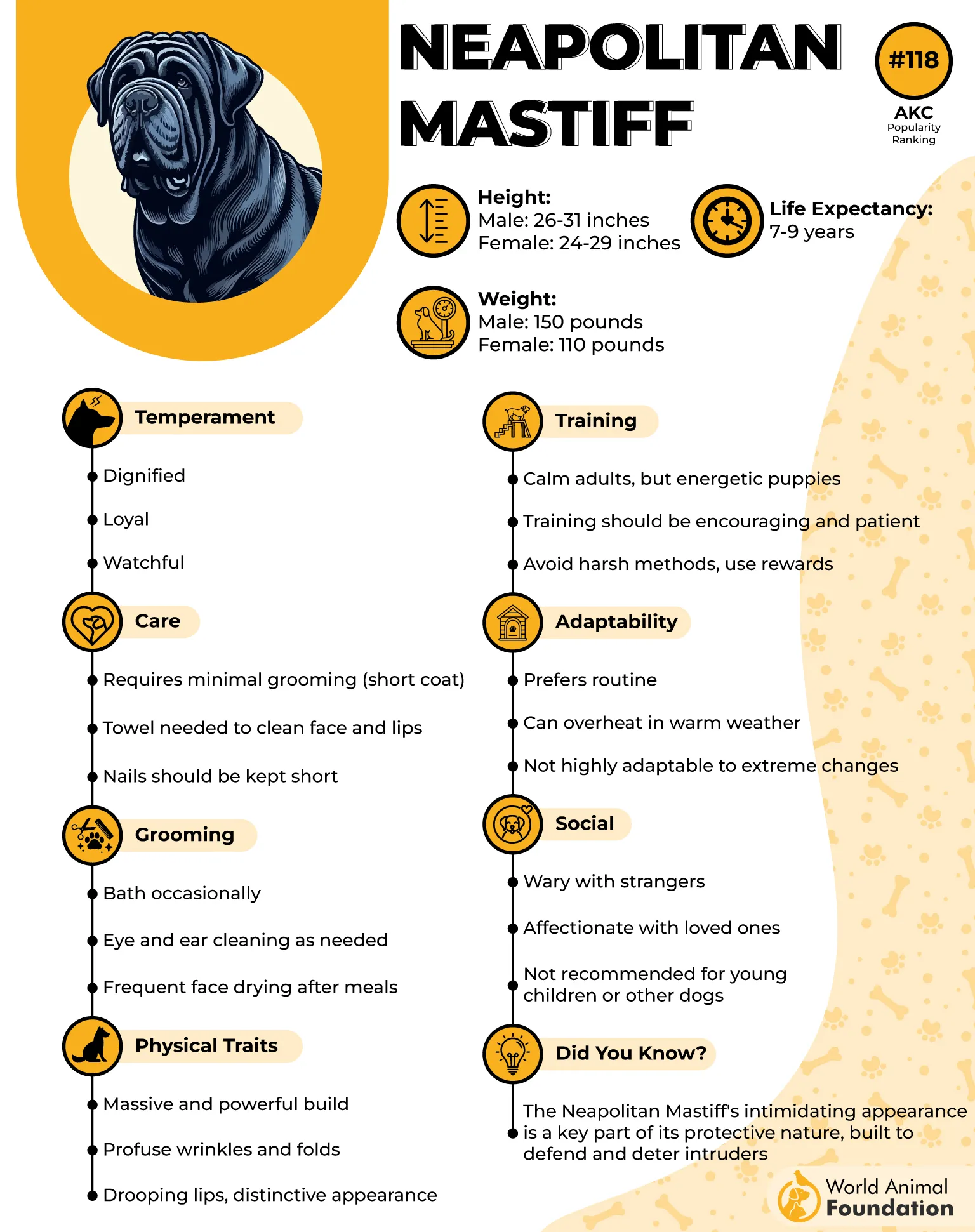
The Neapolitan Mastiff is a massive, powerful guardian known for its loose folds, heavy jowls, and ancient heritage.
Though headstrong, it can become a loyal family companion for experienced owners who can handle its size and temperament. Slow, steady exercise and proper training are essential for keeping this gentle giant healthy and well-behaved.
The Neapolitan Mastiff traces its roots back nearly 5,000 years, making it one of the oldest Mastiff-type dogs. Believed to descend from the Mastiffs of Epirus—companions of Roman consul Paulo Emilio—this breed was valued across Europe for its courage and protective instincts.
Its famously loose skin was intentionally bred to shield it from injuries during attacks, giving it both historical significance and functional design.
As a giant breed, the Neo needs 30–45 minutes of light daily exercise, avoiding intense activity to protect his joints.
Despite occasional stubbornness, consistent walks, gentle play, and durable chew toys keep him healthy, mentally stimulated, and closely bonded to his family.
2. Scottish Deerhound
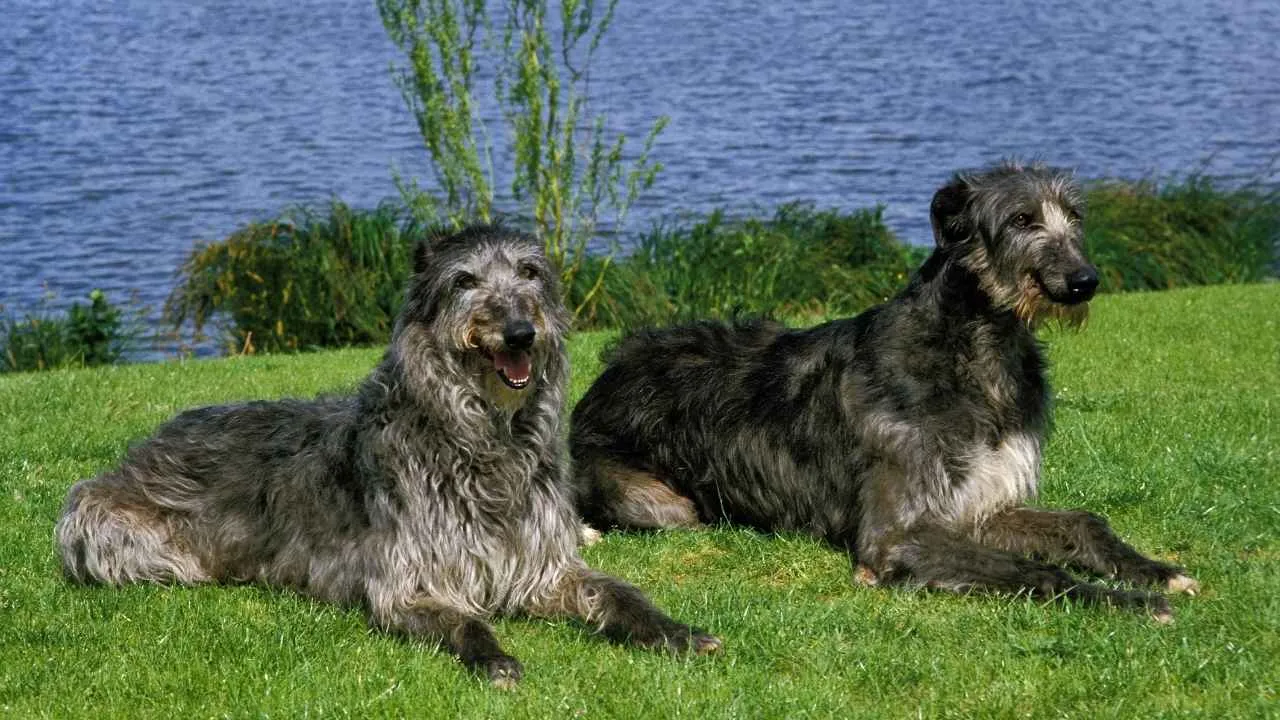
The Scottish Deerhound, often called the “Royal Dog of Scotland,” is an ancient and noble coursing hound built on the classic Greyhound template but far larger and more imposing.
Known for elegance, height, and a crisp coat—most admired in dark blue-gray—this breed was originally bred to hunt massive red deer.
Canine historians believe Deerhounds predate the arrival of the Scots in the ninth century, and artifacts from the 16th century confirm their name and legendary status. Sir Walter Scott even praised them as “the most perfect creature of Heaven.”
With deep roots in Scottish history and a long tradition of hunting, the Deerhound is considered a rare and culturally significant breed.
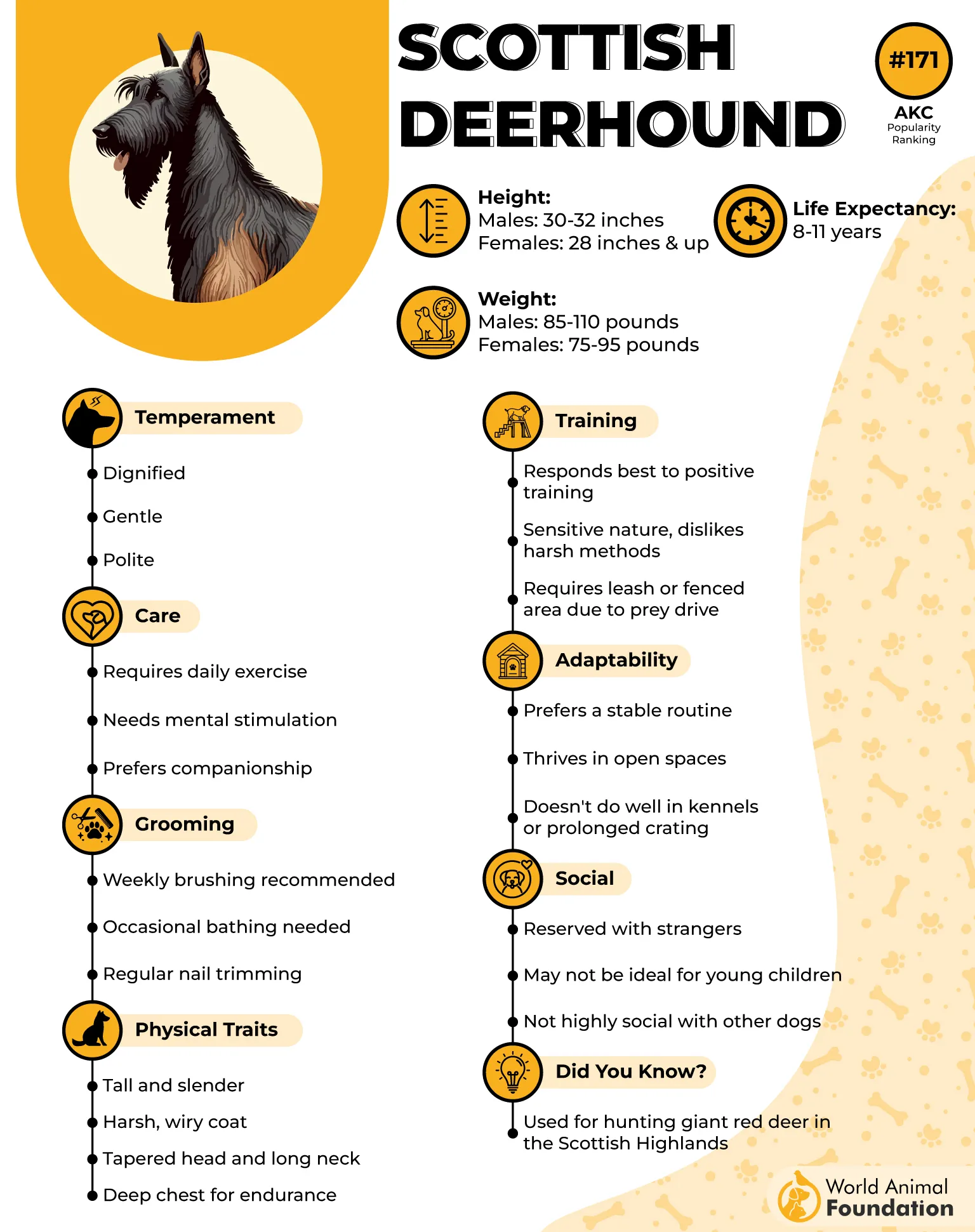
Their ancient lineage and specialized purpose contributed to their limited numbers, making them prized among enthusiasts who admire their heritage and majestic form.
As a big, athletic dog, the Deerhound needs ample off-leash space and daily free running to stay mentally and physically sound. As per the American Kennel Club, puppies especially require a safe, fenced area and a playmate to develop properly.
While adults may enjoy lounging, they still need consistent activity and low-stress environments to thrive, stay fit, and maintain long-term health.
3. Tibetan Mastiff
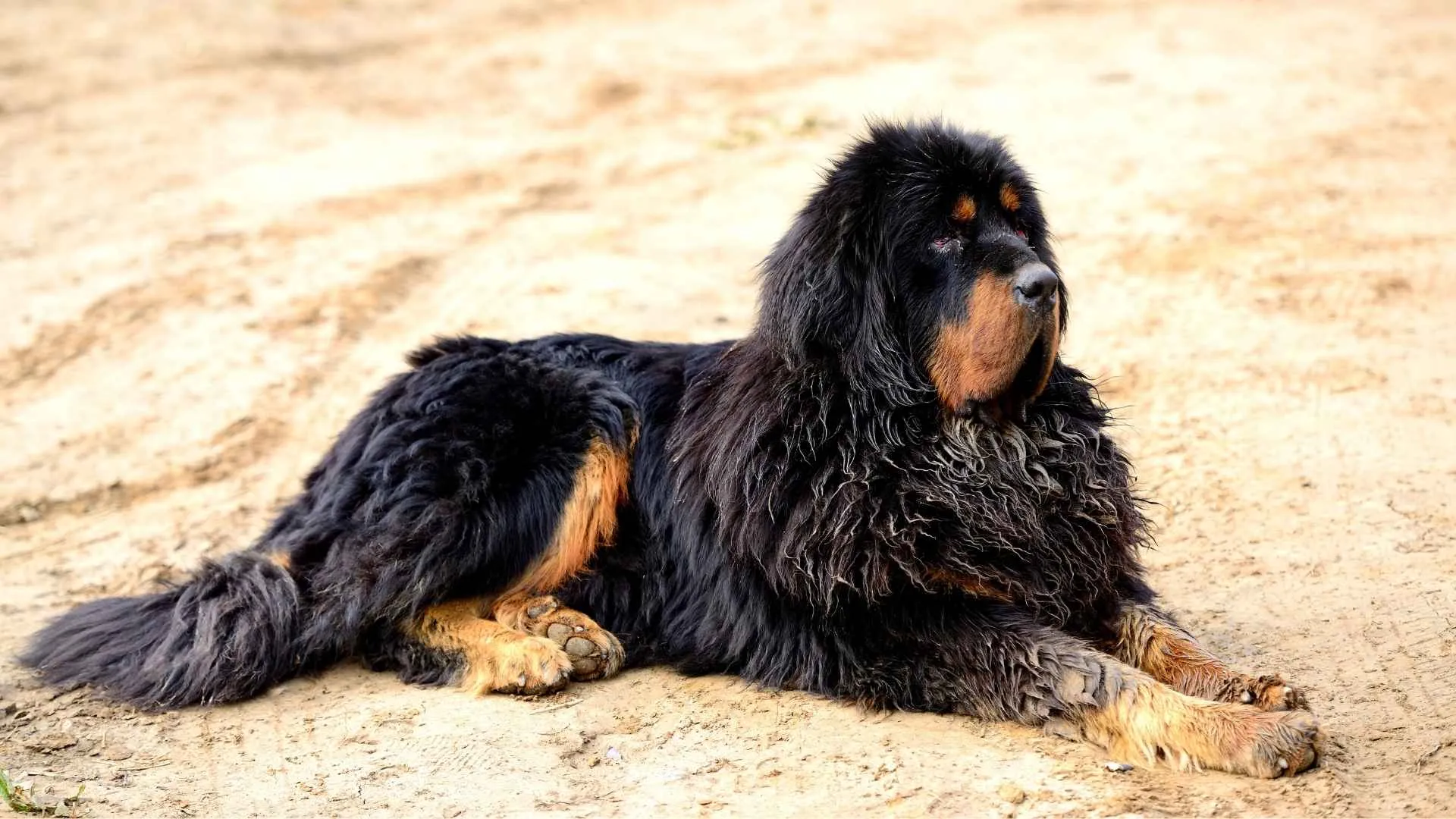
The Tibetan Mastiff is a majestic, ancient guard dog breed known for its lion-like mane, massive size, and deep-rooted history in Tibet.
Written records trace this breed back to 1100 BCE, and although its exact origins remain unclear, it has long been valued as a fiercely loyal protector.
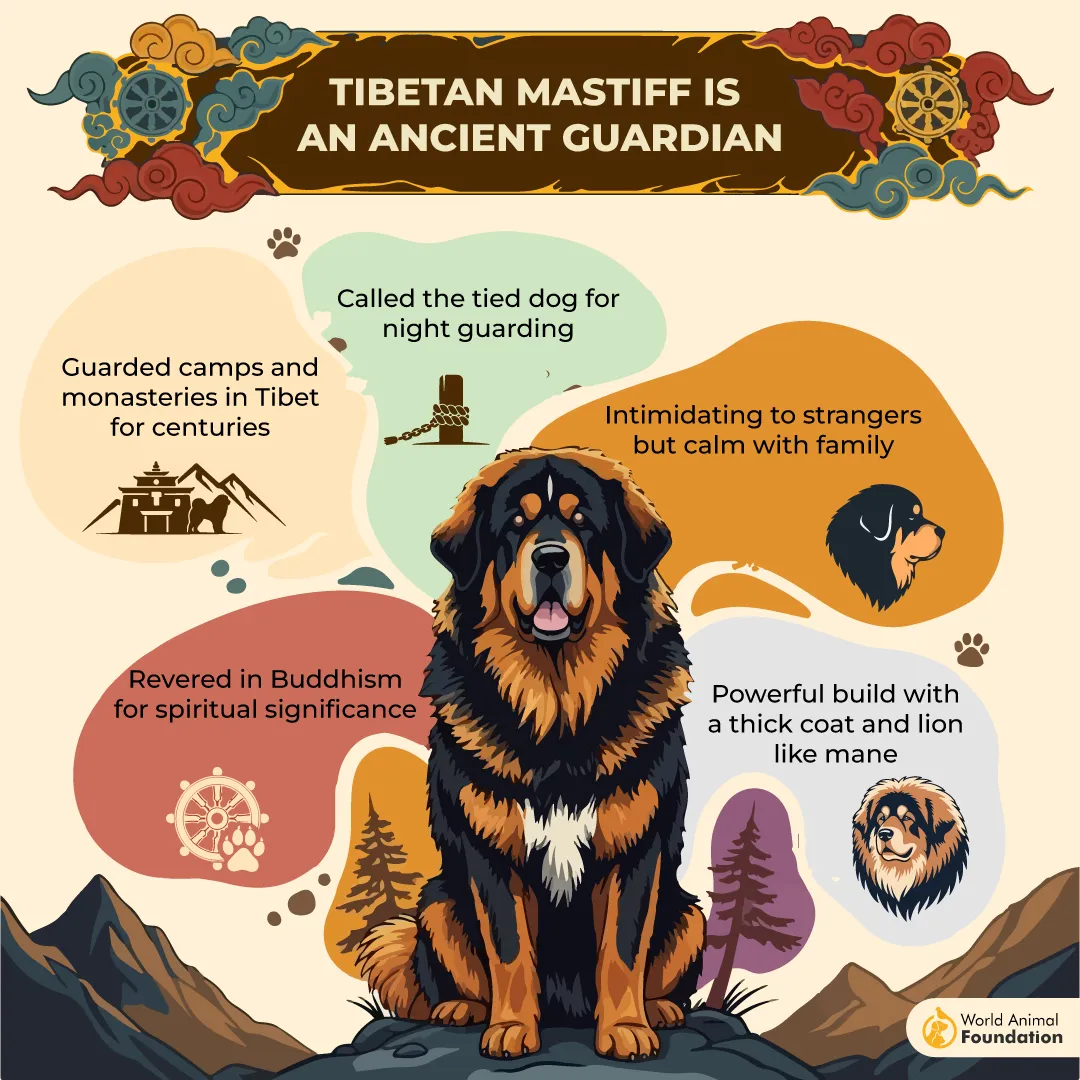
With a dense double coat, broad head, muscular frame, and curled, feathered tail, the Tibetan Mastiff stands out as one of the world’s most impressive, courageous dogs.
As an ancient mountain guardian, the Tibetan Mastiff is considered a rare breed outside its homeland. Its aloof yet devoted temperament, nighttime alertness, and natural, fiercely protective instincts reflect centuries of selective breeding.
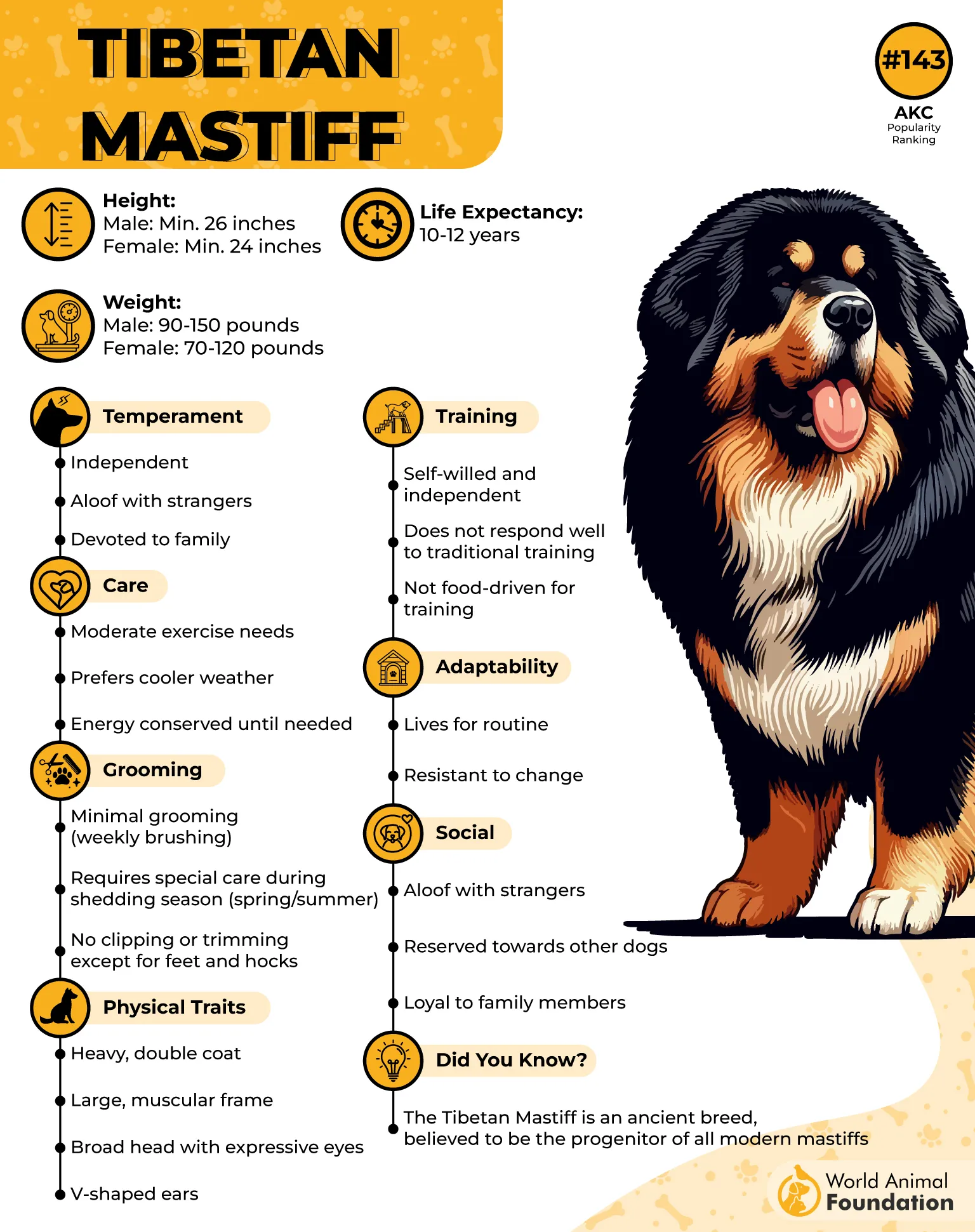
Reserved with strangers but deeply loyal to family, this unique temperament adds to its rarity and distinct identity.
Classified as a giant breed, the Tibetan Mastiff needs moderate exercise and ample outdoor space. They do not adapt well to apartments and require a fenced yard to roam freely.
As per PetMD, proper socialization, patient training, and positive reinforcement are essential, as their intelligence comes paired with a stubborn nature.
When understood and guided with patience, they mature into powerful, devoted, and gentle companions.
4. Bloodhound
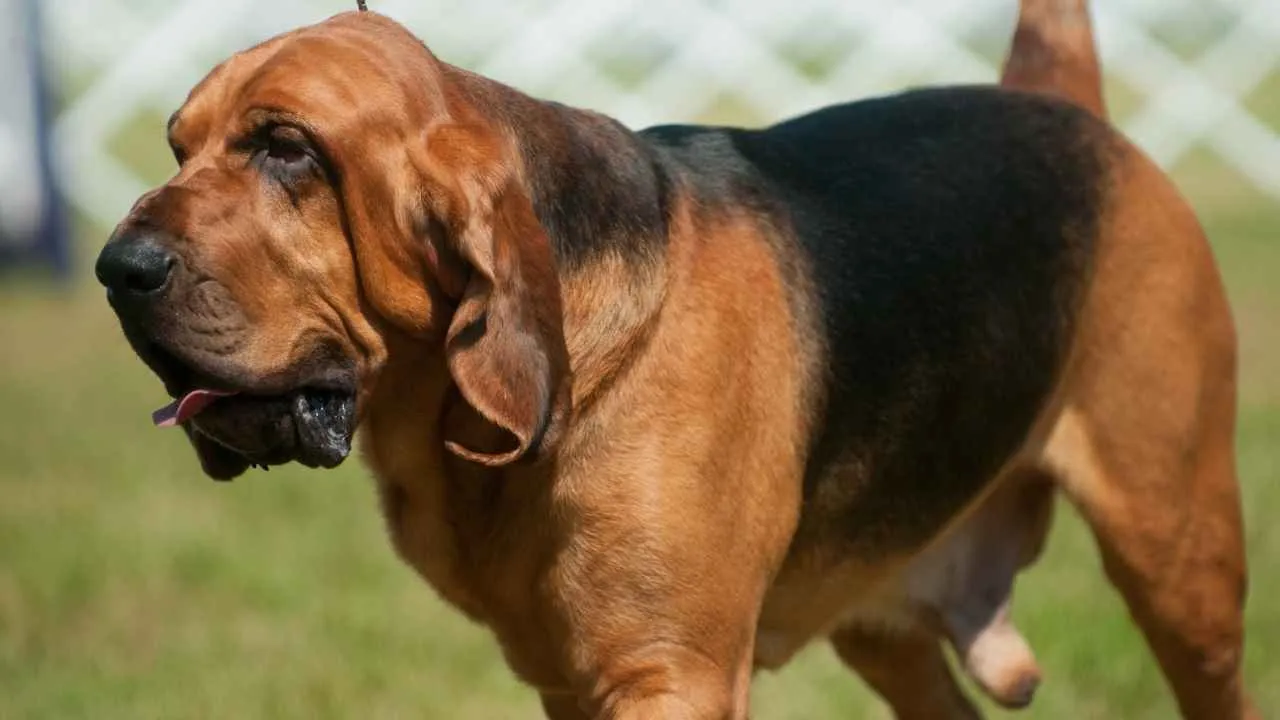
The Bloodhound, also known in Belgium as the Chien de St. Hubert, is a large and powerful scenthound famous for its unmatched sense of smell. This ancient breed is friendly, calm, and gentle, though often quite stubborn.
Bloodhounds do not adapt well to apartment living or busy city environments; they thrive best in a quiet home with a fenced garden where they can roam safely.
Their long ears and expressive eyes require regular cleaning, and they tend to drool after meals or excitement, so a towel is always useful.
Although admired worldwide, the Bloodhound remains relatively rare due to its specific care needs and sensitivity to noise, crowds, and urban stress.
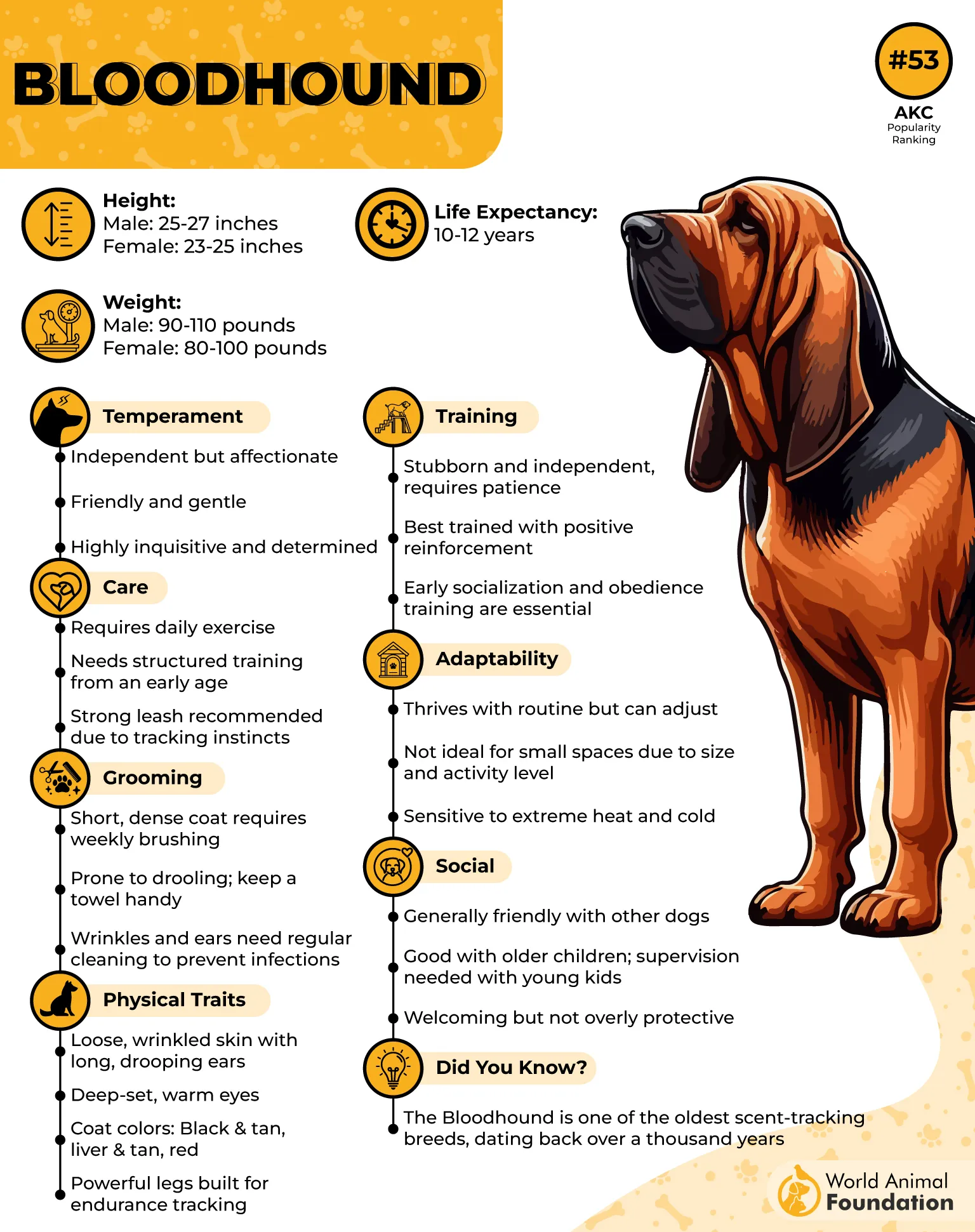
Their exceptional tracking abilities make them unique, but this specialization contributes to their limited population among typical pet homes. As a large, heavy-boned breed, Bloodhounds need joint-friendly exercise, especially during puppyhood.
Moderate walks, high-quality food, consistent training, and gentle handling help them grow into healthy, well-mannered, and affectionate companions.
5. Leonberger
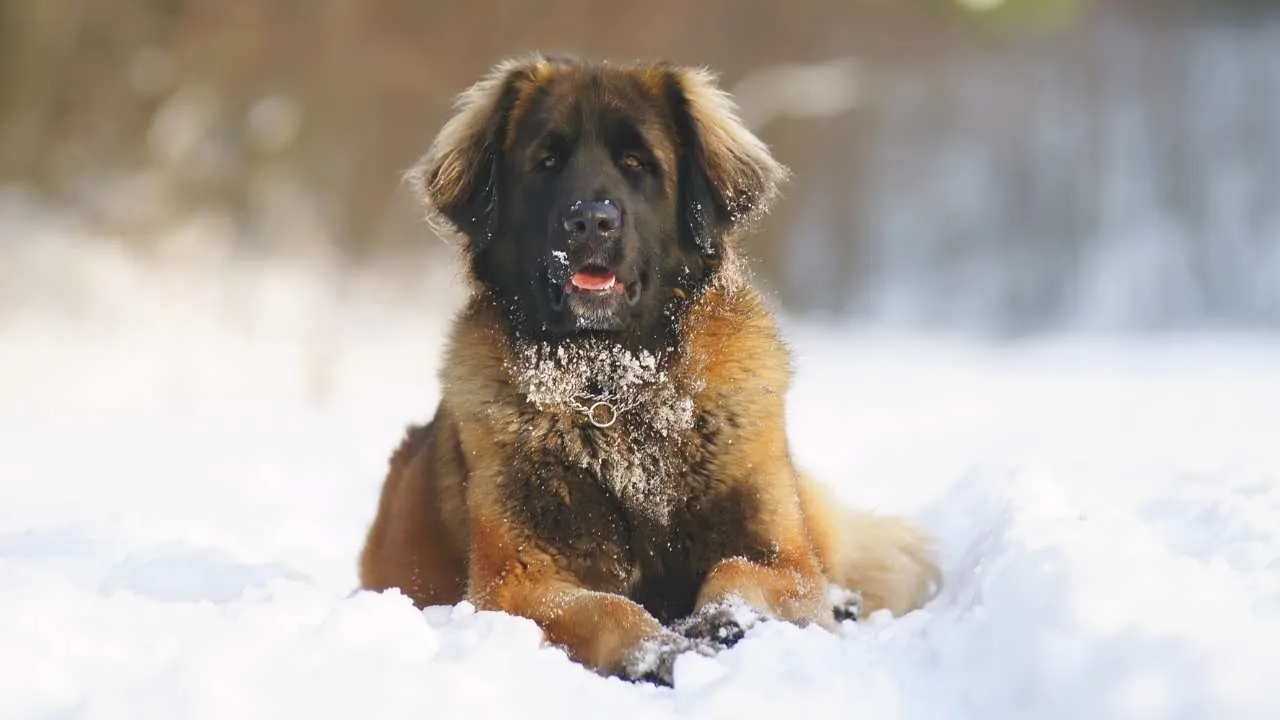
The Leonberger is a large, strong, and affectionate dog known for its gentle temperament and strong family instincts.
Despite their impressive size, Leos are friendly, playful, and easy to train, making them excellent companions for households with kids and other animals.
With a long, coarse, waterproof coat, they stay warm and handle various climates with ease. Moreover, with webbed feet, they swim comfortably. Being smart dogs with a calm nature makes them dependable, well-balanced family guardians.
Though admired worldwide, Leonbergers remain relatively uncommon due to their specific care needs and shorter lifespan of about 8–9 years.
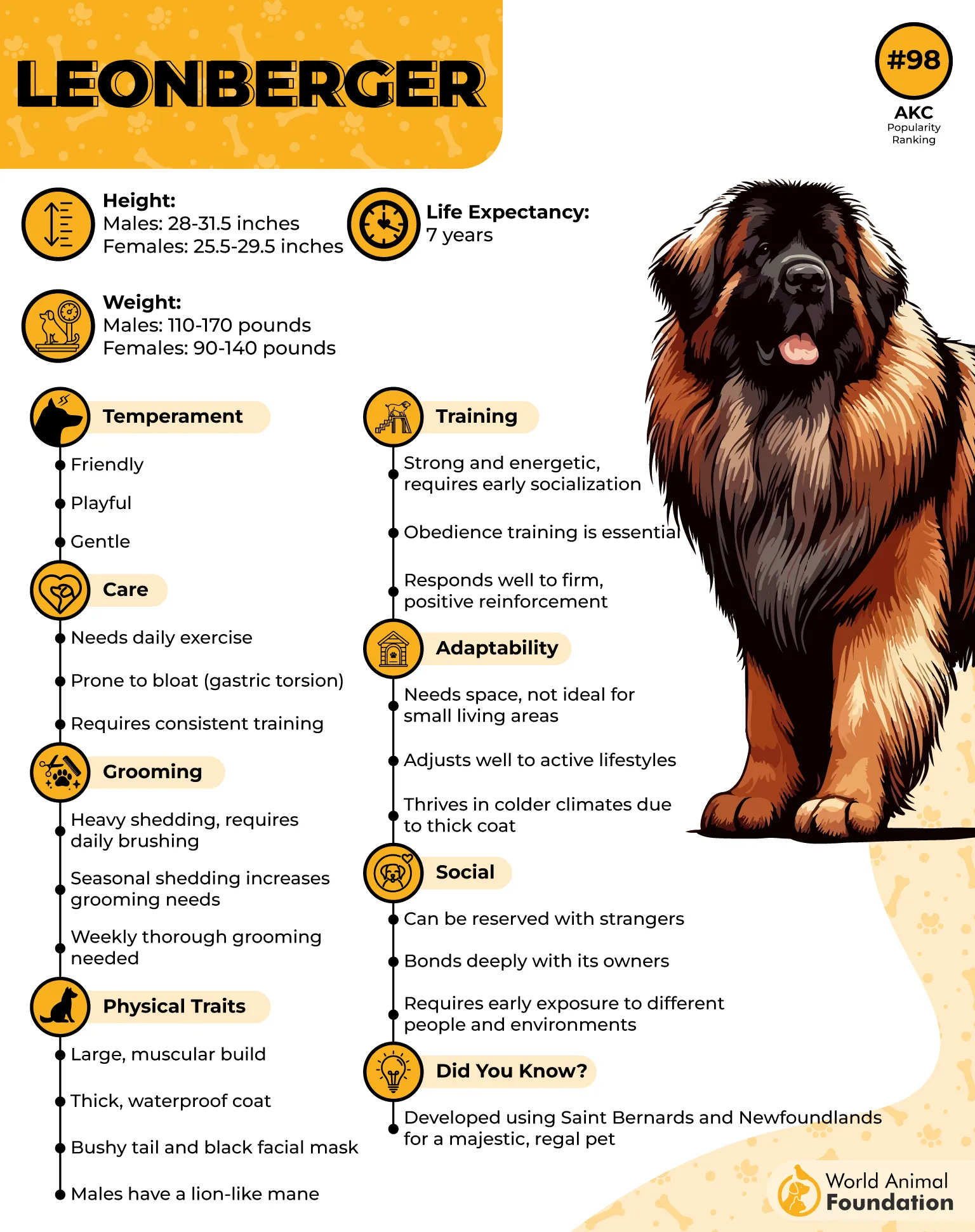
Their combination of size, temperament, and working heritage makes them unique, but also limits how widely they are bred. Families who choose a Leo value their loyalty, gentleness, and majestic presence.
As a big dog breed, the Leonberger requires at least an hour of daily exercise to stay fit, though puppies must be handled carefully to protect their developing bones.
With proper training, routine activity, and mindful socialization, these calm, affectionate dogs grow into steady, loving companions.
6. Estrela Mountain Dog
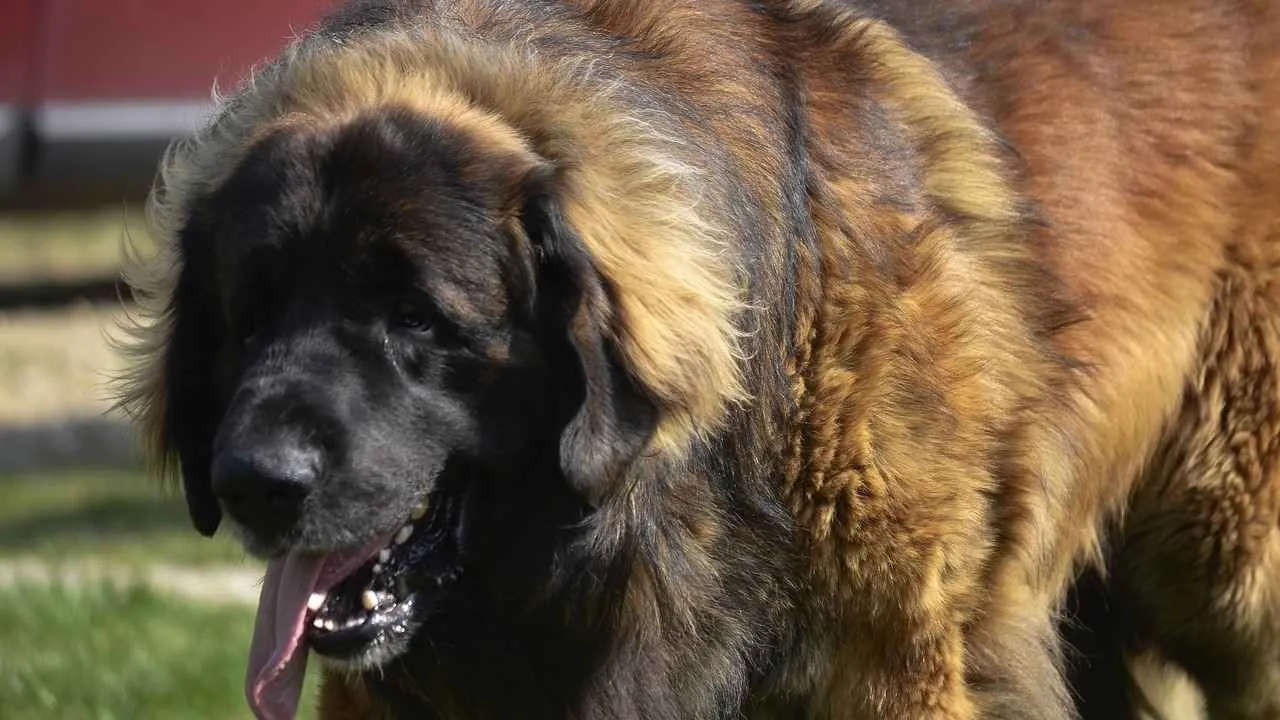
The Estrela Mountain Dog is a strong, athletic livestock guardian known for its resilience and well-balanced build.
Available in long- and short-haired varieties, both coat types feature a thick, slightly coarse texture with a dense undercoat designed to protect them in harsh mountain climates.
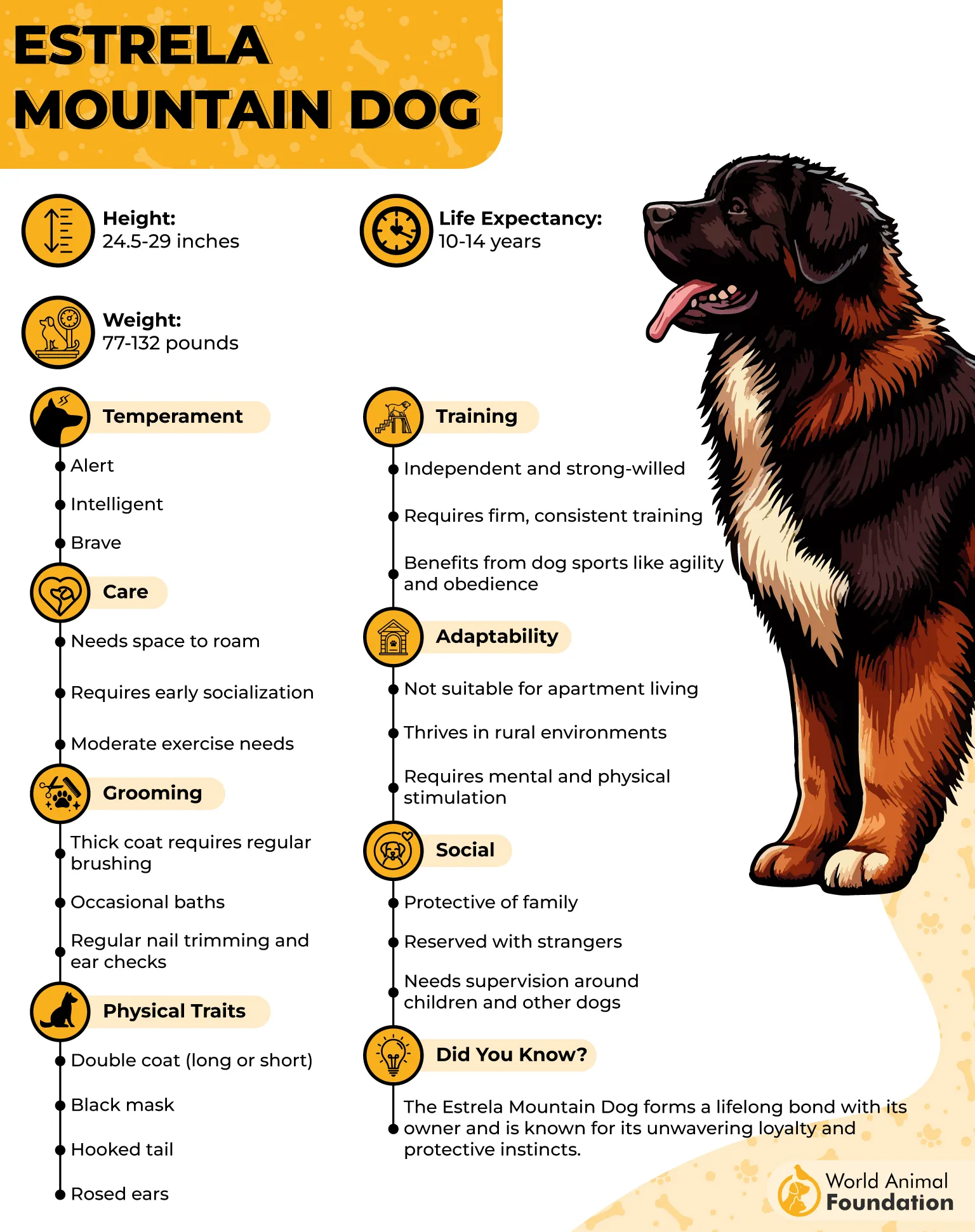
Smart, alert, and independent, the Estrela is deeply loyal to its family but naturally reserved with strangers. Early socialization is essential to help them adapt to life as a companion dog.
As per Purina, originating from Portugal’s Estrela Mountains, this breed remains relatively rare outside its homeland.
Believed to descend from ancient Mastiff-type dogs brought by Romans or Visigoths, the Estrela shares similarities with other mountain guardians like the Kuvasz and Maremma, though its exact lineage remains uncertain.
Its rarity stems from its specialized working background and limited global breeding.
As a large, powerful breed, the Estrela needs one to two hours of daily exercise, including training, problem-solving games, and varied walking routes. They are capable of dog sports once mature, but require consistent guidance and space.
Gentle with children when raised alongside them, these dogs can still be clumsy and strong, making supervision essential in family settings.
7. Dogue de Bordeaux
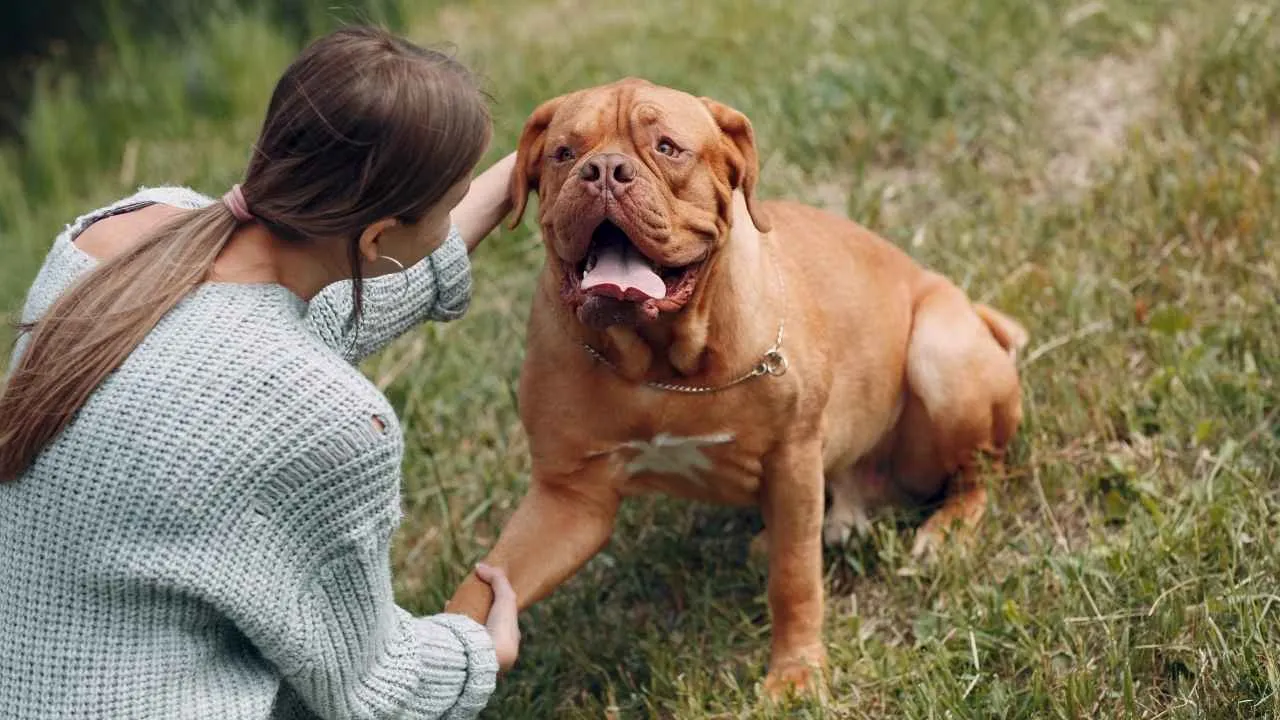
The Dogue de Bordeaux — also called the French Mastiff — is a powerful, muscular breed with a short, soft coat and a massive, broad head.
Despite their intimidating size and imposing look, Dogues tend to be calm, loyal, and devoted family companions rather than overly active or hyper.
Dogue de Bordeaux remains relatively uncommon compared with many mainstream breeds.
Their combination of strength, distinctive appearance, and specialized needs (space, training, health care) means they are usually chosen by committed owners seeking a “gentle giant.”
Their history as guard dogs, cattle-drivers, and working dogs adds to their unique identity and rarity today.
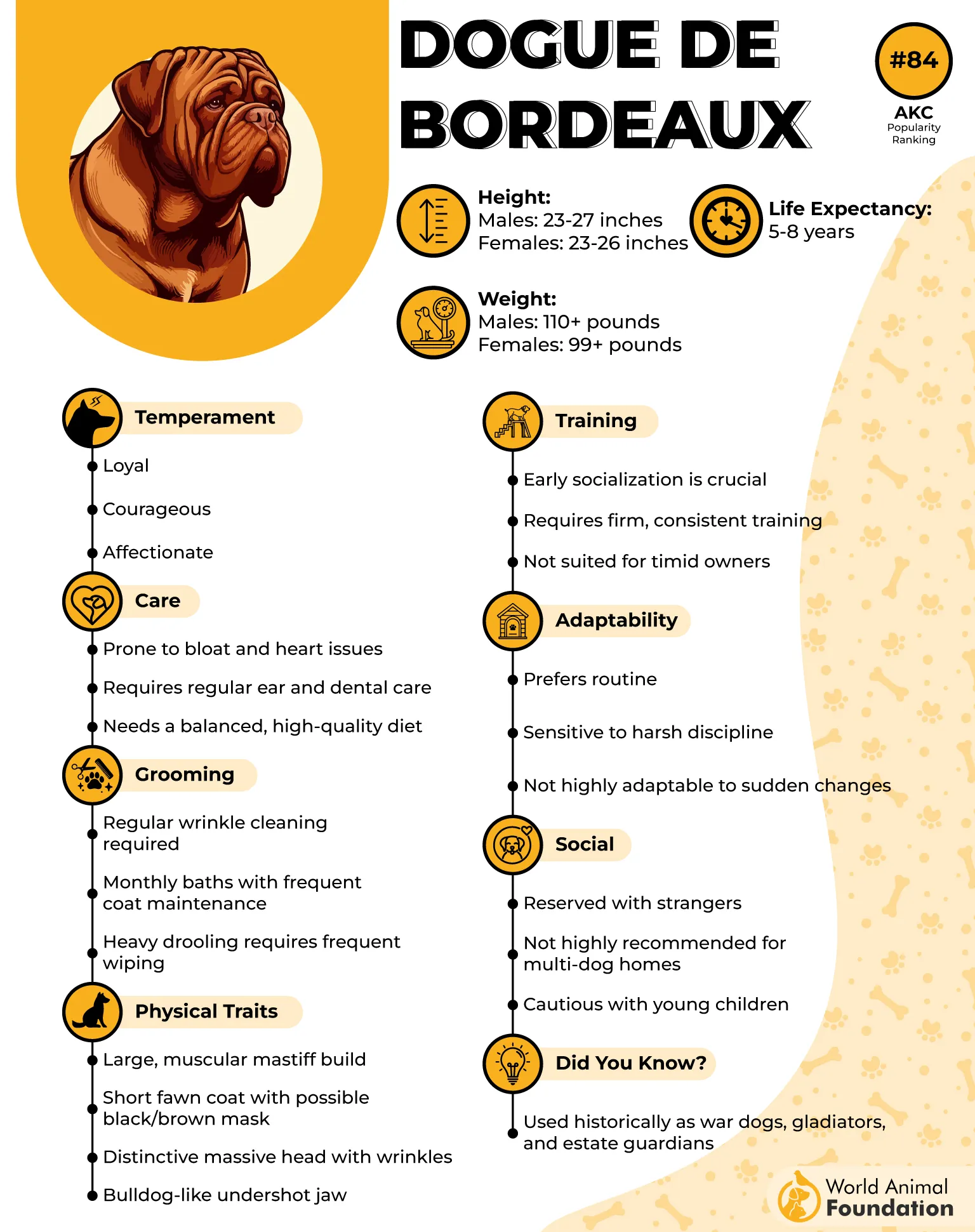
As a big dog breed, the Dogue de Bordeaux requires careful care. Their short coat is low-maintenance, but they drool and shed moderately — good to plan for early.
Their exercise needs are moderate: daily walks suffice, but strenuous activity — especially while growing — should be avoided to protect joints.
With consistent training, early socialization, and thoughtful care, this gentle giant can grow into a devoted, protective, and deeply affectionate family member.
Conclusion
Big, giant, and rare dog breeds are truly remarkable. Whether bred for guarding, herding, hunting, or companionship, each of these dogs carries a rich history and a unique personality.
Their size and strength may be impressive, but what truly sets them apart is their loyalty, intelligence, and deep bond with their families.
These breeds need committed owners who understand their exercise needs, training styles, and health requirements.
With the right care, they become gentle, loving, large dogs who bring protection, comfort, and endless companionship.
Exploring these extraordinary dogs reminds us how diverse, fascinating, and special the canine world really is.
