




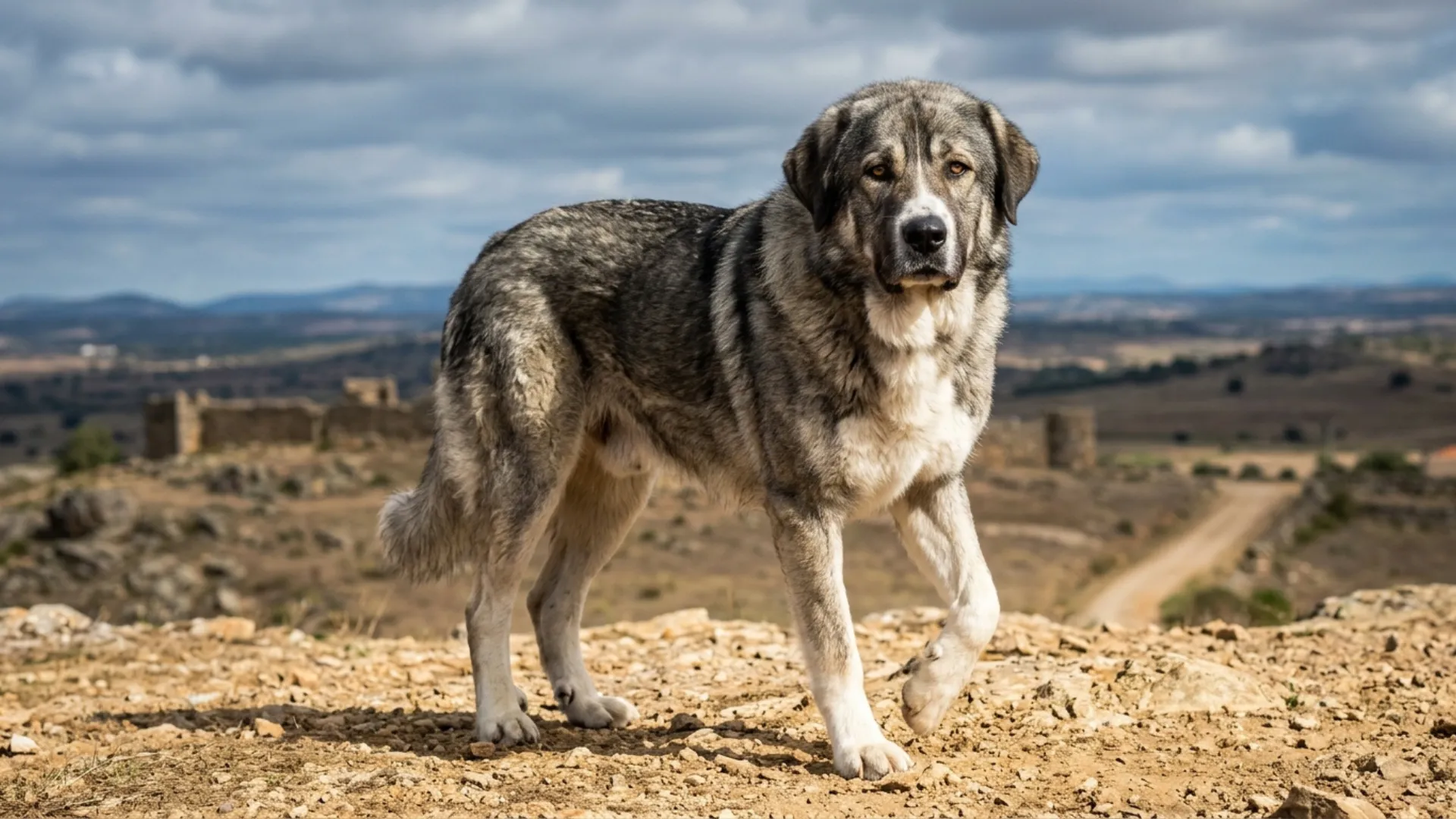
Giant dogs already have main-character energy, but the breeds on this list take things several levels higher. These aren’t simply oversized couch potatoes; many were shaped by centuries of livestock protection, mountain living, predator pressure, and the real need to make independent decisions when a shepherd was nowhere nearby.
That working background explains why several of these dogs can seem calm one minute and intensely observant the next. Their size, confidence, protective instincts, independence, and ability to read their environment make them fascinating.
Now for the fun part: seven seriously underrated giants that prove the dog world gets way more interesting once you look beyond the usual household names. Let’s explore unique giant dog breeds with remarkable traits.
Unique Giant Dog Breeds With Remarkable Traits
1. Cão de Gado Transmontano
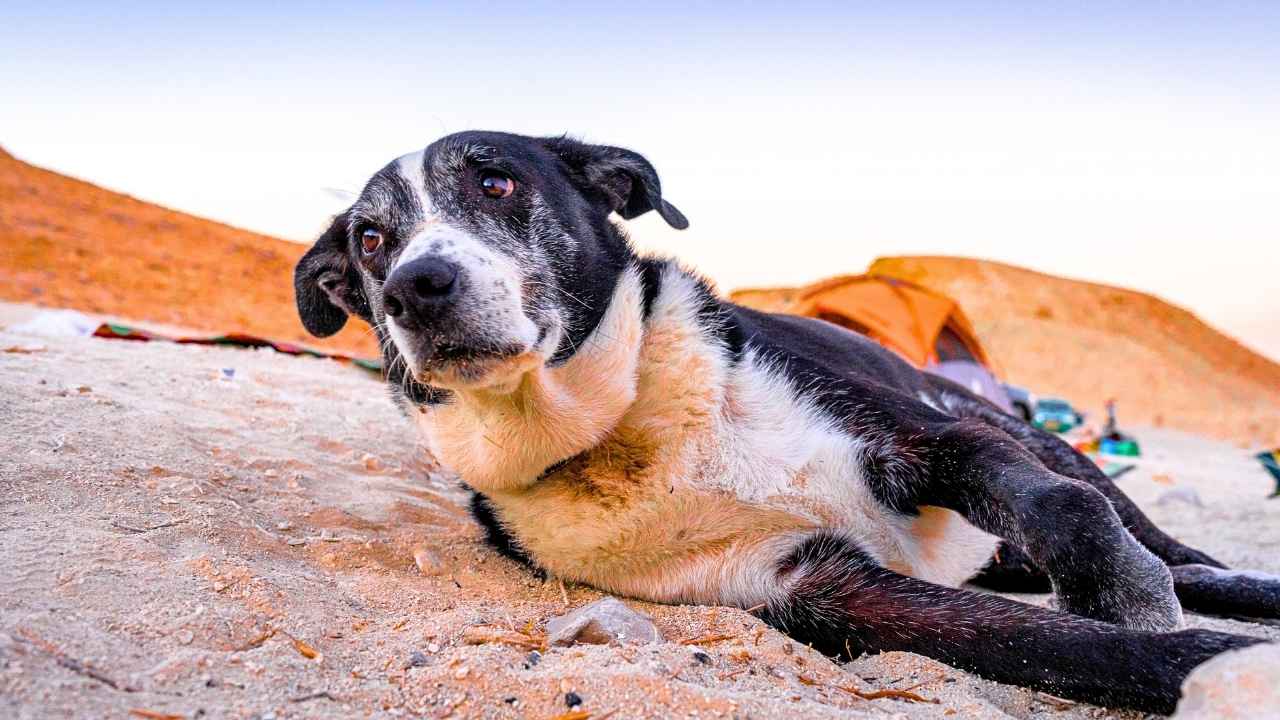
The Cão de Gado Transmontano, also called the Transmontano Mastiff, comes from Portugal’s rugged Trás-os-Montes region, where guarding livestock was not exactly a chill nine-to-five. Shepherds needed a huge, mobile guardian that could keep up with moving herds and stand its ground when wolves appeared, shaping a dog that is imposing without being needlessly frantic.
What makes this large dog breed especially interesting is that its loyalty historically centered on the flock rather than one fixed patch of land. Despite the intimidating build, Wikipedia describes the breed as calm, reserved, cautious without unnecessary aggression, and particularly responsive to gentle handling.
The tallest dog breed in this list, it has a substantial head, powerful jaws, a muscular structure, and a short-to-medium coat with an undercoat.
Tip To Train Them Super Fast
Turn recall practice into a daily game with high-value rewards, and change locations gradually so the dog learns that coming back matters even when the environment gets interesting.
Build a rock-solid “settle and watch” routine, so this naturally observant giant learns that noticing something unusual doesn’t mean it must personally investigate every single event.
2. Rafeiro do Alentejo
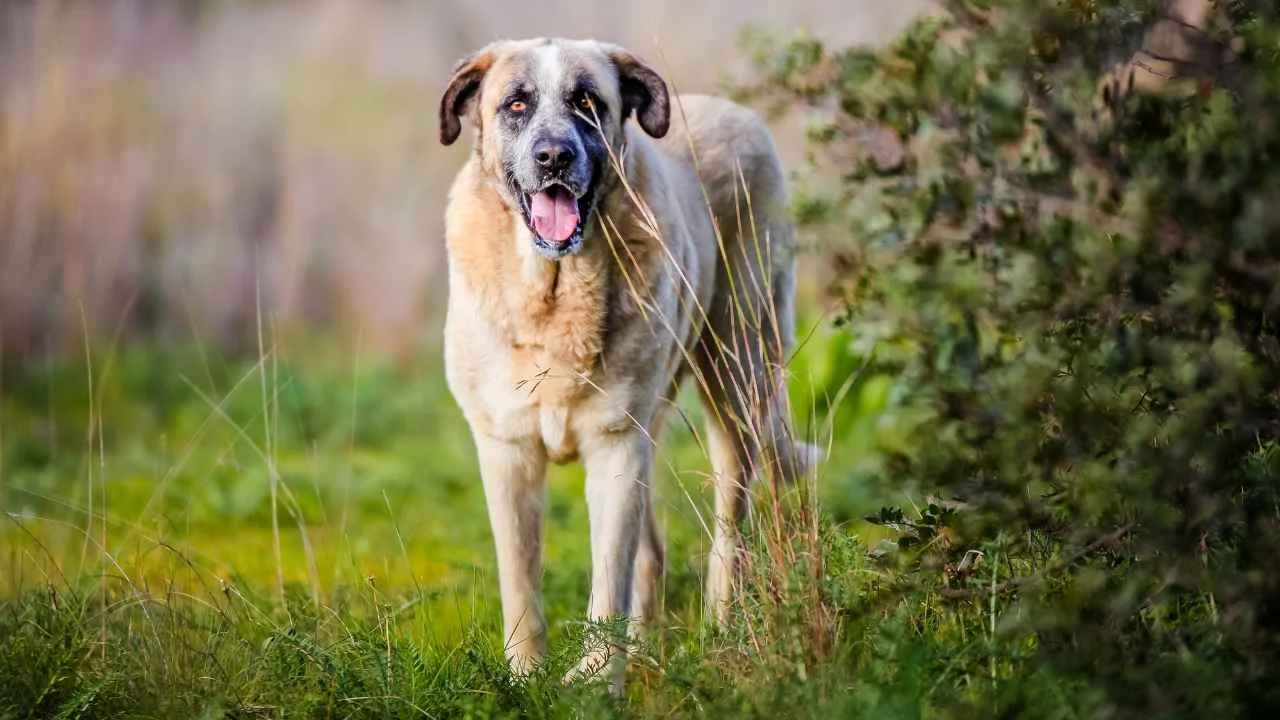
The Rafeiro do Alentejo is another Portuguese heavyweight, but its historical résumé has a different flavor. CPC claims that it accompanied livestock during seasonal migrations before becoming closely associated with guarding herds, farms, and large rural estates across the Alentejo.
This big dog breed’s personality is where things get low-key fascinating. They should look calm and confident rather than shy or randomly aggressive, while remaining especially serious about guarding territory and becoming more vigilant at night.
They are intelligent solo thinkers who need patient, consistent leadership, and they offer loyalty, gentleness with family, a protective nature, and the ability to coexist with other pets.
Daily life with this guard dog needs more than a giant bed and an impressive food budget by dog owners. This rare breed doesn’t necessarily need nonstop, intense exercise.
Tip To Train Them Super Fast
Keep lessons brief and purposeful; a few excellent repetitions of recall, place, or leash walking can beat twenty boring repetitions that make this thinker mentally log off.
Practice visitor routines before you actually need them, rewarding the dog for moving to a designated spot instead of making every arriving human its personal security project.
3. Bucovina Shepherd
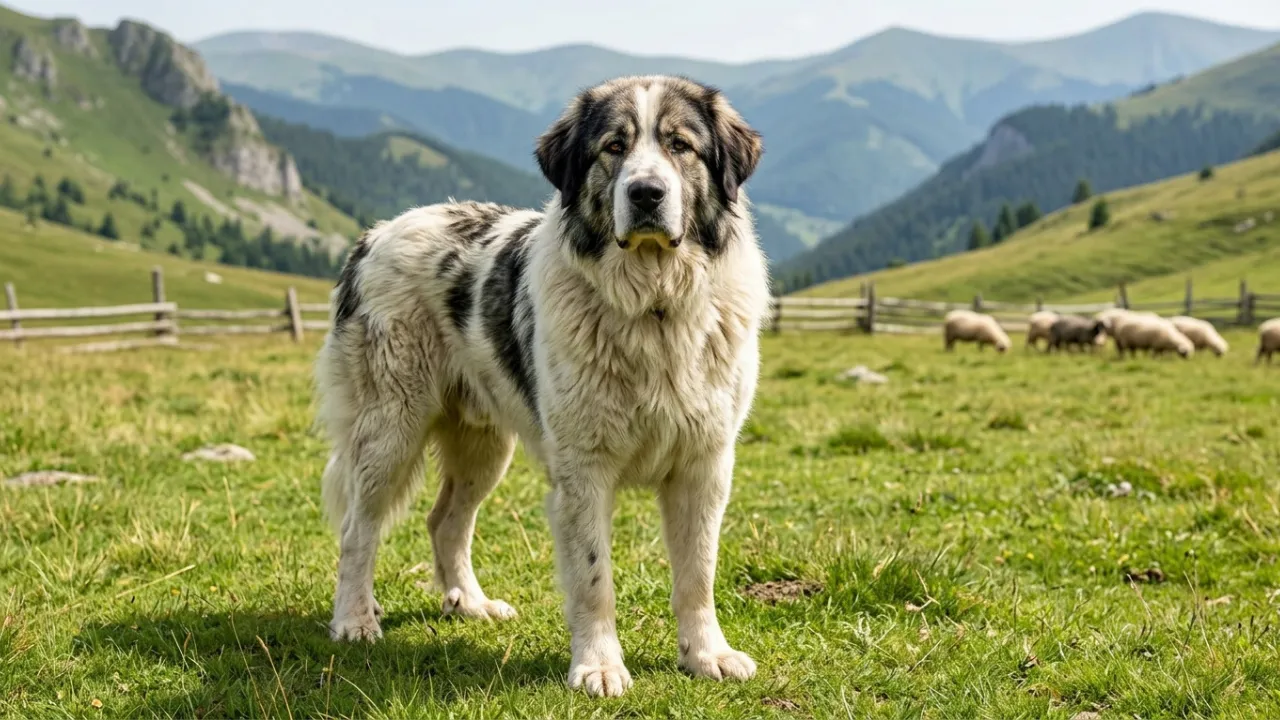
The Romanian Bucovina Shepherd looks like someone took a mountain, added fur, then gave it a booming bark. Originating in Romania and particularly associated with the Bucovina region, the breed developed as a livestock and property guardian capable of functioning around serious predators in demanding rural conditions.
Its working history helps explain why “protective” barely scratches the surface. It is courageous, loyal, calm, balanced, naturally wary of strangers, and especially devoted to family members. At the same time, traditional shepherds relied on it around livestock in areas where wolves and bears were real problems, not documentary footage.
The physical package matches the job. A large, muscular frame, broad head, strong jaws, substantial coat, and weather-resistant build let these dogs stay functional in rural Romania, while their coat may include white, black, grey, and combinations of those shades.
A Bucovina generally makes far more sense with room to move than squeezed into a tiny apartment where every hallway sound becomes breaking news. Farms, ranches, large fenced properties, livestock operations, and experienced guardian-dog homes are ideal environments, as these breeds thrive with space to patrol and a meaningful role.
Tip To Train Them Super Fast
Teach a quiet cue after the first alert bark, rewarding the moment the dog disengages so guarding stays useful instead of becoming a midnight concert for the entire neighborhood.
Introduce unfamiliar people from puppyhood through calm, controlled setups where nobody crowds the dog; neutrality is a much better goal than forcing instant friendship.
4. Romanian Mioritic Shepherd
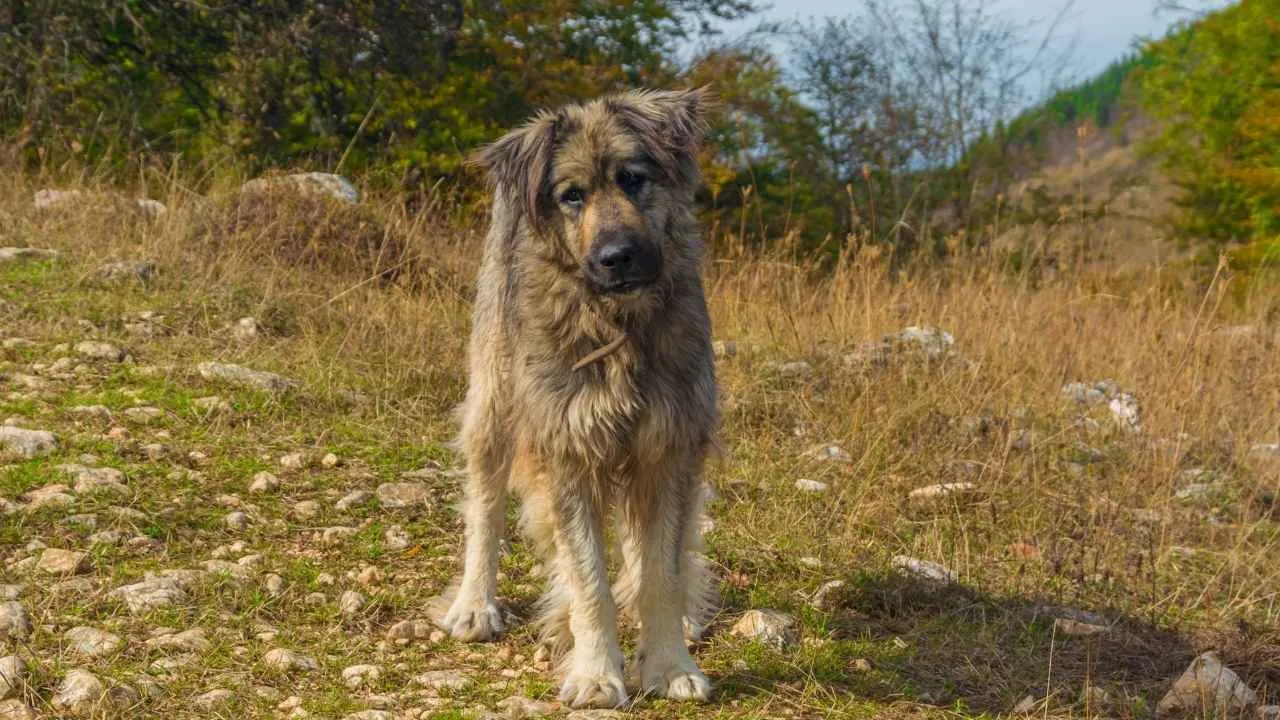
The Romanian Mioritic Shepherd Dog could easily pass for an enormous cloud that has developed opinions about property security. According to Royal Canin, it originates from Romania’s Carpathian region, where utility drove its development as a flock guardian. It is a large, vigorous dog with a thick double coat, not a heavy or clumsy body.
Mioritics combine independence with unusually strong attachment to the people and animals they consider part of their social group. They are not simply outdoor lawn ornaments; family contact is central to what makes life satisfying.
The breed’s ideal lifestyle is refreshingly old-school: room, purposeful wandering, companionship, and walks through interesting environments. They need plenty of land, or at least a substantial garden, plus regular walks and outdoor exploration, and pet parents should avoid excessive running and jumping in young dogs whose bodies are still developing.
Temperament is another reason the Mioritic stands out. This gentle giant is intelligent, even-tempered, courageous, protective, patient with children, affectionate toward family, and often able to assess unfamiliar people calmly.
Tip To Train Them Super Fast
Pair grooming with tiny rewards from day one so brushing, checking paws, and handling ears become boring normal life instead of a weekly wrestling championship.
Give this fluffy independent thinker choices during training—two simple acceptable behaviors often produce better cooperation than turning every lesson into a battle of wills.
5. Central Asian Shepherd Dog
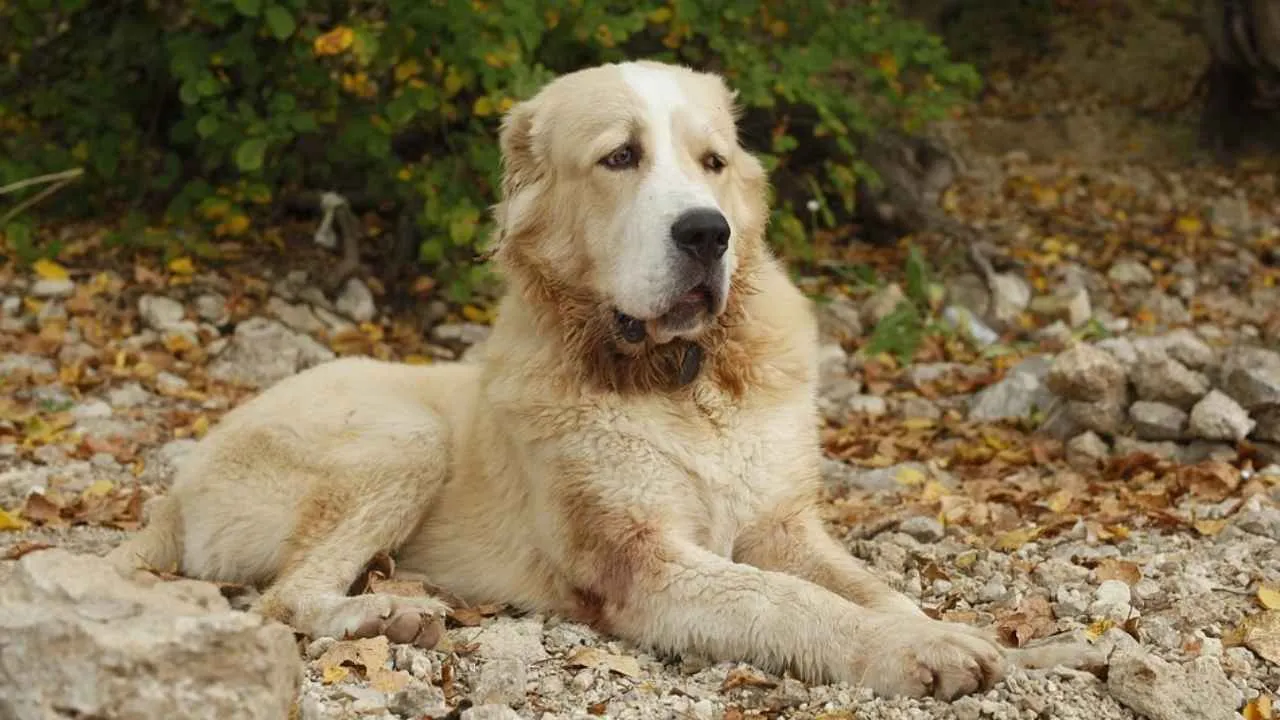
Few breeds carry ancient working-dog energy like the Central Asian Shepherd Dog, also known as Sredneasiatskaya Ovcharka or Alabai. This is not a beginner dog wearing an XXL costume.
This giant breed is self-assured, balanced, quiet, proud, and independent. Lifelong supervision, serious training, and thoughtful management are essential because the qualities that make a brilliant livestock guardian can be difficult to manage in a casual suburban household.
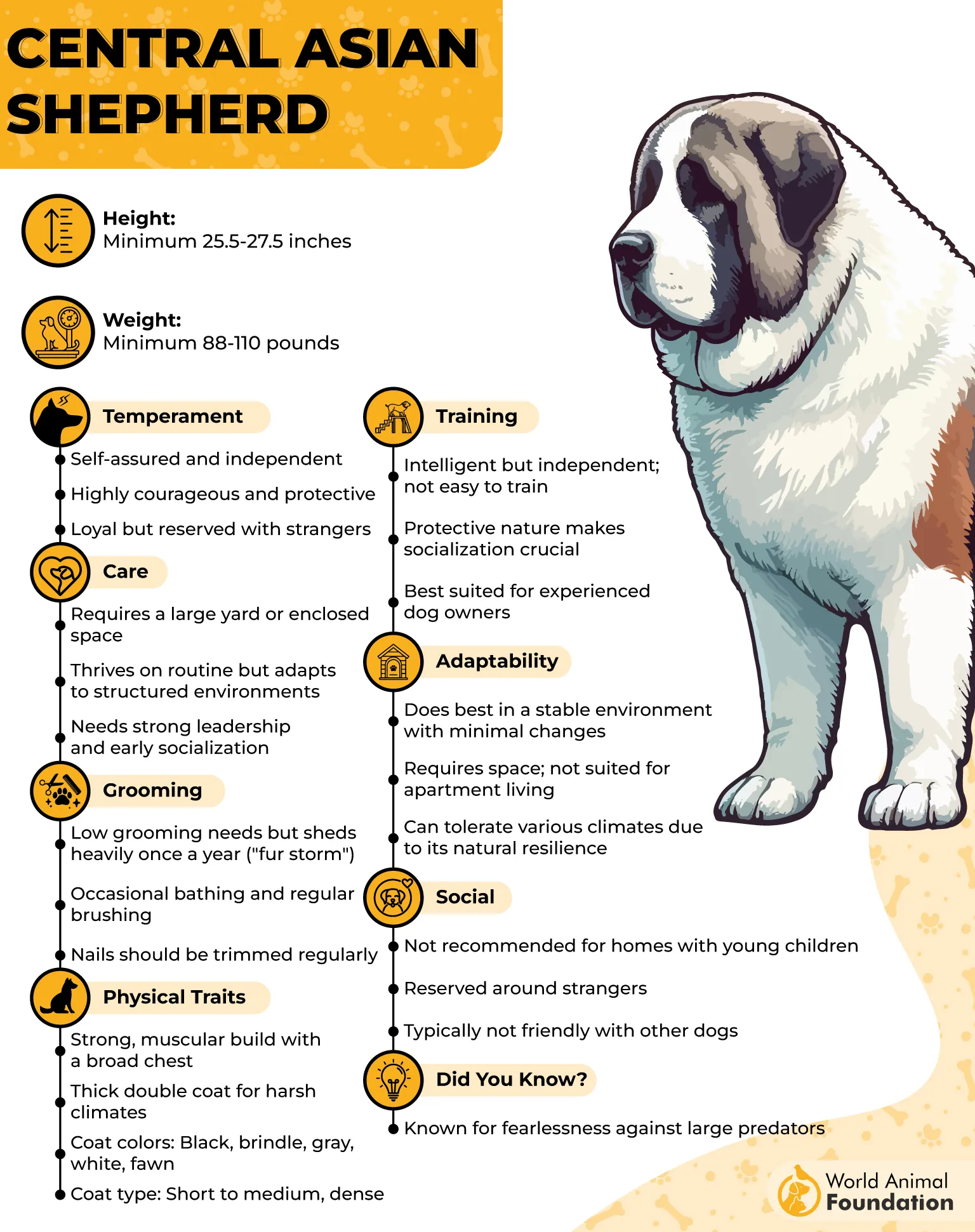
Interestingly, these ancient breed dogs are not automatically antisocial loners. They can build close relationships with family members, appropriately introduced dogs, children under responsible supervision, and even farm animals such as horses and cattle.
One secure outdoor room, predictable routines, purposeful interaction, and an experienced handler are much more realistic than expecting universal friendliness from a breed created to question what belongs on its territory.
Tip To Train Them Super Fast
Install gate control early by practicing “wait,” release cues, and recall hundreds of times before adolescent territorial confidence arrives with the software update nobody asked for.
Rotate short real-life exercises—leash work, cooperative handling, boundary checks, settling near visitors—instead of repetitive trick sessions that have little relevance to the breed’s daily job.
6. Broholmer
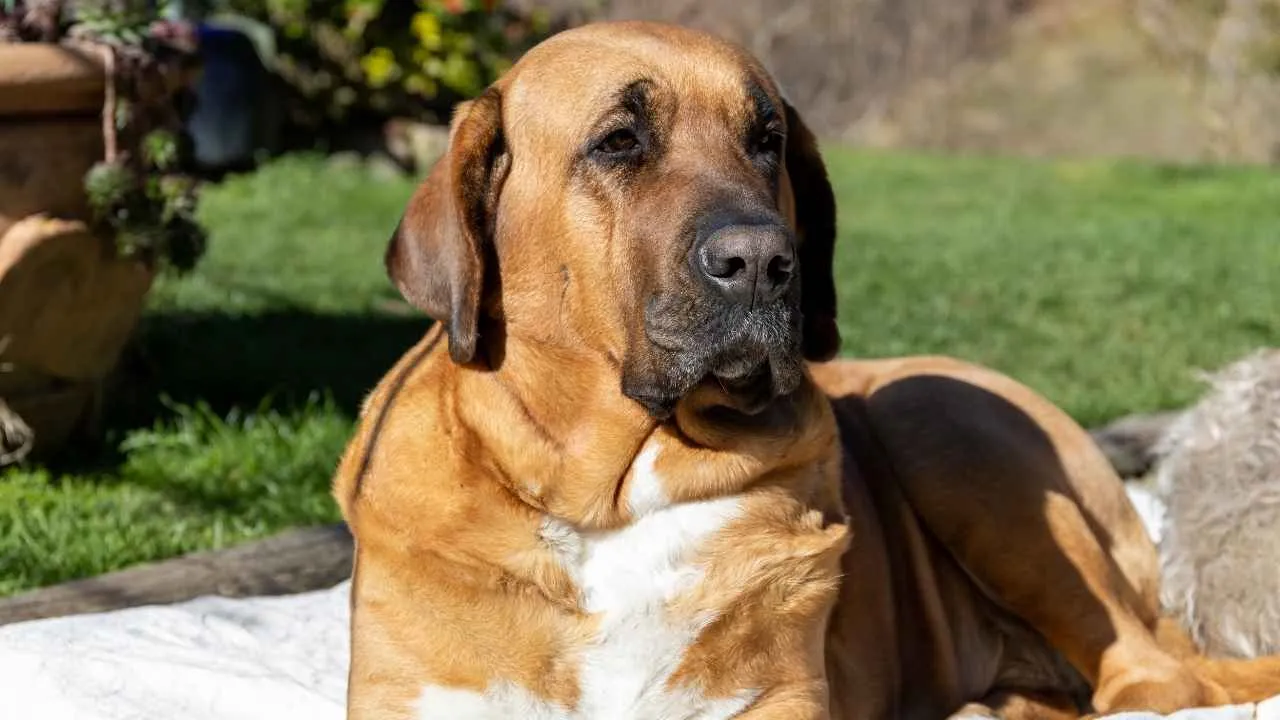
The Broholmer is a Danish mastiff-type molossoid. The coolest Broholmer trait might be its deliberate lack of unnecessary drama. This large breed dog is calm, good-tempered, friendly, watchful, self-confident, balanced, and non-aggressive.
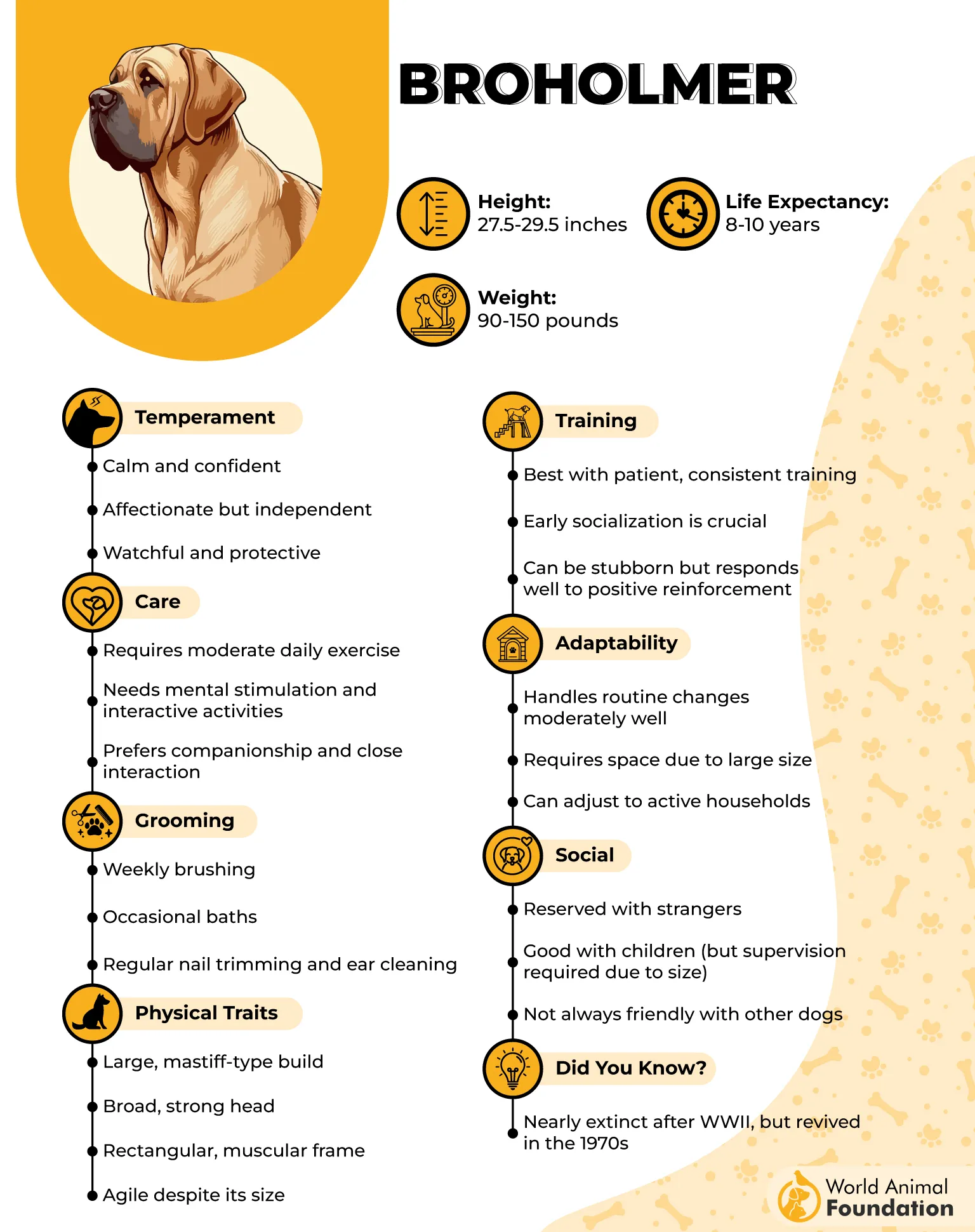
These excellent family pets are affectionate, protective, patient with children, physically powerful, and notably composed despite their imposing appearance. Their short, dense coat is far simpler to maintain than the Mioritic’s shaggy coat, while their broad skull, strong neck, deep chest, heavy limbs, and muscular body give them that unmistakable mastiff silhouette.
Socialization matters because “friendly family mastiff” does not mean an owner can skip developmental work. They need substantial socialization, obedience training, and exposure to varied environments; early handling matters because an adult Broholmer is large and heavy.
Teaching this Mastiff dog body awareness, polite greetings, loose-leash walking, emergency stops, cooperative veterinary handling, and an instant “place” cue isn’t fancy obedience; it’s good logistics.
Tip To Train Them Super Fast
Reward four paws on the floor every single time people arrive, because cute puppy jumping becomes significantly less adorable once the puppy weighs about as much as an adult human.
Practice loose-leash walking in boring environments before adding excitement; strength should never become the dog’s primary navigation system.
7. Sarplaninac
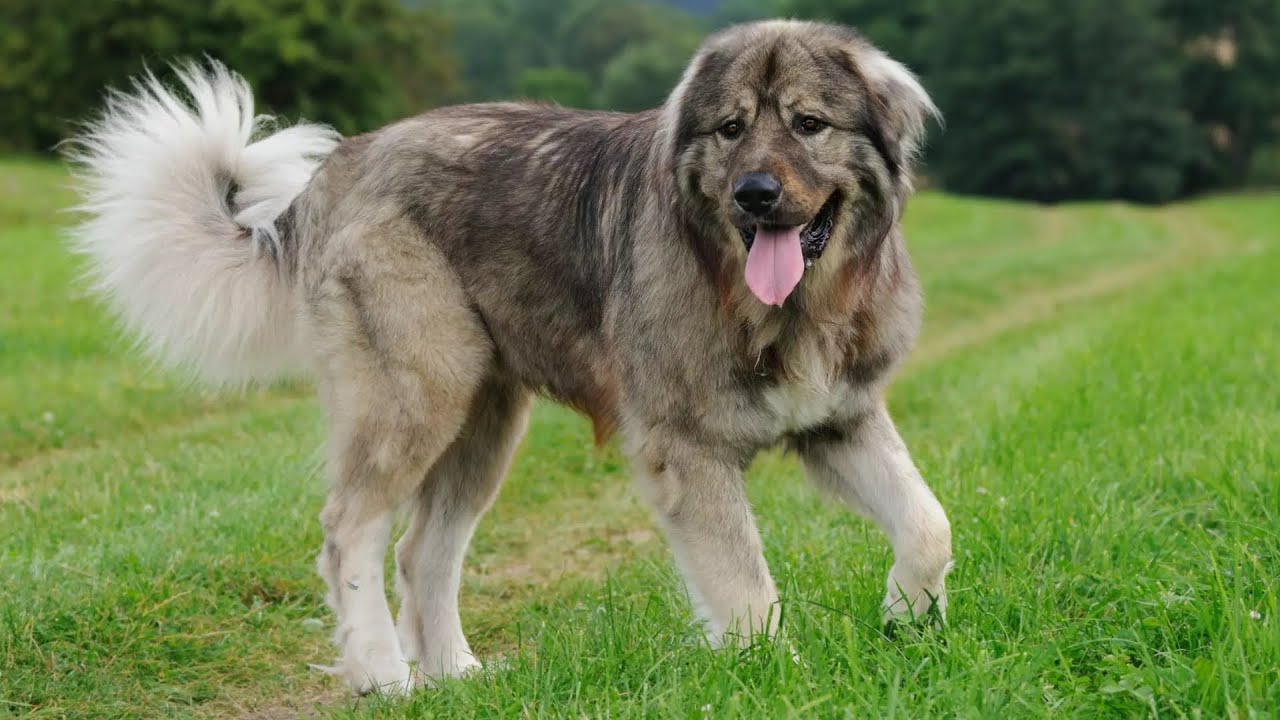
The Sarplaninac was originally bred in the Šar Mountains and has long been used to protect livestock. It is robust, heavily boned, reliable, devoted, protective, and has a thick coat suited to demanding conditions.
It doesn’t wait around for someone to hand it a clipboard and instructions. Its historic job required independent assessment of predators and unusual activity, and it is highly intelligent, watchful, cunning, territorial, and extremely loyal to the animals and humans it considers its own.
Sarplaninac may enjoy human attention, says UKC Dogs, while still being perfectly content spending long periods outdoors independently watching their property rather than constantly seeking commands or affection. That tracks beautifully with livestock-guardian behavior because successful flock protection rewards calm observation and independent judgment, not endless checking for human approval.
Space management is a serious part of ownership. They need substantial, secure outdoor space, and a simple suburban walk may not fully satisfy the breed’s instinct to monitor a perimeter; fencing must account for a guardian that may want to investigate activity outside its established area.
Tip To Train Them Super Fast
Rehearse delivery-driver and visitor scenarios using distance, barriers, a station cue, and calm reinforcement long before a stranger unexpectedly appears at the gate.
Turn perimeter walking into structured training by mixing free sniffing with recall, direction changes, pauses, and check-ins so patrol instinct works for you, not against you.
Conclusion
For the right household, these breeds are genuinely next-level. They combine history, intelligence, physical presence, loyalty, endurance, and deeply rooted working instincts in ways that make them some of the most fascinating dogs many people have never even heard of—and that is exactly what makes them so worth exploring.
