




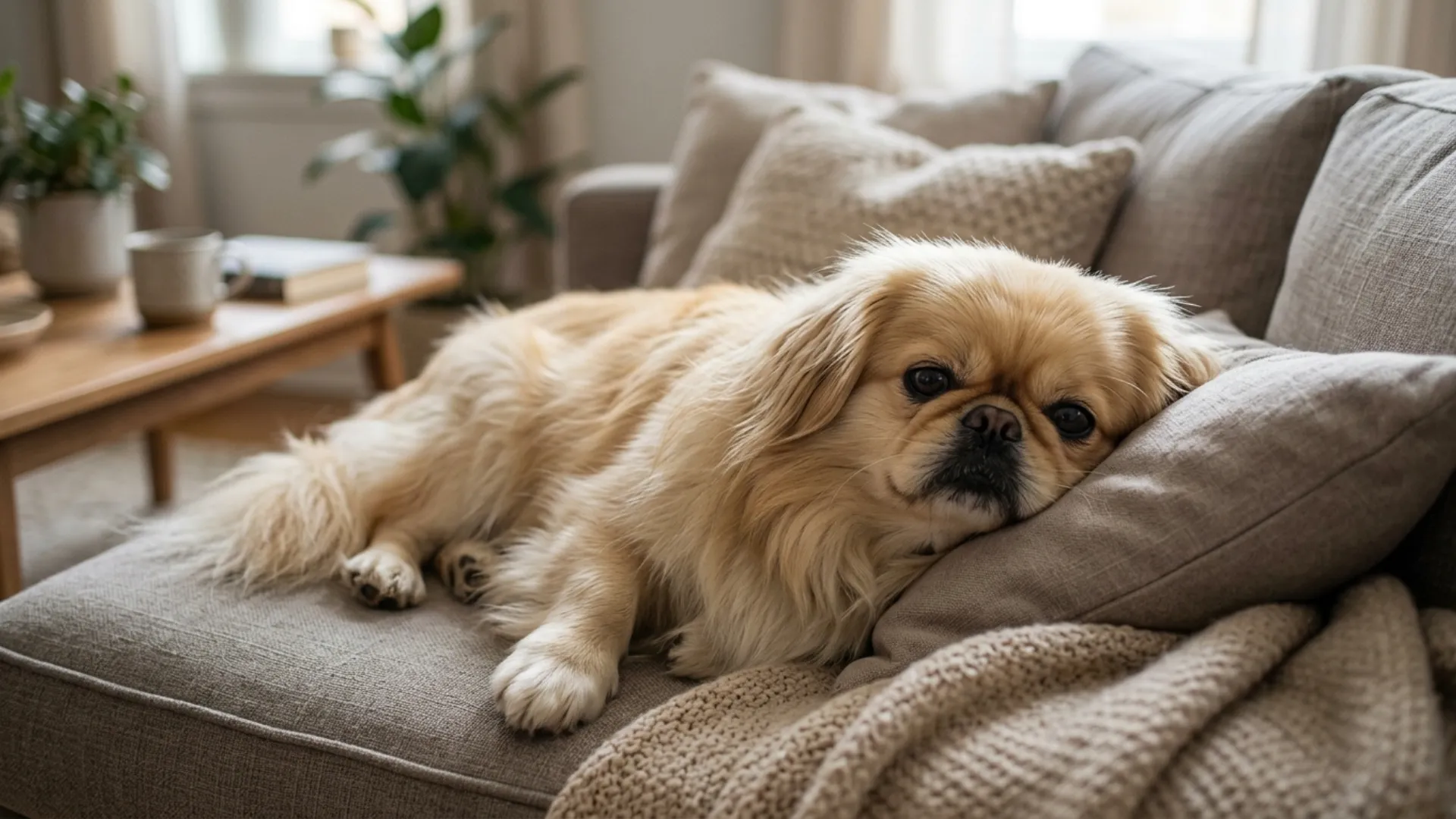
A couch potato needs a dog that enjoys a slower routine, not one that turns every quiet evening into a fitness challenge. Laid-back dogs with low energy levels are often a better fit because they usually need less intense exercise and are happy to relax after a few daily walks.
You still need to meet their basic needs, but your schedule does not have to revolve around long runs, constant play, or endless outdoor adventures.
That lifestyle match can make a huge difference. When your dog’s energy level suits your own, daily life feels easier, more enjoyable, and far less like you are constantly trying to keep up.
These least active dogs come with different personalities, grooming needs, and care requirements, but they all tend to feel more comfortable in a relaxed home life than high-energy breeds. If your idea of a perfect evening involves the sofa, a blanket, and minimal movement, your ideal nap-time companion may be closer than you think.
Ultimate Dog Breeds for Couch Potatoes
1. Basset Hound
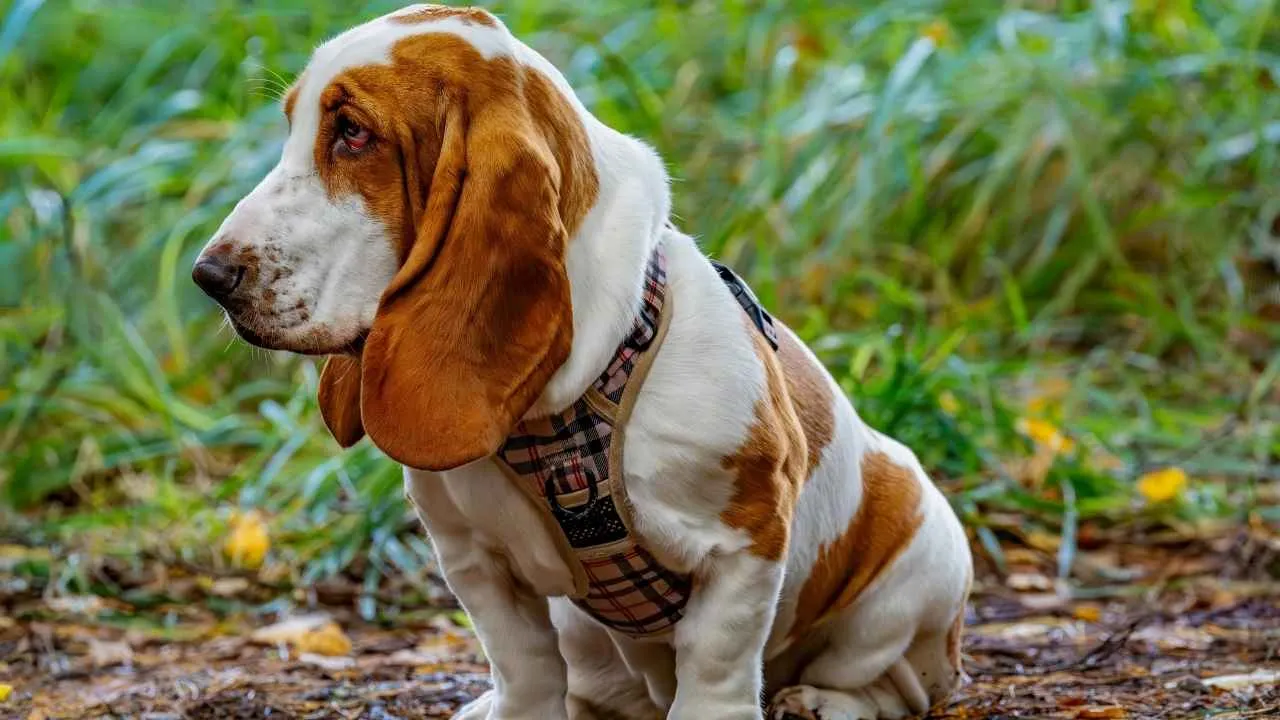
Picture a dog with an impressive nose, tiny legs, floppy ears, a low-slung body, and absolutely no interest in winning a marathon. That is the Basset Hound in a nutshell. Its famously calm nature makes it one of the couch potato dogs, especially for people who are looking for a low-energy dog breed.
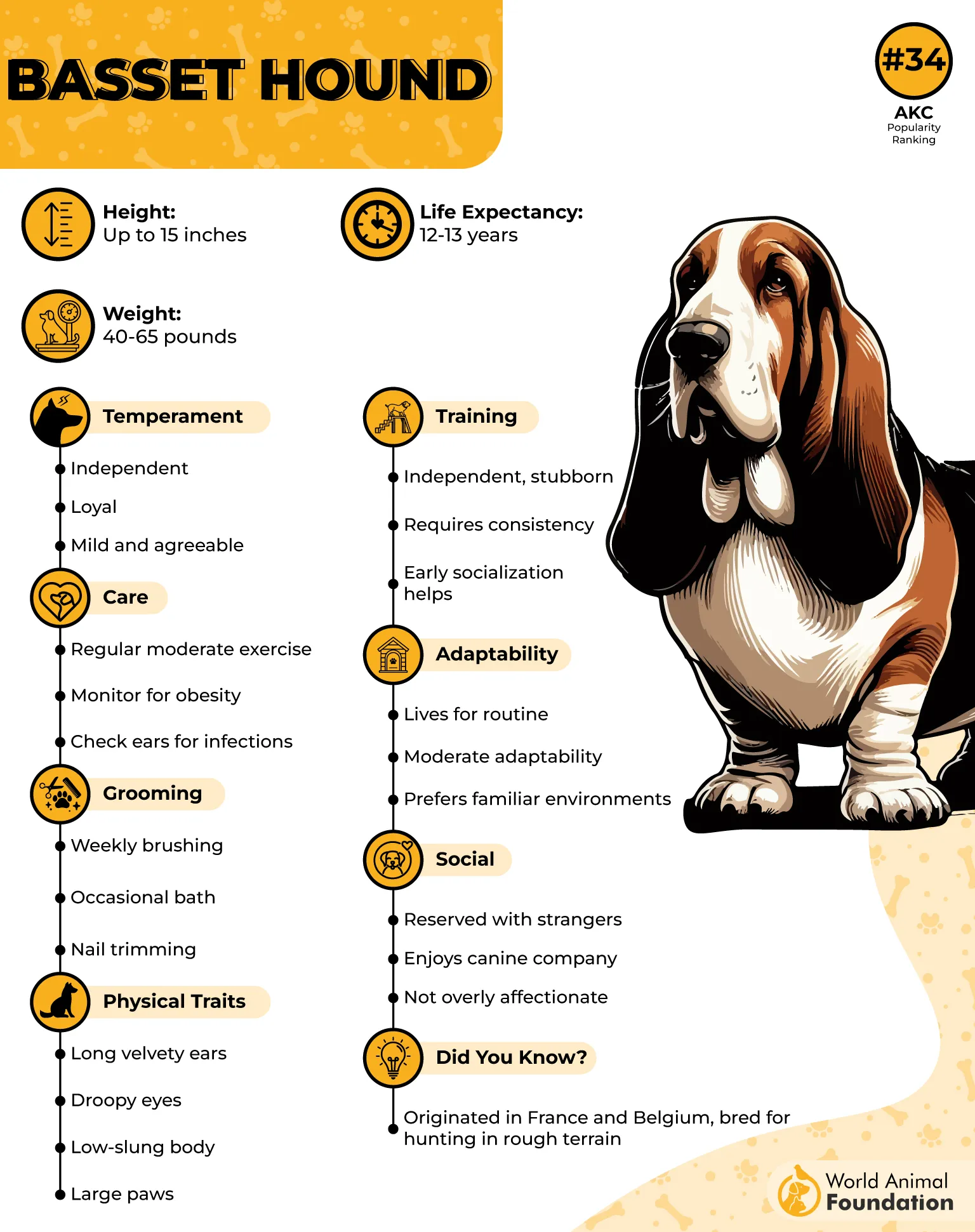
Originally developed in France for scent hunting, this short-legged hound can still become wonderfully determined when an interesting smell catches its attention. Short, leisurely walks give it opportunities to sniff and explore without pushing its body too hard. Once home, it is usually quite happy to stretch out and settle nearby.
Pawlicy Advisor talks about its independent streak, which can make training slower than expected. So cheerful rewards work better than frustration. Keep an eye on its weight because excess pounds can place additional strain on its long back and joints.
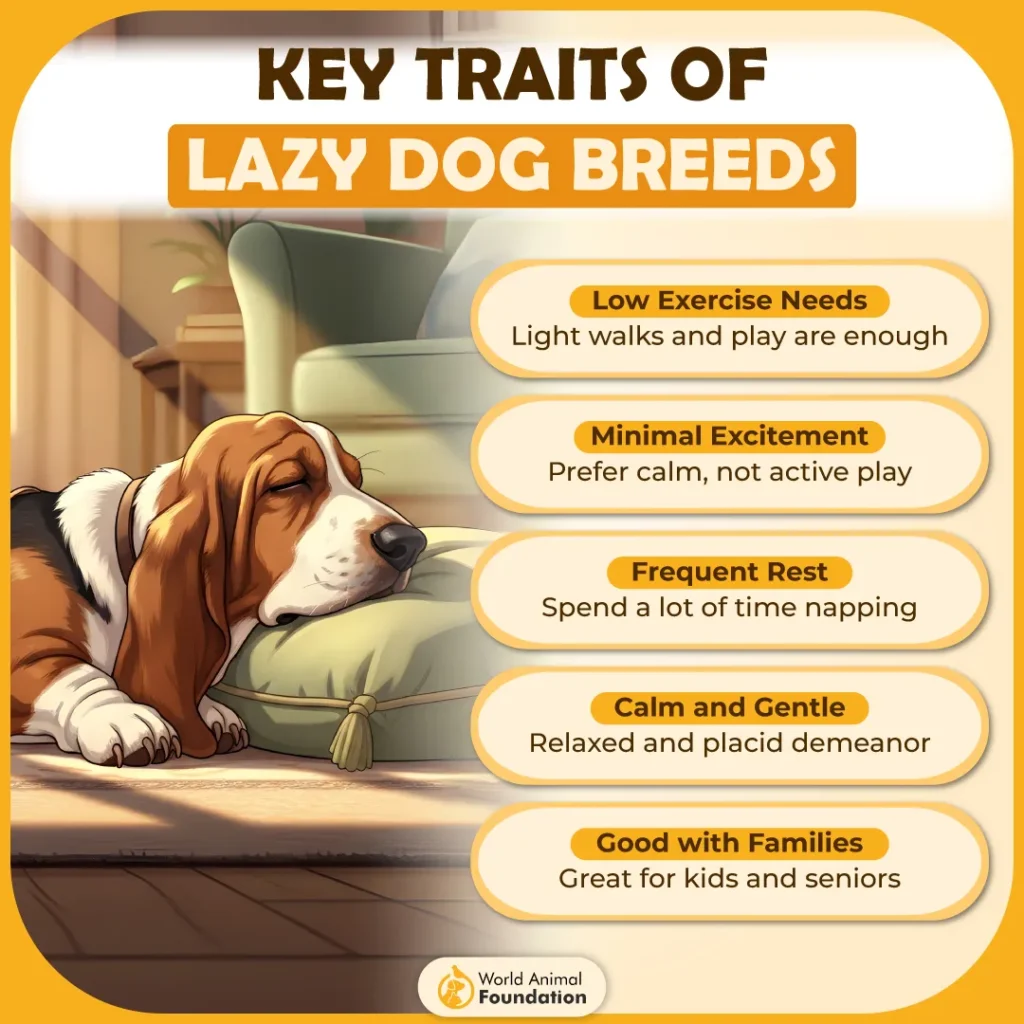
Those wonderfully floppy ears also need regular cleaning, while its short coat benefits from simple weekly brushing. Expect some drool too. It’s part of the package.
2. Pekingese
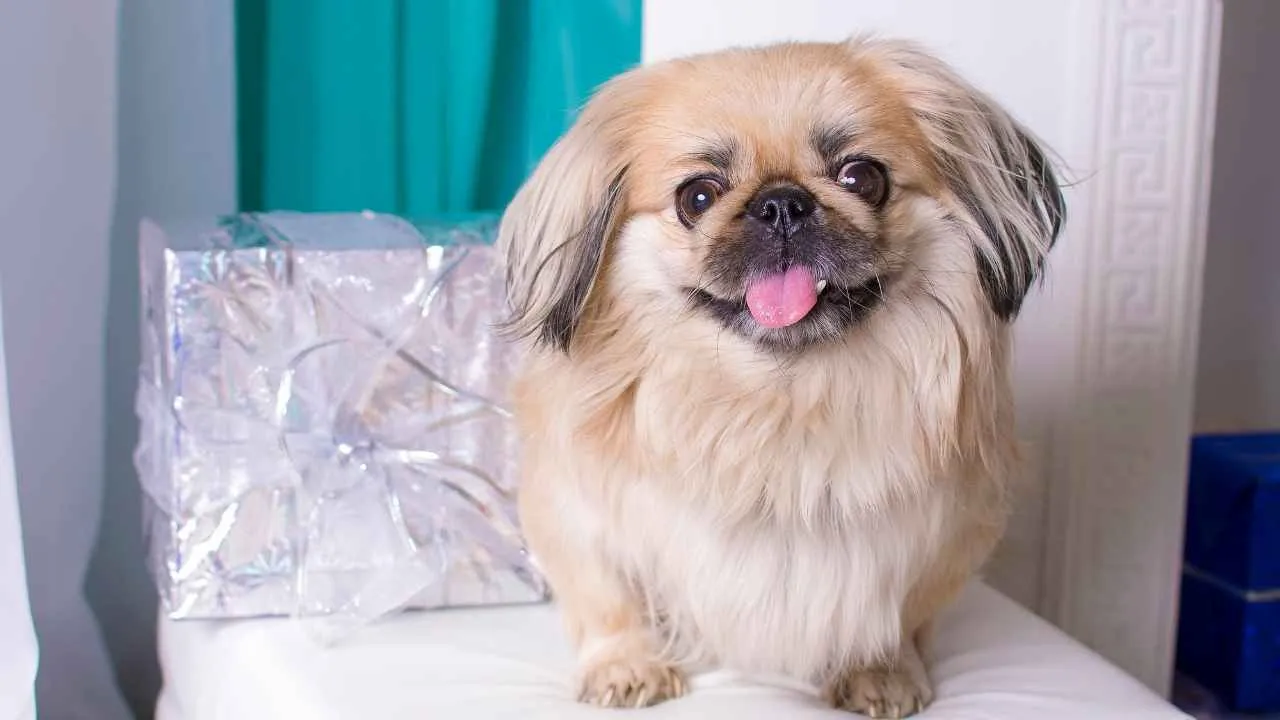
Royal history never quite left the Pekingese. This little Chinese companion dog carries itself like it still has somewhere important to be, and that will be the softest cushion in your living room.
Its compact body and modest exercise needs make it a natural choice among pet parents who live a laid-back lifestyle. A few gentle walks, some indoor play, and plenty of time beside its favorite person can create a satisfying routine. It doesn’t need a backyard full of obstacles to stay entertained.
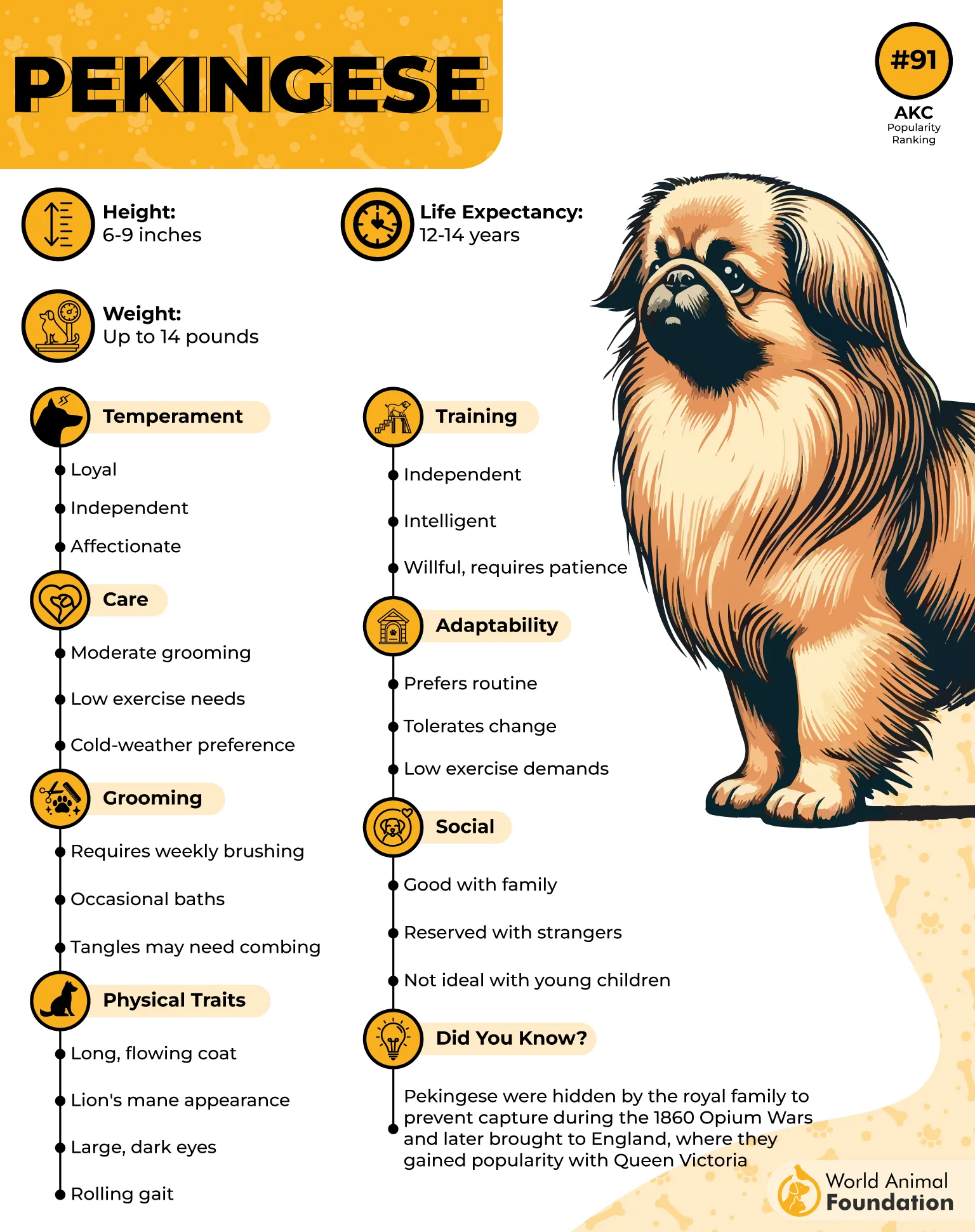
The Pekingese can be affectionate without becoming endlessly demanding. Its independent personality also means it may occasionally decide that your training session is simply not on its schedule. Keep lessons short, rewarding, and patient.
That beautiful double coat needs frequent brushing, particularly around the mane, legs, and feathering. Its shortened muzzle deserves extra attention in warm weather because flat-faced dogs can struggle to cool themselves efficiently.
Give it a comfortable place to rule from, and this tiny aristocrat may happily spend half the day supervising your relaxation.
3. Bulldog
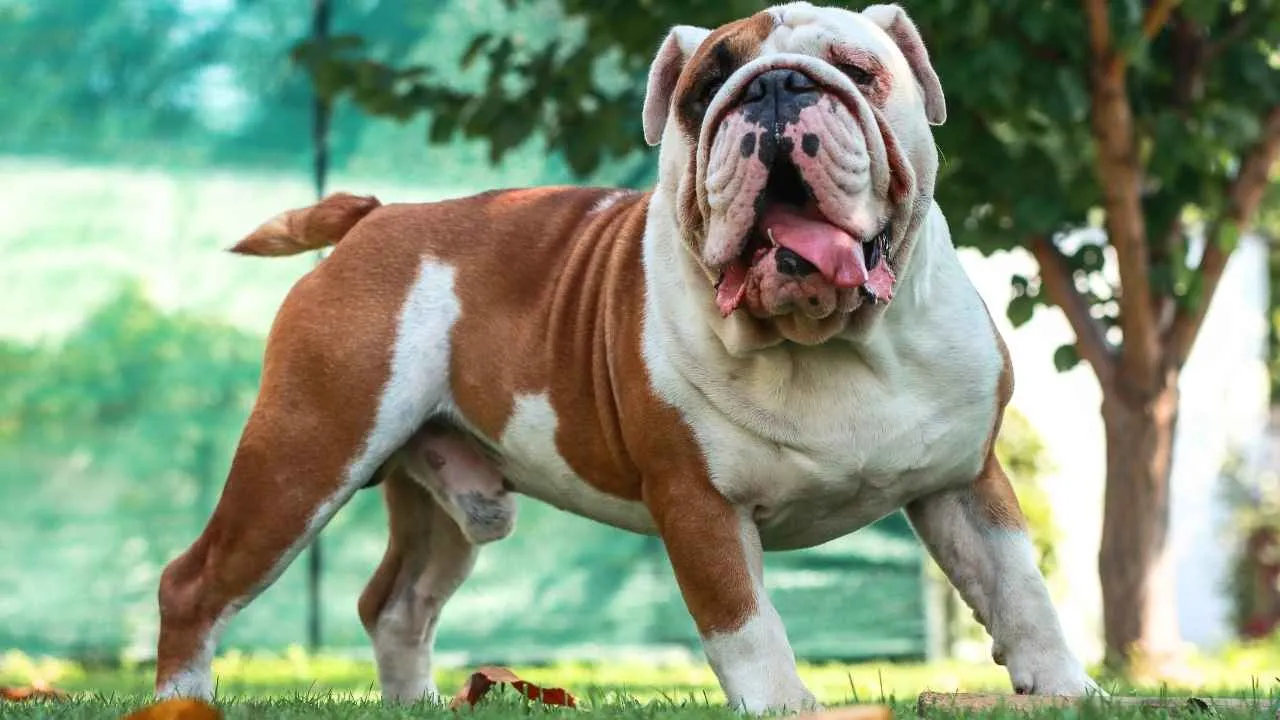
Few dogs can make doing absolutely nothing look this committed. The Bulldog can flop onto a bed, sigh dramatically, and somehow make you feel guilty for considering another walk.
Its calm, affectionate personality, and gentle disposition place it comfortably among the low-energy breeds. Short walks and gentle games can provide useful daily movement without turning exercise into an endurance event. Mental stimulation still matters, but this breed generally has no desire to spend hours sprinting around.
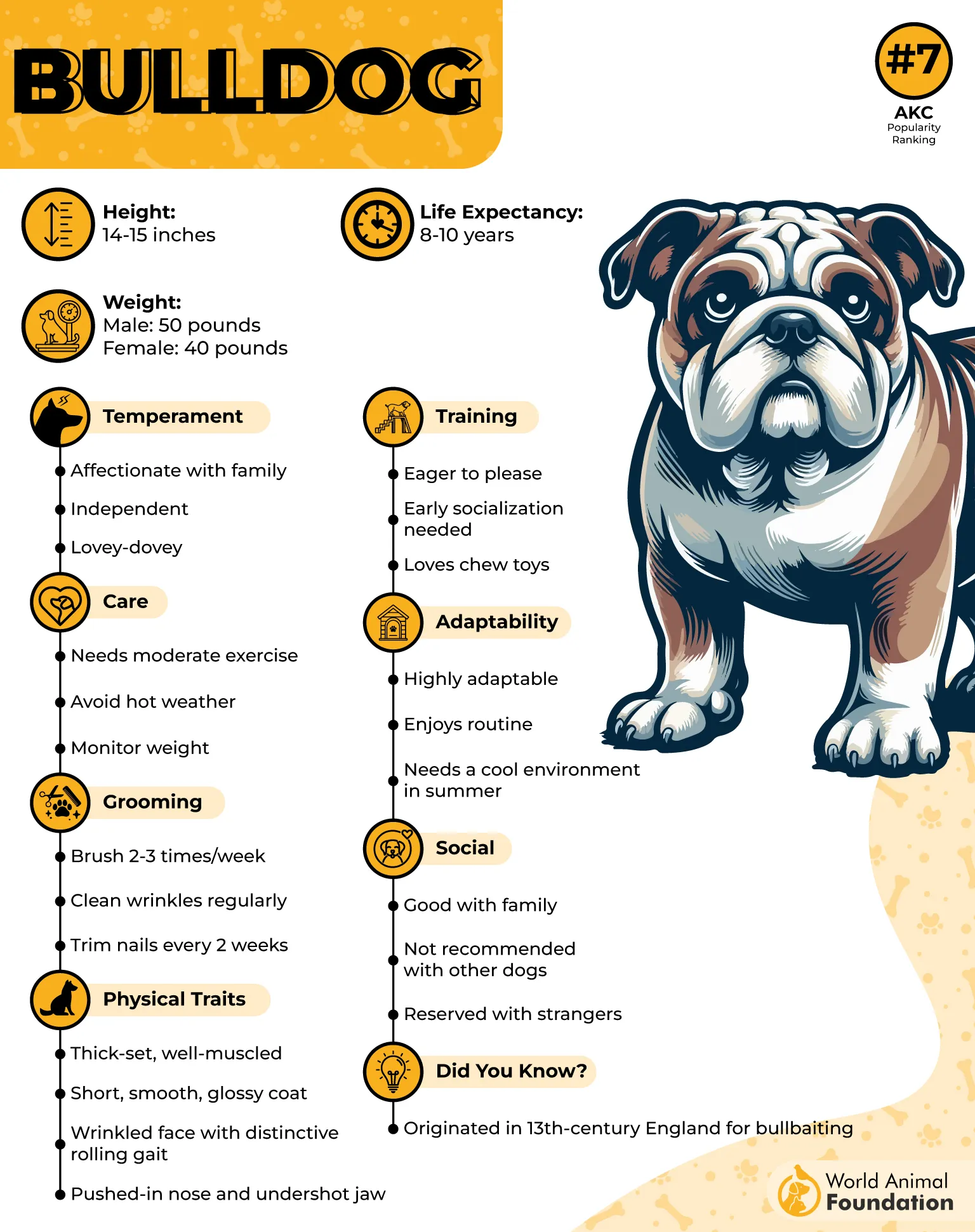
Originally developed in England, the modern Bulldog is far removed from its historical working purpose. Today, it is best known as a devoted household companion with a stubborn little streak. Reward-based training can keep that determination from taking over.
Its short coat is easy to maintain, although facial folds need regular cleaning and drying. Weight management is especially important because weight gain can worsen breathing and mobility concerns.
4. Cavalier King Charles Spaniel

Some dogs want the whole house. The Cavalier King Charles Spaniel mostly wants you. If your favorite kind of company involves a warm little body curled beside you while you read, work, or watch television, this affectionate spaniel deserves attention.
Its adaptable energy level makes it one of the best family pets for a sedentary lifestyle without turning it into a completely inactive companion. It enjoys daily walks, playful bursts, and sniffing around outdoors, but it can also settle beautifully afterward.
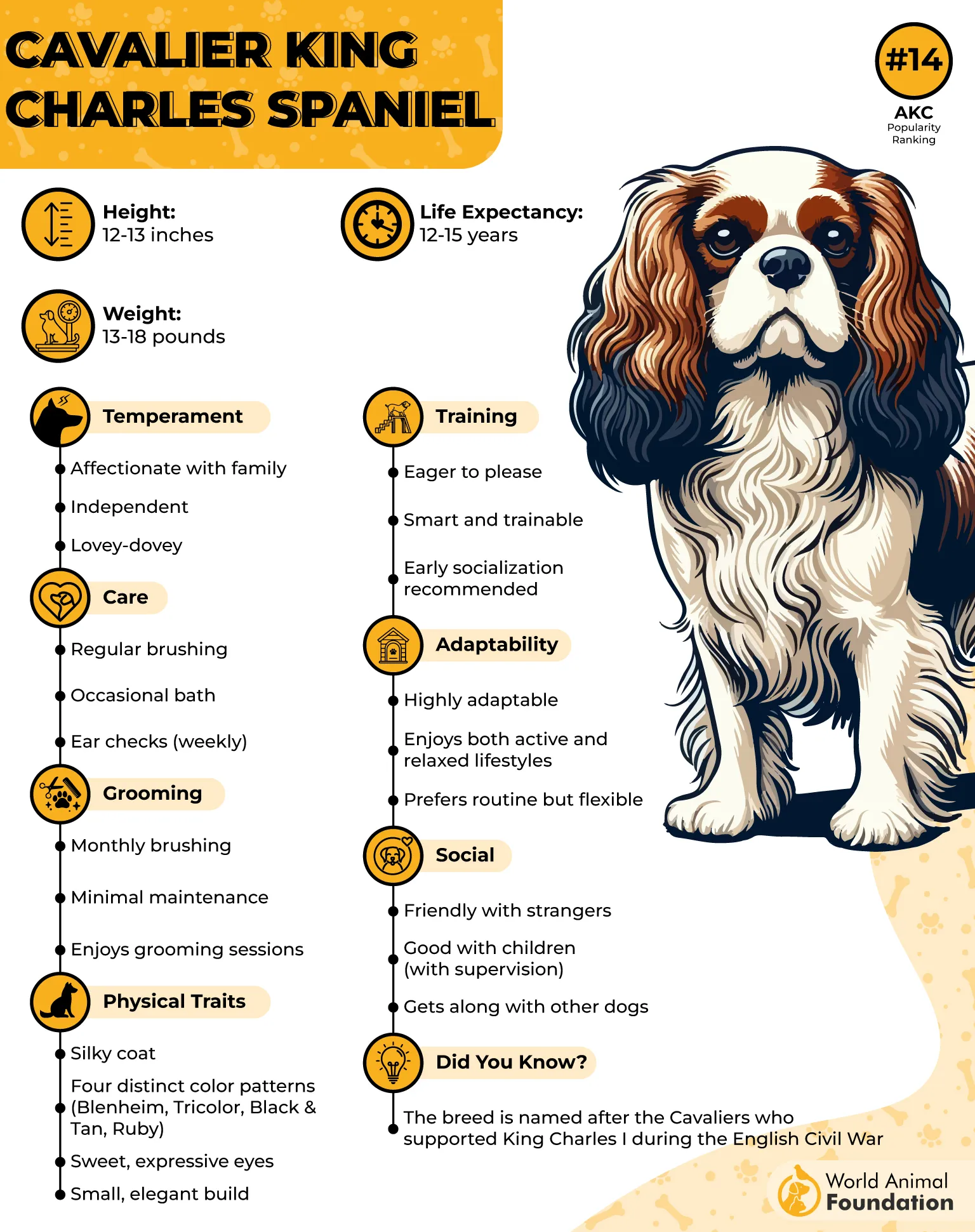
Bred as a companion dog in Britain, it tends to form strong bonds with its family. According to PetMD, its eagerness to please makes training enjoyable when you use praise, treats, and gentle repetition. Early socialization helps it grow into a confident household companion.
That silky coat looks wonderfully polished but needs regular brushing to prevent tangles, especially around its feathered ears, chest, and legs.
One important catch? It does not love being left alone for long stretches. Its happiest routine usually includes plenty of human company.
5. Shih Tzu
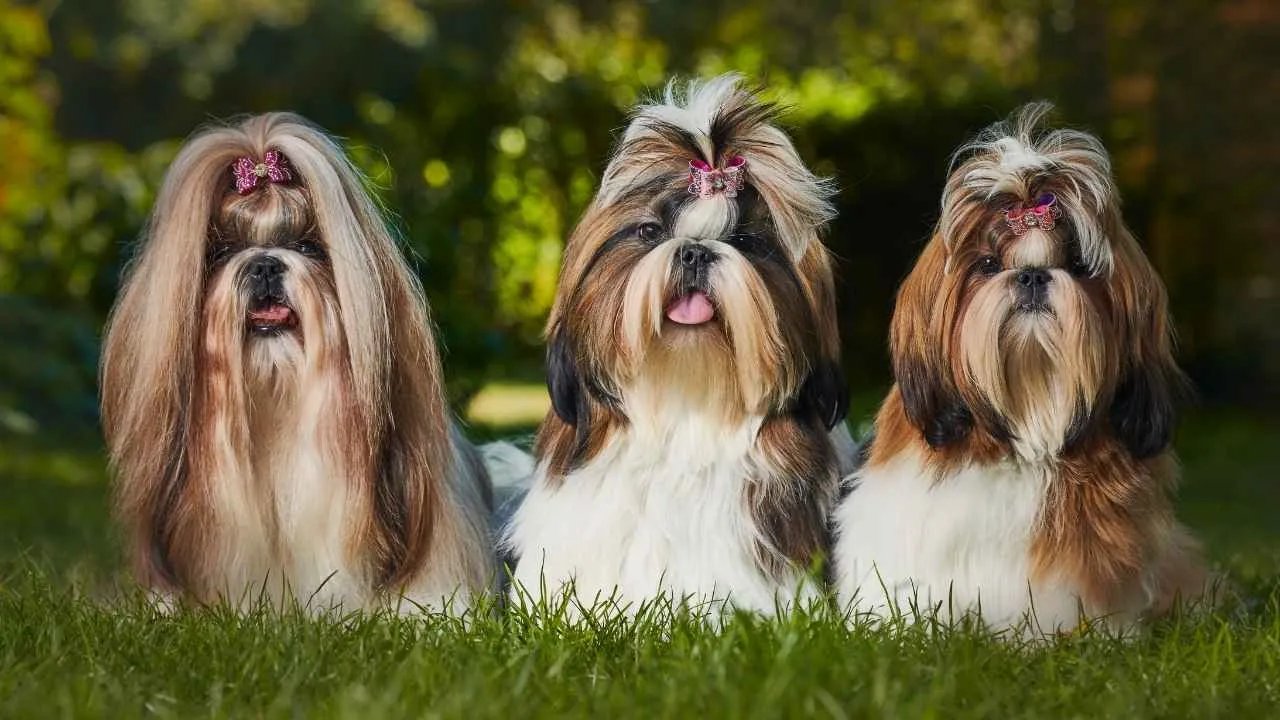
Give a Shih Tzu a soft blanket, a favorite human, and somewhere comfortable to sit, and it may consider the day’s major objectives completed. This tiny companion has a natural talent for turning ordinary home life into quality time.
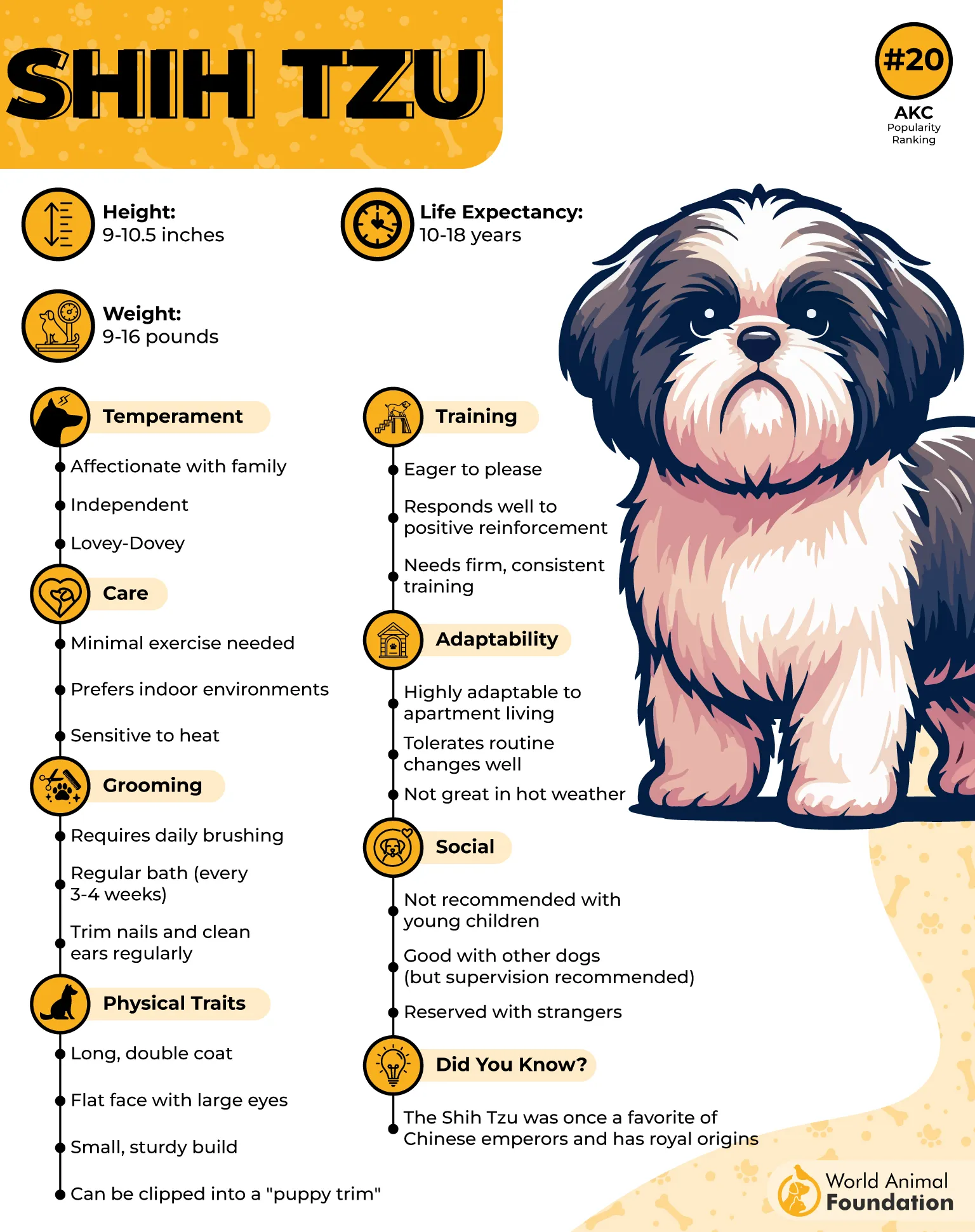
Originally bred as a companion in China, the Shih Tzu generally thrives on human attention. It is cheerful, loving, and surprisingly confident for such a little dog. Training may take patience because its independent side appears at the least convenient moment. Keep sessions brief, upbeat, and reward-based.
Orvis mentions that short walks and playful indoor sessions can keep it moving without demanding a serious workout schedule. Apart from being sweet, they are alert in nature and notice instantly when something feels off.
That gorgeous flowing coat requires frequent brushing when kept long. Many owners choose a shorter trim to simplify everyday care. With an adaptable nature and short stature, this low-energy dog suits well for apartment living.
The Shih Tzu doesn’t need a huge home or an exhausting activity plan. It mostly needs companionship, comfort, routine, and a person who doesn’t mind having a tiny shadow following it from room to room.
6. Newfoundland
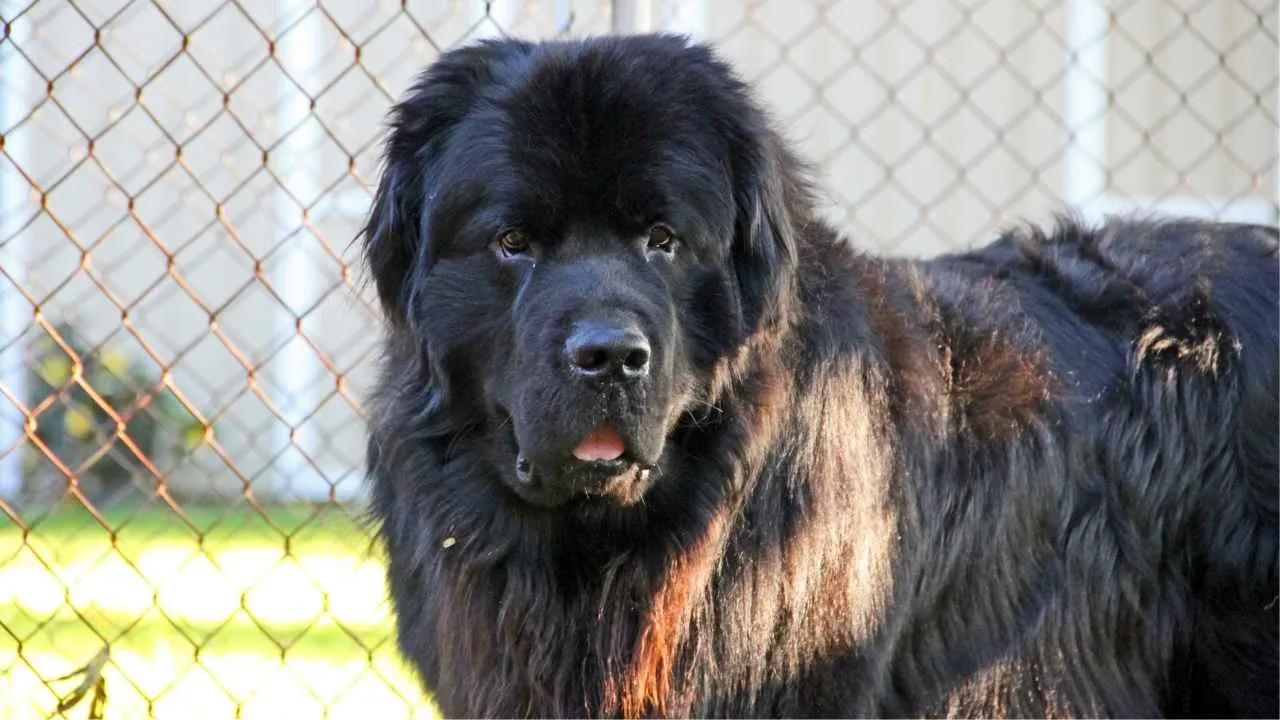
Now imagine bringing home a dog that could practically fill an entire sofa by itself. The Newfoundland is enormous, gentle, and surprisingly content with a peaceful family routine after getting its daily movement.
Originating in Newfoundland, Canada, it historically helped fishermen with tasks such as hauling equipment and retrieving people or objects from water. Its working background explains its strength, while it is widely known as “Nanny dogs” because of its sweet nature.
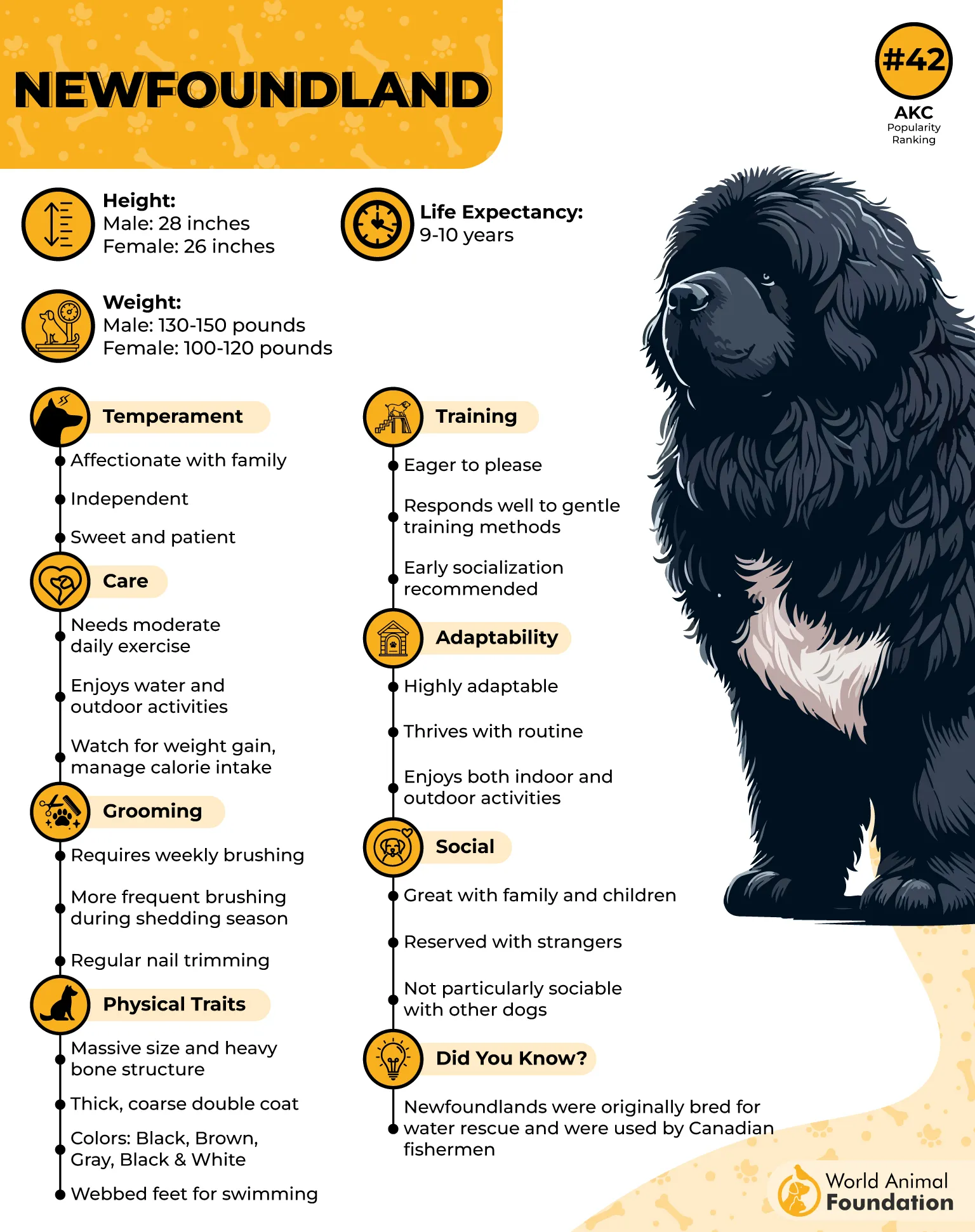
Although this gentle giant’s “Low energy” should never mean “no exercise.” Britannica mentions that daily walks help maintain a healthy weight and muscles. Swimming is the most enjoyable activity because this breed was developed for demanding water work.
Training should start early because polite manners become especially important when a dog can weigh well over 100 pounds. Its thick double coat also requires frequent brushing, with heavier shedding during seasonal changes.
7. Saint Bernard
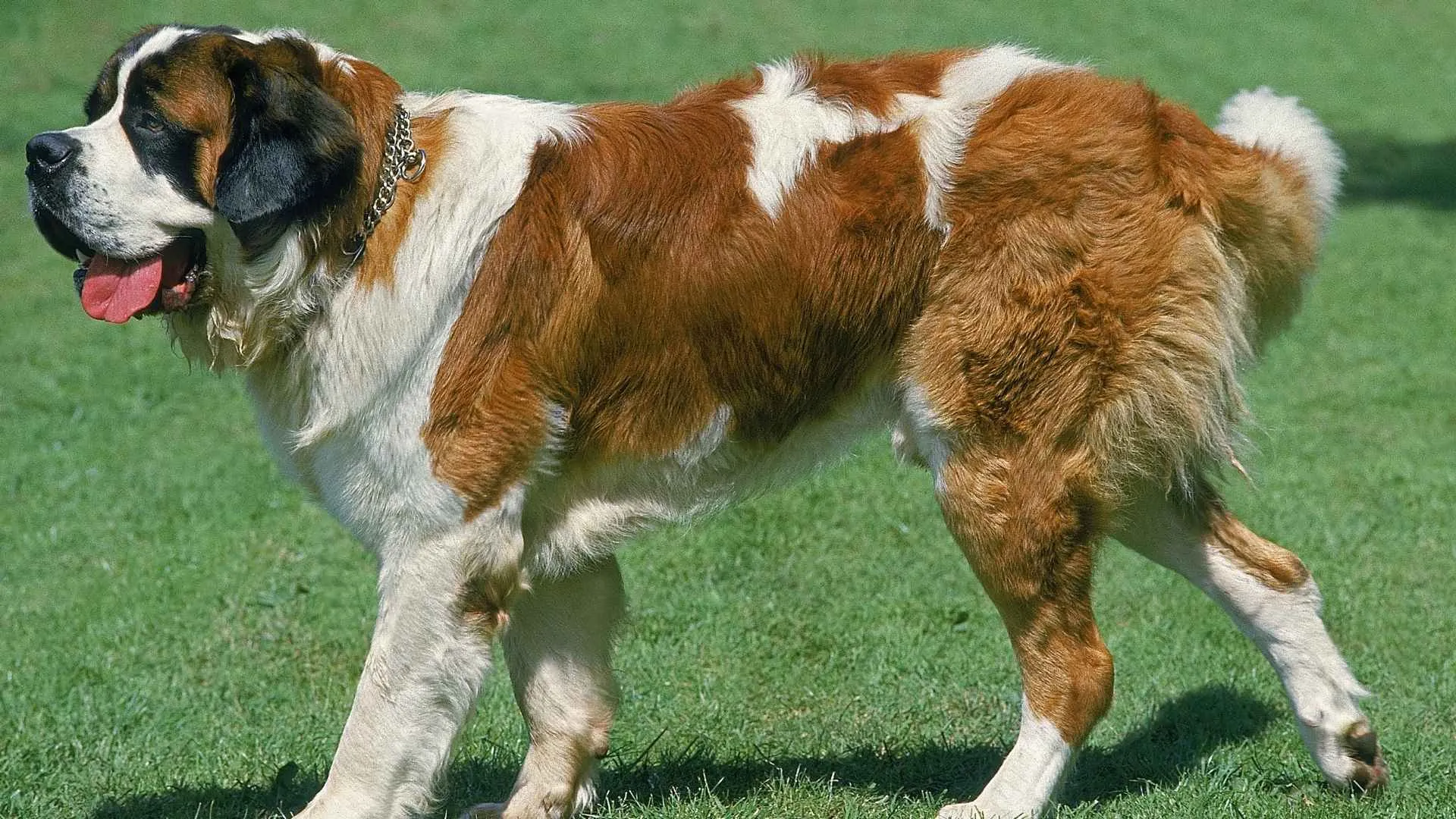
The Saint Bernard has the kind of presence that makes a room feel occupied before it even finds a place to lie down. Fortunately, this famous rescue breed is generally much more interested in peaceful family life than constant action.
Its relaxed temperament earns it a place among the ultimate calm dog breeds, provided its owner can handle its enormous size. Regular walks and moderate activity help keep its body healthy, but it usually doesn’t need endless running sessions.
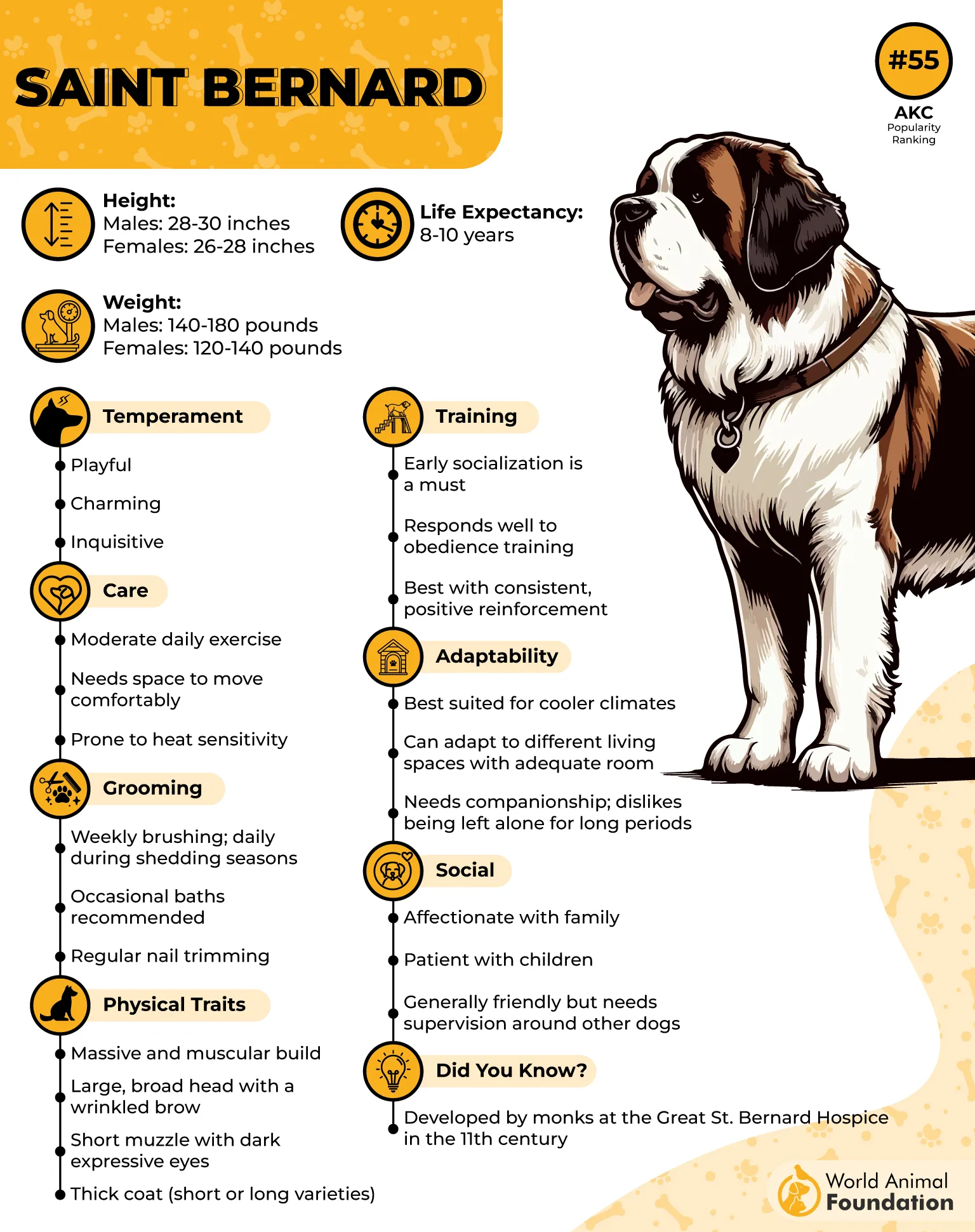
The breed originated in the Swiss Alps, where monks developed it for rescue work in dangerous mountain conditions. That history gave it strength and endurance, but today’s Saint Bernard is often a patient, affectionate household companion.
Early obedience training matters because a poorly mannered giant is still a giant. Positive reinforcement can make learning easier while building a trusting relationship.
Both short- and long-coated varieties exist, and either can shed generously. Regular brushing helps keep loose fur under control. Drooling is another reality worth accepting before bringing one home.
Conclusion
The right lazy dog breed is the one whose needs fit naturally into your home, routine, and energy. Even the calmest dog needs affection, activity, and a little fun, while every energetic moment deserves a proper break afterward.
Whether you want a tiny lap warmer or a giant nap partner, the best match should make sharing your home feel easy, warm, and wonderfully comfortable.
