




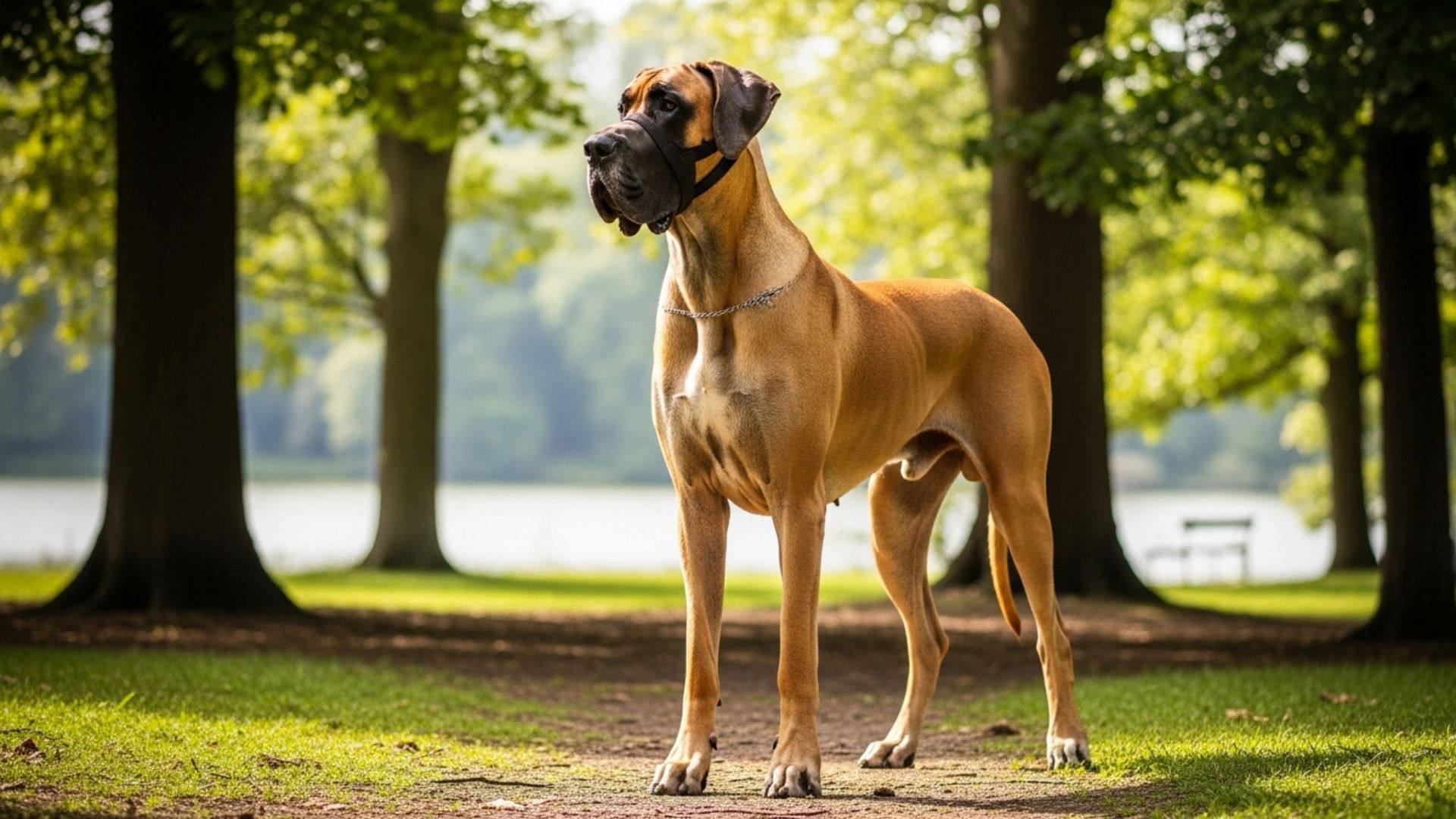
Living with a truly huge dog is an experience that turns heads and fills homes with personality. These gentle giants can be loyal, loving, and surprisingly calm, but they also come with unique needs that smaller pups simply do not have.
From daily care to living space and expectations, size changes the rules in fun and important ways.
If you have ever wondered what life is really like with a dog that takes up half the couch, you are in the right place. Let’s explore what makes the biggest dog breeds so special and what you should know before welcoming one into your life.
Fun Fact
Many large dog breeds were originally bred to work closely with humans. Their size often helped them guard, rescue, or assist rather than just look impressive.
Top Truly Huge Dog Breeds: What to Expect from Giant Dogs
1. Great Dane
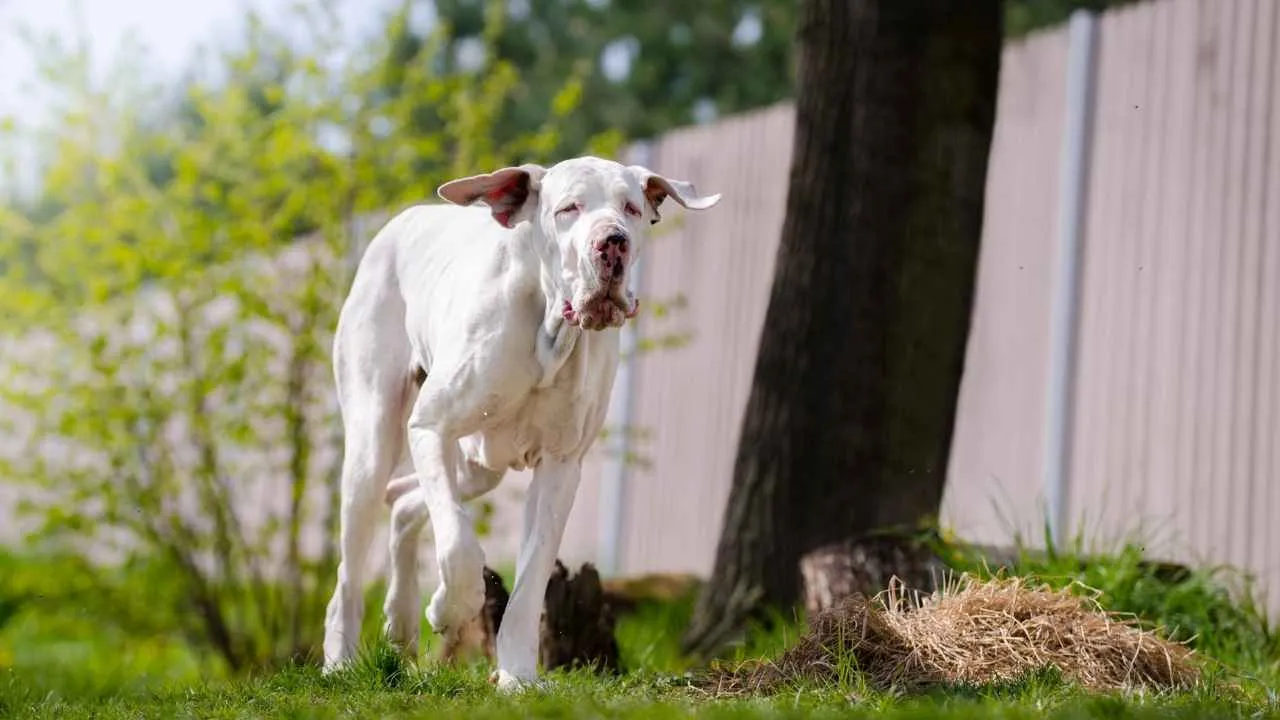
The Great Dane has a friendly, laid-back personality that makes it easy to share space with such a large dog. They enjoy being close to their people and often follow family members from room to room. Their gentle behavior helps them fit naturally into daily home life.
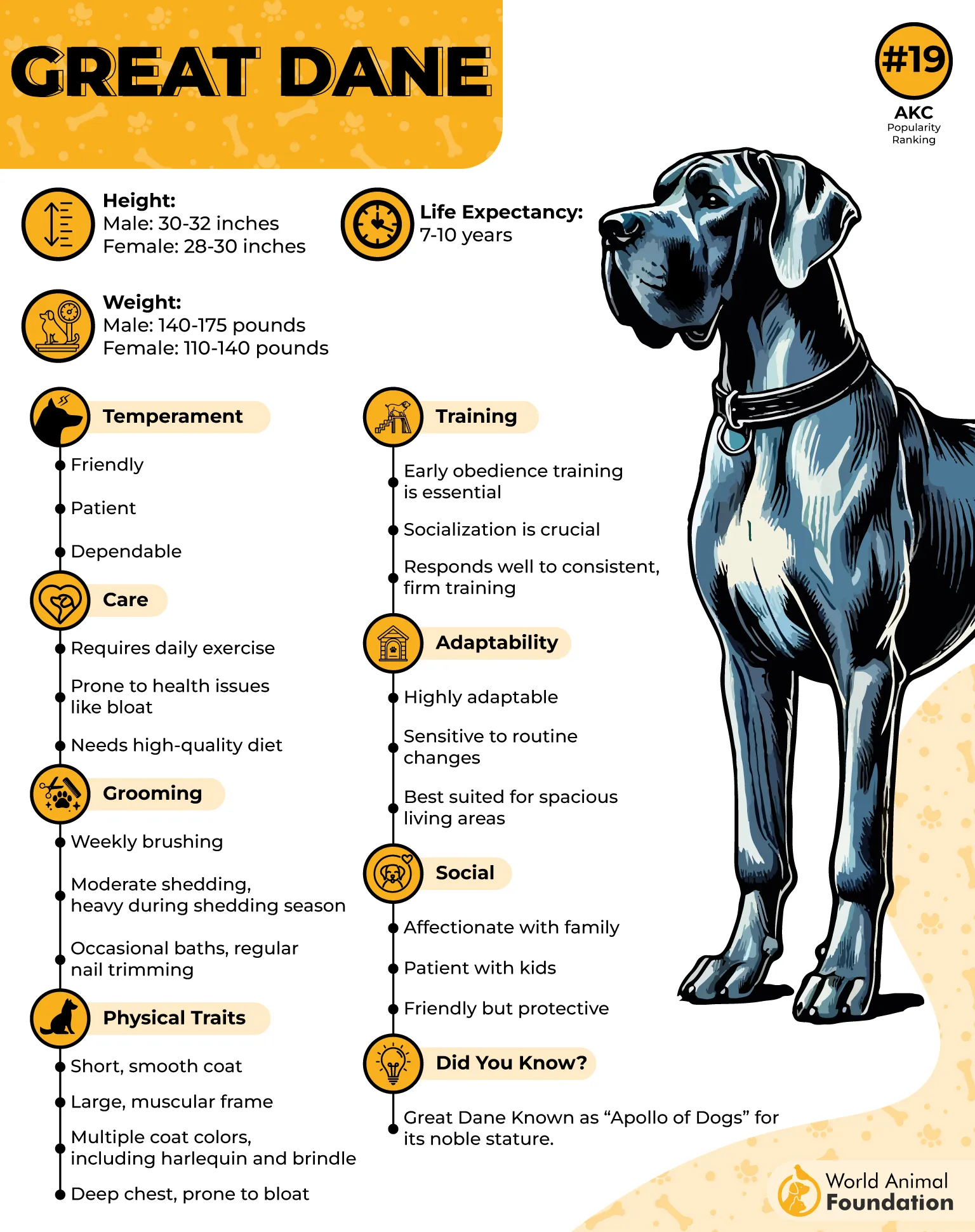
Owning a Great Dane means adjusting routines to match their size and strength. Daily walks and steady activity keep them comfortable and content. Leashes and secure fencing are important, since this breed can be curious and quick to follow an interesting scent.
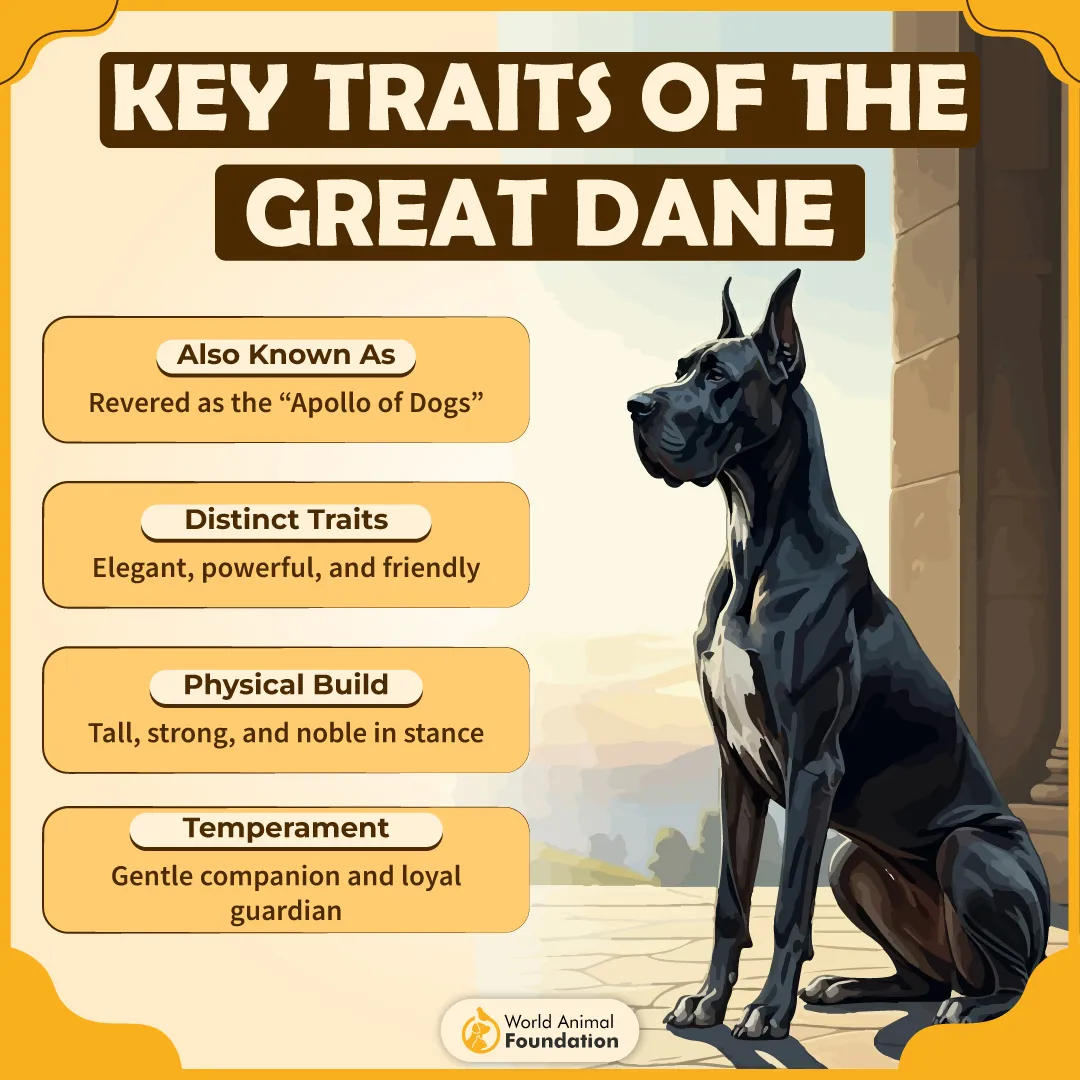
Training should start early and stay consistent. Great Danes respond well to structure, attention, and clear direction. With regular socialization and hands-on guidance, they grow into well-mannered dogs that enjoy interaction and learn household expectations quickly.
Fun Fact
The Great Dane is nicknamed the “Apollo of Dogs” for its graceful movement and noble appearance. The name reflects elegance and balance rather than just impressive stature.
2. Anatolian Shepherd
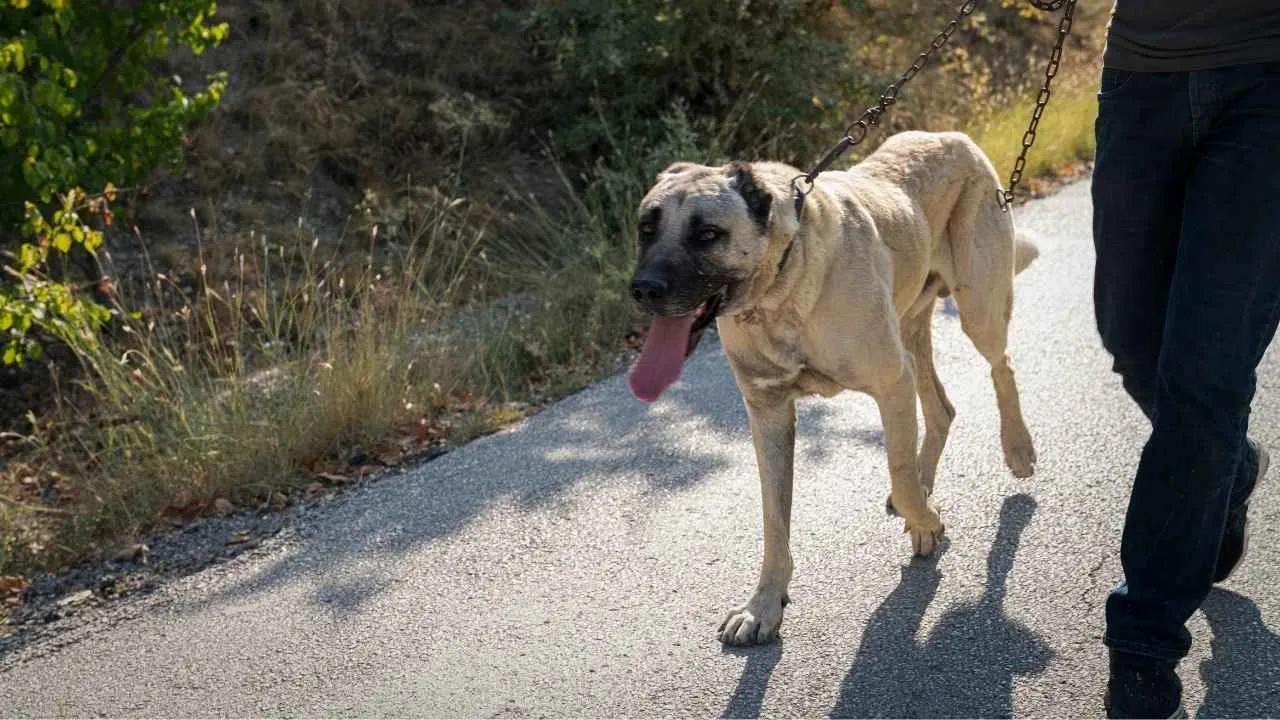
The Anatolian Shepherd brings a very different kind of presence to the list of truly huge dog breeds. Shaped by generations of independent work, this breed thinks for itself and takes its responsibilities seriously. Its strength and focus are tied to a long history of guarding what matters without constant direction.
Health care focuses on supporting a large, hardworking body built for endurance. Joint conditions such as hip and elbow dysplasia can occur, along with eye issues like entropion that may require treatment. This breed can also be sensitive to anesthesia and is at risk for gastric dilatation and volvulus, making attentive veterinary care essential.
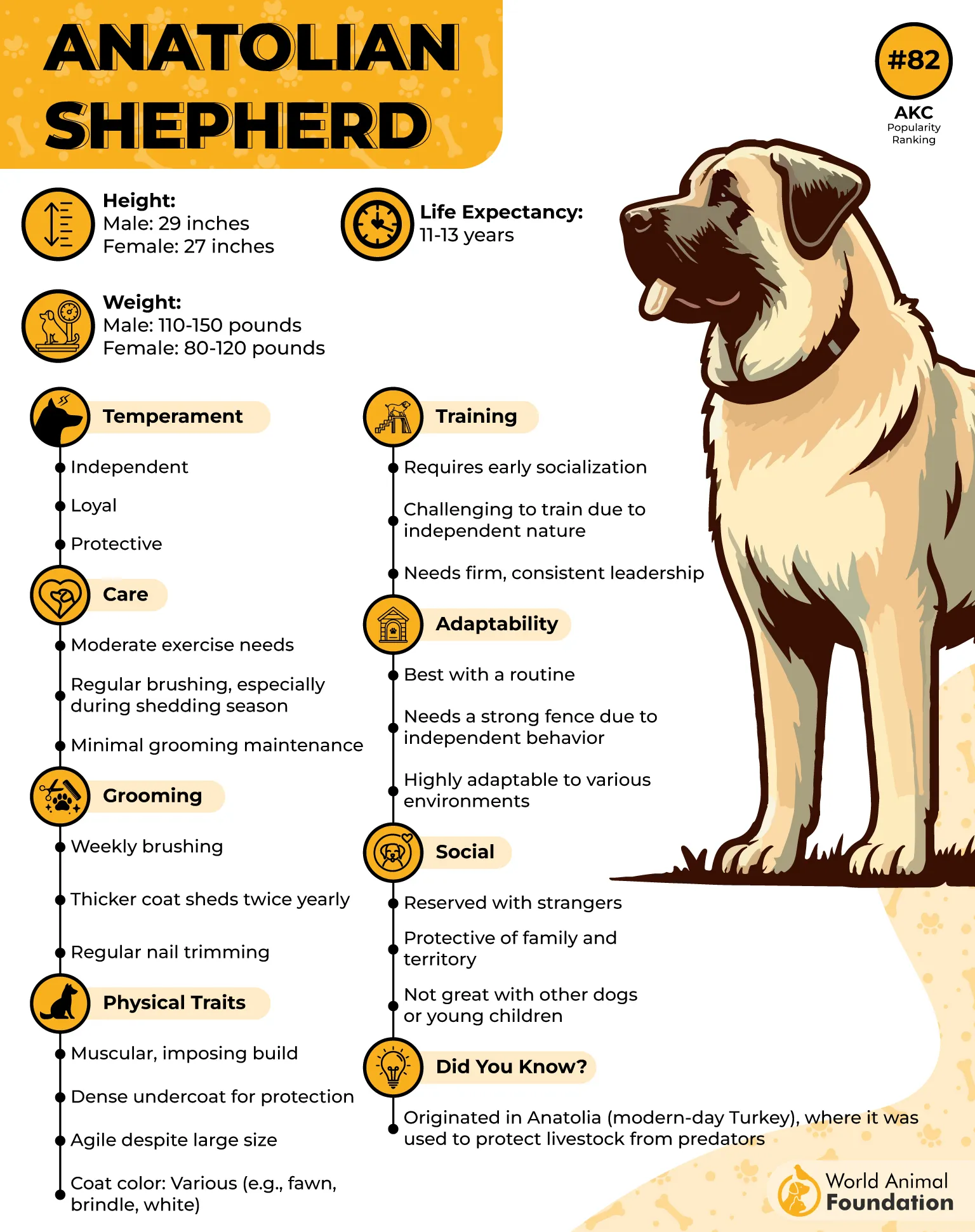
Behavior with other pets depends heavily on early experiences. When introduced young, Anatolian Shepherds can coexist well with other animals in the household. Their protective instincts stay strong, so clear boundaries and consistent socialization help prevent misunderstandings as they mature.
Fun Fact
Anatolian Shepherds are often confused with Kangals because of their similar appearance. While related, they are considered distinct breeds with different traits and recognition histories.
3. Irish Wolfhound
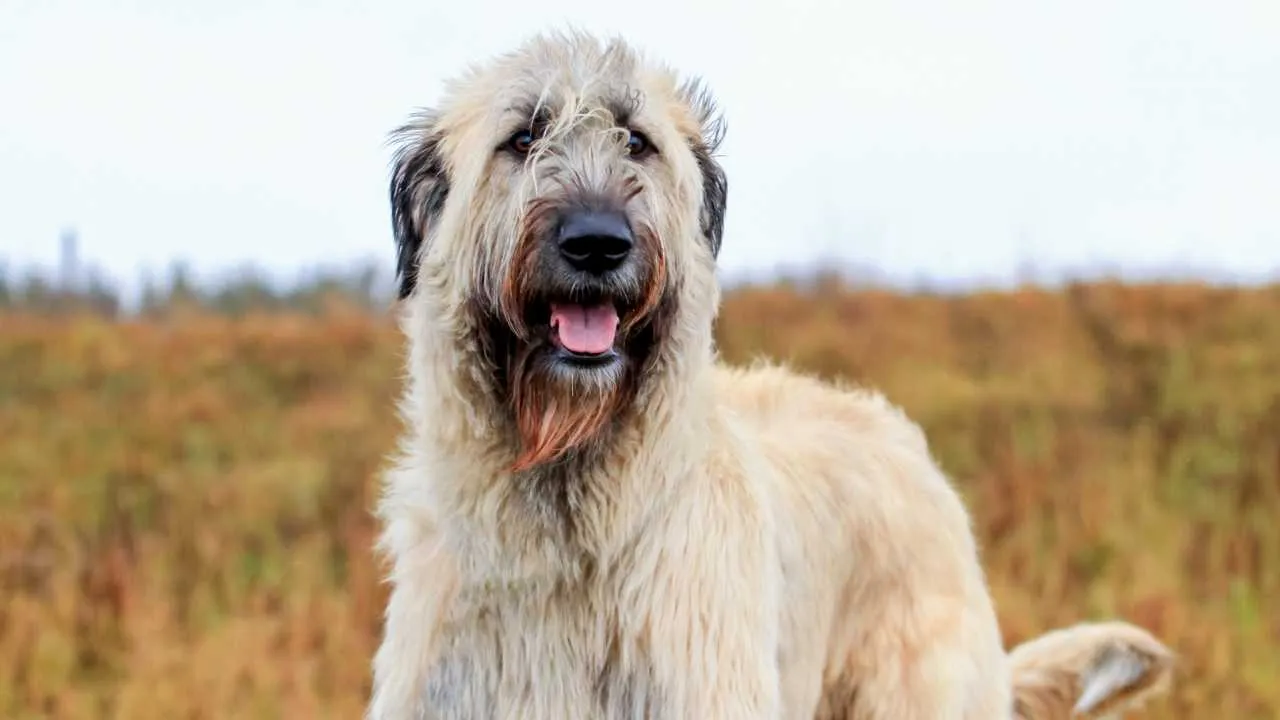
The Irish Wolfhound feels less like a typical house dog and more like a piece of living history. This giant breed dog carries centuries of legend in its posture, once woven into stories of warriors, nobles, and ancient hunts. Their presence is quiet but unmistakable, turning everyday moments into something a little more memorable.
As mentioned by PetMD, Irish Wolfhounds are known for their gentle, calm nature and easygoing temperament. They adapt well to different activity levels, enjoy regular exercise, get along with children and dogs, but may chase smaller animals.
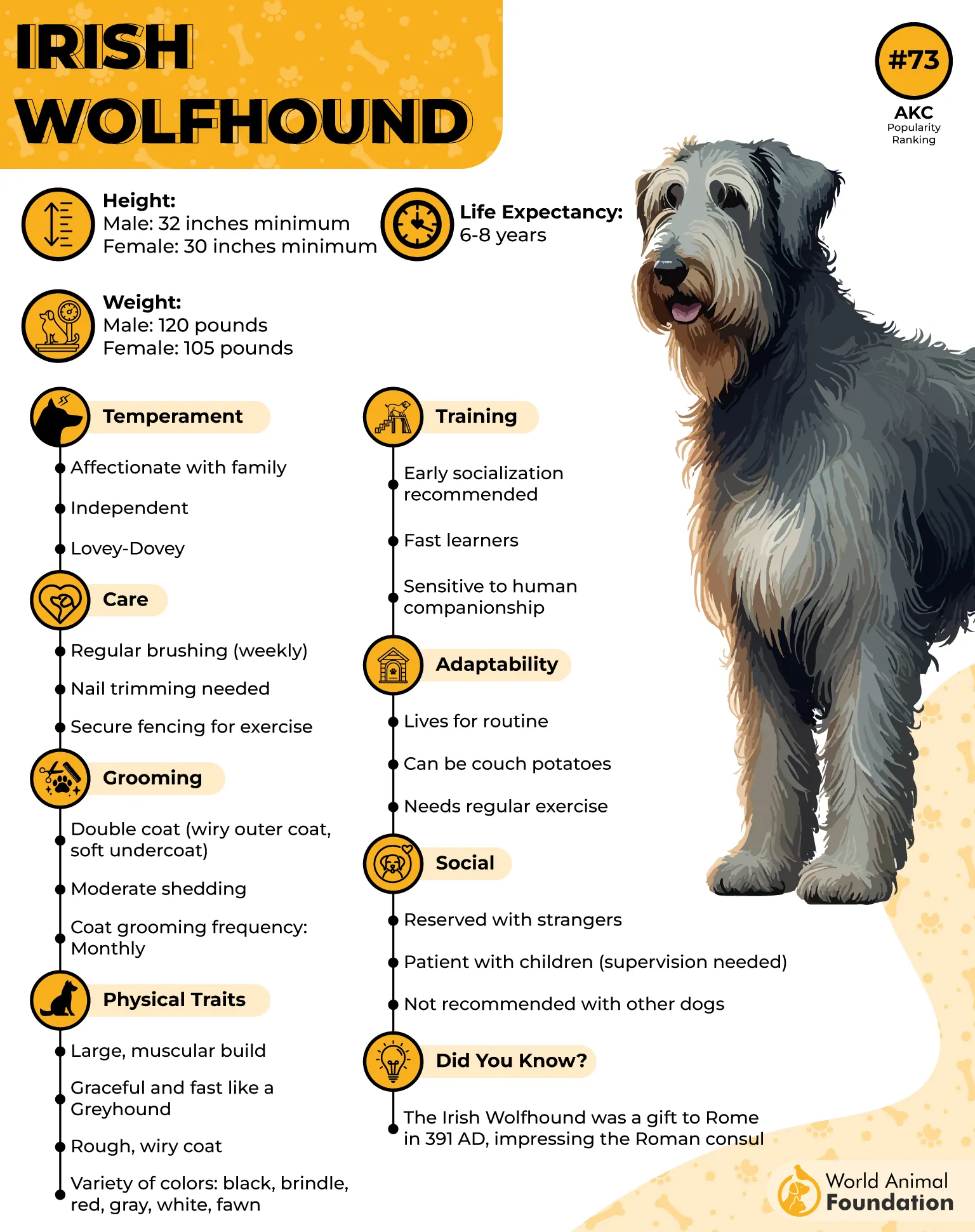
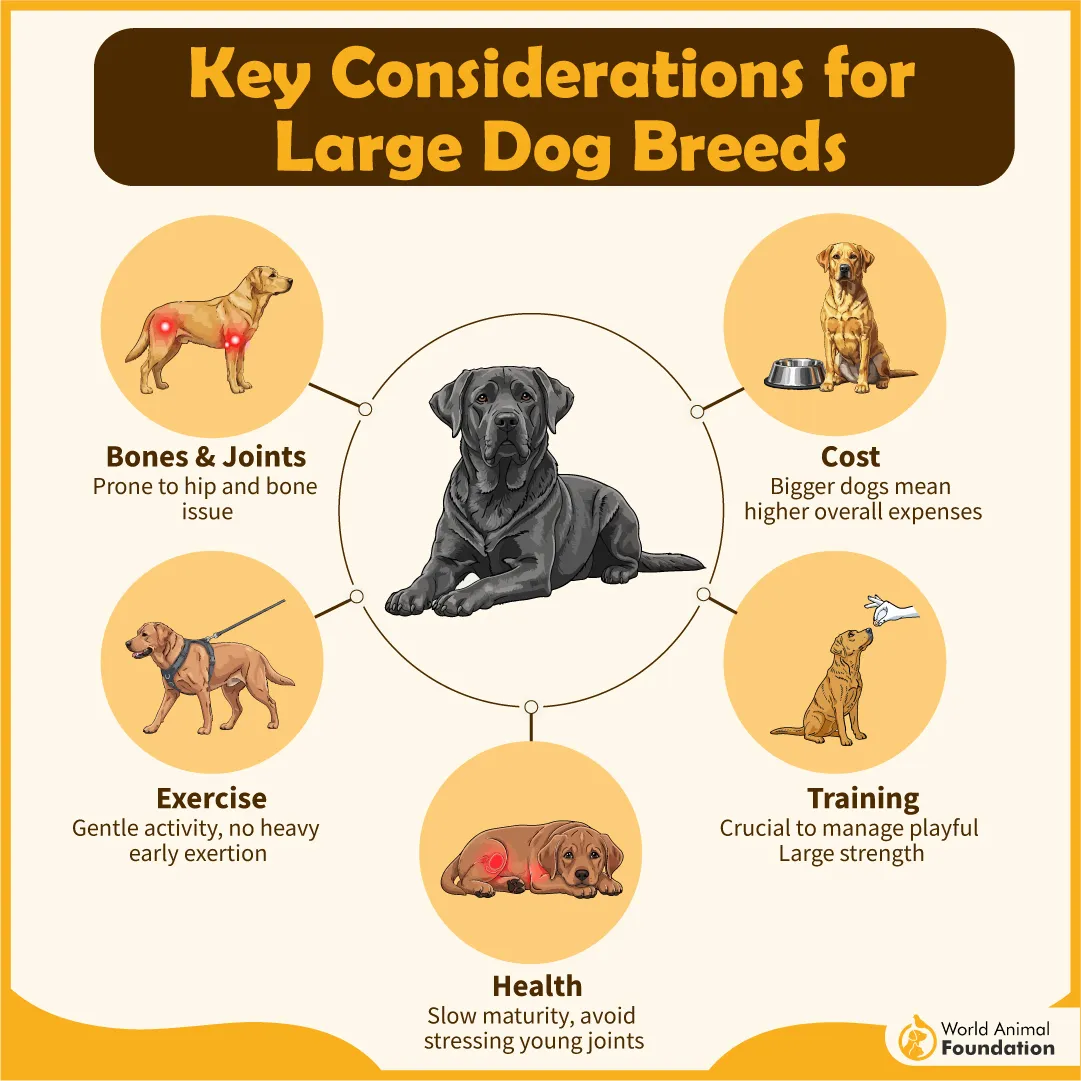
Nutrition plays a major role early in life, especially for growing puppies. Large breed puppies benefit from specially formulated food that supports steady development rather than rapid growth. Feeding routines should be guided by breeders or veterinarians to promote balanced growth and comfortable digestion.
Fun Fact
Ancient Roman records describe Irish Wolfhounds as gifts so impressive that they amazed the entire city of Rome. Few dogs in history earned admiration on such an international stage so early.
4. Cane Corso
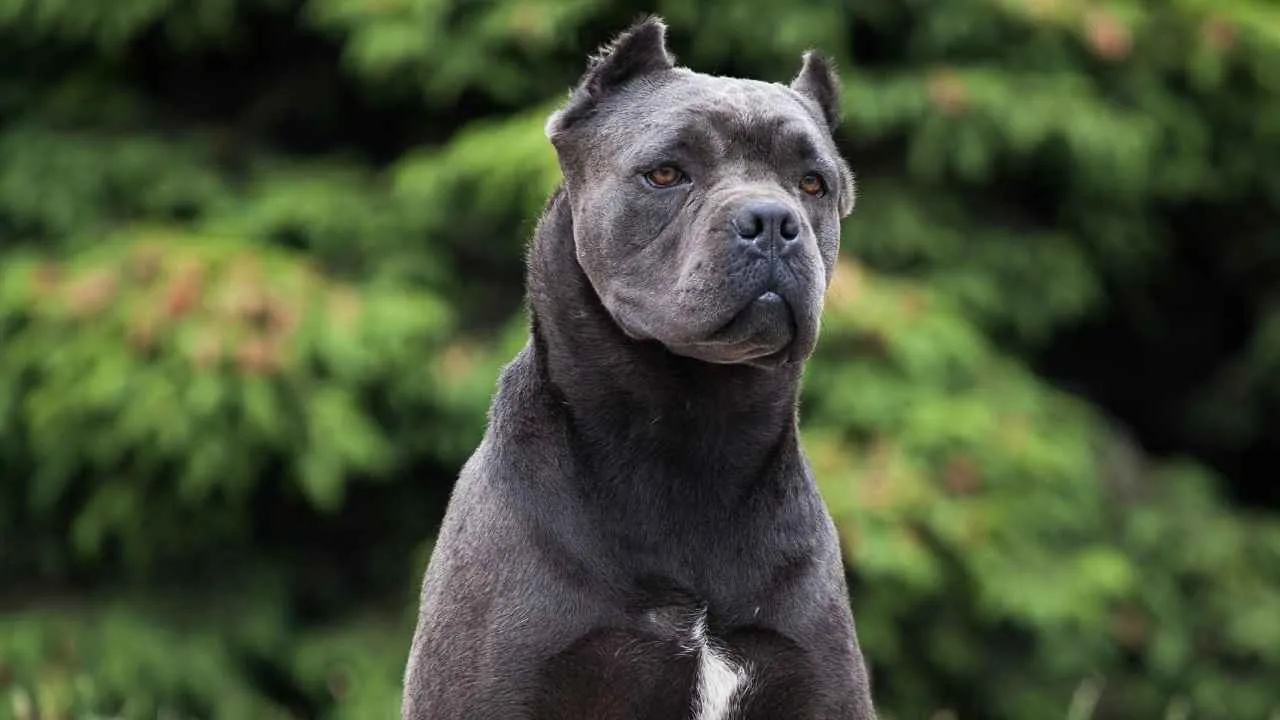
The Cane Corso enters a room with purpose written all over its posture. Bred for centuries as a working guardian, this breed carries a serious mindset paired with clear awareness of its surroundings. Their size supports a role rooted in protection rather than spectacle, giving them a commanding presence that feels intentional.
This breed thrives with confident, experienced owners who understand large guardian dogs. Cane Corsos need proper socialization, structured training, and clear leadership to prevent unwanted dominance. They do best in homes where expectations are consistent and mental engagement is part of daily life.
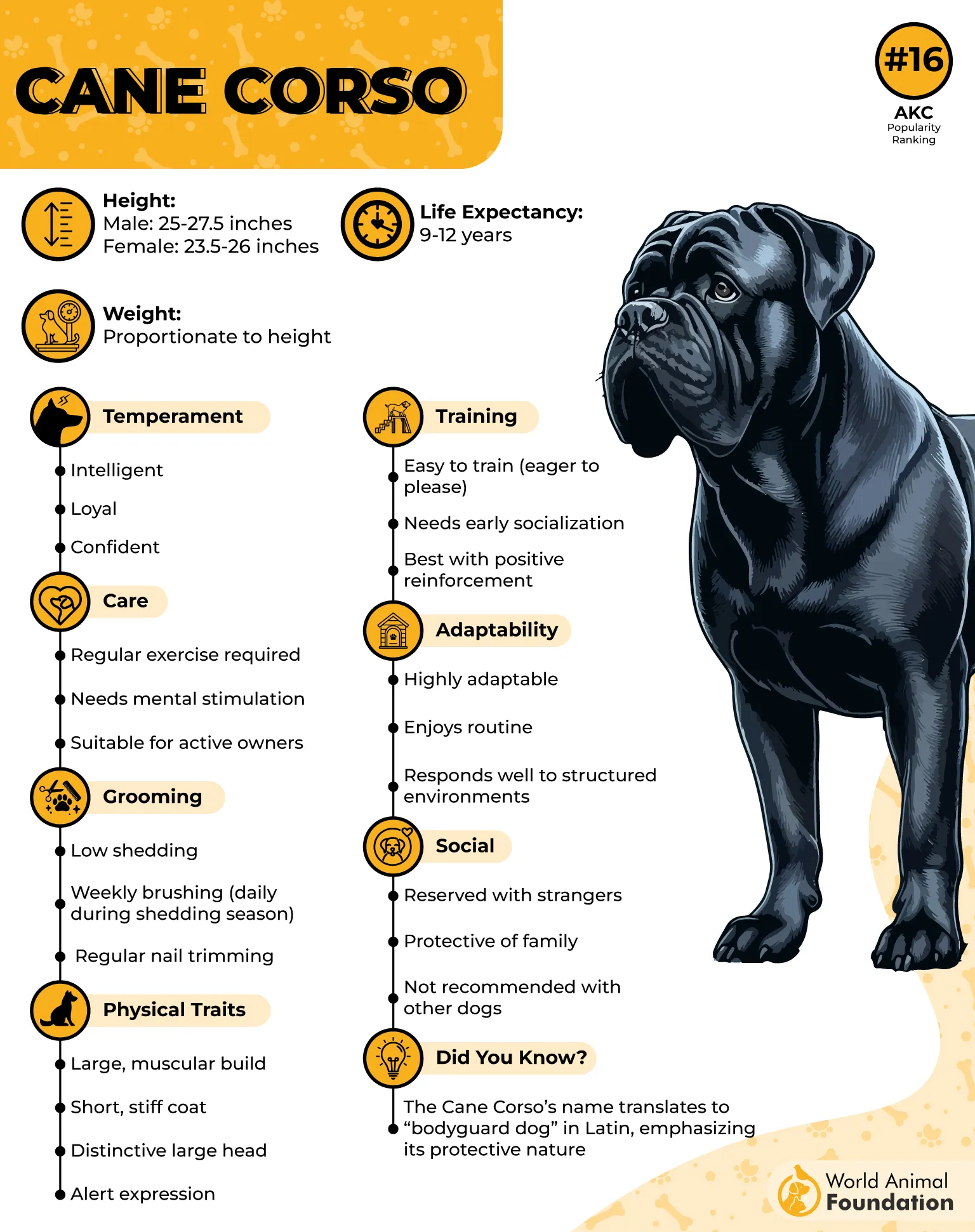
Health care should be proactive and well planned. Cane Corsos can be prone to conditions such as hip dysplasia, eyelid abnormalities, epilepsy, demodex mange, and bloat. Because of their size and medical needs, many owners choose pet health insurance to help manage long-term veterinary care.
Fun Fact
The name “Cane Corso” comes from Latin roots meaning bodyguard dog. It reflects a role so ingrained that the title itself describes the job rather than the look.
5. Alaskan Malamute
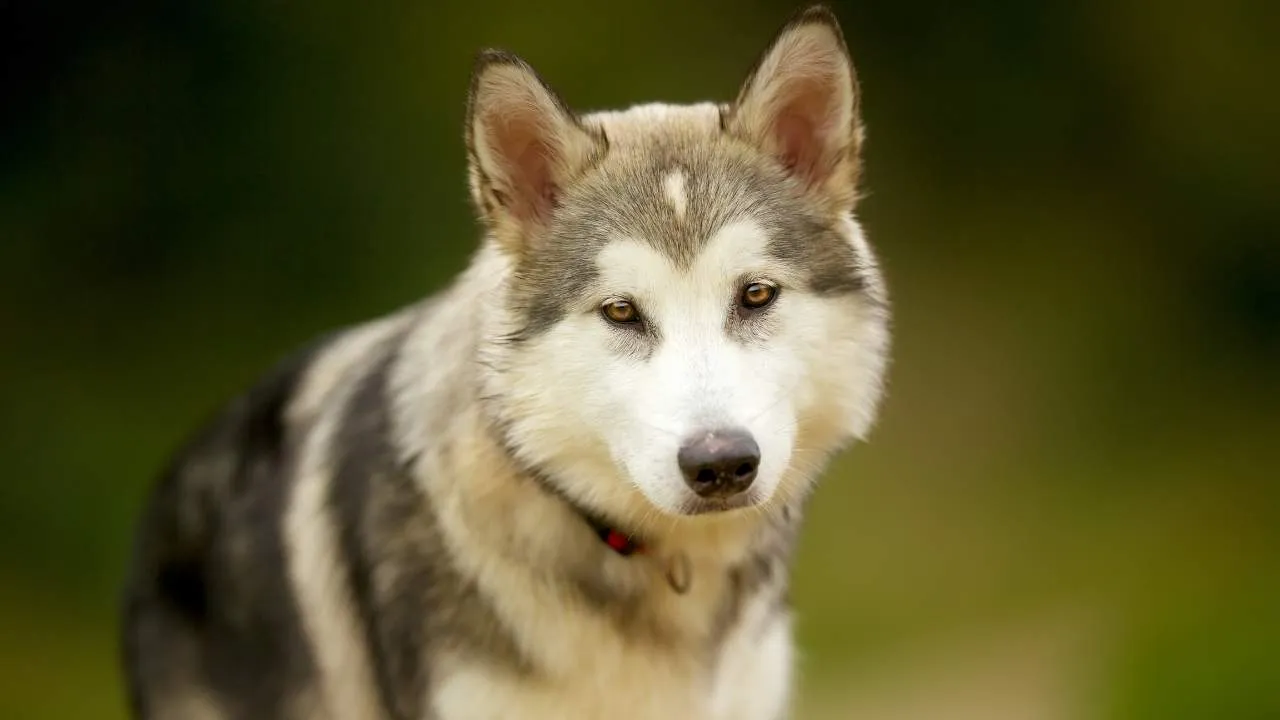
The Alaskan Malamute earns its place among truly huge dog breeds through strength built for endurance rather than intimidation. This large breed dog was shaped by demanding work in harsh climates, where reliability and teamwork mattered more than speed. That background shows in confident movement, a thick coat, and a determined attitude.
Malamutes are best suited for owners who enjoy active routines and hands-on involvement. They need people who appreciate intelligence paired with independence and who have the time to stay engaged. Homes with space, structure, and a willingness to train patiently tend to be the best match for this powerful working dog.
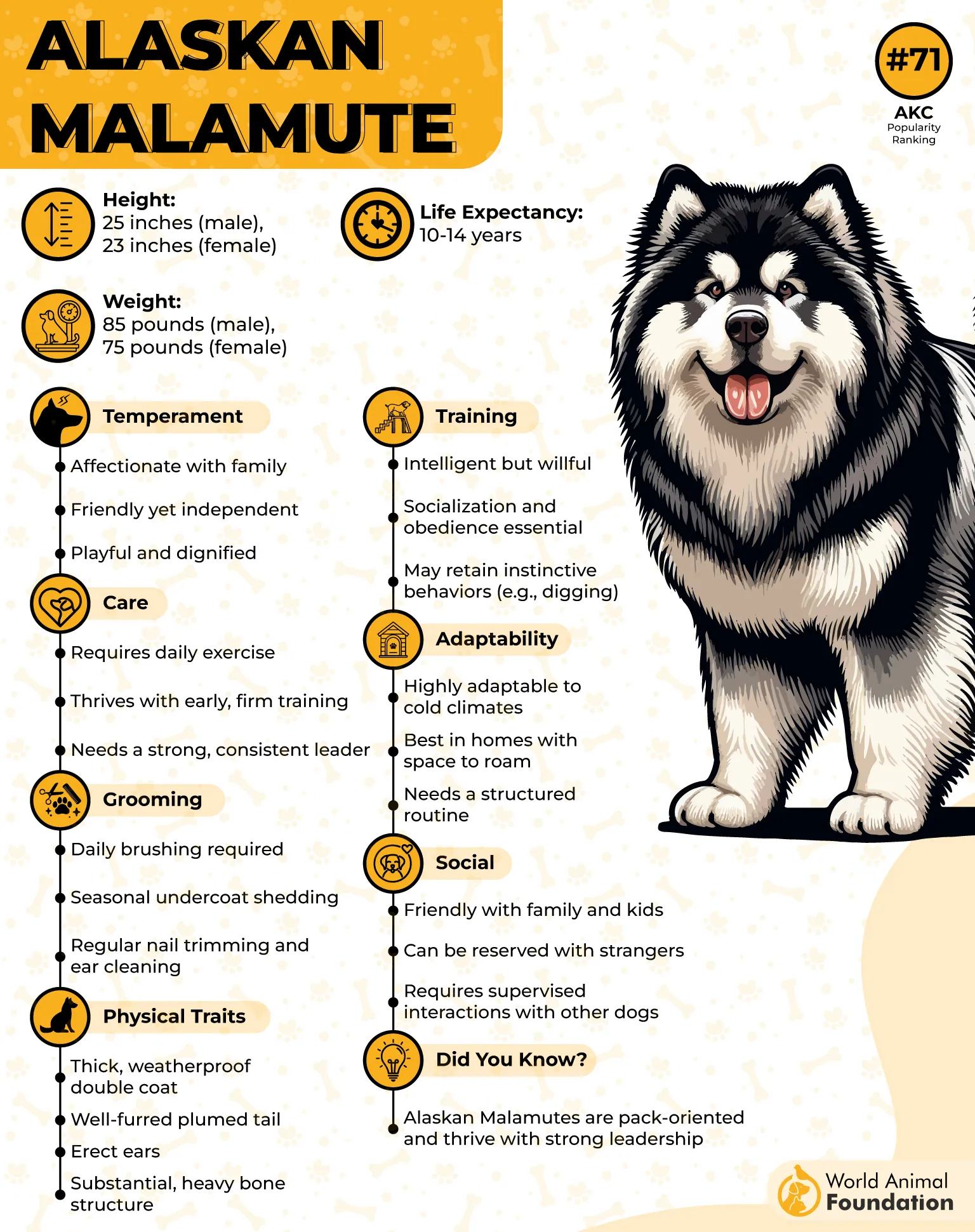
As per WebMD, Alaskan Malamutes need regular grooming due to their thick double coats, especially during shedding seasons. Brushing removes loose dog hair, while routine nail trims, weekly ear checks, and daily tooth brushing help maintain overall health.
Fun Fact
Alaskan Malamutes are famous for their dramatic “talking” sounds rather than traditional barking. Their expressive vocal style often feels like a full conversation with opinions included.
6. Mastiff
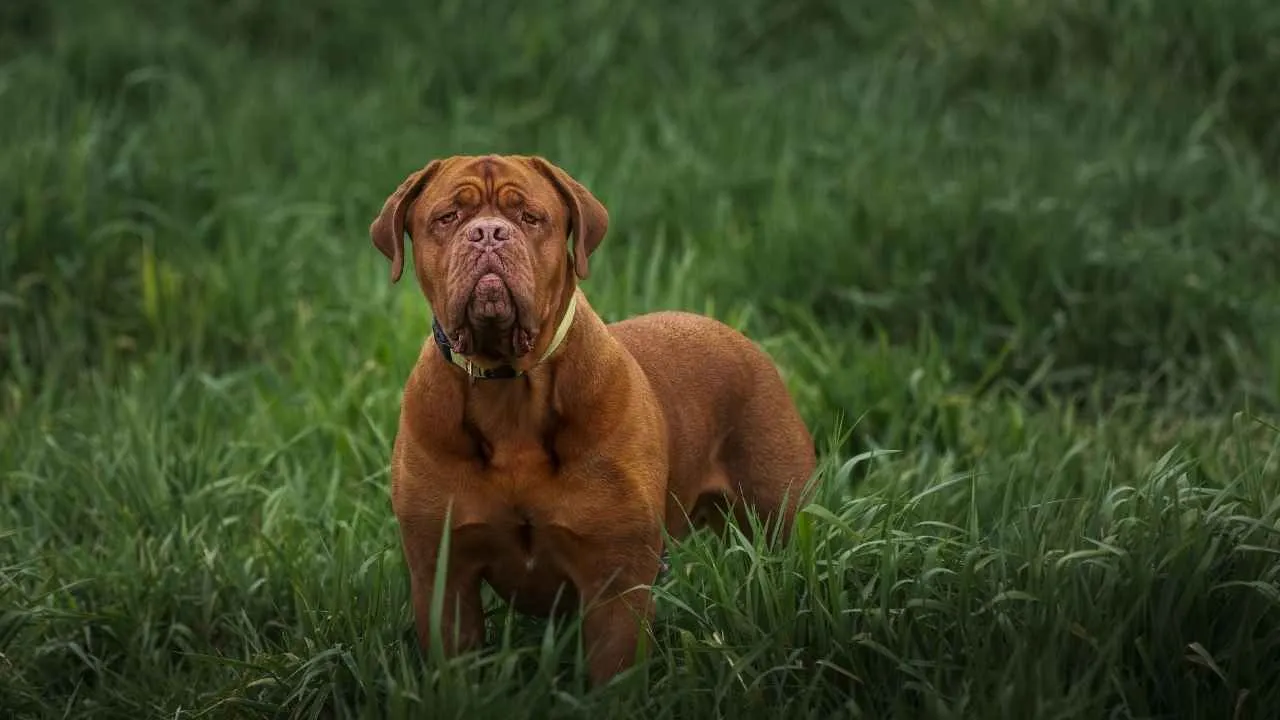
The Mastiff has a way of slowing everything down the moment it settles into a space. Massive yet surprisingly relaxed, this breed carries a sense of quiet authority that feels rooted in history rather than hype. When people think of a truly huge dog that feels solid, steady, and deeply loyal, the Mastiff often fits the picture perfectly.
According to the AKC, Mastiffs respond best to early obedience training and socialization, learning quickly when sessions stay short, positive, and varied. Gentle praise, eye contact, and guidance help them stay engaged and willing to cooperate.
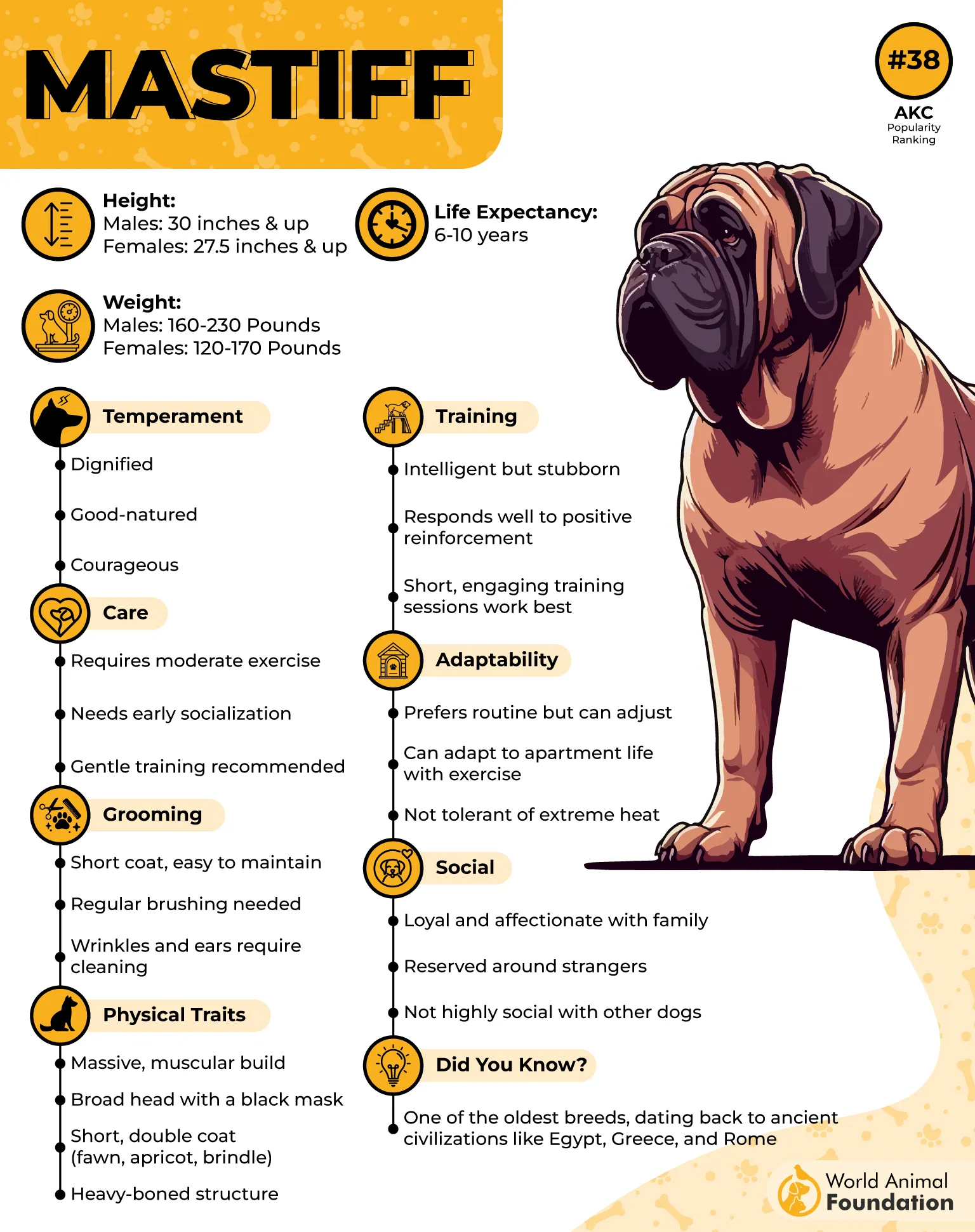
Wrinkles are part of the Mastiff’s signature look, and they need regular attention. The folds around the face and muzzle should be kept clean and dry to prevent irritation. A quick check and gentle wipe go a long way toward keeping skin healthy.
Fun Fact
Mastiffs once guarded castles, stood beside soldiers in battle, and faced wild animals in Roman arenas. Few dog breeds can claim such a dramatic and far-reaching past.
7. Doberman Pinscher
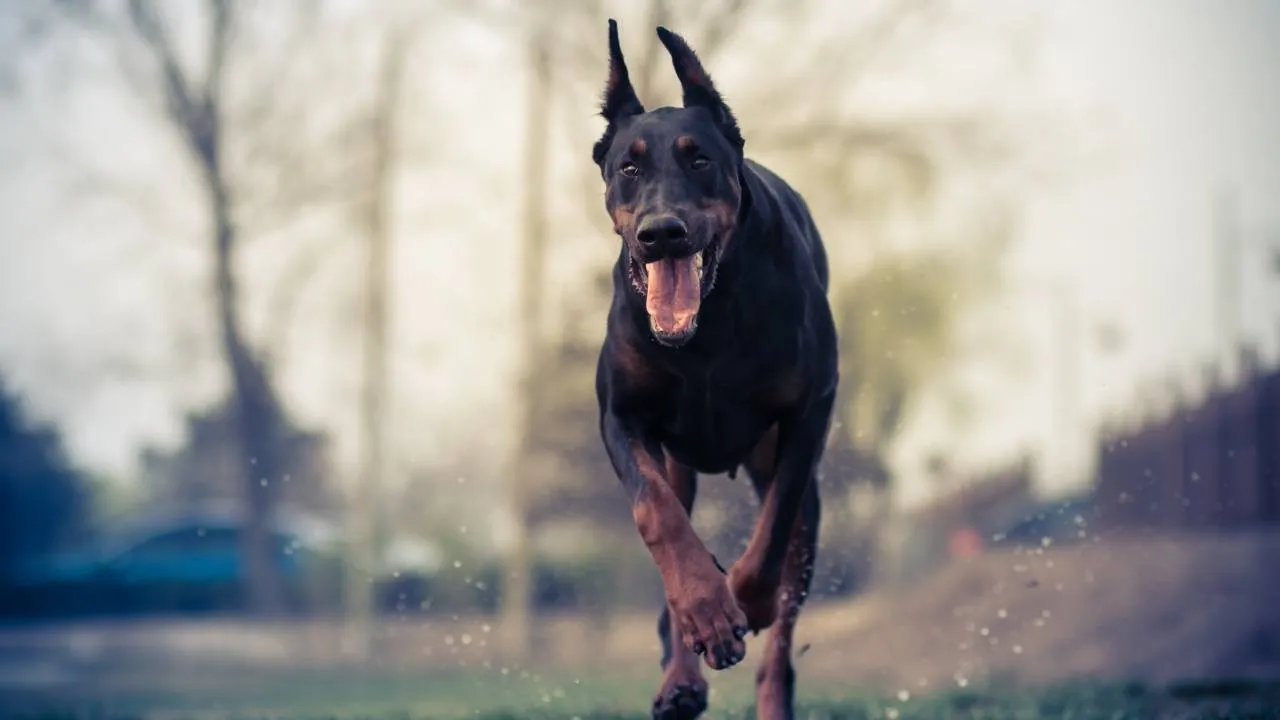
The Doberman Pinscher was created with intention rather than tradition. Designed by a German tax collector who wanted protection on the job, this breed blends athletic build, sharp awareness, and strong loyalty into one sleek package. Their look is refined, but their mindset is always switched on.
As a giant working breed, Dobermans have earned respect far beyond the family home. They are widely used in security roles, police work, and search and rescue because of their intelligence, speed, and focus. That combination of size, confidence, and purpose places them firmly among the most capable large dogs in the world.
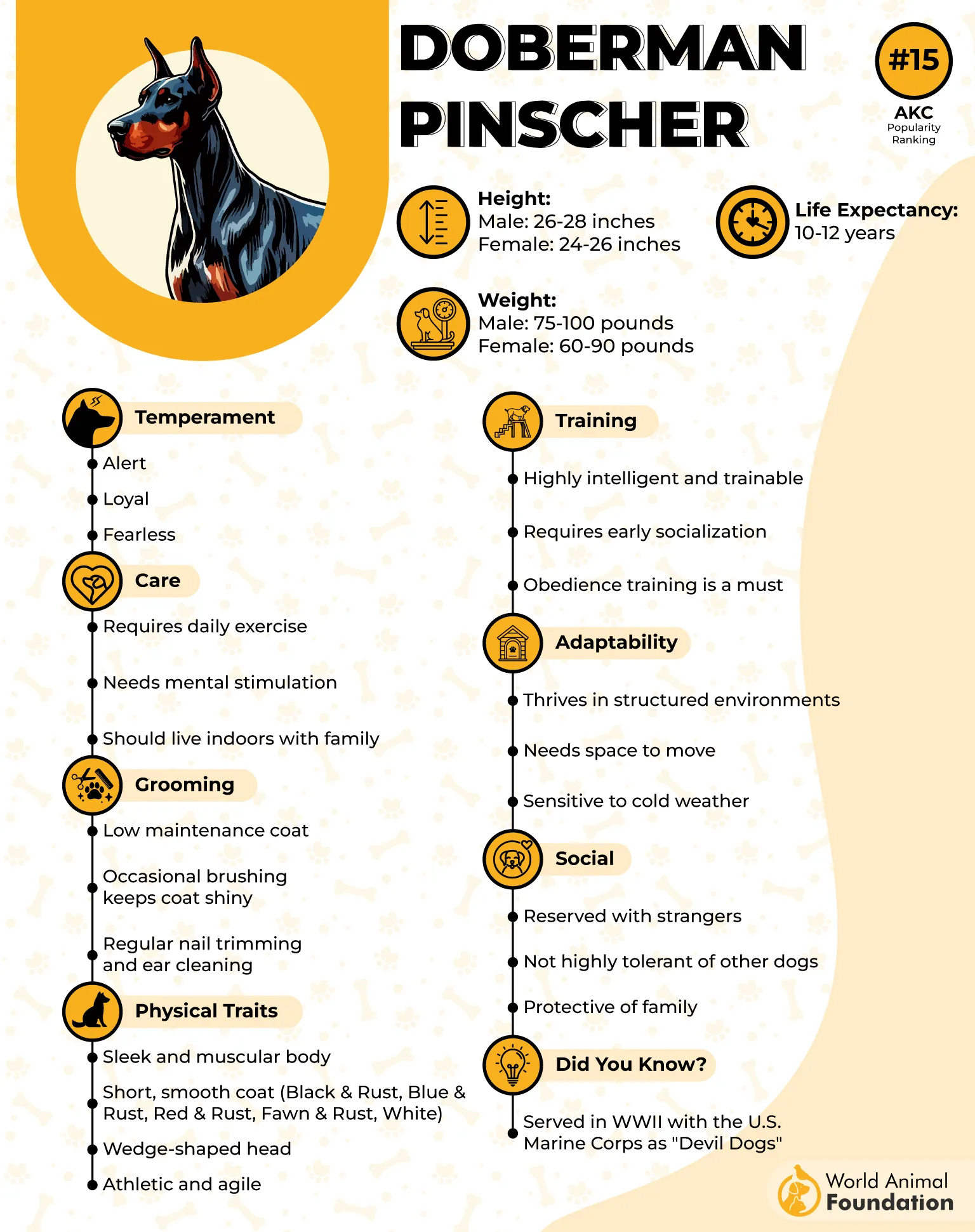
Nutrition and feeding habits matter with a Doberman. They should be fed high-quality dog food, with meals balanced and divided into two feedings per day to support digestion and reduce health risks. Fresh water should always be available, and elevated food and water bowls are not recommended.
Fun Fact
The Doberman Pinscher is named after its creator, Louis Dobermann. Very few dog breeds carry the actual surname of the person who developed them.
Conclusion
Living with a truly huge dog is about more than size. It is about lifestyle, commitment, and understanding what each breed needs to thrive. These dogs can be gentle companions, focused workers, or devoted protectors, but they all require space, structure, and time.
Whether you choose to bring home a giant breed puppy or an adult dog, consider whether you can match their energy, instincts, and care needs with your daily routine, since giant breeds often require more consideration than smaller dogs.
When the choice is right, the reward is a strong bond built on trust and respect. Take time to plan and be honest about what you can offer, and the right huge dog will become a meaningful part of your life.
If you are further interested in such wonderful breeds, some other dogs you can look up include the Labrador Retriever and the Standard Poodle.
