




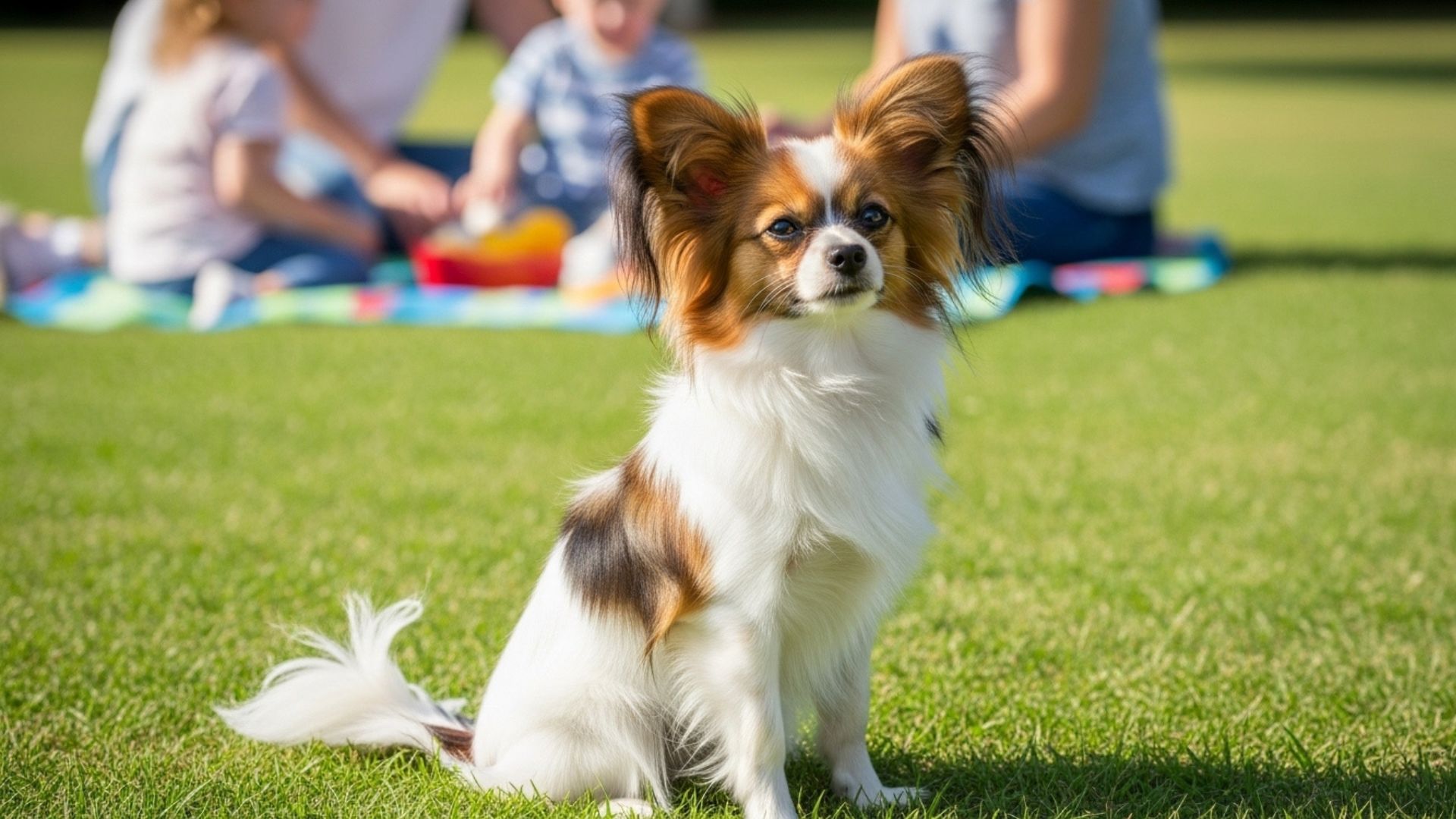
If you’ve got young kids, your home is already a full-contact sport—sticky hands, surprise hugs, toys underfoot, and the occasional sprint through the hallway for absolutely no reason. So when you start looking at toy dog breeds, you’re not just choosing something “cute and small.”
You’re choosing a living, breathing family member who needs to feel safe around tiny humans who haven’t mastered “gentle” yet.
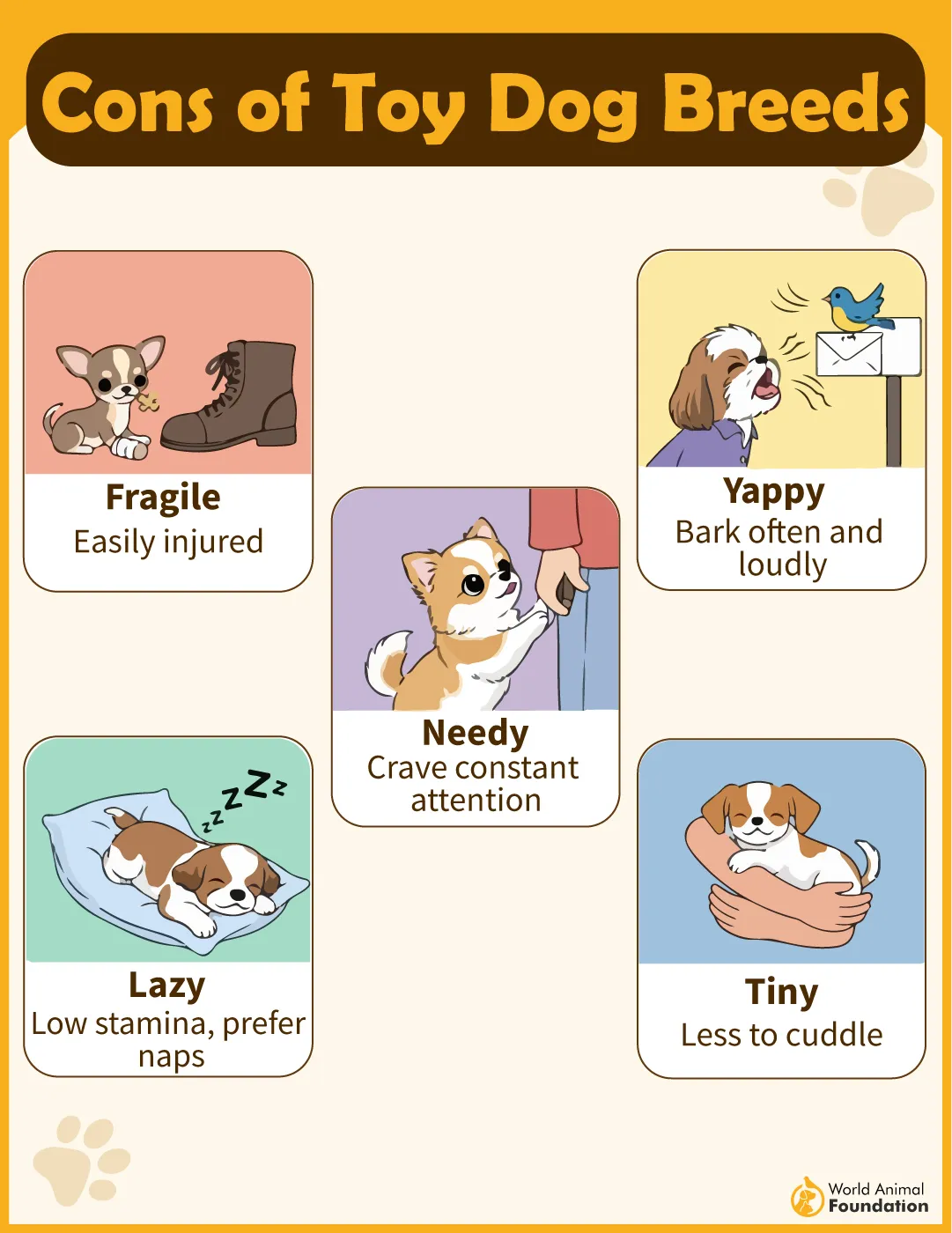
Toy dogs can be amazing for families: they’re easier to house-train in apartments (not always easy—just easier), cheaper to feed, and often love being close to their people. But “toy” also means fragile bones, big personalities, and varying tolerance for rough handling—so matching the right breed to your kids’ ages and your household vibe matters a lot.
Below are seven toy breeds that work well with young children—especially when you supervise interactions and teach children respectful handling. Let’s meet your potential tiny best friend.
Best Toy Dog Breeds for Families With Young Children
1. Papillon
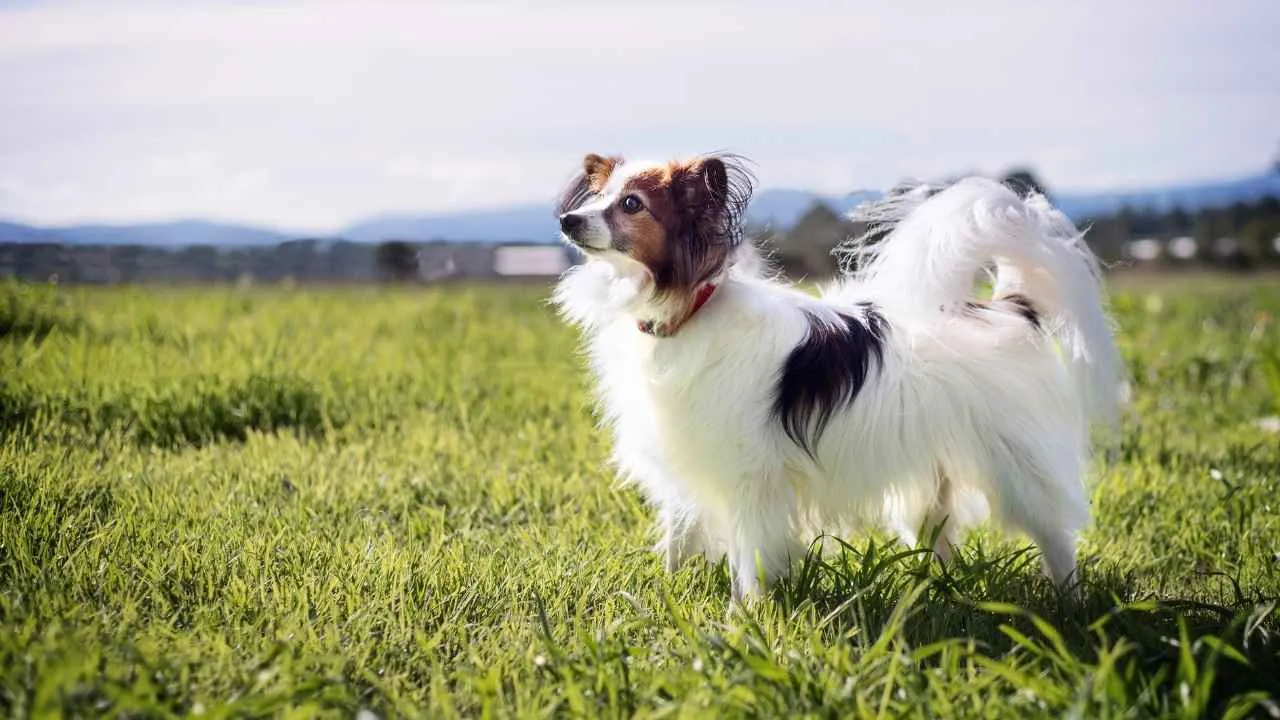
A happy little athlete with “best friend” energy and a brain that never clocks out.
Papillons are among the dogs that surprise people. They look delicate, with their butterfly ears (that’s literally what “Papillon” means in French), but they’re lively, confident, and often weirdly brave for a dog that can fit in a tote bag. For families, that means you get a dog that actually wants to participate—following you from room to room, joining playtime, and generally acting like the household’s tiny event coordinator.
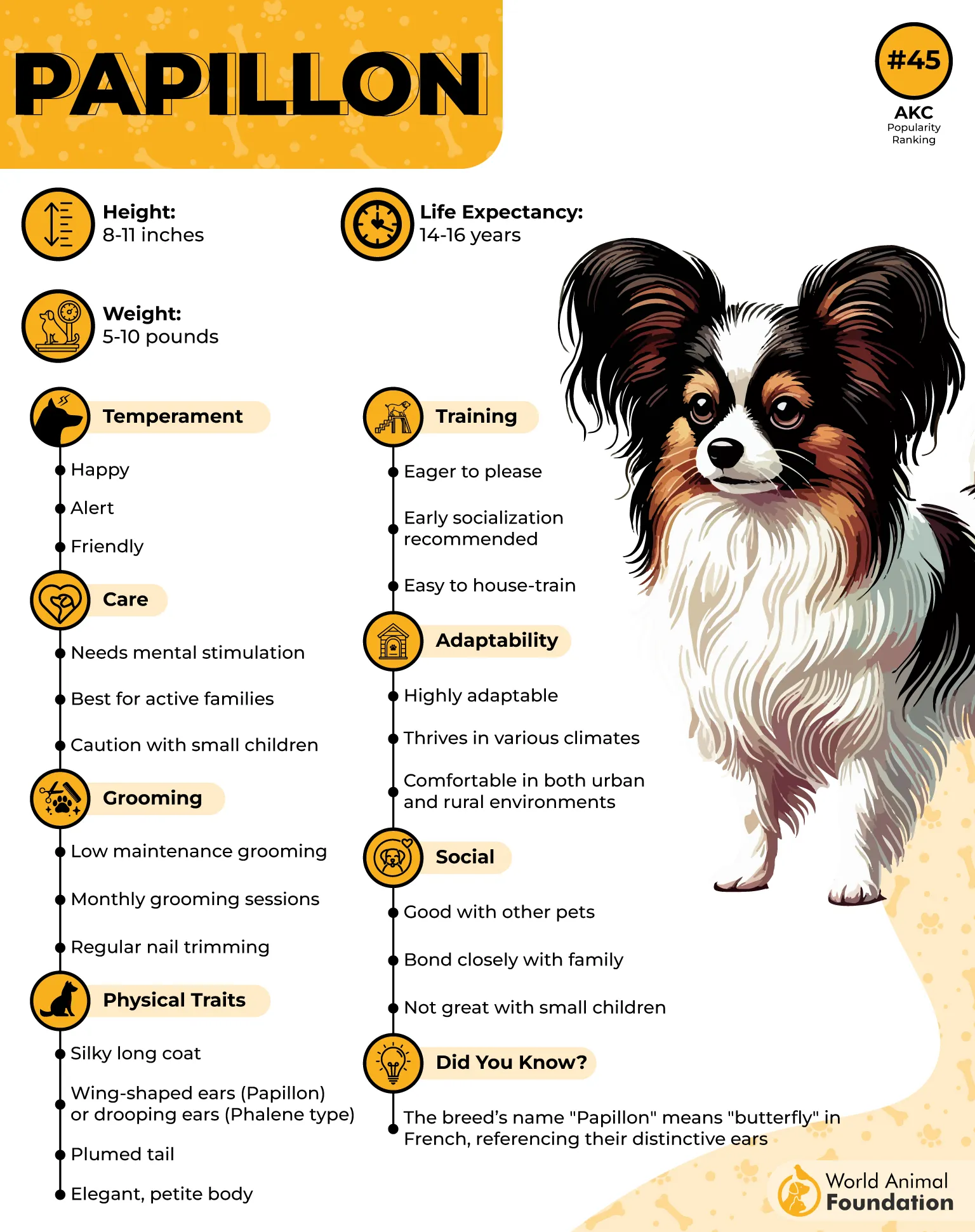
They perform well with children who can follow gentle handling instructions. They tend to enjoy play and attention, but because they’re small (usually around 5–10 pounds), they can be injured by accidental falls or rough grabs.
They are consistently ranked among the most intelligent toy breeds and often rank highly on general obedience intelligence lists. Translation: they usually learn quickly—commands, routines, even fun tricks.
Purina warns, don’t let the size fool you—Papillons are energetic.
They don’t need marathon walks, but they do need daily play and short training sessions or puzzle toys. Without stimulation, they can become barky or anxious, especially if they’re under-socialized. A great routine is two short walks plus 10 minutes of training games. Your kids can help with this, and it’s a nice way to teach responsibility.
2. Yorkshire Terrier (Yorkie)
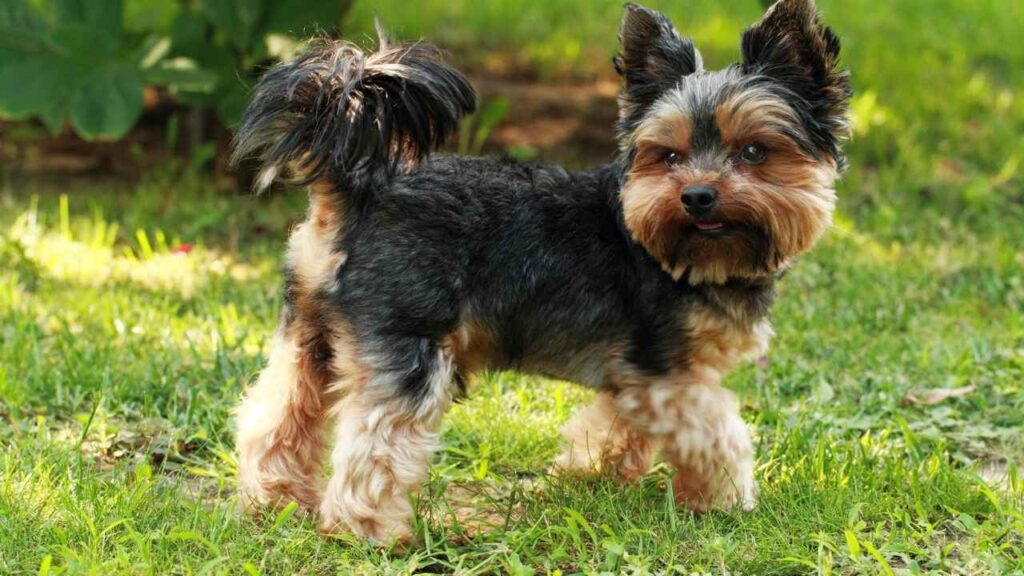
Yorkies are iconic for a reason.
They’re adorable, portable, and confident. Historically, they were bred to catch rats in mills—so behind the fancy hair is a brave little terrier with a serious work ethic.
Yorkies can thrive in families, but they often do best with slightly older children who understand boundaries. They’re small (often 4–7 pounds) and can be sensitive to rough handling. Also, terriers can be less tolerant of being grabbed unexpectedly. That said, in homes where kids are taught respect and parents supervise, Yorkies can be affectionate, loyal, and very attached to “their” people.
If your child wants a dog that follows them around like a fluffy shadow—this might be it.
This small dog breed learns quickly. But they also have opinions. You’ll see it when you teach “come,” and they respond with “maybe.” The good news is that positive reinforcement works extremely well—tiny treats, praise, and short sessions. Start early with socialization and handling (paws, brushing, gentle restraint) to make grooming and vet visits much smoother. For families, a trained Yorkie is a joy; an untrained Yorkie can become noisy, snappy, or possessive of toys.
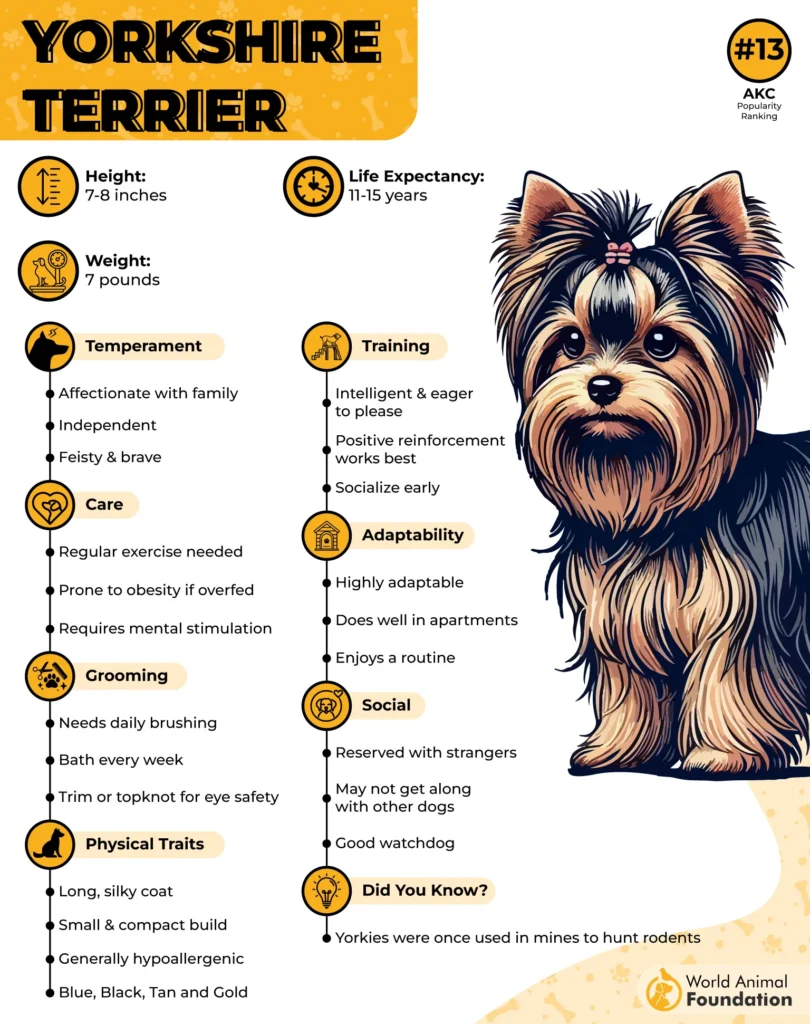
Their coat is hair-like and can grow long, so people either keep it short (a “puppy cut,” which is much easier) or commit to regular brushing and grooming appointments. If you have kids and a busy schedule, a puppy cut is your friend.
Fun fact: Yorkies are often considered lower-shedding, but “low shedding” doesn’t mean “no maintenance.” Their fine hair mats easily—especially if kids are constantly petting and hugging.
3. Cavalier King Charles Spaniel
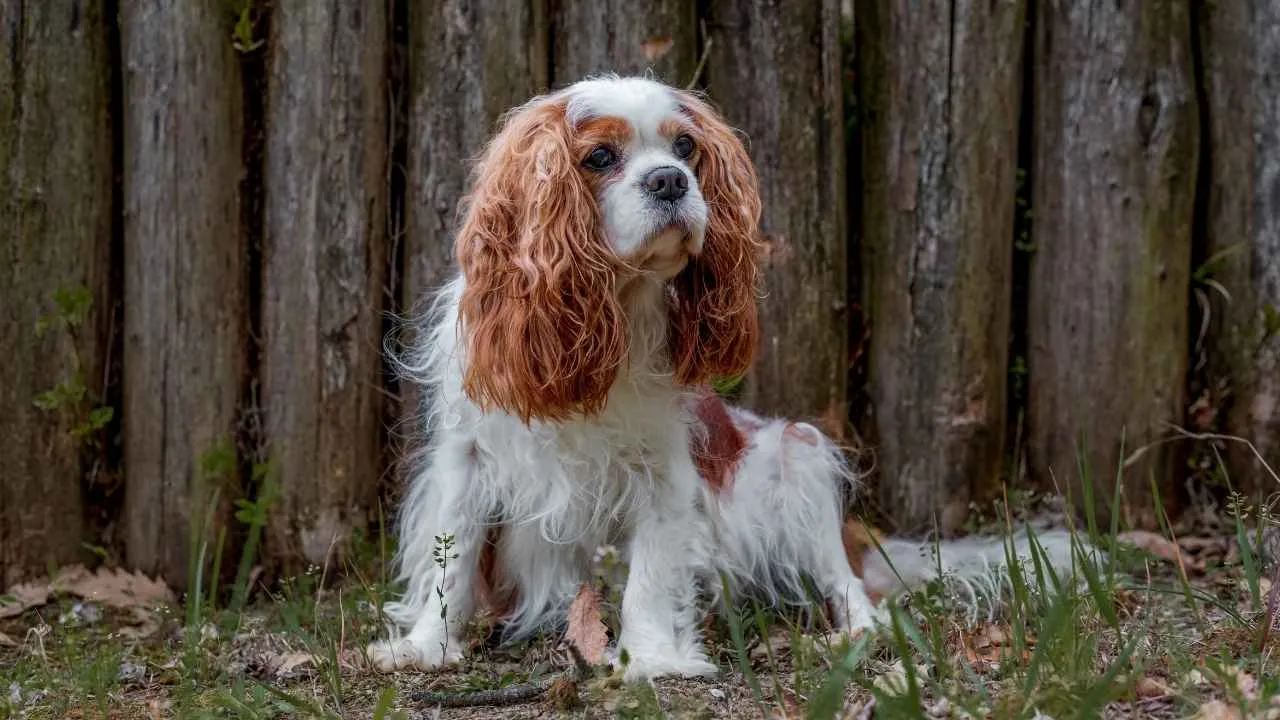
The gentle, cuddly “family dog” experience—just in a smaller package.
If your dream is a dog that loves everyone and looks like it belongs in a cozy storybook, the Cavalier is basically that.
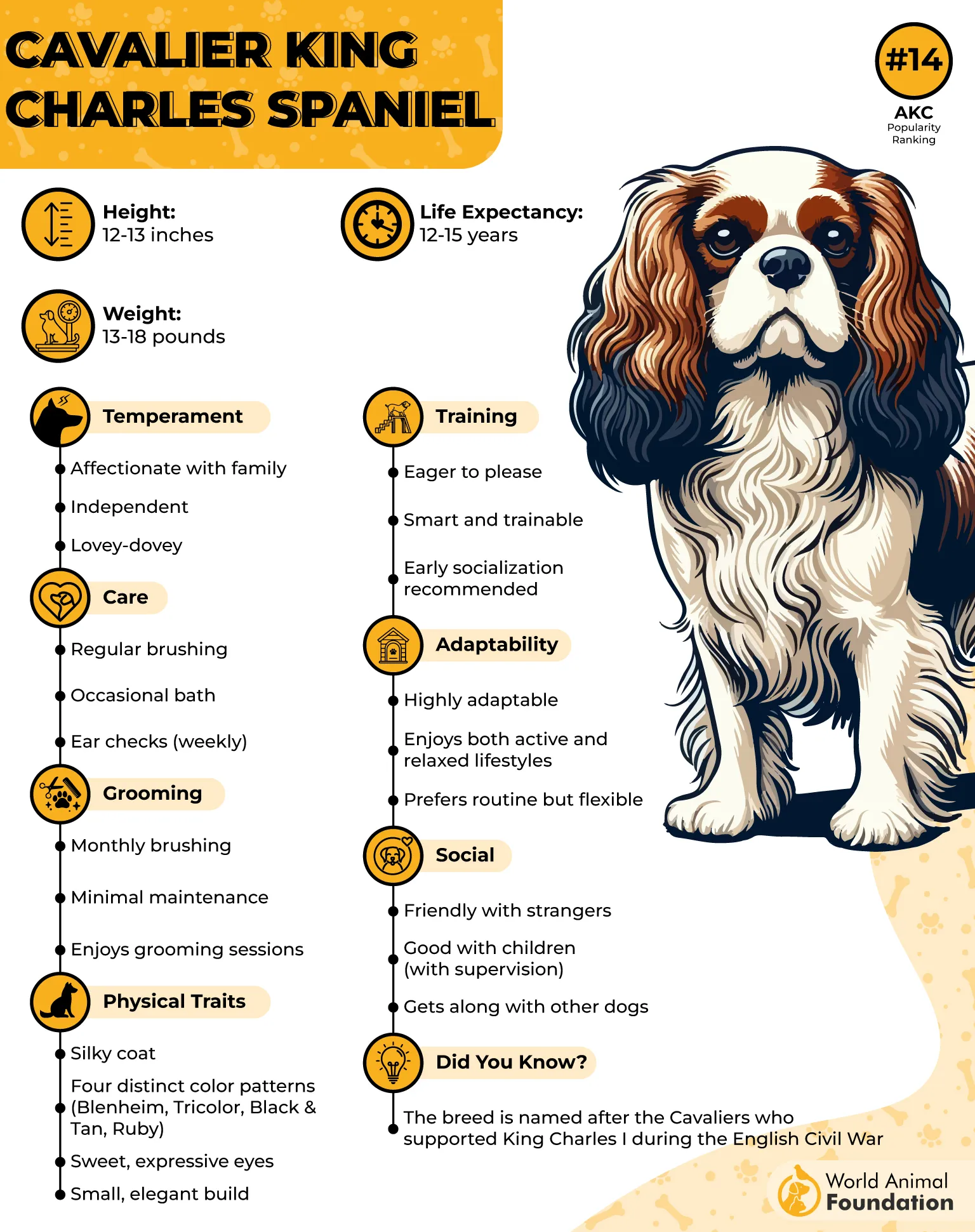
Cavaliers are famous for being affectionate, sweet, and eager to please. Hills Pet declares that they’re often excellent with children because they’re typically patient and people-oriented. They don’t usually have the “don’t touch me” attitude some toy breeds can develop.
They are larger than most toy breeds—usually around 13–18 pounds—which can make them more physically sturdy around kids than a 5-pound dog. They still need gentle handling, but they’re less likely to be injured by minor bumps. Temperament-wise, they’re usually calm, friendly, and tolerant. If your kids want a dog to watch cartoons with, this breed is a champion-level cuddler.
Cavaliers are happy with daily walks and playtime, but they typically don’t require intense activity. They’re the kind of dog that will enjoy a park walk and then happily nap near your feet while you step on Legos. Many families love that balance. They also tend to do well with basic obedience training because they’re motivated by praise and companionship.
4. Pug
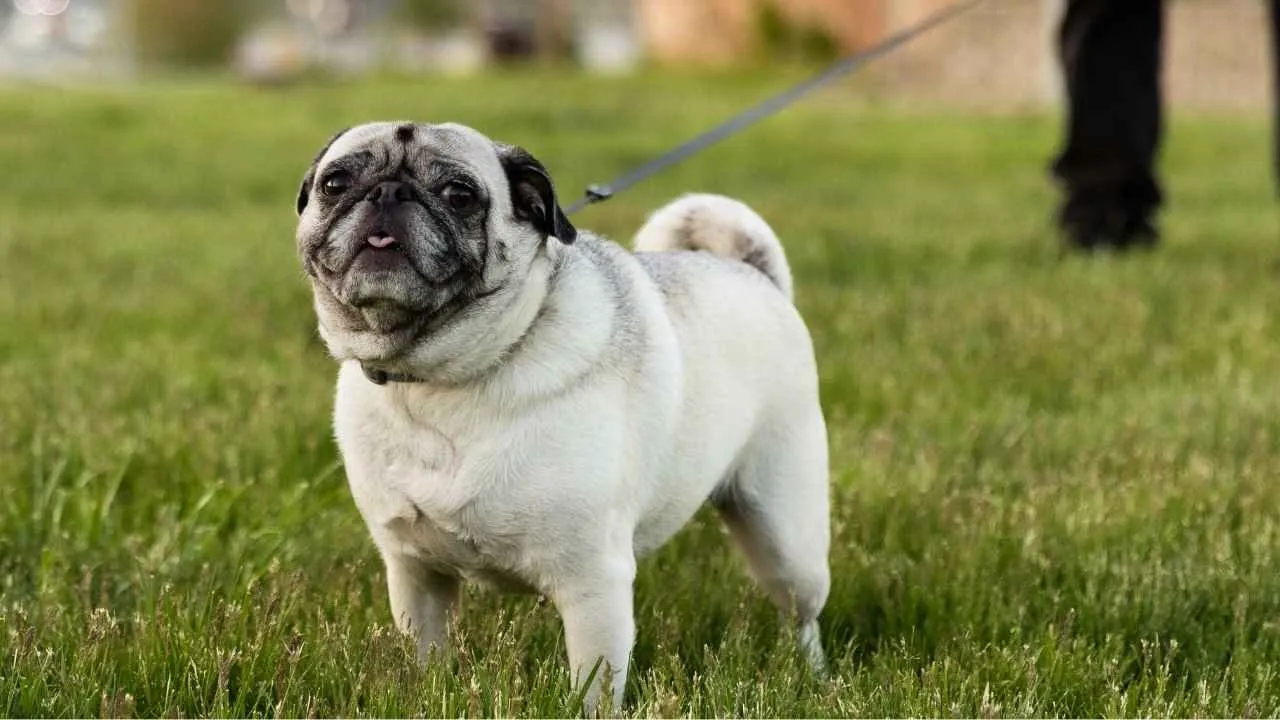
A lovable little comedian who wants to be included in everything.
Pugs have this uncanny ability to make a family laugh daily. Their expressions are cartoonish, their loyalty is real, and they tend to be very people-focused. If your kids want a dog that feels like a buddy (not a delicate ornament), pugs often fit the bill. They usually enjoy being carried around, sitting with the family, and following the household routine.
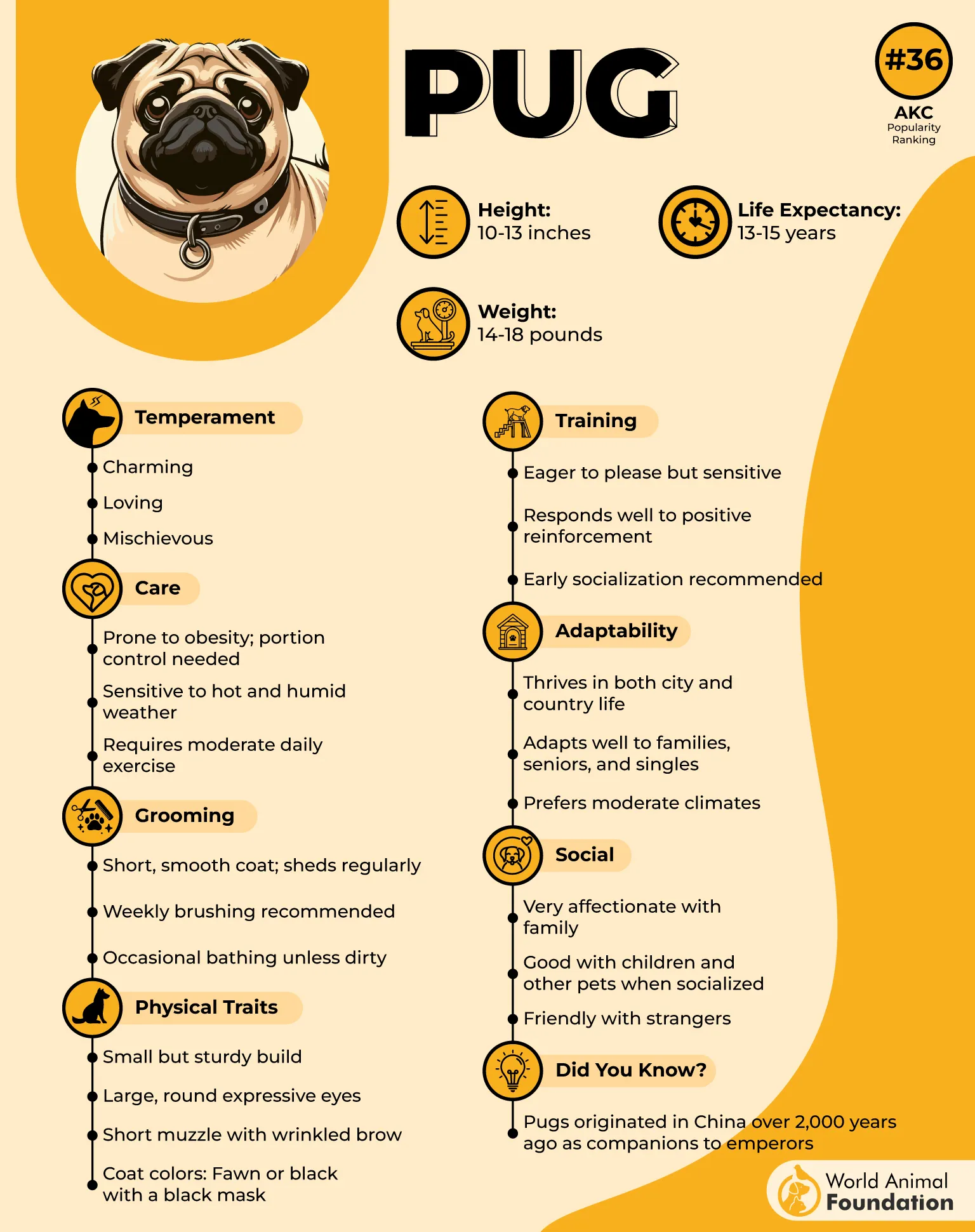
These lap dogs are often very good with children because they’re generally sturdy for their size (typically 14–18 pounds) and enjoy attention. But—kids can also overwhelm them with constant handling. Teach your children to let the pug take a break when it wants one. The nice part is that many pugs are naturally tolerant, which is one reason they’re popular in family homes.
Pugs are brachycephalic, which means they’re prone to breathing difficulties, snoring, and, in some cases, a condition known as BOAS (Brachycephalic Obstructive Airway Syndrome). Many pugs live happy lives, but families should understand that this breed may require more veterinary care.
Also, those adorable wrinkles? They need cleaning to prevent infections. Think of it as skincare—your pug just happens to be terrible at doing it themselves.
5. Poodle (Toy or Miniature)
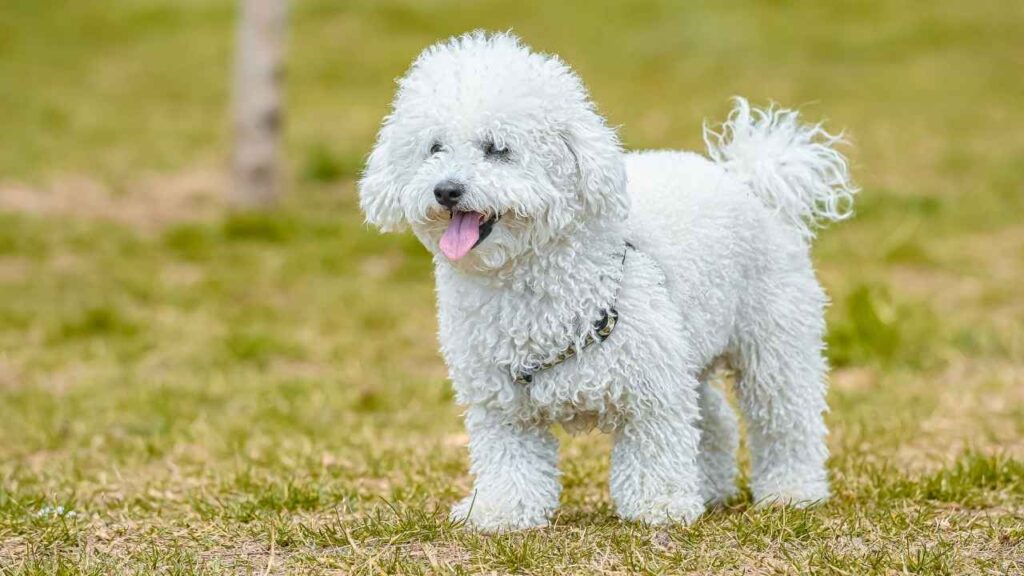
Smart, trainable, and surprisingly athletic—like the honor student who also wins sports day.
Poodles (toy and miniature) are often misunderstood as “fancy salon dogs.” In reality, they’re one of the most intelligent breeds out there, and they’re excellent family companions when trained and socialized. They’re playful, alert, and usually very bonded to their people. If your family enjoys teaching tricks, playing games, or doing little routines, poodles thrive on that interaction.
Toy poodles are very small (often 4–6 pounds), while miniature poodles are larger (often 10–15 pounds). For families with young children, miniature poodles may be a better fit because they’re slightly sturdier. Both can be great with kids, but as always, supervision matters—especially with toy-sized dogs. The advantage of poodles is that they often enjoy structured play and can learn to be calm around children when properly introduced.
Poodles are popular for allergy-sensitive households because they are low-shedding, but it’s important to say it correctly: no dog is truly hypoallergenic. Poodles shed less, which can reduce allergens in the home, but dander and saliva still exist. The tradeoff is grooming. Their coat grows continuously and needs regular brushing and professional grooming on a schedule—often every 4–8 weeks, depending on haircut and lifestyle.
They learn fast—sometimes too fast. If you accidentally teach them that whining gets attention, they’ll run that program daily. But if you teach good habits early, you get an incredibly well-mannered dog. They tend to excel at obedience and tricks, and they often enjoy puzzle feeders and training games. For kids, this can be a great “learn together” dog because it responds quickly, keeping children motivated.
6. Pekingese
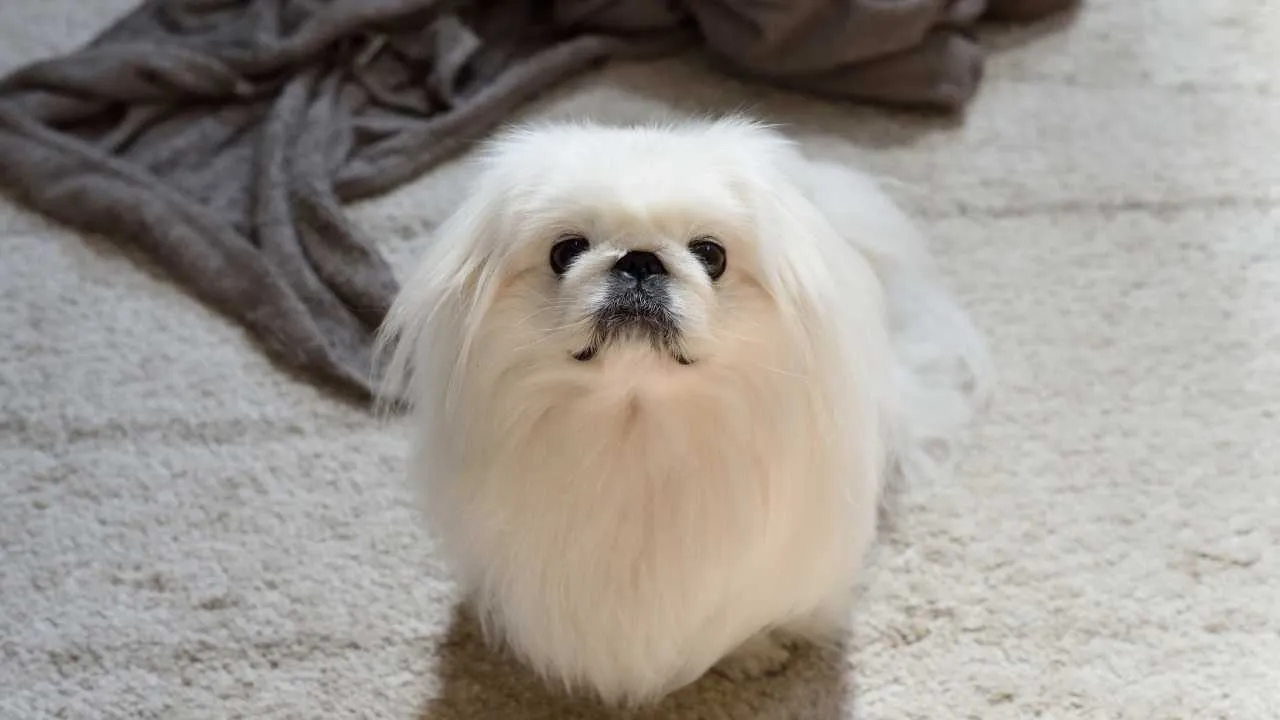
A tiny royal who expects respectful service—and will reward it with deep loyalty.
Pekingese were literally bred as companion dogs for Chinese royalty, and they still carry that vibe. They’re charming, independent, and often very devoted to their favorite person.
They’re not usually “party dogs” who want to greet everyone; they’re more like the quiet family member who sits near you and observes everything with judgment.
These little dogs can work well with children who are calm and have been taught to handle them gently. They’re not always tolerant of rough play, and because they can be stubborn and protective, they do best in families where adults are consistent about boundaries.
If your kids are loud, fast, and grabby, this might not be your easiest breed. If your kids can be respectful and you want a small dog that’s more “dignified companion” than “playmate,” a Pekingese can fit beautifully.
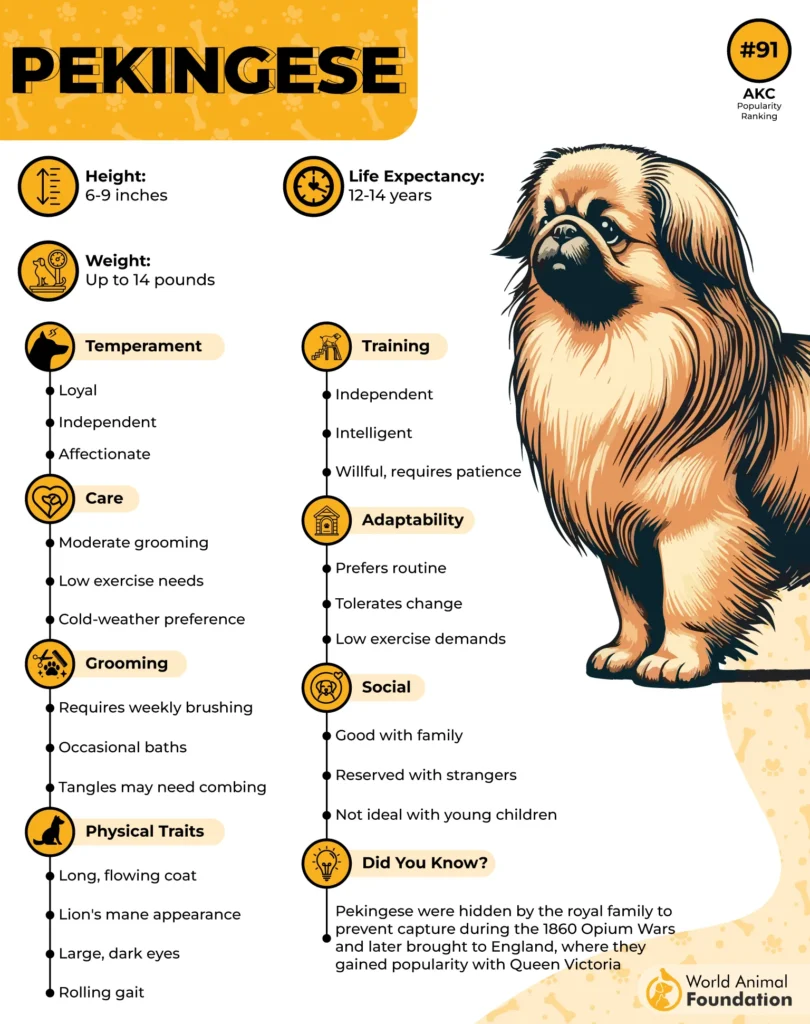
Compared to most other dogs of this size, they generally don’t need intense exercise. Short walks and indoor play are enough. Like pugs, they’re brachycephalic, so they can struggle in hot weather and may snore. Families should plan walks during cooler times and never push them too hard. Think of them as a dog who enjoys a leisurely stroll—no sprinting, no boot camp.
If you want a small dog wearing a thick double coat and having a unique personality, and you’re okay with a bit of “royal attitude,” PetMD claims that the Pekingese can be incredibly rewarding.
7. Maltese
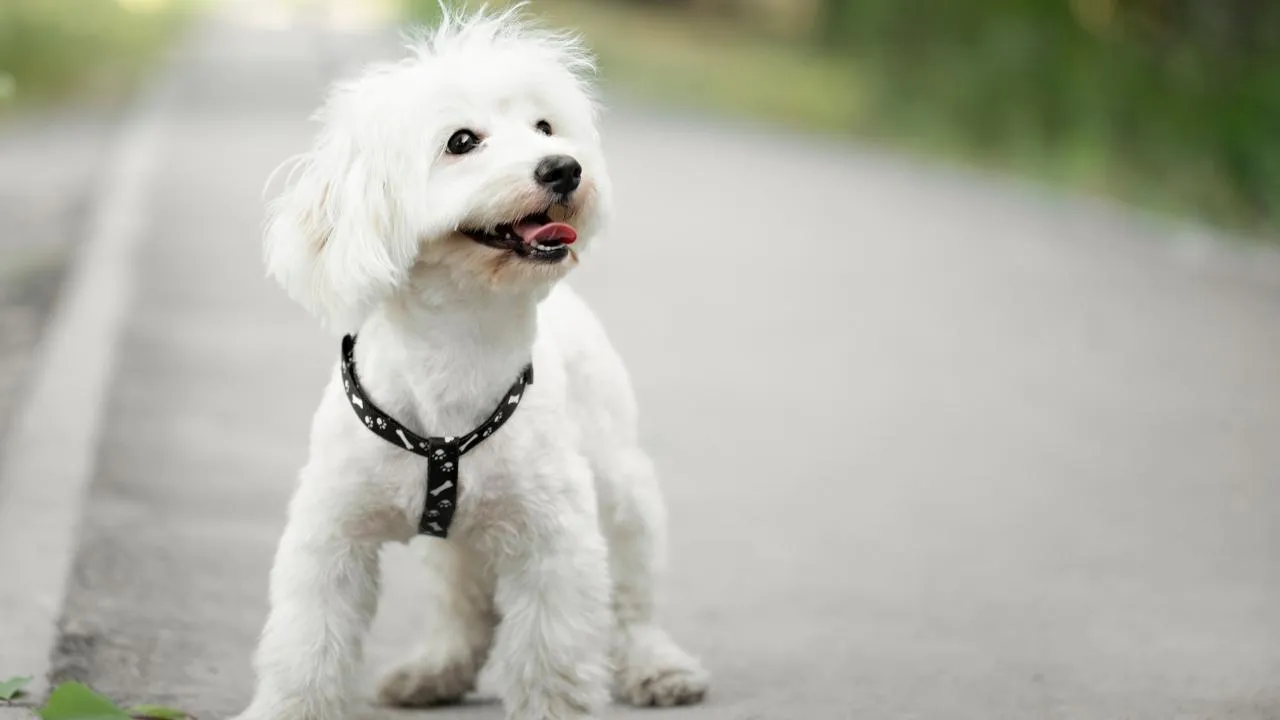
A soft, affectionate lapdog that loves family closeness and routine.
These child-friendly dogs are classic companion dogs—friendly, sweet, and happiest when they’re near their humans. They’re often playful without being overly intense. For families, that can be a really nice balance: you get a dog that will play, then cuddle, then follow you to the kitchen like it’s part of the job description.
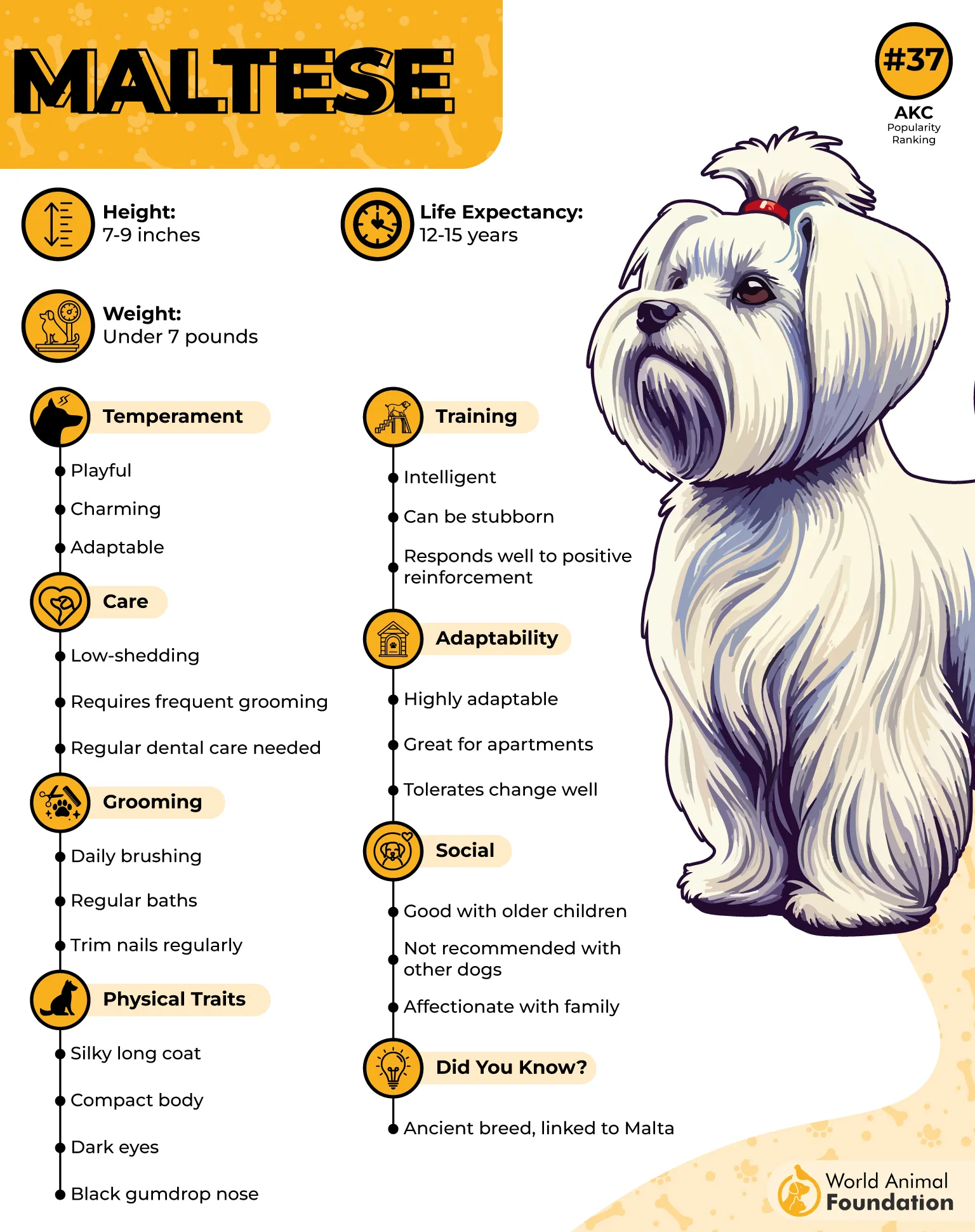
Considered to be the best family dogs for families, they are small (often under 7 pounds), as per AKC, so the biggest risk with young kids is accidental injury. They can be wonderful family dogs when children are taught to sit on the floor to hold them, avoid chasing, and never pick them up without an adult. If your household can commit to respectful handling, Maltese tend to be affectionate and tolerant.
They have a long, silky coat that sheds less than many breeds, but it tangles easily. Many families keep them in a shorter cut for sanity. Tear staining can also occur (the little brown marks near the eyes), and regular face-wiping helps. If you want a dog that looks like a little cloud and you don’t mind grooming routines, the Maltese can be a great fit.
They are smart and can learn quickly, but they can also become yappy if they’re not taught calm habits. Early socialization and rewarding quiet behavior are important—especially in apartment settings. The upside is that they often love training, and because they’re small, training sessions can be short and engaging. Kids can help teach simple cues like “sit,” “touch,” and “go to bed.”
Conclusion
The best toy dog for a family with young children isn’t always the cutest one in the photo—it’s the one that matches your home’s energy, your kids’ ages, and how much time you can realistically give to training and grooming.
If you want a high-energy dog, the Papillon is hard to beat. If you’re looking for a bold personality in a small body, a Yorkie brings the spice. If your goal is pure sweetness and cuddles, the best dog breed is surely the Cavalier King Charles Spaniel (with health screening taken seriously). If you want a comedian who lives for the family group chat, Pug is a classic.
