




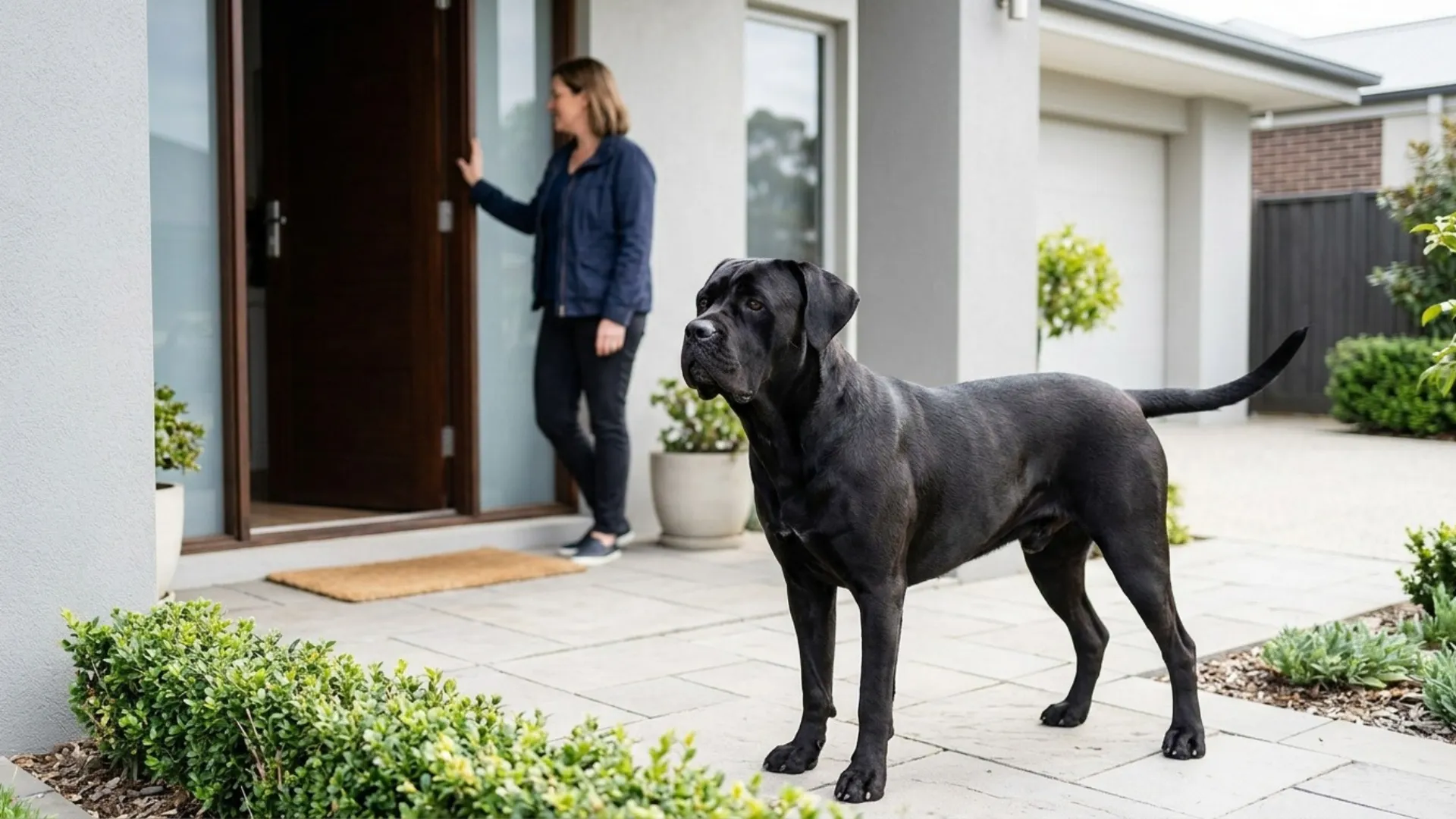
Living alone has its perks: your space, your schedule, and nobody stealing the last slice of pizza! Still, having a loyal four-legged friend waiting by the door adds a lovely sense of comfort. These guard dog breeds offer companionship alongside alertness, confidence, and a reassuring presence at home.
Choosing among different guard dog breeds takes more thought than picking the pup with the biggest paws. You need a companion whose energy matches your lifestyle, whose temperament suits your experience, and whose protective behavior stays under control. The best guard dogs depend on proper training, early socialization, and an owner willing to invest time in their well-being.
From athletic personal guardians to hefty home protectors, these seven breeds bring their own personalities to the job. Let’s find the one that fits your world.
Top Guard Dog Breeds for Single Owners and Their Safety
1. Doberman Pinscher
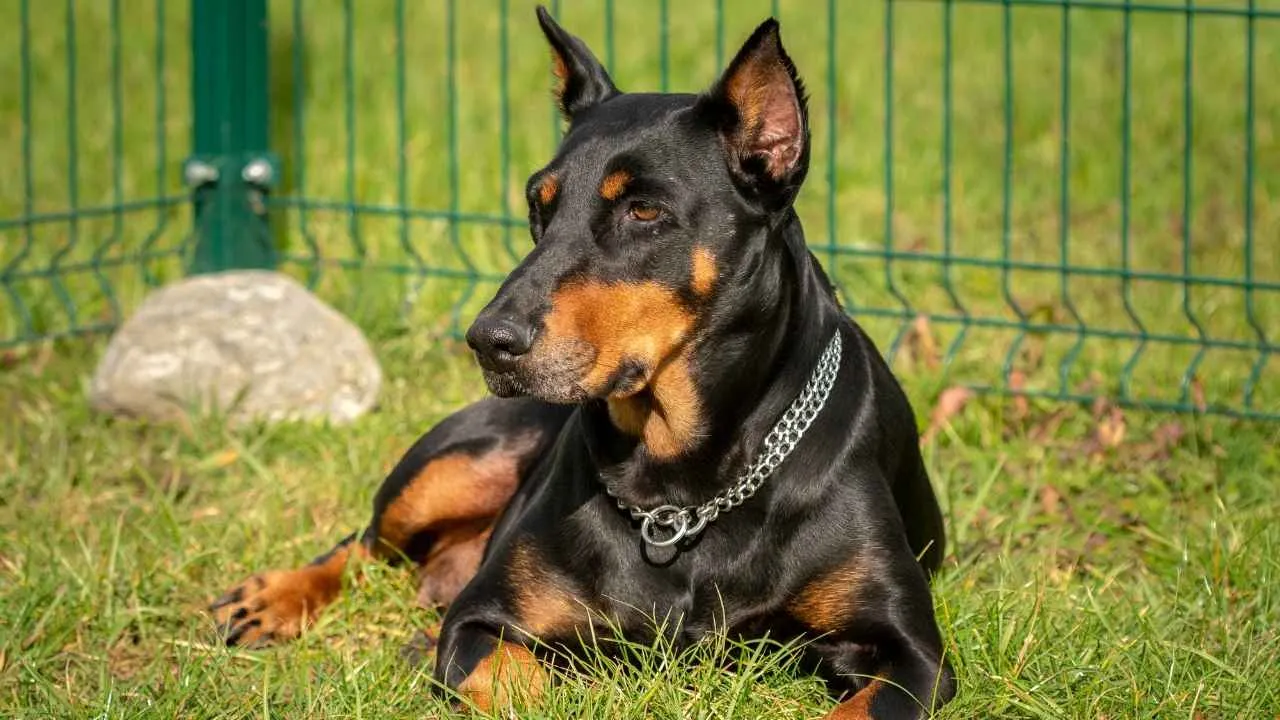
If your dream companion has the elegance of a supermodel and the alertness of a private detective, the Doberman Pinscher deserves your attention. Those sleek lines, upright ears, and focused eyes give this athletic breed a striking presence, but its appeal reaches far beyond appearances.
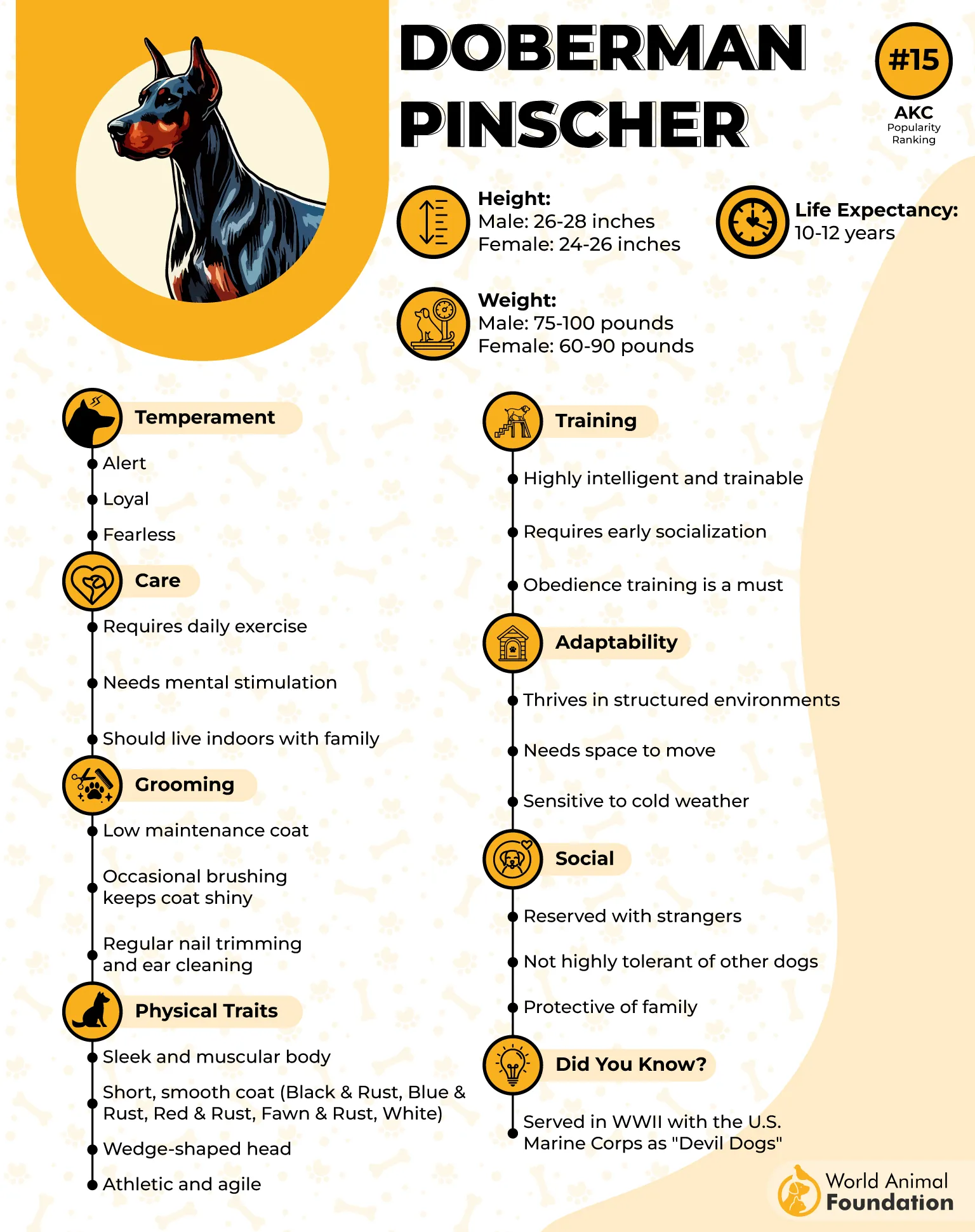
According to Orvis, Dobermans are extremely intelligent and highly trainable, making them rewarding partners for owners who enjoy learning new commands together. They form strong bonds with their people and appreciate being involved in everyday activities rather than spending endless hours alone.
Their energy levels call for brisk walks, interactive games, and regular mental stimulation. Puzzle toys and obedience exercises help keep busy minds occupied, saving your slippers from becoming an unexpected entertainment project.
This breed suits an active lifestyle, particularly when its owner has time for consistent training and companionship. Early socialization helps develop confidence around visitors, unfamiliar environments, and other animals.
Guarding Instincts
Dobermans possess strong protective instincts and remain attentive to changes around their homes. Their loyalty and quick responses make them effective personal protection dogs when guided responsibly.
Positive reinforcement, reliable obedience, and professional training when necessary encourage controlled alertness instead of unnecessary aggression.
2. German Shepherd
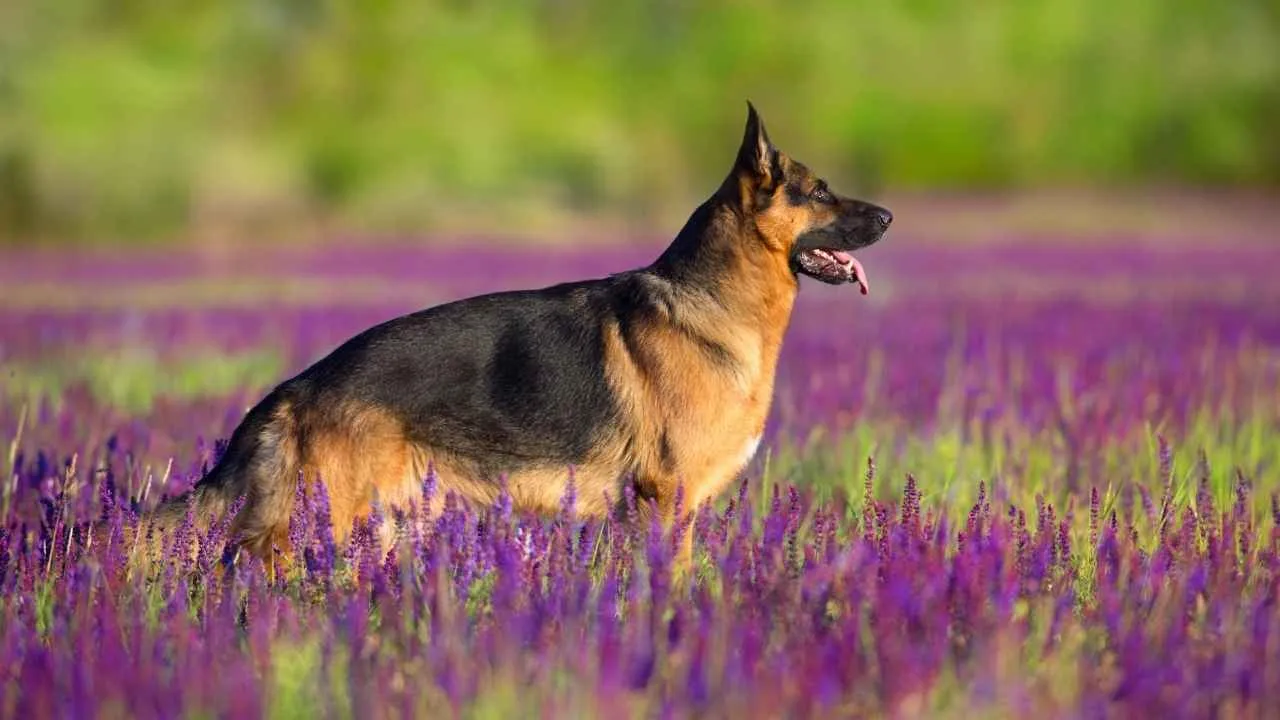
Some companions bring a tennis ball; others bring the impressive résumé of a working professional. The German Shepherd belongs to the second group, combining intelligence, athleticism, and devotion in one handsome package.
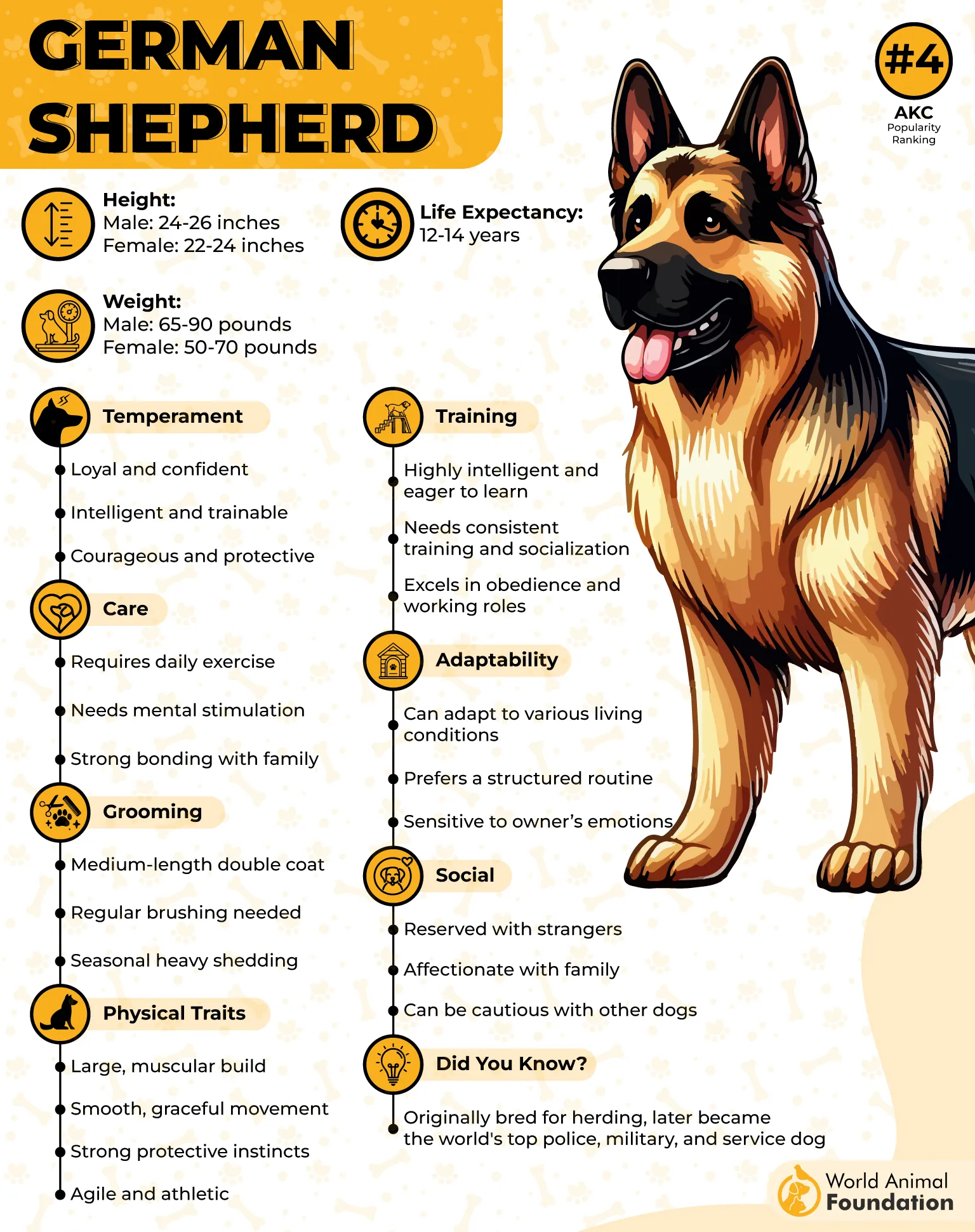
Known for their remarkable learning ability, AKC recognizes that German Shepherds thrive on activities that give their minds and bodies something meaningful to do. Their expressive faces and attentive nature make everyday training feel like a conversation between best friends.
Daily walks, scent games, obedience practice, and interactive play help satisfy their exercise needs. These energetic dogs appreciate a predictable routine, and their owners need to set aside time for engagement even on busy workdays.
German Shepherds generally form close relationships with their households and benefit from early exposure to different people, environments, and animals.
Guarding Instincts
German Shepherds are naturally protective and quick to notice unusual activity. Their history in police and military work highlights their ability to learn controlled responses to demanding situations. They make excellent watchdogs, alerting their owners through barking and attentive behavior.
3. Rottweiler
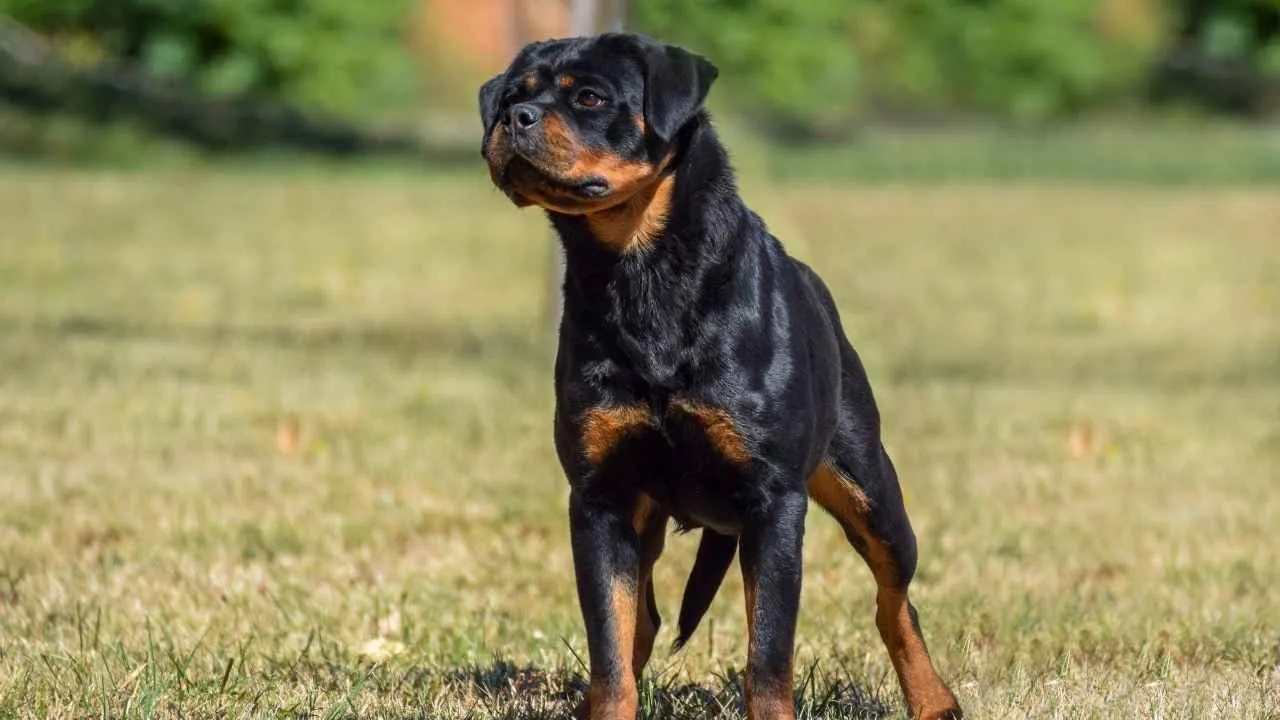
Meet the dog whose sturdy build could make a sofa look tiny. The Rottweiler has a powerful appearance, expressive eyes, and a loyal personality that make it an appealing companion for experienced owners seeking a capable guardian.
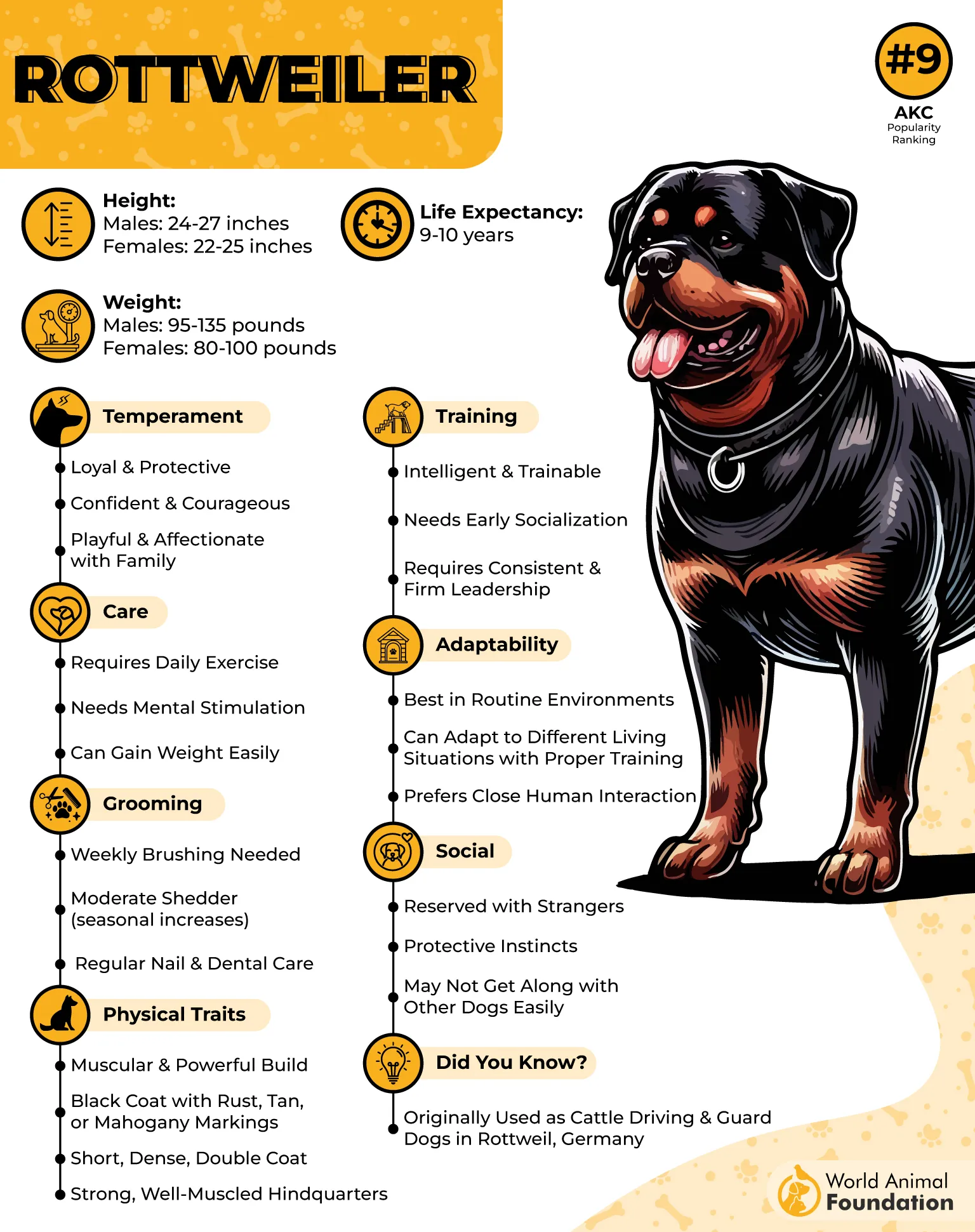
Despite their substantial size, Rottweilers appreciate affection and meaningful time with their favorite people. Many enjoy relaxing beside their owners after a satisfying walk, turning an ordinary evening into a cozy little bonding session.
Originally bred for working duties, these muscular dogs need regular exercise and purposeful activities. Walks, controlled games, and obedience sessions help maintain fitness and reinforce good manners.
Rottweilers benefit from early socialization around visitors, other animals, and unfamiliar environments. Their strength makes leash manners particularly important, so training should begin early and continue throughout adulthood. Harsh handling is unnecessary; calm direction and clear boundaries provide a better foundation for trust.
Guarding Instincts
Rottweilers have a history of livestock protection and working alongside people. Their confidence and awareness help them notice unusual activity, and their substantial appearance may deter intruders. Their protective nature requires responsible guidance, especially around guests.
Consistent training encourages measured responses instead of territorial aggression, helping this devoted companion distinguish everyday visitors from situations that genuinely deserve attention.
4. Cane Corso
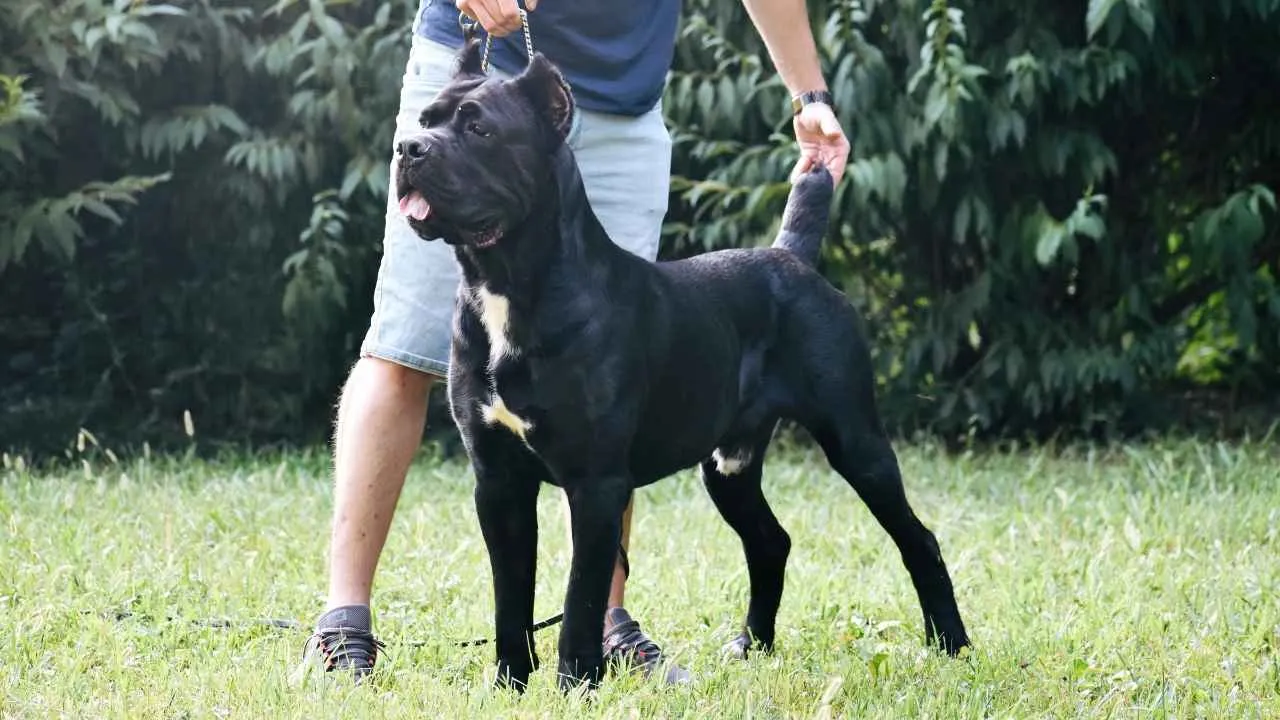
For a guardian with the presence of a heavyweight champion and the loyalty of a devoted sidekick, the Cane Corso makes quite an impression. Pawlicy Advisor agrees that this Italian mastiff combines a muscular frame with an intelligent, watchful personality.
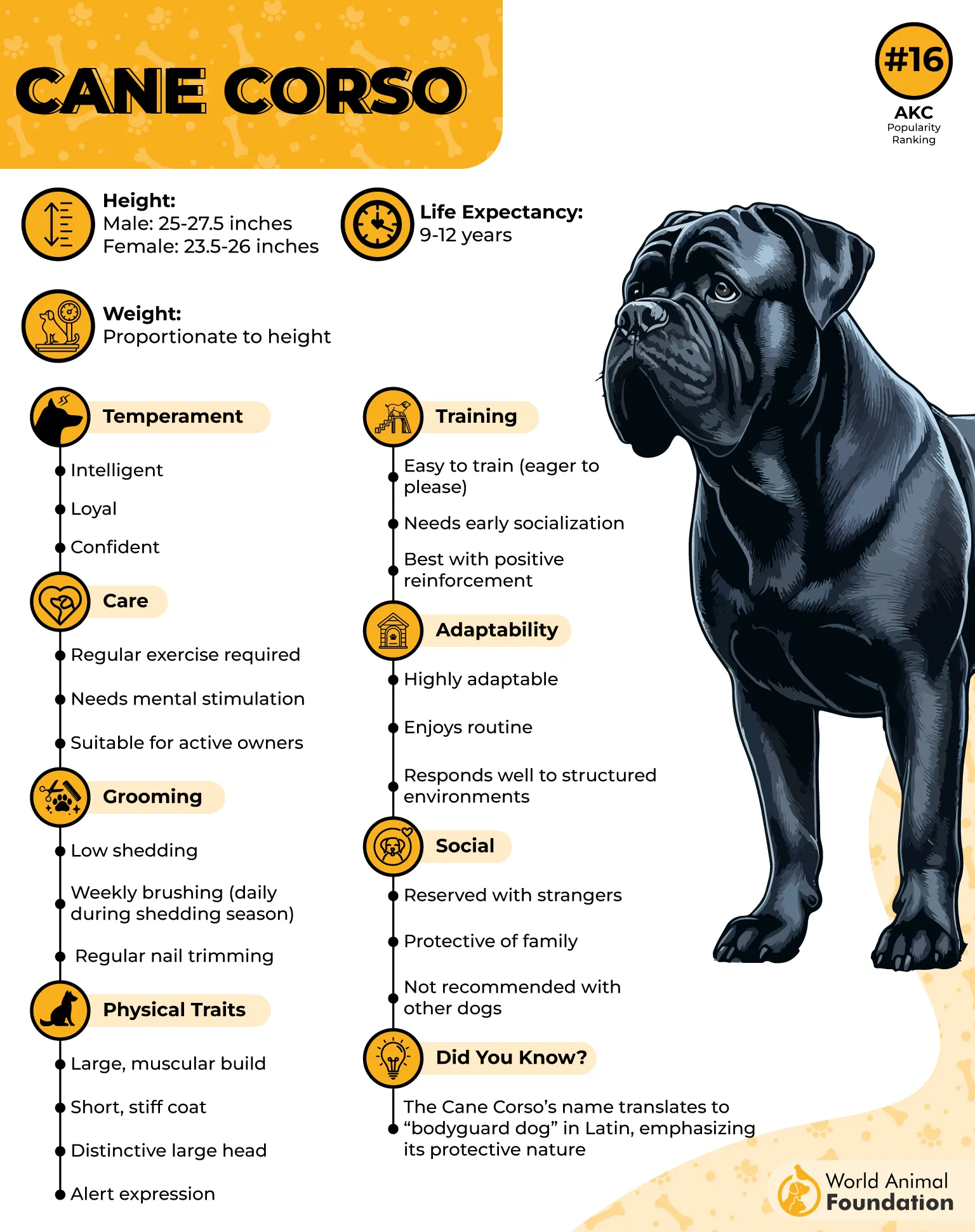
With its broad head and sturdy body, this breed has a naturally commanding appearance. However, living with a Cane Corso needs daily engagement, clear communication, and a household routine that supports good behavior.
Regular walks, controlled play, and obedience exercises help maintain its physical condition. Although its short coat is relatively easy to groom, nail trimming, brushing, and routine veterinary care remain essential.
Cane Corsos develop close relationships with familiar people and benefit from consistent interaction. A secure outdoor area offers room for movement, but a backyard does not replace exercise or companionship. Their size and strength also make early leash training important.
This breed generally suits experienced owners who understand large working dogs. First-time handlers should seek qualified guidance before committing to its demanding care requirements.
Guarding Instincts
Cane Corsos possess strong territorial awareness and a history of guarding property. Their natural protective instincts make them serious guardians, but those instincts need thoughtful direction.
Reliable obedience and professional training support controlled responses, ensuring their protective behavior does not turn ordinary doorstep visits into unnecessary drama.
5. Giant Schnauzer
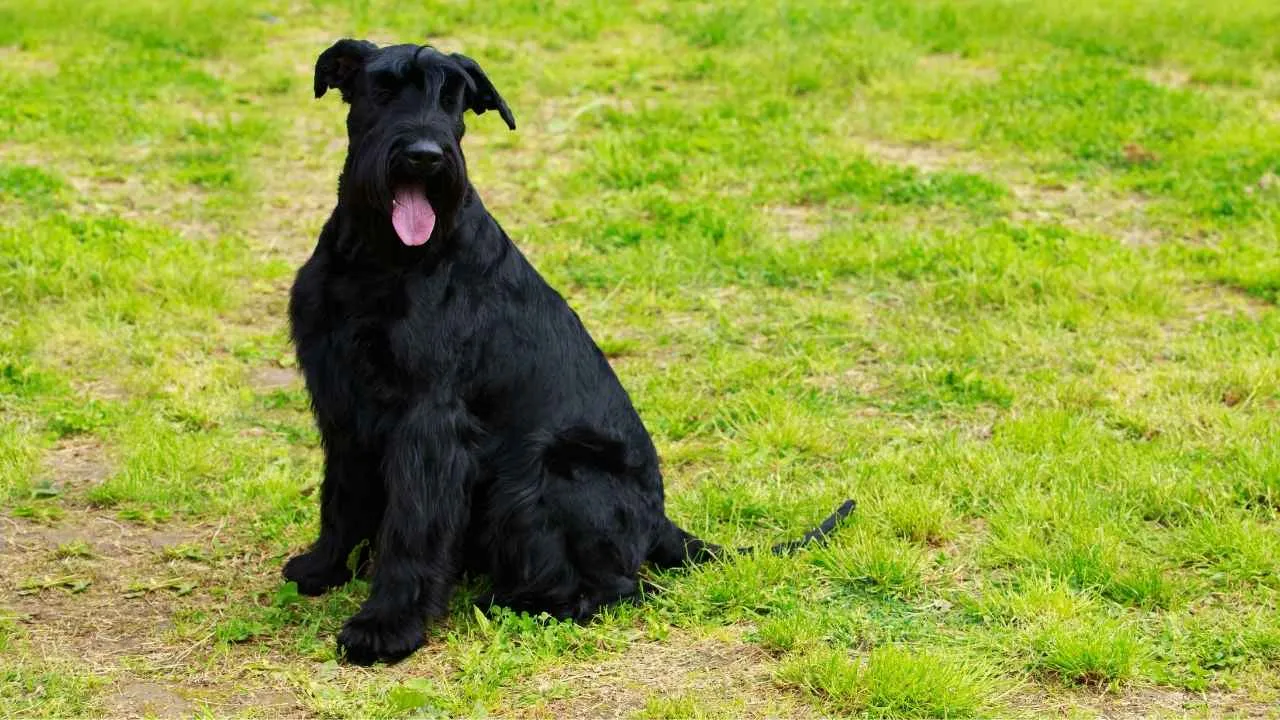
Who says a serious guardian needs a serious-looking haircut? The Giant Schnauzer brings a magnificent beard, bushy eyebrows, and an energetic personality to the world of protection.
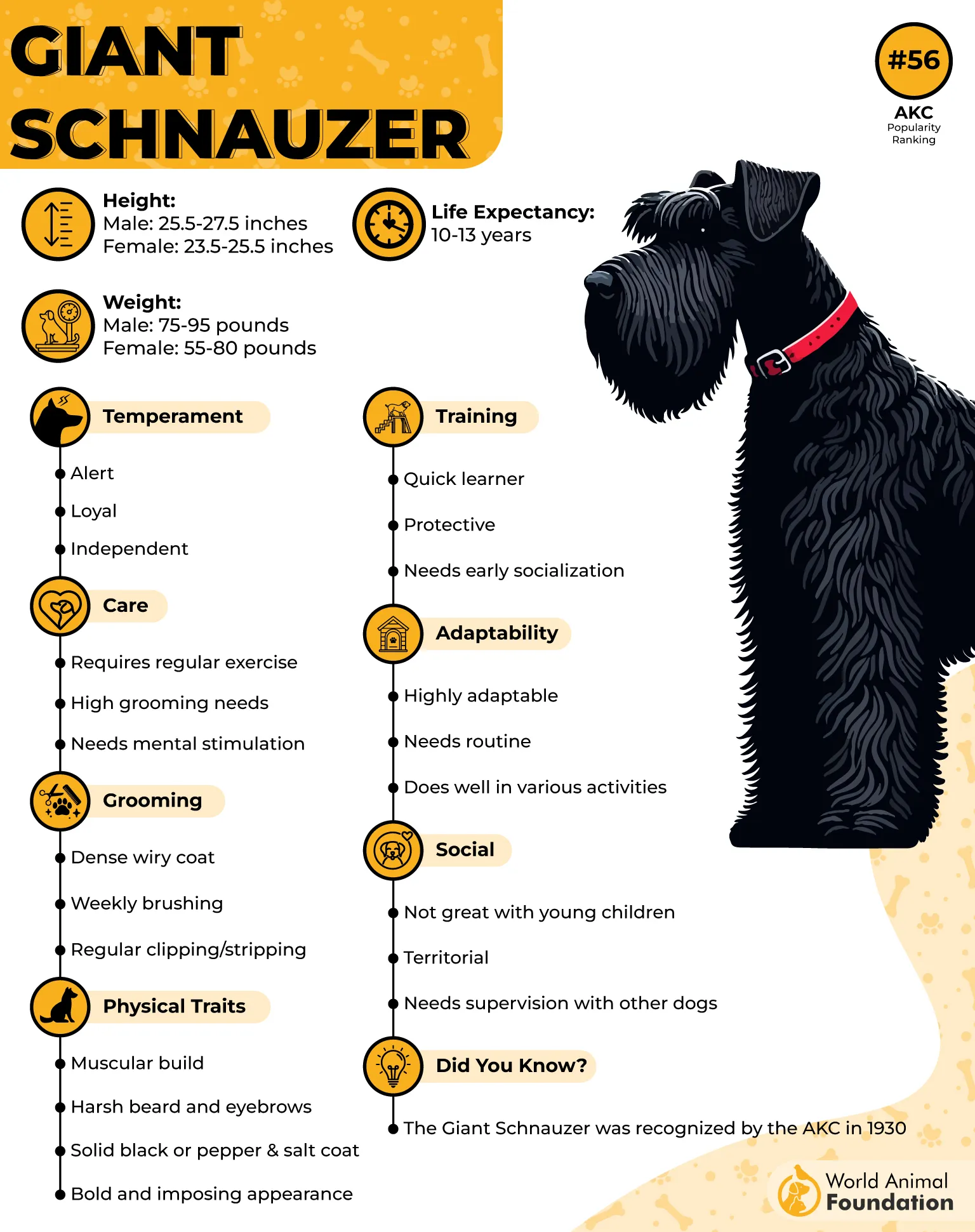
Behind the charming facial furnishings sits an athletic working breed with plenty of brains. Omlet mentions that Giant Schnauzers enjoy learning tasks and working closely with their owners, making training a rewarding part of daily life.
These dogs need substantial exercise and mental stimulation. Long walks, scent activities, interactive games, and obedience sessions help channel their energy. Without enough engagement, boredom might turn into enthusiastic redecorating, and your cushions probably won’t volunteer for the job.
Their wiry coat requires regular brushing and professional grooming or careful clipping. Owners should also maintain nail care and routine veterinary checks. As this breed has considerable stamina and a strong personality, it suits people who enjoy active companionship rather than a couch-only lifestyle.
Guarding Instincts
Giant Schnauzers have traditionally served as property guardians and watchdogs. Their alertness helps them notice unusual activity, and their confident presence adds a layer of deterrence. They benefit from clear boundaries and structured training, particularly around unfamiliar visitors.
Responsible guidance encourages controlled barking and appropriate responses rather than excessive suspicion, making them more dependable guardians in everyday settings.
6. Bullmastiff
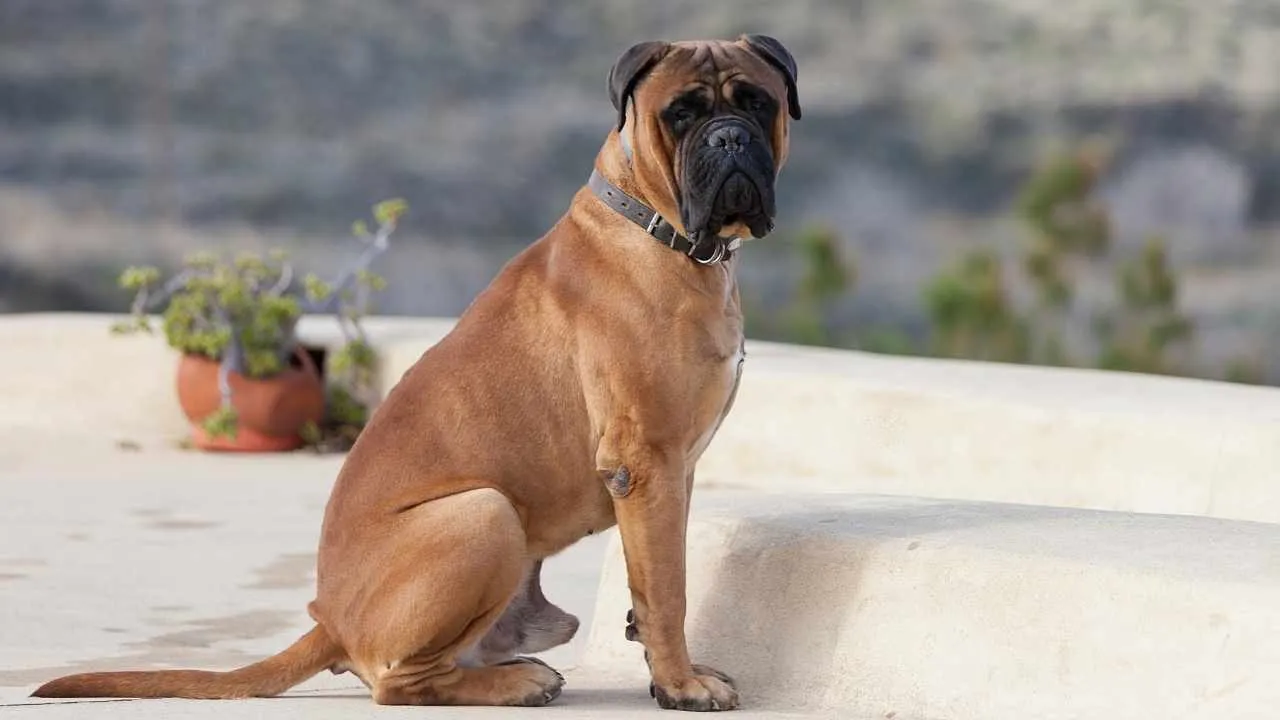
If your ideal housemate resembles a giant teddy bear with a serious security résumé, the Bullmastiff deserves a spot on your shortlist. This substantial breed combines a powerful frame with an affectionate side that makes relaxing at home especially appealing.
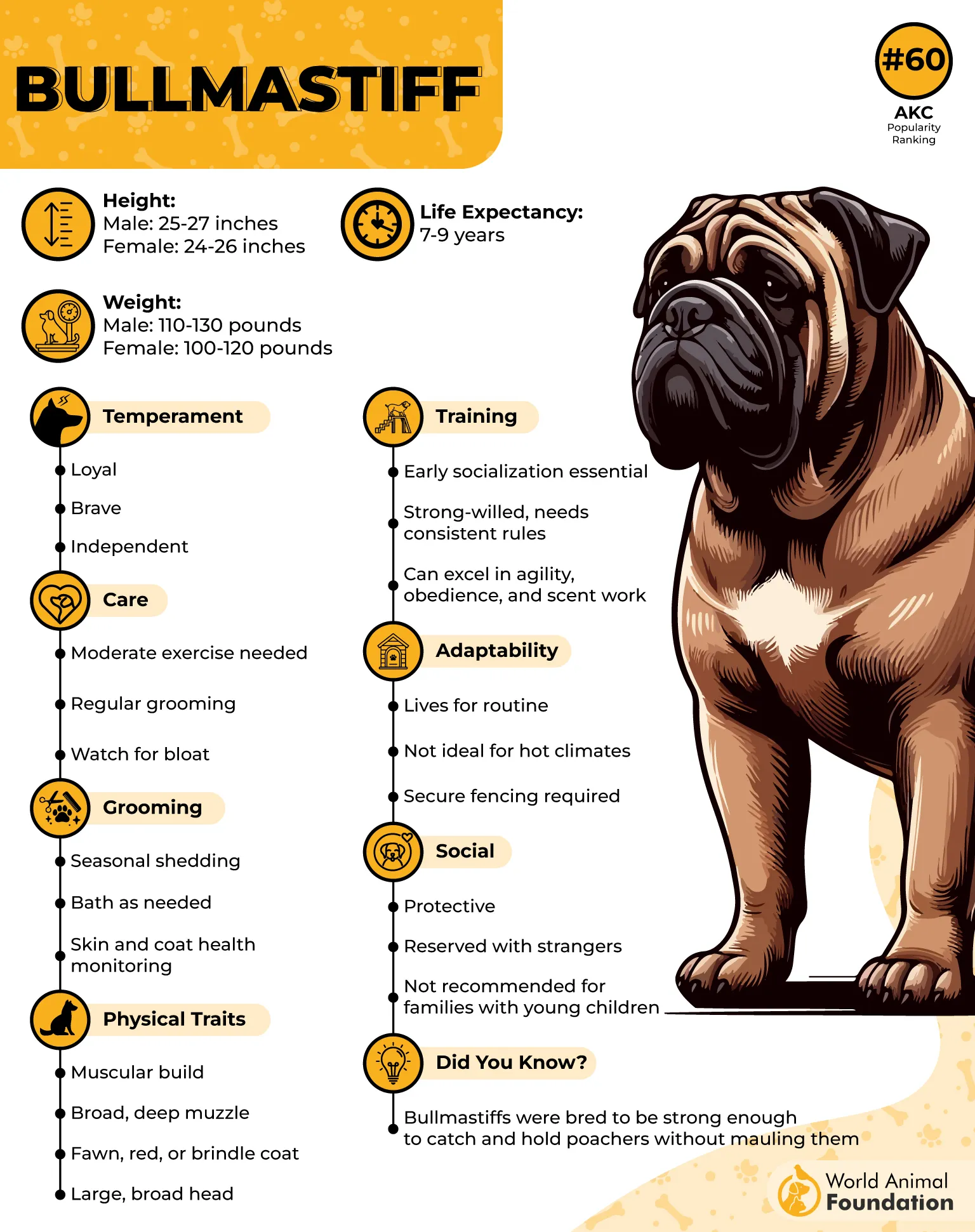
Developed in England to help gamekeepers deter poachers, the Bullmastiff has a distinctive working background. Its broad chest, heavy build, and calm expression give it an unmistakable presence without the need for constant activity.
Compared with highly energetic working breeds, these mastiff dogs generally prefer moderate exercise. Daily walks and manageable play sessions help maintain fitness, and short training sessions reinforce household manners. Their short coat is relatively easy to maintain, although drooling deserves consideration if you prefer spotless furniture.
These large dogs need comfortable resting areas and careful exercise planning during hot weather. Their food requirements and veterinary expenses also deserve a realistic place in your budget.
Bullmastiffs generally suit quieter homes with enough room for a large companion to stretch out comfortably. Early leash training and socialization are important because their strength makes good manners especially valuable.
Guarding Instincts
Bullmastiffs earned the nickname gamekeeper’s night dog through their historic role in deterring poachers. Their size, confidence, and watchfulness contribute to their reputation as guardians. They tend to rely on their imposing presence rather than constant activity.
7. Boerboel
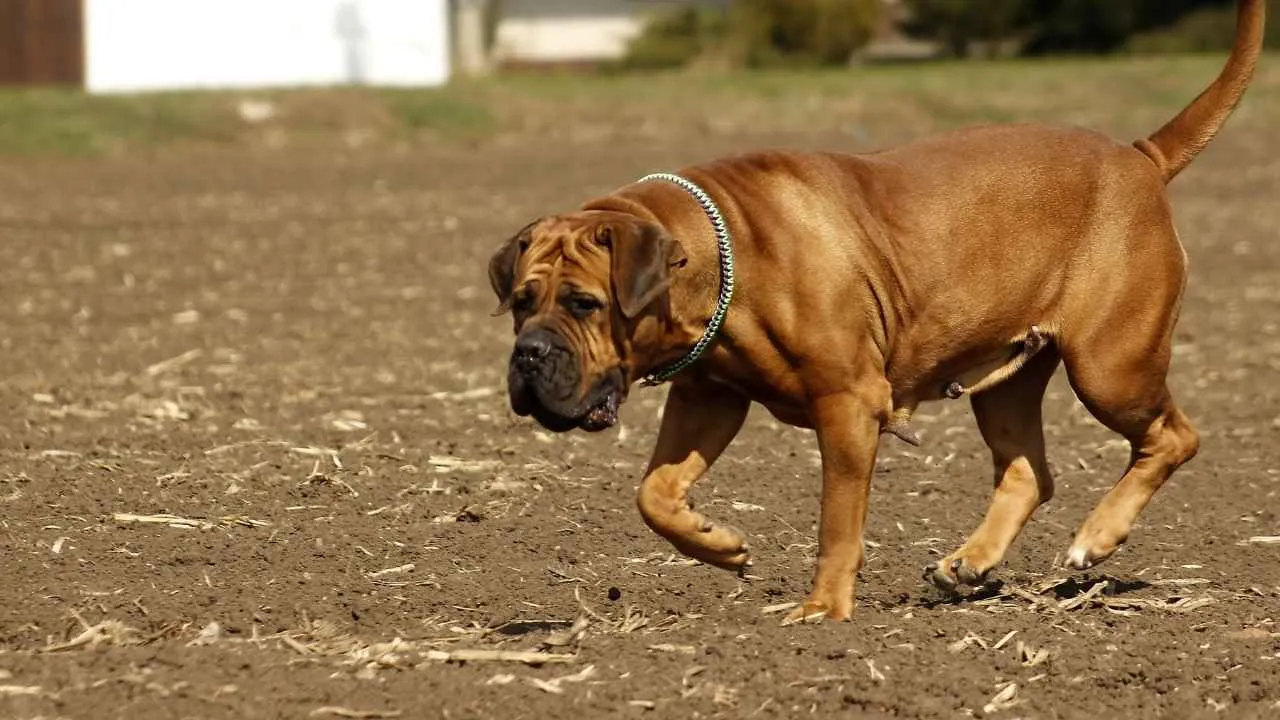
Some guardians enter a room quietly; the Boerboel makes its presence known without saying a word. Developed in South Africa to protect farms and homesteads, this powerful mastiff breed has a long history of guarding property.
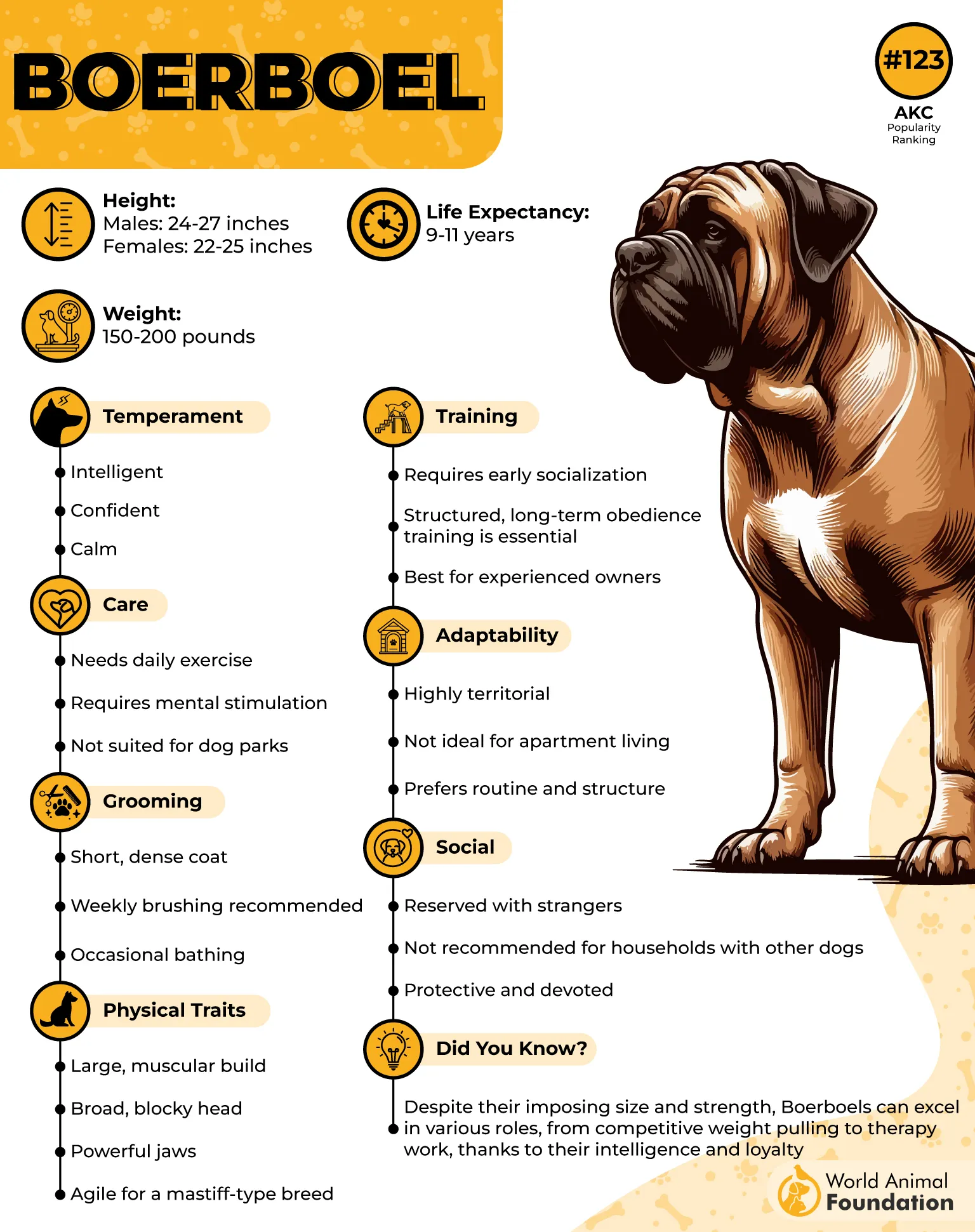
Its broad head and muscular build give it a formidable appearance, but responsible ownership depends on much more than physical strength. Boerboels are intelligent animals that benefit from close relationships with their owners and clear household routines.
Regular walks, controlled exercise, and training activities help maintain their physical condition. Their short coat requires relatively little grooming, though brushing, nail care, and veterinary visits remain important.
A secure yard offers room for movement, but these dogs still need interaction and purposeful activities. Their size and independent temperament make them better suited to experienced handlers than people learning dog ownership for the first time.
Before choosing a Boerboel, check housing rules and local restrictions. Responsible ownership means understanding the needs of a powerful guardian before bringing one home.
Guarding Instincts
Boerboels possess strong protective instincts shaped by their history of defending farms and family property. Their territorial awareness makes them serious guardians, but those traits need careful management.
Owners should encourage measured alertness rather than aggression, ensuring the dog follows guidance instead of independently treating every unfamiliar person as a threat.
Conclusion
Living alone feels a little less lonely with a loyal companion waiting for you at the end of the day. Dobermans and German Shepherds suit active owners who enjoy training, whereas Bullmastiffs appeal to those who prefer a calmer routine. Rottweilers, Cane Corsos, Giant Schnauzers, and Boerboels bring their own strengths and responsibilities.
Choose a protective dog breed whose needs fit your lifestyle, invest in professional guidance when needed, and build trust through everyday interaction. The best guard dog is the companion whose loyalty, training, and protective instincts work together to help you feel safer at home.
