




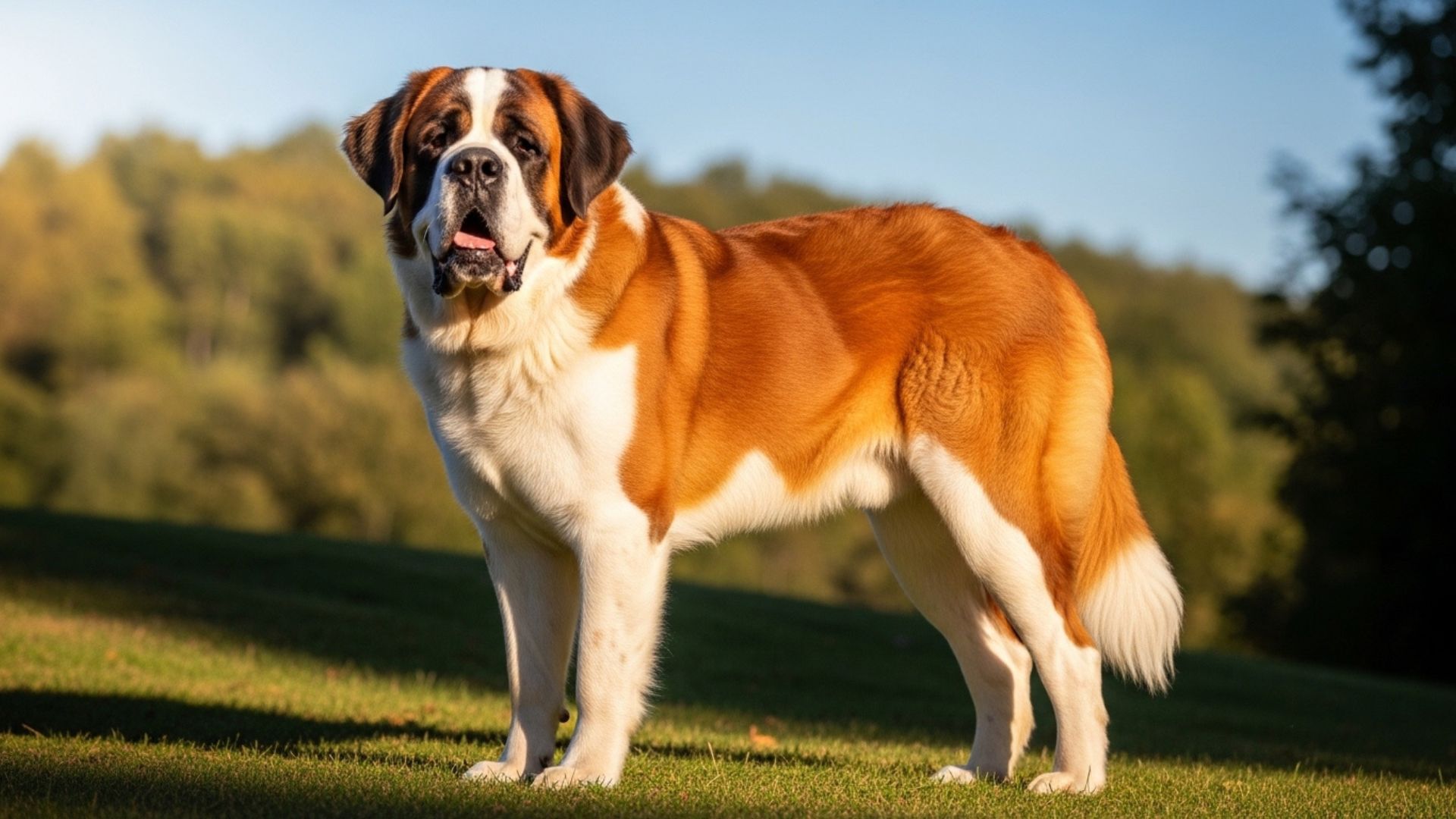
Bringing a dog into your life means welcoming years of loyalty, laughter, and unconditional love. But one thing many people don’t think about when choosing a dog is lifespan.
While personality, size, and appearance often get the most attention, a dog’s expected lifespan can greatly affect the long-term emotional and care commitment that comes with pet ownership. On average, most dogs live between 10 and 13 years, but some breeds naturally live much shorter lives.
Researchers have found that several factors can influence how long a dog lives, including genetics, growth rate, inherited health conditions, and overall body size.
Because of these differences, some dog breeds are known to have noticeably shorter lifespans than others. Understanding this can help future pet parents prepare for potential health needs and the emotional reality that comes with loving a dog whose time may be limited.
In this article, we’ll explore the dog breeds with the shortest life expectancy.
Key Takeaways
See why Dogue de Bordeaux and Great Danes live shorter lives.
Learn how Newfoundlands and Saint Bernards thrive despite size.
Discover key health tips for Bernese Mountain Dogs and Bullmastiffs.
Find out what affects a dog’s lifespan and care needs.
Dog Breeds That Don’t Live as Long as Others
1. Dogue DeBordeaux
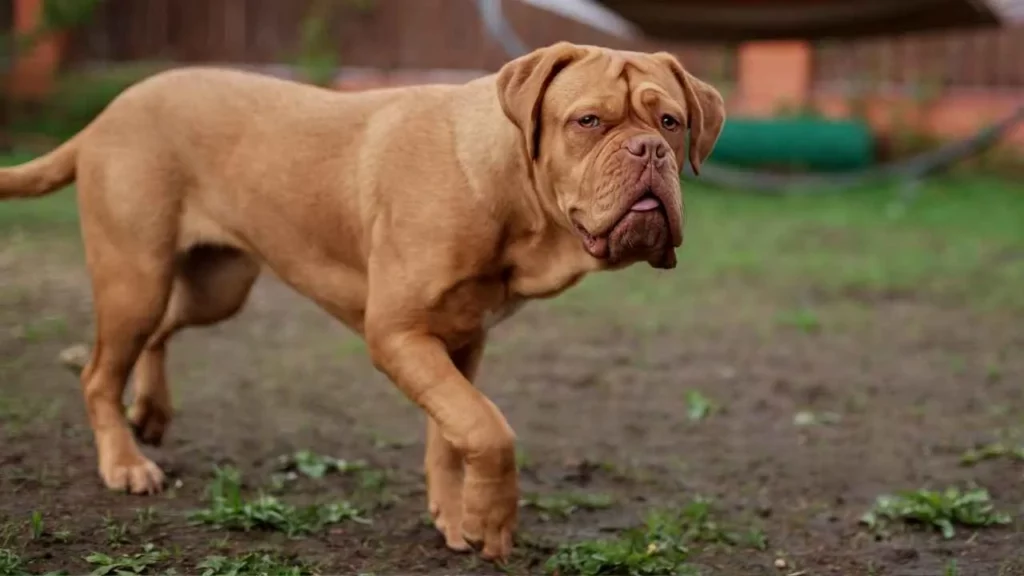
The Dogue de Bordeaux is one of the oldest French dog breeds and is known for its powerful build and loyal personality. Often called the DDB, it belongs to the Molossoid group and is recognized for its massive head and sturdy body.
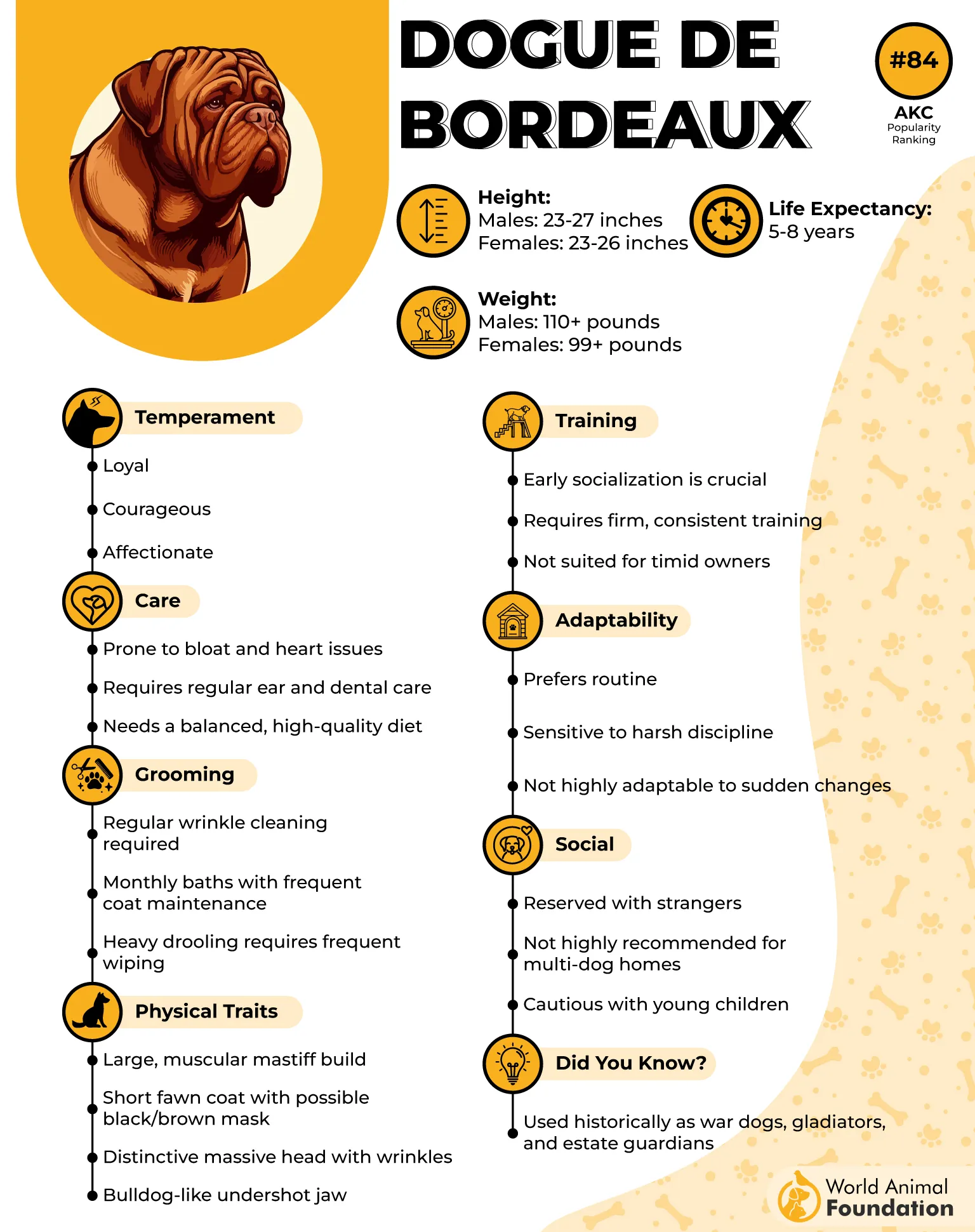
In the past, these dogs were used to guard livestock, assist traders, and even take part in combat. Today, they are valued as devoted family companions and protective guardians.
Despite their strong appearance, Dogues de Bordeaux are gentle and affectionate dogs. They are calm, patient, and extremely loyal to their families. These dogs usually enjoy staying indoors and do not require intense exercise.
Occasional walks and playtime are enough for them. They are naturally protective and make excellent watchdogs, but they are generally not aggressive with strangers.
Breed Snapshot
Life expectancy: 5–8 years
Popularity: 71 out of 197
Temperament: Affectionate, loyal, courageous
Like many large breeds, the Dogue de Bordeaux has a shorter lifespan than most dogs. Their size can contribute to breathing difficulties, orthopedic problems, and inherited heart conditions.
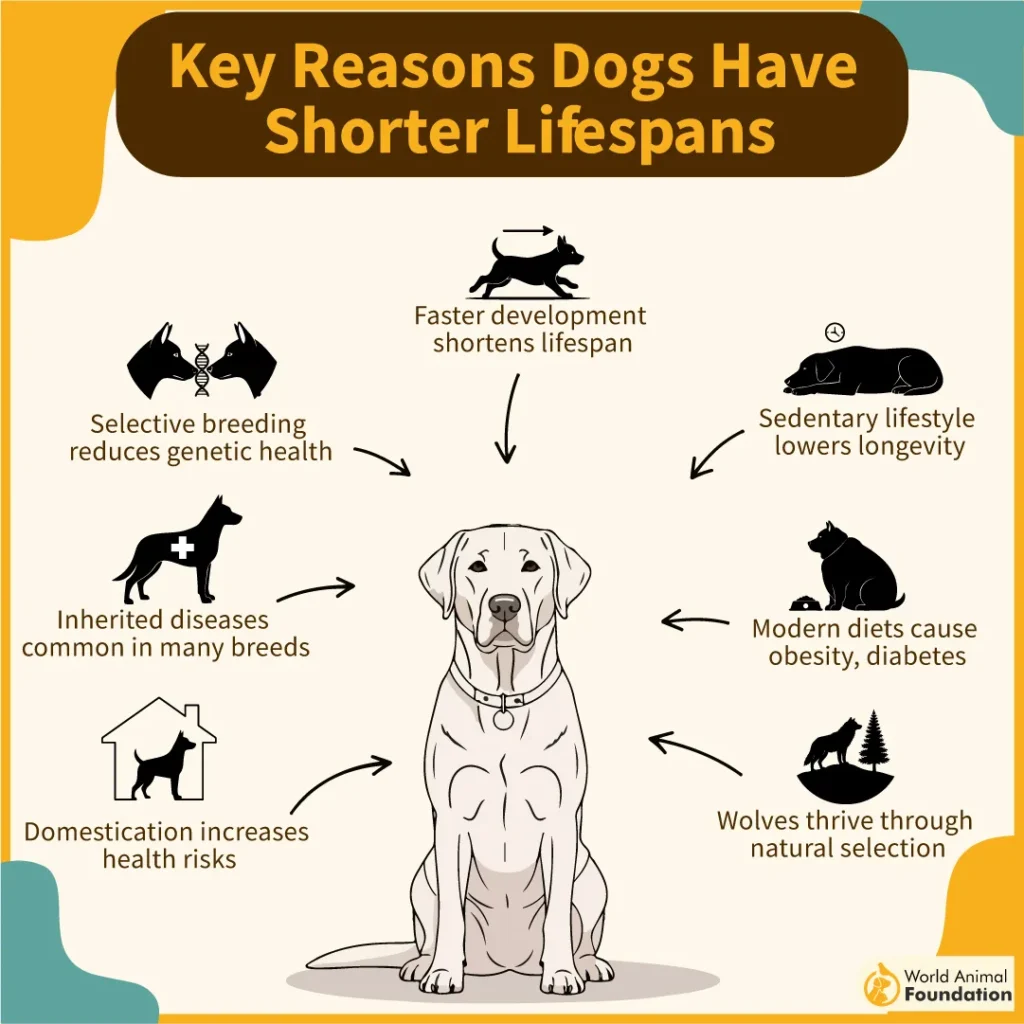
Proper nutrition, preventive exercises, and regular vet visits are important to keep them healthy. Even though their lifespan is shorter, they remain deeply loyal and loving companions throughout their lives.
2. Newfoundland
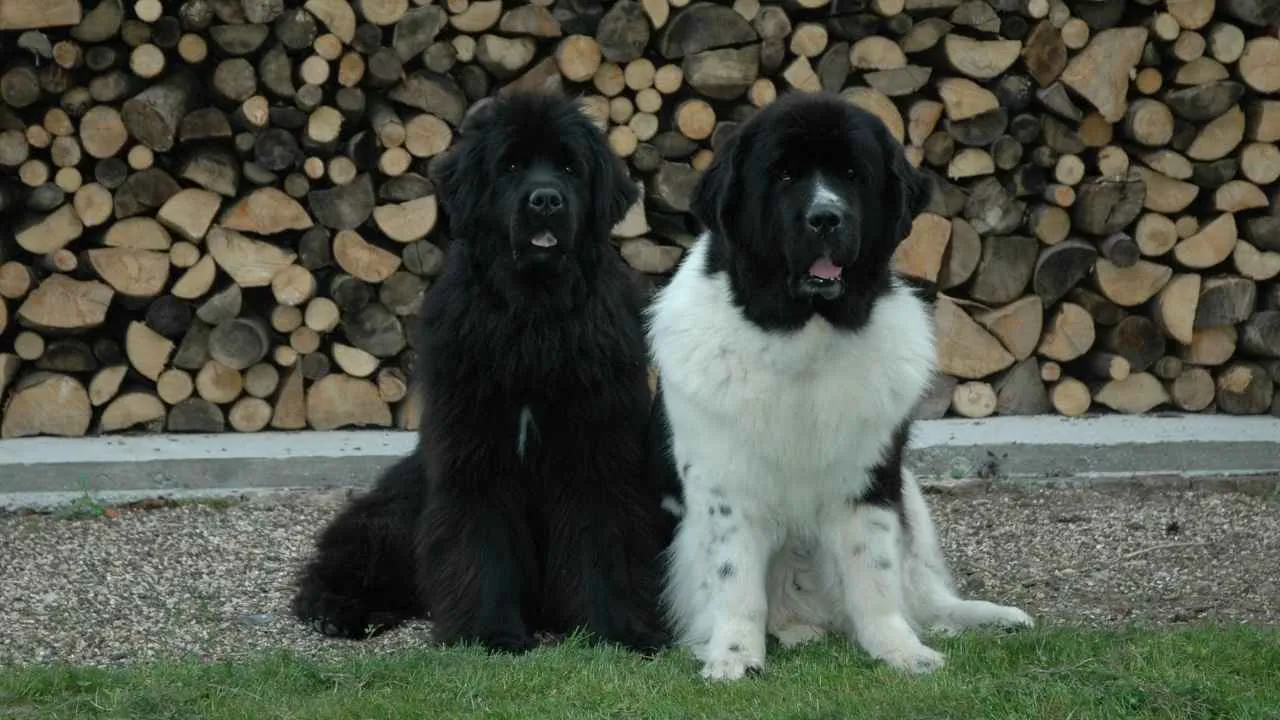
The Newfoundland is a giant working dog known for its gentle nature and impressive strength. Originally from Newfoundland, Canada, these dogs helped fishermen retrieve nets, pull carts of wood, and even perform water rescues, according to Orvis.
Their long, thick coat protects them in cold environments, though it often needs trimming in warmer climates. Despite their large and powerful build, Newfoundlands are famous for having soft, affectionate personalities.
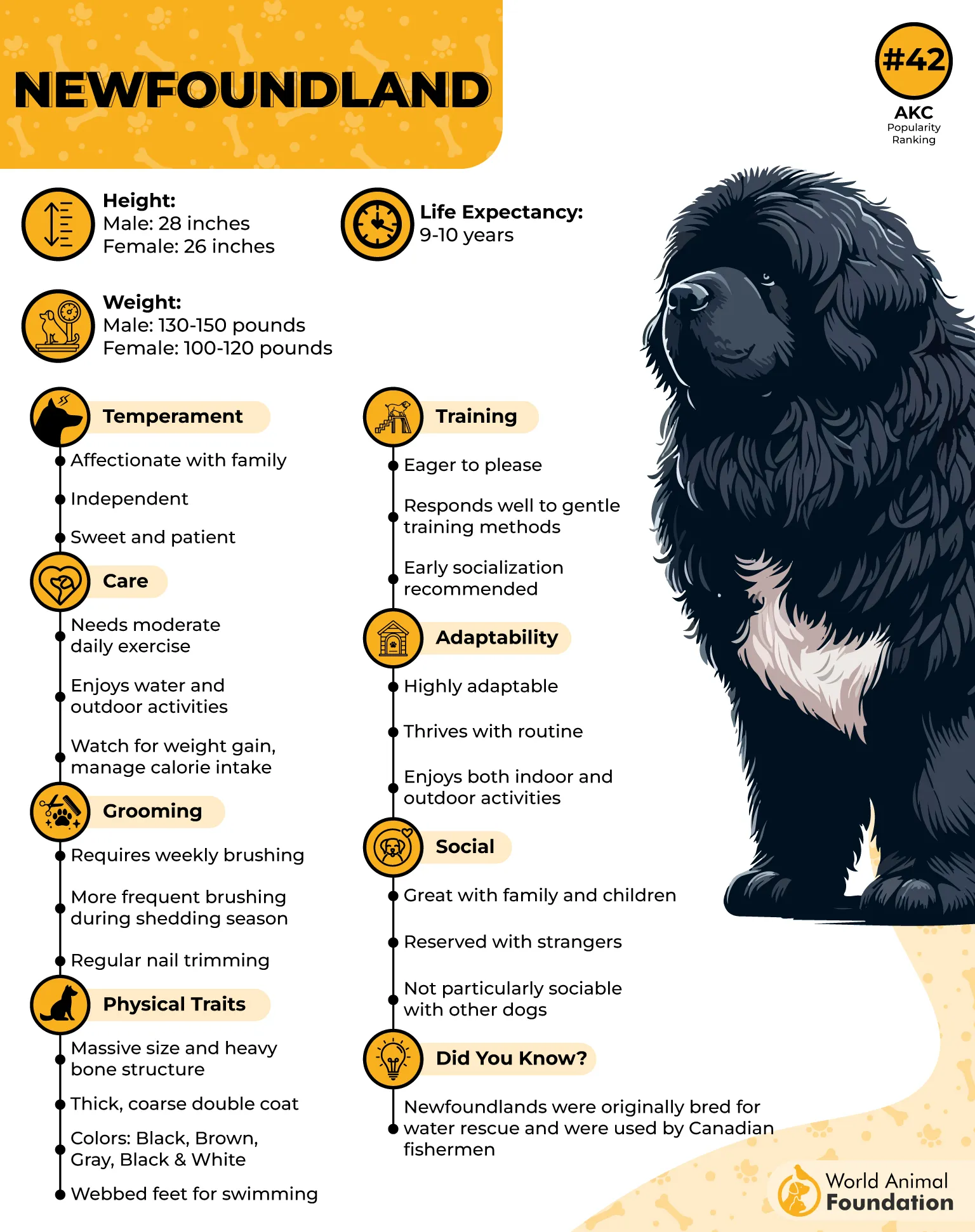
Newfoundlands are sweet, patient, and extremely devoted to their families. They are calm and laid-back, often happy to nap while family life continues around them. These dogs are gentle with children and tend to get along well with other pets.
At the same time, they are natural working dogs and people-pleasers who enjoy having tasks to do. With their intelligence and willingness to serve, they usually respond very well to training and clear guidance.
Breed Snapshot
Life expectancy: 9–10 years
Popularity: 41 out of 197
Temperament: Sweet, patient, devoted
Like many giant breeds, the Newfoundland has a shorter lifespan compared with smaller dogs. Their large body size can lead to several health concerns, including hip and elbow dysplasia, heart disease, and kidney problems.
Joint disorders may cause pain and arthritis, while heart conditions such as dilated cardiomyopathy or subaortic stenosis can affect overall health.
Maintaining a healthy weight, providing rehabilitation exercises, and scheduling regular veterinary care can help support their well-being throughout their lives.
3. Saint Bernard
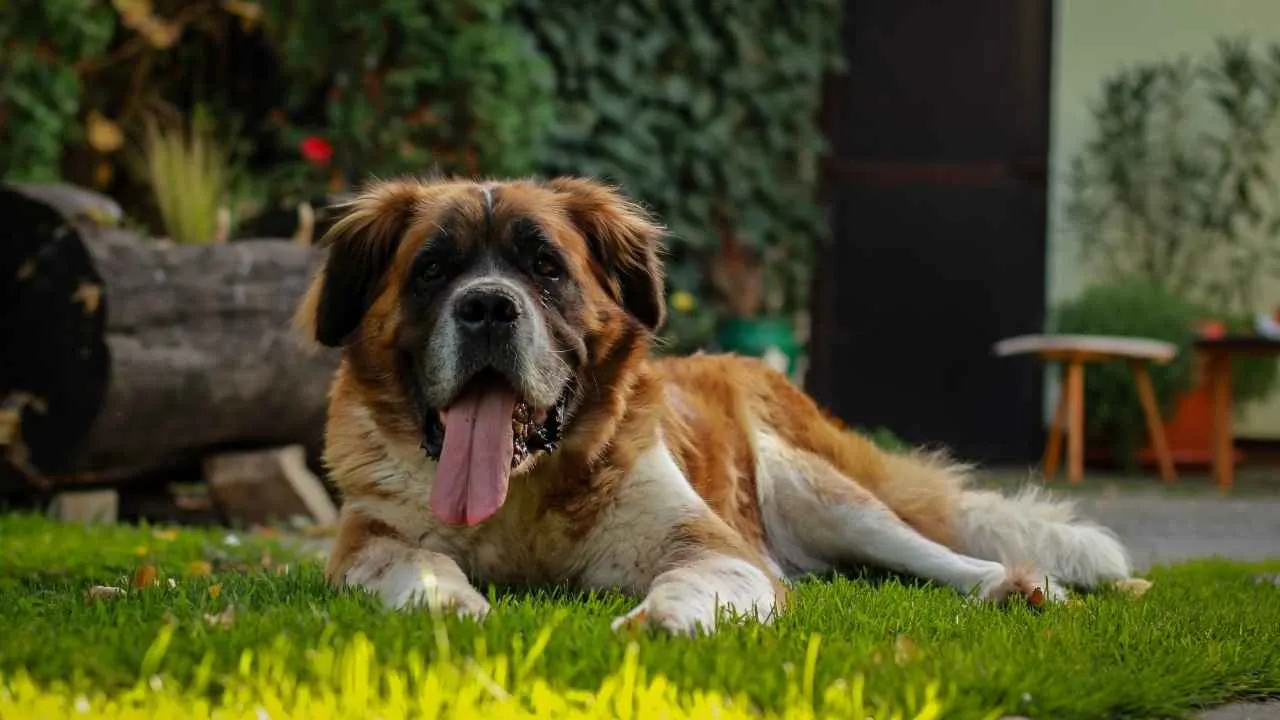
The Saint Bernard is a giant working dog famous for its rescue history in the Swiss Alps. Monks first trained these dogs in the 1600s to locate and save travelers trapped by avalanches.
Today, they are better known as affectionate family companions, though some still assist in search and rescue work. Their popularity grew even more after the release of the 1992 family movie Beethoven.
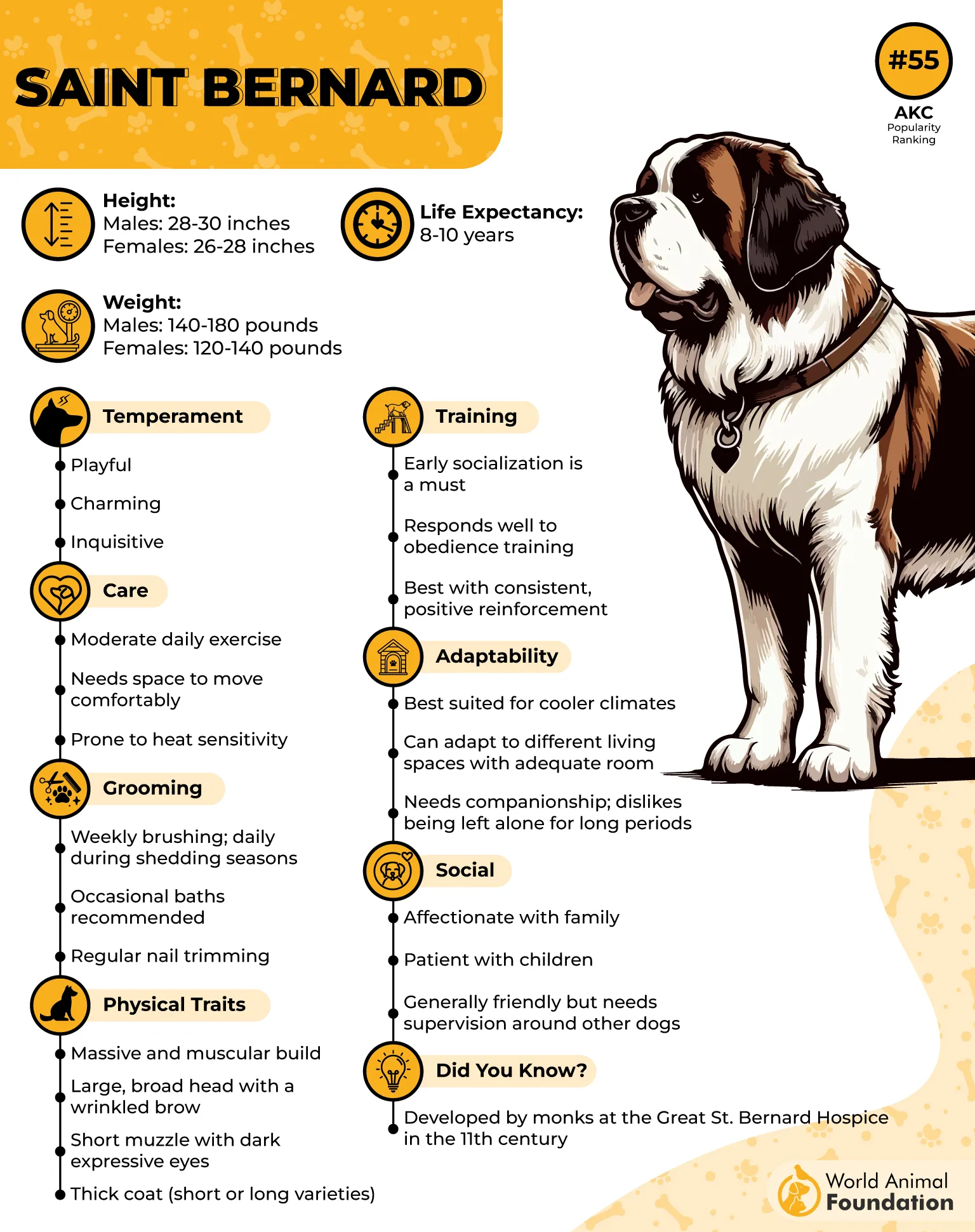
Saint Bernards are gentle giants with calm and friendly personalities. They are playful, charming, and very patient with children. Because of their easygoing nature, they usually get along well with other pets and adapt well to family life.
They do not require intense exercise, but they do need regular grooming and consistent training. These dogs are eager to please and tend to respond well to guidance from their owners.
Breed Snapshot
Life expectancy: 8–10 years
Popularity: 52 out of 197
Temperament: Playful, charming, inquisitive
Their large body size increases the risk of health problems such as hip dysplasia, arthritis, gastric dilatation-volvulus (GDV), bone cancer, and heart disease.
Their thick coats can also make them prone to overheating. Regular veterinary care, health screenings, and responsible breeding practices are important for supporting their overall health and longevity.
4. Leonberger
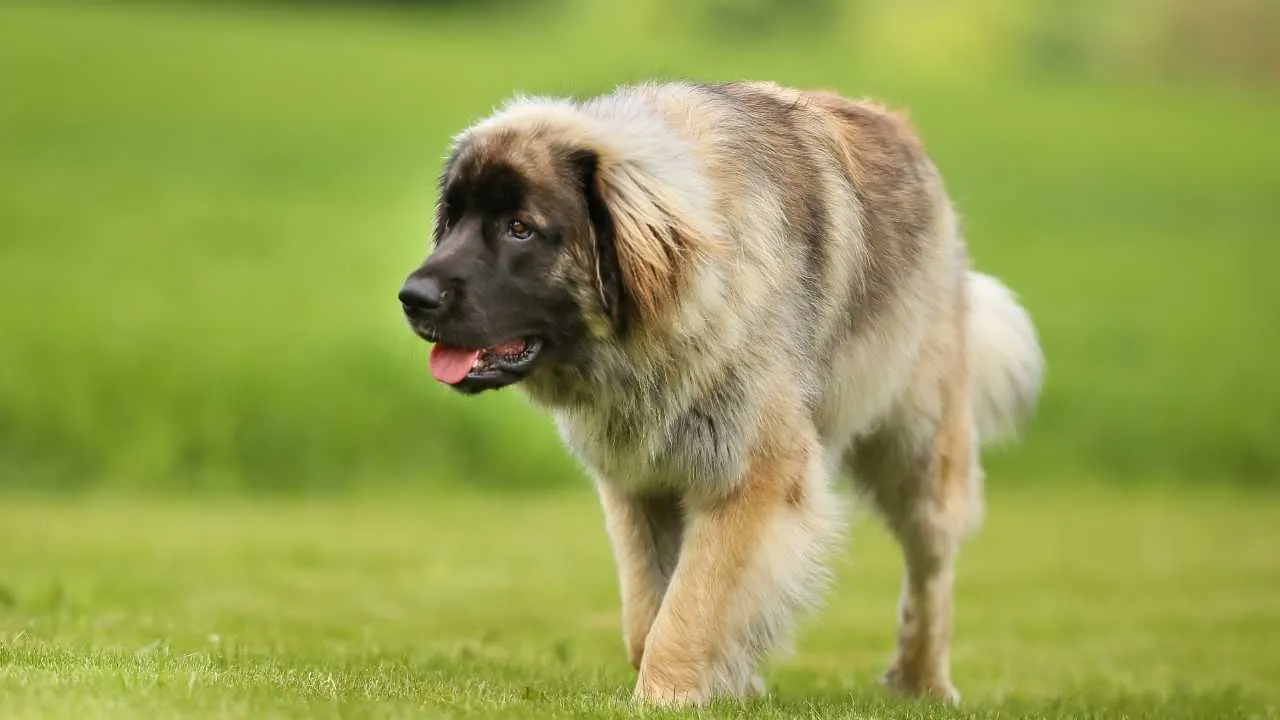
The Leonberger is a giant dog breed that originated in Leonberg, Germany. According to legend, the breed was developed by crossing Newfoundlands, Saint Bernards, and Great Pyrenees to resemble the lion on the town’s coat of arms, as mentioned by PetMD.
Because of their friendly temperament and striking appearance, Leonbergers became a popular dog breed with European royalty. After nearly disappearing during World War I and World War II, the breed recovered and is now commonly seen as a family companion or working in search-and-rescue roles.
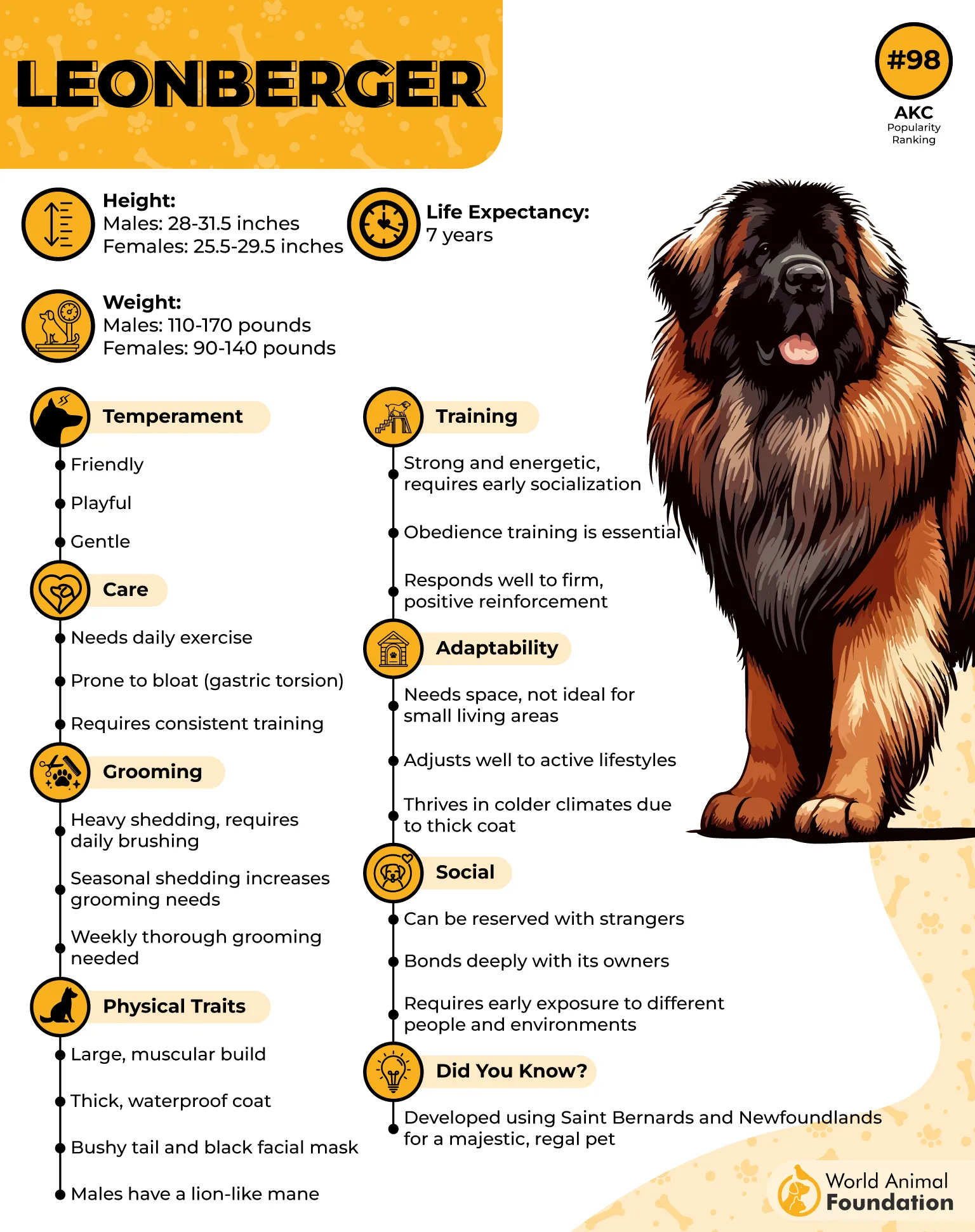
Leonbergers are friendly, gentle, and playful dogs that enjoy being around their families. They are known for their calm nature and patience, especially with children. However, their large size means they should be supervised around toddlers so they don’t accidentally knock them over.
These dogs are active and energetic, even as adults, and they usually need at least an hour of exercise each day. As a working breed, they also enjoy activities like hiking, agility training, carting, and water dog sports.
Breed Snapshot
Life expectancy: Around 9 years
Popularity: 98 out of 197
Temperament: Friendly, gentle, playful
Their large body size increases the risk of certain health problems, including bloat, a dangerous condition where the stomach twists and traps gas.
Because of their strength and size, early socialization and obedience training are important. With proper care, exercise, and dog life insurance, Leonbergers remain loyal and loving canine companions throughout their lives.
5. Great Dane
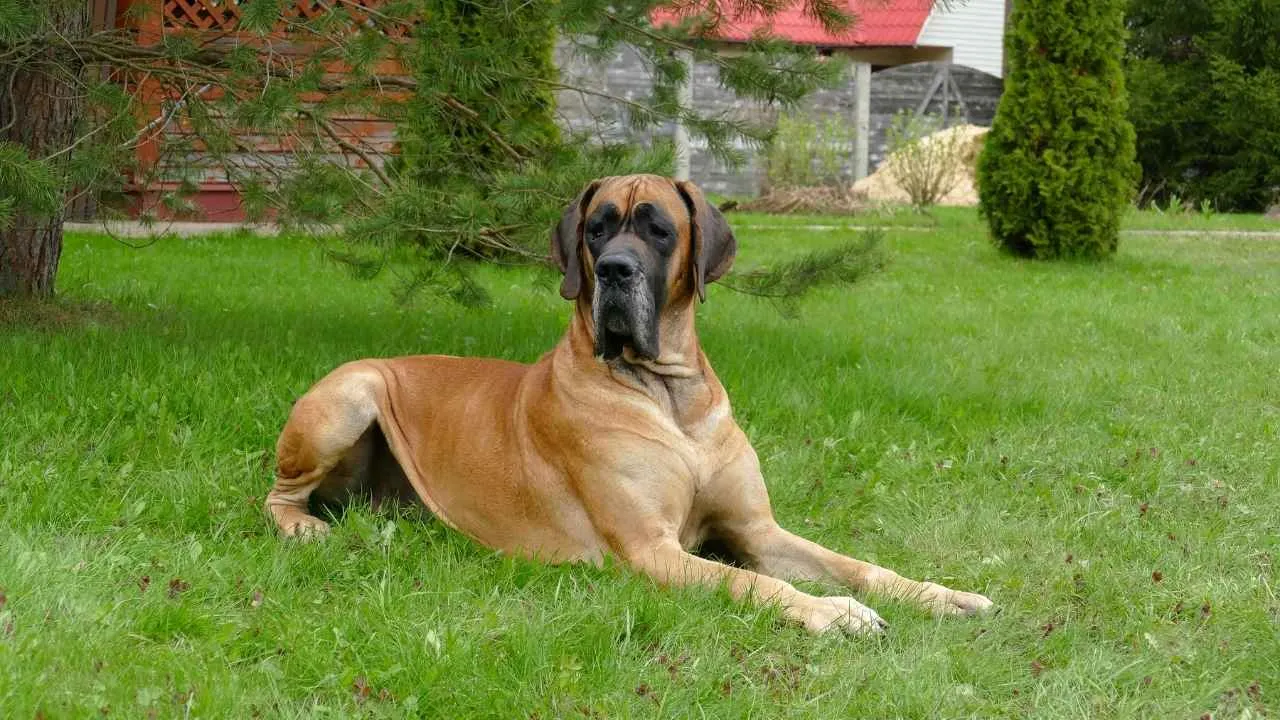
The Great Dane is one of the tallest dog breeds in the world and is often called a “gentle giant.” Despite their massive size, this hunting dog breed is known for their calm, loving nature.
They are friendly, patient, and dependable companions who usually get along well with children and other pets when properly socialized. Because of their protective instincts, they can also make reliable family guardians.
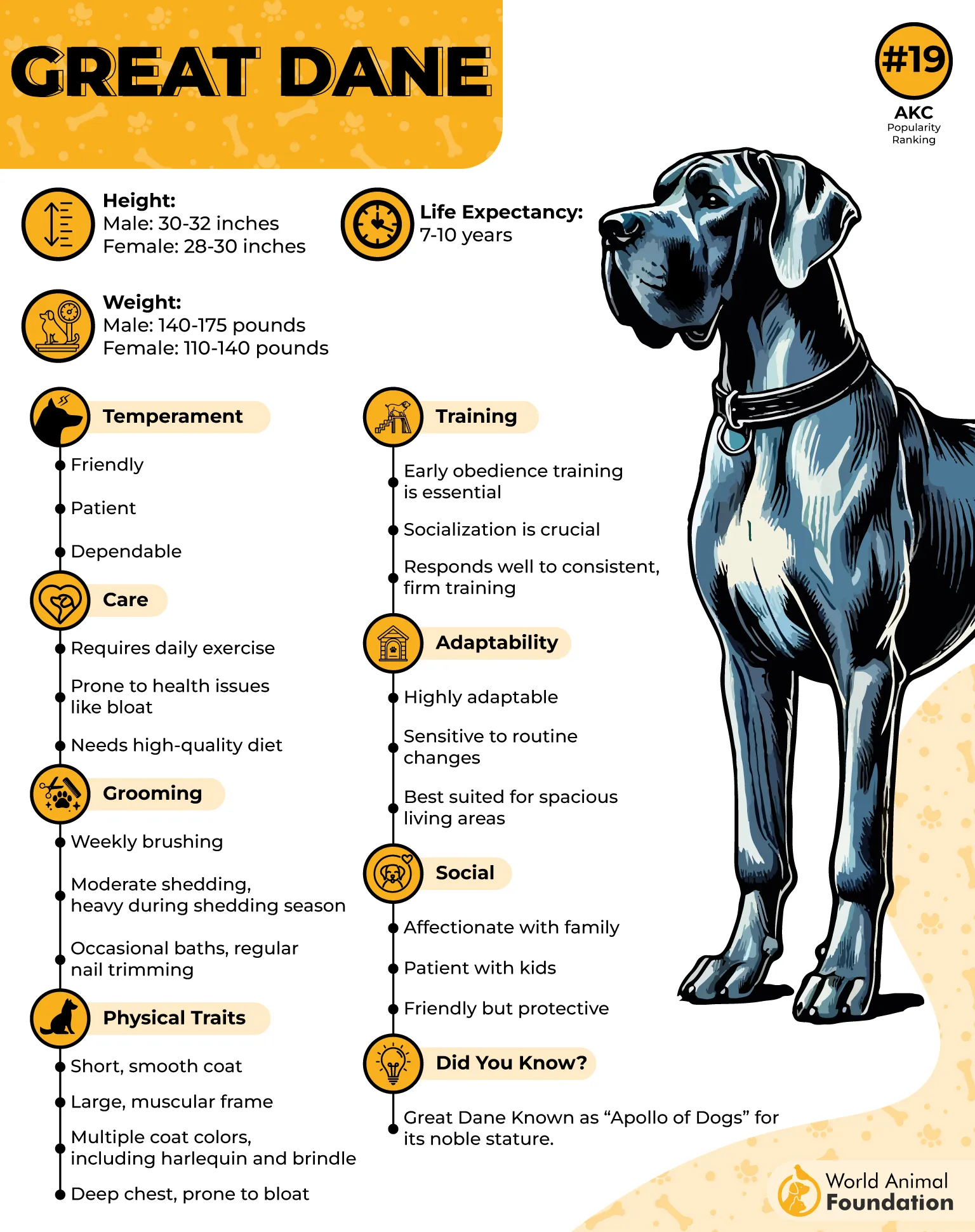
Great Danes are generally low-key dogs that enjoy spending time with their families. They form strong bonds with their owners and often prefer being close to them.
While great danes are affectionate and easygoing, they can sometimes be stubborn and do not enjoy being teased. Early socialization and consistent training help them grow into well-mannered adults.
Breed Snapshot
Life expectancy: 7–10 years
Popularity: 15 out of 197
Temperament: Friendly, patient, dependable
Unfortunately, Great Danes have one of the shortest lifespans among dog breeds. Their large body size puts extra strain on the heart and joints, which can lead to health problems.
These large dogs are especially prone to dilated cardiomyopathy (DCM) and gastric dilatation-volvulus (bloat), a life-threatening condition where the stomach twists.
Rapid growth can also contribute to orthopedic issues like hip dysplasia and arthritis. Regular vet visits, proper nutrition, and moderate exercise are important to help support their health throughout their lives.
6. Bernese Mountain Dog
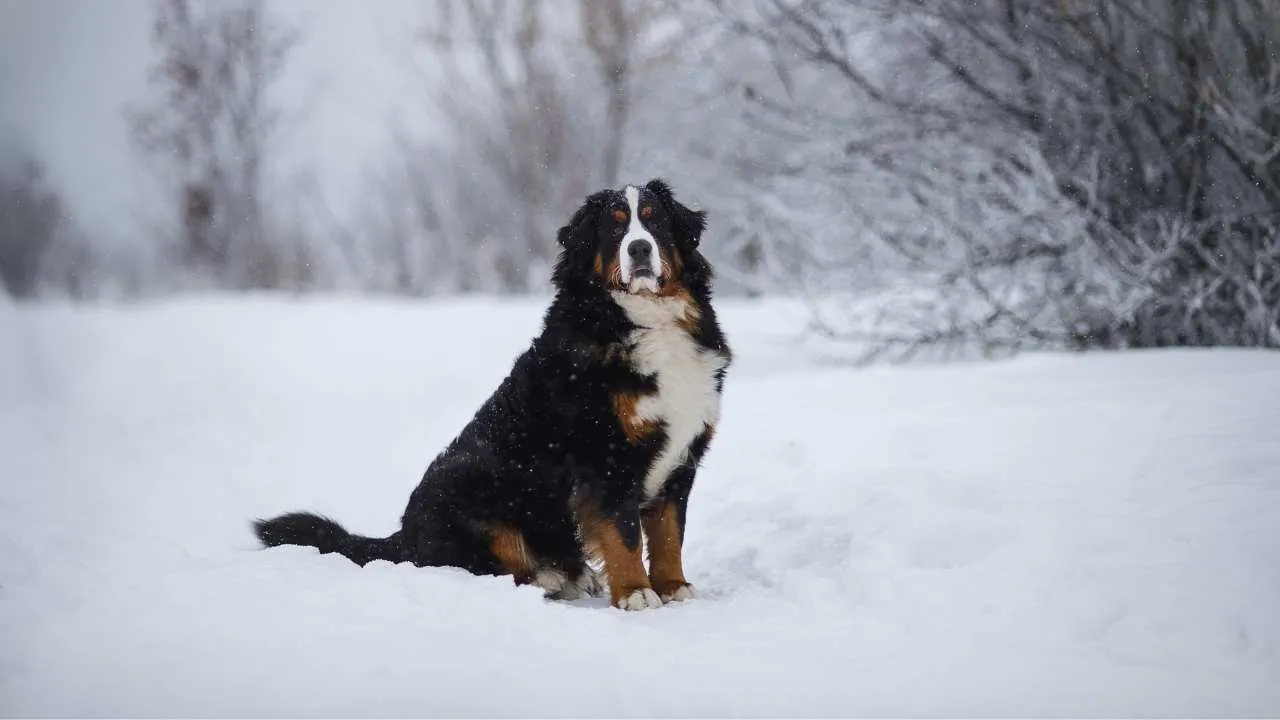
The Bernese Mountain Dog is a large and beautiful breed from Switzerland, originally bred as a farm dog to pull carts and herd cattle.
Known for their striking tri-color coats, these gentle giants are intelligent, strong, and agile. Today, they are mostly beloved family pets, admired for their calm and friendly nature.
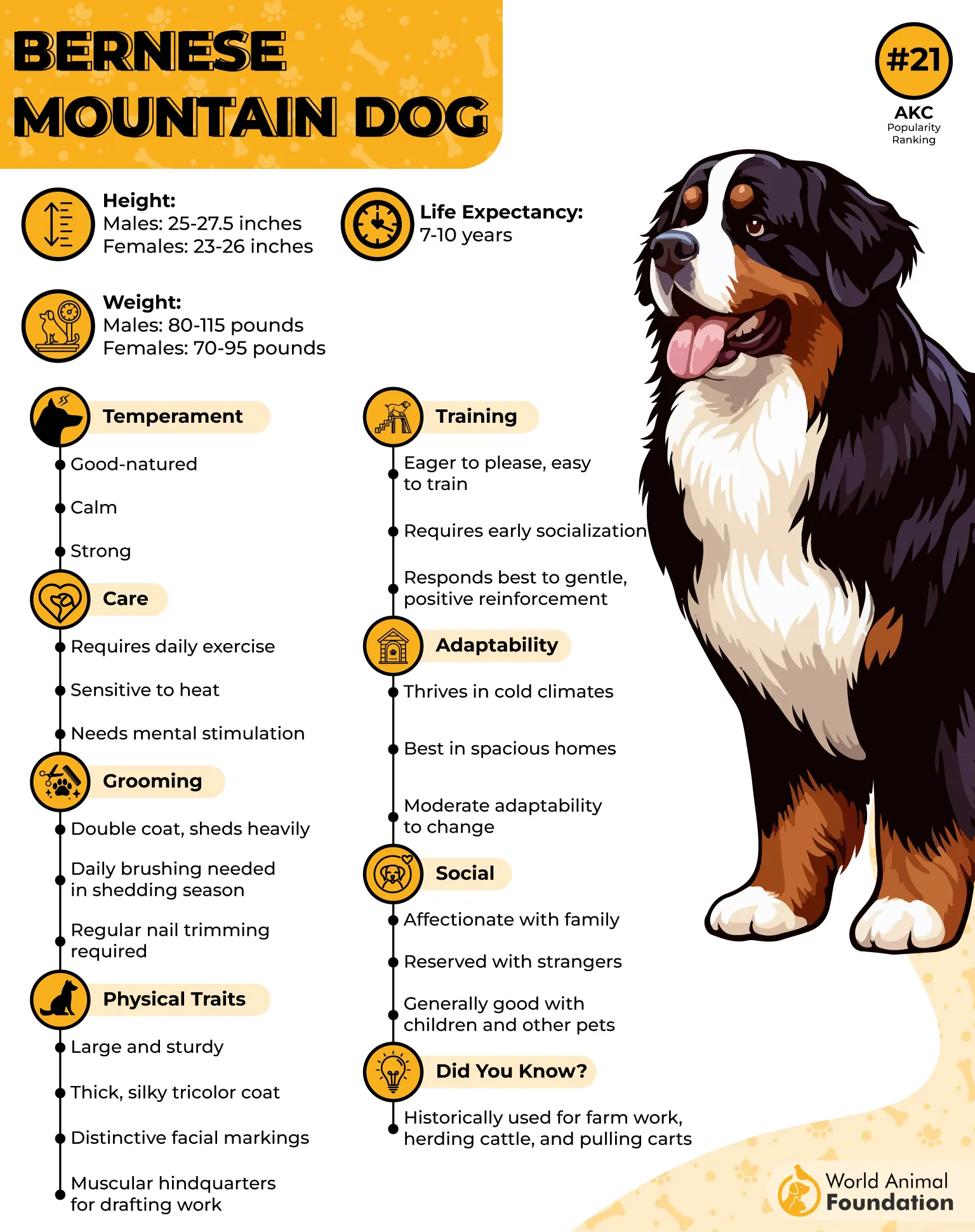
Bernese Mountain Dogs are sweet, loyal, and good-natured. They are gentle with children and usually get along well with other animals. These dogs prefer cooler climates and need regular grooming to maintain their long coats.
Despite their size, they are calm indoors and enjoy being part of family activities. Early socialization and consistent training help them develop into well-mannered companions.
Breed Snapshot
Life expectancy: 7–10 years
Popularity: 22 out of 197
Temperament: Good-natured, calm, strong
Bernese Mountain Dogs have a shorter lifespan of only 6–8 years. They are prone to health problems such as blood cancer—especially histiocytic sarcoma—hip and elbow dysplasia, arthritis, and bloat.
Regular veterinary checkups and early screenings are important to catch health issues early. With proper care, these gentle giants can live happy and fulfilling lives despite their relatively short time with us.
7. Bullmastiff
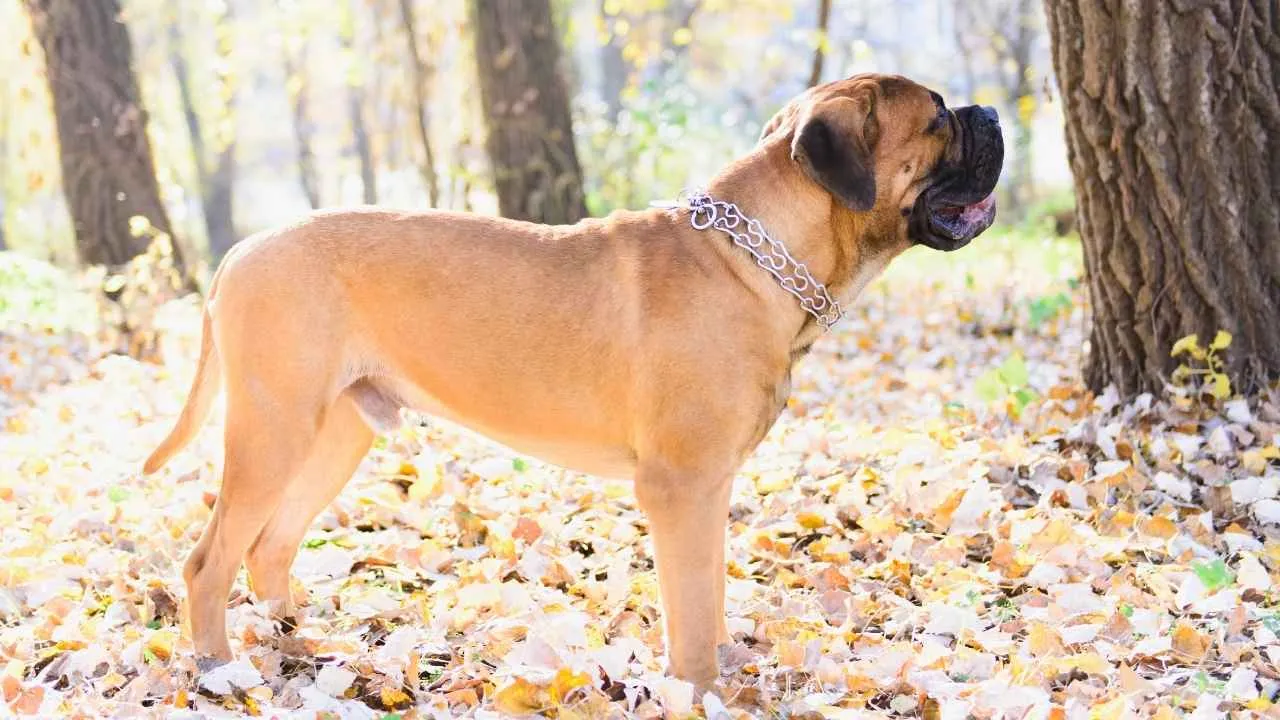
The Bullmastiff is a powerful and loyal dog breed originally developed in 1860 by British gamekeepers. They crossed Bulldogs with Mastiffs to create a large, obedient dog capable of guarding estates and deterring poachers.
Today, Bullmastiffs are known for their protective instincts, muscular build, and calm demeanor, making them devoted family companions.
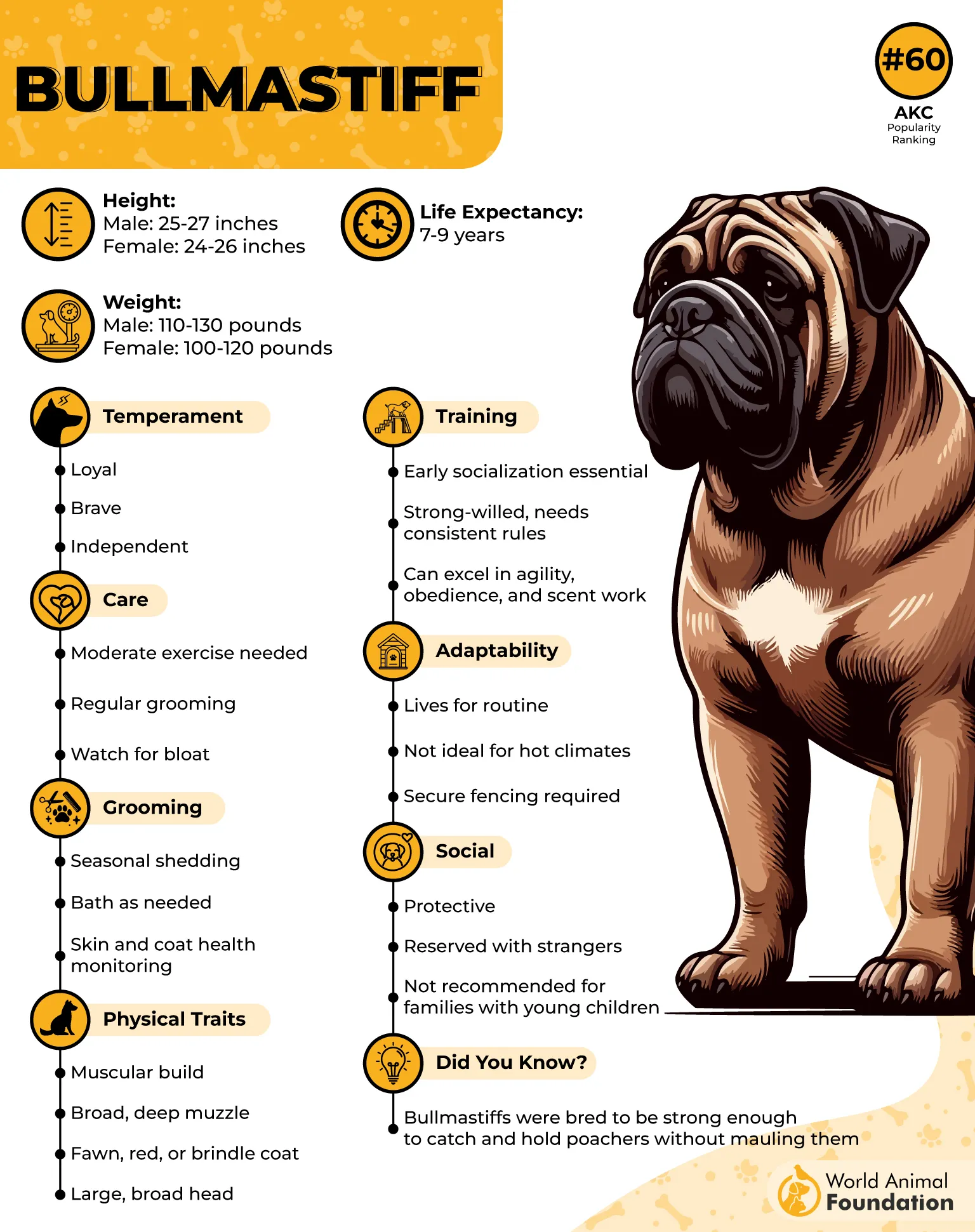
Bullmastiffs are affectionate, brave, and extremely loyal to their families. They can be stubborn and may not be the easiest to train, but with consistent guidance, they make excellent protectors.
These dogs are calm indoors and enjoy spending time close to their owners. Purina mentions that they can be wary of strangers, so early socialization is important. Their short, dense coat is easy to maintain, and they are generally low-energy compared to other giant breeds.
Breed Snapshot
Life expectancy: 7–9 years
Popularity: 55 out of 197
Temperament: Affectionate, loyal, brave
Bullmastiffs have a predisposition to health issues. They are prone to heart problems, hip dysplasia, certain cancers, and obesity, which can worsen these conditions.
Regular veterinary care, proper nutrition, and controlled exercise are essential to support their health. Despite their shorter lifespan, Bullmastiffs remain loving, devoted, and protective companions throughout their lives.
Conclusion
While some dog breeds have shorter lifespans than others, their time with us is no less meaningful. Giant and large breeds like the Dogue de Bordeaux, Great Dane, and Bernese Mountain Dog may live fewer years, but they fill every moment with loyalty, love, and unforgettable memories.
Their size and health challenges mean extra care, but the reward is a devoted companion who becomes a true part of your family. If you’re considering bringing a dog into your life, think beyond just appearance or size. Learn about a dog’s lifespan, health needs, and temperament so you can provide the best care possible.
Remember, it’s not the length of time that matters, but the love and joy shared along the way. Choosing wisely ensures that every tail wag, cuddle, and adventure is cherished to the fullest.
