




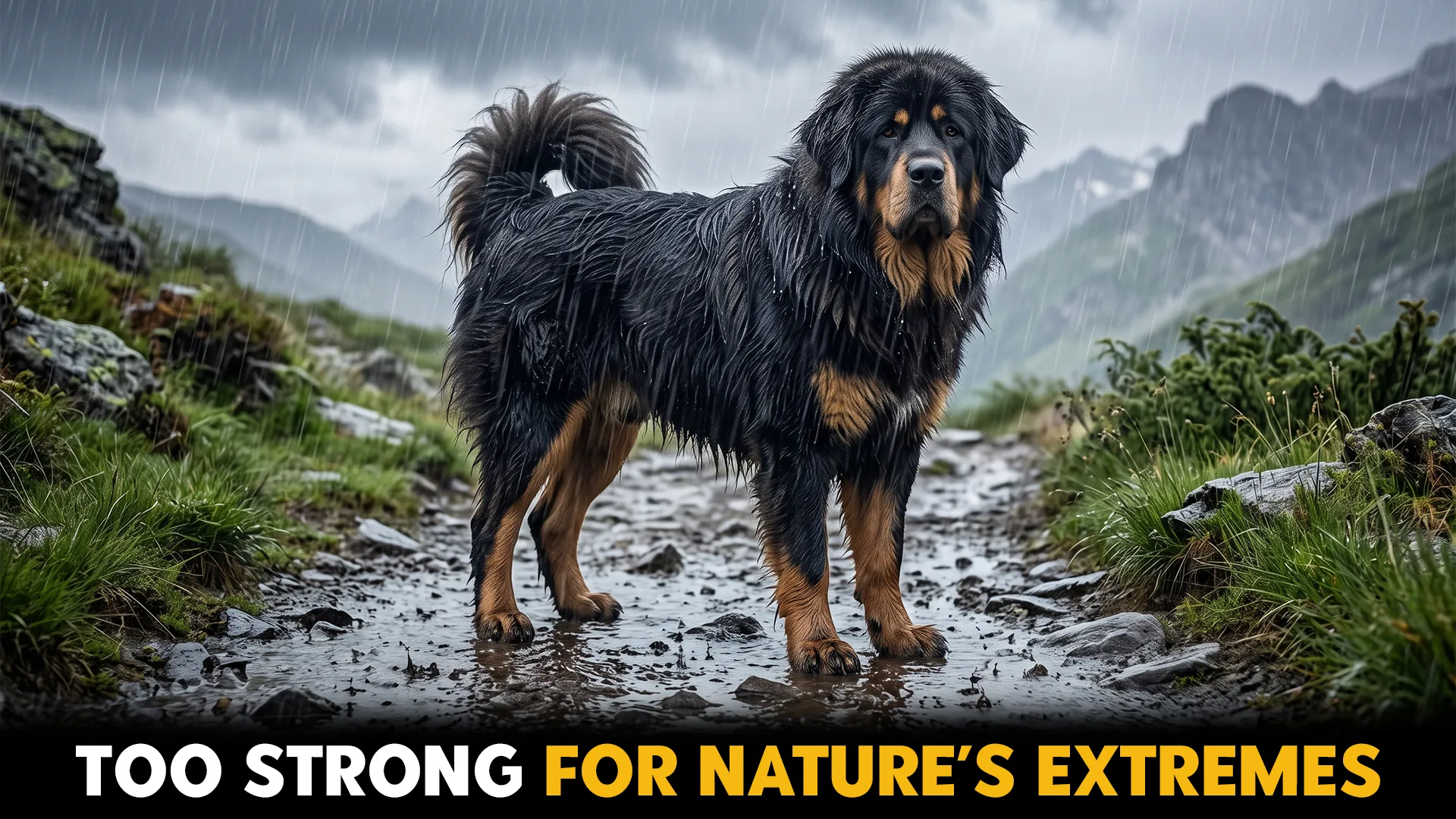
From icy wildernesses to sun-drenched landscapes, certain dogs possess physical traits that help them cope with demanding environments. Bred for tasks such as pulling sleds, guarding livestock, and hunting across rugged terrain, these canines showcase impressive stamina, strength, and adaptability.
However, climate tolerance varies between breeds. Thick coats can provide insulation in freezing weather, while other physical characteristics may help dogs cope with warmer conditions. Understanding these differences is essential when choosing a companion for challenging environments.
Explore best dog breeds known for their resilience, while remembering that every dog needs suitable shelter, fresh water, and protection from dangerous temperatures.
Top Dog Breeds That Can Withstand Extreme Weather Conditions
1. Norwegian Elkhound
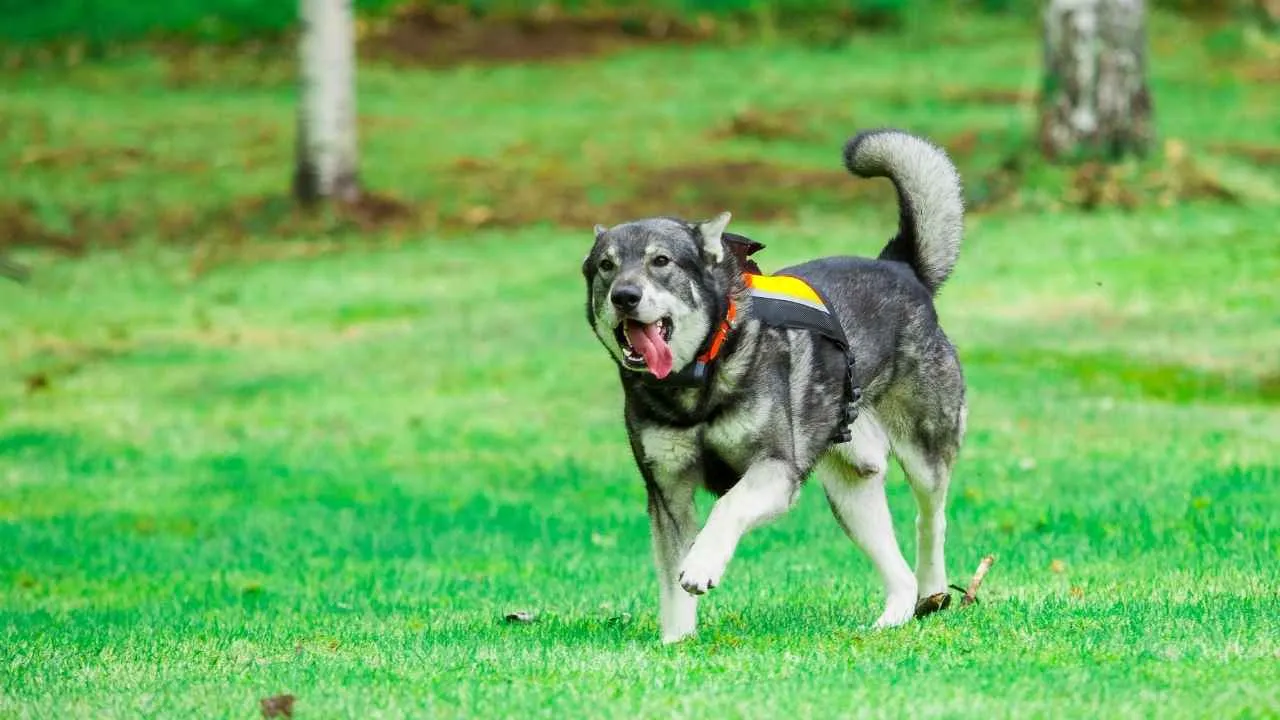
The Norwegian Elkhound is a sturdy, medium-sized spitz breed with a compact build, upright ears, and a tail curled over its back. Its history as a hunting companion stretches back to Viking times, when these dogs worked alongside people in demanding northern environments.
Traditionally used to hunt large game, Elkhounds retain the energy and loyalty associated with their working heritage.
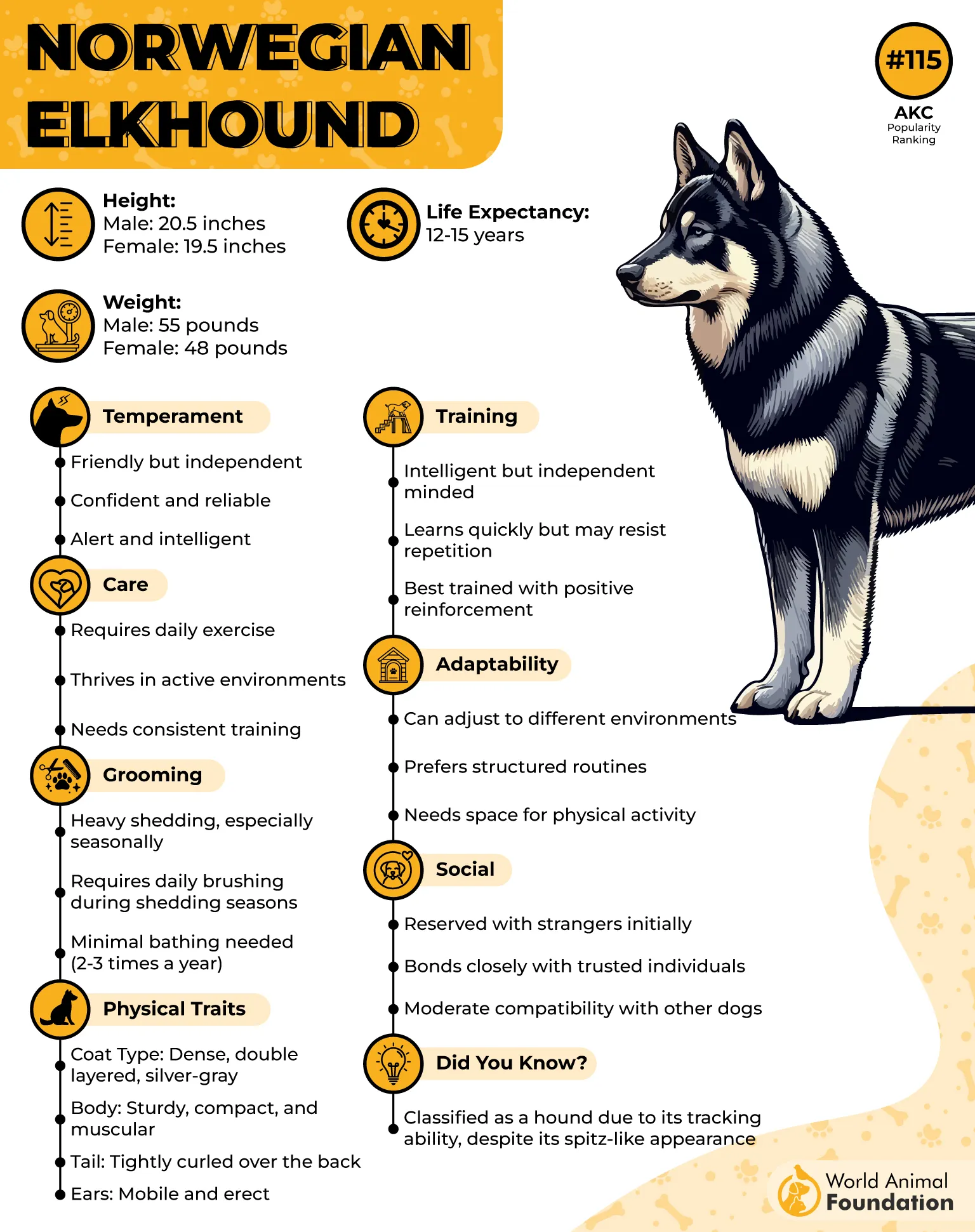
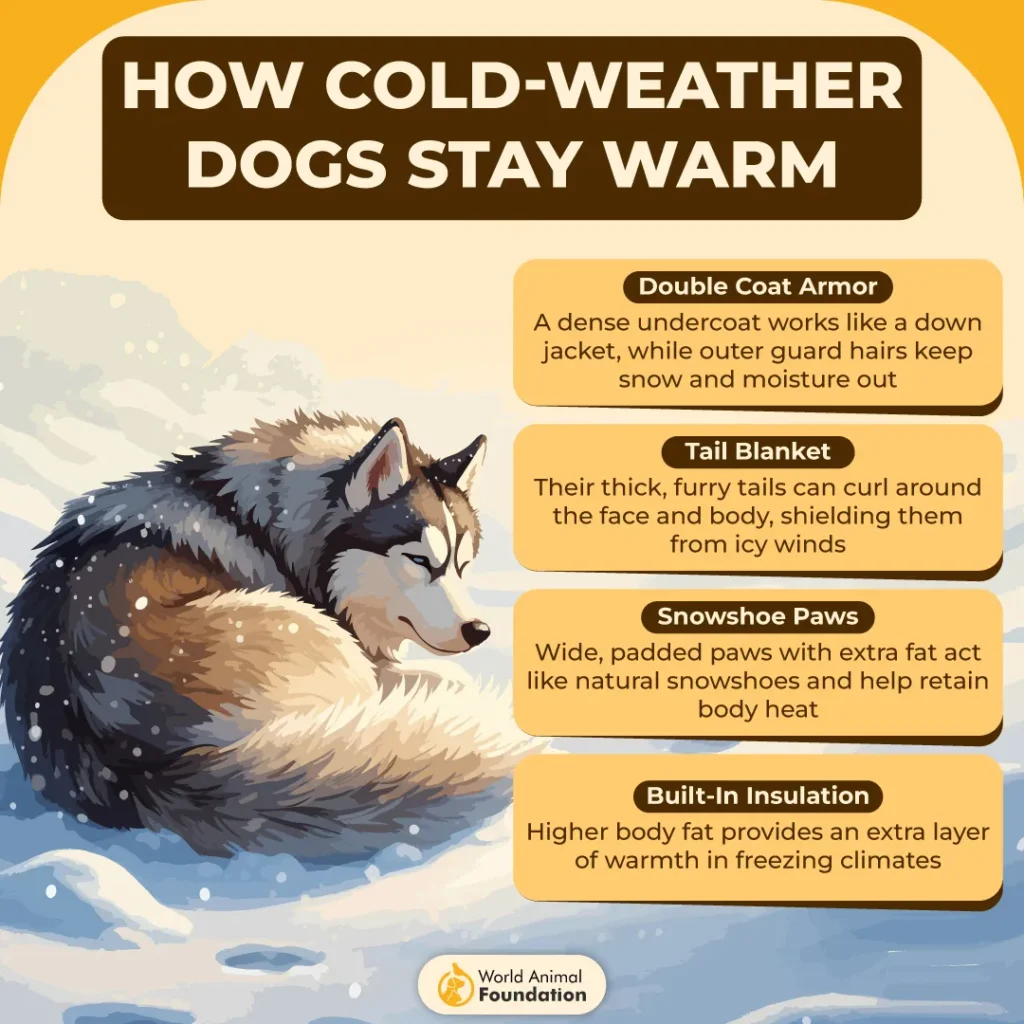
A thick fur coat featuring gray, black, and silver shades helps this breed stay comfortable in cold weather. Norwegian Elkhounds thrive in cooler climates, where they can enjoy outdoor activities with their active families. Their lively personality calls for regular exercise, including long walks, hikes, or active play, while their friendly nature can make them affectionate household companions.
According to the AKC, they are naturally clean dogs and can quickly learn good household habits with consistent, properly managed house-training.
How This Breed Stands Out
Cold-weather hunting heritage: Its long history as a northern hunting dog reflects its suitability for cooler environments.
Stamina across rugged forests: Its powerful build and energetic nature support sustained activity over challenging outdoor terrain.
2. Tibetan Mastiff
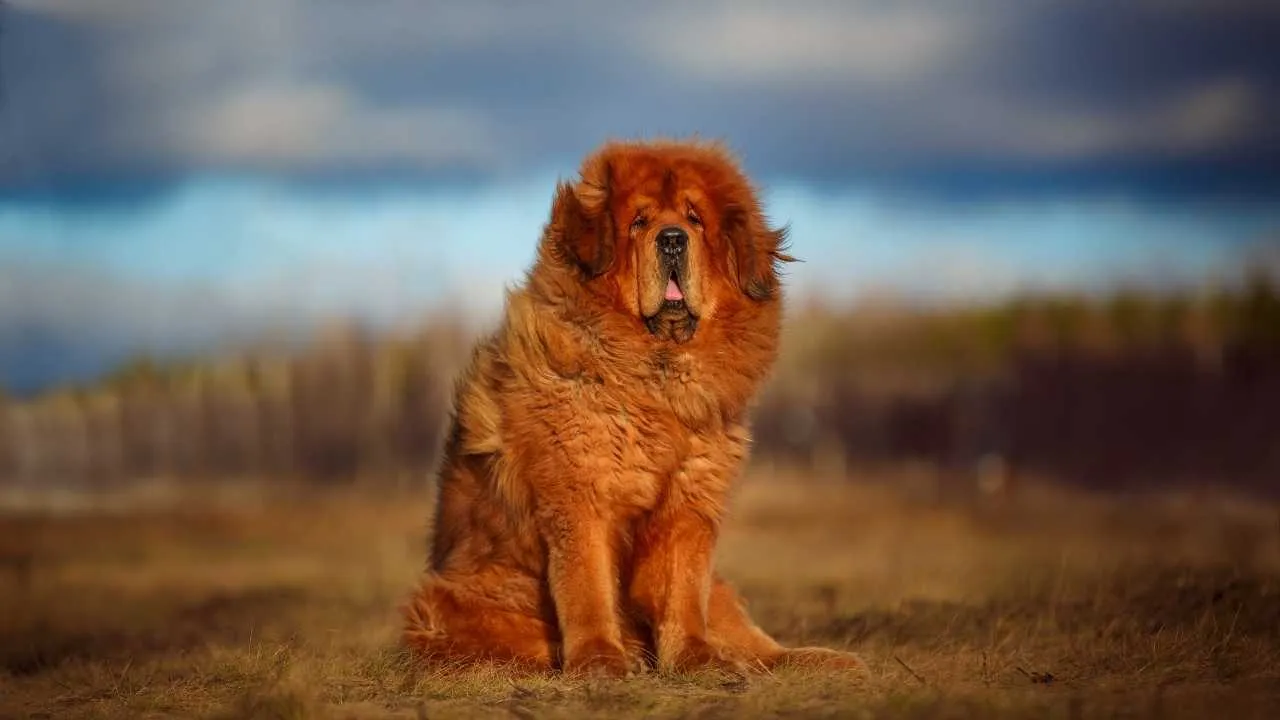
Originating on Tibet’s high-altitude plateaus, the Tibetan Mastiff is an ancient guardian known for its enormous build and lion-like appearance. For centuries, these dogs have protected livestock and guarded important sites in mountainous regions. Their independent nature and strong protective instincts are balanced by deep loyalty toward their families.
According to PDSA, although they have a calm temperament, they can be surprisingly quick and need plenty of exercise, while their strong-willed nature can sometimes make proper training challenging.
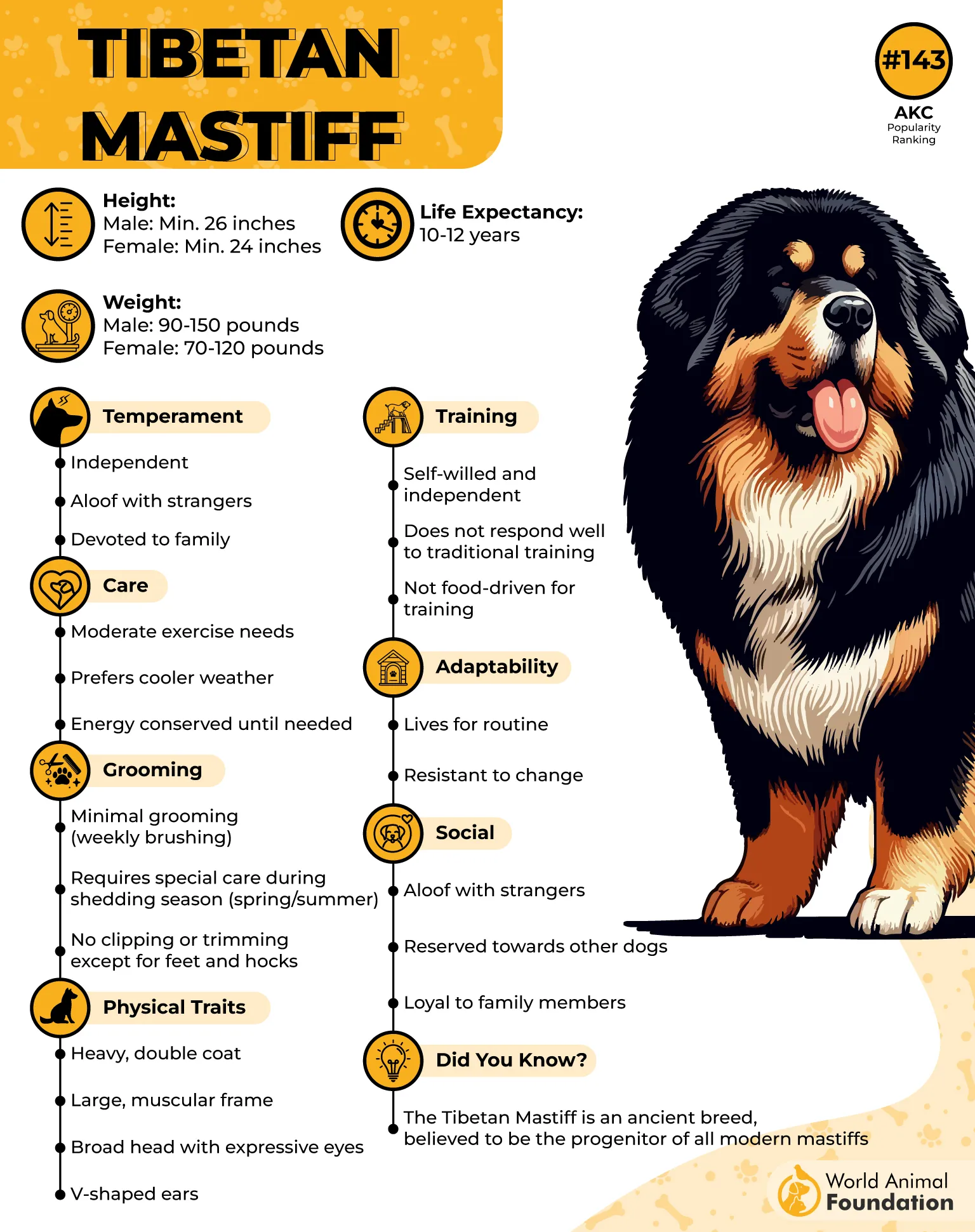
A dense double coat helps this giant breed withstand cold mountain weather. Its coarse outer hairs cover a soft, woolly undercoat, providing insulation against harsh conditions. A broad head, muscular body, and heavily feathered tail curled over its back further contribute to its imposing appearance. Tibetan Mastiffs are often reserved with unfamiliar people but affectionate with those they trust.
How This Breed Stands Out
Adaptation to high-altitude conditions: Its heritage on Tibet’s elevated plateaus reflects a long history of guarding in cold, mountainous environments.
Massive insulating mane: Its thick outer coat and woolly undercoat provide protection against severe cold, while the abundant neck fur enhances its lion-like appearance.
3. Anatolian Shepherd
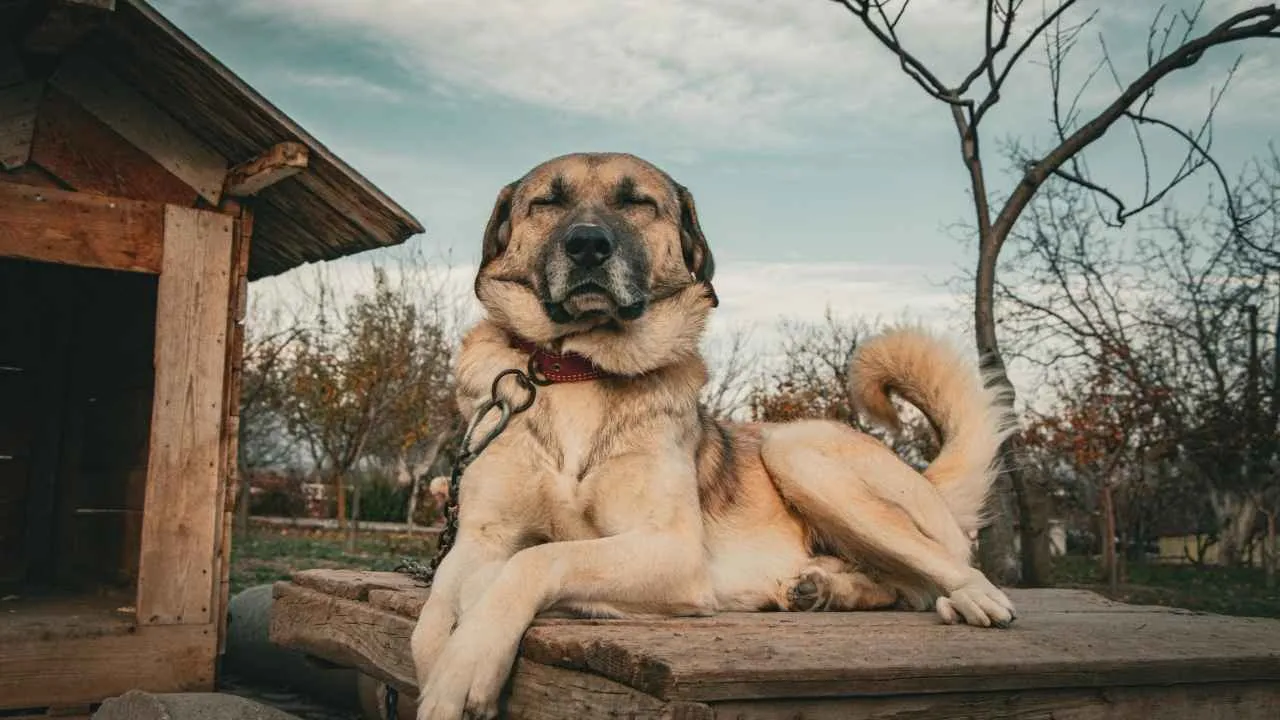
Originating in Turkey’s rugged Anatolian region, this powerful livestock guardian was developed to protect flocks across challenging terrain. Its muscular yet agile build helps it navigate demanding landscapes, while its independent nature allows it to work without constant direction. With an ancient lineage, the Anatolian Shepherd is valued for its intelligence, patience, and strong protective instincts.
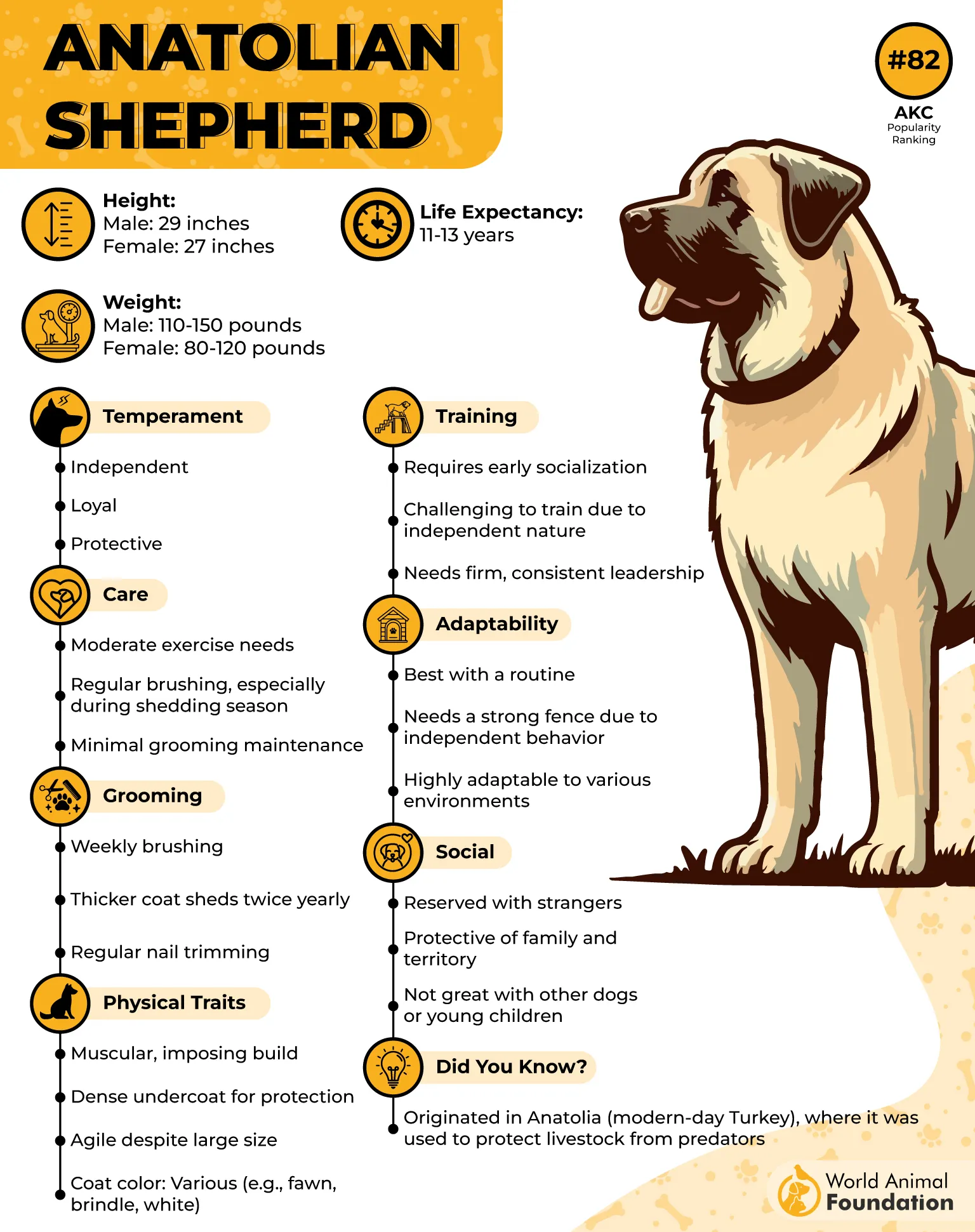
Accustomed to life in exposed environments, the breed is known for its hardiness and ability to guard livestock through changing outdoor conditions. It can be deeply loyal to its family and protective of animals under its care.
However, its territorial temperament and imposing presence make experienced handling, clear leadership, and consistent training especially important. According to Omlet, this breed needs a lengthy daily walk to burn off energy and stay satisfied.
How This Breed Stands Out
Endures wide temperature swings: Its rugged working background helps it cope with challenging outdoor conditions, including changing temperatures.
Self-reliant livestock protection: Its independent instincts and territorial nature enable it to watch over livestock with limited direction from a handler.
4. Australian Cattle Dog
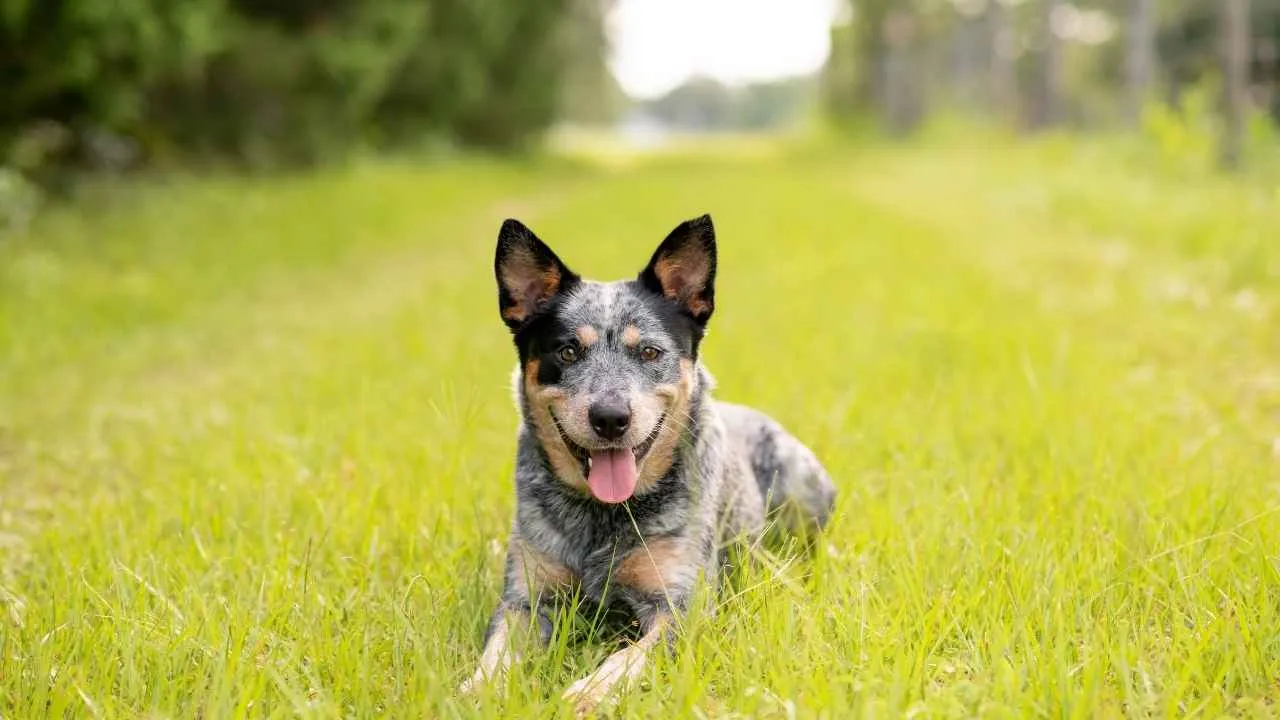
Developed in Australia, the Australian Cattle Dog is a hardworking herder built for demanding outdoor conditions. Its background in the hot, dry outback has helped shape an energetic, intelligent breed capable of handling active work. Related to the Dingo, this energetic breed has strong herding instincts and can make a lively companion for hiking, running, and other outdoor pursuits.
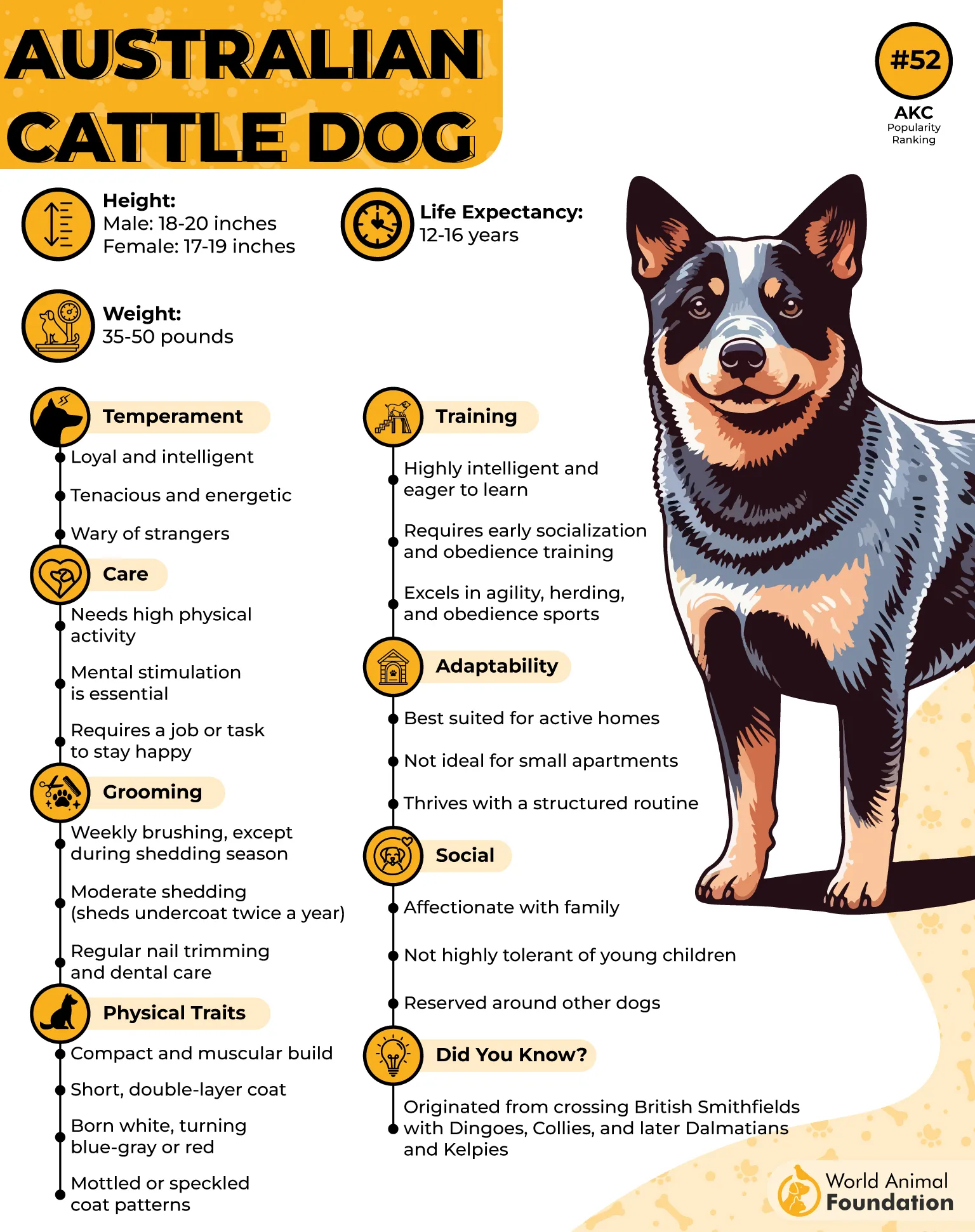
Its coat and endurance support work in warm environments, but this breed needs plenty of daily exercise and mental challenges to remain content. Naturally alert, Australian Cattle Dogs may be reserved around unfamiliar people, making early socialization and manners training important. Their agility and quick responses also help them maneuver around livestock while guiding cattle.
How This Breed Stands Out
Heat-tolerant outback work ethic: Bred for Australia’s hot and humid conditions, it is well suited to vigorous activity in warm weather when given appropriate care.
Agile cattle-driving movement: Its athleticism and herding instincts help it move quickly and maneuver around cattle.
5. Akita
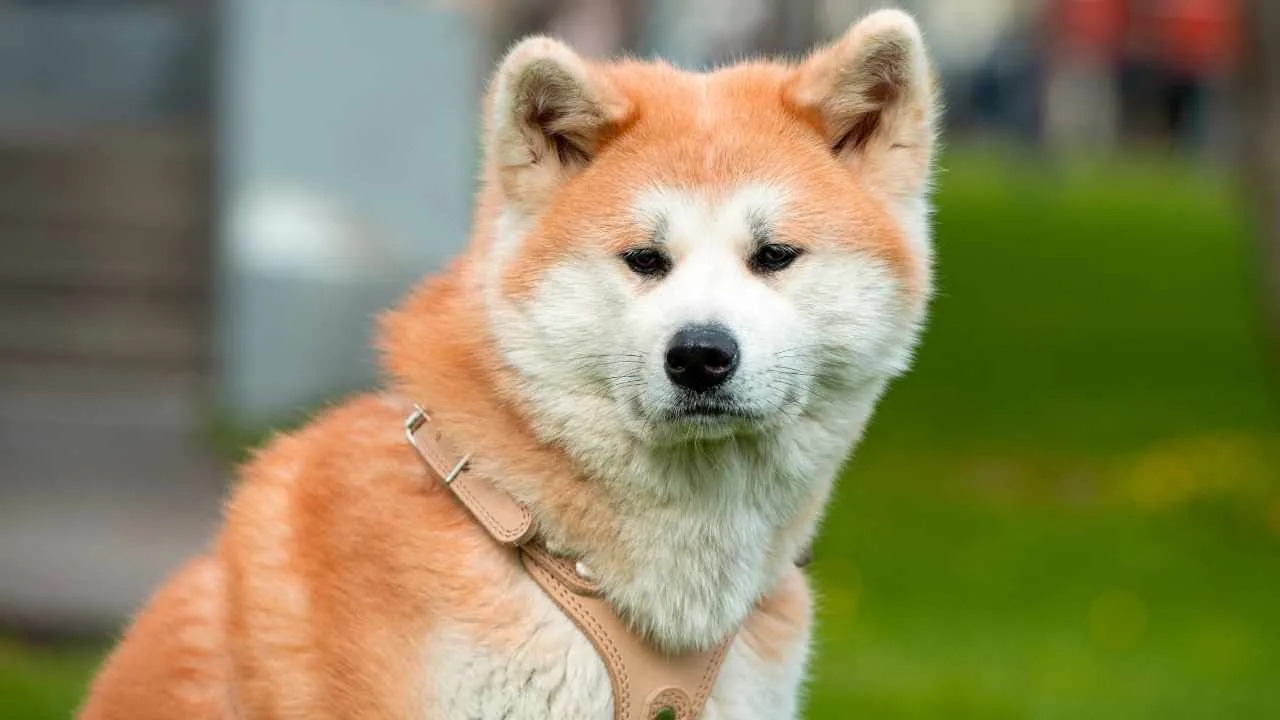
With roots in Japan, the Akita is a powerful, double-coated breed valued for its courage, dignity, and devotion to family. Historically regarded as a protector, this sturdy spitz-type dog has a broad head, erect ears, and a thick, curled tail. Its independent nature reflects a background of working without constant direction.
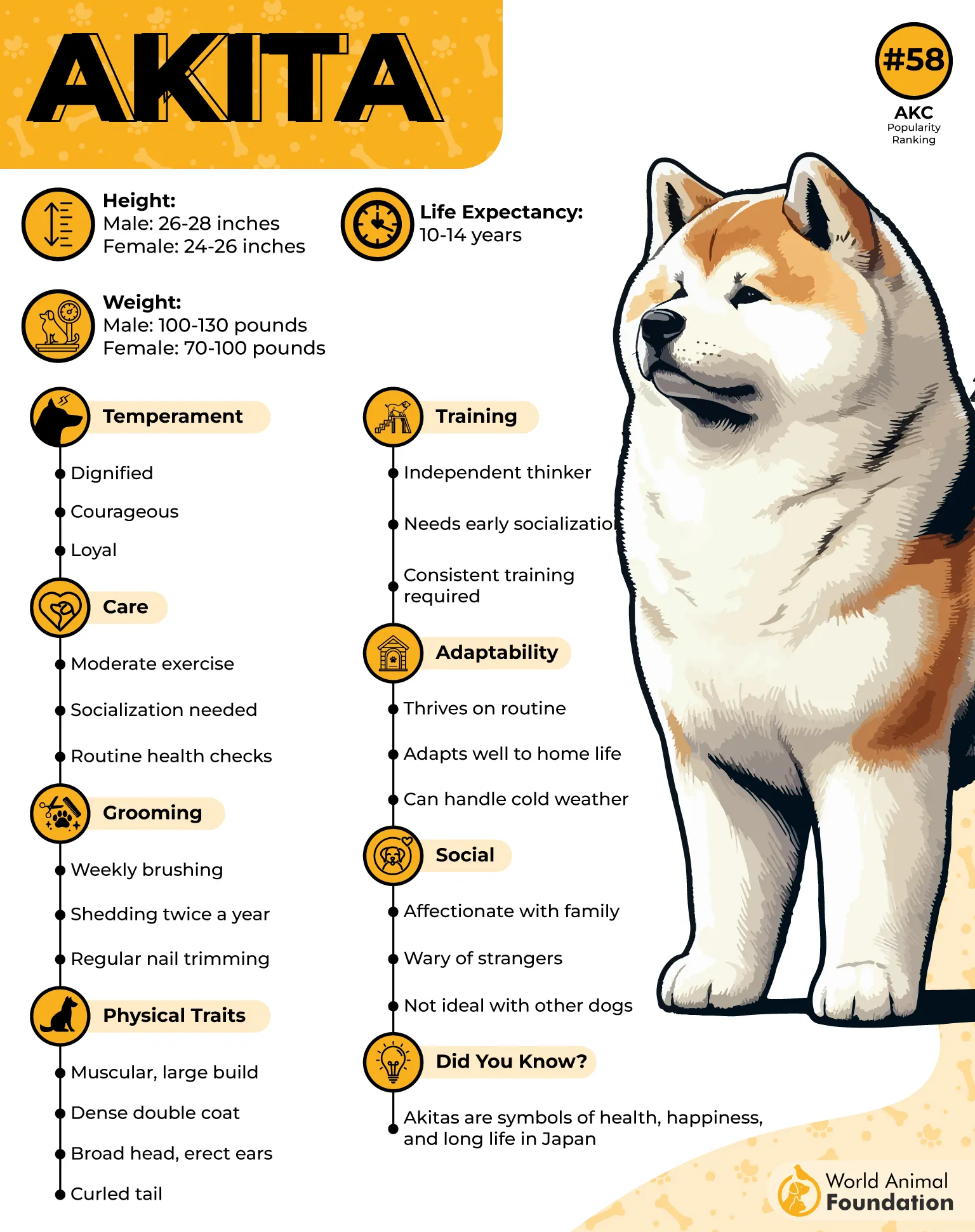
A dense, smooth coat helps the Akita cope with cold weather, making it better suited to cooler environments than intense heat. These dogs are often reserved around strangers and may be intolerant of other animals, but they can show an affectionate side with their families. Early socialization and consistent training are essential to help manage their strong-willed temperament and protective instincts.
How This Breed Stands Out
Dense insulating undercoat: Its thick double coat provides insulation that helps protect the Akita in cold conditions.
Resilience in snowy Japanese regions: Its Japanese heritage and heavy coat suit it to cooler, snowy environments, though hot weather can be challenging.
6. Alaskan Malamute
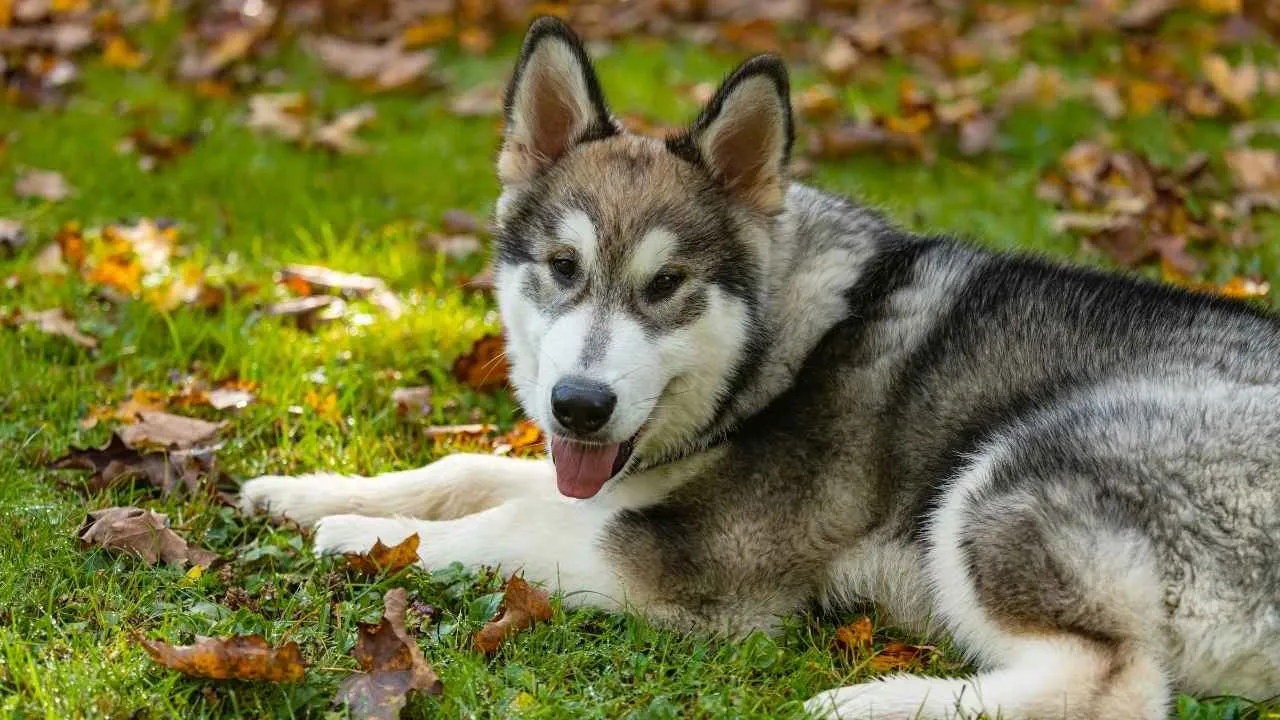
Developed by the Inuit people for demanding Arctic work, the Alaskan Malamute was bred to haul heavy sleds across long distances rather than prioritize racing speed. Its working style emphasizes steady power and endurance, making it well suited to transporting substantial loads through snow-covered landscapes.
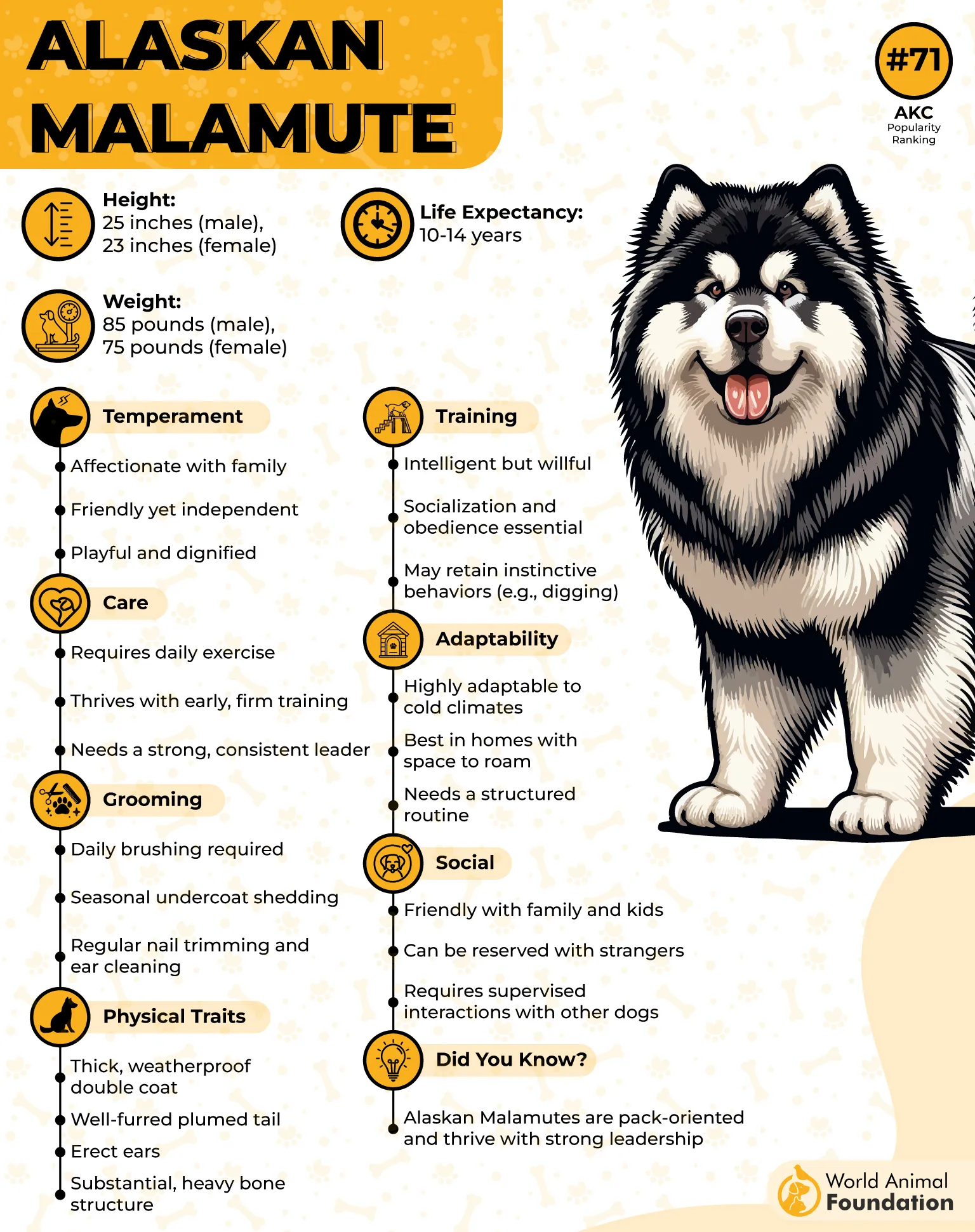
This breed’s muscular physique features heavy bones, powerful shoulders, and a deep chest, supported by a thick, weather-resistant double coat. These physical traits help it handle freezing conditions and strenuous outdoor tasks. However, Malamutes have abundant energy and can struggle in extreme heat, so access to shade, fresh water, and opportunities to rest is essential during warm weather.
How This Breed Stands Out in Cold Weather
Heavy-load hauling strength: Its muscular frame and sustained working pace help it pull substantial loads over long distances.
Powerful, cold-adapted build: Strong shoulders, a deep chest, and an insulating double coat equip it for demanding work in Arctic conditions.
7. Great Pyrenees
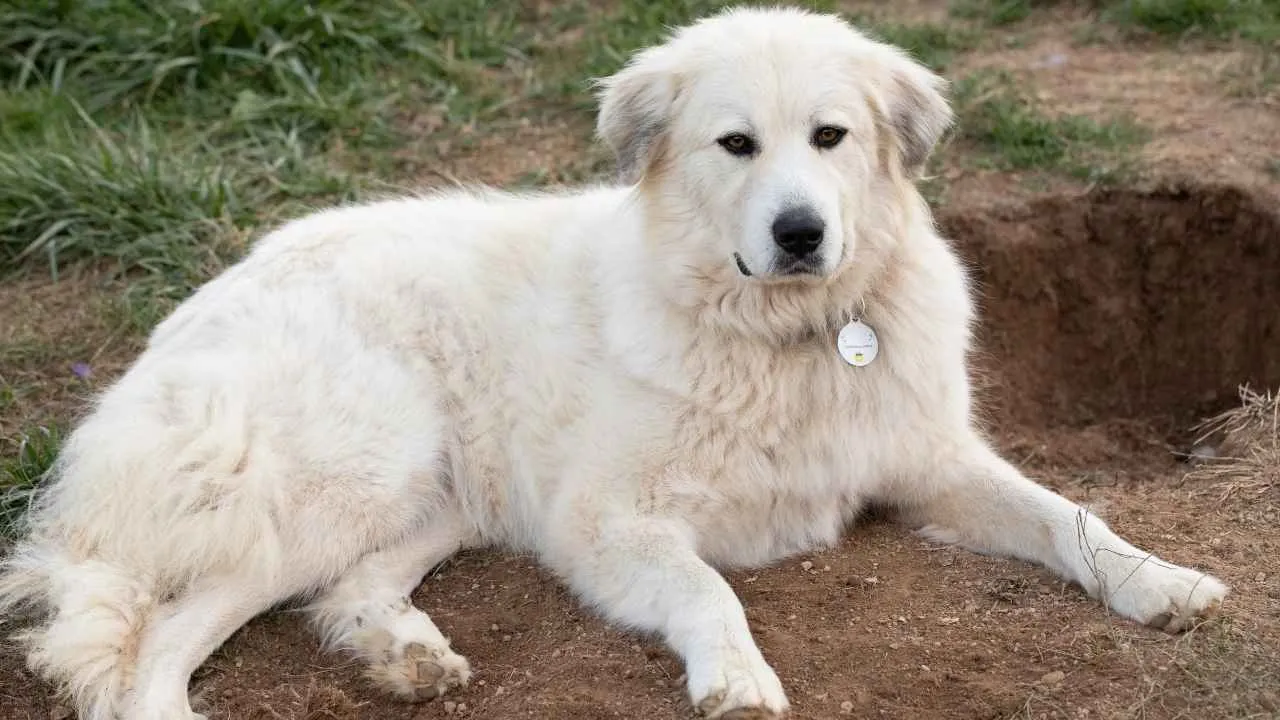
Originating in the Pyrenees Mountains between France and Spain, the Great Pyrenees was developed to guard livestock in rugged, often harsh conditions. Its strong, agile build and independent nature help it watch over flocks in mountainous terrain, where reliable protection matters more than constant direction from a handler.
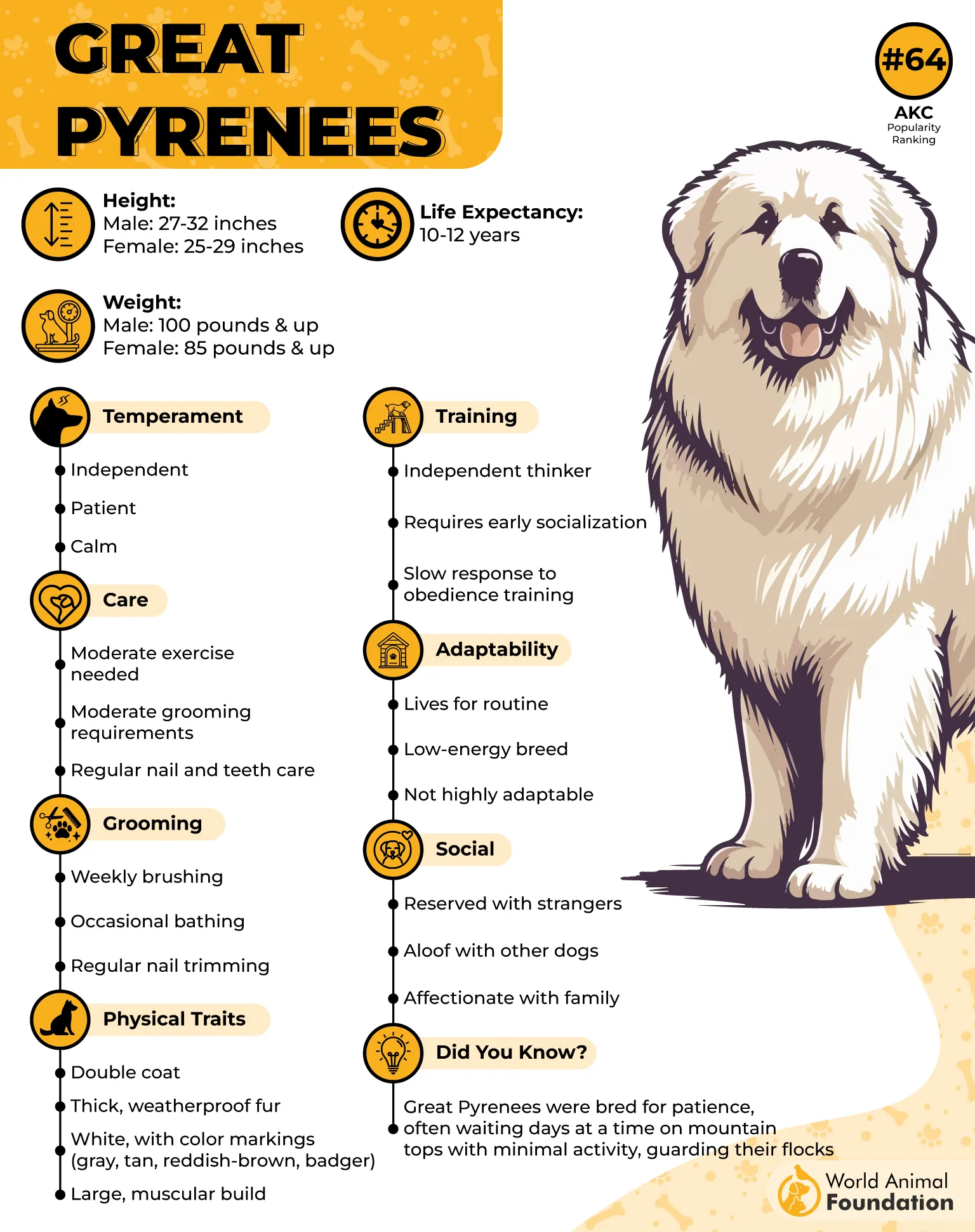
A thick, fluffy double coat gives this breed a majestic appearance while helping protect it from challenging weather. Although generally calm and not excessively active, the Great Pyrenees benefits from daily walks or play in a securely fenced yard.
Early socialization and consistent training are important because its territorial instincts and independent thinking can make obedience challenging.
How This Breed Stands Out
Thick, weatherproof double coat: Its dense double coat helps shield the dog from harsh weather in mountainous environments.
Independent highland flock guarding: Bred to protect livestock, it can work independently while watching over flocks in demanding highland conditions.
8. Saint Bernard
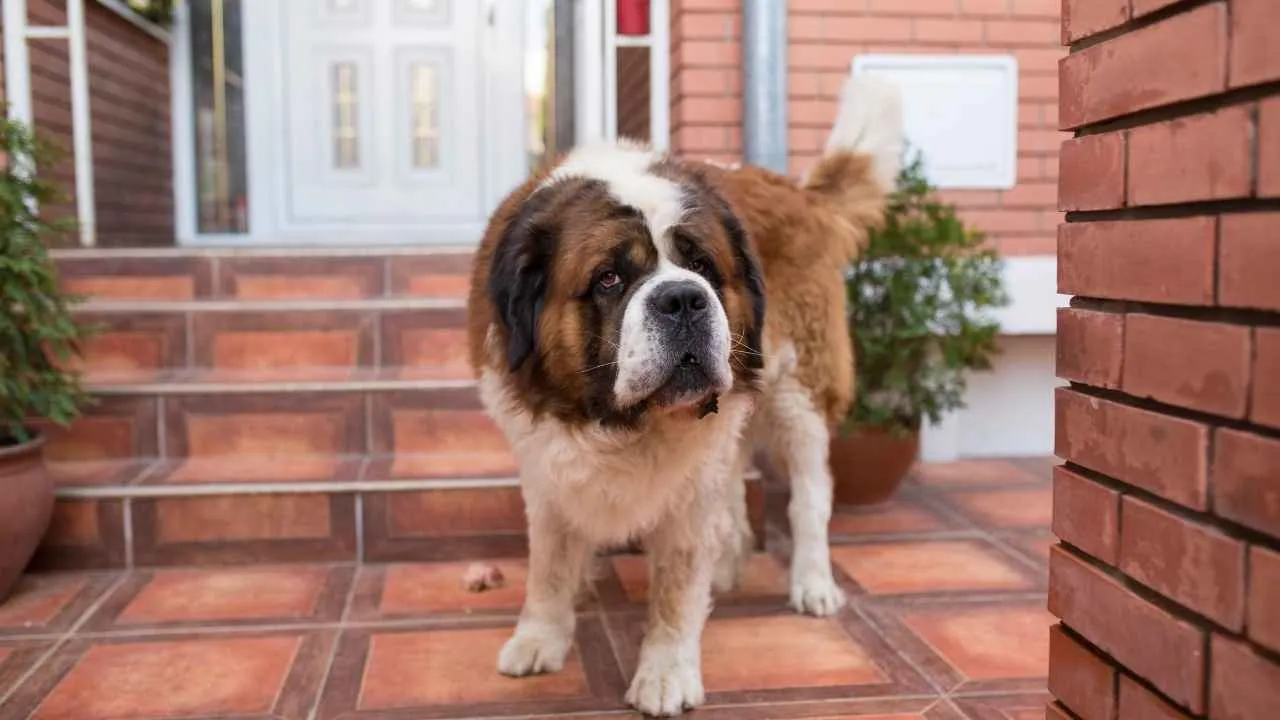
Originating in Switzerland, the Saint Bernard became famous for its life-saving work in the snowy Alpine mountains. This giant working breed was valued for its ability to navigate deep snow and endure freezing conditions during search-and-rescue missions. Its powerful build and history of mountain rescue have made it a lasting symbol of alpine assistance.
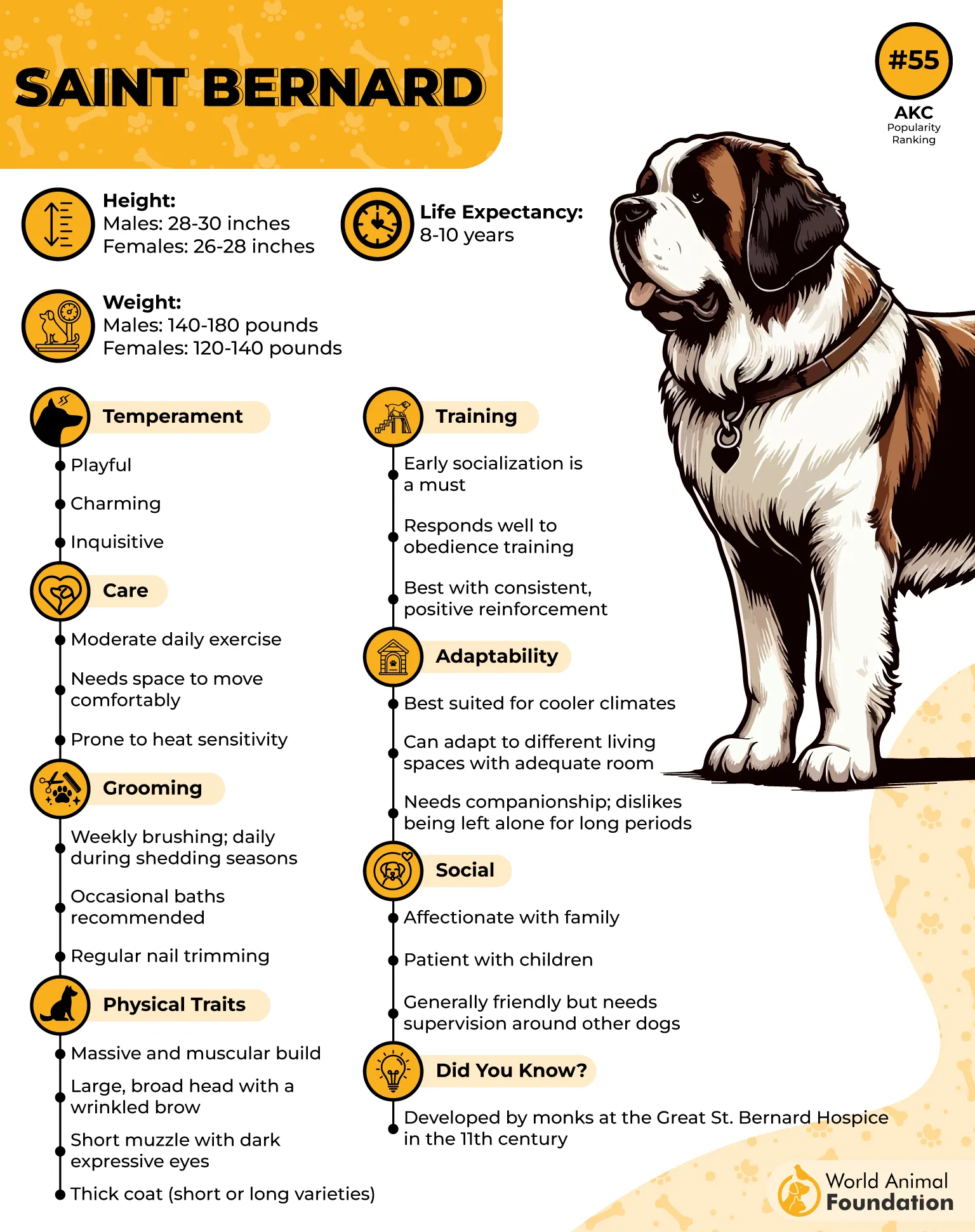
Saint Bernards have smooth or rough coats, typically featuring brown and white coloring with darker markings around the face. Their coat provides some protection in cold environments, while their broad paws help them move across snowy ground. Despite their imposing size, these dogs are affectionate, loyal, and eager to please, qualities that support their traditional work alongside people.
How This Breed Stands Out
Alpine snow-rescue heritage: Its historic role in rescuing travelers in the Swiss Alps highlights its association with cold-weather endurance and mountain work.
Broad paws for snowy terrain: Wide paws help provide support when moving through snow-covered landscapes.
9. Siberian Husky
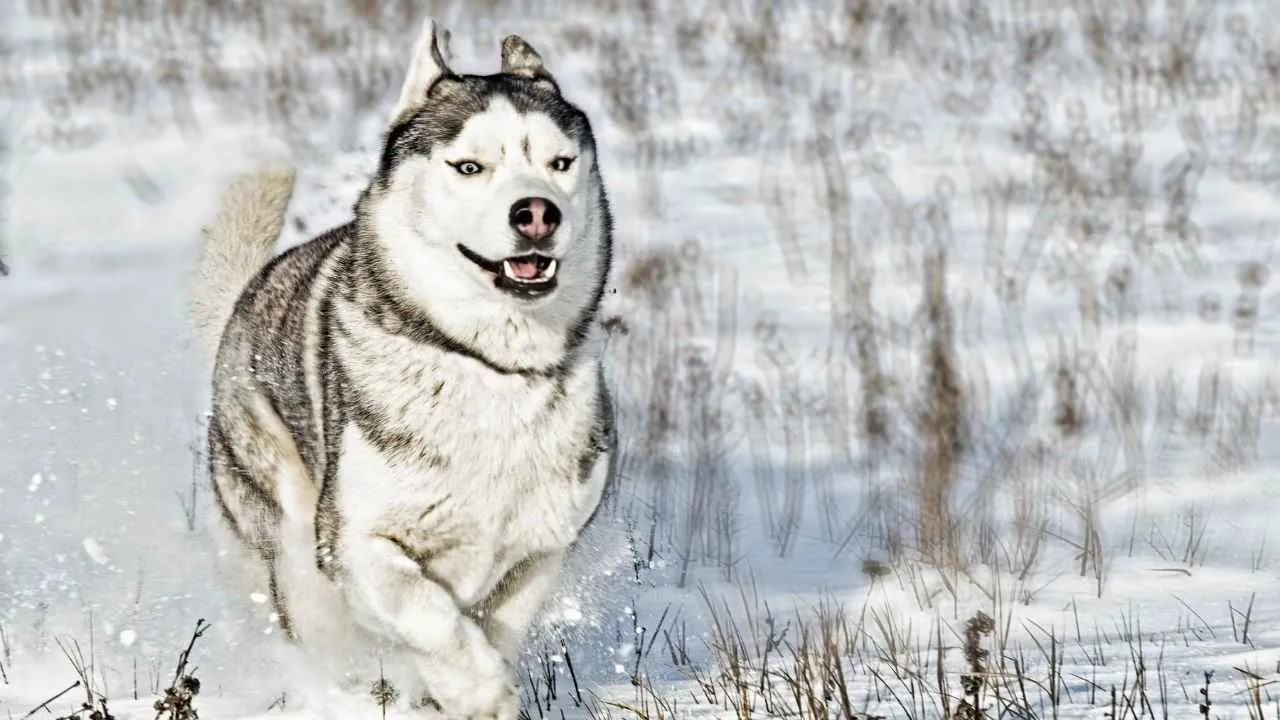
Originating in Northeast Asia, the Siberian Husky was developed as a sled dog, relying on stamina and sustained effort to travel across frozen landscapes. Its athletic build supports speed and endurance, while its lively, playful temperament makes it an engaging companion for active households. Striking blue eyes and a wolf-like appearance add to its distinctive look.
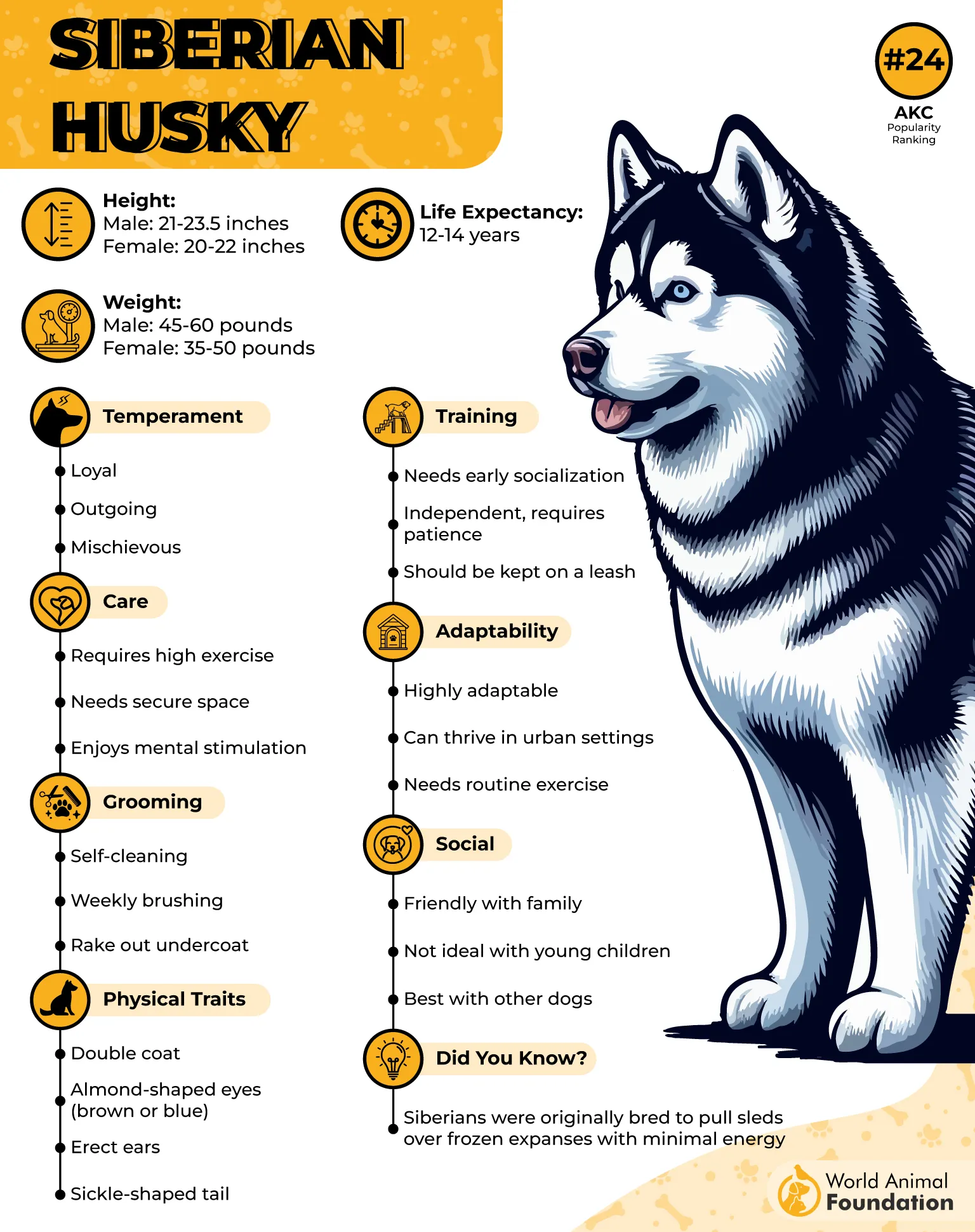
A thick double coat provides insulation against freezing temperatures, helping this breed cope with harsh Arctic winters. Siberian Huskies are generally confident and courageous, but their high energy levels require regular exercise and dedicated care. Early training and socialization also help them live harmoniously with children and other household members.
How This Breed Stands Out
Exceptional sled-pulling endurance: Bred for demanding sled work, the Husky has the stamina to travel long distances in challenging conditions.
Dense coat for Arctic winters: Its insulating double coat helps protect it from severe cold and snowy environments.
10. German Shorthaired Pointer
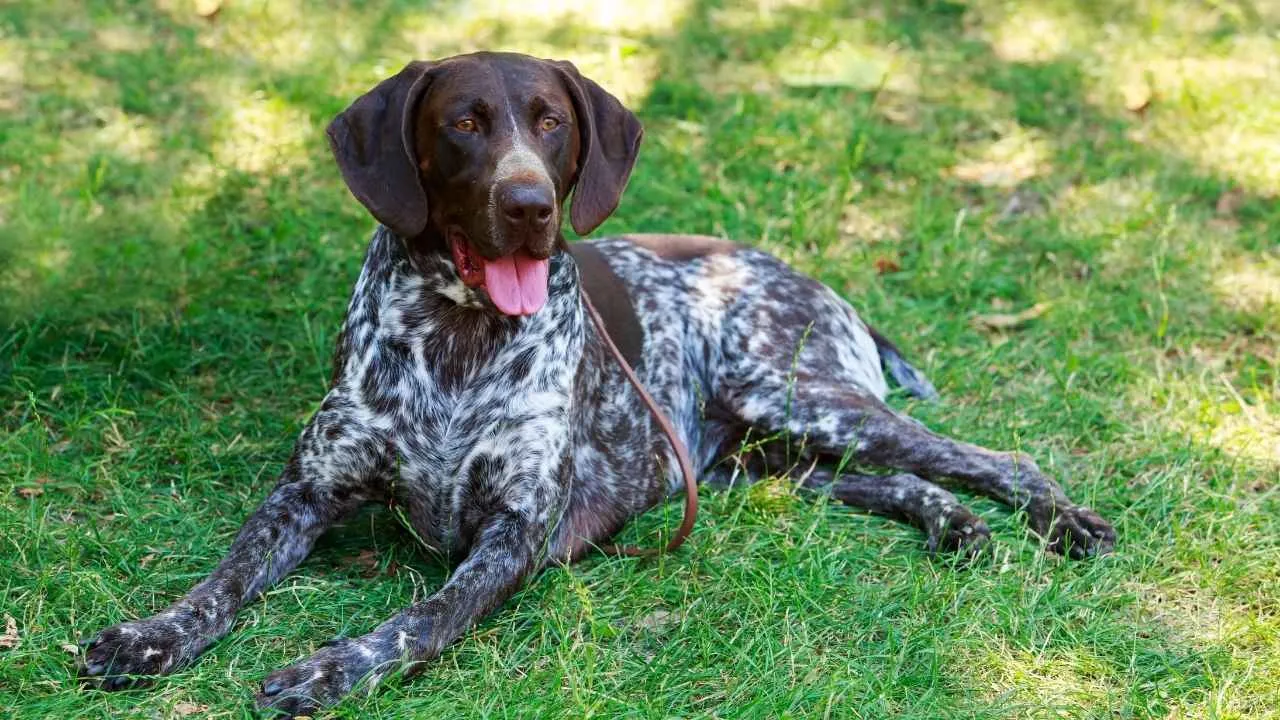
Built for active outdoor pursuits, the German Shorthaired Pointer is an energetic sporting breed that can accompany pet parents on hikes, runs, and hunting trips. Its athletic build and adaptable working abilities help it handle varied terrain, while its enthusiasm for swimming makes lakes and creeks welcome stops during outdoor adventures.
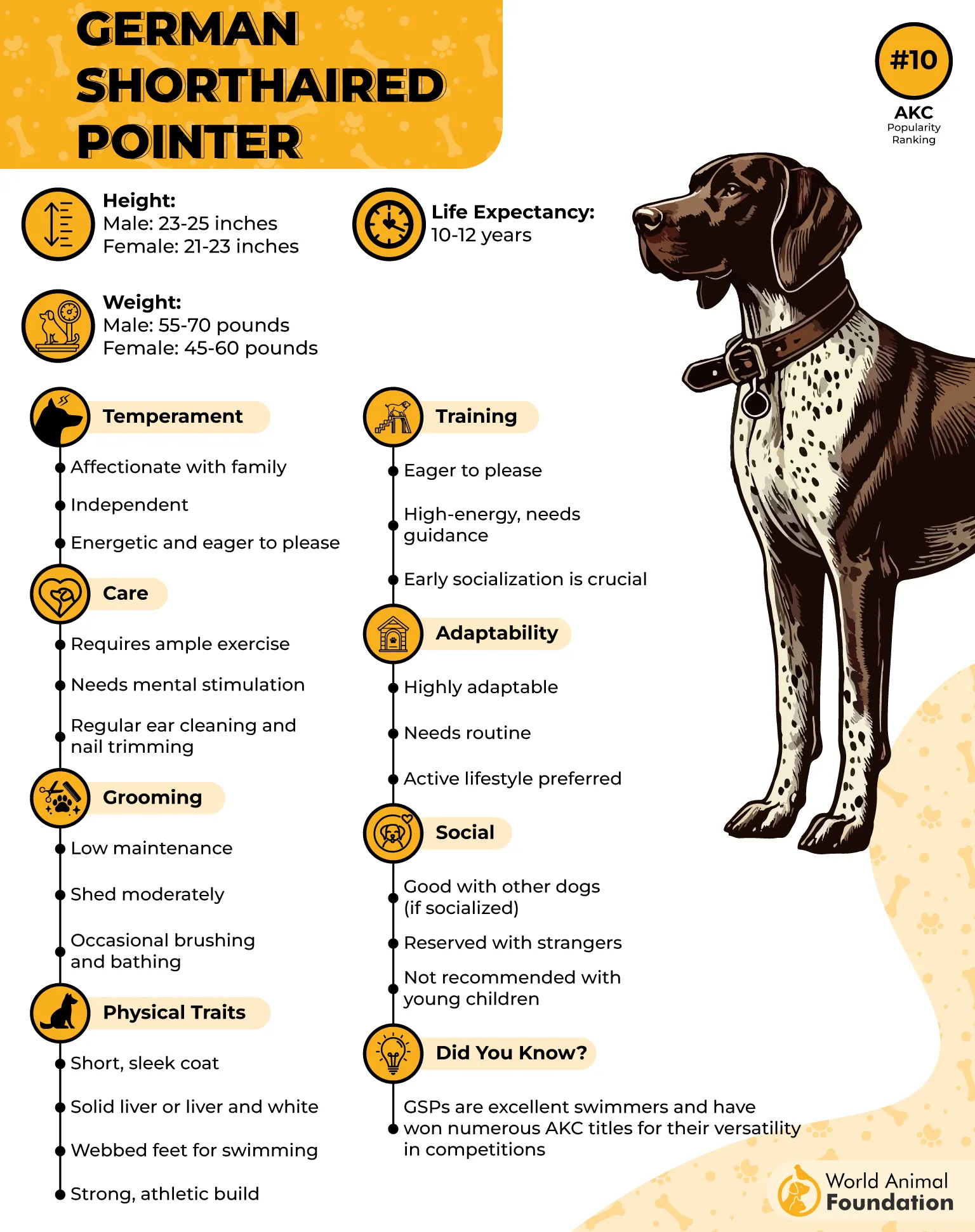
This breed’s short, dense coat makes it better suited to warm conditions than many heavily coated dogs. However, its seemingly endless energy can lead to overexertion, particularly in hot weather, so planned rest breaks and opportunities to cool down are important. Consistent training and early socialization also help manage its strong prey drive and high activity needs.
How This Breed Stands Out
Athletic versatility across terrain: Its combination of stamina, swimming ability, and athleticism supports a range of outdoor activities.
Efficient all-day field movement: Its high energy and active working style help it cover ground during extended outdoor pursuits.
Conclusion
Some dog breeds are remarkably equipped to handle extreme conditions, thanks to their physical strength, specialized coats, endurance, and working instincts. From freezing mountain ranges to hot, dry landscapes, these dogs demonstrate impressive adaptability.
Siberian Huskies and Alaskan Malamutes excel in cold environments, while Saint Bernards have a long history of Alpine rescue work. Great Pyrenees, Anatolian Shepherds, and Tibetan Mastiffs are valued for guarding livestock in challenging mountainous regions.
Australian Cattle Dogs are suited to demanding work in warmer climates, while German Shorthaired Pointers bring athletic versatility to outdoor adventures. Akitas, Norwegian Elkhounds, and Bernese Mountain Dogs also showcase traits shaped by their working backgrounds and cooler native environments.
Choosing a breed requires considering its climate tolerance, exercise needs, temperament, and care requirements. Even hardy dogs need suitable shelter, fresh water, rest, and responsible handling to remain safe and comfortable in challenging weather.
