




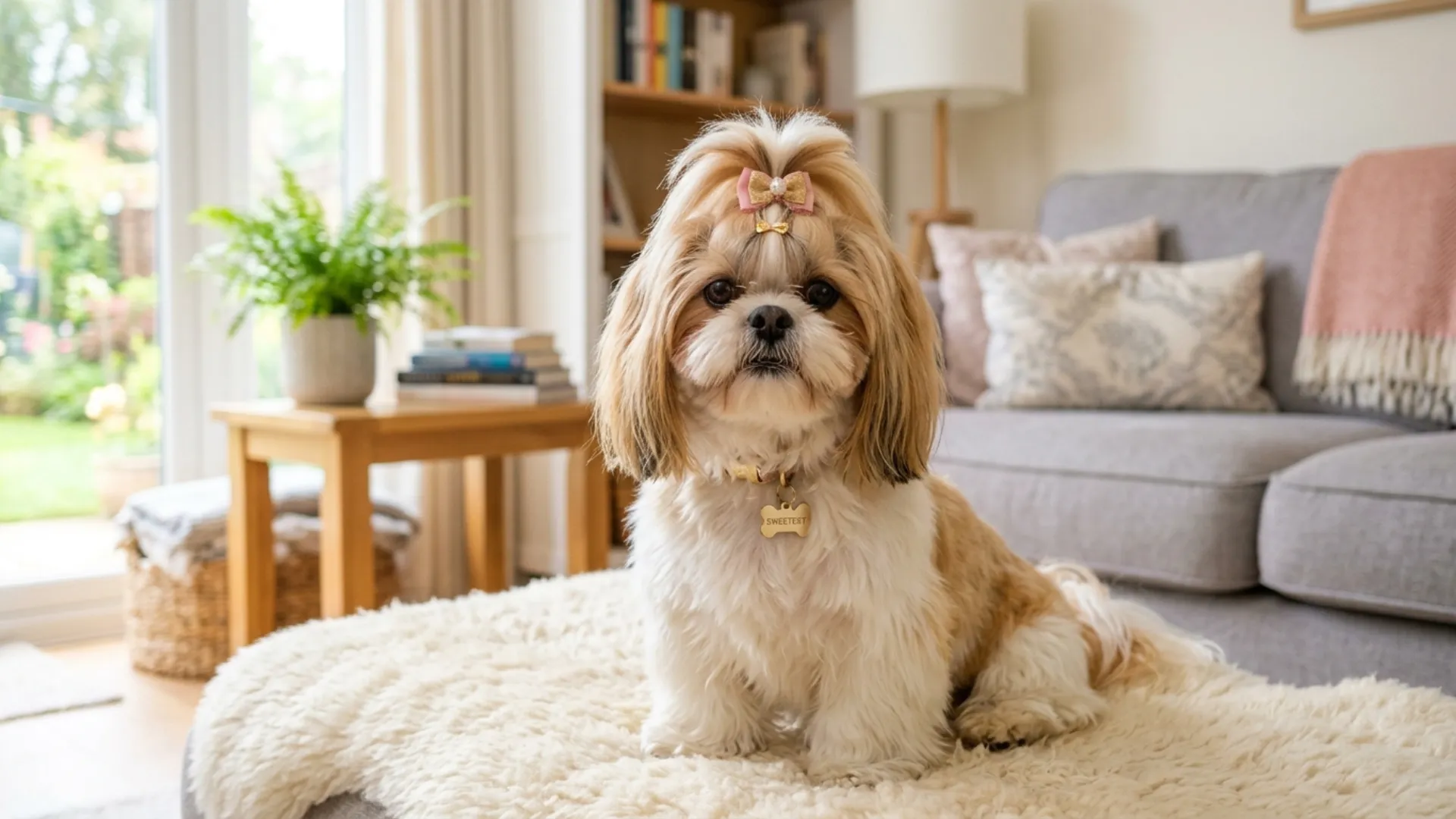
Small dogs, massive personalities; that pretty much sums up the world of toy breeds. They will happily snooze on your lap, shamelessly follow you into the bathroom, and somehow manage to rule every single room they walk into. But not all toy dogs are built the same: some are incredibly sassy, some are perfectly chill, and others are absolute “Velcro dogs” that refuse to leave your side for even five minutes.
According to the American Kennel Club (AKC), breeds in the Toy group are highly affectionate, sociable, and incredibly adaptable to almost any lifestyle.
These little guys are wicked smart, packed with energy, and many even carry a surprisingly strong protective instinct. They are a massive hit with city dwellers because they make the absolute best apartment dogs and serve as terrific lap warmers on chilly nights.
If you are ready for a tiny roommate with a whole lot of love to give, here are the 10 sweetest toy dog breeds that are worth every single hair on your couch.
Sweetest Toy Dog Breeds to Share Your Home With
1. Cavalier King Charles Spaniel
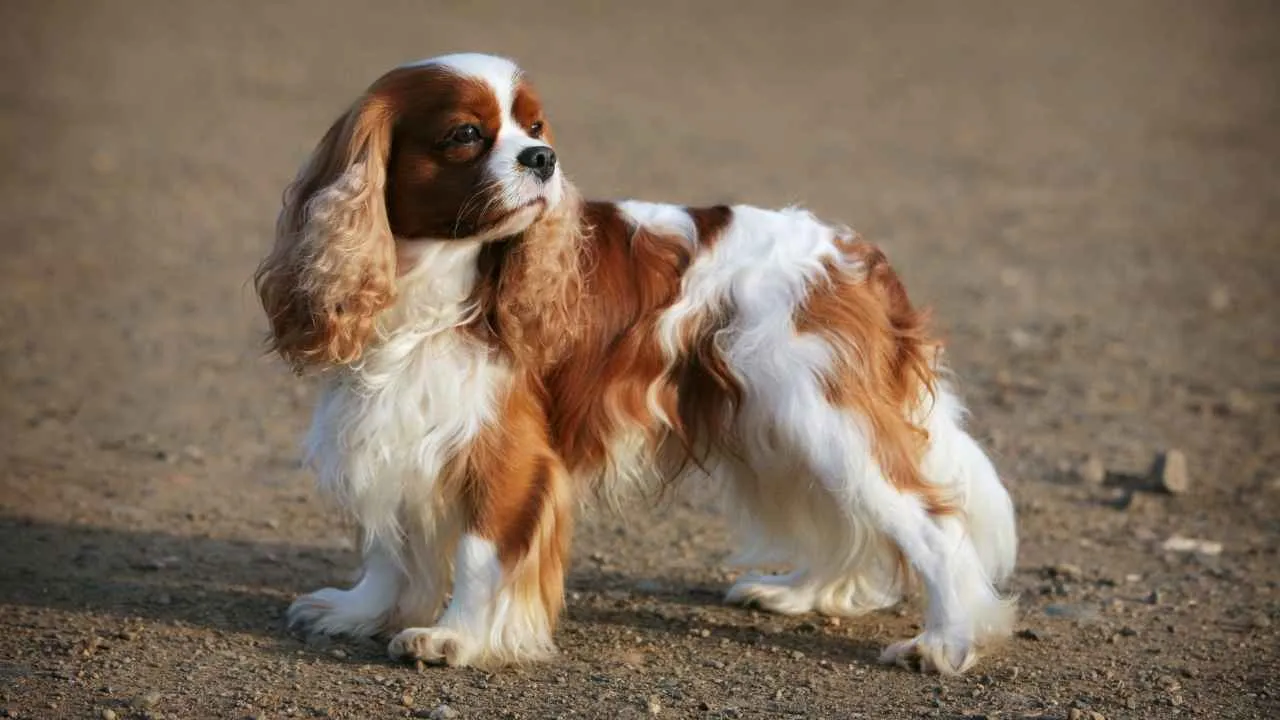
This companion dog was bred to warm royal laps and earned its name in the 17th century after King Charles I and his son King Charles II, who were so devoted to the breed that they brought them to parliament and on long journeys, according to PetMD.
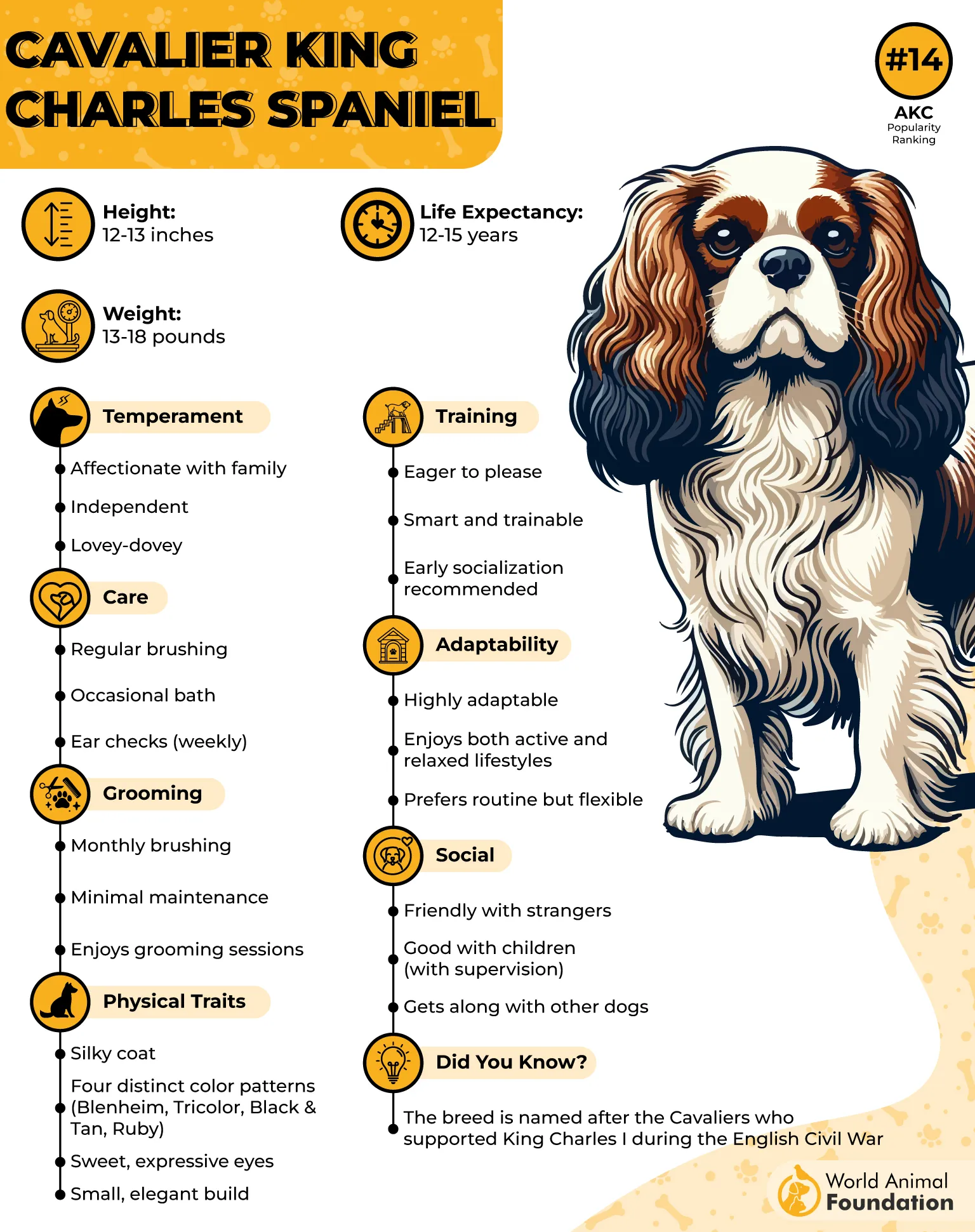
The breed has a low prey drive but may still chase small animals like hamsters without proper training. Naturally sociable, it bonds easily with family members, children, other pets, and even strangers — which makes it a poor choice as a watchdog.
Weighing 12–18 pounds and standing 12–13 inches tall, this apartment-friendly dog has moderate exercise needs of around 30–40 minutes daily, met through walks, fetch, flyball, and mental stimulation. The breed is sensitive to temperature extremes and does best in a climate-controlled environment.
2. Toy Poodle
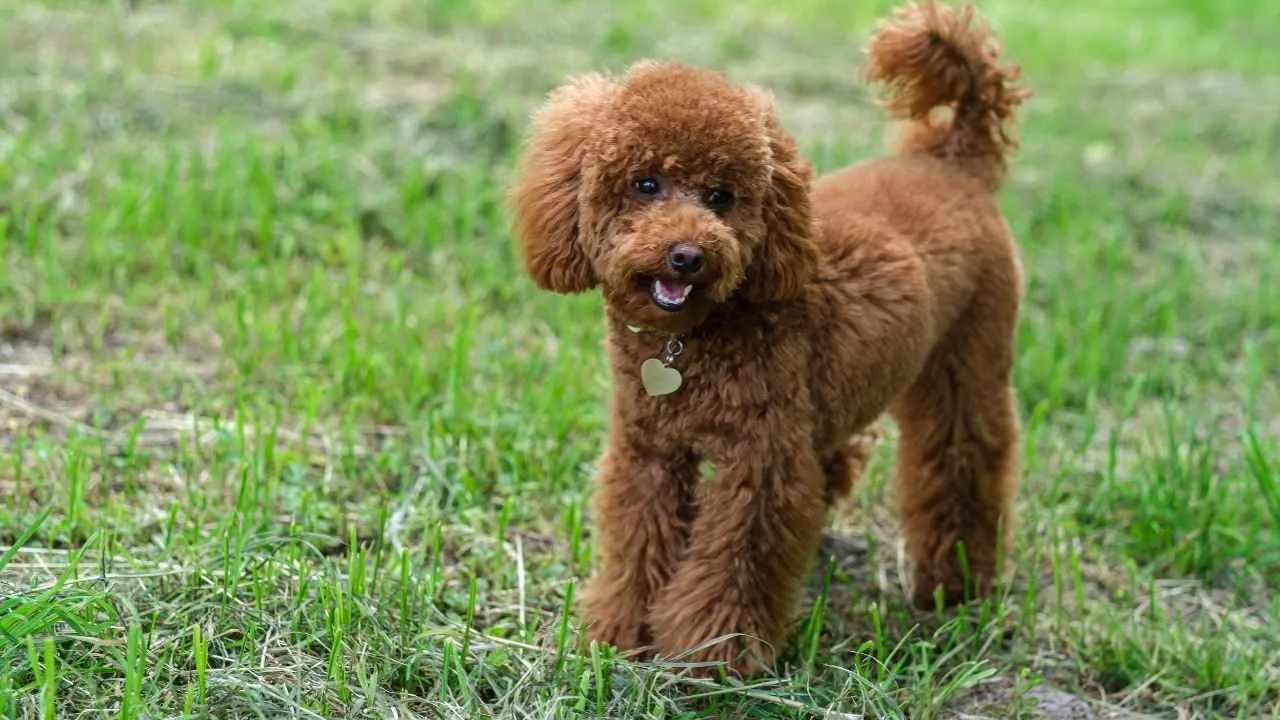
The Poodle ranks among the smartest dog breeds in the world and comes in three varieties: Toy, Miniature, and Standard. Originally bred in Germany as a water retriever, its name derives from the German word Pudel, meaning “to splash.” A water-resistant coat and webbed feet reflect those aquatic roots.
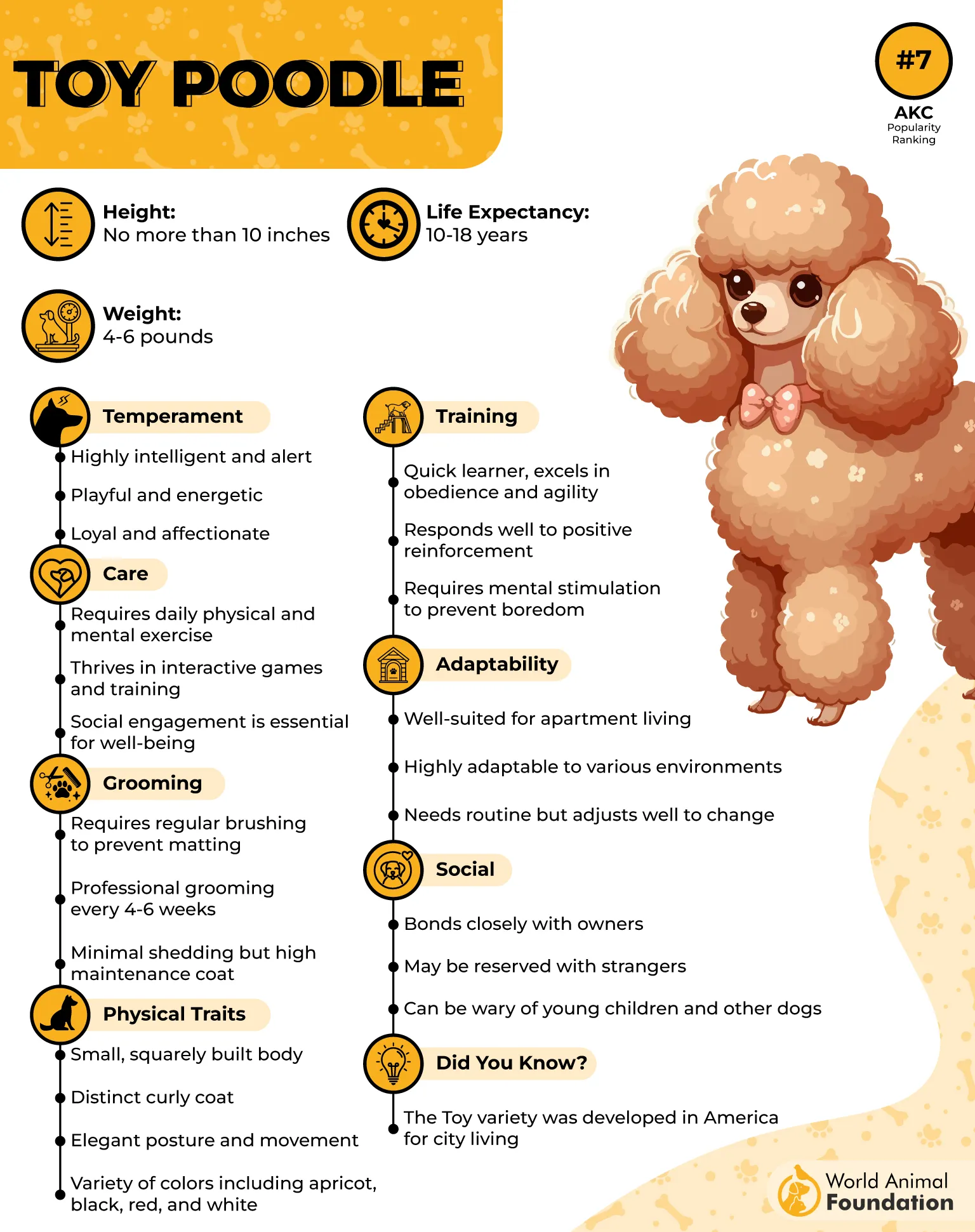
This excellent companion can learn complex commands and problem-solving tasks within just five repetitions. Unlike most double-coated breeds, the Poodle grows hair rather than fur, making it a hypoallergenic option. The Toy variety weighs around 4–9 pounds and stands under 10 inches tall, making it well suited to apartment living.
The breed lives 14–17 years, offering a long and rewarding companionship. Though it sheds minimally, regular grooming is essential: daily brushing, professional clipping every 4–6 weeks, and monthly bathing. The Poodle forms deep bonds with its owner and can develop separation anxiety if left alone for extended periods.
3. Shih Tzu
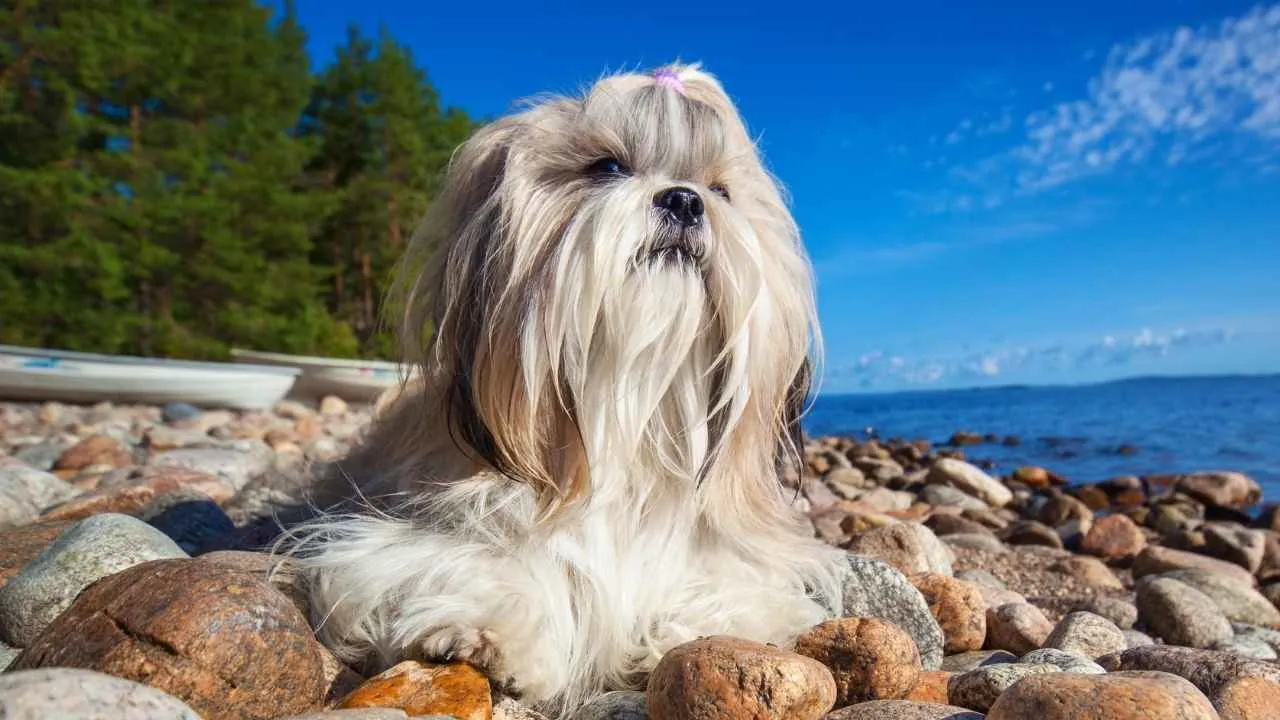
The Shih Tzu is one of the ancient dog breeds, developed within the Forbidden City in the 17th century by crossing the Lhasa Apso and Pekingese for Chinese royal families. Since the lion holds special significance in Chinese culture, the breed was deliberately developed to resemble one.
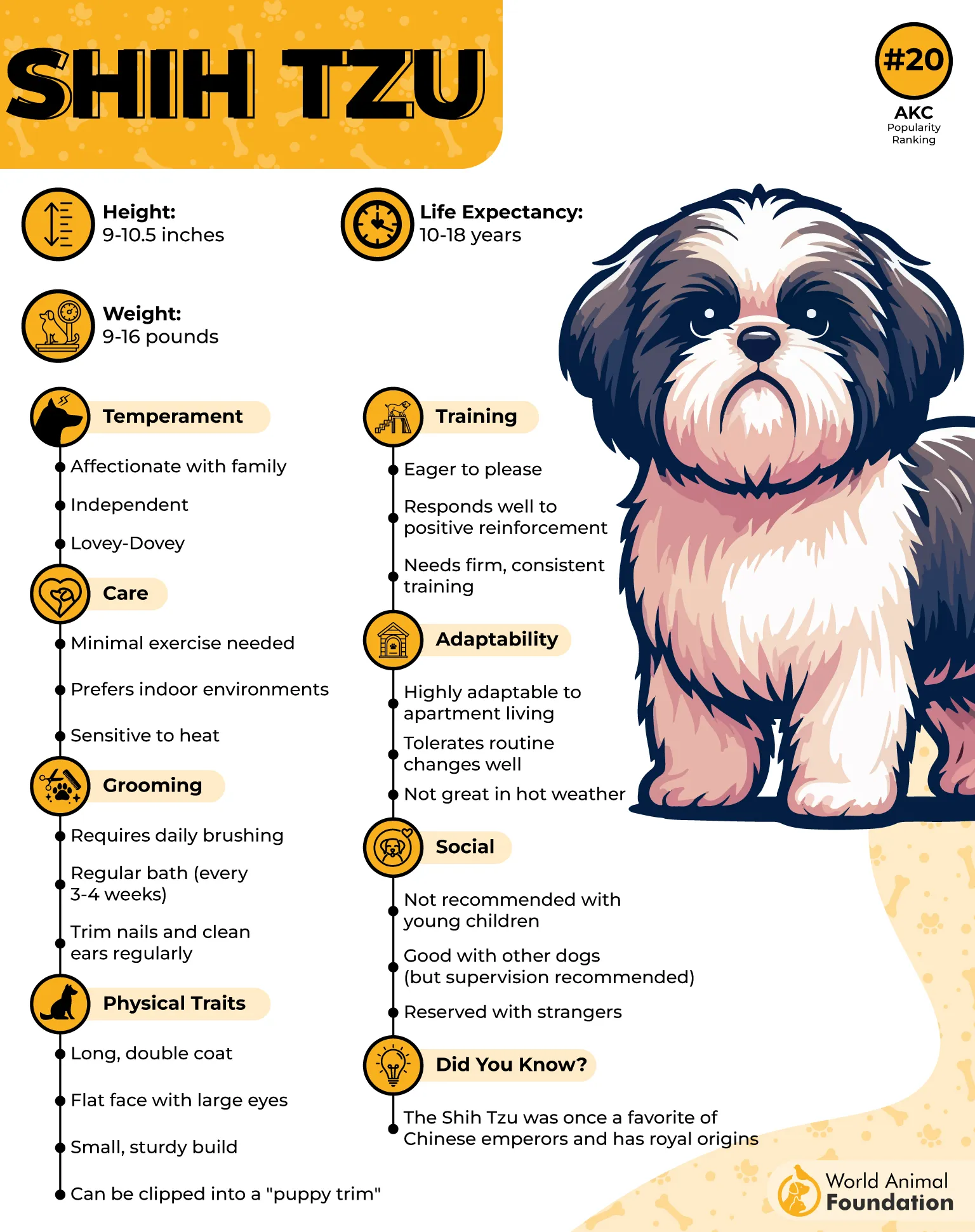
It tends to claim a spot in the home as its territory and will bark at strangers who approach, a trait rooted in its watchdog history. Weighing 9–16 pounds and standing 9–11 inches tall, it suits small living spaces well. As a brachycephalic breed, its flat face and narrow airways can make breathing difficult.
The Shih Tzu is highly attuned to its owner’s emotions and tends to mirror their moods. An independent streak can lead to stubbornness, making early socialization and consistent training essential. Exercise needs are minimal, around 20–30 minutes daily through indoor play and short walks.
4. Havanese
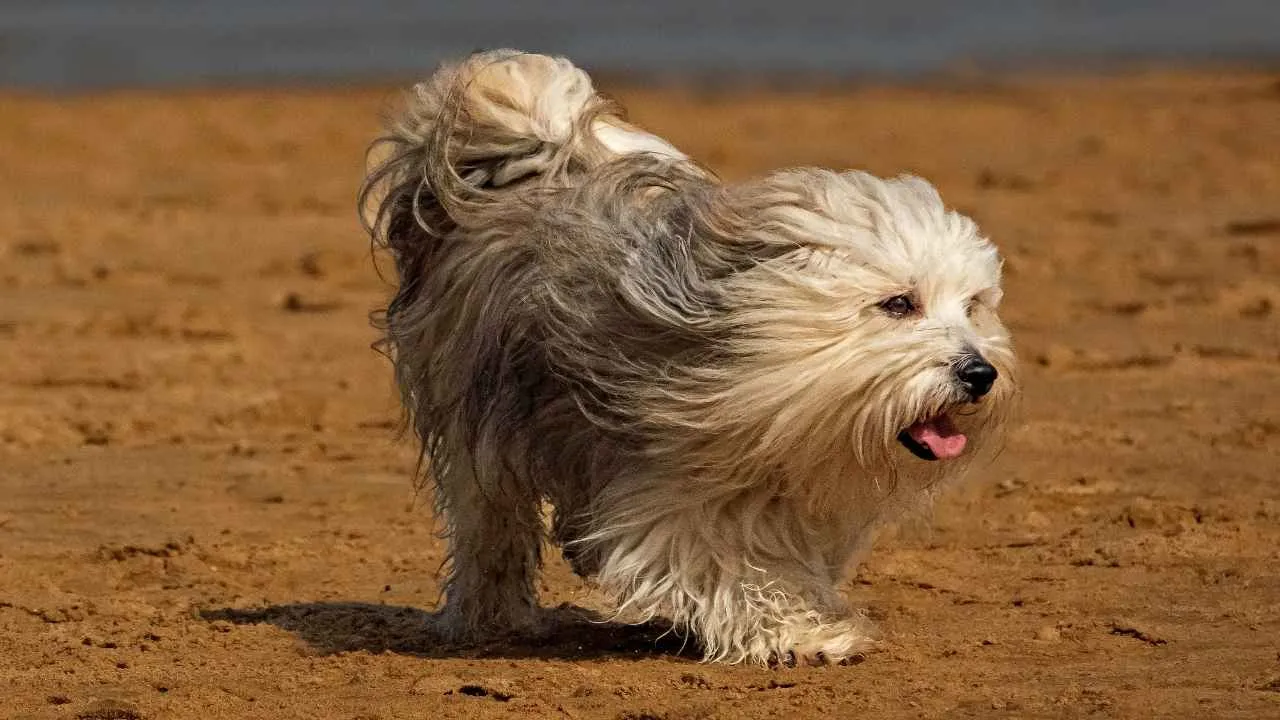
The Havanese is the national dog of Cuba, developed by crossing the now-extinct Blanquito de la Habana with Bichon-type breeds such as the Poodle. Its pure white coat earned it the nickname “Havana Silk Dog,” according to Wikipedia. Its friendly nature and high emotional intelligence have made it useful across a range of roles, including therapy, assistance, performance, and signaling.
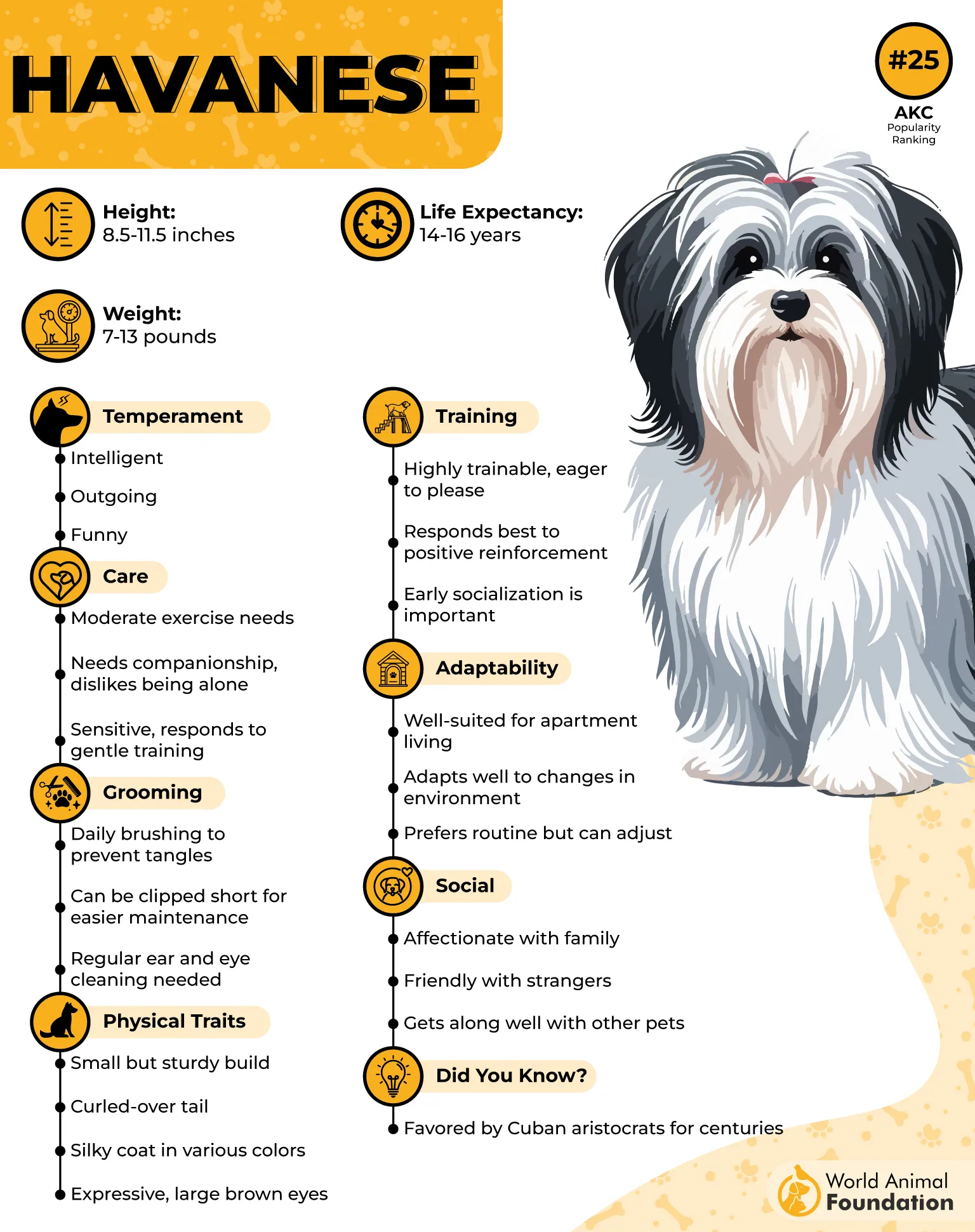
The breed carries a long, silky double coat with low dander production; short coats need weekly brushing while longer coats require daily attention. It reads human emotions well, keeping it naturally alert and making it a surprisingly capable watchdog. Its herding background may also cause it to nip at heels during play.
The Havanese loves being the center of attention and is prone to separation anxiety. Its hypoallergenic coat makes it a good fit for families with allergies. This energetic breed has moderate exercise needs of 30–40 minutes daily, best split into two sessions of fetch, puzzle toys, and brisk walks.
5. Pomeranian
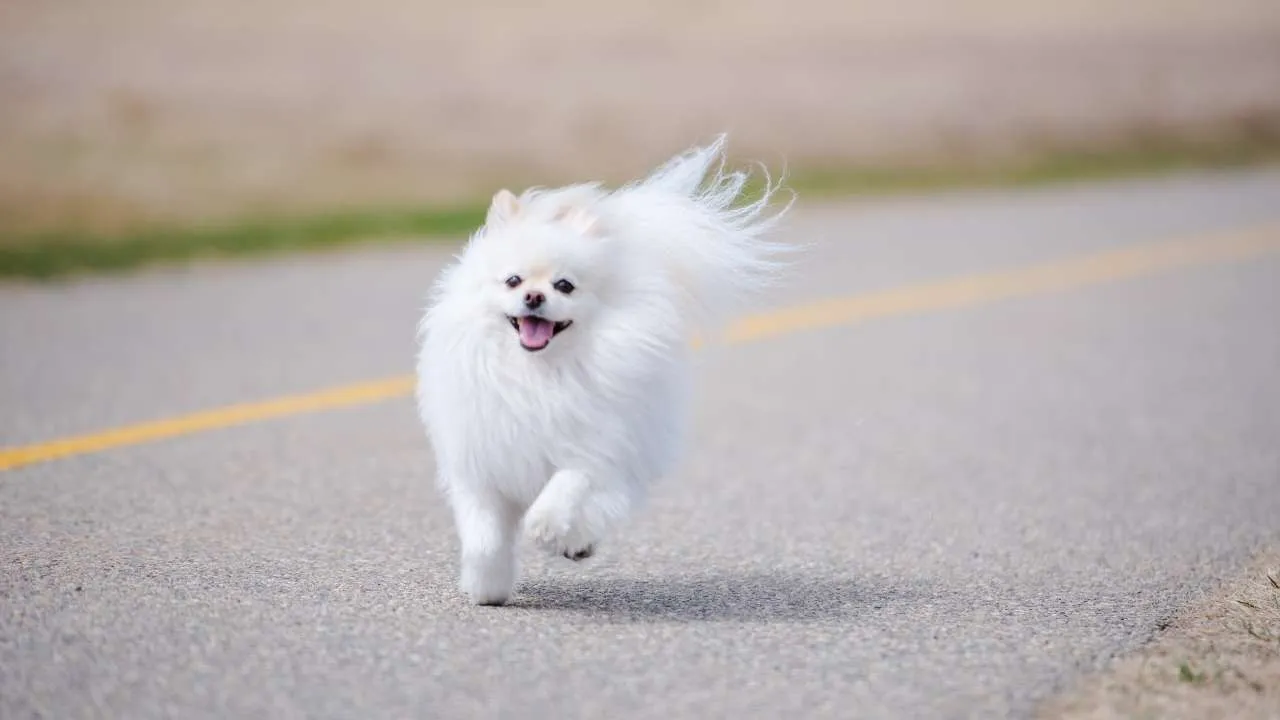
The Pomeranian originated in the region between north-east Germany and north-west Poland. Queen Victoria had a particular fondness for the breed, and it underwent a significant size reduction during her reign. Naturally alert, the Pomeranian can develop excessive barking around strangers without proper training.
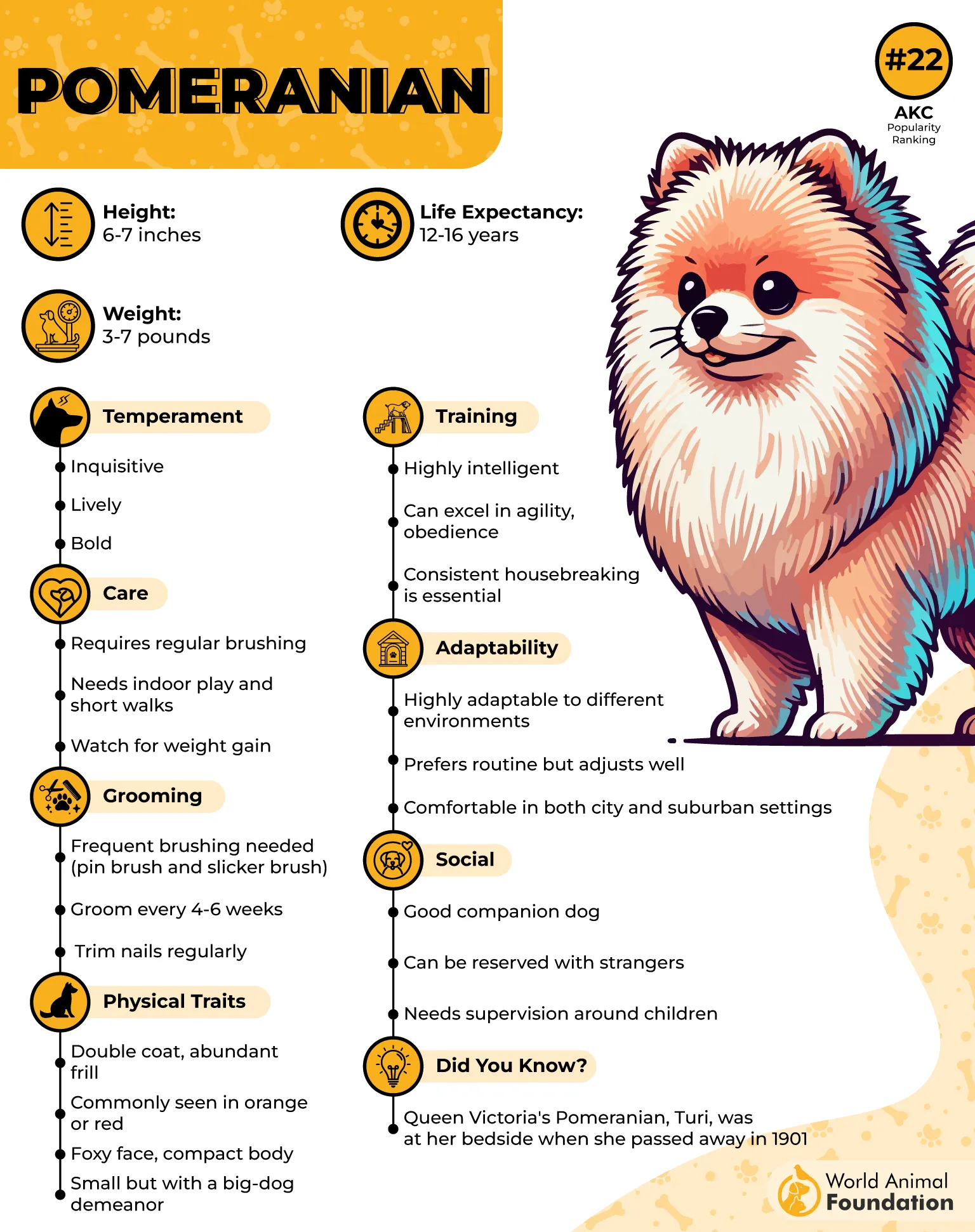
The breed carries the stamina of its Nordic sled-dog ancestors, burning energy quickly before returning to rest. This small breed, weighing no more than 7 pounds, has a bold and fearless personality that often seems unaware of its compact size. Its double coat consists of a water-resistant outer layer and an insulating undercoat.
Daily brushing is needed to remove loose hair and prevent matting, with professional grooming recommended every 4–8 weeks and bathing every 1–3 months. Around 30 minutes of daily exercise is sufficient. Jumping and climbing activities should be avoided to protect against joint injuries.
6. Maltese
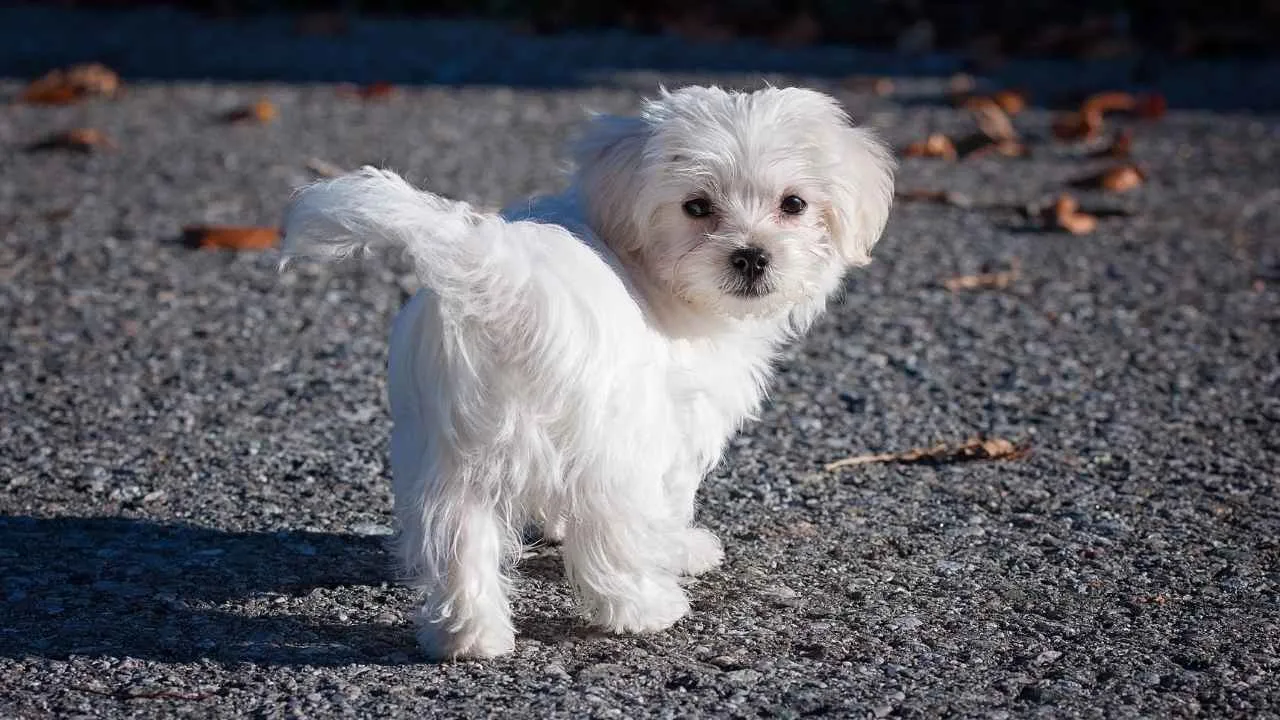
The Maltese originated in Italy and is recognized by its short snout, pricked ears, curved tail, and rounded head. Weighing around 7–9 pounds, this cheerful breed is kept primarily for companionship and competitive exhibition. Its single-layered, silky coat is hypoallergenic.
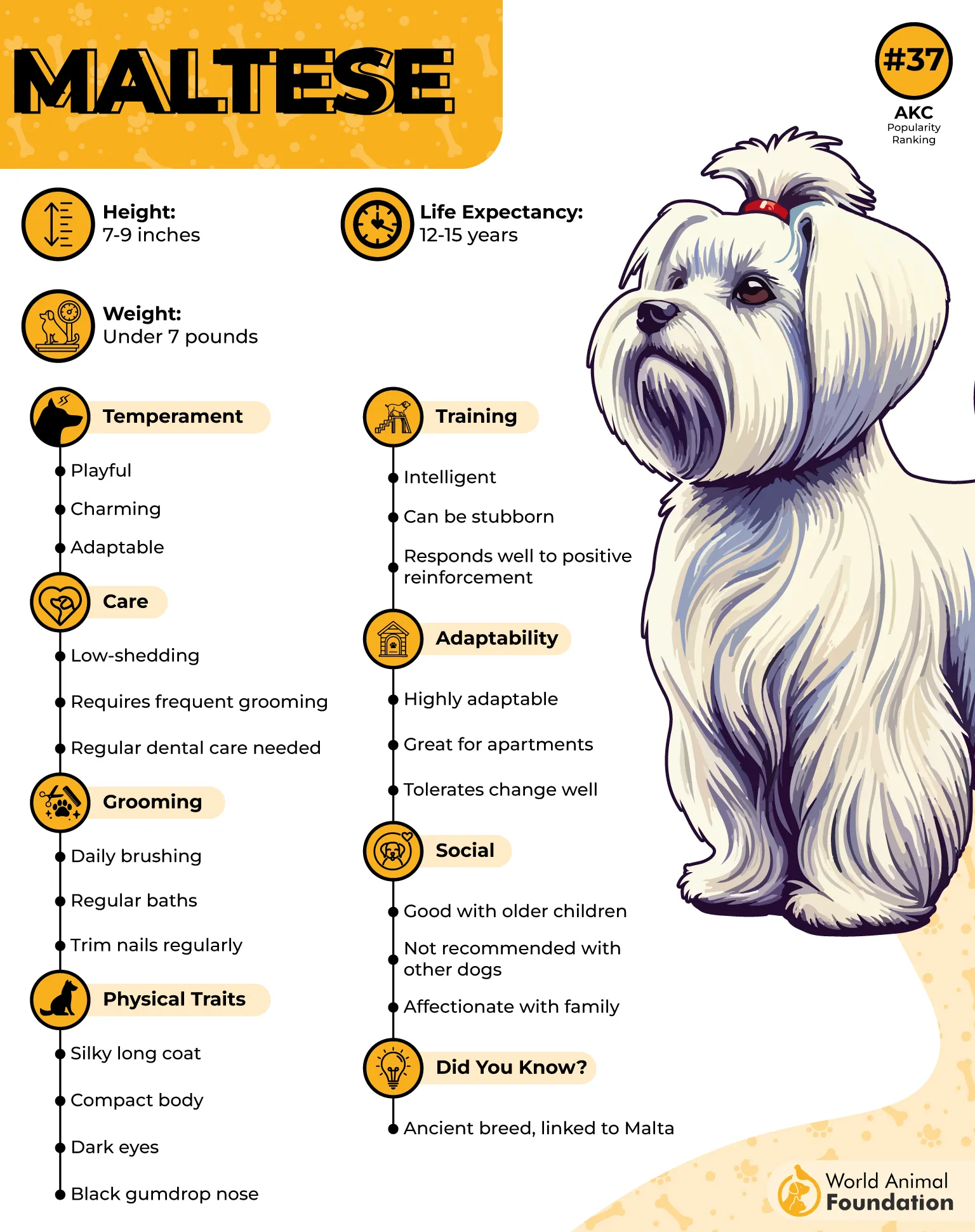
Like many toy breeds, the Maltese is prone to certain genetic conditions such as luxating patella. Perceptive and gentle, it can read human body language and facial expressions, often responding to stress by sitting calmly nearby or cuddling. It tends to carry its playful, puppy-like personality well into adulthood.
The Maltese thrives on human companionship and bonds closely with family members, children, and other pets. It can become protective over its territory, favorite person, or toys, which may trigger barking. Its white coat is prone to tear staining around the eyes, requiring regular cleaning two to three times daily.
7. Pug
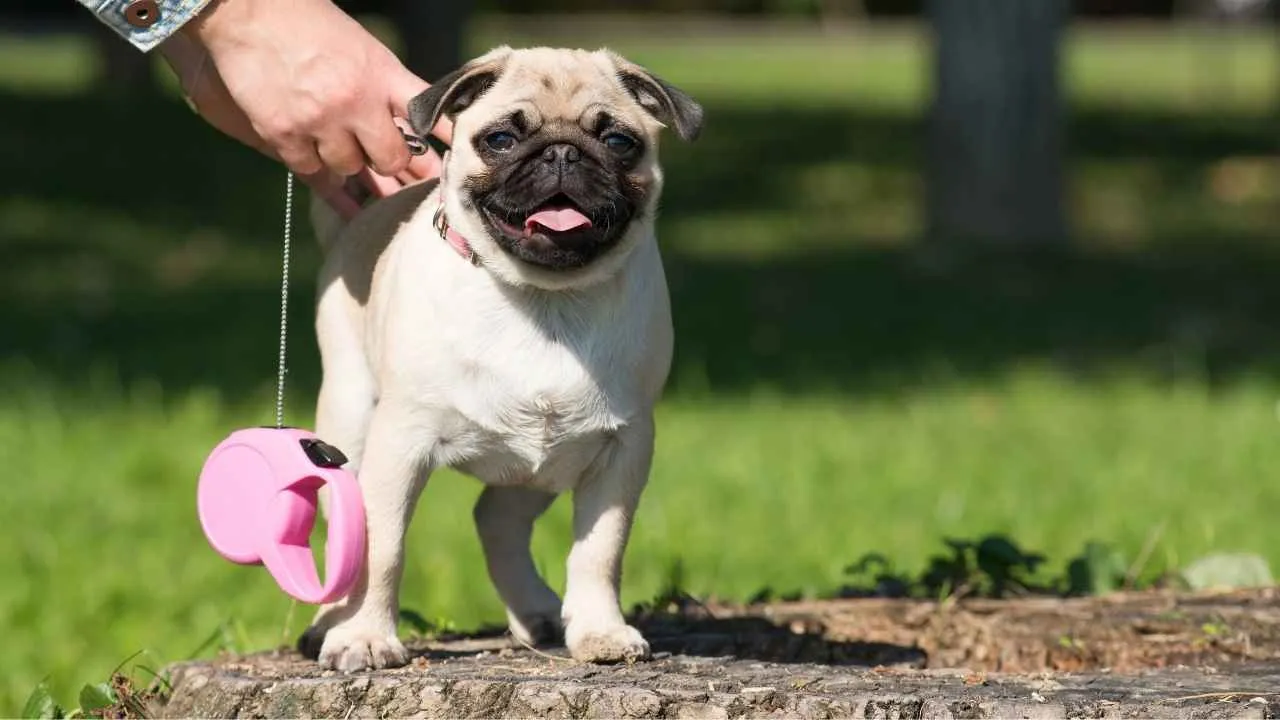
The Pug was a favorite among Chinese emperors before gaining fame in Holland’s royal House of Orange. It perfectly embodies the Latin motto multum in parvo, meaning “a lot in a little,” through its charming, affectionate, and even-tempered personality, according to the American Kennel Club (AKC).
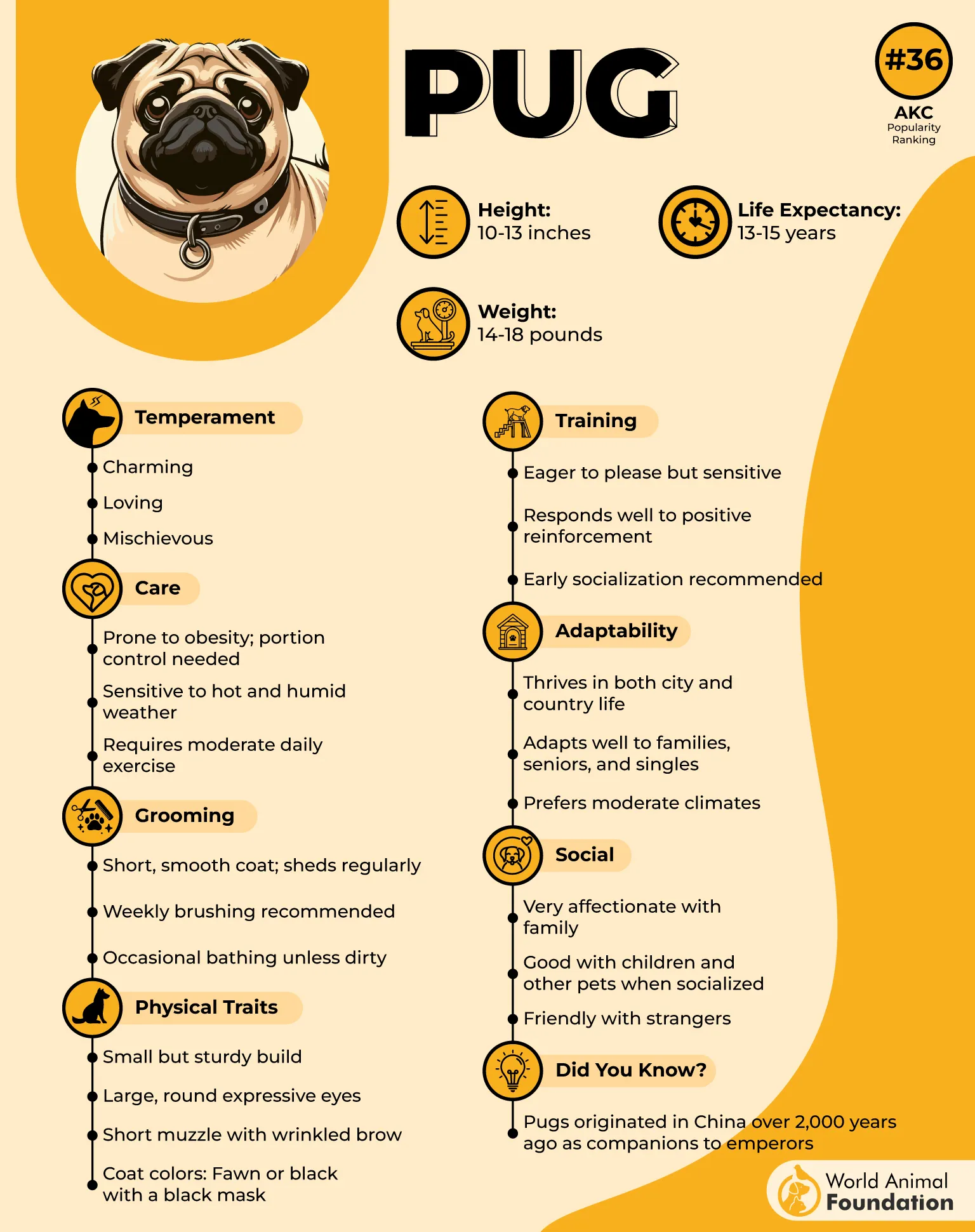
The coat comes in several colors: apricot fawn, silver, and black. Its unique jaw structure makes a forceful bite difficult, making the Pug a particularly safe choice around toddlers. The breed sleeps up to 14 hours a day, suiting quieter households well. Being highly food-driven also makes it relatively easy to teach basic commands.
Often called the “clown of the dog world,” the Pug is known for its expressive, wrinkly face, outgoing nature, and human-like facial expressions. Despite its laid-back temperament, it still needs 30–60 minutes of daily activity through light indoor play and casual walks.
8. Yorkshire Terrier
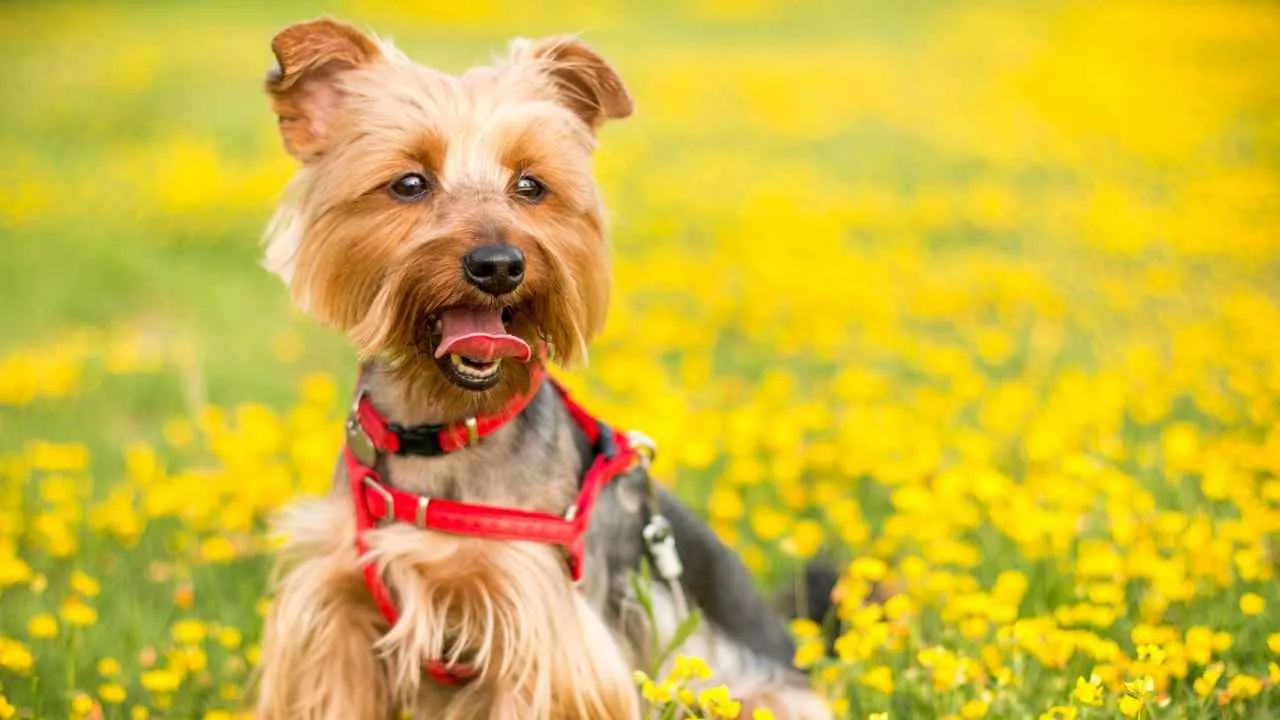
The Yorkshire Terrier was developed by industrial workers in 19th-century Great Britain to hunt rodents in cotton and woollen mills. It soon became popular among wealthy women and at dog shows, leading to further size reduction, now typically weighing around 7 pounds and standing 8–9 inches tall.
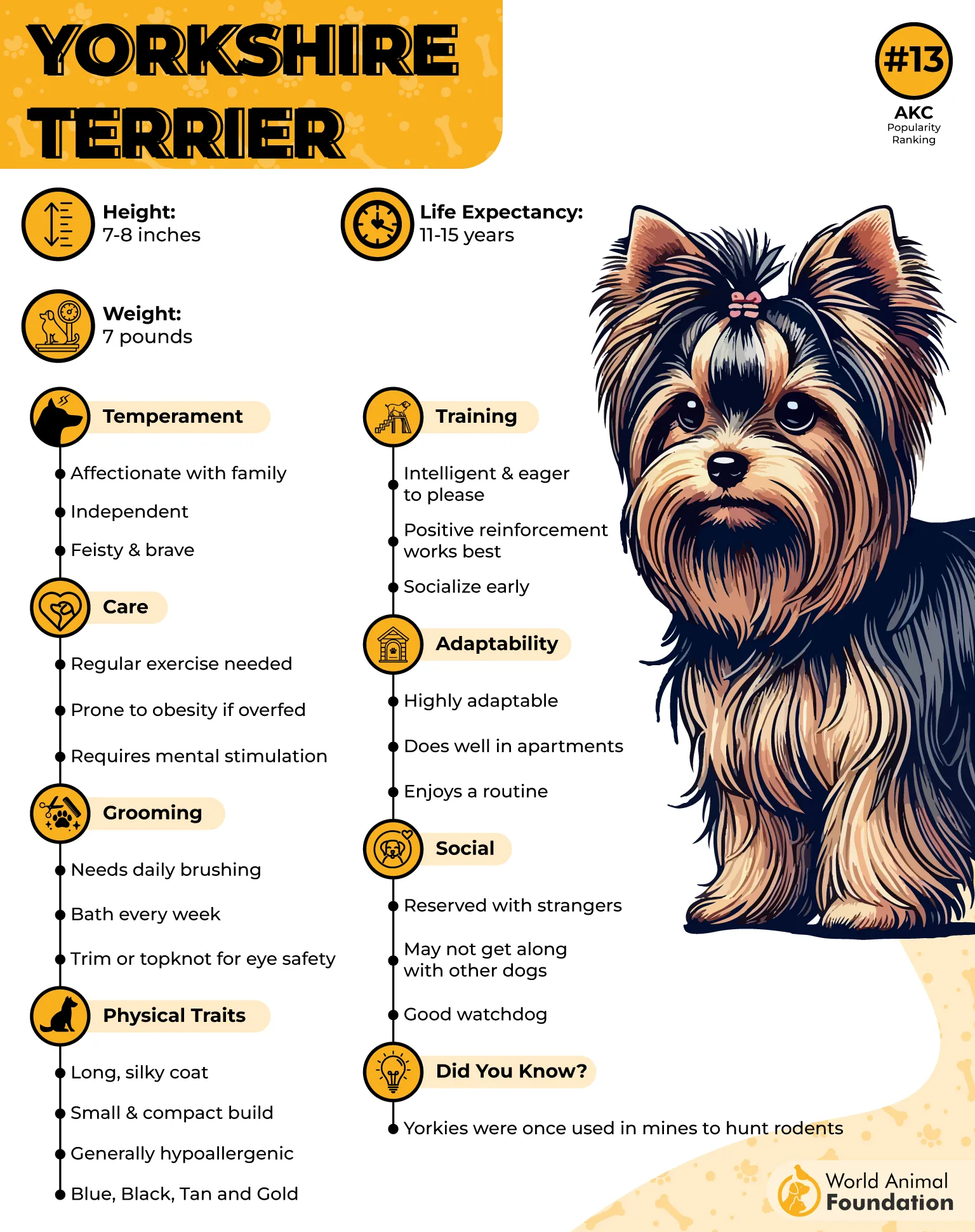
Its burrowing instinct means it will often burrow into blankets, pillows, and tight spaces. Though affectionate with its owner, it is not a traditional lap dog. Naturally suspicious of strangers, it will bark at any unusual activity within its territory.
Its silky coat requires daily brushing and professional trimming every 4–6 weeks. A metal-toothed comb and pin brush help prevent matting and tangles. Many owners opt for a “puppy cut” to give the Yorkie a neat, ornamental look.
9. Papillon
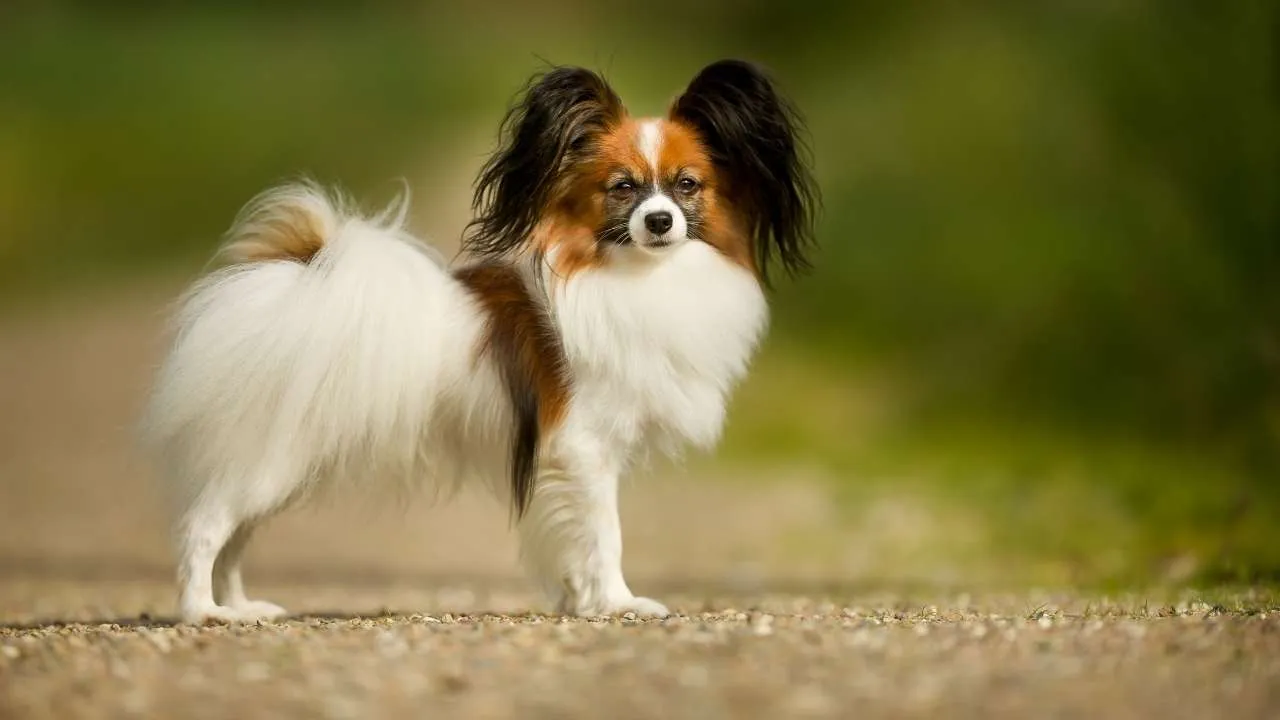
The Papillon was developed in France and takes its name from its distinctive butterfly-shaped ears. It has appeared in European artwork since the 16th century. Weighing 5–10 pounds and standing 8–11 inches tall, this small breed is widely used as a therapy and service dog thanks to its high intelligence.
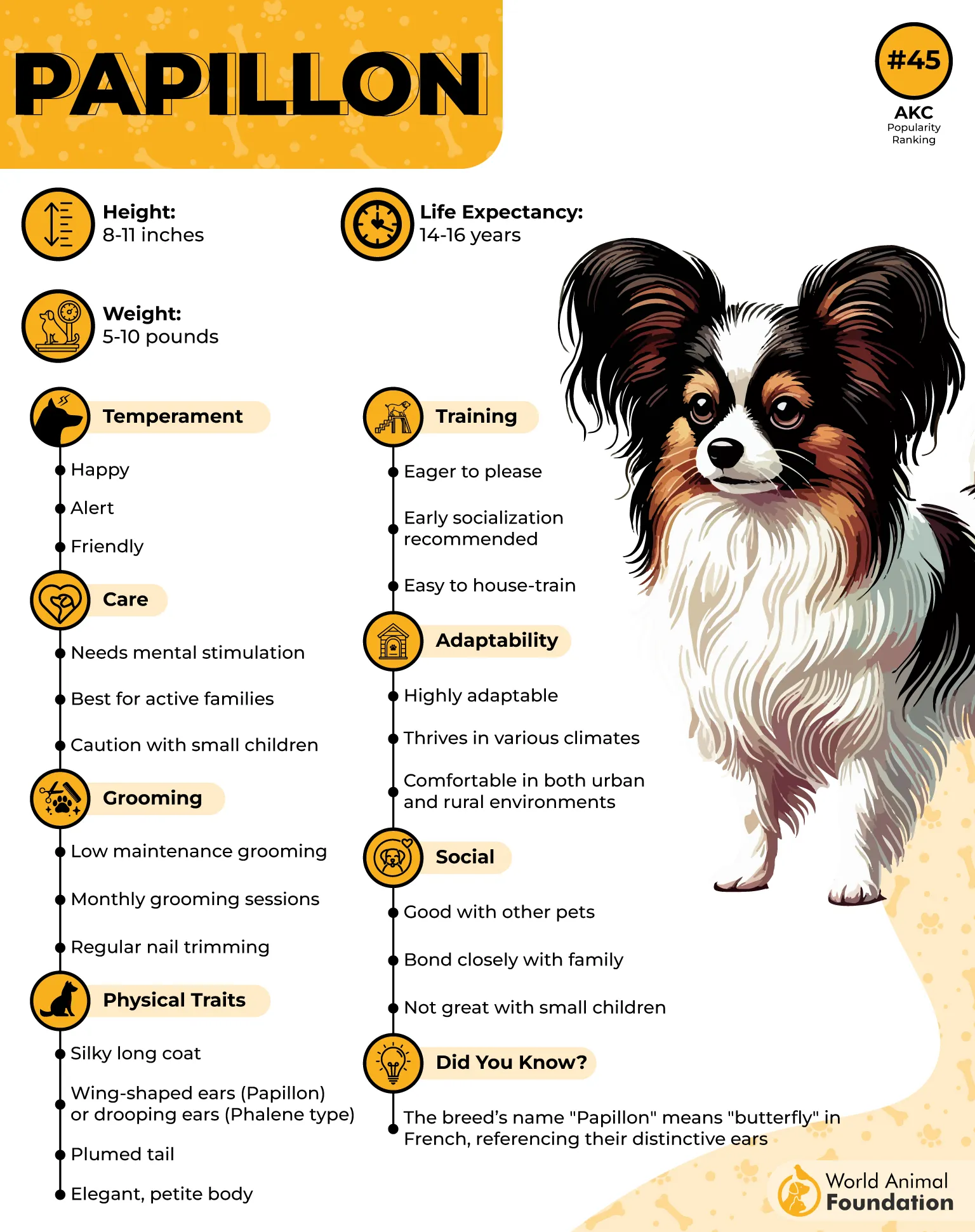
Its curious nature allows it to pick up on subtle human expressions with ease. The Papillon lives 14–16 years, offering a long and rewarding companionship. Lacking an undercoat and producing minimal body odor, it is a low-maintenance and relatively odor-free breed. Well-developed forequarters and hindquarters give it a light, free-flowing gait.
Widely regarded as the smartest toy breed, the Papillon can learn commands within just five repetitions. Its small bladder means low food intake, which helps keep monthly feeding costs down. The breed loves running, jumping, and agility training, making it a great match for active families.
10. Japanese Chin
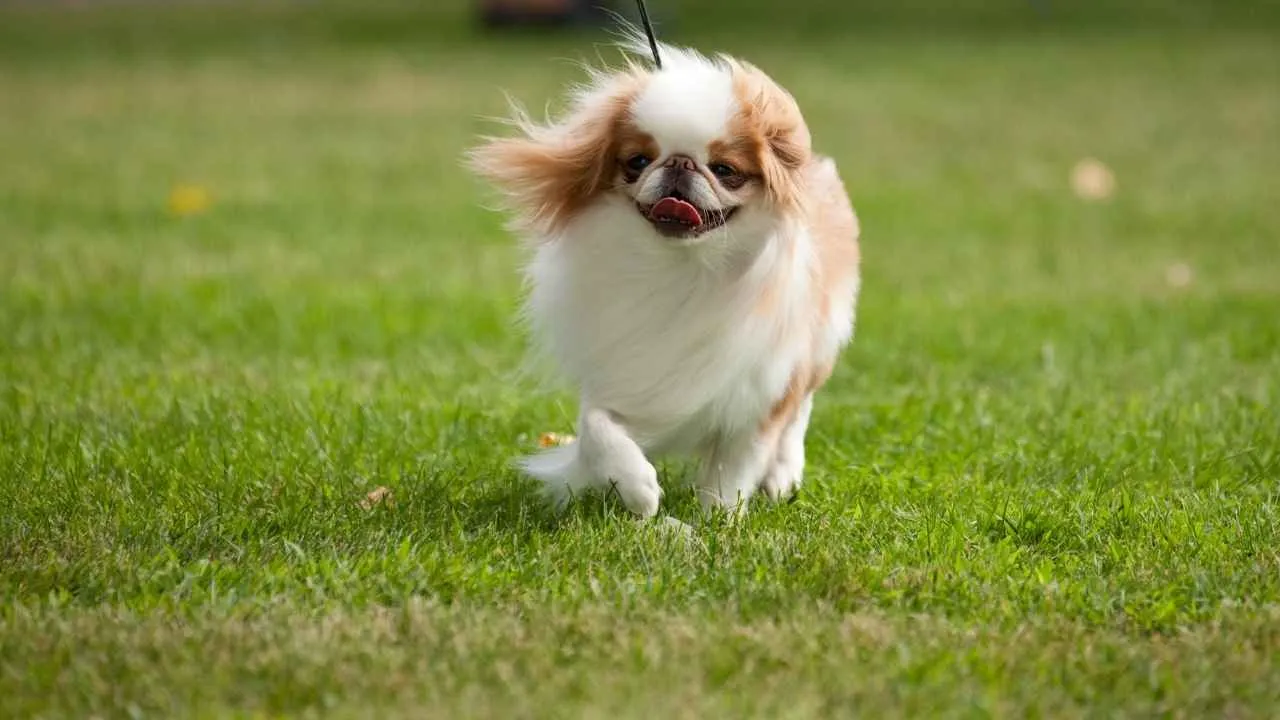
Originating in China and adopted by Japanese royalty around AD 732, the Japanese Chin has served as a companion and lap dog for centuries. The breed is notably cat-like in behavior; it cleans itself by licking its paws and coat, seeks out elevated spots for a better view, and carries an independent streak.
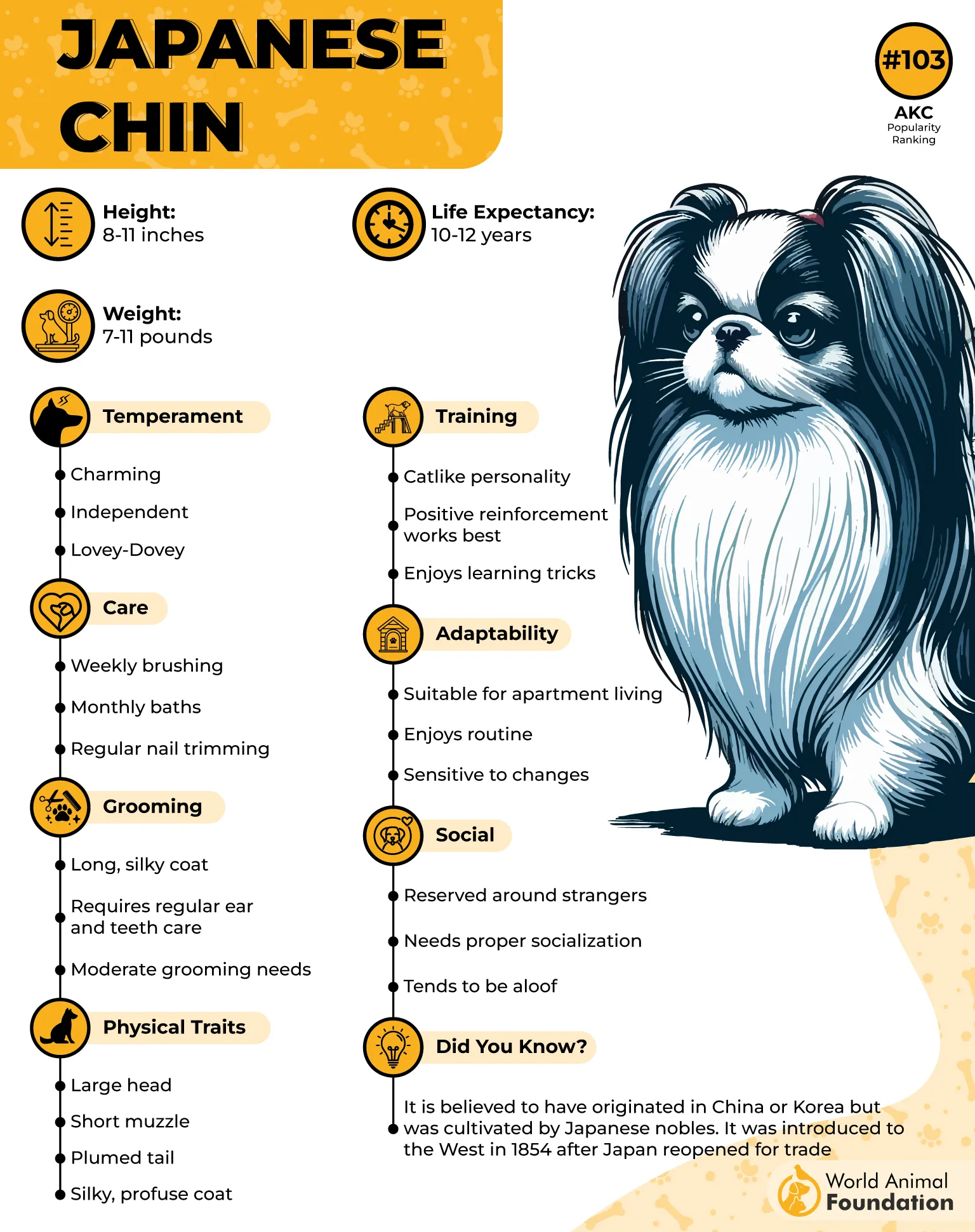
Weighing 4–12 pounds and standing 8–11 inches tall, this brachycephalic breed prefers indoor living. Though it enjoys a longer lifespan for a toy breed at 14–16 years, it is prone to certain genetic health conditions, including heart valve disorder and luxating patella.
Generally quiet and friendly, the Japanese Chin tends to be reserved around strangers but rarely shows aggression, warming up easily once properly introduced. It may bark at unfamiliar sounds or visitors, though it is not well suited for property defense.
Conclusion
Toy dog breeds prove one thing: size has nothing to do with the love a dog can give. From the fearless Yorkie to the serene Japanese Chin, each of these breeds brings something genuinely special to the table. Whether you want a cuddler, a clown, a little athlete, or a quiet lap companion, there is a toy breed built for your lifestyle.
All you need to do is research carefully, pick the one that matches your energy, and commit to their care; they will return it tenfold, every single day. That is the deal a toy dog offers, and honestly, it is a pretty great one.
