




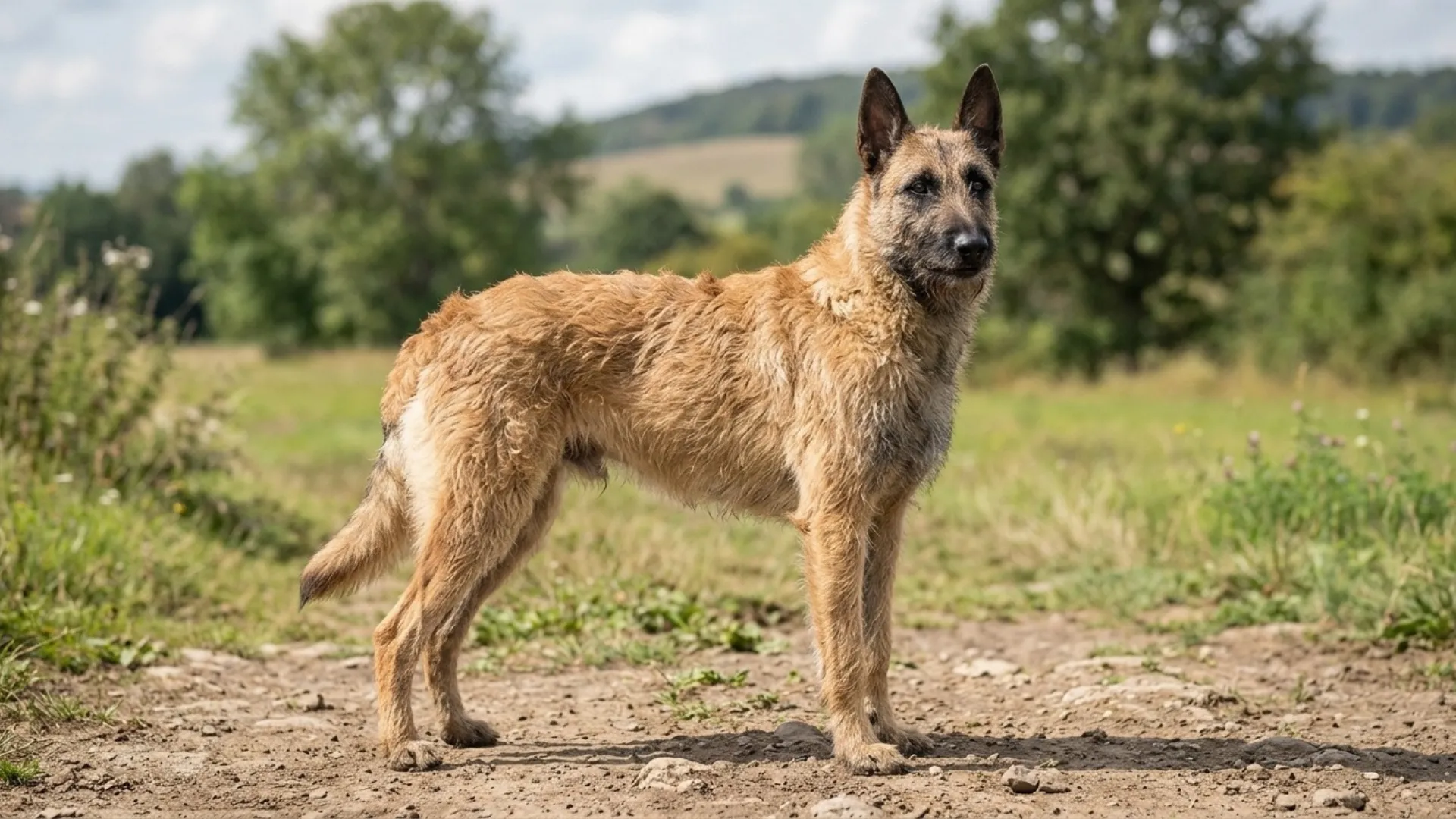
A powerful dog can pull a heavy load, hold its ground, or work for hours in conditions that would tire a less capable animal.
Strength in dogs comes from several physical features working together, including muscle, body size, bone structure, leverage, and stamina. A broad chest may support strong movement, while a sturdy neck and powerful jaws can help a dog grip and carry objects. Yet raw force tells only part of the story.
Some dogs are built for short bursts of power, while others are better suited to sustained work such as pulling, guarding, or moving livestock. Proper training, health, age, and body condition also affect what a dog can safely do. That is why the strongest dog breeds cannot be judged by appearance alone.
In this article, we explore the physical traits, working abilities, and practical qualities behind canine power, along with the breeds known for remarkable strength.
Key Takeaways
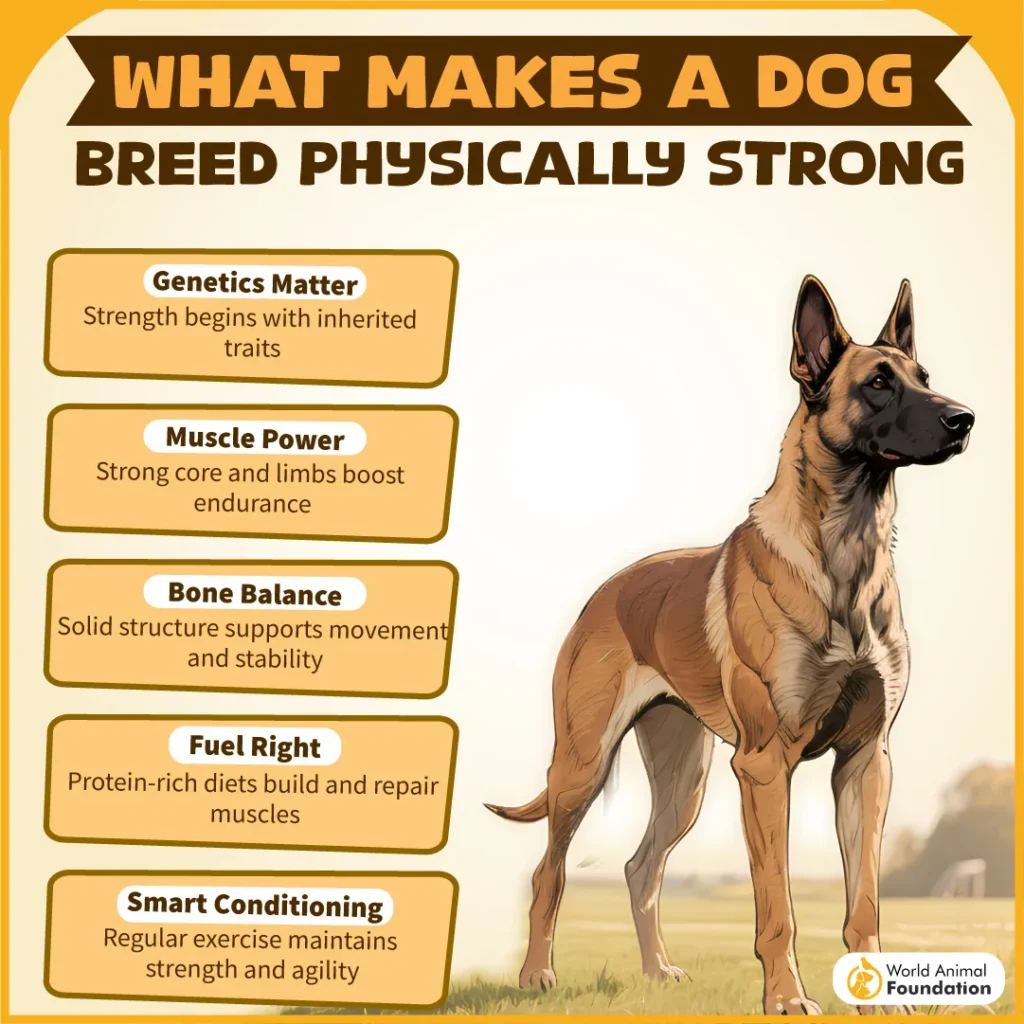
A broad chest and muscular frame can tell you a lot about a dog’s strength, but stamina and the kind of work it was bred for matter just as much.
The Alaskan Malamute has a history of hauling heavy loads across freezing terrain, while the Giant Schnauzer once helped drive cattle across Bavarian farms.
The Bullmastiff was developed to pin down poachers, and the Dogo Argentino was bred to pursue large game with remarkable determination.
Keep reading to discover how these working histories shaped seven powerful breeds, including one of Belgium’s rarest shepherd dogs.
Strongest Dog Breeds and What Makes Them So Powerful
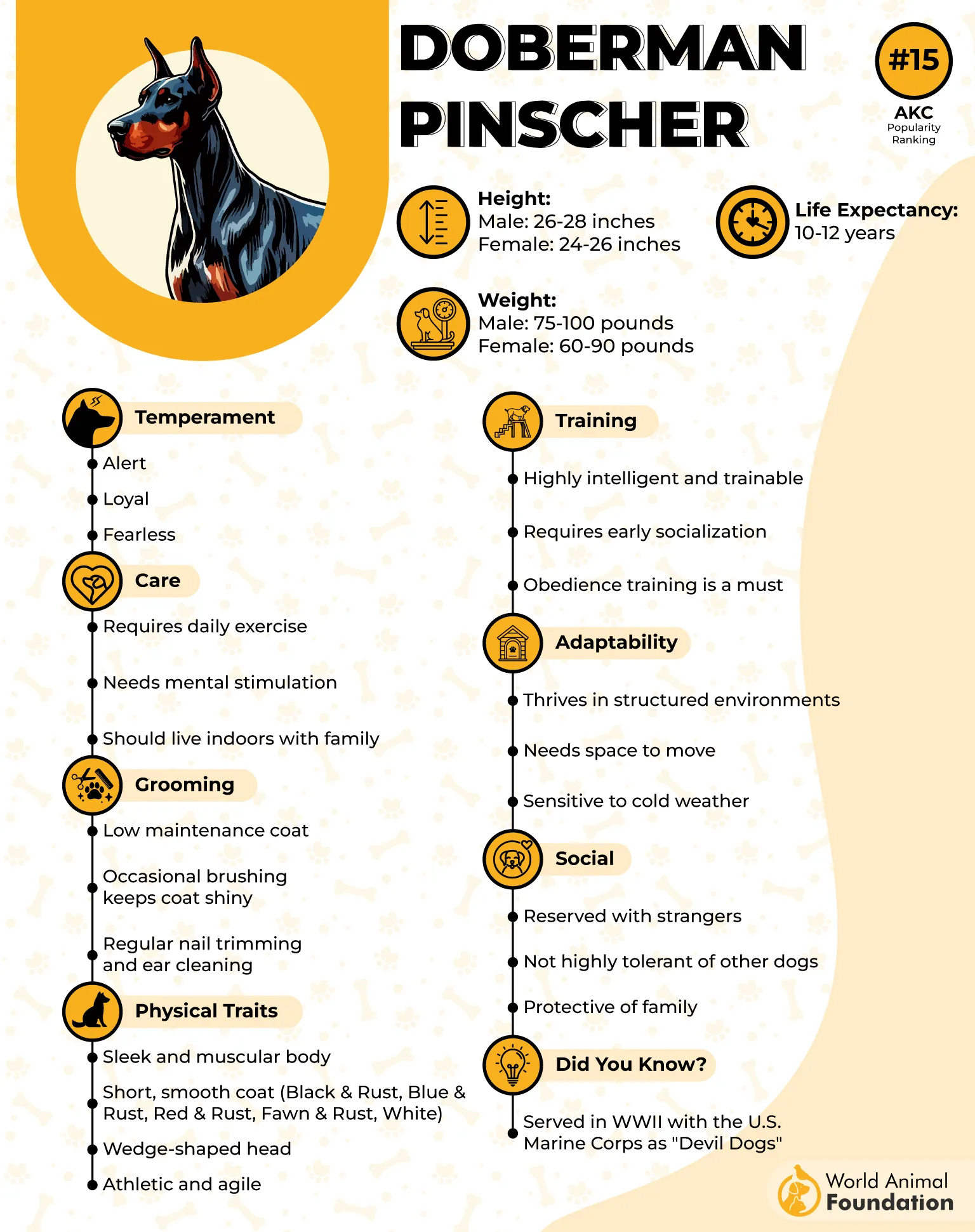
1. Doberman Pinscher
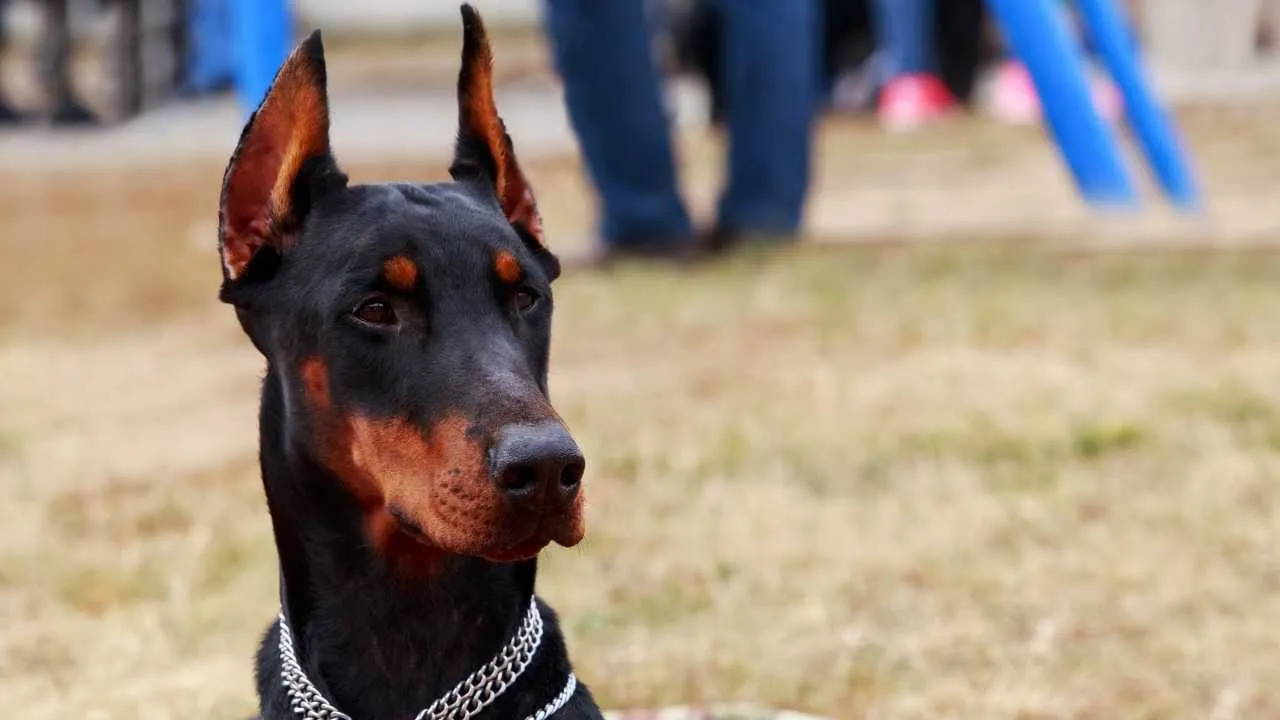
Doberman Pinscher was originally bred in Thuringia, Germany, where tax collector Louis Dobermann wanted a dependable dog to accompany him during his rounds.
Early breeding likely involved the Old German Shepherd and German Pinscher, with Weimaraner and Manchester Terrier blood later contributing to the breed’s modern form.
Built for Power
Dobermans combine a deep chest, lean musculature, and a square-built frame that supports both speed and physical strength. Its sleek outline conceals considerable athletic ability, while its forward-focused posture helps it watch its surroundings closely.
That strong build comes with a need for careful handling:
May place itself between its owner and perceived threats
Needs early training around strangers and unfamiliar dogs
Benefits from learning gentle mouth control as a puppy
Sharp and Attentive
According to Orvis, this strong guard dog breed reads human posture and tone with impressive sensitivity, often picking up on changes in its handler’s behavior. During training, this awareness can be useful, although inconsistent rules may give such a quick learner room to test boundaries.
2. German Shepherd
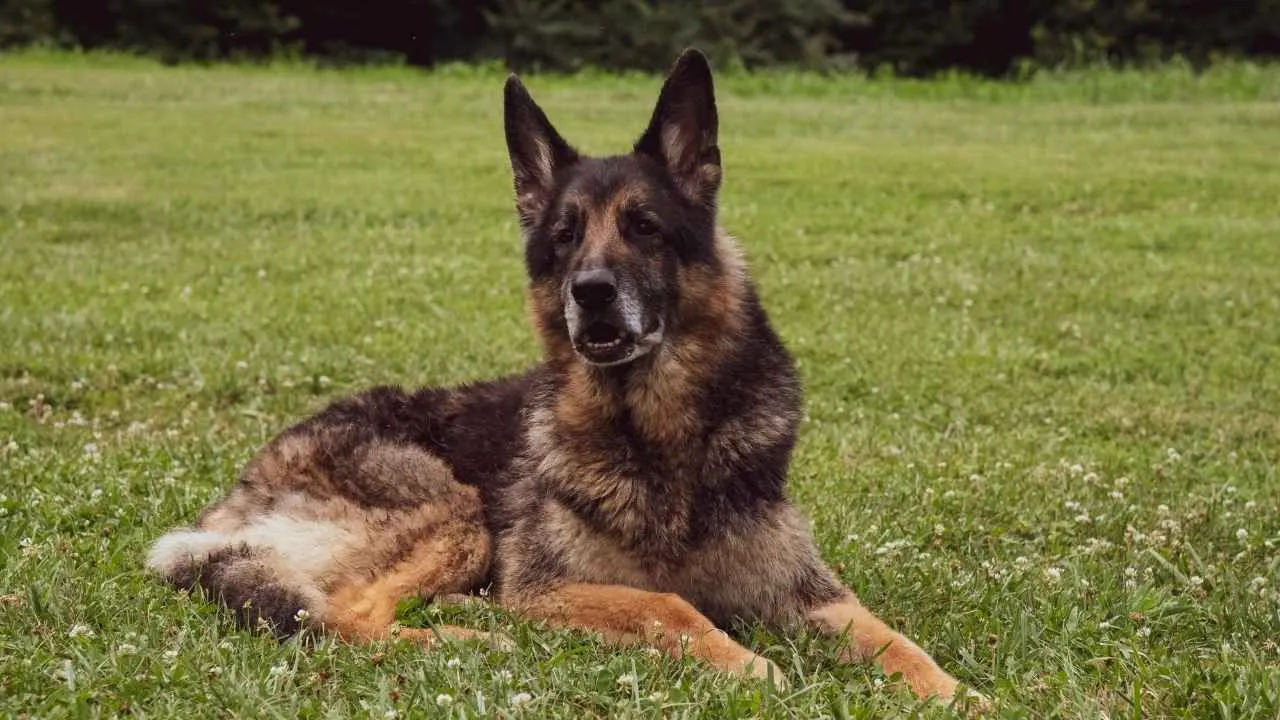
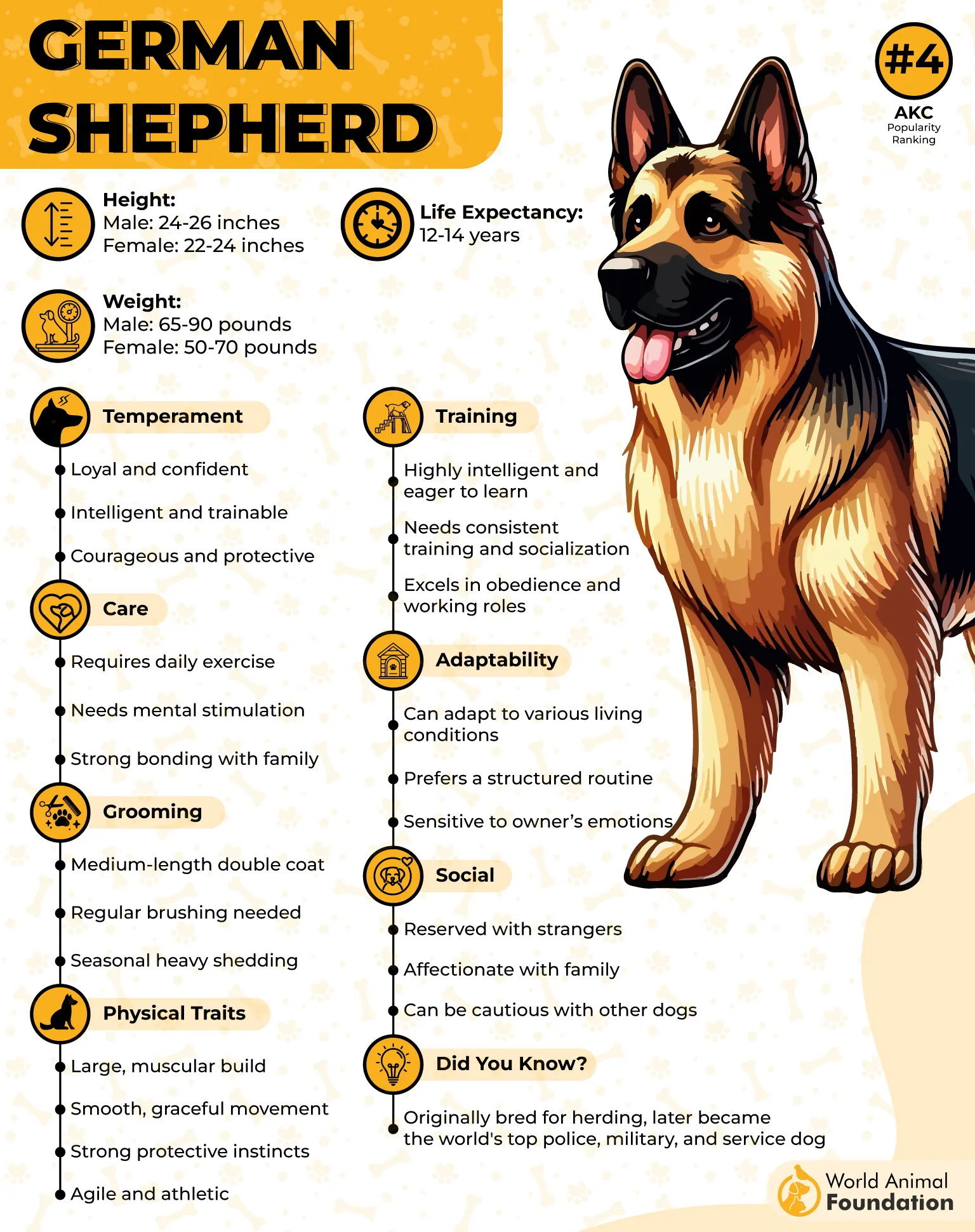
German Shepherd developed in Germany, where breeders sought a capable flock herder and guardian with intelligence and courage. After the First World War, the breed was widely called the Alsatian, until kennel clubs returned to its original name during the 1930s.
Built for Endurance
This shepherd dog has an athletic frame, a deep chest, and a steady, efficient trot suited to covering long distances without relying on short bursts of speed. Its strong jaw and muscular body complement the stamina required for demanding working duties.
Three physical and working features help explain its capabilities:
Erect, triangular ears
Dense double coat, often black and tan
Powerful scenting ability
Strength Under Control
German Shepherd has an estimated bite force of around 238 to 300 PSI, although measurements vary by source and testing method.
Its protective instincts, alert barking, and caution around strangers make early socialization and consistent training important, particularly in homes with children or other breeds, as GSDCA claims.
3. Giant Schnauzer
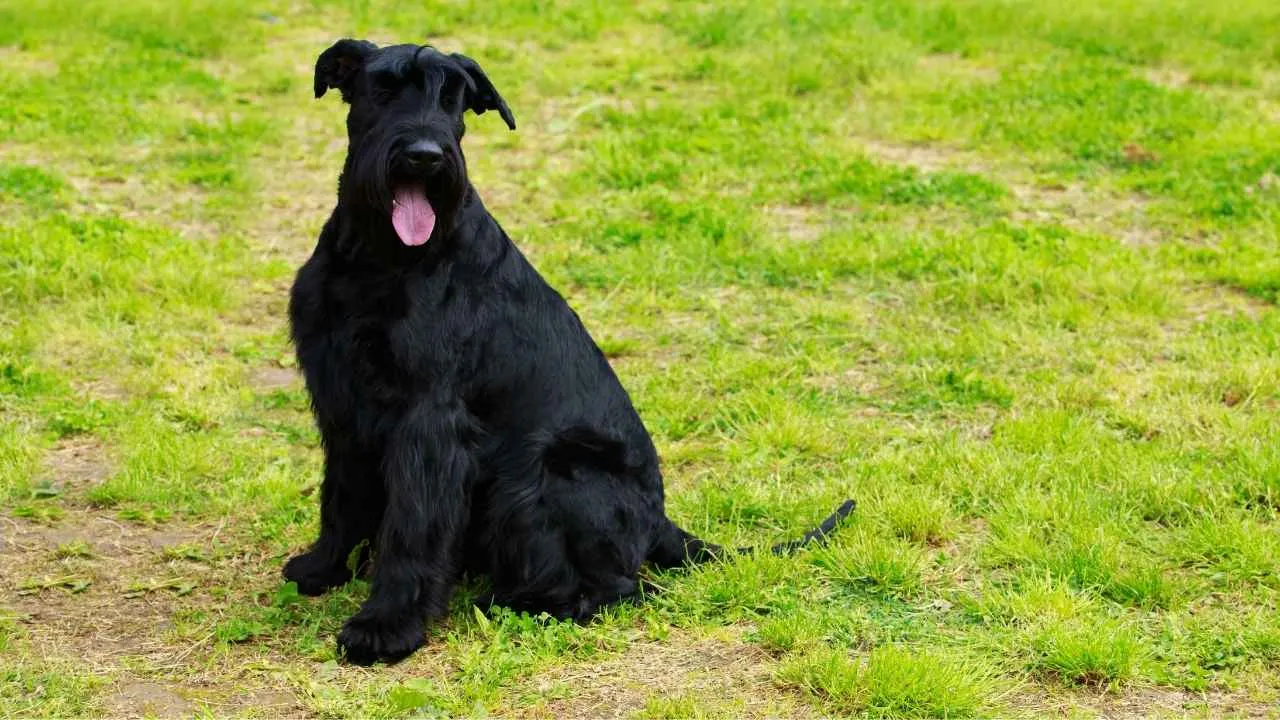
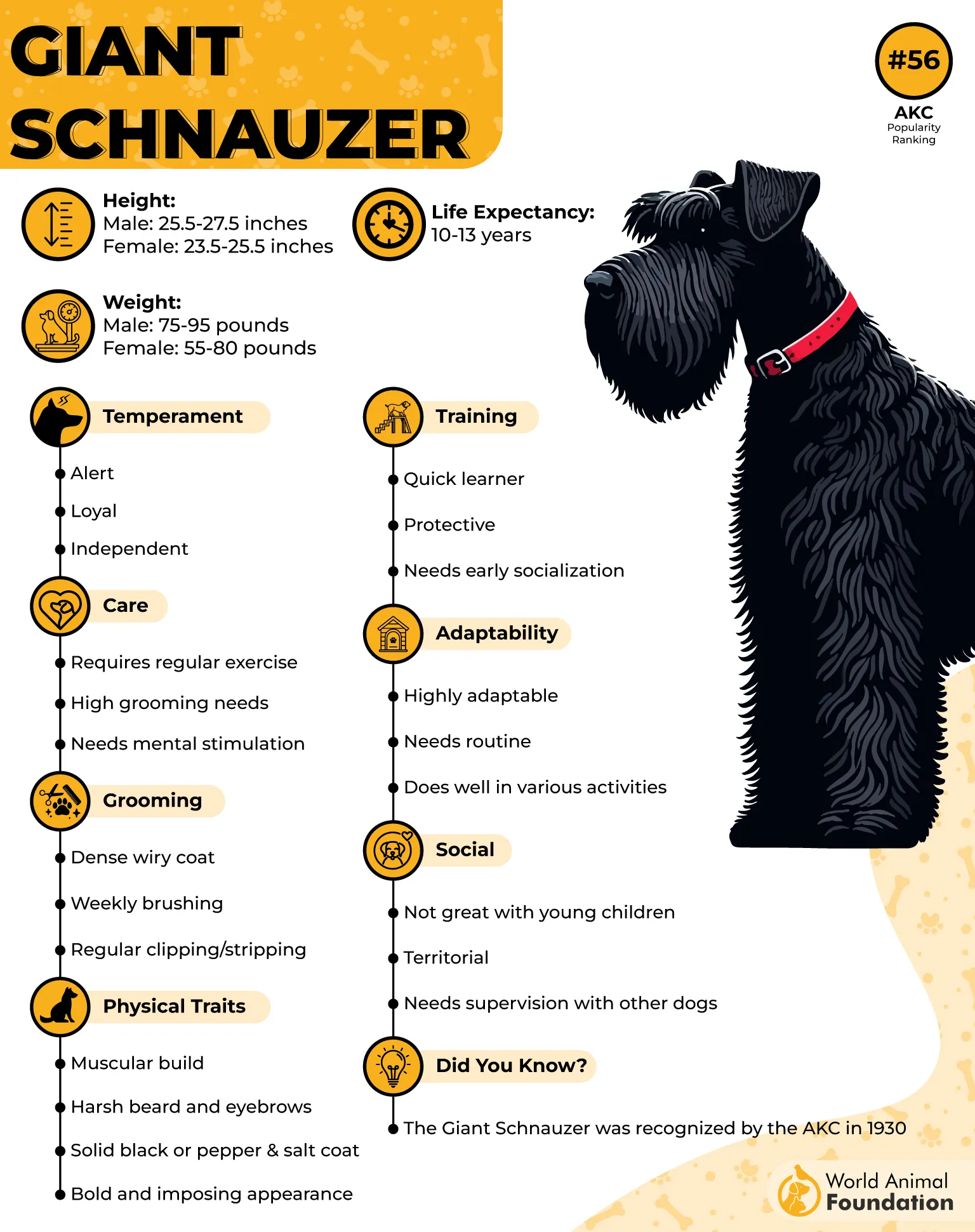
During the 1700s, the Giant Schnauzer was developed in Bavaria for demanding farm work, with its ancestry connected to the Standard Schnauzer, Black Great Dane, and Bouvier des Flandres.
It protected rural properties and drove cattle before gaining new responsibilities in police and military units after World War I, as highlighted in Omlet.
Built for Power
This powerful dog breed has a square, muscular frame, a deep chest, and powerful hindquarters that support sustained work. As the largest of the three Schnauzer breeds, it combines substantial bone structure with an athletic build suited to physically demanding jobs.
The following physical details help explain its strength:
Strong neck and broad chest
Powerful rear legs for forward drive
Learns new tasks quickly and remembers familiar commands
A Watchful Worker
Giant Schnauzer often makes deliberate rounds around its home and may position itself between familiar people and unfamiliar visitors. Its natural alertness can lead to barking at unusual sounds, so early introductions to different people help prevent excessive suspicion.
4. Belgian Laekenois
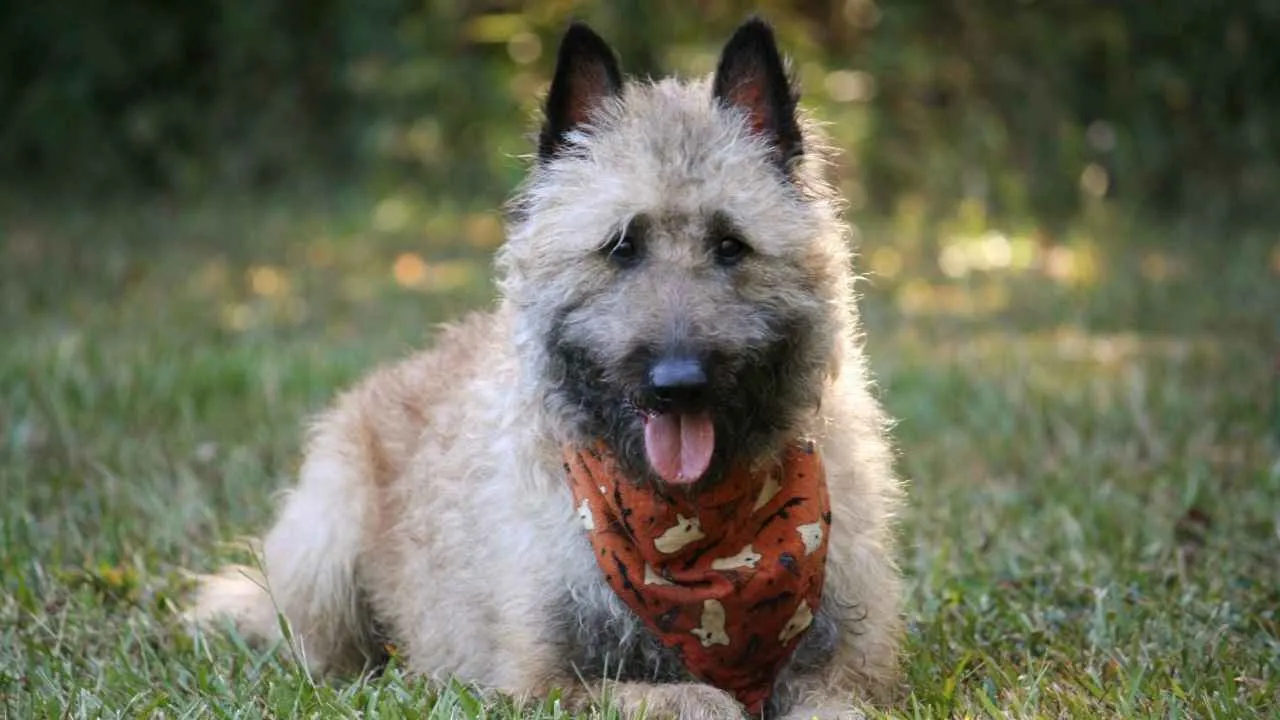
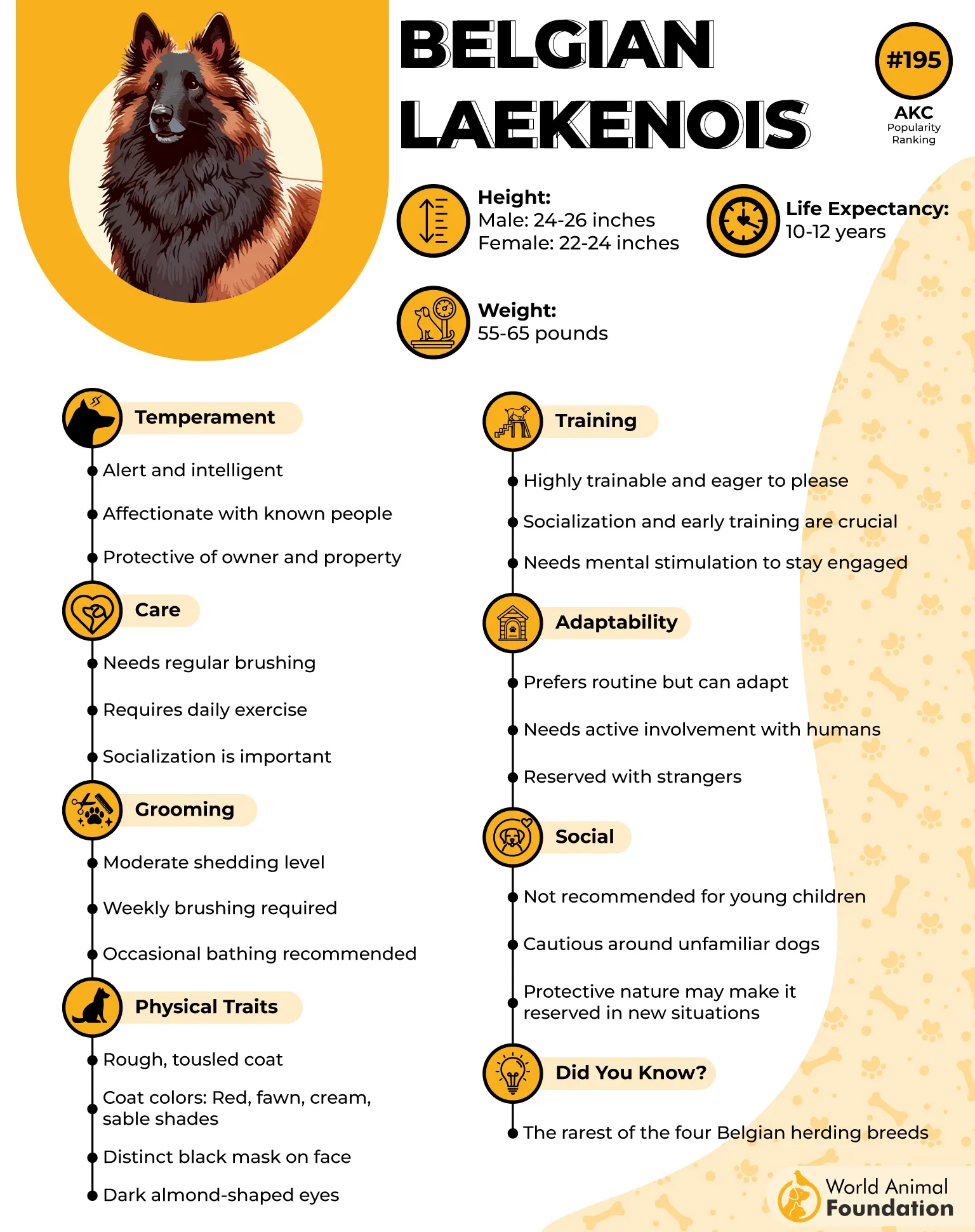
Belgian Laekenois is the oldest and rarest of Belgium’s four shepherd breeds, originally tasked with herding sheep and guarding linen laid out to dry at royal courts.
During the First World War, these dogs served as messengers, putting their ability to learn and respond to human direction to practical use.
Built for Demanding Work
Belgian Laekenois has a square, athletic frame, a deep chest, and strong hindquarters suited to sustained trotting and quick bursts of speed.
Its working abilities later extended to police duties, drug detection, and professional protection, where concentration and responsiveness matter.
These characteristics reveal more about its working style:
Darker muzzle may appear
Erect ears and an alert expression
Enjoys figuring things out and responds best to patient training
Quick to Read Situations
These big dogs watches its surroundings closely and can react quickly to unfamiliar sounds, people, or activity near its territory. Its tendency to circle or stare at children and other animals comes from its herding instincts, making early guidance important in a family setting.
5. Alaskan Malamute
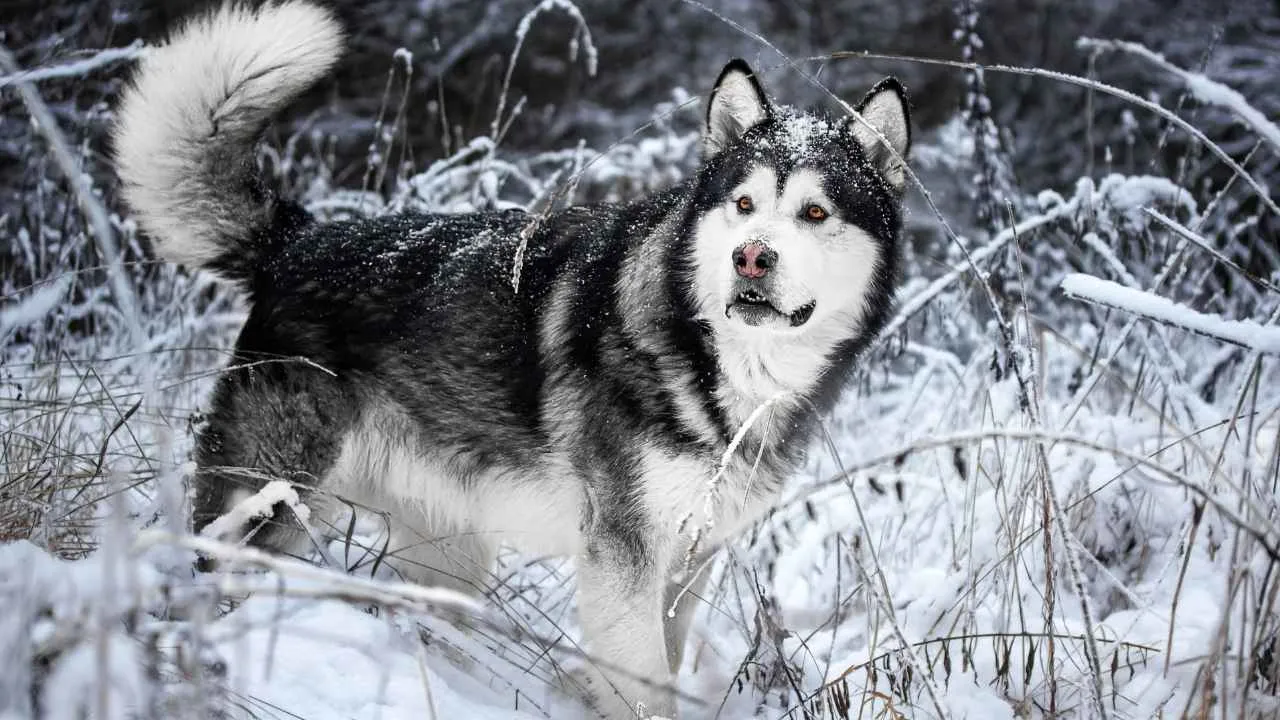
Alaskan Malamute originated in Alaska’s Arctic regions, where it lived alongside Indigenous Inuit communities and helped hunters bring large prey, including seals and bears, back to their villages.
Its exact origins remain uncertain, but generations of work in severe northern conditions shaped this powerful sled dog.
Strength Over Speed
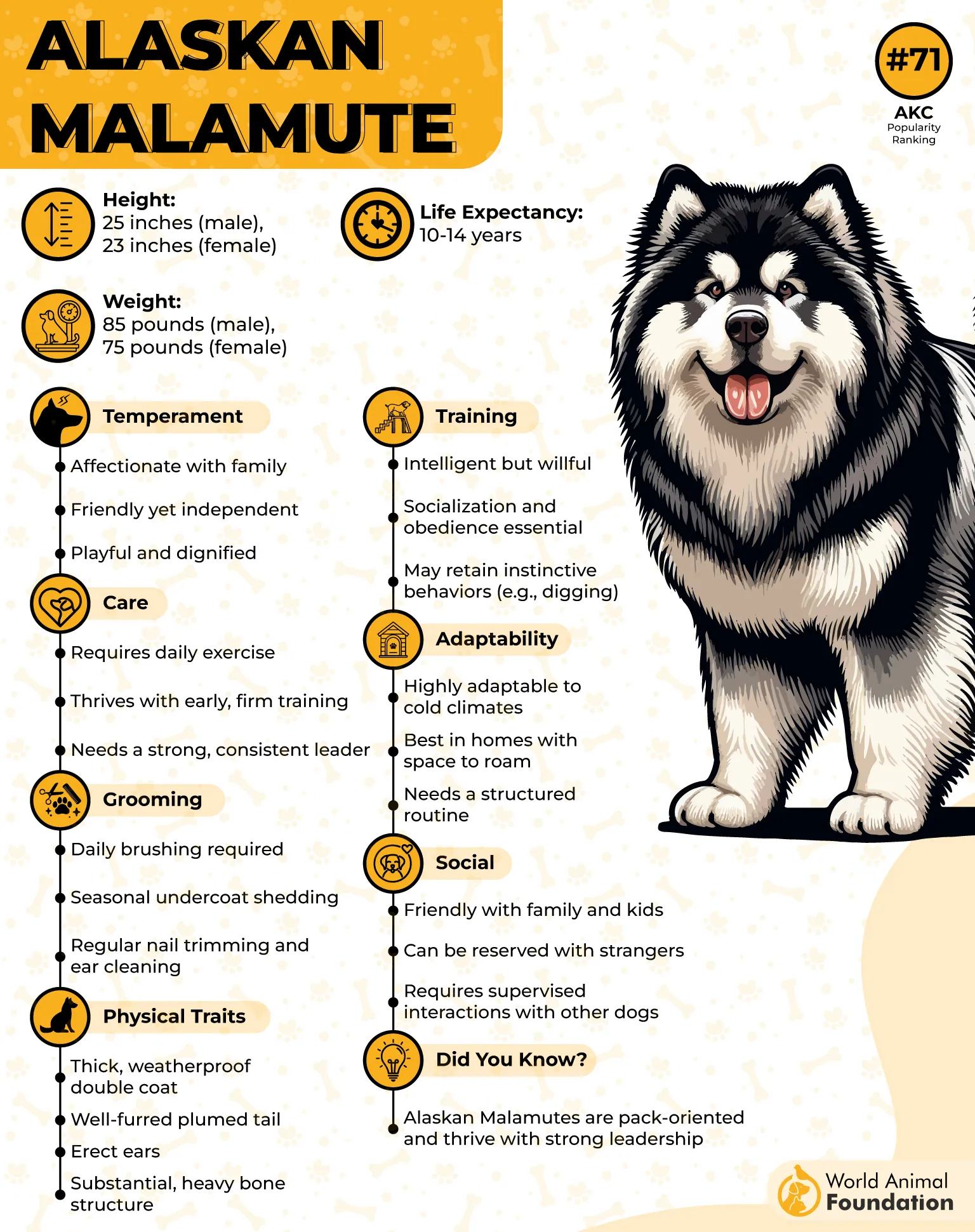
Alaskan Malamute has a broad head, deep chest, heavy bones, and powerful shoulders built for hauling substantial loads through snow.
Its sturdy frame and efficient gait suit steady pulling over long distances, while its dense double coat and thick-padded feet help protect it from freezing conditions.
Physical features that are especially suited to Arctic work:
Snowshoe-like paws with hair between the toes
Small, upright ears that limit heat loss
Bushy tail that can cover the muzzle during rest
A Vocal Companion
This versatile working dog often communicates through distinctive howls and yodel-like “woo-woo” sounds rather than relying only on sharp barking. It also has a strong instinct to dig resting spots, and an unsecured kitchen bin can become a tempting target when food is within reach.
6. Bullmastiff
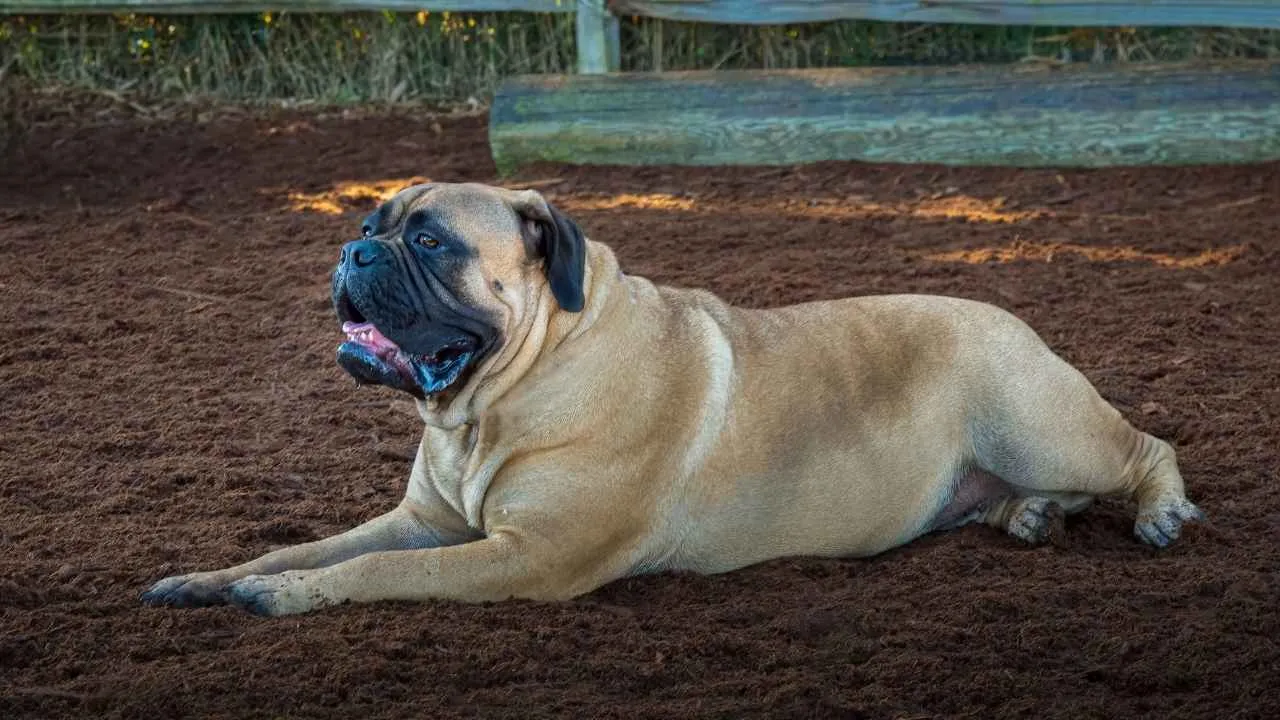
Bullmastiff emerged in 19th-century England, where estate owners faced problems with poachers entering their land. Breeders crossed Bulldogs with Mastiffs to create a powerful guardian that could pin an intruder down and hold them until the landowner arrived.
Power in a Compact Frame
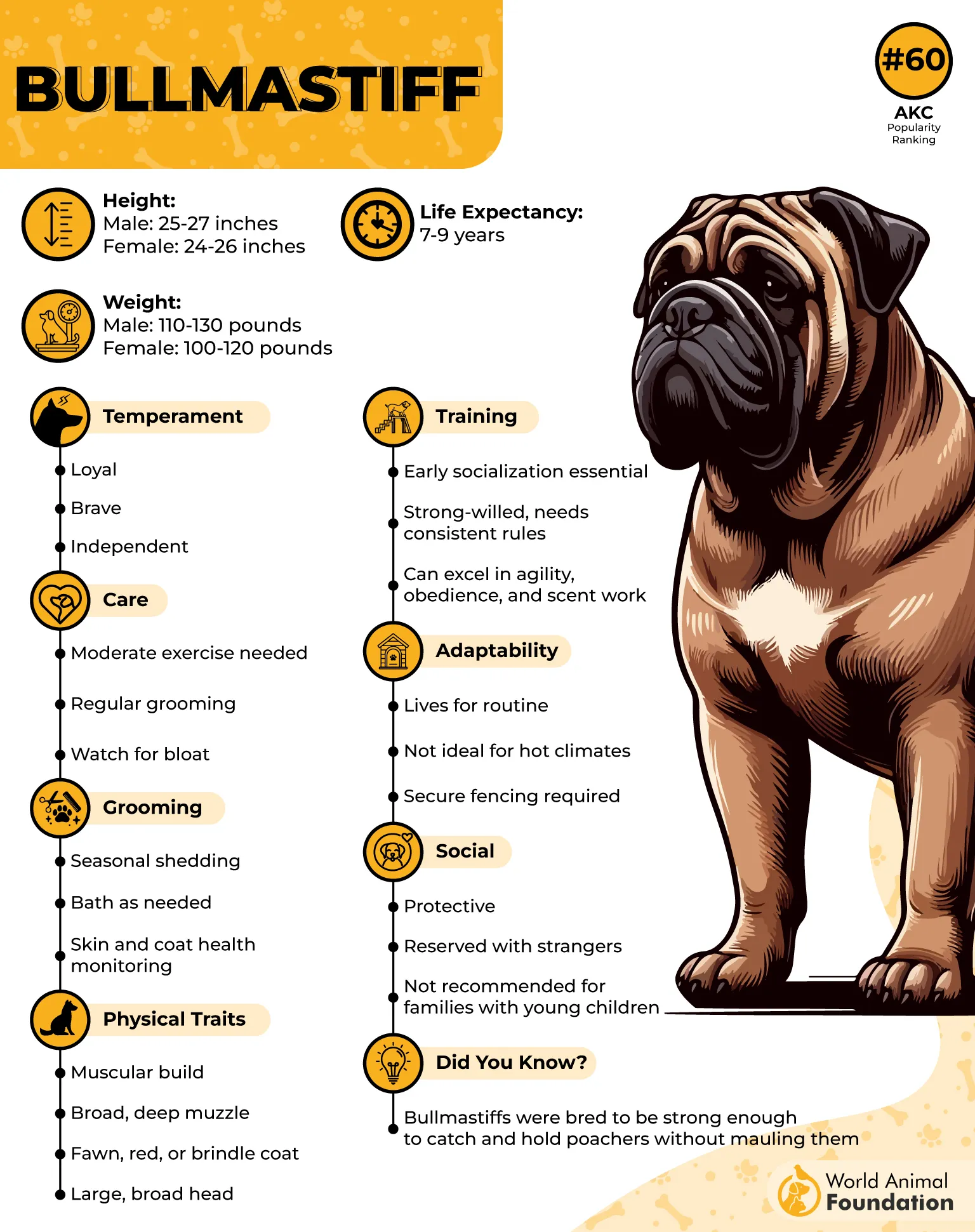
Bullmastiffs have a broad head, thick neck, deep chest, and muscular forequarters that give them considerable strength at close range. Its comparatively compact, square build favors powerful bursts of movement and physical control over prolonged running.
Its guarding instincts are visible in everyday situations:
Uses its size and steady stance to assess strangers
Watches entrances and hallways closely
Needs early training to manage boisterous play
Training With Variety
This massive dog can be stubborn during repetitive lessons, so short sessions combining commands, rewards, and play may work better than drilling the same instruction repeatedly.
Early guidance is particularly important because this breed can become protective around unfamiliar people entering its home.
7. Dogo Argentino
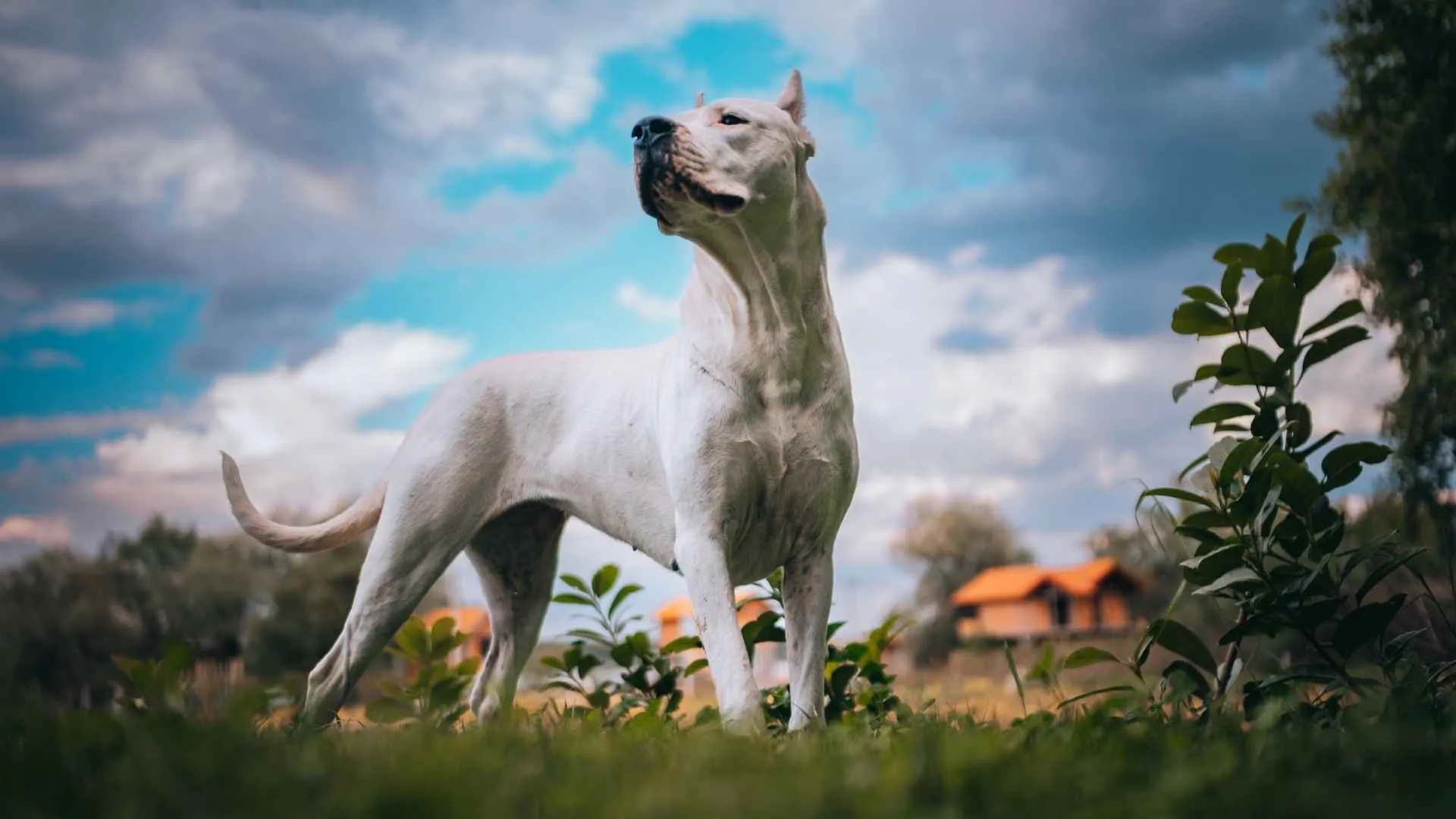
Dating back to Argentina in 1928, the Dogo Argentino carries ancestry from the Great Dane, Boxer, Bull Terrier, Pointer, Irish Wolfhound, and a native dog from Córdoba. The breed was intended for hunting large game and gained American Kennel Club recognition in 2020.
Power in Motion
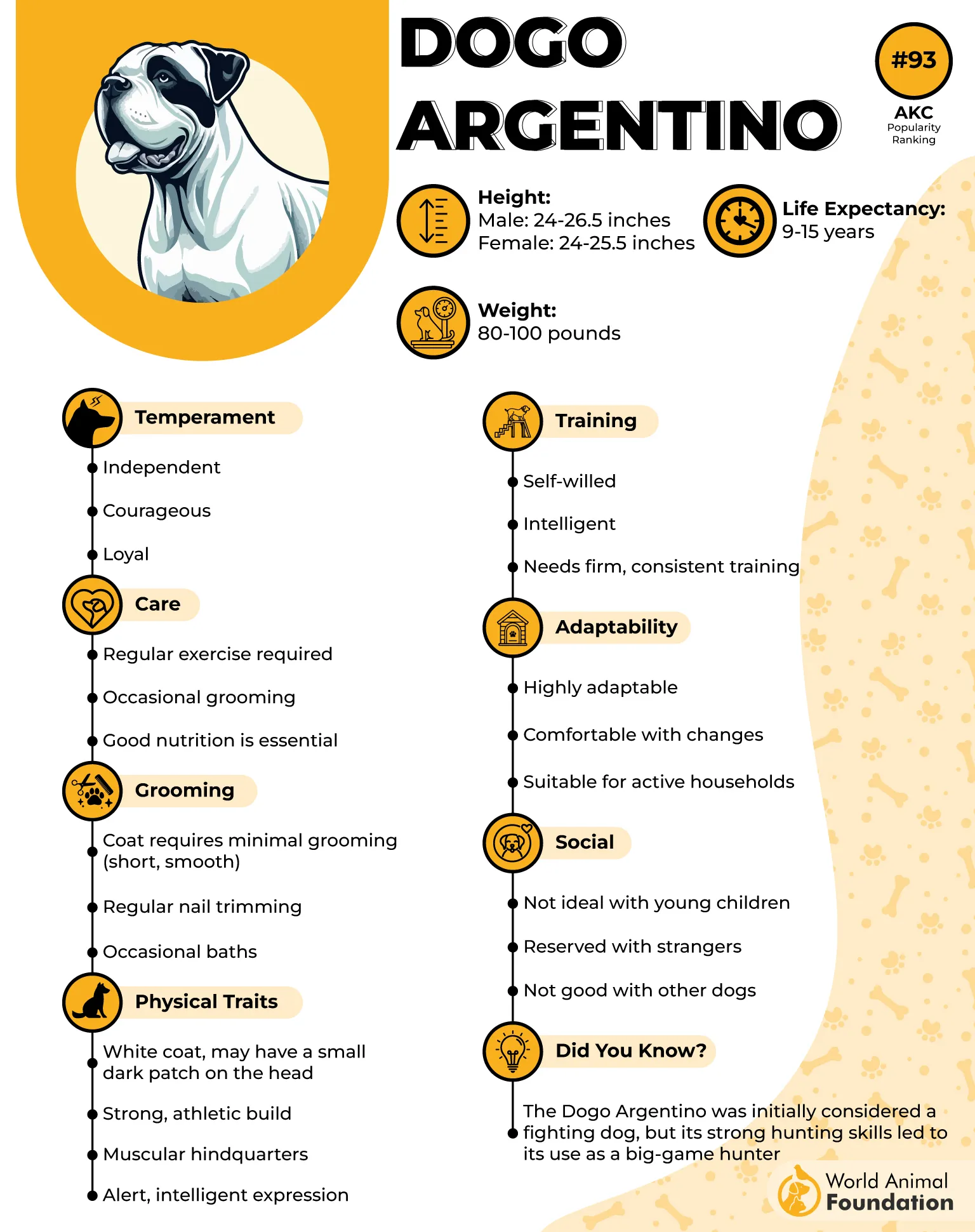
Dogo Argentino combines a muscular frame with explosive speed and the stamina needed to pursue large game over long distances.
Its broad head, powerful neck, and strong shoulders help it grip and control struggling prey, reflecting the physical demands of its original hunting role.
Three physical abilities explain its working style:
Its working style is explained by these
Powerful sprint-and-pounce bursts
Strong gripping ability
Endurance during extended pursuits
Focus That Runs Deep
This large dog breed can lock onto an interesting scent and ignore nearby distractions, especially when its hunting instincts take over. Structured tug games and impulse-control exercises can help channel its gripping instincts while teaching it to release on cue.
Conclusion
The world’s strongest dog breeds were shaped for different jobs, and those original roles explain much of their physical ability today. A broad chest and strong shoulders can support pulling, while muscular hindquarters help with quick movement and sustained effort. Other dogs rely on stamina, alertness, or a firm grip when trained to guard livestock or perform demanding tasks.
Yet strength alone does not guarantee good behavior. Training, socialization, health care, and responsible handling help these dogs thrive safely with people and other animals. Some can have a calm and gentle temperament and become great family pets. Before bringing one home, consider your experience, daily routine, available space, and ability to meet its needs throughout life.
