




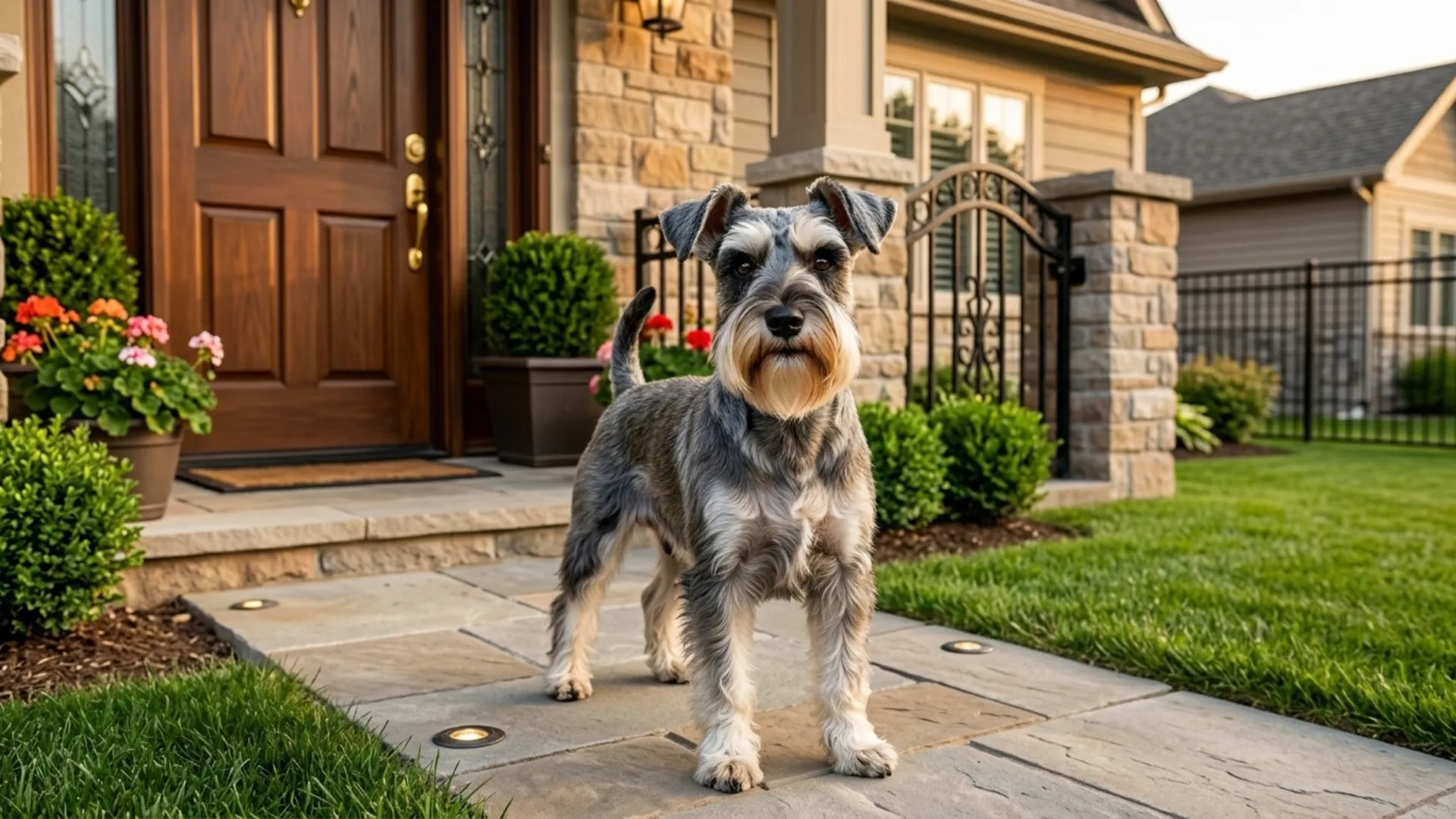
When people think of guard dogs, giant breeds usually steal the spotlight. But do not count out the little dogs just yet. Many small dogs have sharp hearing, fearless personalities, and an instinct to alert their families when something feels off.
As actress Betty White once said, “Once you have had a wonderful dog, a life without one is diminished.” That loyalty comes in every size.
These compact companions may not stop an intruder by force, but they often spot trouble long before anyone else does. If you want a dog that brings comfort, confidence, and plenty of personality without taking over your living room, these small breeds deserve a closer look.
Best Small Dog Breeds for a Secure and Safe Home
1. Miniature Schnauzer
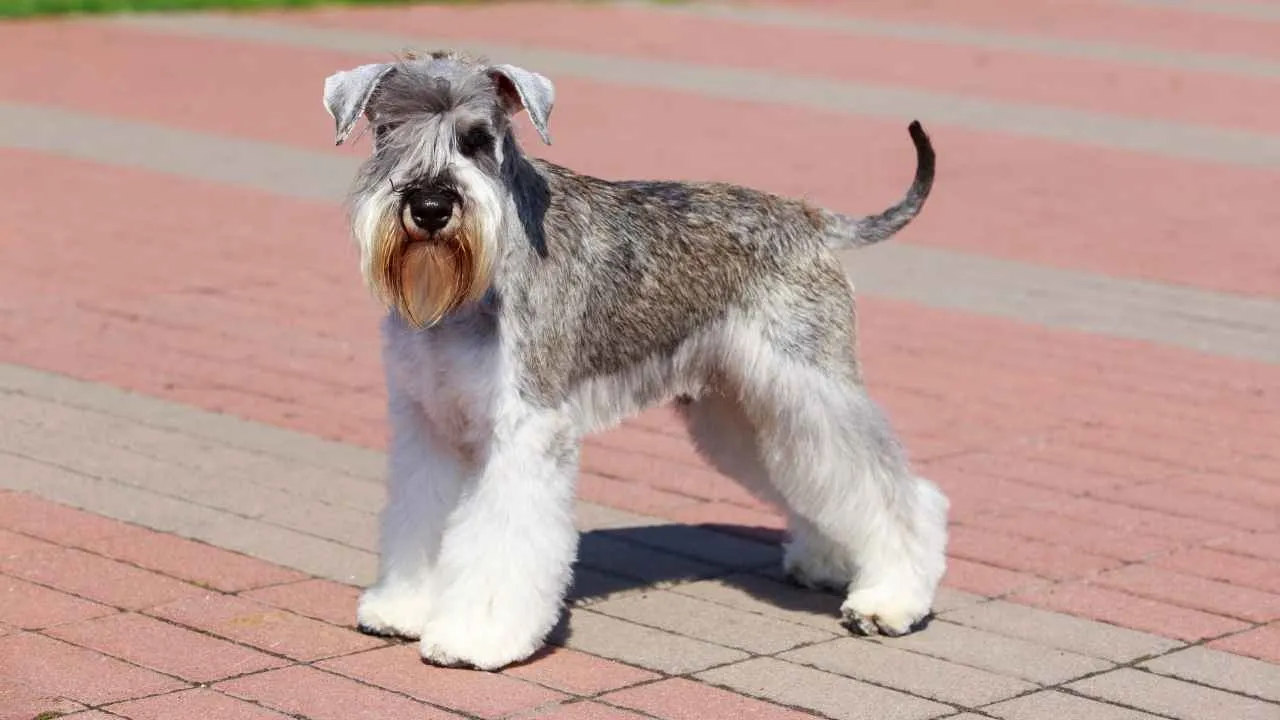
The Schnauzer has been working in Germany as a farm dog since the 14th century. It was used to kill vermin, guard property and flocks, and drive cattle. The history of the Miniature Schnauzer dates back to the 19th century when the Schnauzer was crossed with the Affenpinscher, according to Purina.
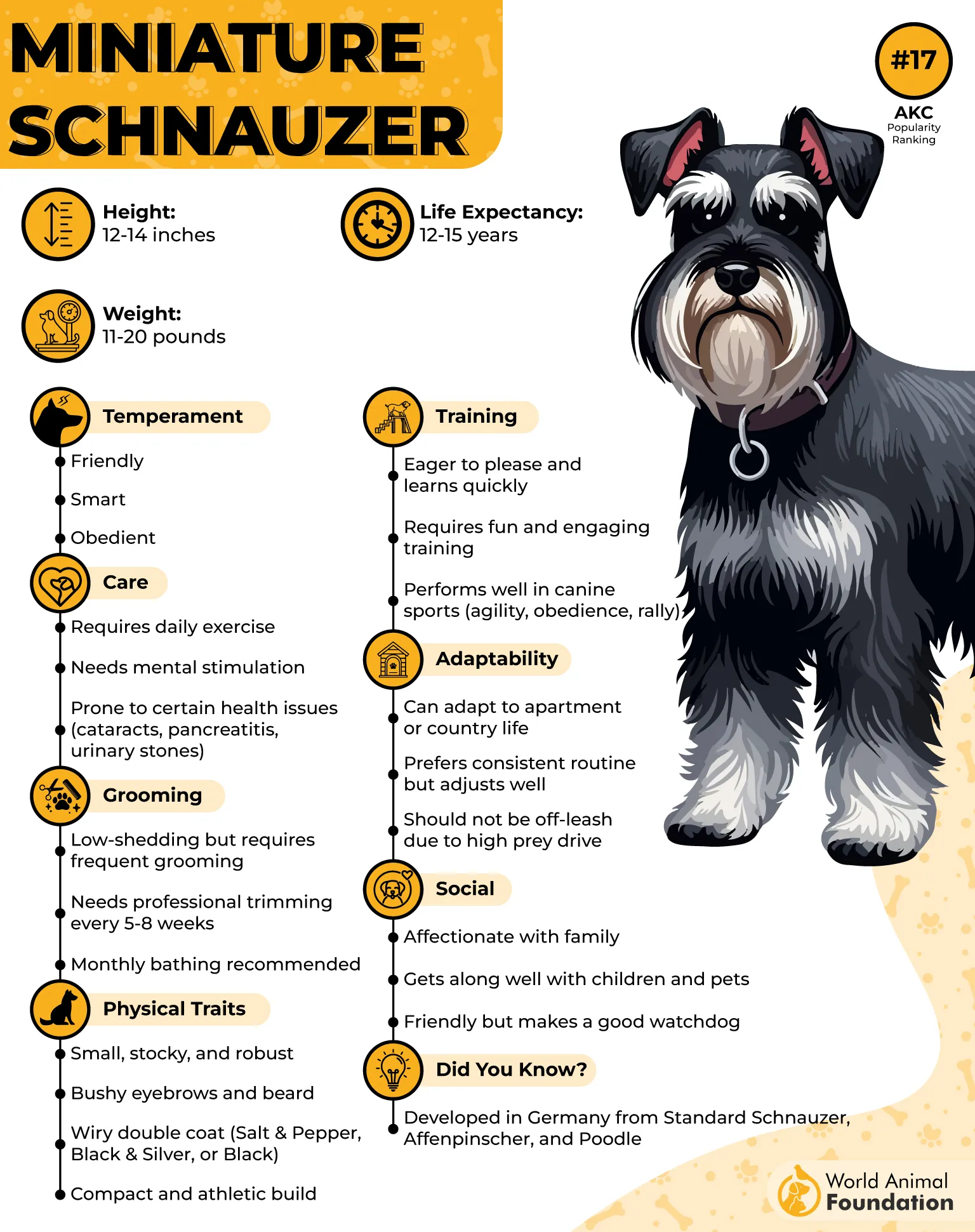
It is a small, sturdy, and muscular dog with an alert look on the face. The thick eyebrows, mustache, and hair on the legs give this breed a distinctive appearance. Not only that, the thick hair protects the breed from the bites of predators while hunting. It chooses to bark loudly when it notices suspicious activity around.
While small, it is an active breed and needs at least 1 hour of daily exercise: long walks, interactive play toys, agility training, and mental stimulation. Reward training is highly recommended.
2. Miniature Pinscher
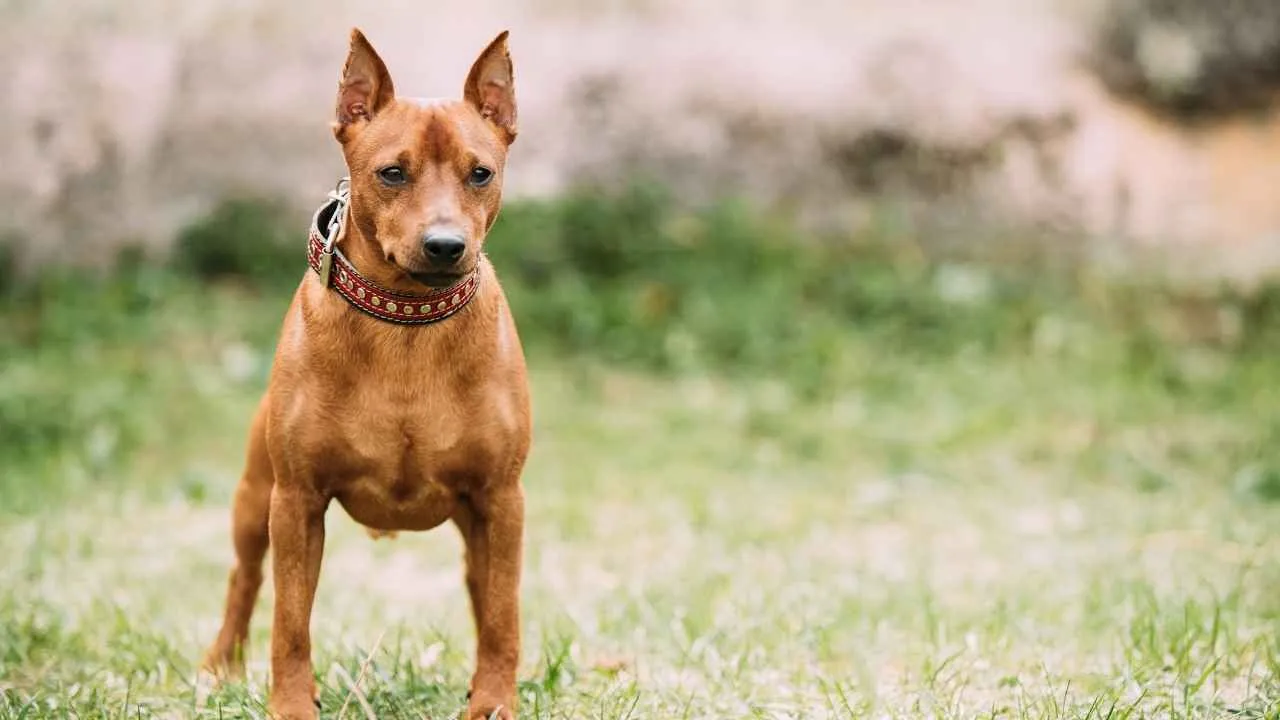
Descendant of the German Pinscher, the Min Pin has a close resemblance to the Dobie with a short and shiny coat, pointy ears, and a long nose. It was originally bred from the Italian Greyhound and the Dachshund. The number of this breed grew after World War II.
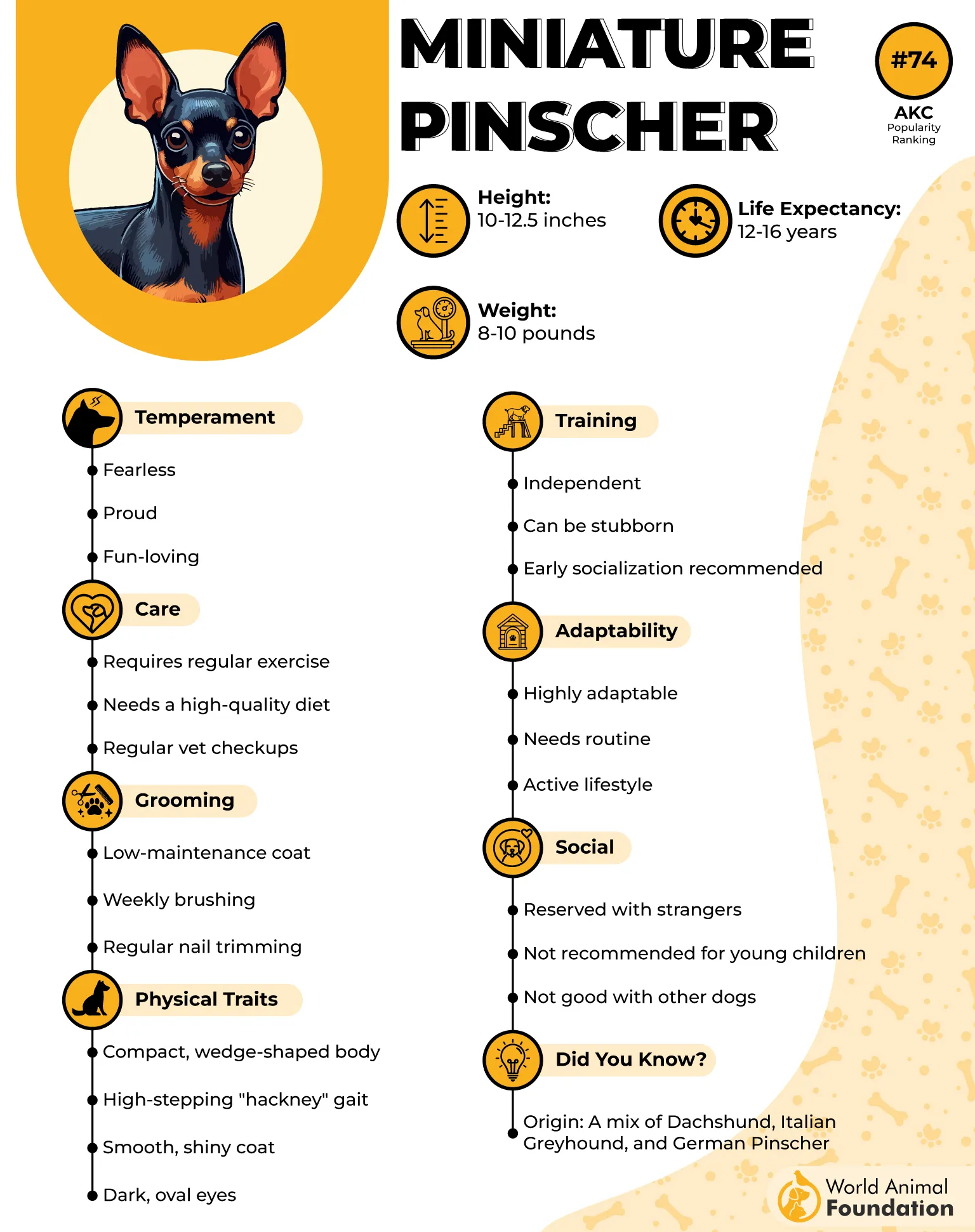
With its watchdog instincts, it has alert ears and sharp focus. It is skilled at catching small animals. The breed loves to spend time with its human family. When aggressive, it may bite or growl. Make sure your dog has a social temperament before introducing it to other pets in the house.
Being an affectionate and active dog, the breed needs 45-60 minutes of daily exercise: puzzle toys, fetching, hide-and-seek, canine sports, and agility training. It may develop destructive behavior when not properly stimulated.
3. Dachshund
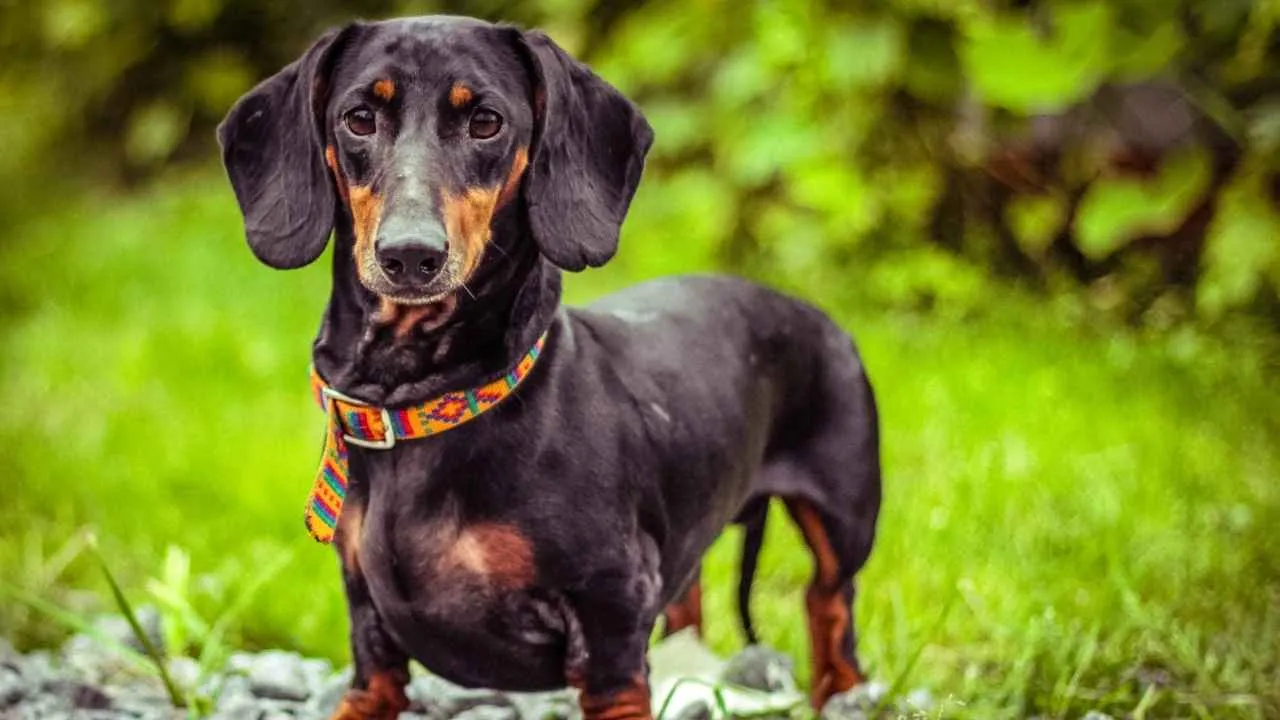
This famous badger hunter was originally bred in Germany in the 17th century. With its sharp claws, an elongated body, and short legs, it can easily navigate through tight spaces. It makes a loud sound when it catches prey to inform the handler.
The breed has large and low-set ears that enable fast sound detection and strong inner ear focus. With its sharp senses of smell, fast reaction reflexes, and high energy, it makes an excellent alert watchdog.
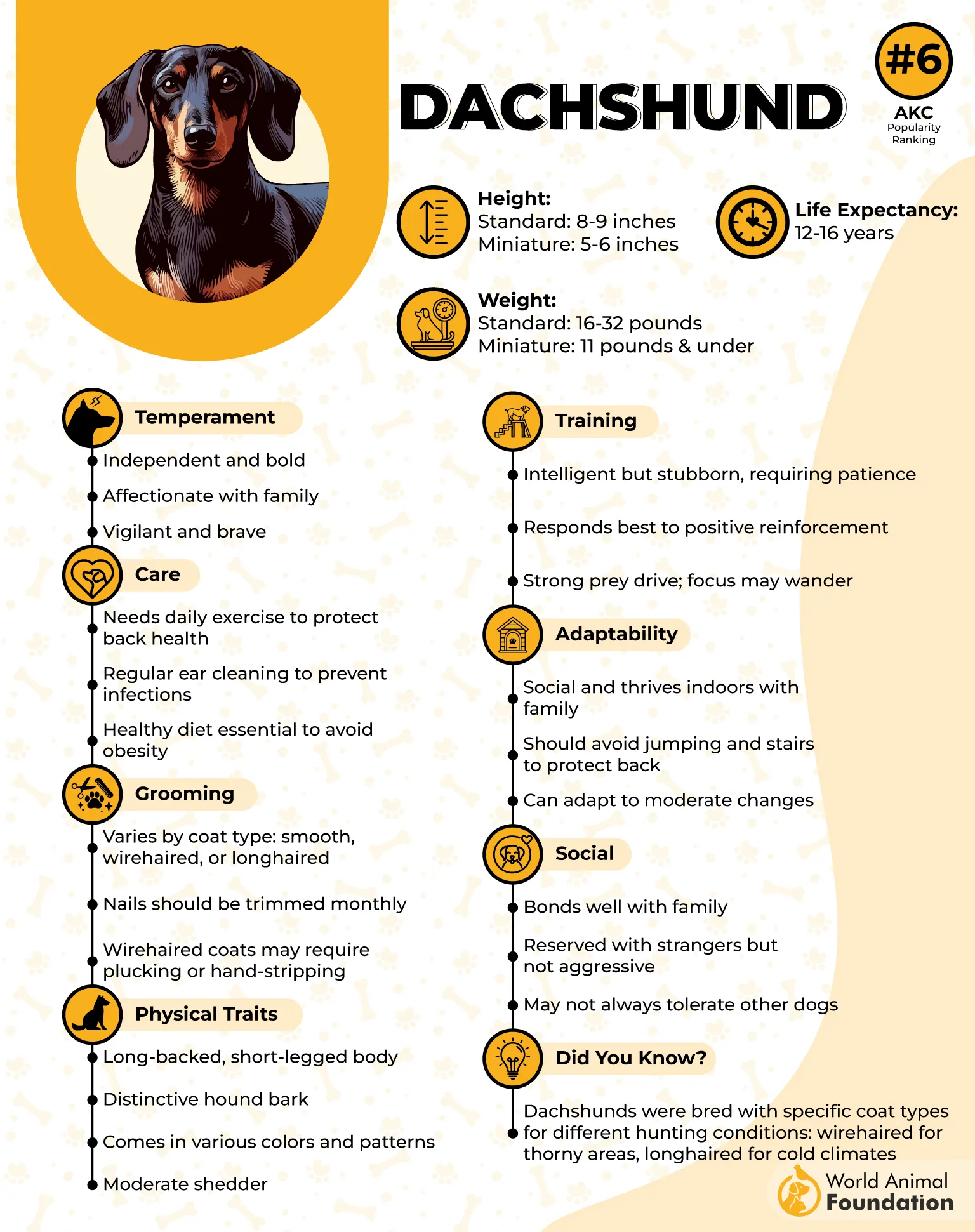
The breed has moderate exercise requirements (30-60 minutes daily). Since it has a long spine, it is prone to certain spinal conditions, such as IVDD; thus, high-impact exercise (jumping and stair climbing) is not suggested.
4. Chihuahua
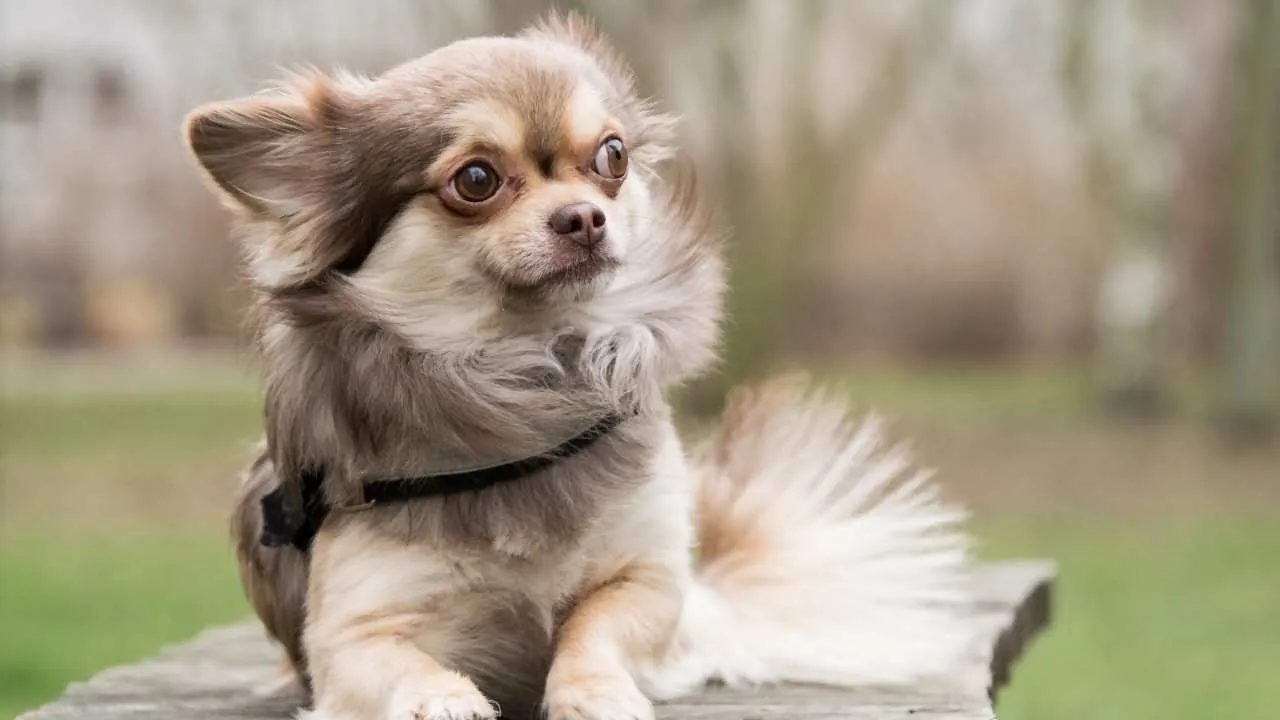
Though it was found across various continents in ancient times, the smallest dog breed is the descendant of a larger breed, the Techichi, and is native to Mexico. When the Aztecs conquered the Toltec civilization, they modified the breed into a smaller version, which we today call a ‘Chihuahua.’
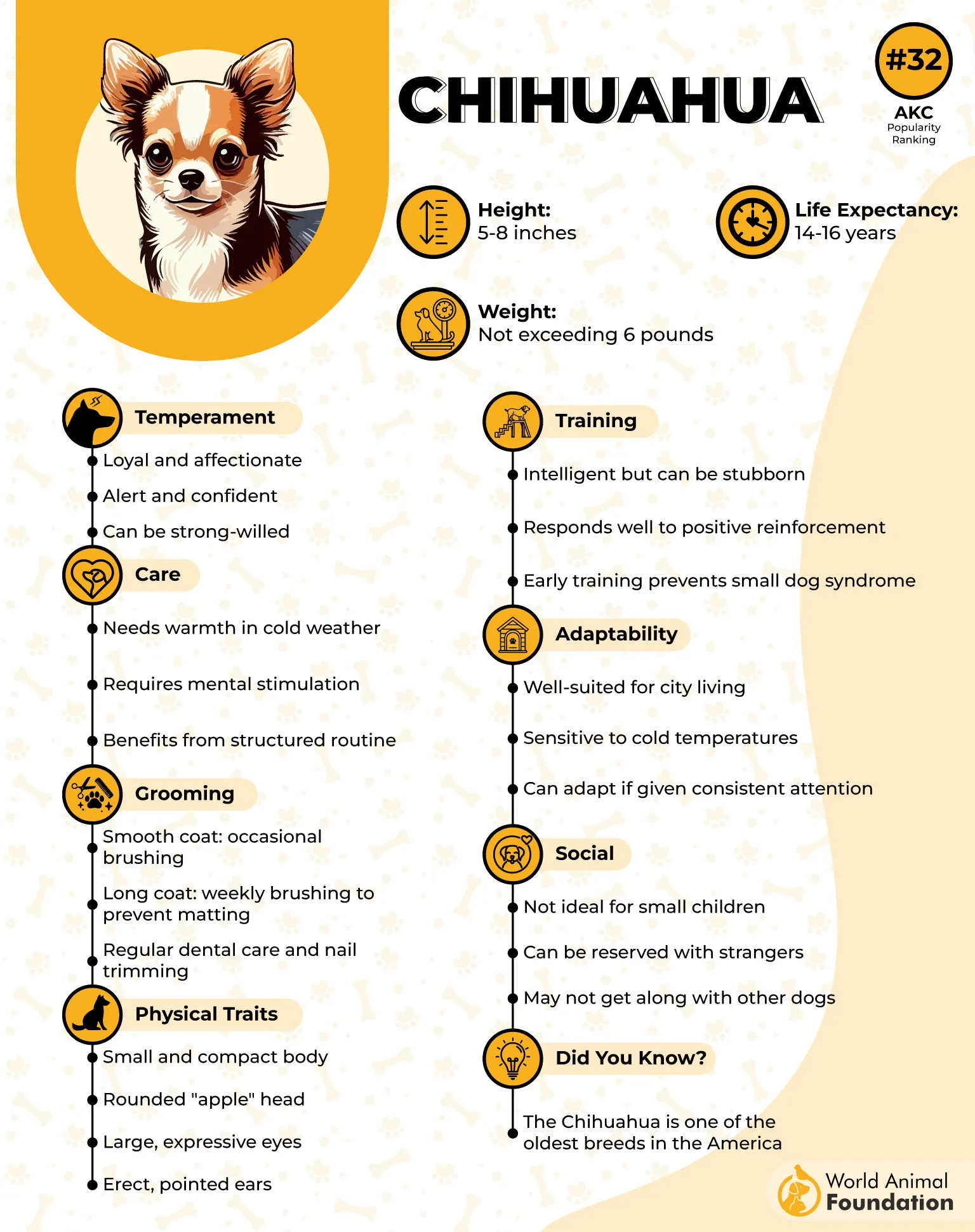
The breed has a terrier-like attitude: alert and confident. The small dog has an acute sense of hearing with its large and wide ears that detect soft sounds from long distances. The big and round eyes provide a wide field of vision that spots tiny changes fast.
It has moderate exercise needs (30 minutes): short walks, hide-and-seek, fetching, and puppy play sessions. It is a low-maintenance breed that needs weekly brushing to prevent tangles and mats.
5. Lhasa Apso
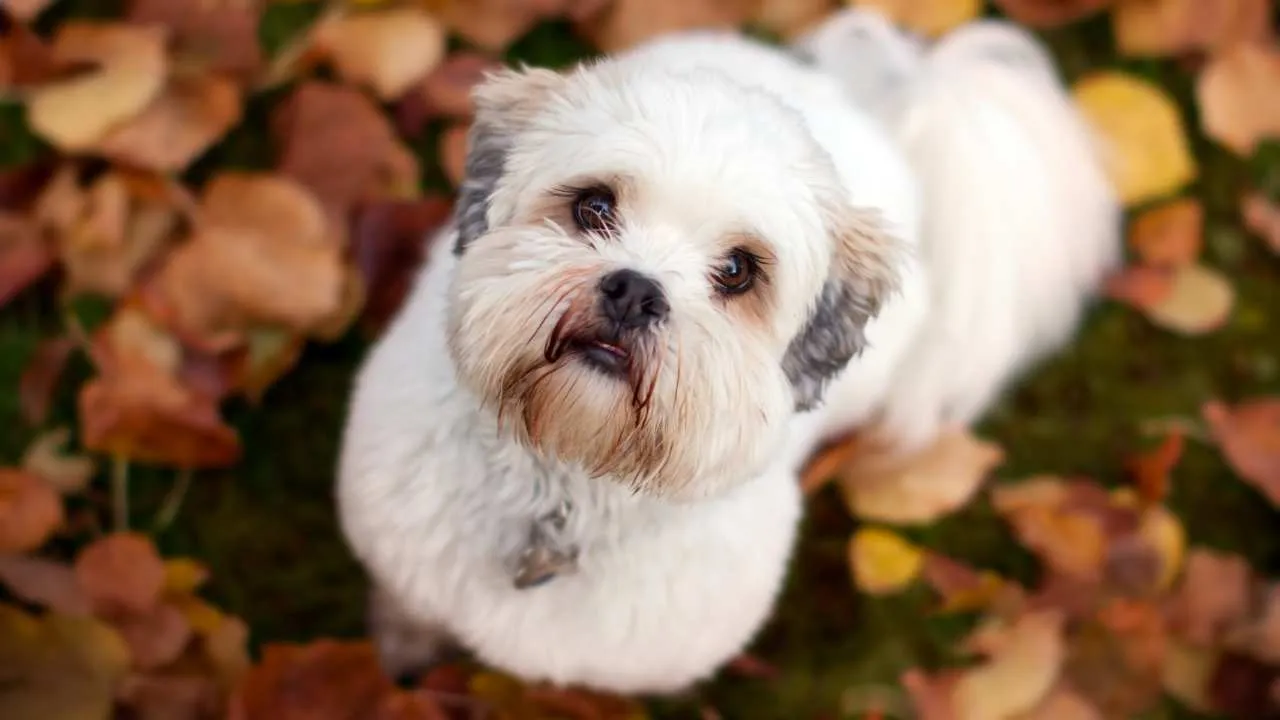
The history of this ancient breed began some 2,000 years ago, when it was mutually developed by the Tibetan monks and the nobility to watch over the monasteries and palaces. Its primary goal was to serve as a watchdog and bark to alert the owner of a potential threat, as per Pooch & Mutt.
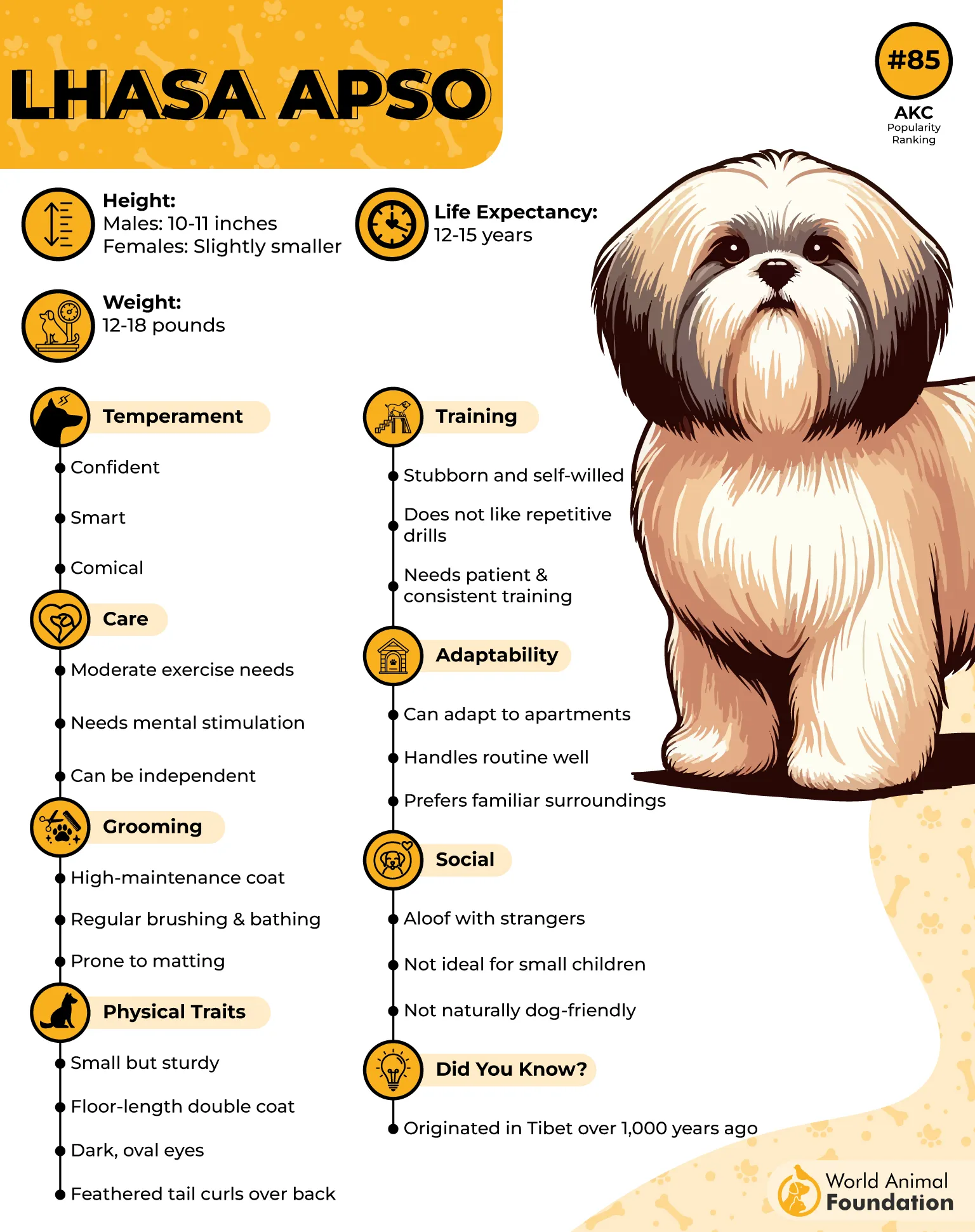
It forms strong bonds with family members and stays reserved around strangers. It takes time to be fully convinced that the stranger is no longer a threat. Once confirmed, it runs after for a cuddle. A mythical Tibetan folklore explains that the protector of Tibet is a snow lion, which is this fun-loving breed on earth.
It needs 1 hour of daily exercise: daily walks and mental enrichment. Being a little lap dog, it loves spending its afternoons lounging on a sofa once daily physical stimulation is done.
6. Tibetan Spaniel
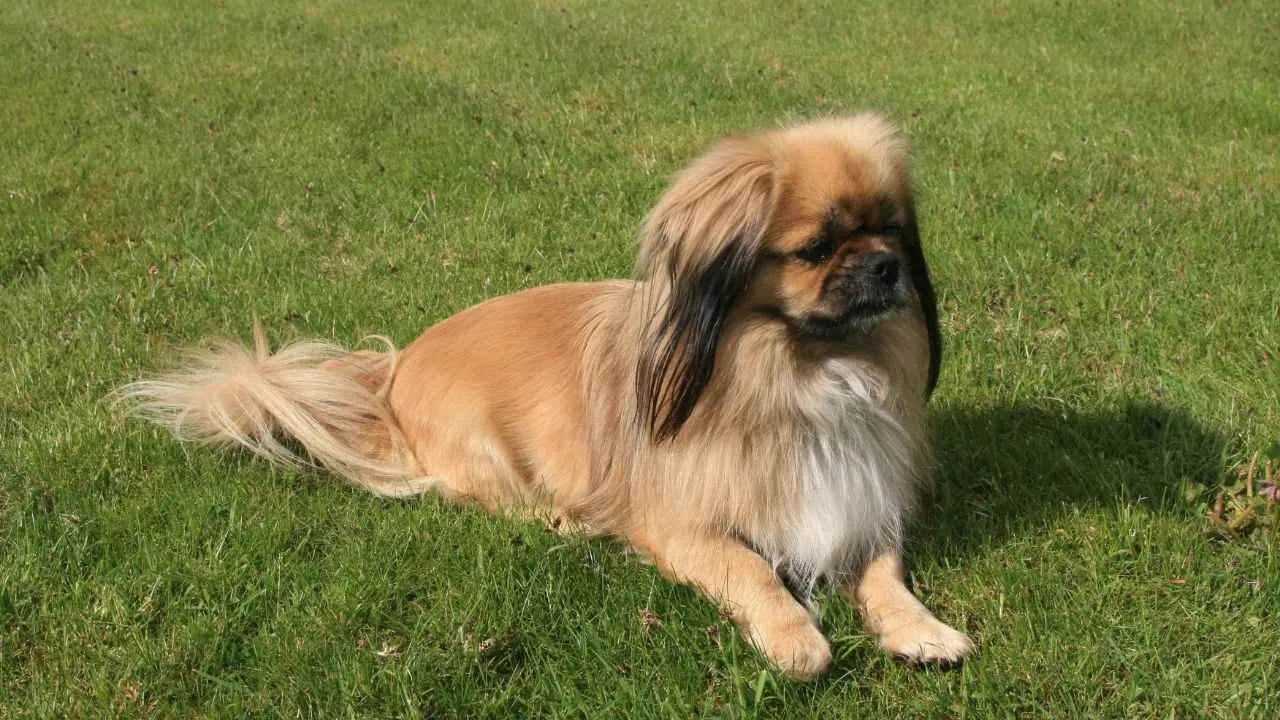
The earliest version of this dog breed used to be depicted in Eastern artwork in 1100 BC. The Buddhist monks in the Tibet region used to keep this dog as a companion and a watchdog. Also known as a Lion Dog, the breed has a sacred place across Chinese culture.
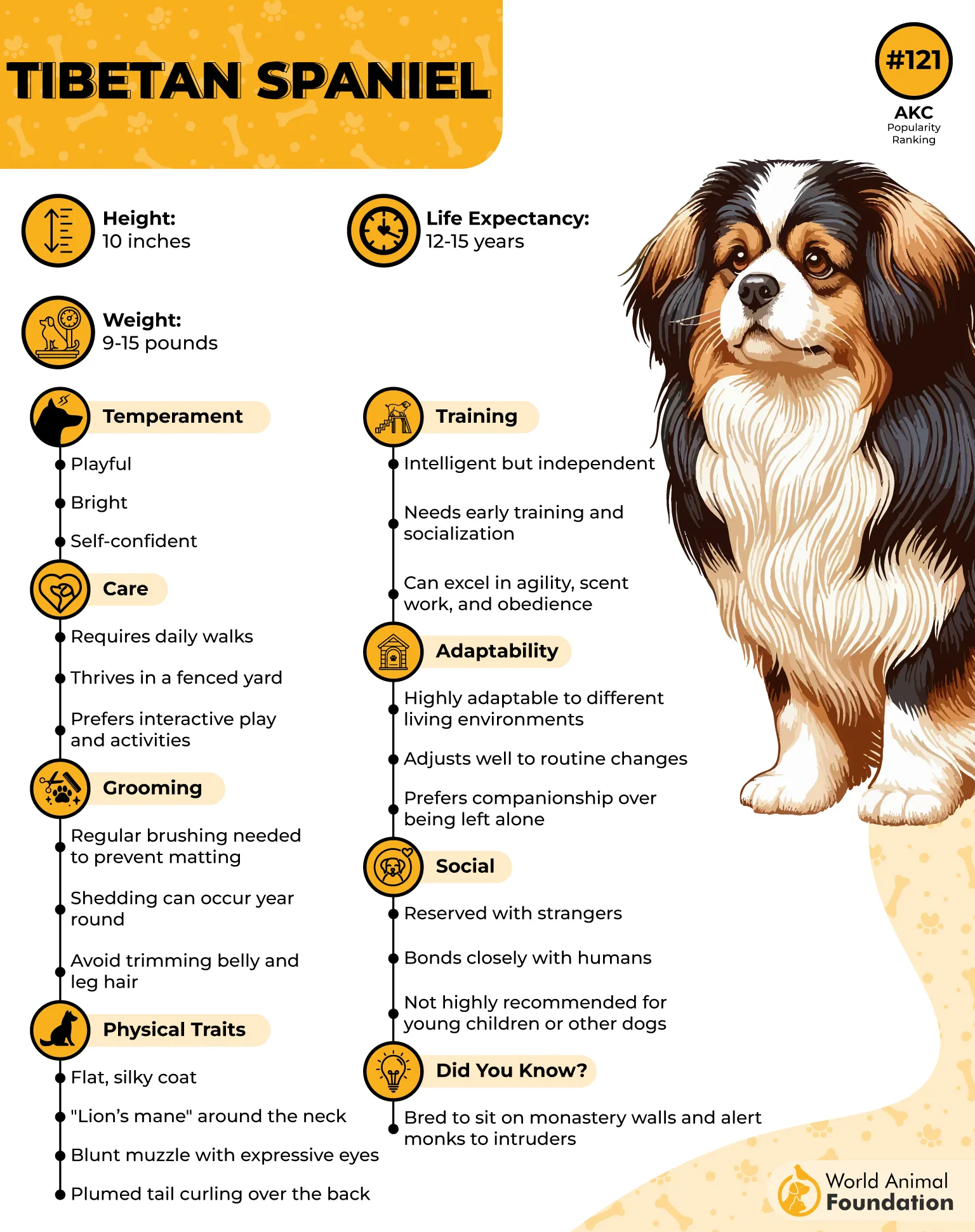
The breed is naturally wary of strangers, and alert barking is triggered as soon as it senses anything suspicious. It would alert its owner by barking to check out. The independent nature makes it work alone. Positive reinforcement is required during training.
This energetic breed needs at least 1 hour of daily exercise and mental stimulation: morning and evening walks, puzzle toys, dog sports, agility, and flyball. The coat requires brushing a few times a week.
7. Yorkshire Terrier
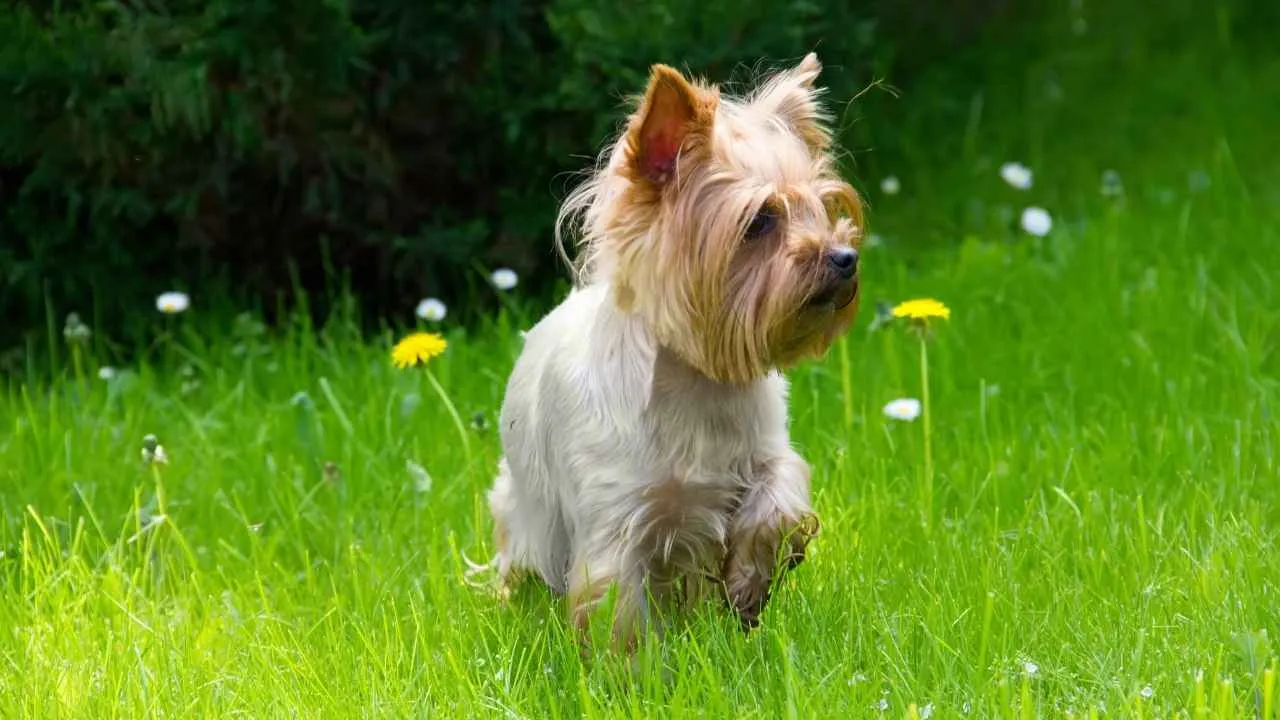
The rough-coated Black-and-Tan English Terrier and Paisley and the Clydesdale Terrier were crossed to develop the Waterside Terrier, which is the descendant of the Yorkie. This velcro dog was originally used to hunt and kill rodents and rats in the cotton and wool mills in the city of Yorkshire.
The dog also carries natural territorial and protective instincts for its family members. Though it is not yappy, it barks to alert the owner of a threat.
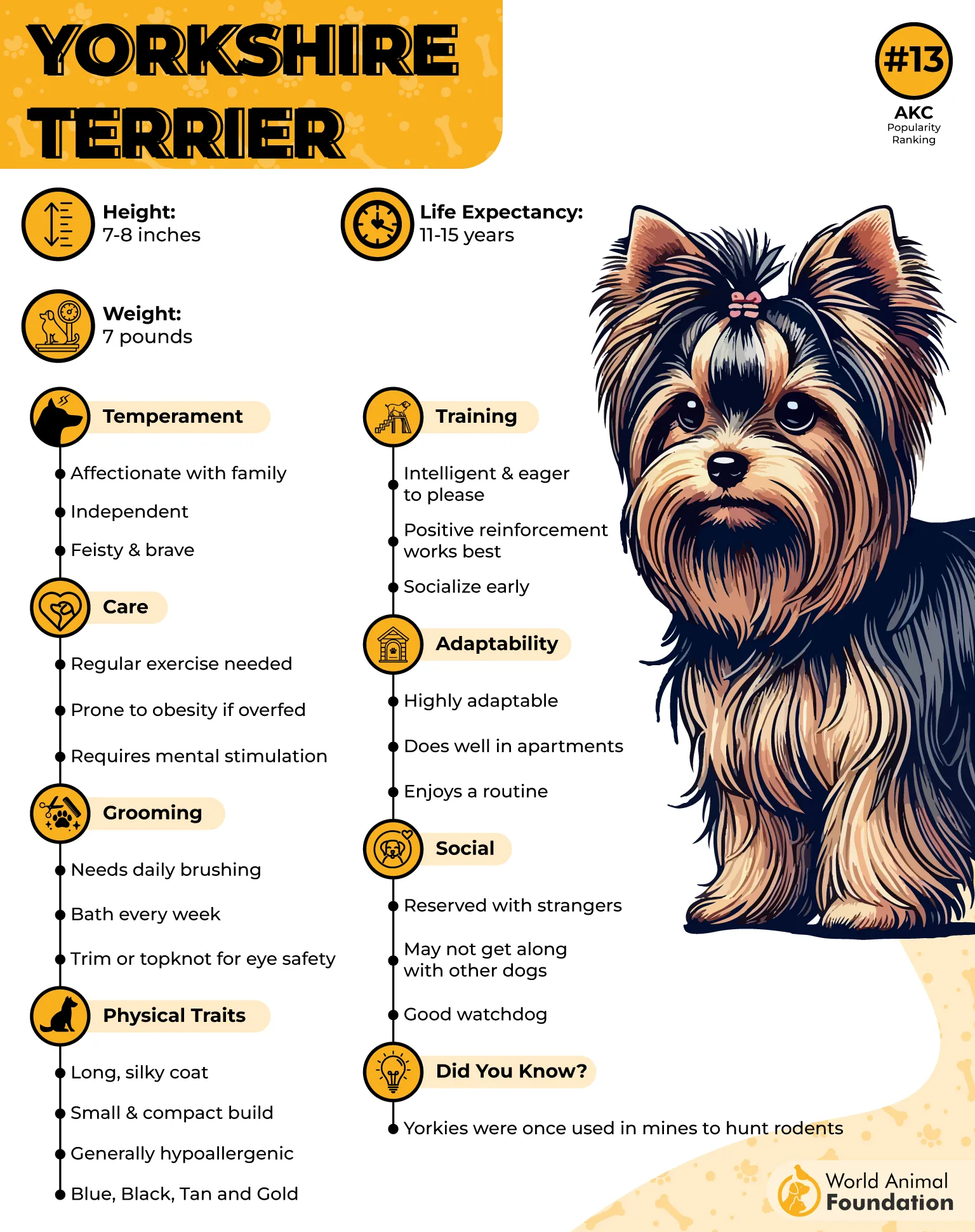
It is a moderately energetic dog and requires a moderate amount of exercise daily, including 2-3 short walks and indoor play. It can be a loud barker and a picky eater; thus, basic obedience training and weight management are non-negotiable.
8. Pomeranian
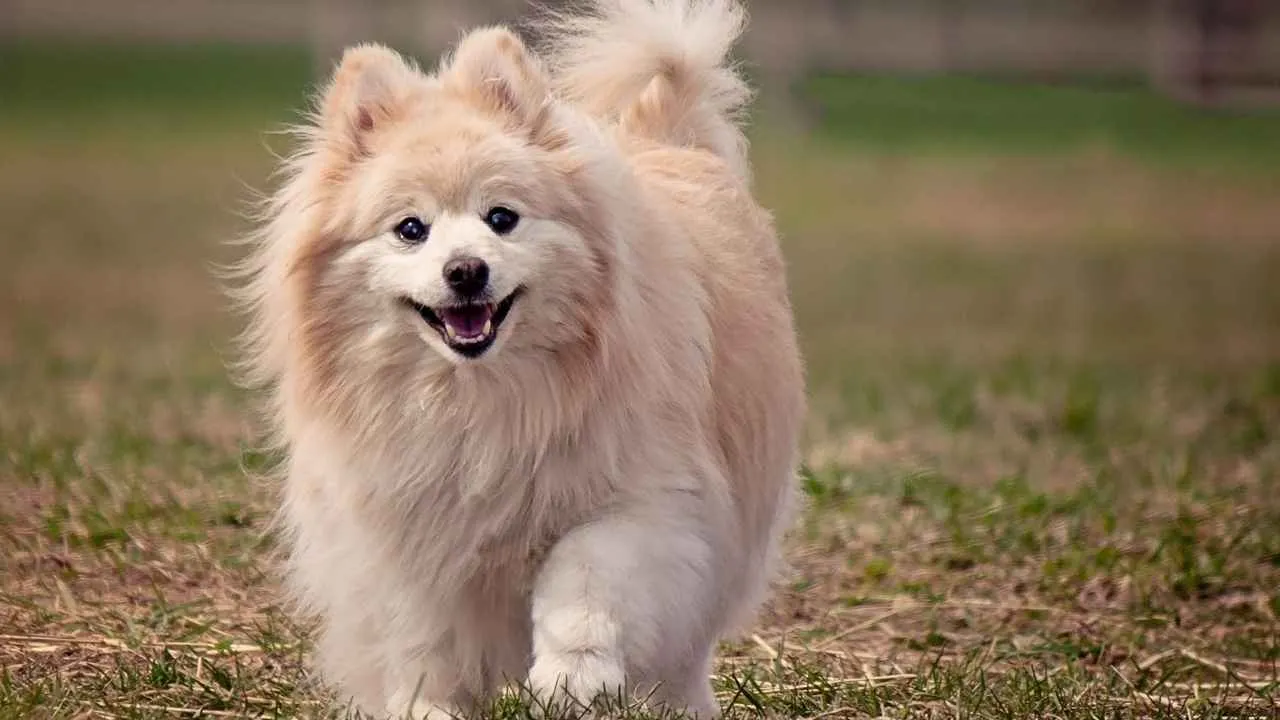
Having wolf-like characteristics, the Pomeranian is the descendant of the Spitz dog group found in Iceland. These dogs were used to pull heavy loads and herd reindeer. The original size was bigger and went through size reduction procedures during the time of Queen Victoria.
This small breed has a confident and curious personality. It remains on high alert 24/7. The little dog is highly vocal, making an excellent watchdog. Despite being bred as a companion dog, it prefers exploring its surroundings rather than lounging.
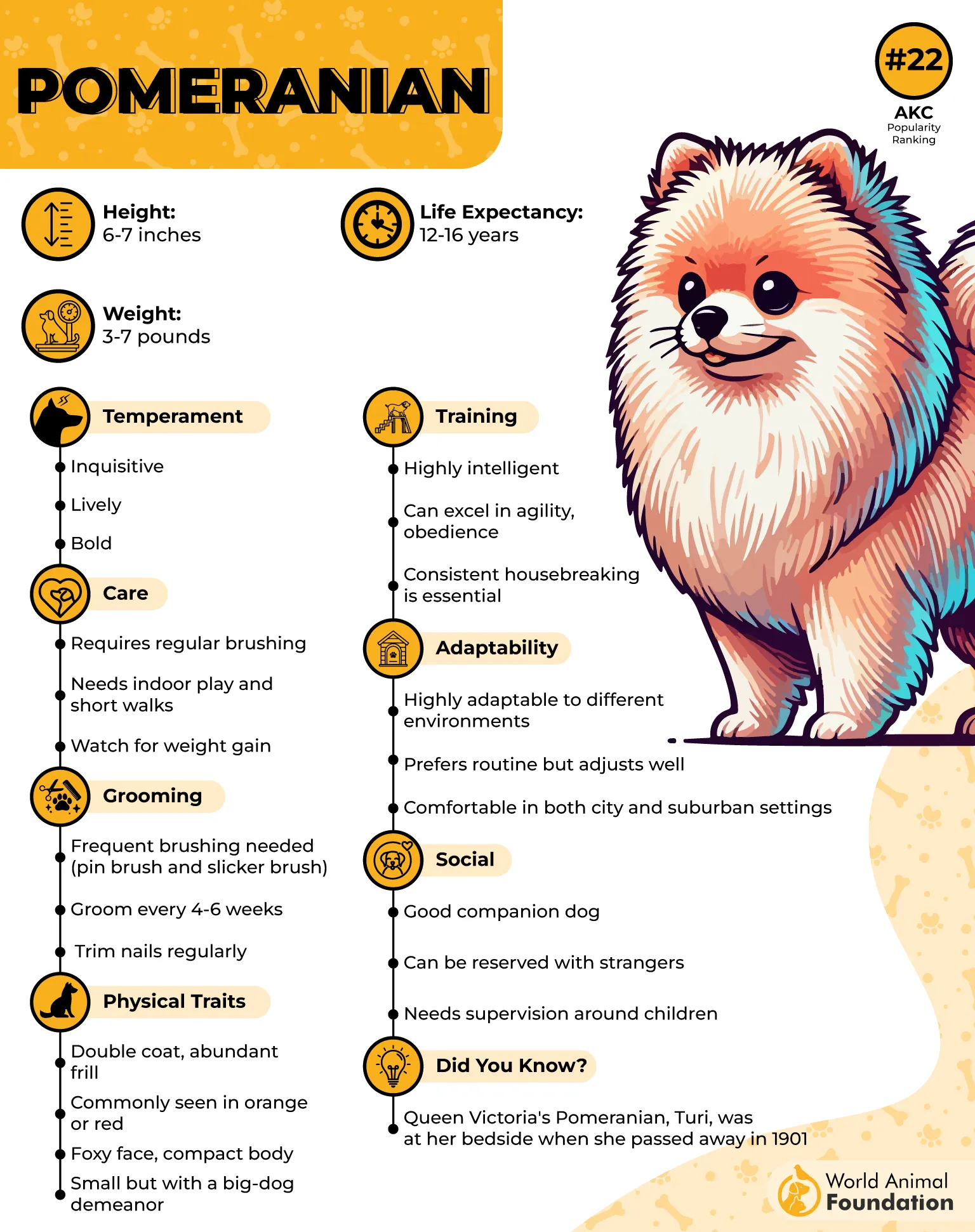
The breed requires moderate physical activity for 20-30 minutes daily: daily walks, interactive fetching, puzzle toys, and indoor agility. It has regular grooming needs: brushing 3-4 times a week using a slicker brush.
9. Scottish Terrier
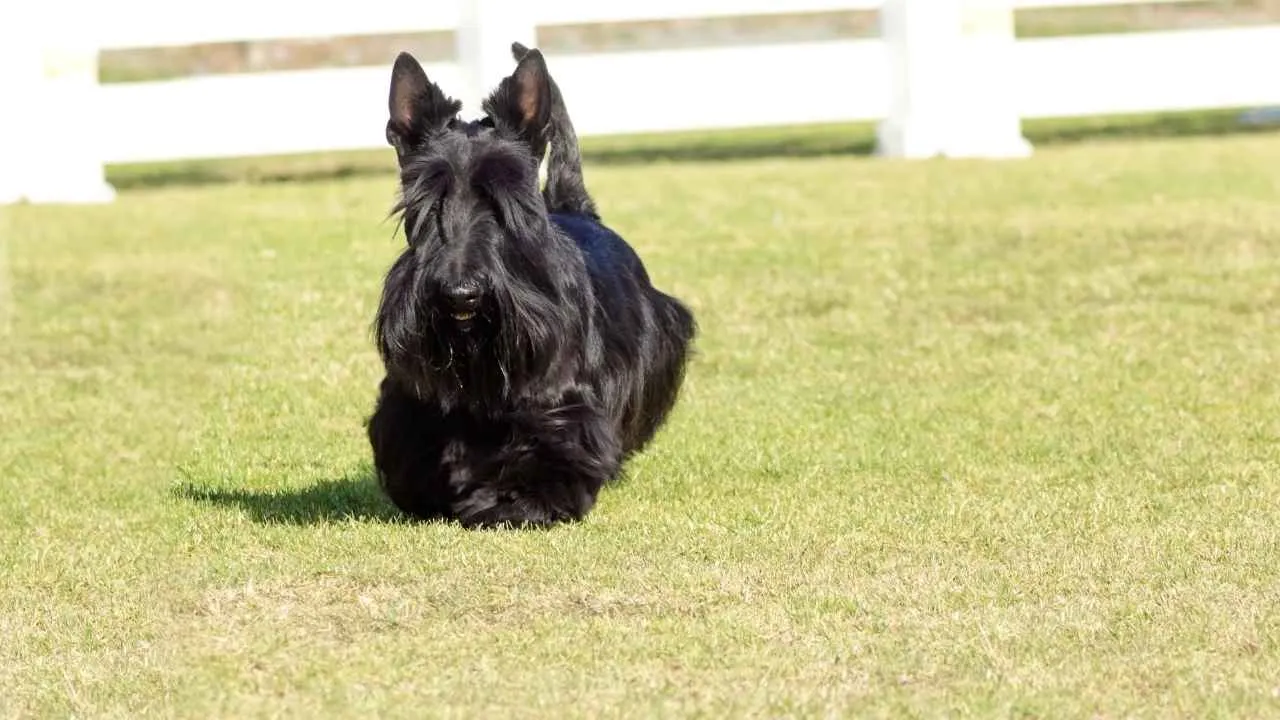
It is believed that a similar terrier dog existed in the Western Highlands of Scotland and the Islands of the Hebrides with a rough coat and short legs. It was recognized as a separate breed in 1879 from the Skye and the Cairn Terrier, as reported by Dogs Australia.
Since it was bred for independent hunting, it may develop stubbornness that can be avoided with proper training and early socialization. It has a thick beard and long eyebrows that protect it underground while looking for vermin.
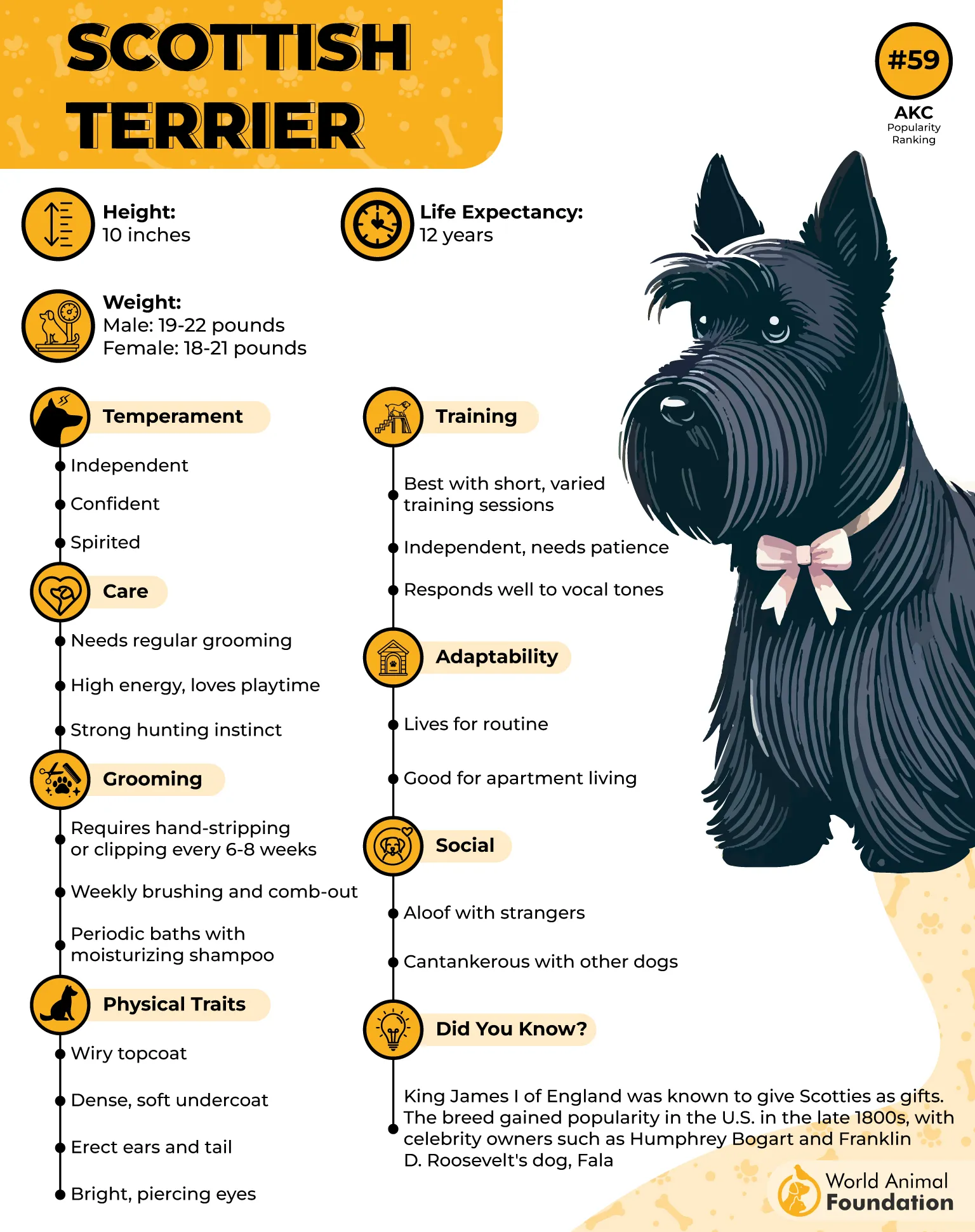
Also known as ‘Dour Scot,’ it can easily detect sudden movements. It is highly suitable for older family members. It is not an overreactive dog and has minimal exercise requirements.
Conclusion
A secure home is not always about having the biggest dog on the block. Sometimes, it is the small companion with quick ears, sharp instincts, and endless loyalty that gives you the greatest peace of mind.
Every breed on this list protects its family differently. Some rely on bold confidence, while others use their watchful nature and loud bark to keep everyone aware of unusual activity.
The best choice depends on your lifestyle, home, and experience with dogs. With proper training, daily exercise, and plenty of affection, these protectors become more than watchdogs. They become trusted family members that happily stand by your side through every ordinary day and every unexpected moment.
