




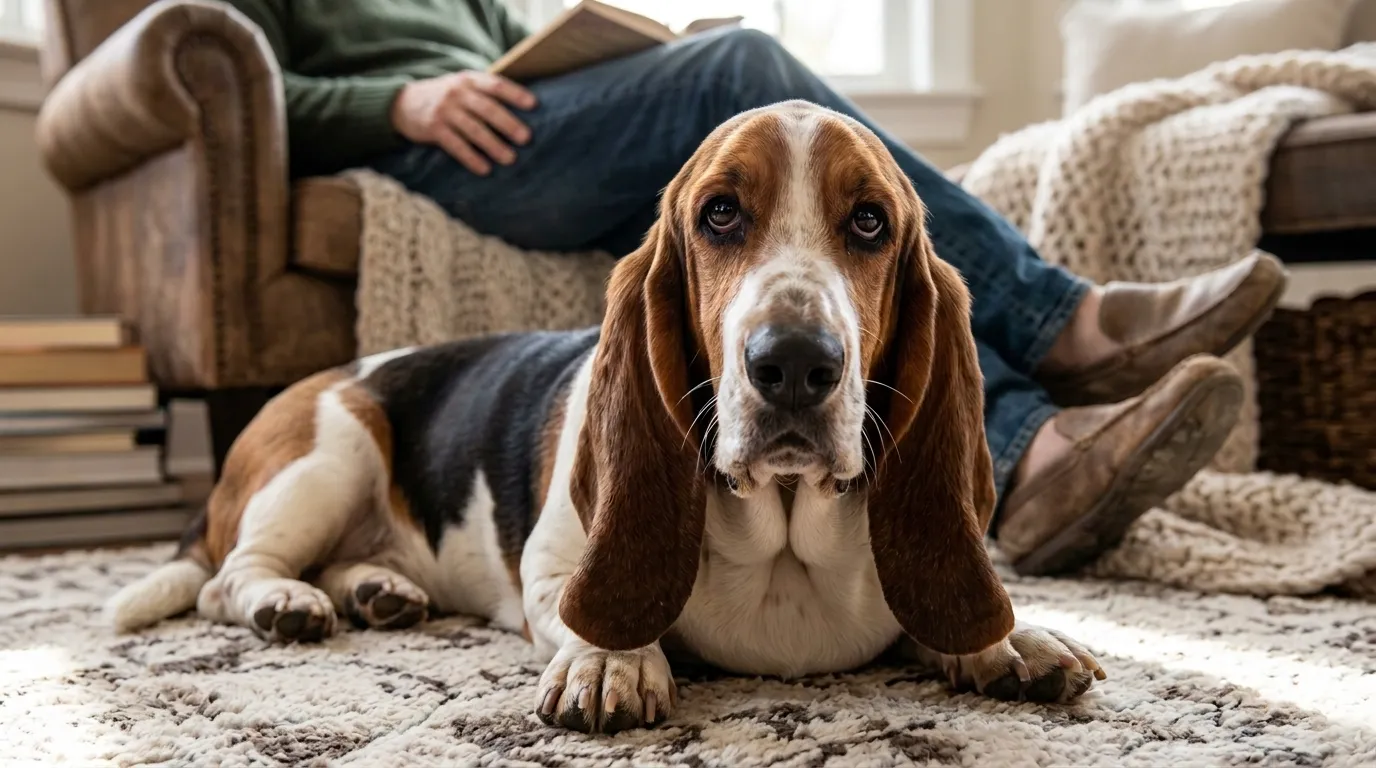
If your idea of quality time with a dog involves a leisurely walk instead of a morning run, slow-paced dog breeds deserve your attention.
Exercise requirements vary considerably between breeds, and some dogs are naturally better suited to moderate activity and longer periods of rest. That can be especially useful for owners who enjoy quiet weekends, work from home, live in smaller spaces, or prefer a slower daily rhythm. Still, low-energy does not mean completely inactive.
Dogs need routine movement for muscle health, joint mobility, mental stimulation, and weight control, even when their exercise needs are modest. The goal is balance. You want enough activity to keep your dog healthy without choosing a companion whose energy constantly pushes your routine in another direction.
For laid-back owners, temperament, exercise needs, size, and care all matter. Keep reading to see which slow-paced companions may fit your relaxed life best.
Key Takeaways
If your perfect weekend involves a quiet walk and plenty of time on the sofa, some dogs are far better suited to your rhythm than others.
The Basset Hound takes this pace seriously, with short legs and an incredible nose that once made it a steady tracker of rabbits and hares.
Then there are breeds such as the English Bulldog and Pekingese, which are quite happy trading long outings for short strolls and plenty of time at home.
The real surprise comes with the Saint Bernard and Newfoundland, two gentle giants that can enjoy a slower routine despite their impressive size.
Slow-Paced Dog Breeds for Laid-Back Owners
1. Basset Hound
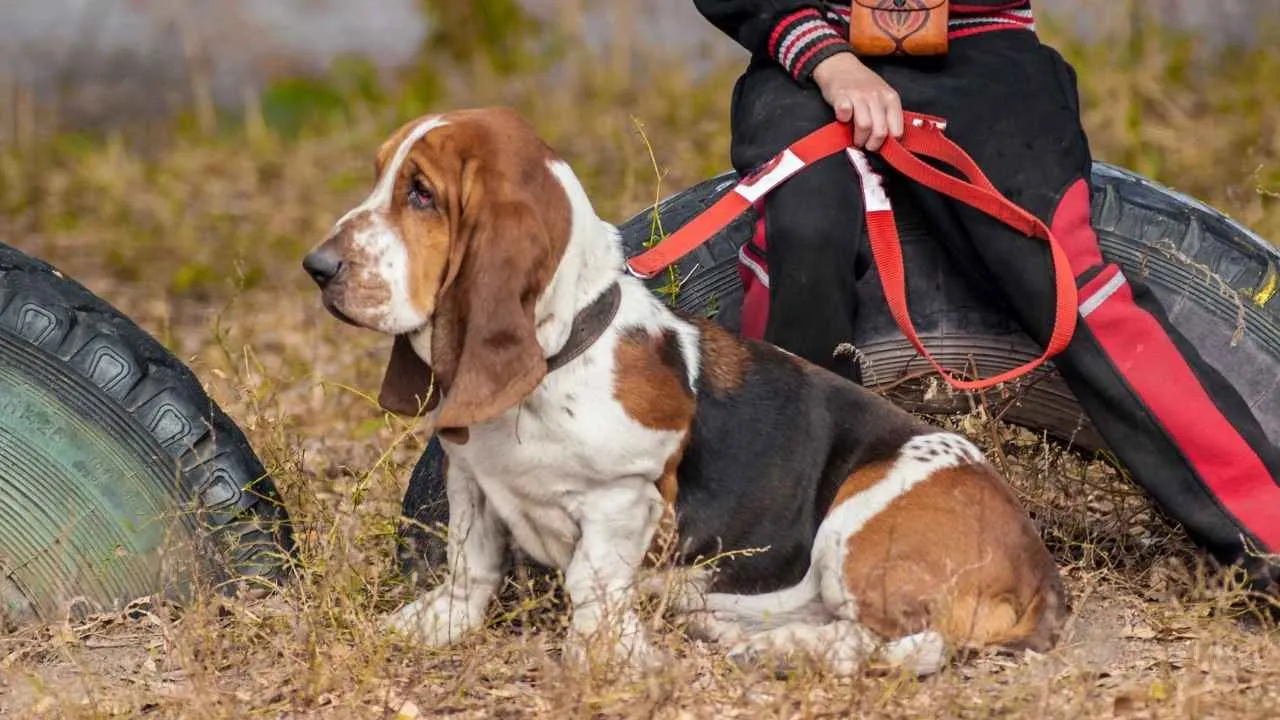
Basset Hound has deep French roots, with early versions linked to monks at the Abbey of St. Hubert who selected dogs for exceptional scent-tracking ability. The name comes from the French word “bas,” meaning low, a reference to its short legs and close-to-the-ground build.
Made for a Slower Rhythm
This calmest dog breed suits a relaxed routine because its natural pace is unhurried, and a daily walk can provide enough regular exercise. Its short legs also suited hunters who followed these dogs on foot during methodical searches for rabbits and hares.
These traits help explain their distinctive working style:
Follows scents with exceptional persistence
Enjoys hunting and tracking activities
Can become sedentary without regular exercise
A Clever Couch Companion
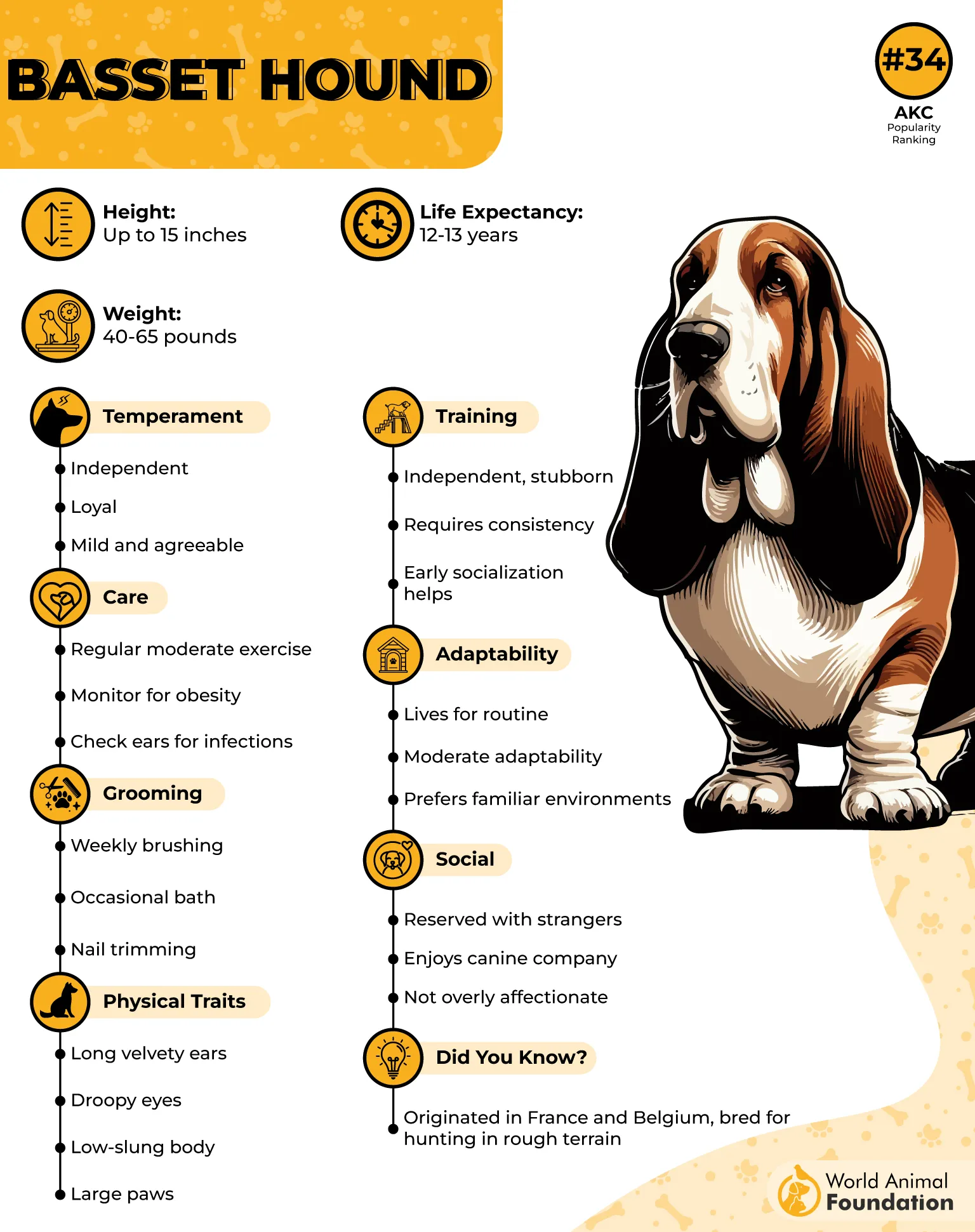
Basset Hound has a calm, affectionate nature and enjoys spending time with people, dogs, cats, and other household pets, as Hill’s Pet noted. Its independent streak can make obedience and house training slower, while praise, rewards, and patient consistency can help keep lessons productive.
2. English Bulldog
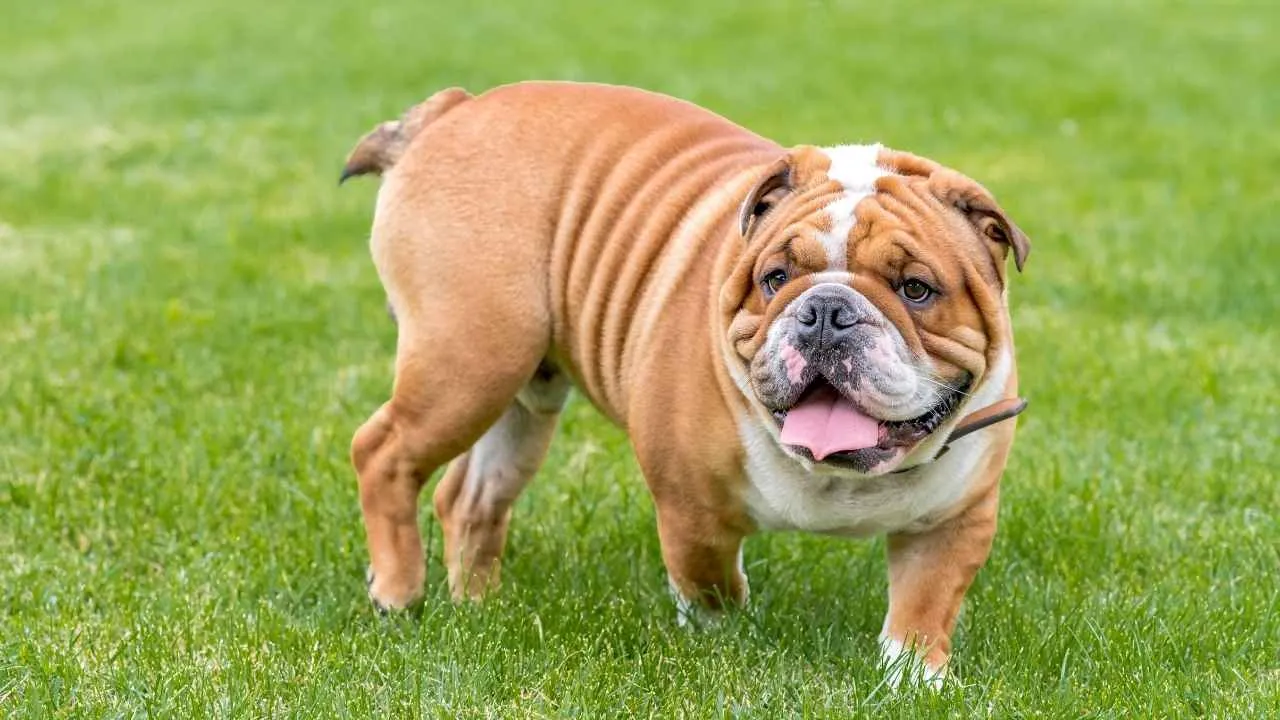
English Bulldog was originally bred in England as a cross between the Mastiff and Pug, bred for the brutal sport of bull-baiting during the Middle Ages. Its task involved gripping the bull and refusing to release it, even under severe pain.
After bull-baiting was banned in the 1830s, the breed’s numbers fell sharply, and extinction became a real concern. Dedicated breeders gradually selected for a gentler temperament, reshaping the dog into the companion familiar today.
Easygoing at Home
English Bulldog is better off with manageable bursts of activity than a long exercise routine, given its limited endurance. A quick walk or some ball play can provide the movement it needs without leaving it worn out after a strenuous session.
For smaller homes, several practical details matter:
No yard is required for daily life
Short muzzle makes heat risky
Cold temperatures can also cause discomfort

Built for Quiet Days
This big lazy dog often spends long stretches lounging, napping, or curling beside its favorite person on the couch. Its social nature also makes household companionship important, while its sturdy build calls for a supportive resting spot during those frequent naps, as stated by Purina.
3. Clumber Spaniel
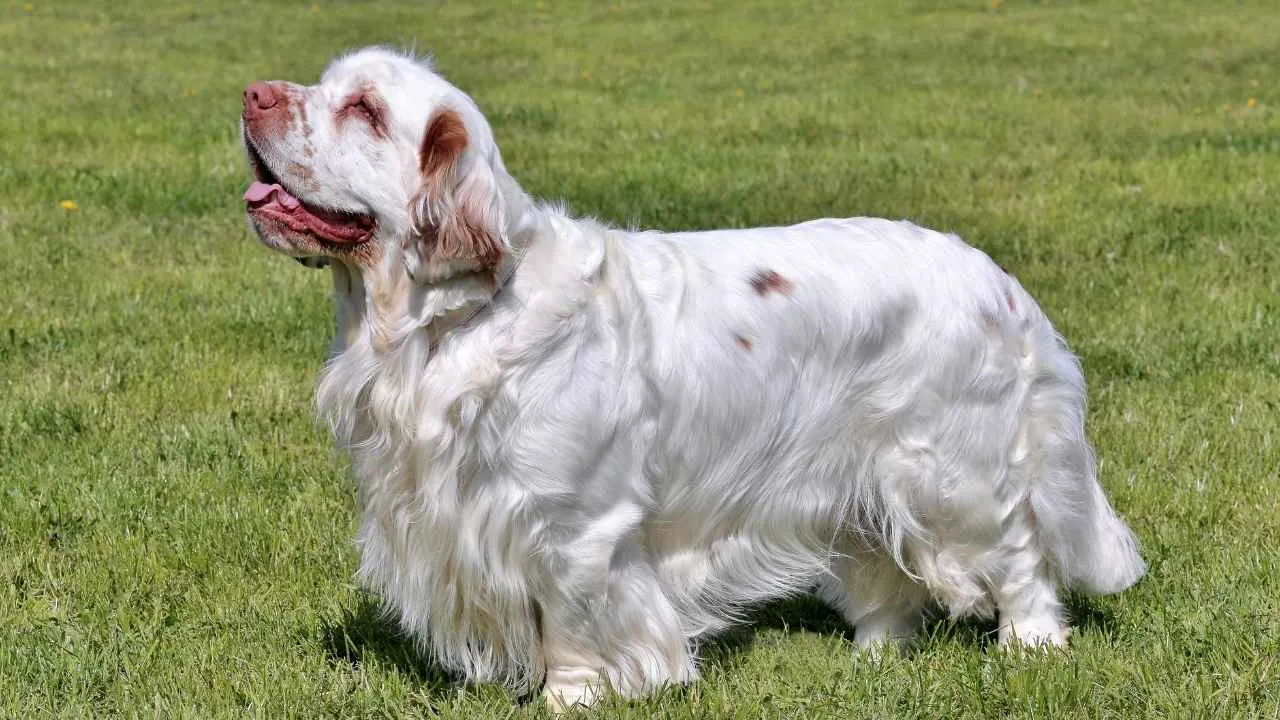
Clumber Spaniel takes its name from Clumber Park, the Duke of Newcastle’s estate in Nottingham, England, where the modern breed took shape during the mid-1800s. The Duke and his gamekeeper, William Mansell, shaped this stout bird dog for work alongside British aristocrats.
A Measured Pace
This Spaniel has a slow, deliberate gait that helps it conserve energy across long days in the field. Its broad body, short legs, and heavy bone give that pace a distinctive rolling quality, while its powerful chest helps it push through dense undergrowth after birds.
These characteristics make their physical design easier to picture:
Larger head than most spaniels
Dark amber, gentle-looking eyes
Slight droop to the face
Calm With Character
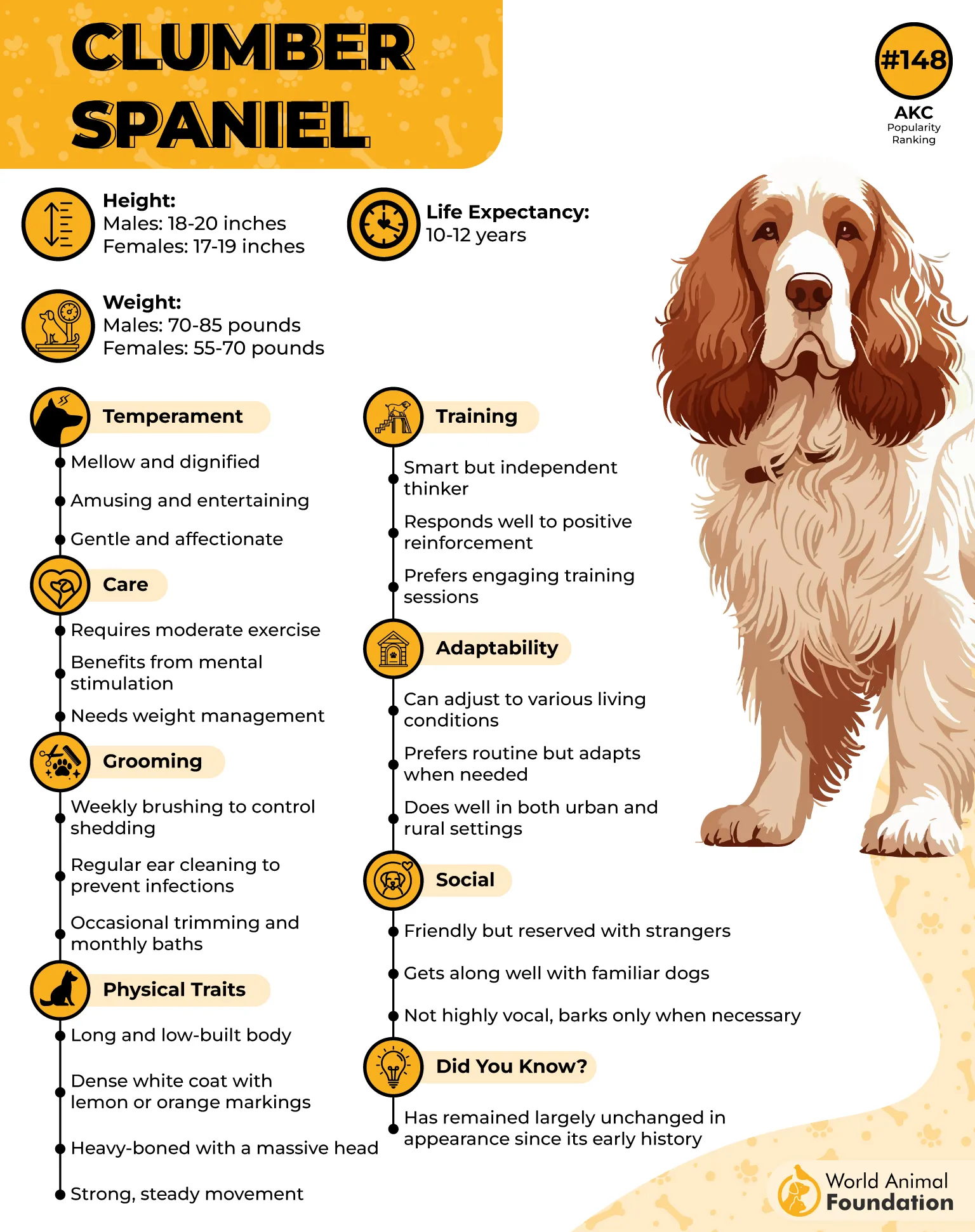
Clumber Spaniel has a dignified, placid temperament and tends to be more reserved than other spaniels. It can be indifferent toward unfamiliar people, while its patience, intelligence, and willingness to learn make it manageable for first-time dog households.
4. Tibetan Spaniel
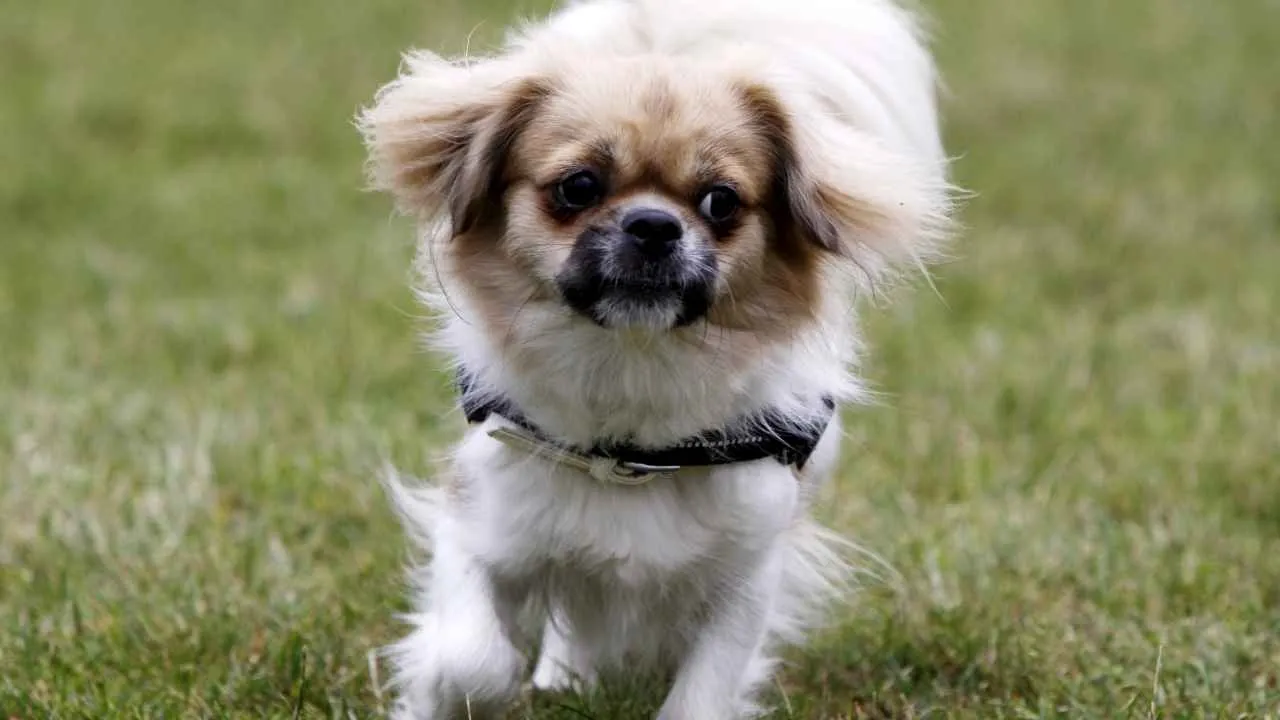
Tibetan Spaniel appears in Eastern artwork dating to 1100 B.C., with Buddhist monks keeping these small dogs in monasteries as companions and sentries. Their job included alerting the larger Tibetan Mastiff when they noticed something worth investigating.
Easygoing Energy
Tibetan Spaniel has the easygoing rhythm of a laid-back breed, often lounging on the sofa or watching life from a windowsill between daily walks. One or two outings totaling about 30 to 60 minutes generally suit its activity level, while play adds some variety.
A few practical details are easy to overlook:
Food and treats can encourage weight gain
Puzzle toys provide useful mental work
Agility and flyball add active variety
Quietly Perceptive
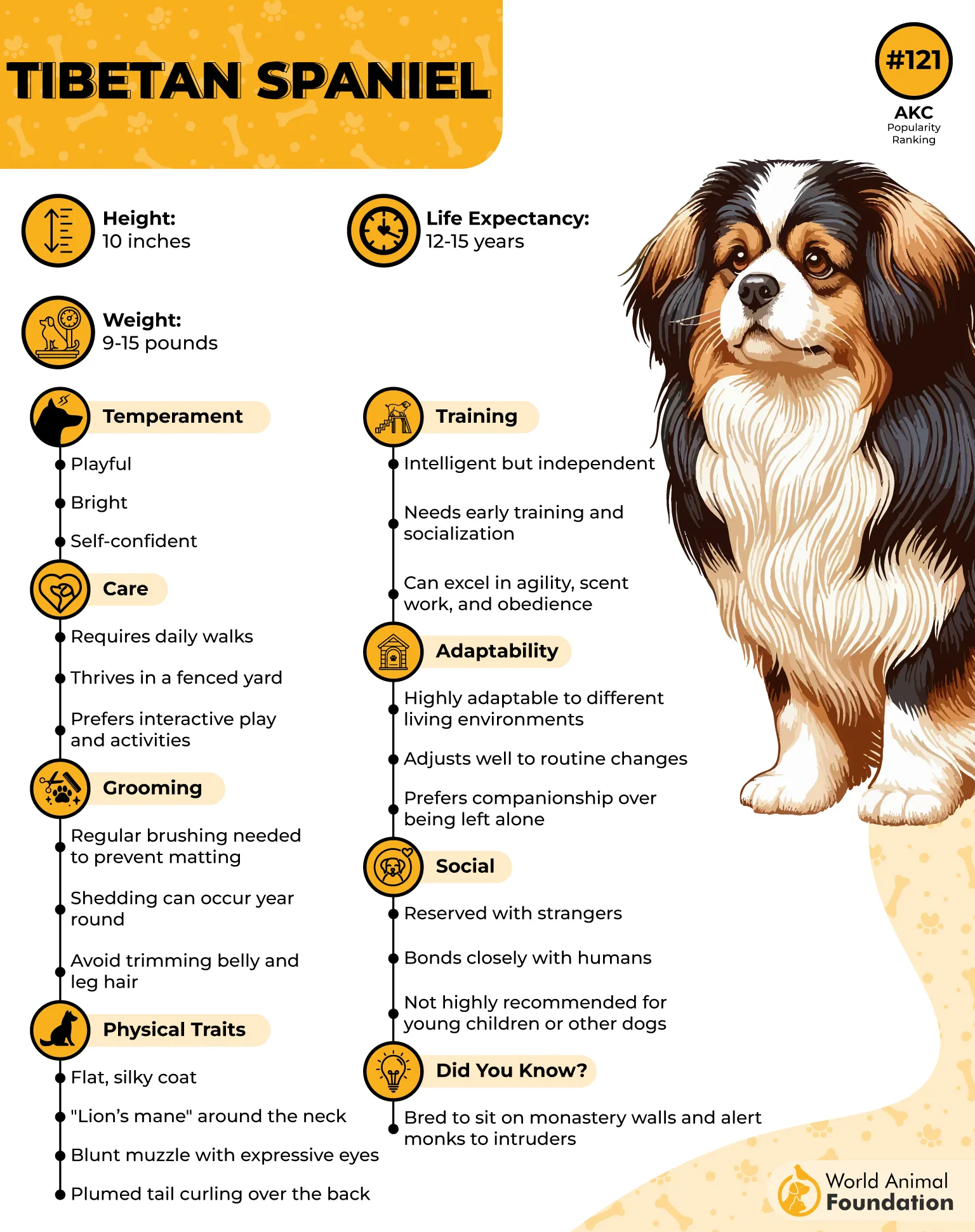
Tibetan Spaniel is highly responsive to the mood at home and can become anxious when the atmosphere turns tense, as PetMD reported. Its sensitivity has also made the breed suitable for therapy work, while its affectionate nature keeps it closely tuned to family members.
5. Pekingese
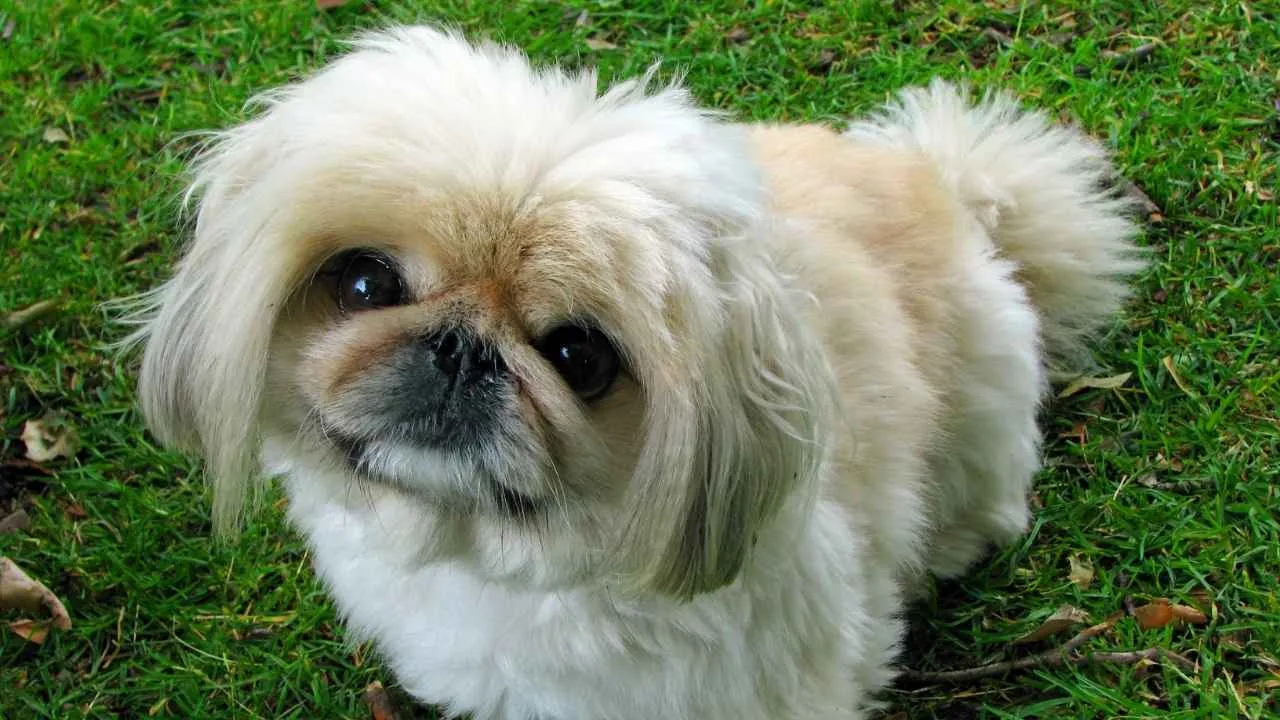
Pekingese has a long association with Chinese palaces and temples, where the little Lion Dog was treated as a special animal and guarded closely. During the Qing Dynasty, from 1644 to 1912, its ancestors appeared widely in figurines and enjoyed particular prominence.
Made for Quiet Living
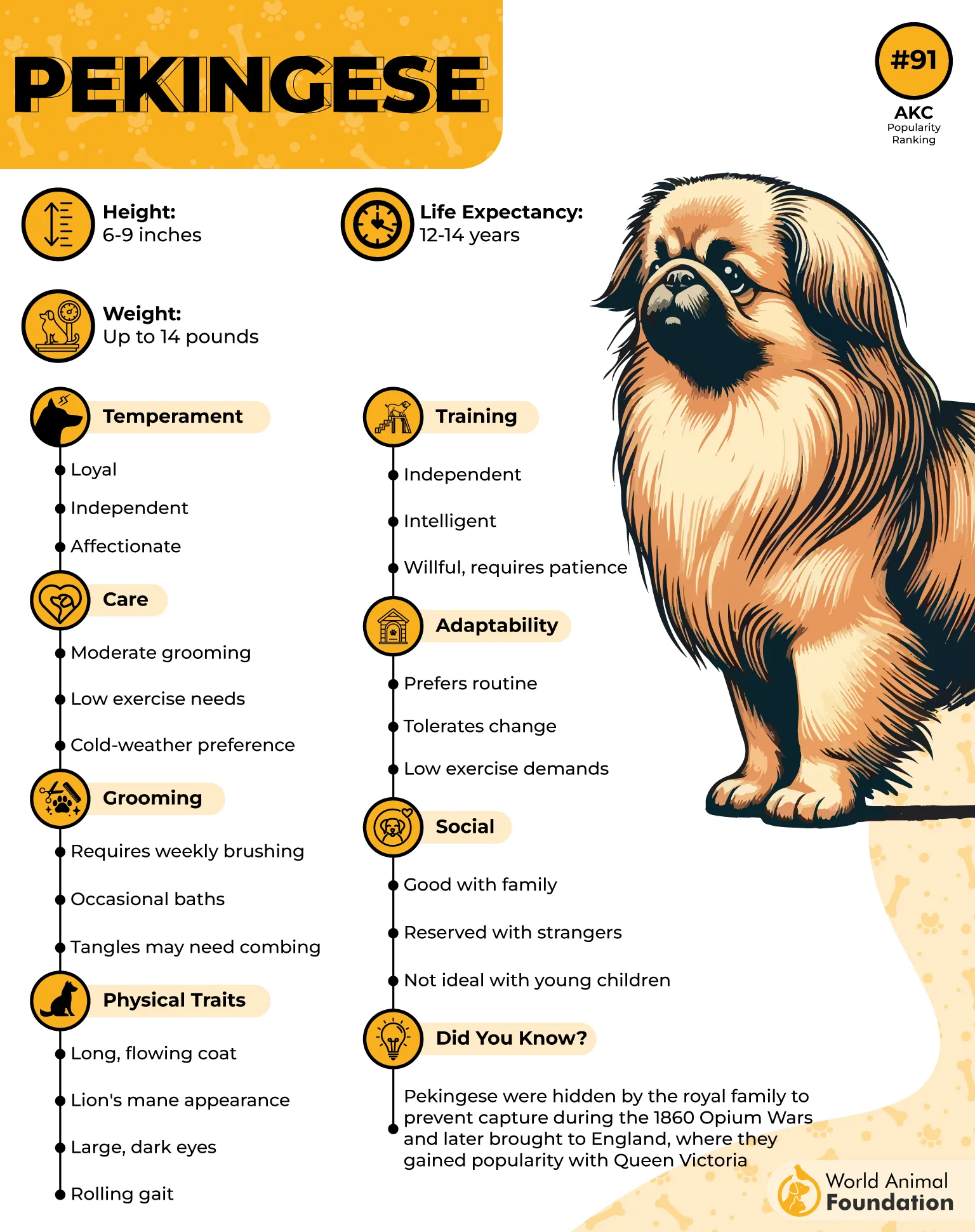
This low-energy dog breed has a relaxed daily rhythm, with a short stroll often enough before returning indoors. Longer hikes or jogging can be unsuitable for this body type, while leisurely sniffing trips and search games provide more fitting ways to explore.
The following qualities make the requirements of this lap dog easy to understand:
Prefers sniffing tours over long hikes
Can live comfortably in a city apartment
Often chooses a sofa or lap for downtime
A Selective Social Life
Pekingese tends to form a particularly strong attachment to one person and appreciates a peaceful household without constant commotion.
It can live alongside children and other pets, though gentle handling and an easy retreat space are especially important when younger family members are involved.
6. Saint Bernard
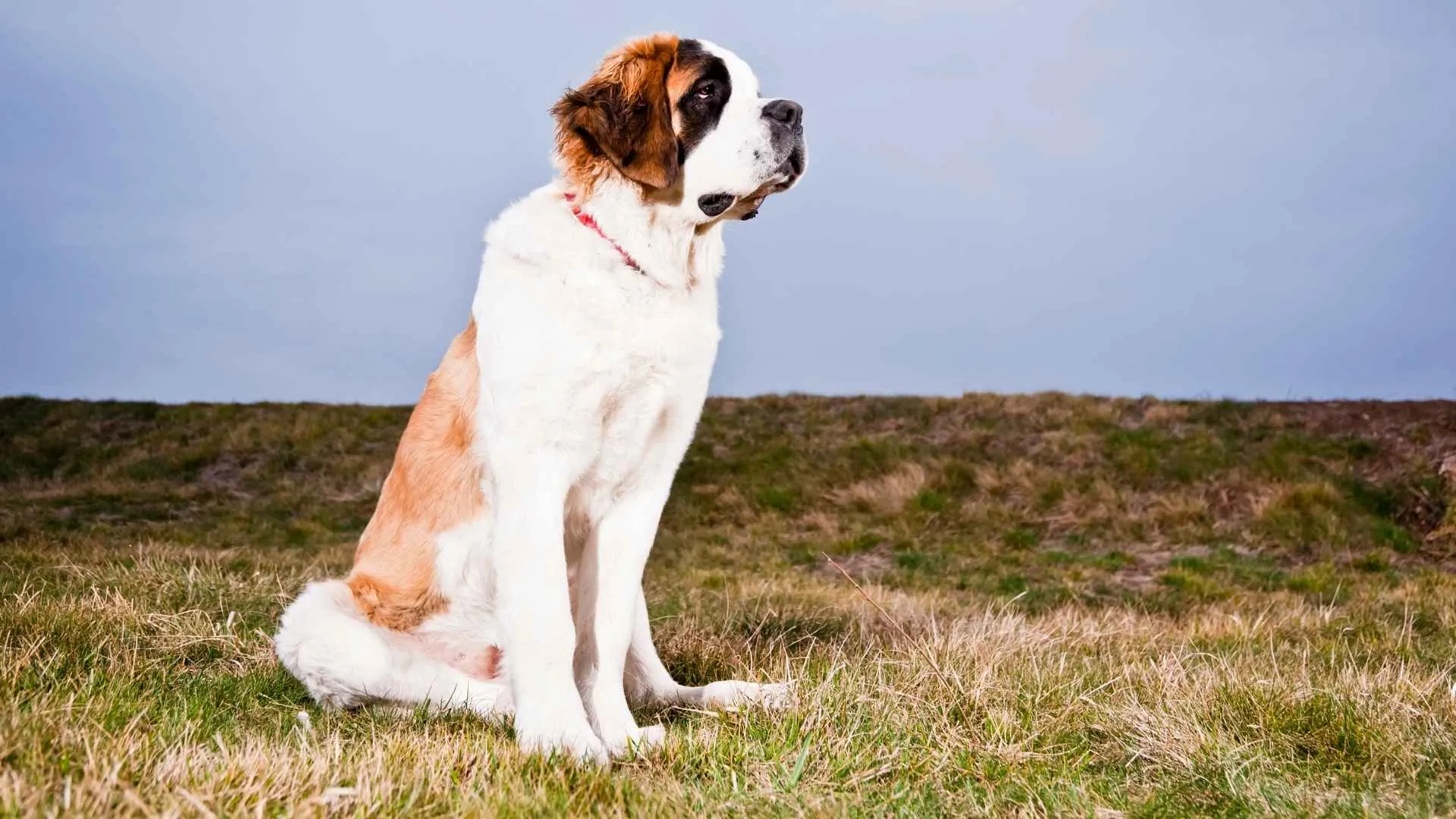
Saint Bernard took its name from the hospice founded in 1049 near two of the Swiss Alps’ highest summits, where monks relied on powerful mountain dogs to help travelers reach safety.
By the 17th century, these dogs were recognized as rescue dogs, with their lineage shaped by large Mastiff-like dogs and local Swiss breeds.
A Slower Pace
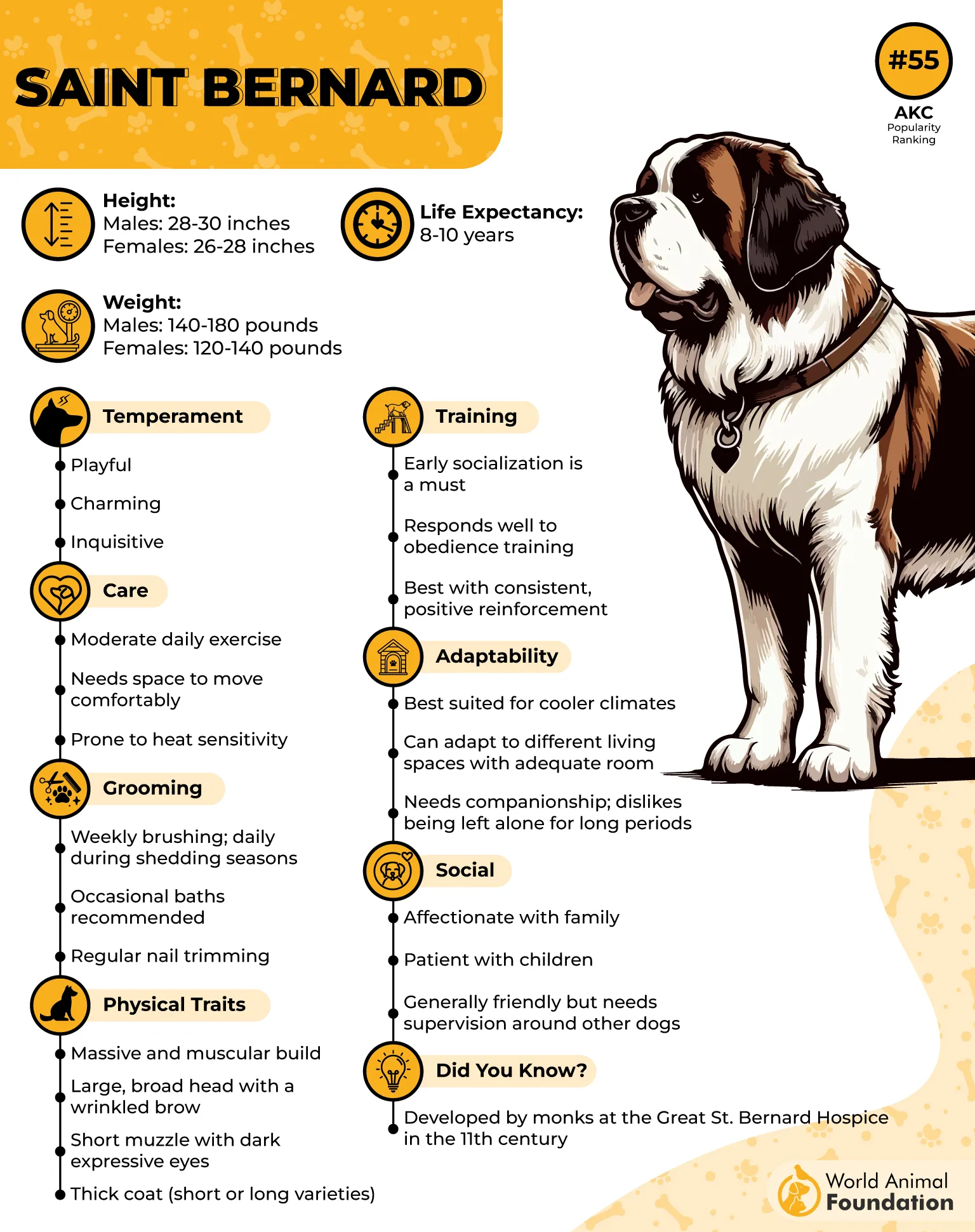
An easy neighborhood stroll is better for them than a demanding run or lengthy mountain trek, with around 30 minutes of daily exercise often fitting their pace. Soft grass is especially useful around cities and suburbs because hard concrete can place extra strain on their joints.
This is what you need to consider for comfortable outings:
Dog parks and fenced yards suit gentle play
Heavy panting signals a need for cooling
Handles cool seasons far better
Calm Around Family
Saint Bernard has a gentle, patient temperament and often enjoys time with children and other pets. Its sensitivity also makes a peaceful household a good match, while consistent early training helps manage the breed’s independent streak and occasional stubbornness.
7. Newfoundland
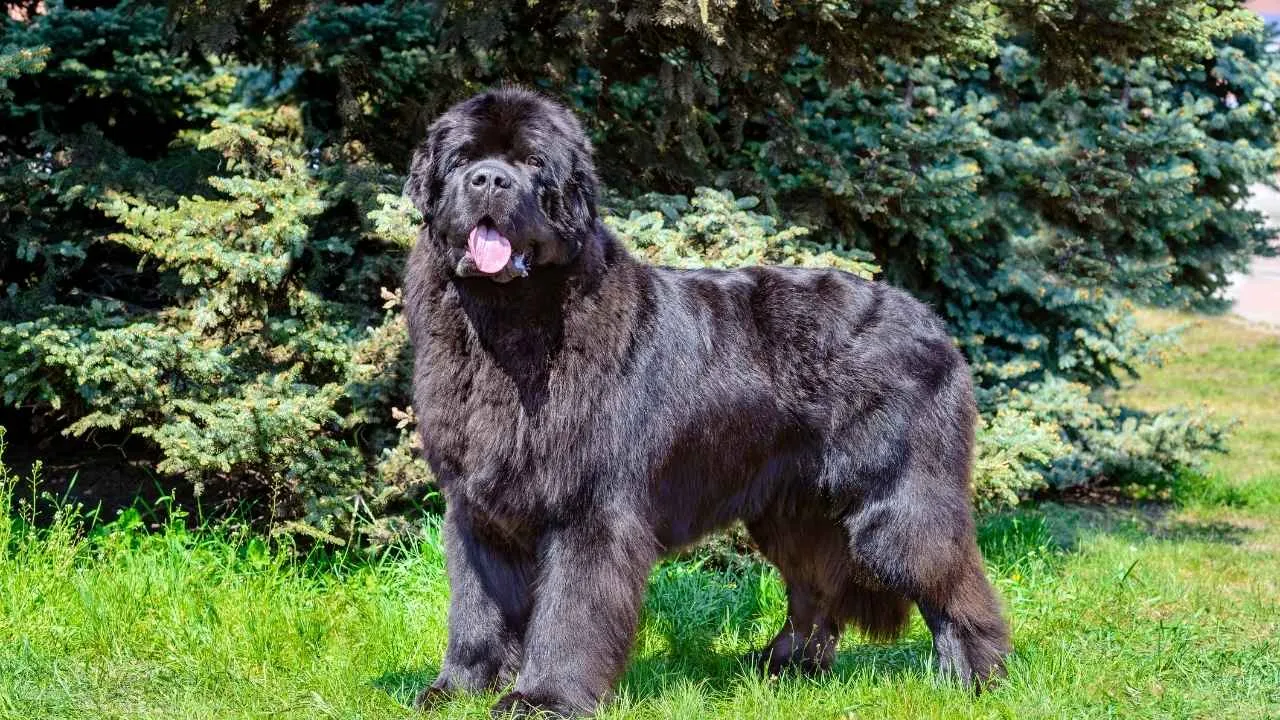
Newfoundland was shaped on the island that shares its name, where its swimming ability became closely tied to demanding water work. By the 18th century, the breed had reached Britain and France, gaining favor among English sailors as a dependable ship dog.
Born for Water
Newfies are exceptional swimmers with a record of water rescues so respected that two were once required equipment at lifeguard stations along England’s coast. Safe access to water makes swimming a particularly fitting activity for this large breed.
This is how they remain gentle at home:
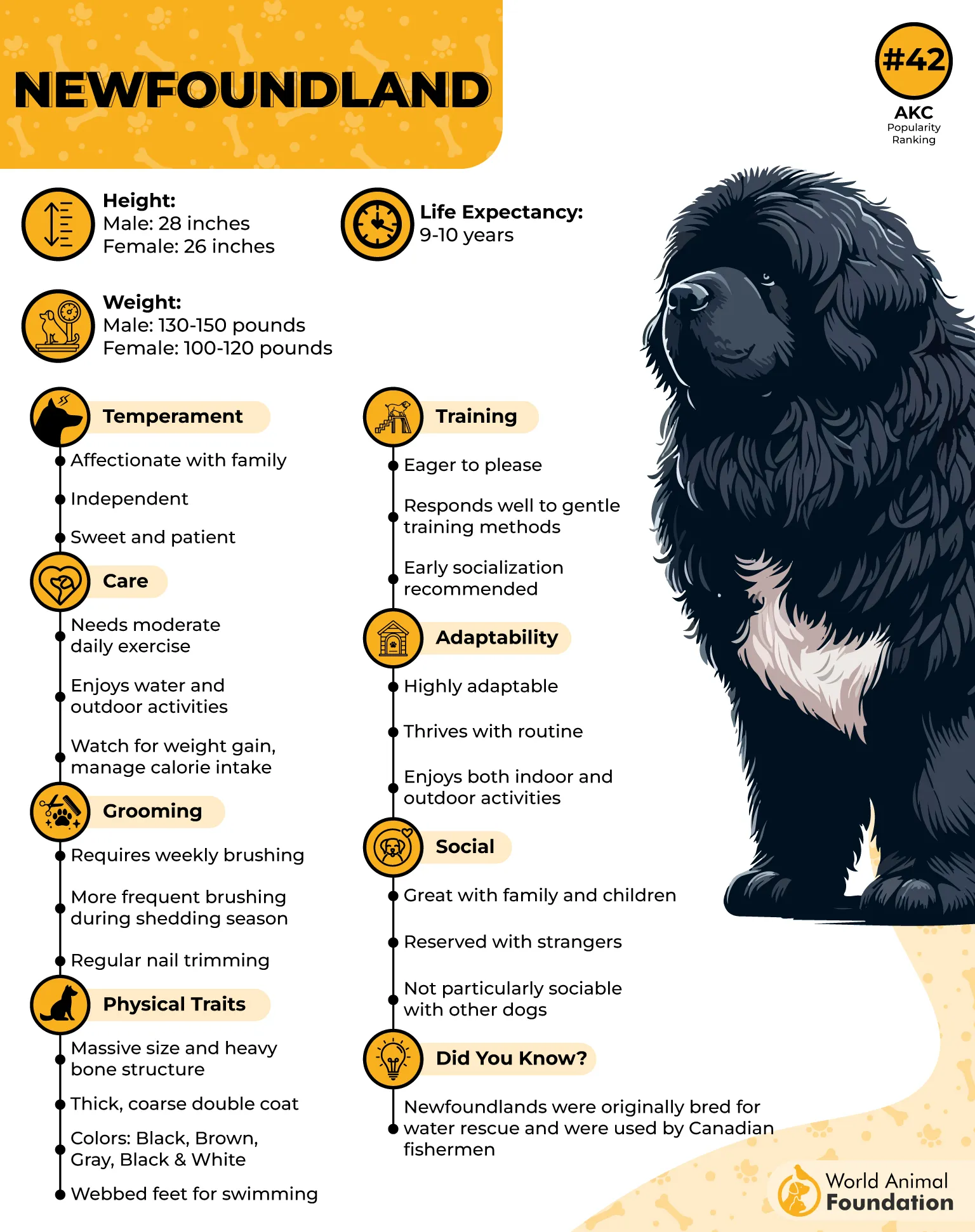
Patient with young children
Gentle and tender at home
Watchful around unfamiliar people
A Slow Daily Rhythm
Newfoundlands do not need intense exercise every day and can easily become content with lounging around the house. Moderate walks, a yard run, swimming, light drafting, and interactive activities provide practical ways to keep this powerful dog fit and occupied.
Conclusion
A slower routine can make life with a dog feel easier, especially when your idea of exercise involves relaxed walks, gentle play, and plenty of time at home. These lazy dog breeds still need regular movement, healthy meals, training, grooming, and veterinary care, but their energy levels can fit more comfortably into a quieter lifestyle.
Your living space and daily schedule also matter, since even good family dogs need room to move and opportunities for indoor play. The best choice is one whose natural pace matches yours. When those needs line up, pet parents can enjoy a companion with a calm demeanor whose presence makes everyday life feel peaceful, enjoyable, and wonderfully uncomplicated.
