




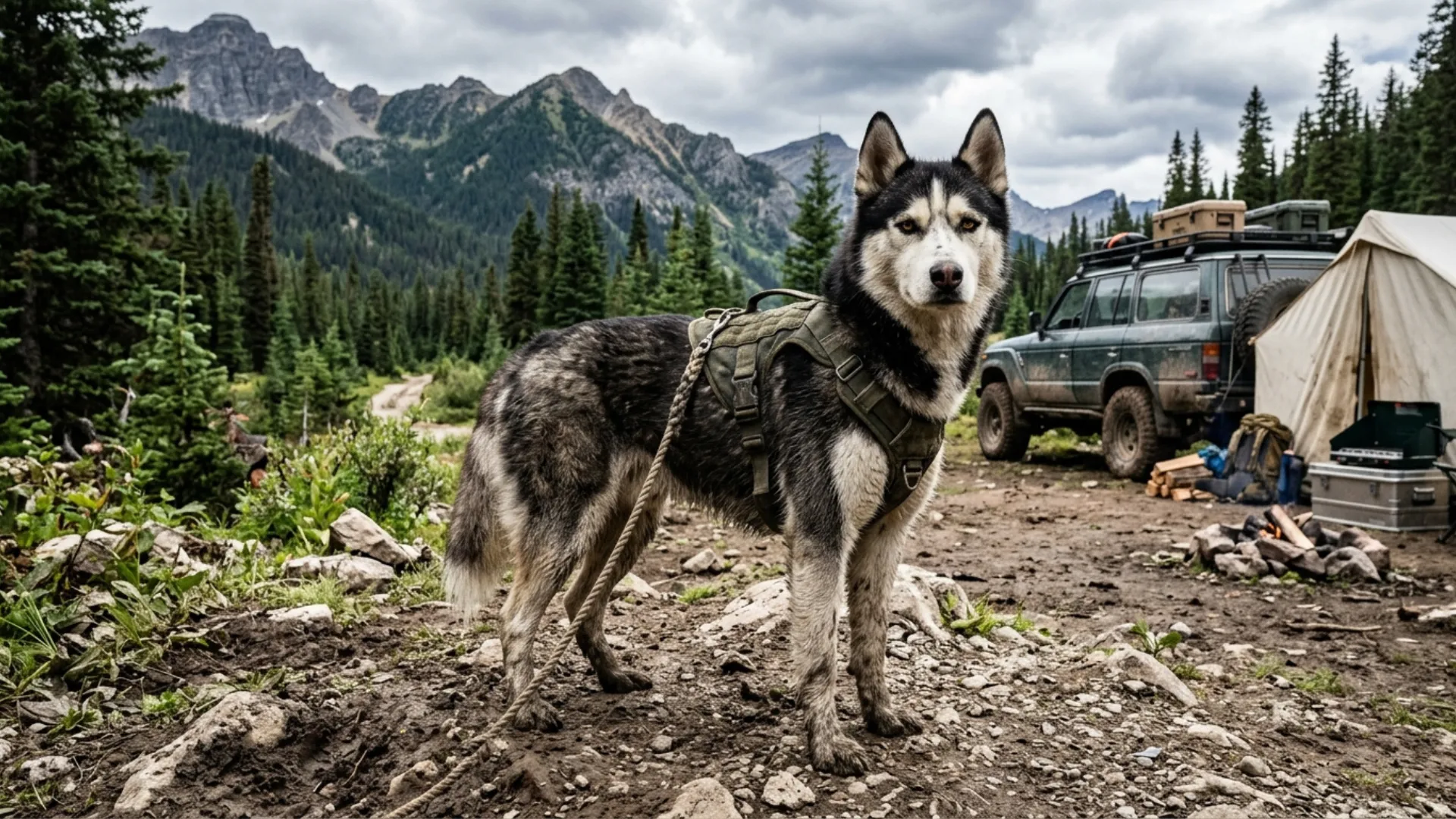
Picture this: you’re miles away from the nearest town, phone signal is gone, and your only notifications are birds, wind, and your dog absolutely thriving in the wild. That’s the whole fantasy of off-road camping—simple, raw, and a little chaotic in the best way.
But not every dog is built for that lifestyle. Some are “couch + snacks + vibes” types, while others are literally engineered for mountains, snowfields, forests, and long-distance endurance. The difference shows fast once the trail gets steep or the weather turns.
These rugged breeds aren’t just outdoor-friendly—they’re outdoor specialists. Bred for hunting, herding, sledding, and survival work, they come with stamina, intelligence, and instincts that turn every trip into a shared adventure instead of a solo mission.
So if your idea of fun includes dirt roads, campfires, and waking up with mud on your boots, these dogs are about to feel like your built-in adventure squad.
Rugged Dog Breeds Ideal for Off‑Road Camping Trips
1. Siberian Husky
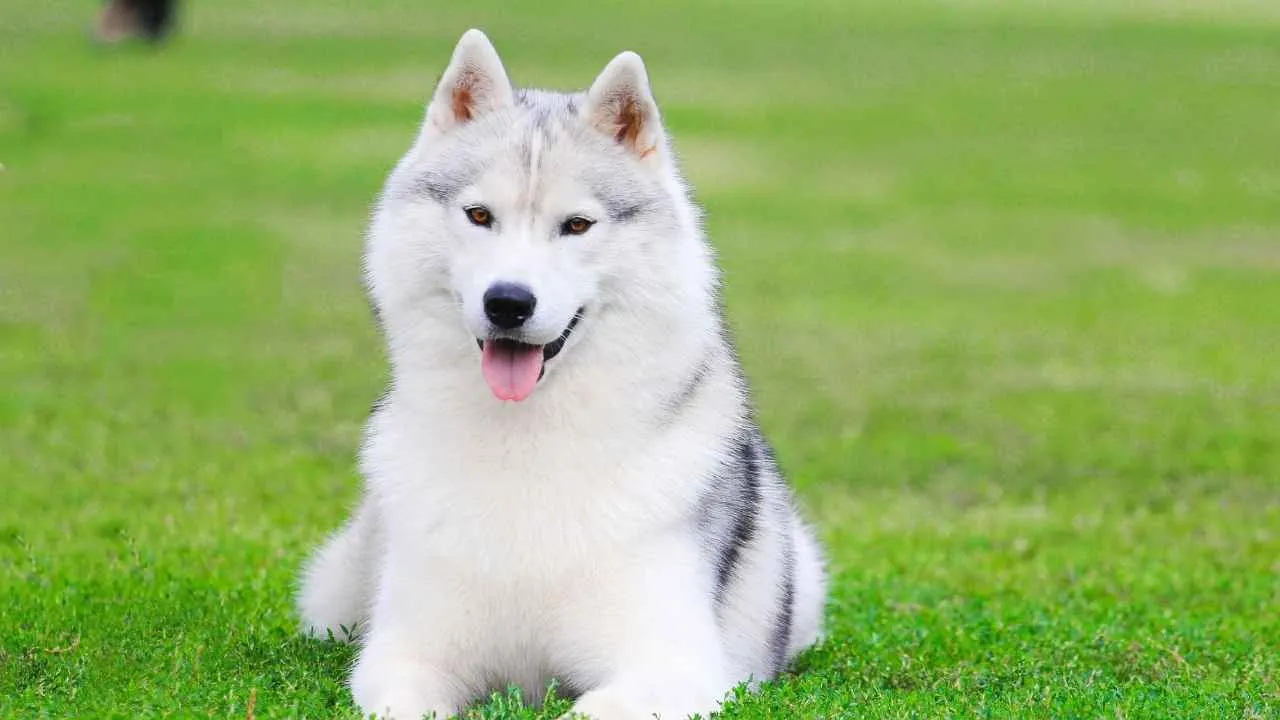
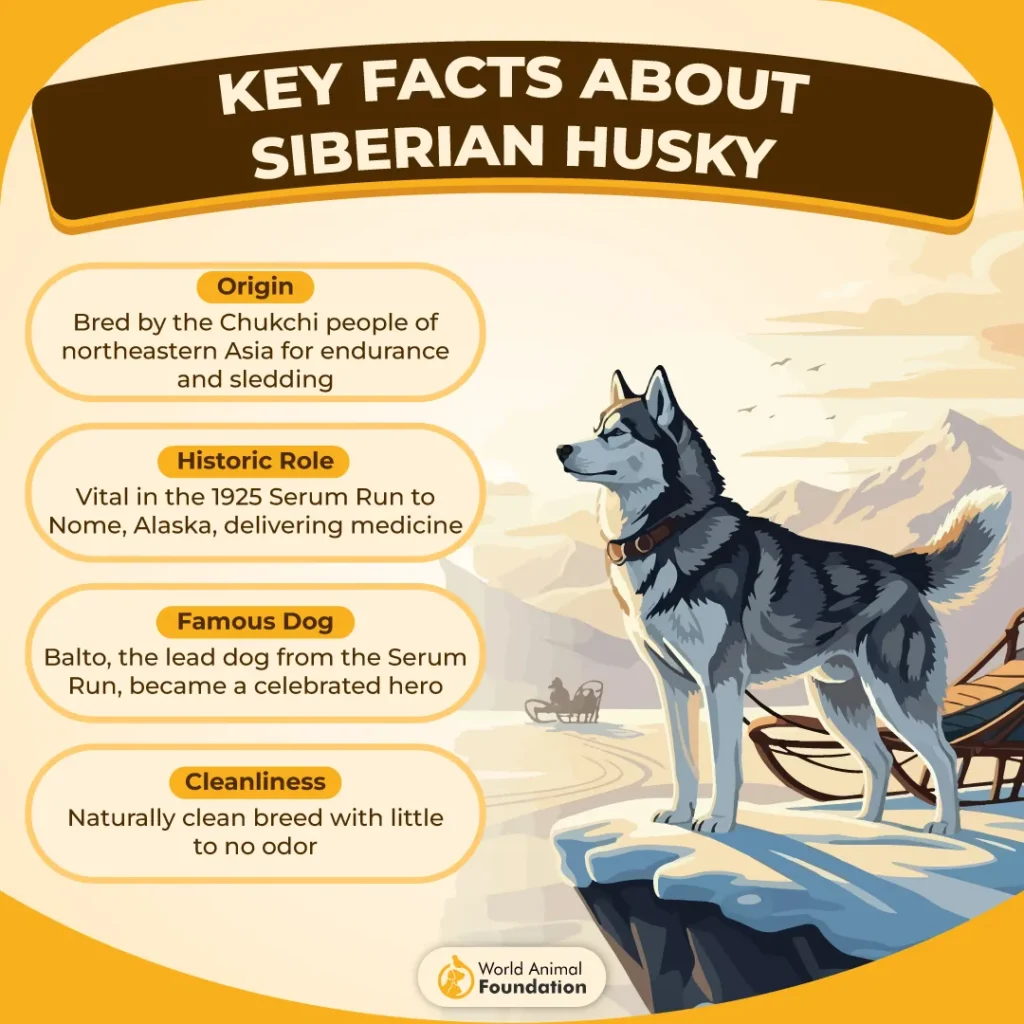
The Siberian Husky is basically nature’s endurance athlete. Bred by the Chukchi people in Siberia, they were used to pull sleds across frozen landscapes where survival depended on speed, stamina, and teamwork.
What makes them unique is their insane ability to keep moving in extreme conditions. They don’t just tolerate cold weather—they thrive in it. Snowy off-road trails feel like home turf for them.
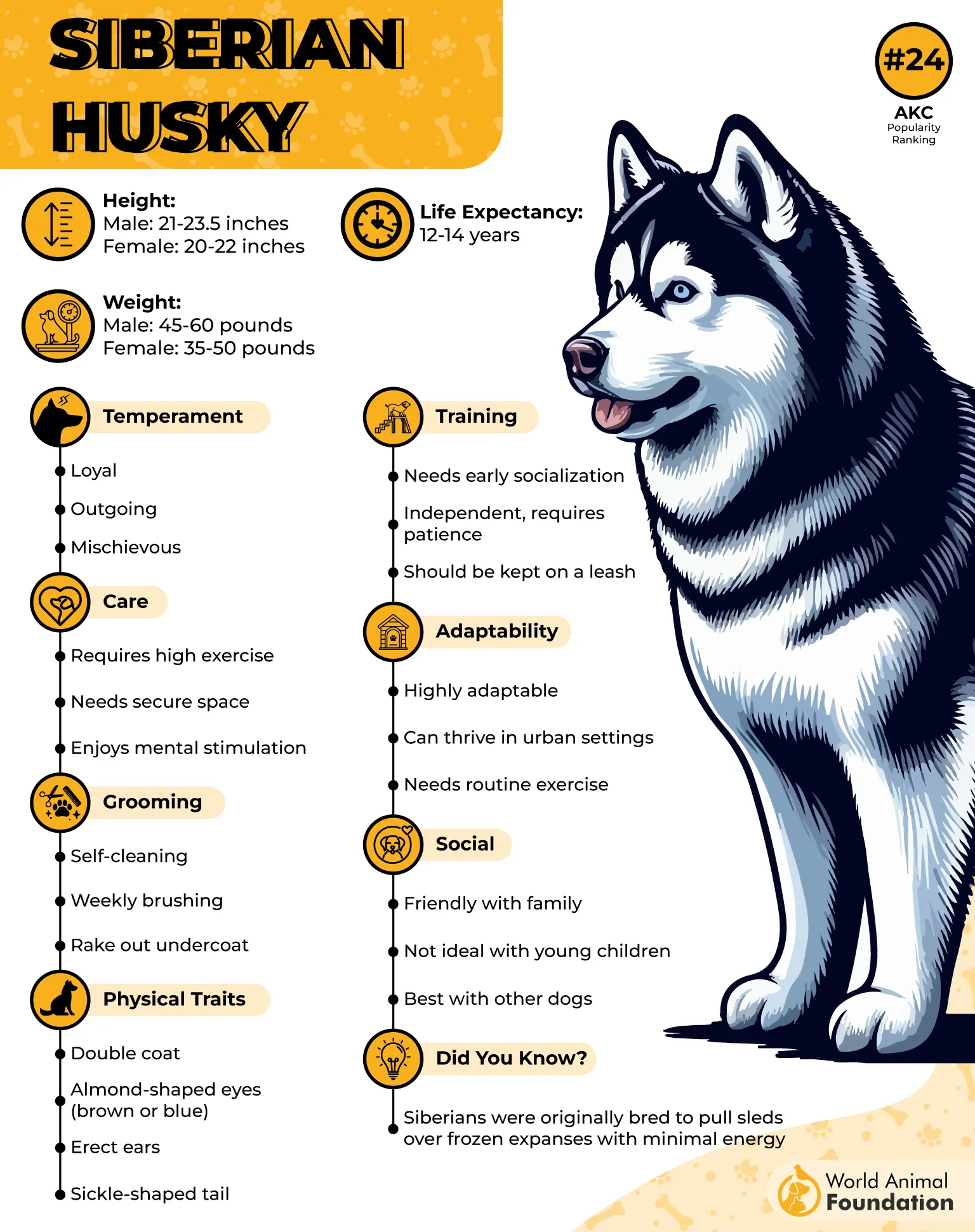
But their personality is just as intense as their physical ability. Huskies are famously independent thinkers, meaning they don’t always follow instructions the way you expect. It’s less “obedience” and more “collaboration.”
Chewy claims these dogs also have strong roaming instincts and love outdoor adventures. If something interesting catches their attention, they may try to explore it on their own, so secure environments are a must during camping trips.
What Truly Makes Them Unique
Huskies were built to run in teams over vast icy distances, and that pack mentality is still strong today. They don’t just go on adventures—they become part of the landscape, moving as they belong everywhere at once.
2. Alaskan Malamute
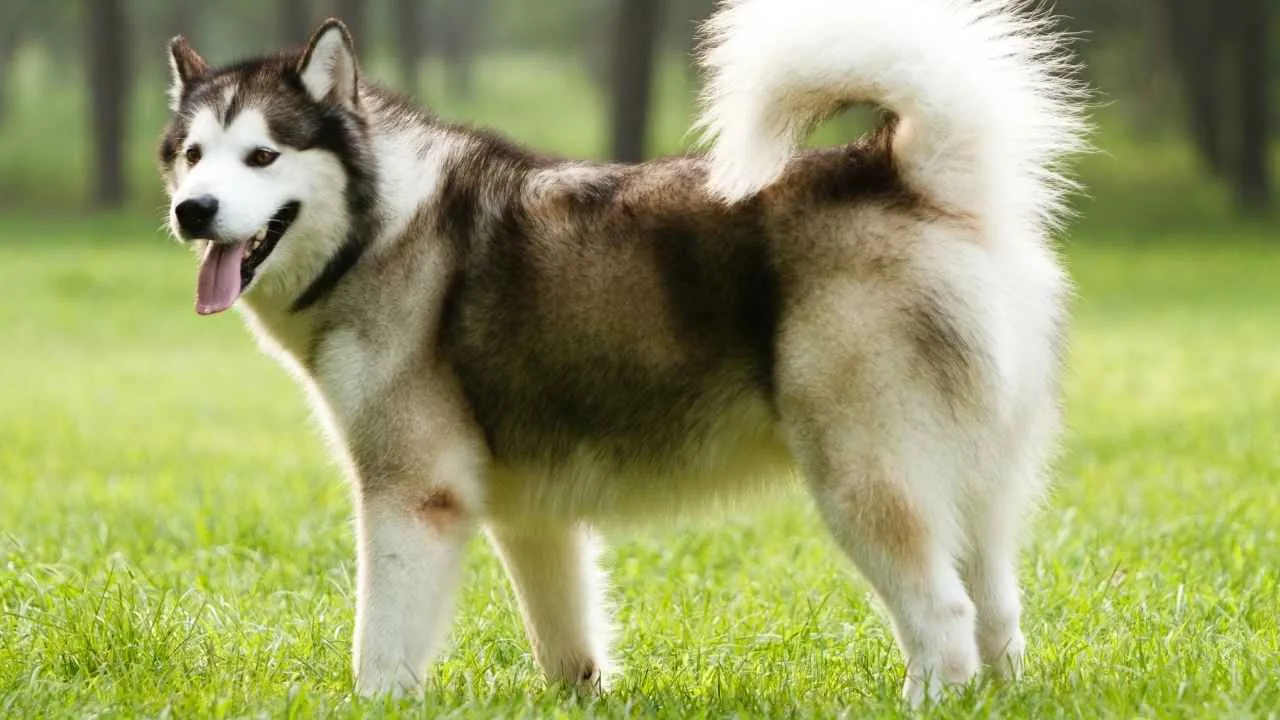
The Alaskan Malamute is the heavyweight champion of the sled dog world. Unlike speed-focused breeds, Malamutes were bred for raw strength, hauling heavy loads across long Arctic distances.
These dogs tend to move through rough terrain with steady, powerful energy. Rocky paths, snow-covered trails, and uneven ground don’t slow them down much—they adjust and keep going.
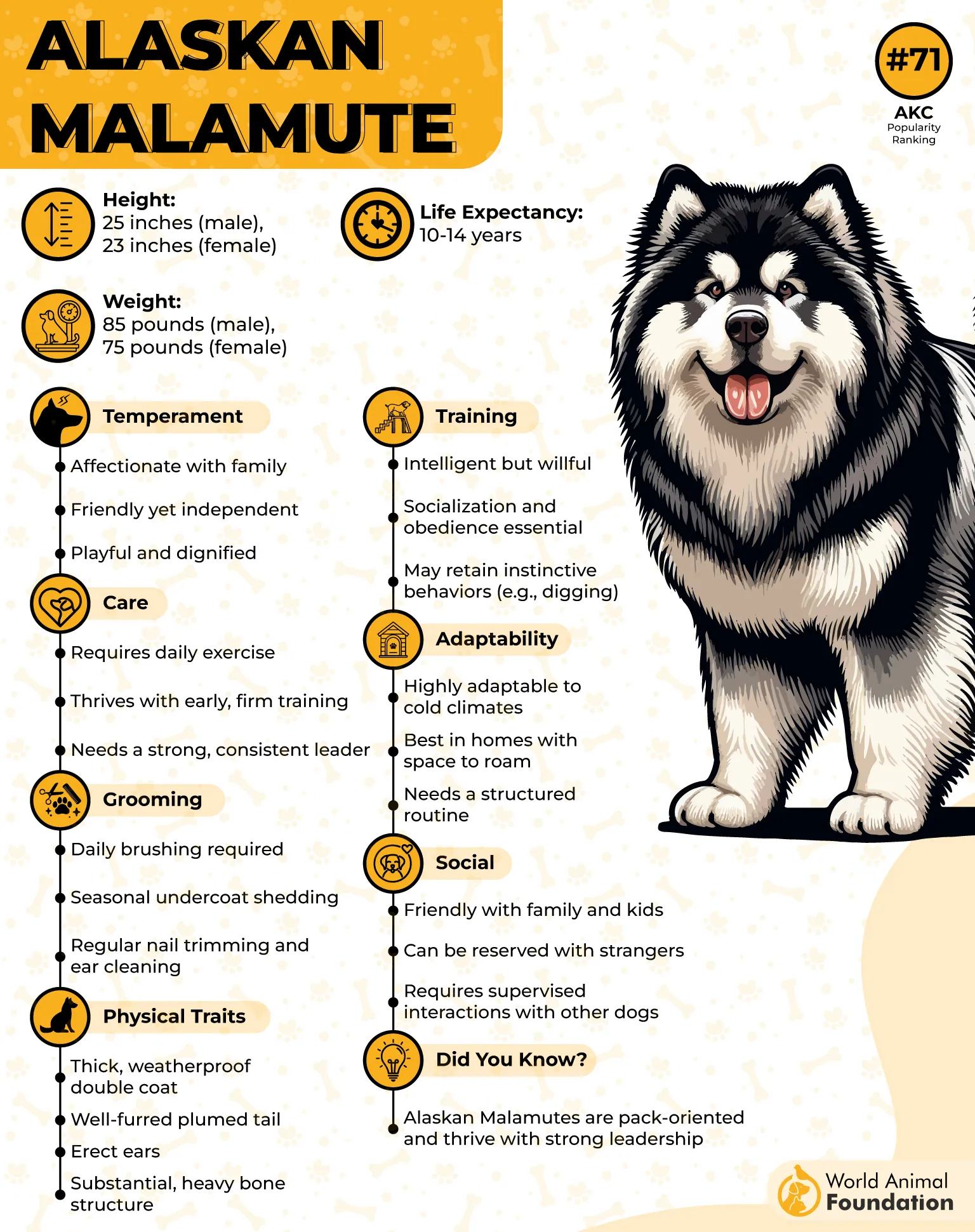
Personality-wise, they’re deeply loyal but very independent. They respect leadership, but they don’t unthinkingly follow commands. It’s more of a mutual understanding than strict obedience.
These high-energy dogs also form strong emotional bonds with their families. On camping trips, they often stick close, acting like silent protectors and companions rather than restless roamers.
What Truly Makes Them Unique
Alaskan Malamutes were essentially the “heavy transport trucks” of Arctic life. Their entire design is built around endurance and strength rather than speed, which makes them feel calm, grounded, and incredibly dependable in harsh outdoor environments.
3. German Shorthaired Pointer
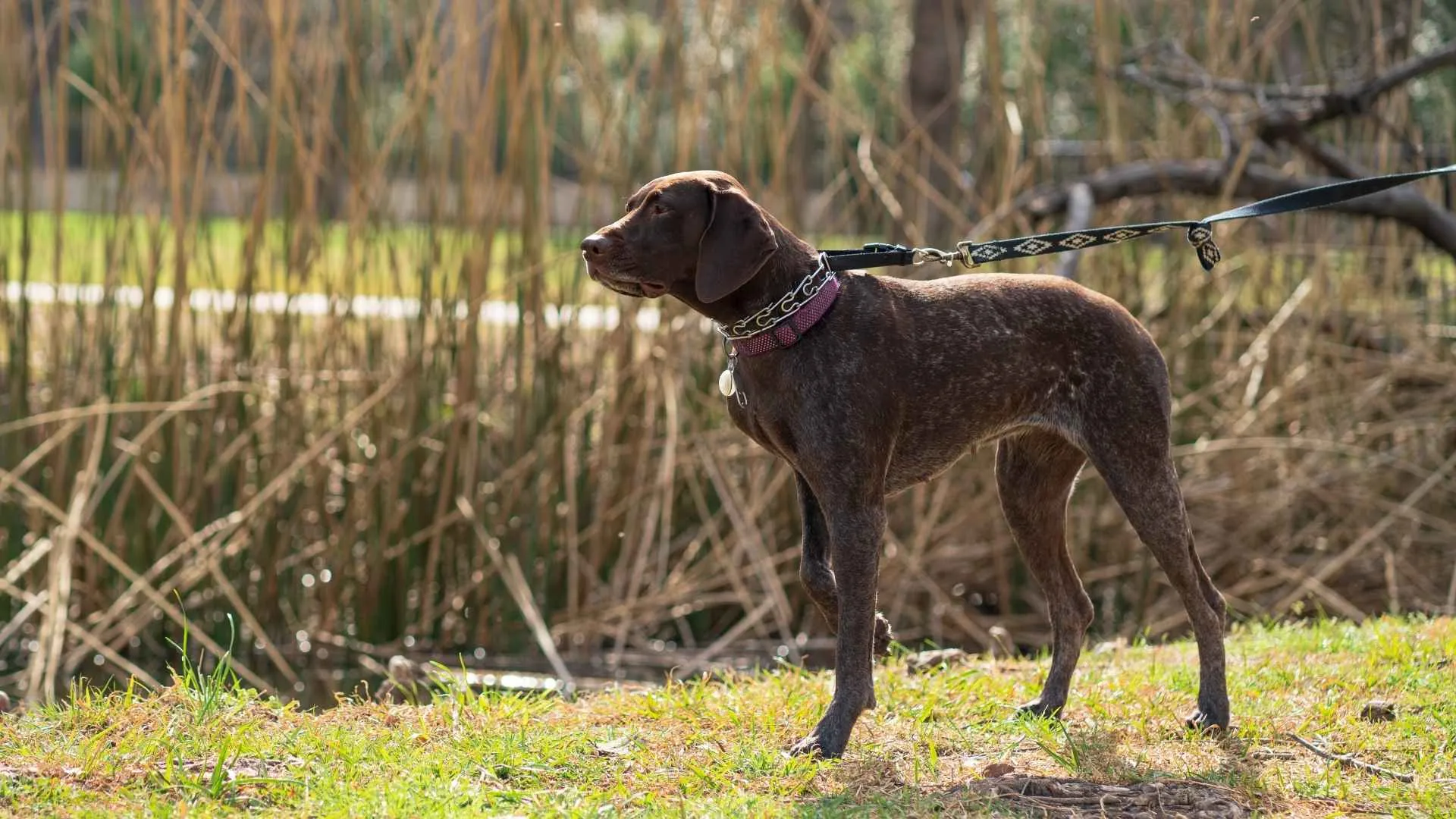
The German Shorthaired Pointer (GSP) is like the ultra-fit outdoor friend who somehow has energy for everything. Originally developed in Germany for all-purpose hunting, they were designed to track, point, and retrieve across land and water.
They’re extremely adaptable in the wild. Forests, fields, lakes—GSPs don’t really care. If there’s terrain, they’ll figure it out and start covering ground fast.
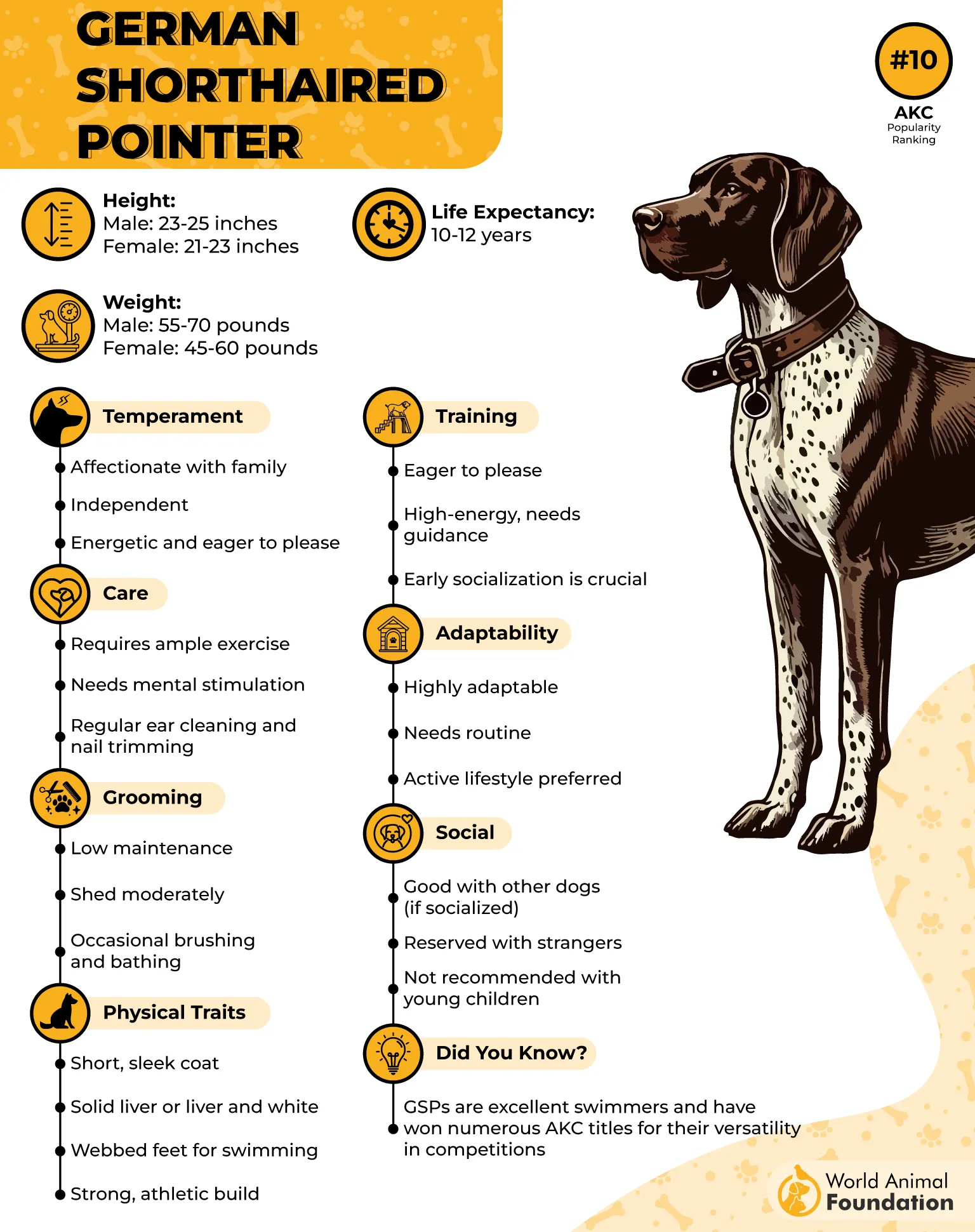
Their hunting style is very methodical. They move in sweeping patterns, using their noses to detect scent in the air, then lock onto a precise point when they locate game.
What really stands out is their connection with humans. These Pointer dogs are not lone explorers—they’re highly handler-focused, constantly checking in and staying coordinated on the move.
What Truly Makes Them Unique
GSPs are one of the few breeds designed as a true “all-terrain hunting system.” They don’t specialize in one environment—they adapt to all of them, which is why they feel like the ultimate multi-tool of the dog world.
4. Australian Cattle Dog
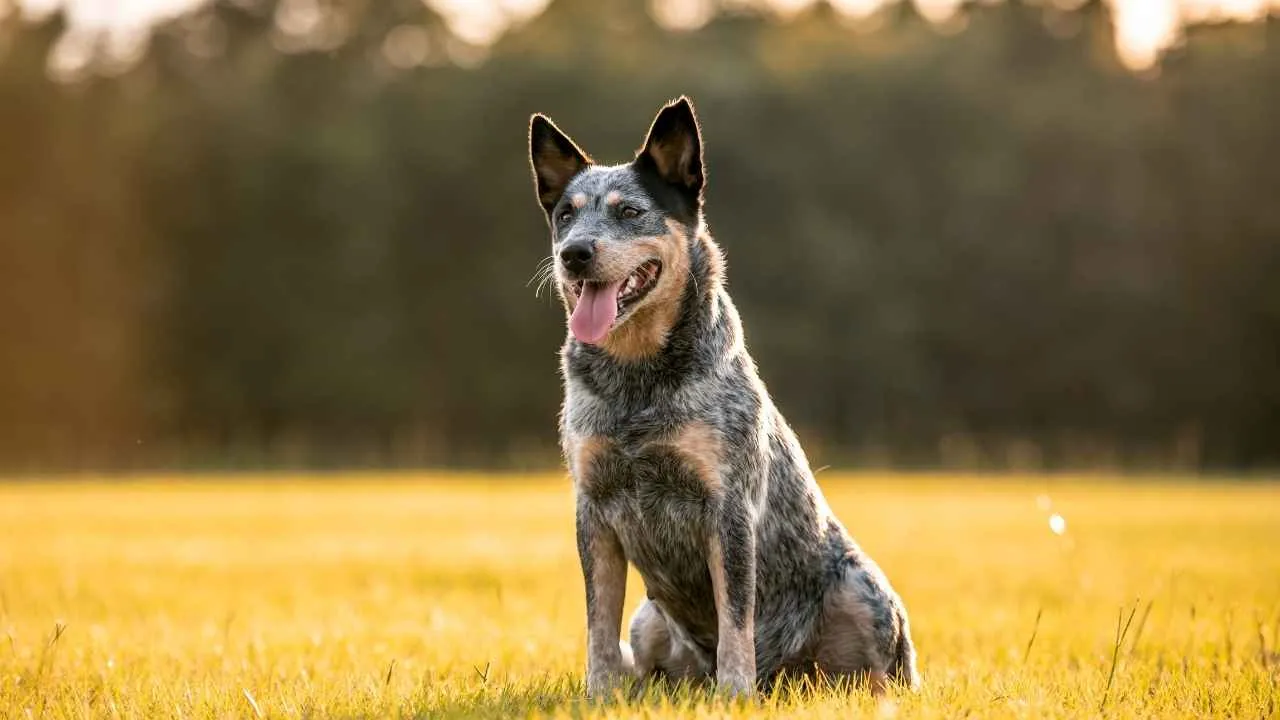
The Australian Cattle Dog is basically the problem-solver of the dog world. Developed in Australia to herd cattle across huge, harsh landscapes, they were built for intelligence, toughness, and independence.
They work with sharp focus and intense awareness of their surroundings. On camping trips, they’re constantly scanning, observing, and mentally tracking everything happening around them.
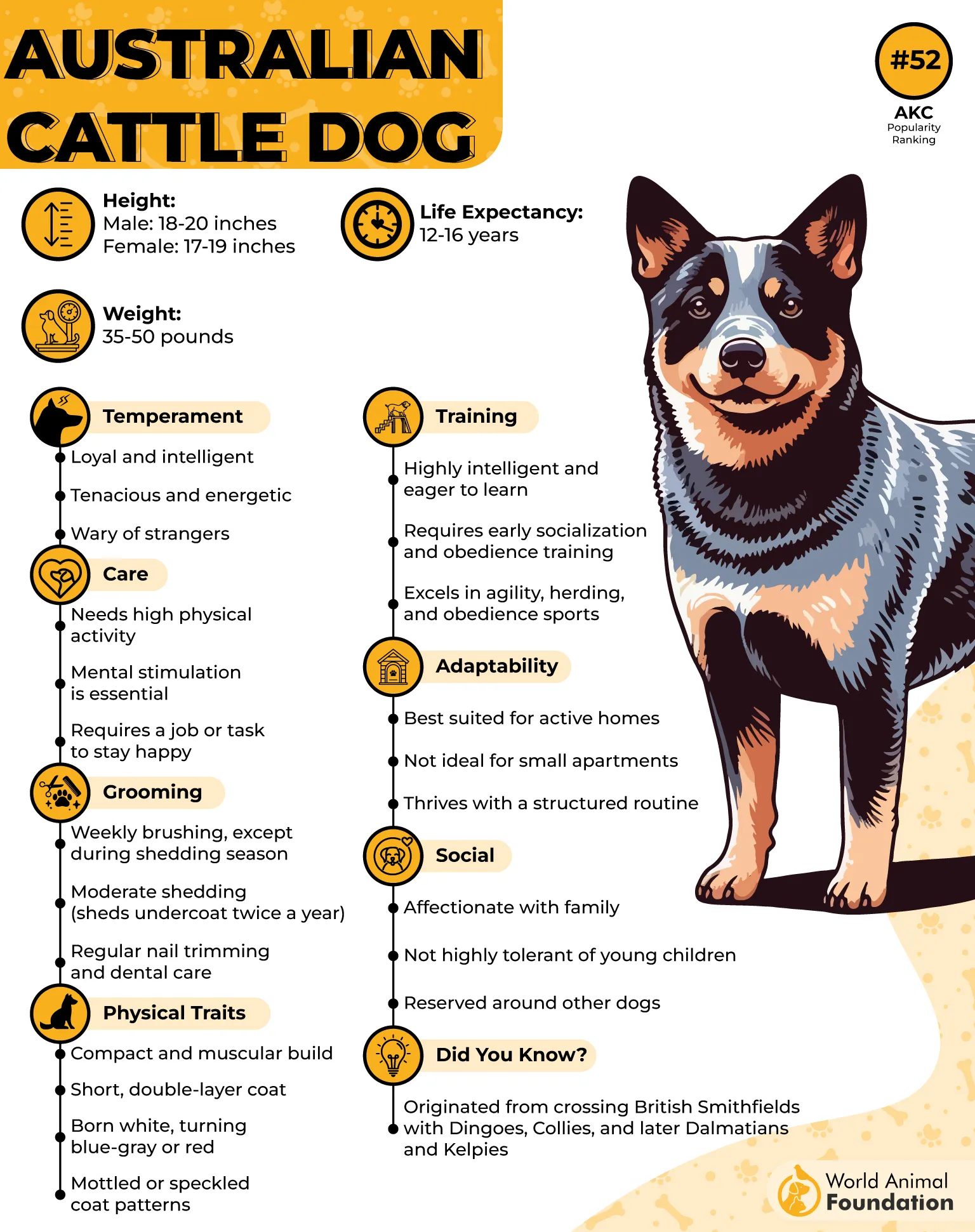
Their energy and incredible stamina are not just physical—it’s mental too. They need challenges, tasks, and interaction, or they’ll start inventing their own “projects” (which may not align with your camping plans).
Purina says they’re also incredibly loyal once bonded. They don’t just follow you—they commit to you like a teammate in a long-term mission.
What Truly Makes Them Unique
Australian Cattle Dogs were literally bred to control unpredictable livestock across vast tracts of land. That’s why they behave like natural strategists—they don’t just react, they plan, which makes them incredibly sharp outdoor companions.
5. Jack Russell Terrier
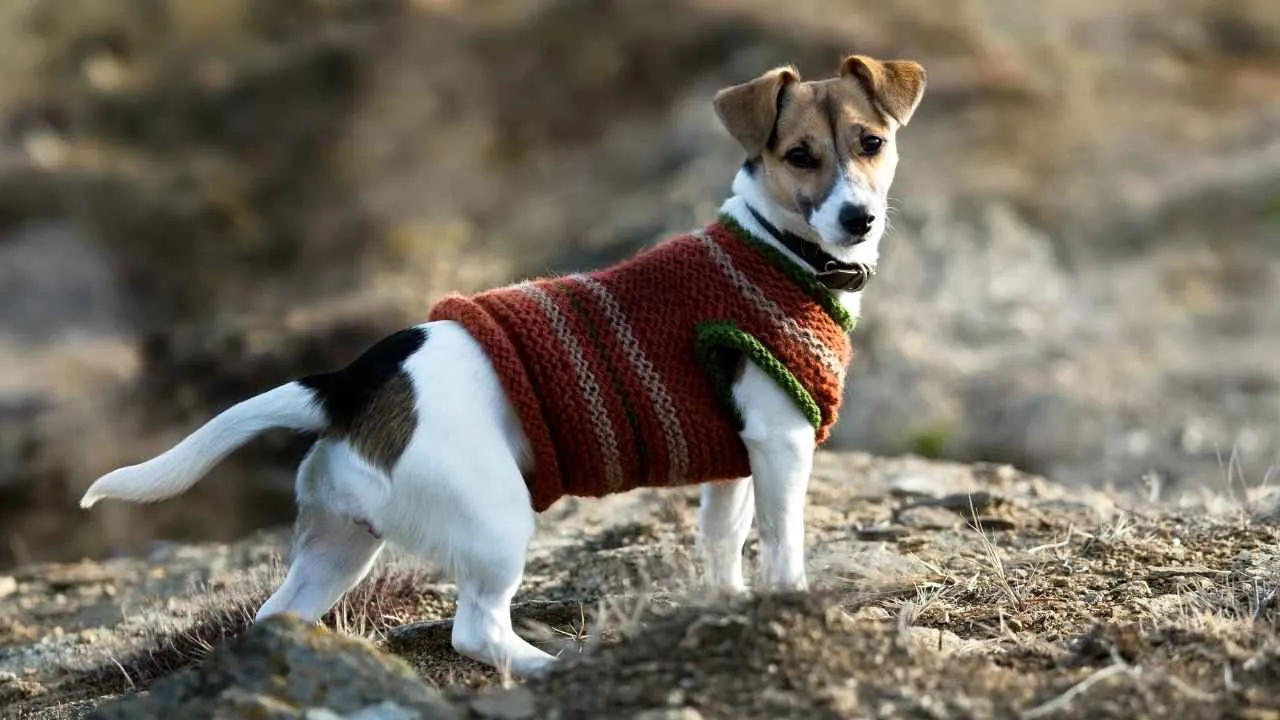
The Jack Russell Terrier is small, but don’t let that fool you—this is pure chaos-engine energy in a compact body. Originally bred in England for fox hunting, they were designed to chase, dig, and never quit.
Their stamina is honestly shocking, says Britannica. They can hike, run, and explore long after bigger dogs start slowing down. It’s like they’re in unlimited battery mode.
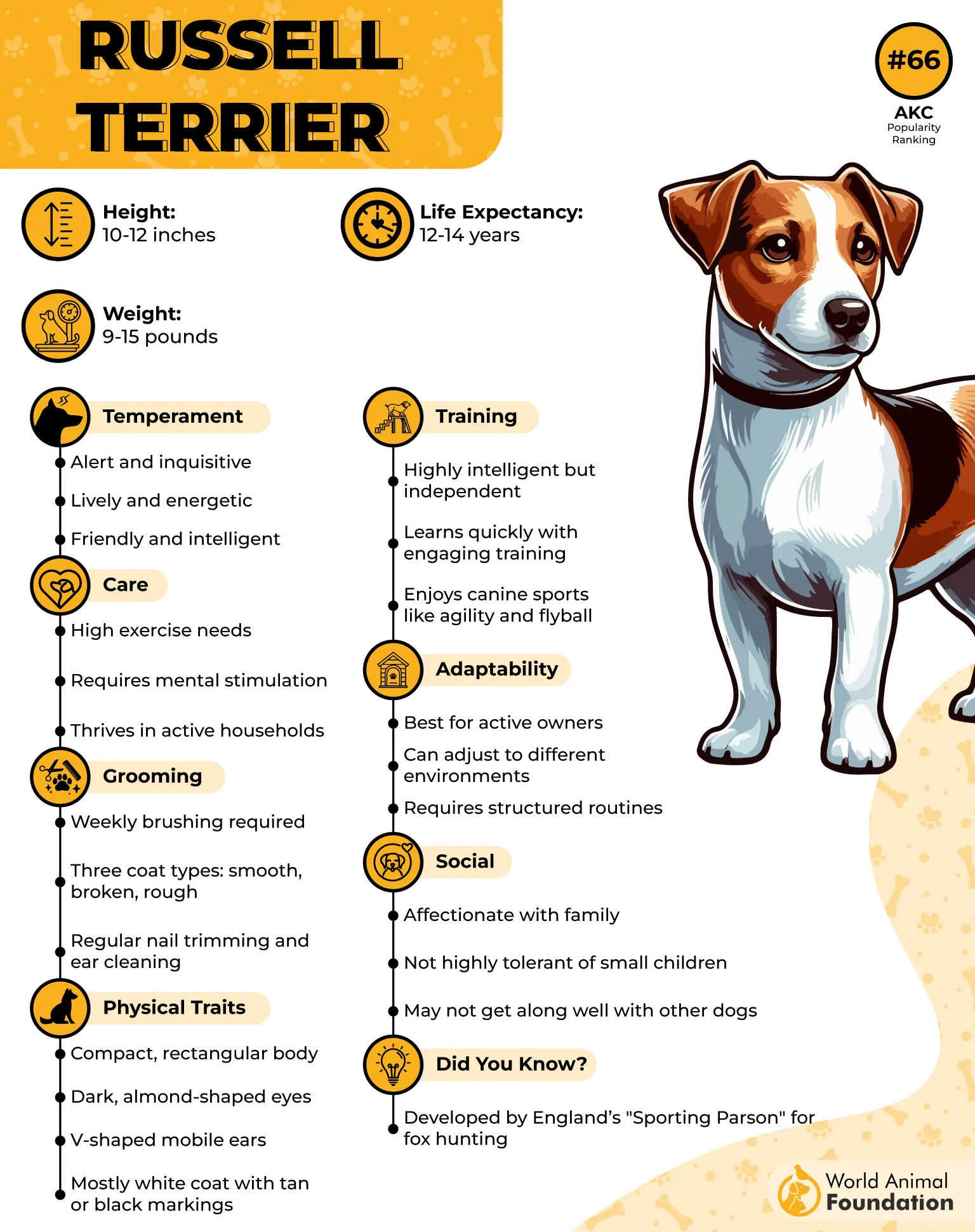
They’re extremely intelligent but also stubborn. Training them feels like working with a genius who occasionally decides your instructions are optional.
Because of their hunting background, these athletic dogs have a strong prey drive. Anything fast or small might instantly become their “mission,” especially in open camping environments.
What Truly Makes Them Unique
Jack Russells were bred to go underground into fox dens and flush prey out. That’s why they have fearless, tunnel-vision determination—they’re tiny dogs with zero concept of danger boundaries.
6. Vizsla
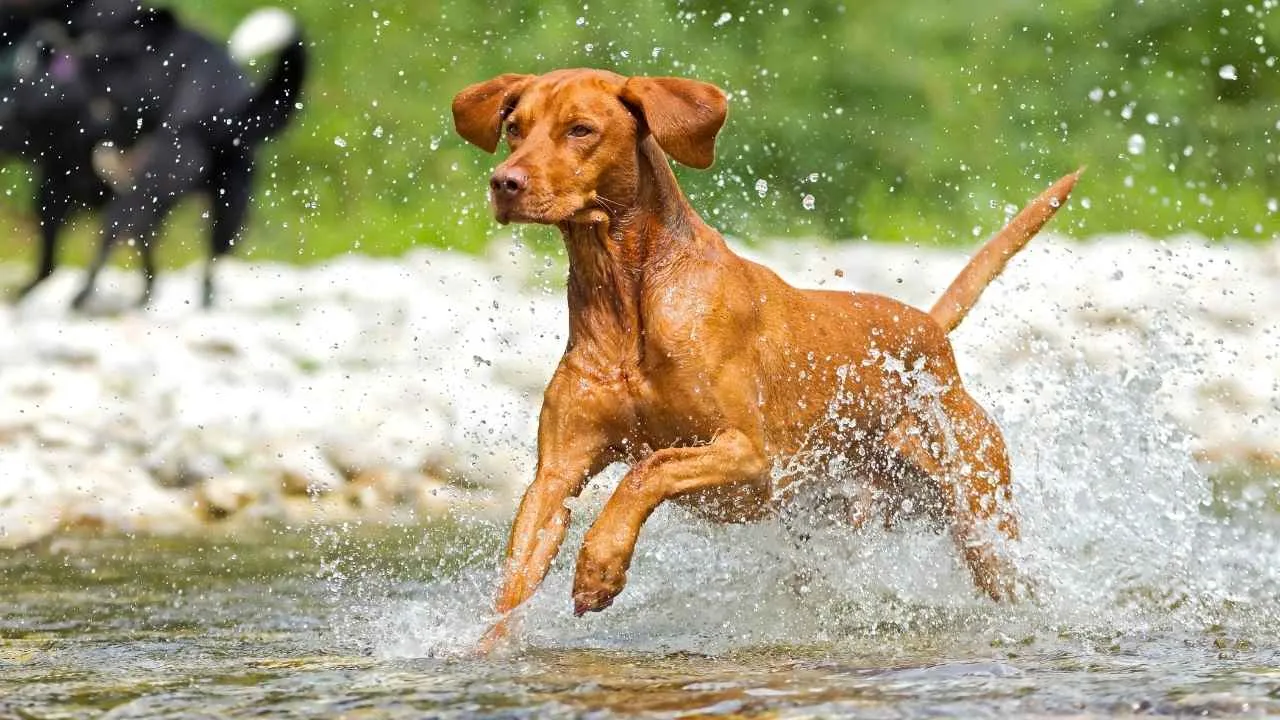
The Vizsla is basically the emotional support dog of the dog world. Originating in Hungary, they were bred as hunting dogs that could track, point, and retrieve while staying close to their human partner.
These great companions are incredibly people-oriented. On camping trips, they don’t just stay near you—they actively prefer it. Think of them as a “no personal space” kind of companion, but in the sweetest way.
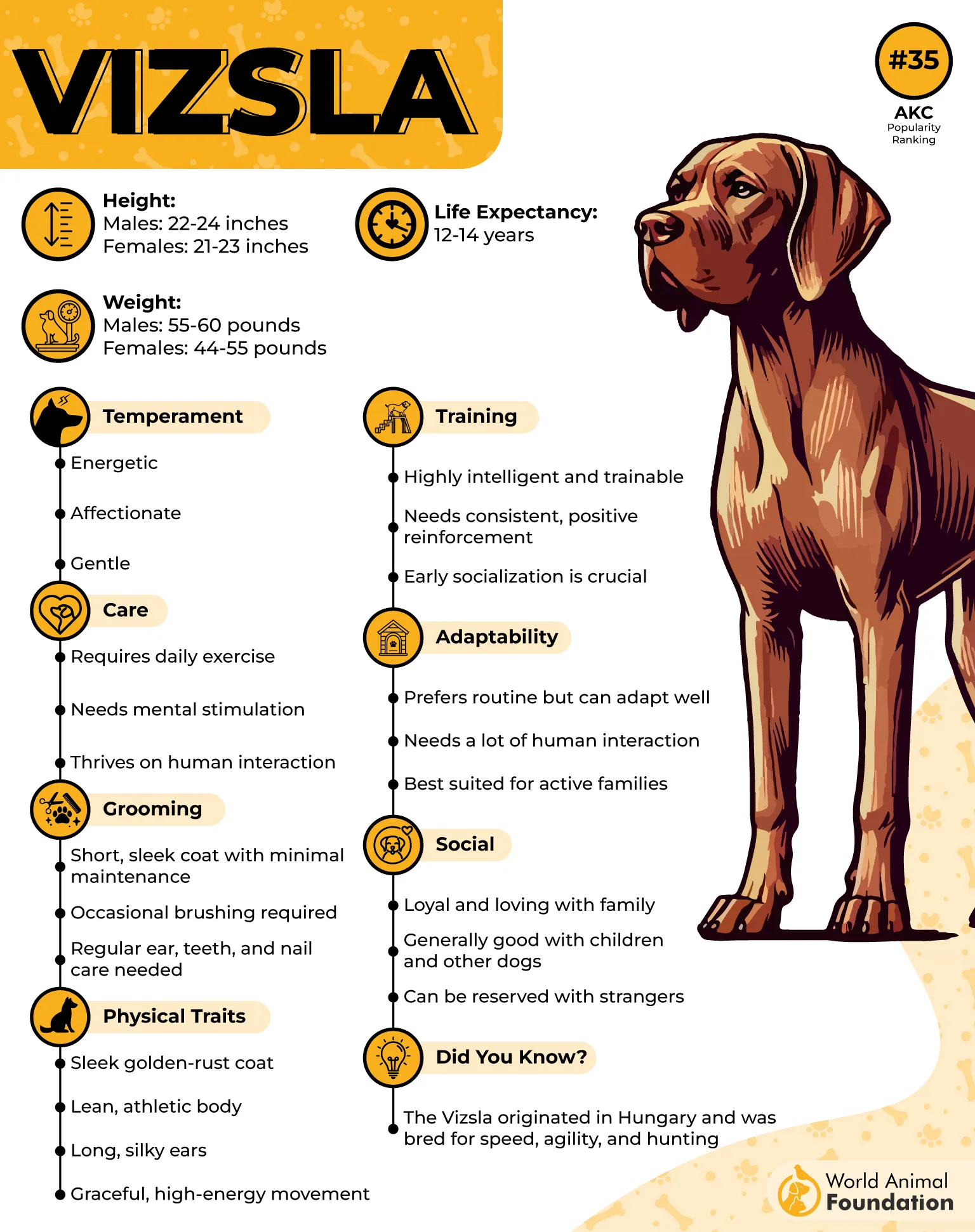
Physically, they’re built for endurance. Long hikes, running trails, and active outdoor days suit them perfectly. They’re happiest when they’re moving alongside you.
Emotionally, these handsome pups are sensitive and deeply bonded to their owners. They don’t do well with isolation, which makes them very attached but also very loyal.
What Truly Makes Them Unique
Vizslas are often called “Velcro dogs” because of their strong bond with humans. They were bred to hunt with people, not just for them, which is why they behave like constant shadow companions outdoors.
7. Weimaraner
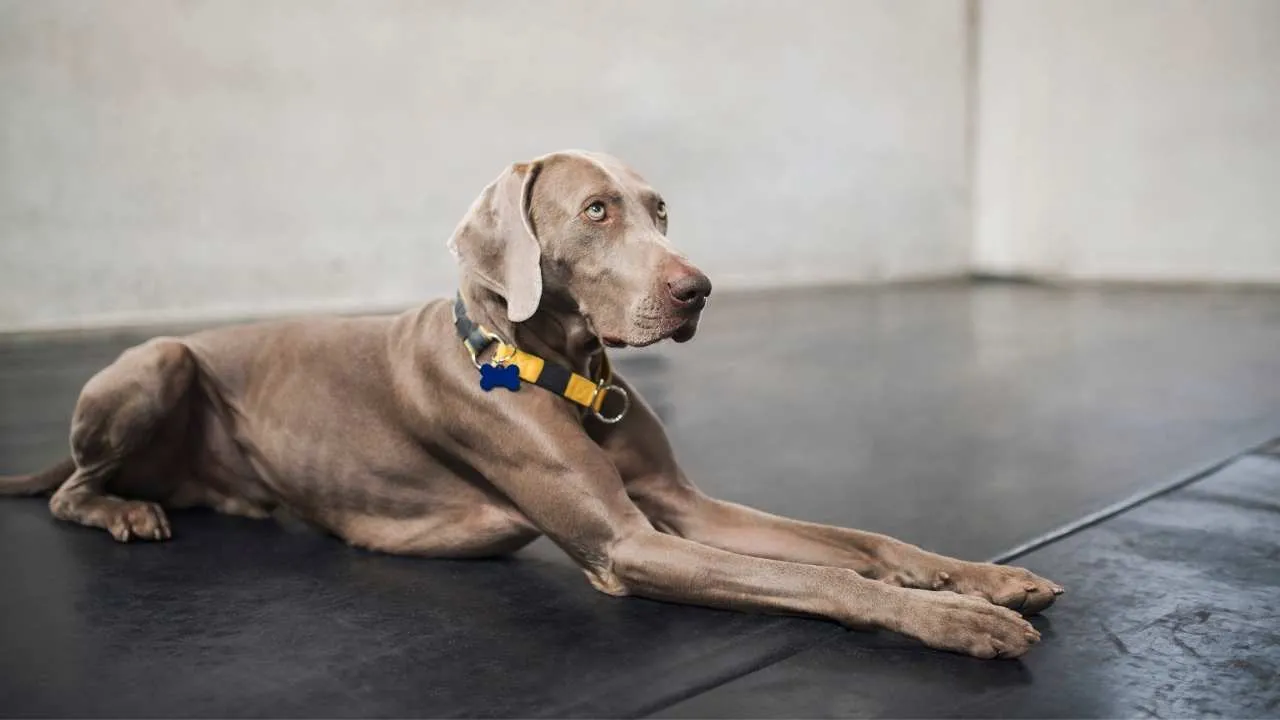
The Weimaraner is sleek, fast, and built like a precision athlete. Developed in Germany for hunting large game and birds, they’re known for combining speed, intelligence, and endurance.
These dogs with boundless energy move like they’re always on a mission. Whether it’s tracking scent or covering terrain quickly, they have a focused, almost strategic style of movement.
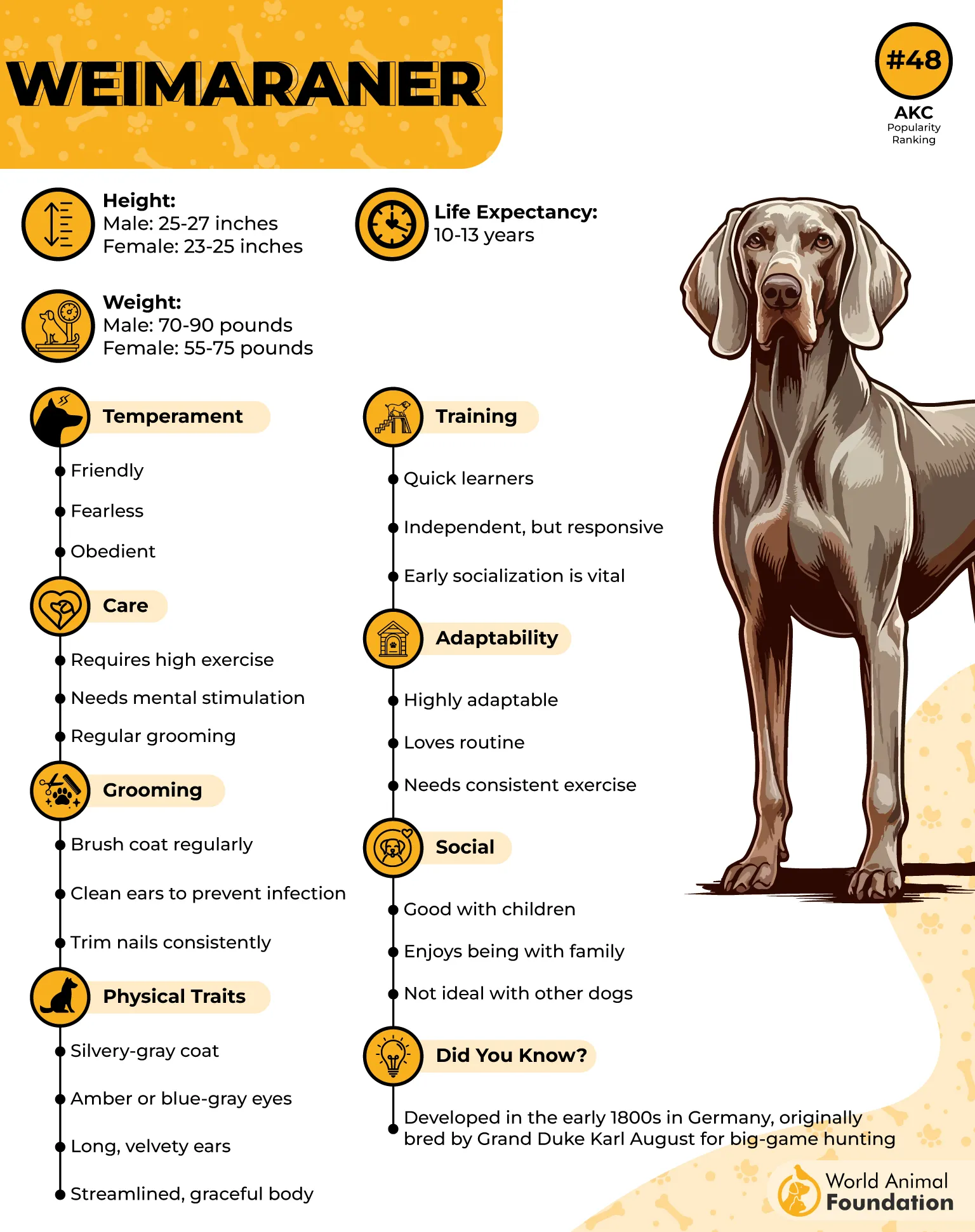
They are extremely attached to their humans. On camping trips, they tend to stay close, almost like they’re responsible for keeping track of you as much as you are of them.
These furry friends also have strong hunting instincts and high drive. Without structure or activity, they can become restless, so outdoor trips actually suit them very well.
What Truly Makes Them Unique
Weimaraners are nicknamed the “Gray Ghost” because of their sleek silver coat and silent movement in the field. They were bred for elite hunting tasks, which gives them a very controlled, almost stealth-like presence outdoors.
Conclusion
Off-road camping hits different when you’ve got the right dog by your side. These breeds aren’t just pets—they’re built for movement, endurance, and real outdoor life. Dirt, distance, weather, terrain—they don’t see obstacles, they see normal.
But here’s the real takeaway: rugged doesn’t mean easy. These dogs need proper training, stimulation, and active lifestyles to stay balanced. In return, they give you loyalty, protection, and a shared experience that feels like a real partnership.
So whether you’re hiking mountains, camping under stars, or just escaping the noise of daily life, the right dog turns the whole trip into something way bigger than travel—it becomes a shared story.
And honestly? That’s the kind of adventure that sticks with you long after the campfire goes out.
