





Getting your first dog is exciting, but after the first couple of weeks, you start to see what dog ownership really involves. You quickly learn that a good family dog takes more than a friendly face.
The right breed should suit your lifestyle, be manageable for first-time owners, handle everyday household life, and fit the needs your family can realistically meet. That’s why reliability matters when you’re choosing a new dog.
A reliable breed isn’t one that skips training. Every dog needs socialization, structure, exercise, medical care, and plenty of patience. Some breeds simply have traits that make things easier for new owners to learn.
The seven breeds below each bring their own strengths. Some are highly trainable, while others are adaptable household companions.
Reliable Dog Breeds: Great for First-Time Dog Owners
1. Cavalier King Charles Spaniel
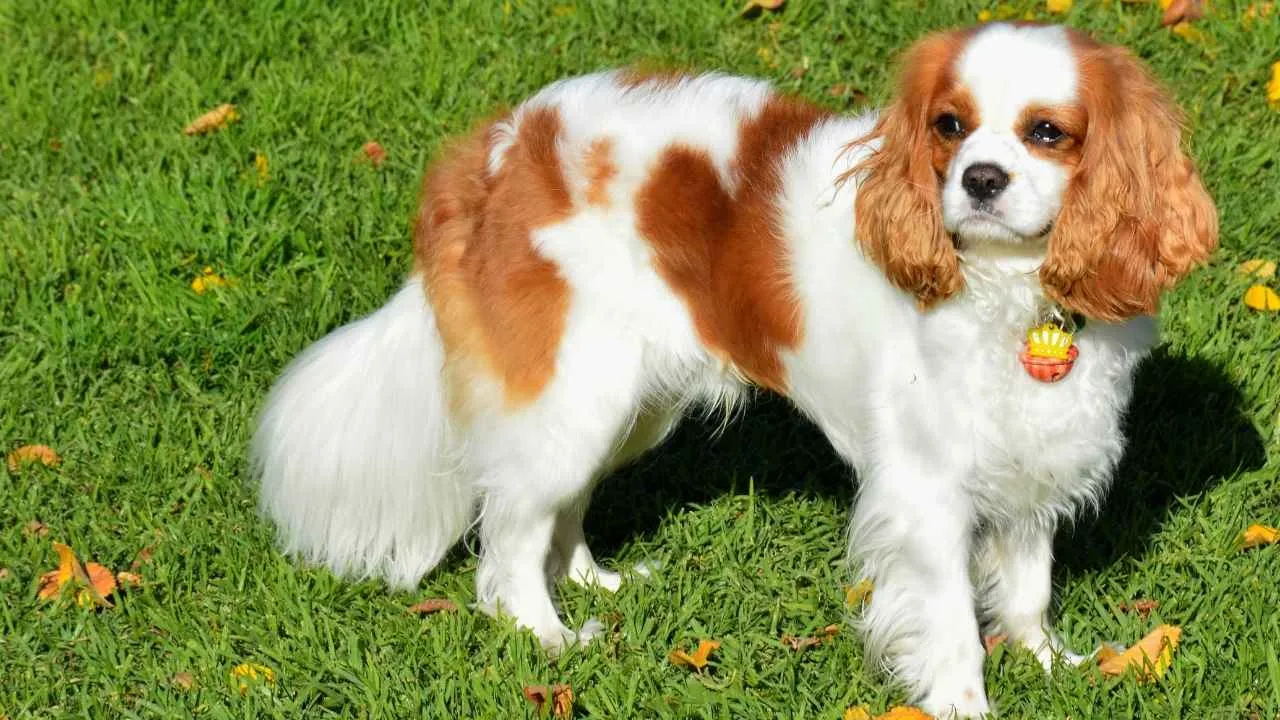
One of the easiest breeds to handle, the Cavalier King Charles Spaniel is adaptable, with a playful, sporty side and a relaxed, easygoing one. It’s just as happy going for a walk as it is curling up on the sofa next to a family member. This isn’t only a lap dog, either. Cavaliers are also known for being loving and gentle.
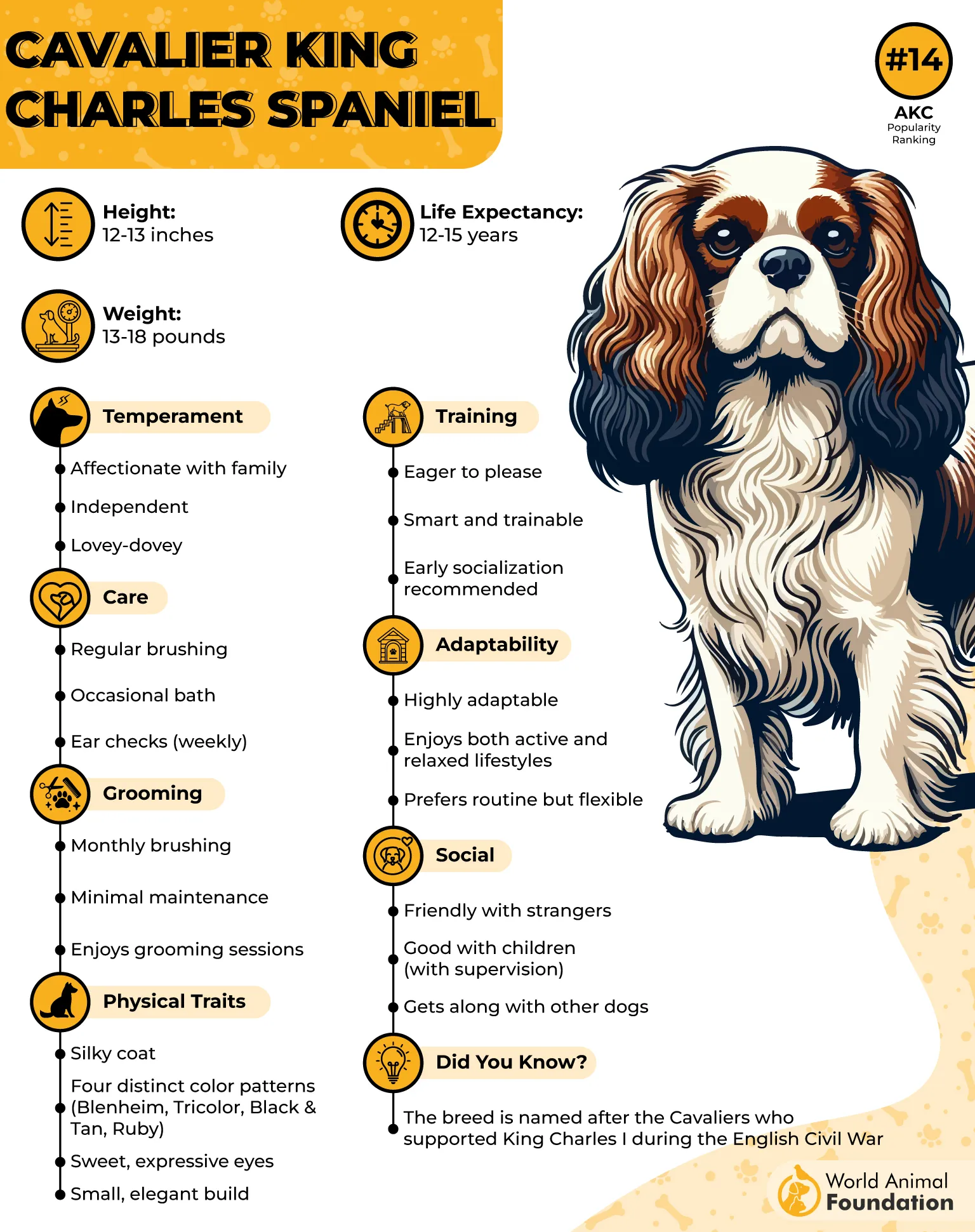
The AKC describes the breed as offering the best of both worlds, and training is another strength. Cavaliers are eager to please and respond very well to positive, consistent training, which makes it easier for new owners to teach basic obedience to a puppy.
The one catch is that they’re very social dogs. A Cavalier may not be the best choice for a family that’s out of the house for long stretches each day.
2. Golden Retriever
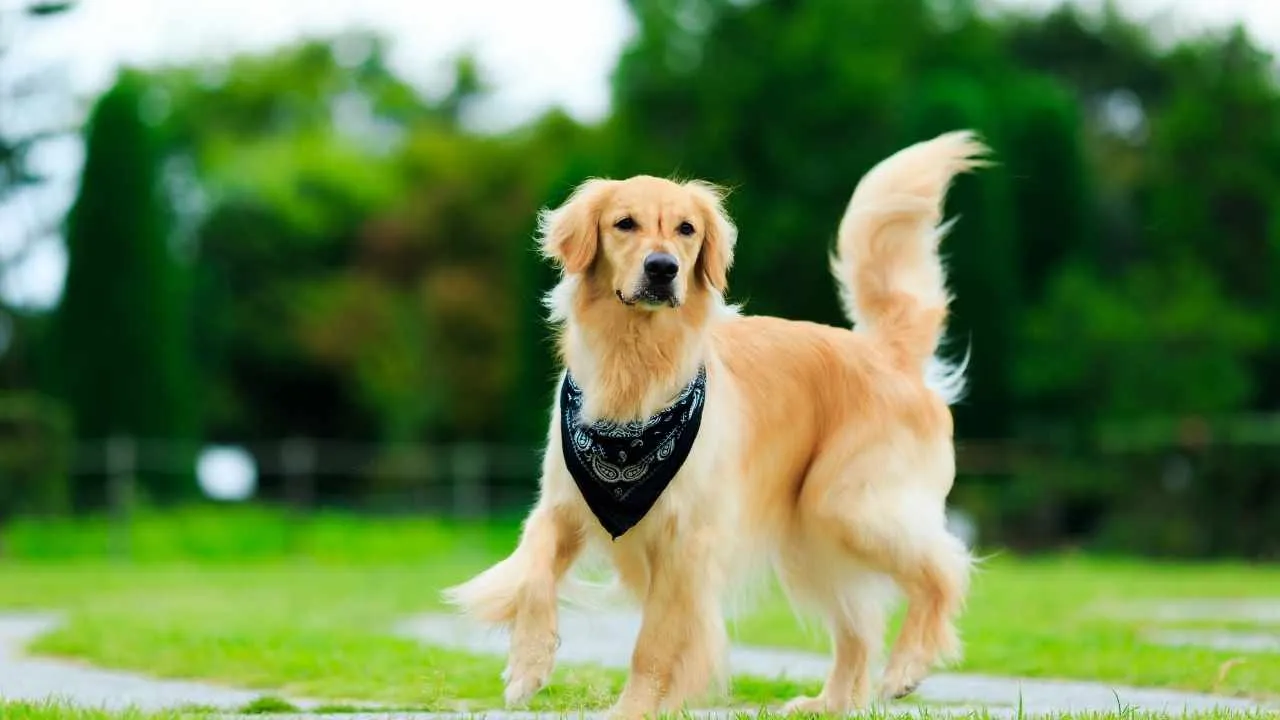
The Golden Retriever is a medium-sized dog that suits families who want a breed that fits right into their daily life.
Walks, games of fetch, outings, basic obedience, and retrieving are all activities you can share with a Golden. They were bred as working retrievers, so working with people and carrying out tasks comes naturally to them.
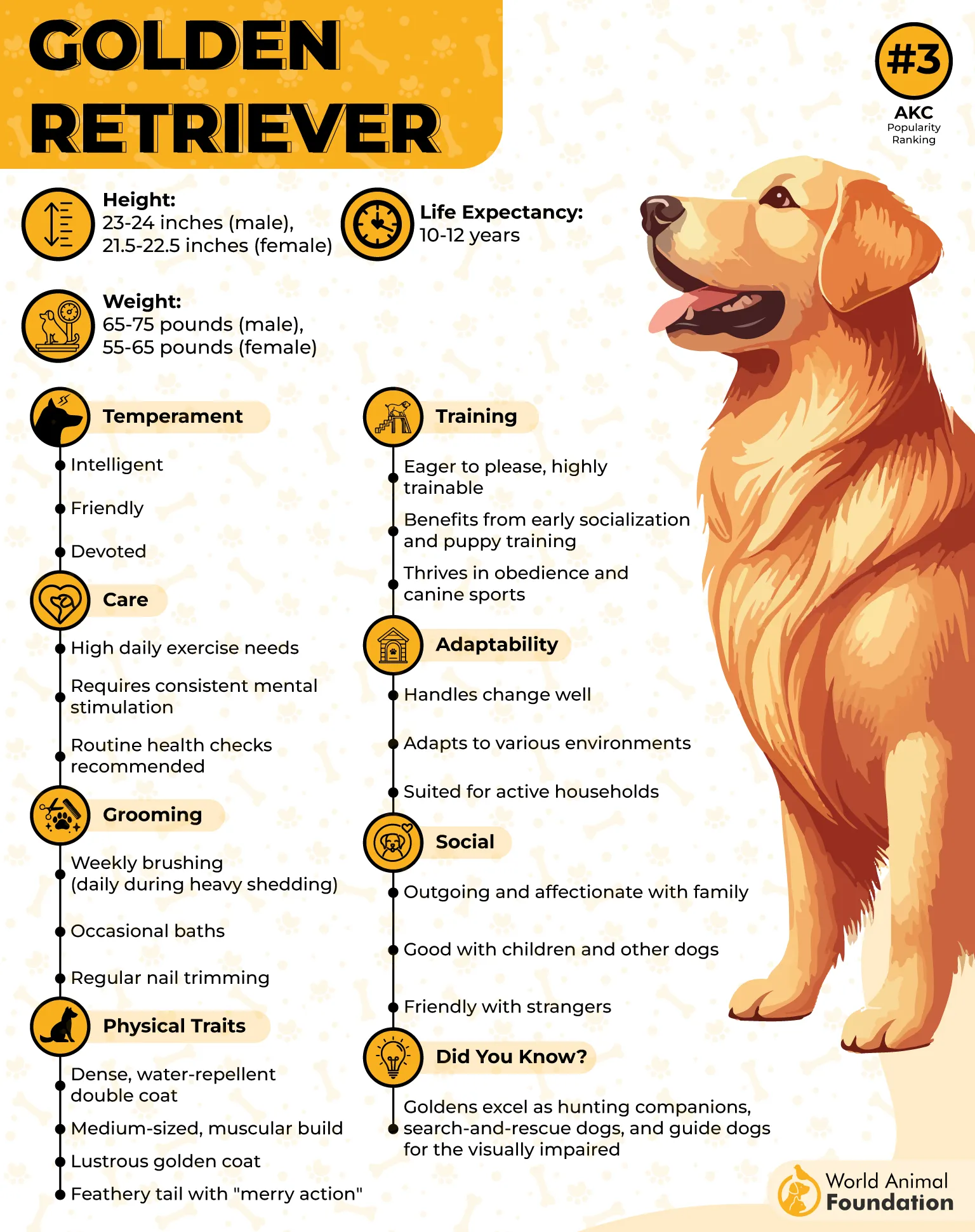
That background also gives first-time owners plenty of ways to offer mental stimulation. Instead of constantly hunting for new ways to tire the dog out, families can keep a Golden busy with simple tasks.
Their friendly, easygoing nature is another reason these high-energy dogs are so often chosen as family pets. But friendliness doesn’t mean manners can be skipped. A young Golden can be enthusiastic, excitable, and physically exuberant, so early training matters.
3. Labrador Retriever
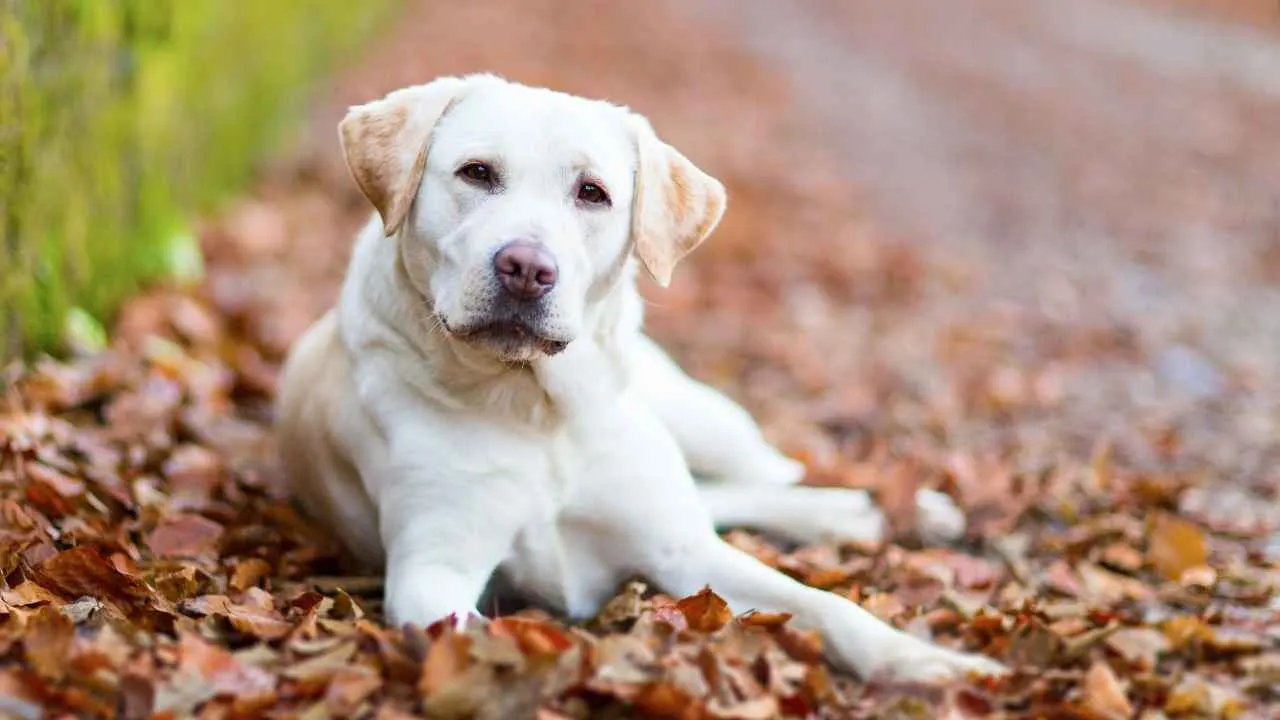
Purina describes Labs as strongly built, large dogs, and they’re a versatile choice for new owners, as Purina also notes.
A Lab can be a family companion in the morning, a walking partner in the afternoon, and a retrieving buddy later in the day. Their working history has also led to roles in assistance, detection, and more.
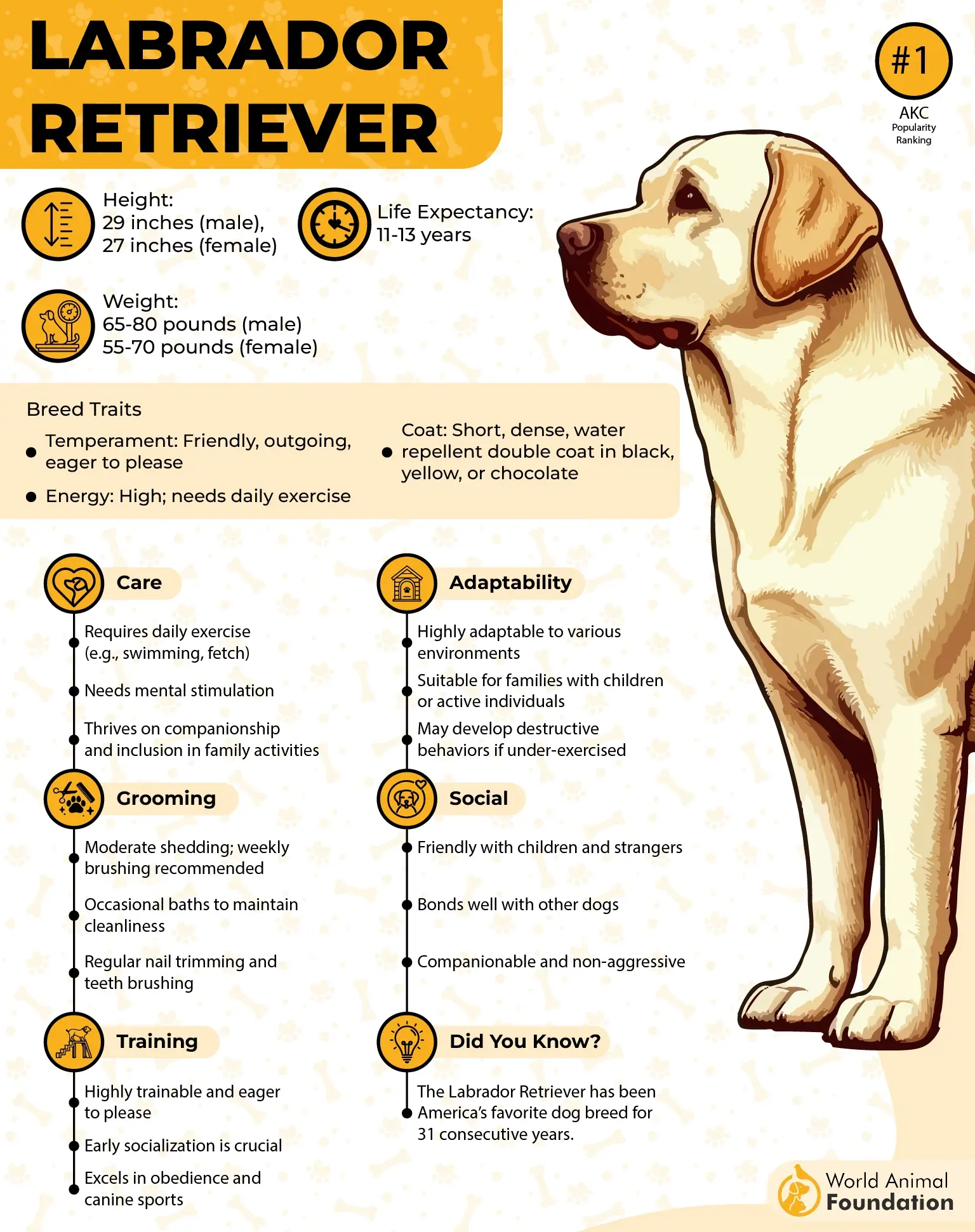
For a new owner, that versatility is a real plus, since there are plenty of ways to keep a Lab busy.
The tricky part is that the same traits that make them fun can make them a handful. Young Labs tend to be excitable, mouthy, and full of energy. Without enough exercise and good management, they can turn household items into toys.
4. Shih Tzu
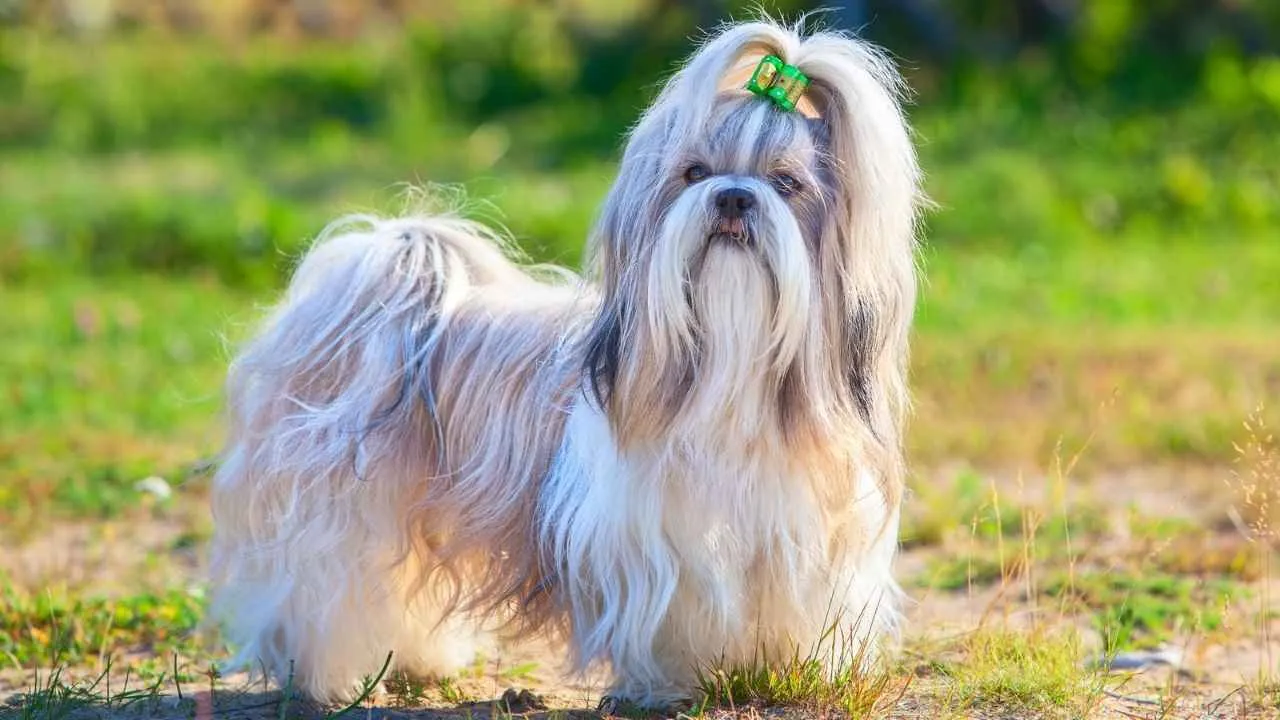
The Shih Tzu has its own take on reliability. It’s a small dog with a calm demeanor that fits easily into a home-focused lifestyle, without the demands of very intense exercise.
This is a breed built for human companionship. Shih Tzus were bred to live alongside people, and that people-centered history still shows today.
That can appeal to first-time owners looking for an indoor companion, short walks, and relaxed time with the family.
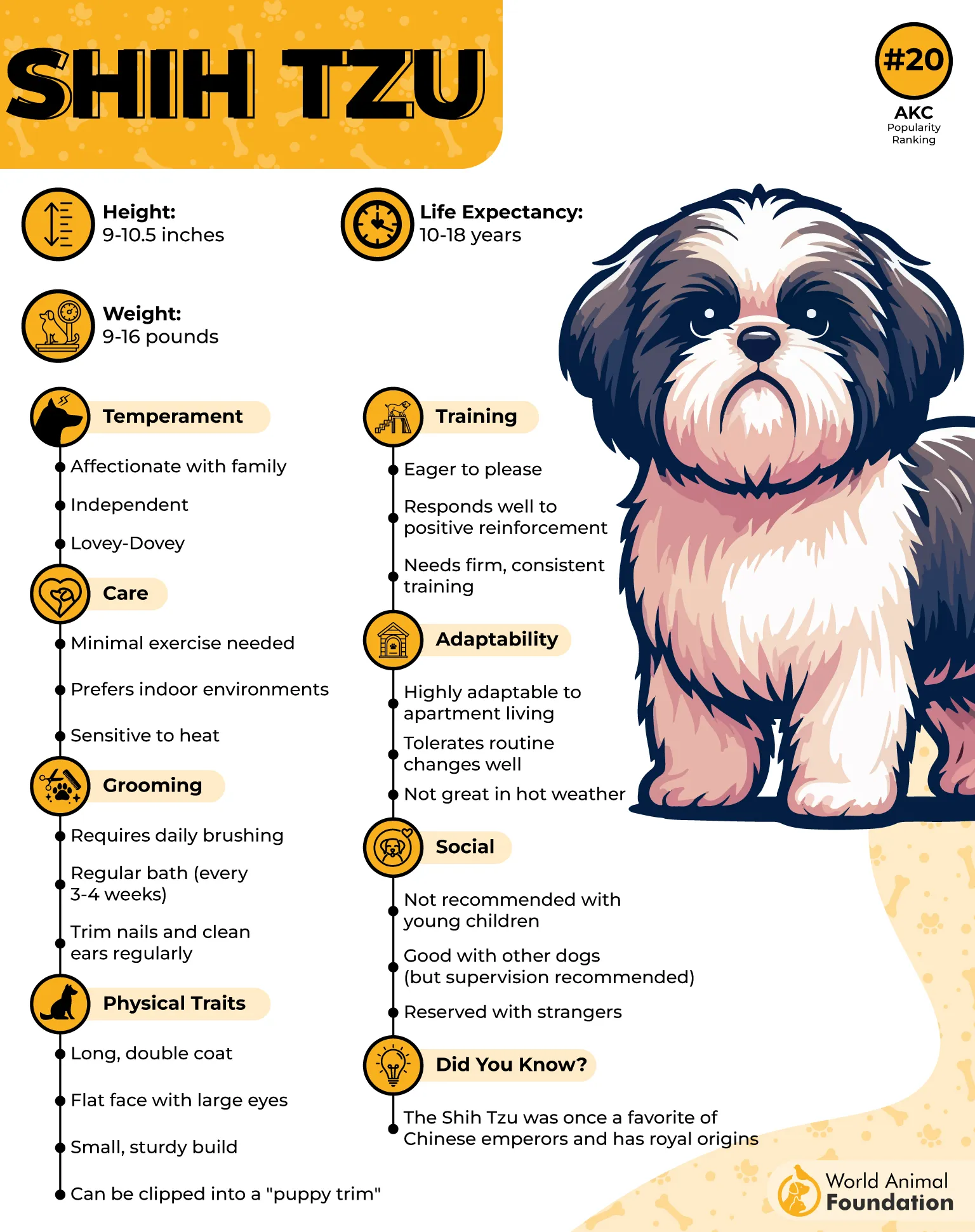
Their small size is another perk, since they suit homes without much living space. They don’t need as much exercise as many other dogs, so they slot easily into a normal household routine.

Their long, flowing coat does need regular grooming, though. If you want a low-maintenance dog, a Shih Tzu may not be the right pick. Grooming isn’t an occasional hobby for the owner; it’s a must.
Their short-nosed face can also cause problems in hot weather and during intense exertion, so owners should keep a close eye on the dog in warm conditions.
5. Bichon Frise
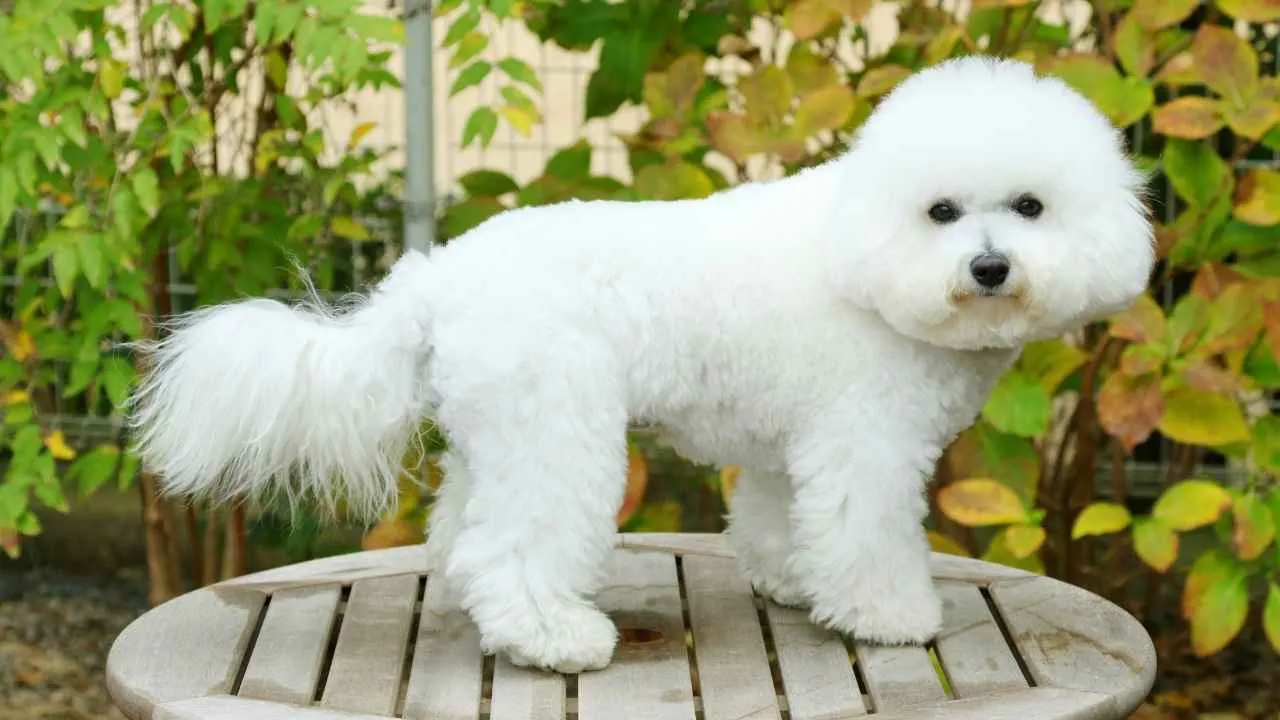
Known for their playful nature, as PetMD points out, Bichon Frises are an especially pleasant breed to bring home.
This is a happy, cheerful small dog. Bichons enjoy learning tricks, picking up basic obedience, playing games, and taking on simple jobs to keep busy.
They’re great with visitors too, since they tend to get along well with just about everyone.
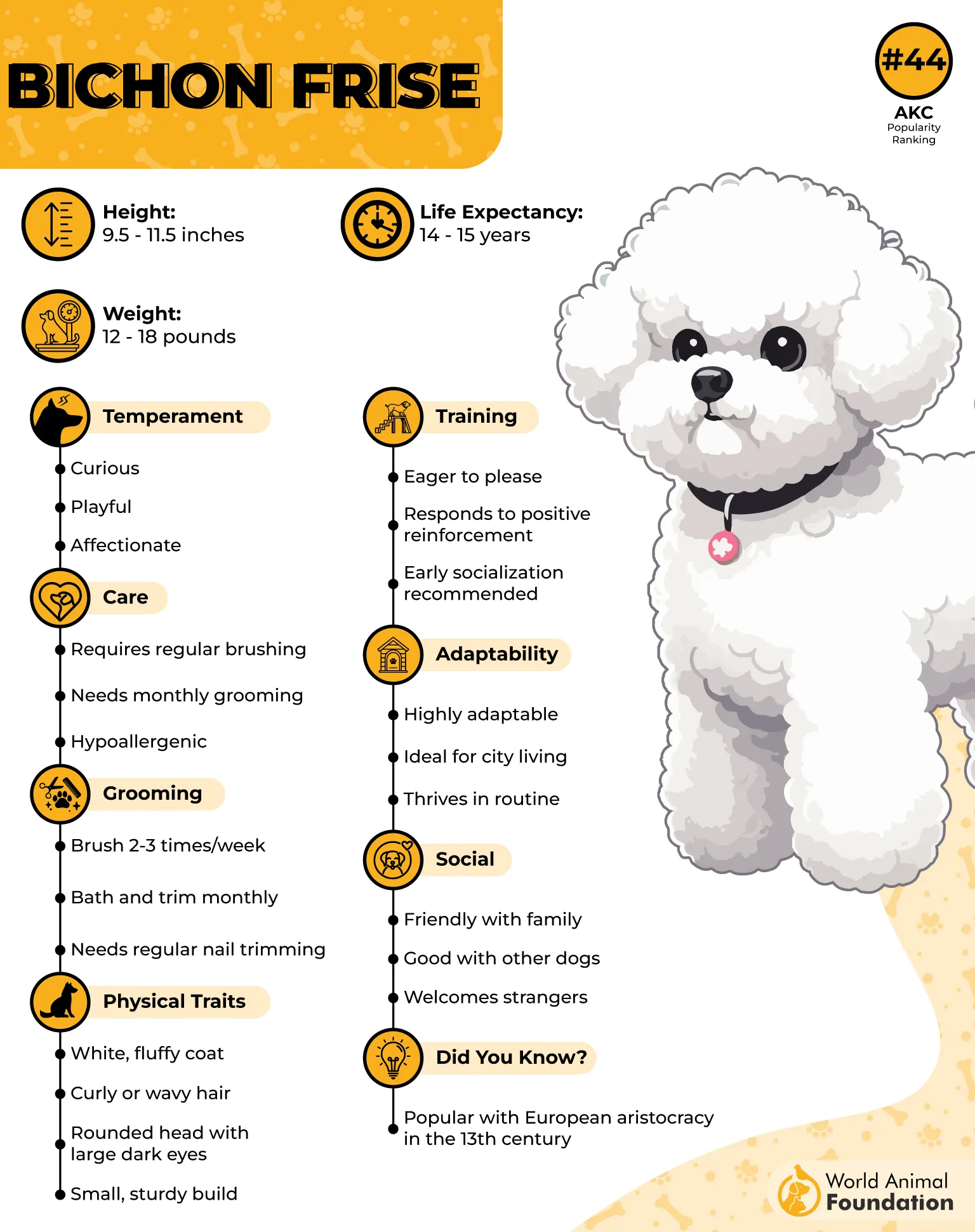
This cheerful breed is also adaptable. Unlike many larger dogs, a Bichon doesn’t need a big space to live a full life, but they do need regular activity, play, and plenty of attention. Daily walks and trips to the dog park go a long way toward keeping them physically healthy.
Their fluffy coat calls for a lot of brushing and grooming. Get your puppy used to being handled around the face, paws, ears, and body early on, and future grooming sessions will be much easier.
With the right care, the Bichon makes a lively, entertaining companion.
6. Toy Poodle
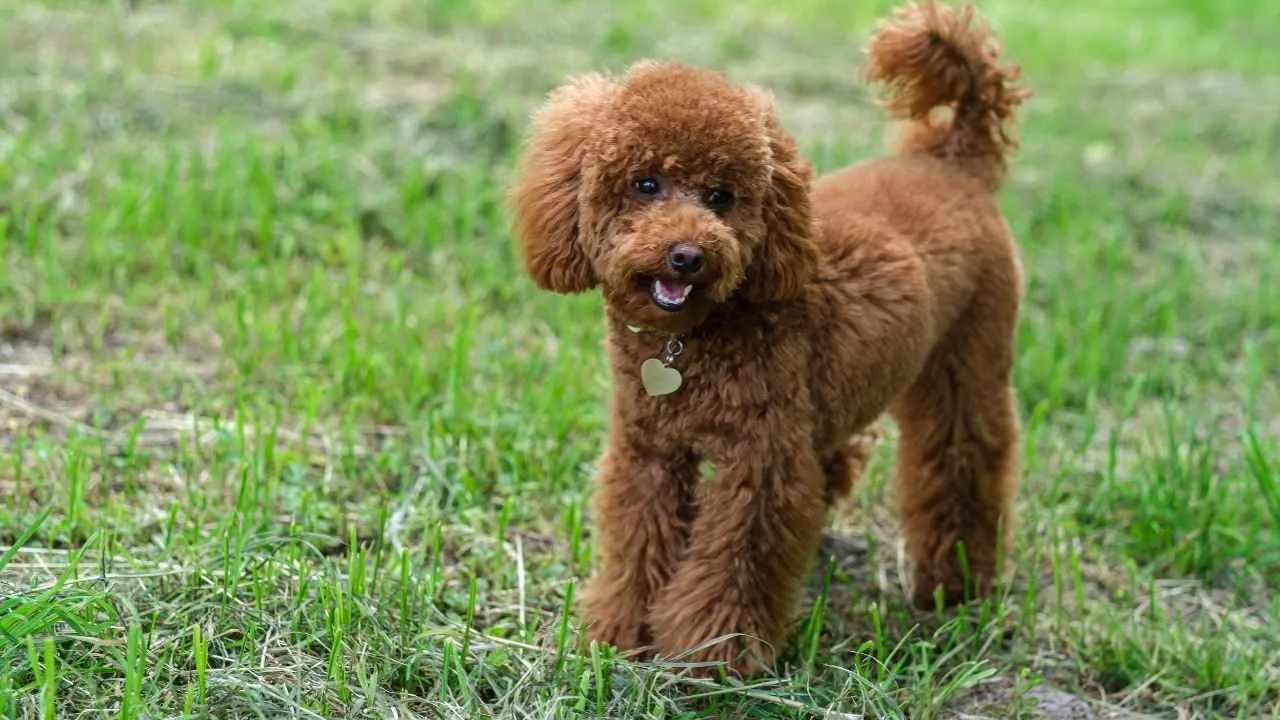
The Toy Poodle is a great example of an intelligent dog that happens to come in a small package.
Poodles are highly intelligent, and training is a practical way to keep their minds busy. With consistent, reward-based training, a Toy Poodle can learn basic manners, tricks, household routines, and even more advanced behaviors.
A Toy Poodle doesn’t need the same level of exercise as a large sporting dog, but games and activities that make it think are still important. Short training sessions work especially well for giving these pups good mental stimulation.
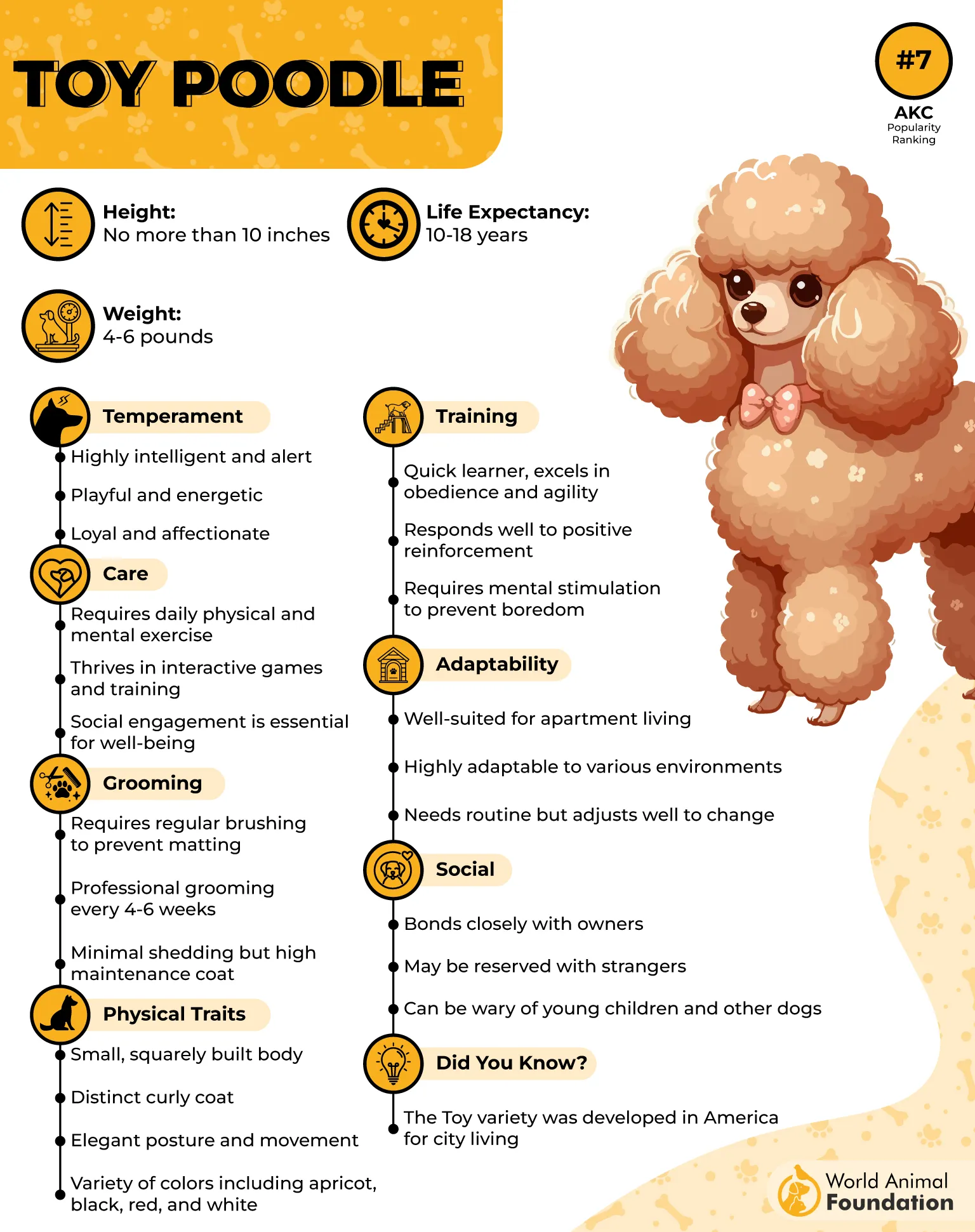
Grooming is the other thing to consider. The curly coat needs regular upkeep, and many owners choose professional grooming.
On the plus side, Poodles have a low-shedding coat, so you won’t find loose hair scattered around your home. They’re generally healthy too, though they still need regular vet checkups like any other dog.
7. Pug
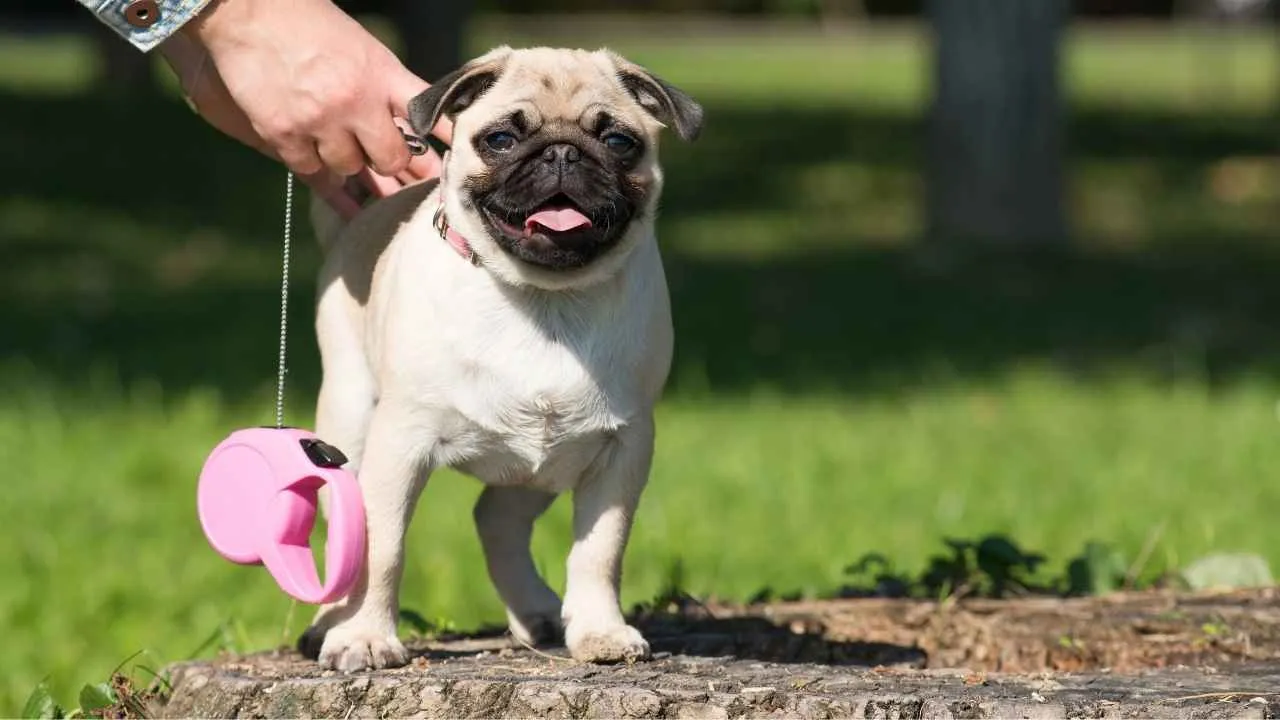
Pugs are generally happy just being part of everyday household life. They can be an excellent option for first-time owners who want a companion rather than the high-energy demands many other dogs bring.
These little dogs are entertaining without needing any complicated form of amusement. They’re likely to take an interest in whatever the family is up to, whether that means following you around the house or curling up beside you during quiet time.
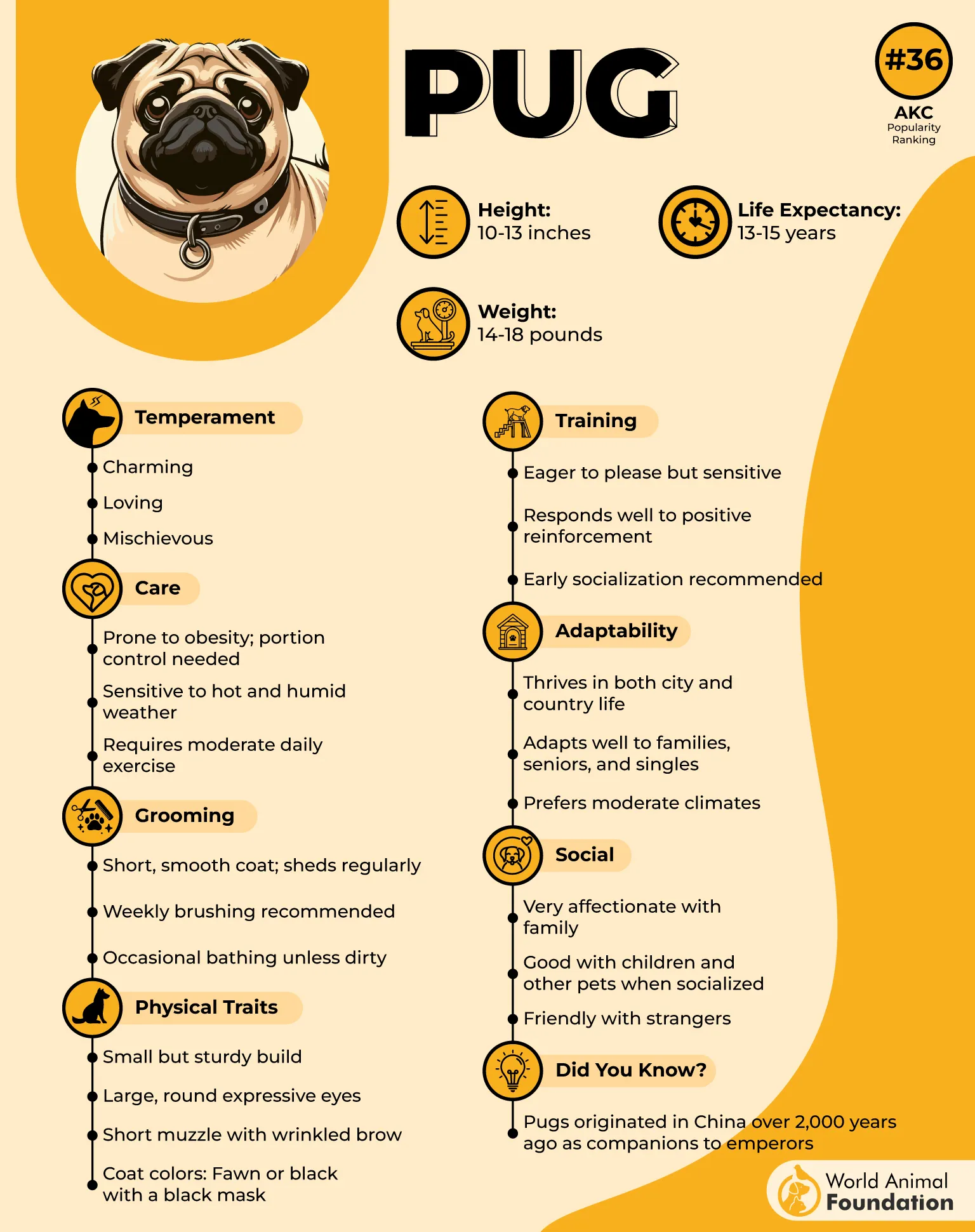
Owners do need to pay attention to the breed’s physical limitations, though. As a flat-faced (brachycephalic) breed, Pugs can have trouble breathing, and their heat tolerance and exercise endurance need to be managed carefully.
That’s an important responsibility for any first-time owner: understanding what the breed can and can’t do before you bring one home.
Conclusion
A good first dog isn’t necessarily the easiest breed in every situation. The real question is whether its natural traits suit your family’s daily routine.
A loyal companion for a first-time owner is often a dog with a low prey drive that adapts well to limited space and different living environments. Dogs like these tend to be more manageable for new owners than many other breeds.
Ultimately, reliability comes down to the bond between dog and owner, whatever the breed. What turns a promising match into a dependable family pet is early socialization, proper exercise, regular vet visits, and positive training.
