




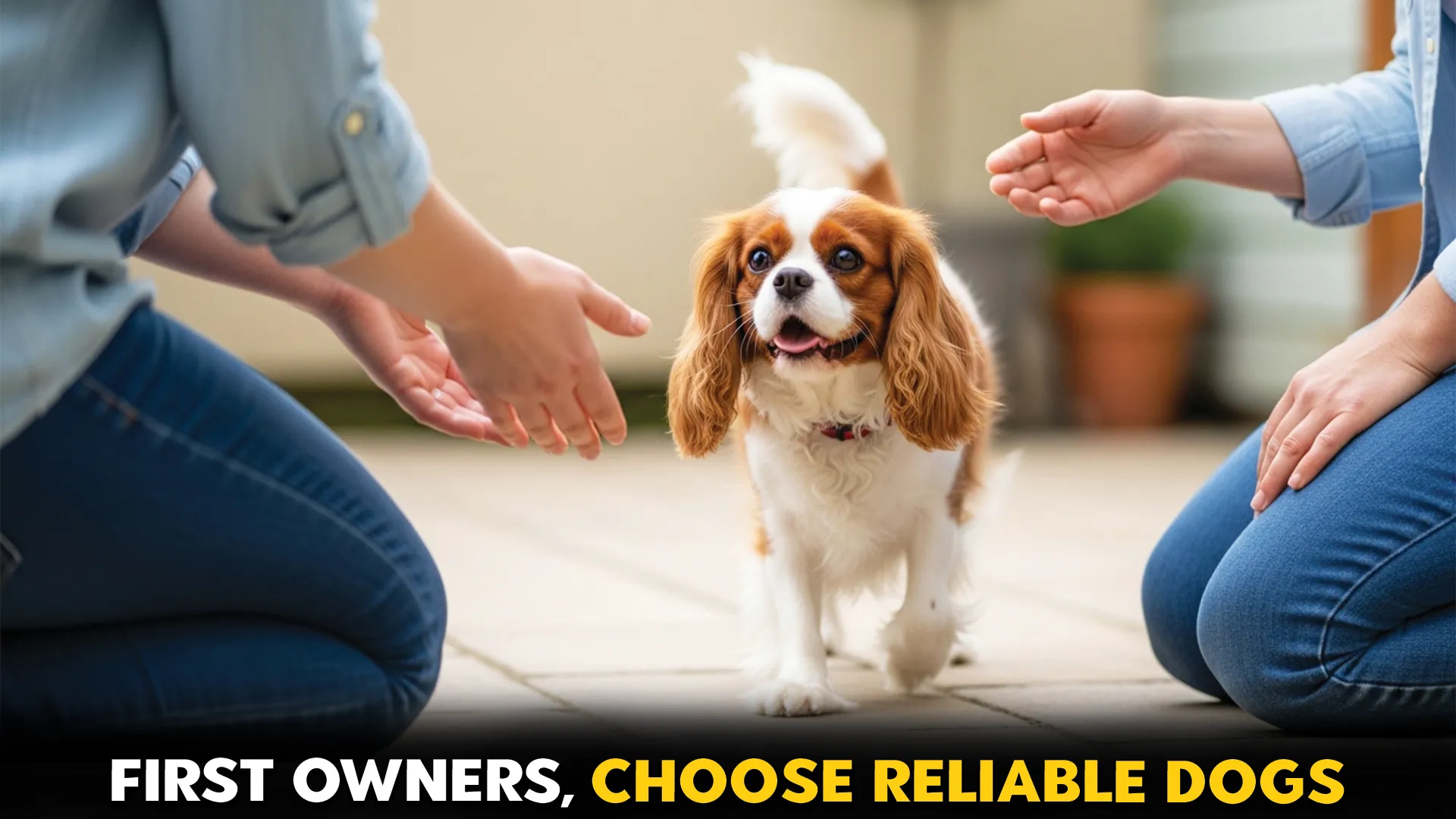
First-time dog ownership often reveals something people do not think about earlier. It is not just about having a dog. It is about how well that dog fits into your everyday life without creating constant pressure.
Some dogs require more structure, more patience, and more time to reach a comfortable routine. Others seem to fall into place with less effort, making the entire process feel more natural. This difference is not accidental. It comes from traits that make certain dogs more reliable for beginners.
They respond well to guidance, stay consistent in behavior, and do not overwhelm new owners during the early stages. That kind of balance matters more than most people expect. It shapes how quickly you adjust and how confident you feel moving forward.
The following sections focus on top dog breeds that consistently offer that balance, giving new owners a smoother and more manageable start from day one.
Key Takeaways
The early days of dog ownership often reveal how much a breed’s temperament shapes your confidence as a new pet parent.
Labrador Retriever and Golden Retriever naturally lean into structure and interaction, making them easier to understand and guide.
Pugs and Pomeranians add personality and presence, staying engaged with their surroundings while still fitting into home life.
The full selection gradually shows which dogs reduce pressure instead of adding to it.
Top Reliable Dog Breeds for First-Time Pet Owners
1. Golden Retriever
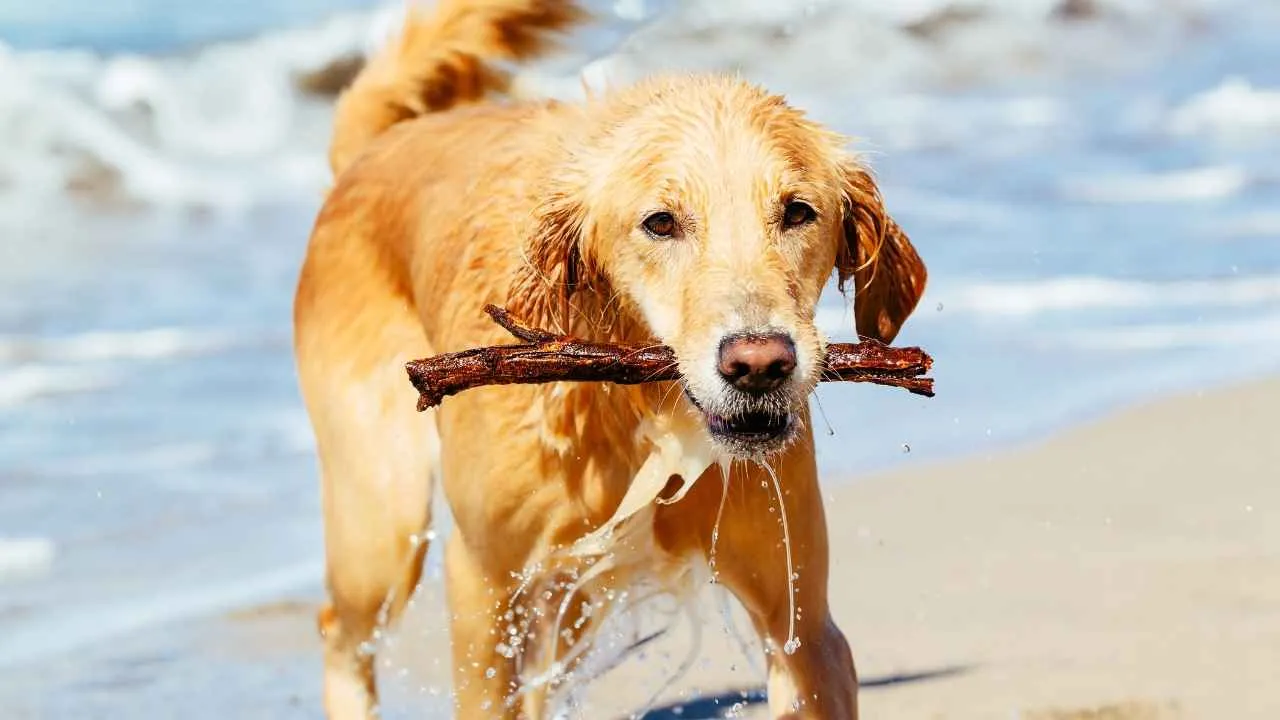
Golden Retrievers build their role around interaction, often seeking out attention and staying engaged with people throughout the day. It responds naturally to touch and presence, even nudging for more when interaction slows, as mentioned by PetMD.
Trainable and socially steady
They are willing to learn, making training less frustrating compared to breeds that resist structure. Its friendly nature extends across children, other pets, and unfamiliar faces, keeping social situations uncomplicated.
This shows up clearly in everyday behavior:
Picks up commands with consistent repetition
Stays relaxed around new people and animals
Seeks interaction rather than avoiding it
Activity that stays manageable
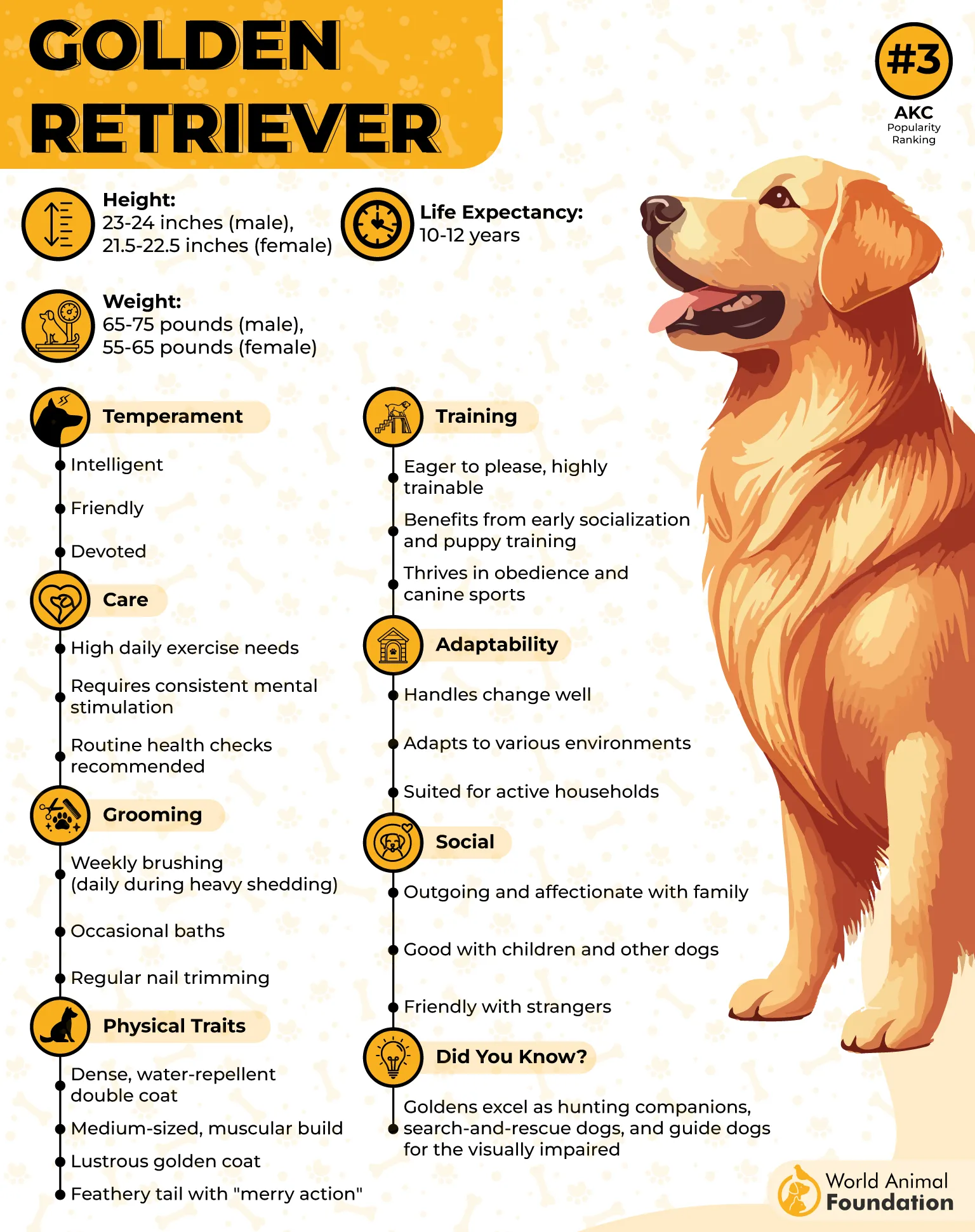
Golden Retriever keeps a moderate level of energy that fits into daily routines without becoming overwhelming. It enjoys walks, play, and water-based activities, yet doesn’t demand constant engagement. This balance helps new owners manage both active and quiet parts of the day.
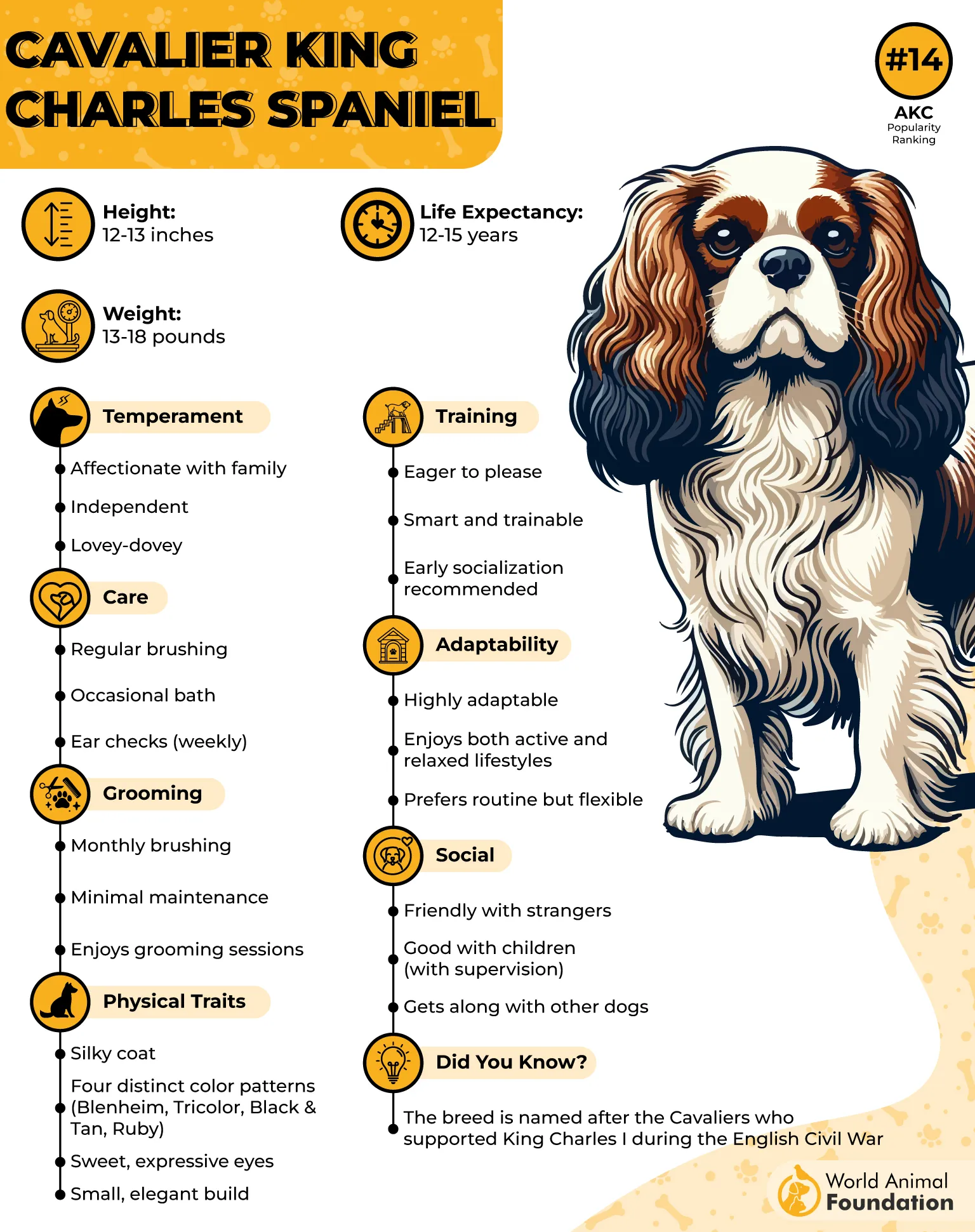
2. Cavalier King Charles Spaniel
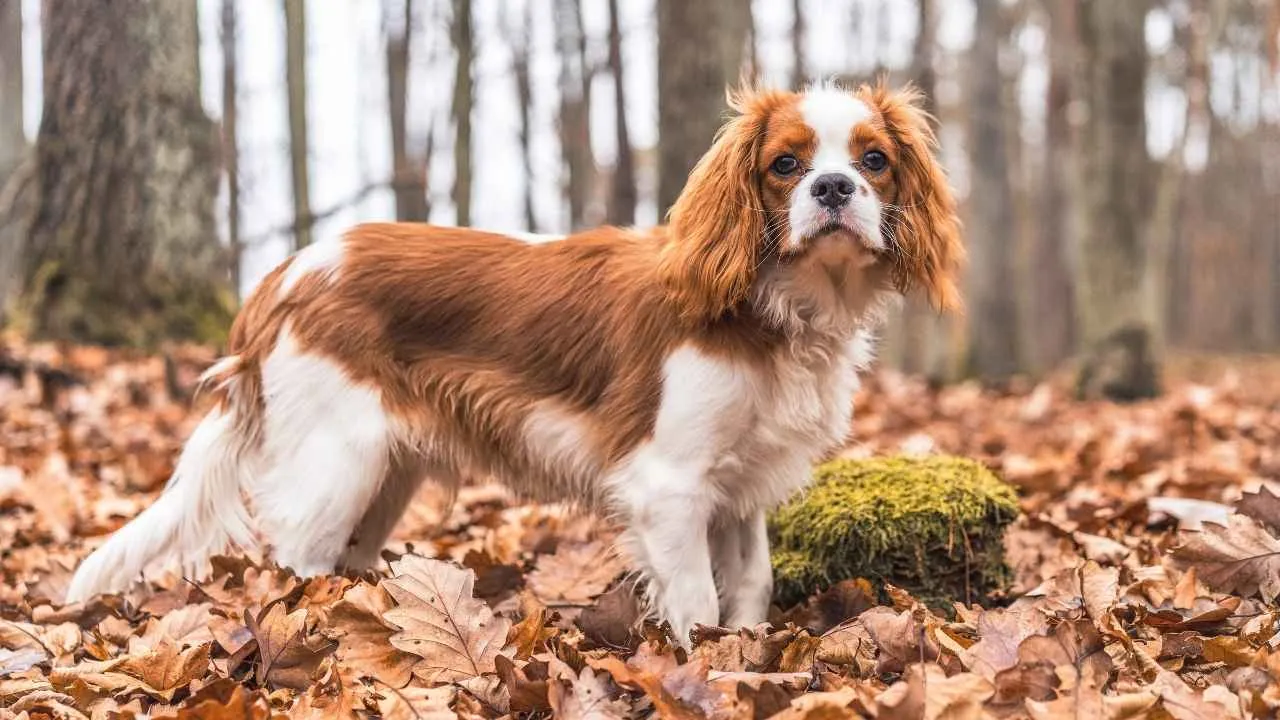
Cavalier King Charles Spaniel reflects a blend of toy-dog closeness and sporting energy, shaped by its spaniel background. Its behavior shifts easily between quiet companionship and short bursts of playful activity. This balance helps new pet owners settle into routines without feeling overwhelmed.
Social ease in daily life
These little dogs stay relaxed around people, children, and other dogs, making interactions smooth in most home settings. Its response to surroundings remains steady, without sudden or difficult reactions.
This shows up clearly in everyday behavior:
Mixes calmly in social environments
Adjusts quickly to different activity levels
Engages without becoming overly demanding
Instincts that still guide behavior
Cavalier King Charles Spaniel retains its spaniel instincts, especially when it picks up scents or notices movement outside. This can affect recall, especially in open areas where attention shifts quickly, as per the AKC. A controlled space or fenced yard helps maintain consistency in its routine.
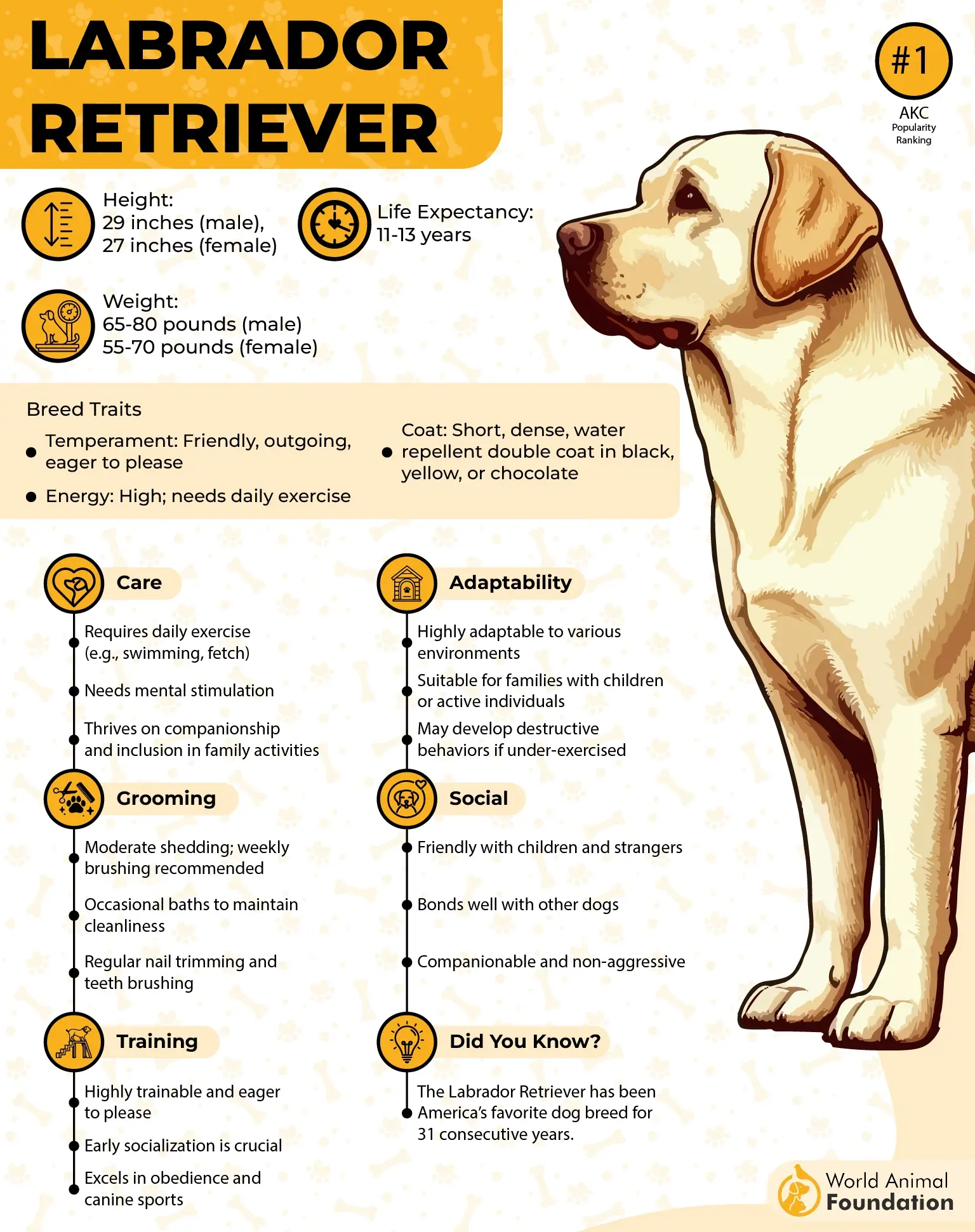
3. Labrador Retriever
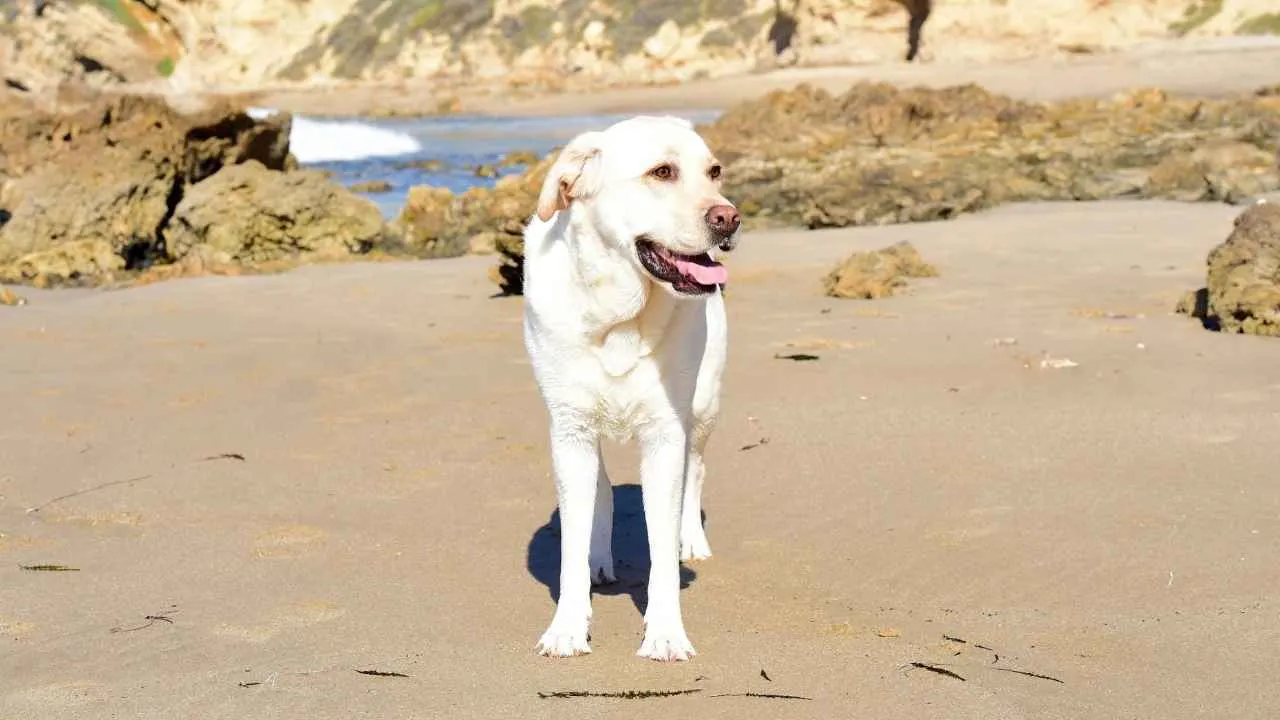
Labrador Retriever developed alongside fishermen, shaping a dog that stays engaged through movement and task-based interaction. For first-time dog owners, this creates a lifestyle that leans toward shared activity rather than passive companionship.
Social behavior in real settings
Labs interact easily with people, including strangers, and blend well into homes with other pets and children. Its affectionate nature shows through constant engagement rather than distance.
This becomes clear in everyday situations:
Approaches new people without hesitation
Joins group activity instead of staying aside
Maintains friendly behavior with other animals
Physical traits that affect daily life
This large dog breed has a dense double coat designed to repel water, which directly affects grooming needs inside the home. Shedding stays consistent, making regular brushing part of the routine. Also, its strong tail and active movement can influence how it moves around tighter indoor spaces.
4. Miniature Poodle
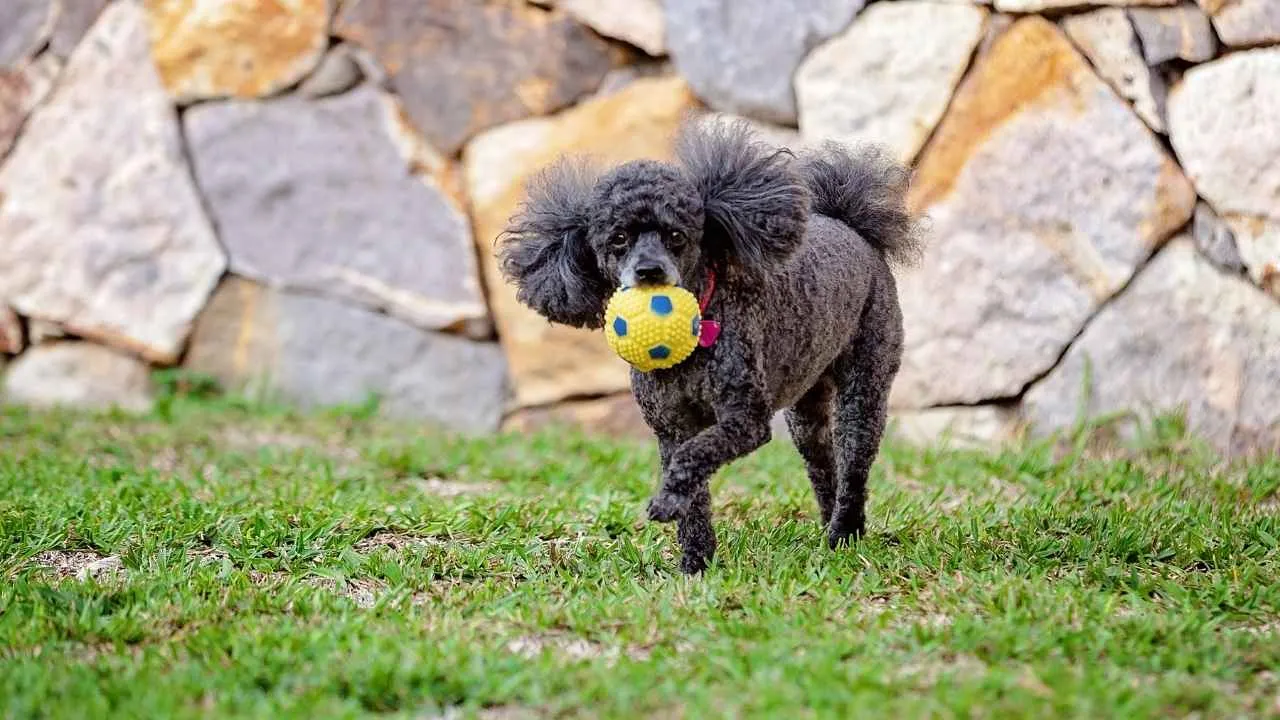
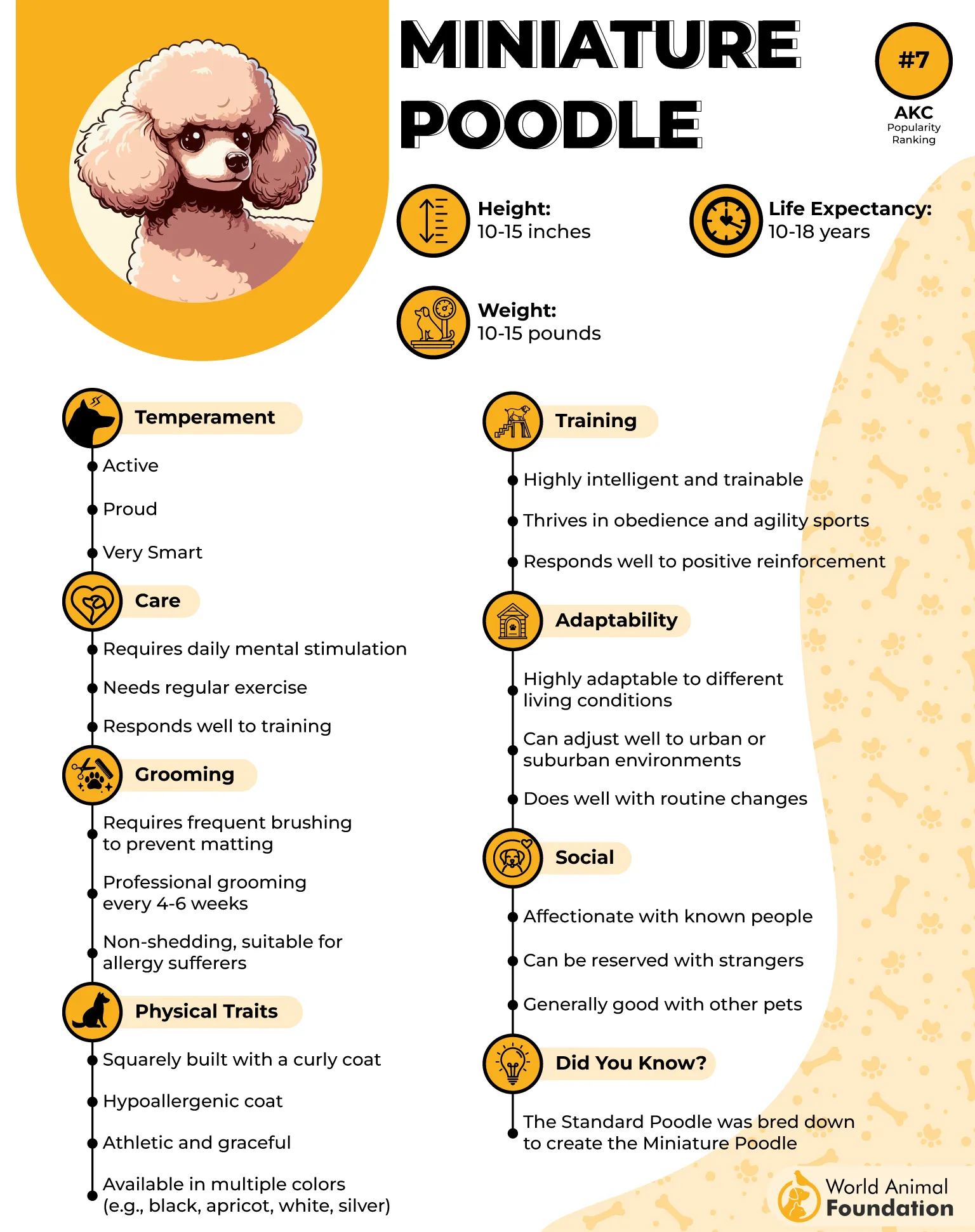
Miniature Poodle traces back to curly-coated working dogs that moved from Asia into Europe, shaped through herding and water hunting roles. Swimming and retrieving were part of its early function, supported by a coat that insulates in cold water.
Learning through engagement
This intelligent breed connects quickly with tasks, often understanding what is expected after only a few repetitions. It responds best when interaction feels purposeful, especially when praise or reward is involved.
This pattern shows clearly in daily behavior:
Picks up commands with minimal repetition
Stays focused when given structured tasks
Responds strongly to praise and rewards
Social awareness and personality
They stay lively and involved, often seeking interaction while still thinking independently in their responses. It may take a moment to warm up to unfamiliar people, then shift into a more open and friendly behavior. Around children and other pets, early social exposure shapes how smoothly it adjusts.
5. Bichon Frise
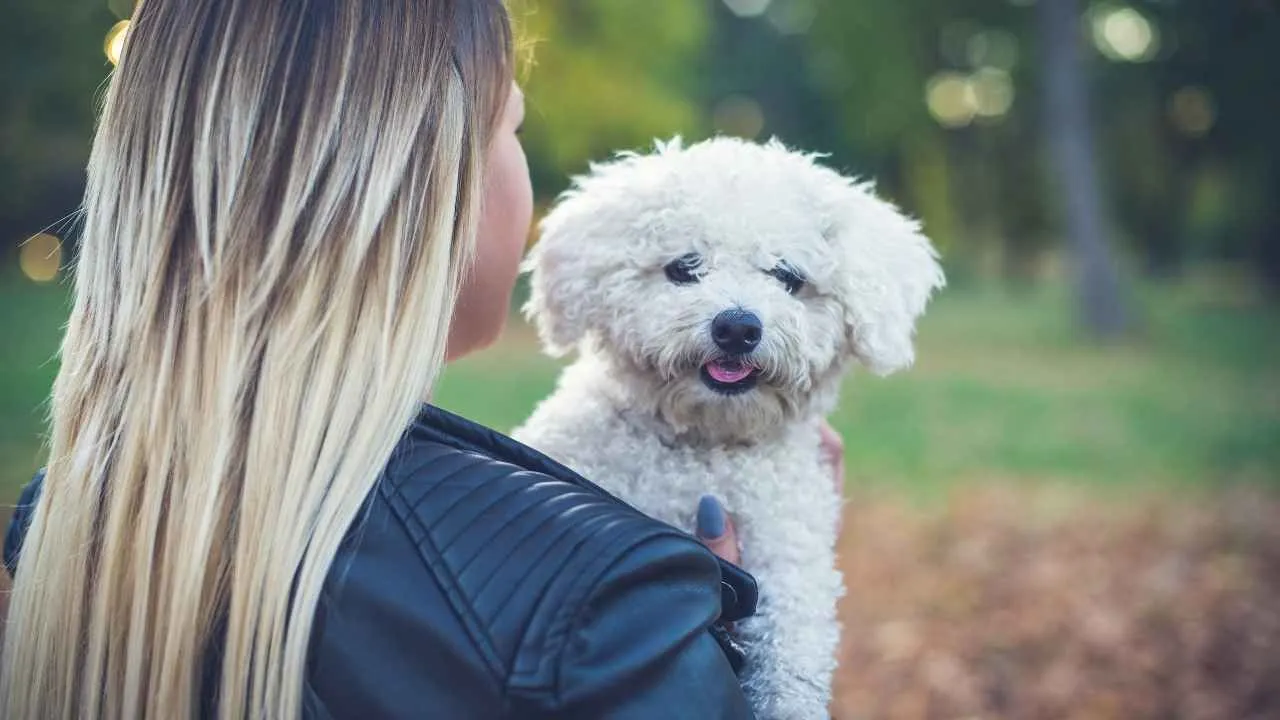
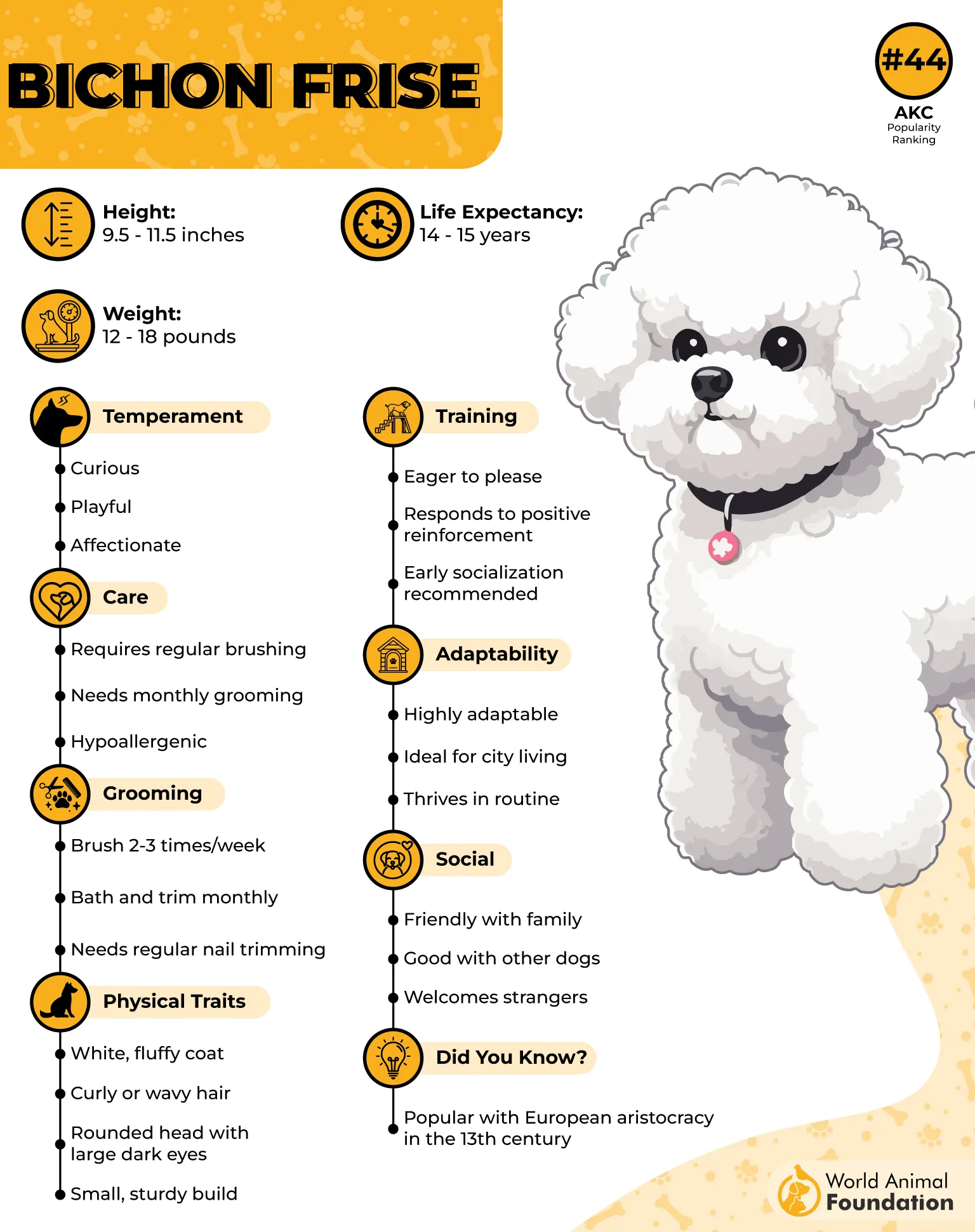
Bichon Frise approaches people and animals with natural curiosity, often moving toward interaction instead of hesitation. Its small size blends with a lively personality that stays engaged in shared spaces. This makes everyday interactions feel easy rather than something that needs managing.
Play-driven engagement
This small dog stays active through play, often returning to toys or simple games throughout the day. It enjoys learning small tricks, especially when interaction is part of the process, as Petplan stated.
That pattern becomes easy to notice:
Repeats play cycles with short breaks
Picks up simple tricks with encouragement
Look for engagement instead of isolation
Behavior that stays manageable
They respond quickly to training due to their eagerness to please, making guidance easier to establish early. It may react to unfamiliar sounds with barking, though this stays manageable with consistency. Its social nature allows it to fit smoothly into homes with children and other dogs.
6. Papillon
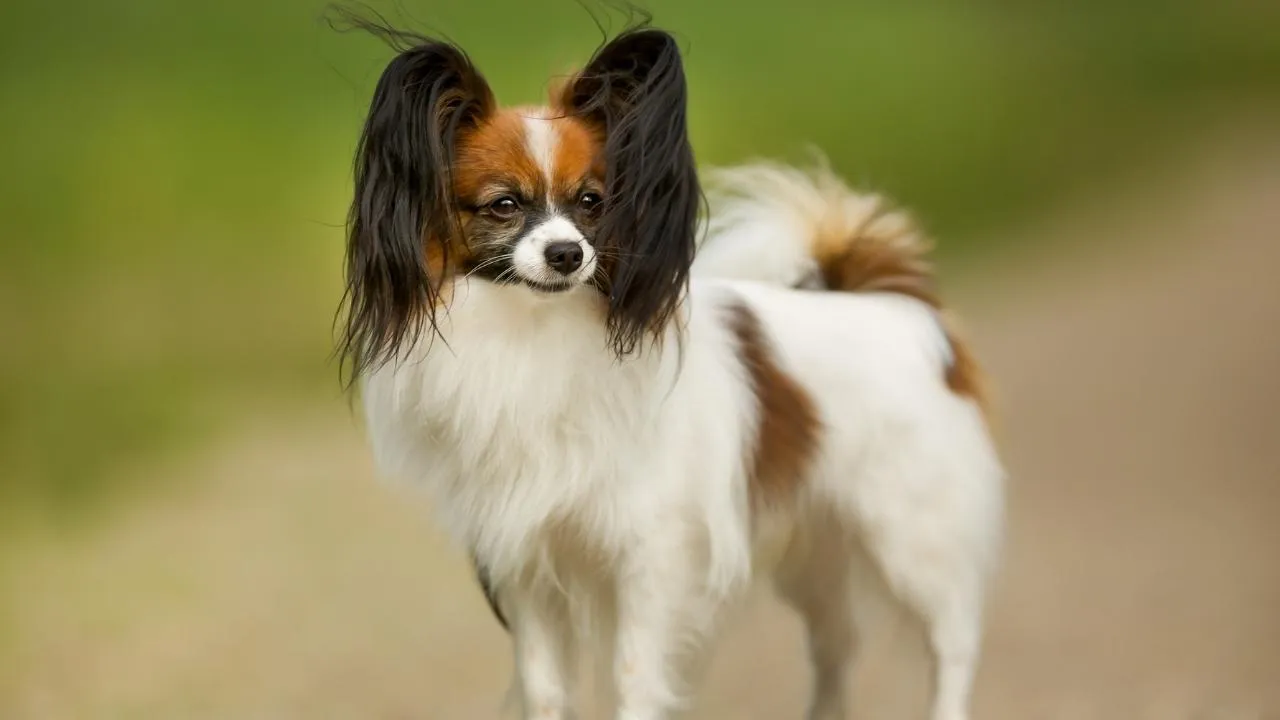
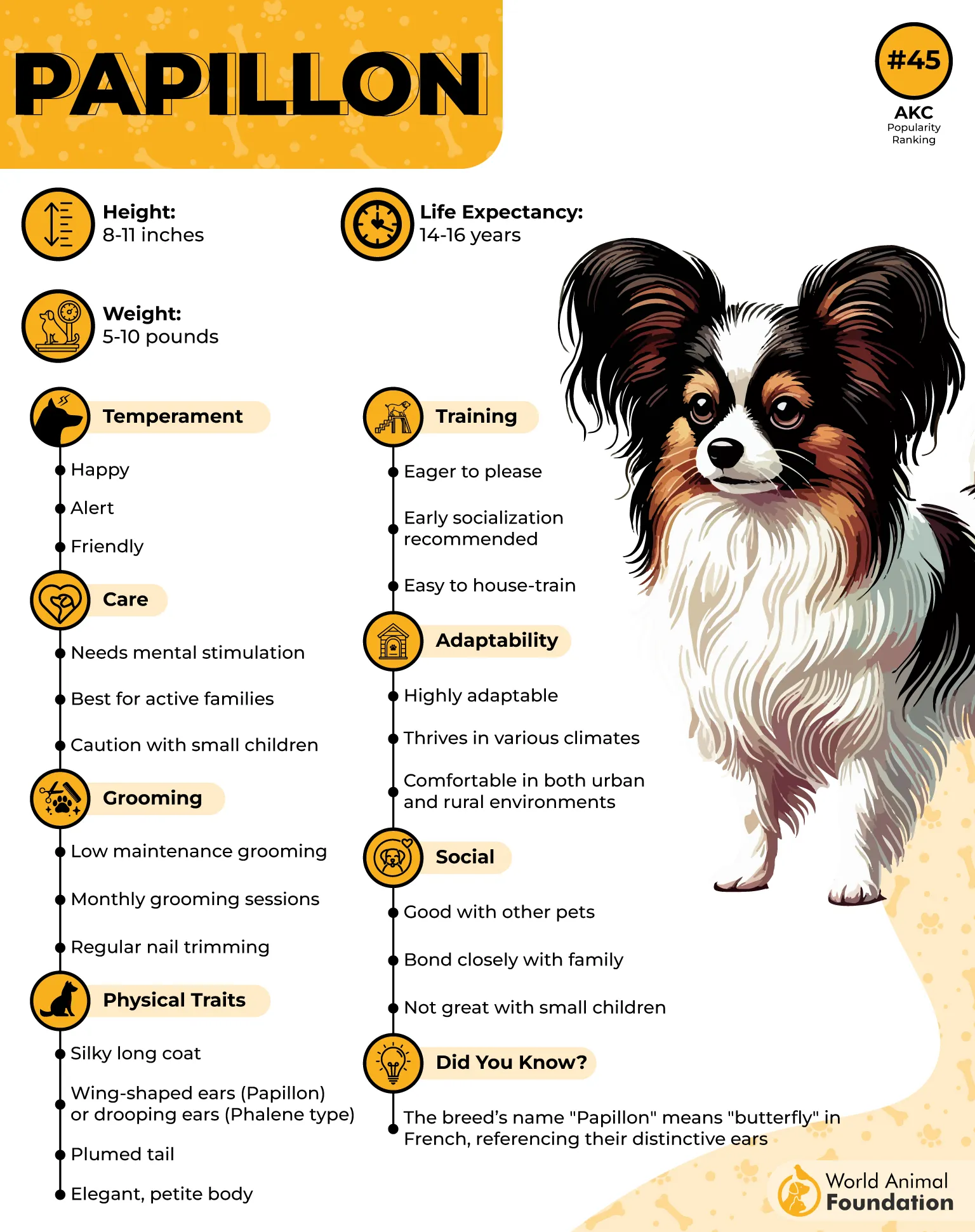
Papillon stands out immediately with its butterfly-shaped ears, framed by long, flowing hair that gives it a delicate expression. Behind that appearance sits a highly alert and responsive dog that stays mentally engaged. This combination brings a refined, alert everyday presence.
An active mind in a small body
They show strong mental engagement, often seeking tasks or interaction instead of staying idle for long periods. It responds well to structured activity and thrives when given something to focus on.
That tendency becomes clear in daily behavior:
Picks up patterns during play or training
Stays engaged during interactive tasks
Seeks attention through activity, not stillness
Energy shaped for indoor life
This wonderful dog adapts well to compact spaces, using indoor games and short outdoor time to manage its active nature. Its playful energy fits into apartments as long as it has ways to stay occupied. Access to a safe running space adds another layer to its daily routine.
7. Shih Tzu
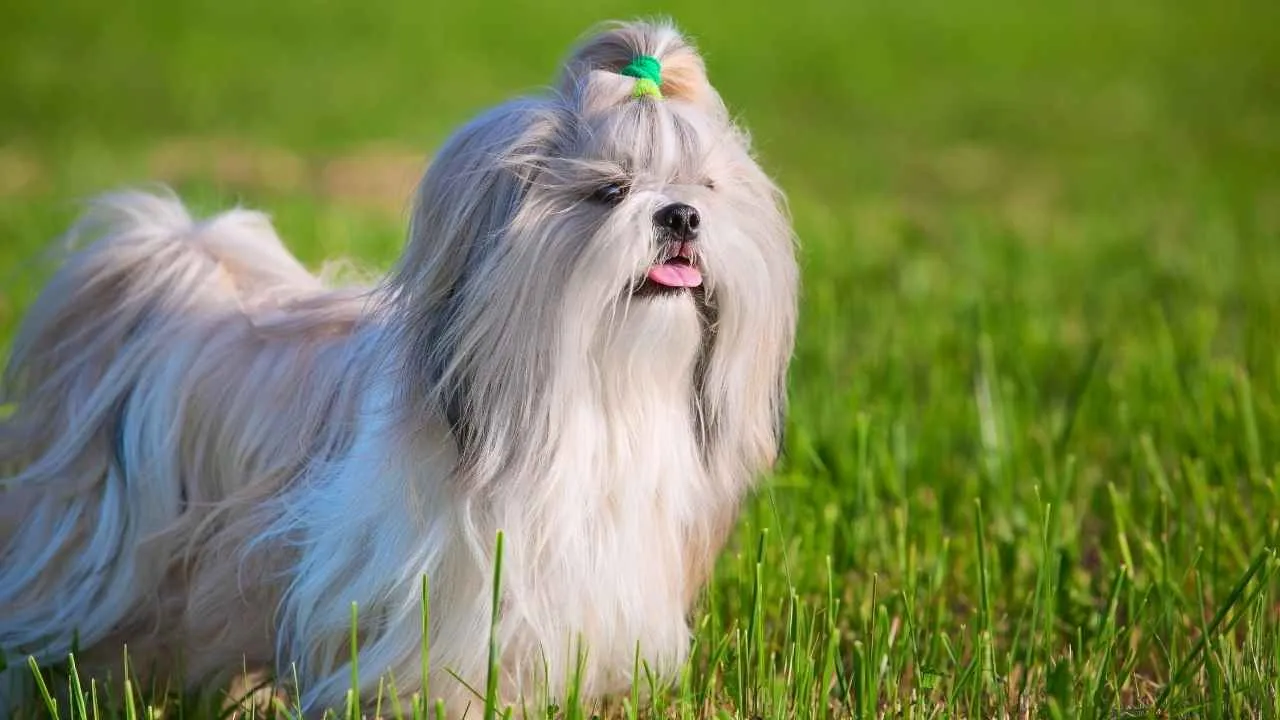
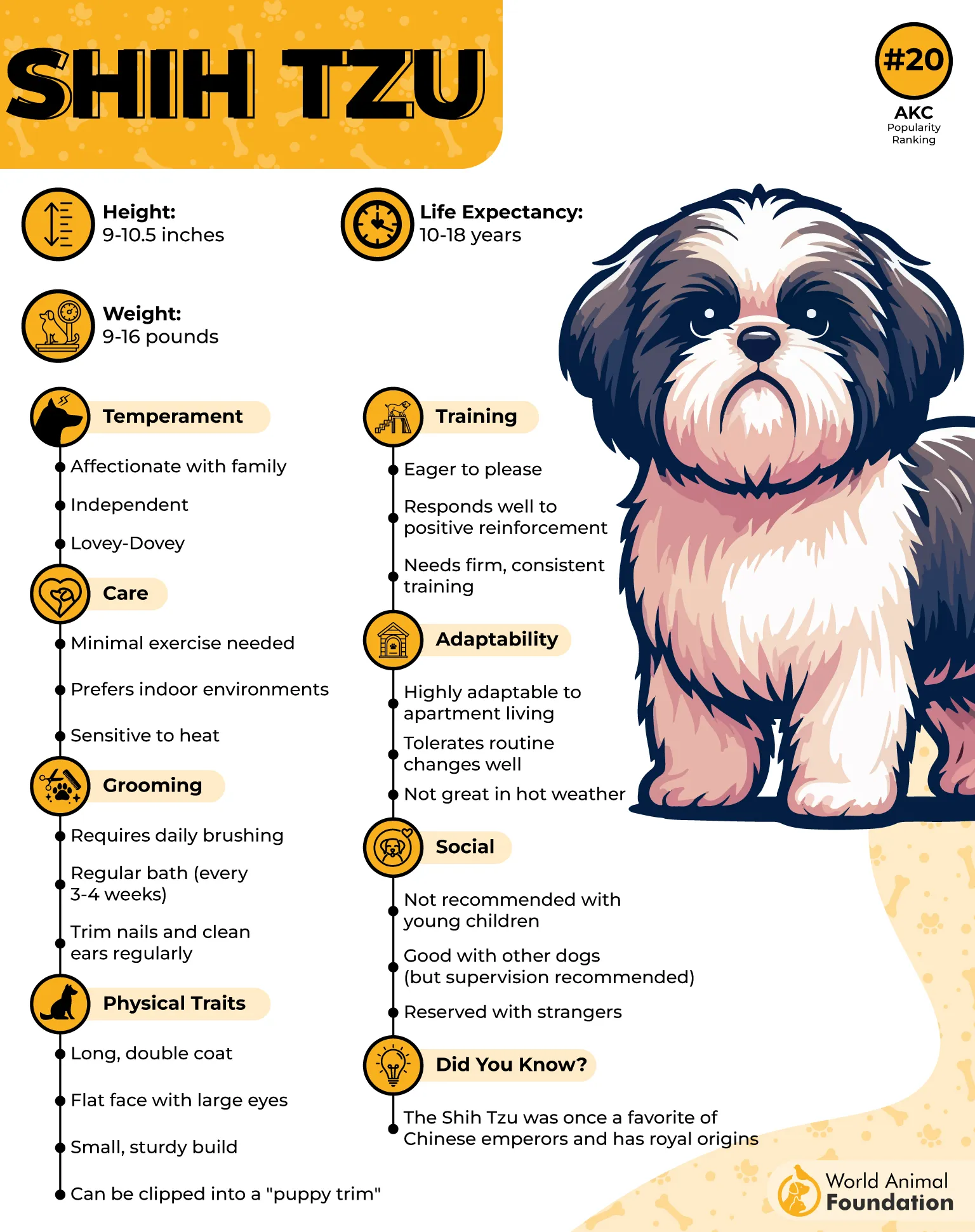
Shih Tzu traces its roots to palace life, where it was kept as a companion rather than a working dog. This history shaped a lifestyle centered on staying indoors and close to human presence. Its behavior reflects comfort in domestic spaces rather than outdoor demands.
Expressive companionship style
This best dog breed interacts through closeness and attention-seeking gestures, often placing itself near people during daily routines. Its reactions are tied to emotional presence rather than task-driven behavior.
That interaction pattern becomes clear through:
Seeks lap-level proximity during rest
Responds to direct eye contact and voice
Shows engagement through quiet presence
Coat and upkeep reality
This smaller breed carries a long, dense coat that changes its appearance significantly when maintained regularly. Grooming becomes part of its normal care routine due to the coat’s texture and length. Its physical upkeep defines how polished its appearance looks over time.
8. Pug
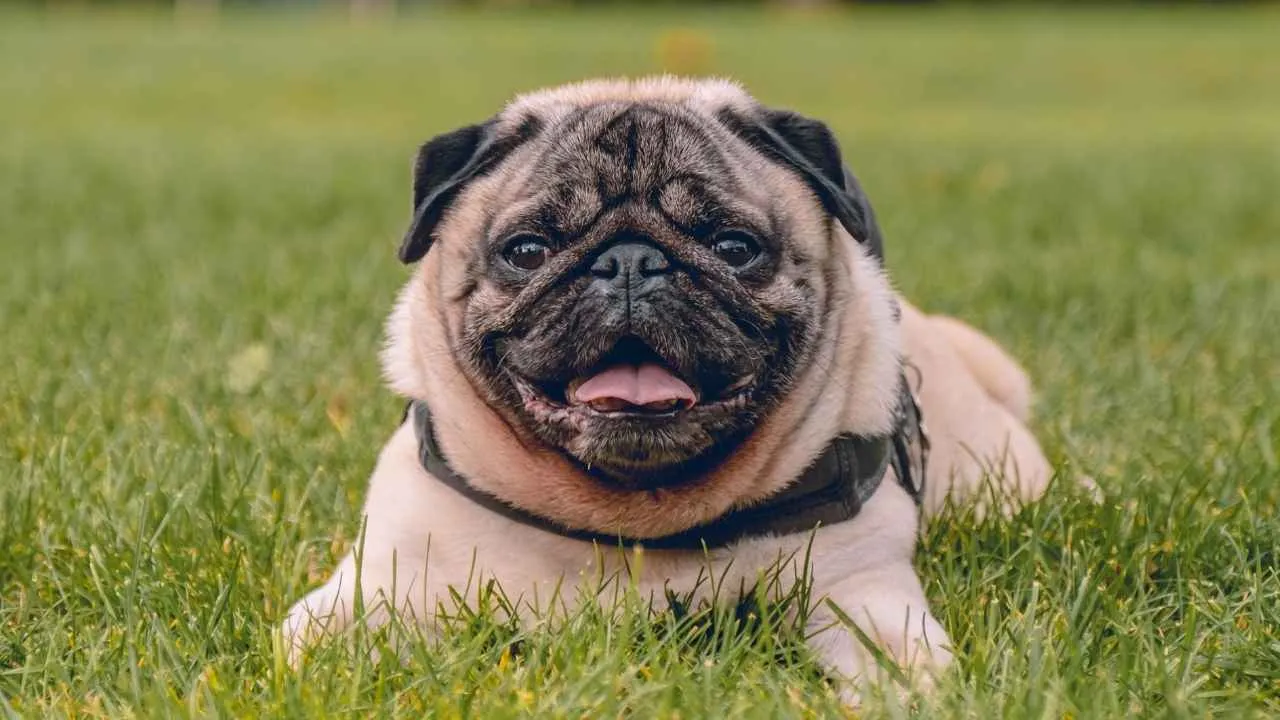
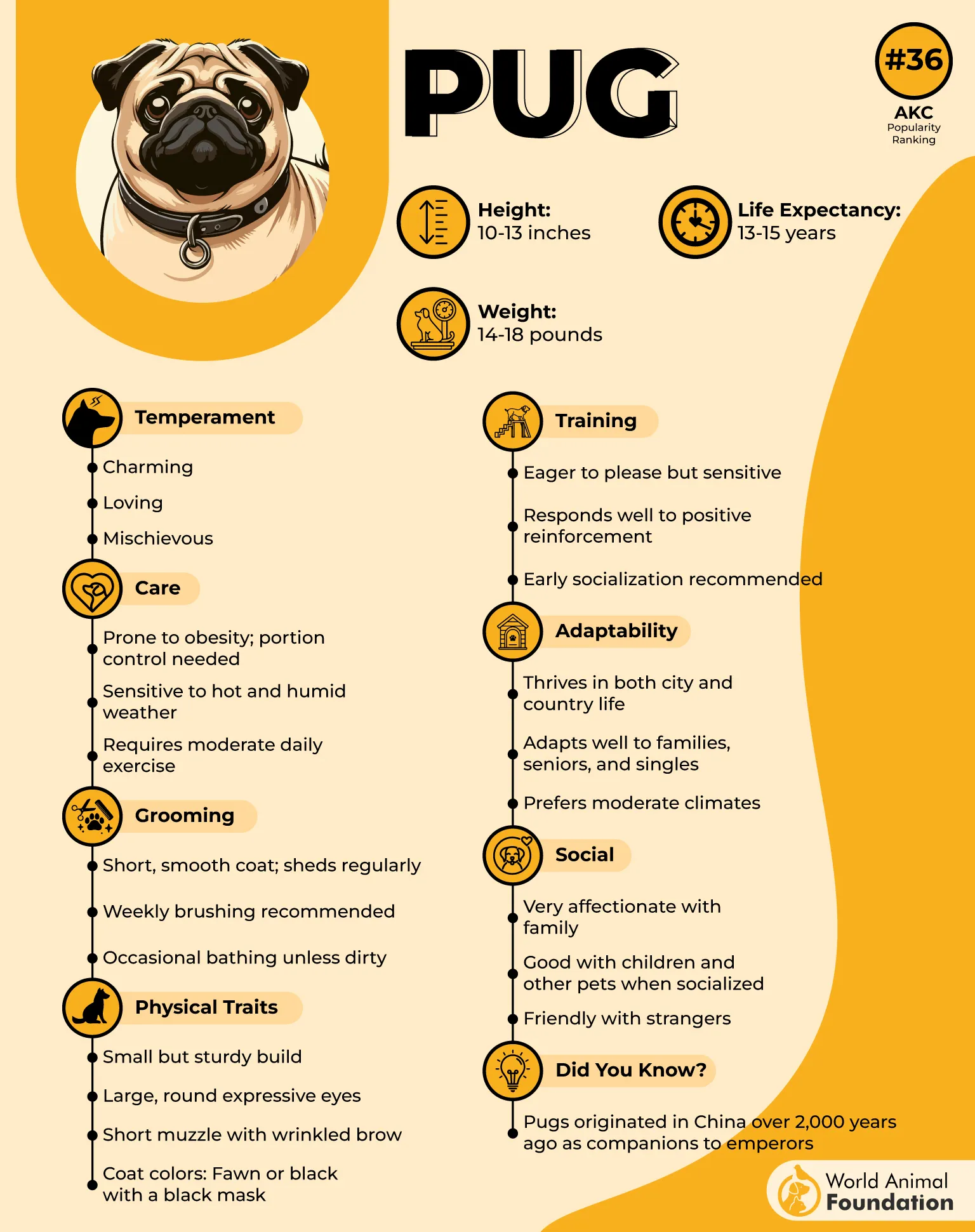
Pugs trace back to royal settings, once kept in Chinese imperial courts and later favored by Dutch royalty, shaping a companion built around close human presence. It’s small but solid structure reflects the idea of “a lot in a little.” The face carries expressive folds that naturally shift with emotion.
Built for closeness
They are physically and emotionally oriented toward people, often placing themselves where attention is available rather than staying distant. Its responses feel immediate and expressive through facial reactions and body language.
Small patterns reveal this behavior clearly:
Seeks constant proximity to human activity
Shows emotions through facial expression changes
Reacts quickly to attention and interaction shifts
Living needs shaped by comfort limits
They fit easily into different living spaces, from compact city homes to larger settings, as long as interaction remains consistent. Its tolerance for temperature is narrow, preferring moderate conditions rather than extremes. This makes environmental balance more relevant than space itself.
9. Maltese
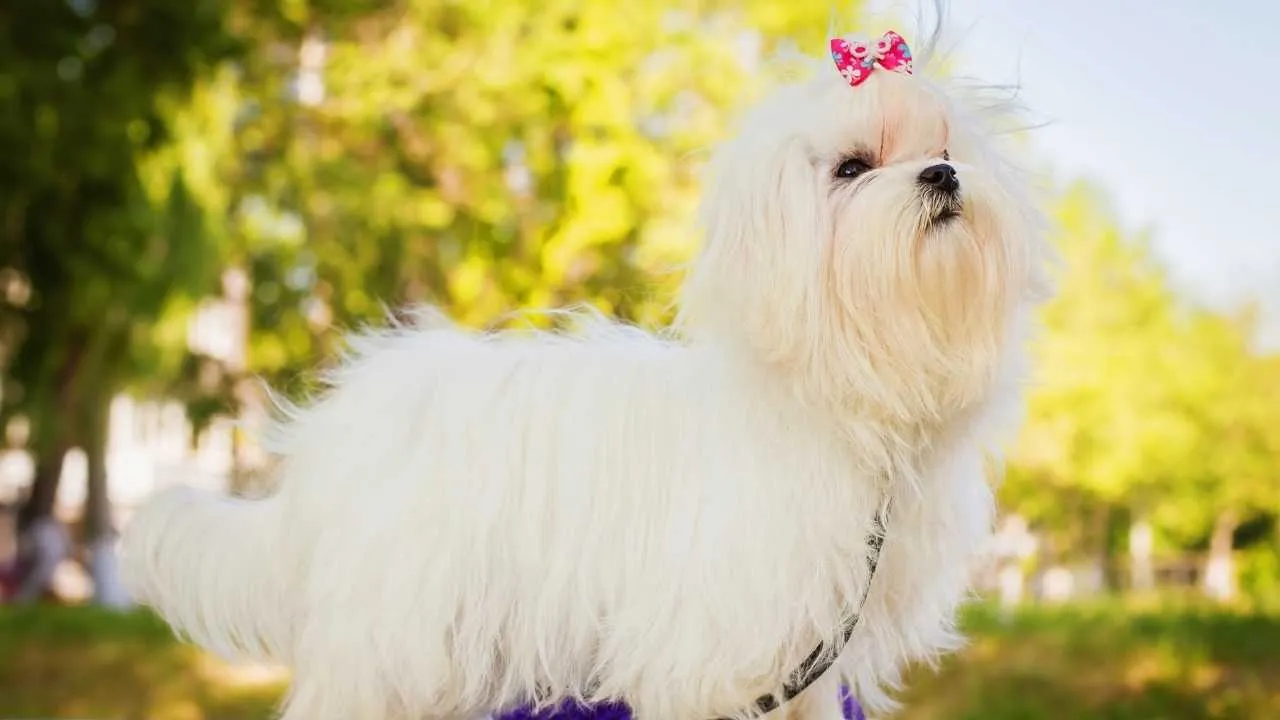
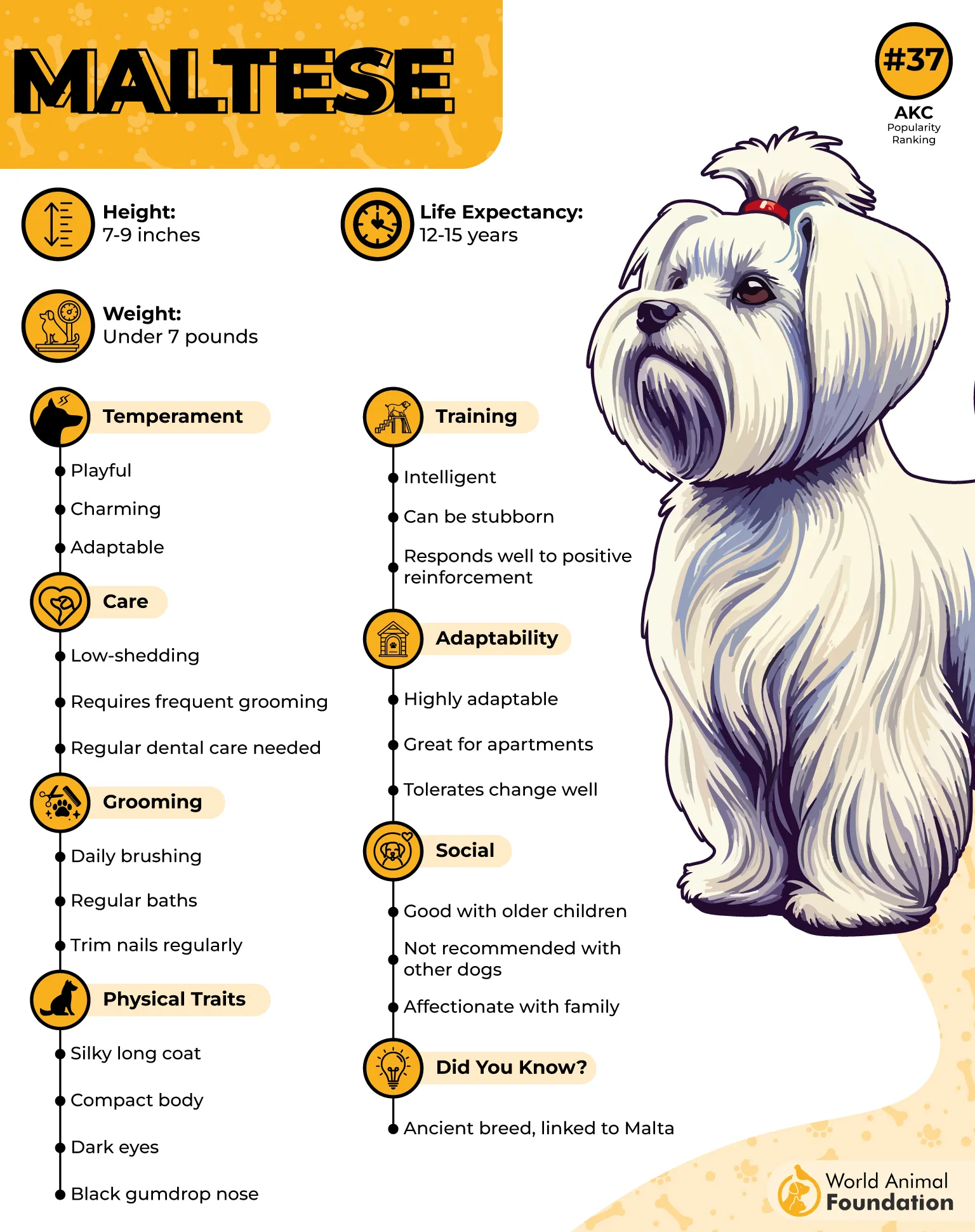
Maltese comes from an ancient lineage once associated with refined companionship, known for existing in luxury settings long before modern pet roles formed. Its identity is shaped by a long, flowing white coat that defines its visual presence more than size or strength.
Expression, structure, and daily behavior
This breed shows its character through expressive facial features and a responsive way of engaging with its surroundings. Its behavior reflects alertness combined with social ease, making its reactions noticeable without being overwhelming.
A closer look at daily behavior highlights this pattern:
Notices movement quickly within its surroundings
Responds to interaction with visible enthusiasm
Adjusts easily to different age groups in a home
Training response and behavioral balance
They show responsiveness to reward-based guidance and learning patterns through encouragement. Occasional stubborn moments appear, yet consistency in approach brings steady progress in behavior. Its low-shedding coat also makes daily care easier to manage for first-time owners.
10. Pomeranian
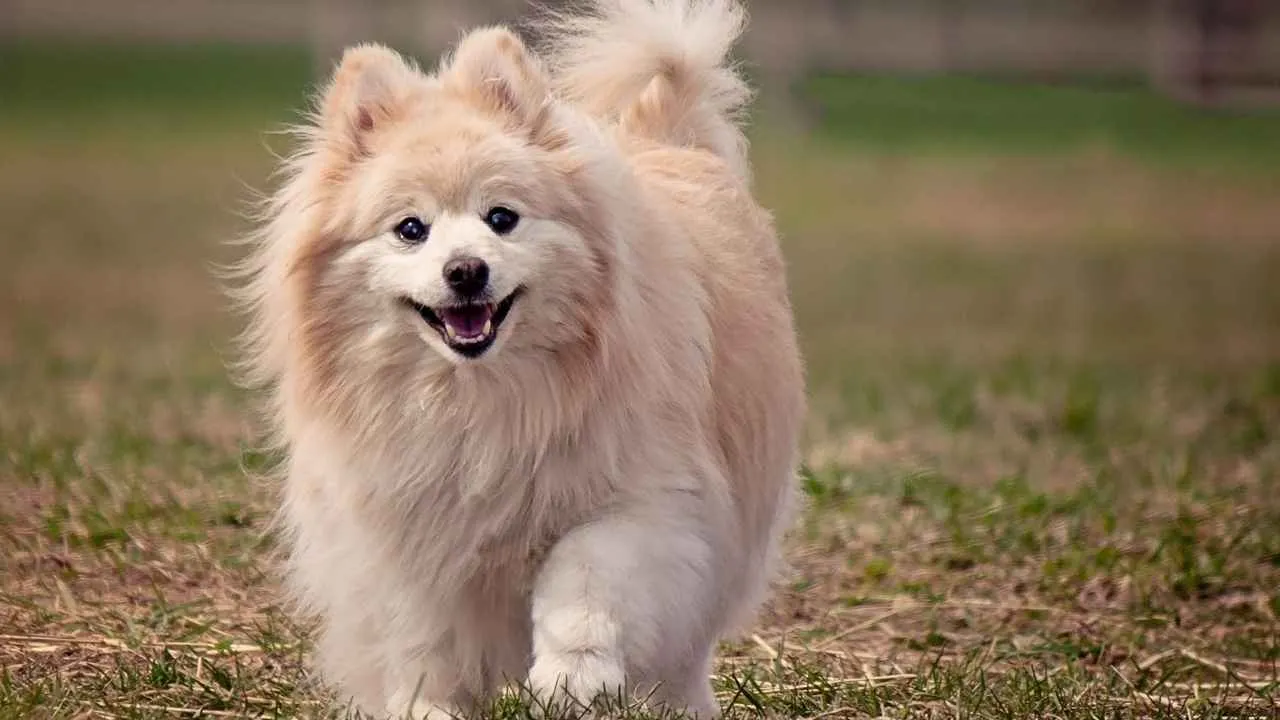
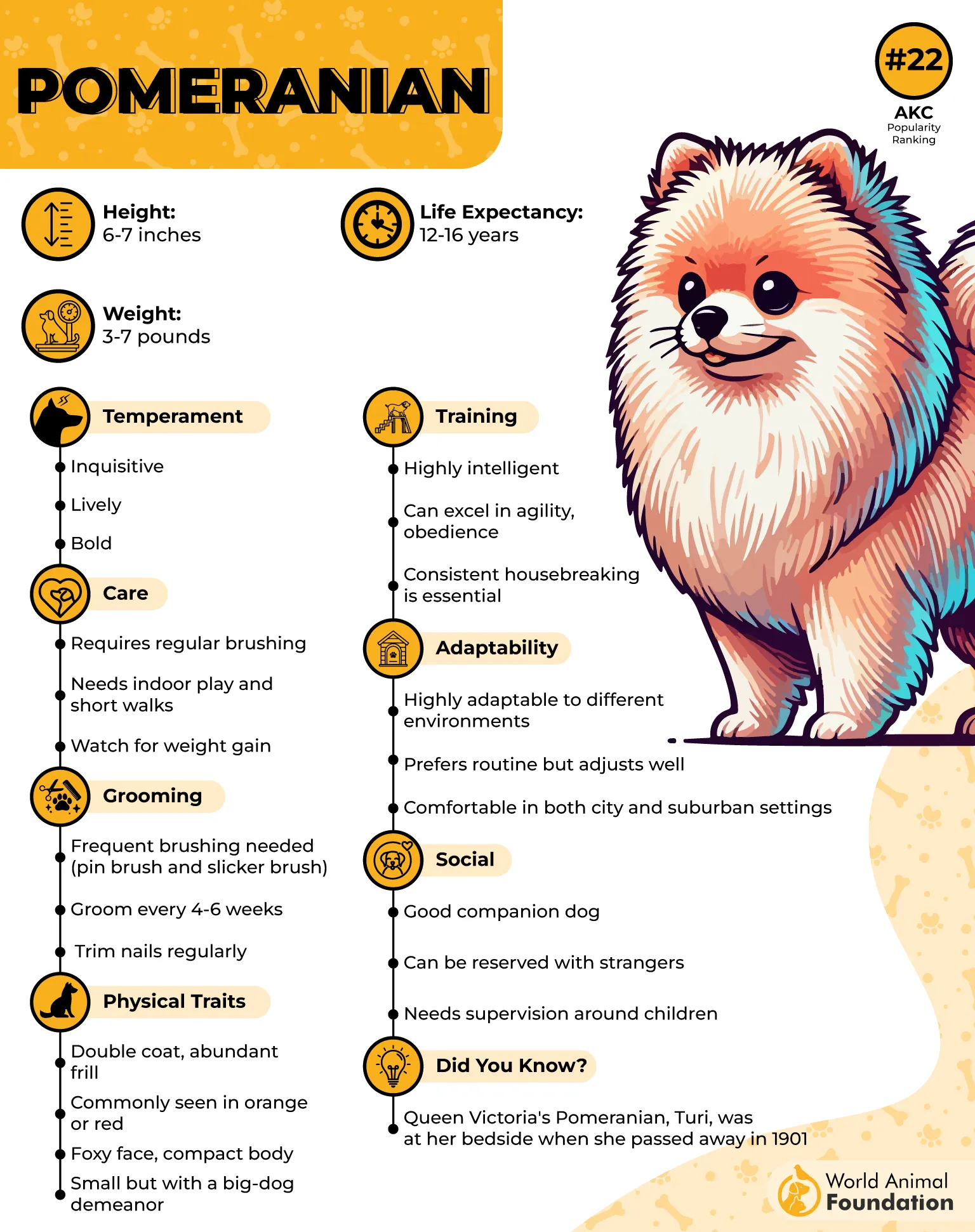
Pomeranians are known for their dense double coat and fox-like face that gives them a constantly expressive appearance. Its small frame is paired with a noticeably bold posture that feels larger than its size. The coat structure and alert eyes create a strong visual identity in a toy breed form.
Behavior shaped by alert engagement
Poms reacts quickly to movement and sound, often stepping into situations with visible awareness rather than hesitation. Its interaction style shows energy that stays focused on surroundings and human activity.
This behavior is easy to observe in daily patterns:
Responds instantly to environmental changes
Learns simple tricks through repetition
Keeps attention on nearby human movement
Daily routine that stays flexible
They can live in both indoor and urban environments, with activity needs that can be met through basic daily exercise. Its energy does not require long outdoor routines, making it workable in compact living spaces. This balance allows it to remain engaged without demanding heavy physical schedules.
Conclusion
Starting with the right dog changes everything for a first-time owner. It reduces uncertainty and makes daily routines feel manageable from the beginning. The above excellent companions offer that kind of balance through steady behavior, social ease, and a willingness to learn. They do not remove responsibility, but they make the process feel less overwhelming.
Each of the first dogs brings a different style of companionship, yet all share a level of consistency that supports new owners. Selecting carefully at the start creates a smoother transition into dog ownership, where confidence builds naturally, and the experience feels rewarding instead of difficult over time.
