




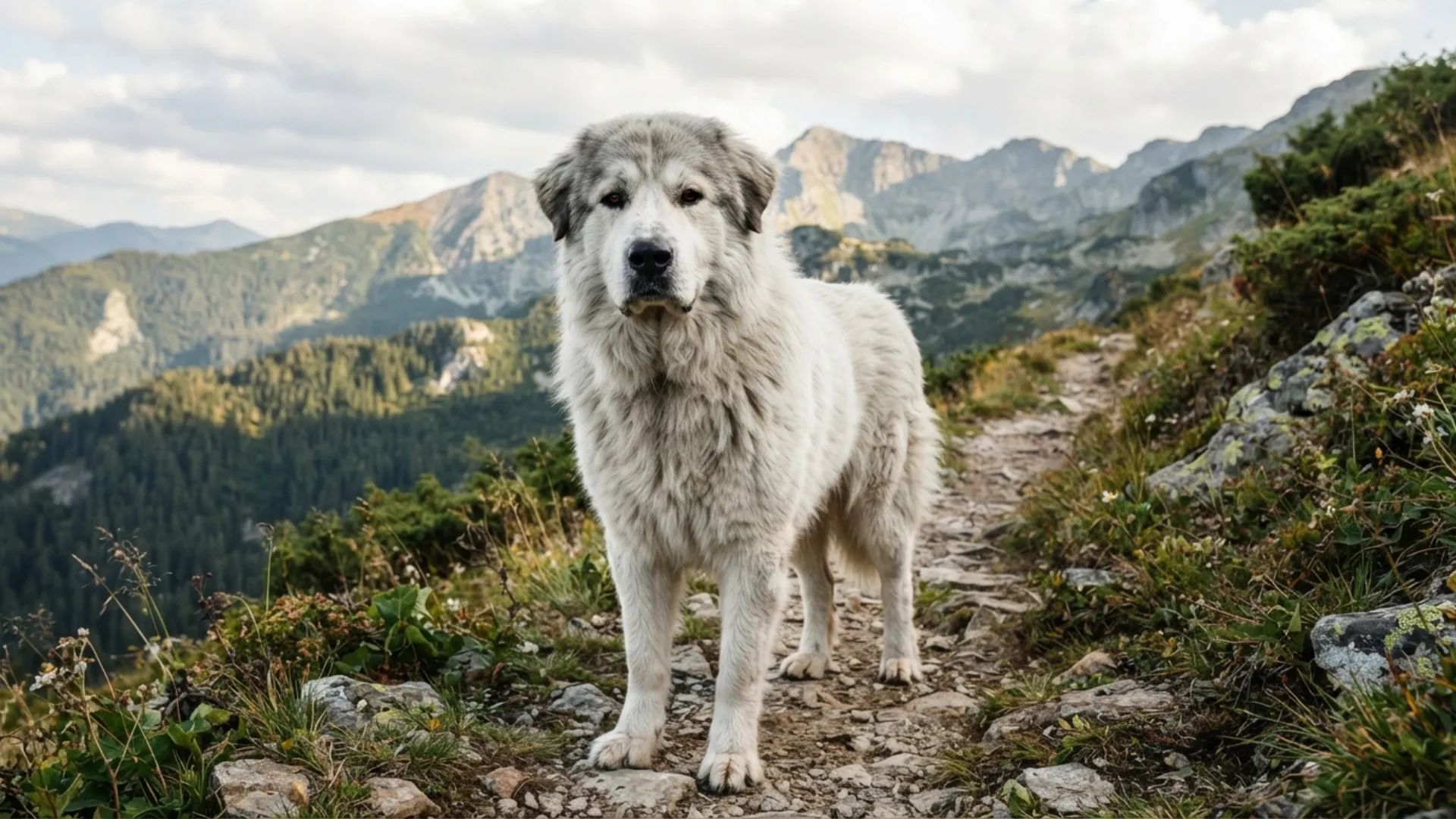
Some dogs enter a room; rare giant dog breeds seem to bring their own weather. These towering guardians combine ancient working instincts with the kind of presence that makes visitors suddenly remember their manners.
Many were developed to protect livestock from wolves and bears, which explains their courage, watchfulness, and independent thinking. Yet impressive looks alone cannot tell you which gentle giant could actually suit your home.
Ready to look beyond the familiar names and meet some remarkable canine heavyweights? Explore their personalities, care needs, and guarding styles, then discover which rare powerhouse deserves a place on your shortlist today.
Rare Giant Dog Breeds with Incredible Presence
1. Pyrenean Mastiff
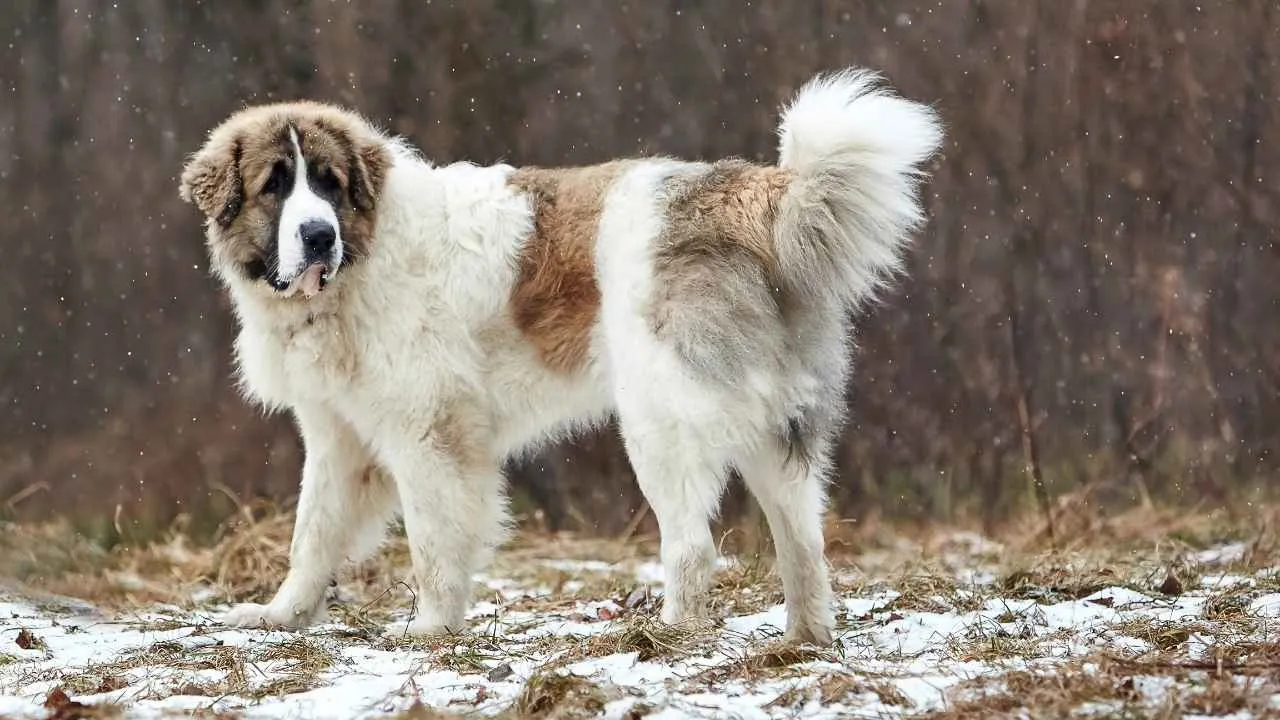
The Pyrenean Mastiff hails from Aragón, on the Spanish side of the Pyrenees, where it was originally bred to guard flocks from wolves and bears. That history explains its calm, watchful presence — as one of the tallest dog breeds and hundreds of pounds of muscle wrapped in a gentle nature.
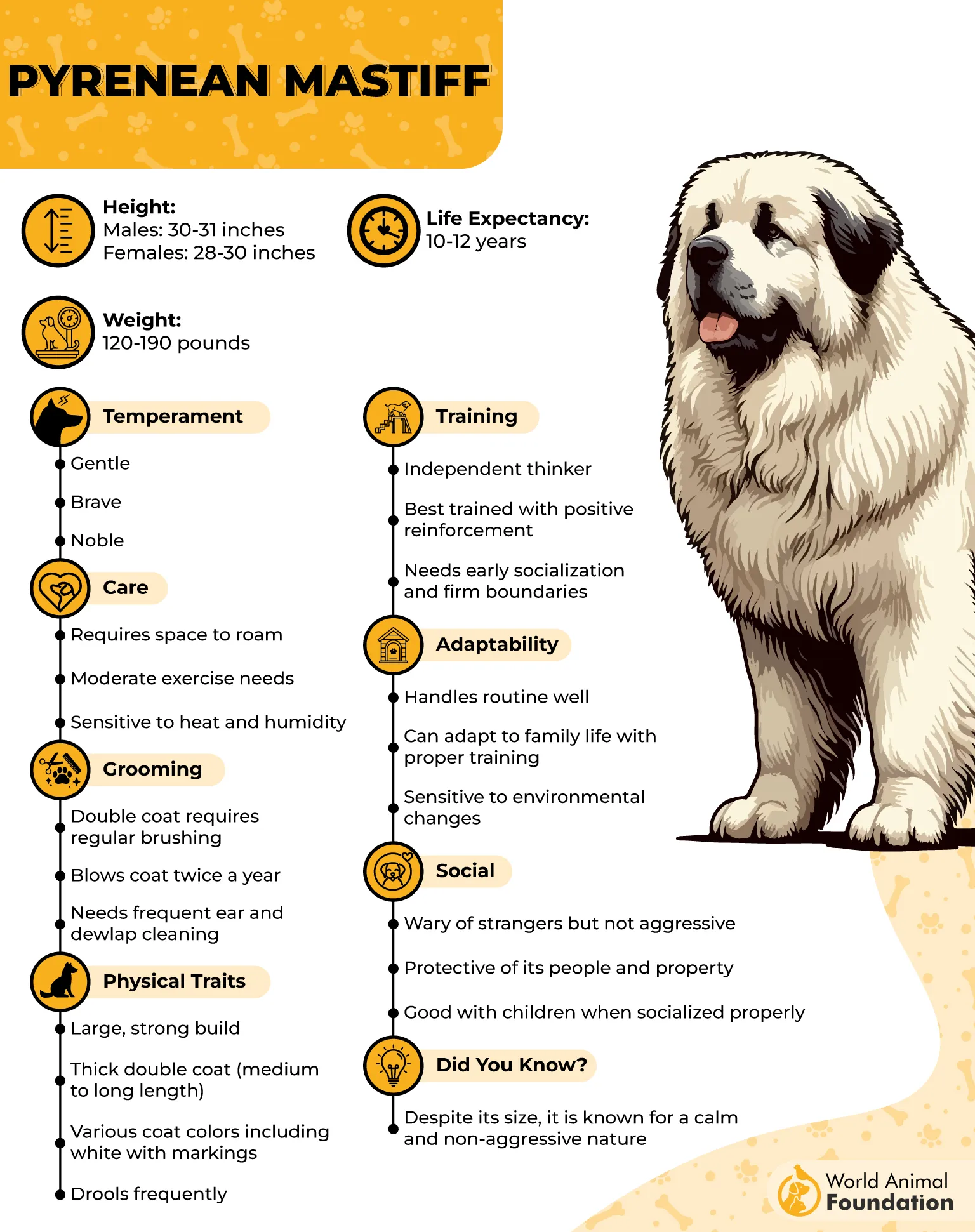
Grooming: Thick double coat, regular brushing, heavier shed twice a year
Care: Low exercise needs — walks and yard time are plenty
Training: Smart but independent, so keep sessions short and consistent
This big dog suits families with space and older kids, and since it’s still in the AKC’s Foundation Stock Service, puppies are easier to find through rescue networks than breeders.
Fun fact: Staying isolated for centuries meant this breed dodged the heavy inbreeding some flashier purebreds carry.
2. Tibetan Mastiff
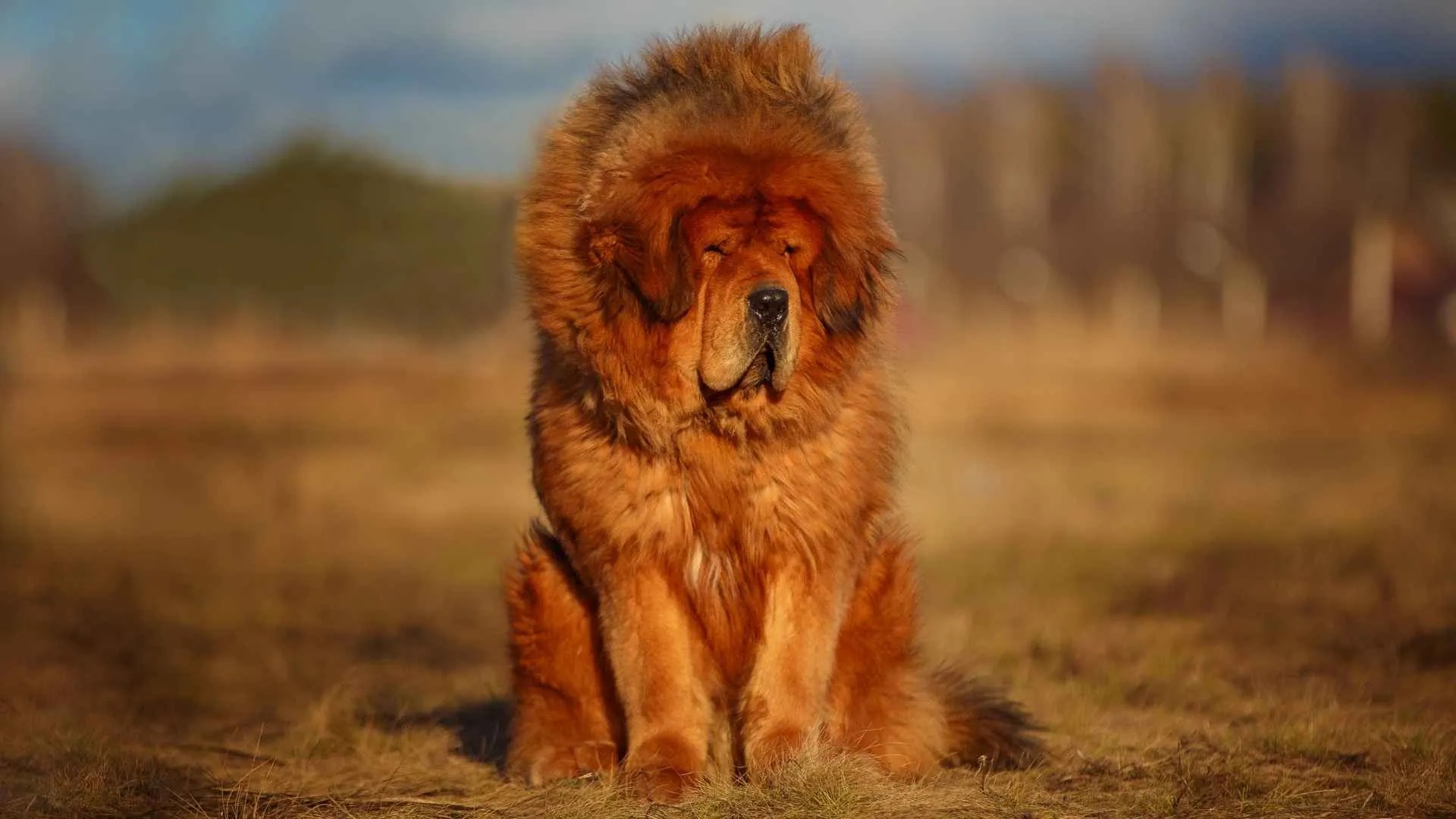
The Tibetan Mastiff traces back to the Tibetan Plateau, with records naming it as early as 1100 BCE guarding monasteries and nomad camps. Its presence is almost mythical — a lion-like mane, a deep bark, and a legendary reputation for size.
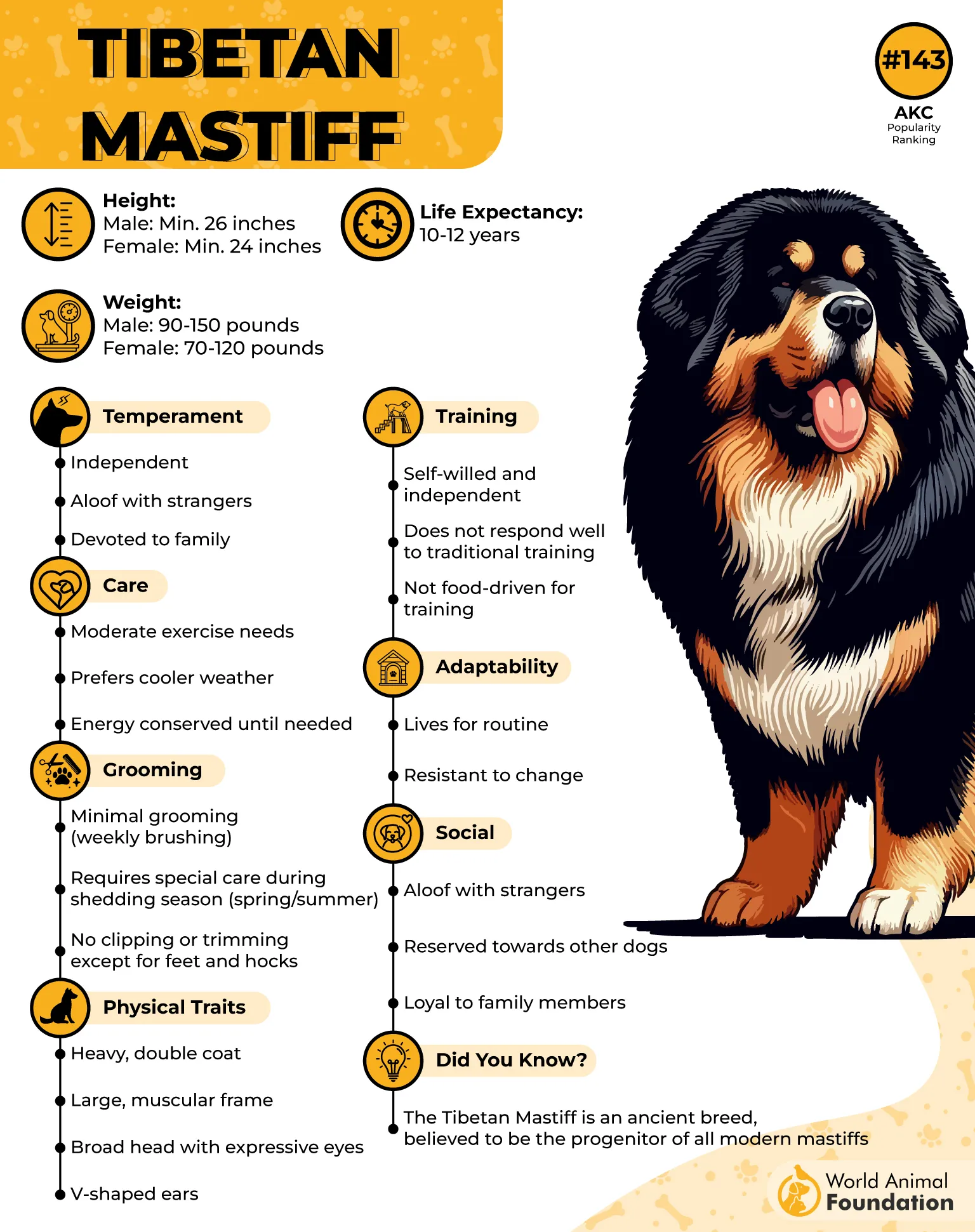
Grooming: Weekly brushing normally, heavier during the yearly coat blow
Care: Moderate exercise only — short energy bursts, not endless stamina
Training: Independent and not food-driven, so patience beats treats
This big fluffy dog breed fits experienced owners with a large, cool-climate yard, since heat isn’t a friend here. Registered puppies can cost thousands, though rescue groups offer a cheaper route in.
Fun fact: Tibetan Mastiffs are natural night owls, saving their loudest barking for after dark.
3. Caucasian Shepherd Dog
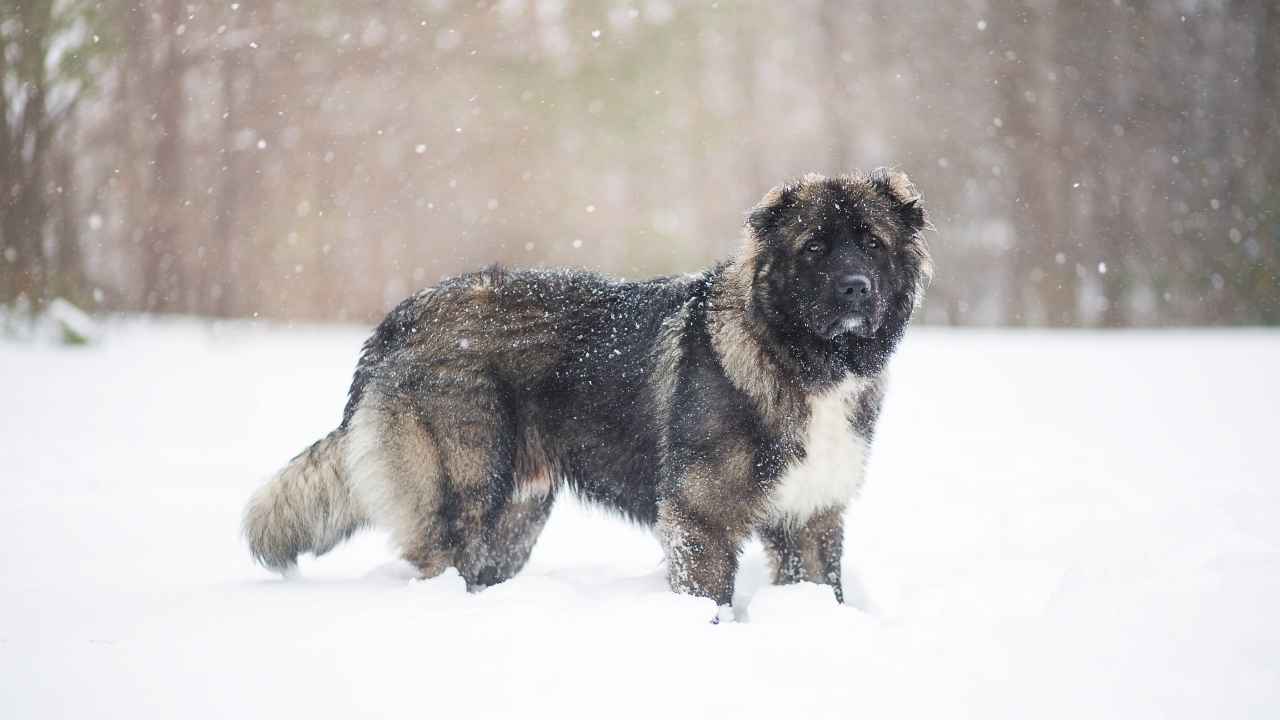
The Caucasian Shepherd Dog comes from the Caucasus Mountains, shaped into a breed in the 1920s for guard work. Nicknamed the Russian bear dog, it was built to face down actual bears — bulk and stare included.
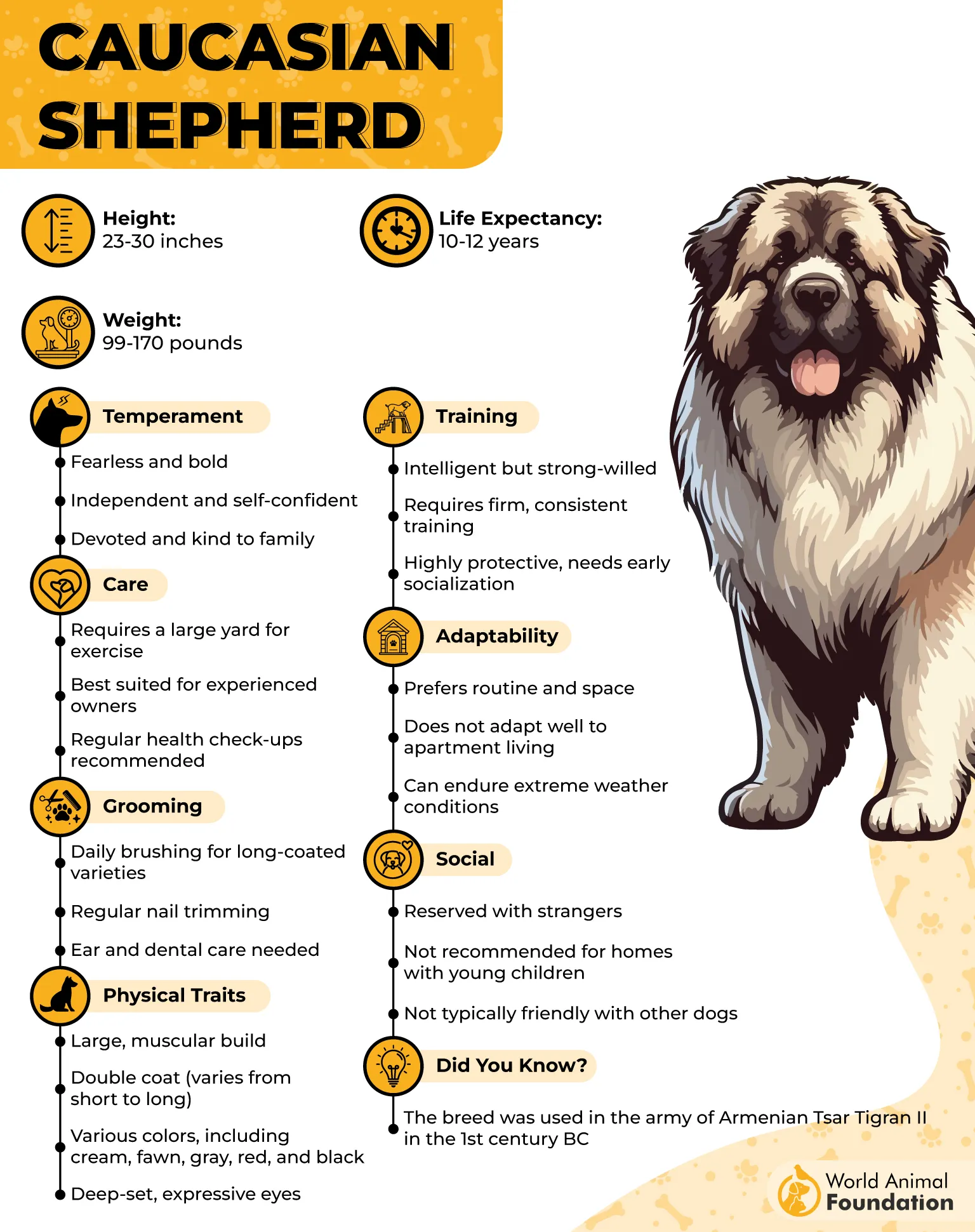
Grooming: Long coats need brushing twice weekly; short coats far less
Care: One big spring shed, plus regular drooling
Training: Independent thinking needs a firm, experienced handler
This is a serious guardian best kept rural, ideally as the only pet in the house. It’s classed as potentially dangerous in some countries, so know that going in.
Fun fact: Regional types vary — Georgian lines run heavier and longer-coated, Azerbaijani lines are taller and leaner. Same big dog breed, different builds.
4. Central Asian Shepherd Dog
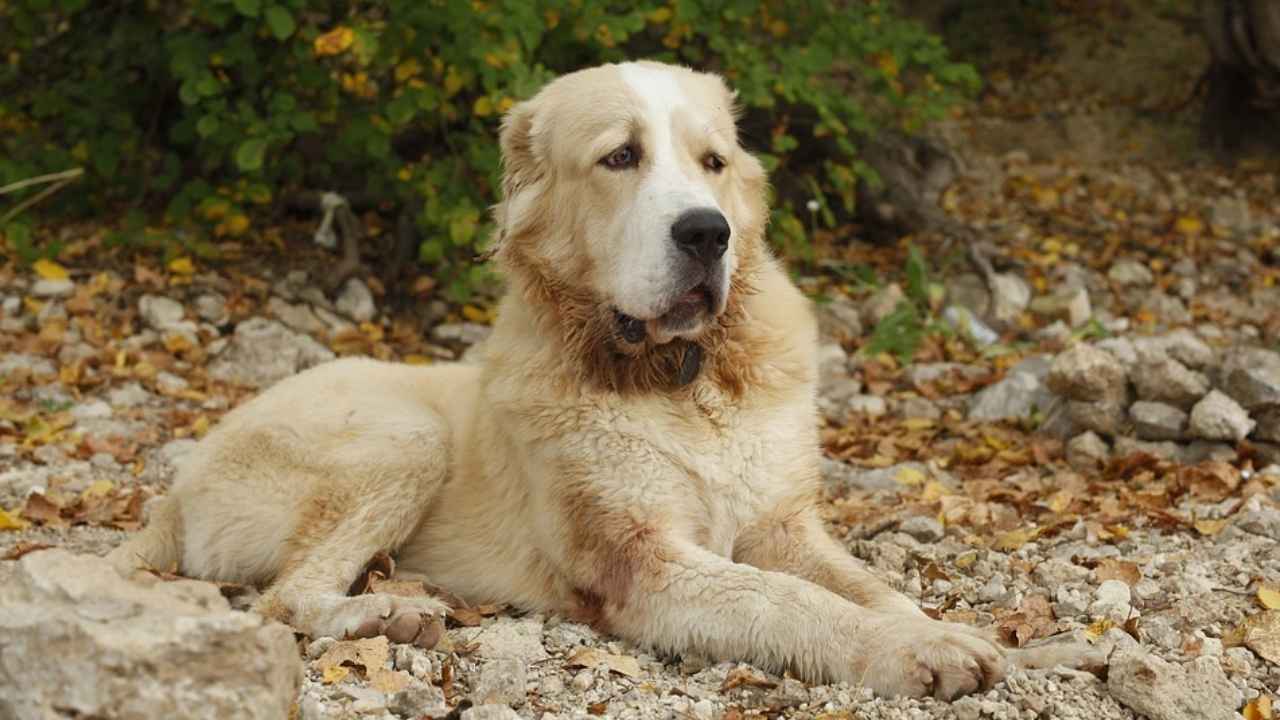
The Central Asian Shepherd, or Alabai, developed over roughly 5,000 years across the Central Asian steppes and is Turkmenistan’s national dog. Its nickname, Wolf Crusher, says it all — a low, heavily boned build for standing between predators and livestock.
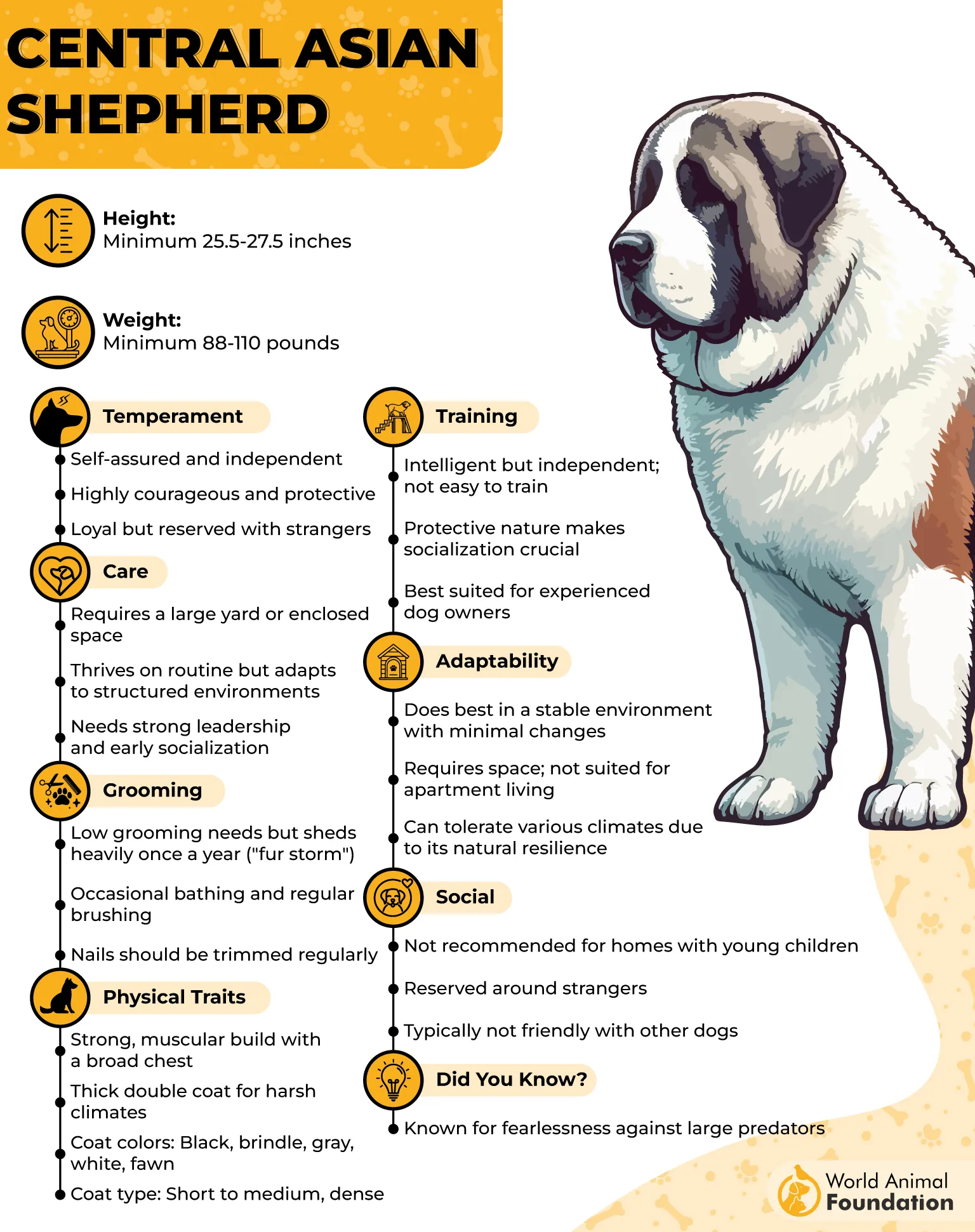
Grooming: Minimal — weekly brushing, more during the fur storm season
Care: Needs real space to patrol; apartments are a no
Training: Firm, fair, consistent handling only — not for first-timers
It suits experienced handlers with rural space and patience for an independent dog. According to CKCUSA, this large dog breed covers several regional landrace types, so expect real variation between dogs.
Fun fact: Unlike most breeds, the Alabai wasn’t shaped by selective breeding — harsh climate and natural selection did the work, making it a true landrace.
5. Rafeiro do Alentejo
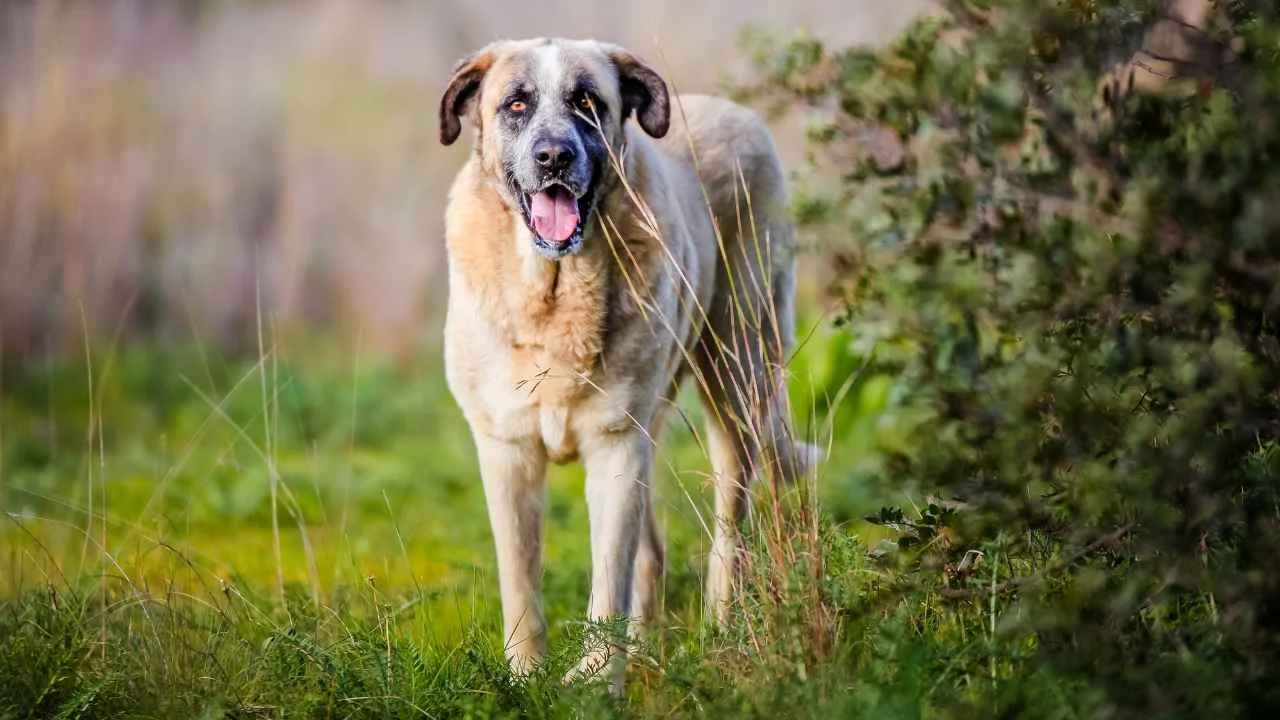
The Rafeiro do Alentejo comes from southern Portugal’s Alentejo plains, likely descended in part from Tibetan Mastiff-type dogs. Its presence trait is oddly specific — a loose neck dewlap that evolved to protect its throat from predator bites.
Grooming: Short-to-medium coat, easy brushing, no marathon sessions
Care: Prone to laziness, so watch exercise and portions
Training: Willful and independent — needs an experienced hand
Its affectionate nature and calm demeanor are good for families with older kids and rural space; it’s still rare even in Portugal. It’s in the Foundation Stock Service (FSS), so finding a puppy usually means a wait, as noted by the AKC.
Fun fact: A Rafeiro do Alentejo named Bobi briefly held the record for the oldest dog ever at 31, before Guinness put that claim under review.
6. Romanian Bucovina Shepherd
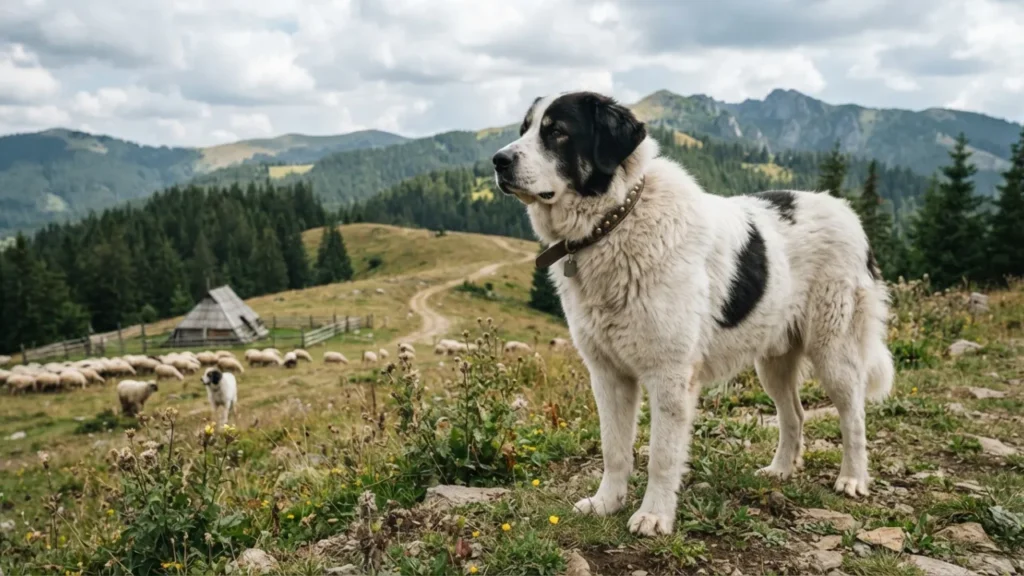
The Romanian Bucovina Shepherd comes from northeastern Romania’s Carpathian Mountains, where it guarded flocks from wolves, bears, and lynx. Native Romanian shepherd dogs have worked for centuries. Its proud stance and booming, low bark create a presence no intruder could politely ignore.
Grooming: Brush its abundant double coat regularly to control tangles and shedding.
Care: Provide ample space, daily movement, and room to patrol.
Training: Begin early with calm, consistent socialization that respects its independent mind.
This loyal guardian suits experienced rural or semi-rural families, including homes with children. It remains rare outside Romania, so finding one may require patience.
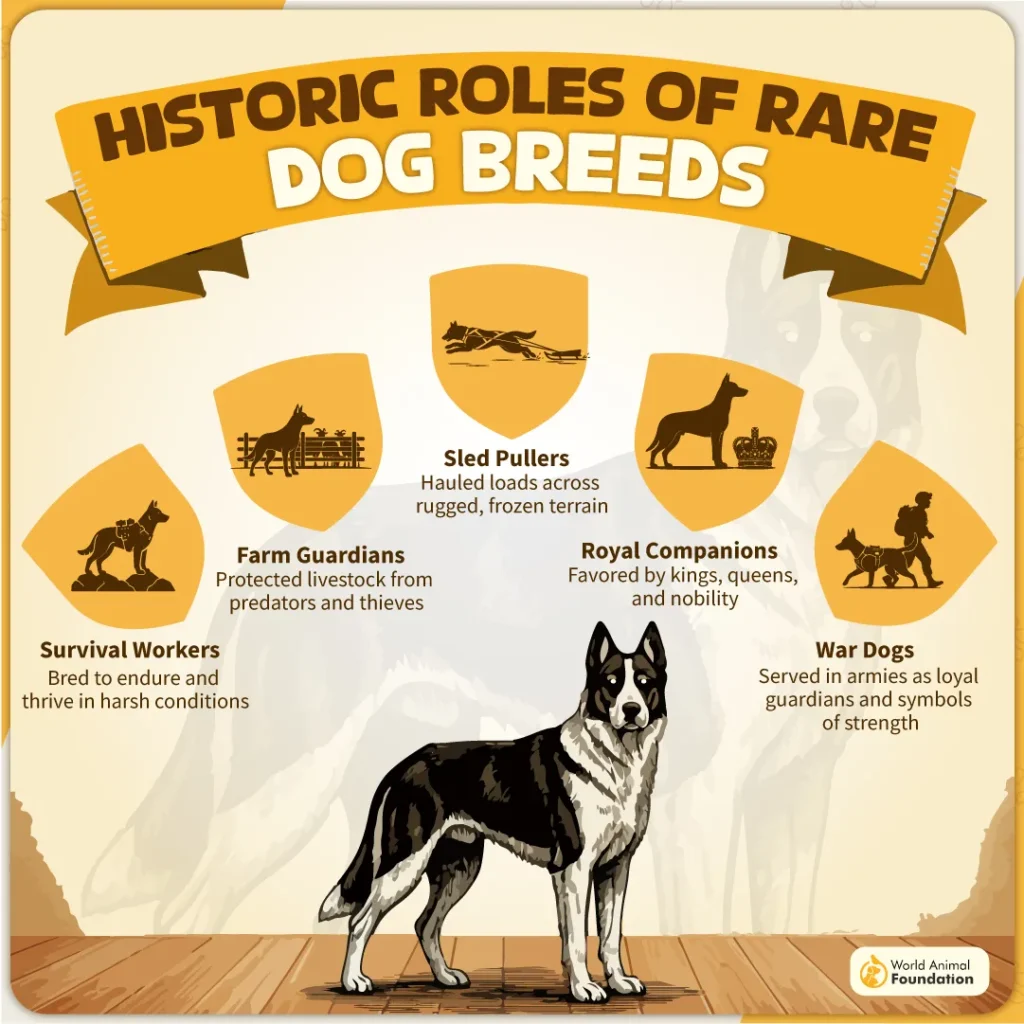
Fun fact: It often circles the home or flock after dark, keeping the night shift covered.
7. Black Russian Terrier
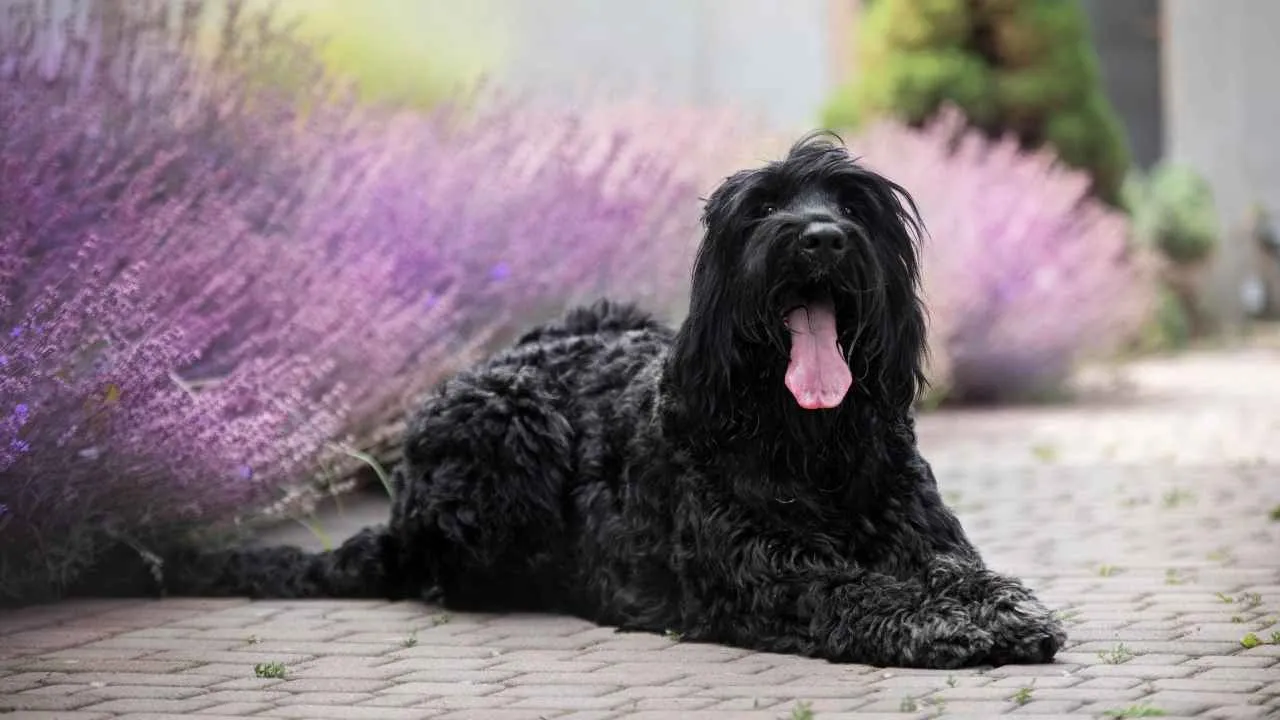
The Black Russian Terrier was developed at the Soviet Union’s Red Star Kennels for military work. Its broad frame and cool confidence give this working fluffy dog the presence of a bodyguard who has already checked every exit.
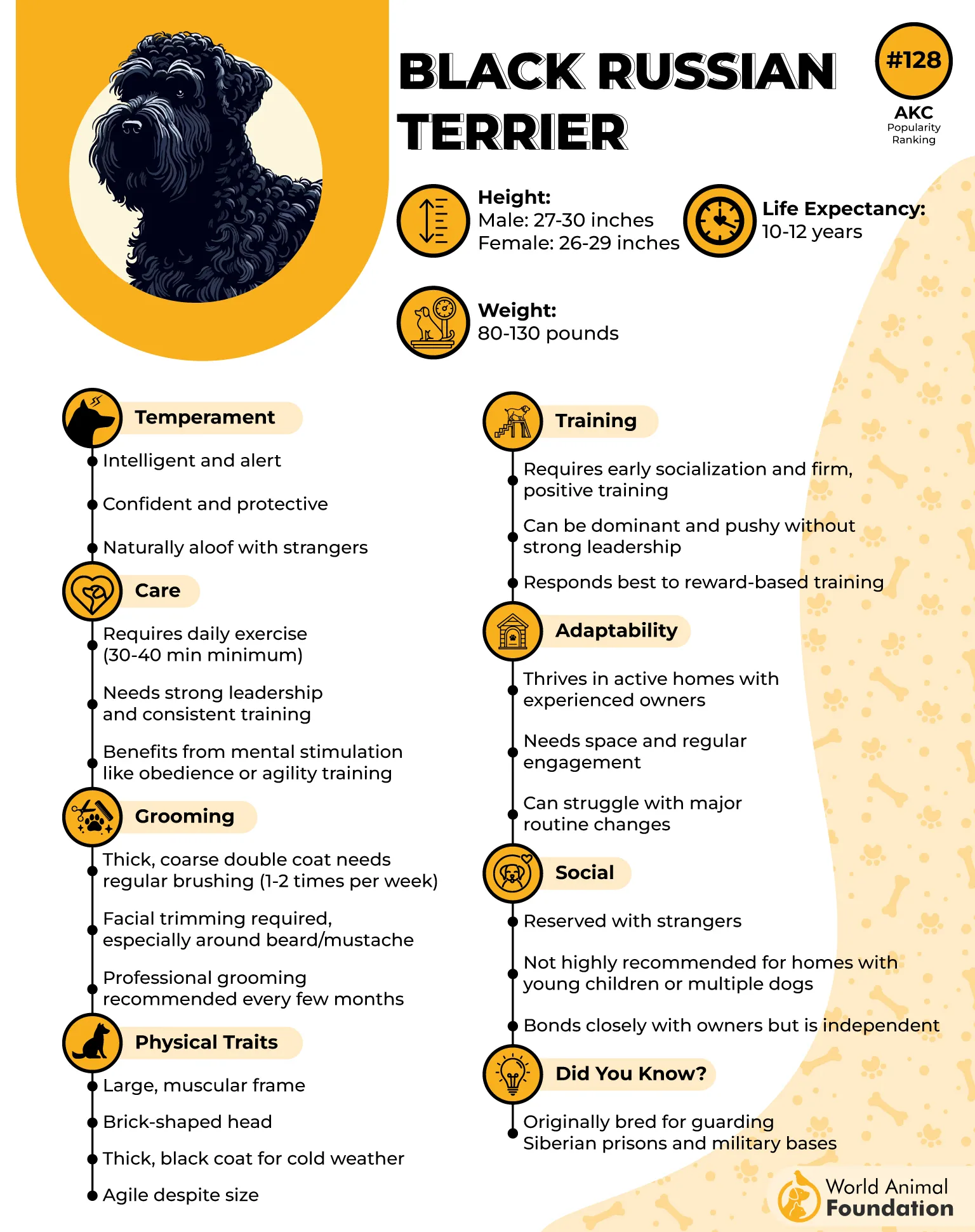
Grooming: Comb daily; arrange a professional trim every six to eight weeks.
Care: Provide vigorous walks, brain games, and secure outdoor space.
Training: Use positive, consistent lessons and early socialization.
According to Purina, it suits experienced pet parents with time for close companionship and structured activity. It remains uncommon, so seek a careful breeder or breed-specific rescue.
Fun fact: The Black Russian Terrier is not truly a terrier; terrier ancestry is only one piece of its recipe.
8. Tornjak
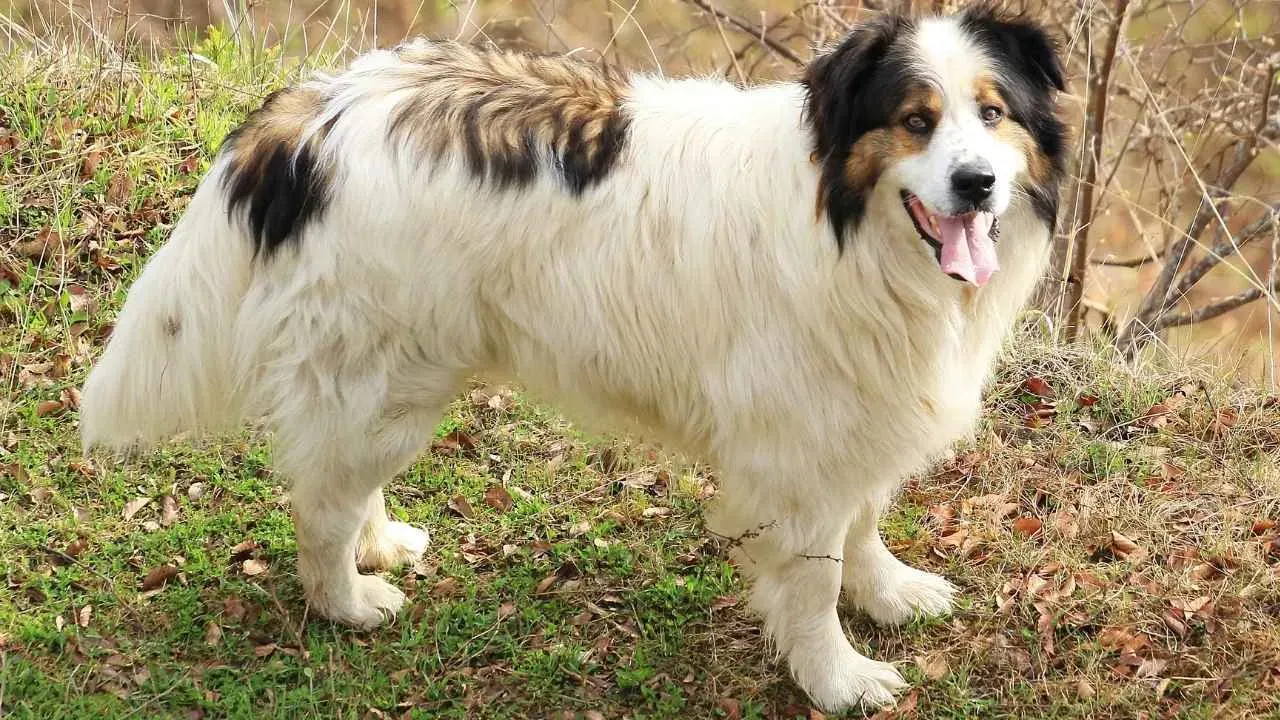
The Tornjak comes from the mountains of Bosnia and Herzegovina and Croatia, where it guarded livestock. Its calm face turns fearless when danger appears—a rare giant with an impressive on-duty switch.
Grooming: Brush the long double coat weekly and more during seasonal shedding; these long-haired dogs need extra coat care.
Care: Provide daily exercise and enough room to roam.
Training: Keep lessons firm, fair, and consistent.
This devoted gentle giant breed can live well with children, but its independent guarding instinct suits an experienced owner. It remains uncommon outside the Balkans, so availability is limited.
Fun fact: The Tornjak nearly vanished as nomadic sheep herding declined, but enthusiasts revived it from surviving working dogs during the 1970s.
9. Sarplaninac
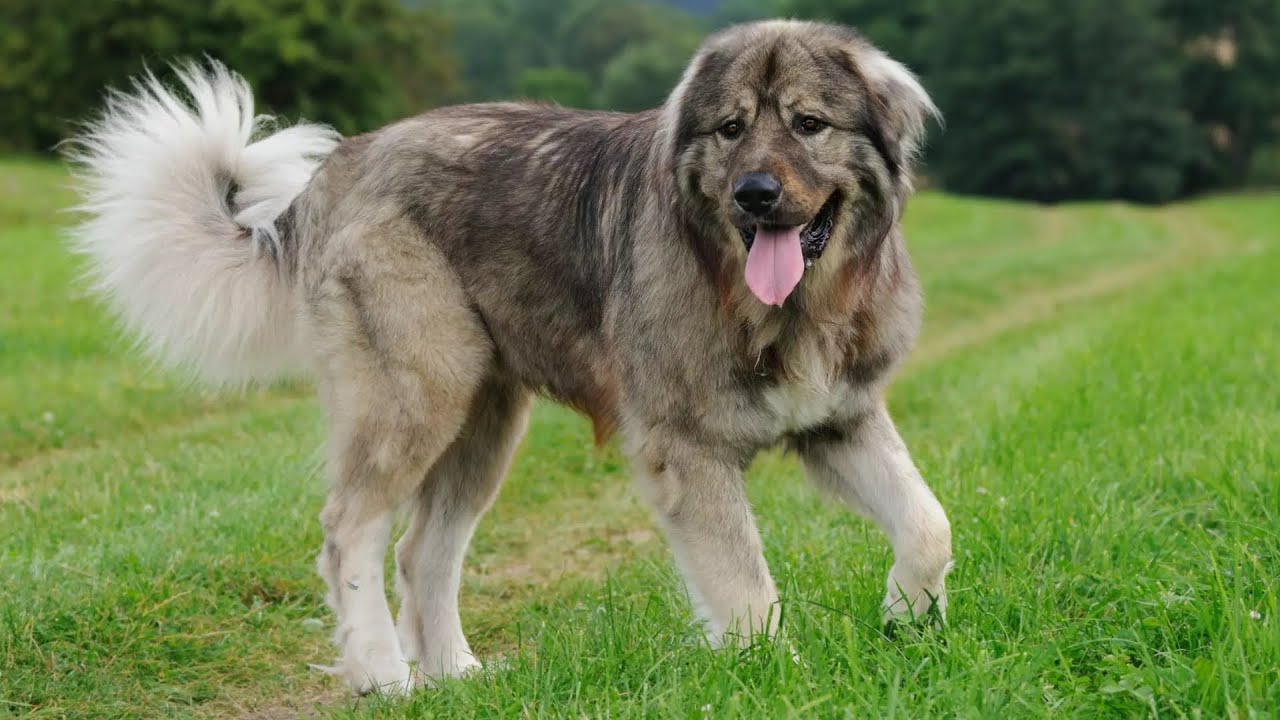
The Sarplaninac comes from the Šar Mountains of southeastern Europe, where it protected livestock with little human direction. That history created a fearless guardian with serious presence—and the confidence to make its own decisions when trouble appears.
Grooming: Brush its thick double coat twice weekly and more during seasonal shedding.
Care: Provide a secure yard, useful work, and daily activity.
Training: Begin socialization early; positive exposure helps prevent fear.
This loyal breed suits experienced rural owners and can live with children under supervision. It remains rare in the United States, so breeders may be difficult to find.
Fun fact: Yugoslavia prohibited exporting the breed until 1970, and early dogs reportedly travelled down the mountains by mule.
10. Estrela Mountain Dog
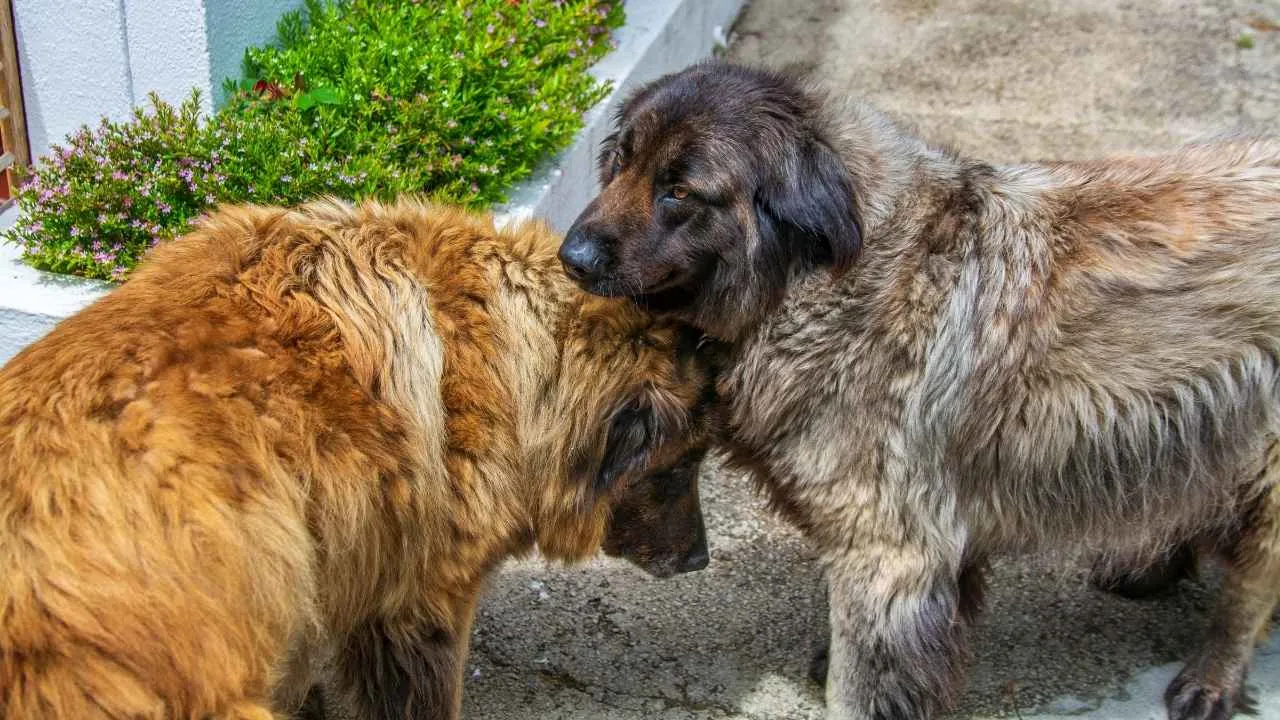
The Estrela Mountain Dog arose in Portugal’s Serra da Estrela, guarding flocks from predators. Its hooked tail, rose-shaped ears, and dark mask create a silhouette that looks stamped with a family crest.
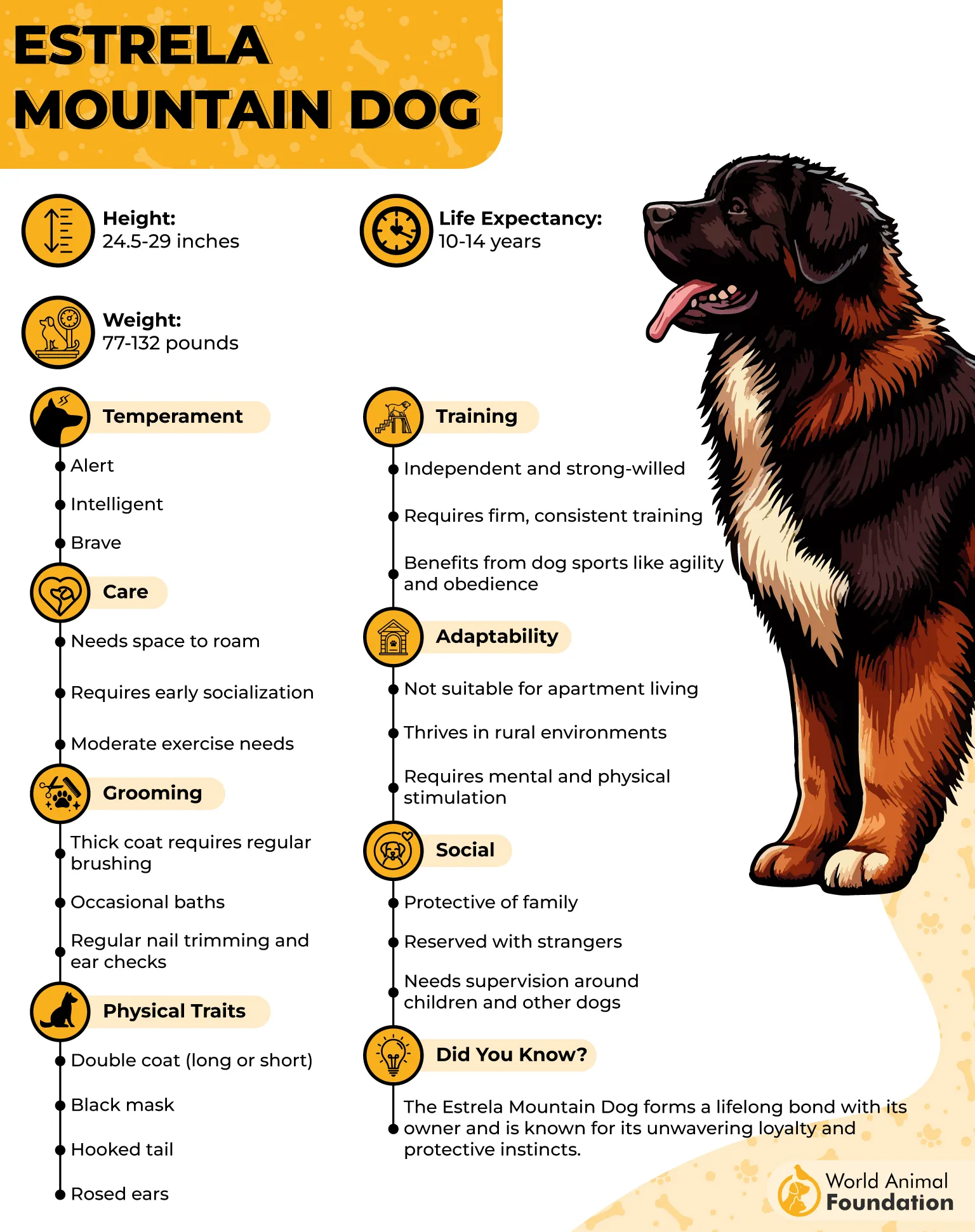
Grooming: Brush the thick coat weekly and expect seasonal shedding; the coat often changes with the seasons.
Care: Check its double dewclaws regularly and provide a secure yard.
Training: Begin early, using patient lessons and proper socialization.
Affectionate with family and warm toward children, it suits experienced owners with ample space. Availability outside Portugal is limited, so prospective owners may face a breeder search.
Fun fact: It is considered one of the Iberian Peninsula’s oldest breeds, yet written records of its earliest development have not survived.
Conclusion
Rare giant dog breeds make an unforgettable impression, but their incredible presence comes from more than a dramatic coat or powerful stance. These working dogs pair protective instincts with independent minds, so ample space, proper training, regular grooming, and realistic expectations matter just as much as admiration.
Before choosing one guard dog, compare your home, experience, climate, and daily routine with the breed’s actual needs, then contact a responsible breeder or breed-specific rescue. Meet an adult dog, request health records and temperament details, discuss life with experienced owners, and arrange a professional training plan before bringing your giant guardian home.
