




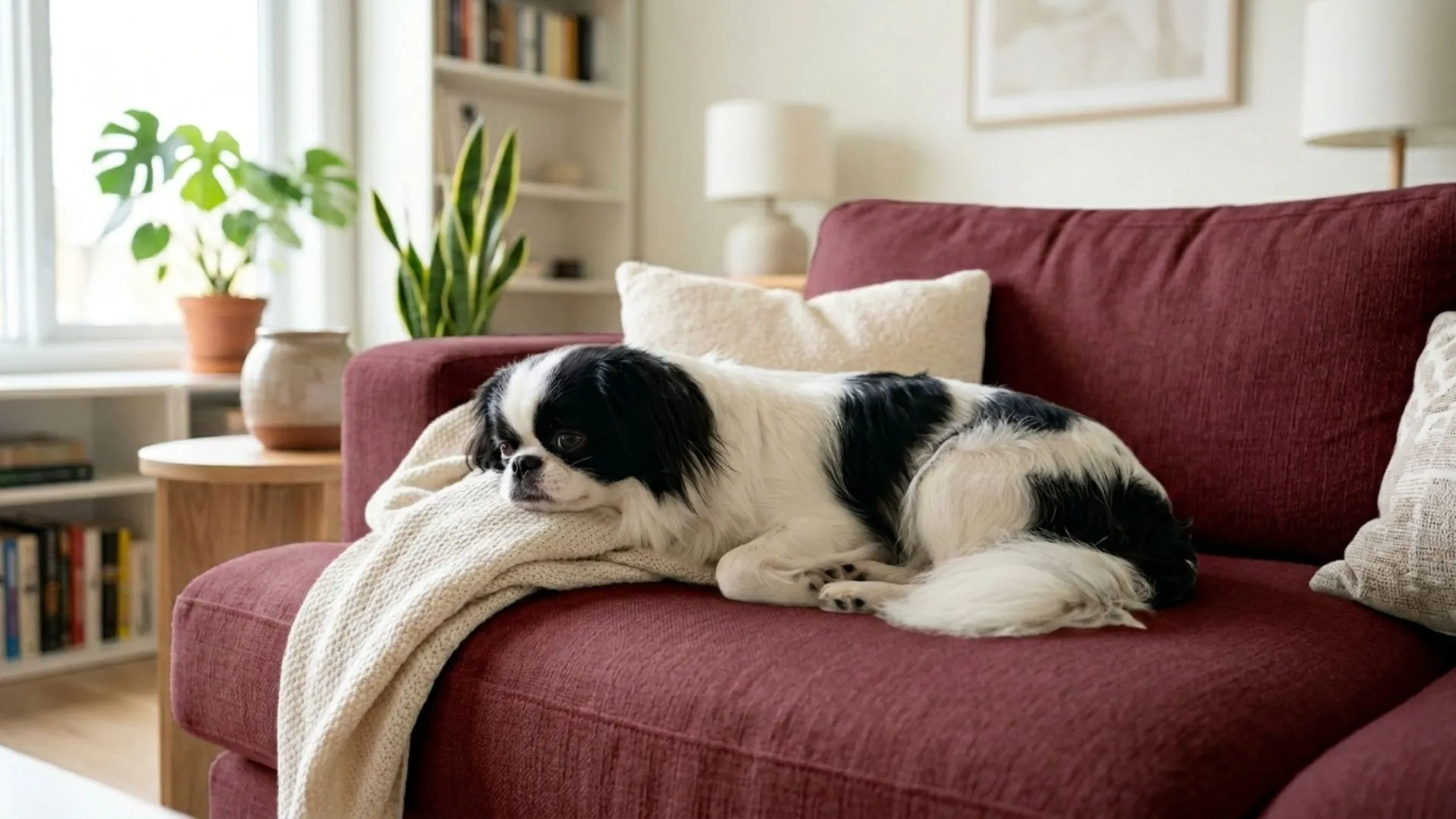
Not every dog dreams of running marathons or chasing tennis balls for hours. Some are perfectly happy curled up beside you while you binge-watch your favorite series, read a book, or enjoy a lazy Sunday afternoon. If your ideal weekend involves a couch, a blanket, and minimal movement, you are not alone.
Many families today prefer dogs that fit seamlessly into their lifestyle rather than requiring constant activity and stimulation.
Calm breeds offer the perfect balance of affection, companionship, and entertainment without demanding endless exercise or attention. Their relaxed nature makes them well-suited to quieter households, where they can provide comfort, loyalty, and plenty of memorable moments while enjoying a more laid-back pace of life.
Let us meet ten quietly content breeds that are perfectly suited for laid-back owners.
Quietly Content Dog Breeds Perfect for Couch‑Potato Owners
1. Pug
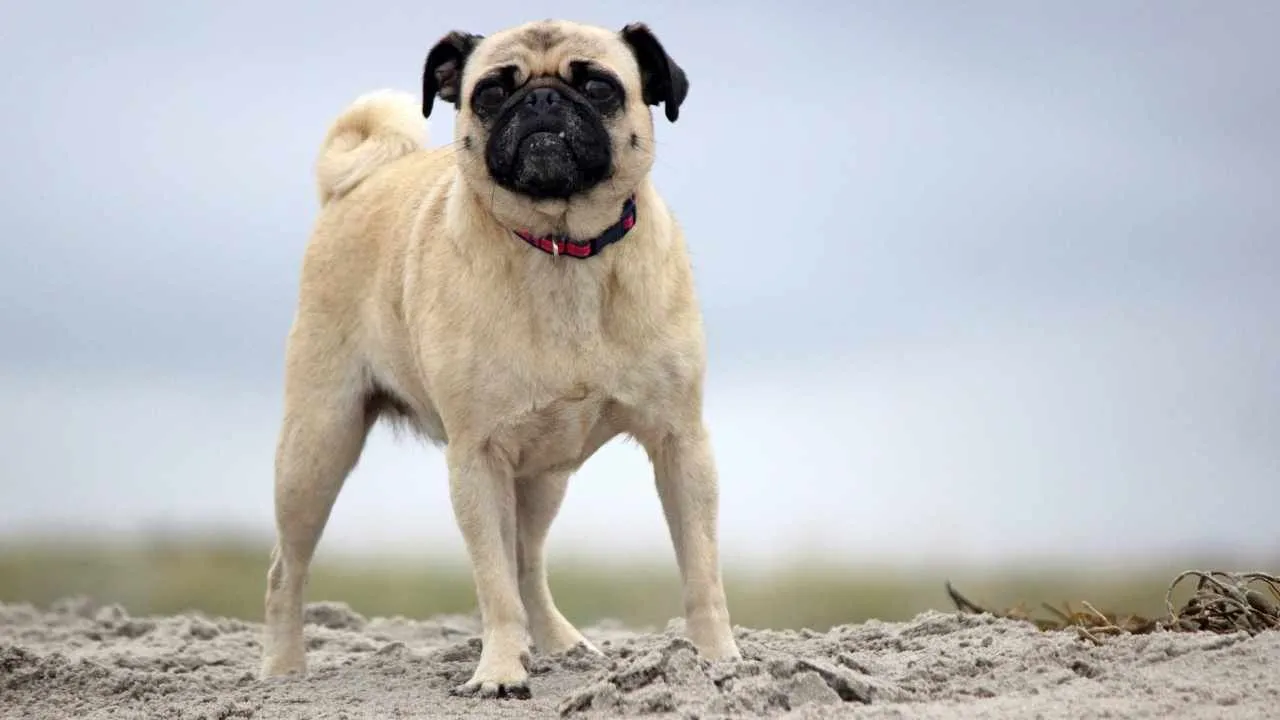
This small breed was brought from China to Europe in the 16th century and was popularized by the Western royalty, including the House of Orange of the Netherlands and the House of Stuart. This dog has a smooth, short, and glossy coat, a square body, a short muzzle, and a wrinkly face, according to Wikipedia.
This lazy dog breed has narrowed nostrils and an elongated soft palate, making breathing difficult. Since it can not regulate internal temperature by panting because of the short snout, its body naturally defaults to resting and staying indoors.
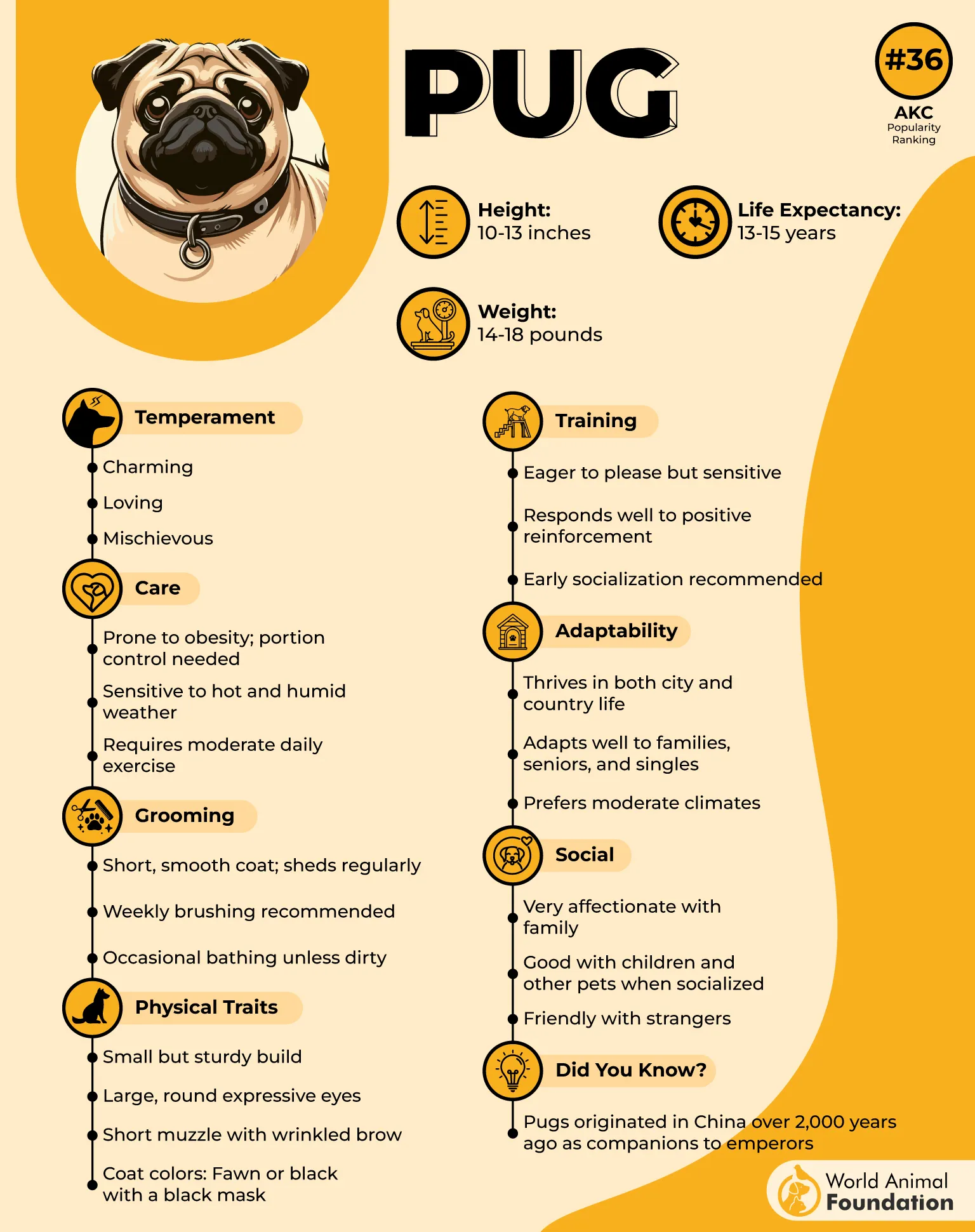
It has short bursts of energy and loves to jump and zoom around the house for 3-5 minutes before coming back to the resting phase. It tends to conserve its energy by sleeping 14 hours a day. The Pug needs 30-60 minutes of regular walks and indoor play.
2. Bulldog
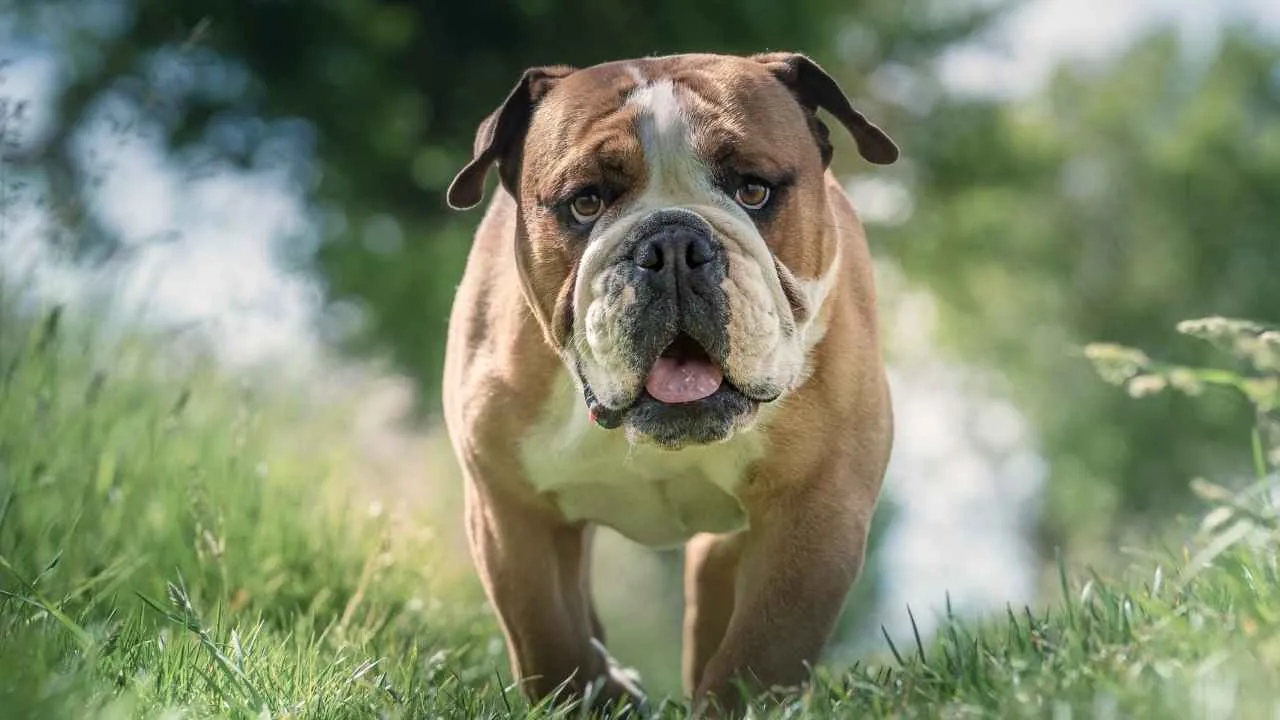
This mastiff-type dog breed was originally bred in Britain and is known for its medium size, skin folds, a large head, and a protruding lower jaw. The larger breed was bred for blood sports, such as bull baiting, but after the ban on this game in 1835, the breed went through size reduction and was selectively bred to be a gentle breed.
The Bulldog is a brachycephalic breed (has a flat face and narrowed airways) that makes it produce funny sounds while sleeping and breathing difficulties during intense physical activity. Its stocky build contributes to its steady and easygoing demeanor, making it well-suited to a relaxed lifestyle.
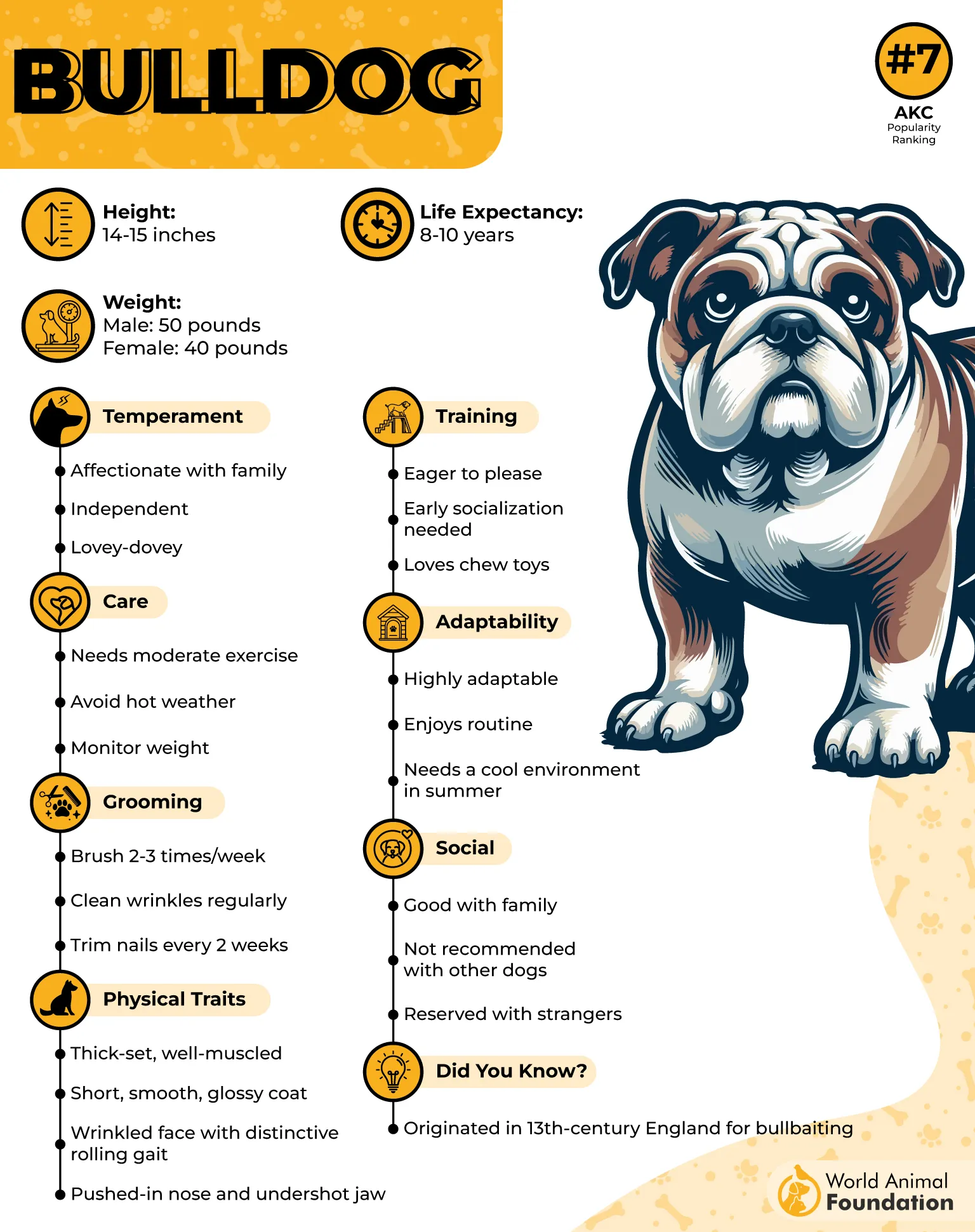
It is highly prone to orthopedic issues, such as hip and elbow dysplasia. That is why high-impact exercise is strictly prohibited. Minimal exercise for 20-30 minutes is enough: brisk walks, soft fetching, and mental stimulation are suggested.
3. French Bulldog
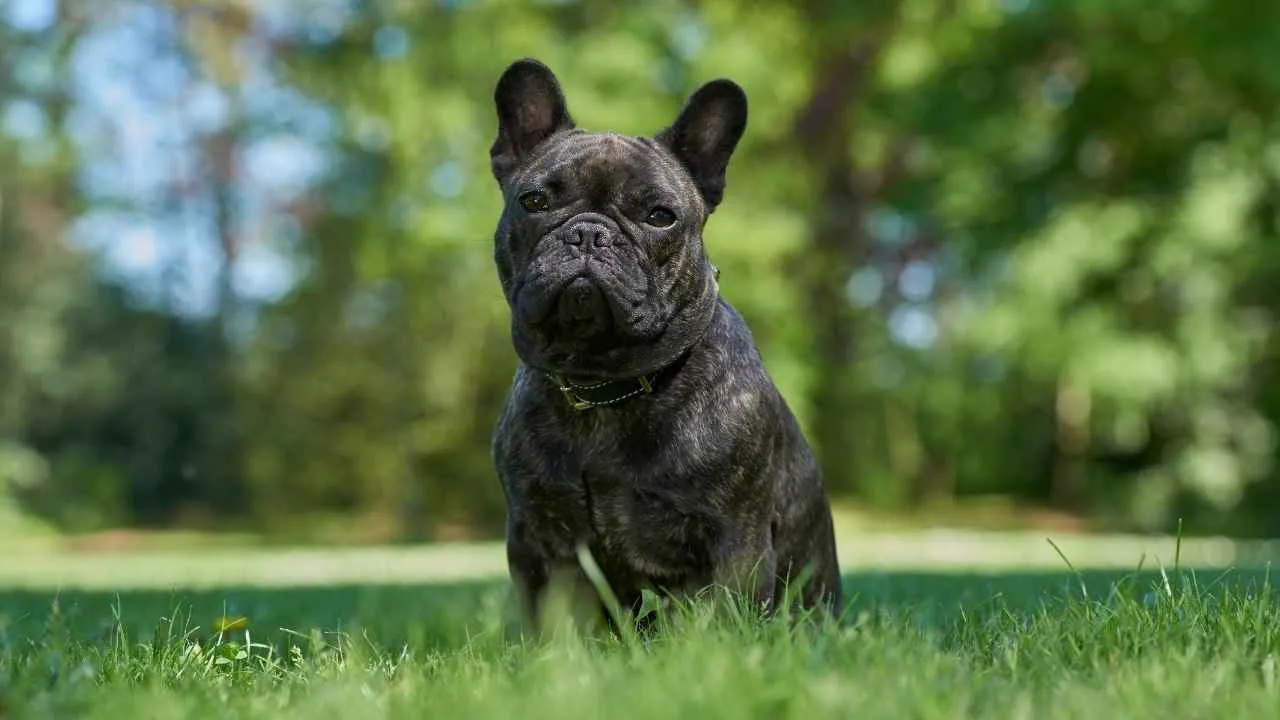
Originally bred in Paris in the mid 19th century as a lap dog, the French Bulldog is a toy dog breed, developed by crossing the local Parisian ratters and the Toy Bulldogs from England. The breed is prone to certain health issues because of the wrinkly skin and a flat face.
This couch potato dog breed has a muscular build and short legs. The heavily built chest limits the aerobic capacity, tiring it out quickly. Its strategy to combat intense heat is staying indoors and lying immobile on flat surfaces to stretch out its belly (splooting).
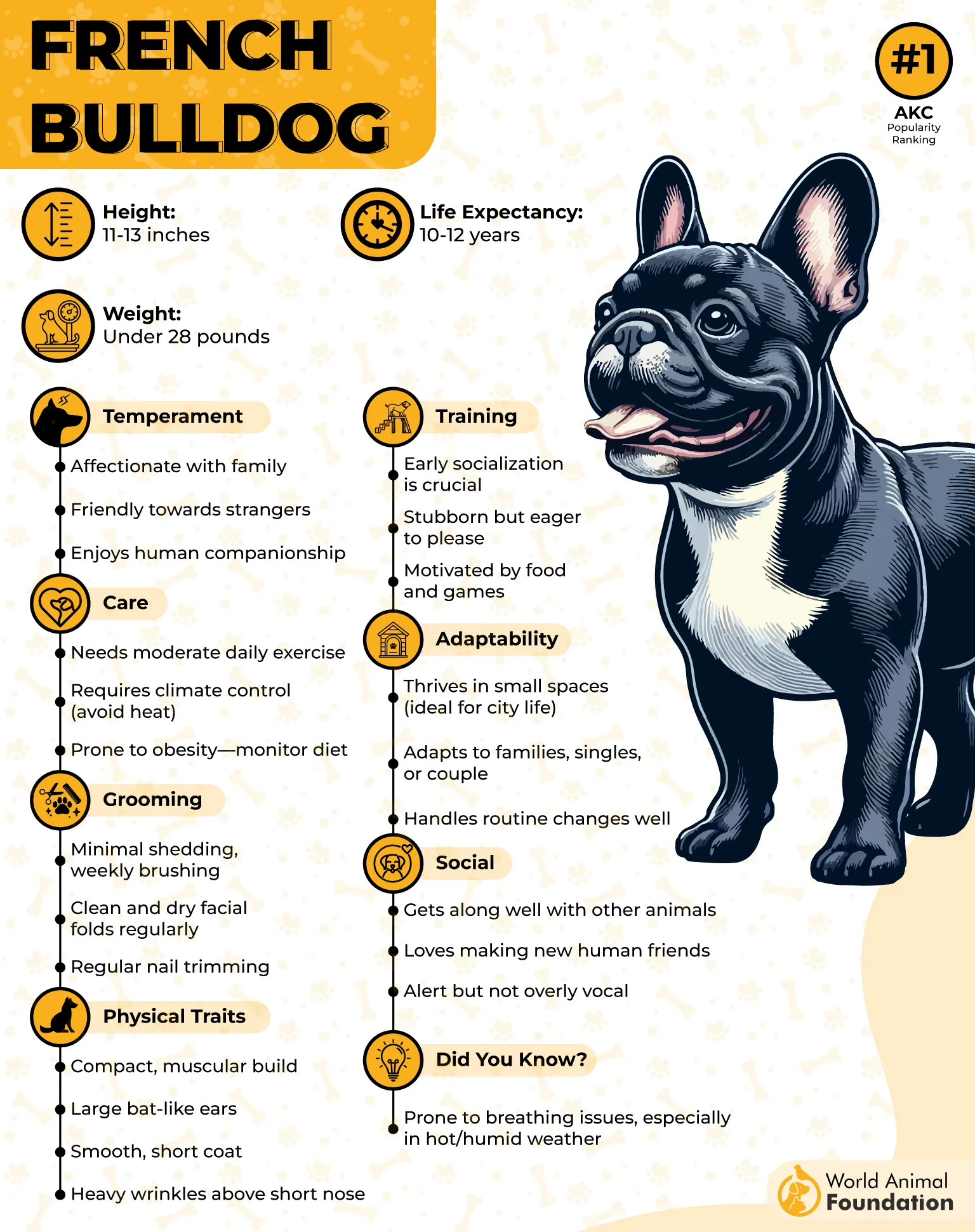
The breed has a low prey drive, making it a low-energy dog breed. Because of the long and flexible spine, it is prone to spinal injuries, such as IVDD; thus, jumping and stair climbing are not suggested for the breed. It forms strong bonds with the owner and tends to follow them from room to room. 40-60 minutes of moderate exercise is recommended by experts.
4. Pekingese
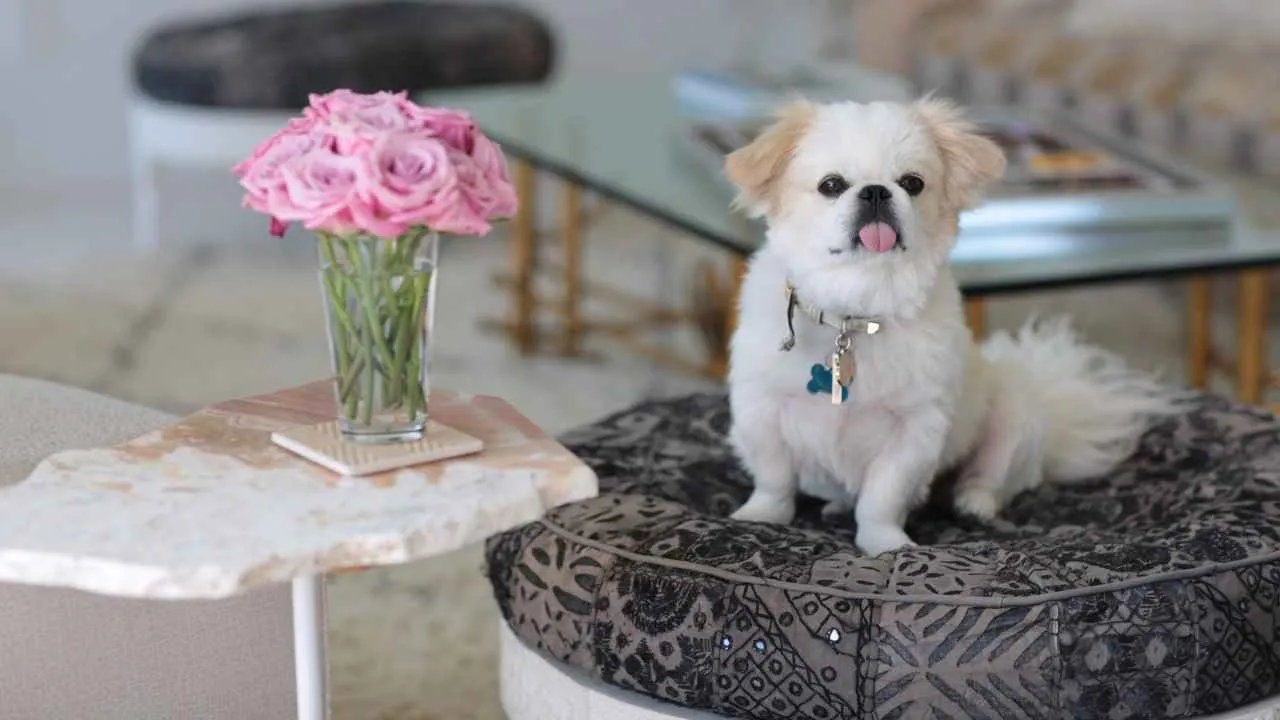
Many Chinese locals say that the breed was developed by Buddha as it reduced a lion into a dog; however, it was originally developed by the Chinese emperors to be a lap dog and to guard the castles. It has a lion-like mane around its neck. The English looted the Chinese treasure and gifted this affectionate breed to Queen Victoria, as per the American Kennel Club.
This brave dog has obstructed airways because of the compact muzzle. It has bowed legs that provide a rolling gait. It has a calm temperament and an independent streak, forcing it to stay lazy and work only when needed. Early socialization and proper training are required to avoid stubbornness.
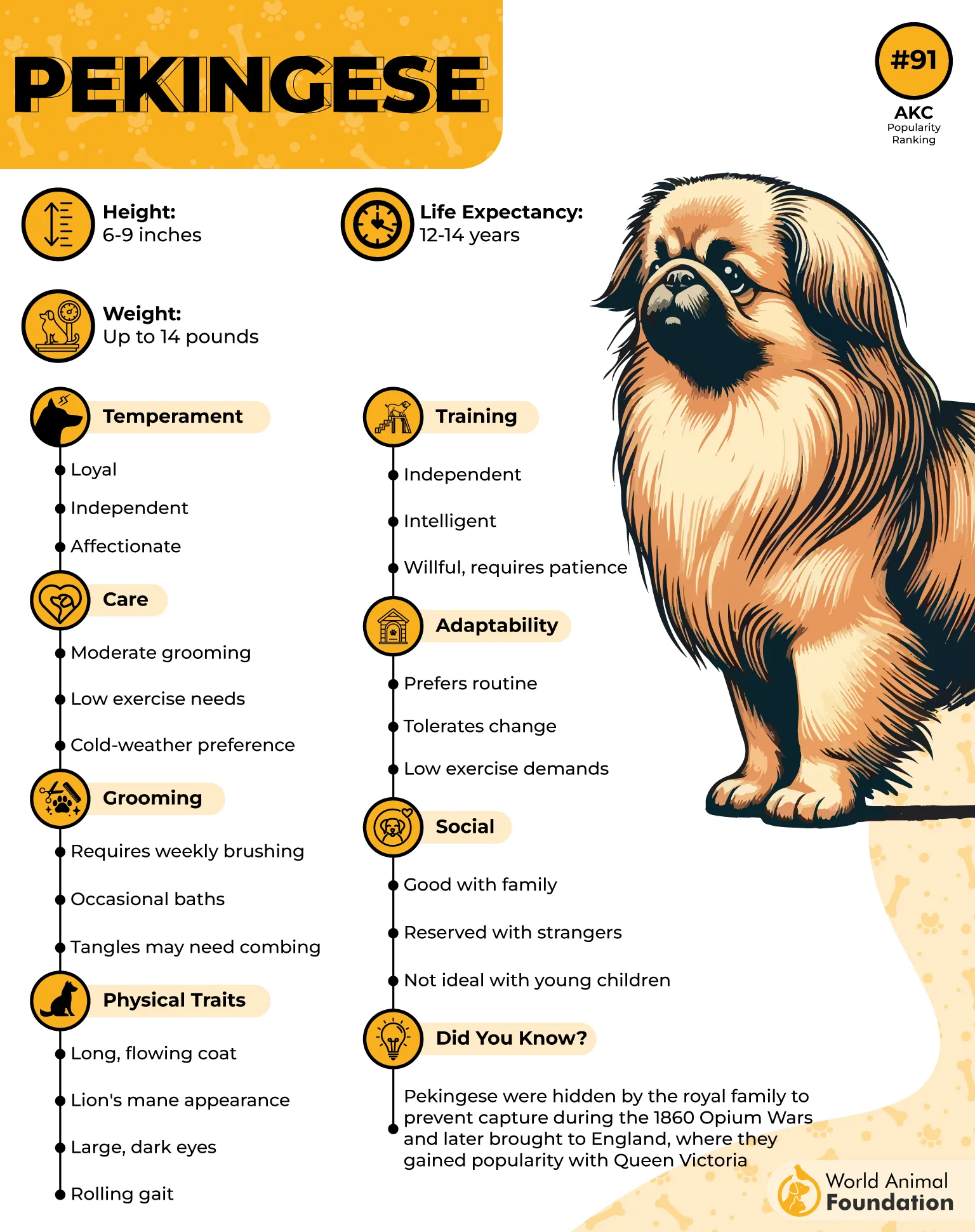
It has minimal exercise needs: short walks, soft fetching, indoor games, and mental stimulation. It requires daily grooming to prevent matting and skin infection. Daily brushing is needed with a metal comb and a pin brush. Dry brushing can result in hair breakage.
5. Whippet
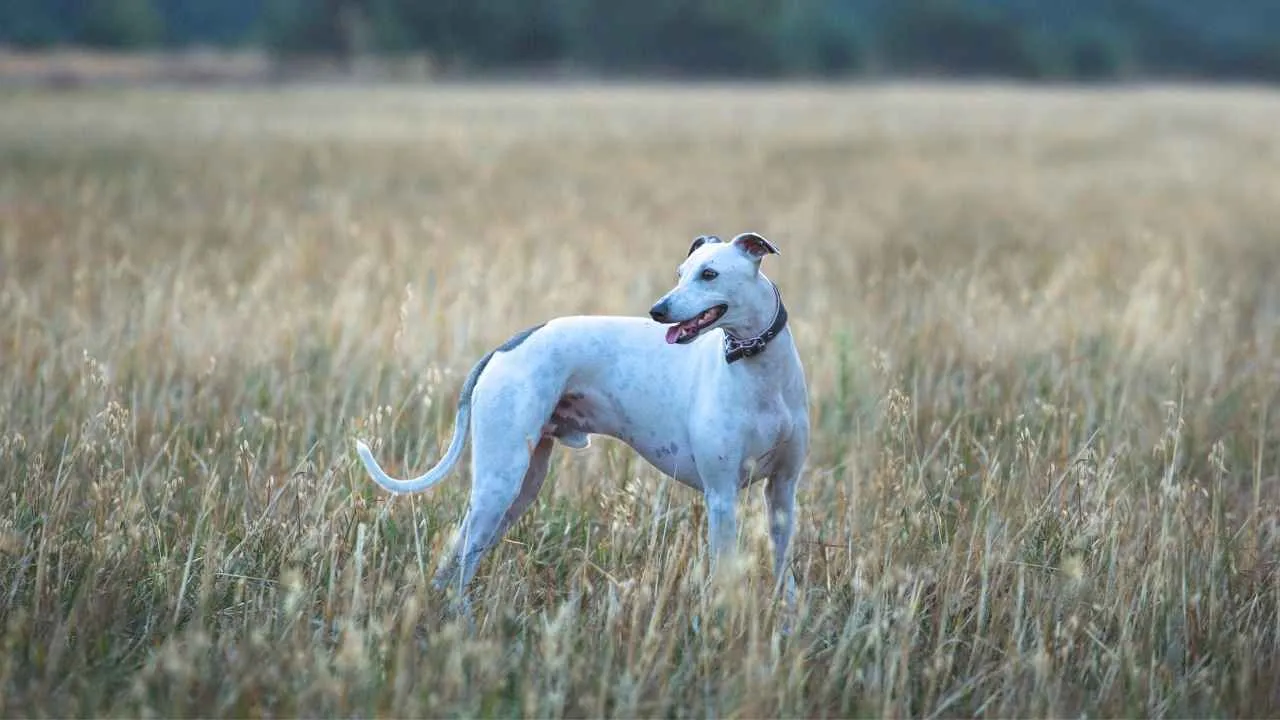
The history of this athletic dog started in Victorian England. Coal miners from the North Country were fond of the Greyhound, but because of its massive physique and grooming requirements, it was difficult to afford the breed. So, these miners came up with the idea of selectively breeding a new dog with the same qualities, but in a smaller size.
The Whippet has very little subcutaneous fat and a low metabolic rate. Since it lacks a warm and insulating coat, the Whippet conserves energy by lounging and cuddling. The low fat levels make it sensitive to anesthesia. Being sensitive to the environment, the coping mechanism for stress is sleep, freeze, and retreat.
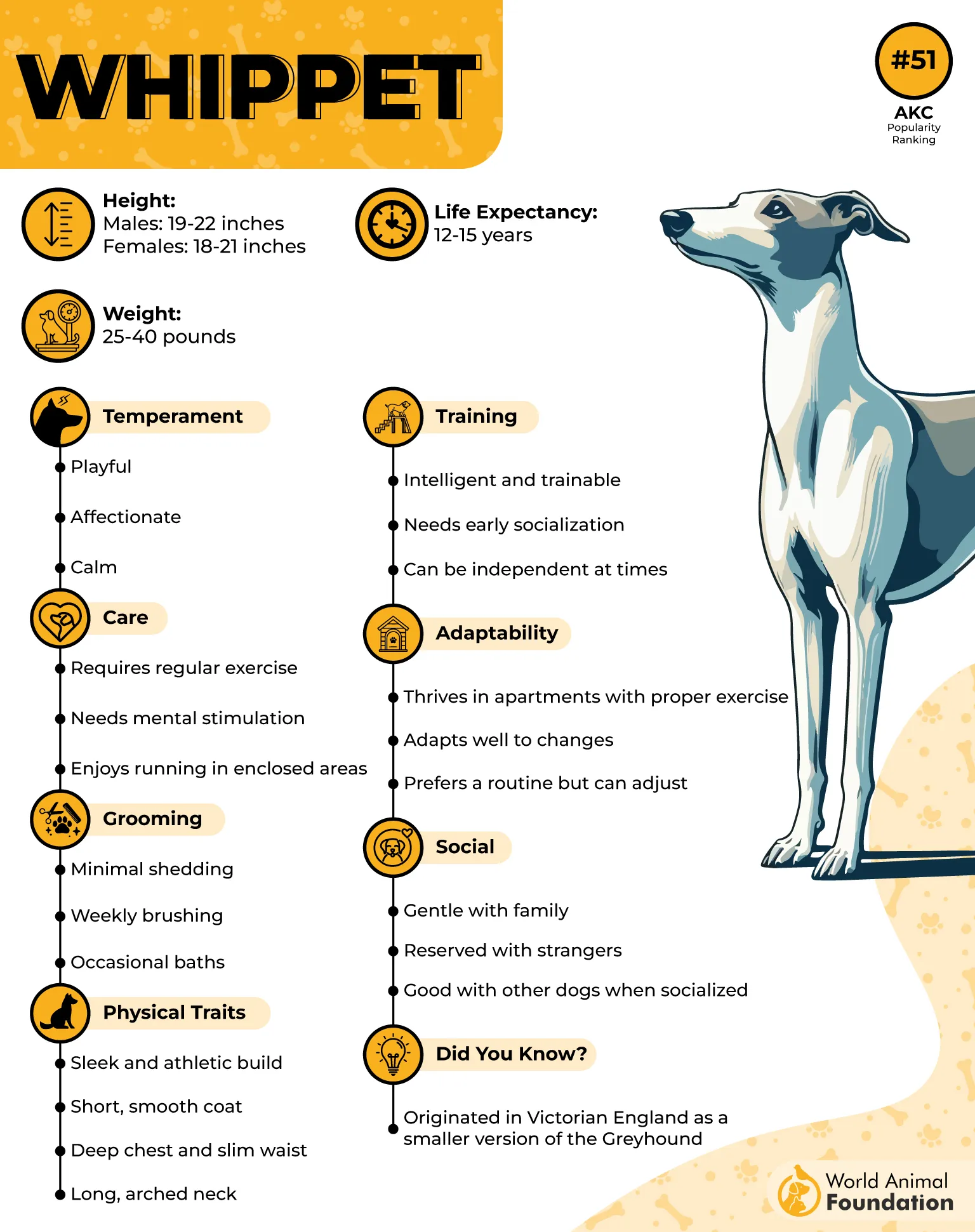
Also known as the 35 mph couch potato, the breed has fast-twitch muscle fibers that enable sprints for only a shorter period of time. It has a high prey drive, but if the daily physical requirements are met, it can be controlled. High-impact exercise must be avoided for the puppies till they reach 12-18 months of age.
6. Clumber Spaniel
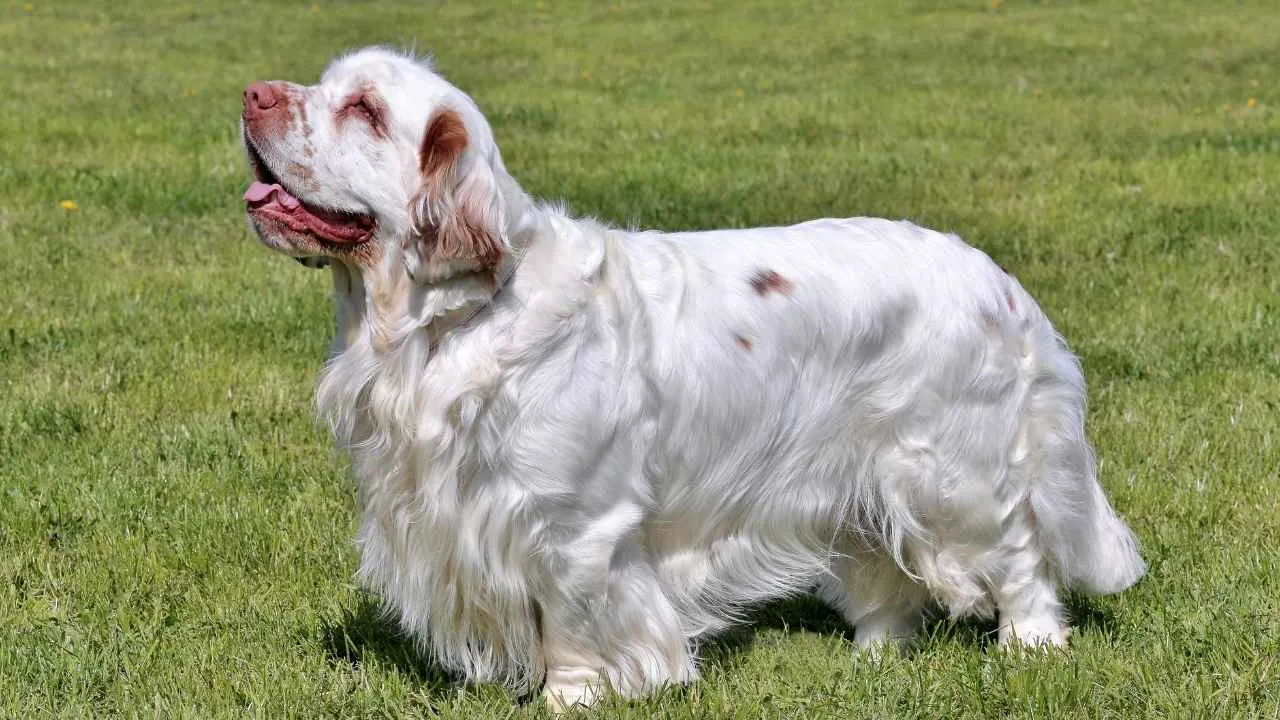
The white dog breed was developed in Nottinghamshire, England, in the 1700s as a hunting companion dog. The breed was favored by royalty, such as Edward VII. It is the largest of Spaniels and is characterized by a rectangular, heavy, and low-slung skeletal muscle frame.
Since it has a smooth and flat coat that actively regulates internal body temperature; thus, it is not agitated by environmental changes. This contributes to a relaxed nervous system. The deep-set eyes give a thoughtful and observant expression.
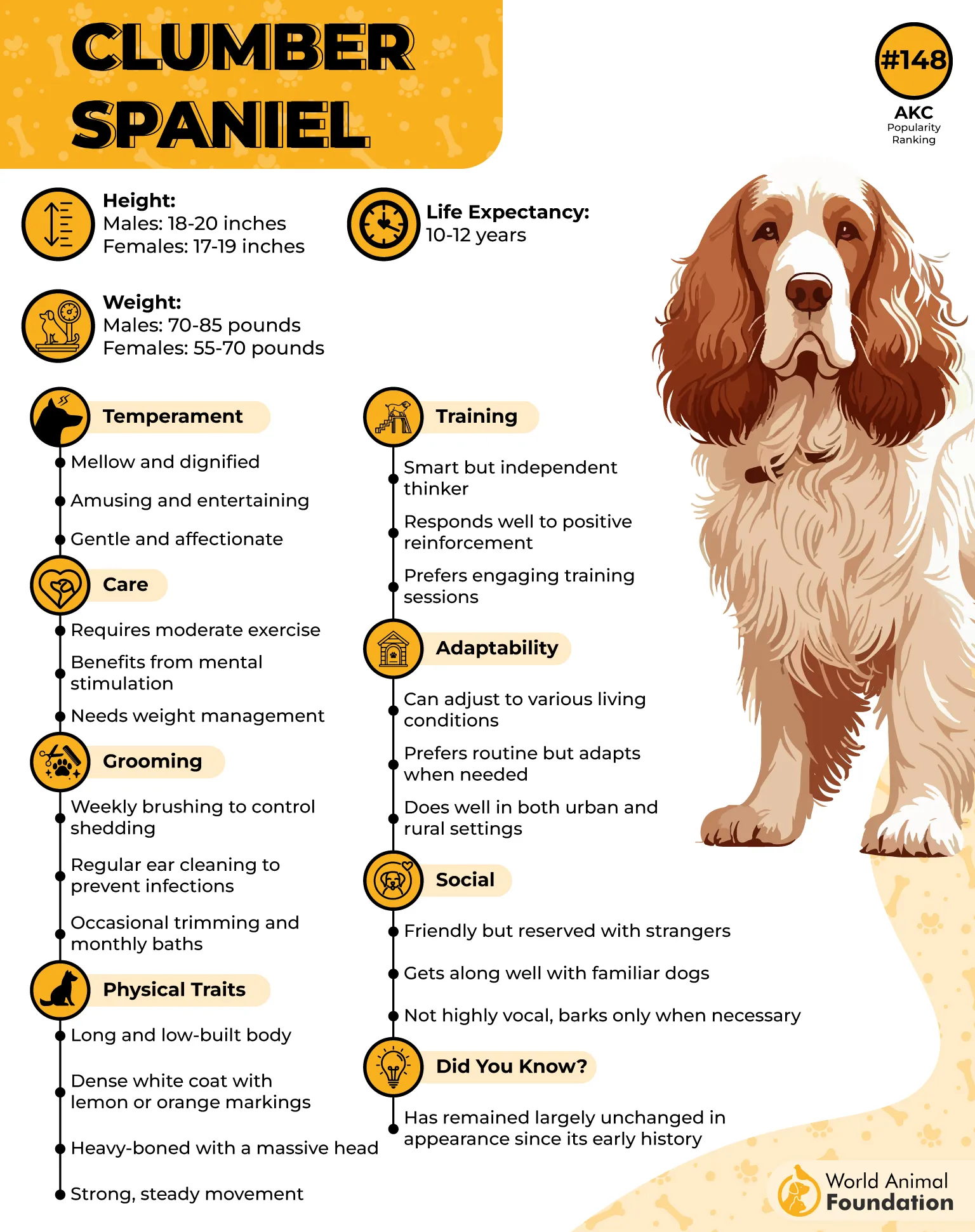
It weighs around 55-85 pounds, with heavy muscles and short legs. This high mass-to-leg-length ratio makes explosive jumping or running exhausting. The breed was designed to trudge through thick brush rather than participating in fast-paced dog sports.
7. Japanese Chin
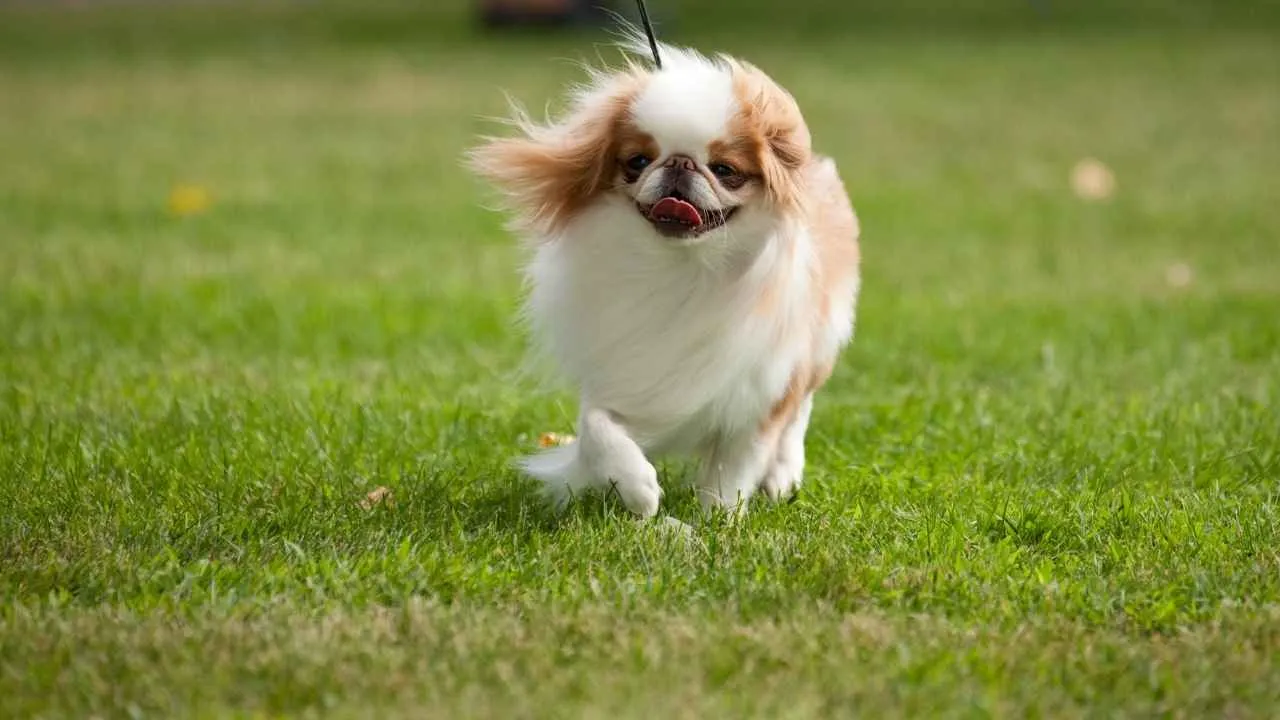
The breed was originally bred in China and was mostly kept by the Buddhist monks, and was gifted to the nobility. It weighs not more than 11 pounds and stands 8-11 inches tall, making it a perfect lap dog, says PetMD.
The breed is prone to joint and spinal issues, such as luxating patella and hemivertebrae, making high-impact running and jumping painful. It has a cat-like metabolism, remains clean, and tends to sleep in higher places. As it loves using its feet, it loves to learn how to shake hands and wave while sitting in your lap.
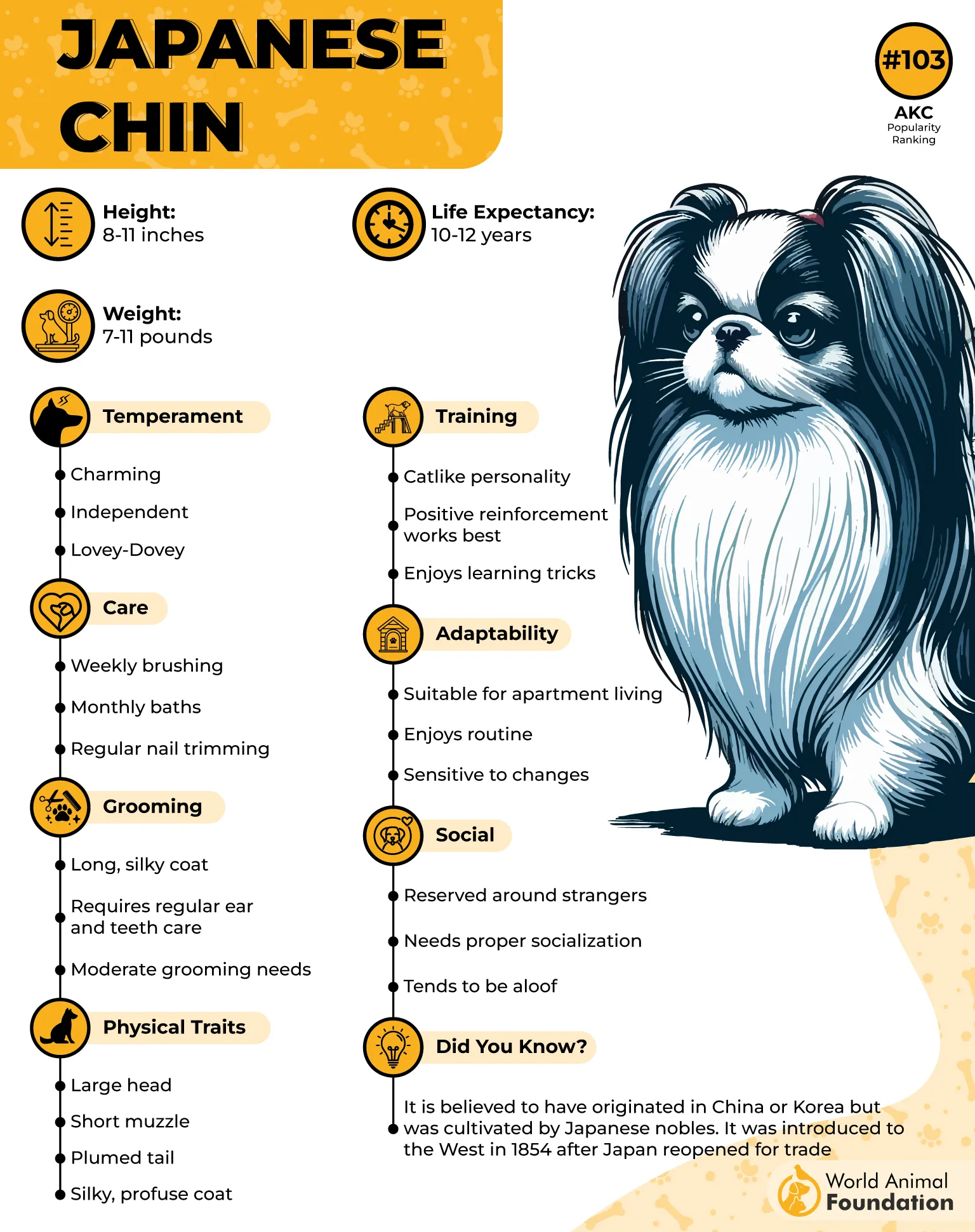
The Japanese Chin makes ‘woo-woo’ sounds when excited or happy. It is also a brachycephalic breed, and low-impact exercise is usually suggested (20-30 minutes): short walks and mental stimulation. The single-layered coat requires weekly brushing.
8. Saint Bernard
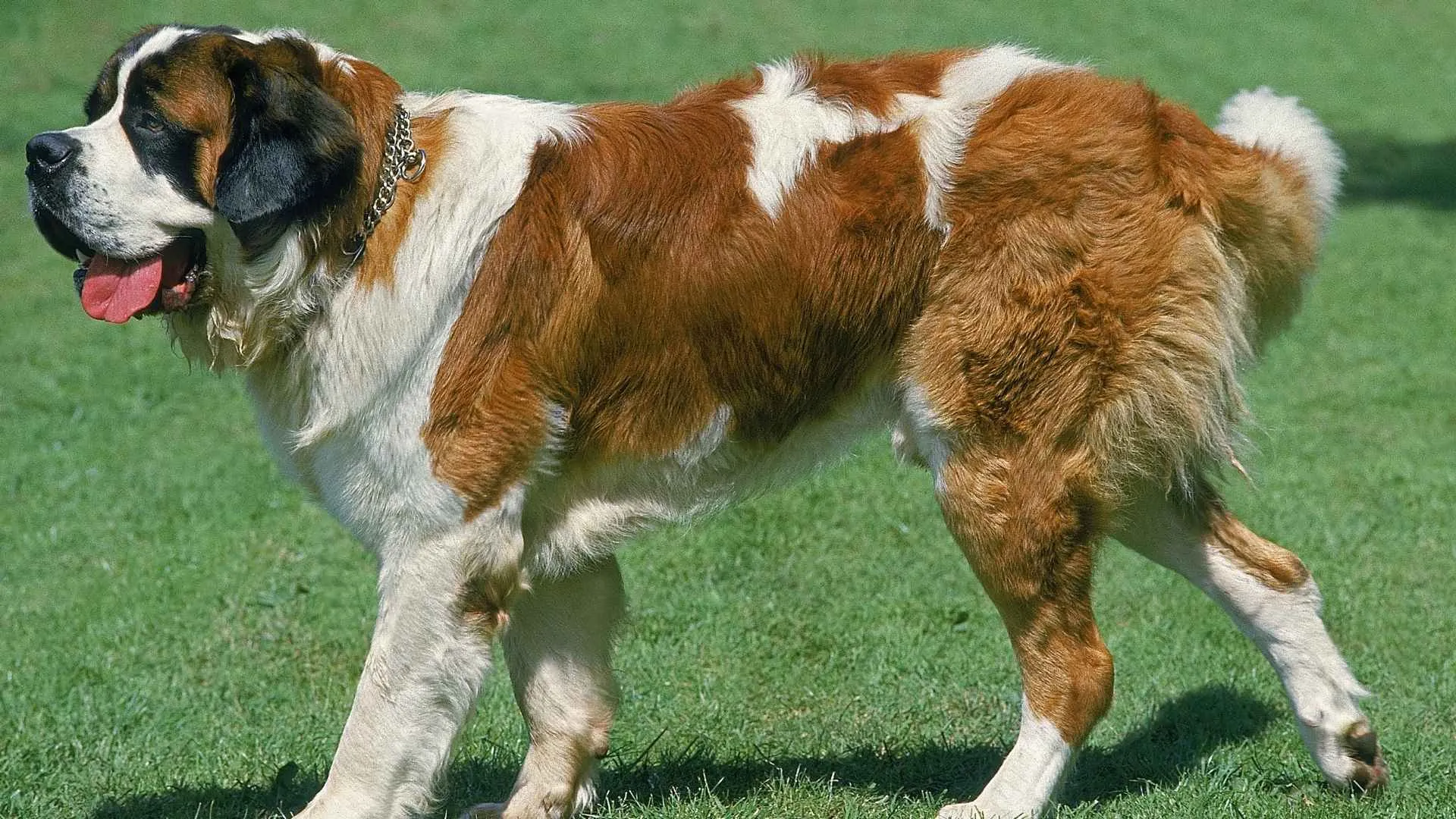
This gentle giant was trained by monks in the 1600s to rescue the lives of travelers trapped in snow. It used to cover long distances to locate a trapped person, drag them out, lick their faces to keep them awake, and wrap their warm bodies around its own to provide insulation.
It weighs around 120-200 pounds and has a low surface-area-to-mass ratio. As it was bred for lifesaving, it has a low prey drive and minimal aggression. The breed takes almost 3 years to mentally reach the state of adulthood.
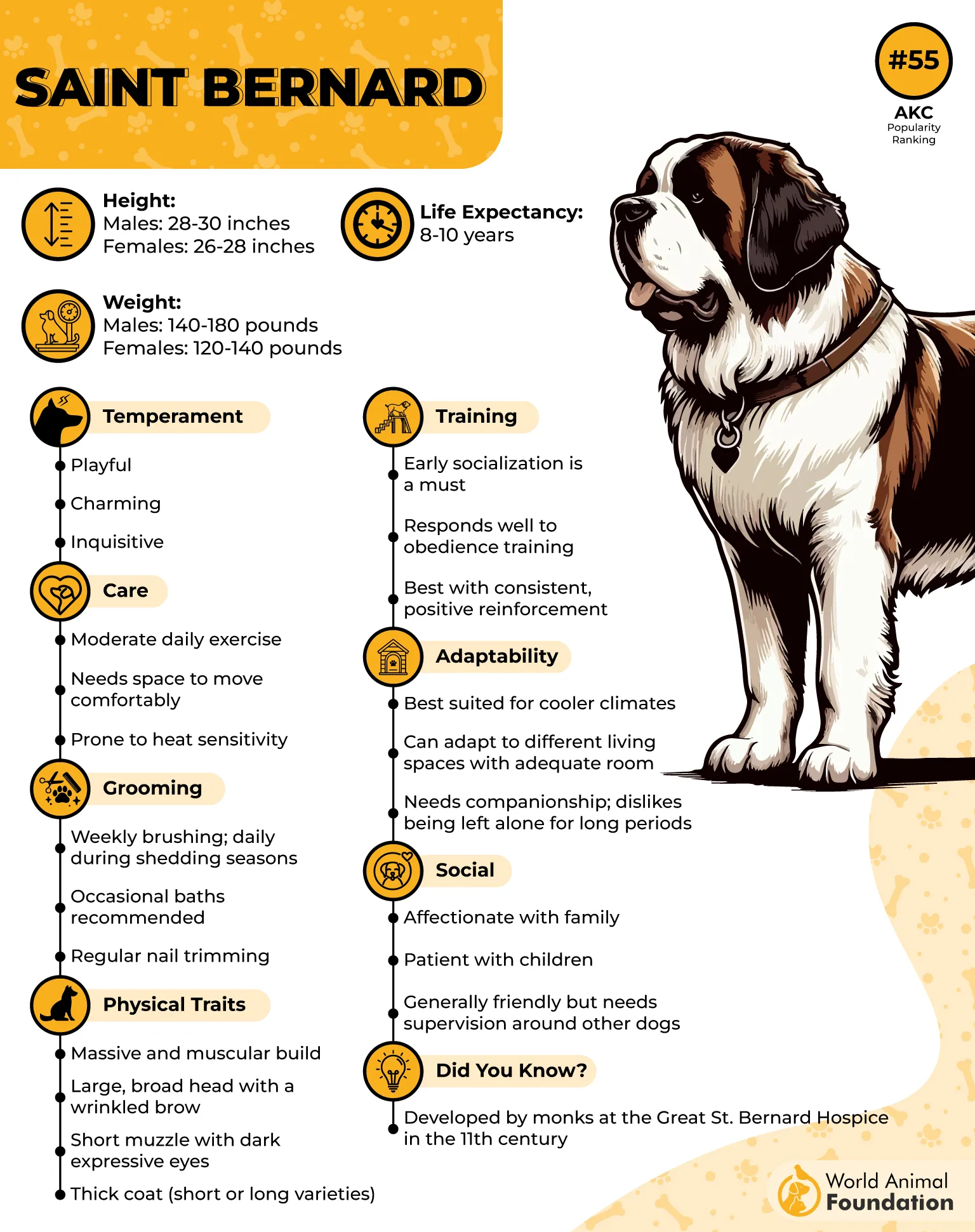
The breed does not require too much exercise (30-60 minutes is enough): slow-paced daily walks, swimming, scent tracking, agility, and short training sessions are suggested. Use a sturdy bristle brush and an undercoat rake to remove dead hair and evenly distribute natural oils.
9. Newfoundland
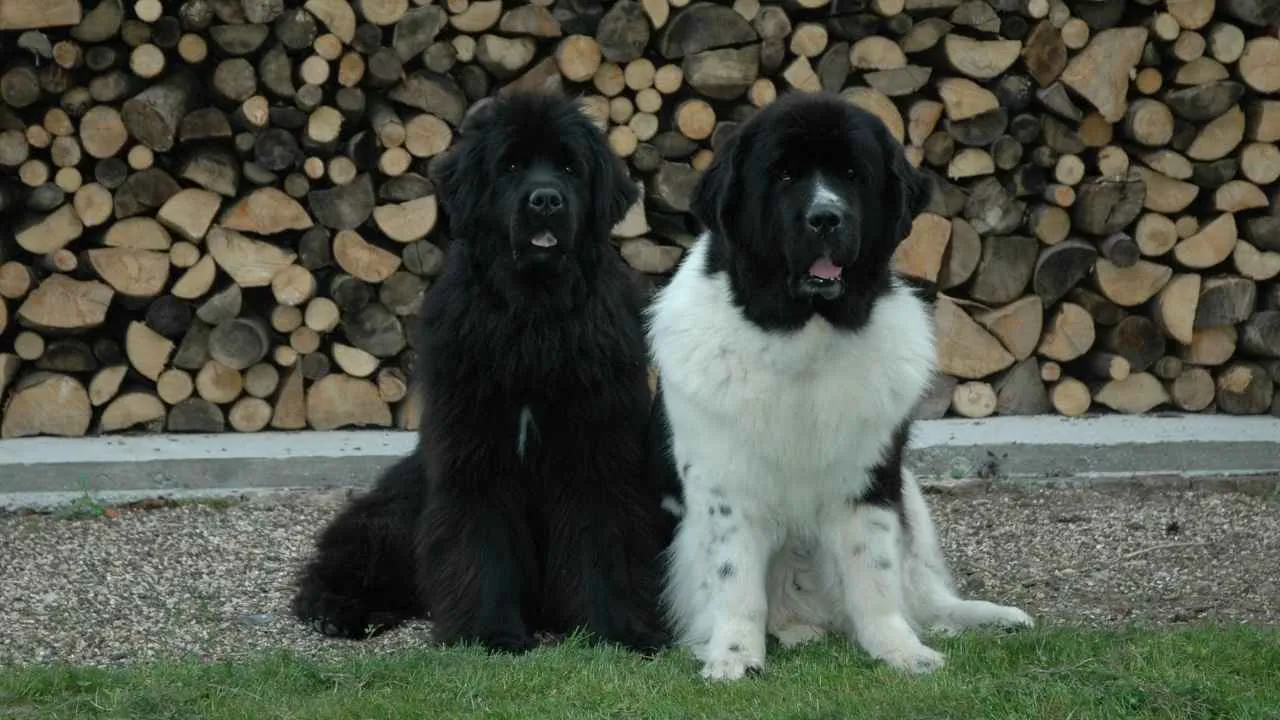
This is a large working dog breed, originating in Newfoundland, Canada, for fishermen as a rescue dog. It comes in only two colors: white and black. The breed excels in lifesaving because of its muscular build, double coat, swimming abilities, and webbed paws.
The breed has moderate energy levels and has low reactivity towards environmental changes. It makes friends with family members, children, other pets, and even strangers. It weighs around 100-150+ pounds, putting heavy mechanical stress on its skeletal system.
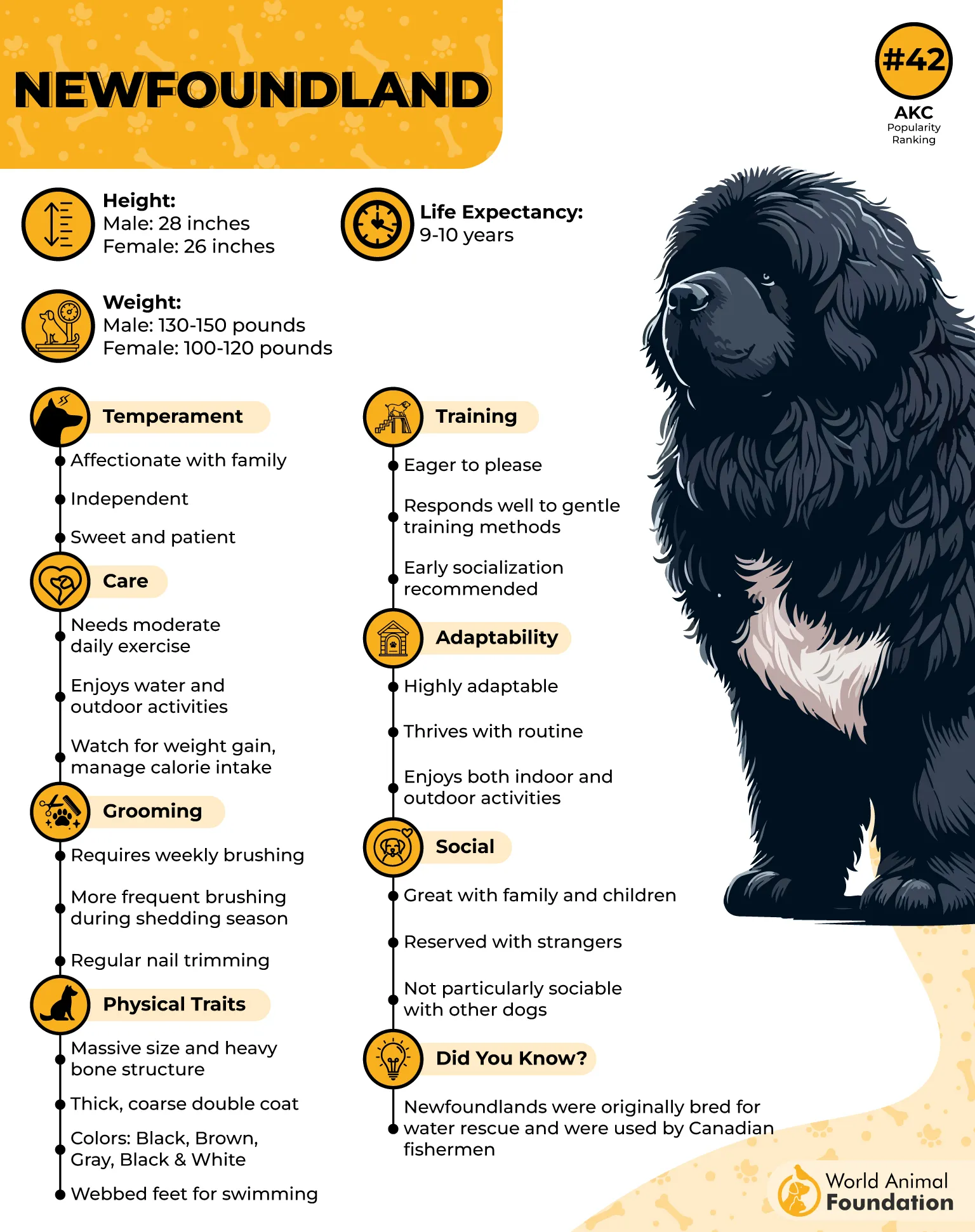
It possesses slow-twitch muscles, designed for endurance, unlike fast-twitch muscles that enable sudden sprints. When it becomes lethargic or is tired on a walk, it simply lies down and refuses to move. The breed has bone and joint-related health problems, such as hip and elbow dysplasia, because of its massive size; thus, it tends to have a lot of couch time.
10. Mastiff
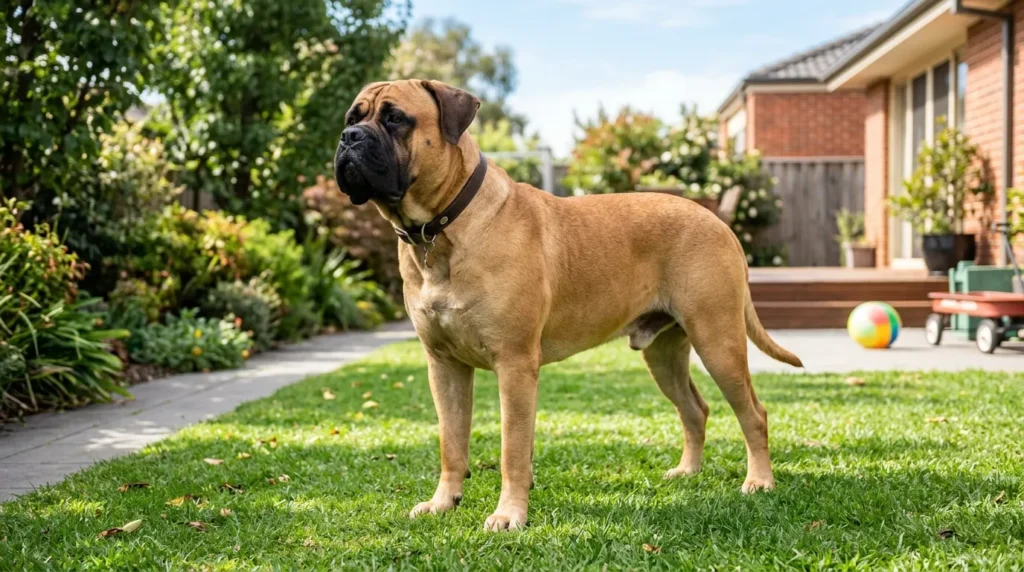
Also known as the Old English Mastiff, this low-maintenance breed was discovered in 55–54 BCE, when the Romans invaded Britain. It was primarily used as a hunting dog and a guardian in Europe.
It is a great watchdog because of its calm yet observant composure. The short coat is prone to overheating. So, the body physically signals the brain to slow down, rest, and remain still. It does not sweat and cools down through panting.
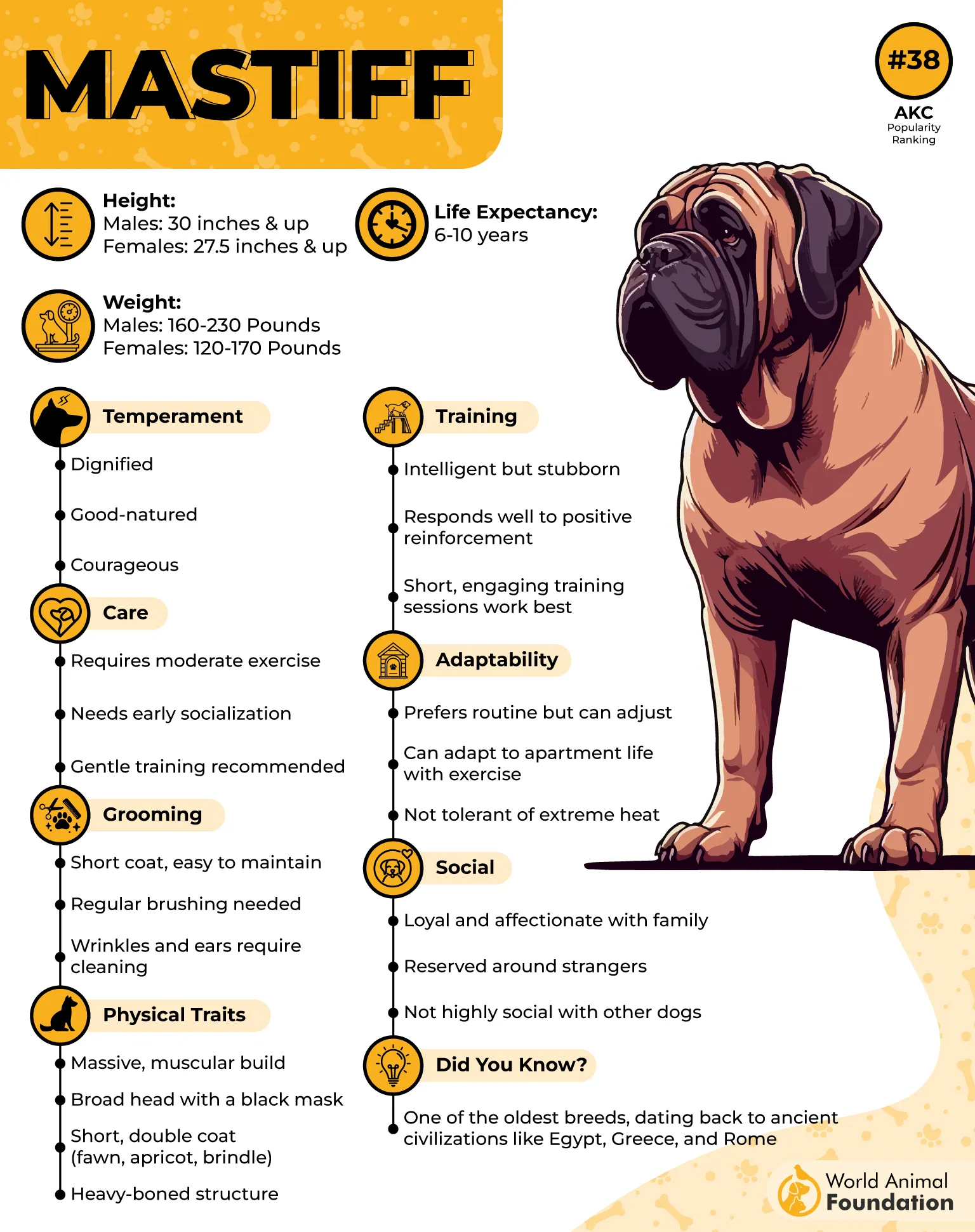
It has delayed skeletal development, and it fully grows till the age of 18-24 months. It was used as a war dog by the Romans, and has an incredible ‘switch off’ mode; it goes back to the resting state once the job is done. It needs weekly brushing using a stiff-toothed comb or a slicker brush.
Conclusion
Finding the right dog is not about choosing the most popular breed. It is about finding a companion whose personality matches your lifestyle. For people who enjoy quiet evenings, cozy weekends, and a slower pace, these ten breeds offer a wonderful balance of affection and relaxation.
From the charming Pug to the gentle Newfoundland and the massive yet mellow Mastiff, each breed brings something unique to the table. Some offer comic relief, others provide emotional comfort, and all share one important quality: they know how to enjoy life’s simple moments.
