




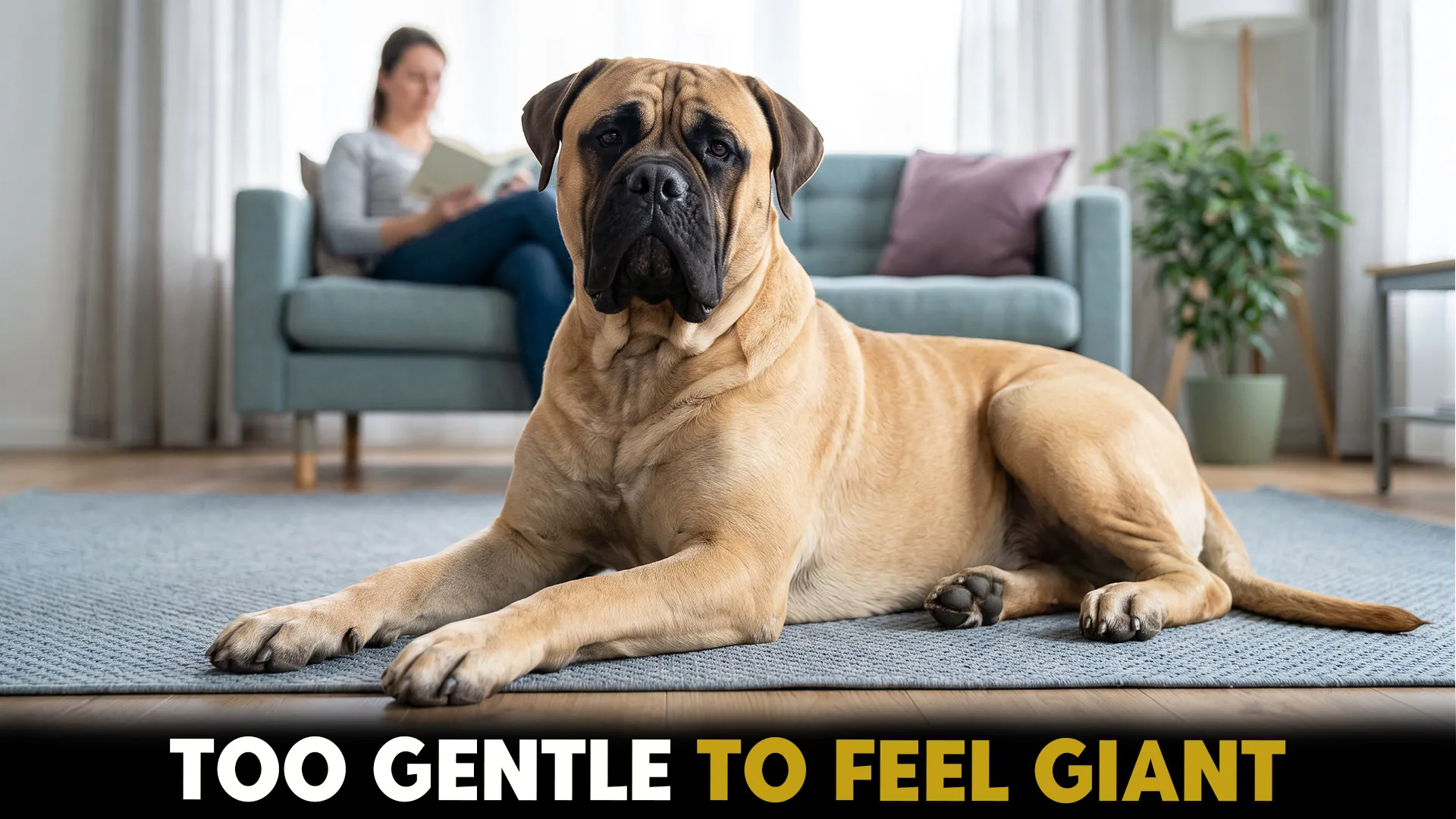
Big dog, big bark, big chaos… right? Not always! Some giant dogs are surprisingly mellow housemates who would rather lounge nearby than provide a running commentary on every passing squirrel.
Quiet does not mean completely silent, of course, but some dogs tend to communicate more selectively and settle comfortably when their exercise, training, and daily needs are met. And honestly, there is something wonderfully funny about a dog built like a small bear acting like the calmest roommate in the house.
Ready to meet the gentle giants that can bring serious size without constant noise?
Did you know?
Just like humans, some dogs can seem introverted, preferring familiar surroundings or watching the action from the sidelines. Genetics and life experiences can both shape this reserved personality, making some dogs especially comfortable with a quieter, peaceful home life.
Quiet Giant Dog Breeds Perfect for Peaceful Homes
1. Newfoundland
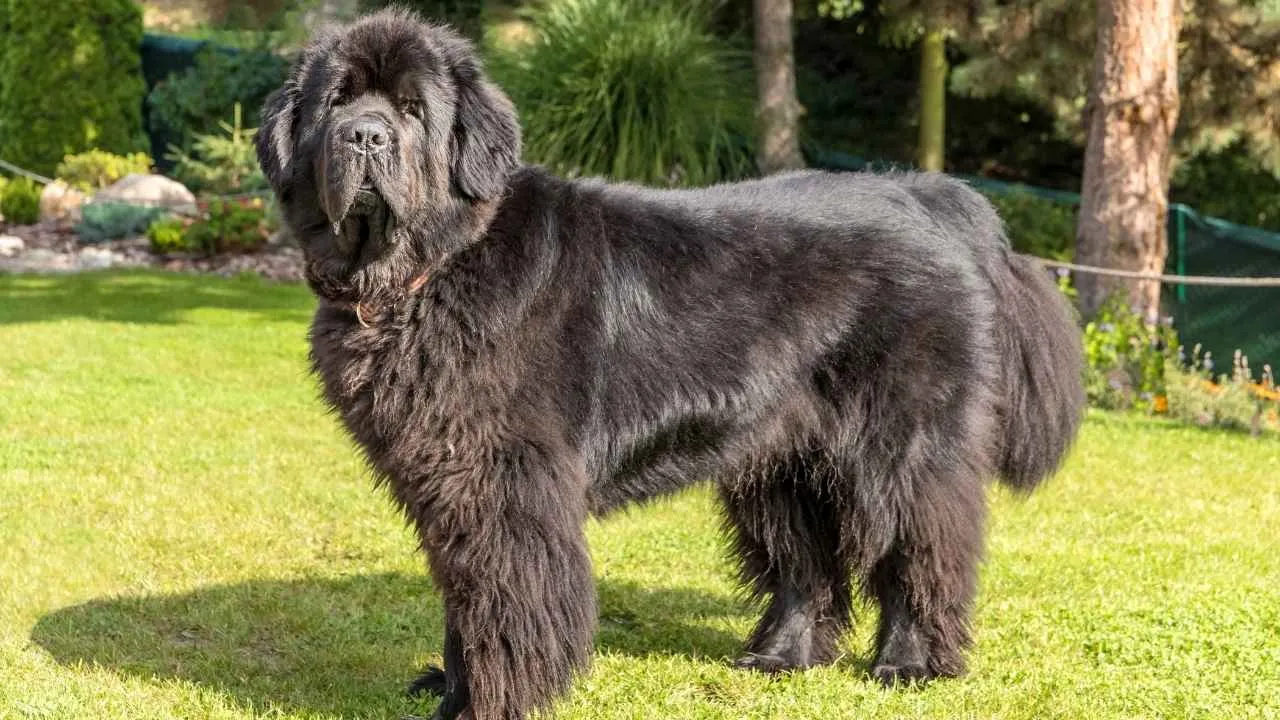
Okay, Newfoundlands somehow manage to look enormous without bringing an equally enormous personality into the room. Their docile, friendly nature keeps things pleasantly grounded. That gentle temperament can make their impressive presence feel surprisingly easy to live with.
Better still, these dogs tend to be wonderfully patient with the people they love. Children often get a particularly gentle companion. Newfoundlands can also share the household comfortably with other dogs and cats when introductions and interactions are handled thoughtfully.
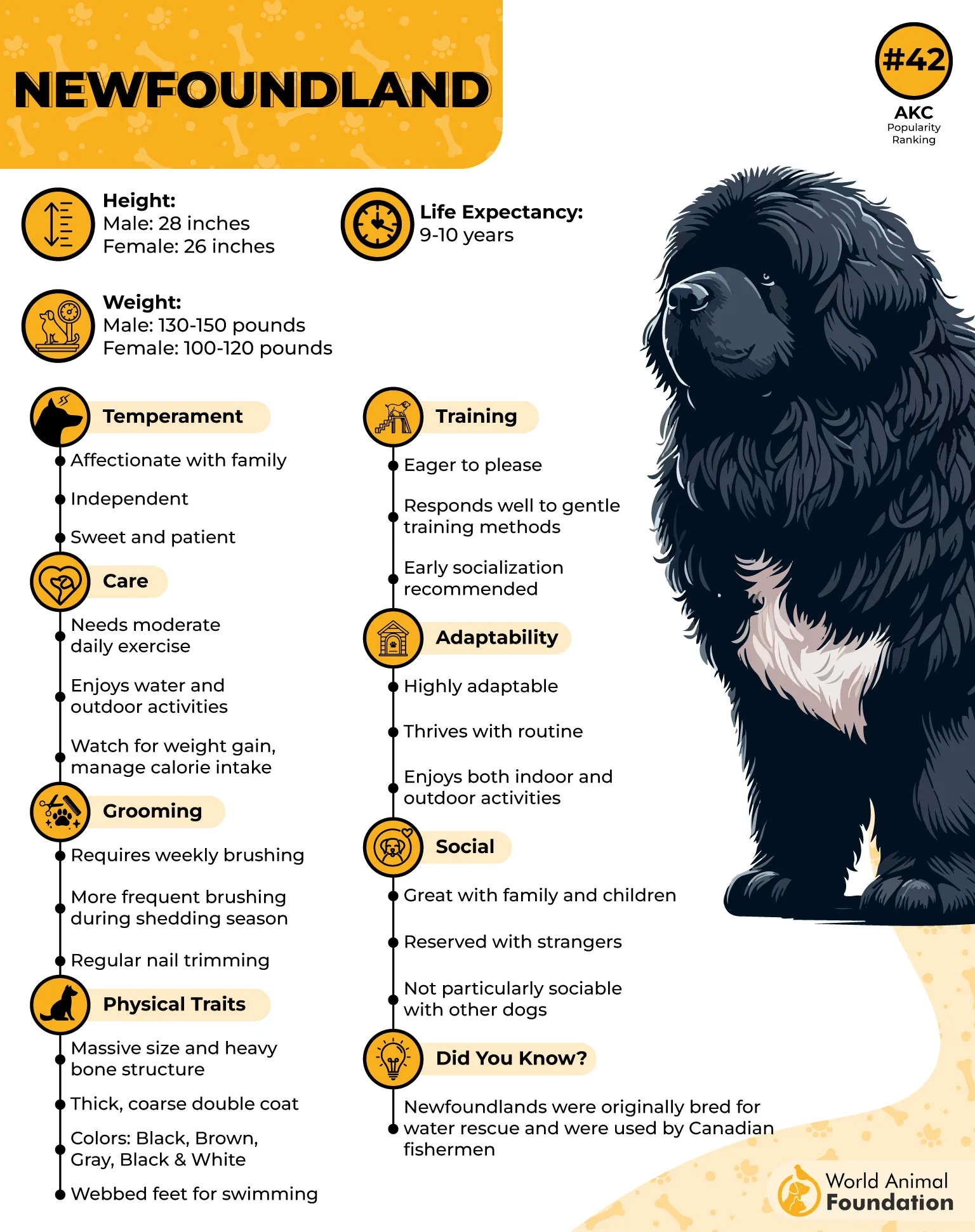
When things quiet down, a Newfoundland usually has no problem matching the mood. The breed is known for being calm at home. So peaceful evenings can feel more like sharing space with a roommate than managing a nonstop canine announcer.
Why This Breed is Worth Considering
Natural swimming ability supported by webbed paws
Responds well to gentle guidance and consistent training
2. Saint Bernard
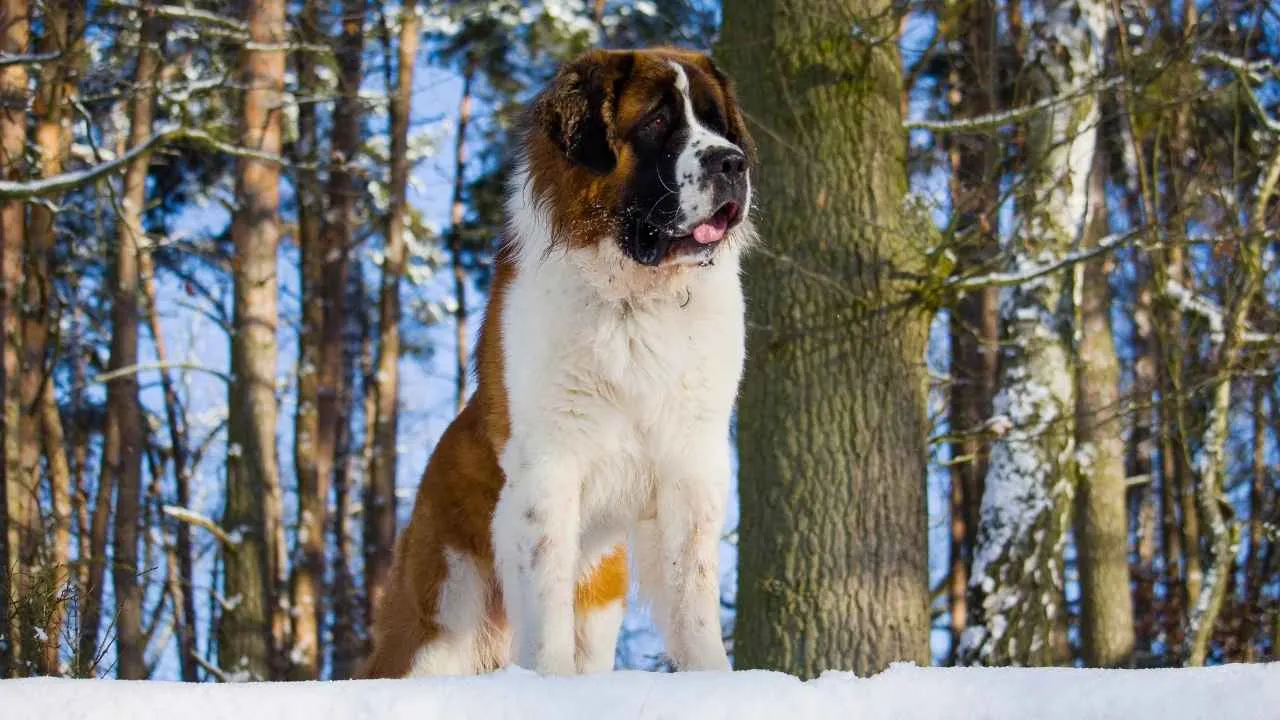
Interestingly, Saint Bernards once had a far more adventurous job than relaxing around the house. Their history includes locating people buried by avalanches in the Swiss Alps. Today, that working past sits alongside a famously gentle companion personality.
For anyone who likes a home that feels settled, this breed makes an appealing case. Saint Bernards are friendly, mellow, and affectionate. They enjoy staying close to their families and generally become calmer as their energetic puppy stage fades.
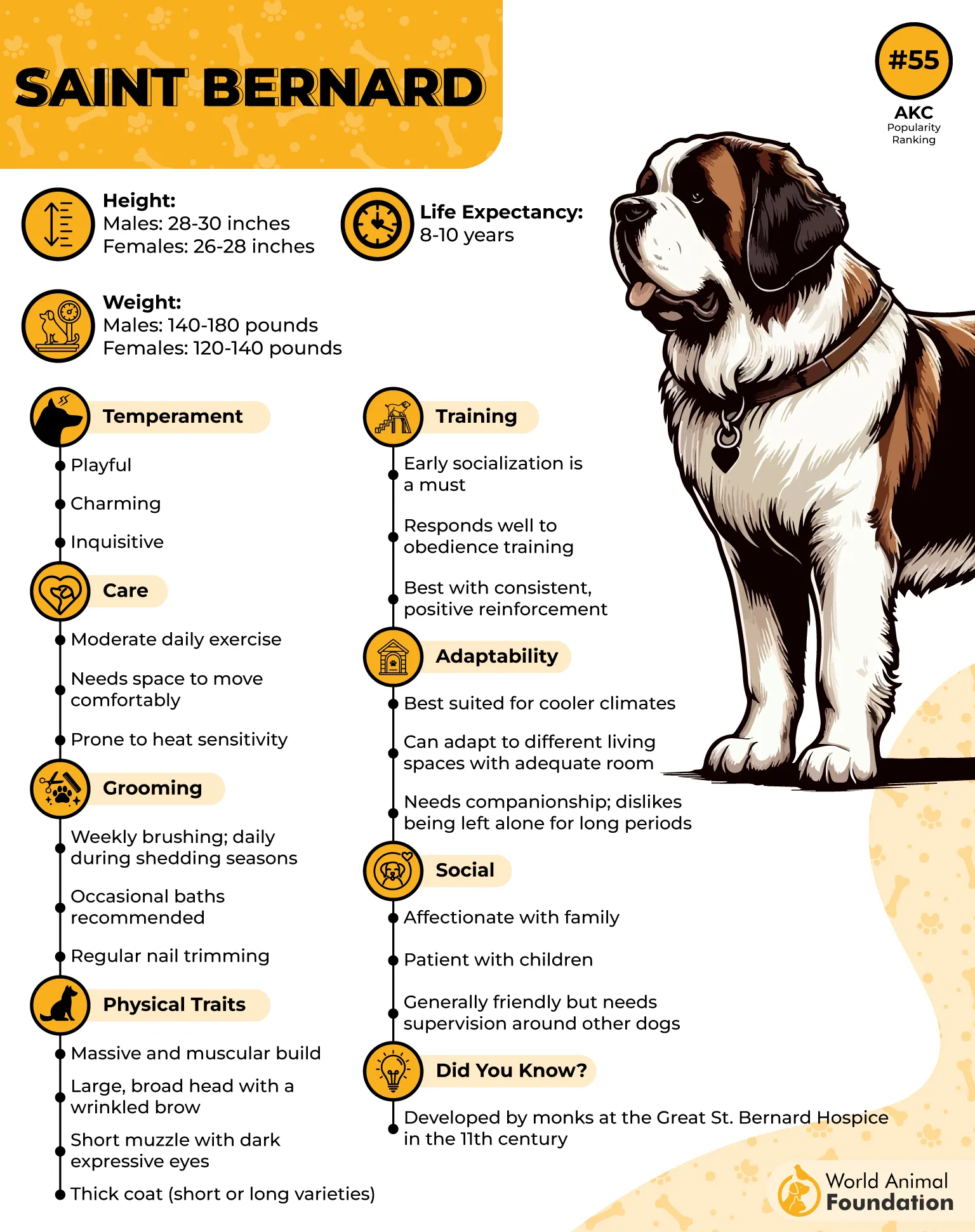
As noted by PetMD, early training and socialization are crucial for Saint Bernards because their size can make them difficult to handle. Happily, they learn quickly. Positive reinforcement can make building calm, useful household manners much easier.
Why This Breed is Worth Considering
Low prey drive can help with properly socialized animal housemates
Playful puppy energy commonly settles as the dog matures
3. Mastiff

Honestly, Mastiffs carry themselves like they have absolutely nothing to prove. Their dignified, good-natured personality comes with a notably calm demeanor. That relaxed attitude can feel wonderfully unexpected when it belongs to such a powerful and imposing dog.
When somebody unfamiliar arrives, the Mastiff can switch from lounge mode to watchful guardian rather quickly. Protective instincts are part of the package. Still, unnecessary noise is not their usual strategy because the breed is known to bark infrequently.
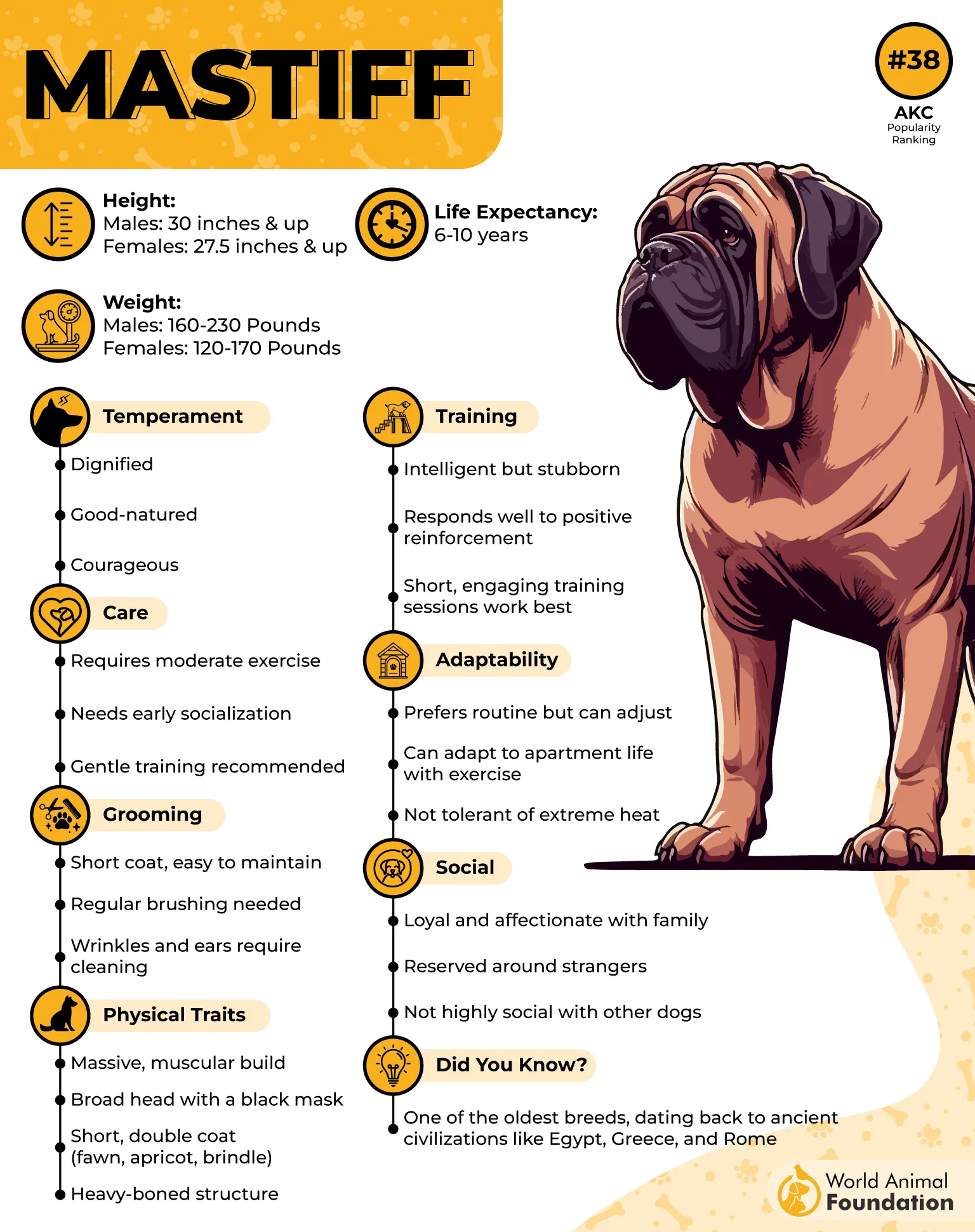
For a dog this substantial, the Mastiff is refreshingly uninterested in turning every day into boot camp. Regular movement still matters. Socialization and obedience work also help channel those guardian instincts while keeping both body and mind appropriately occupied.
Why This Breed is Worth Considering
Strong affection for its own household adds a softer side
Ancient working heritage gives the breed a distinctive background
4. Bullmastiff

Back in England, Bullmastiffs had a job that rewarded quiet confidence rather than unnecessary commotion. Gamekeepers developed them to stop poachers with controlled power. Recognized by the AKC in 1934, that old working background still gives the breed serious presence.

As housemates go, Bullmastiffs are not usually interested in narrating every little event outside the window. Their barking tendency is notably low. Around familiar people, their generally calm, easygoing manner can make that formidable appearance feel considerably less dramatic.
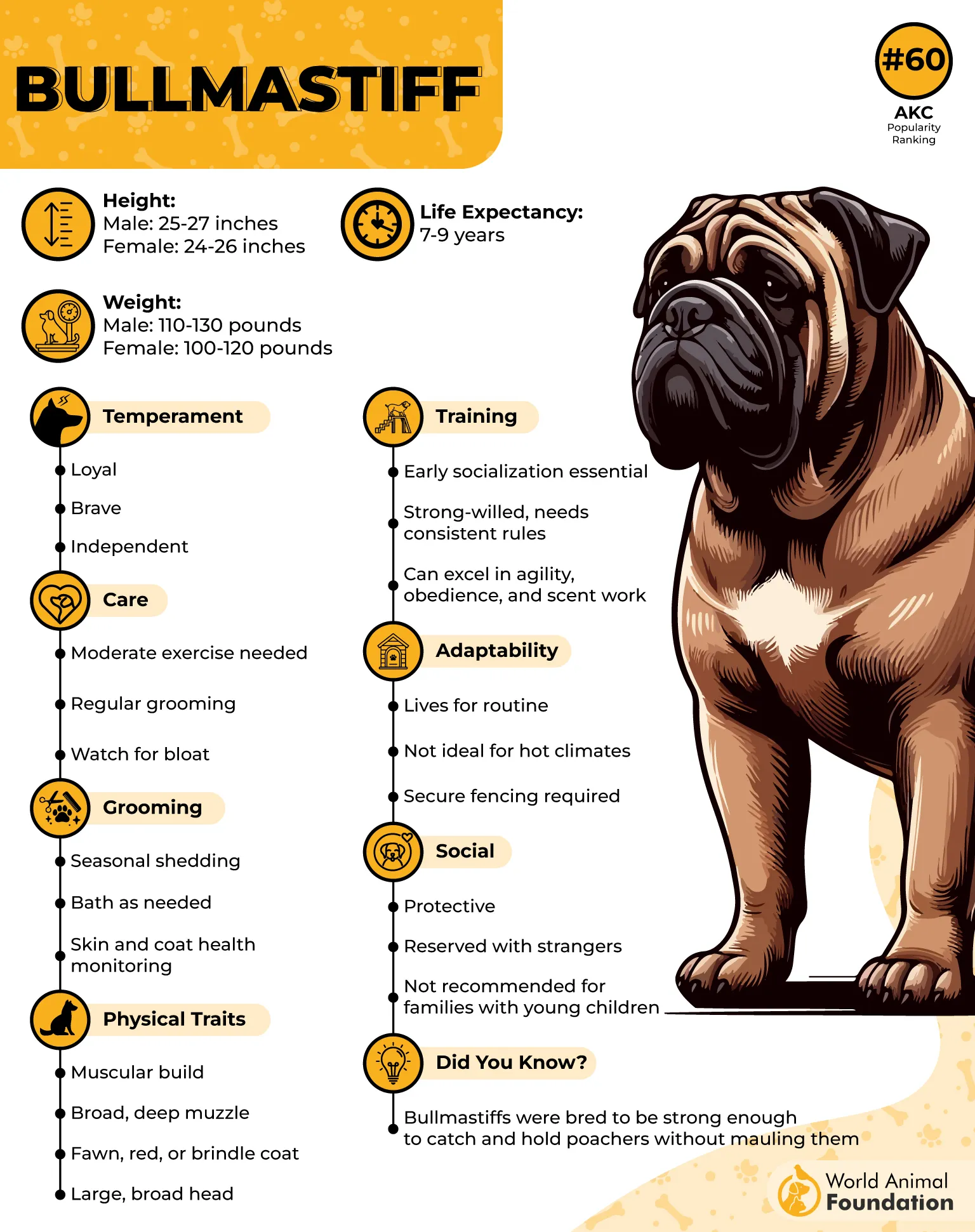
With their own people, Bullmastiffs can be affectionate, devoted, and gentle with children. Other animals are a more individual matter. They may be less friendly toward unfamiliar dogs, so careful introductions and sensible supervision can help keep shared spaces comfortable.
Why This Breed is Worth Considering
Short coat needs only occasional brushing
Moderate walks can meet much of the breed’s routine activity needs
5. Irish Wolfhound
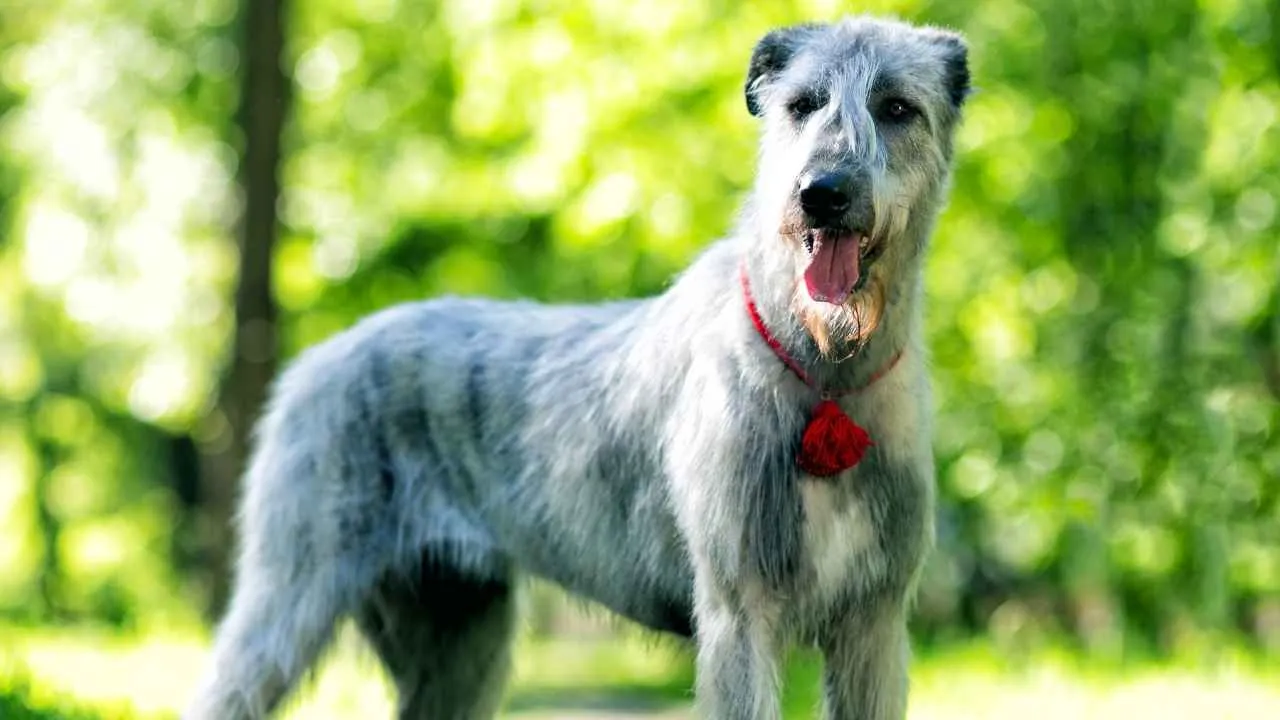
Well, the Irish Wolfhound has a presence that can fill a room without filling it with commotion. This gentle giant is typically calm and docile. Its easygoing character feels pleasantly softer than its imposing appearance might suggest.
Better yet, the Irish Wolfhound is sweet, loyal, and happiest near the people it loves. Affection matters to this dog. Its moderate energy level means lounging on the couch can be just as appealing as heading outside.
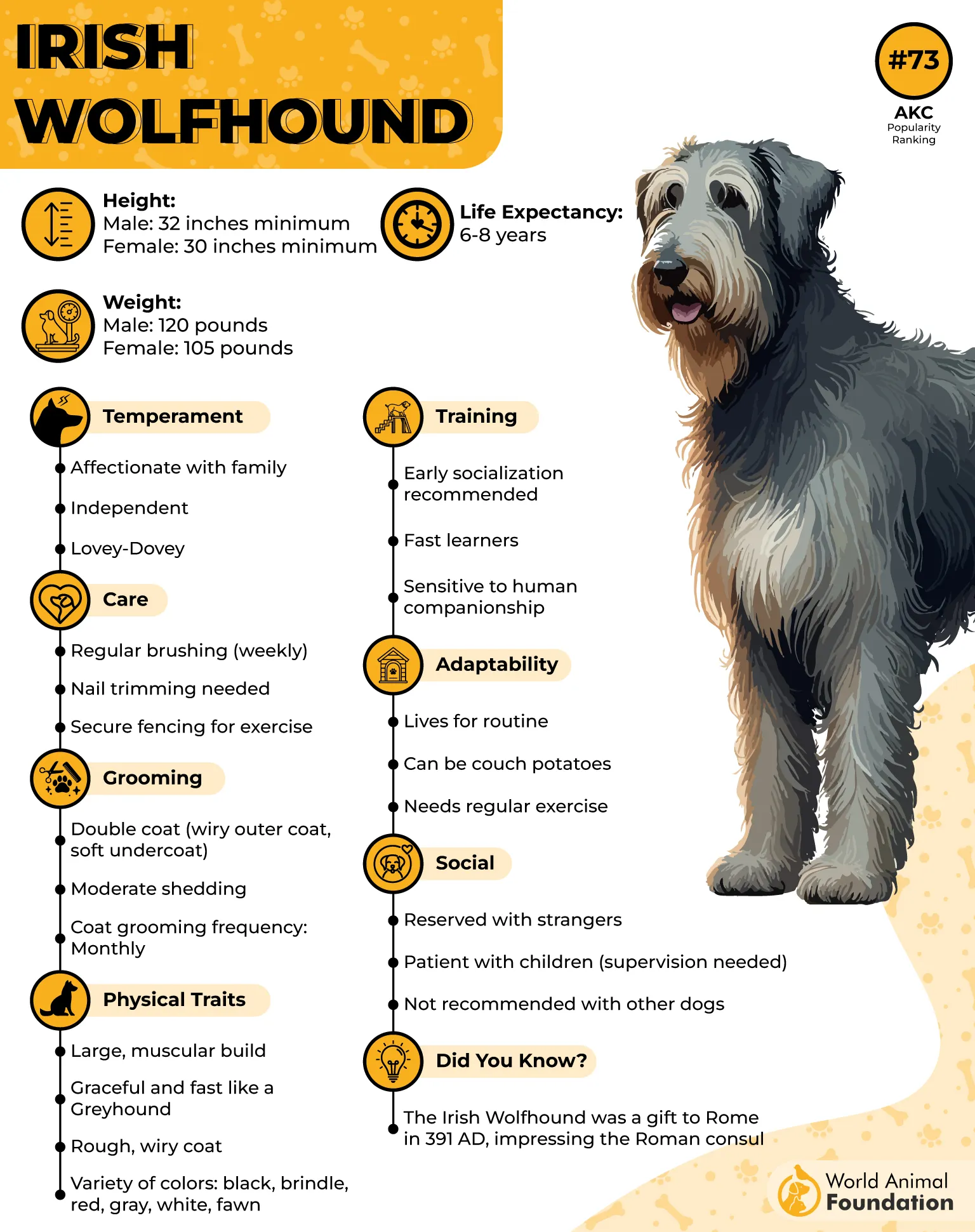
Still, that relaxed personality comes with a hunter’s instinct tucked underneath. The Irish Wolfhound may be cautious around other dogs at first. Its strong prey drive means smaller animals need thoughtful introductions and careful supervision.
Why This Breed is Worth Considering
Sensitivity to people can make it suitable for therapy work
Tracking and agility offer engaging ways to stay active
6. Scottish Deerhound
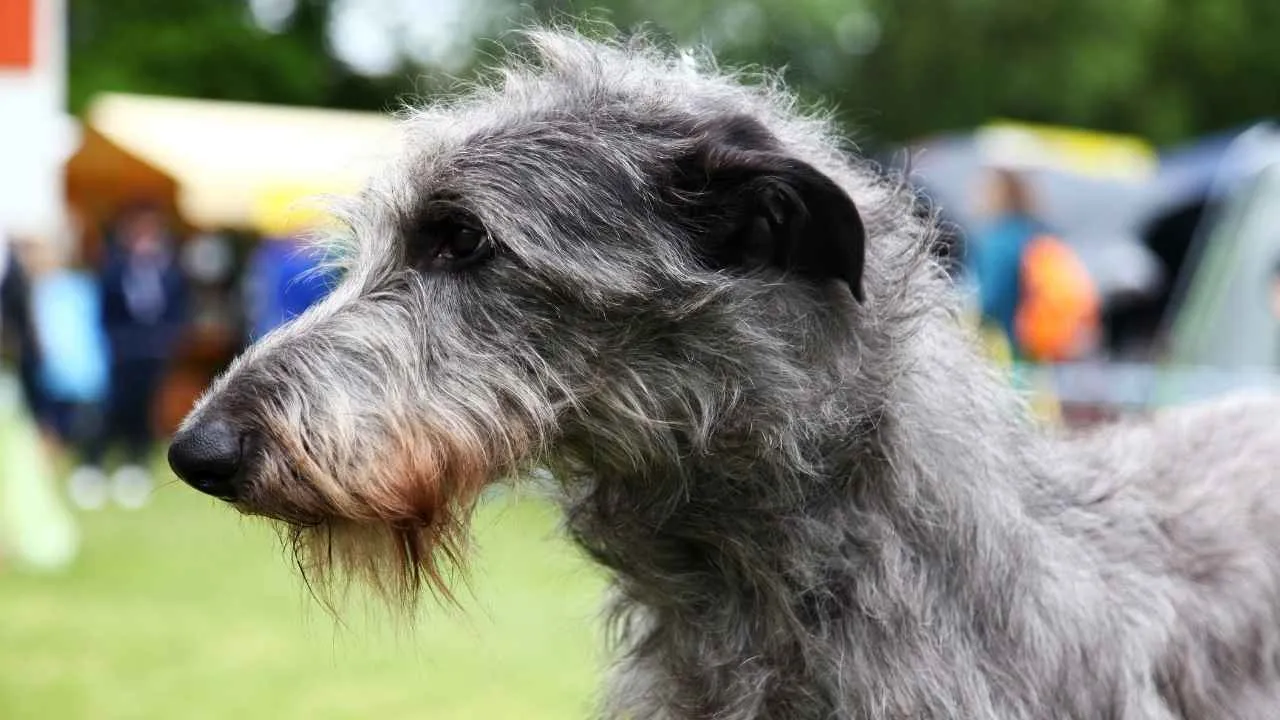
Back in the Scottish Highlands, the Scottish Deerhound was bred to pursue wild red deer. That gives this elegant hound some serious athletic history. Indoors, though, the grand background gives way to a gentle companion that enjoys staying close.
Funny enough, the Scottish Deerhound is not interested in providing commentary on every little household event. It tends to be very quiet overall. Excessive barking is considered unusual, giving this enormous hound a wonderfully understated indoor presence.
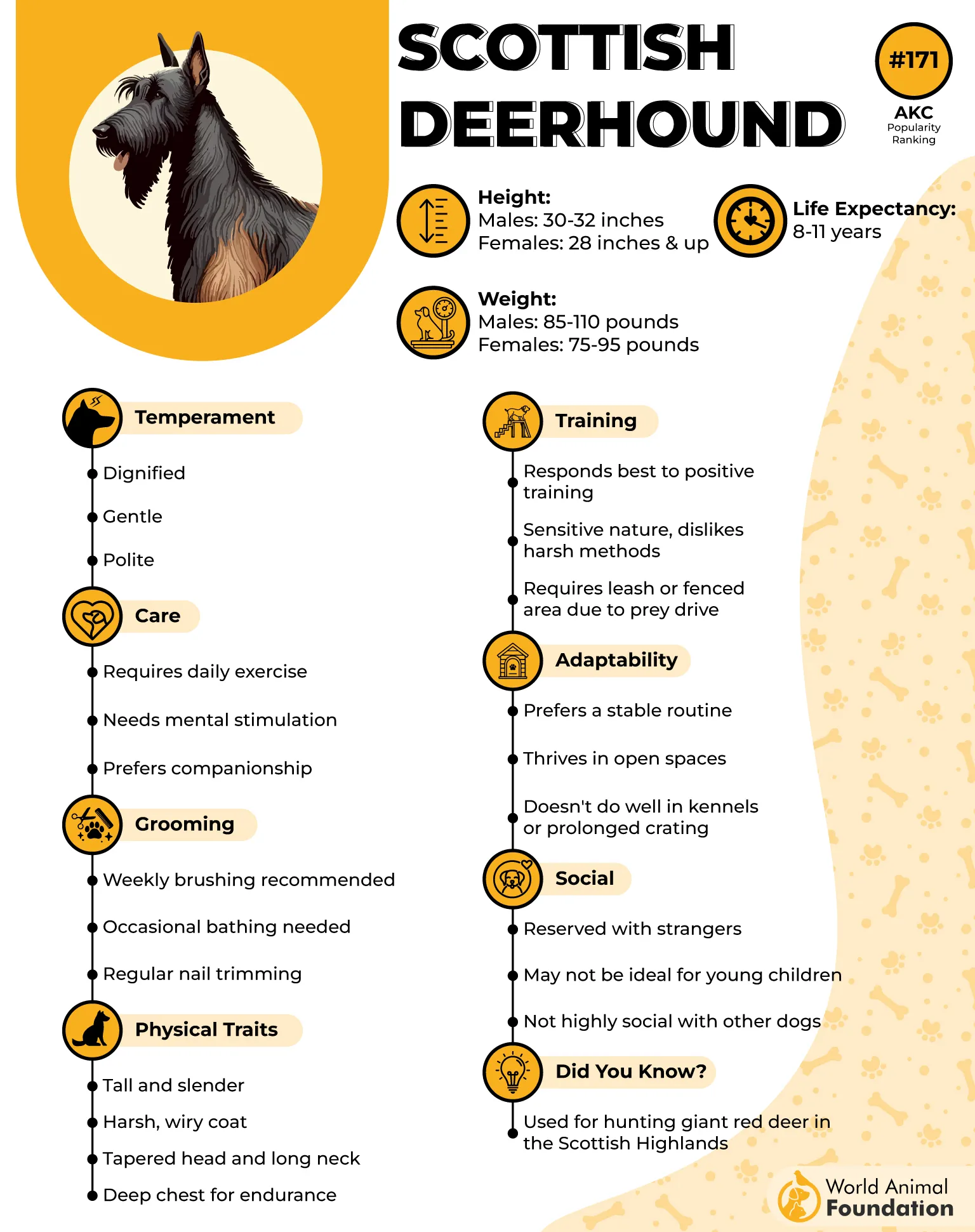
As mentioned by WebMD, Scottish Deerhounds are naturally polite and often need little formal training. These sensitive dogs respond best to positive reinforcement. Repetitive drilling is better skipped once they have successfully completed an exercise.
Why This Breed is Worth Considering
Adult Deerhounds can become enthusiastic couch loungers
Strong running ability suits households that enjoy outdoor activity
7. Broholmer
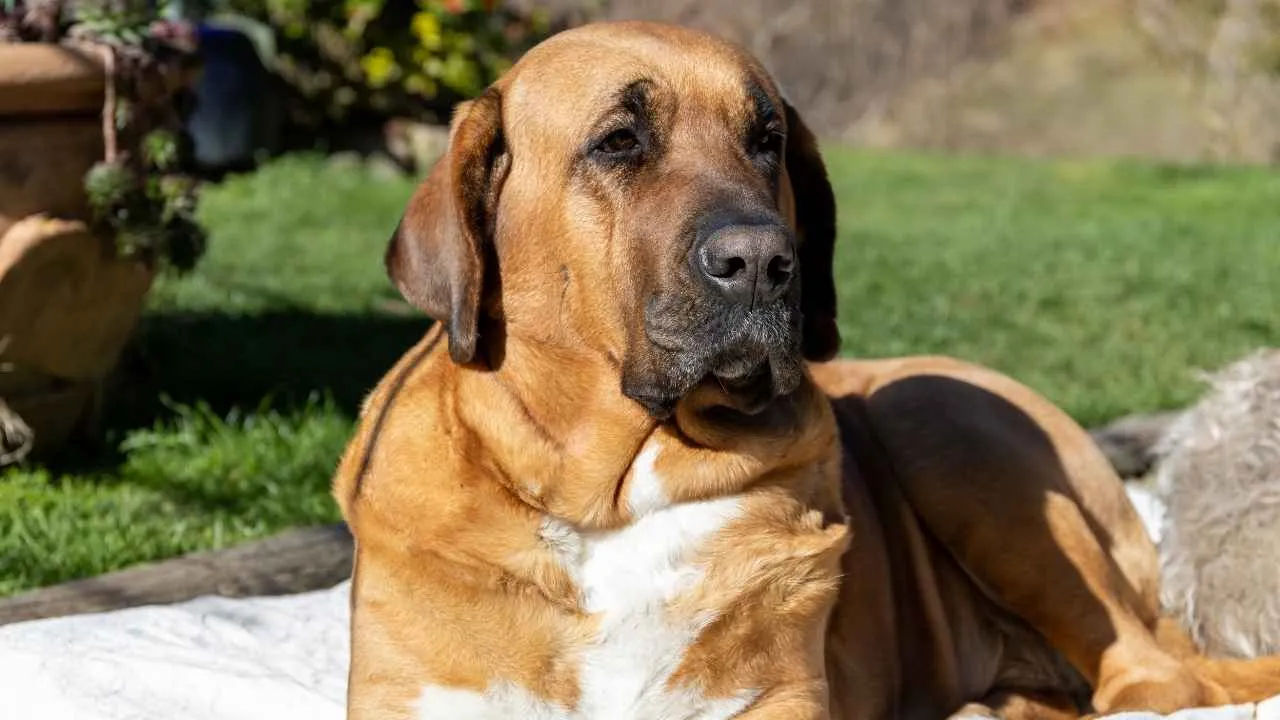
Now, the Broholmer brings a powerful build with a surprisingly soft social side. This Danish giant is known as a family companion. It enjoys being near its people, bringing confident canine presence without an endlessly busy personality.
Personality-wise, the Broholmer is calm, good-natured, watchful, and confident. That is quite the combination. It can be affectionate with family while remaining aware of strangers, so its protective side comes wrapped in a steady, friendly temperament.
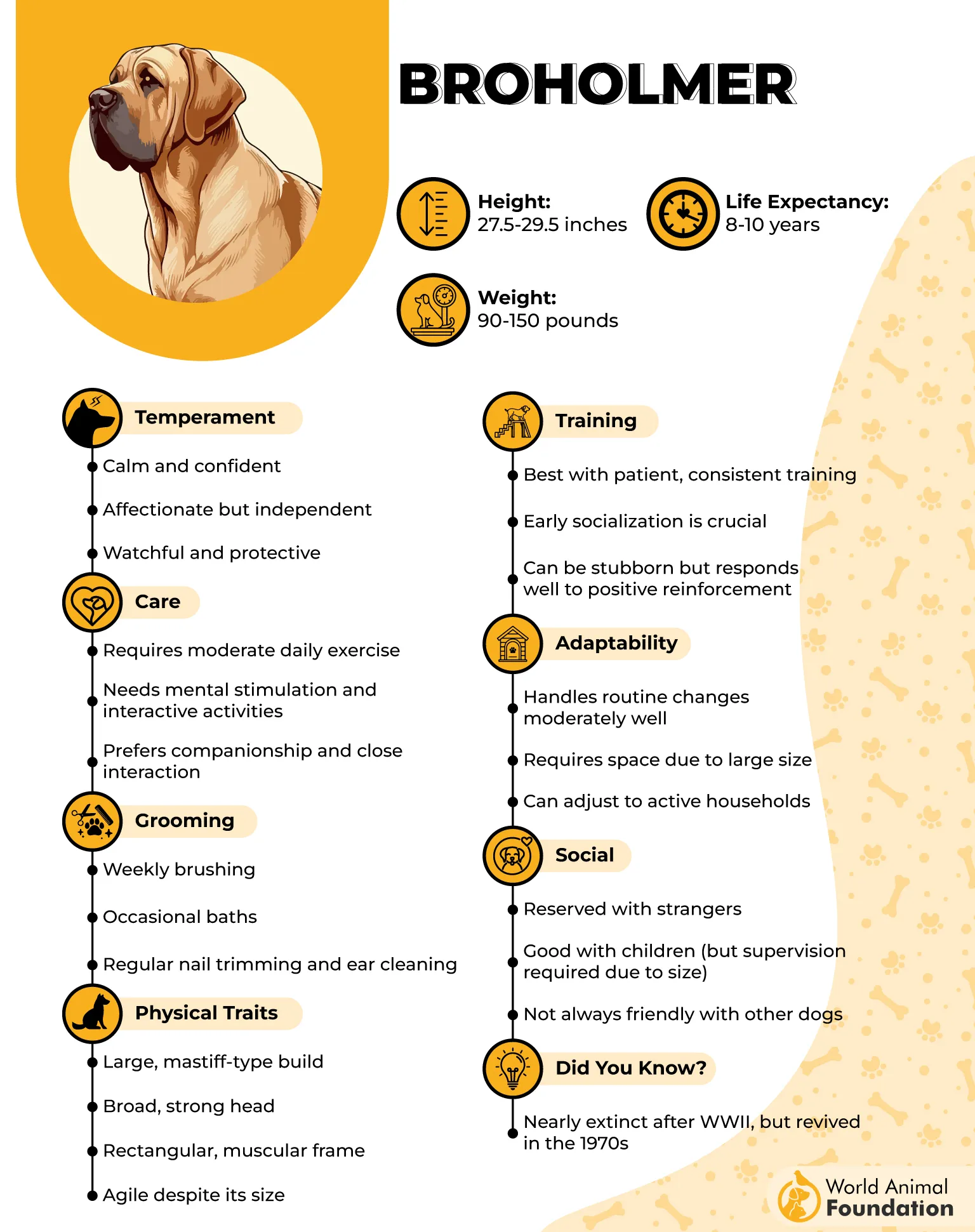
Best of all, the Broholmer can settle nicely into family life when its needs are met. Its low barking tendency suits a quieter household. Regular activity still gives this adaptable dog an appropriate outlet for its energy.
Why This Breed is Worth Considering
It can get along well with children and other dogs
Agility, obedience, and rally provide versatile activity options
Conclusion
Big dogs do not always bring big noise, and these gentle giants prove it beautifully. From calm family companions to watchful dogs that know when to settle, each breed brings its own personality. The best fit comes down to your household, routine, and the kind of presence you want around you.
So, take a moment and picture which personality feels right for your home. A quieter companion can still bring plenty of affection, character, and memorable moments without turning every little sound into an announcement. Pick thoughtfully, trust the match that feels natural, and enjoy getting to know your future giant friend.
