




Some dogs are pure vibes, and some are full-on security systems with fur. If you’re looking for a loyal companion who will also keep a serious eye on your home, protective breeds bring that perfect mix of love and alertness. They’re not just pets—they’re guardians who take their role very seriously.
But here’s the thing: a great guard dog isn’t just about size or a scary bark. It’s about intelligence, training, instinct, and the bond it shares with its family.
These dogs don’t protect everyone—they protect their people, and that loyalty hits differently.
In this guide, we’re breaking down seven ultimate protective dog breeds that are known for their strength, awareness, and unwavering devotion. Expect real facts and practical insights, as we explore what makes these dogs the ultimate family protectors.
Ultimate Protective Dog Breeds That Will Guard Your Family
1. Akita
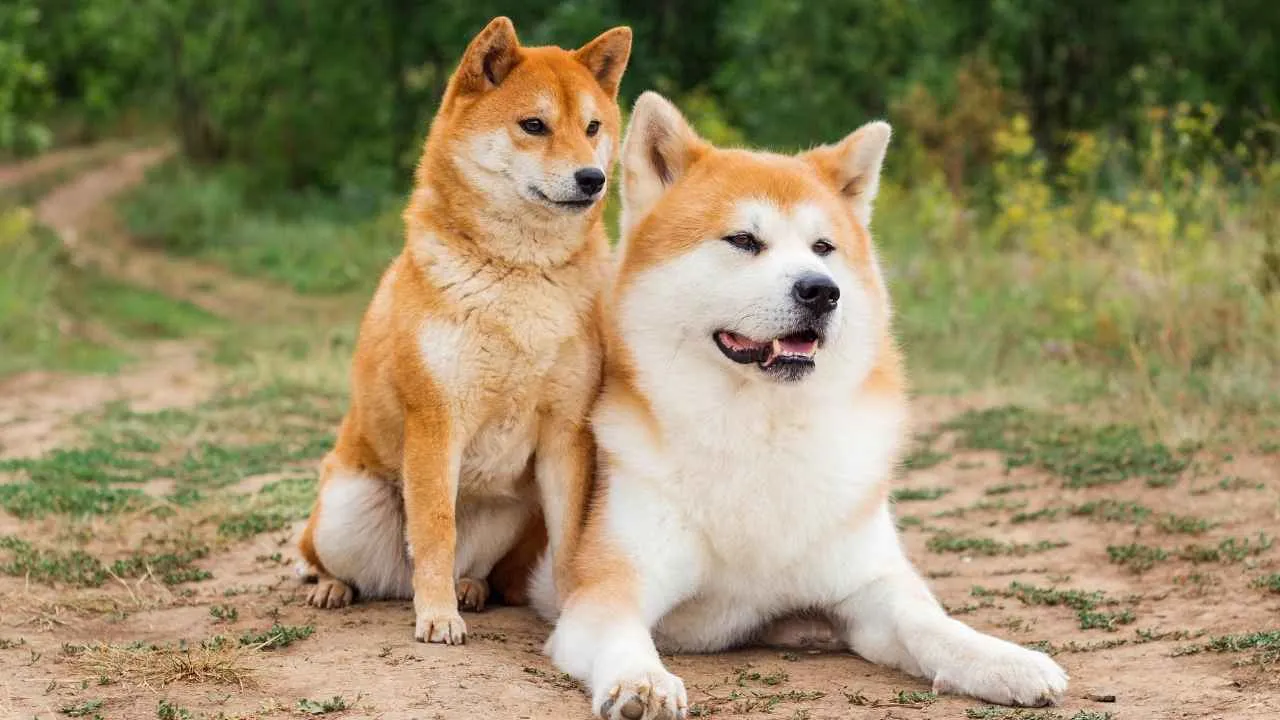
Akitas are basically loyal in physical form, and the story of Hachiko proves it on a legendary level. Originating in Japan’s Akita Prefecture, these dogs were once guardians of royalty and hunters of large game. That mix of duty and independence still defines them today.
Physically, Akitas are large, muscular, and built like quiet tanks. According to the AKC, males can weigh over 100 pounds and have a posture that screams authority without making a sound. They’re not loud—but they’re always watching.
Their protective instinct is subtle but powerful, often showing through calm observation rather than aggressive reactions. They tend to assess situations before acting, which makes them reliable but also independent thinkers. This means training isn’t optional—it’s essential.
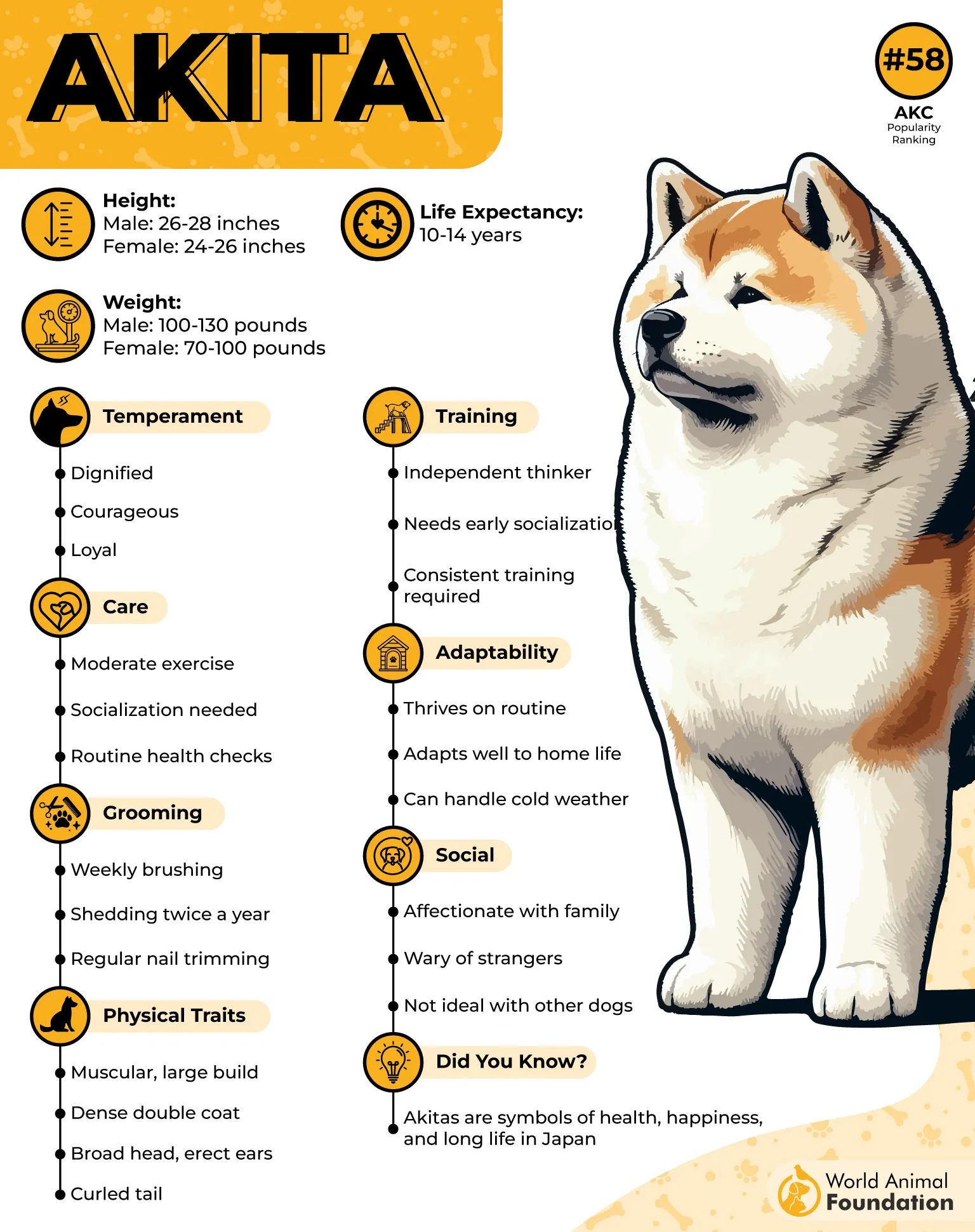
Because of their hunting background, Akitas have a strong prey drive. Owners frequently report that once they lock onto a moving target, recall becomes… aspirational at best. Secure environments and leash discipline are musts.
They thrive with experienced owners who understand firm but fair leadership. With proper socialization, they balance their protective nature with controlled behavior. Without it, they can become overly territorial, which is not the vibe you want.
Three Ways They Guard Their Families
Quiet observation that shifts into action only when needed
Deep loyalty creates an instinct to defend loved ones
Strong territorial awareness without excessive barking
2. Bullmastiff
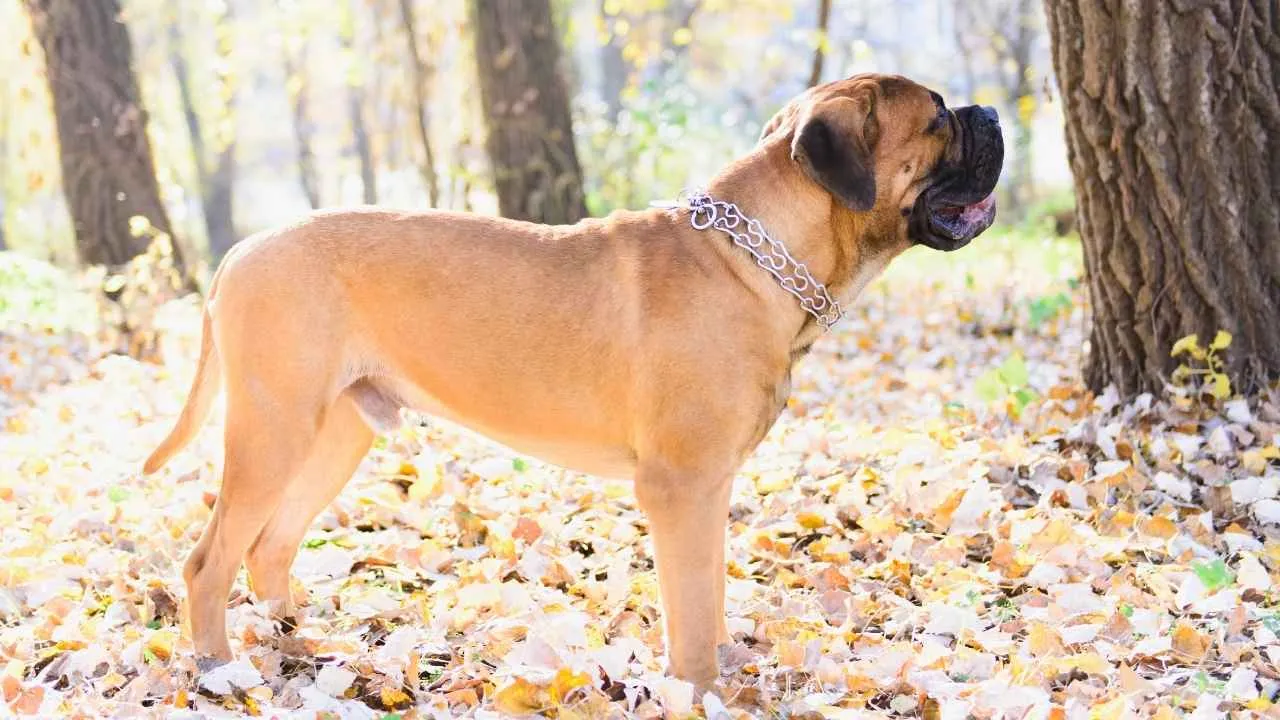
The Bullmastiff was literally engineered for protection, originally used by English gamekeepers to stop poachers. Its job wasn’t to attack—it was to track, pin, and hold intruders. That level of control is rare and incredibly valuable.
They’re massive, often hitting 80-100 pounds, with a solid, muscular frame. Their physical presence alone can deter most threats before anything even happens. Think of them as living “do not trespass” signs.
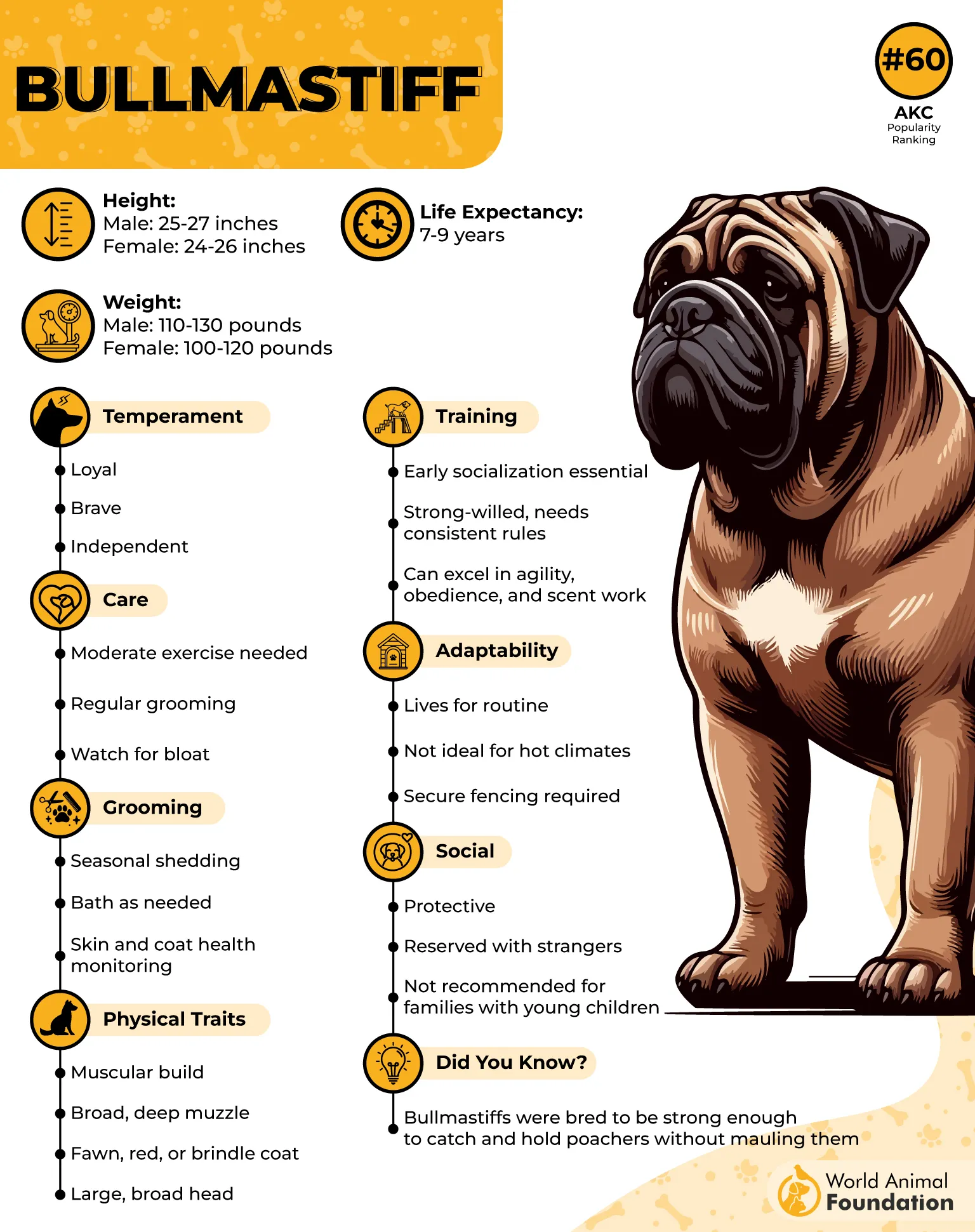
Despite their size, they are known for being calm and affectionate at home. Many families describe them as gentle giants, especially good with older children. But around strangers? They switch to alert mode instantly.
Training and early socialization are critical, especially due to their strength. Experts recommend starting obedience work early because managing a full-grown, untrained Bullmastiff is extremely difficult. Structure is everything with this breed.
They don’t need extreme exercise, but they do require mental engagement and consistent routines. Veterinary checkups are also important due to their size-related health risks. When properly raised, they’re calculated, not reactive.
Three Ways They Guard Their Families
Controlled restraint tactics instead of reckless aggression
Intimidating build that prevents threats before escalation
Calm decision-making under pressure
3. Boxer
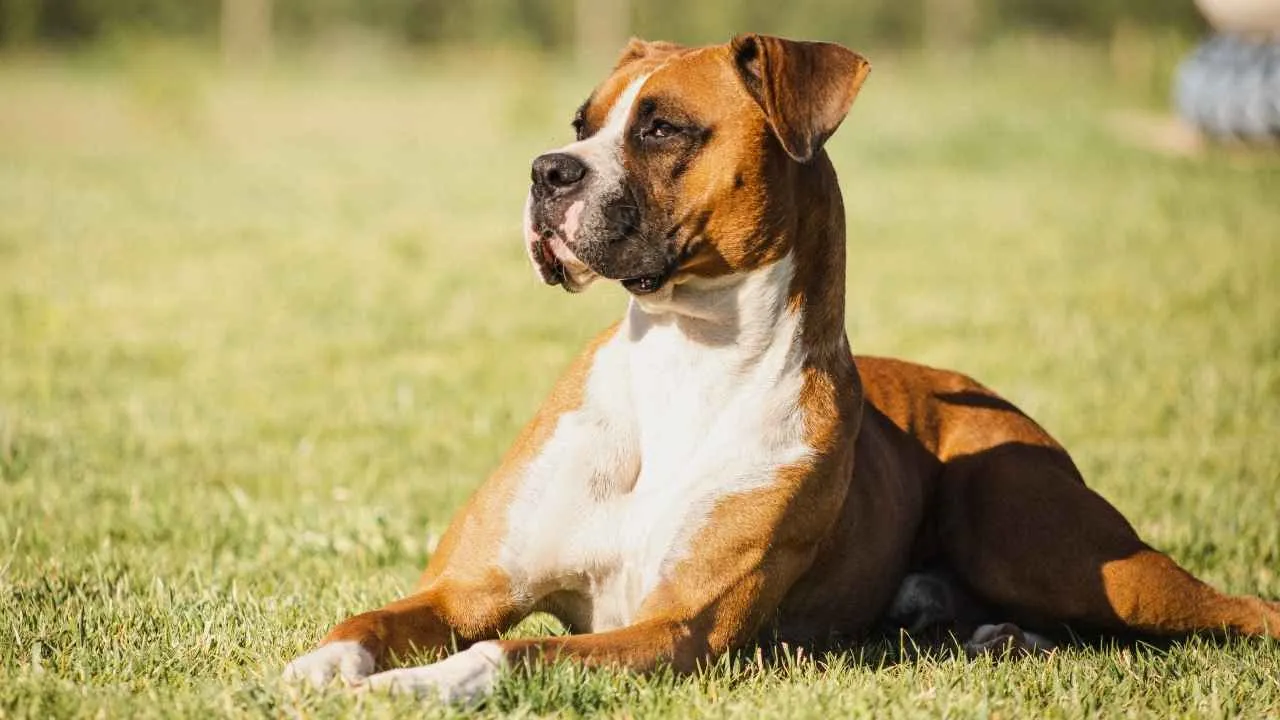
The Boxer is that chaotic good character who’s always playful but instantly serious when needed. They’re muscular, energetic, and extremely loyal to their families—basically, a protector with personality.
Their athletic build allows for quick reactions and powerful movement. Combined with a loud, assertive bark, they’re excellent at deterring unwanted visitors. Studies on watchdog behavior consistently rank Boxers high in alertness.
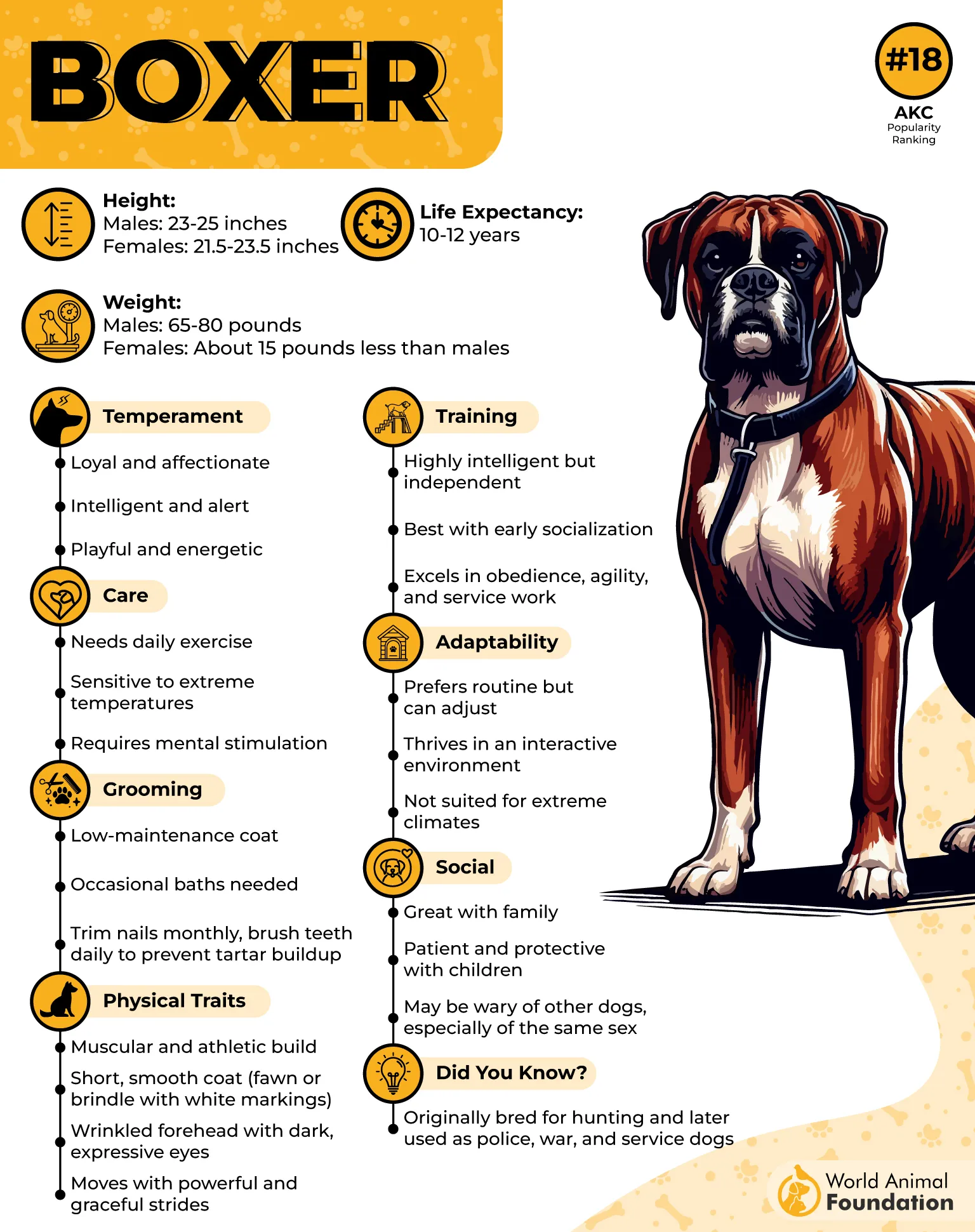
Gentle and patient, they’re naturally protective but not overly aggressive, which makes them great for families. Their ability to distinguish between normal and threatening situations is a big plus. You get security without unnecessary drama.
Daily exercise is essential for Boxers, who have high energy levels. Without it, they can become destructive or overly excitable. Think of them as needing both physical workouts and mental challenges.
Owners often mention how emotionally aware these protective guard dogs are. These loving family pets pick up on tone, behavior, and changes in environment quickly. It’s like having a guard dog that also doubles as your emotional support system.
Three Ways They Guard Their Families
Quick reflexes backed by strong physical capability
Protective instincts balanced with family-friendly behavior
Vocal alerts that immediately signal unusual activity
4. Rhodesian Ridgeback
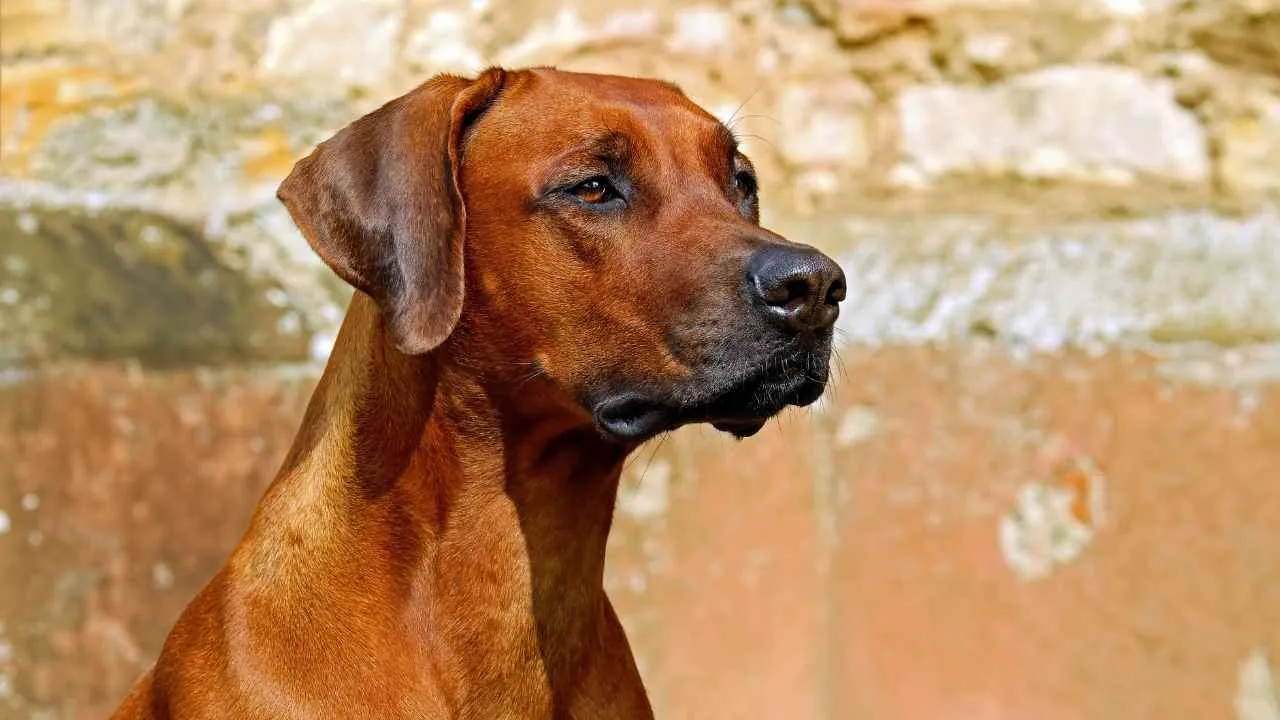
The Rhodesian Ridgeback has one of the wildest résumés—this breed was used to hunt lions in Africa. That level of courage and endurance translates directly into their ability to guard. They’re not flashy, but they’re extremely capable.
They’re known for being quiet and composed, rarely barking unless necessary. This calm demeanor can fool people into underestimating them. But behind that calm is a constant awareness.
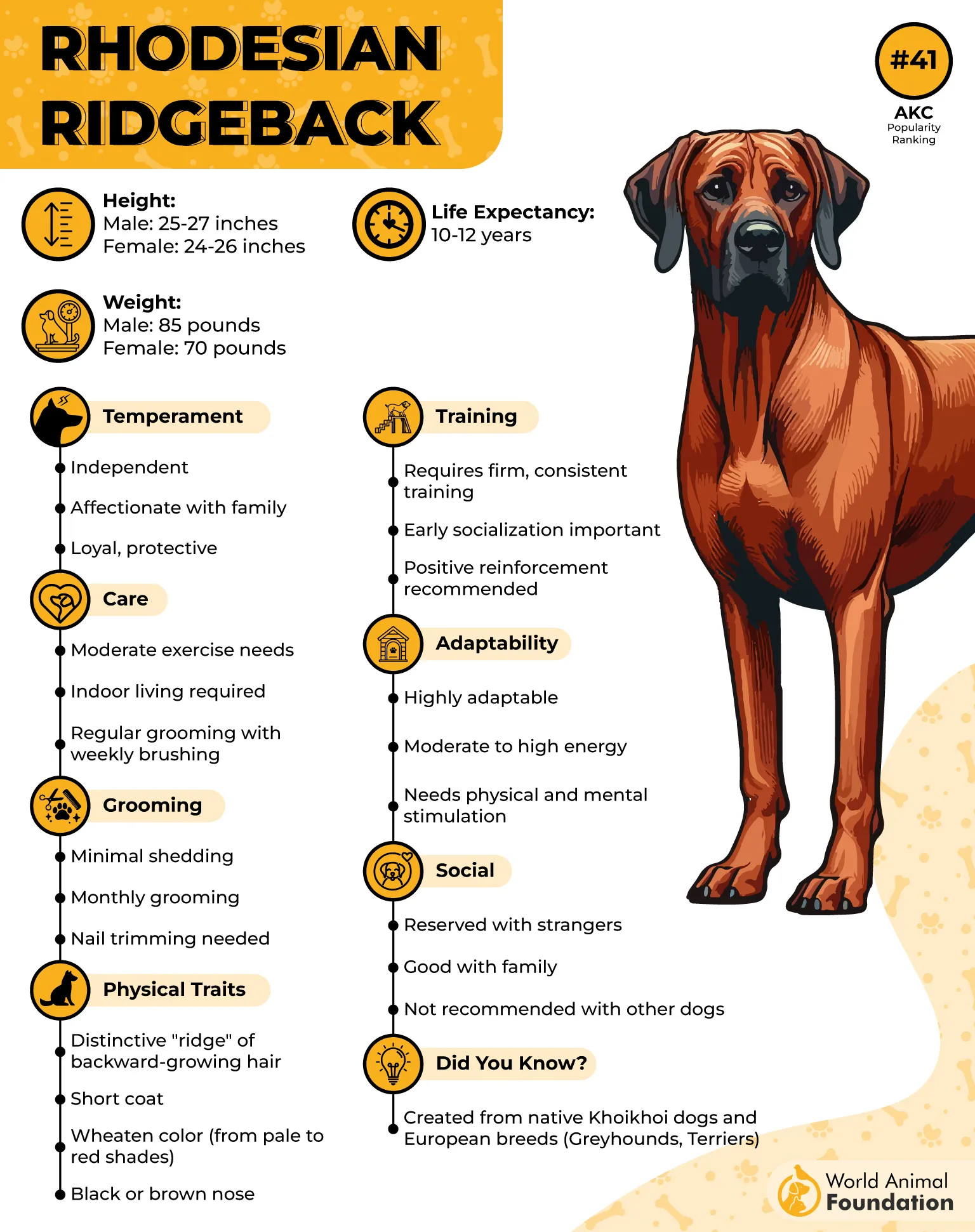
Ridgebacks are independent thinkers, which can make training challenging. They don’t unthinkingly follow commands—they analyze situations. This trait is powerful but requires experienced handling.
They’re loyal and affectionate with their families but naturally reserved with strangers. Early socialization helps them maintain balance and avoid excessive aloofness. Without it, they can become too distant.
These family guard dogs need regular exercise to stay mentally and physically fit. Long walks, runs, and structured play are ideal. A bored Ridgeback is not just lazy—it’s potentially destructive.
Three Ways They Guard Their Families
Fearless background rooted in big-game hunting
Silent monitoring before decisive action
Strong territorial instincts with minimal noise
5. Leonberger
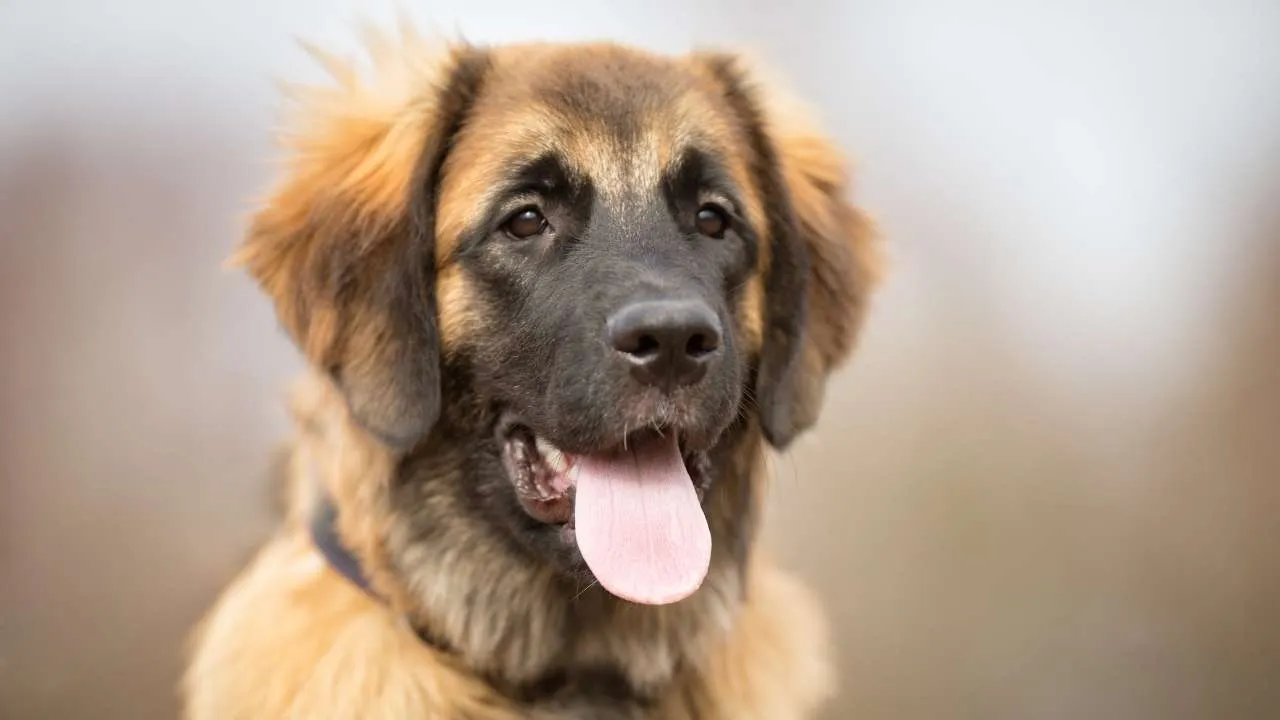
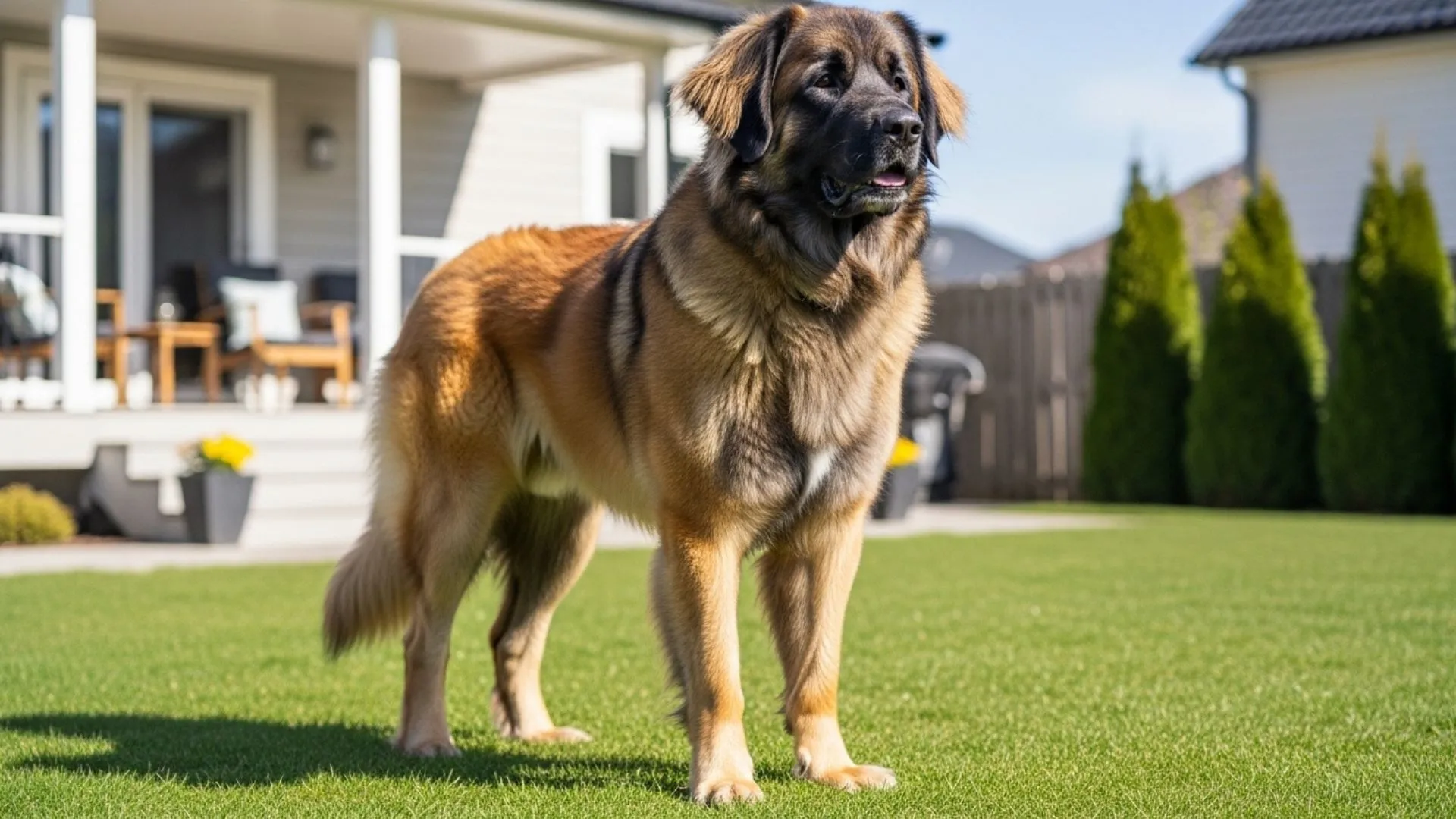
The Leonberger looks like a lion, and honestly guards like one, too. These dogs are huge, often weighing up to 170 pounds, and their presence alone is enough to make intruders rethink their life choices. Size = instant deterrence.
Despite their intimidating appearance, these natural guard dogs are known for their calm, stable temperament. They don’t overreact, which makes them reliable in family environments. Chaos doesn’t shake them easily.
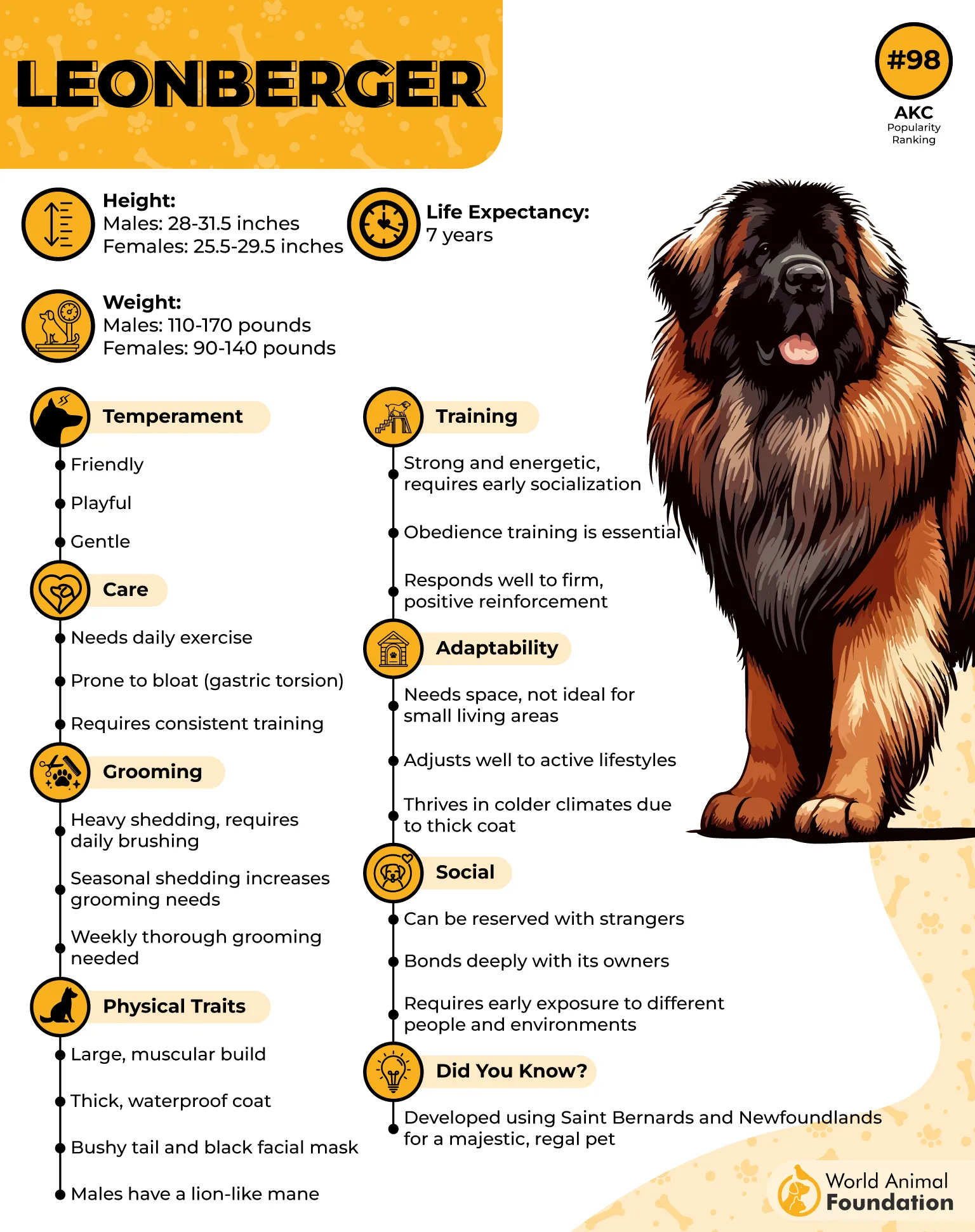
WebMD notes that they’re affectionate and social, especially with children and other pets. However, their size means training is essential to prevent accidental harm. A playful jump from a Leonberger hits different.
Historically, this guard dog breed was used as a working breed, performing guarding and rescue roles. Some accounts even link them to European royalty in the 19th century. That heritage shows in their confidence.
Great guard dogs require regular grooming and moderate exercise to stay healthy. Early socialization ensures they remain friendly and balanced. When raised properly, they’re both gentle companions and strong protectors.
Three Ways They Guard Their Families
Massive stature creates an immediate psychological barrier
Calm temperament that avoids unnecessary escalation
Natural territorial behavior without excessive aggression
6. German Shepherd
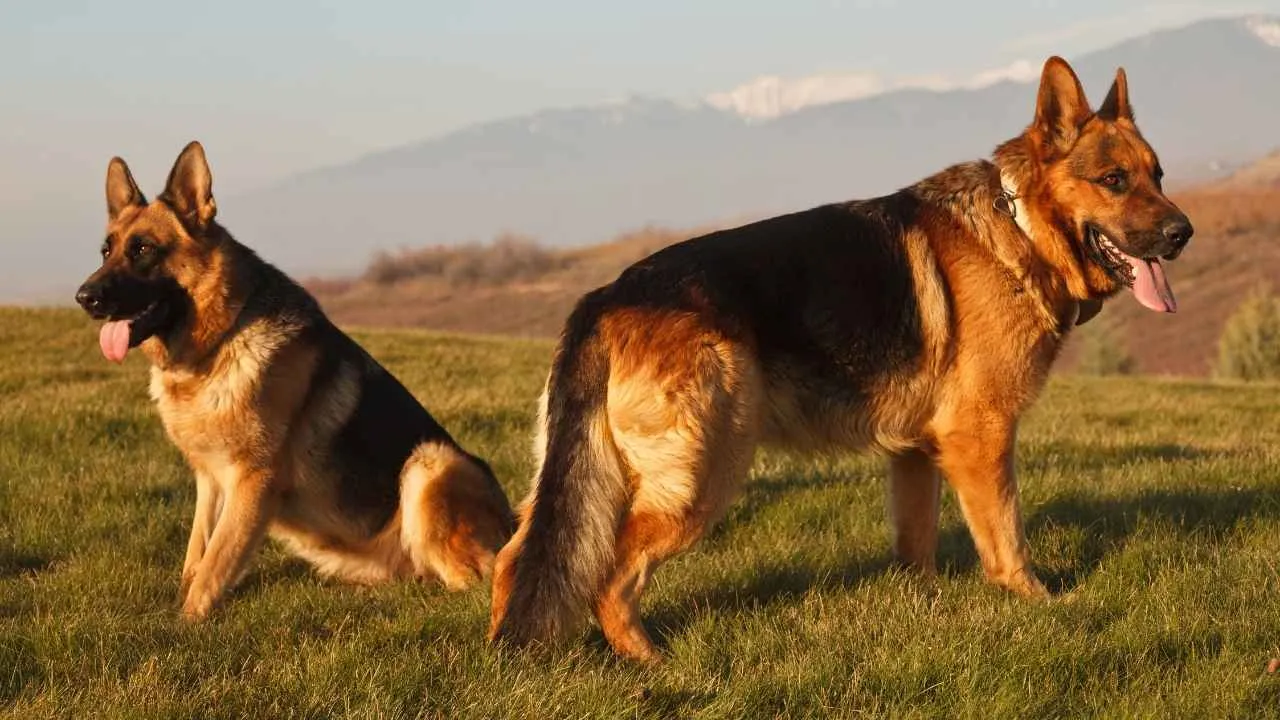
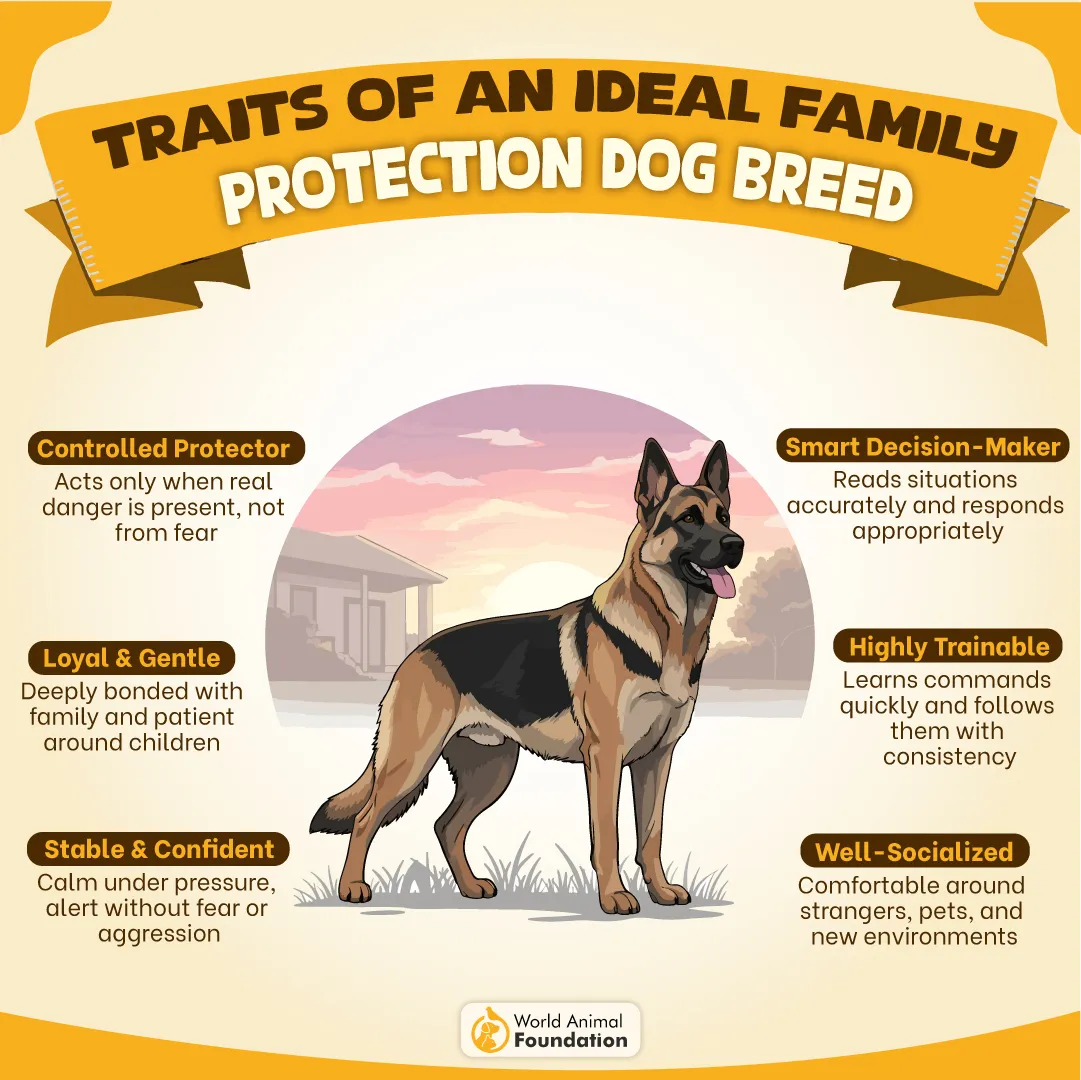
The German Shepherd is basically the GOAT of protection dogs. Used globally in police and military roles, it combines intelligence, strength, and discipline like no other. If you want reliability, this is it.
They’re incredibly trainable, often learning commands in fewer than five repetitions. Research in canine cognition consistently places them among the top three smartest breeds. That intelligence is what makes them elite.
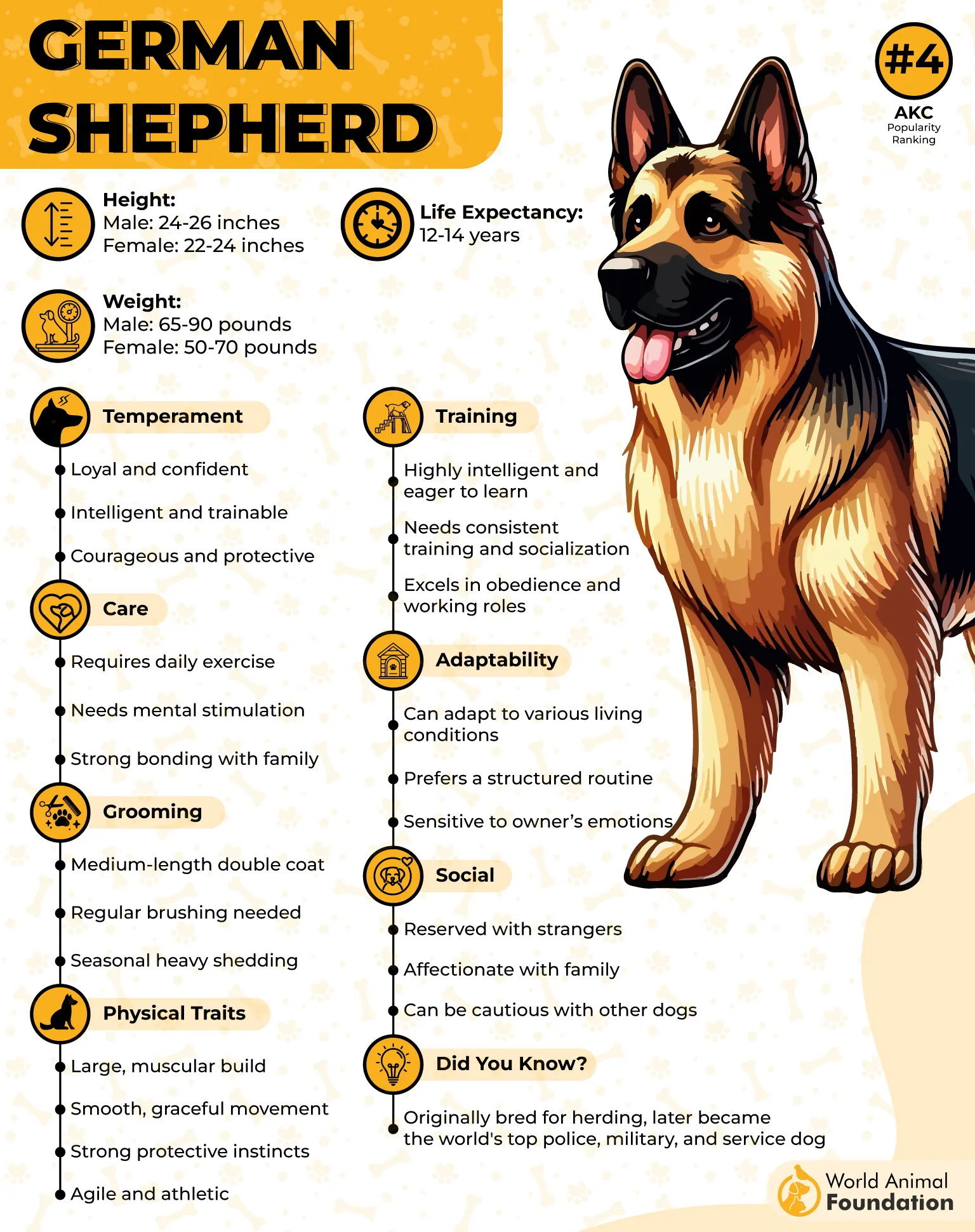
These excellent guard dogs are built for endurance and agility. They can work for long hours without fatigue, which is crucial for protection roles. This isn’t just strength—it’s sustained performance.
This breed of dog is deeply loyal and protective of its family. It can distinguish between real threats and normal interactions, making it safe around children when properly trained. That judgment ability is key.
These family pets require proper obedience training, exercise, and mental stimulation. Without it, they can develop behavioral issues. But when raised right, they’re basically professional-grade guardians.
Three Ways They Guard Their Families
Advanced intelligence enabling precise threat evaluation
Strong obedience ensures controlled responses
High stamina allows long-term vigilance
7. Doberman Pinscher
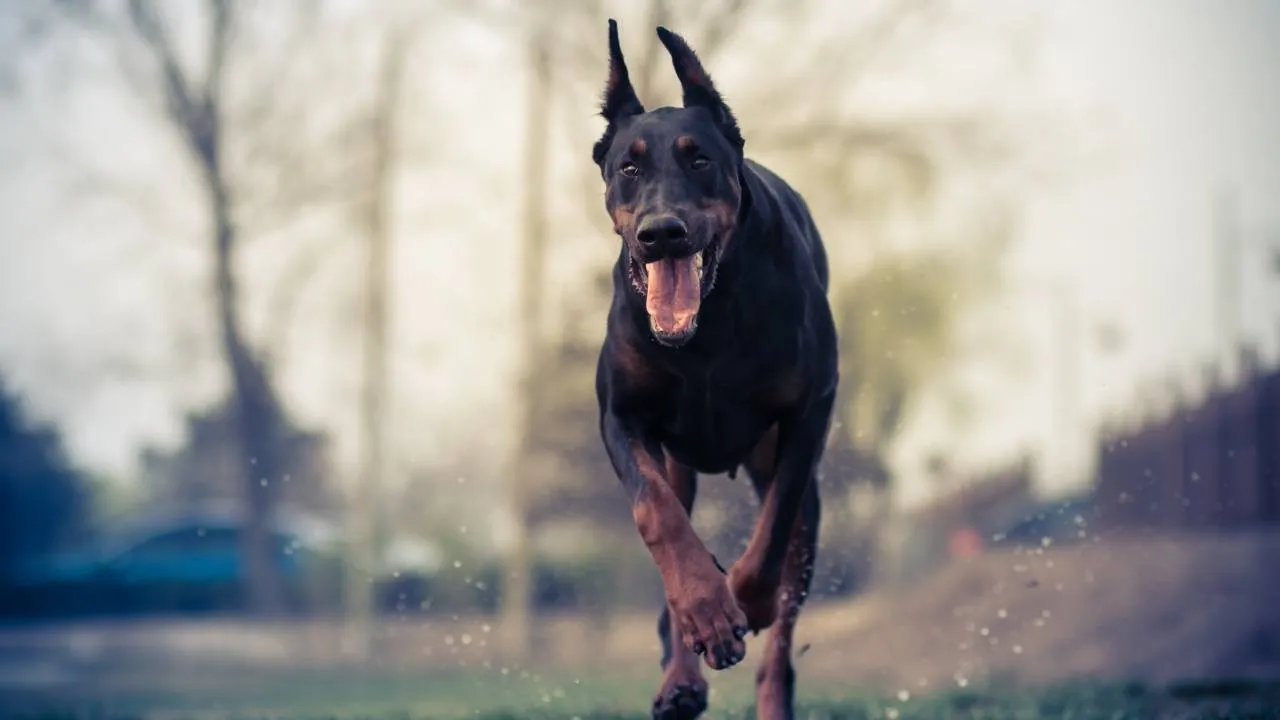
The Doberman Pinscher is sleek, fast, and extremely smart. Often ranked in the top five most intelligent breeds and some of the best guard dogs out there, it is built for both speed and strategy. Think of it as an elite-level security agent.
These family-friendly guard dogs form strong emotional bonds with their families, often attaching closely to one person. This connection fuels their protective instincts on a deep level. They don’t just guard—they care.
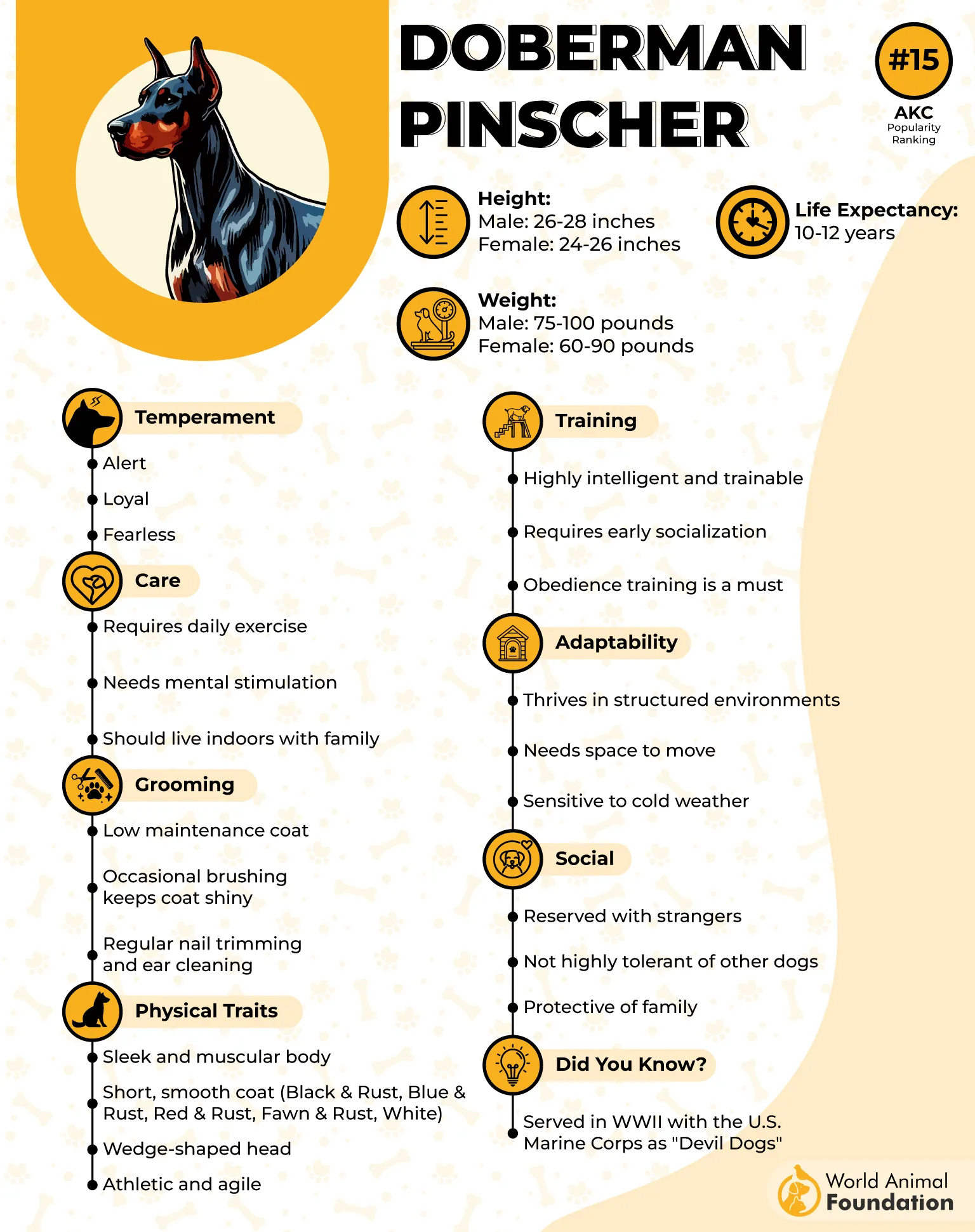
Dobermans are highly perceptive and can read human body language. Studies suggest they’re exceptionally good at detecting emotional changes. Basically, they know something’s wrong before you say it.
Their athletic build allows them to react quickly and efficiently. Combined with intelligence, this makes them one of the most effective guard dogs. Speed and awareness make a deadly combo.
They thrive in active homes where they can stay physically and mentally engaged. Positive reinforcement obedience training is essential to channel their instincts properly. When done right, they’re loyal, loving, and incredibly dependable.
Three Ways They Guard Their Families
Rapid response backed by sharp situational awareness
Emotional bonding that drives protective instincts
Ability to interpret human cues for early threat detection
Conclusion
Protective dog breeds aren’t just about looking tough—they’re about trust, discipline, and connection. Each of these breeds brings a unique style of guarding, from the silent Akita to the tactical Doberman. But none of it works without proper training and responsible ownership.
Bernese Mountain Dog, Cane Corso, Great Pyrenees, and Giant Schnauzer are also considered great guard dogs owing to their intimidating presence.
Choosing a guard dog for your family is a long-term commitment, not just a flex. You’re shaping behavior, not just owning a breed. Get it right, and you’ll have more than a pet—you’ll have a loyal protector who’s always got your back.
