




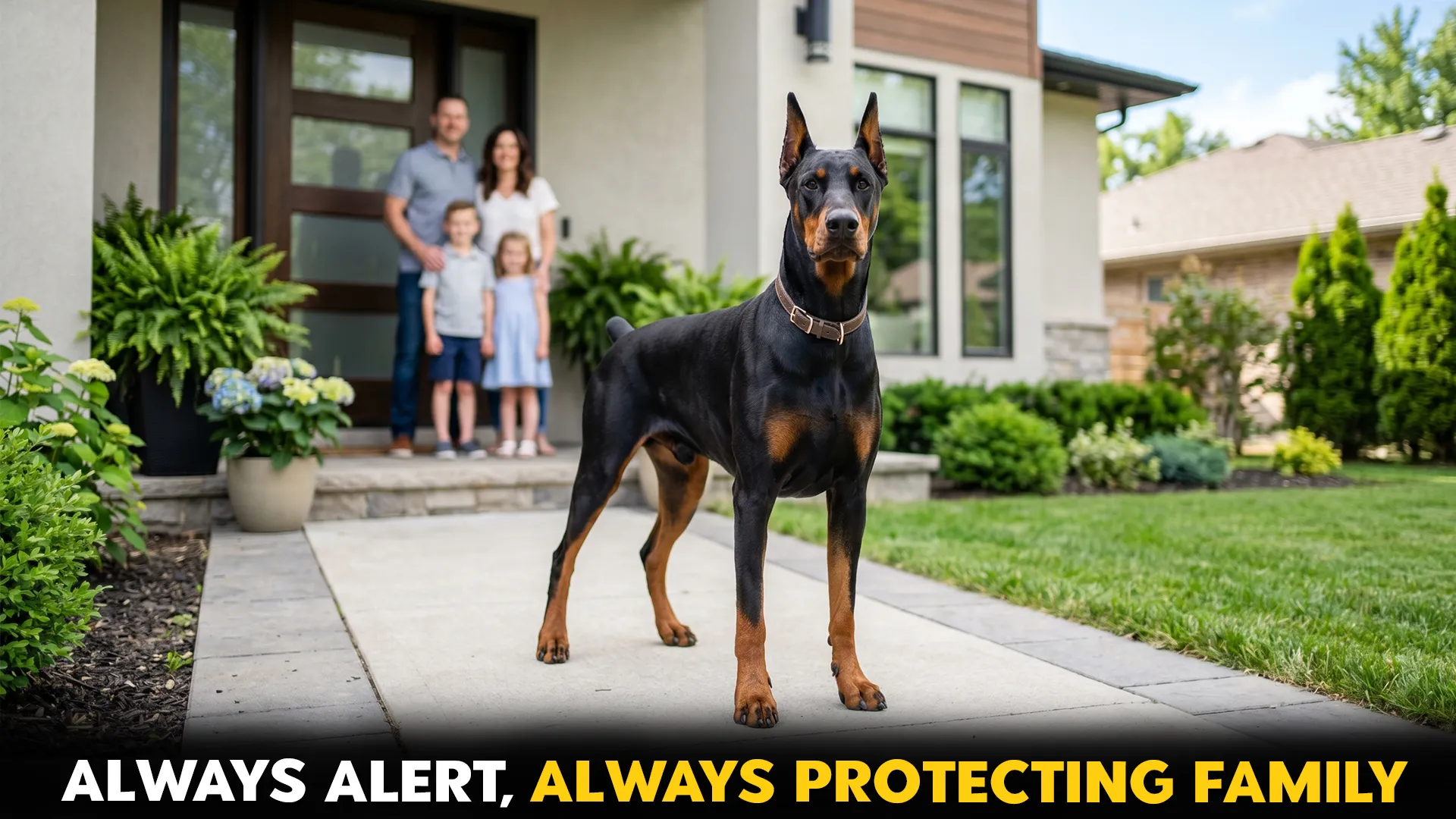
Looking for a dog that is both deeply loyal and naturally protective? That is exactly what true guard dog breeds are known for. These dogs are not just affectionate family companions; they also take their role as protectors very seriously, backed by generations of instinct and working history.
A well-trained guard dog can bring a strong sense of safety and reassurance to a home. While watchdogs may alert you by barking, a great guard dog is capable of staying calm under pressure and, when needed, positioning itself between its family and a potential threat. That level of reliability comes from training, temperament, and purpose-driven breeding.
It’s important to understand that an excellent guard dog is more than just protection. The best breeds offer a complete balance of traits: loyalty, companionship, intelligence, and awareness. When properly socialized and trained, they become dependable partners who fit into family life while still providing security.
In this guide, we’ll explore some of the best guard dog breeds known for their protective instincts and loving nature, dogs that don’t just watch over your home but stand beside you as trusted companions.
Most Protective Dog Breeds Perfect for Family Security
1. German Shepherd
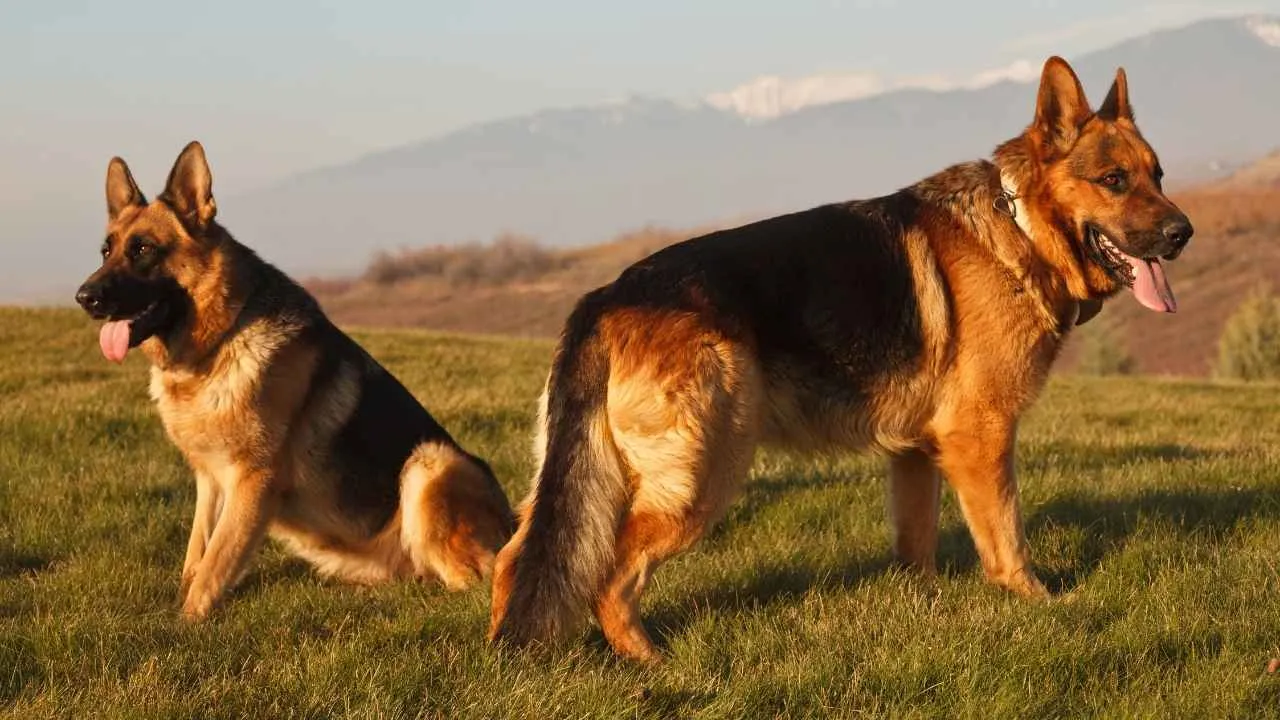
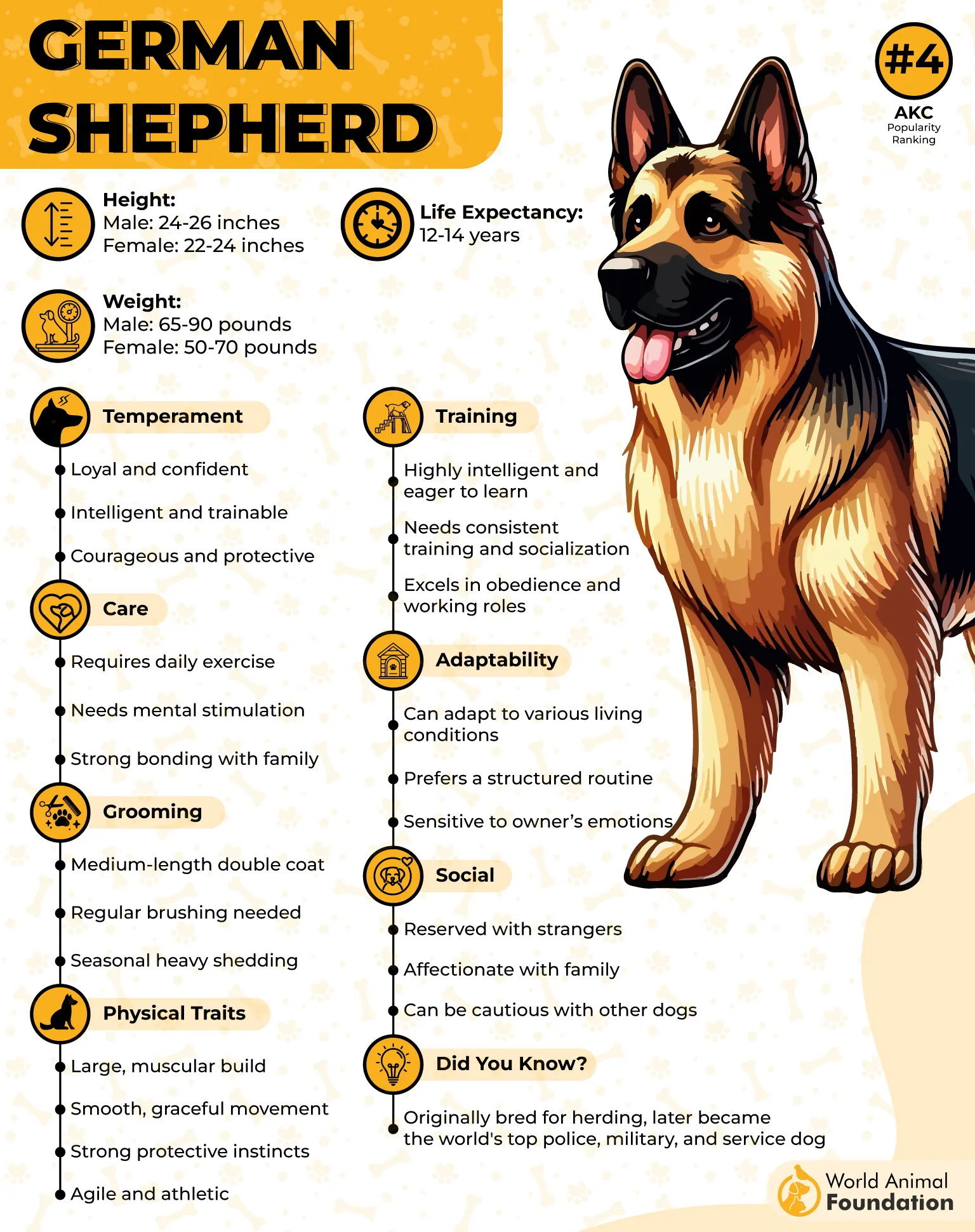
German Shepherds are widely regarded as one of the best choices for home safety and protection. Strong, intelligent, and highly trainable, these dogs are known for their ability to learn quickly and perform complex tasks. This is why they are commonly used in police work, military service, and professional security roles.
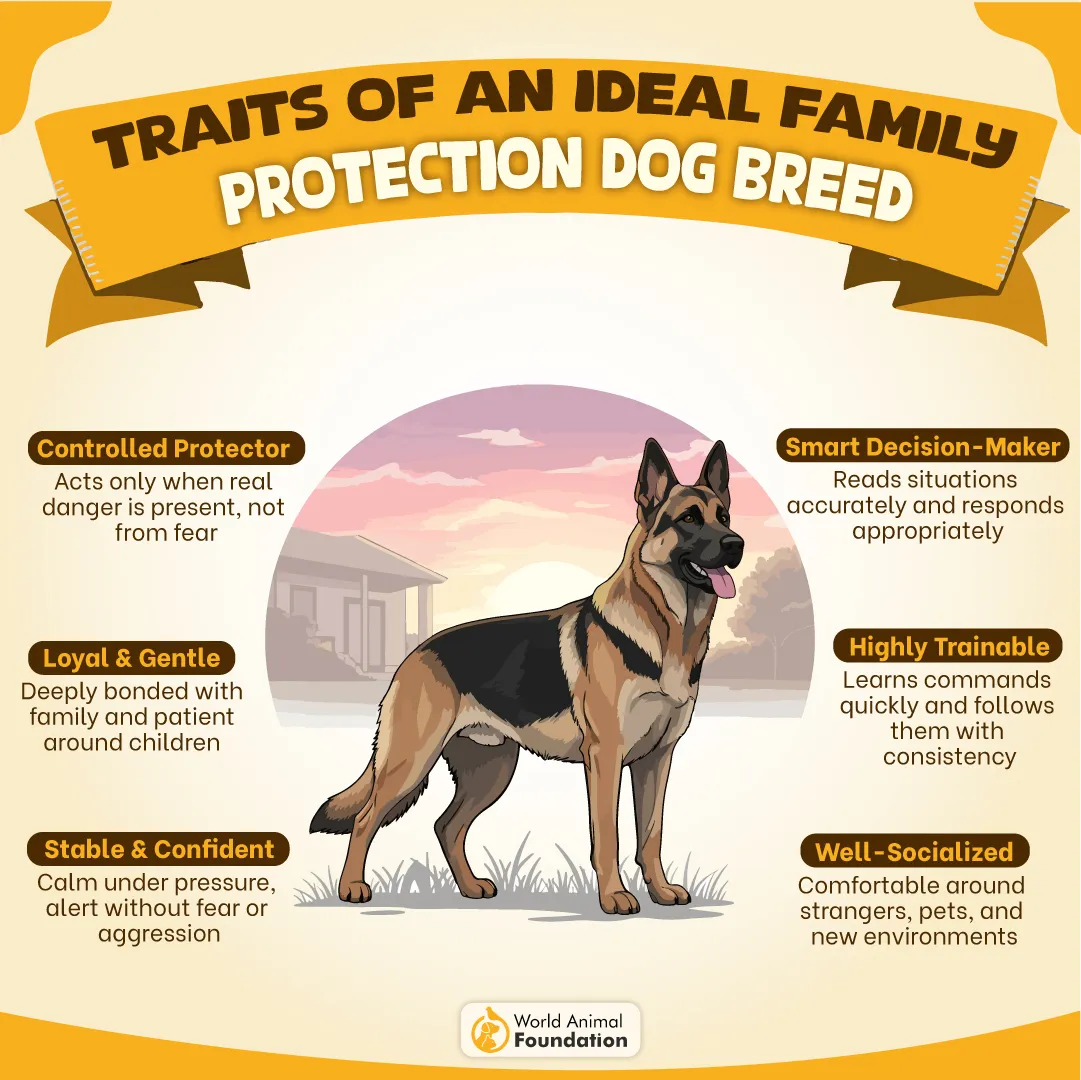
According to Petplan, German Shepherds are among the world’s leading guard dogs due to their intelligence, loyalty, and natural protective instincts.
Life With the Family
German Shepherds can also be wonderful family companions, especially when they are properly socialized from a young age. They are generally gentle with children, deeply loyal to their owners, and naturally protective of their home. They form strong emotional bonds and thrive when they are included in family life and given regular companionship.
Training Tips
Begin obedience training early, ideally during puppyhood.
Use consistent, positive reinforcement obedience training to encourage good behavior.
Early socialization helps them adapt well to other pets and different environments.
2. American Pit Bull Terrier
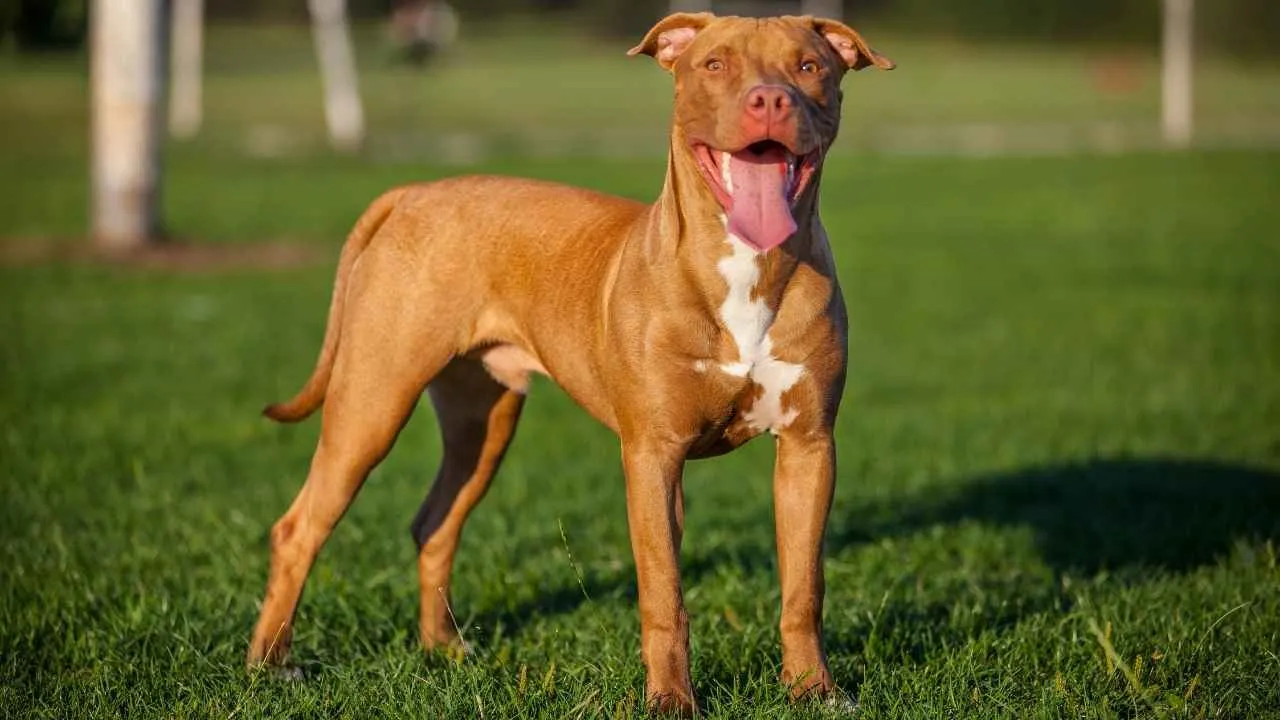
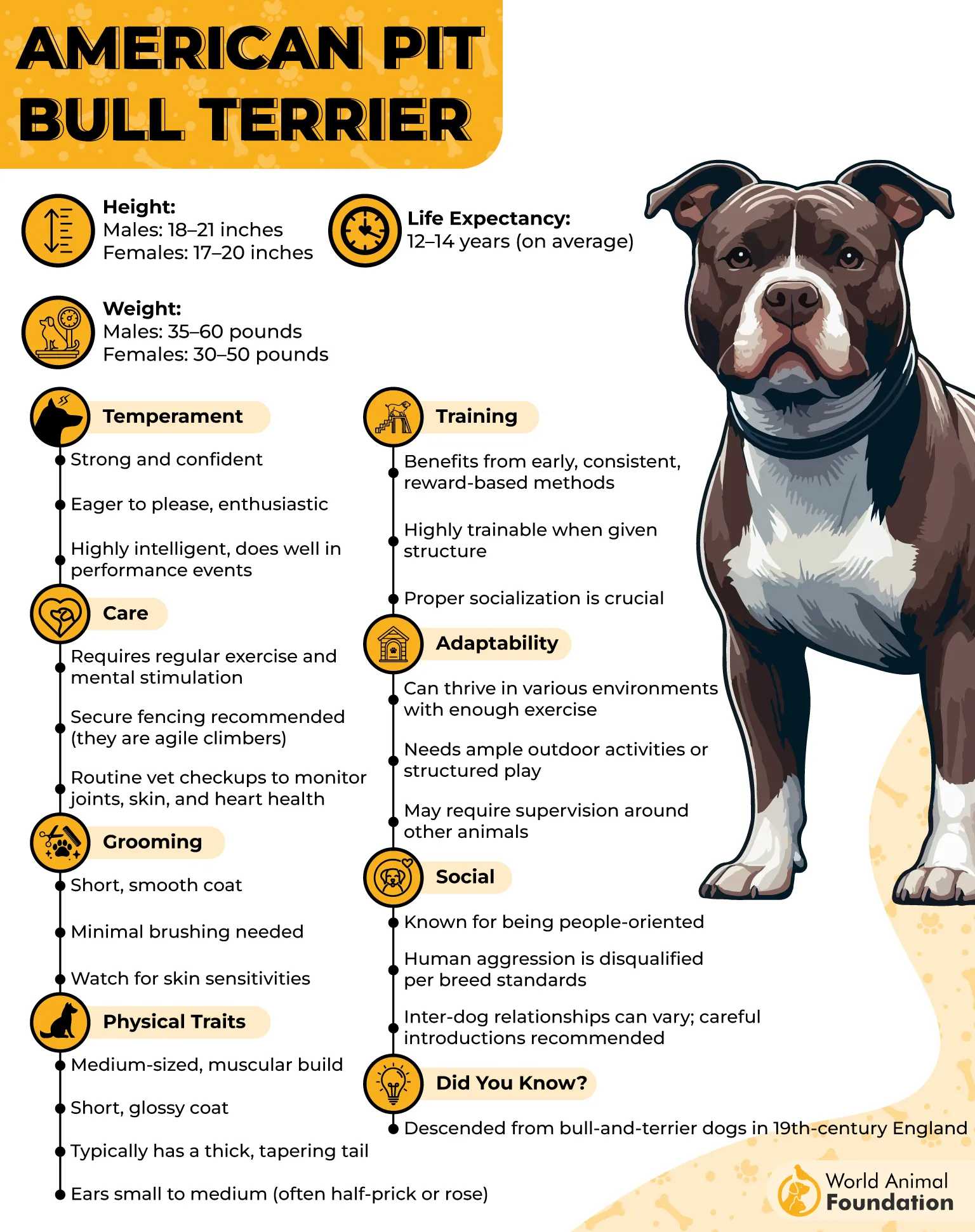
The American Pit Bull Terrier is a medium-sized, muscular breed known for its strength, confidence, and loyal nature. While it often carries an intimidating reputation due to its historical involvement in bull baiting and dog fighting, as noted by PetMD, today’s well-bred and properly trained Pit Bulls are often affectionate companions and capable watchdogs.
Life With the Family
Pit Bulls are deeply devoted to their families and form strong emotional bonds with the people they trust. They are playful, energetic, and often described as “goofy” and affectionate at home. Their natural loyalty and attentiveness can also make them protective when they sense unfamiliar situations.
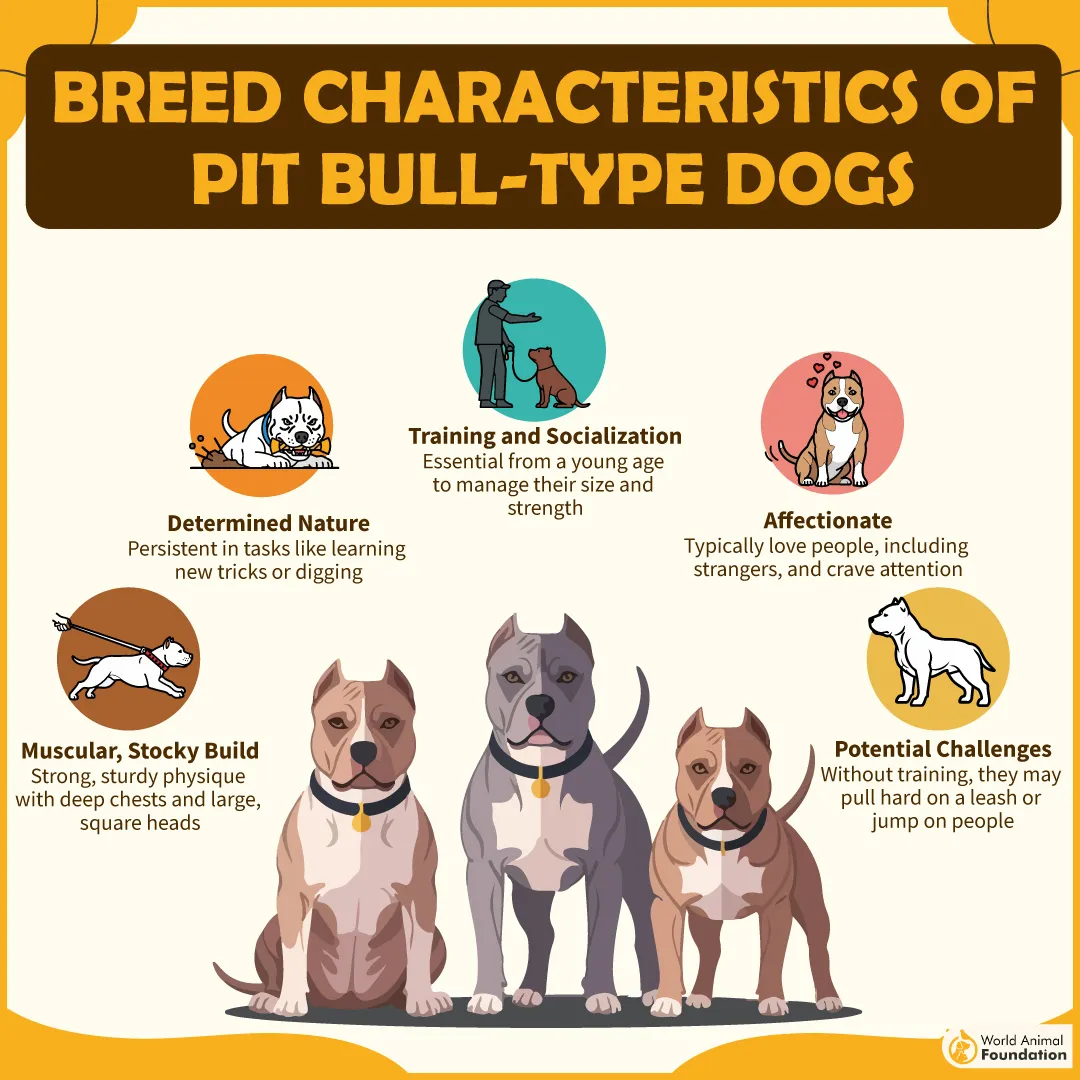
These dogs do best in active households where they receive regular exercise, training, and engagement. When their physical and mental needs are met, they become loving, people-oriented companions that thrive on human interaction and aim to please.
Training Tips
Consistent obedience training is essential to guide their confident and strong-willed nature.
Early socialization helps them become comfortable around other dogs and different environments.
Positive, structured training can help manage their high energy and natural prey drive effectively.
3. Cane Corso
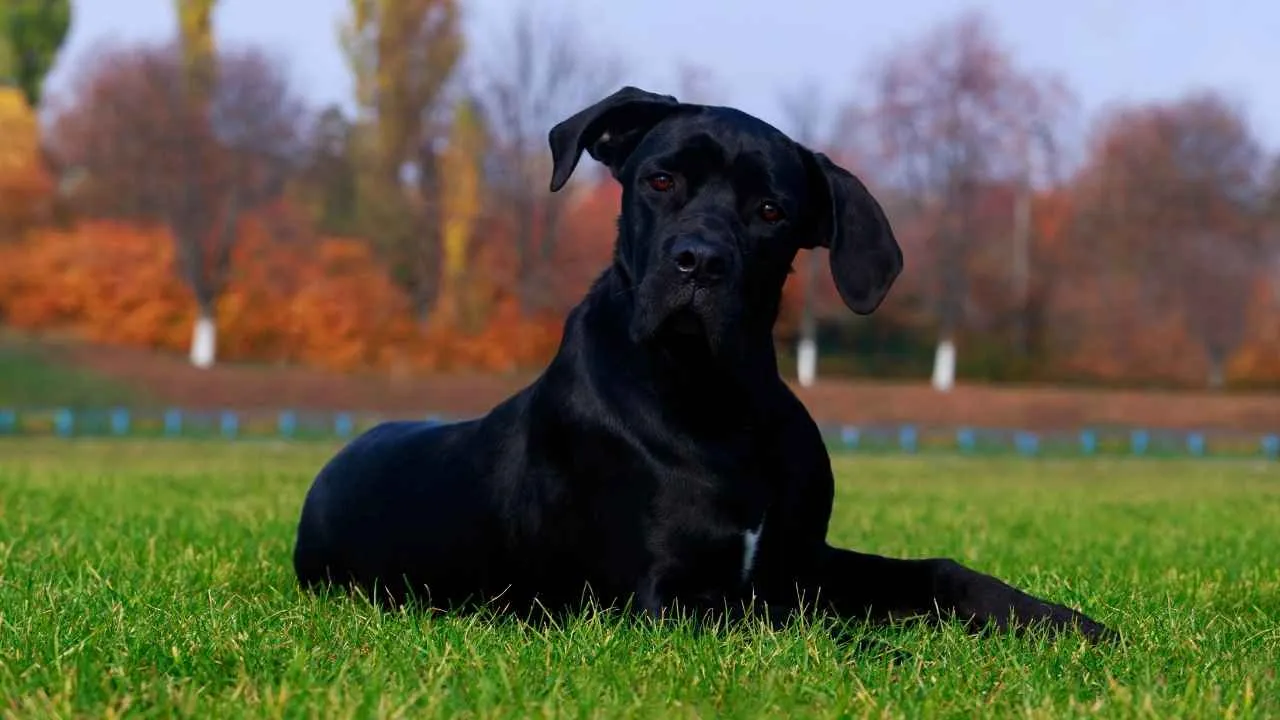
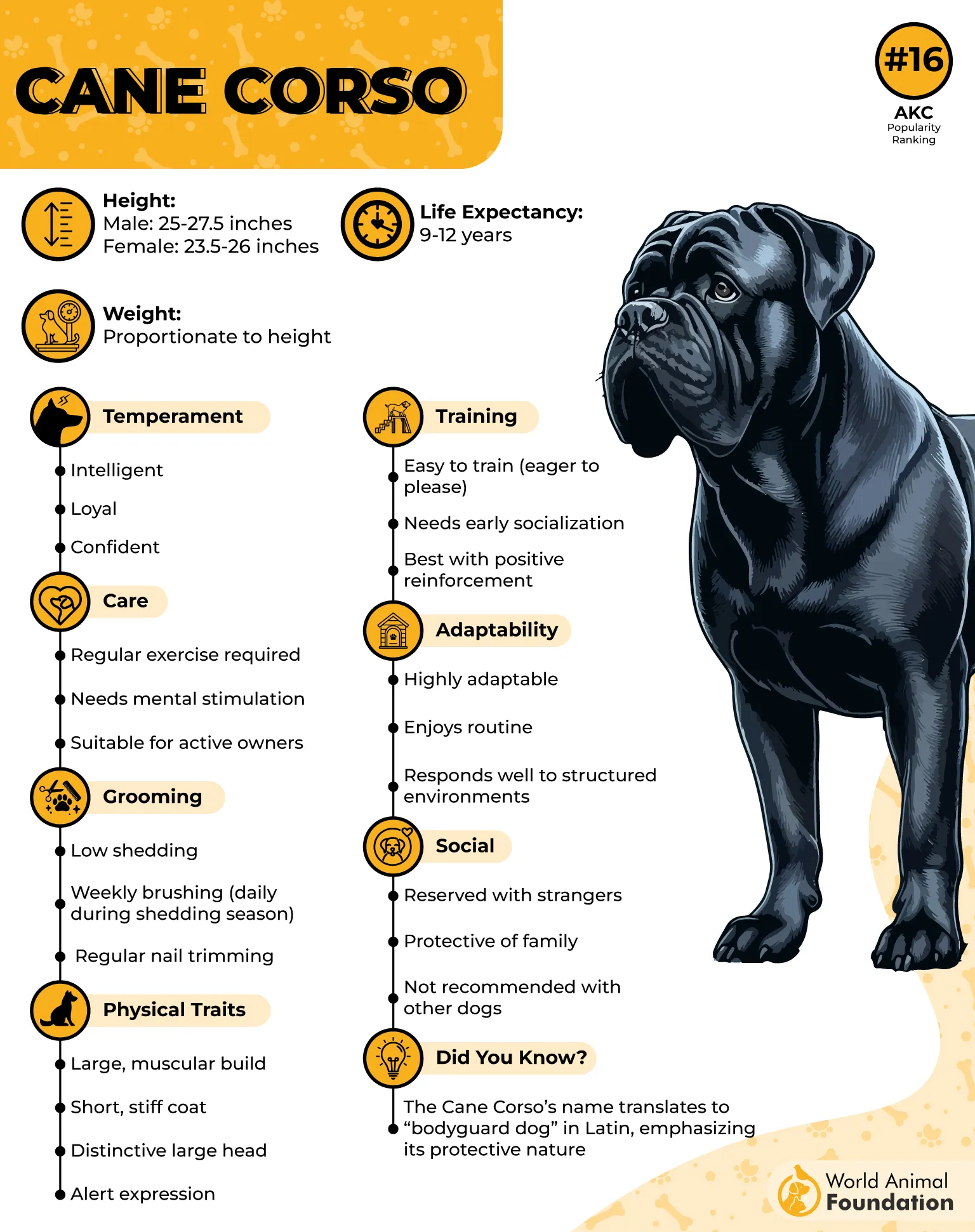
The Cane Corso is a powerful Italian guardian breed with roots tracing back to ancient Roman times, where it was valued as a dependable protector and working dog. Strong, intelligent, and highly alert, this breed is known for its imposing presence and natural ability to deter intruders simply through confidence and size.
Life With the Family
Despite their intimidating look, Cane Corsos are often calm, stable, and deeply loyal to their families when properly raised. They tend to form strong bonds with their owners and are naturally protective of the home environment. With early socialization, they can learn to behave gently around children and become attentive family companions.
They are naturally cautious around strangers, which is part of what makes them effective guard dogs. Their name reflects their role, often interpreted as “bodyguard dog,” highlighting their long history as personal protectors.
Training Tips
Begin early training and socialization to manage territorial instincts.
Use positive reinforcement to build trust and confidence.
Consistent, calm leadership is essential—harsh training methods can negatively impact behavior.
4. Rottweiler
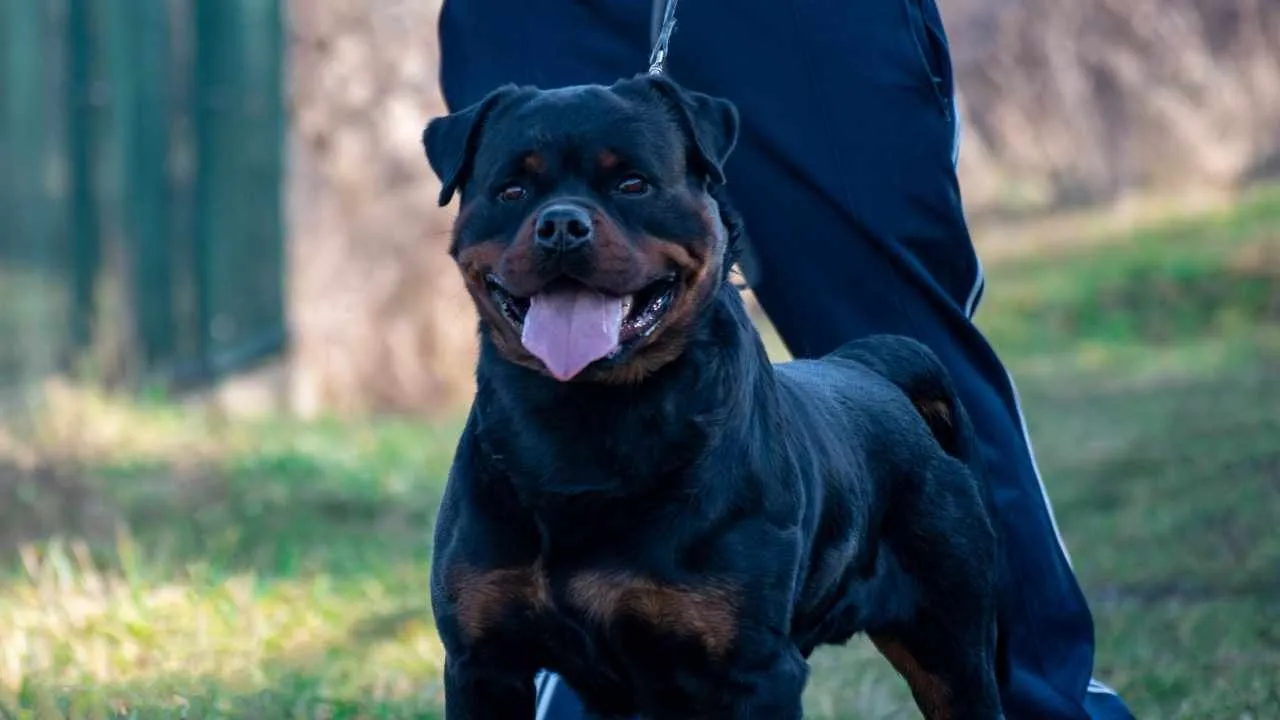
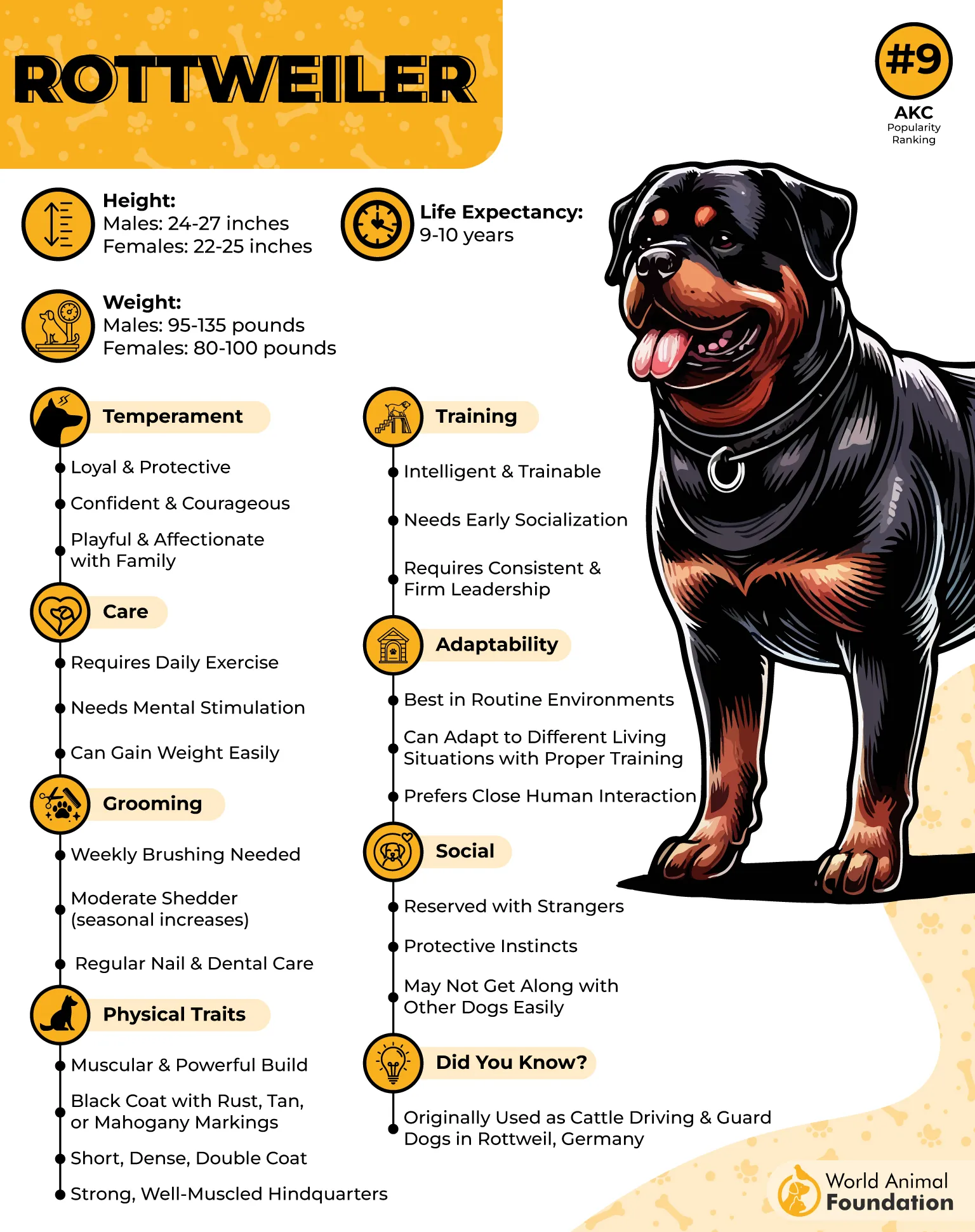
Rottweilers, often affectionately called “Rotties,” are strong, confident, and noble dogs with a long history as working animals. Originally bred for cattle droving and guarding, they developed into reliable protection dogs known for their strength, intelligence, and steady temperament.
Despite their intimidating appearance, they are often affectionate and loyal when properly raised, as noted by the American Kennel Club.
Life With the Family
In a family setting, Rottweilers can be playful, calm, and deeply devoted to their owners. They are known for forming strong bonds and can switch from relaxed companions to alert guardians when they sense something unusual. Their natural protective instincts make them highly dependable watchdogs, especially in homes where structure and leadership are consistent.
When well-trained and socialized, Rottweilers can be gentle and trustworthy around children and become loving family members. Their loyalty and awareness make them both affectionate companions and confident protectors.
Training Tips
Start early training and socialization to guide their natural guarding instincts.
Use positive reinforcement and consistent obedience training for the best results.
Early exposure to different people and environments helps them become balanced, confident pets.
5. Doberman Pinscher
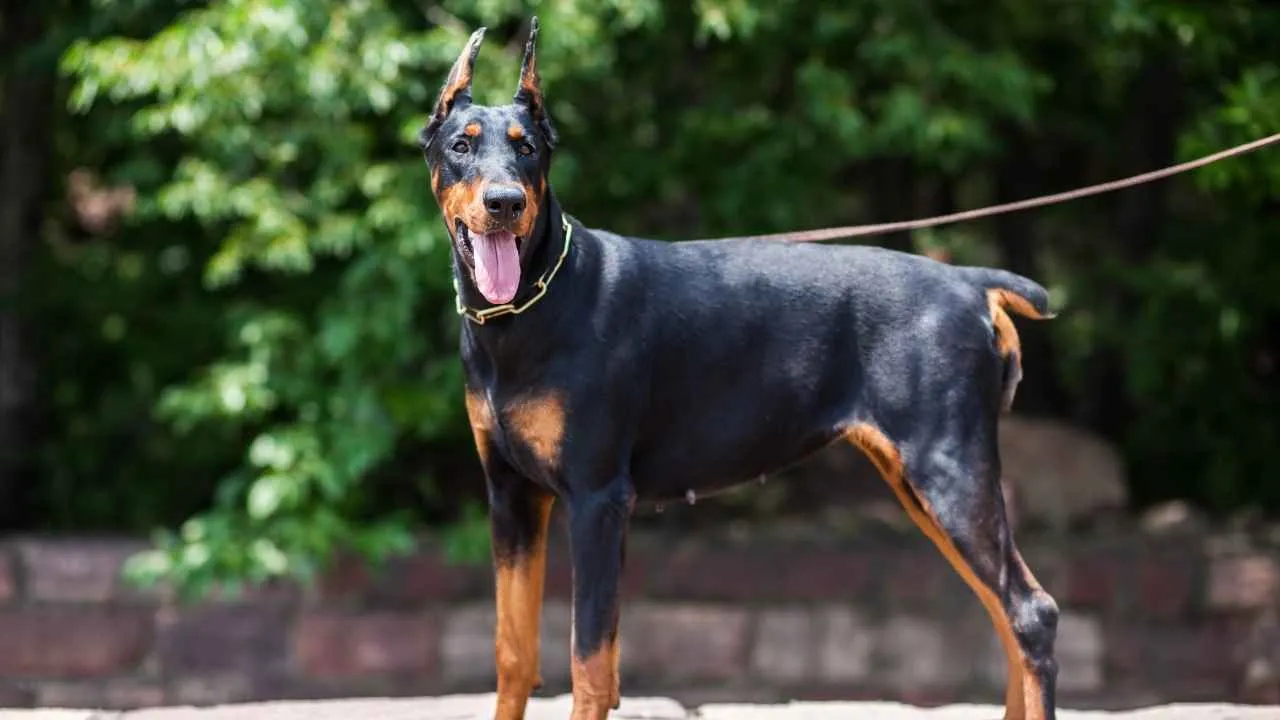
The Doberman Pinscher is a sleek, athletic, and highly intelligent breed widely regarded as one of the most capable protection dogs. Known for their speed, alertness, and strong work ethic, Dobermans have historically been used in military, police, and security roles where focus and reliability are essential.
Despite their intimidating reputation, well-bred Dobermans are often affectionate and deeply loyal to their families. According to Britannica, they can be gentle and playful in familiar environments, especially when properly trained and socialized from an early age.
Life With the Family
Dobermans are typically best suited for experienced owners who can provide structure, leadership, and consistent training. Within the home, they are loyal, attentive, and protective companions. They tend to be cautious around strangers, but this alertness is part of what makes them effective watchdogs.
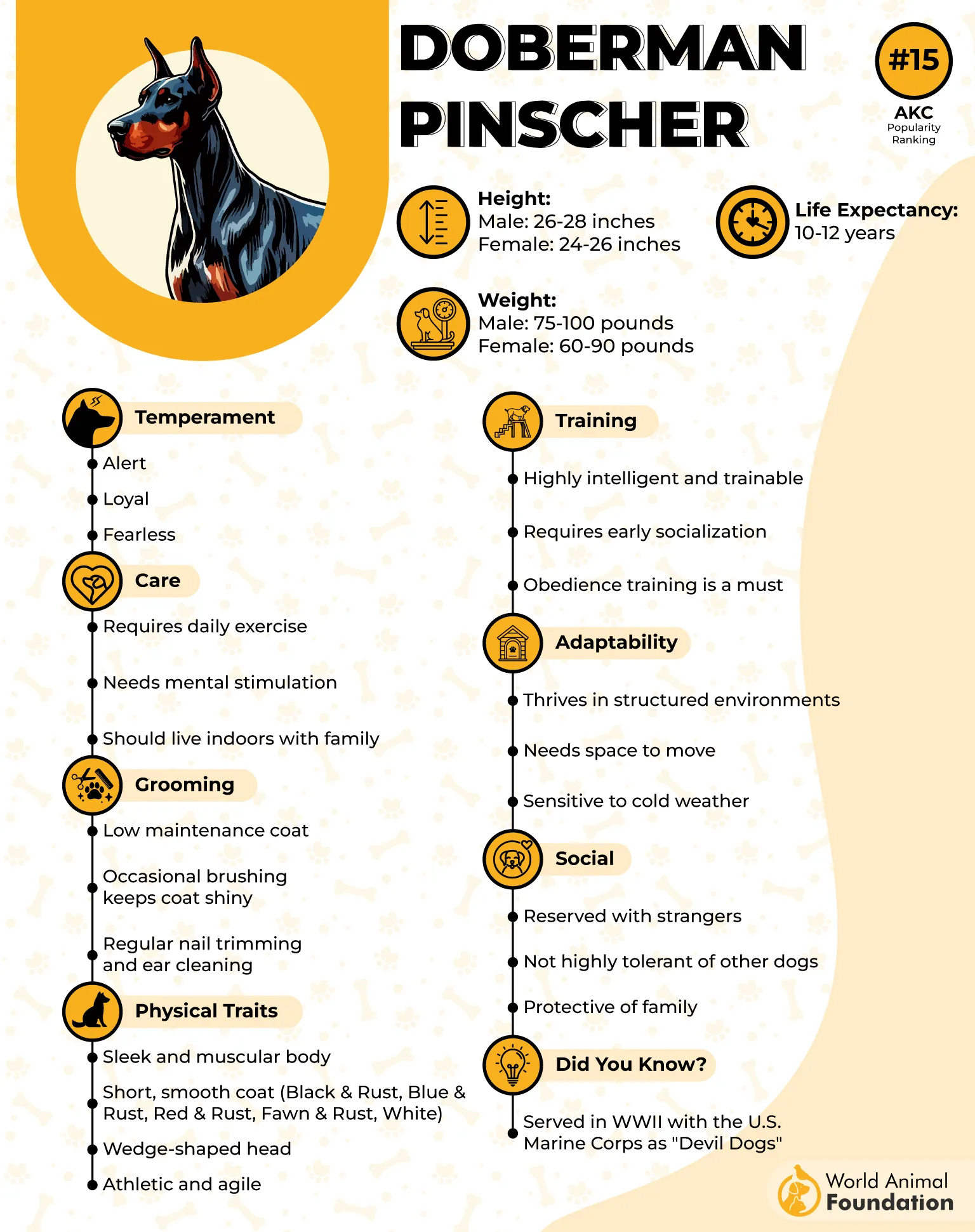
When raised in a stable environment, they can be affectionate and even playful with children, while still remaining naturally aware of potential threats. Their strong guarding instincts activate quickly when they perceive danger, making them reliable family protectors.
Training Tips
Start obedience training early to shape good behavior and control.
Use consistent, positive reinforcement since they learn commands quickly.
Early socialization helps them become balanced, confident, and well-mannered adults.
6. Boxer
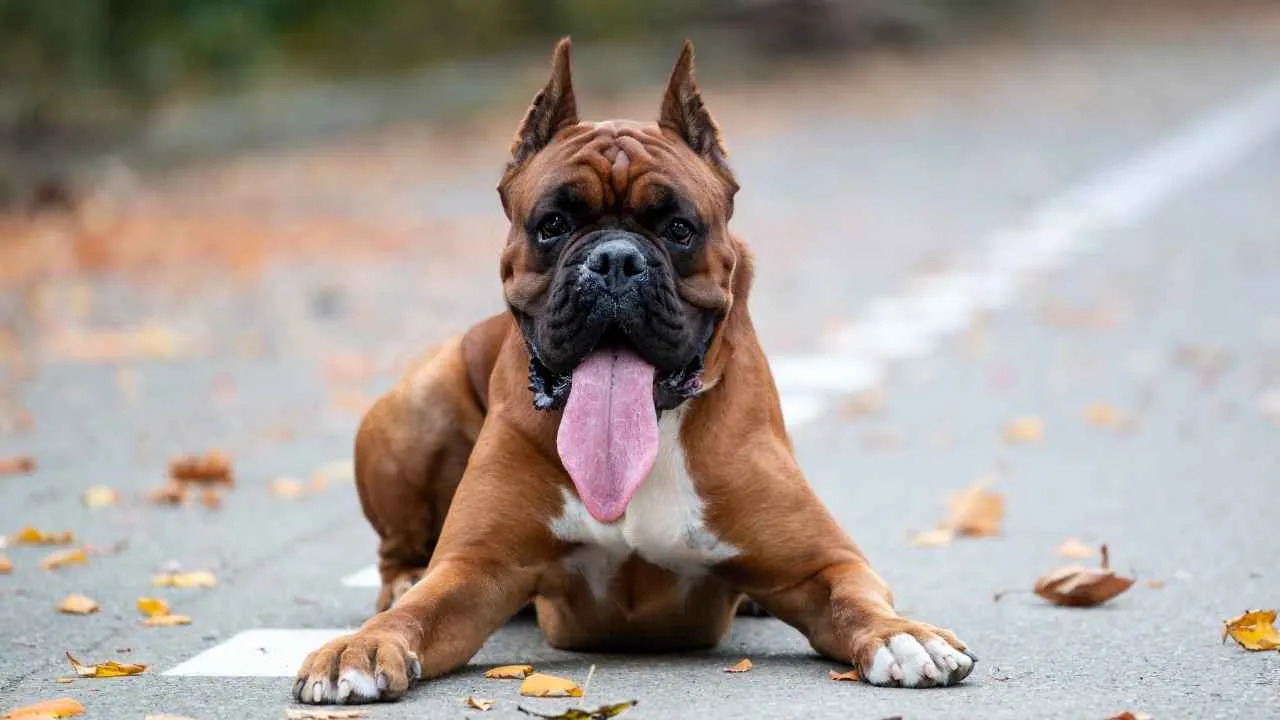
Boxers are one of the most popular dog breeds in America, known for their loyalty, energy, and strong bond with their families. Athletic, intelligent, and highly trainable, they are often described as a complete package of companionship and protection. Despite their serious, muscular appearance, Boxers are naturally playful and affectionate dogs.
Life With the Family
Boxers form deep emotional connections with their owners and are especially known for their love of family life. They are generally friendly and social, making them a good match for households with children. However, due to their energetic and playful nature, supervision is recommended around very small kids to avoid accidental bumps during play.
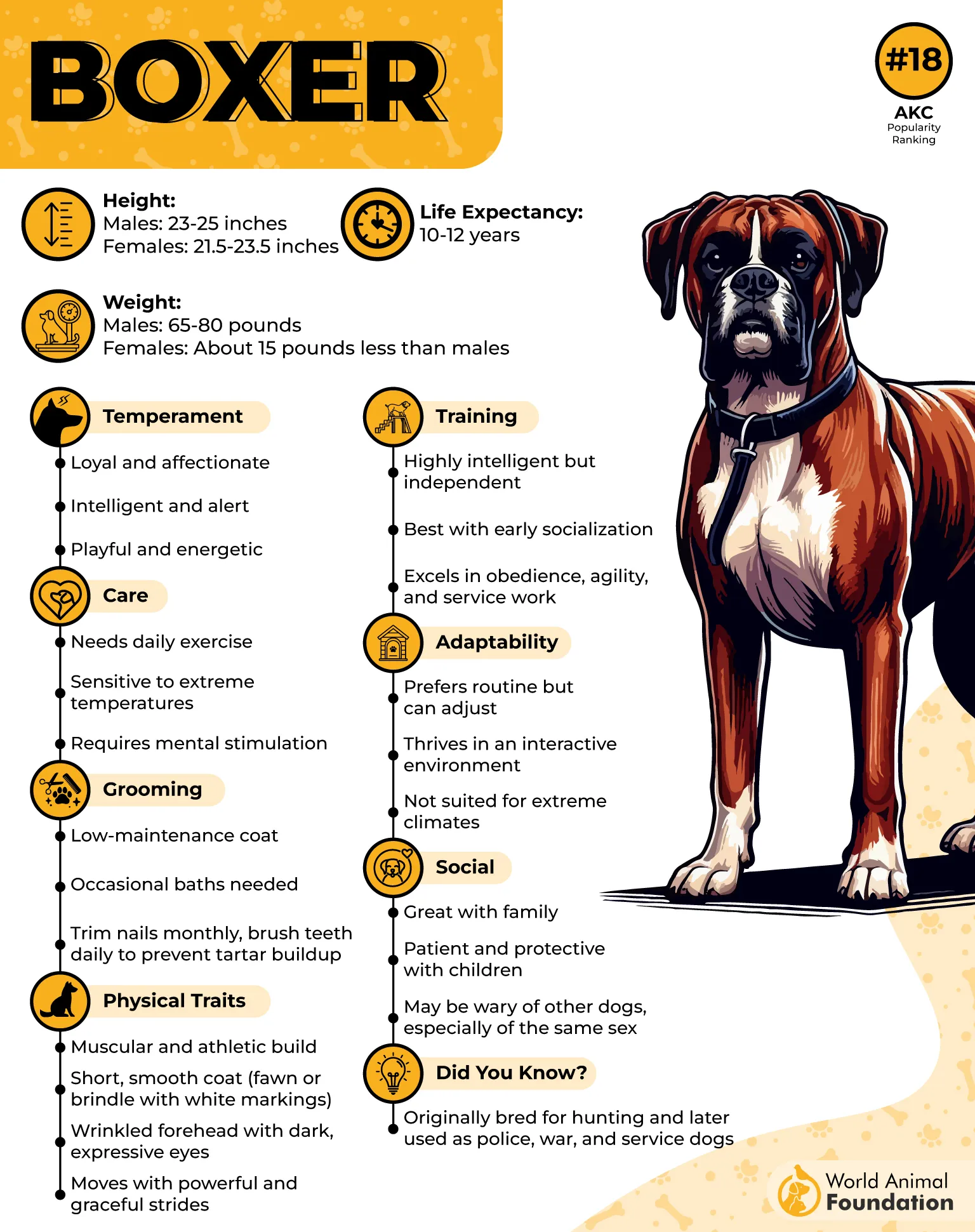
Their natural protective instincts make them reliable watchdogs, always alert to changes in their environment. While they are not aggressive by default, they will instinctively step in if they sense a threat to their loved ones.
Training Tips
Begin training early to build focus and good behavior habits.
Use consistent, positive reinforcement, as Boxers can be a bit stubborn at times.
Regular physical exercise and mental stimulation are essential to keep them balanced and well-behaved.
7. Belgian Malinois
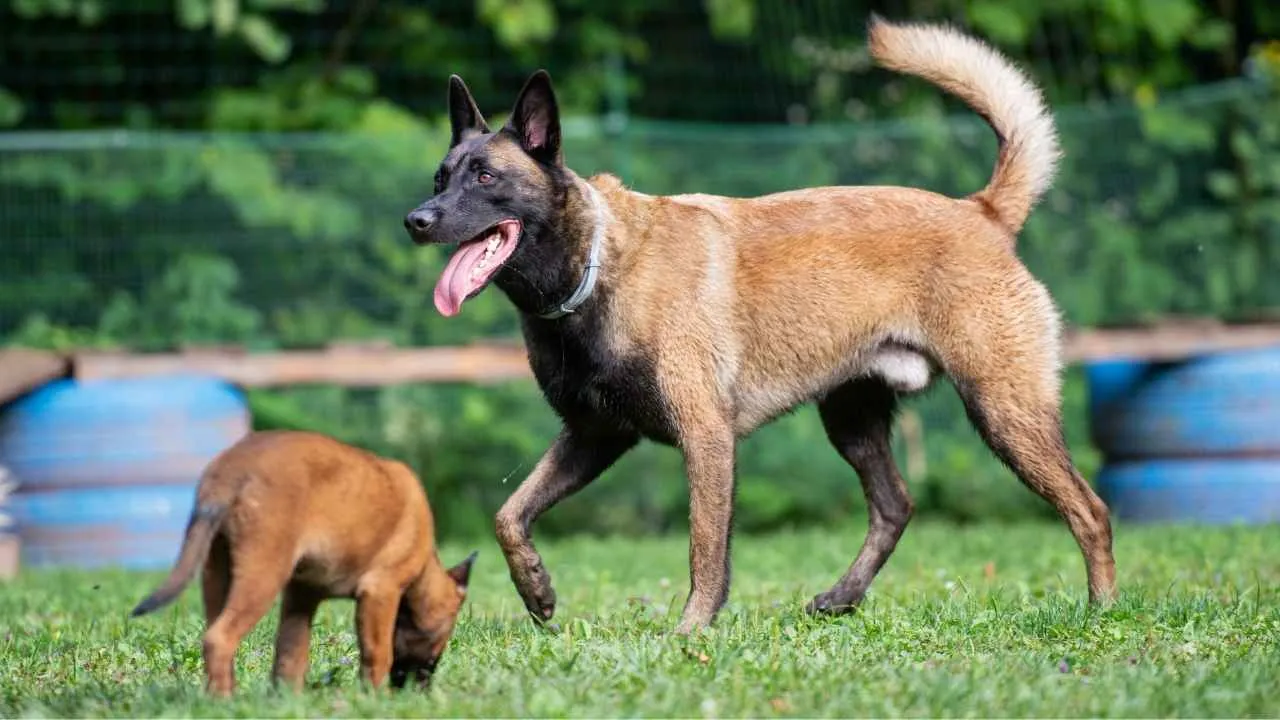
The Belgian Malinois is a highly intelligent, energetic, and disciplined herding breed that consistently ranks among the top choices for protection and working roles. Often mistaken for the German Shepherd due to its similar appearance, the Malinois is lighter, faster, and known for its intense drive and focus.
It is widely used in police, military, and security work because of its exceptional obedience, agility, and task performance.
Life With the Family
In a home environment, Belgian Malinois dogs can form extremely strong bonds with their owners. They are loyal, alert, and naturally protective, often staying aware of their surroundings and reacting quickly to unfamiliar situations. While they can live with families and other pets, they tend to be reserved or cautious around strangers.
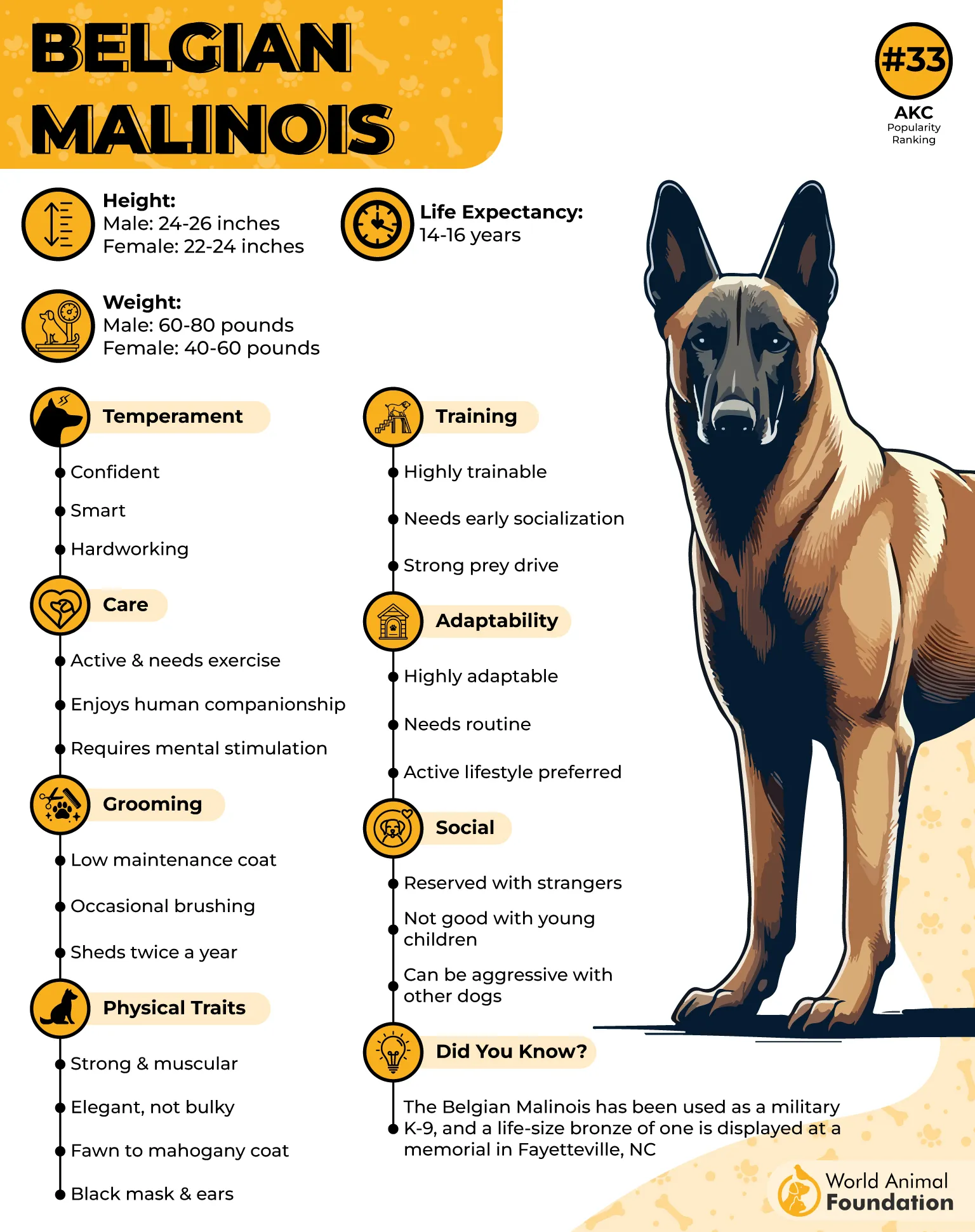
Their strong instinct to guard their territory makes them effective watchdogs, but they require proper structure and engagement to stay balanced. Without sufficient activity and guidance, their high energy can become difficult to manage.
Training Tips
Use consistent, firm but positive training methods for best results.
Provide high levels of daily physical exercise and mental stimulation.
Early socialization and obedience training are essential to manage their strong prey drive and intense energy.
8. Leonberger
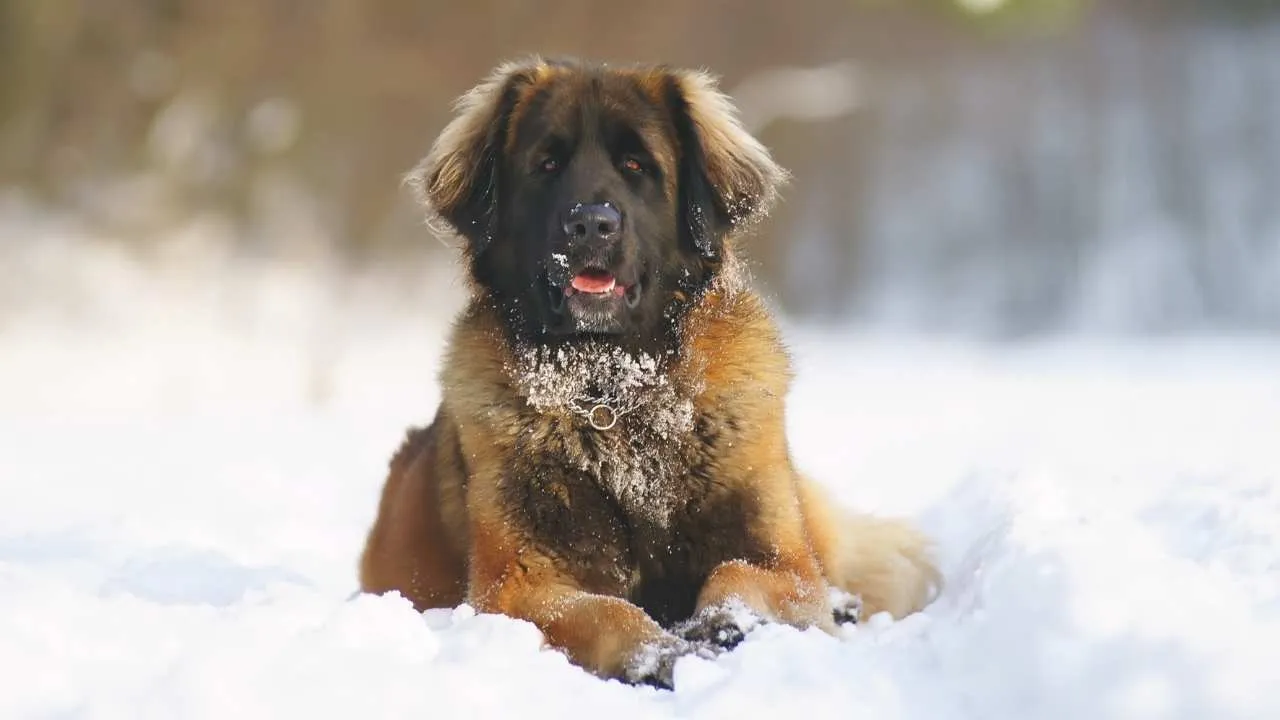
The Leonberger is a large, majestic dog breed originating from Germany, known for its calm temperament and impressive size. Despite their gentle nature, they are natural protective guard dogs who can deter intruders simply through their presence and deep, powerful bark.
According to Hill’s Pet Nutrition, Leonbergers are intelligent, trainable, and well-suited to protective companionship roles when properly trained.
Life With the Family
Leonbergers are affectionate, even-tempered dogs that form strong bonds with their families. They are typically calm indoors and known for their patient, friendly behavior, especially with older children and other pets. However, due to their large size and strength, supervision is important around very small children to prevent accidental knocks during play.
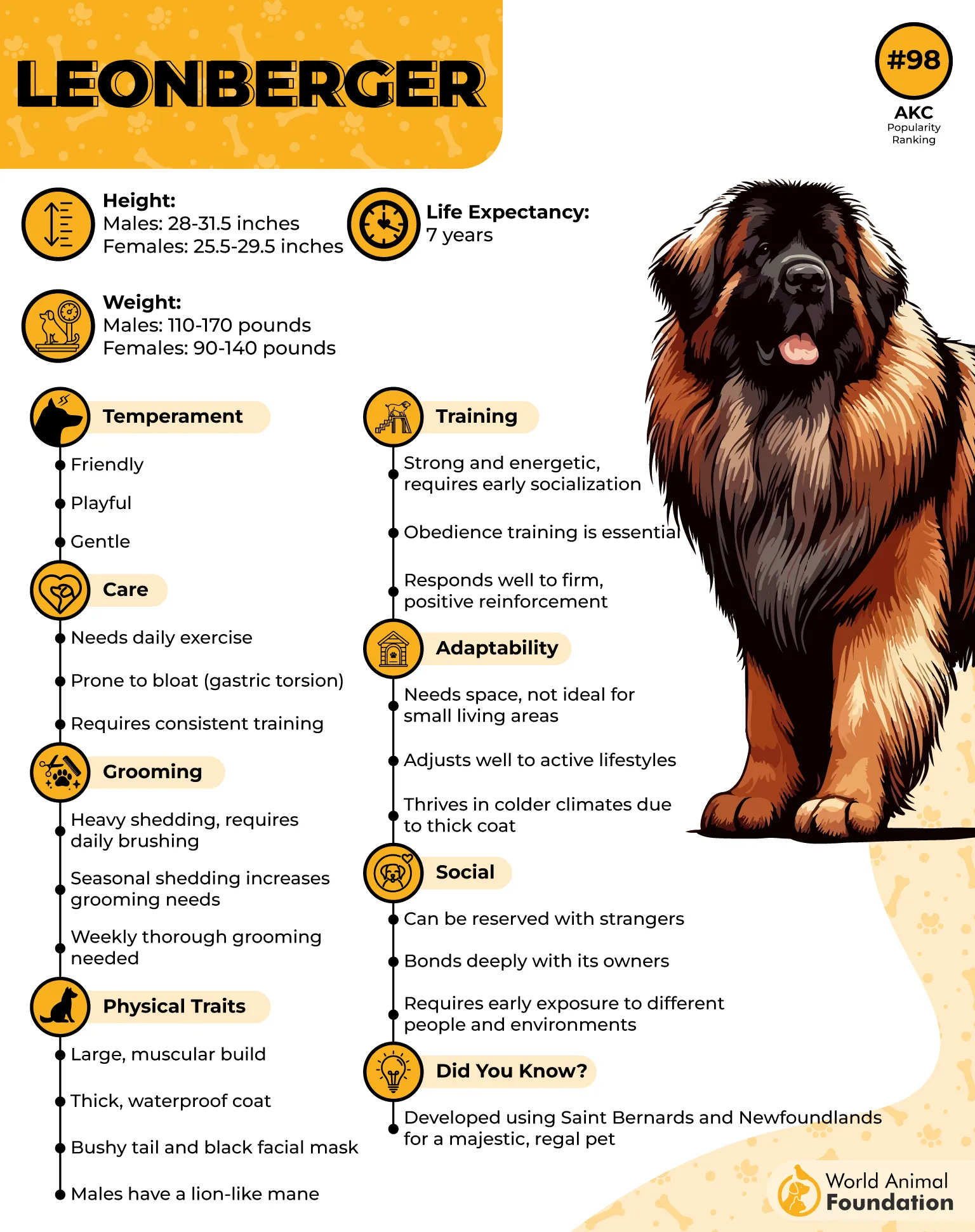
Their protective instincts are natural but not overly aggressive. Instead, they tend to observe situations carefully before reacting, which makes them a balanced and reliable family guard dog.
Training Tips
Early socialization and proper obedience training are essential for well-rounded behavior.
Regular exercise helps them stay calm and prevents unwanted indoor behavior.
Positive reinforcement works best, as they respond well to gentle, consistent guidance.
9. Newfoundland
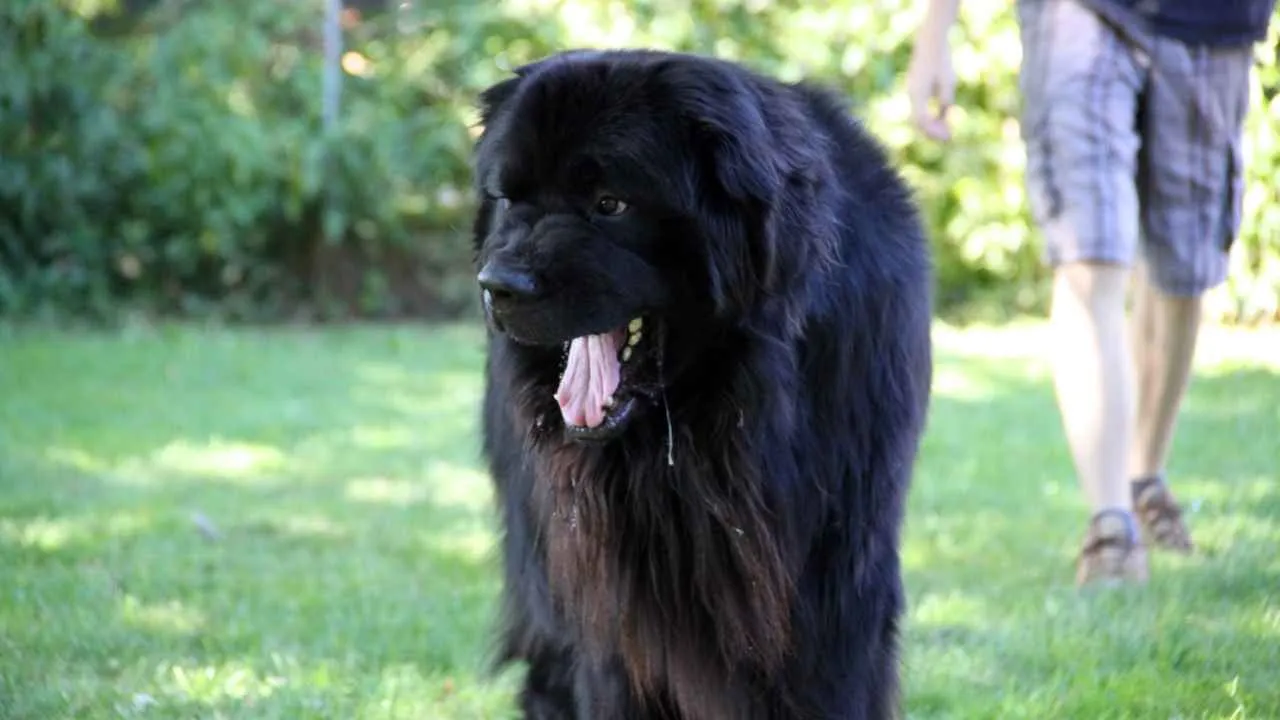
Newfoundlands are one of the gentlest giant dog breeds, known for their calm temperament, immense strength, and exceptional swimming ability. Originally developed as working dogs for water rescue and heavy-duty hauling, they are naturally inclined to assist humans, especially in water-related emergencies. Their thick, water-resistant coat and webbed feet make them highly efficient swimmers.
Life With the Family
Despite their large and powerful build, Newfoundlands are famously gentle, patient, and affectionate. They are often called “nanny dogs” because of their calm and protective behavior around children. Their naturally sweet temperament makes them loving family pets.
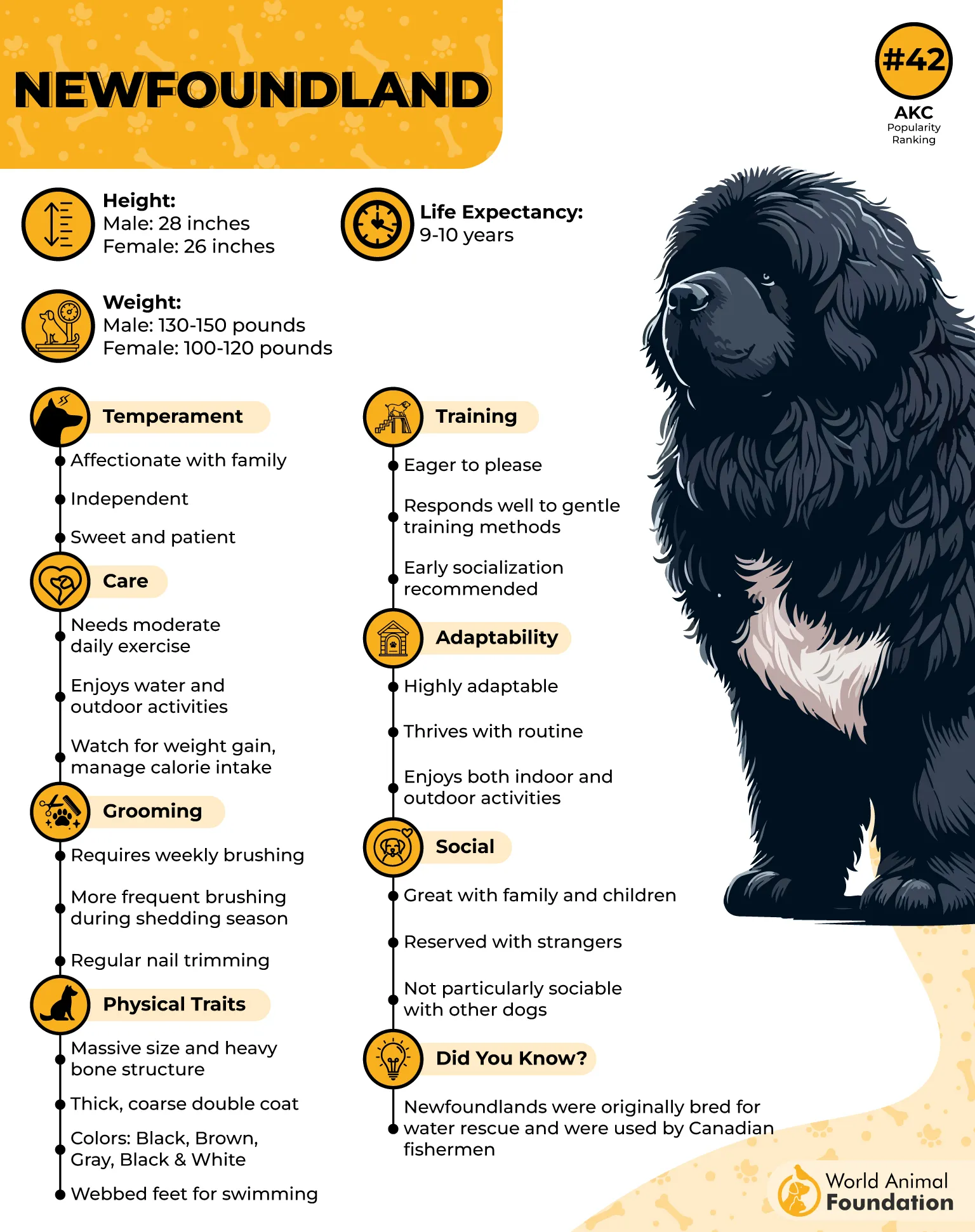
While they can appear intimidating due to their size, Newfoundlands are not aggressive by nature. They are more likely to act as calm protectors, only responding firmly if they sense their family is in real danger. Their presence alone is often enough to discourage unwanted visitors.
Training Tips
Start basic obedience training early for better long-term behavior.
Early socialization helps them stay confident and comfortable around people and environments.
They respond best to calm, consistent, and structured training rather than intense or harsh methods.
10. Great Dane
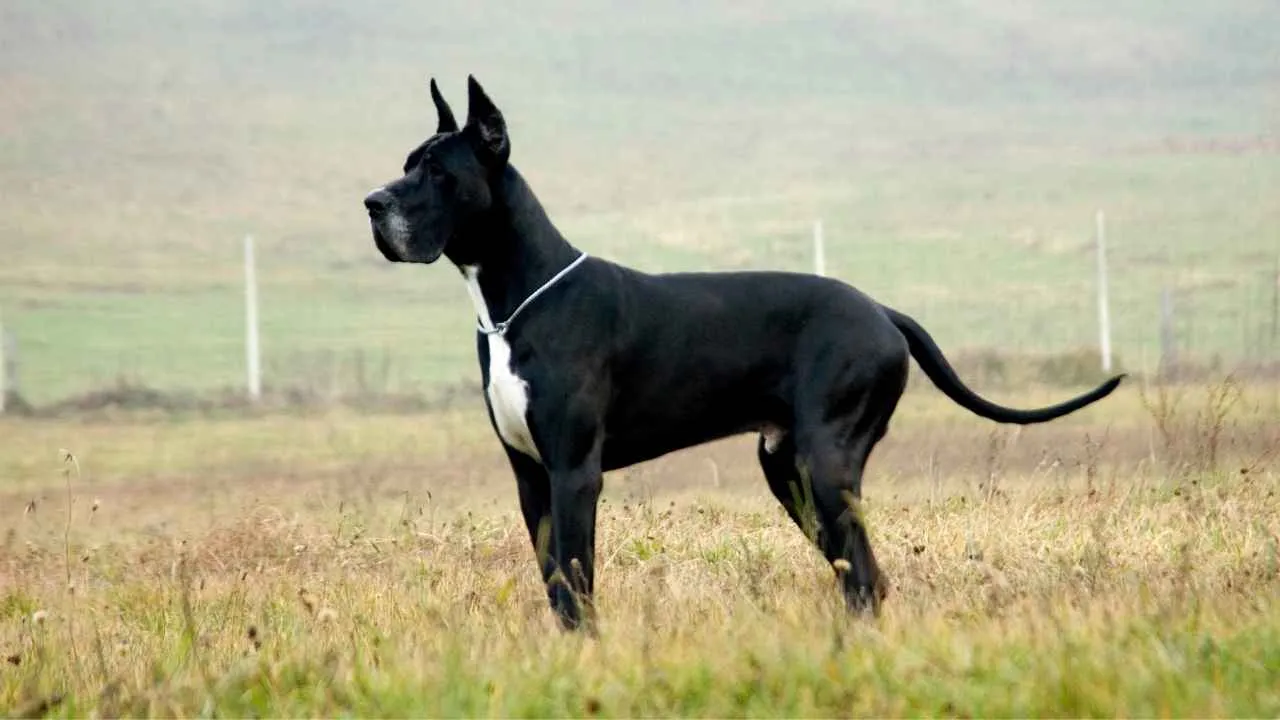
Great Danes are often called the “gentle giants” of the dog world due to their towering size paired with a calm, friendly temperament. Originally bred for guarding estates and large properties, they naturally possess awareness of their surroundings and can act as effective watchdogs simply through their presence and alert nature.
Life With the Family
Despite their massive build, Great Danes are affectionate, social, and often surprisingly goofy companions. They tend to behave like lap dogs and enjoy being close to their families as much as possible. Their gentle nature makes them good with children, though supervision is important due to their size, as they can accidentally knock over small kids during play.
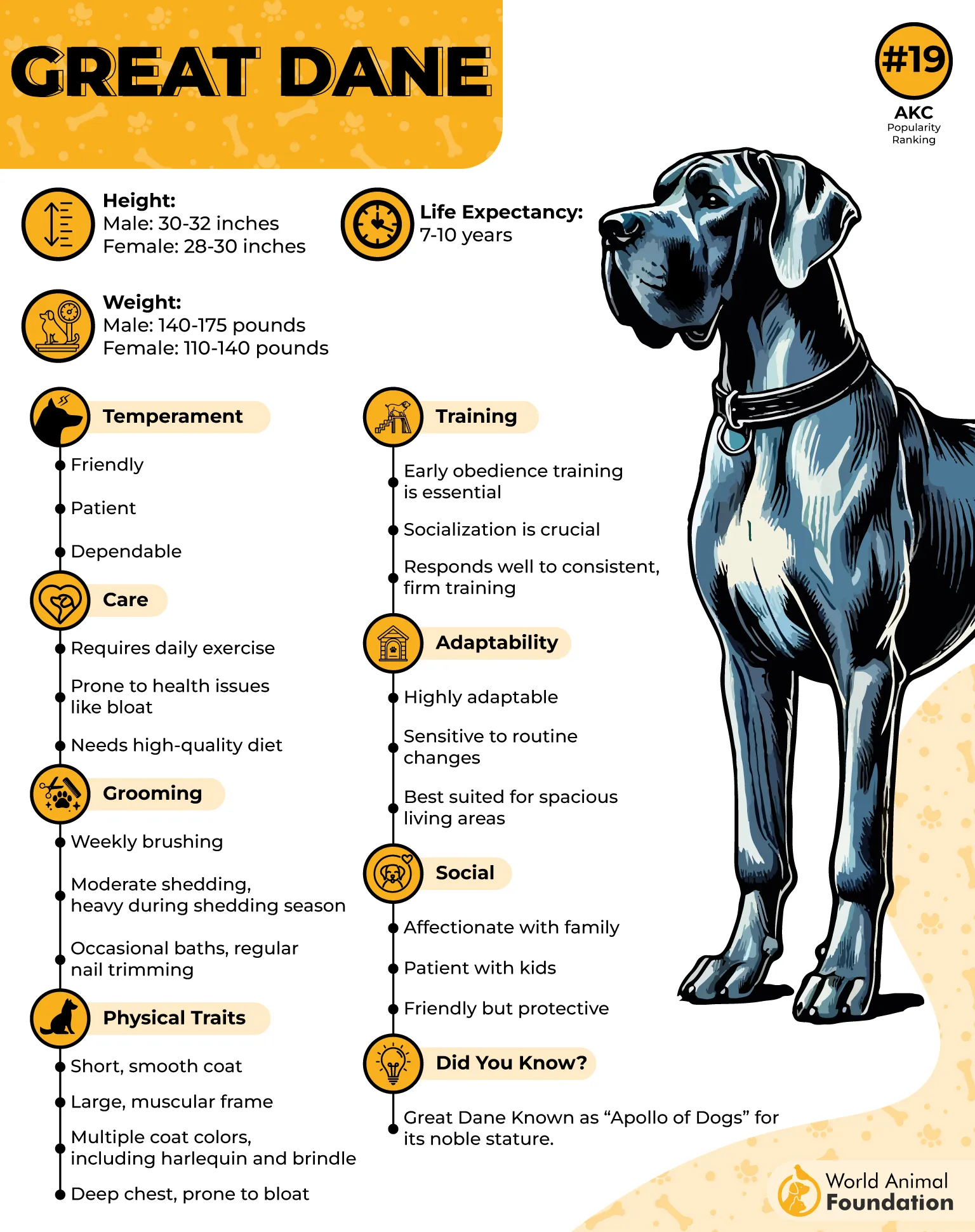
Overall, they balance friendliness with natural vigilance, making them both loving companions and dependable home guardians when properly raised.
Training Tips
Begin obedience training early, as they grow rapidly into large, powerful dogs.
Consistent and structured training helps establish good manners and control.
Early socialization is essential to ensure they grow into calm, well-adjusted adult dogs.
Conclusion
The best guard dog for your family is one that strikes the right balance between protection and companionship. Every breed featured in this article is capable of offering reliable security while also forming strong emotional bonds with its owners. Whether you prefer a vigilant protector like the Doberman or a gentle family guardian like the Newfoundland, the right choice ultimately depends on your lifestyle and needs.
These dogs thrive when they receive proper training, early socialization, and consistent care. Building trust through daily interaction helps strengthen the bond between owner and dog, allowing them to develop into confident, well-behaved companions. With the right guidance, they learn their role naturally and become dependable members of the household.
No matter which breed you choose, one thing remains true: these dogs are deeply loyal, attentive, and devoted to the people they protect.
