




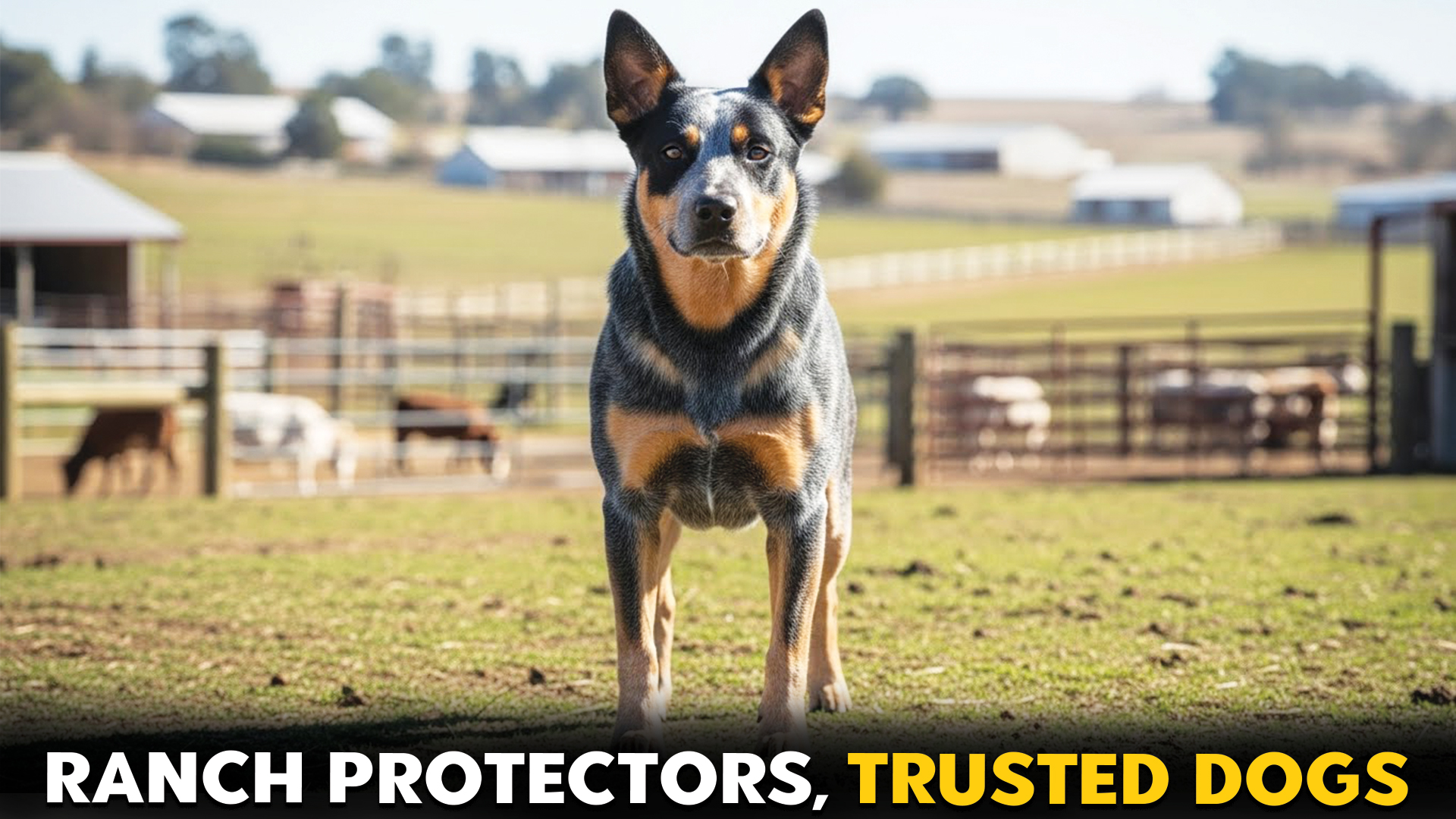
Life on a farm or ranch moves fast and demands animals that can keep up. From early mornings to long evenings, a dependable dog brings focus, energy, and heart to daily work. Even with modern tools on hand, many owners still rely on canine partners to help manage land, livestock, and routine tasks.
Farm dog breeds take on many roles throughout the day, whether that means guiding animals, keeping an eye on the property, or offering steady companionship after work is done. Their instincts and attitude often shape how smoothly a day runs.
Choosing a dog for farm life means looking closely at temperament, drive, and purpose. Some breeds naturally lean toward protection, while others shine in support roles. This guide explores protective dog breeds commonly chosen by farm and ranch owners and what makes each one a practical fit.
Did you know?
According to research, herding dogs are not just trained to work livestock; they are genetically wired for it. Researchers have found that certain herding breeds share a special gene linked to movement, focus, and spatial memory, helping explain their intense drive to chase and control animals.
Protective Dog Breeds for Farm and Ranch Owners
1. Australian Cattle Dog
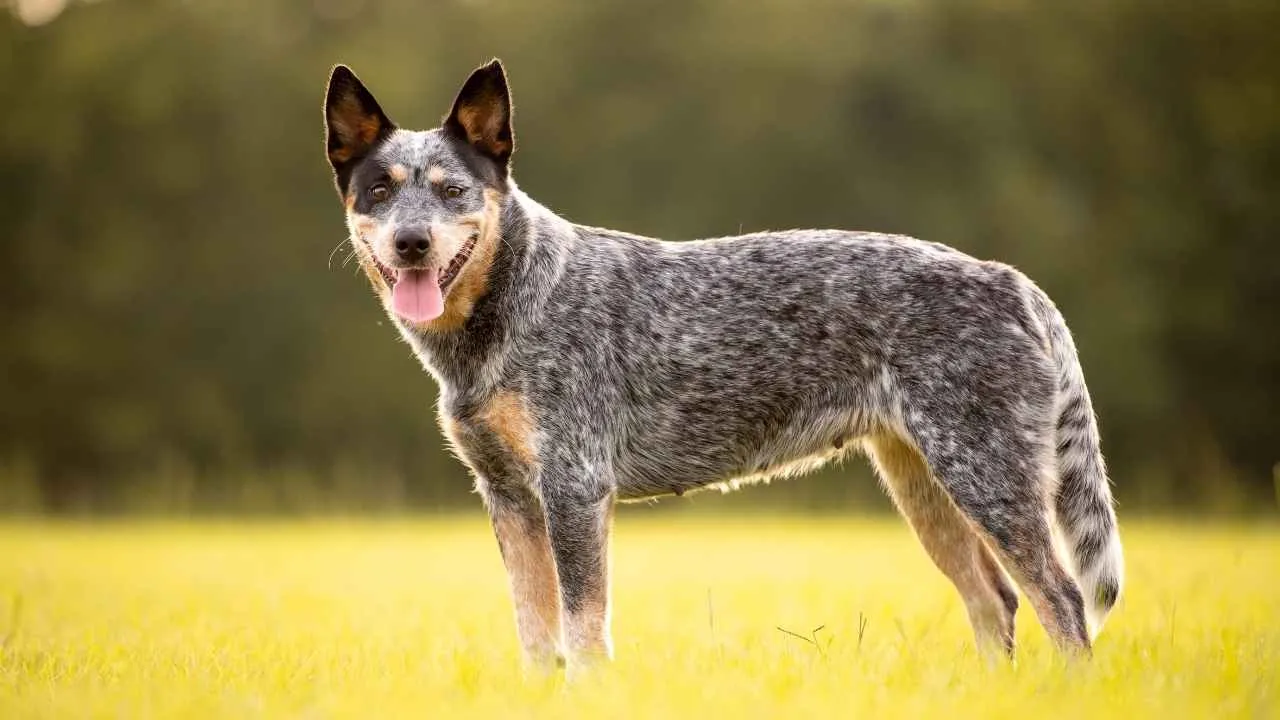
The Australian Cattle Dog may be compact, but it carries itself like a powerhouse. Often called the Blue or Red Heeler, this breed traces its roots to dogs related to the Australian Dingo. Their strong desire to work makes them excellent at herding cattle.
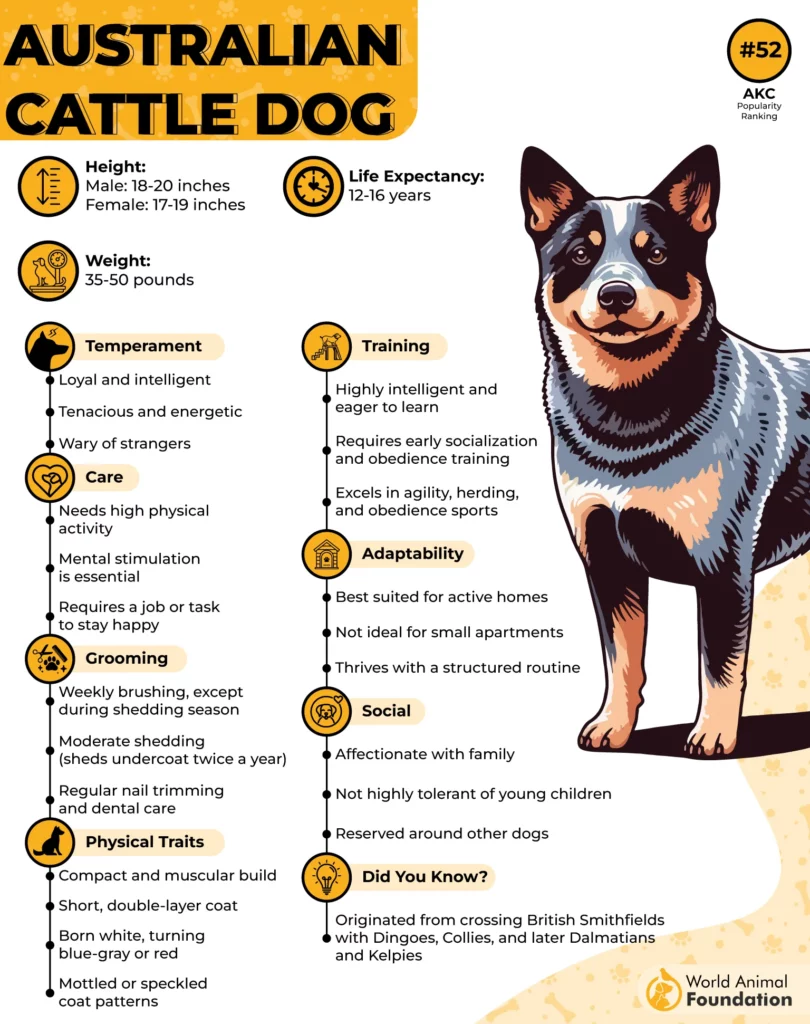
What sets this breed apart is how quickly it thinks. Australian Cattle Dogs are famous for being smart, alert, and incredibly loyal. They stay aware of everything happening around them and can be cautious with strangers.
Obedience training helps guide their sharp minds in the right direction. These dogs feel most content when they are learning, moving, and problem-solving alongside their owners. Without regular mental and physical challenges, boredom can quickly turn into mischief.
What Makes This Breed a Good Choice
• Quick thinker with strong instincts
• Naturally confident and alert
• Thrives on daily activity and tasks
2. Beauceron
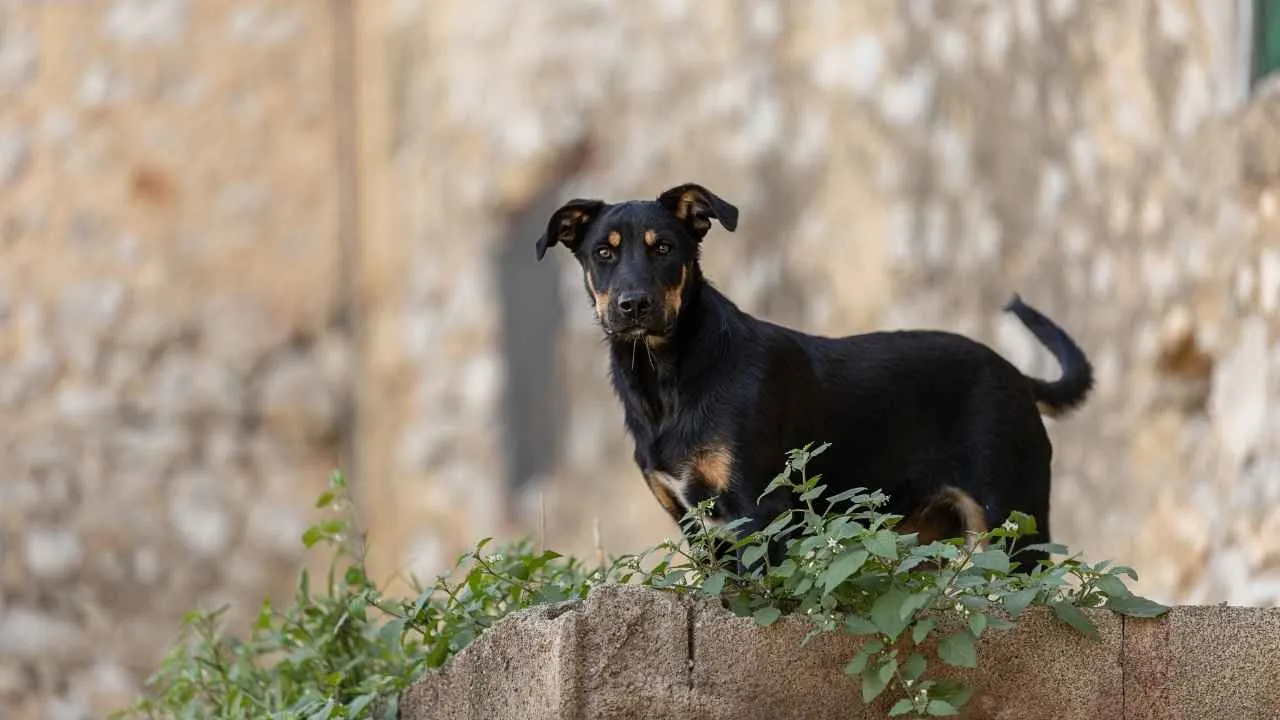
The Beauceron is a striking herding dog that originated in the La Beauce region of France. As the largest of the French sheepdogs, it has a muscular build that reflects its history working with sheep and cattle. One of its most unique features is the pair of double dewclaws on its hind legs.
Around family, the Beauceron is affectionate and deeply devoted. With careful introductions, it can live comfortably with children and other dogs. When meeting new people, this breed tends to observe quietly before deciding how to react. Early socialization plays an important role in helping Beaucerons grow into steady and confident adults.
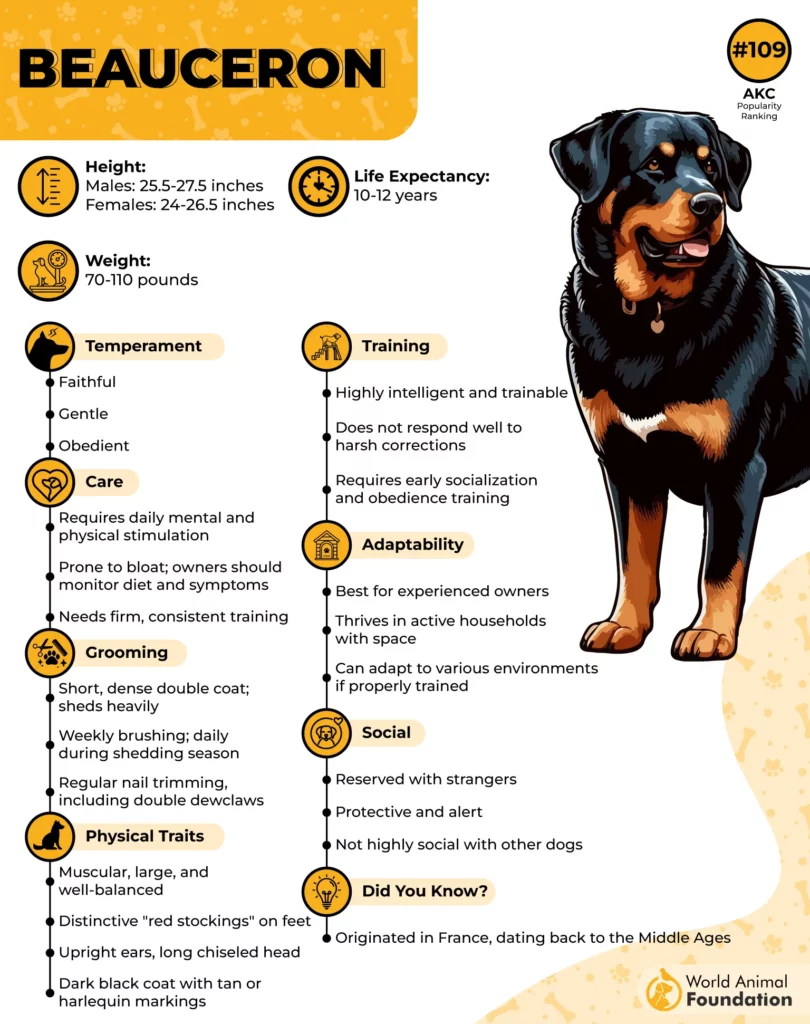
According to PetMD, due to their size and deep chest, owners should understand the signs of bloat and know how to respond. Responsible breeders screen for health concerns such as hip issues, heart conditions, eye problems, and allergies.
What Makes This Breed a Good Choice
• Strong and confident presence
• Loyal and affectionate with family
• Natural herding ability
3. Belgian Laekenois
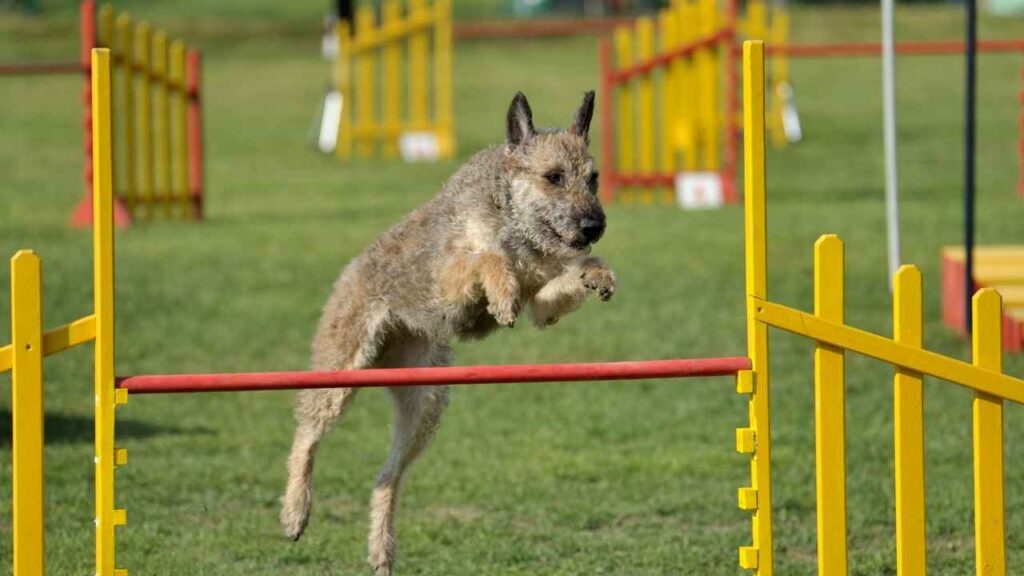
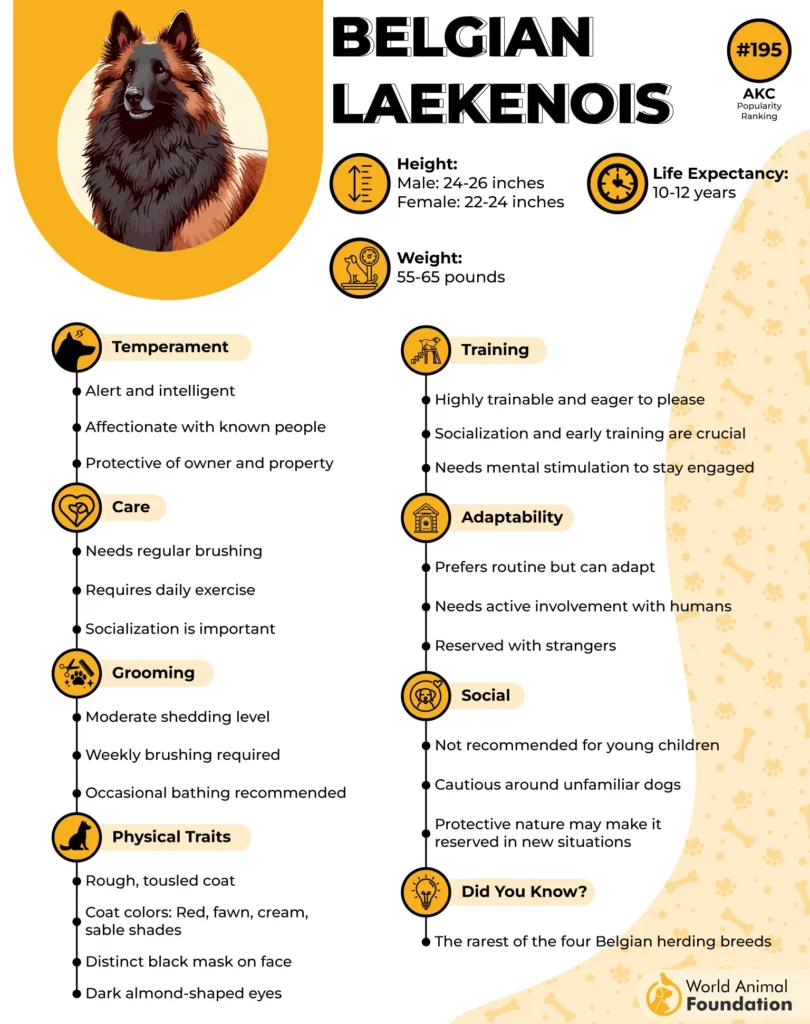
Lively, strong, and full of energy, the Belgian Laekenois is one of four native Belgian dog breeds. While similar in build and temperament to other Belgian shepherd types, this breed stands out with its rough-textured coat and distinct appearance.
Traditionally used for herding, this breed relies on alertness and quick movement to manage livestock with confidence. Due to their high exercise requirements, this breed requires daily commitment and is not ideal for first-time owners.
Belgian Laekenois dogs are also very rare, which makes them difficult to find in local shelters. Anyone considering this breed should find a reputable breeder or explore similar shepherd breeds that may be easier to adopt.
What Makes This Breed a Good Choice
• Energetic and alert nature.
• Strong bond with dedicated owners
4. Belgian Sheepdog
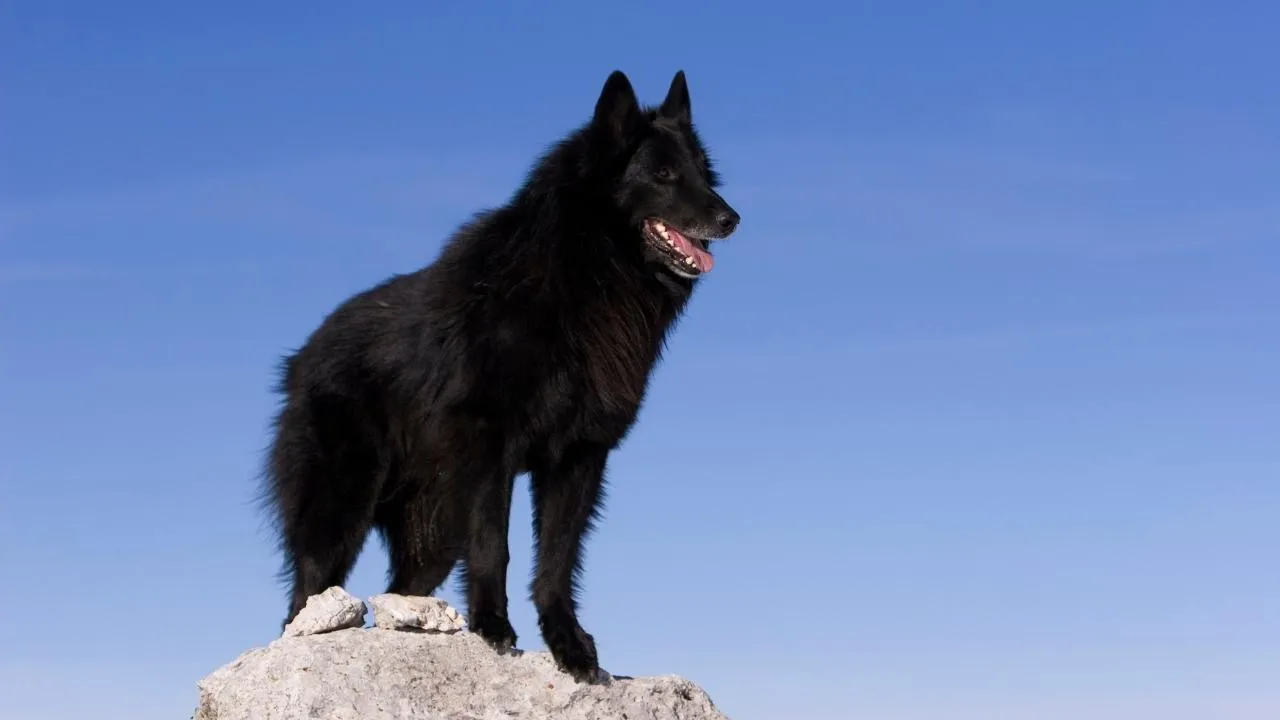
The Belgian Sheepdog is a very intelligent herding breed built for hard work. Athletic and full of energy, they thrive in active households that enjoy runs, hikes, bike rides, and other outdoor adventures. Daily movement helps them stay balanced and content, especially when it challenges both body and mind.
As per WebMD, if you want a dog that loves to learn and enjoys being part of the family, the Belgian Sheepdog fits that role well. When given attention and structure, they become devoted companions that enjoy working alongside their people.

Training should begin early to encourage good behavior before bad habits form. Because this breed is sensitive and strong-willed, positive reinforcement works far better than harsh methods, helping the dog learn while maintaining trust.
What Makes This Breed a Good Choice
• Learns quickly and responds well to training
• Enjoys staying active with involved families
• Reliable working dogs with strong focus and drive
5. Belgian Tervuren
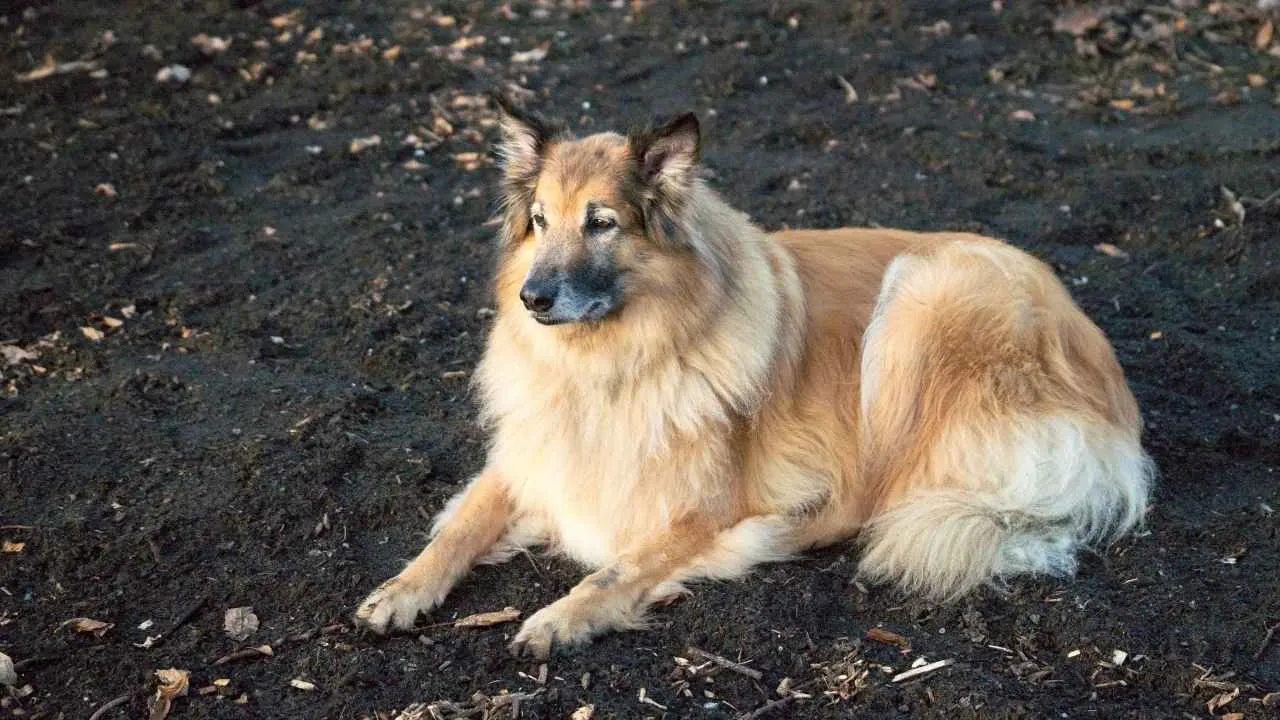
The Belgian Tervuren is a confident and expressive herding dog that builds deep connections with its family. Intelligent and eager to please, this breed needs both physical activity and mental challenges to stay balanced.
Over time, Belgian Tervurens have taken on demanding roles such as guiding, search and rescue, and message carrying, showing how adaptable and focused they can be. Introducing a Tervuren to new people and environments while young helps shape calm and steady behavior later in life.
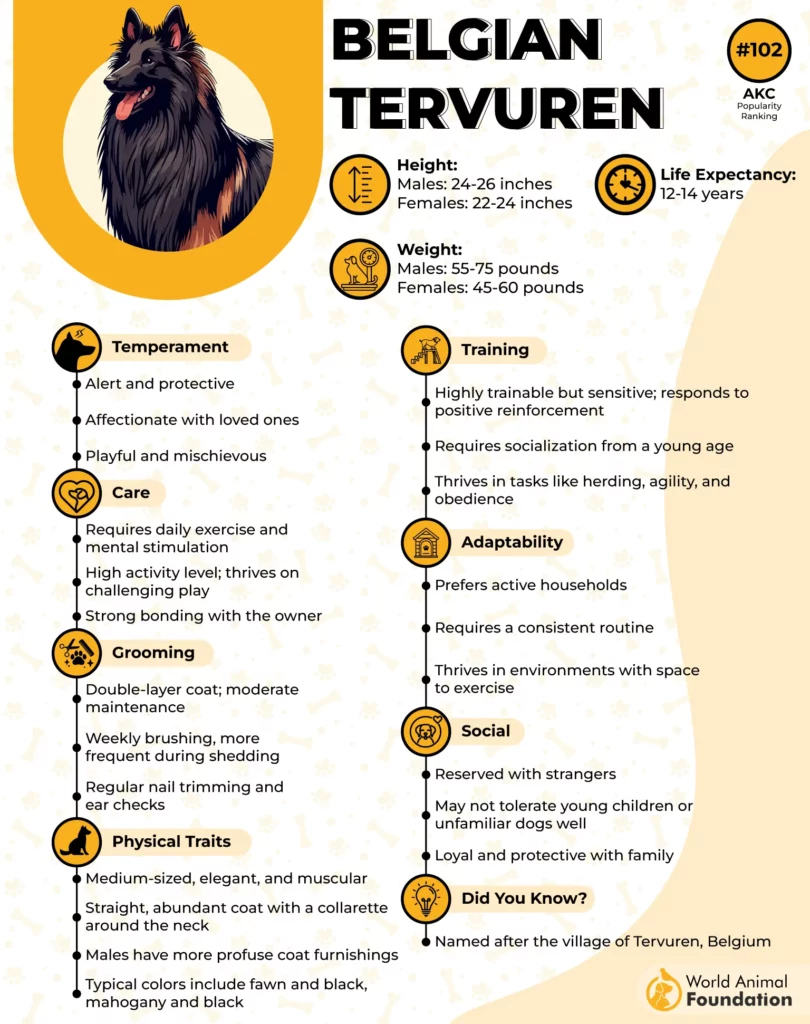
Due to their herding instincts, they may try to chase smaller animals. And they should always be supervised around young children or other pets.
What Makes This Breed a Good Choice
• Strong drive to learn and work with people
• Deep loyalty paired with alert awareness
• Thrives with structure and ongoing challenges
6. Bergamasco Sheepdog
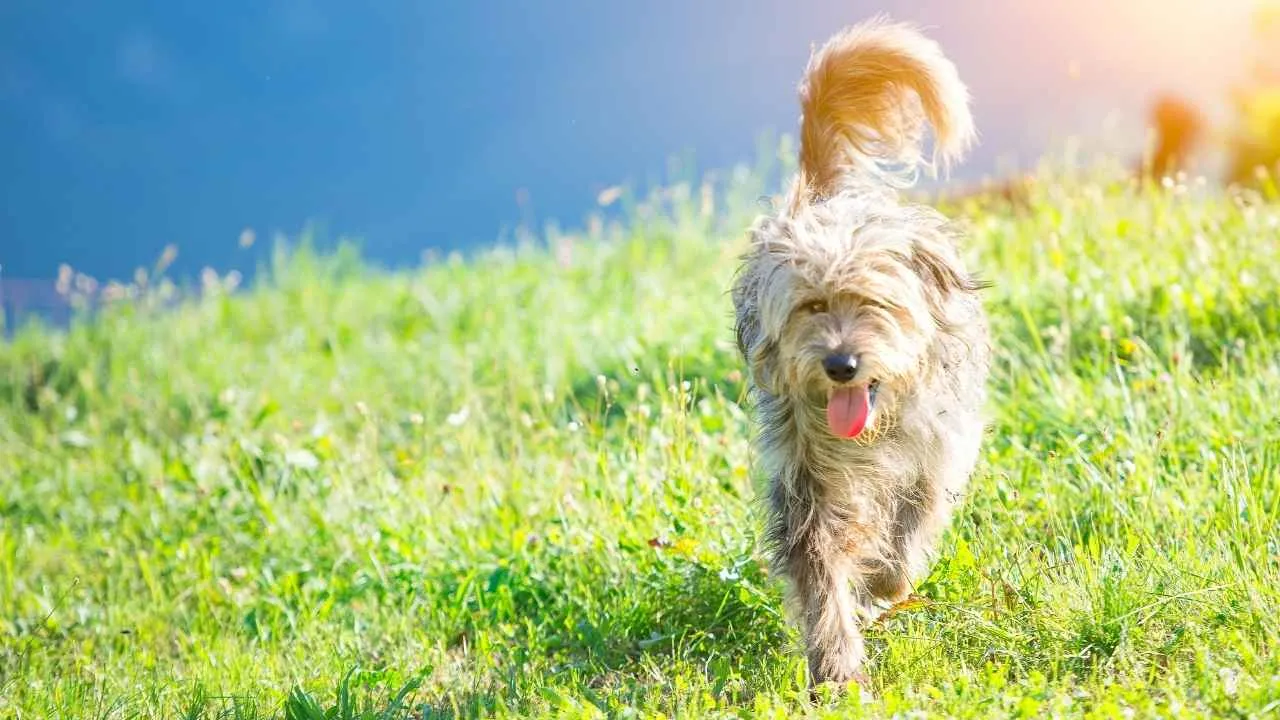
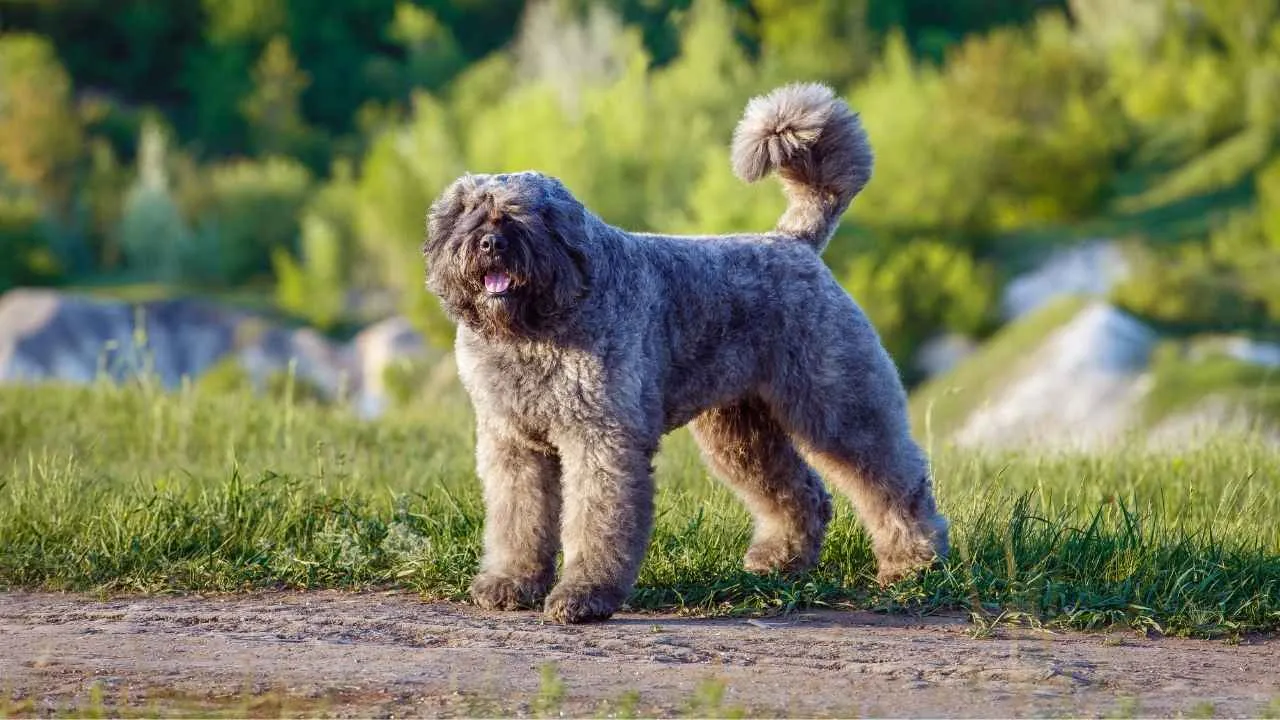
The Bergamasco Sheepdog is a medium-sized herding breed from Italy that prefers working with focus rather than speed. They were originally bred to manage livestock over long days; this dog uses patience and awareness to guide farm animals calmly.
The coat develops gradually during the first year and does not need regular brushing once the flocks are set. Shedding stays minimal, and bathing is occasionally needed with careful drying afterward. Basic care like nail trims, teeth cleaning, and routine checks keeps everything on track.
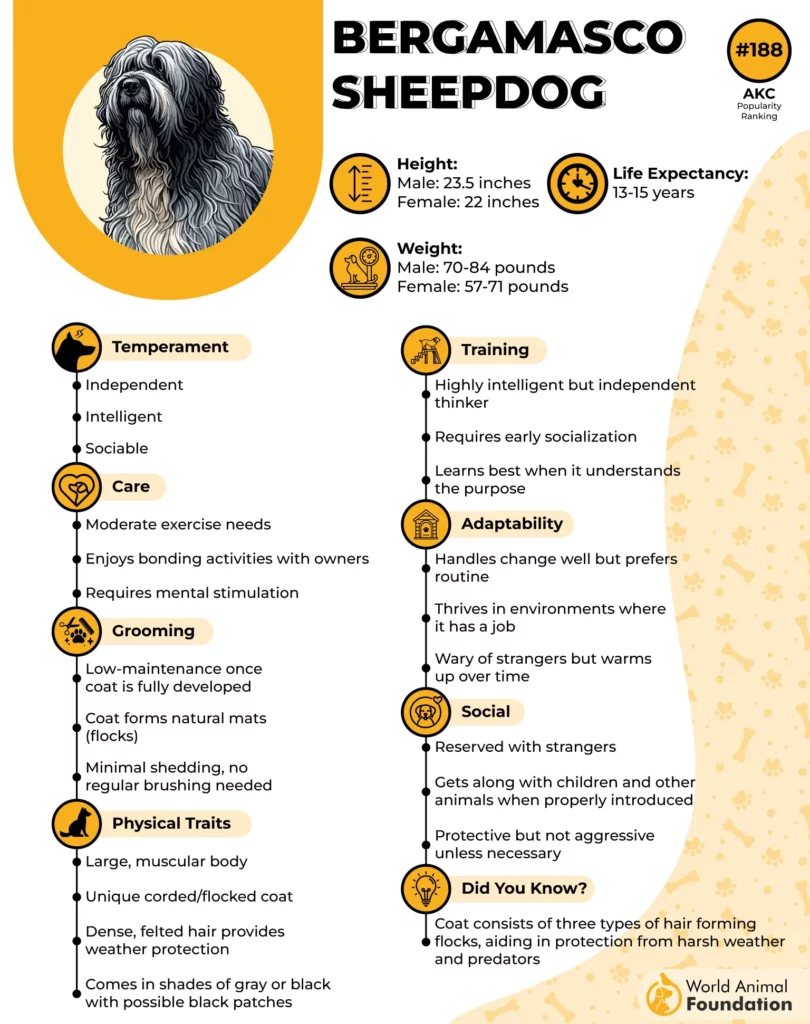
Calm, patient, and protective, the Bergamasco takes its work seriously while thinking independently. The breed stays devoted to its role and remains closely connected to the people it works with. That balance gives the Bergamasco a steady and dependable presence.
What Makes This Breed a Good Choice
• Low-maintenance coat after maturity
• Calm and steady working style
• Independent yet deeply devoted
7. Bouvier des Flandres
According to the American Kennel Club (AKC), Bouviers are excellent guard dogs who take their work seriously. They enjoy structured activities and often shine in dog sports, especially herding trials.
Bouviers need regular physical and mental activity to stay balanced. Daily exercise and purposeful engagement help release energy in healthy ways. Without enough stimulation, boredom can lead to unwanted behavior.
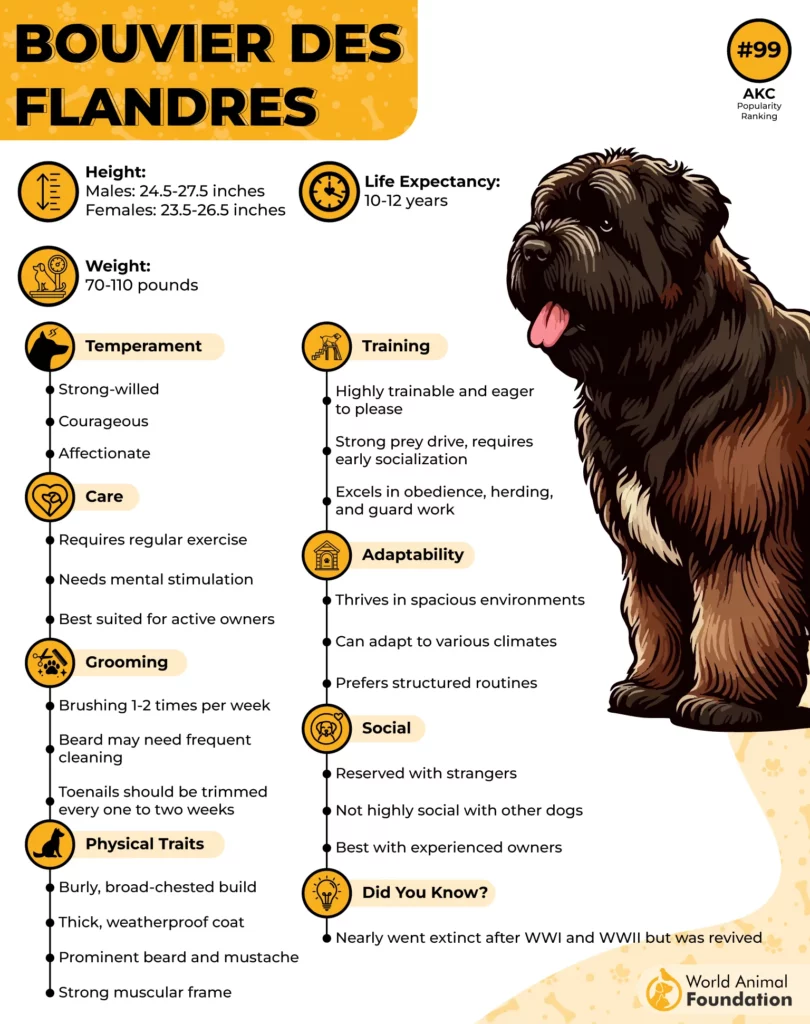
Bouviers are generally healthy dogs when responsibly bred. Breeders screen for muscle, joint, heart, eye, and metabolic conditions, and owners should be aware of the risk of bloat common in large, deep-chested dogs. Routine health evaluations of the hips, elbows, heart, and eyes support long-term well-being.
What Makes This Breed a Good Choice
• Reliable guard dog with strong protective instincts
• Powerful build suited for demanding work
• Thrives with consistent activity and direction
Conclusion
Life on a farm or ranch brings unique challenges, and finding the perfect dog can make those days run more smoothly. Livestock guardian dogs offer the strong protective instincts and reliability needed to protect livestock while maintaining a steady presence. Their specialized nature allows them to excel at guarding livestock and monitoring other animals, ensuring a sense of order across open land.
Each dog brings a different balance of energy and independence. While some function as alert watchdogs, others are gentle enough to be family pets that bond closely with all family members. Understanding these differences allows owners to choose a partner that fits their specific lifestyle and space.
When given purpose, proper training, and structure, these dogs thrive. They are not just helpers in the field but trusted partners who contribute to safety, productivity, and companionship. Choosing thoughtfully leads to stronger bonds and a more balanced working environment for everyone involved.
If you are still curious and want to further explore other livestock guarding breeds, then you can look up Great Pyrenees, Border Collie, Pit Bull, Australian Shepherd, and Anatolian Shepherd.
