




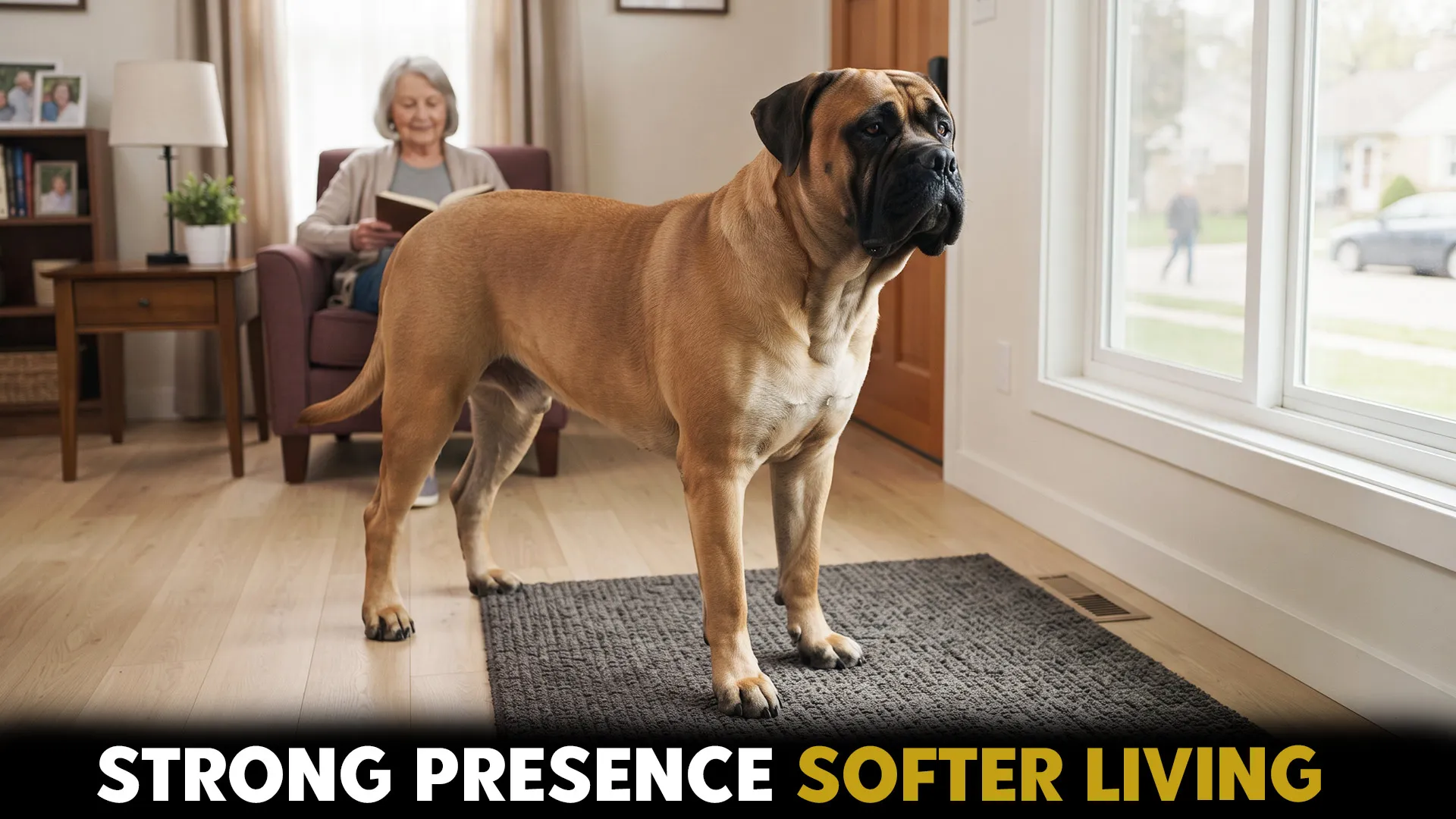
You never notice how quiet a house is until you are the only one in it. The fridge hums, the gate rattles, and you lie there listening.
A furry friend changes all of that. Research shows it too: in a 2026 French study of 160 adults aged 75 and over, dog owners came out less lonely once age and health were accounted for, and 81 % said a companion animal was the reason they got one.
The gate still rattles, of course. It just rattles next to a dog that weighs as much as you do and has opinions about strangers.
Size cuts both ways. A 130-pound dog that spots a squirrel can pull you off your feet, so a calm personality matters more here than a broad chest.
The seven guard dog breeds below are intelligent enough to protect a front door alone, without an experienced handler standing behind it.
Key takeaways
Protection is mostly presence and alarm, not confrontation.
Weight matters more than courage if your balance is uncertain.
Choose by your floors, your space and your gate, not your favourite breed.
Adopting a settled adult beats a puppy for most pet owners at this stage.
Sort out two things first: who lifts the dog into a car, and who takes it if you go into hospital.
Top Protective Dog Breeds for Elderly Living Alone
1. Great Pyrenees
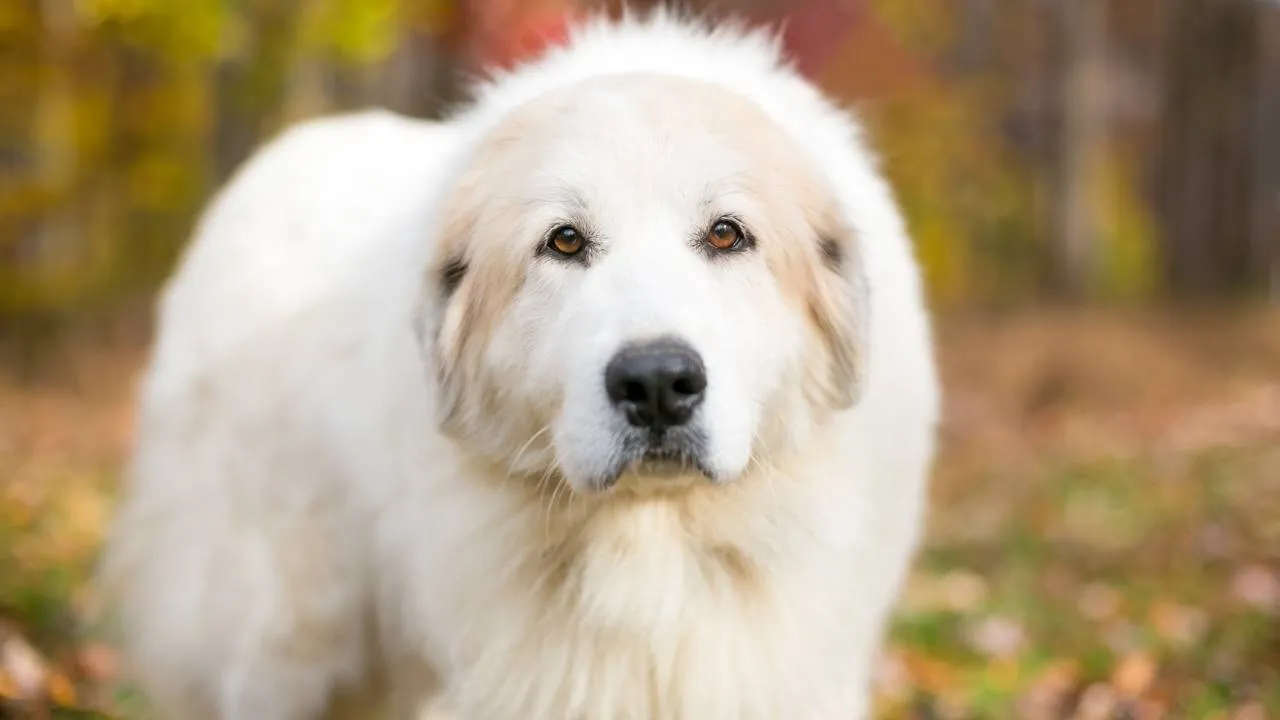
Seen from across the street, a Great Pyrenees reads as a small polar bear. Up close, the details get stranger than the size. The AKC standard requires double dewclaws on each rear leg, extra toes that once gave these dogs grip on wet mountain rock, and treats their absence as a fault.
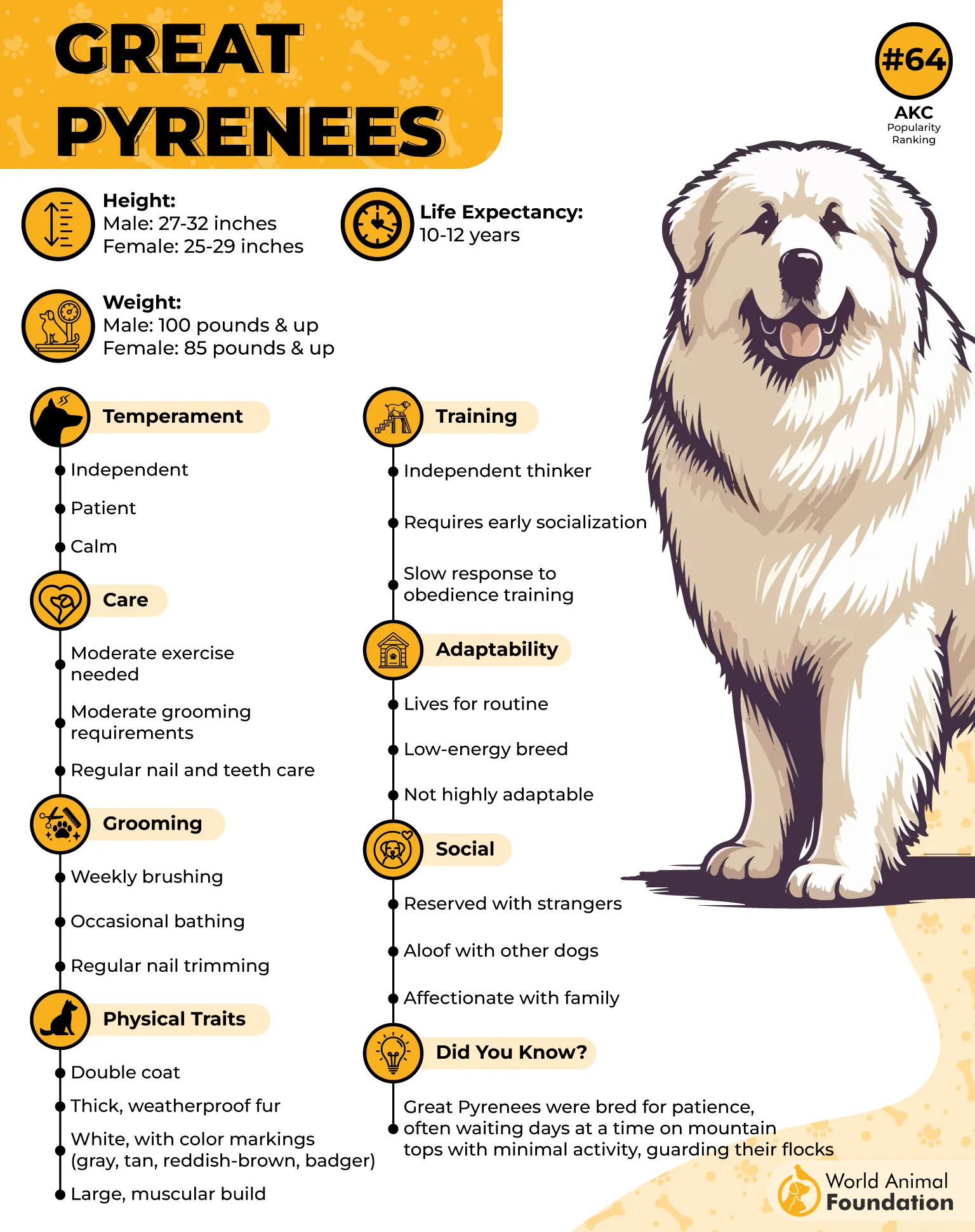
That white double coat is built for weather, not for fashion, and it sheds accordingly. This breed is famous for quiet composure, patience, and tolerance, and that is how a Pyr spends most of the day. The strong will underneath comes from centuries of guarding sheep with no human in sight.
Smart, not obedient: A Pyr understands the sit command and then decides if it applies right now.
Trains on repetition, not drills: Short, calm sessions with food work better than long ones.
Recall is the weak spot: A securely fenced yard matters more than a perfect heel.
For an older owner living alone, their job history is the selling point. A Pyrenees patrols, barks at what it does not recognize, then settles by the door for hours without demanding a five-mile walk.
Best for: Someone with a securely fenced garden, no close neighbours, and a tolerance for night barking. This is the strongest perimeter dog on the list and not an ideal fit for an apartment.
2. Newfoundland
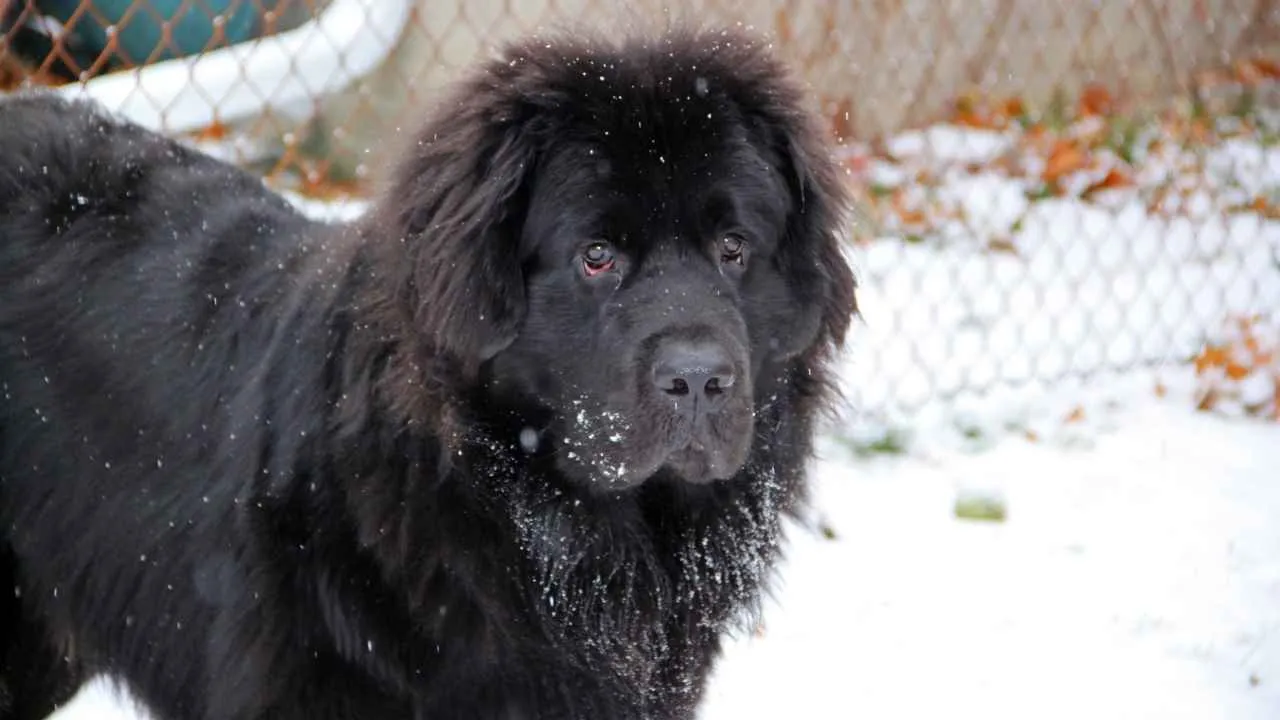
If the Pyrenees guards the boundary, the Newfoundland stays with the person. The difference comes straight out of the work each one used to do.
Fishermen on the island of Newfoundland put these dogs to work off the boats: hauling nets, pulling carts, and going into cold Atlantic water after people.
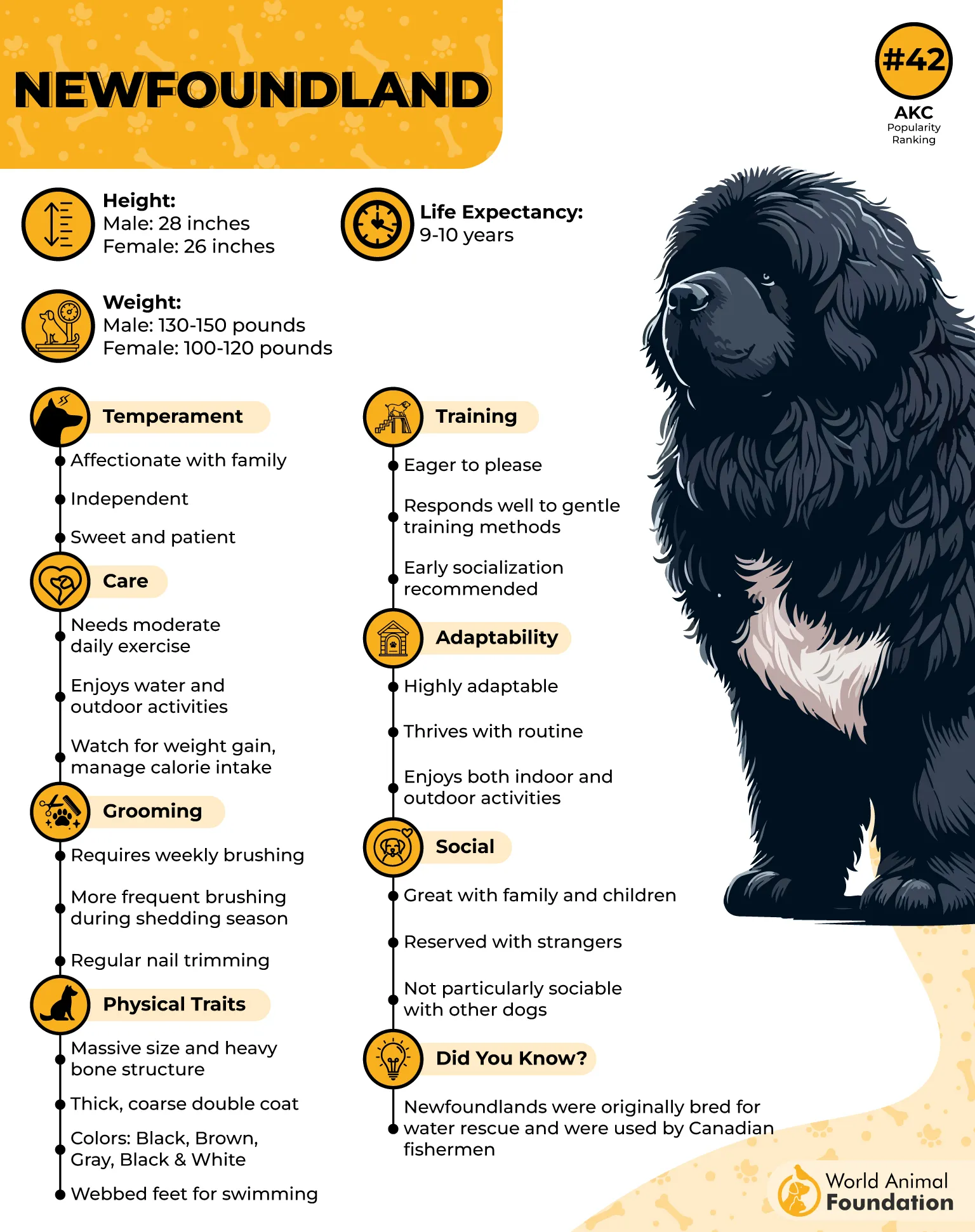
The build still matches the job. Newfies have partially webbed feet and a flat, water-resistant double coat. All that coat comes with shedding and a famous amount of drool.
Sweetness of temperament is named the single most important trait in the breed. A Newfoundland is a watchful dog rather than a suspicious one, which shapes what it can and cannot do for you.
Easy to train: Newfies take direction well and respond to a calm voice more than a loud one.
Quick to read people: Many will position themselves between you and a stranger without ever being taught.
Weak point is pulling: Teach loose-lead walking early, while the puppy still weighs less than you do.
Be clear-eyed about what you are buying. A Newfoundland deters by size and stays close by instinct, and it will not confront anybody. Ask the breeder about heart and hip screening, and plan for a lifespan of around nine to ten years.
Best for: An owner who wants company first and security second, who does not mind grooming, and who has a mop by the water bowl.
3. Leonberger
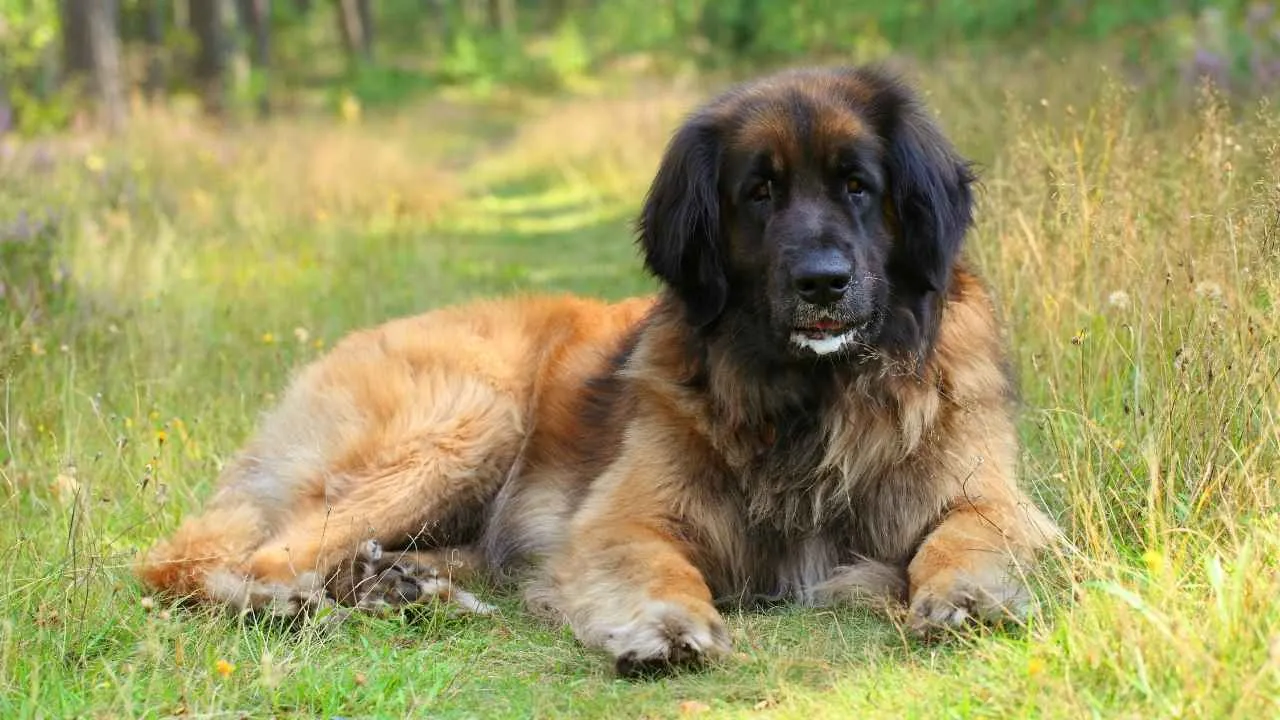
A Leonberger will meet a stranger at the gate, size them up, and then lean on your knee for the rest of the evening. Confidence is the defining trait here, not suspicion. This is a dog that tells you someone is at the door and stops there.
Genuinely trainable: Leos are among the more biddable giant breeds and pick up new cues quickly.
Built for work: They were bred to pull carts, so harness work and slow walks suit them.
Needs a job, not a marathon: Ten minutes of training tires a Leo more than an hour in the yard.
The look is deliberate. According to PetMD, these dogs carry a lion-like mane, a black mask, and a dense double coat that sheds heavily twice a year. The feet are webbed, which is an odd thing to find on a farm dog.
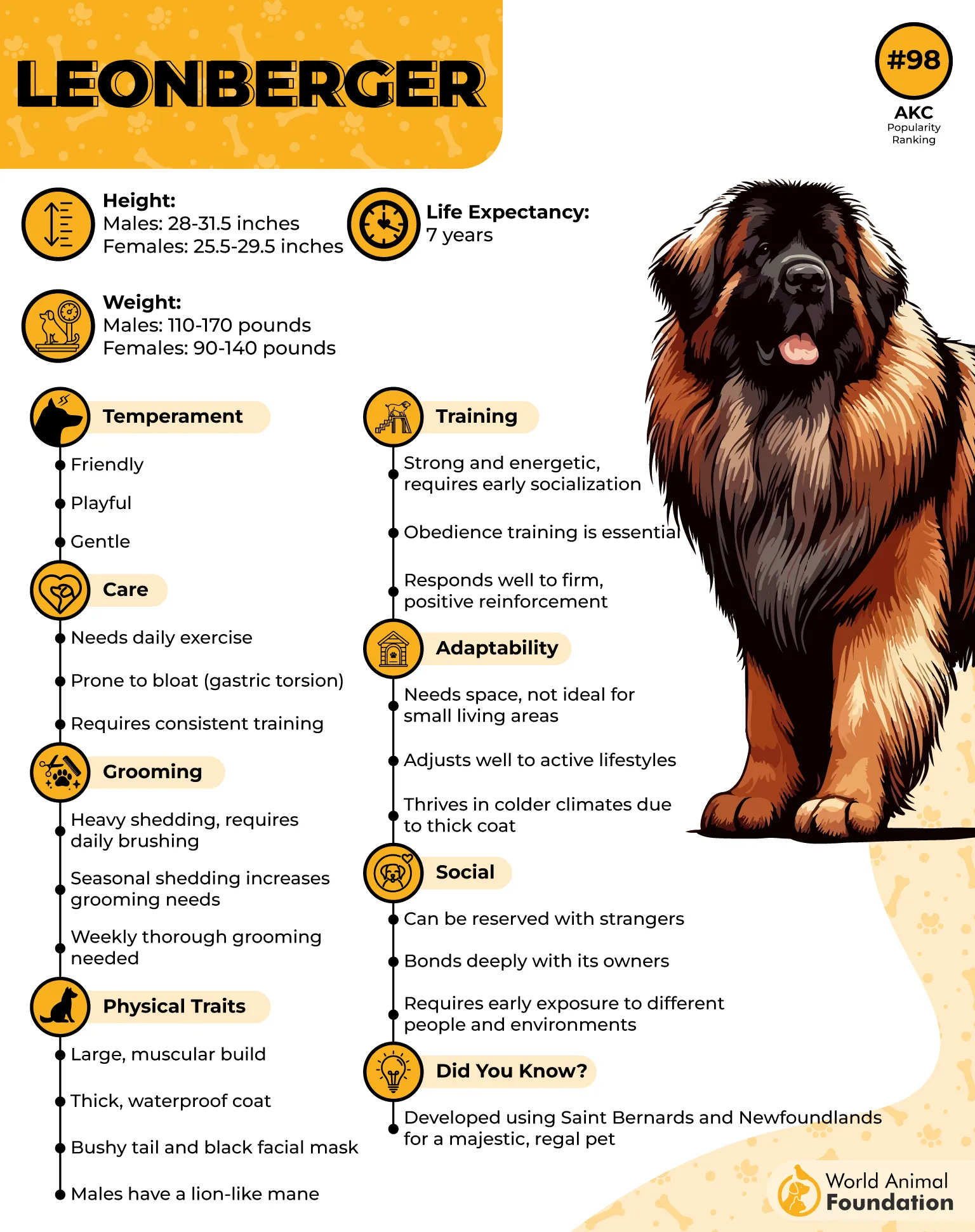
Heinrich Essig built the breed in Leonberg, Germany, in the mid-1800s, aiming at a dog that looked like the lion on the town crest. The result worked farms, hauled carts, and pulled people out of water.
The AKC only recognized the breed in 2010, so a Leo on the pavement is still an unfamiliar shape to most people. That rarity has a downside: fewer breeders, longer waiting lists, and a vet who may not have seen many.
Best for: An active senior who enjoys training and wants a giant dog that listens. One of the most obedient breeds on this list, and the one that most rewards someone who likes working with a dog.
4. Saint Bernard
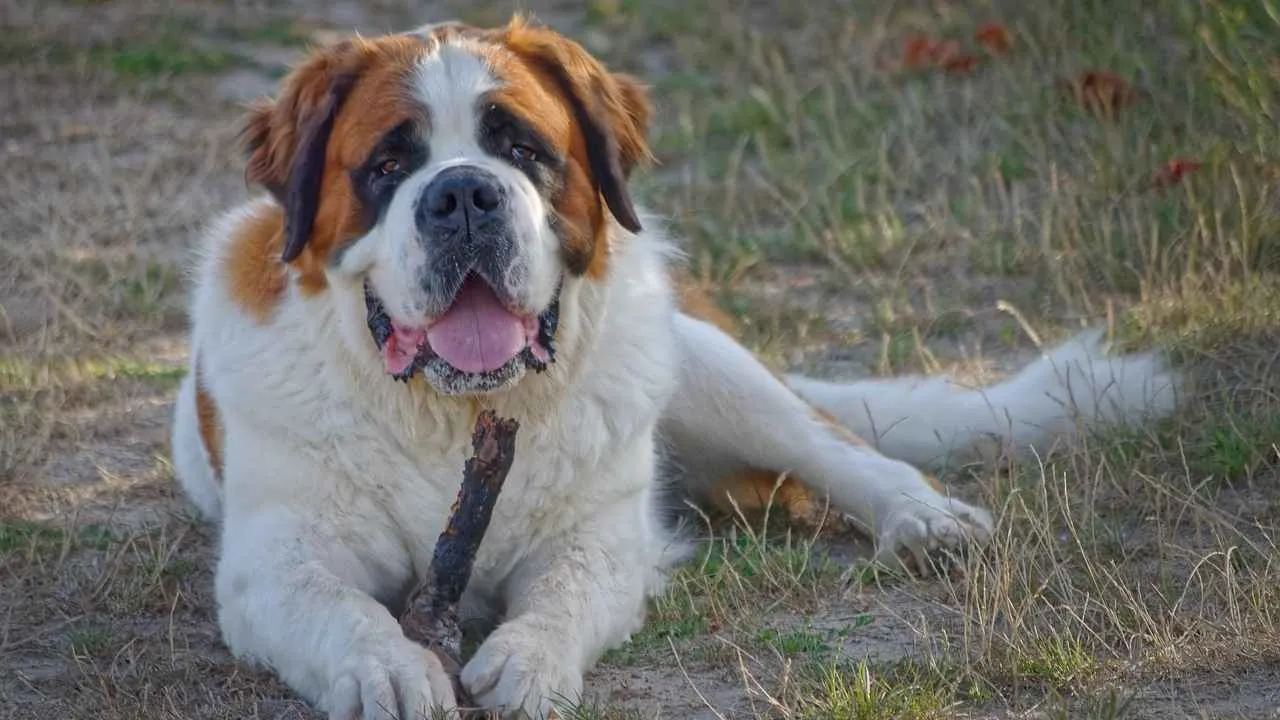
There are two Saint Bernards: the short-coated original and the long-coated version that came from crossing hospice dogs with Newfoundlands around 1830. The monks were after warmer coats and got the opposite. Ice packed into the long hair, so the long-haired puppies were given away and sold down the valley.
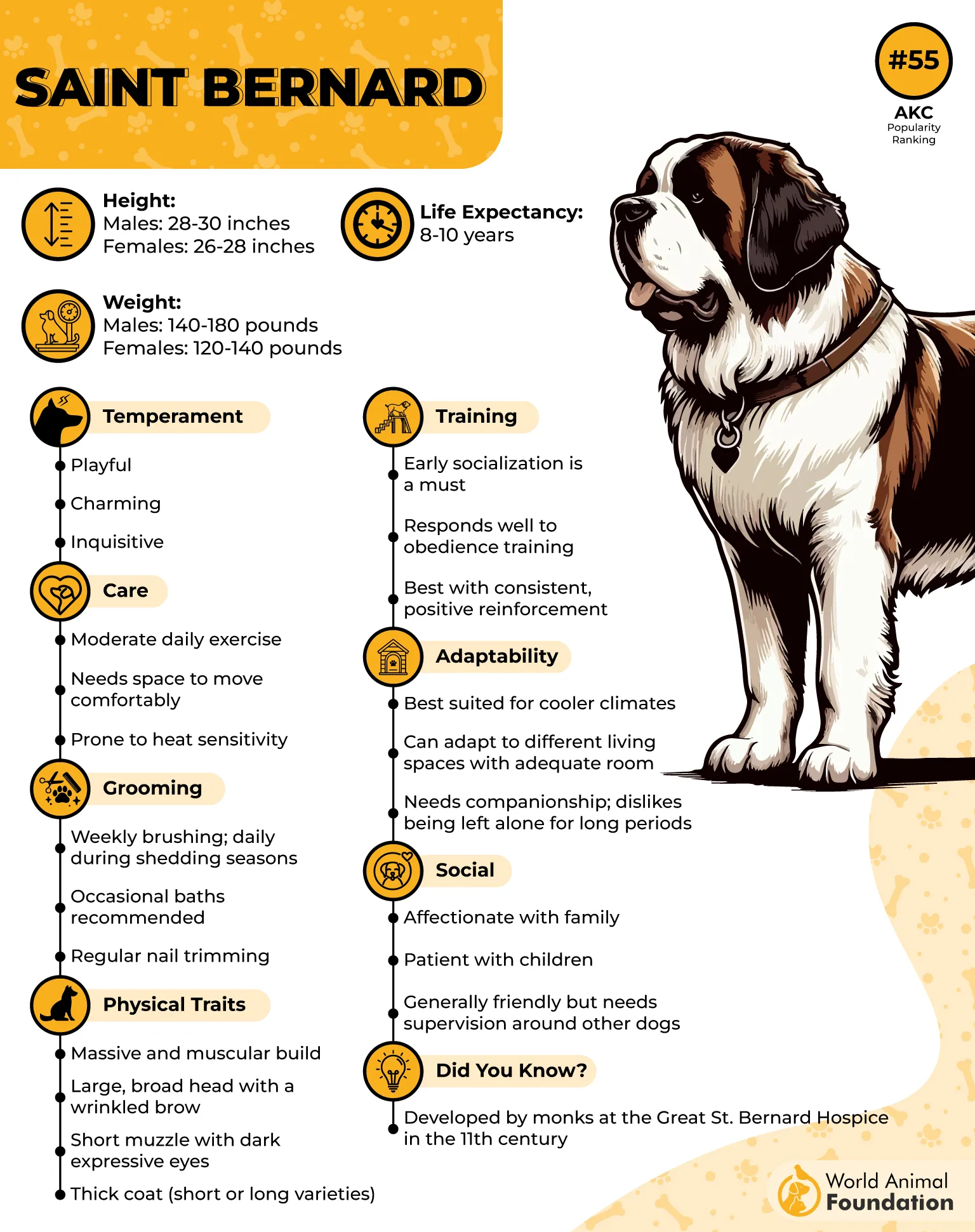
A Saint is watchful without being edgy, slow to escalate, and inclined to stay near whoever it has decided to look after.
Learns fast, moves slowly: A Saint will get the lesson and then take its time obeying it.
Sensitive to tone: Harsh corrections shut this breed down, so keep training light and short.
Start early: A 40-pound puppy that leans is charming; a 160-pound adult that leans is a fall risk.
The bark is deep enough to end most conversations at the front gate, and the rest of the day is spent lying somewhere inconvenient. Go in knowing the costs: heavy shedding, real drool, a lifespan of eight to ten years, and vet bills that scale with 140 to 180 pounds of dog.
Best for: Someone steady on their feet who wants an unmistakable deterrent and a genuinely gentle housemate. Not the breed for anyone unsteady enough to be knocked over by a lean.
5. Bernese Mountain Dog
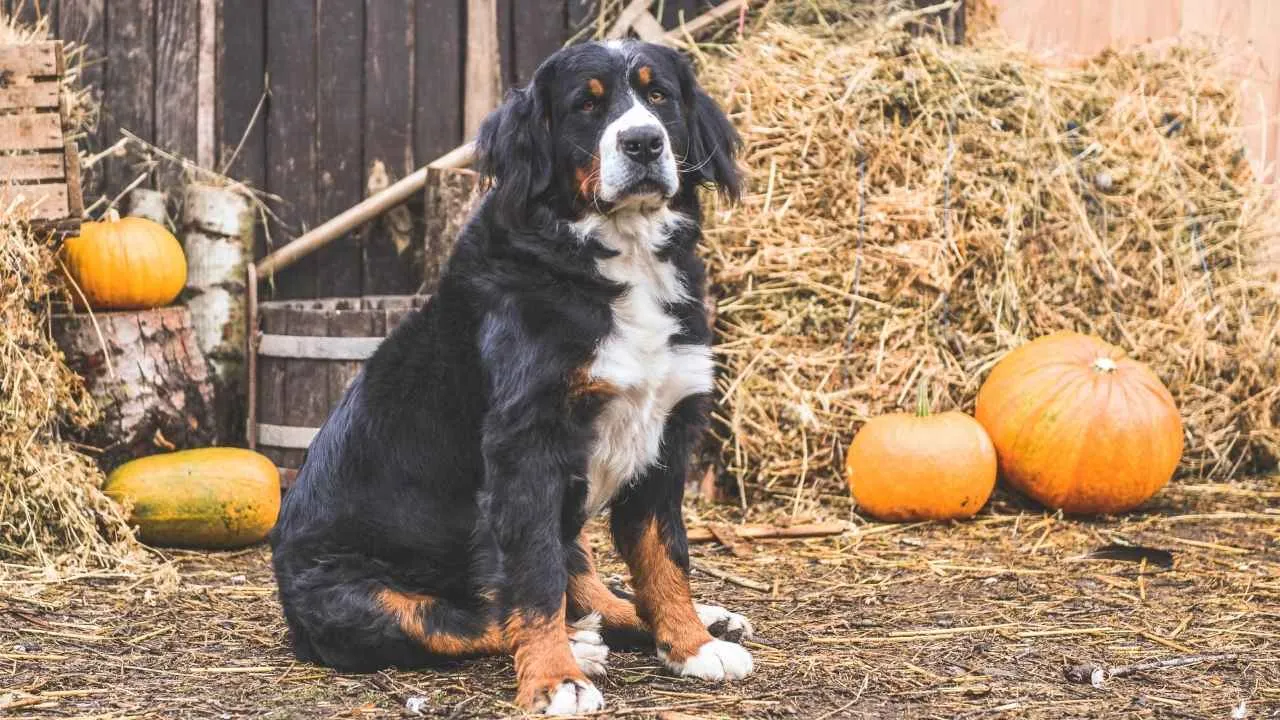
Ask a Berner to guard something, and you get a bark, a hard stare, and then a dog that wants to know if you are coming inside too. Swiss farmers wanted exactly that. The job was to alert the household, not to handle the intruder alone.
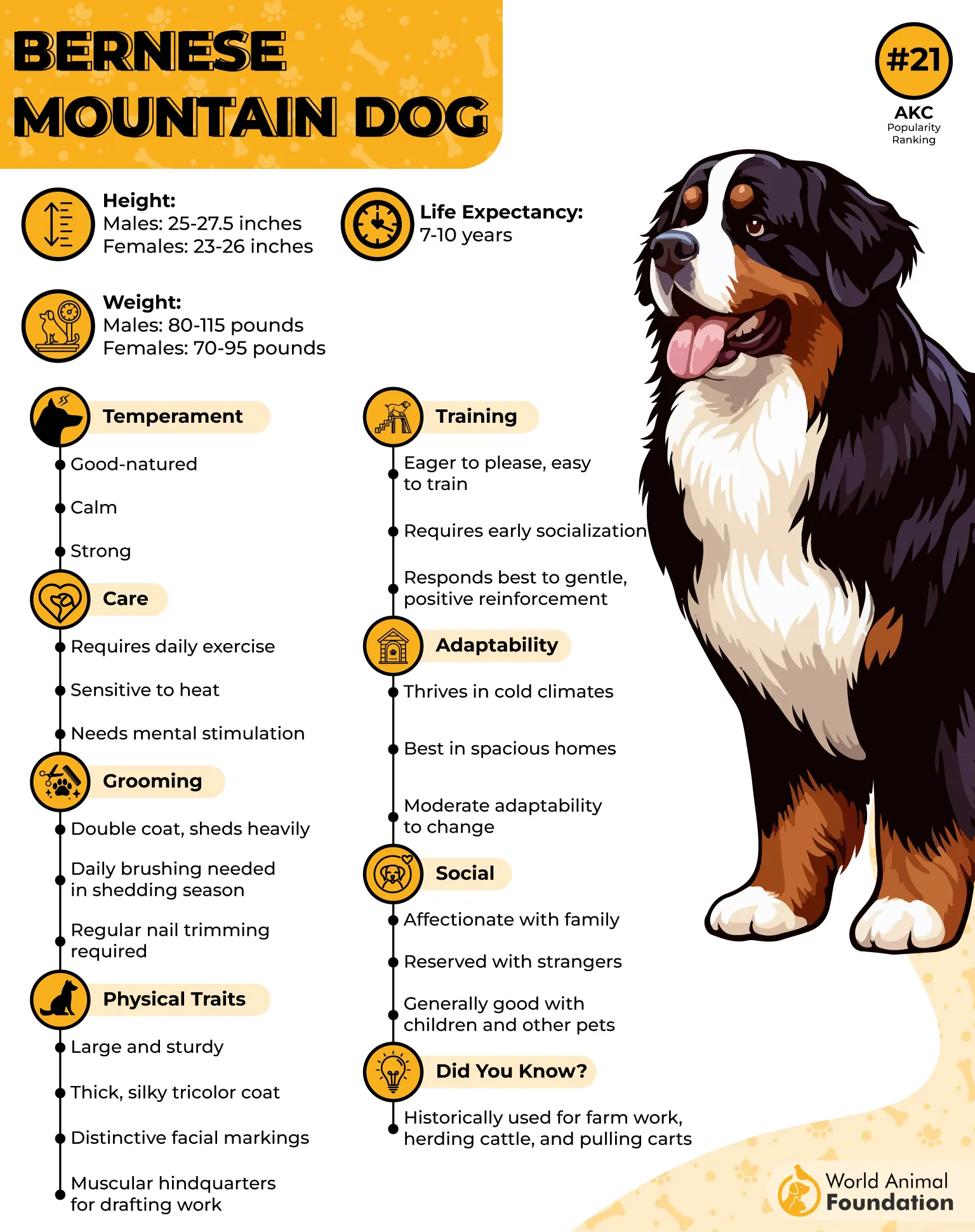
The breed comes from the farms around Bern and was once called the Dürrbächler, after the hamlet where the dogs were bought and sold. They pulled carts of milk and cheese to market, hauling loads heavier than themselves.
Eager to please: Berners work with you rather than around you, which makes basic obedience straightforward.
Thin-skinned: A sharp tone lands harder on this breed than on most, so praise gets you further.
Carting is still a thing: Breed clubs run draft competitions, and a Berner likes having a task.
The tricolor coat is the calling card: black with rust and white markings, long and slightly wavy, shedding all year. A Bernese is a giant dog you can still physically manage, and it is the easiest one here to get into a car.
Best for: An owner who wants the most affectionate dog on this list and can accept the shortest time with it. The life expectancy of this extremely loyal pup is between seven and ten years.
6. Bullmastiff
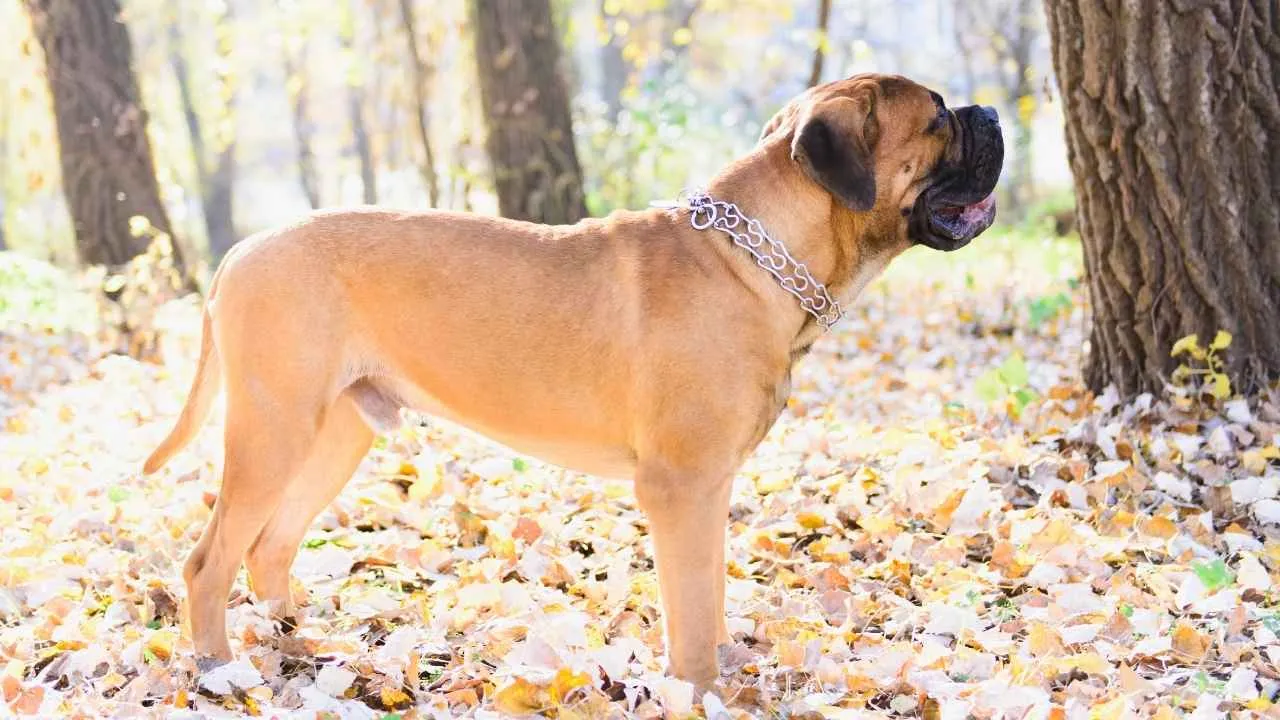
The Bullmastiff was built for one job: stopping poachers on English estates at night. Gamekeepers wanted a dog that could track in silence, knock a man down, and hold him there without biting, so they crossed the Mastiff with the old Bulldog at roughly 60 to 40. Dark brindle was preferred early on because it disappeared in the dark.
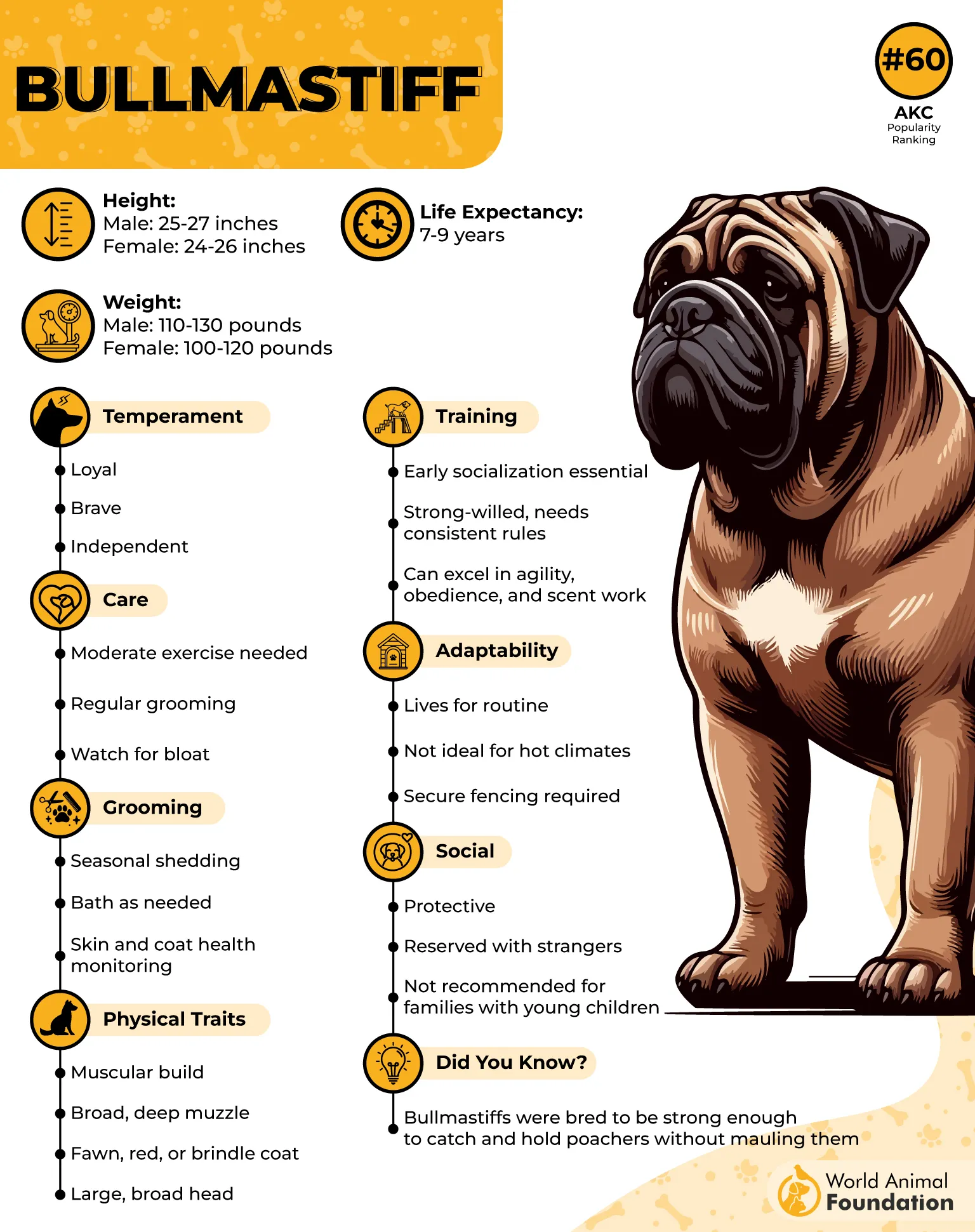
That history explains the shape. It also explains the quiet. A Bullmastiff is not a barker. It watches, moves between you and whatever it dislikes, and expects that to settle the matter.
Independent by design: This breed was made to decide things alone, so instant obedience is not the goal.
Socialization is non-negotiable: Introduce visitors, delivery drivers, and other dogs early and often.
Short sessions win: Ten focused minutes beat an hour of repetition with a dog this stubborn.
Around the house, it is affectionate, mildly stubborn, and happy to sleep through most of the day. Grooming is light, and exercise needs are modest, which suits a slower routine better than almost anything else here.
Best for: An owner who wants real protection rather than the appearance of it, and who will put in the socialization work with a trainer. Not a good match for a home with a constant flow of unfamiliar carers or visitors.
7. Great Dane
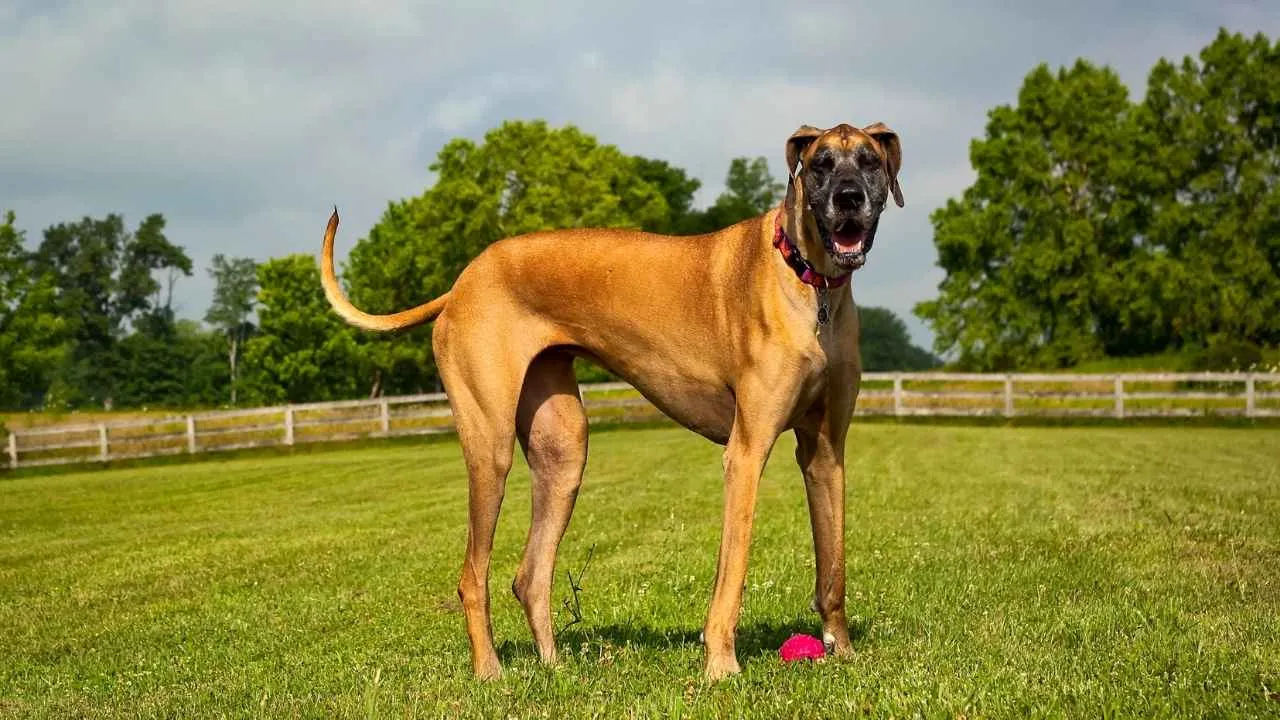
One of the tallest dogs on this list is also one of the laziest, and that is the whole argument for it. A grown Dane is content with two moderate walks and then wants the sofa. Puppies are the exception, and they need controlled exercise while the joints are still forming.
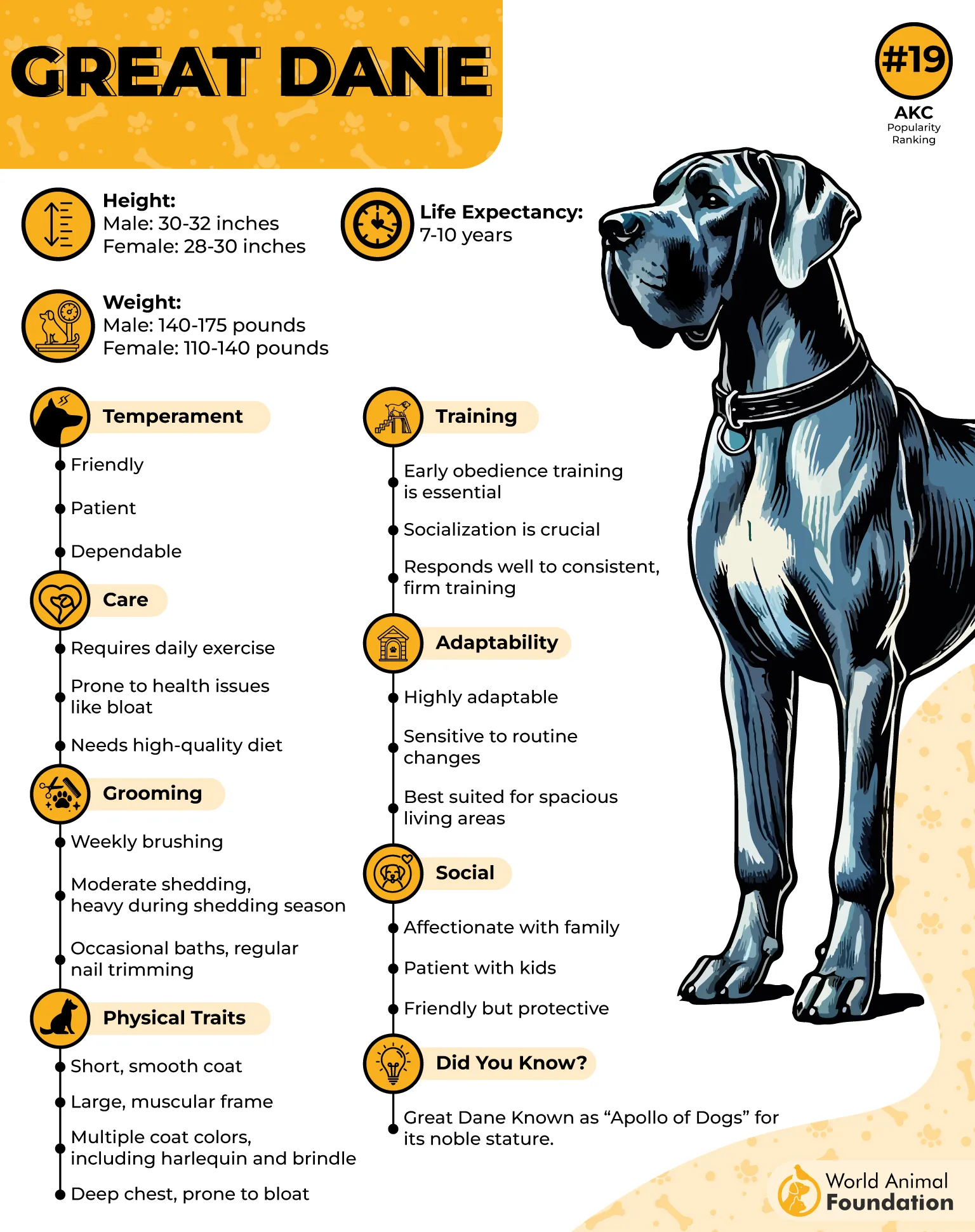
Males stand 30 to 32 inches at the shoulder, which puts the head at hand height when you are sitting down. The coat is short and needs almost nothing.
The name is a historical mistake. These are German dogs, bred to hunt wild boar and later kept as estate and chamber guards, and Germany named them the Deutsche Dogge in 1876. Bismarck kept them as bodyguards, and English breeders later crossed in Greyhound to refine the outline.
Fast learner, slow to mature: Danes pick things up quickly but stay mentally puppyish for about two years.
Leash manners first: Teach polite walking before the puppy outweighs you, which happens early.
Sensitive and people-focused: They do badly left alone for long stretches and respond best to a calm handler.
Pawlicy Advisor advises that you should keep two things in mind before making the decision. Danes carry a real risk of bloat, so ask your vet about a preventive gastropexy, and the breed typically lives seven to ten years.
Best for: An apartment or small-home owner who wants maximum deterrent for minimum daily work, and who is home most of the day. The lowest-maintenance dog here, and the one that copes worst with being left alone.
Conclusion
The best dog breed for older adults living alone depends on your living situation more than on size. A large dog deters visitors at the gate, a calm one fits a lifestyle built around moderate exercise, and both matter more than any ranking.
Ask your veterinarian which of these suits your health, your space, and the physical activity you can manage day to day. Then call local shelters about senior dogs, because adopting a settled adult is often the best fit that dog ownership offers at this stage of life.
