




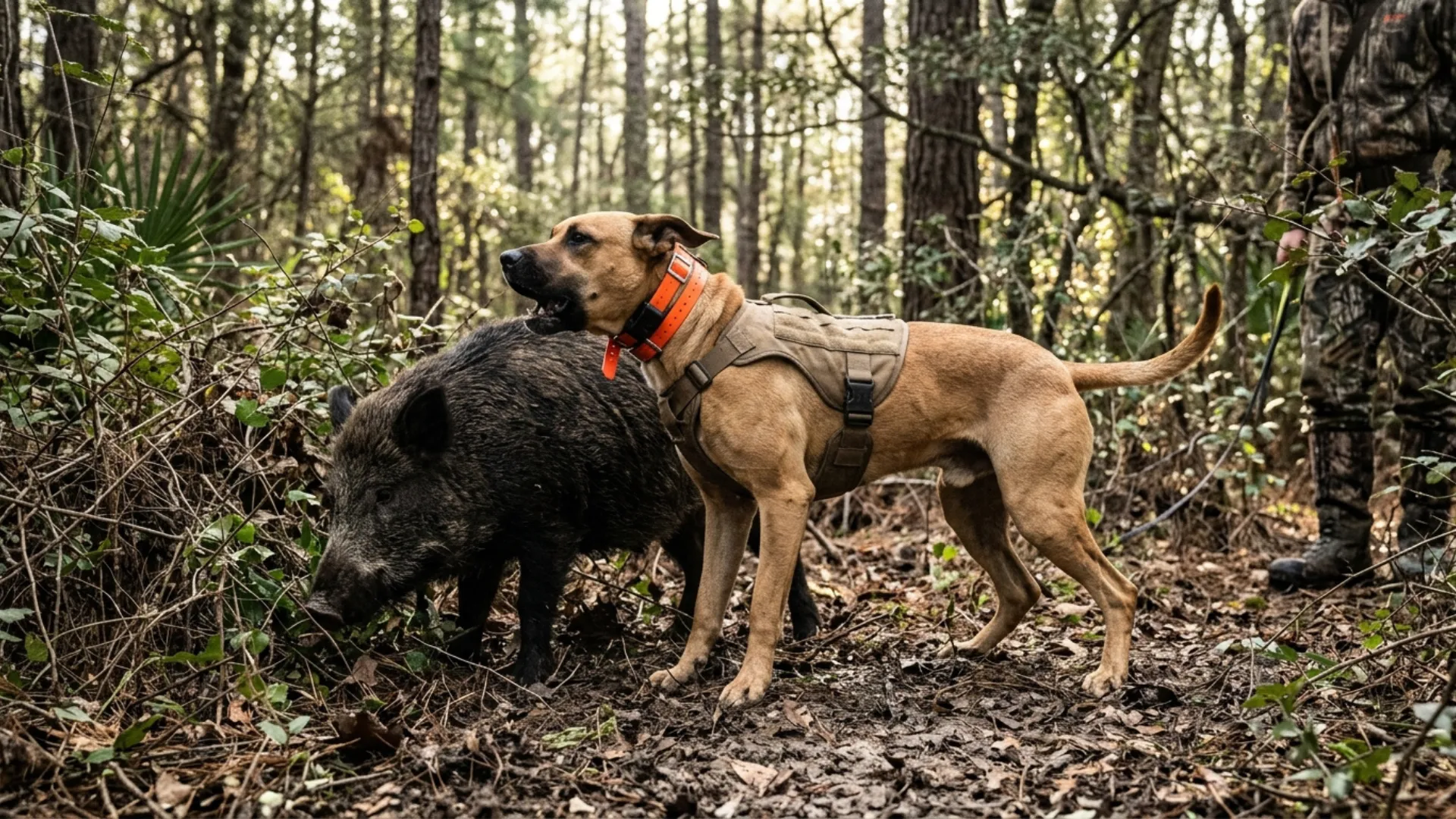
Wild boar hunting is not a Sunday stroll in a park; it is a full-contact, mud-slinging, heart-pumping sport that demands the right four-legged partner by your side. These animals are fast, aggressive, and built like little tanks. Get the wrong dog on the trail, and you are showing up to a knife fight with a spatula.
As Dwight D. Eisenhower once said, “What counts is not necessarily the size of the dog in the fight – it’s the size of the fight in the dog.” A medium-sized dog with a laid-back nature may seem useless if you are a hunter, but there could be some wonders hidden inside its body.
Wild boars cause roughly 1.5 billion in agricultural damage annually in the U.S. alone, so hunters are not out here playing games. Whether you are a seasoned hog hunter or just getting started, choosing the right breed changes everything. Here are the 7 absolute best dogs to handle the chaos.
Premier Dog Breeds for Dominating Wild Boar Hunts
1. Dogo Argentino
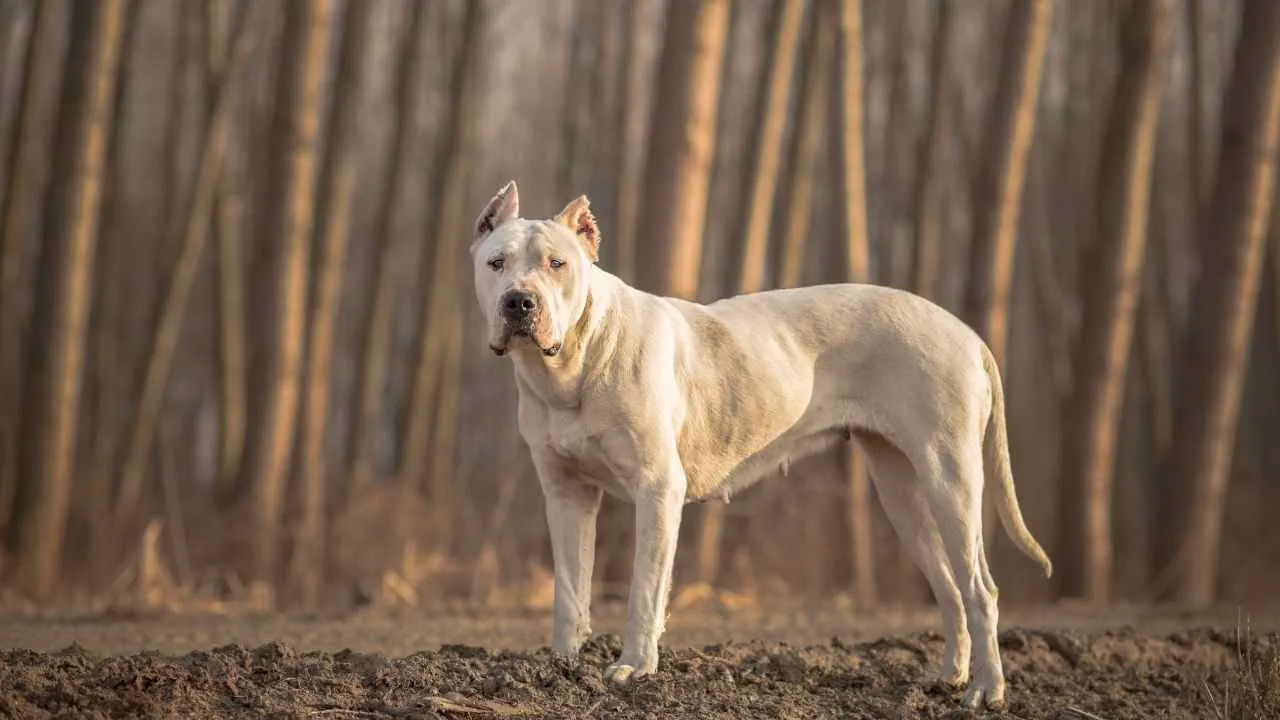
Originally bred in central Argentina (Córdoba) in the 20th century, this large dog was used to hunt large game, such as wild boars, peccaries, and pumas. It stands 24-26.5 inches tall and weighs around 88-100 pounds. With the bite force of 500 PSI, the breed can literally break your bones.
It has a white, short coat, the skull and the muzzle have the same length, a powerful neck, and a strong neck to hold prey, says Wikipedia.
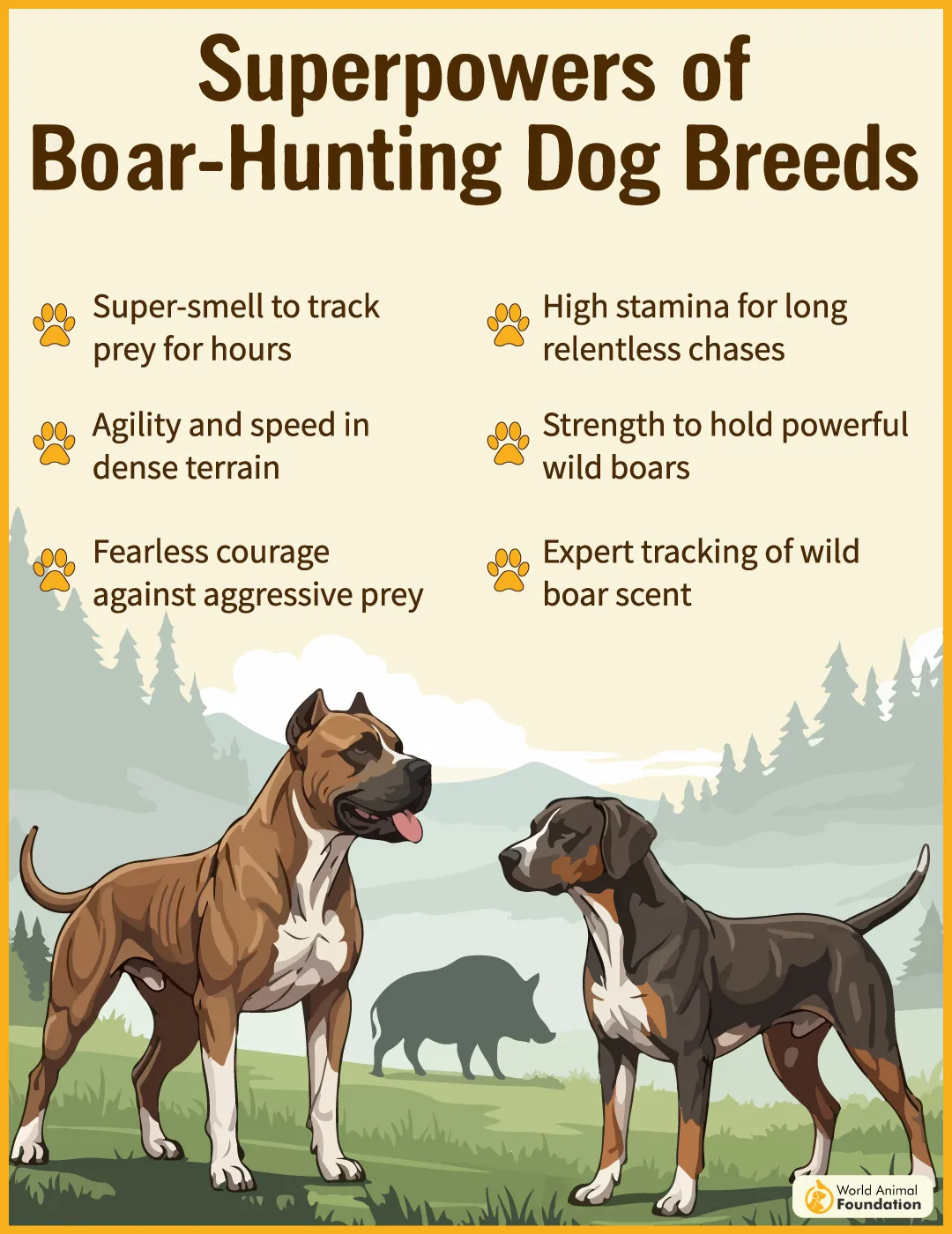
Since the breed was developed by crossing the Old Cordoba Fighting Dog, the pointer, and the terrier for power, scent, and stamina, respectively, it has a high pain tolerance. The long “lip length” helps it take oxygen even if it is holding a boar. Being a “catch dog,” it holds the predator with its neck or head and pins it down till the hunter arrives.
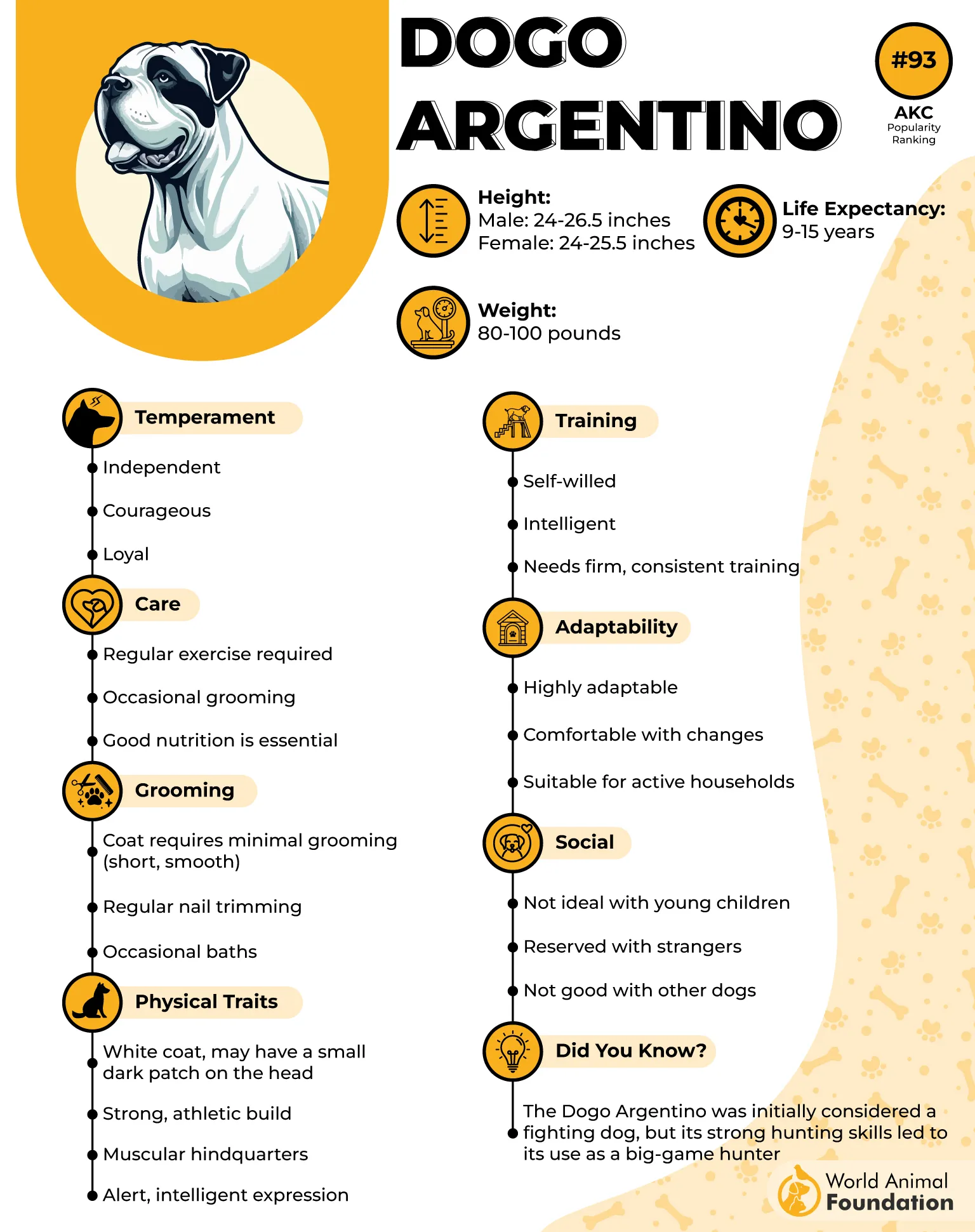
This hunting breed detects the boar from miles with its strong nose. It then uses its high speed to catch the boar, mainly attacking the ears, neck, or snout to prevent dangerous tusks. It holds the prey with sharp teeth (without tearing) and puts its body pressure to prevent movement.
🎧 Dogcast
Episode 37 — Why Dogs Stay Close without Touching
If you don’t hear sound, tap the button above to enable audio.
2. Plott Hound
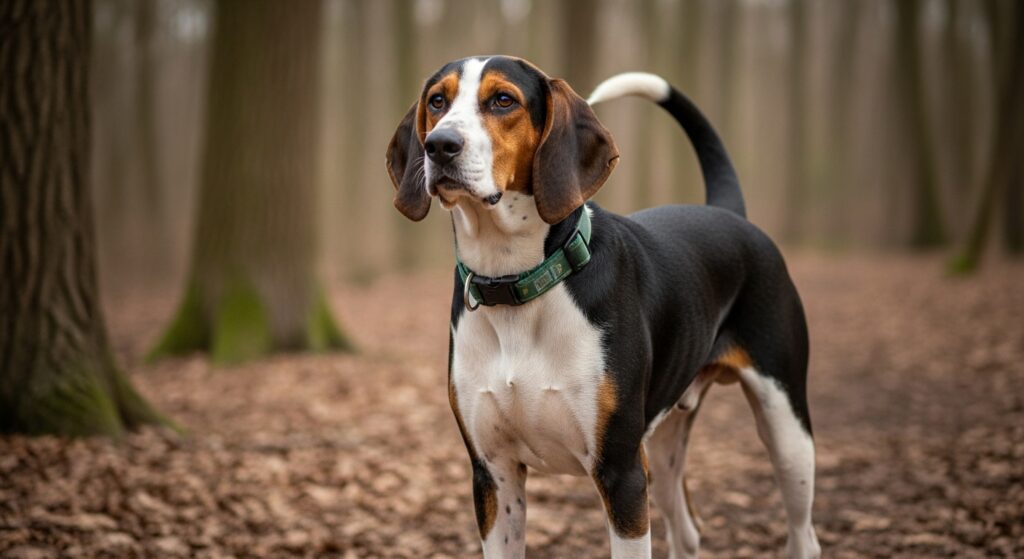
The official state dog of North Carolina, the Plott Hound, is a scent hound developed in America as a hunting dog, but its ancestors were found in Germany. This medium-sized dog has a brindle coat, high speed (30mph), strong hindquarters for propulsion, a deep chest, wide lungs, and weighs 40-60 pounds.
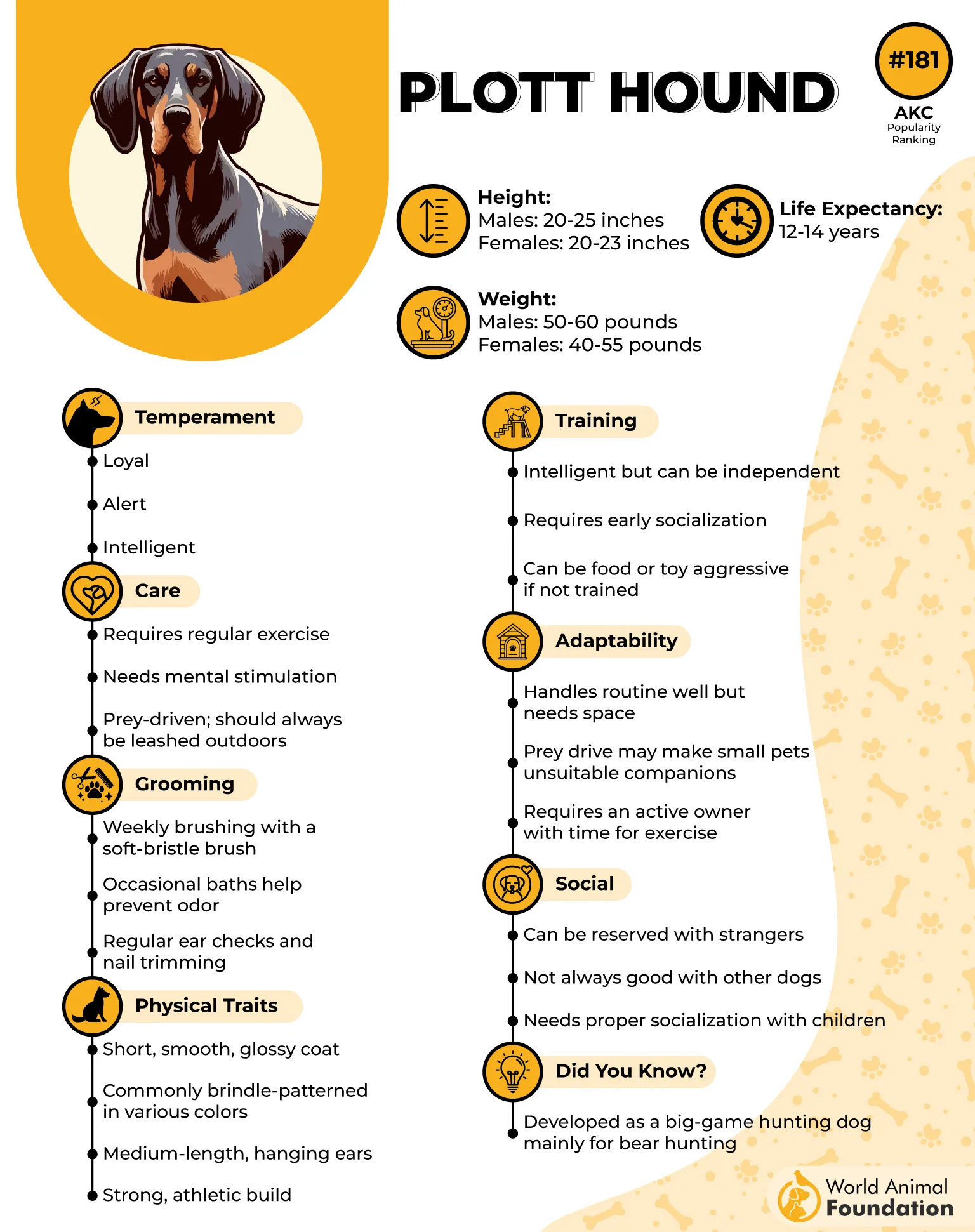
Since it is a high-energy dog, it has intense exercise needs: daily long walks, agility sport, hiking, fetching, flyball, for physical and mental stimulation. It has cat-like feet: sturdy toes and deep pads. This helps the Plott Hound to cover long distances over rough terrain. It has controlled aggression because of sharp intellectual instincts.
Famously known for “cold tracking,” this breed tends to work in thick covers to look for wallows, etc. Once it tracks the prey, it chases them and often barks loudly to notify the handler when working in a pack. This hog dog usually bays, often nips at the prey, and corners them. It does not physically hold the boar and keeps barking till the hunter comes.
3. Black Mouth Cur
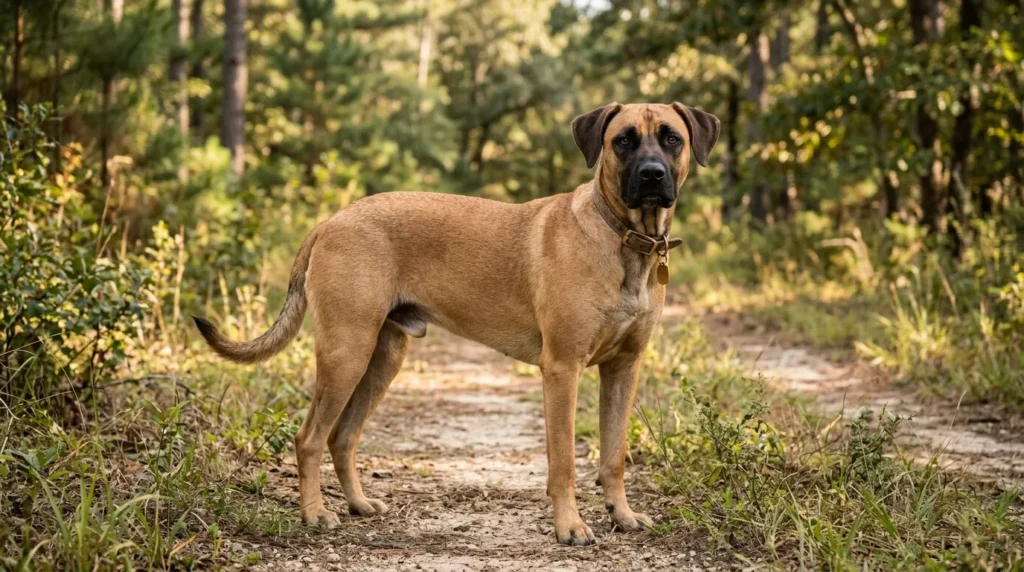
Originating in the Southern America, the Black Mouth Cur was used by early settlers to hunt large and small game to protect their homes and livestock, and as a farmhand. The word “cur” literally refers to a “mongrel” dog that is comprised of other breeds. It has strong bones, significant lung capacity, a deep chest, a short, thick coat, and cat-like feet.
The Mountain Cur weighs around 40-90 pounds. The breed is known for high endurance and excels in working, running, hiking, and swimming. It has moderate exercise needs (1 hour a day) and is not suitable for apartment living. Often used as a “rig dog” because of its hot nose, the dog helps find wounded game as well.
It can work independently (covering 300-400 yards) or in a pack, communicating with each other vocally. It has a strong drive for prey, and once the scent is detected, it chases the prey and aims to exhaust it. This best hog dog shows aggressive body language (showing teeth), runs after the prey, barks loudly, keeps the animal at one spot, and then catches it by ear or snout.
4. Catahoula Leopard Dog
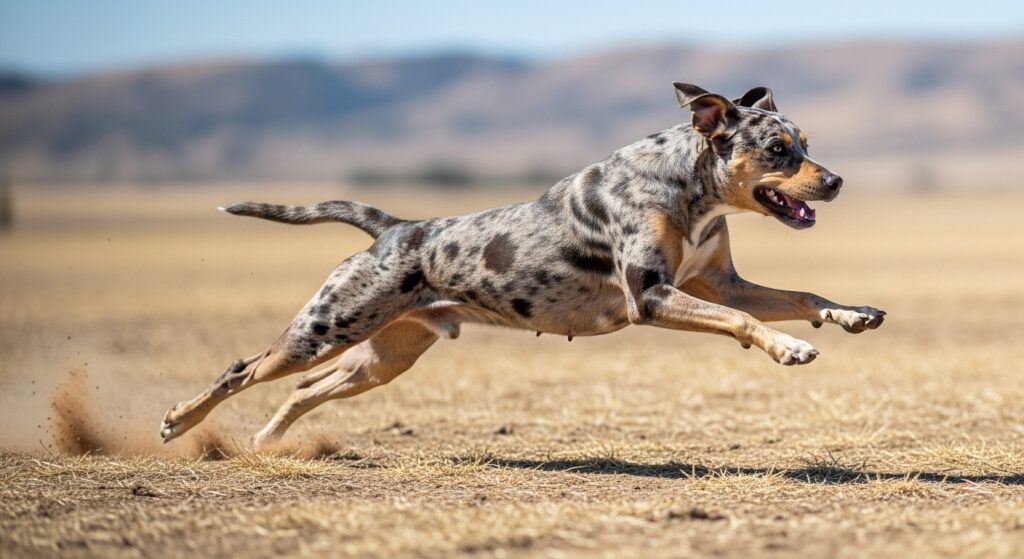
The breed was developed to hunt feral boars in the United States and was declared the national animal of Louisiana in 1979. It originated by crossing local dogs and Beauceron dogs. It has a rectangular body with a multi-colored leopard-like coat, a large head, droopy ears, and a tapered muzzle. It is widely used as a bay dog, a tree dog, and a rescue dog.
It has a short coat and webbed feet, making it a perfect swimmer. With its natural herding instincts, it moves in a circle, creating an invisible fence around cattle. It weighs around 50-95 pounds and stands 22-24 inches tall.
It has the bite force of 200-400 PSI to catch and hold prey: wild pigs, deer, squirrels, etc. However, its independent nature may make it stubborn; thus, early and consistent training is non-negotiable.
It can perform dual functions: baying and catching. Once the smell is detected via air or ground scenting, it follows the trail until it reaches the prey. Unlike other breeds that nip from the back, it adopts a “header style,” confronting them from the front.
If the target tries to escape, it nips at the nose and barks loudly to alert the owner. It usually goes for “loose baying,” where it remains away from the target, but some may adopt “tight baying.”
5. Rhodesian Ridgeback
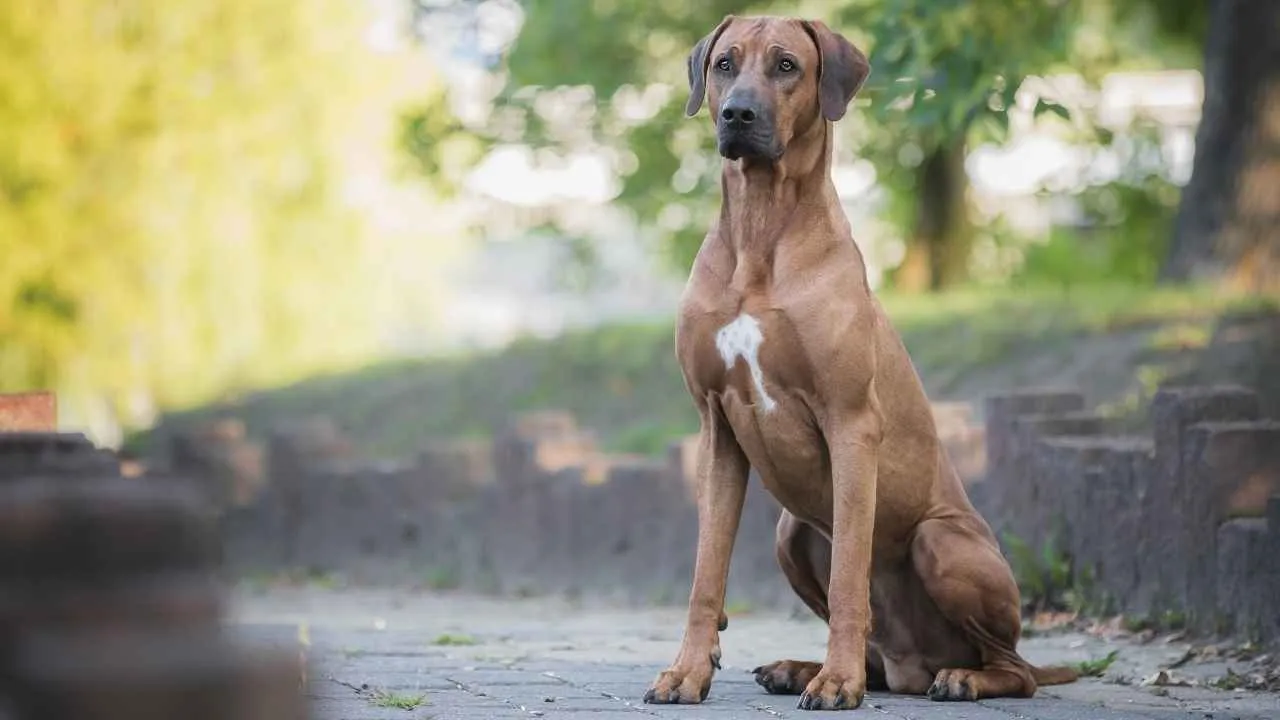
Named after the ridge of hair that goes down the center of the back, the Rhodesian Ridgeback was originally bred as a hunting dog that could track and flush out large game, such as a lion, as per PetMD. It typically weighs 70-85 pounds. It has a wheaten color single coat that consists of fur, a well-muscled body, a square head, and a black/brown nose.
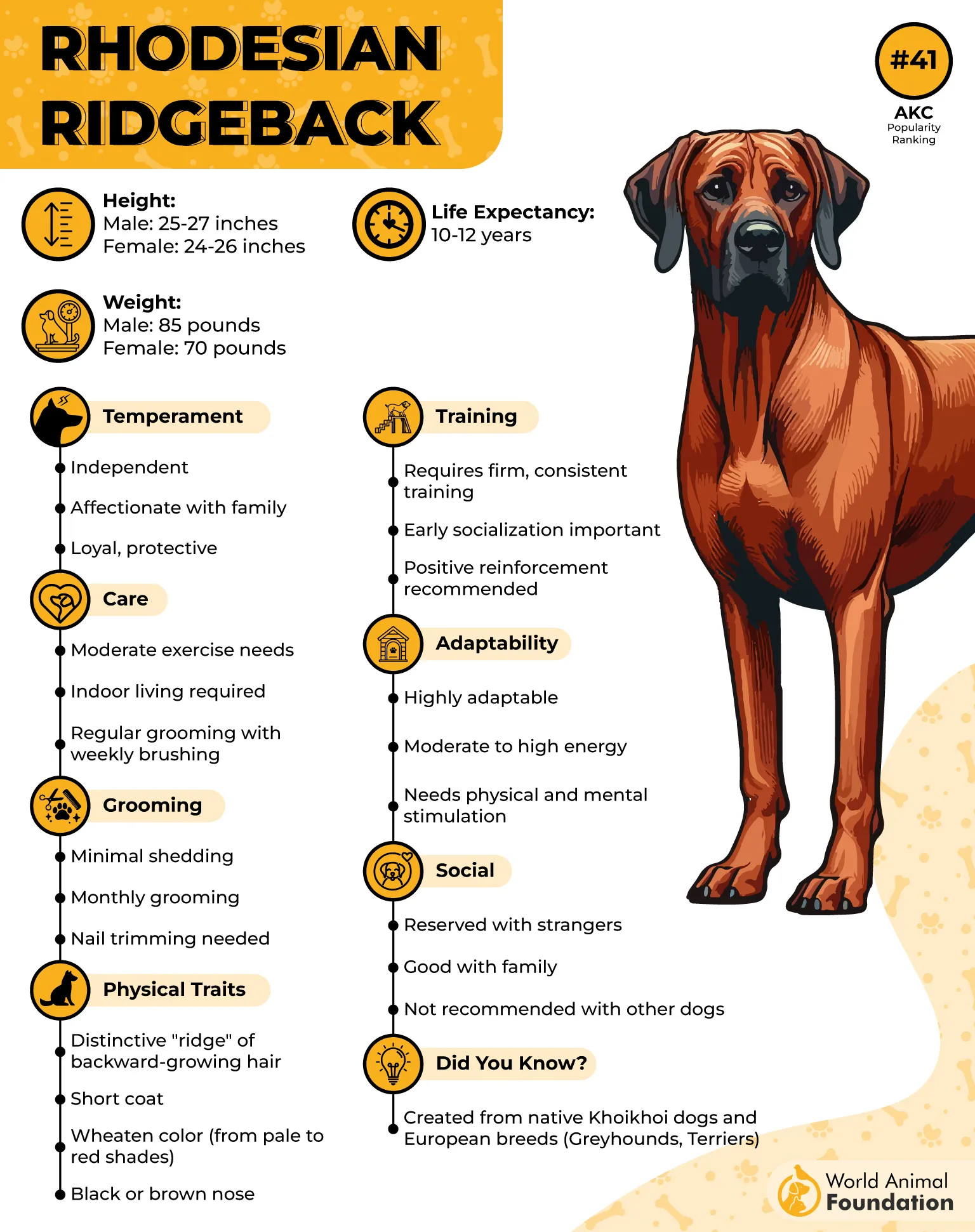
It can cover large distances (30 miles a day) in a harsh African environment. Because of its dual-scenting ability (air/ground scent), it can easily track down hidden pigs under thick bushes. Its high intelligence leads to a calculated attack: fight when needed and maintain a distance to avoid injury.
With a notably strong muzzle and scissor bite, it nips at the heels or head of the prey to turn it back. A small-sized boar can be controlled by a single Ridgeback, while a large breed requires multiple dogs. The “dance” strategy helps it to quickly harass a tough boar and then go back to its original place.
6. Polish Hound
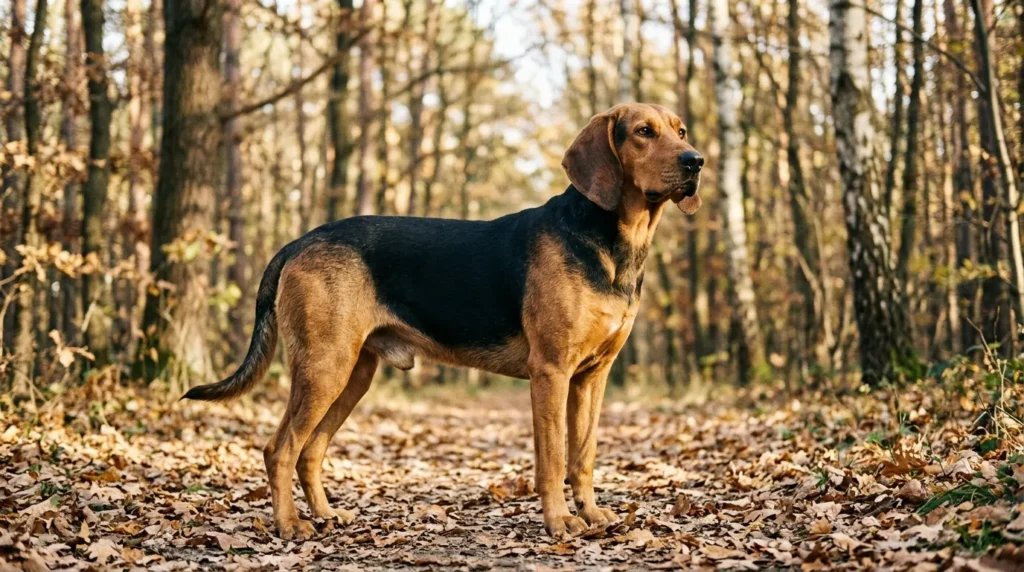
The Polish Hound was developed by crossing a Bloodhound and the local Polish breeds. Its primary goal was to hunt in the harsh terrain of the Polish land. The breed has declined after World War II, but the revival led to two types: the heavier-boned Polish Hound and the lighter-boned Polish Hound.
It is calmer indoors and turns on its hunting instincts as soon as it steps out. This working line dog has thick paws, a deep chest, a weather-resistant double coat, and a resonant voice to communicate with the hunter. It usually has a slow gait, but turns into a heavy gallop while chasing.
It has a cold nose, which helps find older scents. It pushes the wild boar from thick cover and drags it to the hunter. Though it is extremely fast, it tends to work on stamina rather than speed. To prevent any injury, the dog is often introduced to a protective vest to prevent any wild boar’s tusks.
7. Bluetick Coonhound
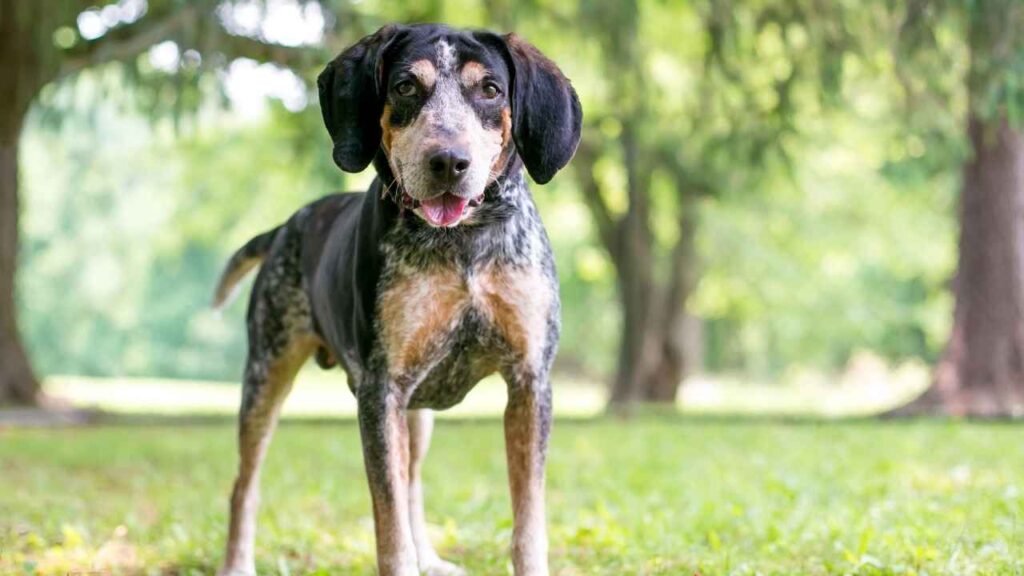
Originating in the United States, the Bluetick Coonhound is commonly used to hunt raccoons and is also kept as a companion dog. The coat has a white base with black ticking, giving a navy blue color impression. Thus, it is also known as a “Blue Heeler.” The breed stands 21-27 inches tall and weighs around 55-80 pounds.
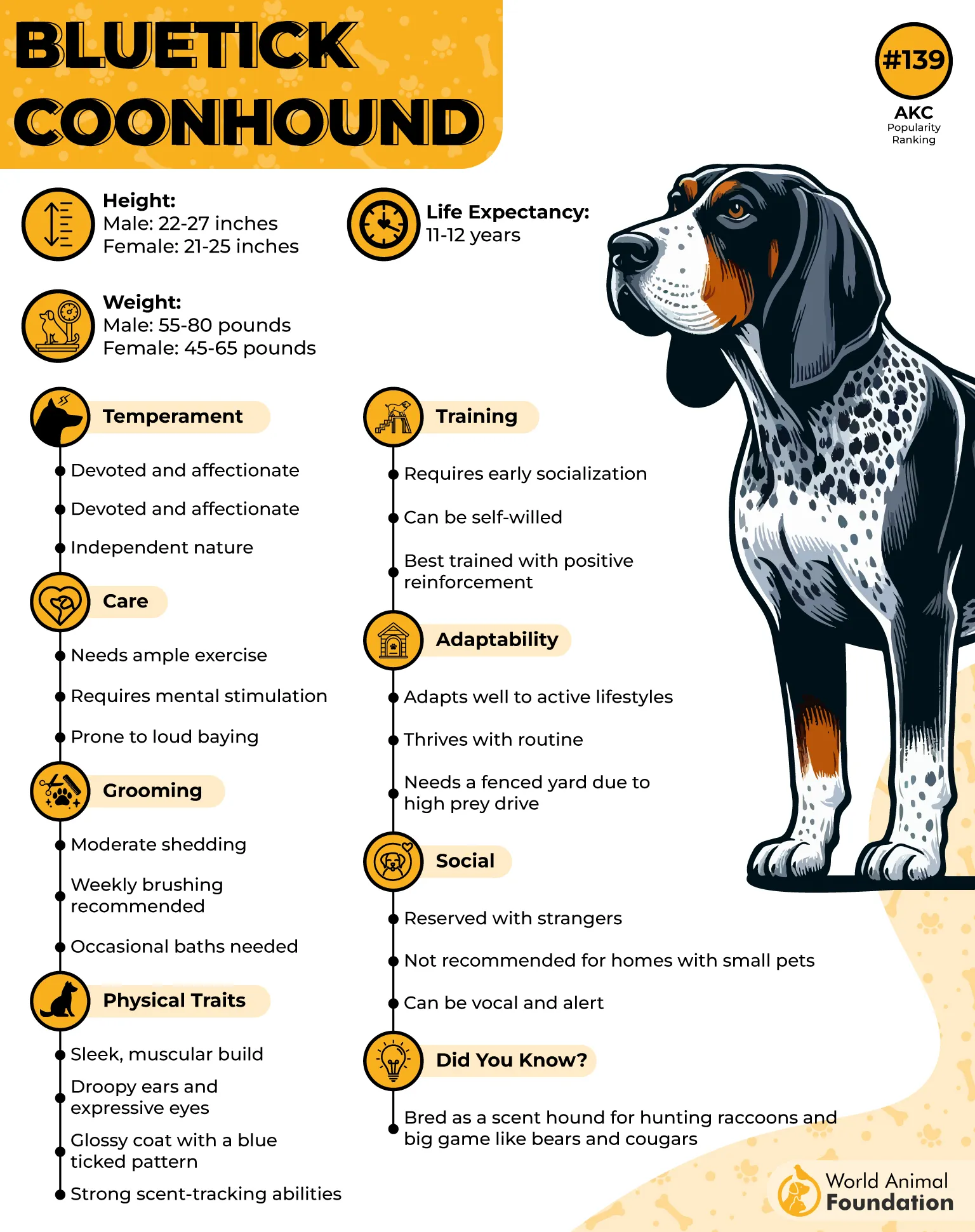
The “selective scenting” enables it to differentiate between a specific animal’s scent and any other animal. It runs at a speed of 30 mph in short bursts. The low-set ears and a loose, fatty skin redirect the scent particles to the nose, where millions of olfactory receptors process the scent and assist in catching the prey.
It captures the boar by baying. When in a pack, it surrounds the boars with other Bluetick Coonhounds and barks collectively till the owner comes. Since it works away from the hunter, it is usually made to wear GPS collars so it may be located easily.
Conclusion
Wild boar hunting is a serious business, and the dog you choose is your most important piece of gear. Each of these seven breeds brings something distinct to the field: the Dogo’s iron jaw, the Plott’s relentless nose, the Cur’s frontier personality, the Catahoula’s tactical herding, the Ridgeback’s African boldness, the Polish’s old-world patience, and the Bluetick’s moonlit tracking magic.
There is no single “best breed,” there is only the best dog for your hunting style, terrain, and experience level. Do your research. Spend time with the breed. Train early, train consistently, and respect what these dogs were built to do.
🐗 Wild Boar Hunting Dogs Quiz – Can You Score 6/6?
Which breed was originally developed in Argentina to hunt wild boars, peccaries, and pumas?
What top speed can a Plott Hound reach while pursuing game?
Which breed is known for using a “header style” approach by confronting boars from the front?
What unique physical feature gives the Rhodesian Ridgeback its name?
Which breed was created by crossing Bloodhounds with local Polish hunting dogs?
Which breed uses selective scenting and is often equipped with GPS collars because it works far from the hunter?
