




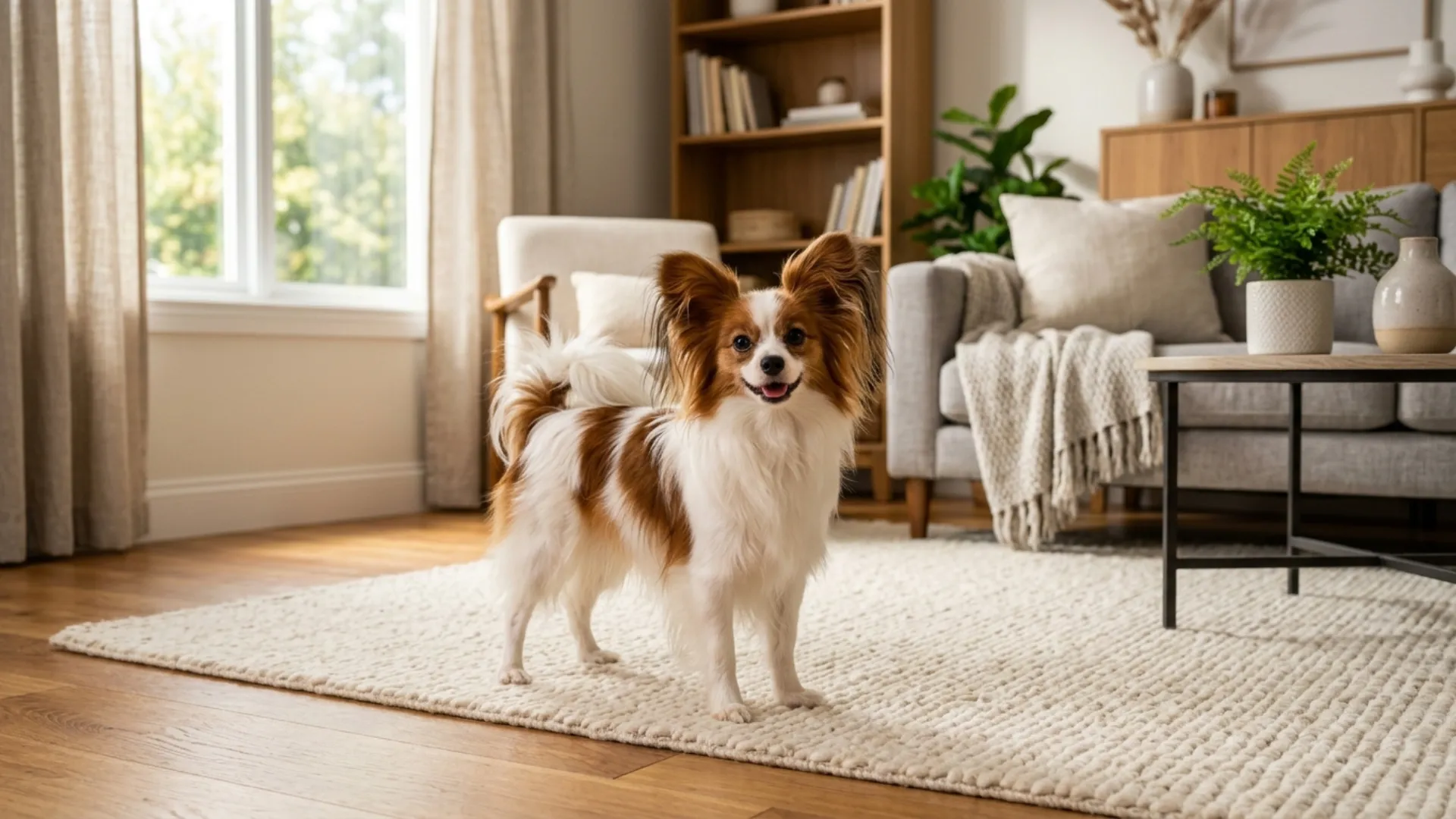
Pocket dogs are small in size, yet full of character. Some of these toy breeds were originally kept as pets, while other dogs had different purposes. One thing that remains intact is the love for their families. Some little dogs are lively and jovial, while others are quiet and loving.
These smallest dog breeds are not as robust as big dogs but are much easier to maintain. Each one of these pups has a distinct personality. When you consider adding a small dog to your family, it is very important to learn about its temperament.
Here are seven small packages that make your life brighter with their big personality and playful nature. Let’s take a look at some of them.
Precious Pocket Dog Breeds: Fun Facts and Temperament
1. Pomeranian
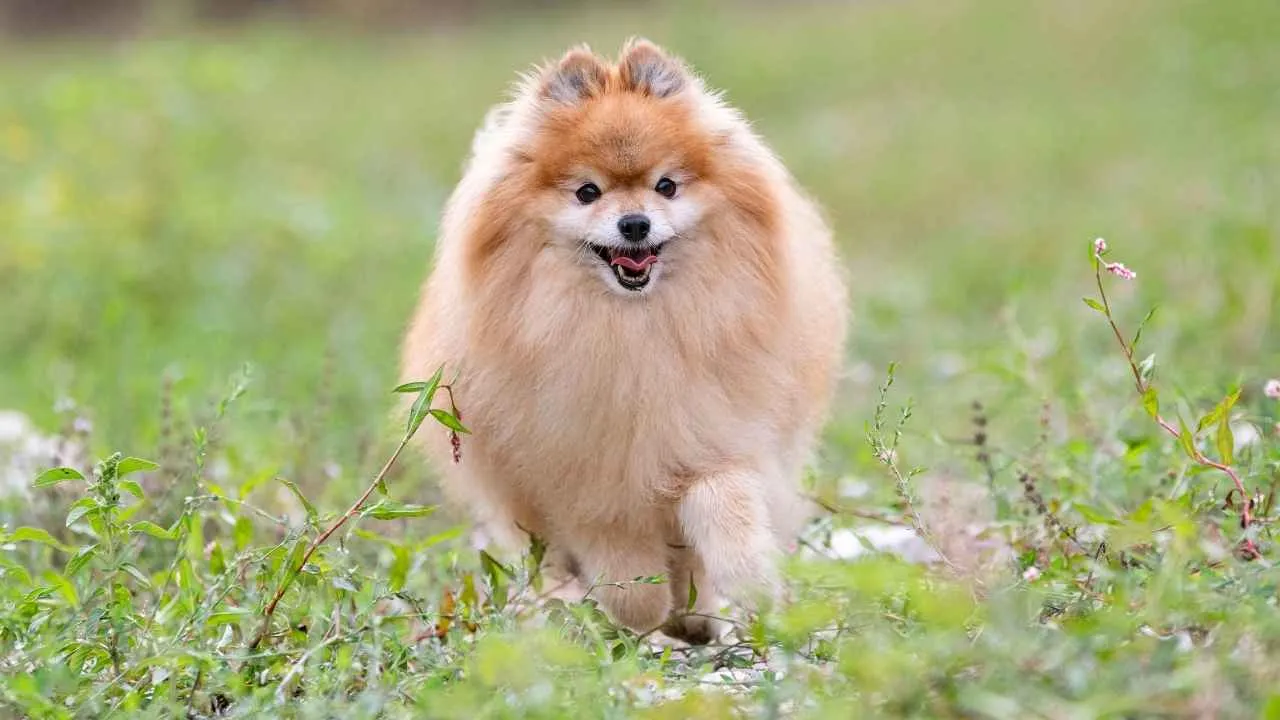
Pomeranians are known for their fluffy coats and fearless attitudes. They tend to act like a significantly larger dog and do not see themselves as small puppies. These are curious pups that are very alert and know what is going on in the house.

Pomeranians like to be in the limelight. They adore learning tricks and would show them to new visitors. They are very fast learners that respond well to positive learning. An interesting fact about these affectionate dogs is that they are the descendants of big working dogs in northern Europe. However, with time, selective breeding developed these small pups that people love today.
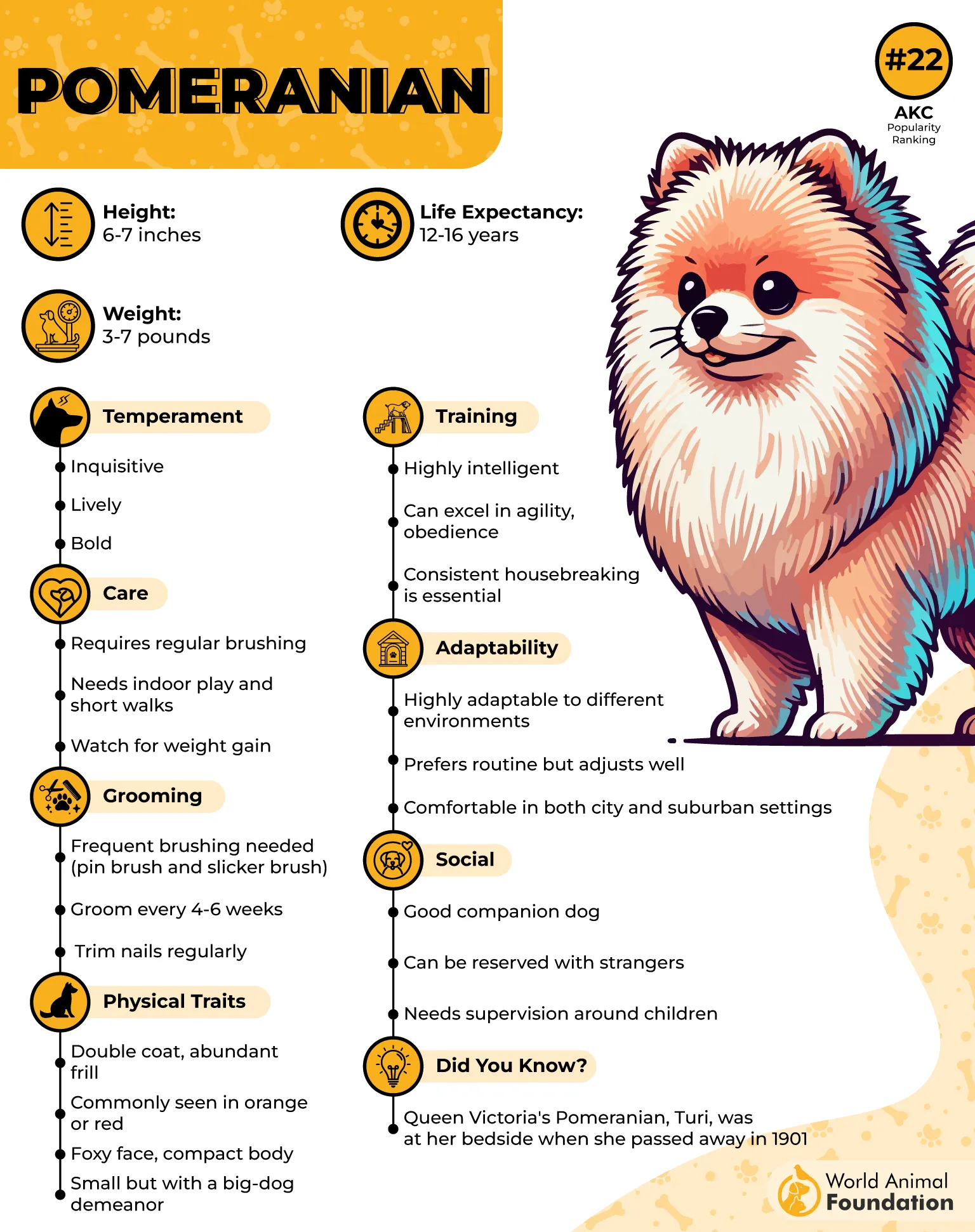
Despite their playful nature, Pomeranians also like to relax around their owners after a hectic day. They form strong bonds with their handlers and can suffer from separation anxiety in isolation. Some common health issues include luxating patellas, cardiac failure, and black skin disease.
Fun Fact: Queen Victoria contributed to making the modern small Pomeranian after keeping one in the late 1800s.
2. Toy Poodle
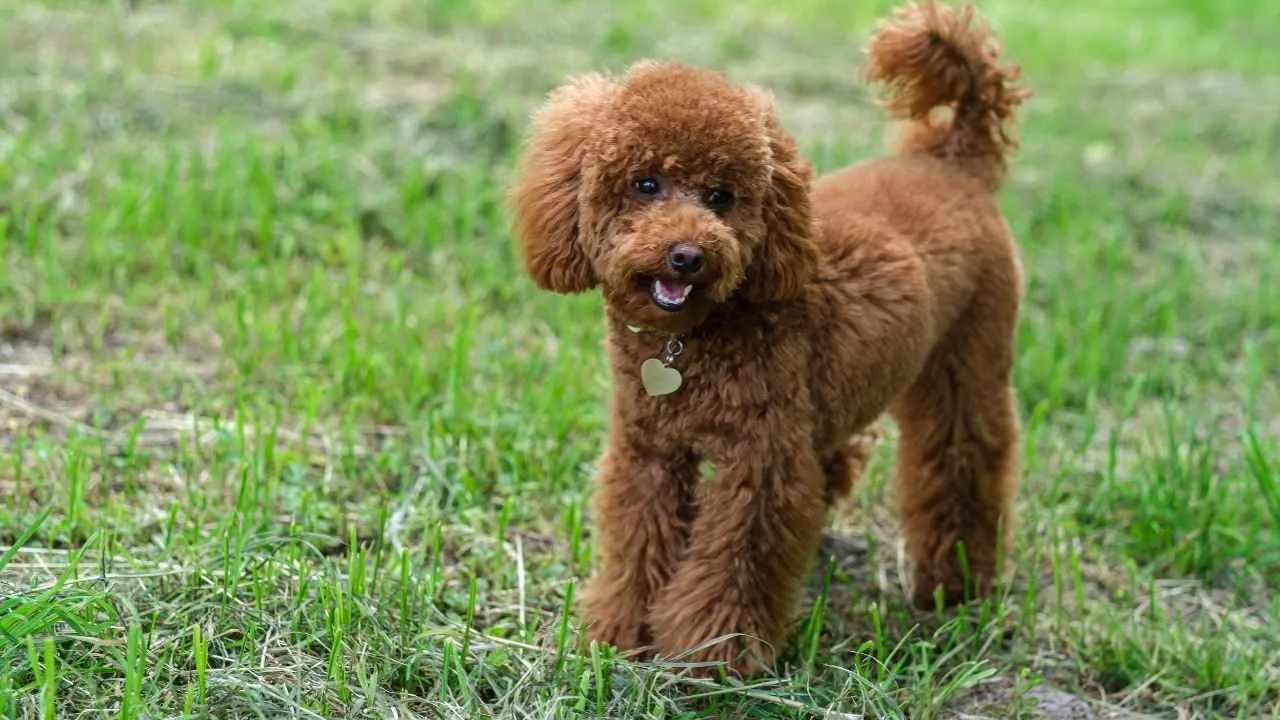
The Toy Poodle is one of the most intelligent dogs in the dog world. It likes to solve problems, study commands, and play games that involve mental stimulation. This dog, which comes from the family of the Standard Poodle, was used mostly in circuses or dog shows.
This is a jovial breed that enjoys participating in family activities. It loves to meet other people and gets along with other pets when socialized at an early age. Many owners claim that these perfect pets can tell when it is time to walk, eat, or sleep.
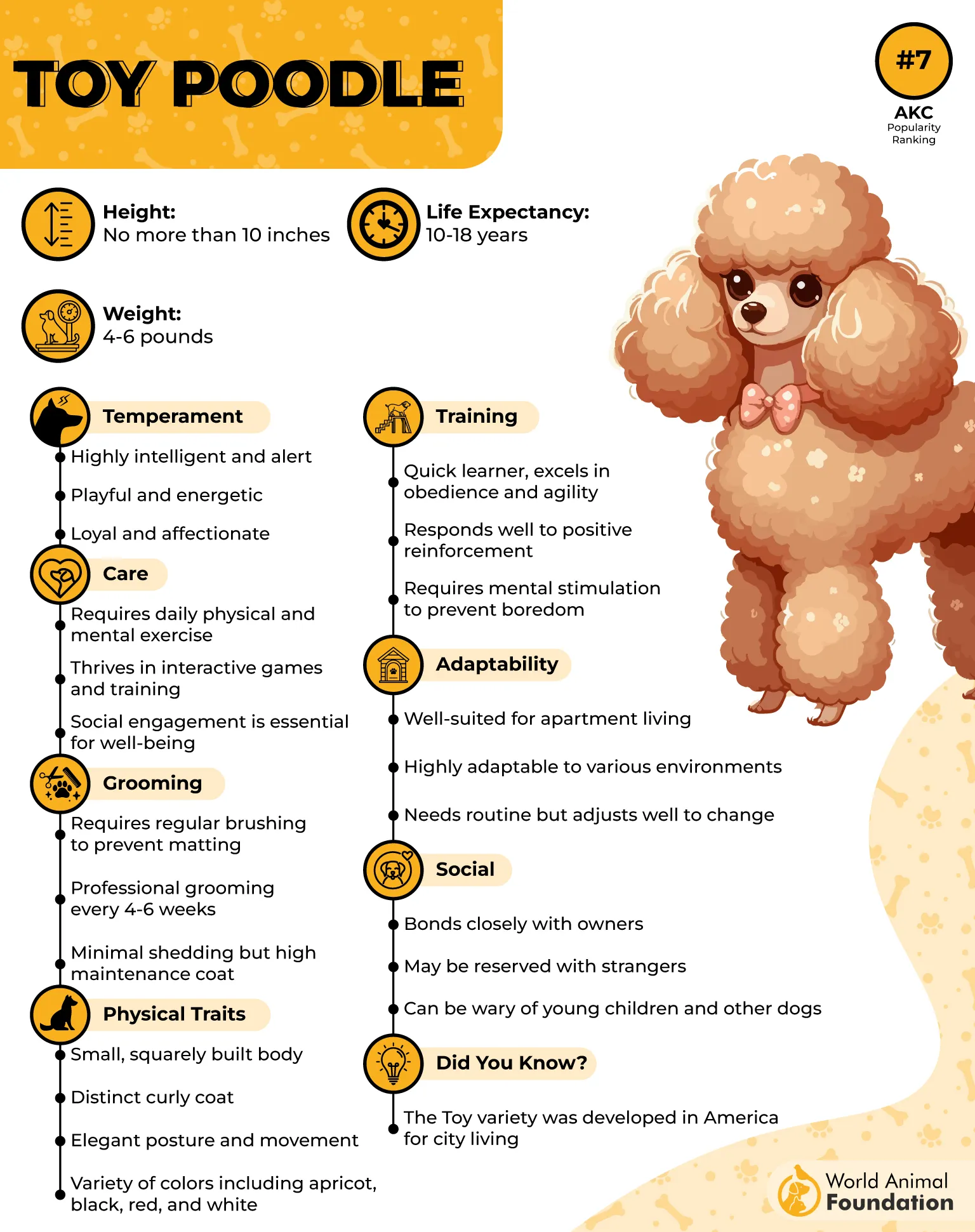
Despite their elegant appearance, they have an athletic side. These great companions love agility courses, obedience competitions, and interactive toys. Their grooming needs are a lot because of their coat, and daily brushing is a necessity, but they do not shed much, so they are suited to people with allergies.
Fun Fact: Toy Poodles are among the simplest toy breeds to train, as they can understand dozens of words and hand signs.
3. Chihuahua
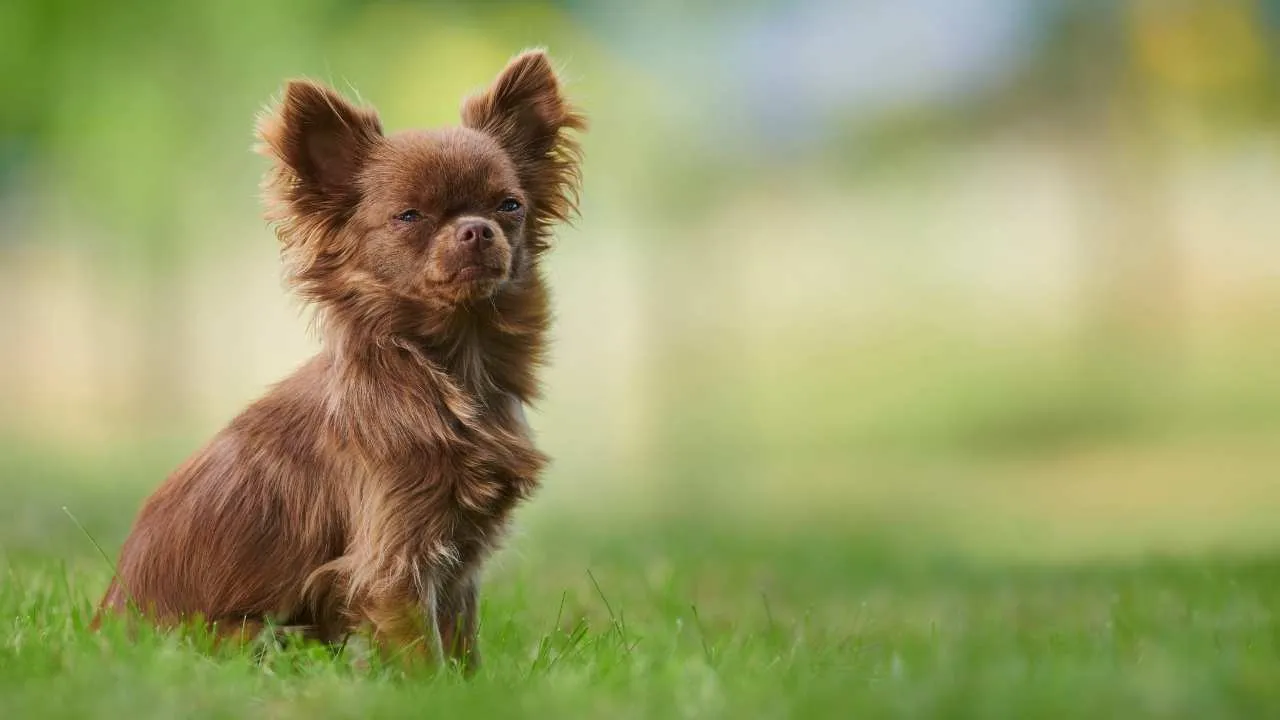
The Chihuahua is the smallest known breed in the world, yet has one of the biggest personalities according to the American Kennel Club. It is courageous and very attached to its pet parents. This energetic dog is highly intelligent and very easy to train.
Most Chihuahuas love to follow one of the family members around the house. They like being cuddled in blankets or on laps. These dogs can be sensitive, though. They suffer from separation anxiety if they are kept away from their humans.
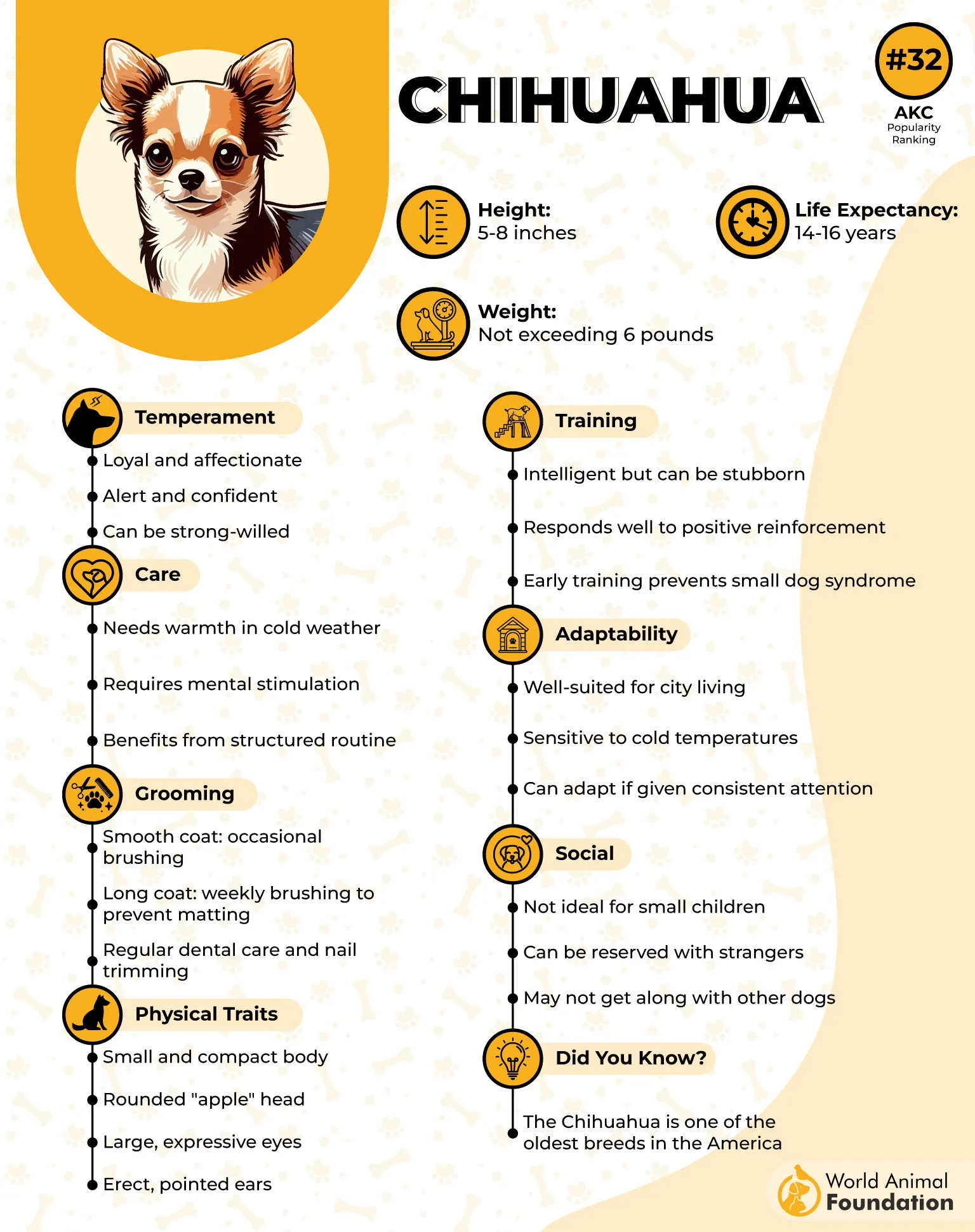
These tiny pups are inherently vigilant and can hear any strange noises around them. Due to this, they make good little watchdogs. They come in two coat varieties, the smooth-coated and the long-haired variety. The smooth-coated pups need occasional baths and brushing, while the long-haired pups need brushing at least once a week.
Fun Fact: Chihuahuas are named after the Mexican state of Chihuahua.
4. Papillon
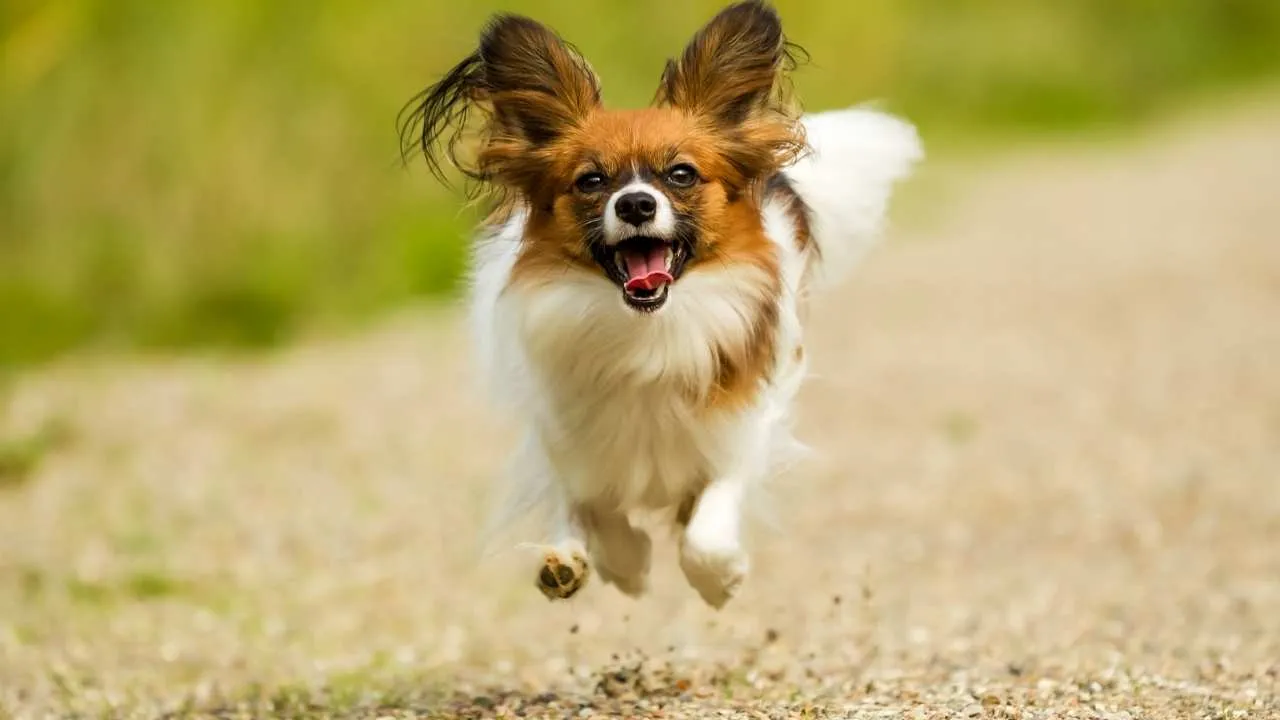
The Papillon can be identified due to its oversized ears that are in the shape of a butterfly. The breed’s name actually means “butterfly” in French. Papillons are active, sociable, and very smart. They are the perfect match for owners and children who can teach them new tricks. Owners are usually astonished by the speed of their learning ability.
Papillons prefer to be on the move in contrast to many toy breeds. They like daily exercises such as running, jumping, and solving puzzles. They also observe changes in their environment quickly and love to venture into new surroundings.
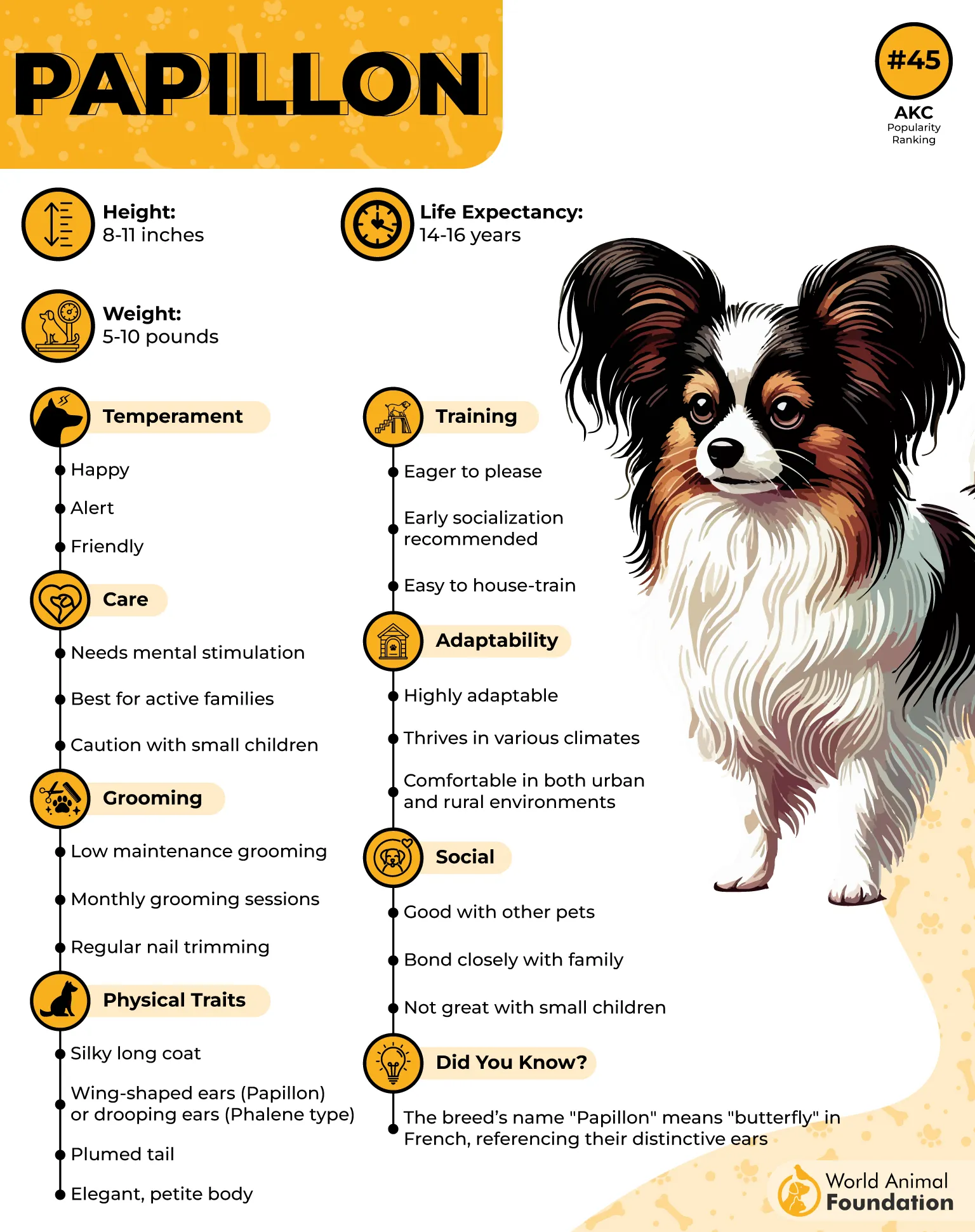
Even though they have long, silky hair, they require minimal grooming, as per Britannica. They need baths only when they get dirty while playing in mud or water. They have a habit of chasing small animals like rabbits and squirrels in the yard because of their Spaniel heritage.
Fun Fact: Although they are under 10 lbs, they frequently compete in agility events alongside much heavier dogs.
5. Yorkshire Terrier
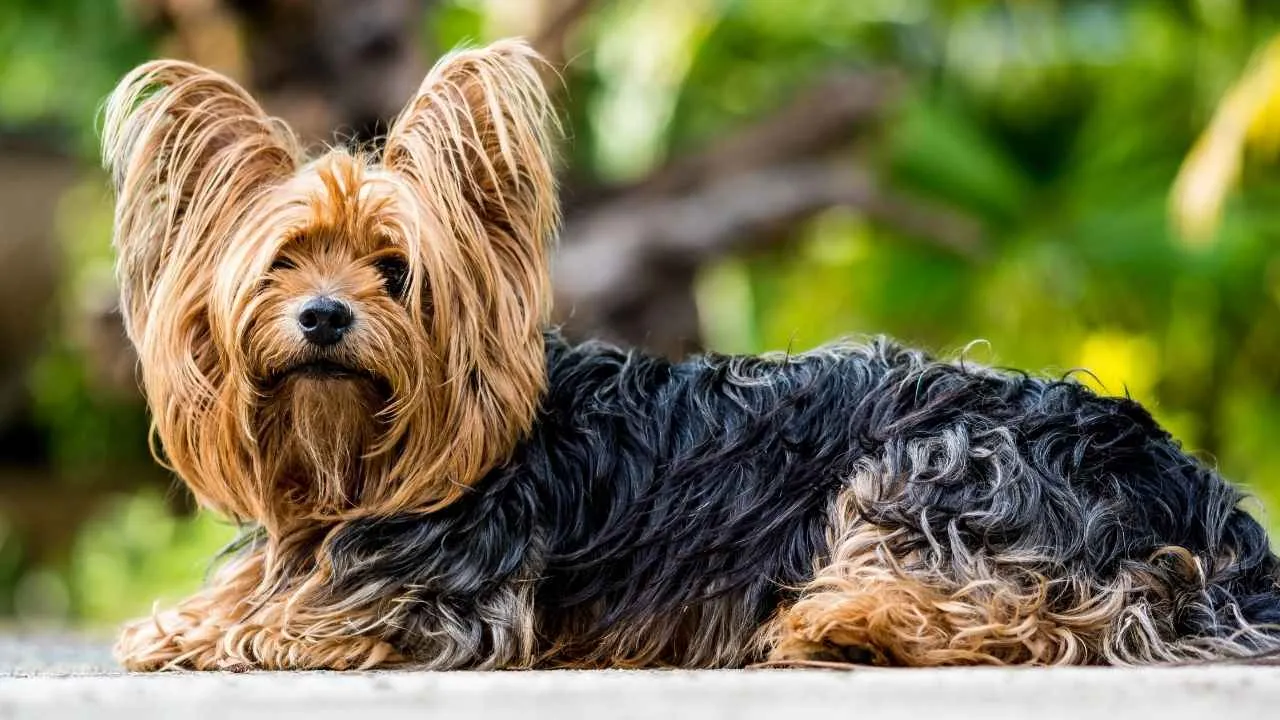
The Yorkshire Terrier might appear to be a graceful animal, but it was created to hunt rats in textile mills. This is why it is so confident and determined. This pup is usually called by the name Yorkie.
Yorkies are adventurous, inquisitive, and active. They like to explore all corners of the house and investigate if they see something out of the ordinary. They are not very attached to their owners, but can be faithful pets when adopted and given enough exercise.
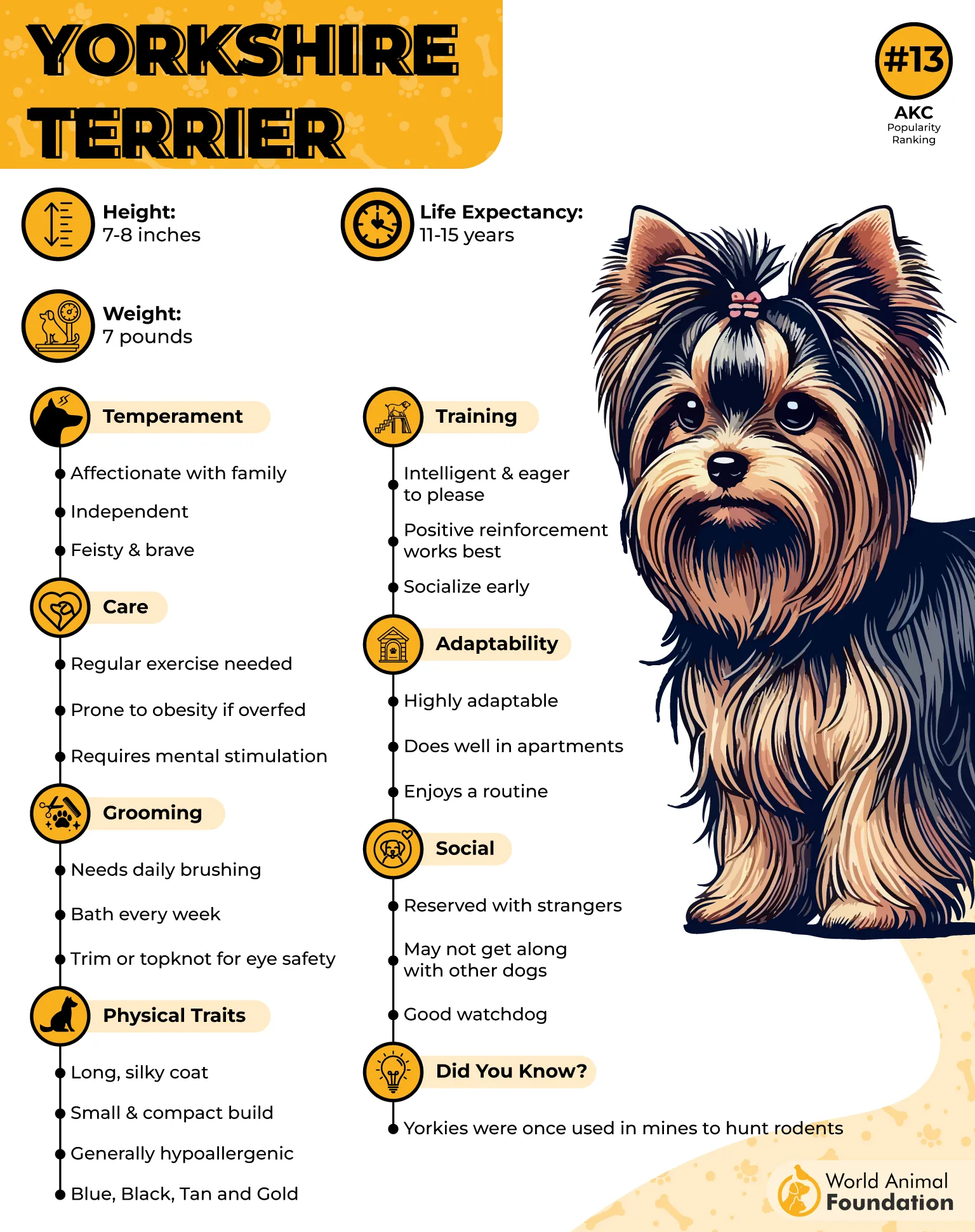
These pups are perfect for small homes or apartments. They have a coat that needs regular brushing. Their coat does not keep them very warm in colder seasons, so owners need to doll them up with stylish sweaters in winter. These pups are prone to some other health issues. Common health problems include patellar luxation, tracheal collapse, and liver shunt, as explained by PetMD.
Fun Fact: One of the most recognized Yorkies during World War II was Smoky that was used by American troops and became one of the first therapy dogs in the world.
6. Japanese Chin
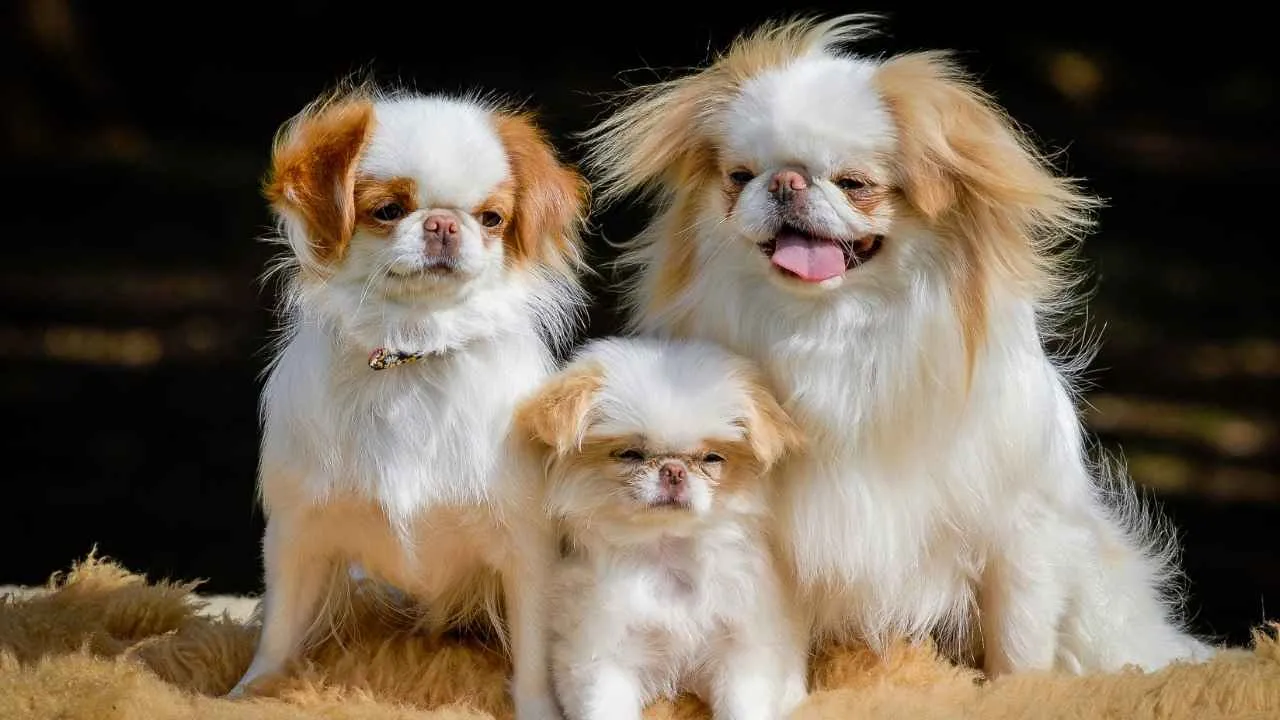
The Japanese Chin is a toy breed that originated in China and is a descendant of the Tibetan Spaniel breed. It has one of the most relaxed attitudes among pocket-sized dogs. It is assumed that this dog loves to be on the couch the whole day, which is just a myth. It has a moderate energy level and likes to be involved in activities.
They are generally good around children, but supervision is always necessary. Early socialization classes can help to make them more comfortable around other animals and people. Since these pups are small in size, they might get injured during playtime. Crate training can be provided to them to avoid separation anxiety.
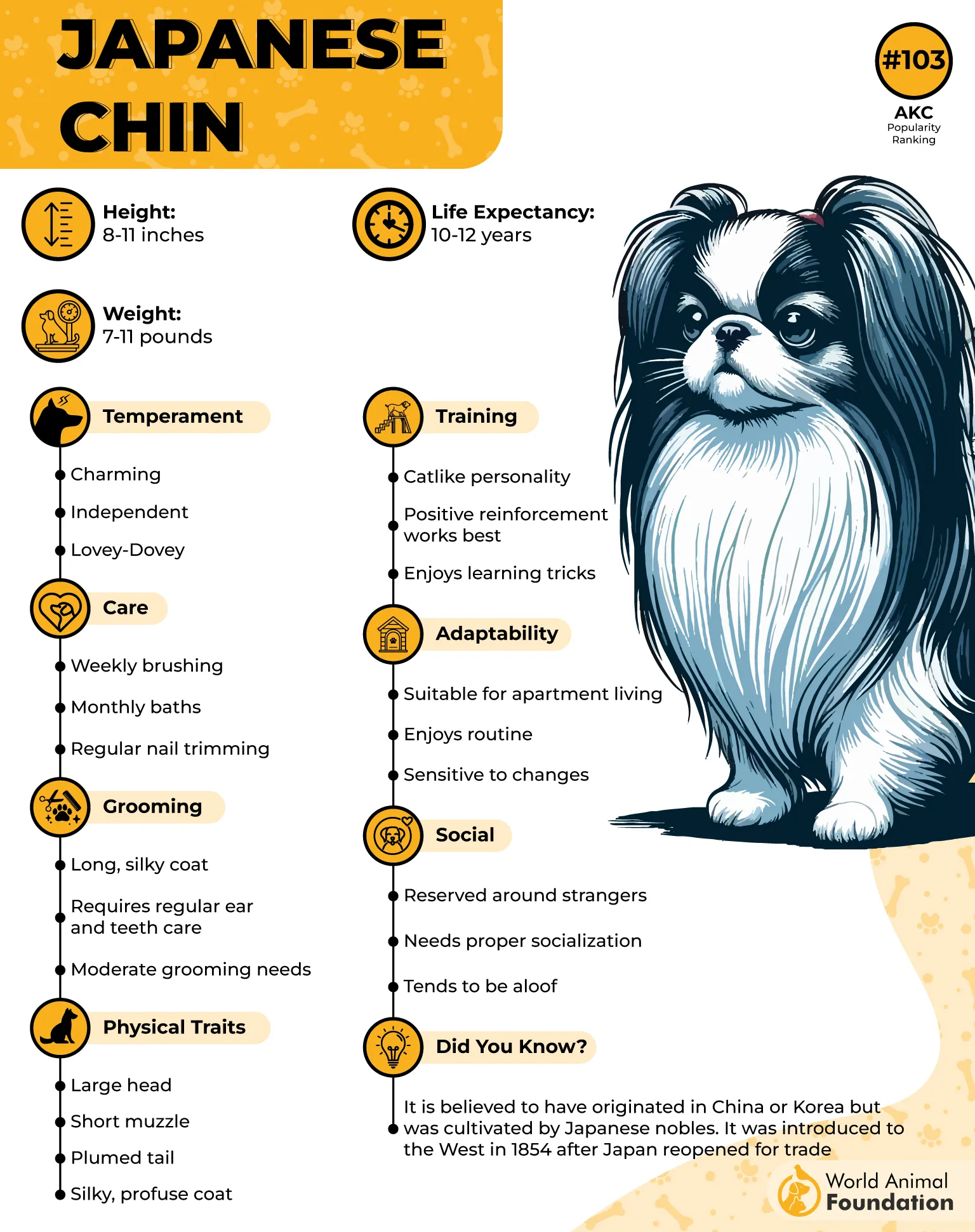
Japanese Chin dogs have silky fur that requires a moderate amount of grooming. These loyal puppies are associated with cats because they clean themselves using their paws. First-time pet owners can adopt this dog without hesitation. Common health issues associated with this pup are entropion and heart disease.
Fun Fact: These furry friends used to be highly valued companions in royal courts and were frequently used as precious gifts for diplomats.
7. Shih Tzu
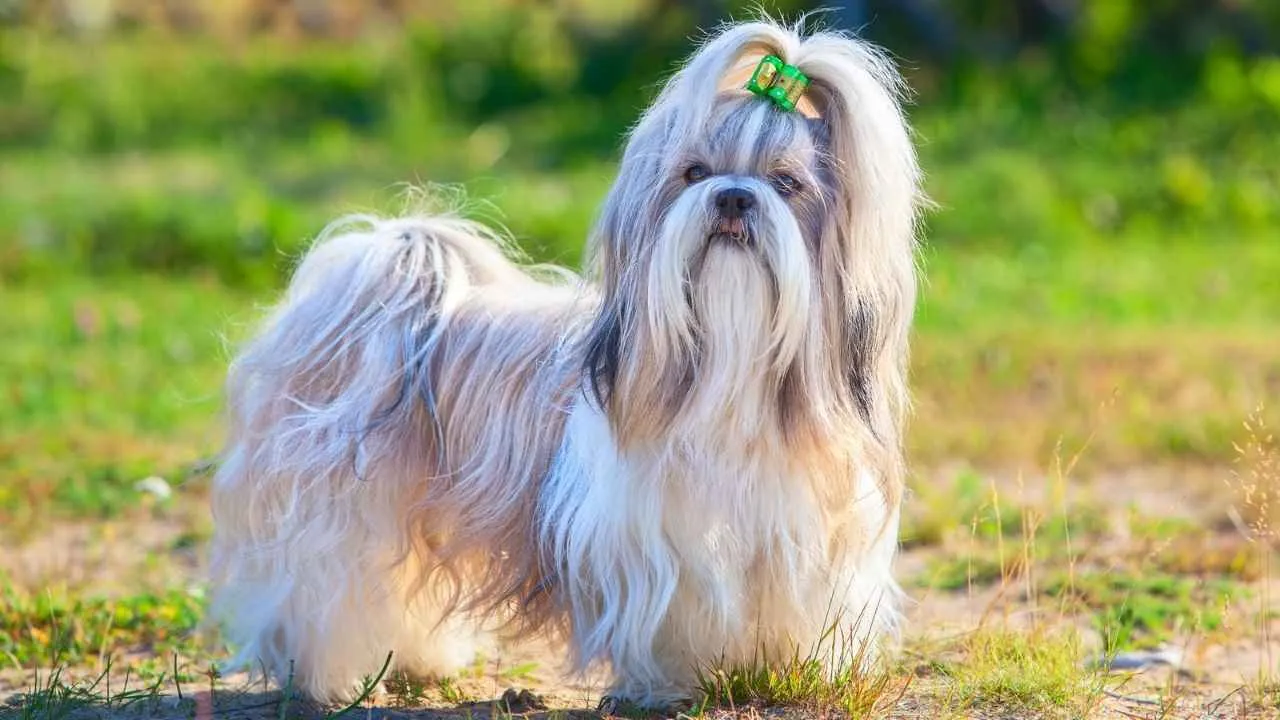
The Shih Tzu is a hypoallergenic, small-sized pup that was not bred to serve any purpose but to be just a loving companion. Its amiable nature is one of its strongest assets. This little lion dog, as the name suggests, likes to giggle when something mischievous happens around it.
They like to be in the company of people and love to greet visitors with a wagging tail. They tolerate children well and mostly do not have a problem around other pets. They do not need to spend hours in search of toys; rather, they like to just sit beside their owner and relax.
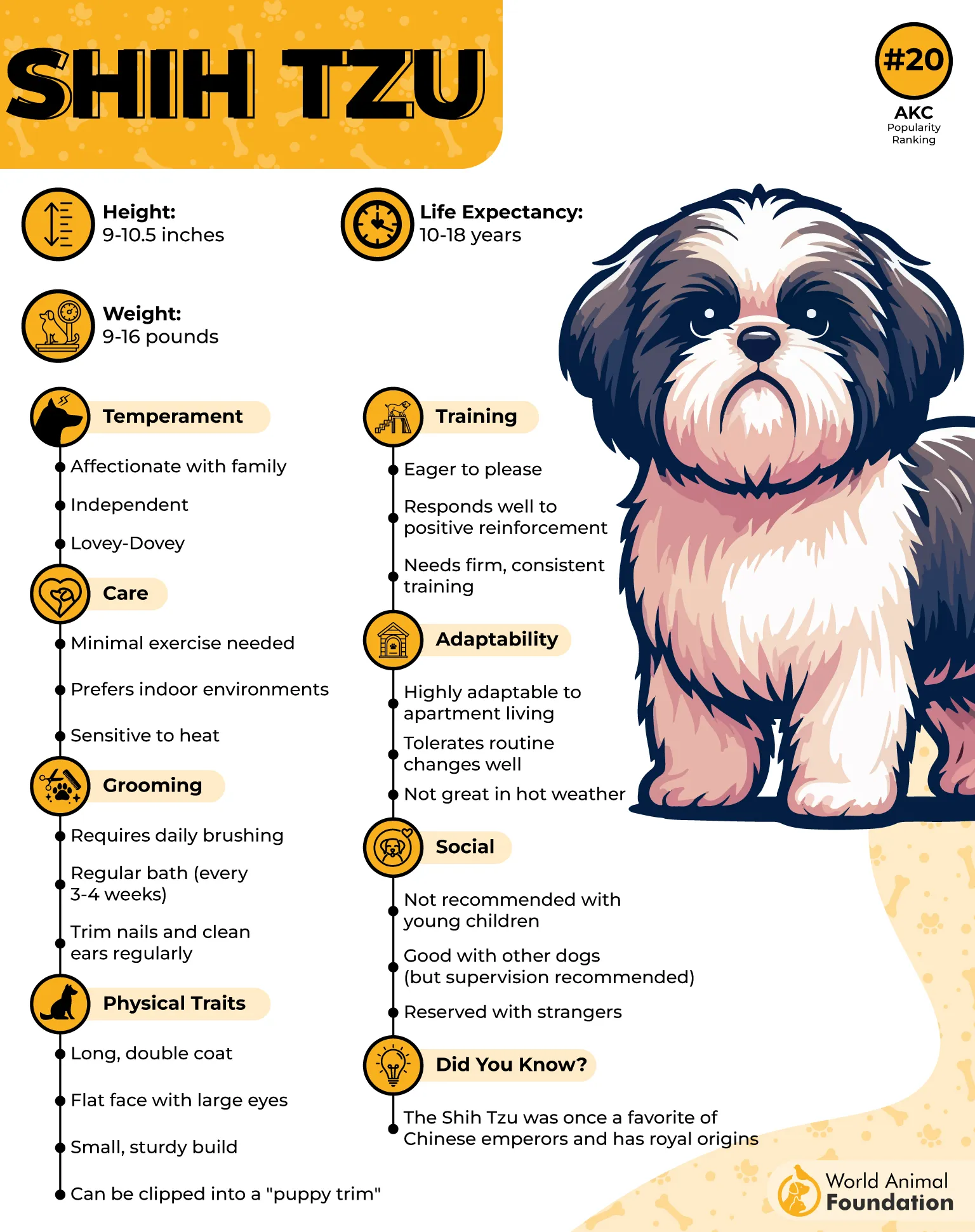
Shih Tzus with a long coat require daily grooming. Using a good-quality wire brush with fine bristles will help to reach the skin. Do not forget to brush their moustache and top knot. Since they are sensitive and demand attention, it is best to train them using reward-based methods.
Fun Fact: According to an ancient legend, these dogs travelled with a small lion dog, from which they got their name, meaning “lion dog”.
Conclusion
Pocket breeds show us that the size of a dog does not determine its personality. These little friends provide comfort, trust, and wisdom. Think about your work schedule, activity level, and the amount of attention you can offer before adopting a small pet.
When given good care, training, and socialization skills, a pocket-sized pup can be a good companion and bring happiness to your home!
