




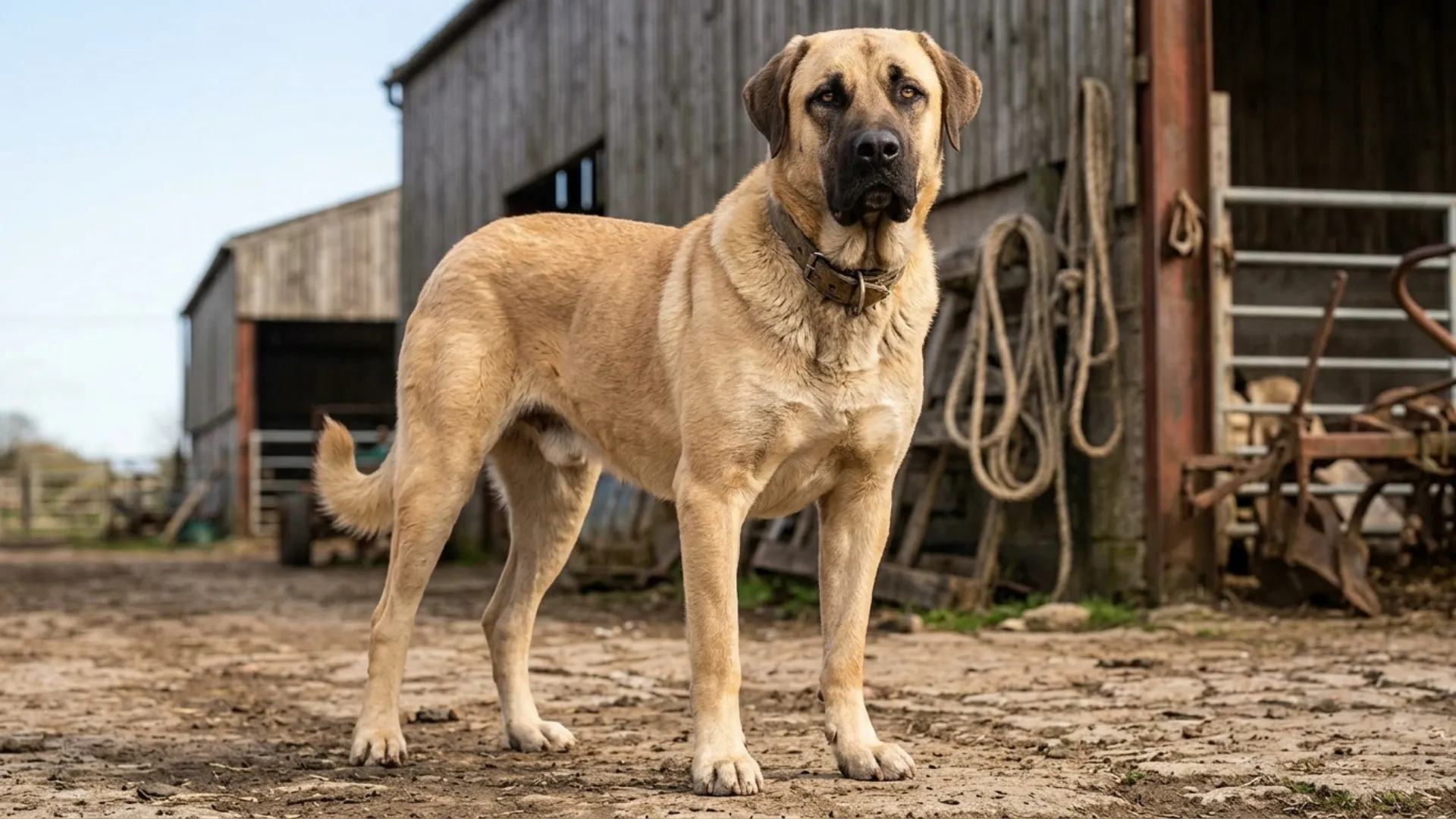
Walking into a room like they own the joint, chest out and zero apologies, a truly powerful dog commands total attention. But look past those rippling muscles and intimidating howls, and you will find a soul driven by pure passion, laser-focused instincts, and a relentless heart that never quits working.
For centuries, these powerhouse breeds weren’t just lounging on leather couches. Instead, they were braving harsh elements, defending livestock from predators, and standing guard over loved ones with fierce, unbreakable loyalty.
That hard-earned, gritty legacy still pulses through their veins every single day, shaping every single tilted head, alert bark, and loving tail wag.
Whether they are built like tank-sized protectors or turn out to be total, goofy couch potatoes behind closed doors, these seven mighty working breeds bring a serious work ethic.
Buckle up, because we are diving deep into the raw power, quirky personalities, and beautiful chaos of living alongside these legendary canine powerhouses.
Powerful Working Dog Breeds with Muscular Physiques
1. Anatolian Shepherd
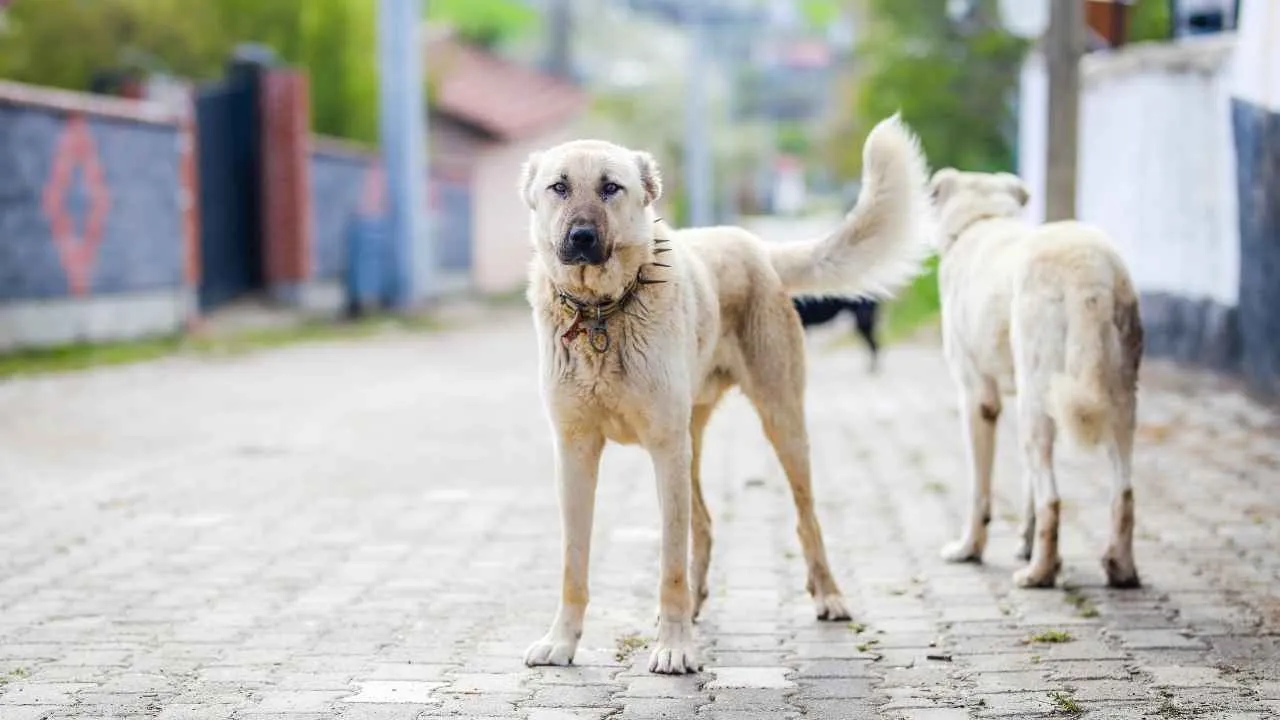
A serious worker with a fiercely loyal heart, the Anatolian Shepherd fits naturally among the most muscular dog breeds. This Turkish livestock guardian was born to protect sheep and goats from predators across rugged terrain. Its sturdy bones, muscular body, and strong endurance helped it patrol large areas and stand its ground when danger appeared.
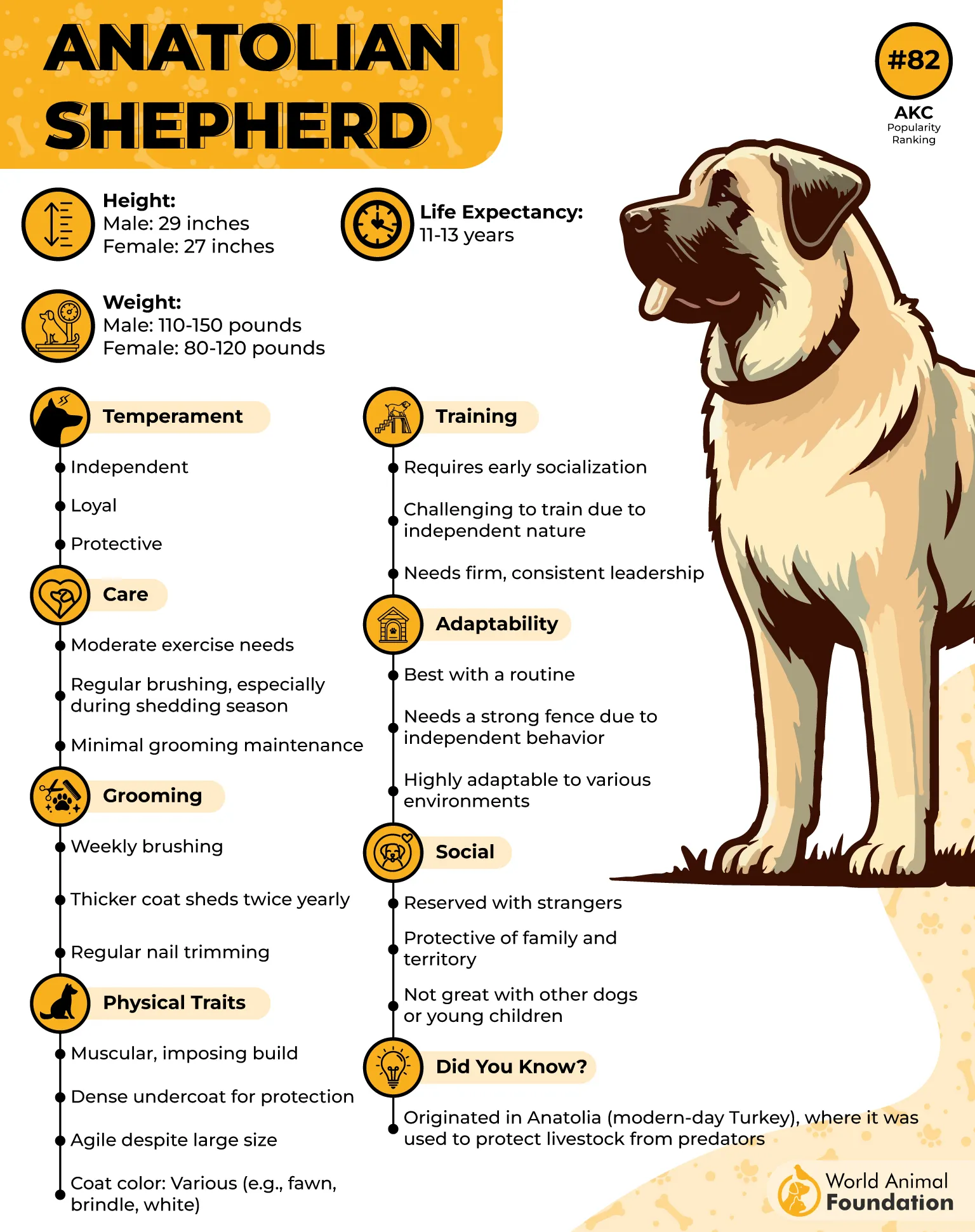
The breed is known for independence, intelligence, confidence, and a strong protective instinct. Its job required more than physical power.
Anatolian Shepherds had to assess threats and make decisions without waiting for constant human direction. Their imposing size can also discourage predators before a confrontation begins.
Life with an Anatolian Shepherd
Inside the home, this breed has a quieter, watchful side. It can be gentle with familiar children and deeply committed to the people it considers part of its circle. Guests, however, may receive a much more serious welcome until the dog decides they are safe.
A securely fenced outdoor space, regular walks, and purposeful activities suit its needs. Anatolian Shepherds do not require endless exercise, but they need room and mental stimulation.
According to Purina, this breed is best suited to rural living, with a secure, spacious property and a household that does not receive frequent visitors.
2. Bullmastiff
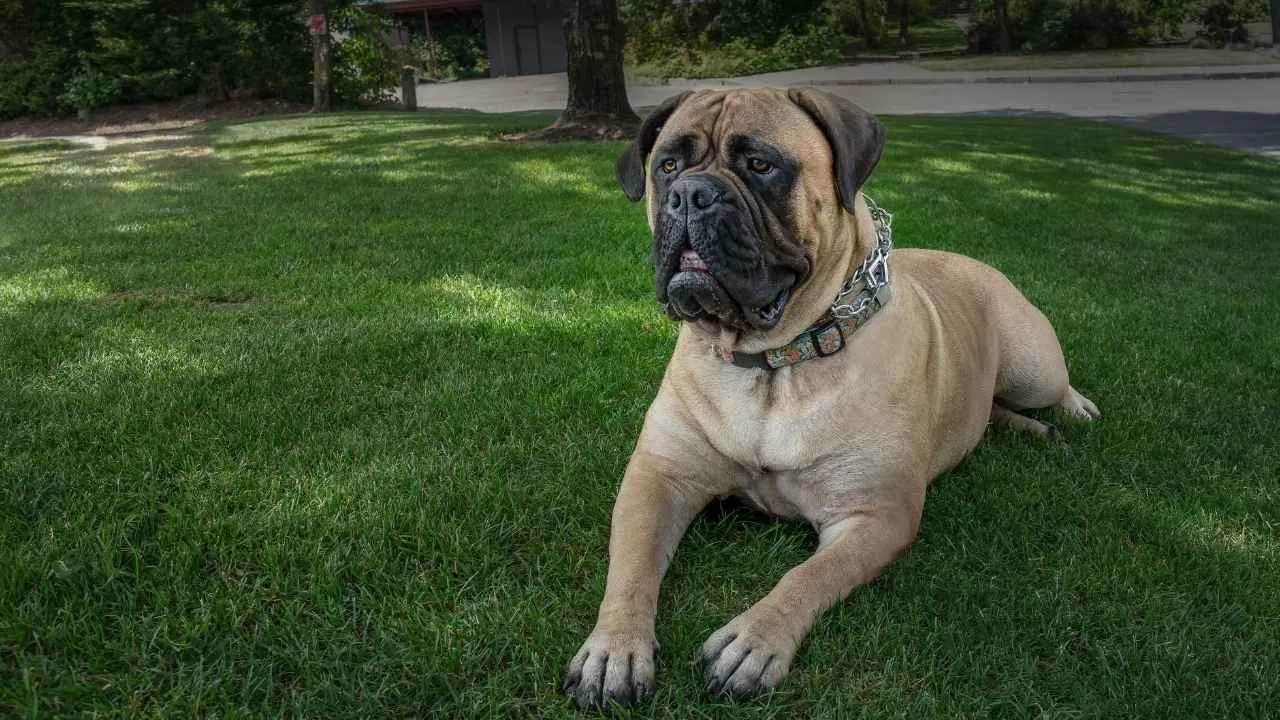
Power, courage, and sheer physical force come together in the Bullmastiff. This formidable guardian with intimidating characteristics was developed by English gamekeepers to protect estates from poachers.
They cross-bred Bulldogs and Mastiffs to create a dog capable of chasing down and holding intruders. Its working reputation eventually earned it the fitting nickname “gamekeeper’s night dog.”
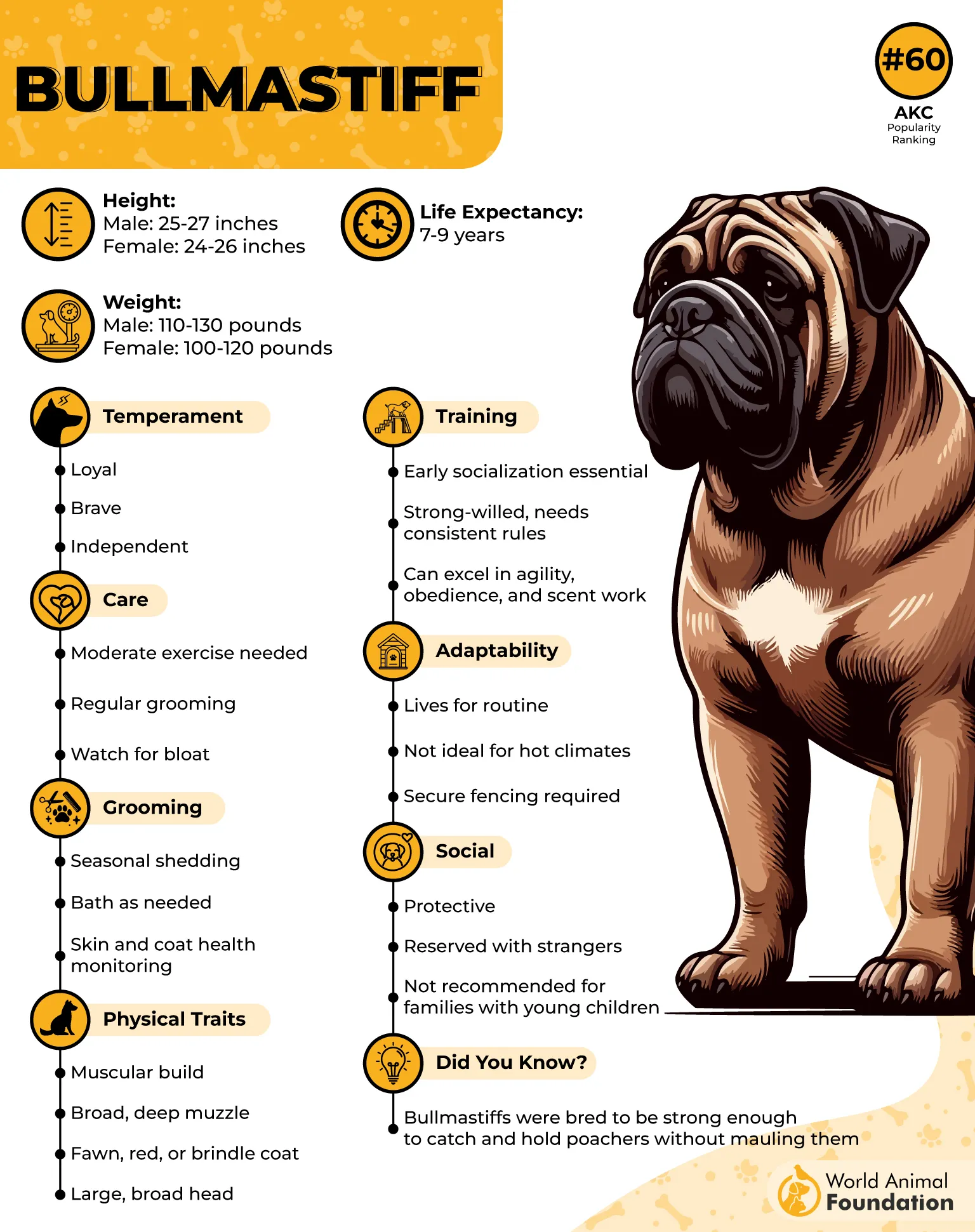
Every part of its build served that demanding job. A broad head, thick neck, deep chest, and sturdy legs gave the Bullmastiff the strength to confront trouble without losing the control needed to work alongside people. It is a classic muscular breed with purpose behind every ounce of power.
Life with a Bullmastiff
At home, this muscled dog can be a wonderfully steady presence. This loyal breed tends to show a calm and loving nature with its family members, including children, when raised and socialized properly. This serious-looking dog can also turn into a surprisingly silly couch companion, especially around the people it knows best.

Bullmastiffs have plenty of energy, so starting training early helps shape good habits from the beginning. They are intelligent and quick to learn, making puppy classes, socialization sessions, and obedience training useful parts of their development.
3. Black Russian Terrier
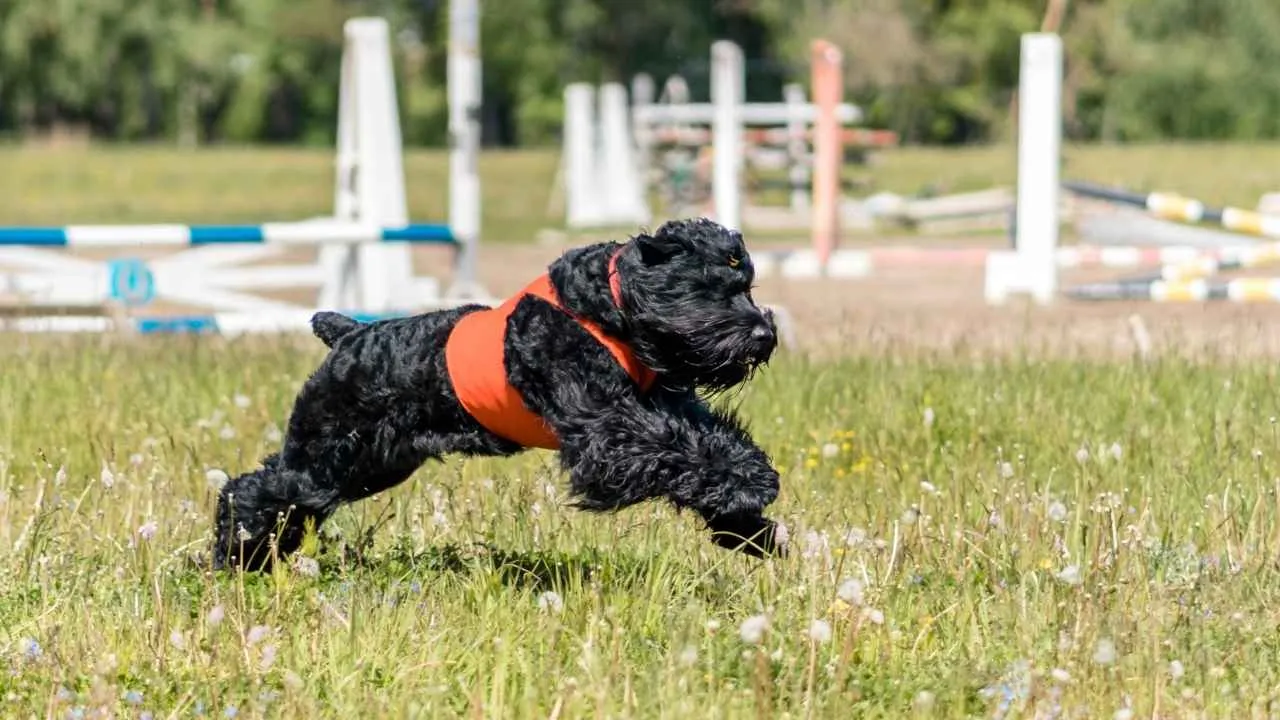
The Black Russian Terrier brings a large, imposing kind of muscle to this list. Originated in Russia during the late 1940s and 1950s, it was created as a versatile working dog with strength, intelligence, resilience, and courage.
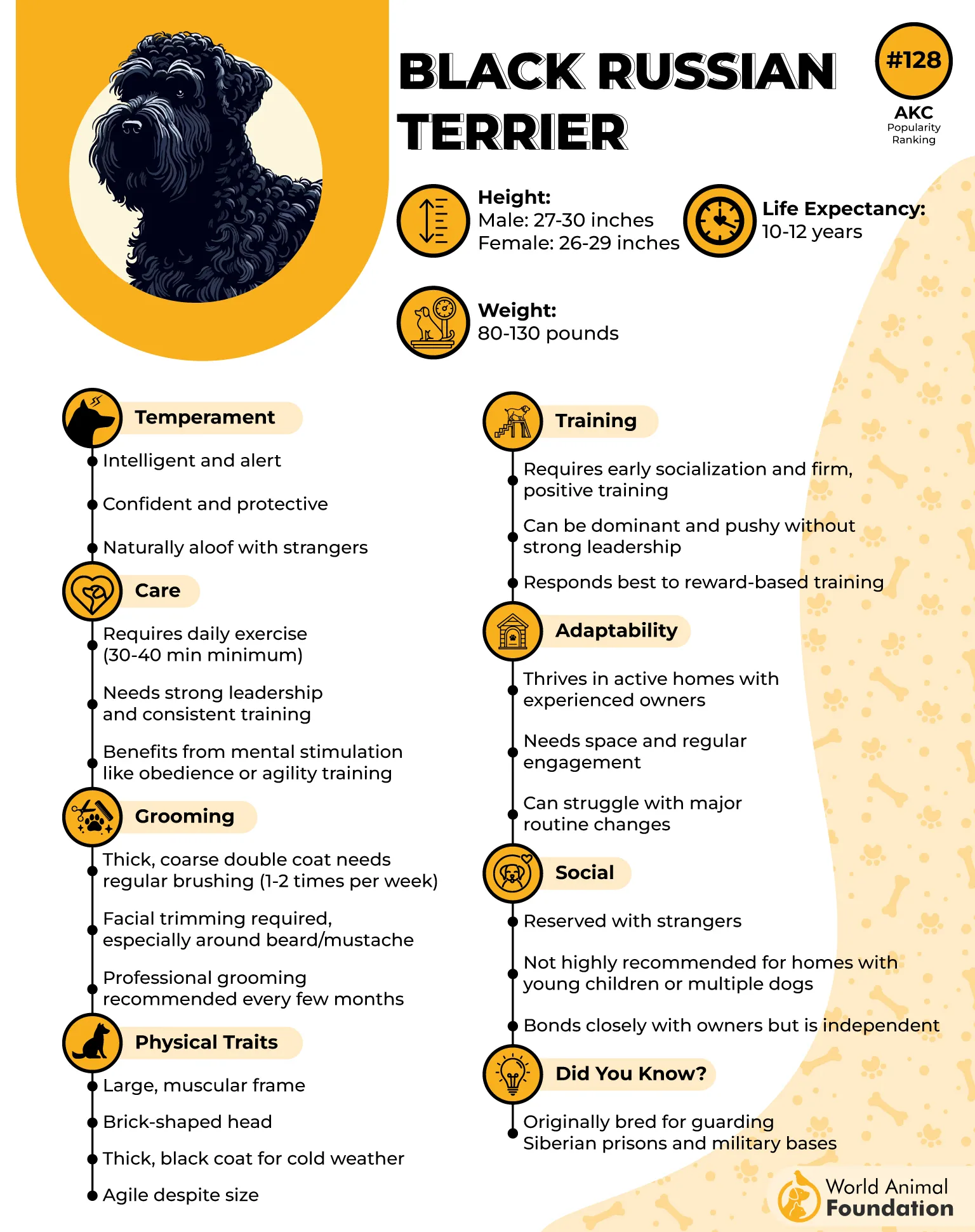
Several large breeds contributed to its development, including the Rottweiler, Giant Schnauzer, Airedale Terrier, and Newfoundland. This is a massive dog with heavy bone, a solid frame, and a powerful body shaped by demanding work. Its working background explains its confident personality.
According to WebMD, despite the word “Terrier” in its name, it belongs to the Working Group rather than the Terrier Group.
Life with a Black Russian Terrier
This dog can bring a surprisingly warm atmosphere to the right household. With its people, it is playful, attentive, and protective. Well-raised dogs can be patient around children.
Strangers usually get a more reserved reception, so early socialization helps the breed respond sensibly to unfamiliar people, animals, places, and situations.
Regular exercise keeps its body and mind busy. Long walks, interactive games, and training sessions are good outlets for its intelligence and energy. It also appreciates human interaction and does not thrive on constant isolation.
Then comes the grooming commitment. Its dense double coat needs regular brushing plus periodic trimming around the ears, beard, and paws.
Owners should also stay aware of health concerns associated with large breeds, including hip dysplasia and heart problems.
4. Great Pyrenees
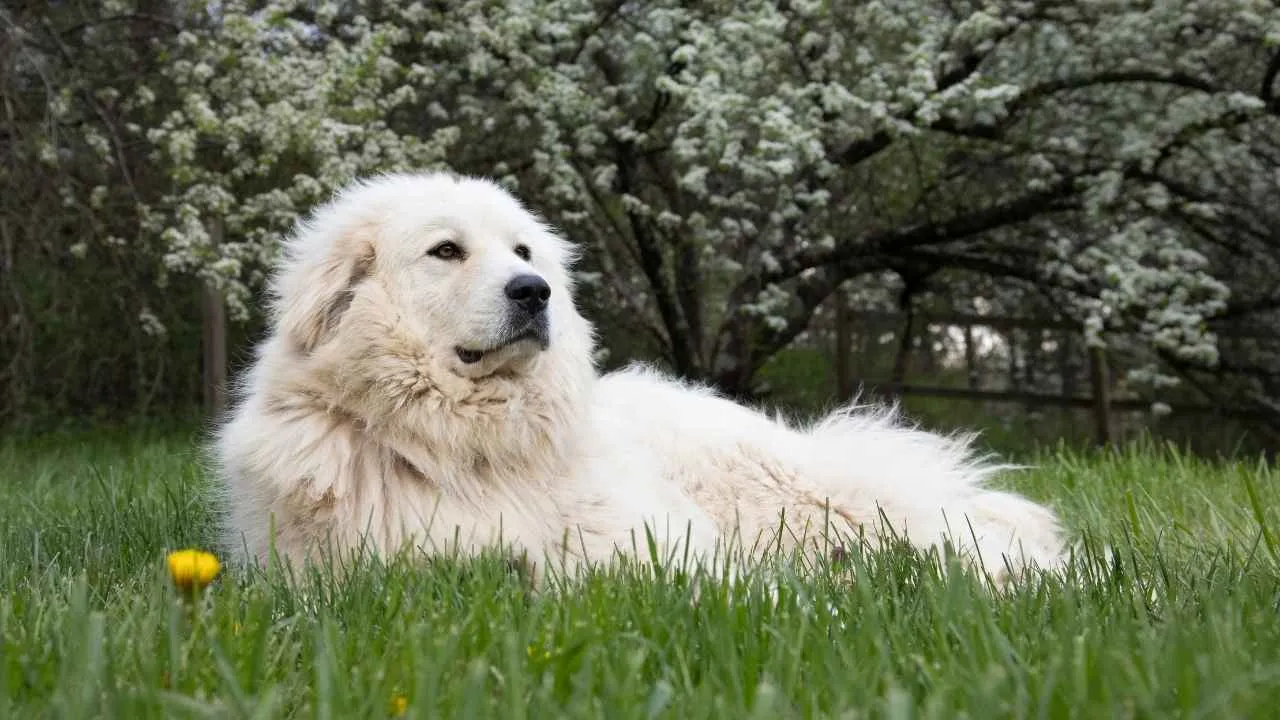
The Great Pyrenees carries its strength with a calm confidence that can be easy to underestimate. This giant breed was originally bred in the Pyrenees Mountains as a livestock guardian to deter predators such as wolves and bears. Patience, courage, and independence were essential to that job.
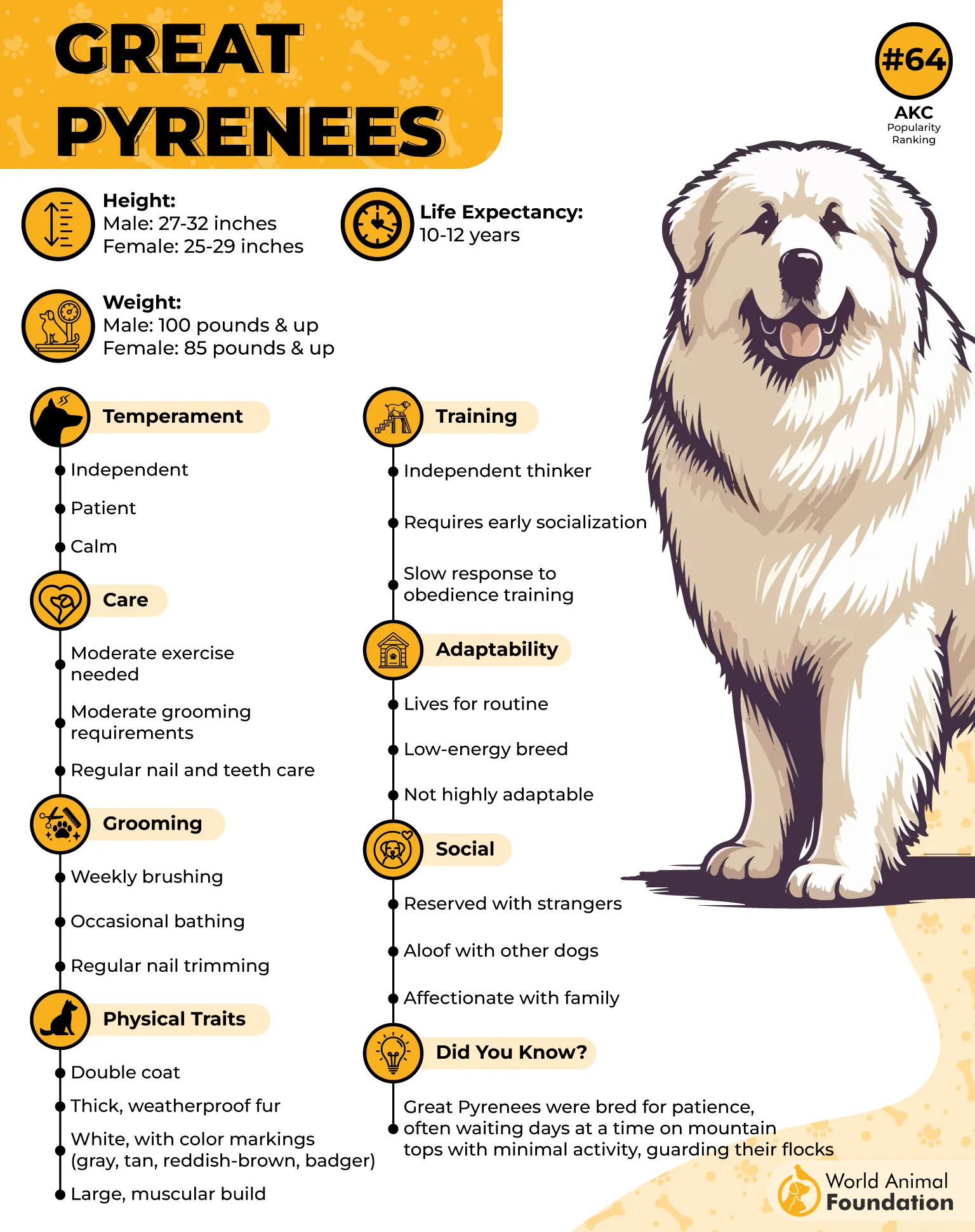
Its substantial bone, powerful body, and thick fur suited long hours outdoors. This huge dog breed did not need a human standing beside it every second. It had to observe its surroundings, assess threats, and react when necessary.
That history explains why it remains one of the classic guard dogs among giant working breeds.
Life with a Great Pyrenees
There is a gentle and devoted dog hiding inside this formidable guardian. Great Pyrenees can be remarkably patient with children and have a calm household manner when properly raised.
Regular walks, outdoor time, and room to move generally suit its activity level better than nonstop intense exercise. Training requires patience because independent thinking comes naturally to this breed.
Expect barking when something catches its attention. A secure yard, clear boundaries, and consistent training make life easier for everyone.
5. Komondor
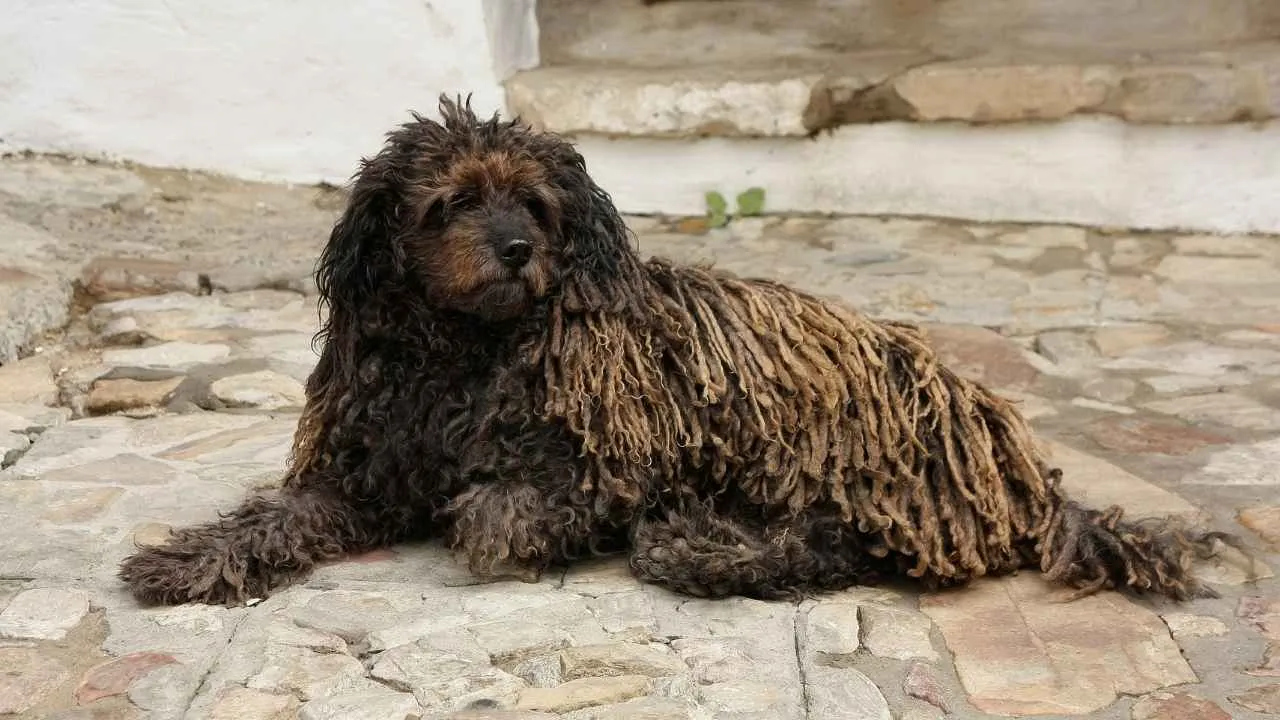
The Komondor certainly knows how to make an entrance. Its famous white cords steal all the attention, but this Hungarian flock guardian has serious working credentials behind them. For centuries, the breed protected sheep from predators and needed the courage and physical strength to face wolves and other threats.
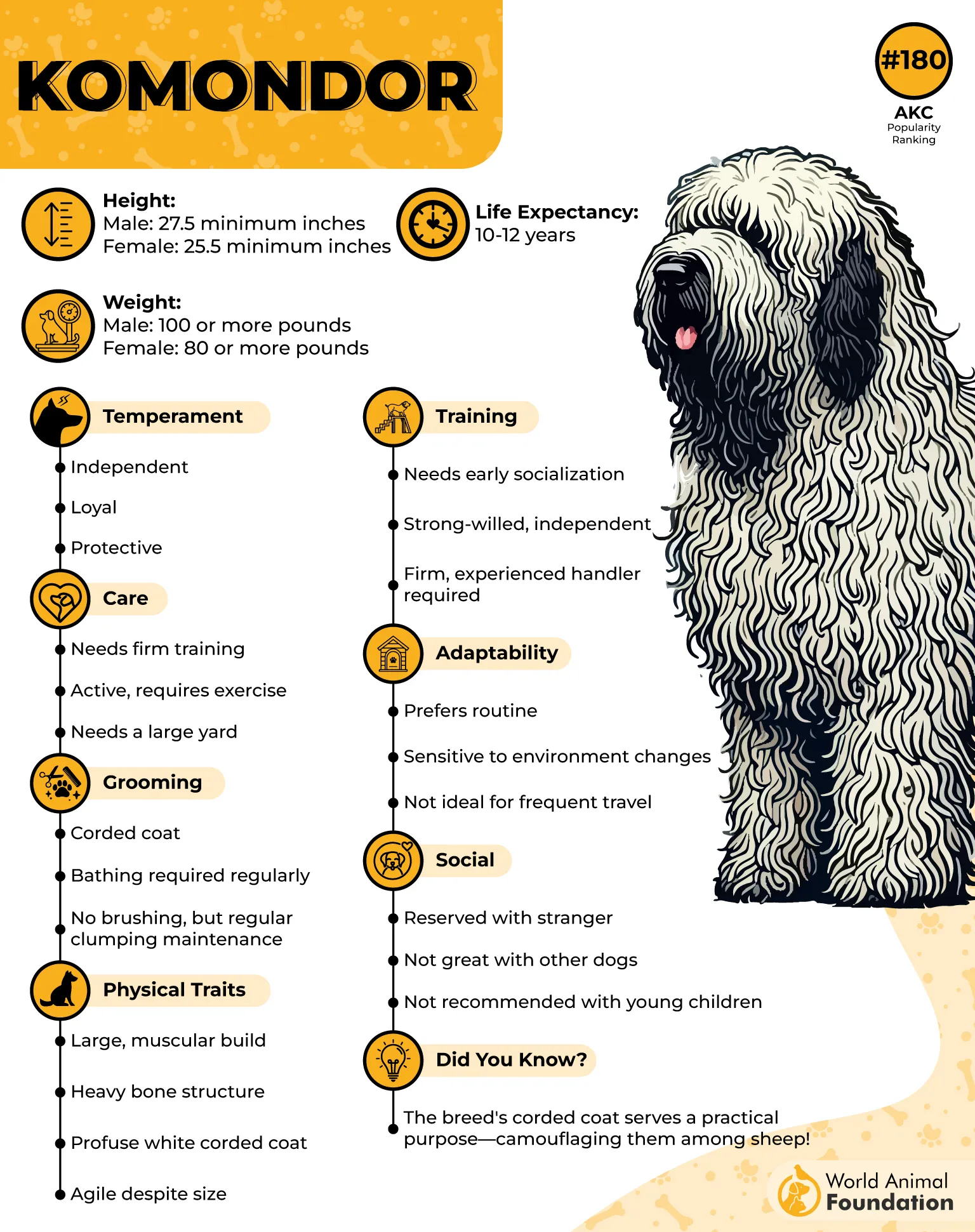
Its large, powerful frame supported demanding outdoor work, and its independent nature allowed it to patrol without constant direction. The cords had a practical purpose, too. They offered protection from harsh weather and predators while helping the dog blend into its flock.
Life with a Komondor
At home, the Komondor can be surprisingly sweet with its own people. It tends to be patient and watchful around family members, including children it knows well. Strangers receive a different response because this breed takes unfamiliar activity seriously.
Training calls for patience and consistency. This muscular breed is intelligent but independent, so repetitive drills can quickly lose their appeal. Mental stimulation, daily activity, and a predictable routine help keep it balanced.
Its signature cords also require dedicated care. Owners need to keep them clean and properly separated to prevent unhealthy matting.
A spacious home and someone comfortable handling a strong guardian breed make this unusual dog much easier to live with.
6. Dogue de Bordeaux
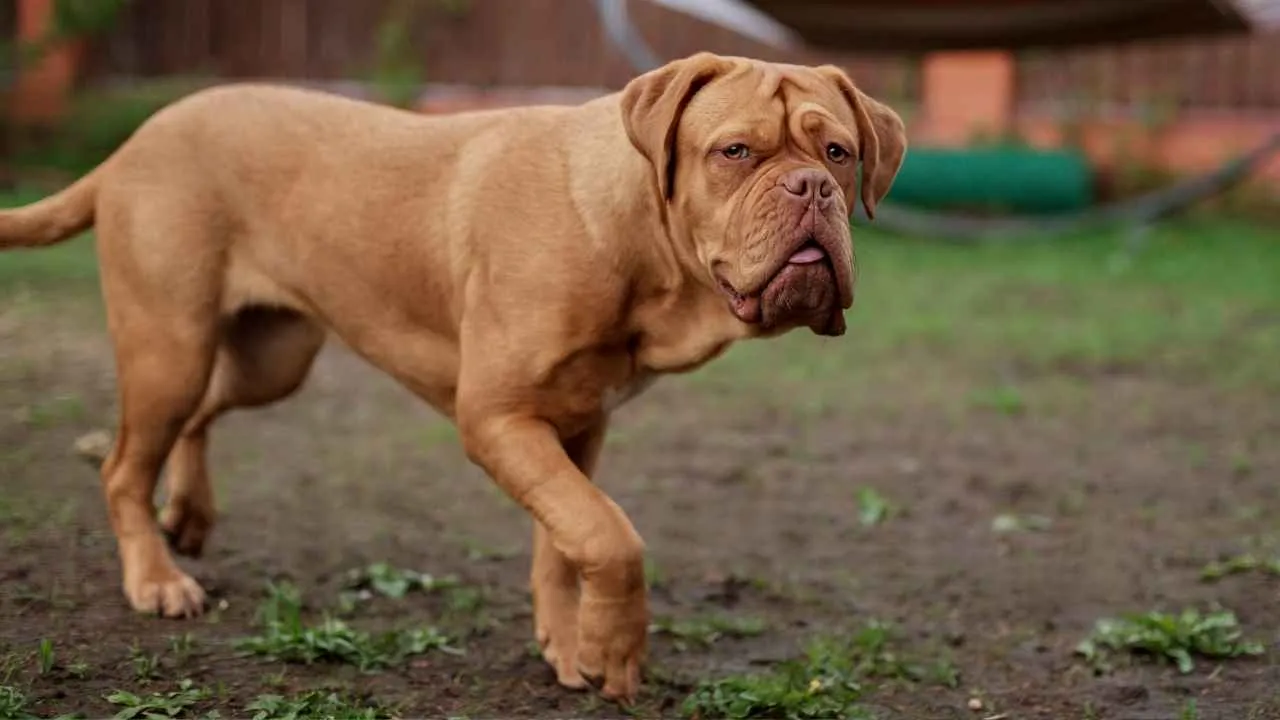
Few mastiff breeds bring as much visual power to a room as the Dogue de Bordeaux. This French working breed has a broad head, thick neck, deep chest, and distinct muscular build shaped by its history as a guardian and working dog. It was used for guarding, hunting, and protecting property.
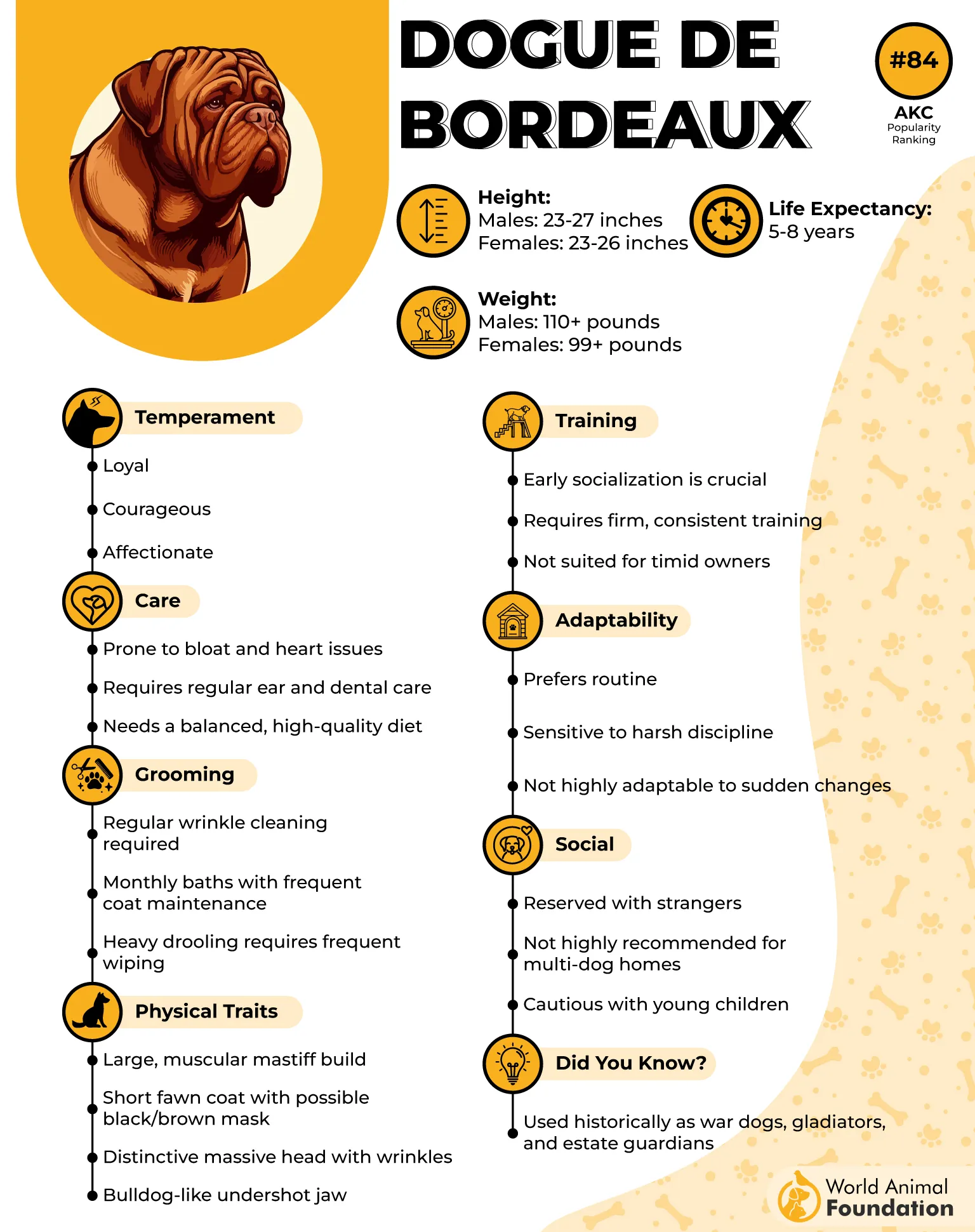
Its powerful snout and substantial frame create an intimidating presence, but its personality tells a softer story. The breed can be devoted, gentle, and deeply attached to its household.
Life with a Dogue de Bordeaux
The Dogue de Bordeaux can be a big softie at home. It tends to be patient with familiar family members and can do well with children when properly raised and supervised.
Its protective instincts remain strong, though, so strangers and unfamiliar situations deserve careful introductions. Early training and socialization help it become comfortable with visitors and other animals instead of relying entirely on its protective instincts.
Moderate daily activity, walks, play, and mental engagement help maintain fitness. Owners should also monitor its weight because extra pounds put additional strain on a large dog’s joints.
7. Leonberger
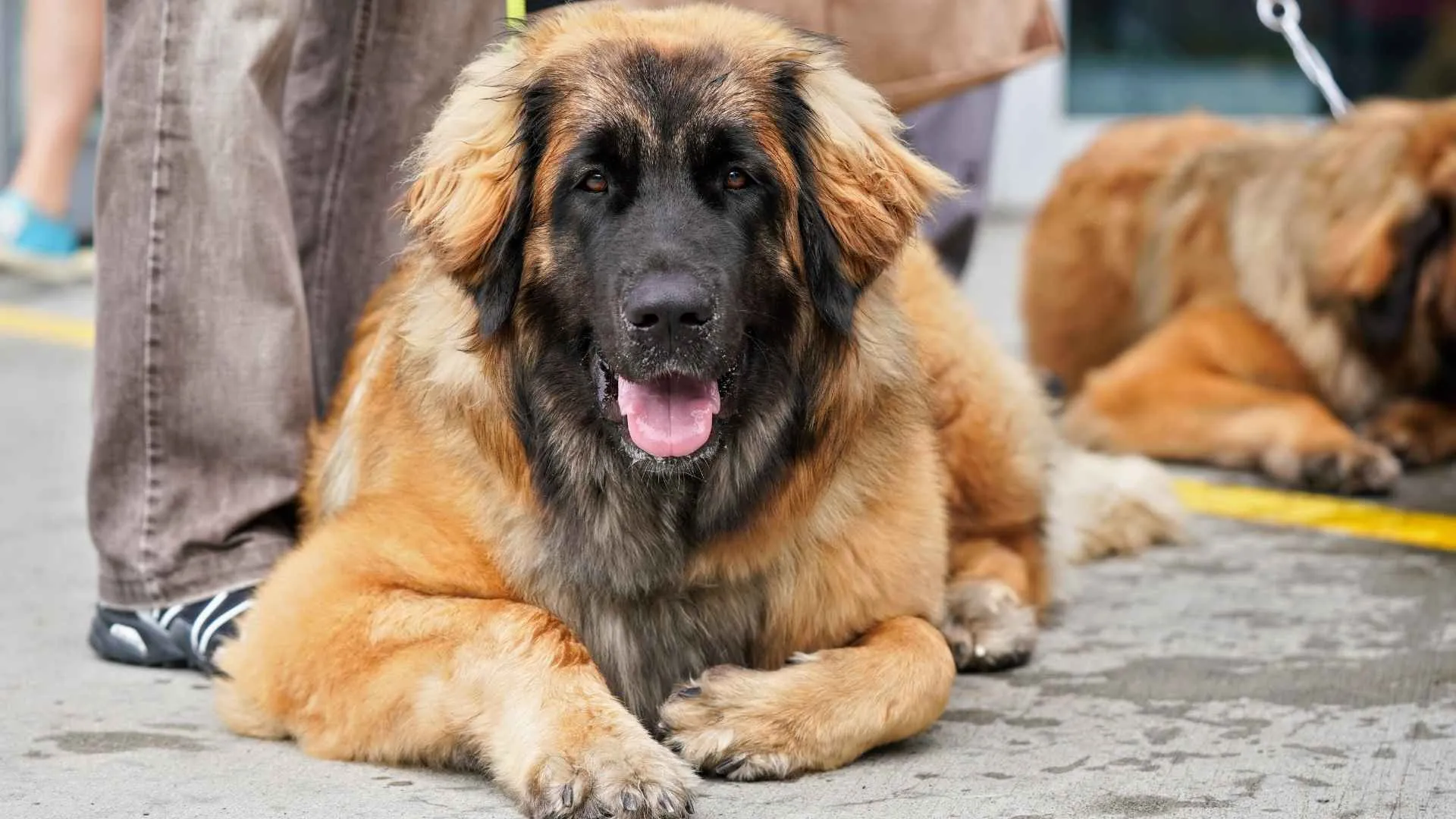
The Leonberger combines giant size, muscle, elegance, and warmth in one impressive package. Developed in Germany, the breed became popular as a companion but also worked on farms and later found roles in water rescue and search-and-rescue operations.
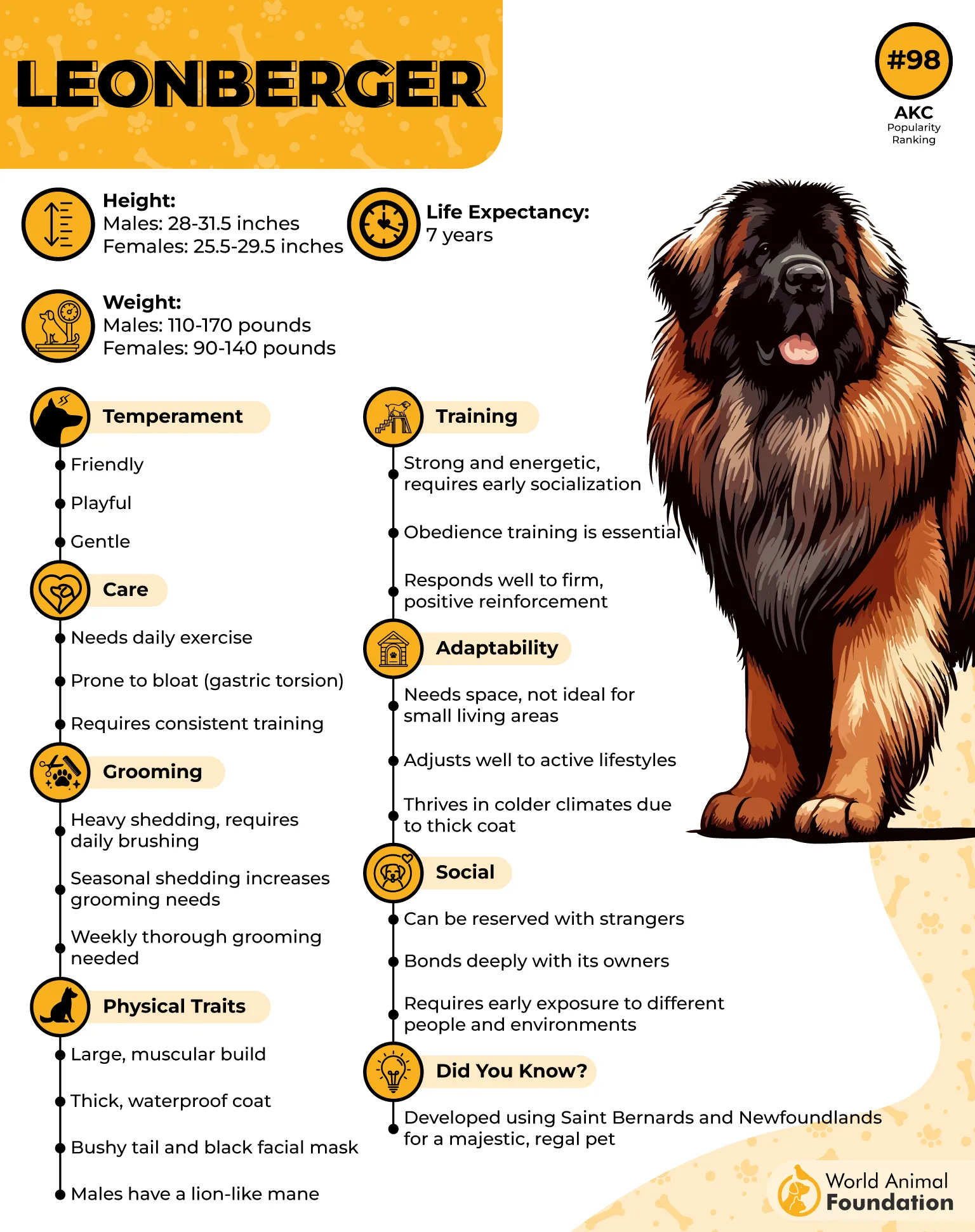
Its powerful frame reflects its working heritage. The breed has a heavy-boned, muscular build with a striking mane-like appearance. Its strength and versatility helped it take on different jobs, from farm work to water-based tasks.
Life with a Leonberger
The Leonberger has a lovely knack for being both impressive and easygoing at home. Properly socialized dogs can be gentle with children, patient during family chaos, and playful when the mood strikes. Its confidence also gives it a composed presence around familiar people.
Long walks, hiking, swimming, play, and activities such as carting can give this energetic giant appropriate outlets. It also craves human companionship and does not enjoy being isolated for long periods.
That beautiful long coat needs regular grooming, as Omlet mentions. For owners with enough space, time, and affection, the Leonberger can be an exceptionally loving companion.
Conclusion
Powerful working dogs are defined by far more than muscular bodies. Their strength comes with courage, intelligence, endurance, protective instincts, and a history of purposeful work. Some are natural guardians, some thrive on active jobs, and others bring a surprisingly gentle side into family life.
That impressive physique also comes with real responsibility. Before choosing one, consider its temperament, training needs, exercise, grooming, living space, and your lifestyle. The right match is not simply the strongest dog you can find. It is a dog whose instincts, energy, and personality fit naturally into your everyday life.
