




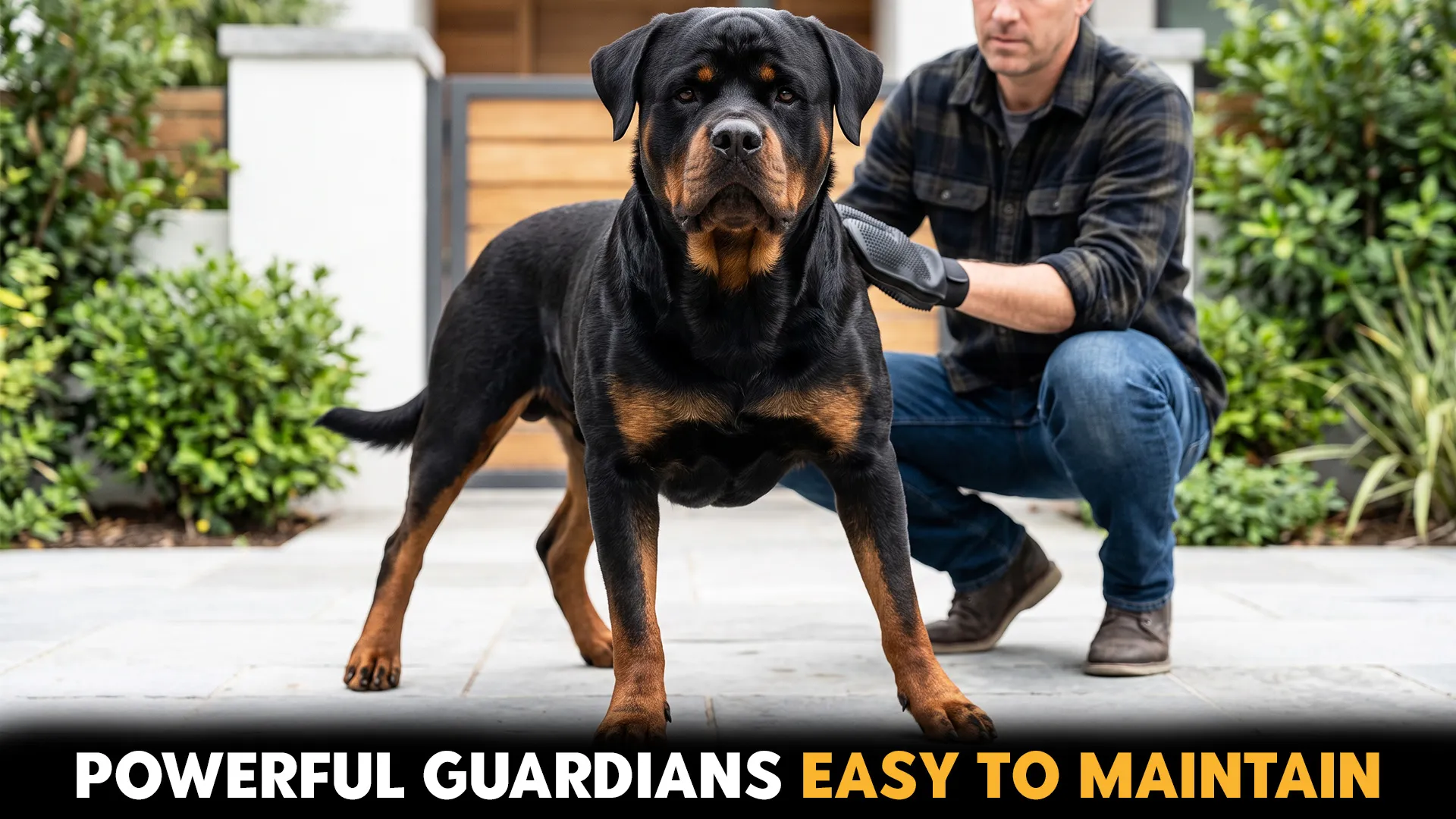
A good guard dog should help you feel safe at home without making your daily routine feel like a full-time job. The right companion can offer protection, loyalty, and peace of mind while enjoying a relaxed evening by your side.
The good news is that you don’t have to choose between a protective dog and an easier care routine. Some powerful breeds have short, manageable coats that require less brushing and trimming.
Others shed very little but may need professional grooming to keep their coats healthy. That’s why it’s important to consider more than just shedding when choosing a dog that fits your lifestyle.
So, what should you look for in a low-grooming guard dog? Along with coat care, consider the breed’s temperament, exercise needs, training requirements, and overall health.
In this article, we’ll explore nine of the best guard dog breeds to help you find a loyal companion who fits comfortably into your everyday life.
Powerful Guard Dog Breeds with Low Grooming Demands
1. Boerboel
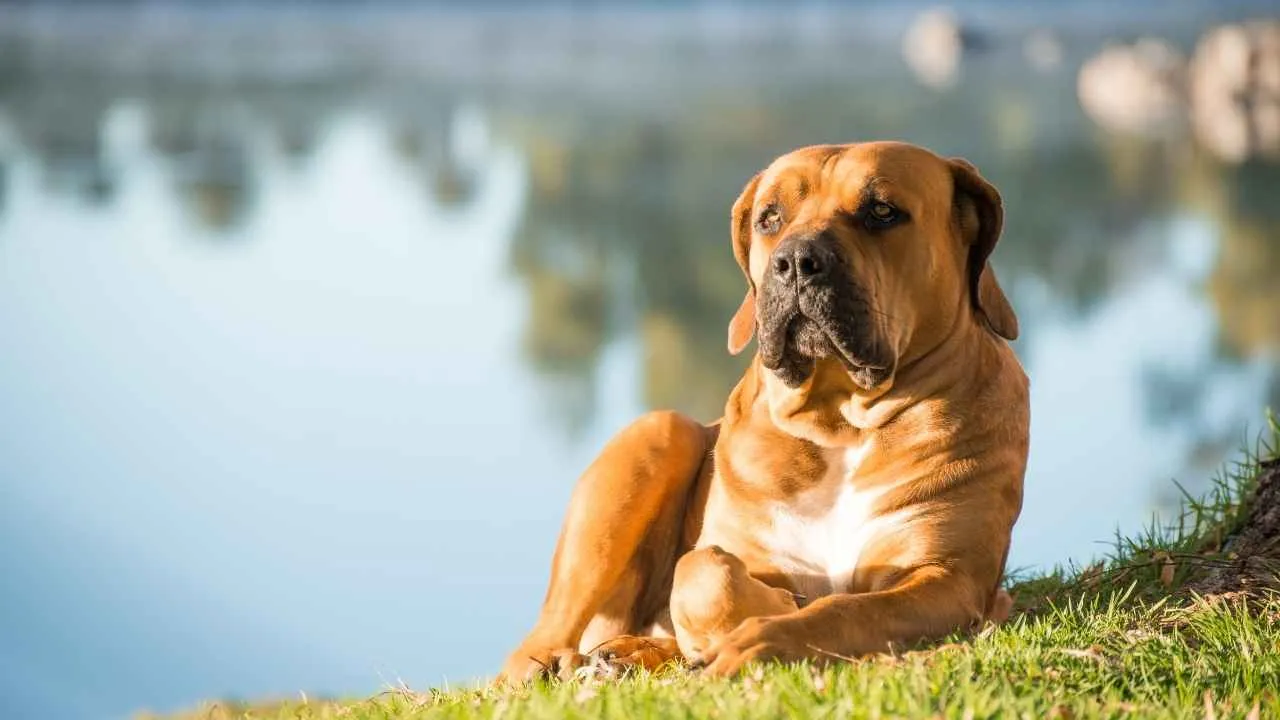
Boerboels, also known as South African Mastiffs, were bred to protect farms from predators, including hyenas and lions. These powerful dogs have a muscular build, a broad head, and a smooth, short coat. They are confident, intelligent, and deeply devoted to their families.
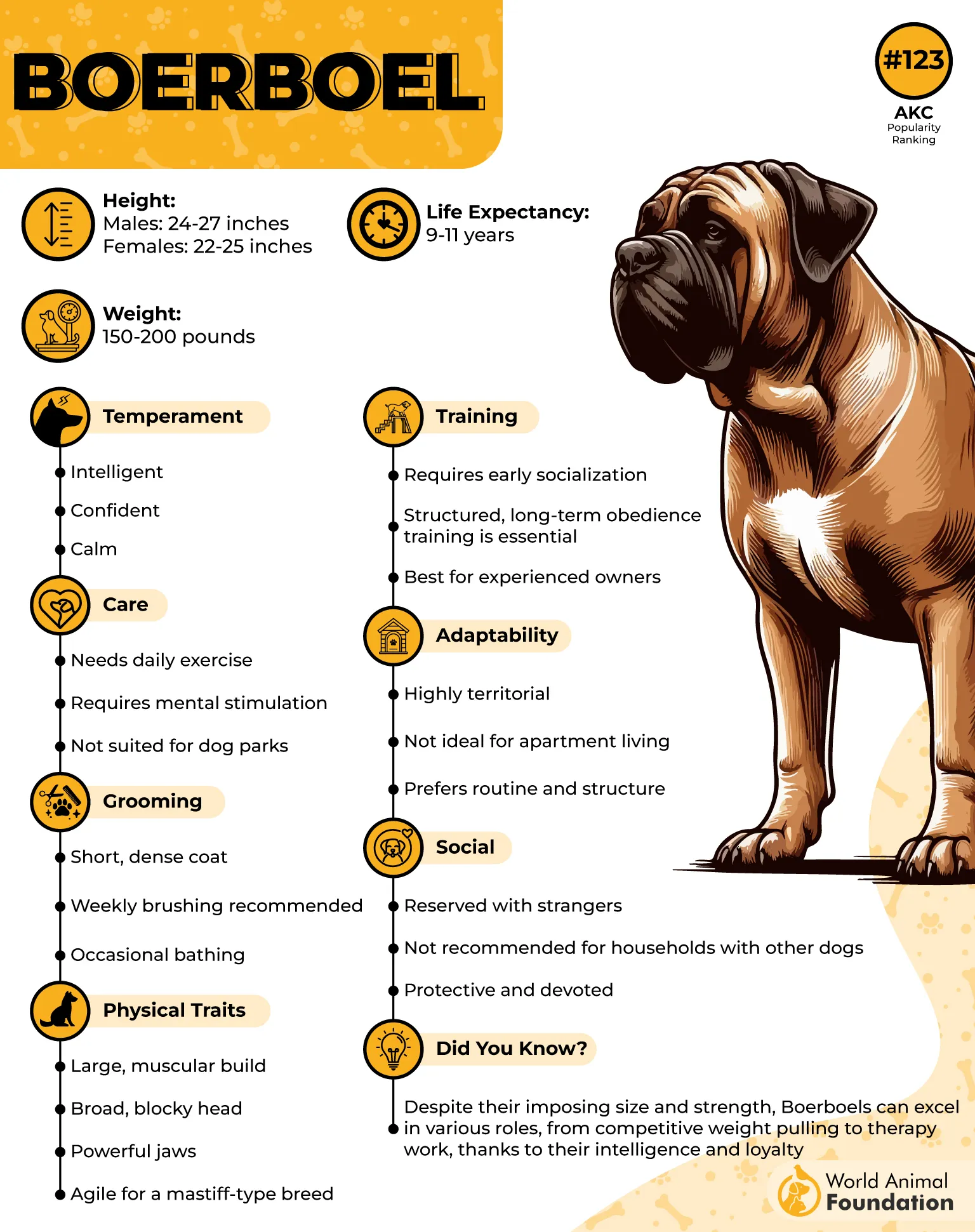
Despite their intimidating appearance, Boerboels can be calm and affectionate with their loved ones, including children. They tend to be reserved around strangers and may take time to accept visitors.
Supervision is important during play with smaller children, as their size and strength can lead to accidental knocks.
Grooming Needs
Coat care: Their short, dense coats need weekly brushing to reduce shedding.
Skin care: Drool and food can collect around their facial wrinkles, so regular wiping with a damp cloth helps keep the area clean.
Bathing: Monthly baths are usually enough for Boerboels. Since they tend to drool a lot, keep a towel handy to wipe their faces when needed.
2. Rottweiler
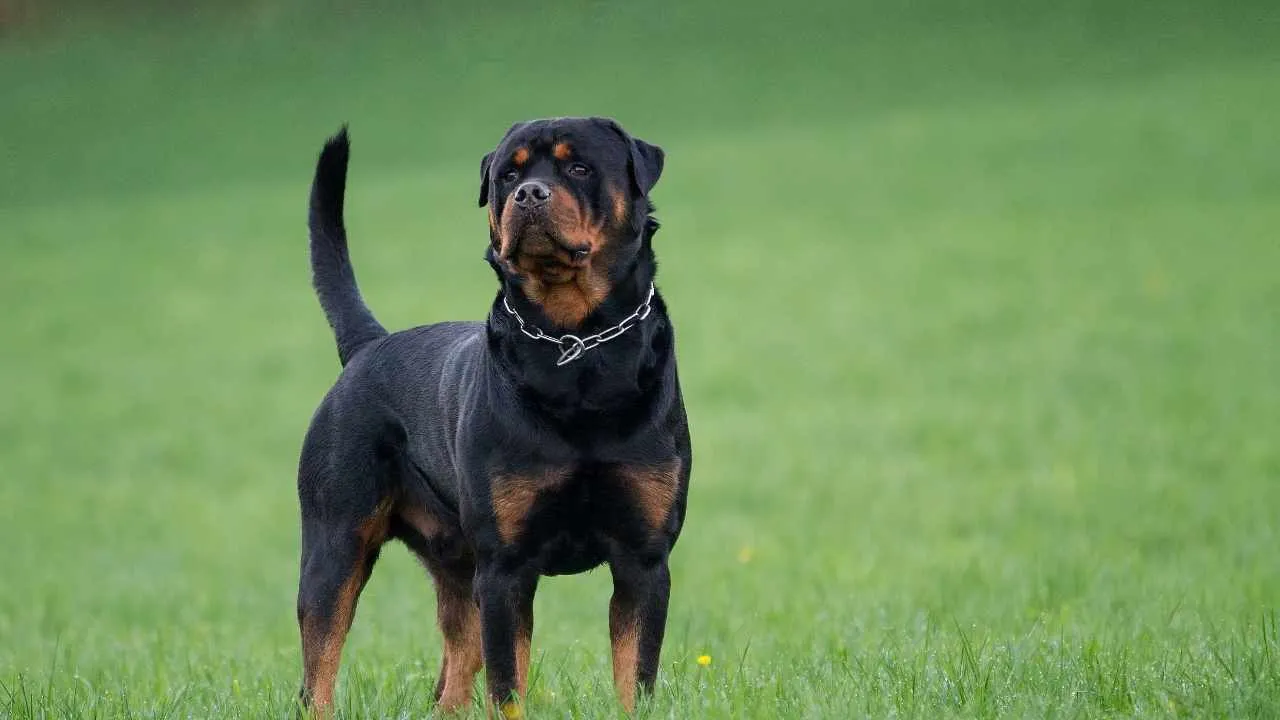
Rottweilers are strong, confident working dogs that were originally bred to drive livestock, pull carts, and protect their owners from robbers.
Descended from Roman mastiffs, they are known for their muscular build, short black coats, and distinctive rust-colored markings. They are intelligent and quick learners, although they can be stubborn at times.
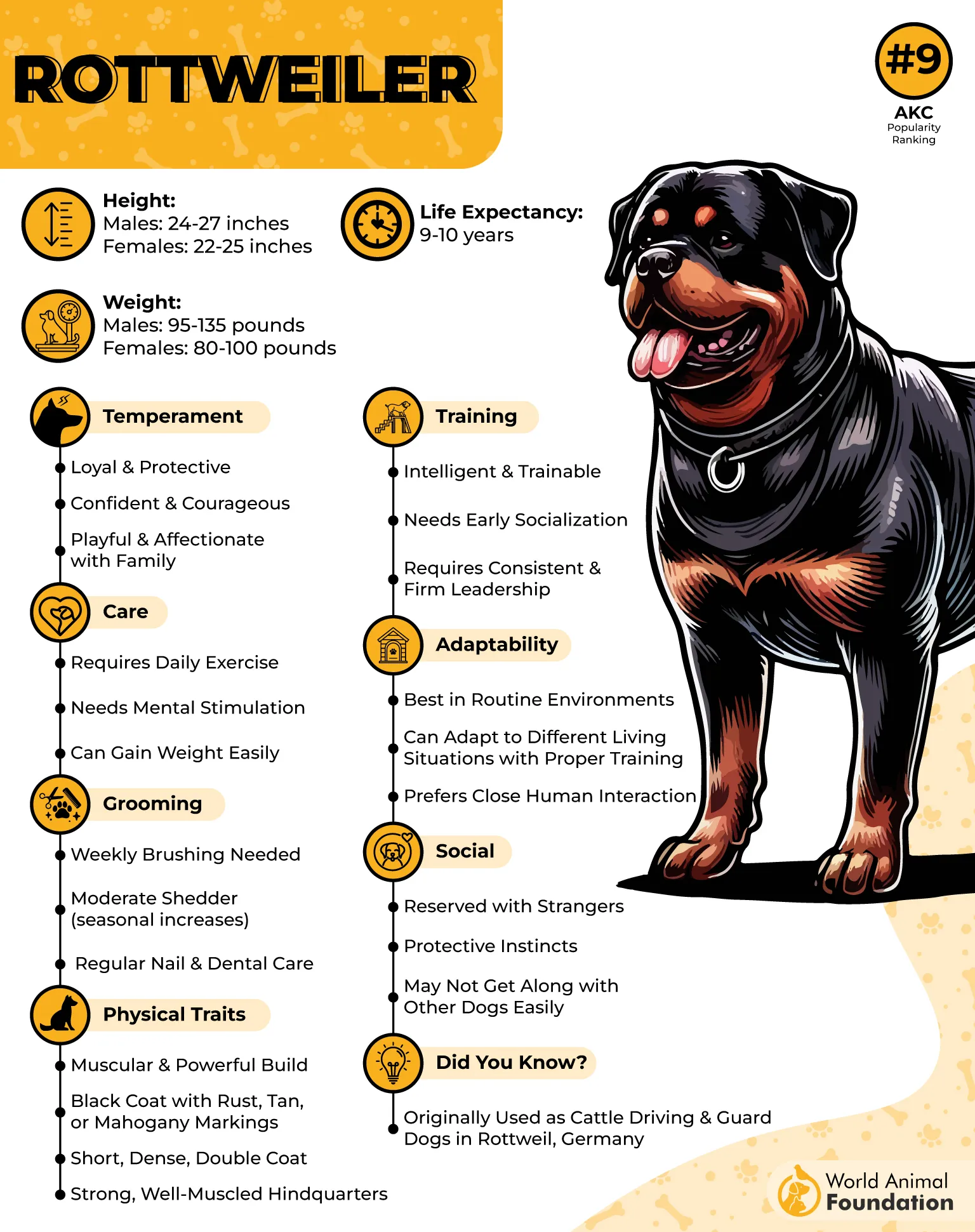
Despite their serious appearance, Rottweilers can be affectionate, playful, and gentle with their families. They tend to be reserved around strangers and may show protective or territorial behavior.
Early training and socialization help them develop into calm, confident companions. Orvis says they are generally not ideal for first-time dog owners.
Grooming Needs
Coat care: Their short coats are easy to maintain, but they shed heavily throughout the year. Weekly or daily brushing can help control loose hair.
Bathing: Baths are only needed when they get dirty, such as after outdoor activities.
Dental care: Brush their teeth at least three times a week to maintain good oral health.
3. Cane Corso
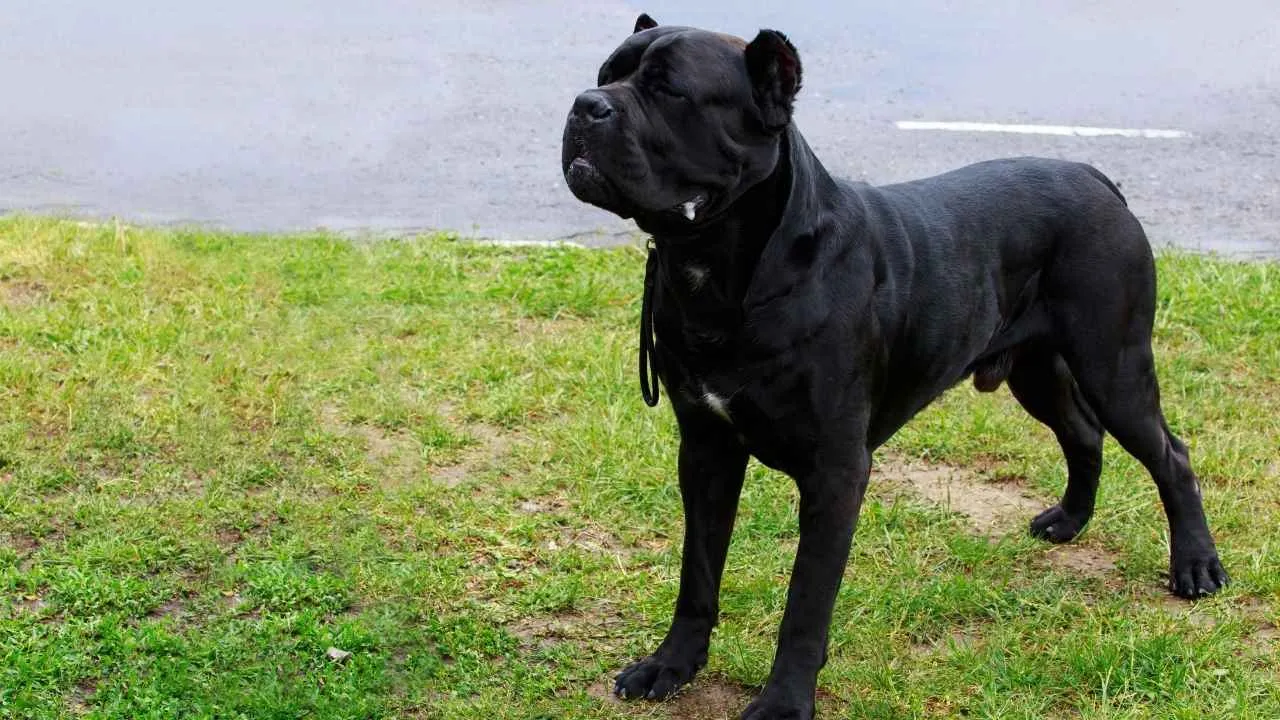
Cane Corsos, also known as Italian Mastiffs, were bred to guard property, work on farms, and serve as working dogs. Their name roughly translates to “guard dog of the courtyard.” With their muscular bodies, large heads, and alert expressions, they have an imposing appearance that can deter intruders.
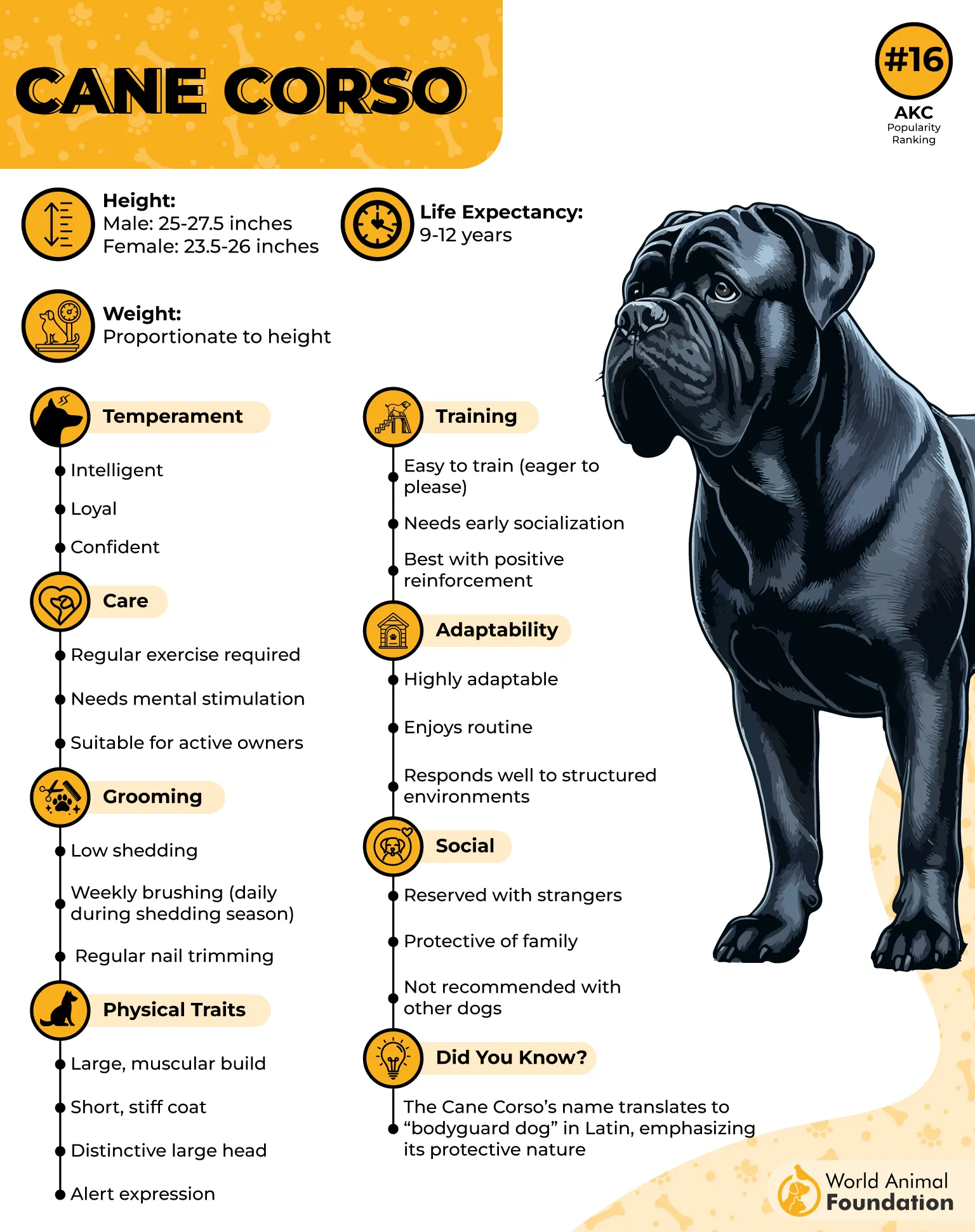
Cane Corsos are devoted to their family members but tend to be wary of strangers and unfamiliar animals. They are protective by nature and can become formidable guardians when they sense a threat.
Early socialization and consistent training are essential to help them respond appropriately to unfamiliar people and situations. Their strength and independent nature make them better suited to experienced owners who can provide firm, responsible guidance.
Grooming Needs
Coat care: Their short, smooth coats require minimal grooming, although moderate shedding occurs throughout the year.
Brushing: Regular brushing helps remove loose hair and keeps their coats in good condition.
General care: Routine veterinary checkups are important because Cane Corsos can be prone to obesity, hip and elbow dysplasia, epilepsy, and bloat.
4. Great Dane
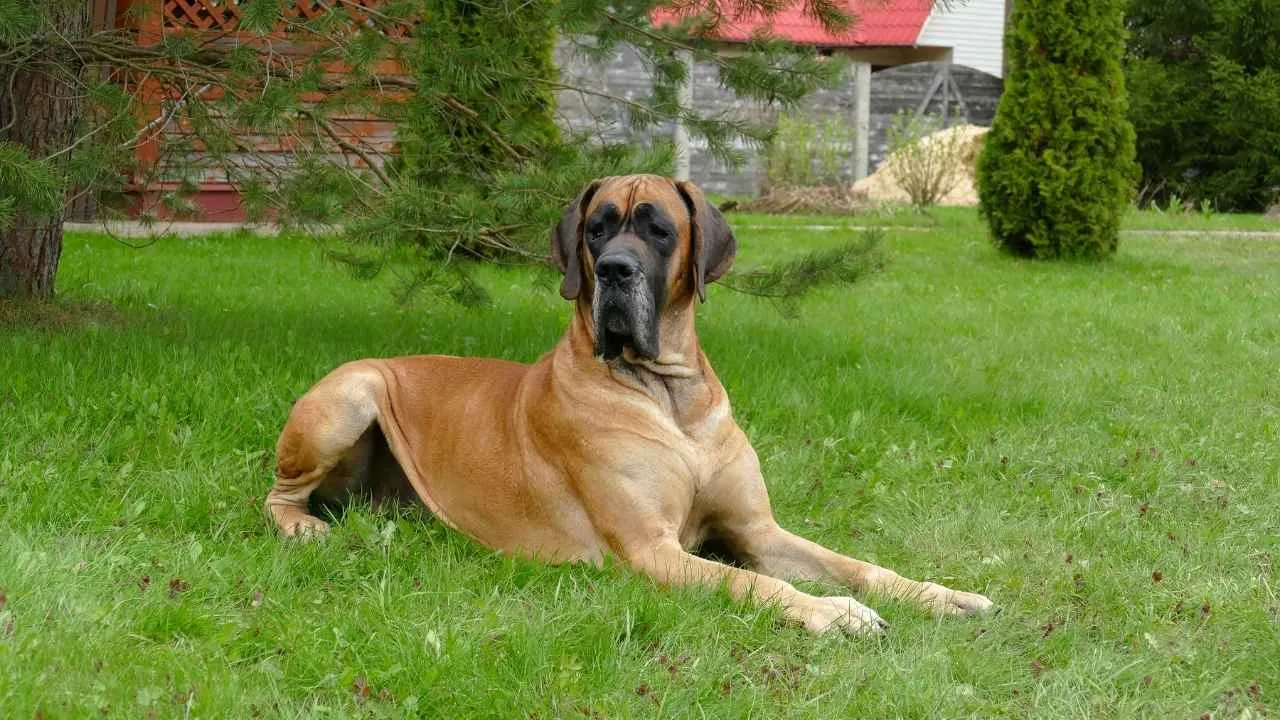
Great Danes, often called the “Apollo of Dogs,” are powerful giants known for their elegant appearance and gentle nature. Despite their size, they are affectionate, patient, and eager to please their families.
Their smooth, short coats come in several colors and patterns, including the well-known black-and-white harlequin pattern.
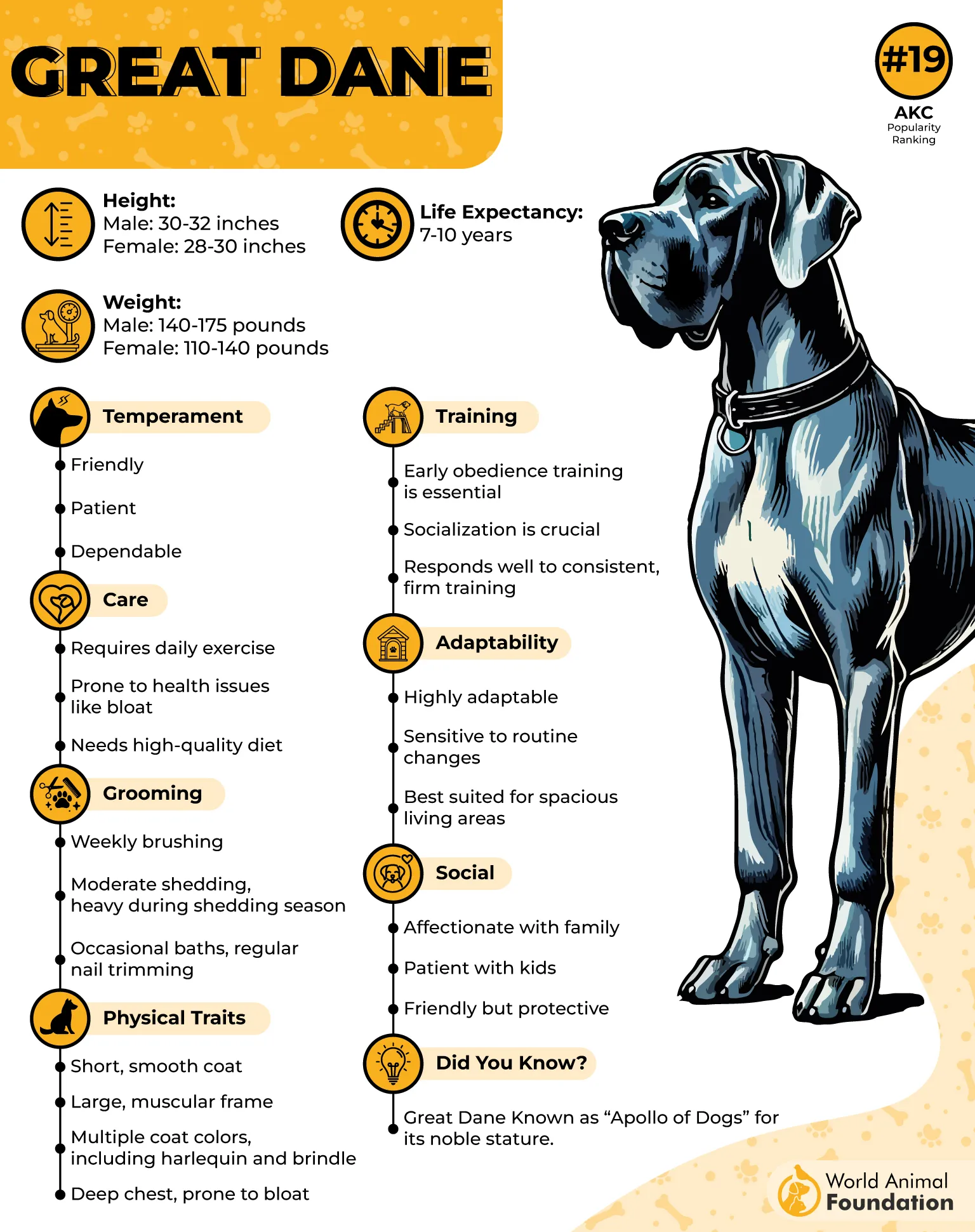
Great Danes are alert watchdogs whose imposing presence can discourage intruders. They are generally friendly toward people and other dogs but can become protective when they sense a threat to their family.
They are usually calm and do not bark without reason, as Britannica notes. Early socialization and obedience training are important to help manage their strength and prevent unwanted territorial behavior.
Grooming Needs
Coat care: Their short, smooth coats are easy to maintain and do not require extensive grooming.
Brushing: Regular brushing helps remove loose hair and keeps their coats clean.
Bathing: Occasional baths are usually enough to keep their coats fresh, with extra cleaning when they get dirty.
5. Boxer
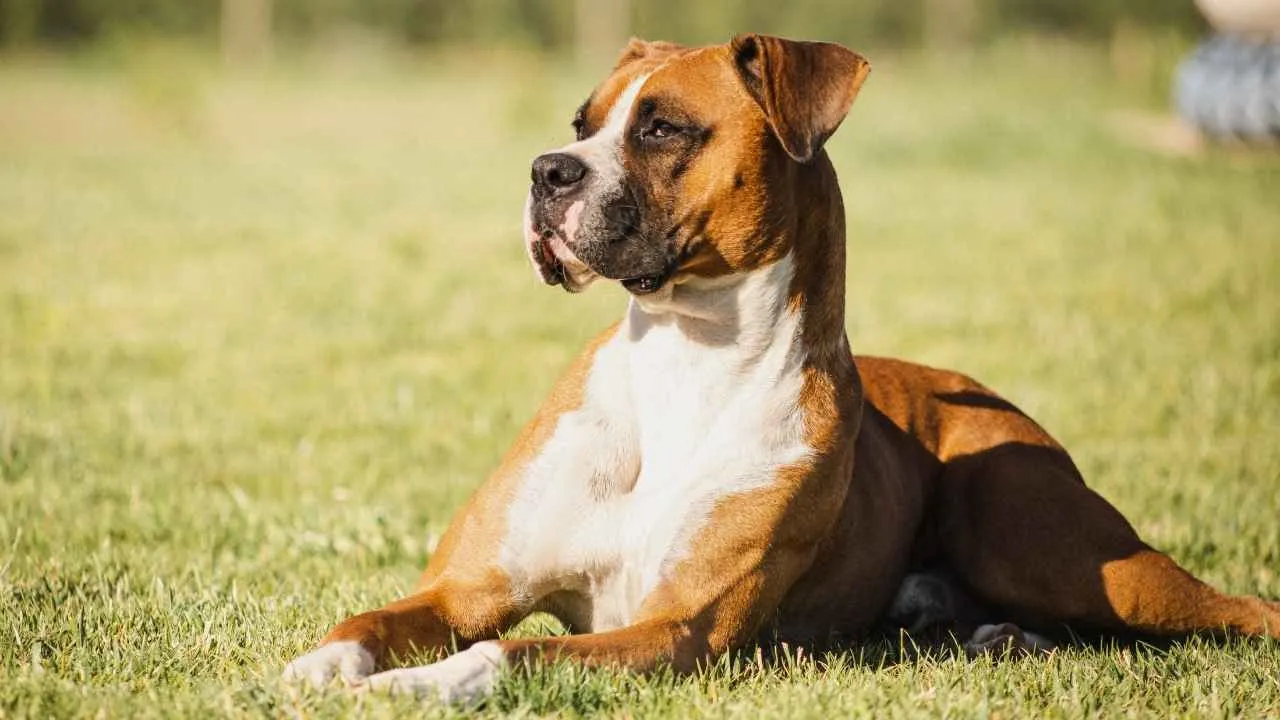
Boxers are muscular, athletic dogs known for their loyalty, intelligence, and playful personalities. Originally from Germany, they were brought to the United States in the 1930s and were used for hunting.
Their short, tight-fitting coats come in fawn and brindle, often with white markings. Despite their sometimes serious expressions, Boxers are affectionate and full of energy.
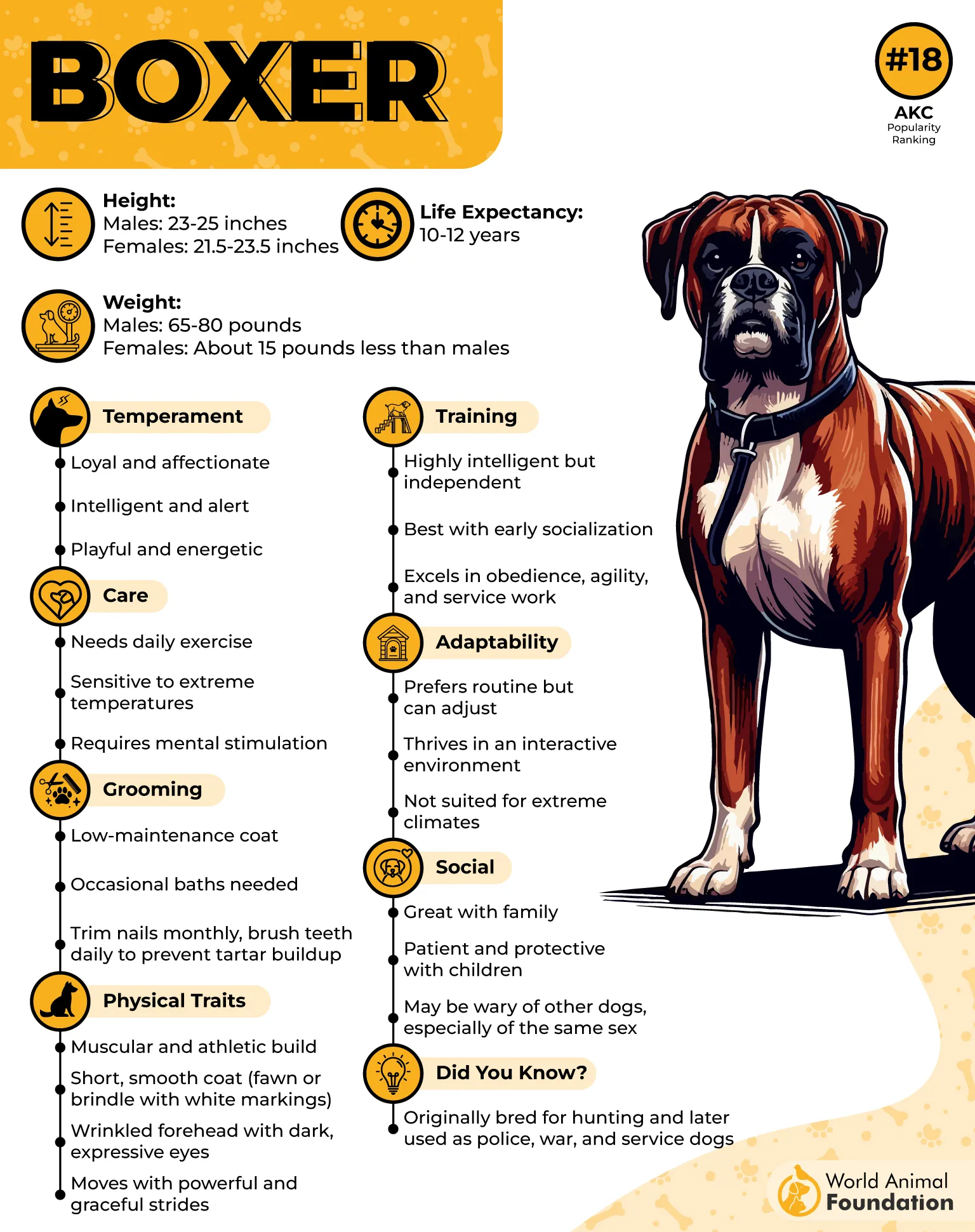
These dogs take their roles as watchdogs and family guardians seriously. They are alert, courageous, and ready to face potential threats to their loved ones.
However, their energetic and boisterous nature makes early socialization and training important. They thrive in active homes where they receive plenty of exercise and mental stimulation.
Grooming Needs
Coat care: Their short, smooth coats require minimal grooming and are easy to maintain.
Brushing: Regular brushing helps remove loose hair and keeps their coats in good condition.
General care: Boxers need plenty of daily exercise, usually between 30 minutes and two hours, along with mental activities to stay happy and engaged.
6. Rhodesian Ridgeback
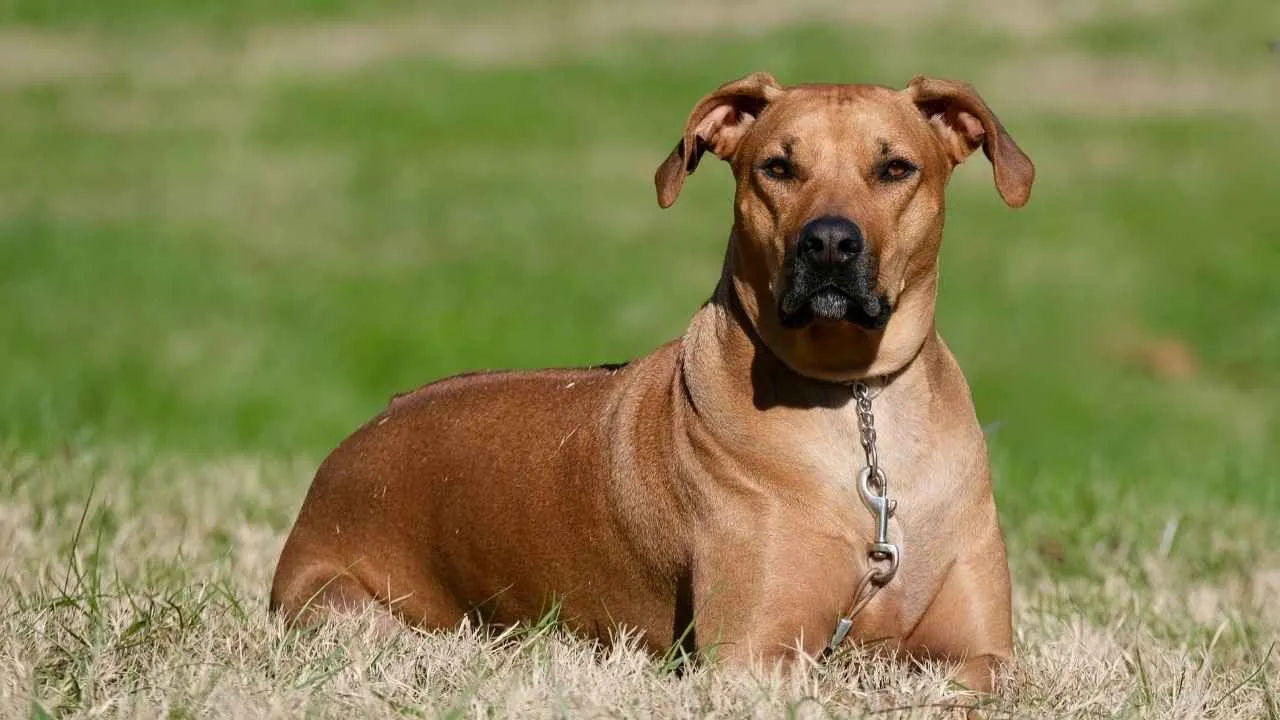
Rhodesian Ridgebacks are powerful, athletic dogs originally bred in Africa to track and bay large predators, including lions. They are easily recognized by the distinctive ridge of hair along their backs, which grows in the opposite direction to the rest of their coat.
These intelligent and courageous dogs are loyal to their families and make alert, protective watchdogs.
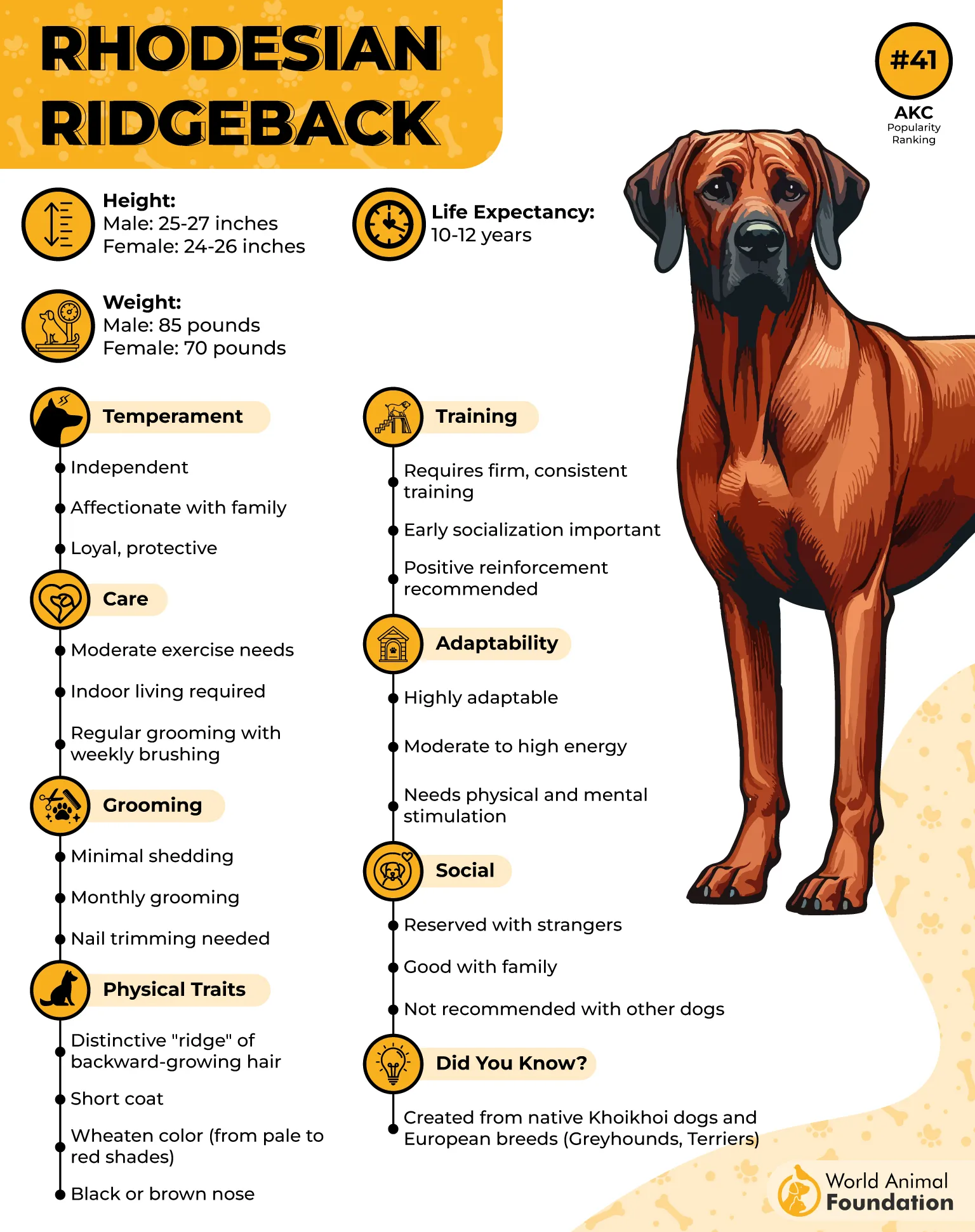
Rhodesian Ridgebacks are affectionate with their loved ones but can be reserved around strangers. They have a strong prey drive and an independent nature, so early socialization and consistent training are important.
They are energetic dogs that need regular exercise and mental stimulation. Although they can be good family companions, their strength and stubbornness may challenge inexperienced owners.
Grooming Needs
Coat care: Their short, smooth coats require minimal grooming, although they shed moderately.
Brushing: Weekly brushing helps remove loose hair and keeps their coats glossy.
Bathing: Monthly baths are generally enough to keep their coats clean and healthy.
7. Bullmastiff
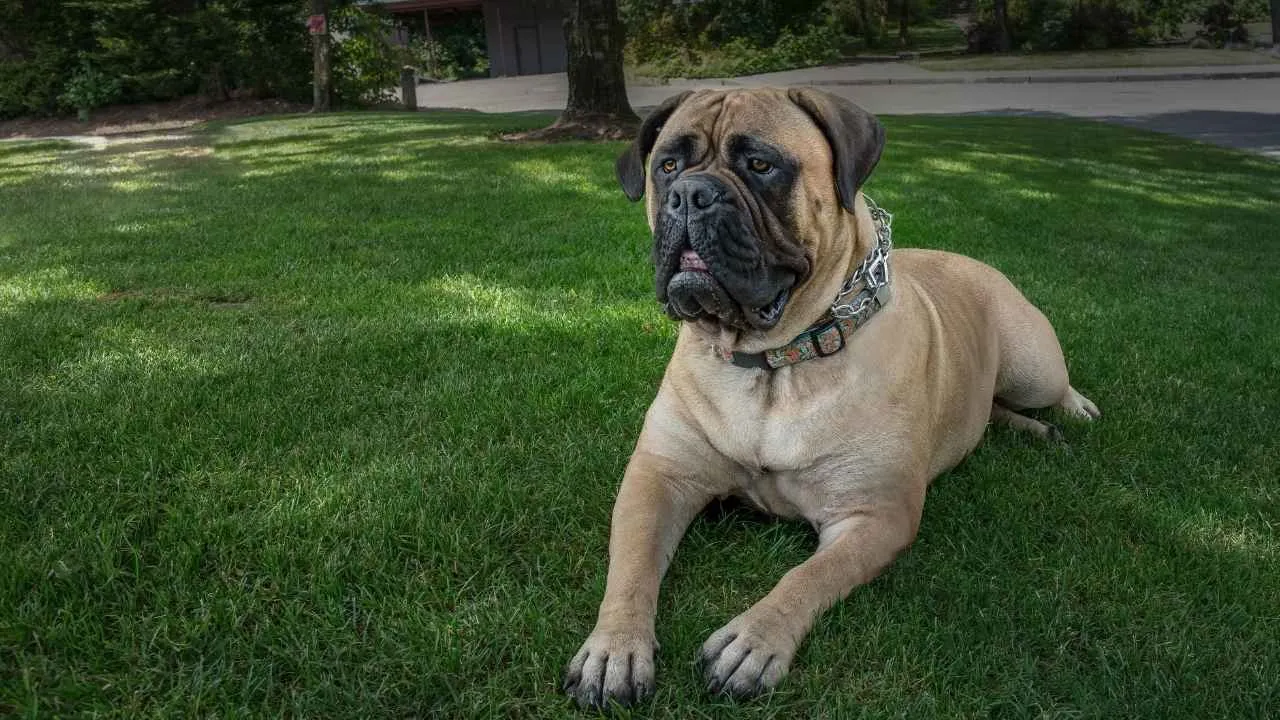
Bullmastiffs were developed in 19th-century England by crossing Bulldogs with Mastiffs. British gamekeepers bred them to guard estates and catch poachers.
These powerful dogs have broad heads, muscular bodies, and short, dense coats that come in fawn, red, or brindle. Despite their imposing appearance, they are often affectionate and docile with their families.
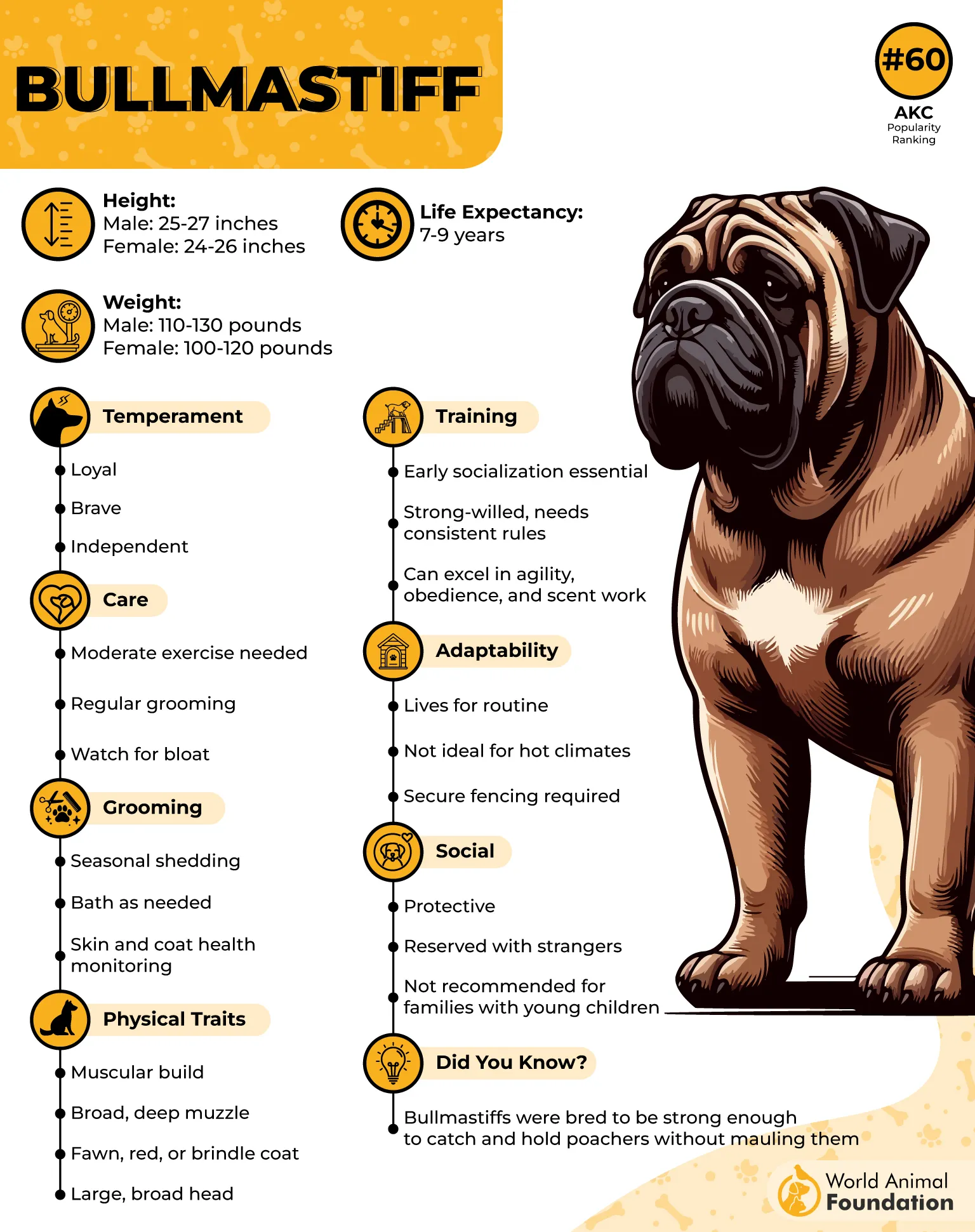
Bullmastiffs are devoted guardians who naturally protect their homes and loved ones. According to Purina, they tend to be suspicious of strangers and may only accept visitors after proper introductions.
They can be good with children, but supervision is important because their bulky build can accidentally knock over smaller kids. Their size and stubbornness also make them better suited to experienced owners.
Grooming Needs
Coat care: Their short, dense coats are easy to maintain and require minimal grooming.
Brushing: Regular brushing helps remove loose hair and keeps their coats in good condition.
General care: Daily walks and suitable play help keep them healthy. Maintaining a healthy weight is also important to reduce strain on their joints.
8. Broholmer
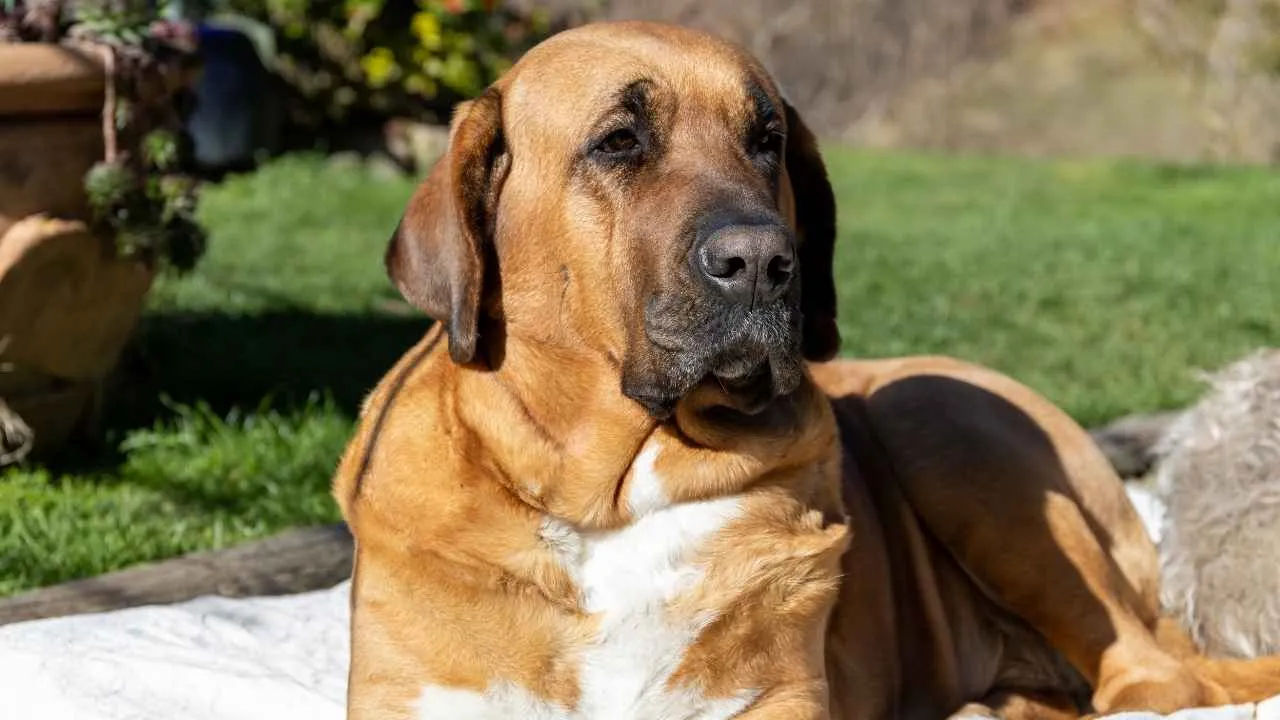
Broholmers are large, powerful dogs from Denmark that were historically used to guard farms, estates, and cattle. They were also known as “butcher’s dogs” because they were often seen resting outside butcher shops.
With their broad heads, muscular bodies, and imposing size, they can deter intruders simply by their presence. Despite their appearance, Broholmers are calm, friendly, and affectionate with their families. They enjoy staying close to their owners and can be gentle with children and other dogs.
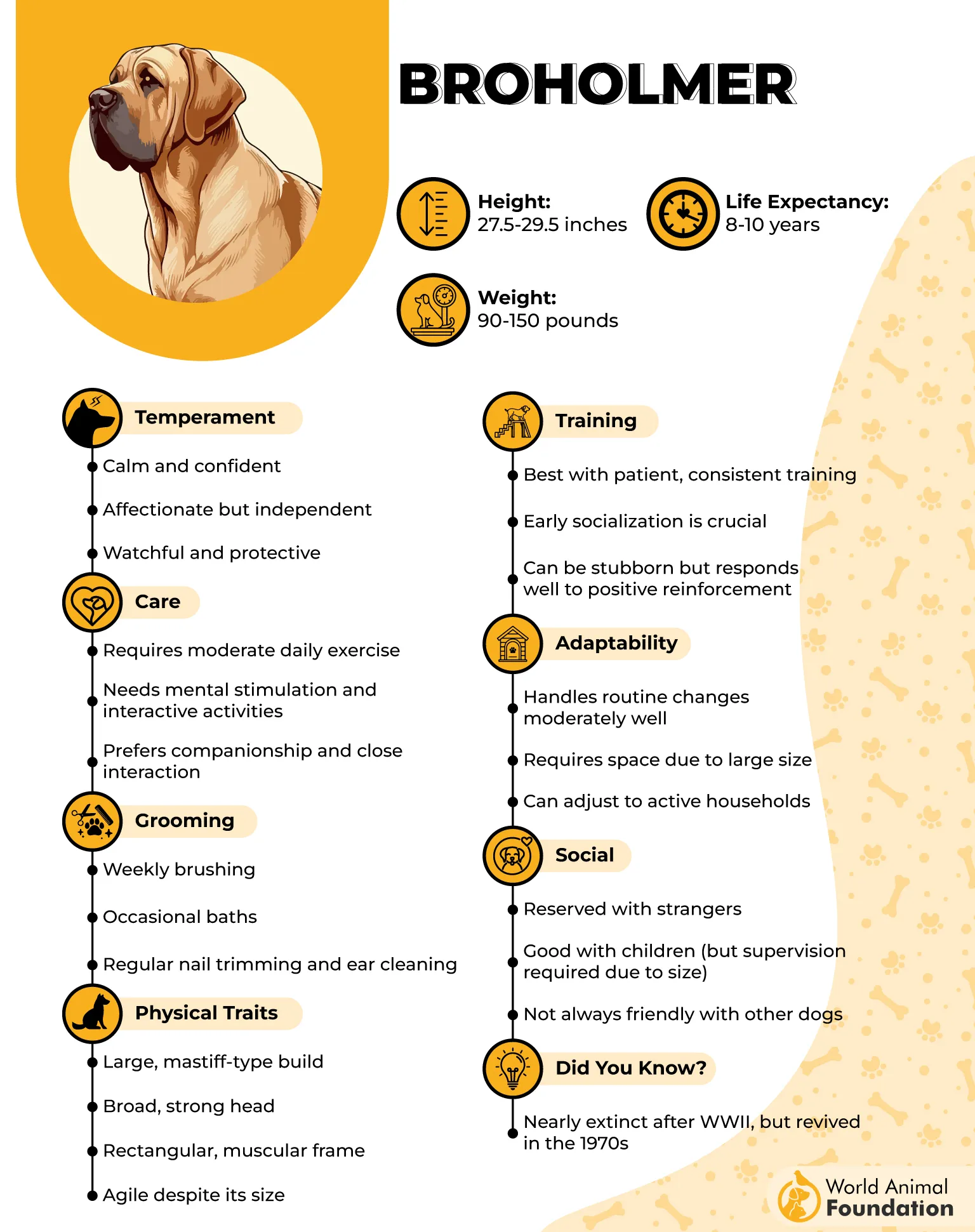
However, they may underestimate their own size, so supervision around children is important. These alert, self-assured dogs need regular exercise and enjoy activities such as walks, hiking, and playing fetch.
Grooming Needs
Coat care: Their short coat is relatively easy to maintain and does not require extensive grooming.
Brushing: Regular brushing helps remove loose hair and keeps their coats clean.
General care: Daily walks and playtime help keep them active. Early socialization also supports their calm, friendly temperament.
9. Doberman Pinscher
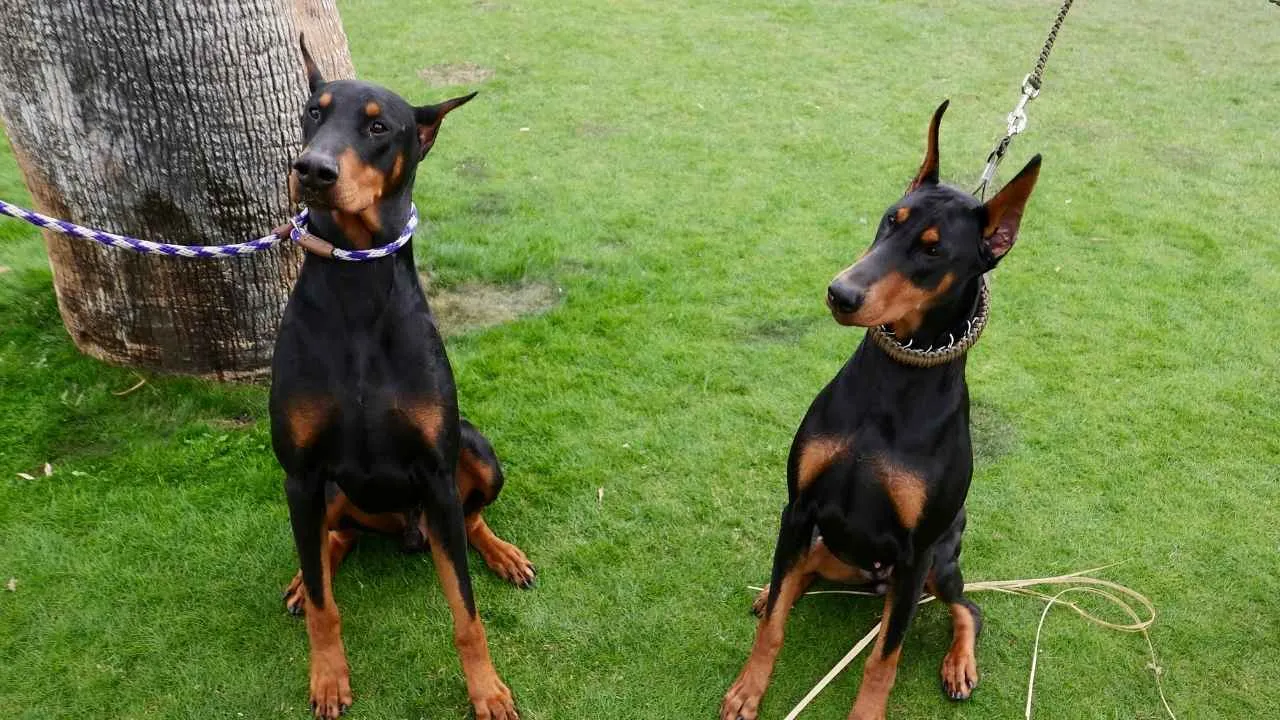
Doberman Pinschers are sleek, muscular dogs known for their intelligence, alertness, and protective instincts. Originally bred as guardians, they have also served as military and police dogs.
Their smooth coats come in colors such as black, blue, red, and fawn, usually with rust-colored markings. Their athletic build and confident appearance make them impressive protectors.
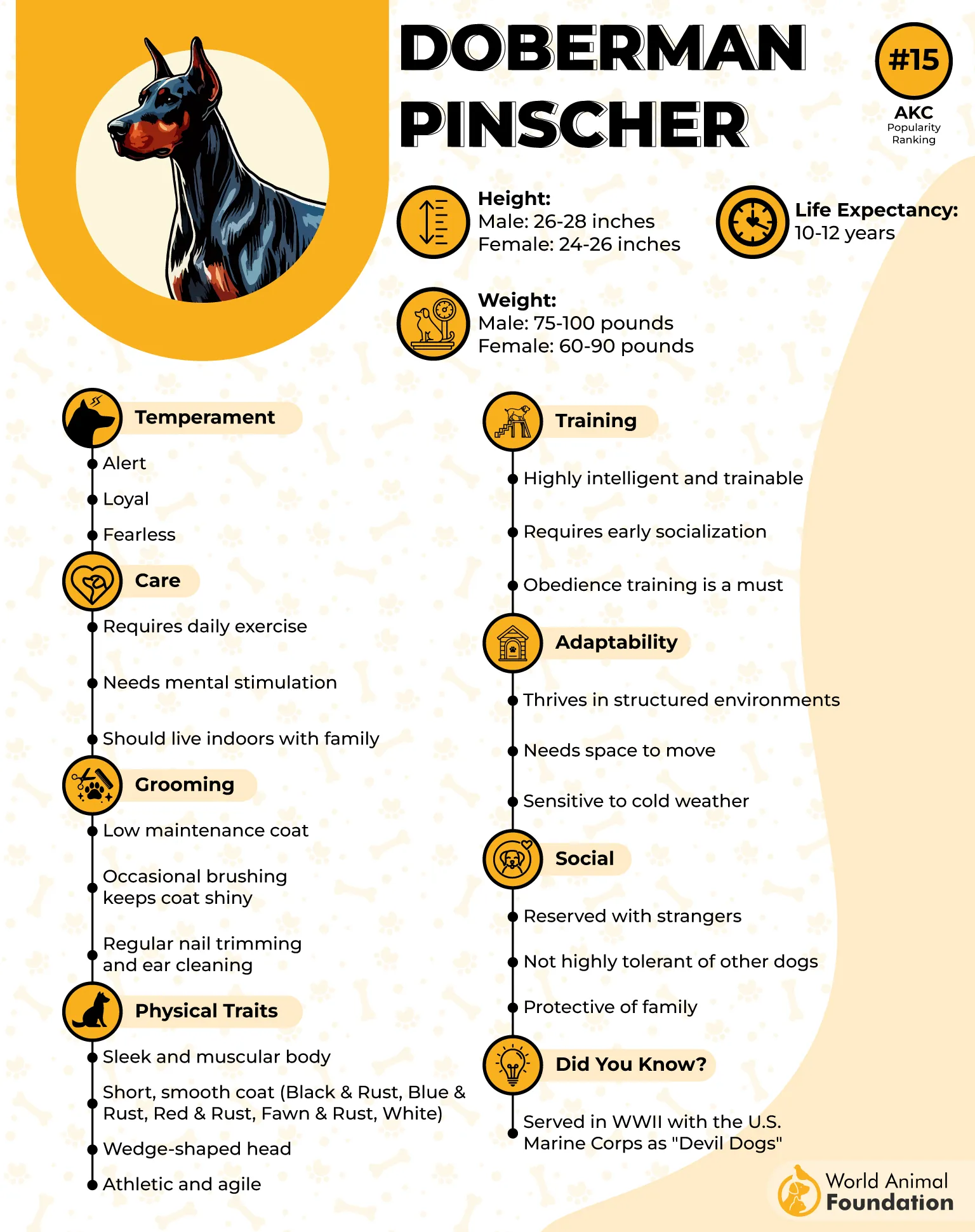
Dobermans are highly alert and often warn their families when something seems wrong. They tend to be reserved around strangers but are affectionate and devoted to their loved ones. They can live well with familiar household pets but may be domineering toward unfamiliar dogs.
These energetic, intelligent dogs need experienced owners who can provide consistent training, early socialization, daily exercise, and mental stimulation.
Grooming Needs
Coat care: Their short, smooth coats require minimal grooming and are easy to maintain.
Brushing: Weekly brushing helps remove loose hair and keeps their coats looking sleek.
Bathing: Occasional baths are usually enough to keep their coats clean, unless they get dirty during outdoor activities.
Conclusion
Powerful guard dogs don’t always need complicated grooming routines to look their best. Breeds with short, manageable coats can offer loyalty, protection, and companionship without hours of brushing or frequent trips to the groomer.
However, coat care is only one part of the picture. Training, exercise, socialization, and daily attention are just as important when choosing a dog that fits your lifestyle.
Before bringing one home, take time to research the breed’s temperament, energy level, and care needs. Choose a dog whose personality and size suit your household, and be ready to invest in proper training from an early age.
After all, the best protective dog breed isn’t simply the one that looks intimidating. It’s the one you can care for confidently and build a trusting bond with for years to come.
