




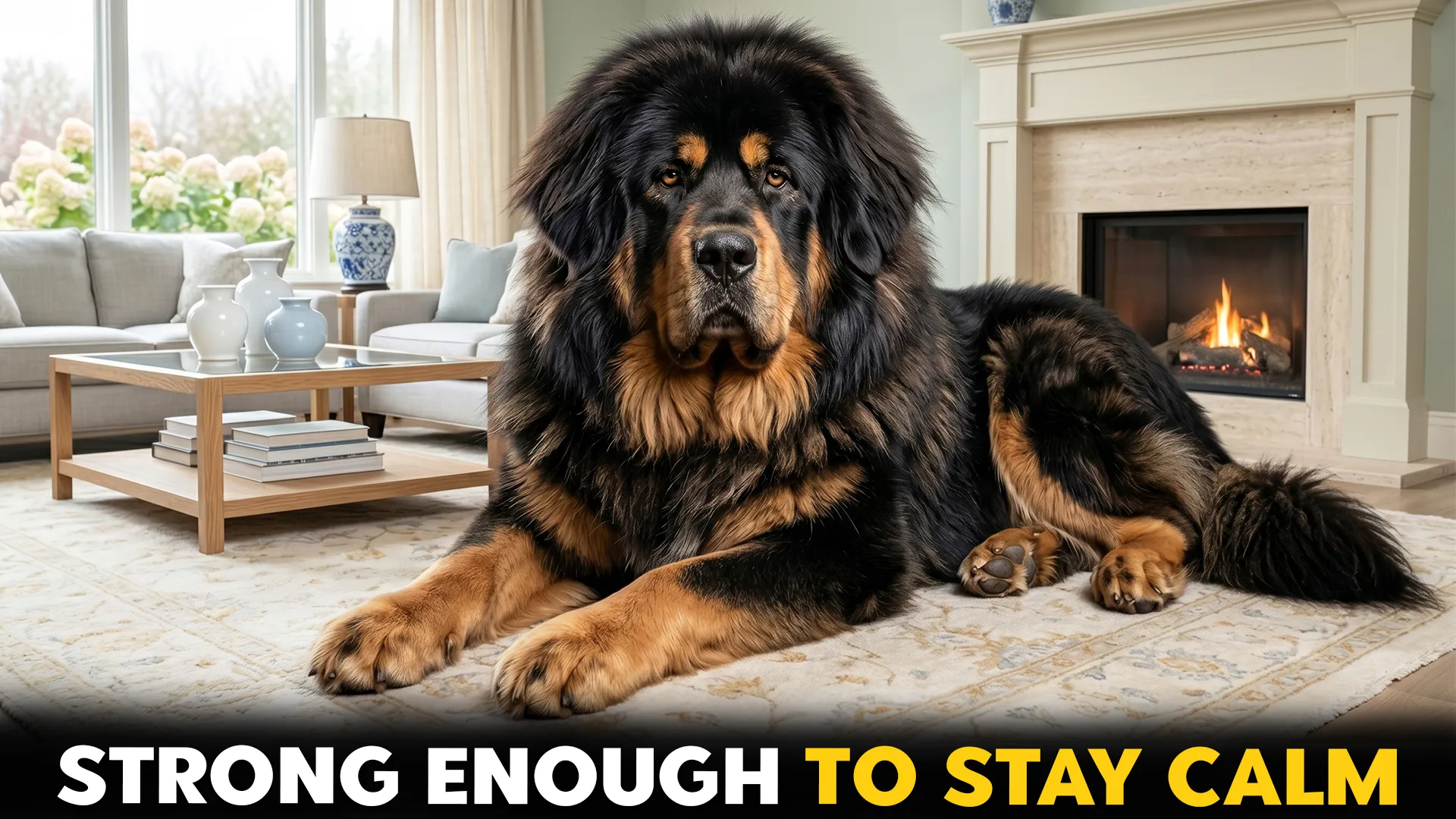
Not every dog needs your constant attention, and honestly, some of them prefer it that way. While toy breeds spiral into chaos the second you grab your car keys, certain giant breeds just shrug it off like pros. These dogs were bred to think on their own, guard wide-open land, and make decisions without a human hovering over them.
According to the American Kennel Club, roughly 23 million Americans leave their dogs at home alone for more than eight hours a day. If you are one of them, this list is your guide.
Here are seven powerful giant breeds built for independence, dogs that thrive, not just survive, when left alone. Let’s dive in together and find a perfect match for you.
Powerful Giant Dog Breeds That Flourish When Alone
1. Anatolian Shepherd
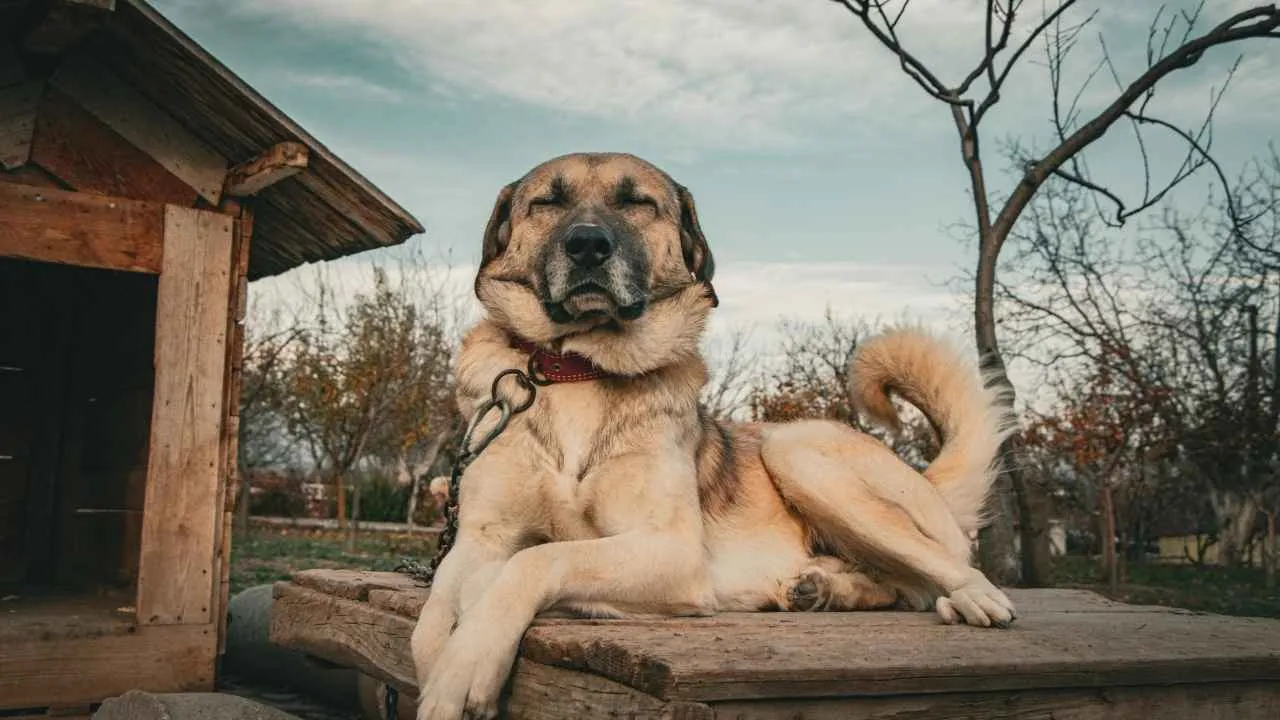
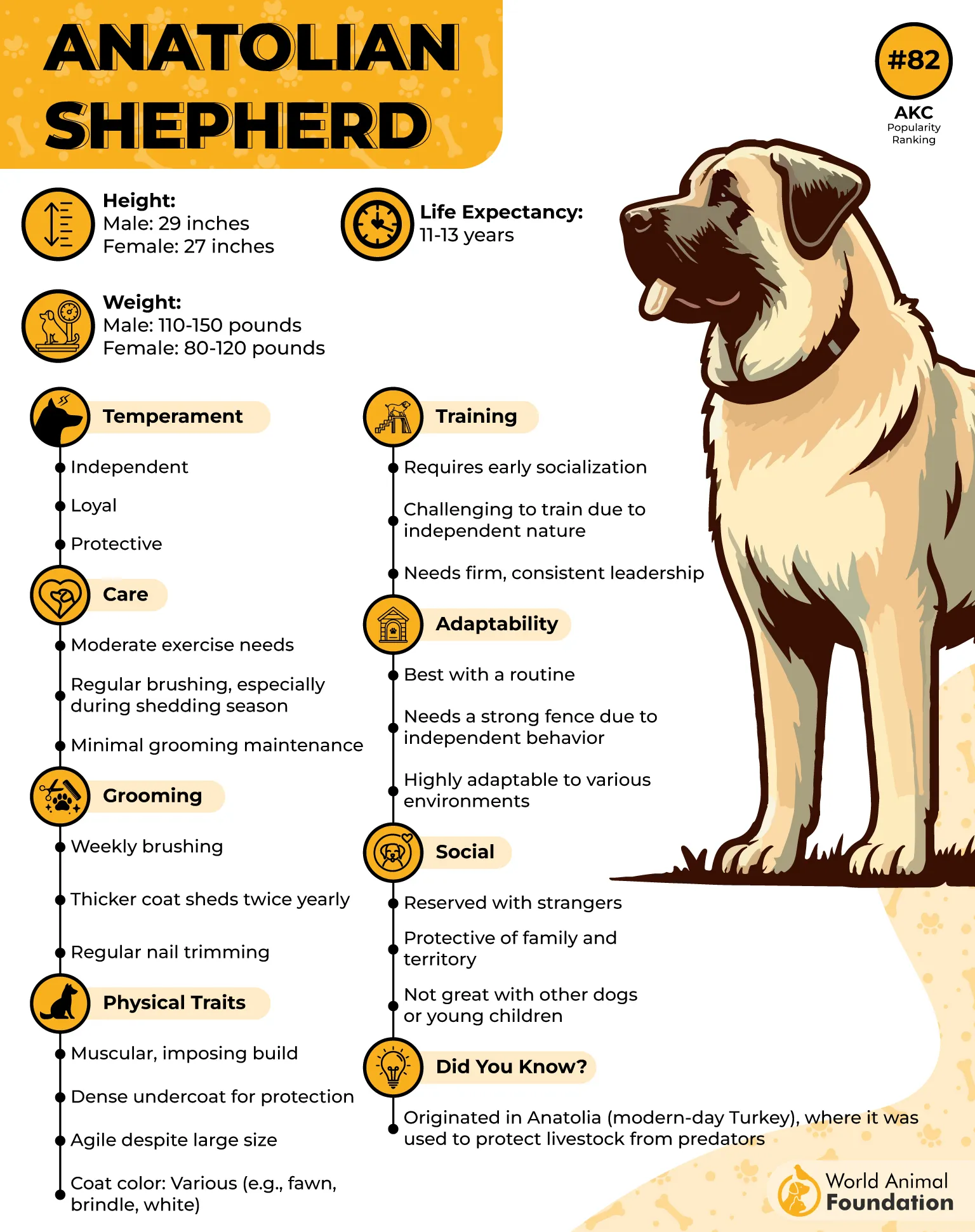
This giant and athletic dog was originally bred in Turkey as a livestock guardian. Descendent from the flock guardian breeds and the Mastiff types, this guard dog has been seen working with nomads. The coat acts as an insulator: it remains hot in winter and vice versa, according to Purina.
It stands 29 inches tall and weighs around 80-150 pounds. This dog typically loves to patrol the house and keep an eye on the window. Apart from that, it sleeps a lot when alone (up to 16-20 hours a day). If it is left alone in an insecure area, it may start barking and digging. Since it is an independent breed, it tends to make decisions alone; thus, it will protect your home when you are away.
It is a highly intelligent breed and can differentiate between a normal and a threatening situation. It maps the territorial boundaries, positions itself at a high vantage point so it can watch out easily and come to protect the owner. It evaluates high-risk scenarios alone and makes independent decisions.
2. Tibetan Mastiff
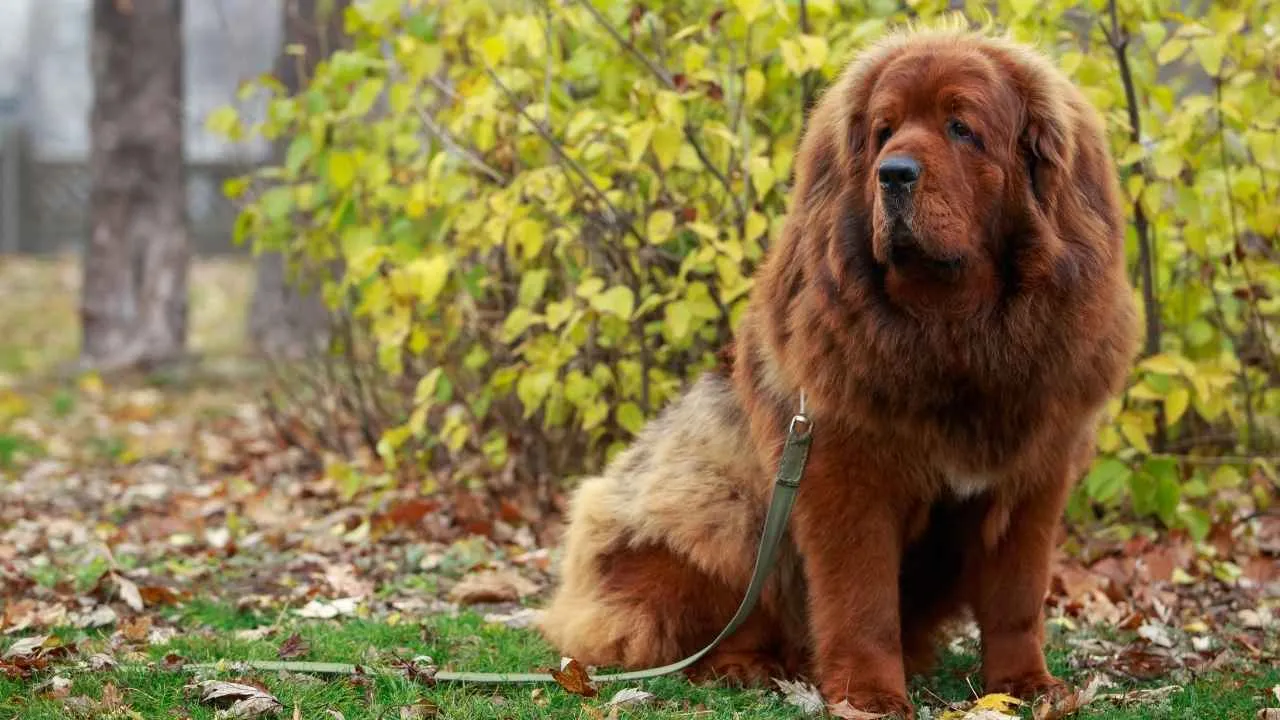
This large breed originated in the Tibetan region to protect the Buddhist monasteries from large animals, such as wild boars and bears. Weighing around 90-150 pounds, it casts an intimidating impression upon strangers, threatening them before having a physical combat. The breed sleeps 14-16 hours during the day and works at night mostly.
The dog does not usually respond to unfamiliar sounds instantly. It has a calm demeanor, and scans the surroundings before taking action. With its heavy vocals, this big dog can bark at passing wildlife if left alone outdoors at night. As it is a nocturnal breed, it conserves its energy during the day and becomes active at night.
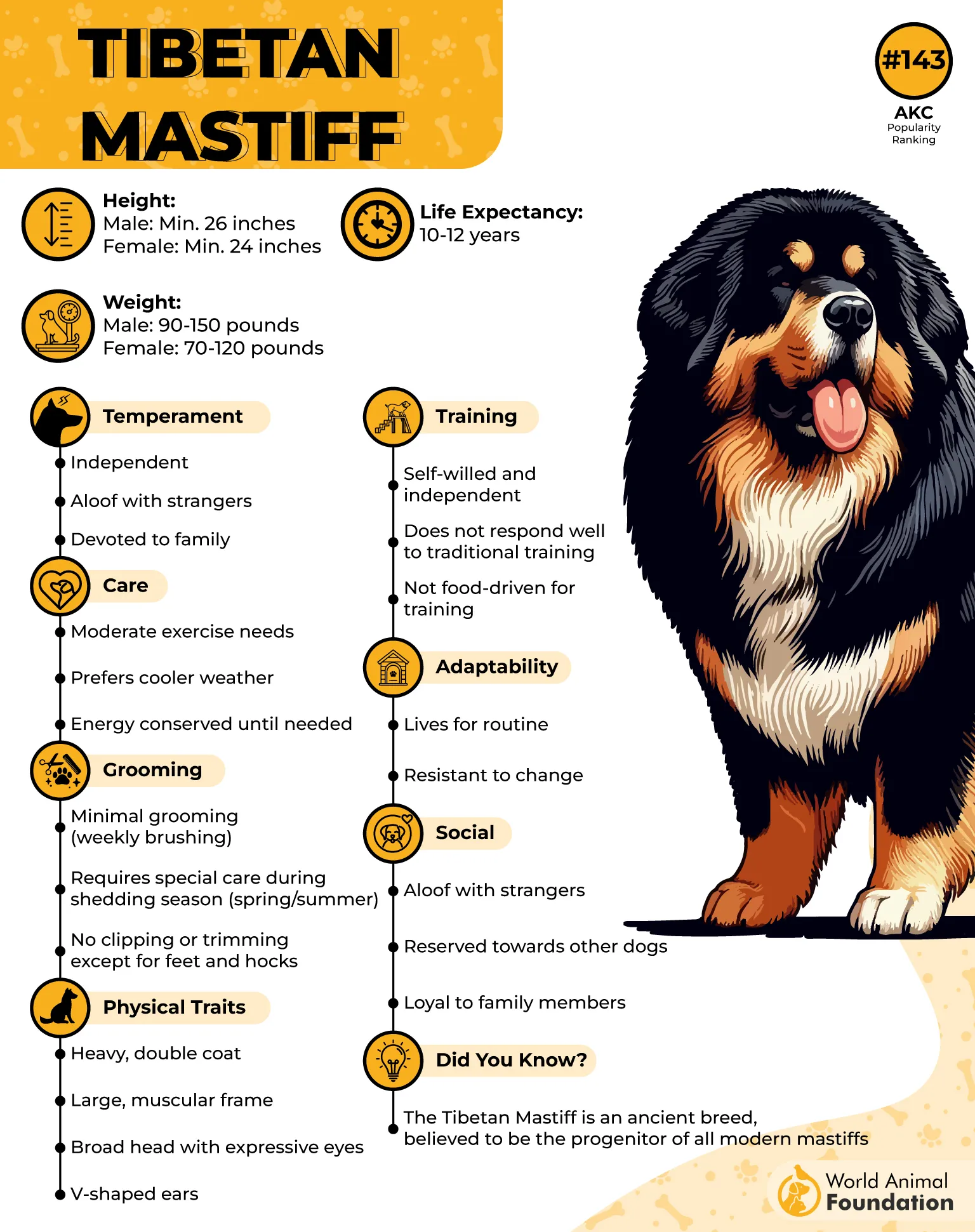
The Tibetan Mastiff has a bite force of 500-550 PSI, capable of breaking bones and tearing muscles easily. It also maps the territory, remembers regular scents and markers independently. Always keep the training sessions short, since it is an intelligent breed and can get bored easily if the task is repeated again and again.
3. Caucasian Shepherd Dog
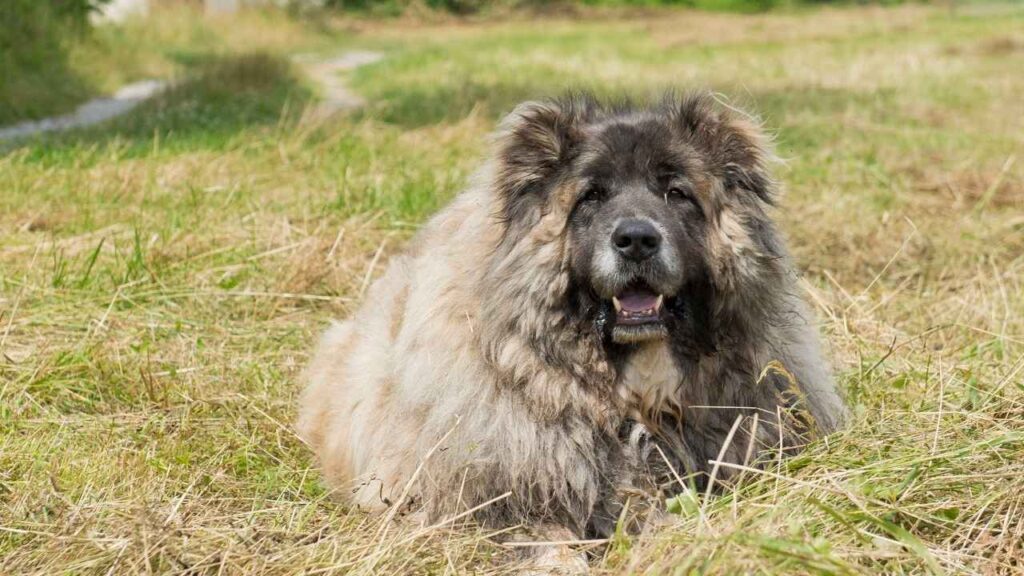
This dog was originally bred in the Soviet Union in 1920 in the Caucasus Mountains of South Russia. Developed as a livestock guardian, this gentle giant has also served in bear hunting and serves as a prison guard dog in Russia, as per Wikipedia. It relies on slow-twitch muscle fibers for pulling heavy loads (10-20% of its body weight) and strength.
Once the protective instincts of this dog are satisfied, it goes back to the couch (12-18 hours a day). It tends to look at the vantage points (doors and windows). It frequently walks the patrolling lines to watch over the territory. This affectionate companion can be suspicious and show unwanted aggression towards strangers. Patient and consistent training are non-negotiable.
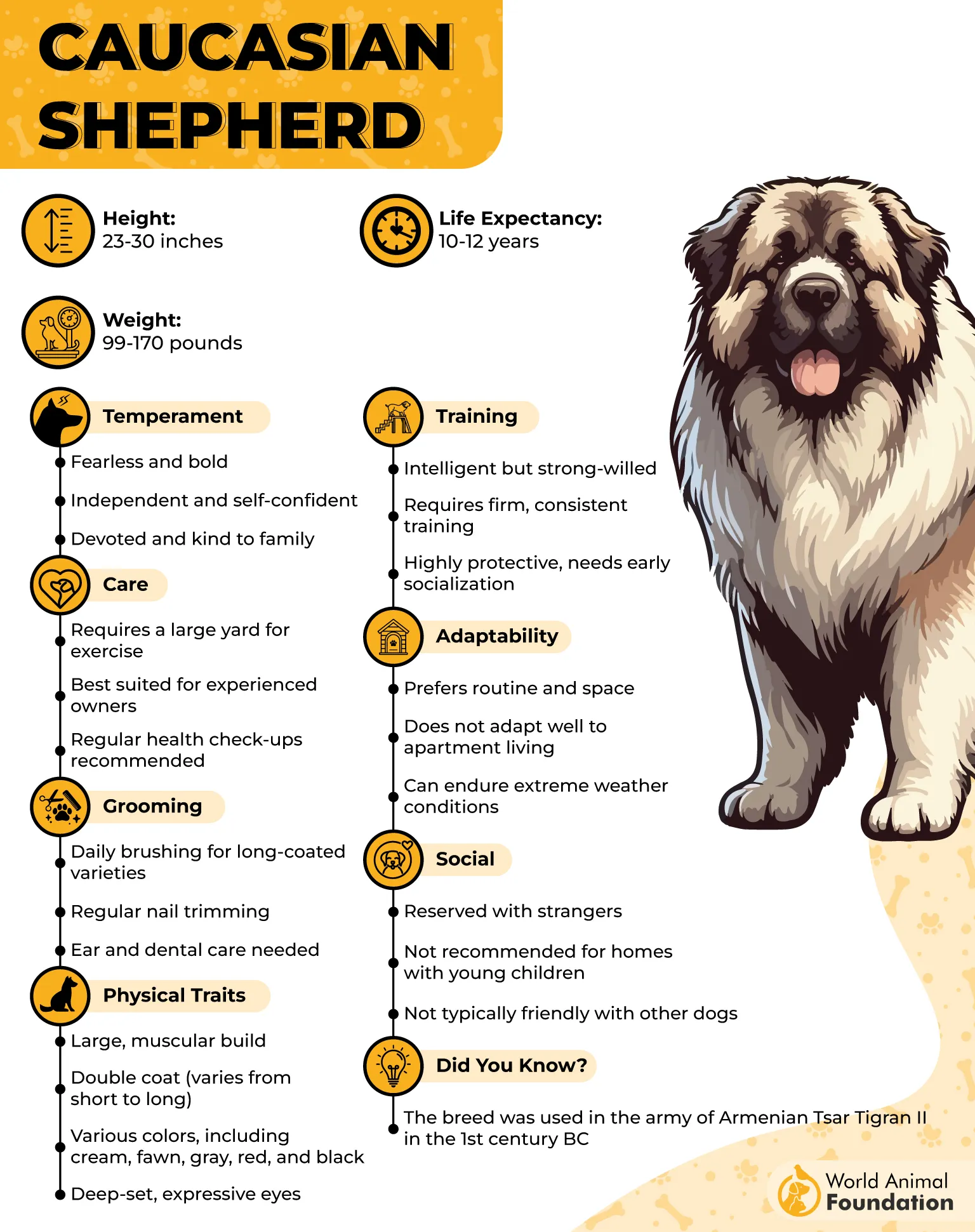
Developed for the intense mountain environment, the breed has a thick double coat that acts as an insulator. It requires 60-90 minutes of moderate-to-high exercise: patrolling a secured yard, relaxed walks, and mind games for mental stimulation. Go for a ‘5-minute rule’ for puppies; increase 5 minutes of physical activity each month.
4. Great Pyrenees
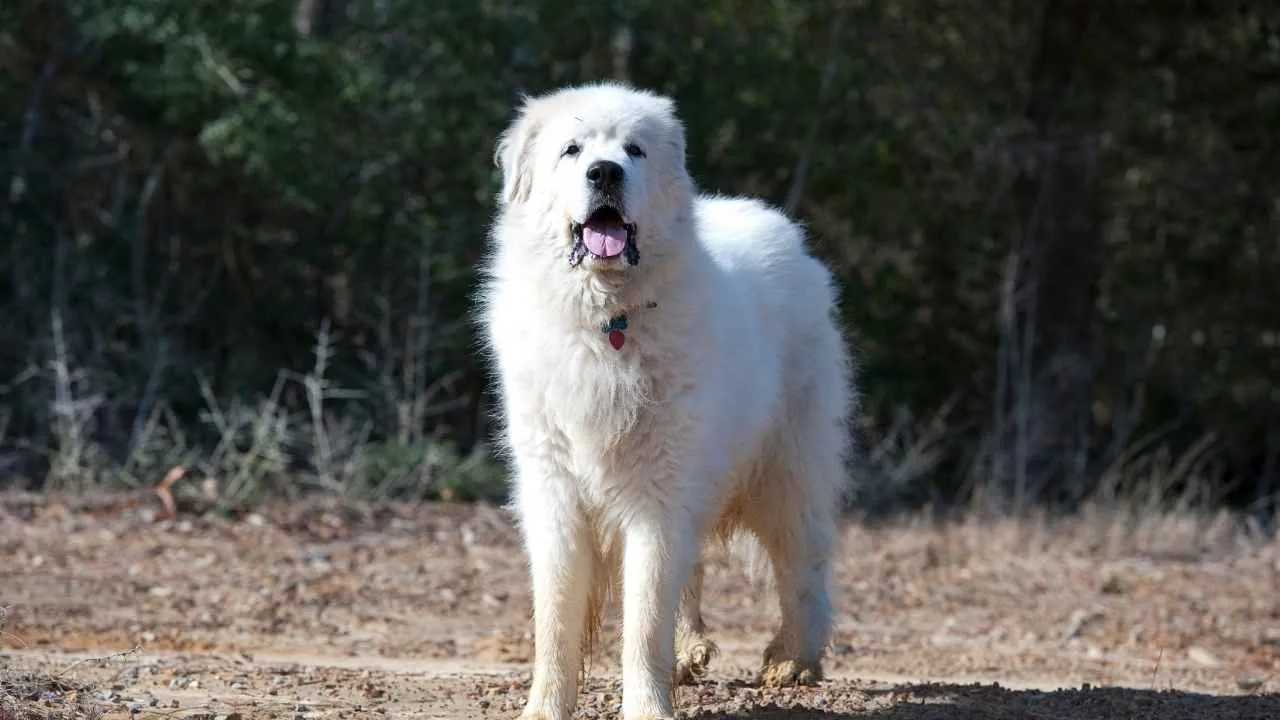
This affectionate family pet is one of the ancient dog breeds in the world, dating back to 1800 to 1000 B.C. Its primary goal was to protect the livestock from large game alongside shepherds in the mountainous region between Spain and France. The breed has a calm presence and was adopted by French courts in the 17th century.
This breed excels in floor surfing and sleeping, and tries its best to store energy. Leaving the breed alone for a short time is manageable, but training the breed for mental stimulation, such as scavenger hunts and puzzle toys, is important if you are planning to leave it alone for more than 8 hours. If left unattended, it may try to escape or bark unnecessarily.
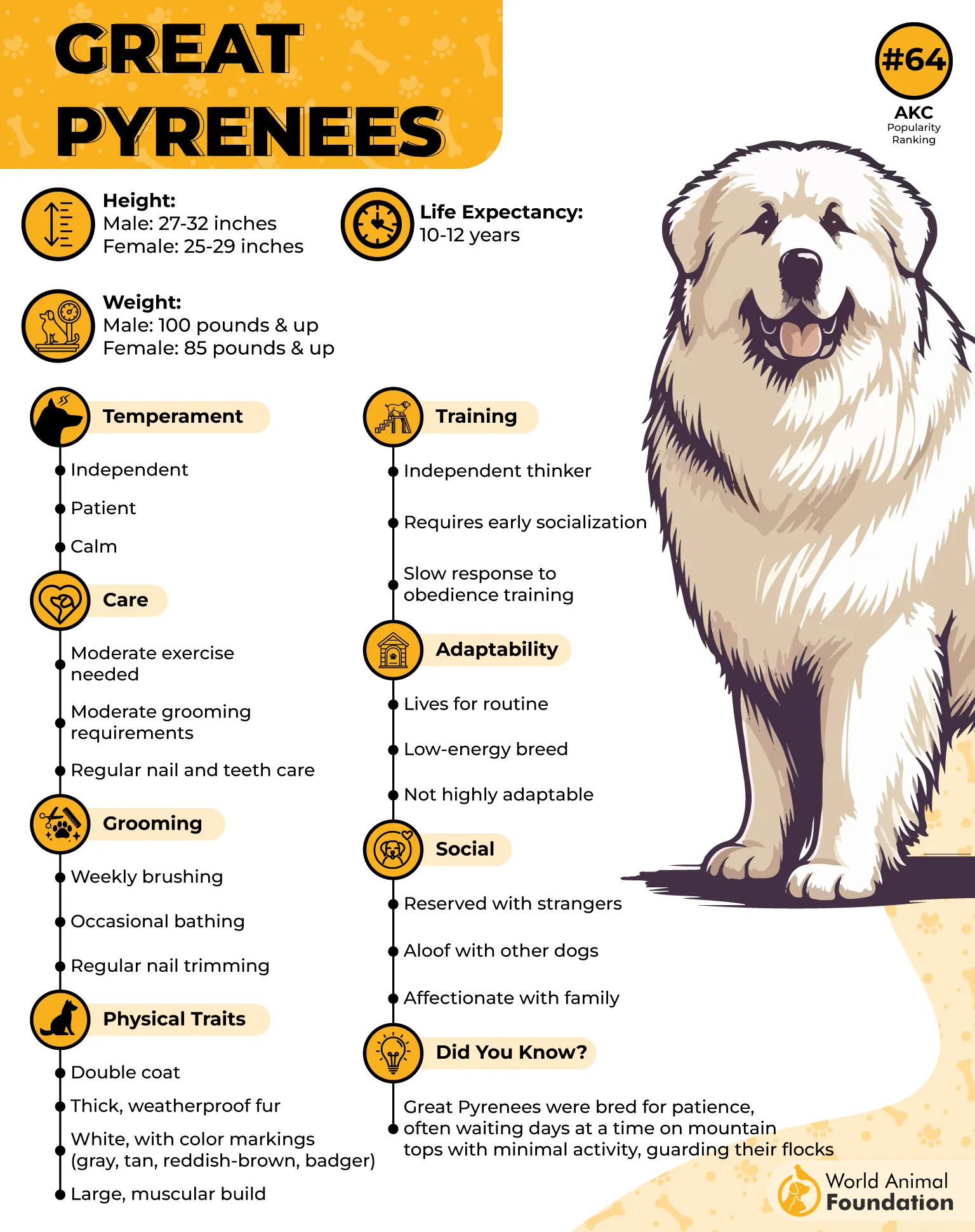
The territorial instincts keep the breed highly focused. With a high degree of spatial and temporal awareness, a fully grown Pyr can calculate the exact amount of physical force required to neutralize a threat. Use a reward-based strategy to train this playful breed. This smart dog needs 30-45 minutes of low-to-moderate exercise daily.
5. Spanish Mastiff
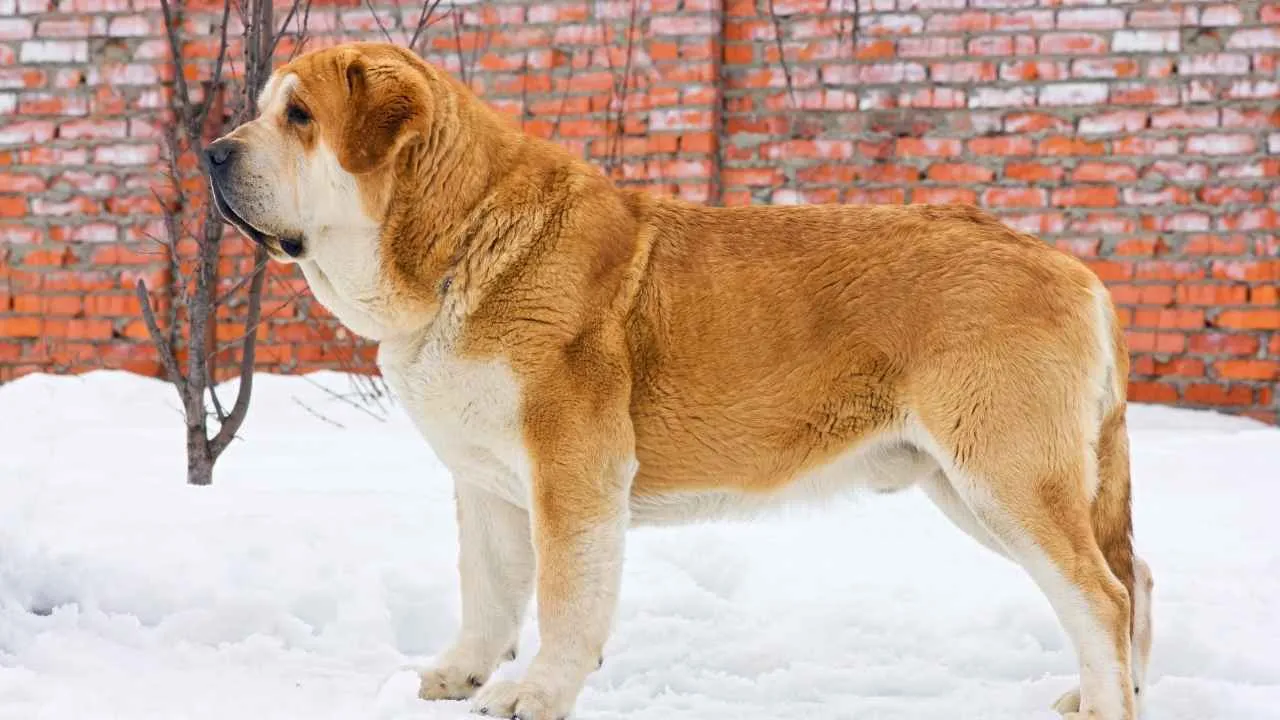
Originally bred in Spain some 2,000 years ago, the Spanish Mastiff was developed as a livestock guardian. It is known to look after at least 100 sheep at a time with its ‘loose eye’ strategy, according to PetMD. It weighs around 140-200 pounds and stands 28-35 inches tall.
This large dog breed is extremely intelligent and finds its own play activities when alone: licks frozen treats, digs for kibble, and patrols the territory. It tends to remain calm indoors and ‘switches on’ its protective mode only when outdoors or in a threatening situation. Because of its independent nature, it does not respond well to harsh training.
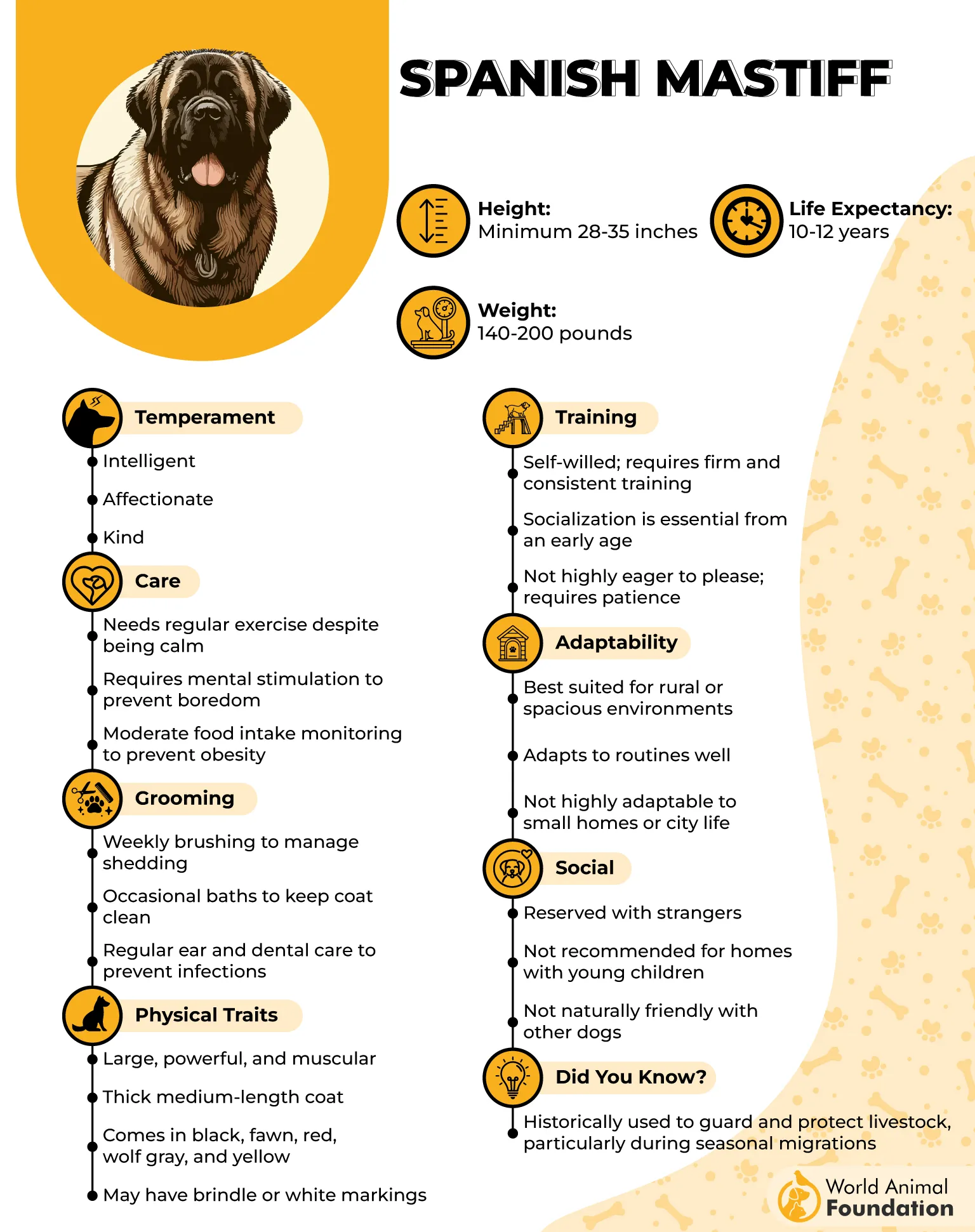
It has a calm temperament, conserving kinetic energy. It observes subtle changes in the environment (intruder’s body language, flock’s behavior, and wind direction) to evaluate a threat. The breed has moderate exercise needs (60 minutes): brisk walks and indoor play since the breed can be reactive in parks with strangers and unfamiliar dogs.
6. Sarplaninac

This is one of the oldest dog breeds of the Shar region in Northern Macedonia and Southern Siberia. Bred as a herding dog, the Sarplaninac has also been used in military, property protection, and guarding flocks. This breed stands between 22 and 26 inches tall and weighs around 66-99 pounds.
This great companion paces its perimeter routes in loneliness. It also gets more focused on outside/unfamiliar sounds to perceive upcoming threats. It rarely experiences destructive separation anxiety because of its herding heritage.
The docile personality helps it neutralize the threat without being aggressive initially, positioning itself between the threat and the owner. This livestock breed, known for its loyalty, excels in hiking, jogging, and obedience training (starting from a young age). Regular exercise for 45-60 minutes is recommended.
7. Akbash
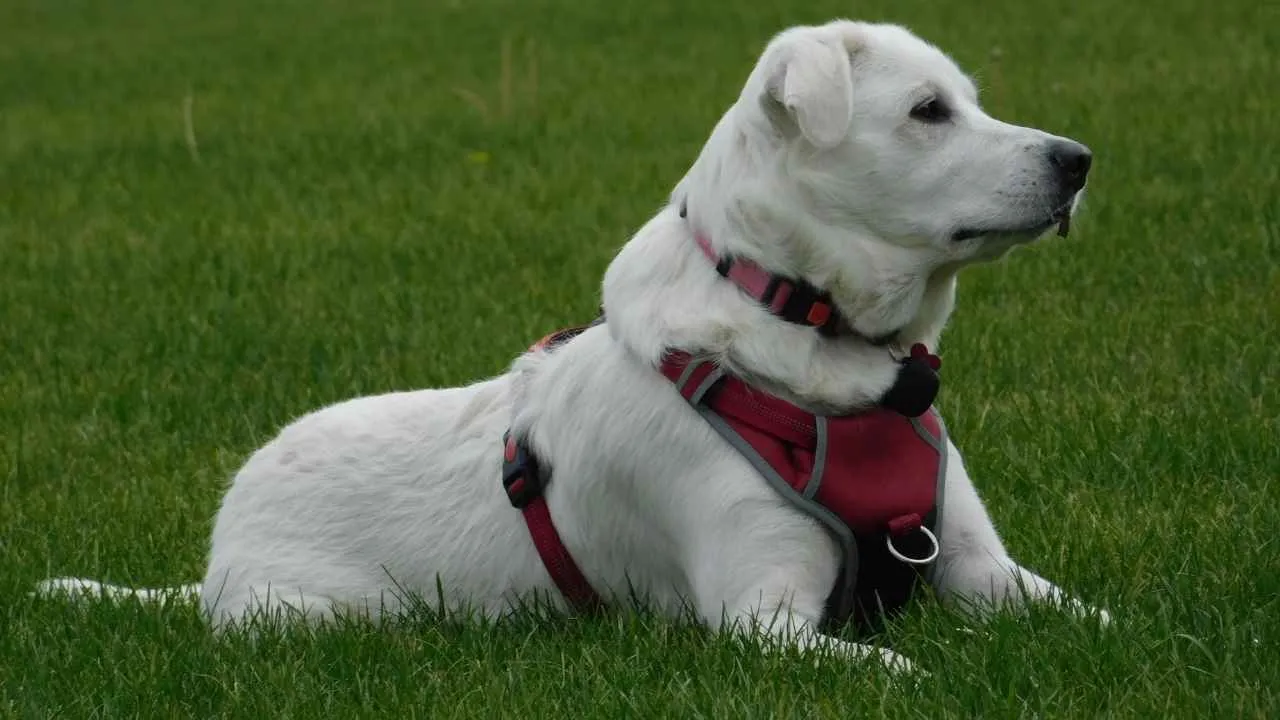
Originating in the Western Anatolian region of Turkey, the Akbash was developed as a flock guardian dog. The Turkish word ‘akbaş’ means ‘white head.’ It weighs up to 90-180 pounds and stands 28-34 inches tall.
This loyal breed does not require human entertainment; it can create its own activities: digging and chewing. Provide the breed with long-lasting chewing toys to prevent destructive behavior. Despite its potential chewing habit, it is bite-inhibited towards family members or strangers.
It produces calculated barks; barks only when it is sure of a threat, and adopts a confident body posture to drive off predators. This dog needs a purpose-driven training (30-45 minutes a day). Because of its low-energy level, it should not be exposed to high-impact exercise.
Conclusion
We all need a friend who stands by our sides when we feel threatened, unsafe, or just anxious. Neither any security alarm nor any friend can stay available 24/7. How about getting a giant breed that not only protects you, but also thrives on a couch with you when you are watching Netflix?
Be it a Tibetan Mastiff developed to protect the monks or the Turkish Akbash bred to herd the cattle, this guide covers all that you need: true friendship, constant companionship, a cuddly partner, and a sense of relief. Provide them with a structured routine and care, and get all the treasures in return.
