




Imagine standing in the middle of a freezing Arctic landscape, surrounded by mountains of snow, icy winds, and temperatures so low that even your winter jacket starts questioning its career choices. Most of us would immediately seek the nearest heated room, but some dog breeds have physical adaptations that let them work in genuinely challenging environments.
These aren’t your average couch-loving companions. We’re talking about powerful working dogs developed over generations to pull heavy loads through snow, protect livestock from predators, and navigate remote mountain regions where extreme weather is simply part of everyday life.
What makes these breeds particularly fascinating is that their survival abilities aren’t based on strength alone. Their thick insulating coats, muscular bodies, remarkable endurance, protective instincts, and ability to conserve energy all contribute to their resilience in demanding environments.
From the enormous Alaskan Malamute to the legendary Saint Bernard, these seven remarkable breeds demonstrate how physical strength and working heritage can help dogs handle some of the world’s most challenging environments.
Powerful Dog Breeds Designed for Survival in Harsh Conditions
1. Alaskan Malamute
The Alaskan Malamute is basically the heavyweight champion of Arctic survival, built like a furry tank with enough strength to make snowy landscapes look like an ordinary playground. Developed by the Mahlemut people of Alaska, this powerful working breed was traditionally used to haul heavy loads across frozen terrain.
One of the Malamute’s greatest survival advantages is its exceptionally dense double coat, which provides insulation against freezing temperatures and harsh winds, as noted by WebMD. The coarse outer coat helps resist snow and moisture, while the thick undercoat traps insulating air close to the body and reduces heat loss.
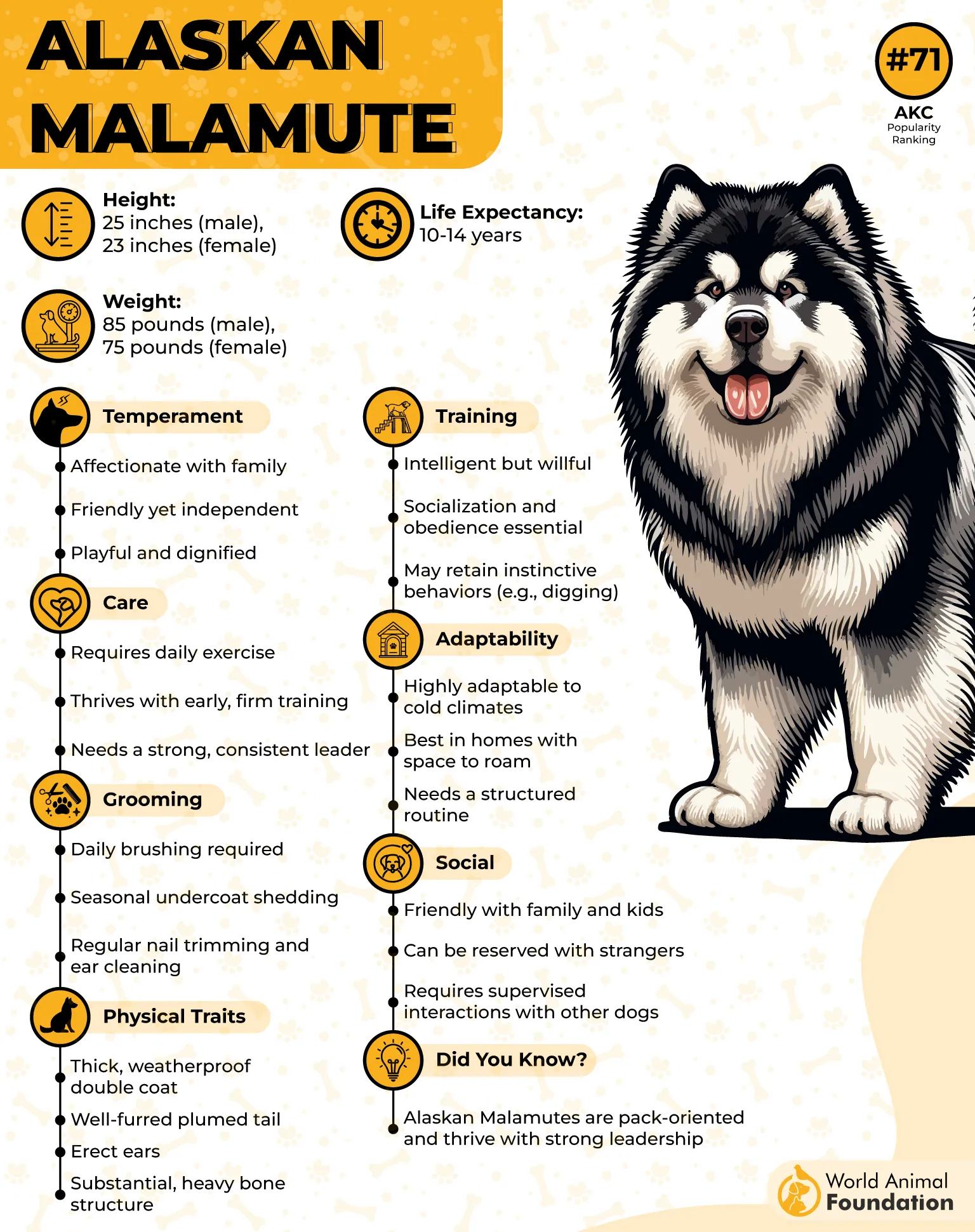
Unlike lighter sled dogs bred primarily for speed, they pull substantial weight at a steady pace. Their powerful bodies and efficient movement help them transport supplies over challenging terrain, making them historically valuable companions in remote communities where human survival depended partly on reliable working animals.
Their resilience also comes from remarkable determination and the ability to keep working physically demanding tasks when properly conditioned. These gentle giants generally enjoy purposeful movement, including sled pulling, cool-weather hiking, and structured outdoor exercise that challenges their muscular strength.
2. Siberian Husky
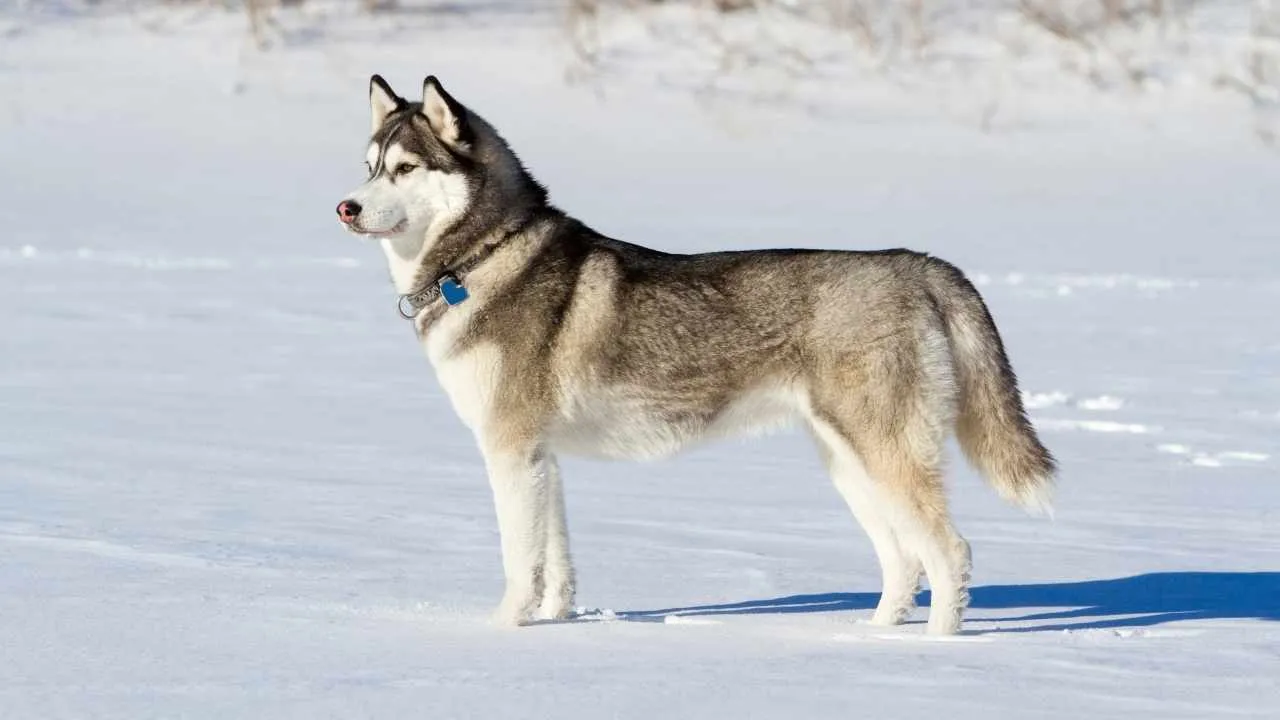
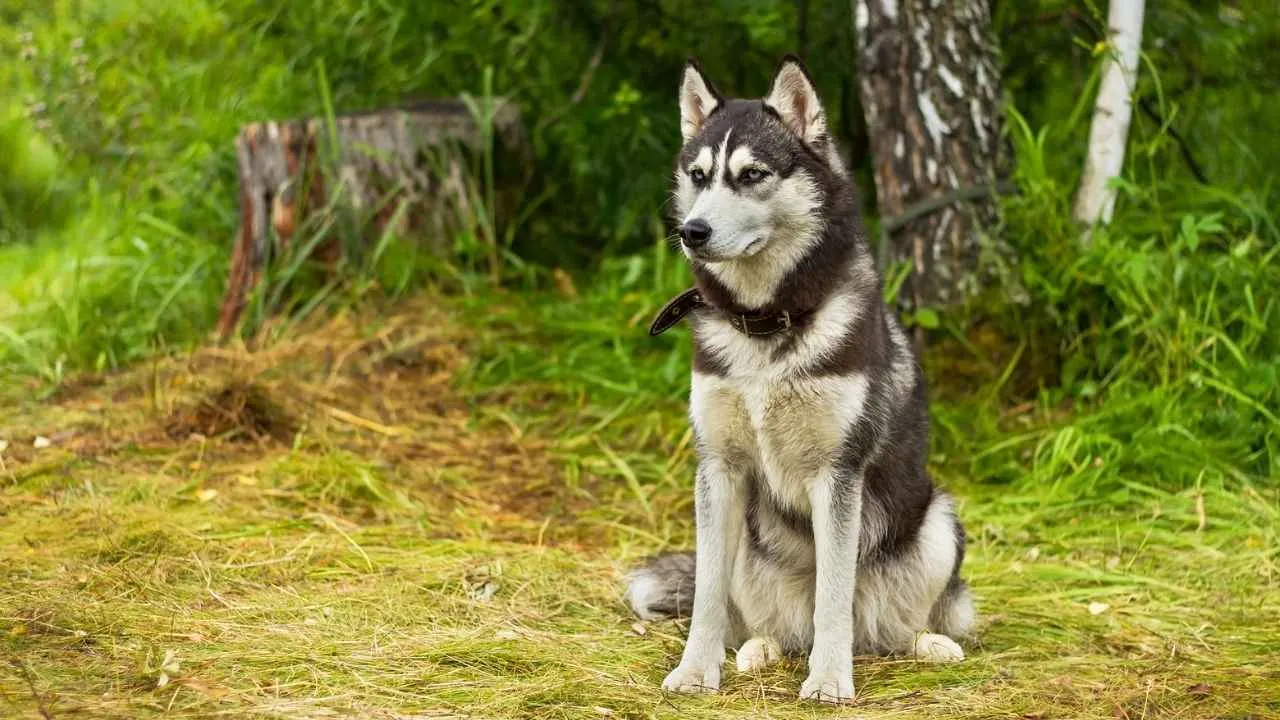
The Siberian Husky is the endurance athlete of the Arctic dog world, with impressive stamina, an energetic personality, and a winter-ready look that practically screams adventure. Originally developed by the Chukchi people of northeastern Siberia, these athletic dogs were bred to transport relatively light loads over long distances while using energy efficiently.
A Husky’s thick double coat is one of its most important physical defenses against freezing temperatures. Its soft undercoat insulates, while longer guard hairs shield the body from wind, snow, and moisture during outdoor activity.
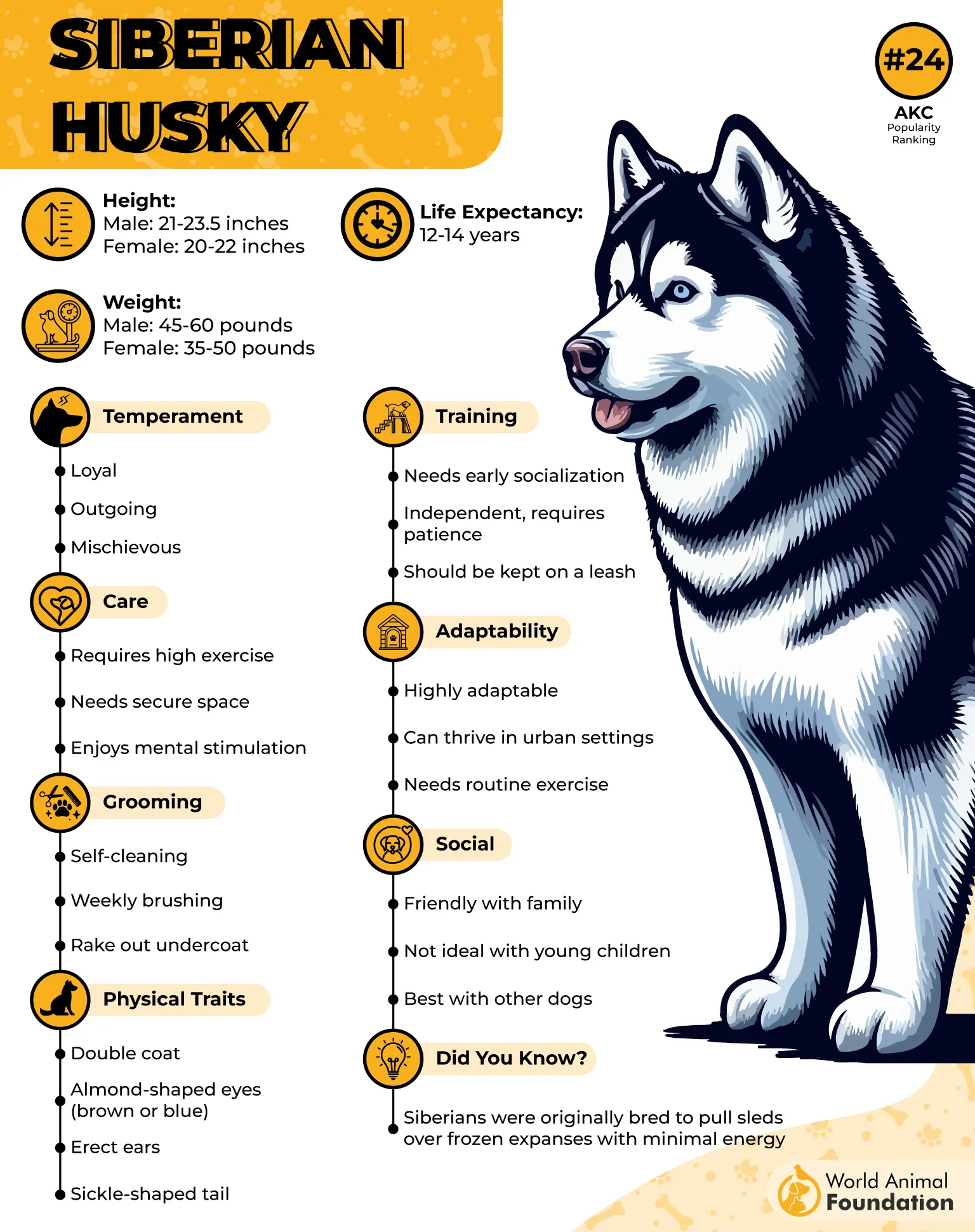
Siberian Huskies are considerably lighter than the heavier Alaskan Malamute. This difference reflects their historical specialization in efficient travel rather than hauling the heaviest possible loads across frozen landscapes. Their balanced gait and athletic structure help conserve energy during sustained movement, which is especially valuable when covering long distances in demanding winter conditions.
Another fascinating survival-related characteristic is their historical ability to work cooperatively in sled teams. Huskies often have sociable personalities and enjoy coordinated activities with other dogs, though successful teamwork still depends on training, temperament, and careful management.
3. Anatolian Shepherd
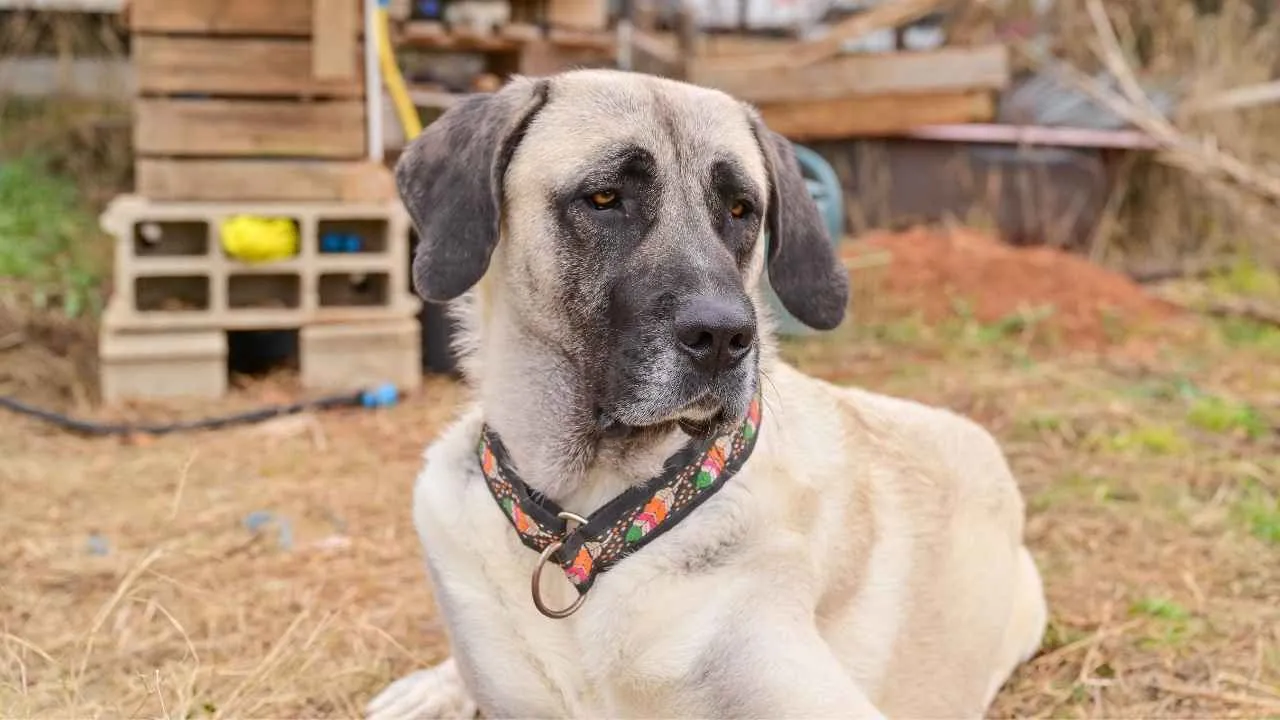
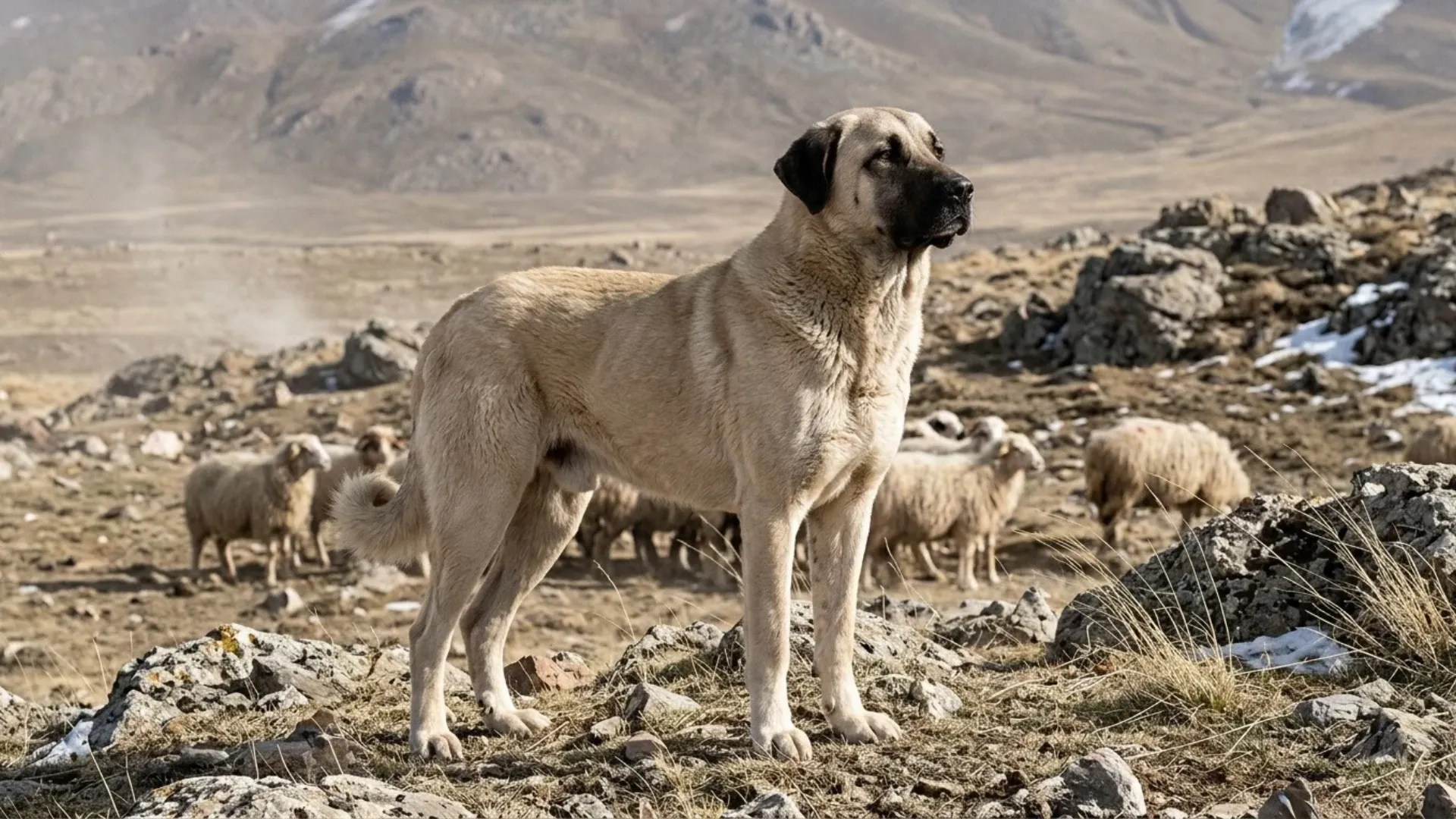
The Anatolian Shepherd is the ultimate countryside security expert, combining enormous strength with the confidence to protect livestock across demanding landscapes. This ancient livestock guardian developed alongside shepherding communities that depended on dependable dogs to protect sheep and goats from predators.
Its impressive size, muscular structure, and independent judgment made it especially valuable in remote regions where human supervision wasn’t always immediately available.
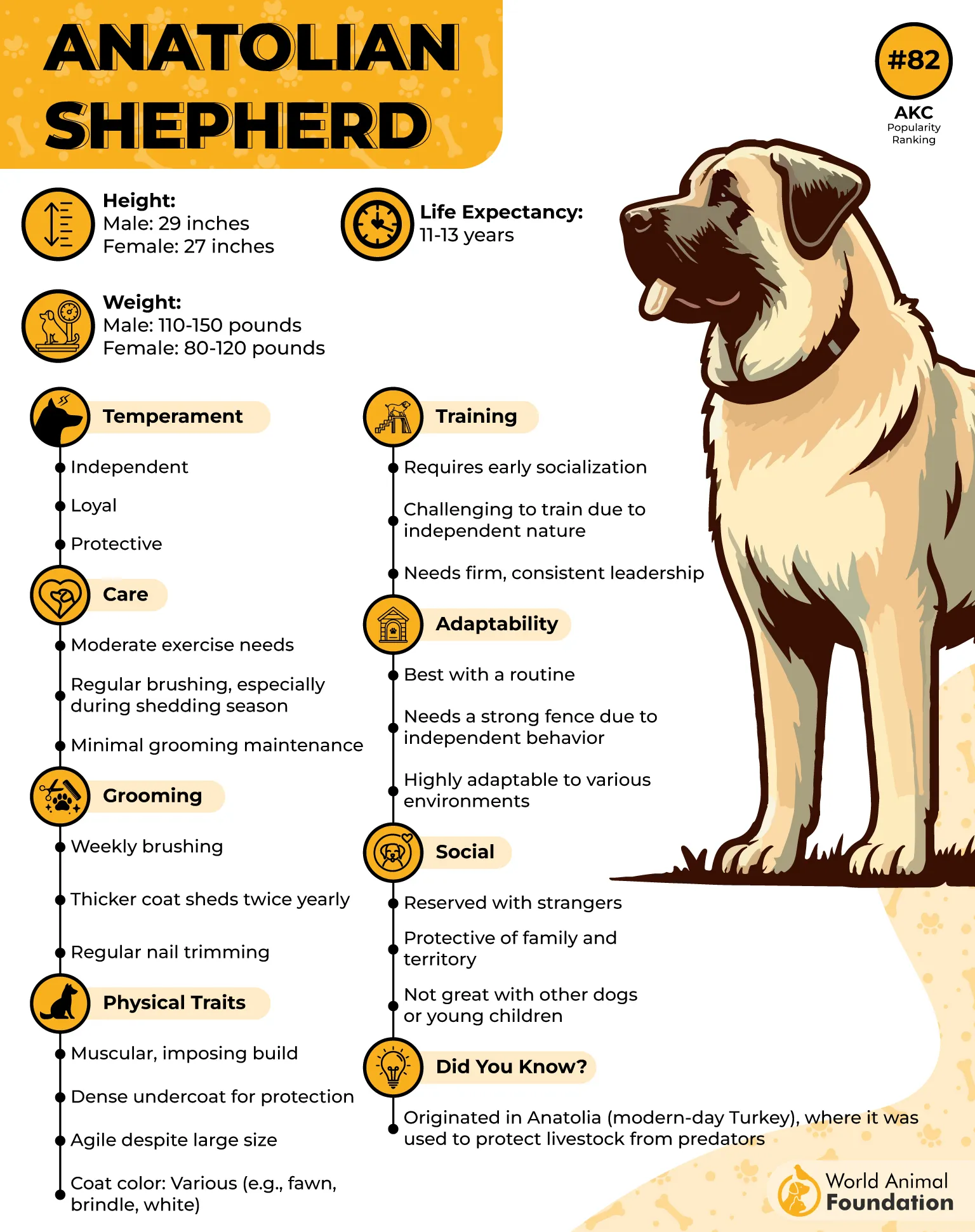
Unlike herding breeds that constantly move animals from one location to another, Anatolians traditionally stay near their flocks and assess potential threats. This combination of patience, endurance, and situational awareness helps these highly trainable dogs perform demanding work across expansive grazing territories without wasting energy on unnecessary movement.
Their weather-resistant coats protect them from changing conditions, including chilly nights and exposed landscapes. They can have relatively short or long coats, with an undercoat that insulates them in colder weather. Their substantial bodies and powerful legs also help them travel over rocky hills, uneven pastureland, and other challenging terrain while accompanying livestock.
According to the American Kennel Club, Anatolian Shepherds have the endurance, speed, agility, and independent decision-making needed for effective livestock protection. Their protective instincts help them identify suspicious activity and deter predators, often using their imposing presence and warning behavior before physical confrontation becomes necessary.
4. Tibetan Mastiff
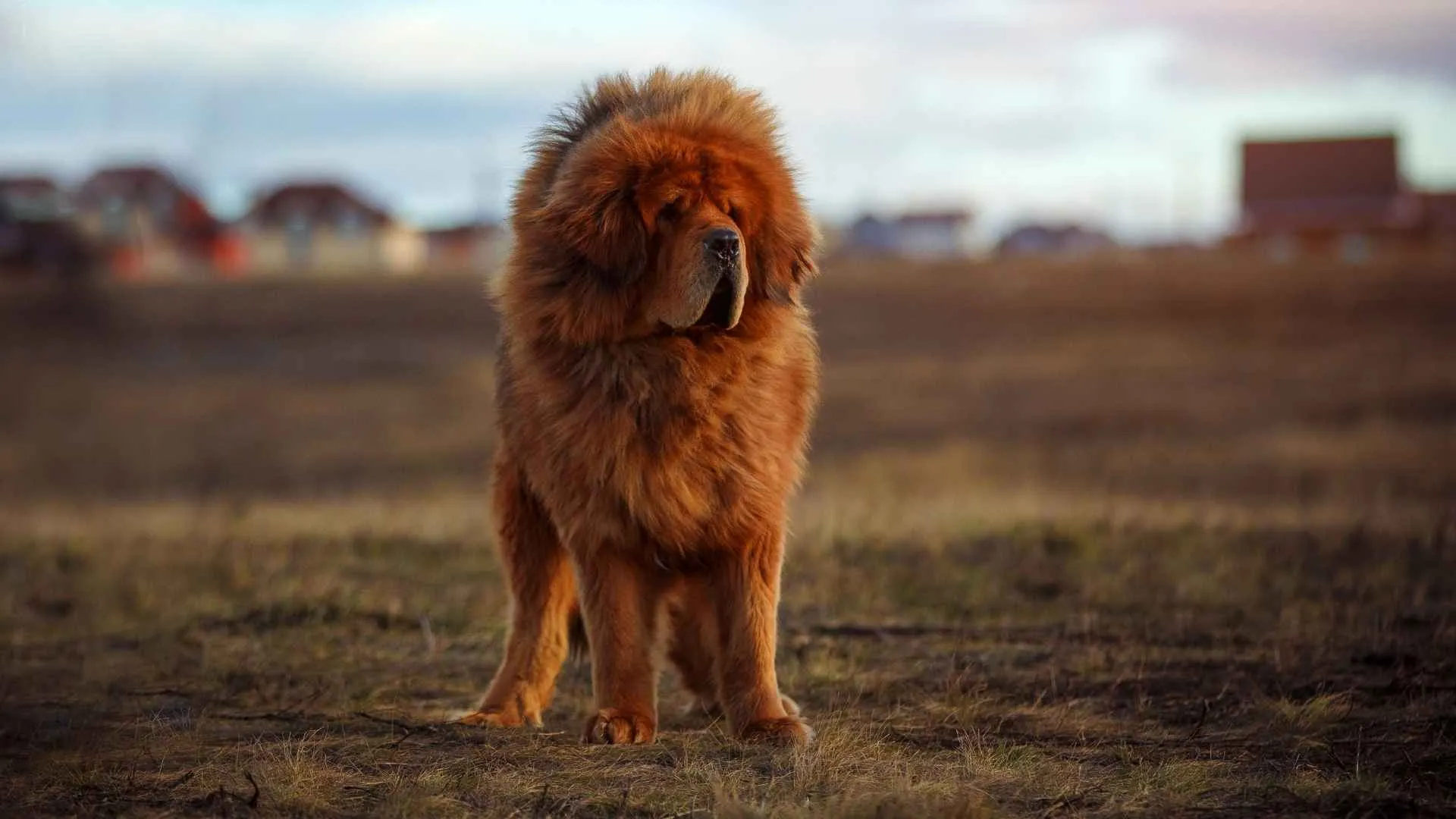
The Tibetan Mastiff looks like a legendary mountain guardian that somehow wandered out of an ancient Himalayan story and decided to become a dog. This imposing breed traditionally protected livestock, homes, and monasteries in isolated mountain communities.
One of the Tibetan Mastiff’s most recognizable features is its thick mane, which gives it a lion-like look around the neck and shoulders. Beneath the coarse outer hair lies a woolly undercoat that insulates the dog in cold weather, and its heavy tail can curl over its back.
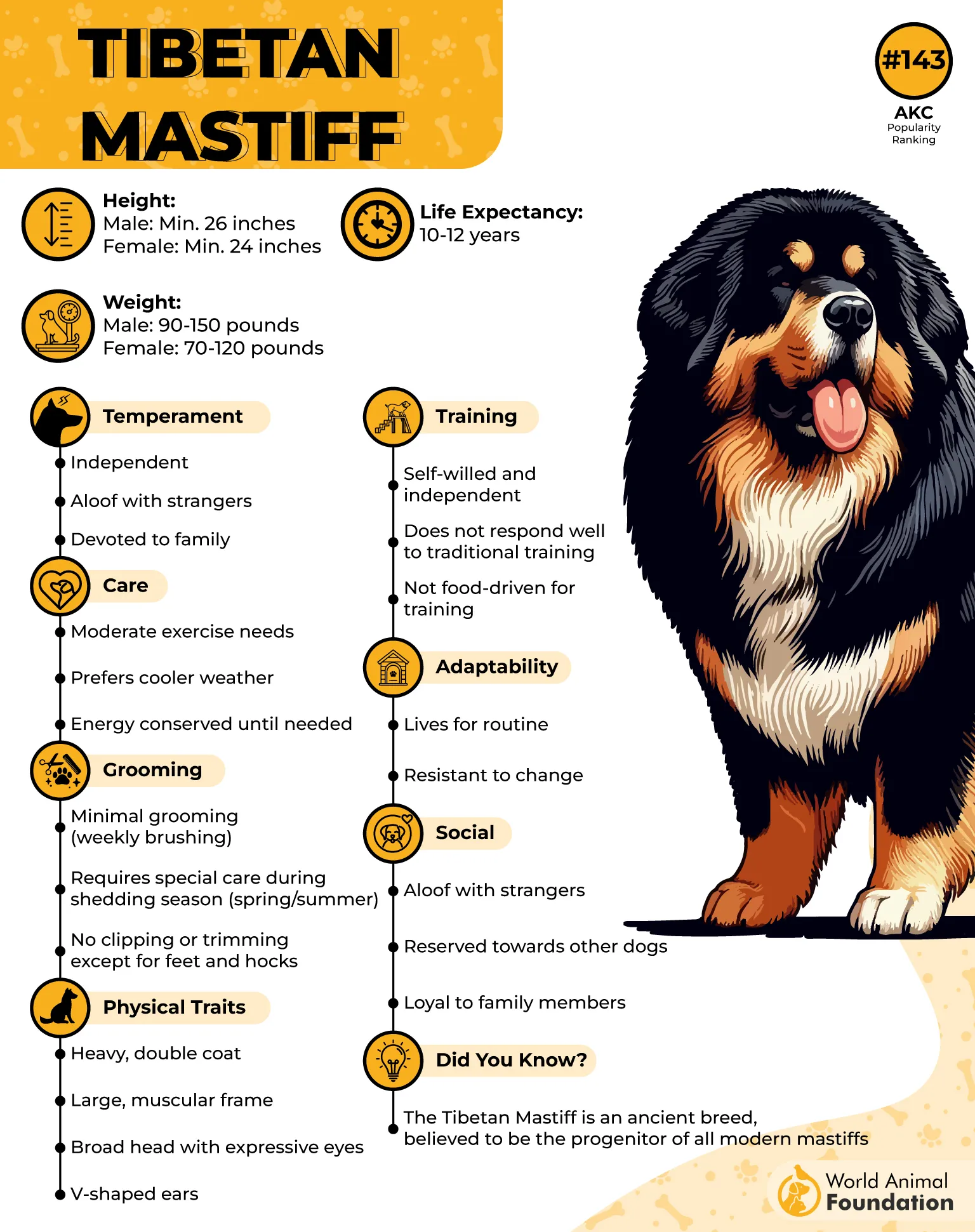
They are also known for their ability to remain watchful without constantly moving or expending unnecessary energy. Their traditional guarding responsibilities required them to observe unfamiliar activity, assess possible threats, and protect designated areas rather than perform continuous high-speed physical work.
Their powerful bodies and confident personalities contribute to their reputation as formidable guardians, but physical strength isn’t their only defining characteristic. They are typically independent thinkers who can make decisions without constant human direction, an important quality for dogs historically responsible for protecting remote properties.
5. Caucasian Shepherd
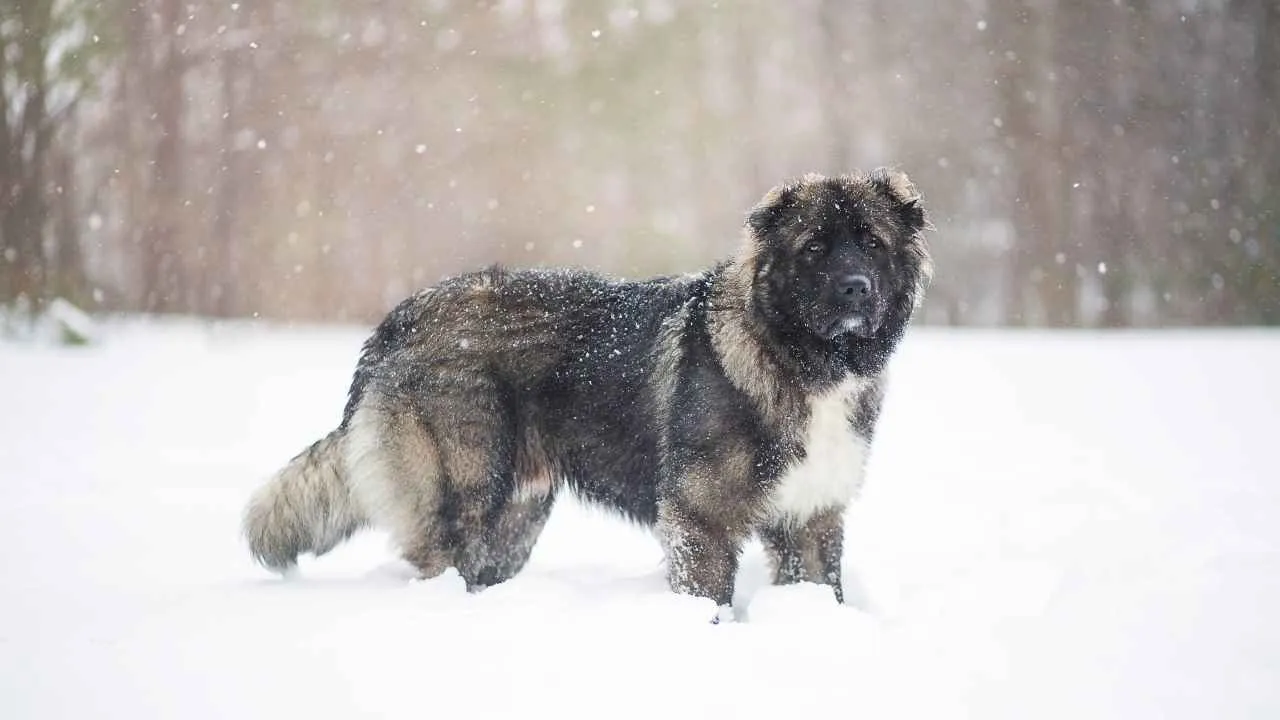
The Caucasian Shepherd is basically the heavyweight mountain guardian that looks like it could intimidate a snowstorm into changing direction. Its imposing size, muscular frame, and intensely protective instincts reflect generations of working alongside people who needed dependable guardians in demanding environments.
One of the Caucasian Shepherd’s most impressive physical traits is its substantial coat, which varies in length by type and lineage. The dense undercoat retains body heat, while the outer hair provides an extra layer of protection against wind, snow, and moisture.
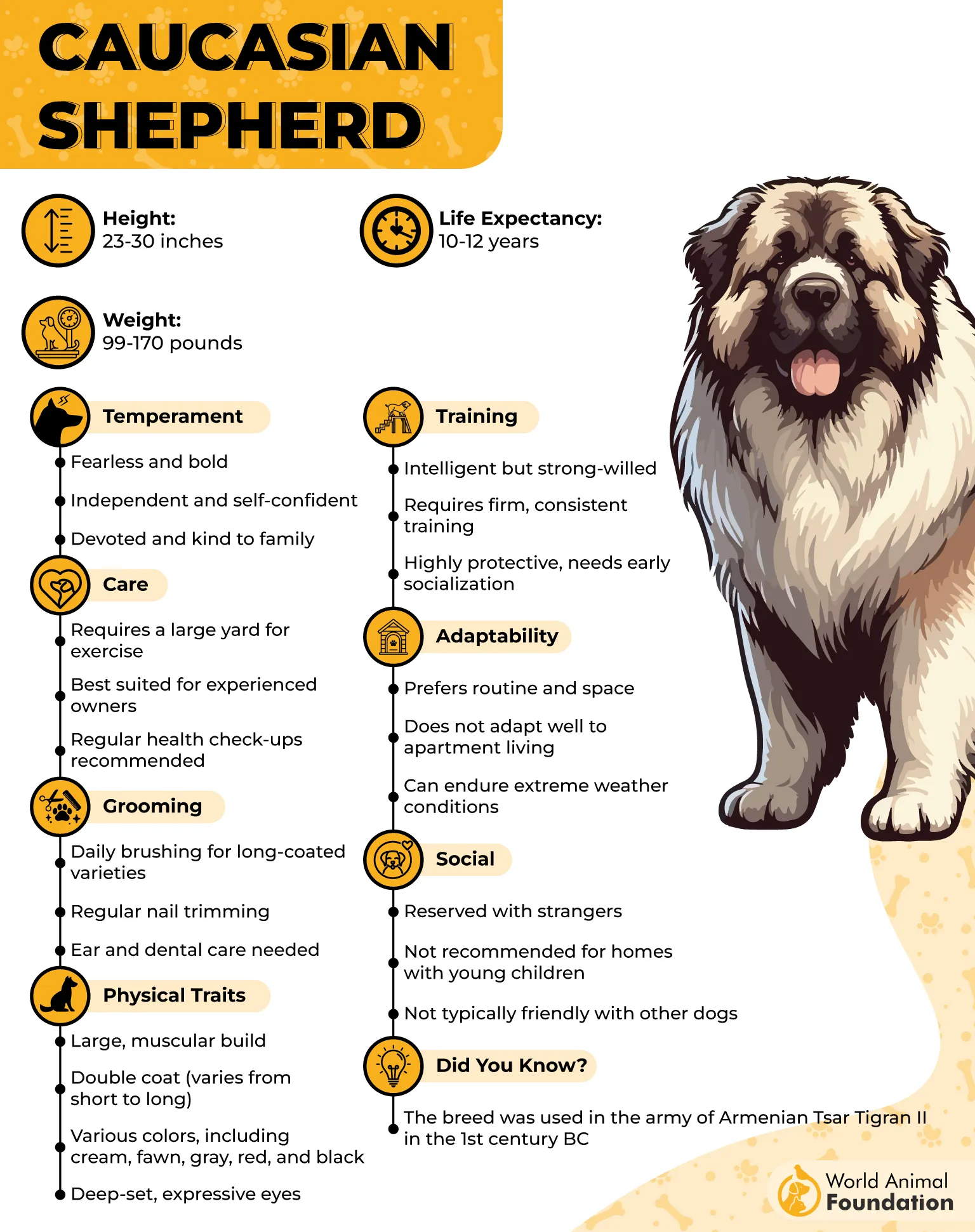
Caucasian Shepherds possess remarkable physical strength, but their survival also depends on confidence and the ability to assess unfamiliar situations. Historically, these dogs were expected to deter predators and protect valuable livestock, often operating in areas where immediate human assistance was unavailable.
Their large bodies and steady movement let them patrol demanding terrain, though they aren’t built for the sustained speed of lighter endurance breeds. Rather than chasing everything that moves, a working Caucasian Shepherd can conserve energy while staying alert to activity around its territory.
6. Central Asian Shepherd
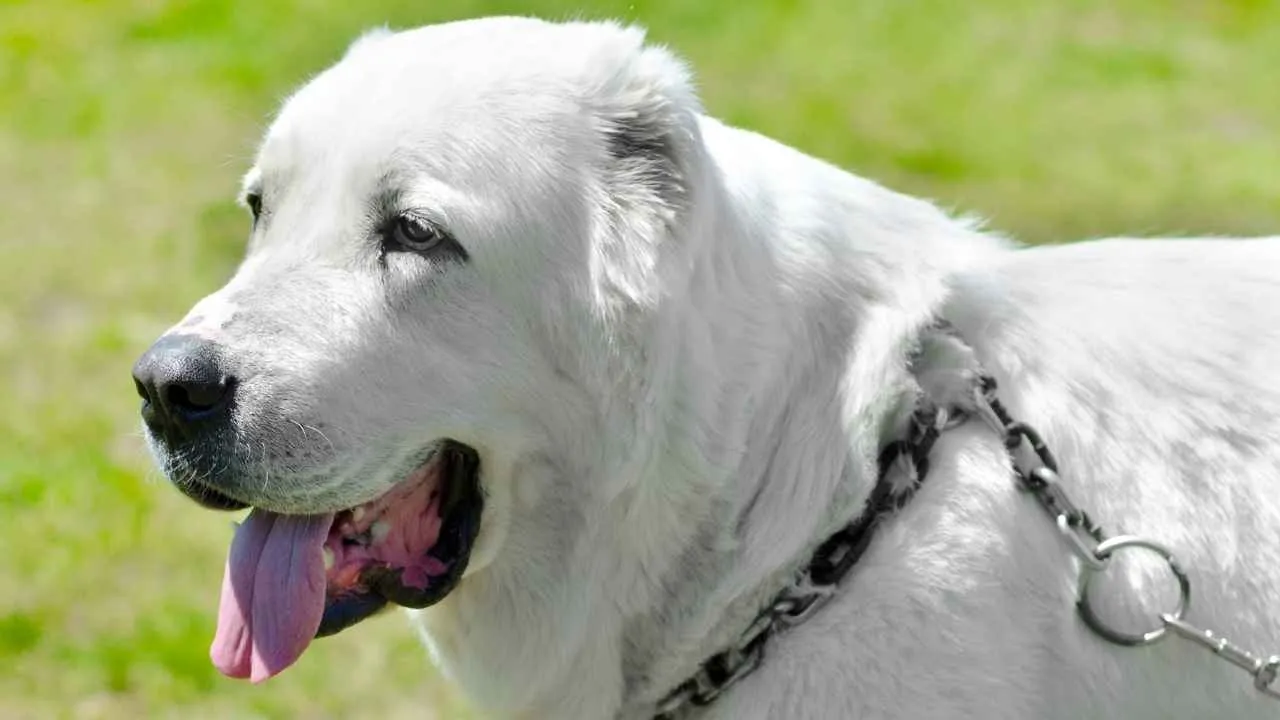
The Central Asian Shepherd brings serious guardian energy to landscapes where weather conditions and predators have challenged working dogs for centuries. Also known as the Alabai, this ancient livestock guardian developed across Central Asia, where nomadic communities relied on strong dogs to protect animals, camps, and property.
Unlike breeds developed for one narrowly defined modern activity, Central Asian Shepherds emerged from working populations exposed to diverse environments and practical survival challenges. Their historical territories included dry steppes, mountainous regions, and areas where temperatures could vary dramatically between seasons.
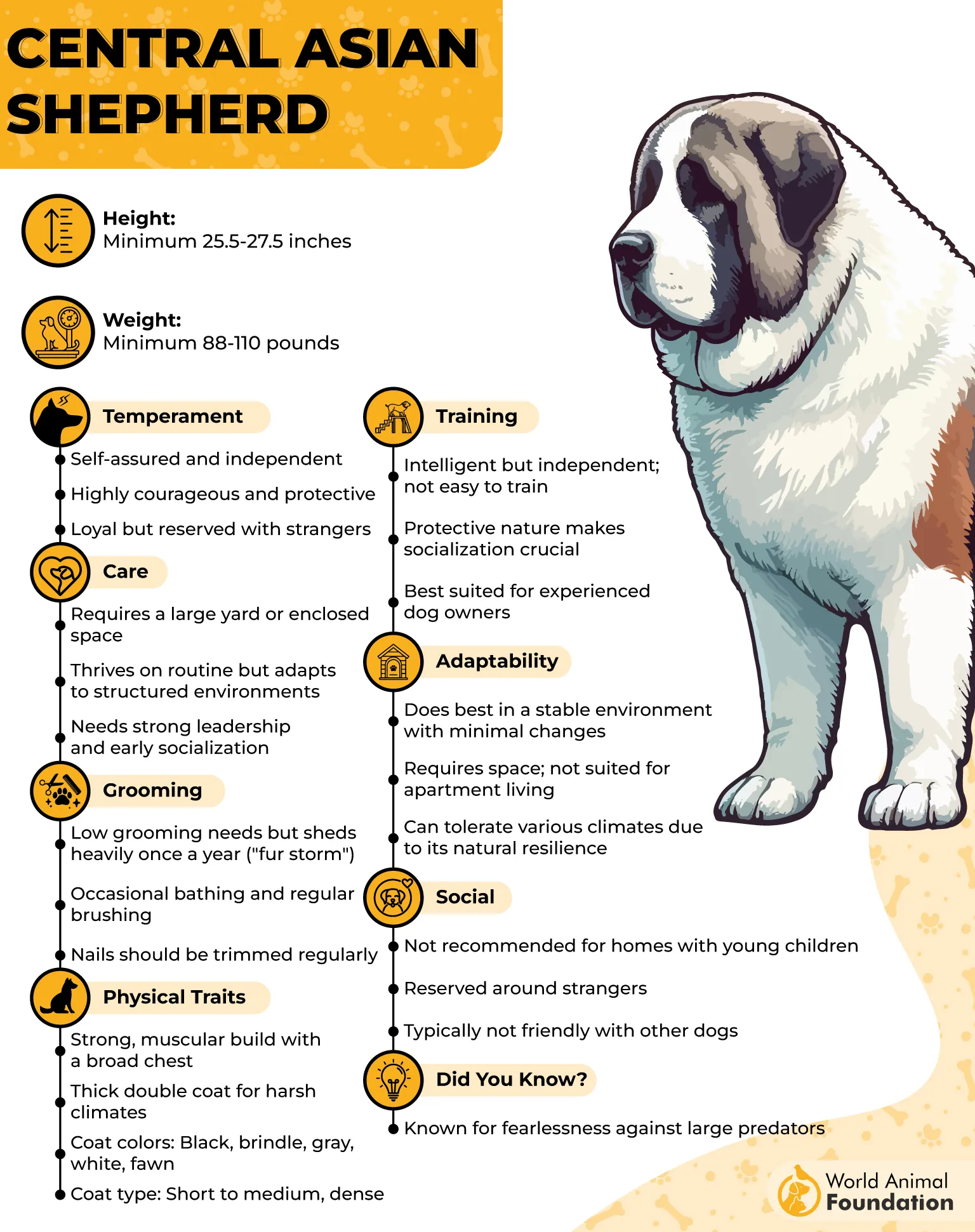
Their dense coats protect them from cold and changing weather, while their substantial bodies provide strength and endurance. Their sturdy legs and broad frames help them move across uneven landscapes, although their physical abilities still depend on conditioning, age, and overall health.
Central Asian Shepherds are especially remarkable for their calm confidence and willingness to act independently when guarding territory or livestock. The breed is self-assured, courageous, quiet, and naturally territorial, with substantial working capacity and endurance.
7. Saint Bernard
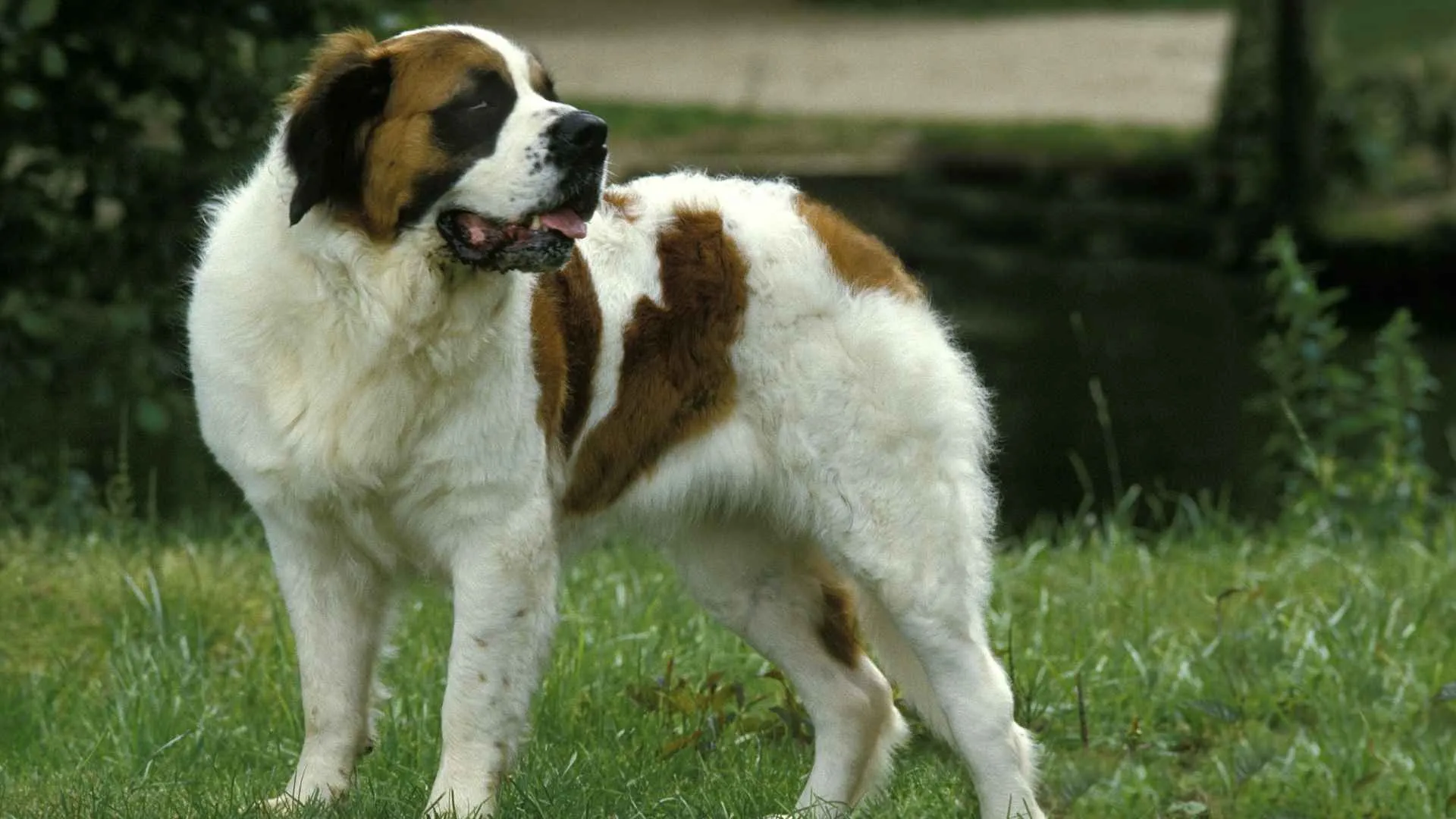
The Saint Bernard is the legendary mountain rescue hero of the canine world, combining enormous strength with a gentle personality and an extraordinary history of helping humans survive dangerous Alpine conditions.
They became particularly famous for locating people who became lost or stranded in severe mountain weather. Their strong sense of smell and familiarity with Alpine terrain helped rescue workers search for travelers in conditions where visibility and movement could be extremely difficult.
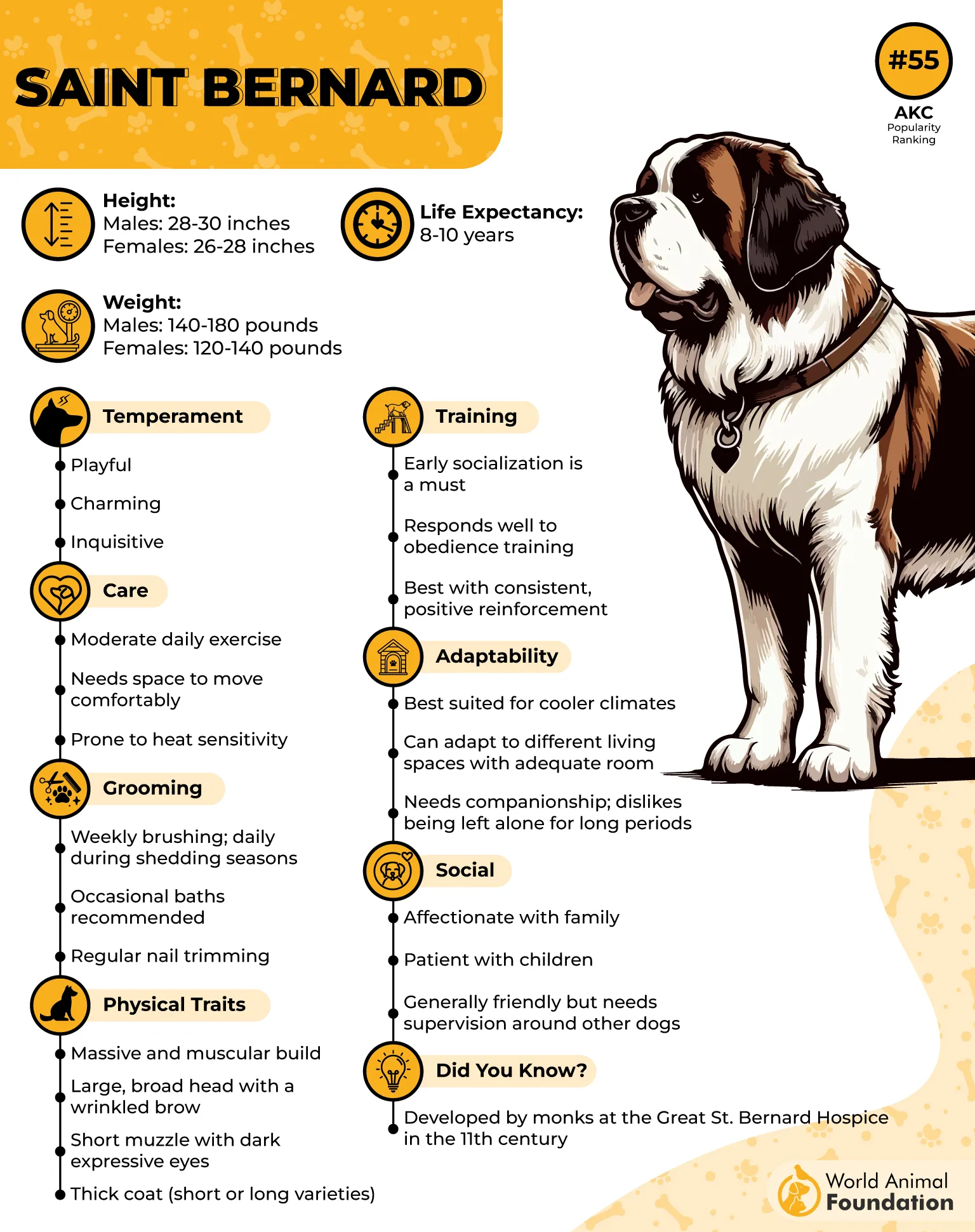
Their substantial bodies provide the strength needed to move through challenging environments, while their coats insulate them against cold conditions. Interestingly, the earliest hospice Saint Bernards were short-haired, and the longer-haired variety became established later in the breed’s history.
Another important characteristic is their generally steady temperament, which historically supported close cooperation with monks and other people involved in mountain travel. PetMD says they are often patient and affectionate with familiar people, setting them apart from powerful working breeds known primarily for territorial guarding.
Conclusion
When it comes to surviving harsh environments, these seven powerful dog breeds prove that resilience comes in many different forms. Some were developed to travel across frozen landscapes, others protected livestock in remote mountain regions, and one became legendary for helping rescue travelers from dangerous Alpine conditions.
German Shepherd, Australian Cattle Dog, Labrador Retriever, Norwegian Elkhound, Border Collie, Belgian Malinois, Rhodesian Ridgeback, Golden Retriever, and Cane Corso are also powerful, excellent guard dogs suited to harsh weather.
Anyone considering one of these dogs should evaluate the breed’s temperament, training needs, living environment, and health requirements before deciding. Extreme temperatures, inadequate shelter, poor nutrition, and excessive exercise can harm even dogs with generations of working heritage behind them.
