




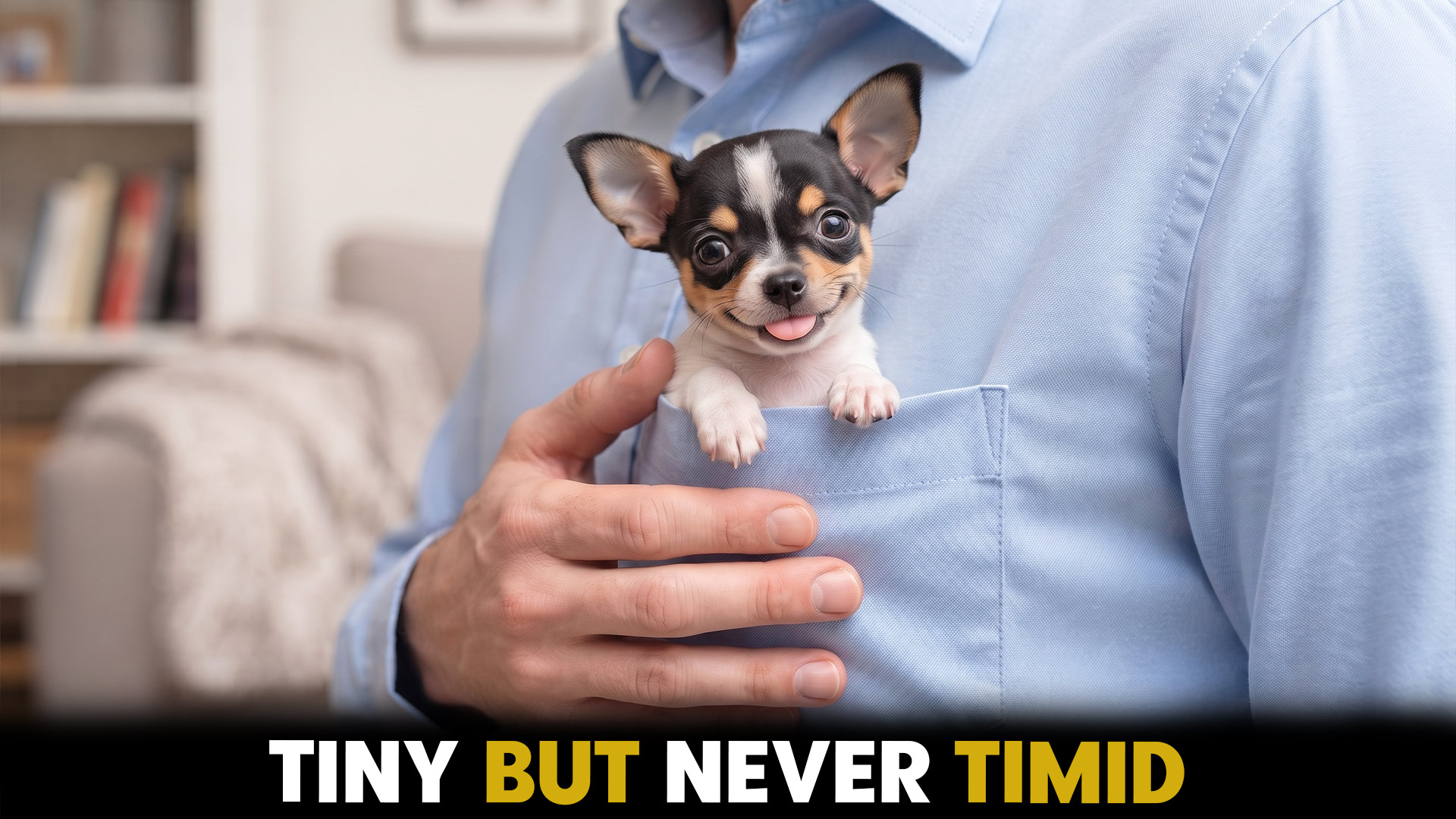
Big things come in small packages might sound like an old saying, but anyone who has lived with a tiny dog knows it is the absolute truth.
Pocket dog breeds may fit in your lap, yet many of them act like they own the whole neighborhood. One minute they are curled up like a fuzzy pillow, and the next they are boldly barking at a dog ten times their size.
These little dogs show every day how much joy, love, and loyalty a small companion can bring. Despite their size, they have plenty of affection and a fearless spirit. If you are looking for a small dog with a big heart and a memorable personality, these remarkable breeds are well worth considering.
Pocket Dog Breeds with Big Personalities
1. Chihuahua
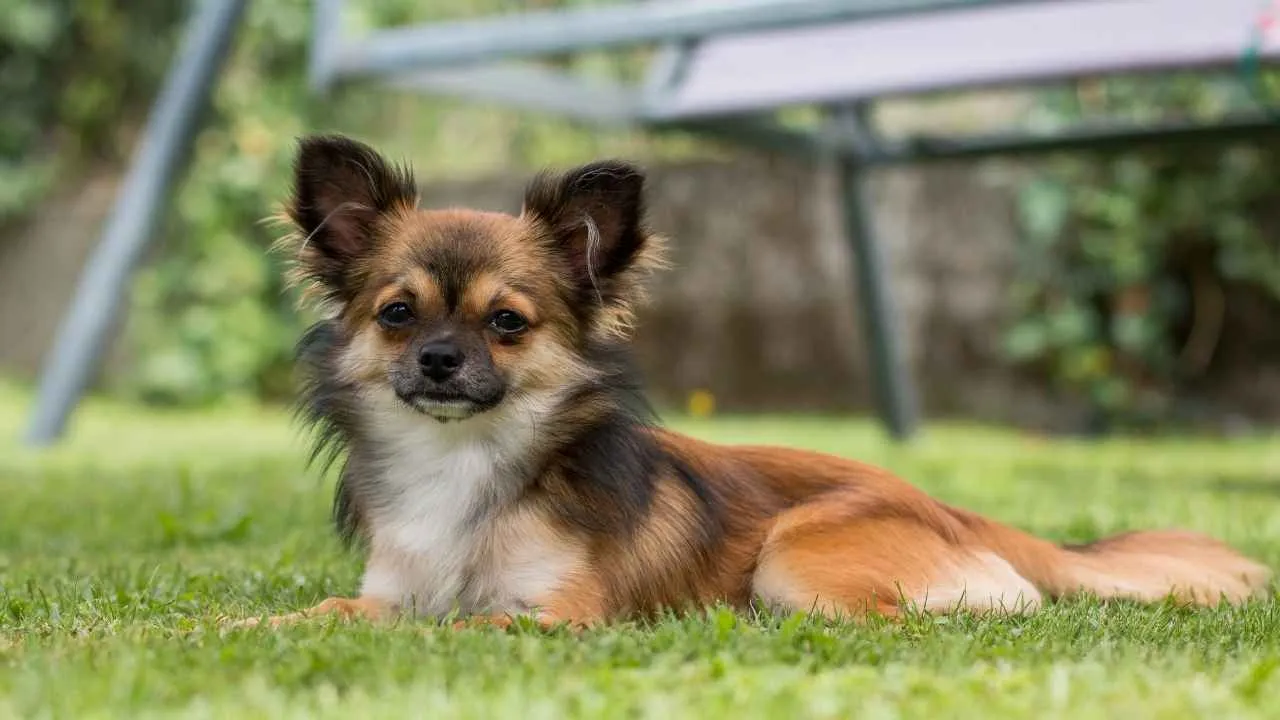
The smallest recognized breed in the world, the Chihuahua was originally bred in Mexico as a toy breed, but the roots date back to pre-Columbian indigenous American dog ancestry. The small dog is widely kept as a family dog and is known for its large, erect ears, compact size, and a rounded skull, says Wikipedia.
The breed has a soft spot on its head, called ‘molera,’ which is also found in human infants. It stands not more than 9 inches. Soulful eyes, alert expressions, and the apple head of this small dog breed make people fall in love with the breed instantly. Great for apartment living, the breed tends to alert the owner of a potential threat.
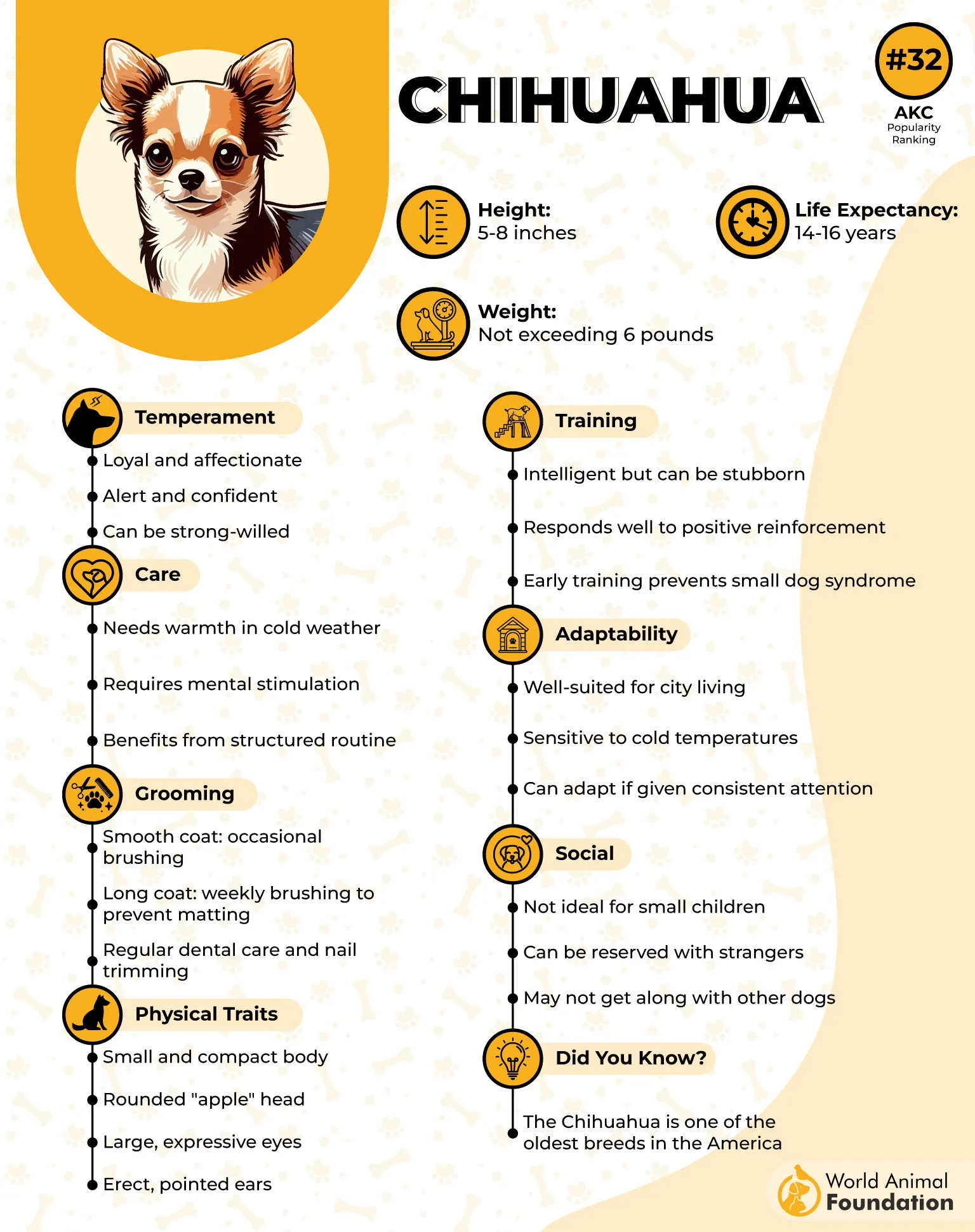
Despite its small size, it may be aggressive towards people and other dogs; thus, early training and proper socialization are important. The breed is prone to hypoglycemia because of fast metabolism.
2. Pomeranian
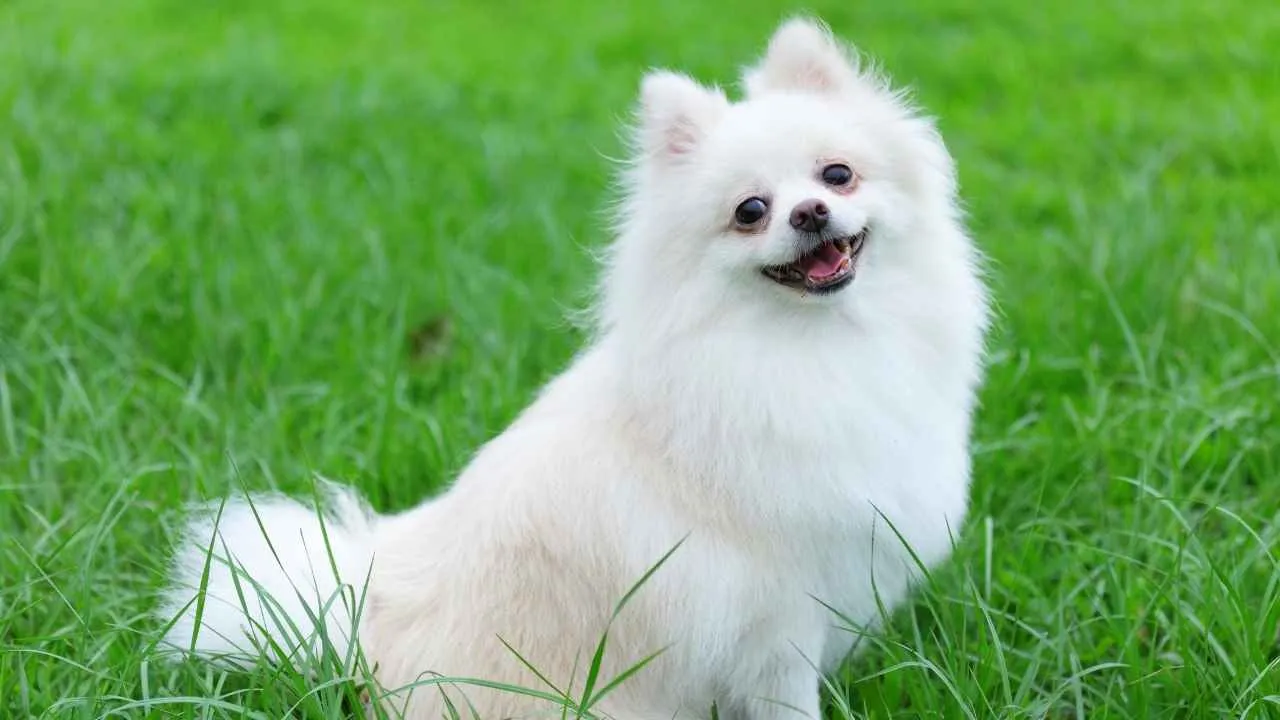
This toy breed was developed from the Spitz dog, specifically the German Spitz, in Central Europe. It was once favored by royalty in the 18th century, including Queen Victoria, who had many Pomeranians. The breed went through size reduction during her reign too.
The breed has a high-set, flat tail, giving it an alert expression. There is a thick ruff around its neck, which makes it look like a tiny lion. It has strong territorial instincts and may bark when someone breaches its privacy. This may lead to excessive barking. Hence, early obedience training is highly recommended.
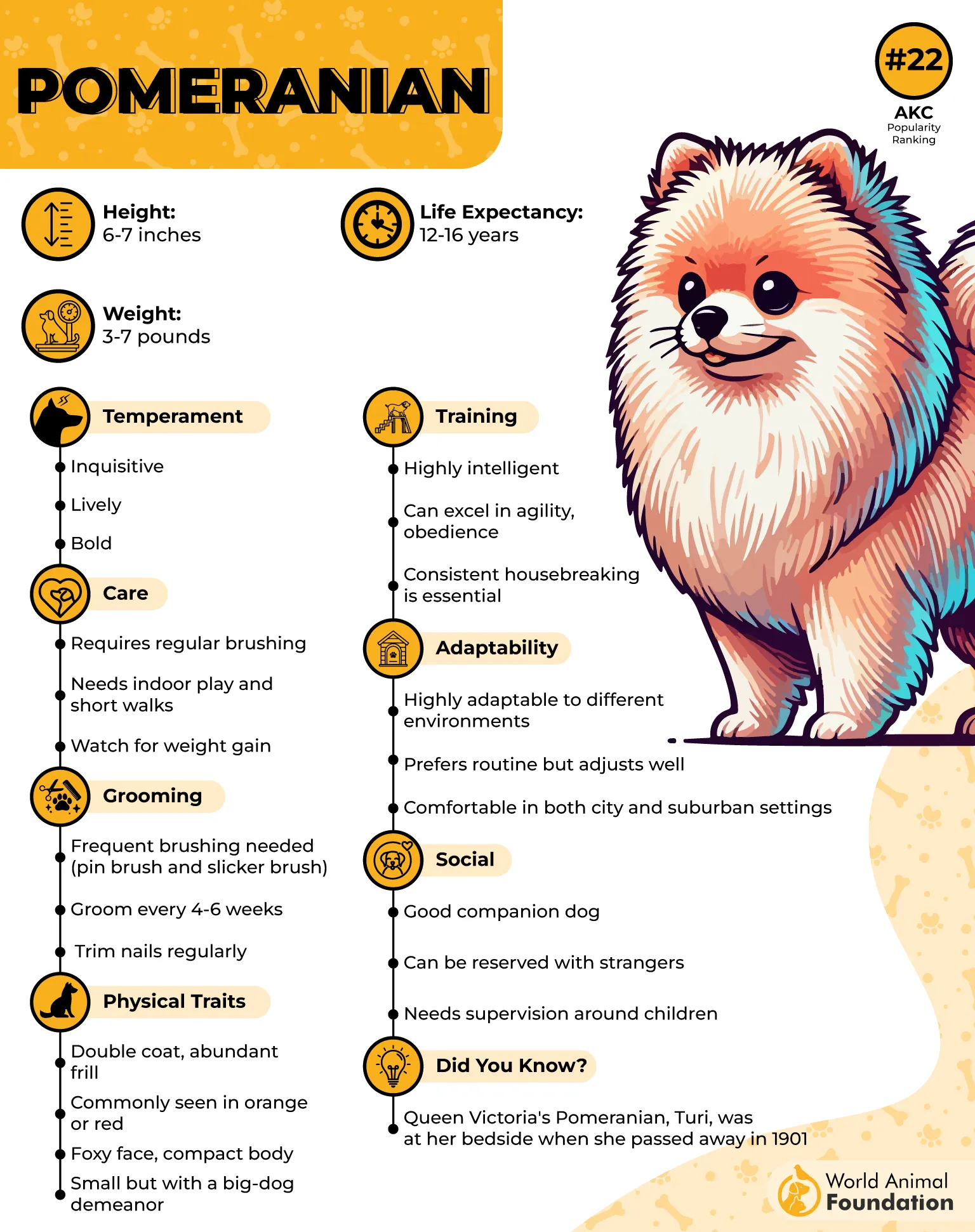
This small breed dog loves its independence and tends to walk on the ground instead of being carried. It has low energy levels, so short walks and indoor play sessions are enough for physical and mental stimulation.
3. Yorkshire Terrier
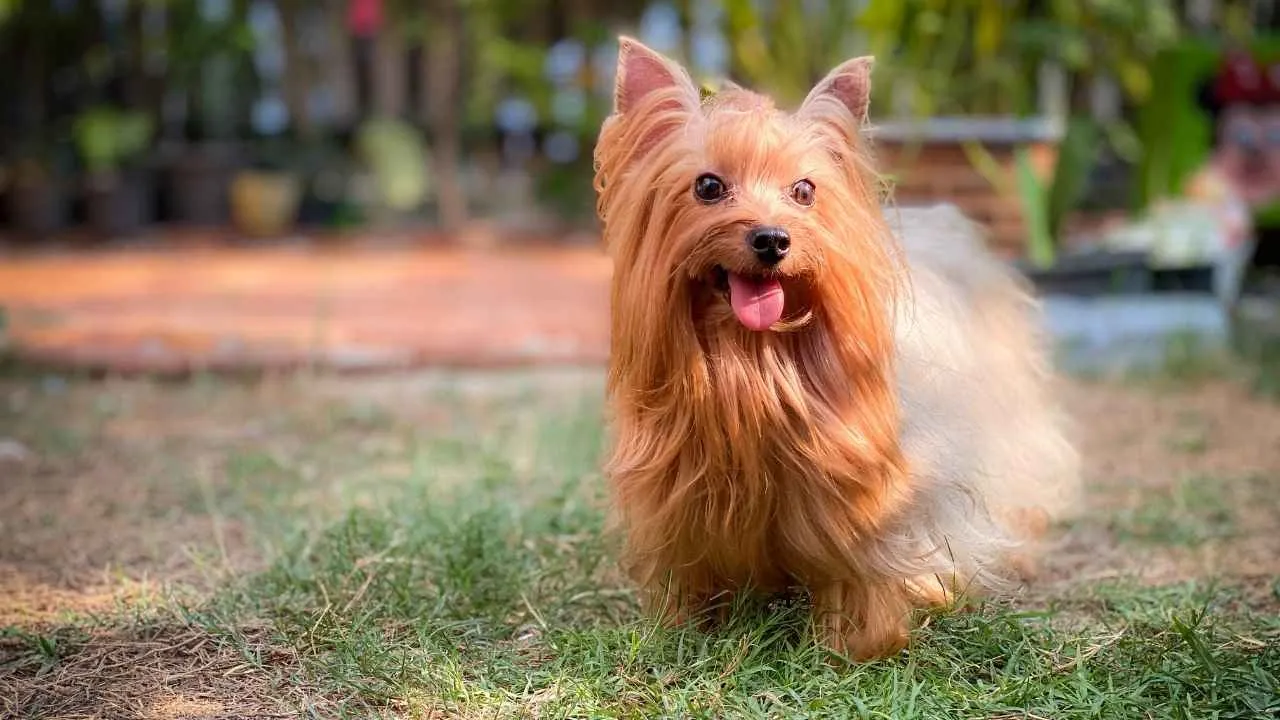
When the Scottish weavers migrated to the city of Yorkshire in the 19th century during the Industrial Revolution, they brought their small dogs and interbred with the local dogs to have a breed that would hunt and kill rats and rodents in the cotton and wool mills, as reported by PetMD.

The breed is known for its playful, affectionate, and bossy personality. The Yorkie is not recommended for families with young kids since it can be accidentally hit by them. It thinks of itself as a large dog and may bark a lot. Overall, it is a curious breed and excels in physical activities, such as nose work, agility, puzzle, and fetching.
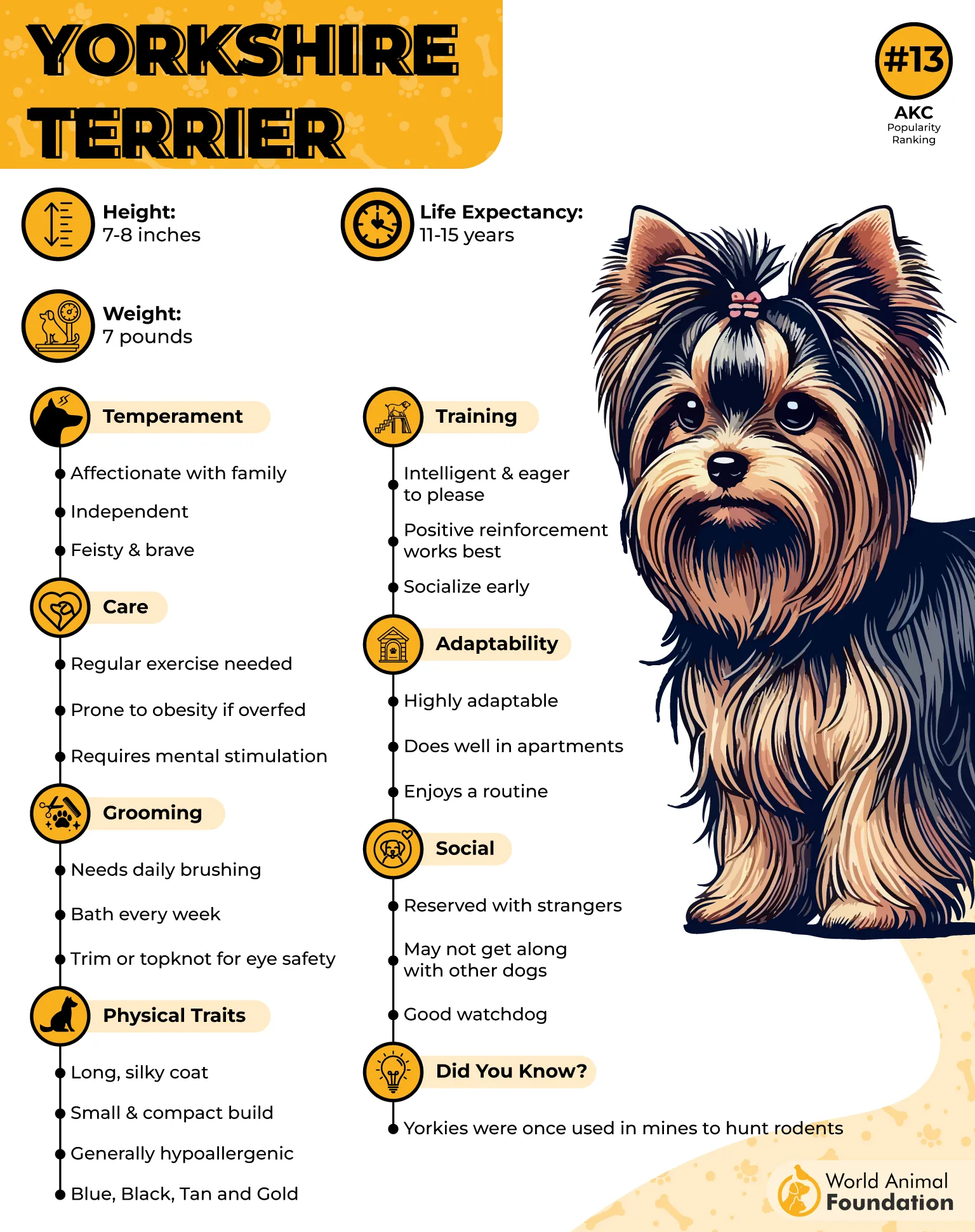
The small dog lives longer and has an average lifespan of 15 years. However, it is prone to certain ‘small dog’ health concerns, including hypoglycemia, dental issues, luxating patella, tracheal collapse, and liver shunt.
4. Papillon
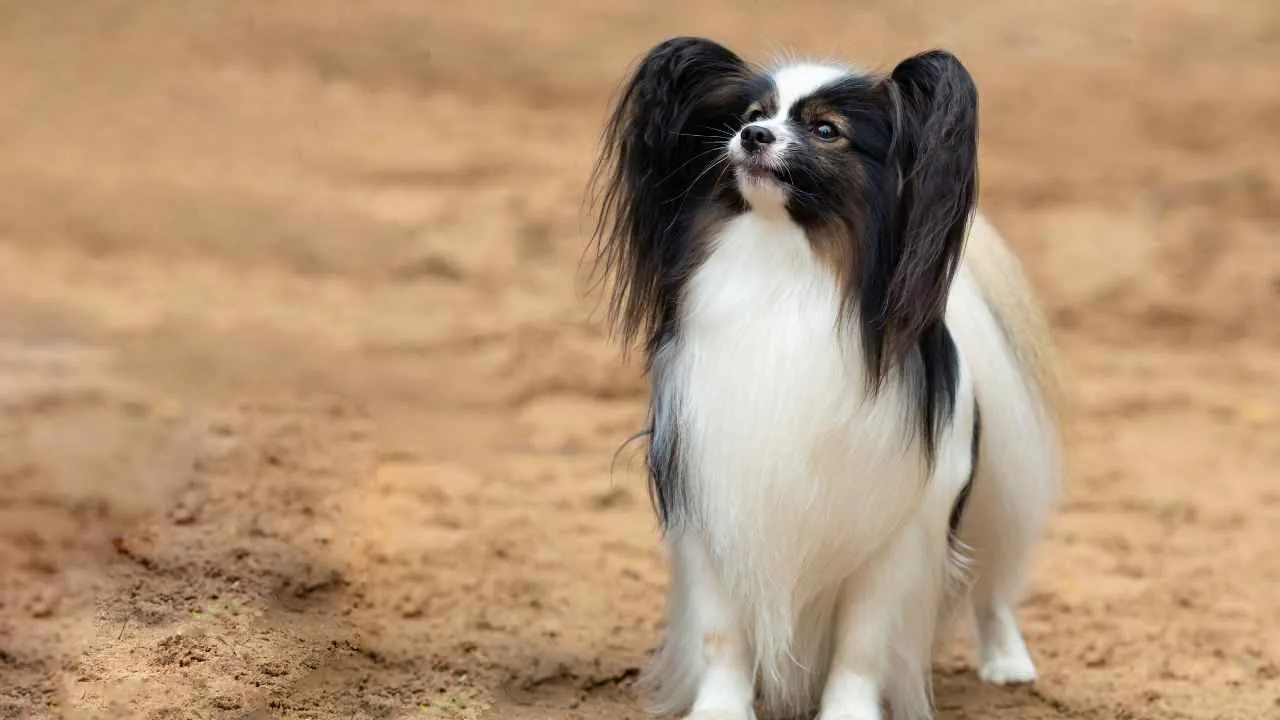
The traces of this ancient breed are found in the old European artwork from the 16th century. The modern-day breed is thought to have developed in France and was given the name because of a unique feature, the ‘butterfly ears.’ Today, it is widely kept as a companion dog.
It has an adaptable personality and loves to curl up next to you or simply rest in your lap. It literally gives wet kisses to its family members. Being a social butterfly, it makes good friends with everyone, even strangers, as noted by the AKC. It forms strong bonds with the family members and may develop separation anxiety when left alone for too long.
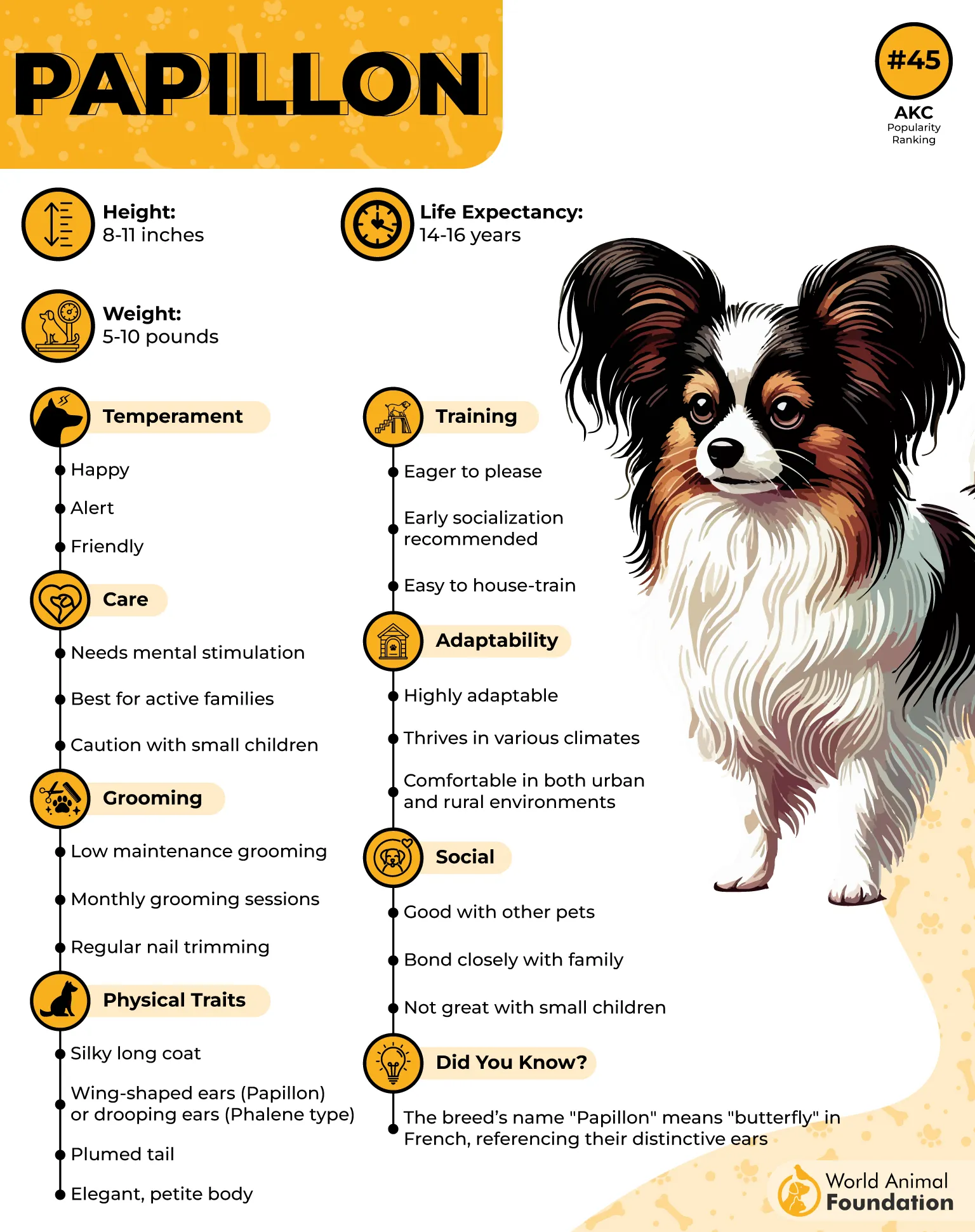
The great family dog may adopt destructive behavior, such as excessive barking or chewing if daily exercise needs are not met. Since it is an eager-to-please breed, it is easy to train the breed with positive reinforcement.
5. Miniature Dachshund
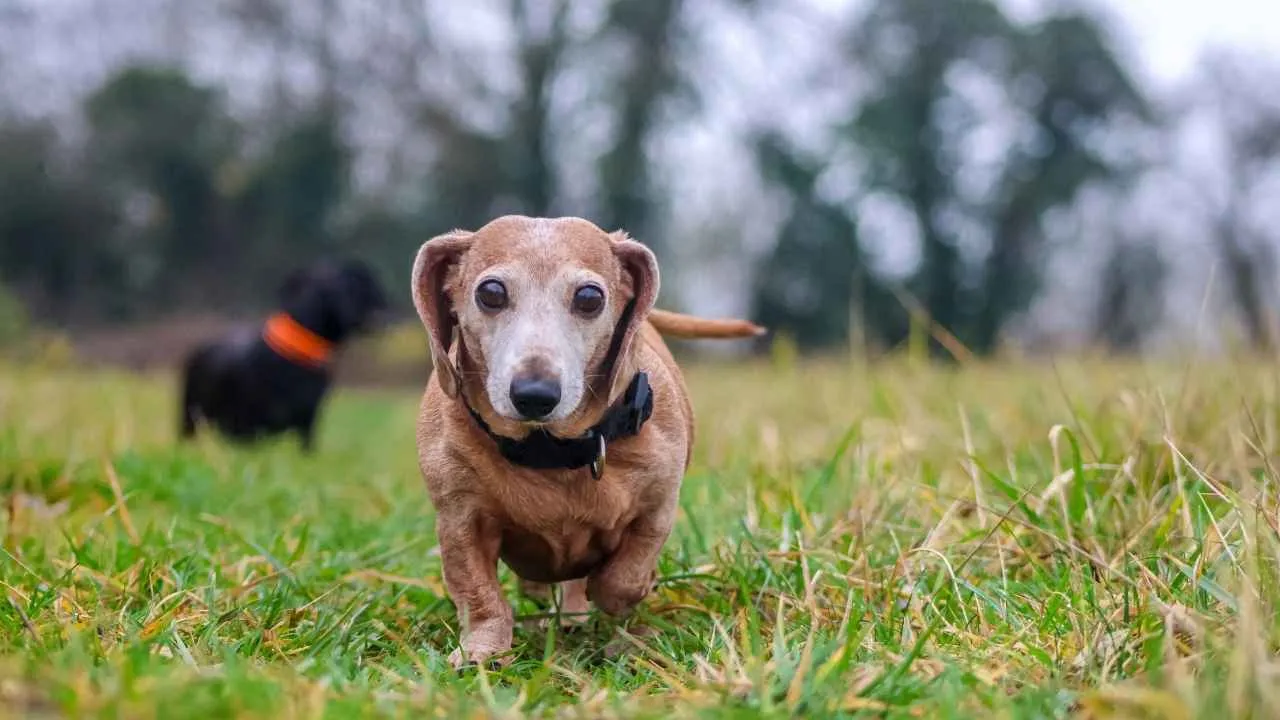
Also known as the ‘badger dog,’ the popular companion dog was originally developed in Germany some 600 years ago. It has a low-to-ground body, since its primary purpose was to dig and hunt badgers. It produces a loud bark as it needs to inform its handler of its location in dens.
Known for being playful and spunky, the breed is an excellent watchdog. It has an upbeat temperament, but an independent streak that requires careful consideration and training. It is reserved around strangers; hence, early introduction is important. Because of its robust nature, an active owner is suggested.
The dog needs 30-45 minutes of daily exercise. Since the breed has strong hunting instincts and it can run after small moving objects, off-leash training is highly important. You also need to be extra cautious as it is an excellent escape artist.
6. Brussels Griffon
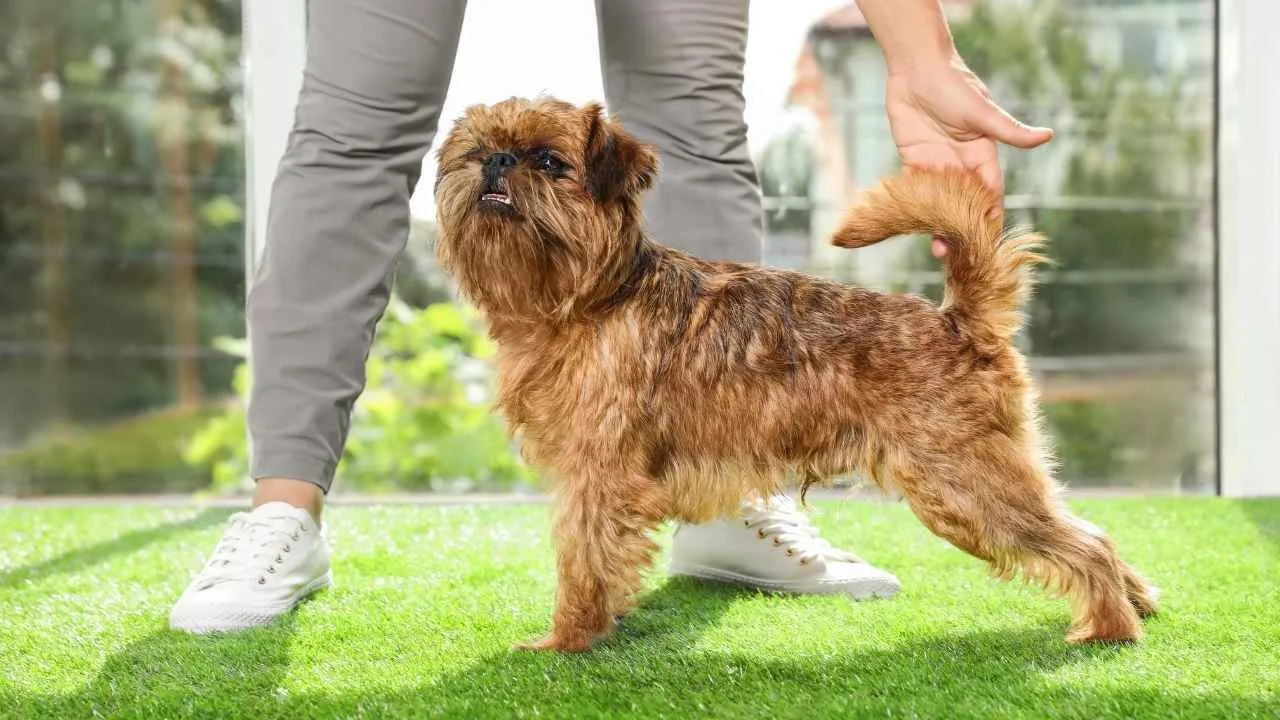
Developed in Germany from a small Terrier-type dog called Smousje, the Brussels Griffon was bred to hunt rodents in stables. It is descended from the Griffons d’Ecurie, which was interbred with the Pug and the King Charles Spaniel. The population declined during the World Wars.
The breed exhibits human-like expression with its prominent eyes and long eyelashes. It is an intelligent, alert, and sensitive breed and may not respond well to harsh training. It tends to form strong bonds with only one member of the family. It does not tolerate prodding or poking, though it gets along well with older kids.
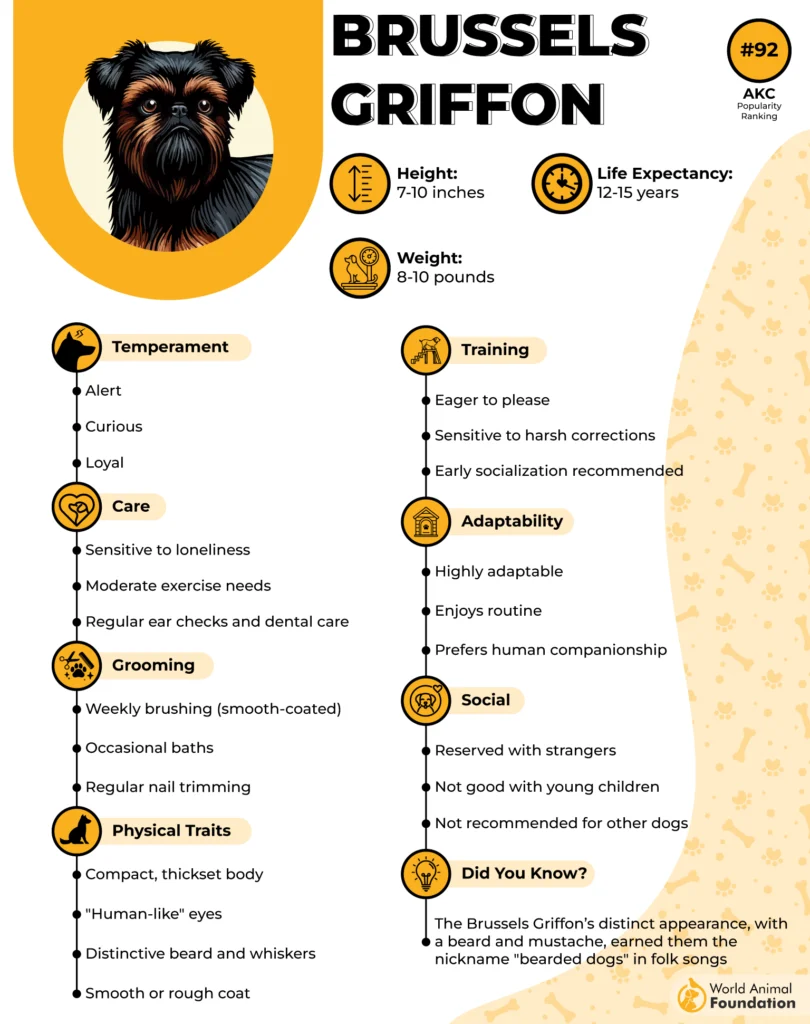
It is a high-energy breed and needs much exercise to burn off calories. However, it is heat sensitive and prefers staying indoors in summer. It enjoys running and can run up to 1 mile. Weight management is important, and the breed needs ¼ to ½ cup of dog food per day
7. Toy Fox Terrier
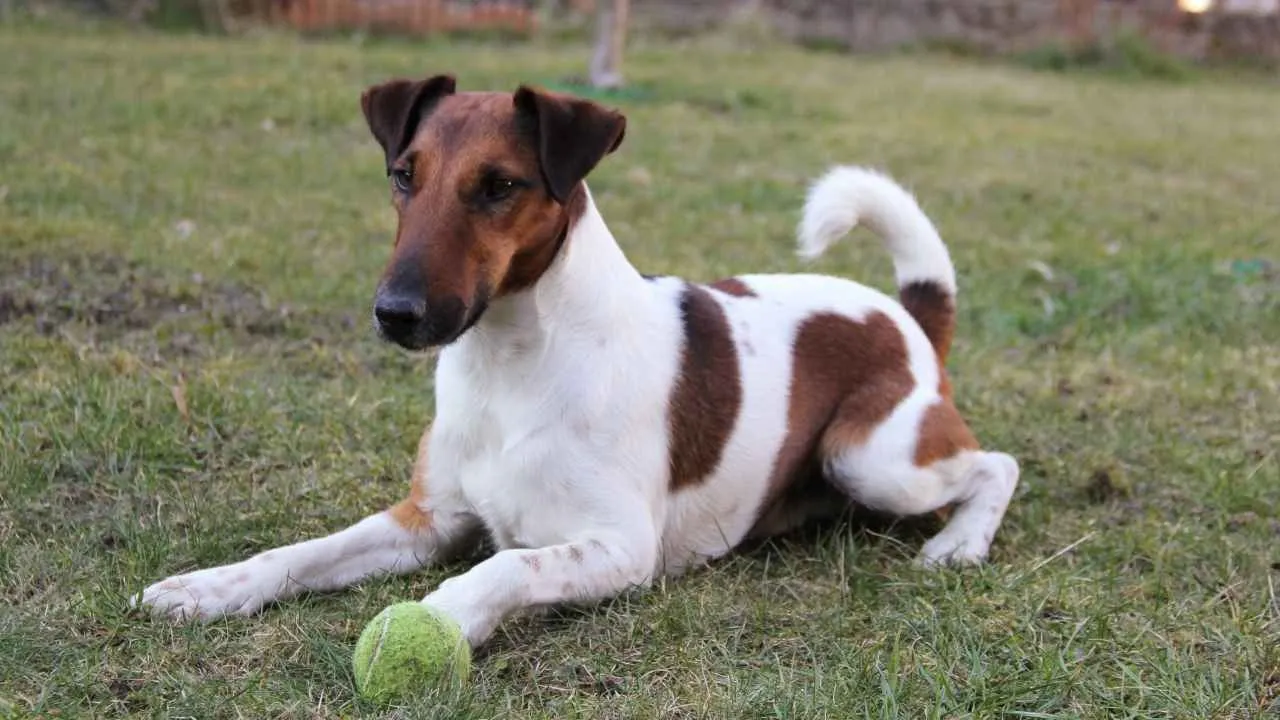
Originating in England, the highly intelligent breed is a direct descendant of a large breed, the Smooth Fox Terrier. This best small dog has a vivacious personality and is known for its loyalty and playful nature. It was historically used as a hunter and has a strong prey drive.
The breed is quick to investigate its surroundings, making it a great watchdog. It excels in fun activities, including agility, nose work, fetching, swimming, treat-dispensing toys, and playdates with other small dogs. It is not a lap dog and needs an active lifestyle. It makes peaceful friends with cats.
Being protective of its territory, the breed has a tendency to bark loudly. The breed performs funny tricks to draw the owner’s attention. The dog does not like to be left alone for long periods and may develop nuisance habits.
Conclusion
Living with a pocket dog is a little like having a tiny comedian, loyal bodyguard, and best friend rolled into one. Each breed brings something different to the table. The Chihuahua offers fearless confidence, the Pomeranian loves being the centre of attention, while the Papillon impresses with its sharp mind. Some thrive on adventure, while others simply want to be wherever you are.
Choosing the right one depends on your lifestyle, energy level, and the time you can dedicate to training and companionship. When their physical and emotional needs are met, these little dogs reward their families with years of love, laughter, and unforgettable memories that are far bigger than their small size.
