




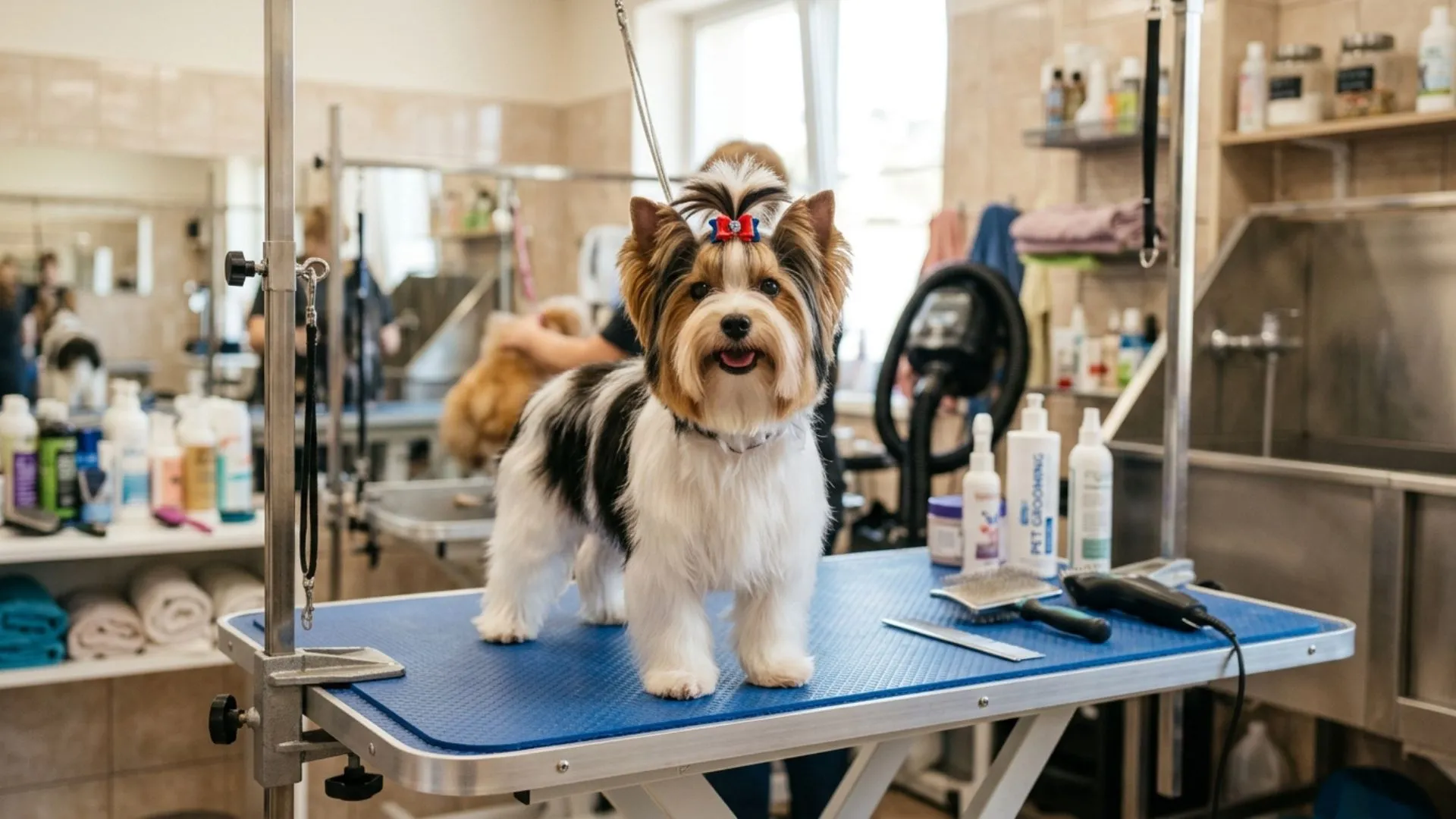
Pet care extends far beyond basic exercise and affection; it requires a deep understanding of a breed’s temperament, health risks, and training needs. While every small breed boasts unique charm and distinct care requirements, meeting those needs rewards you with a brilliant, loyal companion.
The small dog breeds listed below are highly trainable and require only moderate grooming. However, whether you are a novice or an experienced pet parent, remember that not every issue can be treated at home. If you notice any health concerns, consult a veterinarian immediately.
Furthermore, while socialization and training are crucial during puppyhood, certain health risks, such as obesity, demand extra vigilance. Explore our curated list of breeds and expert care tips below to simplify your dog selection process.
Top Pocket Dog Breeds: Personality and Care Tips
1. Chihuahua
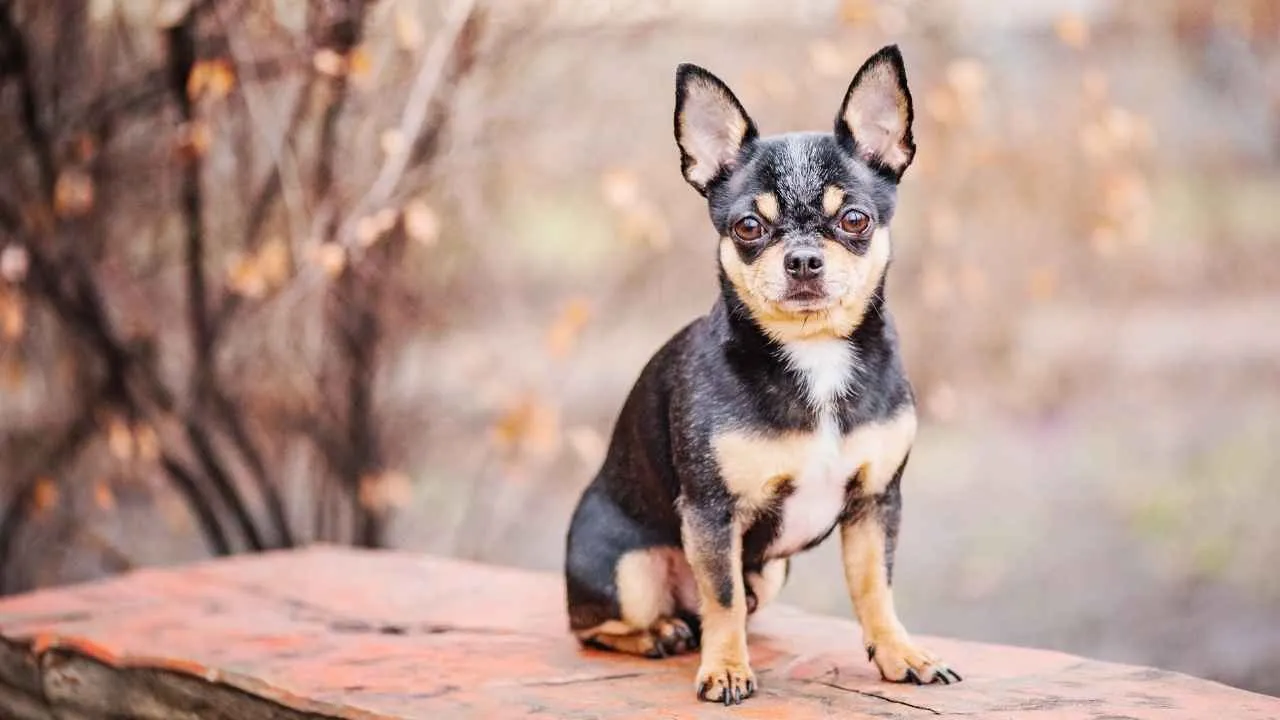
The Chihuahua is a charming, graceful, and sassy toy breed originating from Mexico. As one of the smallest dog breeds in the world, typically weighing just 2 to 6 pounds, this compact pup can easily fit into almost any living space. Despite their tiny size, Chihuahuas are famous for their big, confident personalities and surprising trainability.
These fiercely loyal “Velcro dogs” form incredibly strong bonds with their owners, loving nothing more than to be involved in every daily activity. Do not let their stature fool you, though; Chihuahuas possess high energy levels and require daily exercise paired with dedicated playtime.
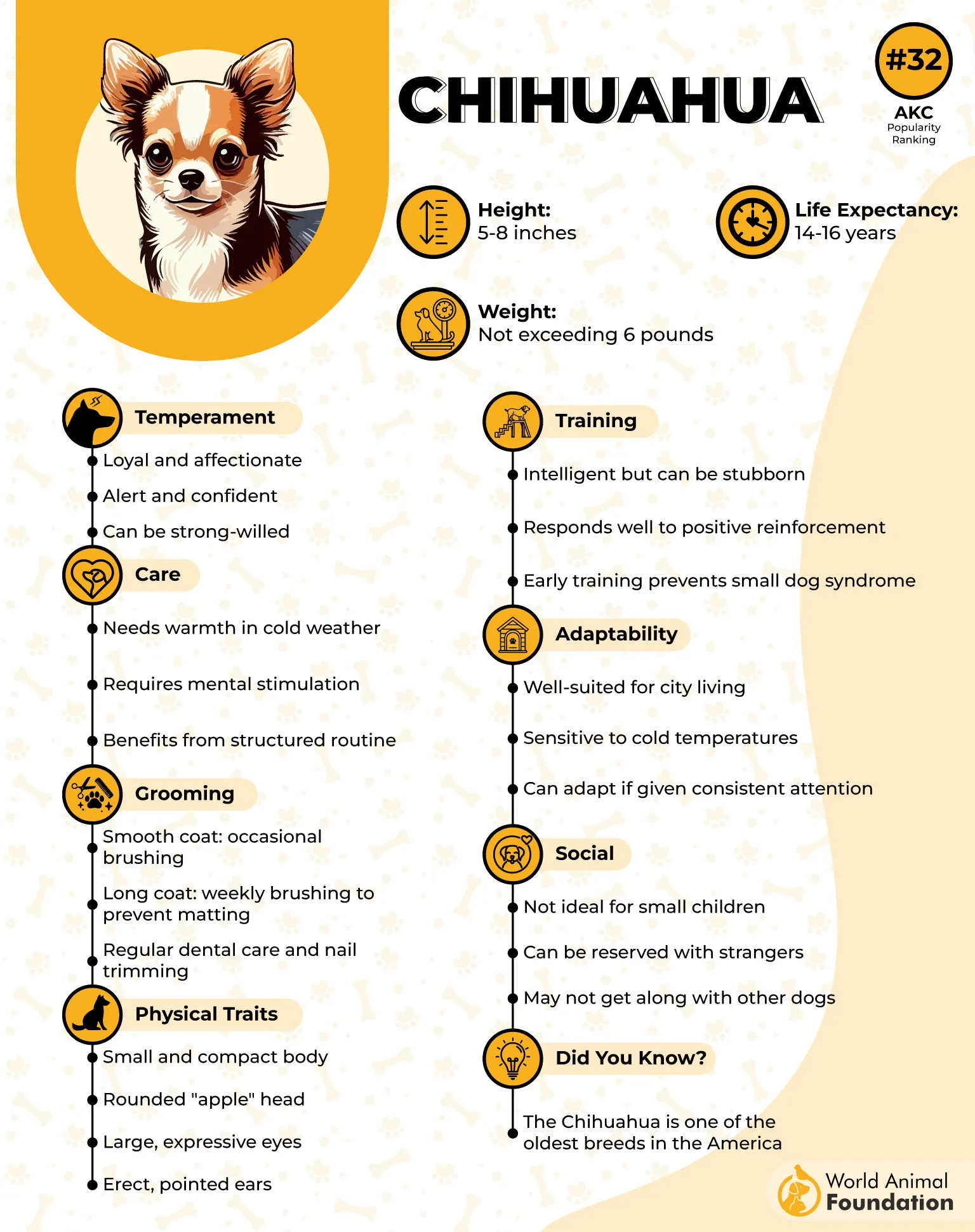
Because they can be inherently wary of strangers, early socialization is crucial to prevent defensive behavior and excessive barking.
Best Care Tips
Keep Them Warm: Due to their tiny frames, Chihuahuas catch a chill easily. Keep them comfortable with cozy doggy sweaters and plenty of blankets.
Prioritize Early Socialization: Expose your puppy to new people, sights, and sounds early on to raise a calm, confident, and well-adjusted adult dog.
Handle with Care: Being a remarkably miniature breed, Chihuahuas are delicate. Always handle them gently and supervise them around larger pets or young children.
2. Pomeranian
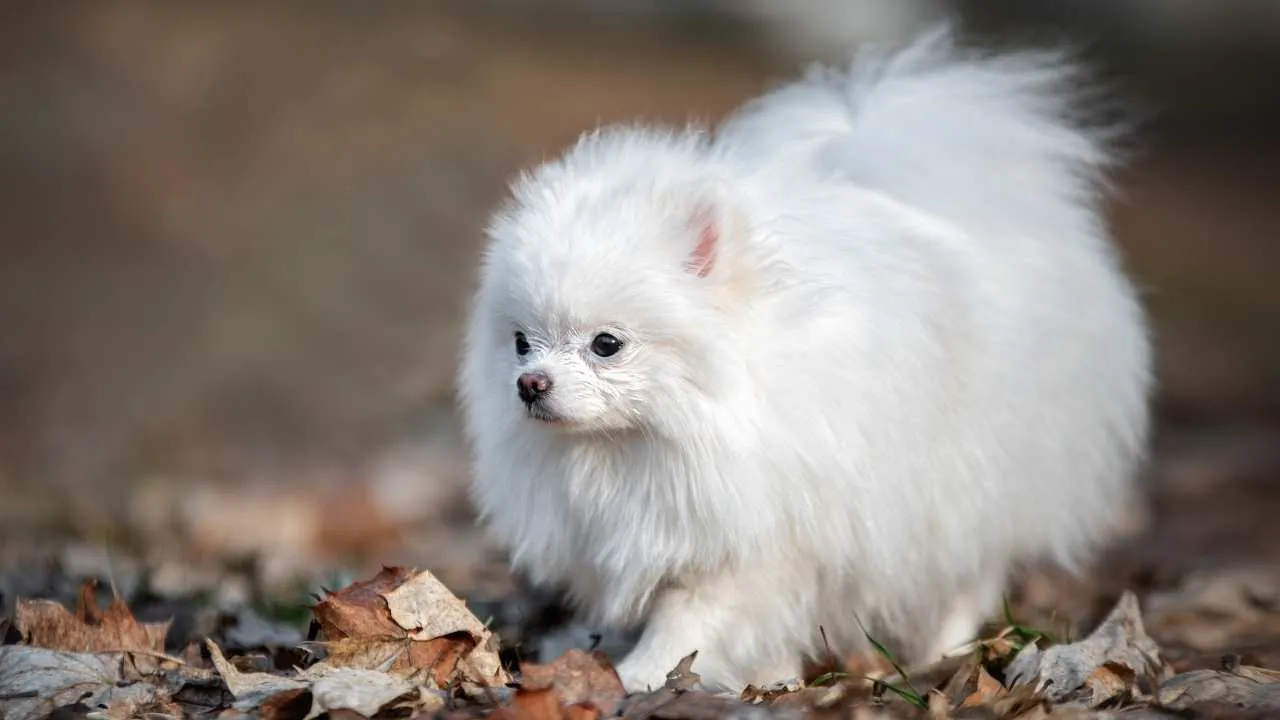
Lively, bold, and fiercely affectionate, the Pomeranian is a popular toy breed weighing just 3 to 7 pounds. Do not let their diminutive size fool you; these fluffy pups were actually descended from large Arctic sled-pulling dogs, which explains their vibrant energy levels and confident spirits.
While they adapt beautifully to apartment living and small spaces, Poms are fragile and should always be supervised around young children and larger dogs.
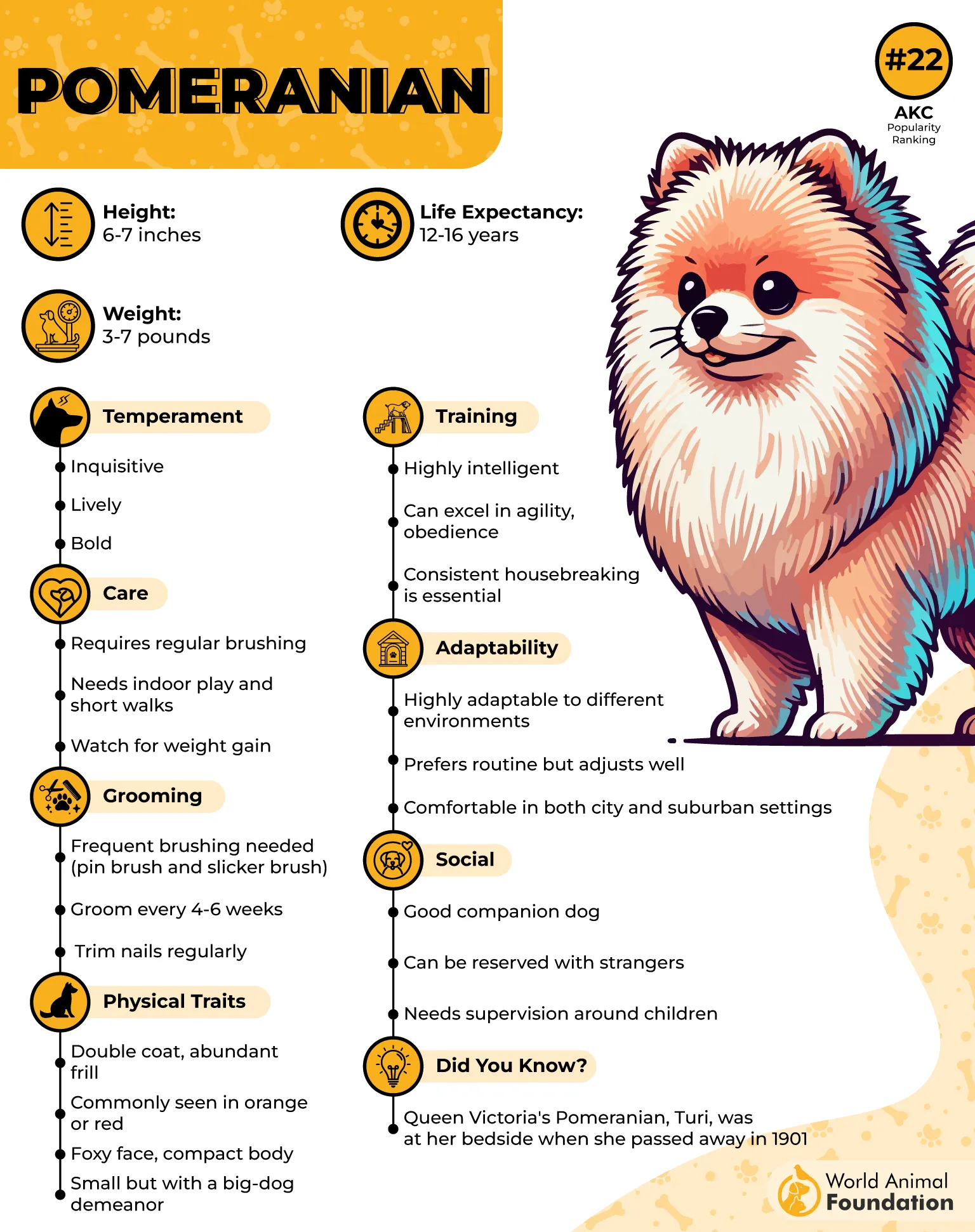
Pomeranians require about an hour of daily exercise, making them the perfect match for active owners who want an expressive, high-spirited companion. These intelligent dogs crave human attention and thrive on mentally stimulating activities to keep boredom at bay. Additionally, their iconic, thick double coat requires a consistent grooming routine to stay healthy and beautiful.
Best Care Tips
Commit to Daily Brushing: To maintain that famous, fluffy coat and prevent painful matting, dedicate time to brushing your Pomeranian daily.
Keep Outdoor Workouts Moderate: While energetic, their tiny stature means they cannot handle extreme outdoor endurance. Stick to brisk walks and indoor play rather than extensive, strenuous hikes.
Use Positive, Engaging Training: Pomeranians are highly intelligent but can have an independent streak. Keep your training sessions short, fun, and packed with positive reinforcement and patience.
3. Yorkshire Terrier
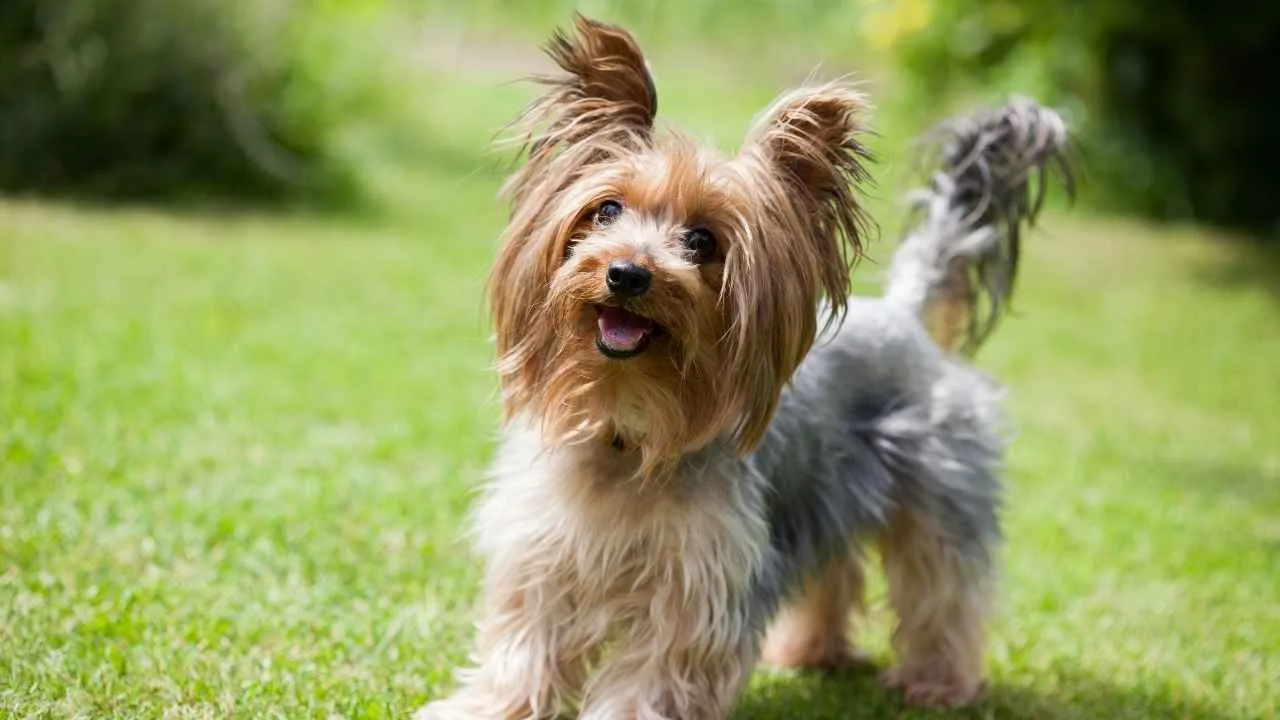
The Yorkshire Terrier, or “Yorkie,” is an intelligent, bold, and courageous toy breed that typically weighs around 7 pounds. Famed for their glorious, flowing locks, these pups are often described as being small in size but massive in attitude. Spunky, sassy, and fiercely affectionate, these tiny adventurers are compact enough to be carried anywhere, yet they possess the fearless spirit of a much larger dog.
When it comes to grooming, Yorkies boast a long, silky coat that grows continuously like human hair, requiring frequent brushing to stay healthy, clean, and tangle-free. Because their moderate exercise needs can easily be satisfied indoors, they are ideal companions for apartments and small spaces.
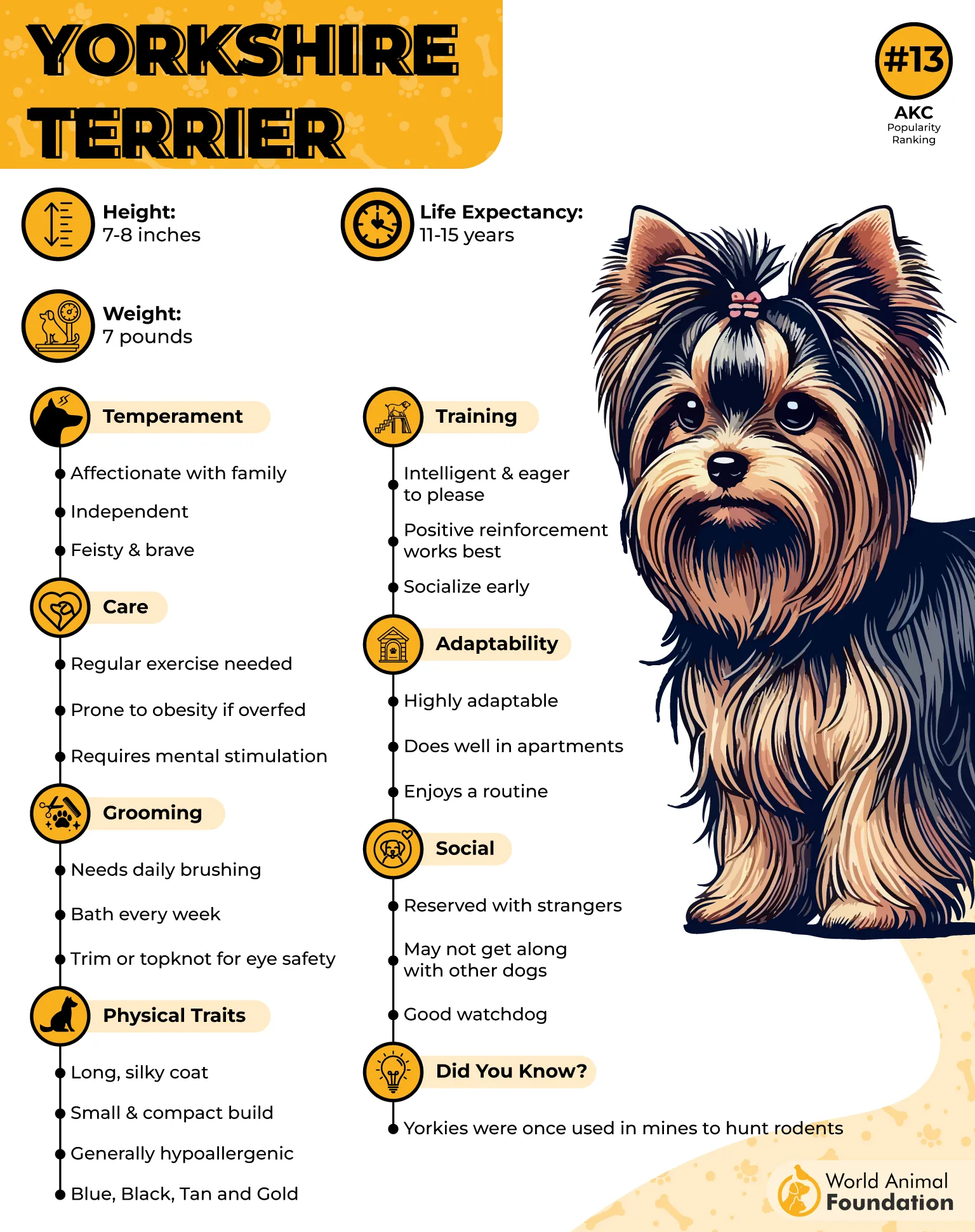
However, because they were originally bred to hunt rats, these sharp-witted pooches still demand daily physical play and mental stimulation to keep them from getting bored.
Best Care Tips
Prioritize Dental Hygiene: While generally a healthy breed, Yorkies are highly prone to dental disease due to their tiny mouths. Commit to daily tooth brushing using a pet-safe toothpaste to prevent plaque buildup.
Establish a Consistent Grooming Routine: Whether you keep them in a long show coat or a low-maintenance “puppy cut,” regular brushing and routine trims are essential to maintain skin and coat health.
Provide Mental Challenges: Channel their inner hunter by introducing puzzle toys, hide-and-seek games, and short, rewarding training sessions to satisfy their natural terrier instincts.
4. Maltese
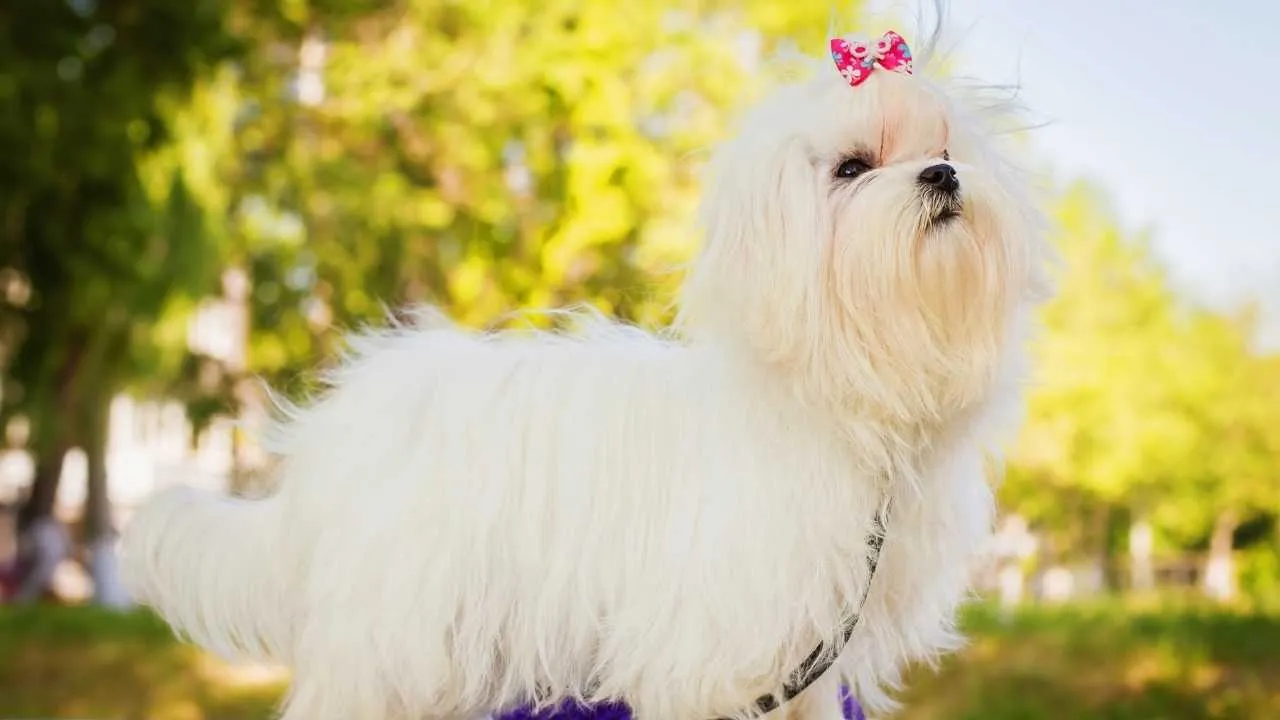
Playful, charming, and highly adaptable, the Maltese is a beloved toy breed that effortlessly proves big things come in small packages. Weighing in at around 7 pounds, this ancient lap dog is famous for its sweet demeanor and affectionate nature, making them the ultimate calm companion for all age groups.
However, do not let their delicate appearance fool you; Maltese possess a surprising amount of energy that should be channeled through daily walks and fun indoor playtime.
Because of their fragile frames, Maltese always require close supervision around young children and larger dogs. These intelligent little dogs are quick learners who pick up tricks easily, and early training is highly recommended to curb their tendency for excessive barking.
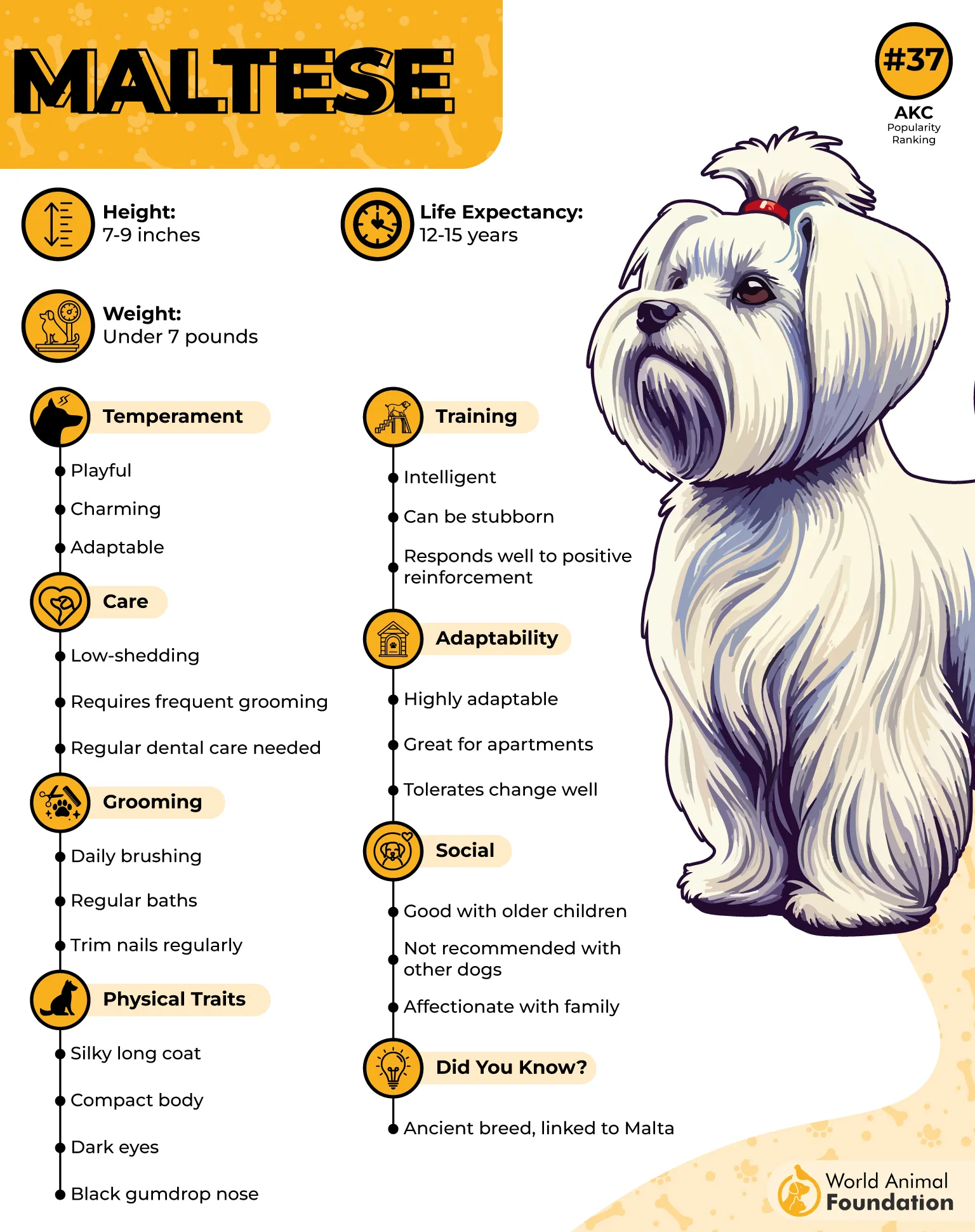
Keep in mind that these devoted companions thrive on human contact and can develop separation anxiety if left alone for long periods.
Best Care Tips
Commit to Daily Coat Care: Their gorgeous, signature white coat requires daily brushing and combing to prevent painful mats, along with regular baths and conditioning to keep the fur silky.
Manage Tear Stains: Maltese are notoriously prone to tear staining around their eyes. Wipe their face daily with a damp cloth or pet-safe eye wipes to keep their coat looking bright and clean.
Prioritize Mental Companionship: Because they are prone to separation anxiety, provide interactive puzzle toys when you are away, and avoid leaving them isolated for extended stretches of time.
5. Papillon
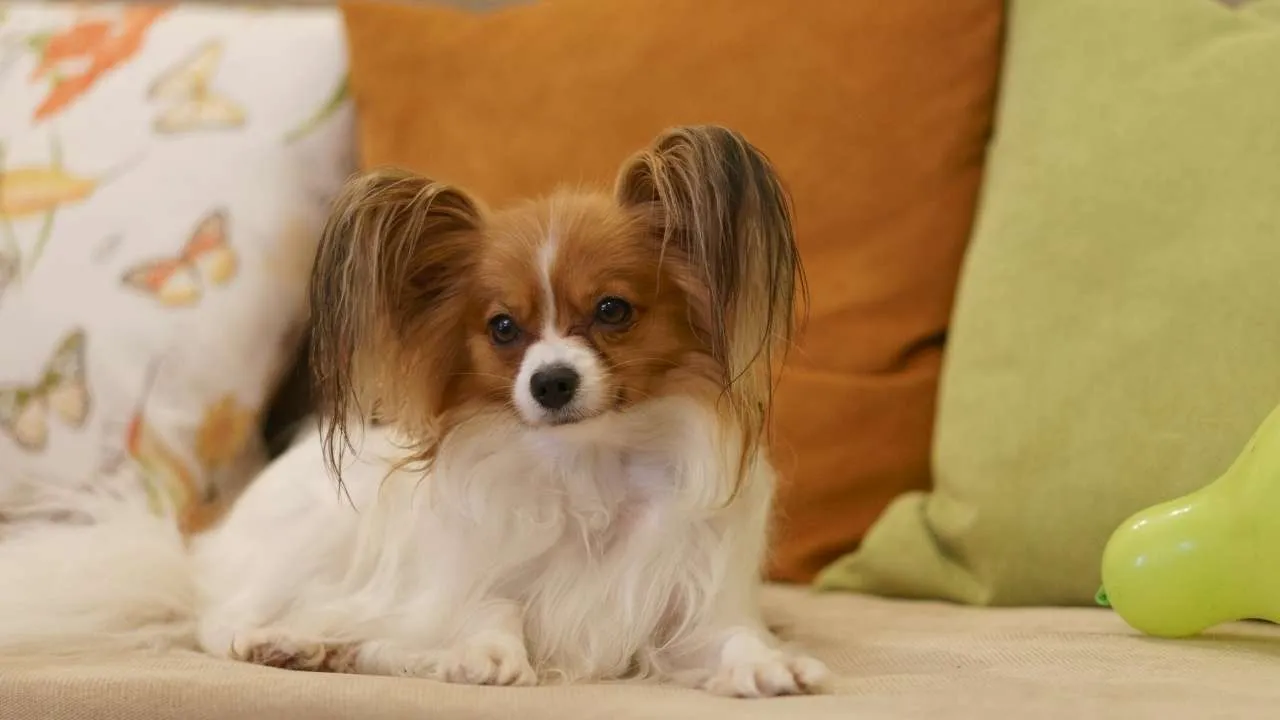
Singular beauty and upbeat athleticism perfectly describe this brilliant toy breed. Weighing between 5 and 10 pounds, the Papillon is an alert, friendly, and naturally happy dog that retains a delightful, puppy-like charm forever. They are instantly recognizable by their elegant, wispy ears that beautifully resemble the open wings of a butterfly.
Despite their delicate look, Papillons are energetic little dynamos that excel at obedience and high-speed dog sports like agility. PetMD mentions that they easily win hearts with their playful nature and natural aptitude for learning intricate tricks.
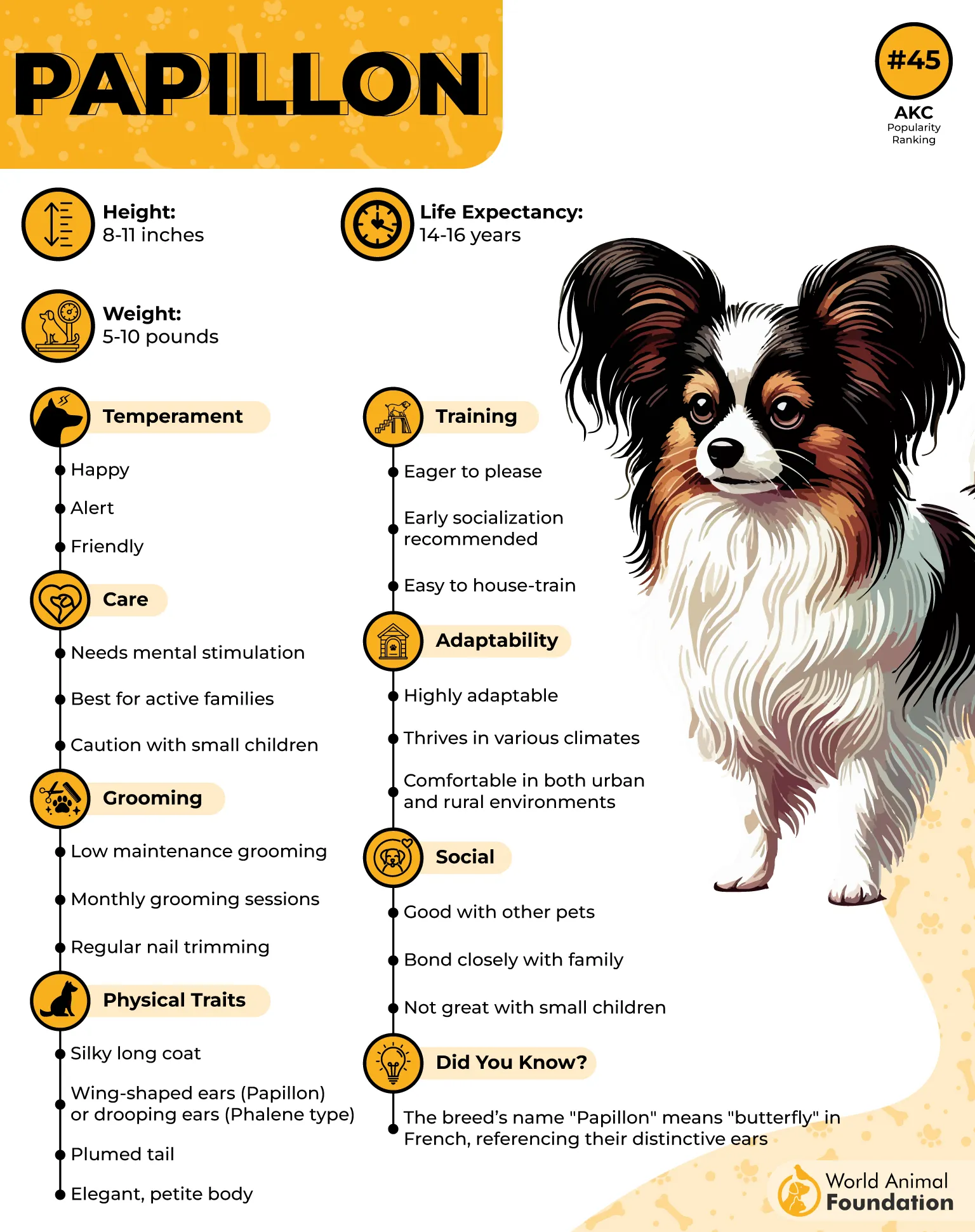
However, because of their tiny stature, close supervision remains essential to protect them from accidental injury during rough play with larger pets or children.
Best Care Tips
Maintain Their Glamorous Coat: Papillons boast a long, silky single coat that sheds moderately. To keep their fine fur healthy, shiny, and tangle-free, dedicate time to brushing them every 2 to 3 days.
Watch for a Collapsing Trachea: Like many toy breeds, Papillons are prone to tracheal collapse. If your dog develops a distinct, dry cough that sounds like a “goose honk,” consult your veterinarian immediately for guidance.
Use a Harness for Walks: To protect their sensitive throats and prevent airway injuries, always walk your Papillon using a properly fitted harness rather than a traditional collar.
6. Biewer Terrier
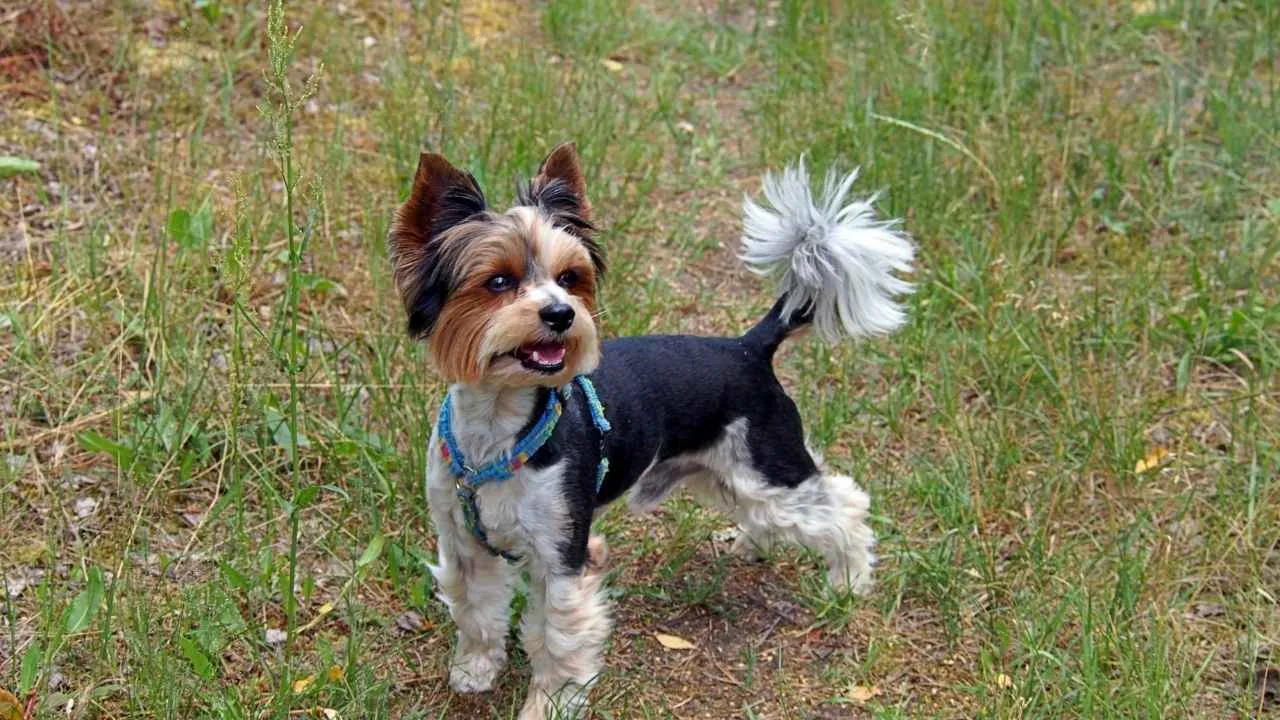
The Biewer Terrier is an affectionate, energetic, and remarkably even-tempered toy breed that typically weighs between 4 and 8 pounds. This delightful little dog is famous for retaining its playful, puppy-like spirit for years. Boasting a long lifespan of 12 to 15 years, a Biewer Terrier can thrive even longer when provided with optimal nutrition and attentive care.
This rare breed has captured the hearts of dog lovers worldwide thanks to its compact size, whimsical appearance, and gorgeous, tri-colored coat. To satisfy their moderate energy levels, these pups require a routine of regular exercise and daily walks to maintain healthy hearts and muscles.
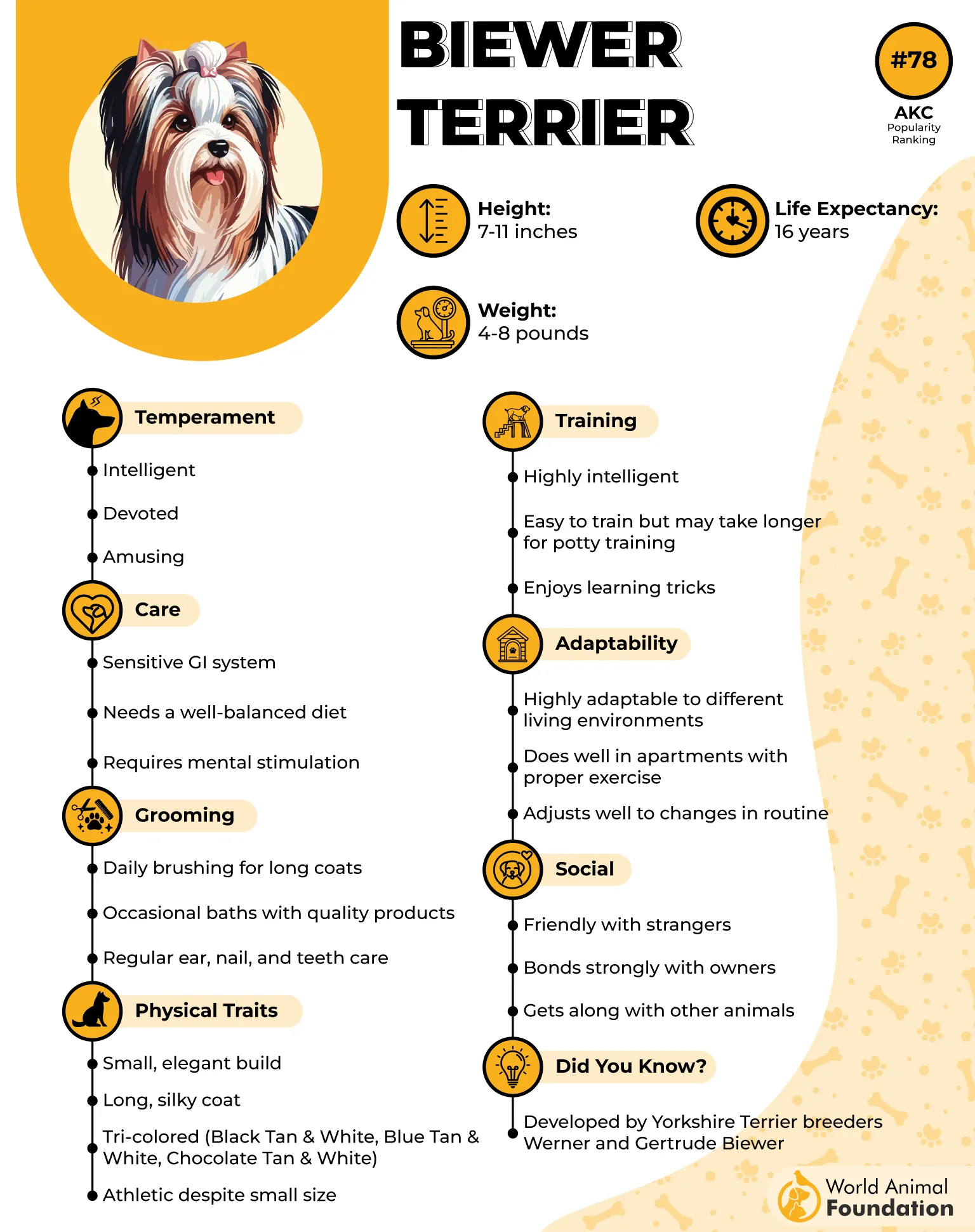
Highly intelligent and eager to please, Biewer Terriers respond beautifully to positive reinforcement training when sessions are packed with fun activities, treats, and enthusiastic praise.
Best Care Tips
Manage the Coat Smartly: While their long, silky coat demands daily brushing to prevent tangles, owners can opt for a short “puppy cut” to make weekly grooming much easier to manage.
Use High-Quality Grooming Products: To keep their unique fur glossy, soft, and healthy, always use premium, dog-specific shampoos and nourishing leave-in serums.
Perform Regular Ear Checks: Because of their drop-ear structure and fine hair, Biewer Terriers can easily trap moisture and debris. Inspect their ears weekly for redness, odor, or buildup to catch potential infections early.
7. Shih Tzu
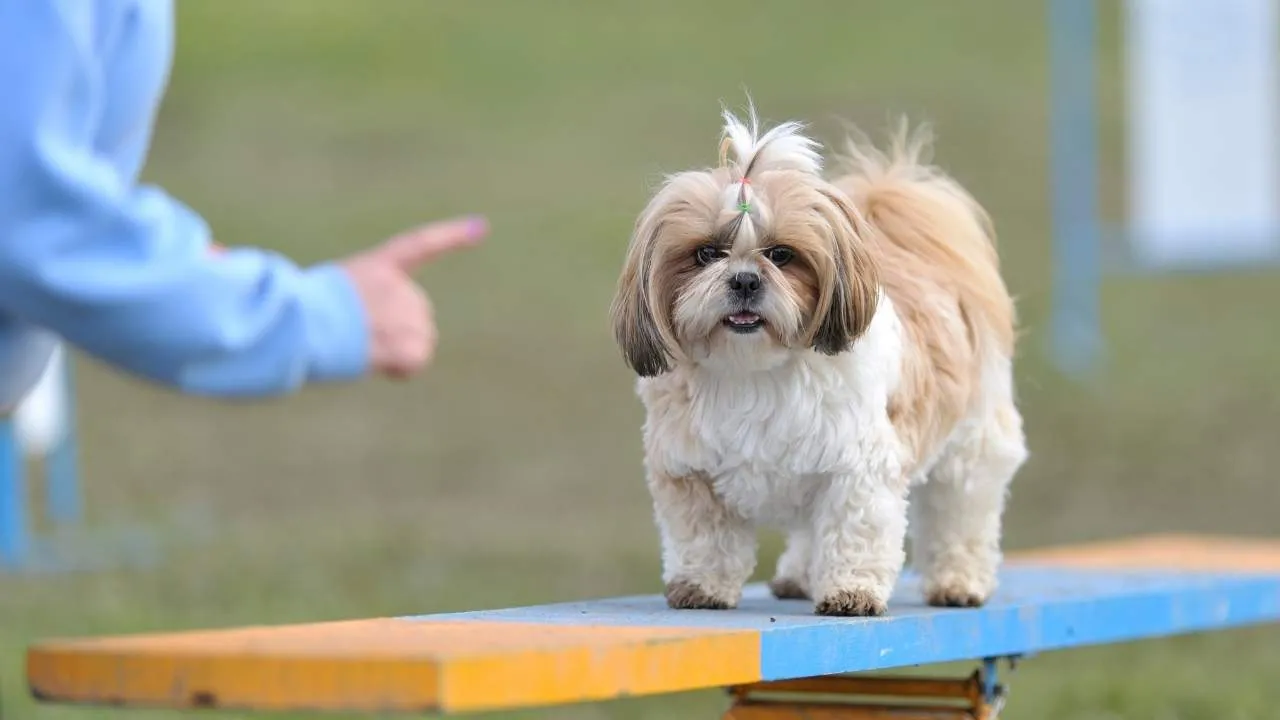
The Shih Tzu is an easygoing, affectionate toy breed that makes the ultimate quiet lap dog and companion. Weighing between 9 and 16 pounds, these clever and outgoing dogs boast a rich history of being bred exclusively for royal companionship. Even today, their laid-back and deeply affectionate personalities make them one of the best family dogs in the world.
According to Orvis, training a Shih Tzu is an excellent way for owners to form a lifelong bond. These smart pups truly enjoy learning and respond best to positive reinforcement techniques and tasty training treats.
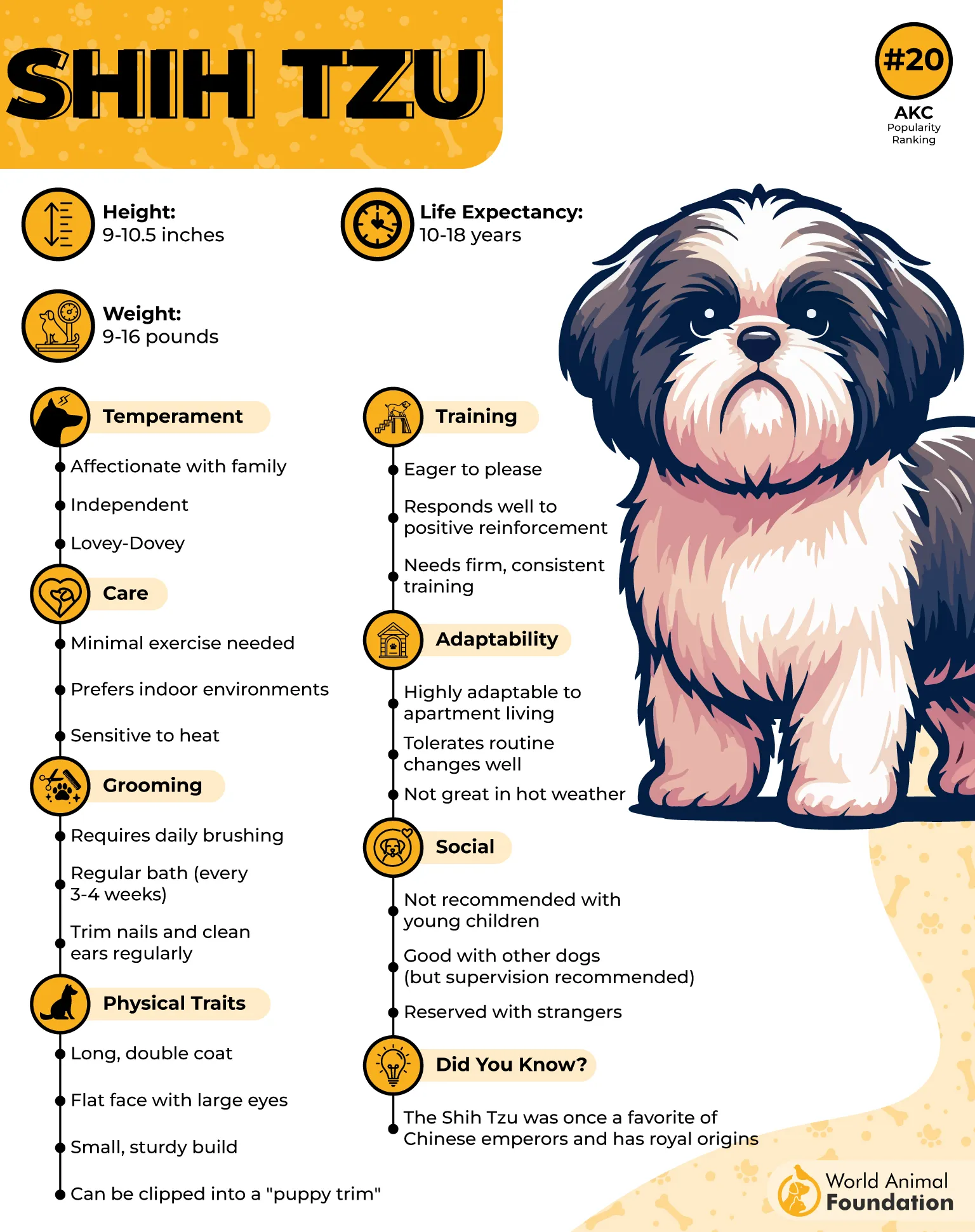
However, because of their compact size, rewards should be given in small portions to prevent unhealthy weight gain. With relatively low energy levels, a daily 30-minute walk paired with light indoor playtime is the perfect balance to keep them physically fit and mentally stimulated.
Best Care Tips
Manage the Coat and Heat: The Shih Tzu has a long, dense double coat that requires frequent brushing. During the hot summer months, opting for a short “puppy cut” or clip can help them stay cool and comfortable.
A Great Choice for Allergy Sufferers: While no dog is completely hypoallergenic, Shih Tzus shed very minimally and mostly seasonally, making them much easier on people with mild pet allergies.
Prioritize Periodontal Health: Because of their compact, brachycephalic jaw structure, Shih Tzus are highly prone to gum disease and overcrowding. Daily tooth brushing and routine dental chews should never be skipped.
8. Japanese Chin
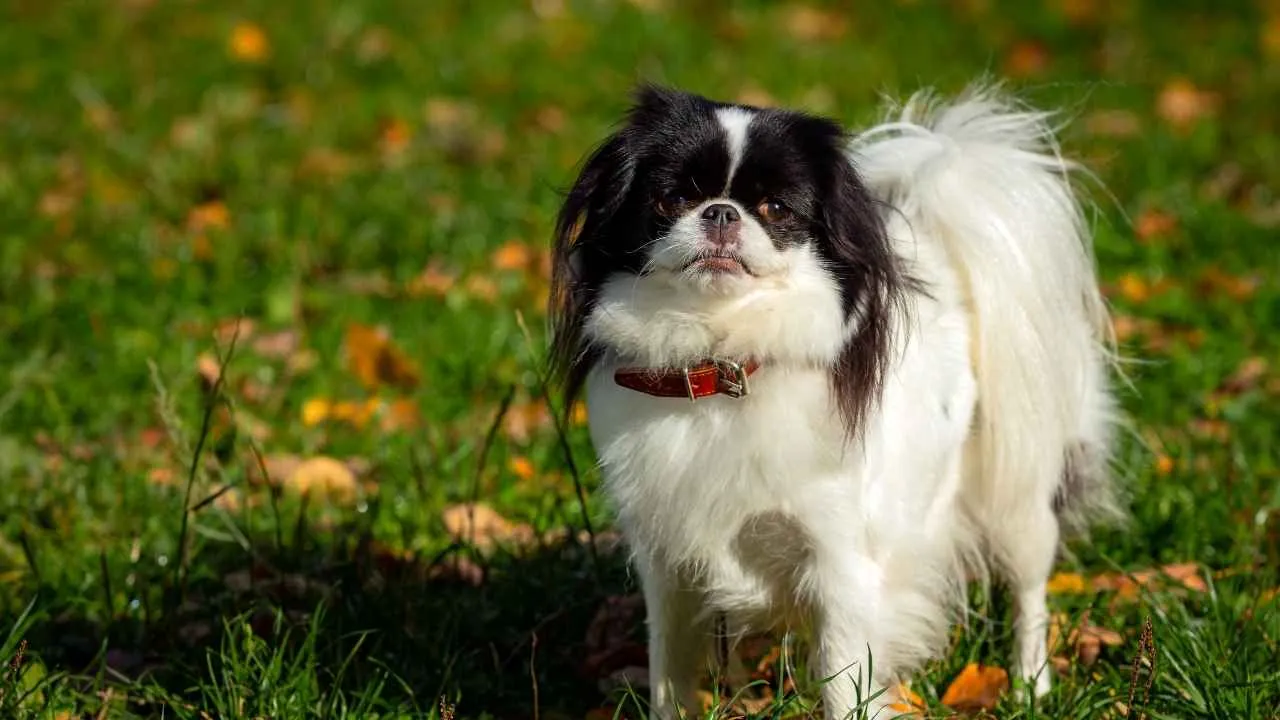
The Japanese Chin is instantly recognizable by its distinctive round head, expressive eyes, and luxurious, silky coat. Weighing between 7 and 11 pounds, this intelligent, independent, and alert breed thrives on human companionship. They are the perfect match for anyone seeking a peaceful, cat-like indoor companion who brings a quiet grace to the home.
Bright and incredibly amusing, the Japanese Chin forms deep, unwavering bonds with its pet parents while remaining somewhat reserved around strangers. While they make the ultimate loyal lapdogs, experts at Purina advise supervising them around small children due to their delicate frames.
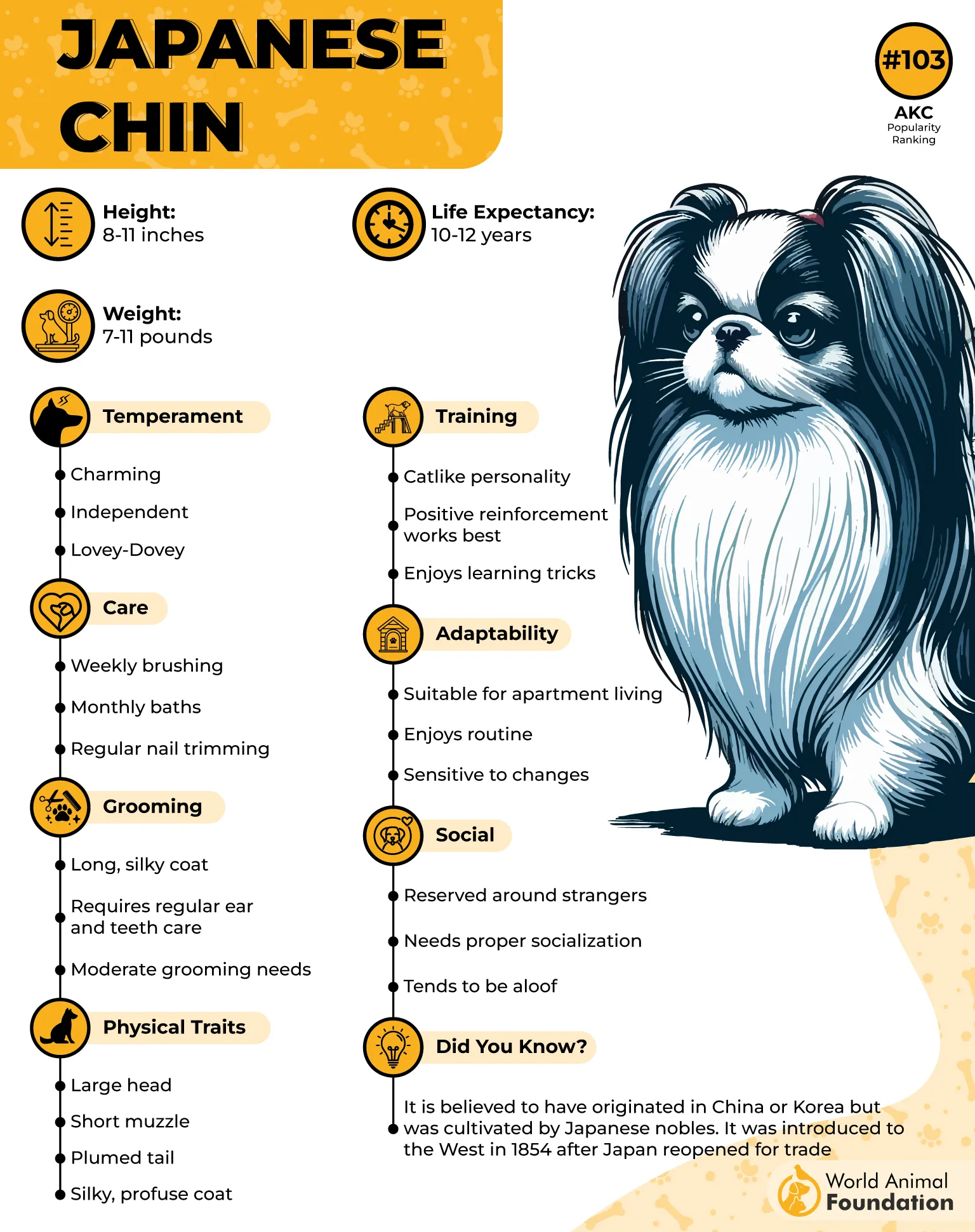
Thanks to their compact size and adaptable nature, they adjust effortlessly to apartment living. A simple, daily 30-minute walk is all it takes to keep these low-maintenance pups happy and active, though crate training is highly recommended early on to help prevent separation anxiety.
Best Care Tips
Easy Coat Maintenance: Unlike many long-haired toy breeds, the Japanese Chin has a low-maintenance single coat that does not mat easily. Brushing them just once or twice a week is enough to keep their fur looking pristine.
Prioritize Eye Care: Because of their prominent, beautiful eyes, this breed is prone to tear staining and debris irritation. Gently wipe their eye area daily with a damp, pet-safe cloth to keep it clean and comfortable.
Handle with Extreme Gentleness: Due to their fragile skeletal structure, always handle these dogs gently during grooming and training sessions, and monitor toy breeds closely for sudden drops in blood sugar (hypoglycemia) during puppyhood.
9. Brussels Griffon
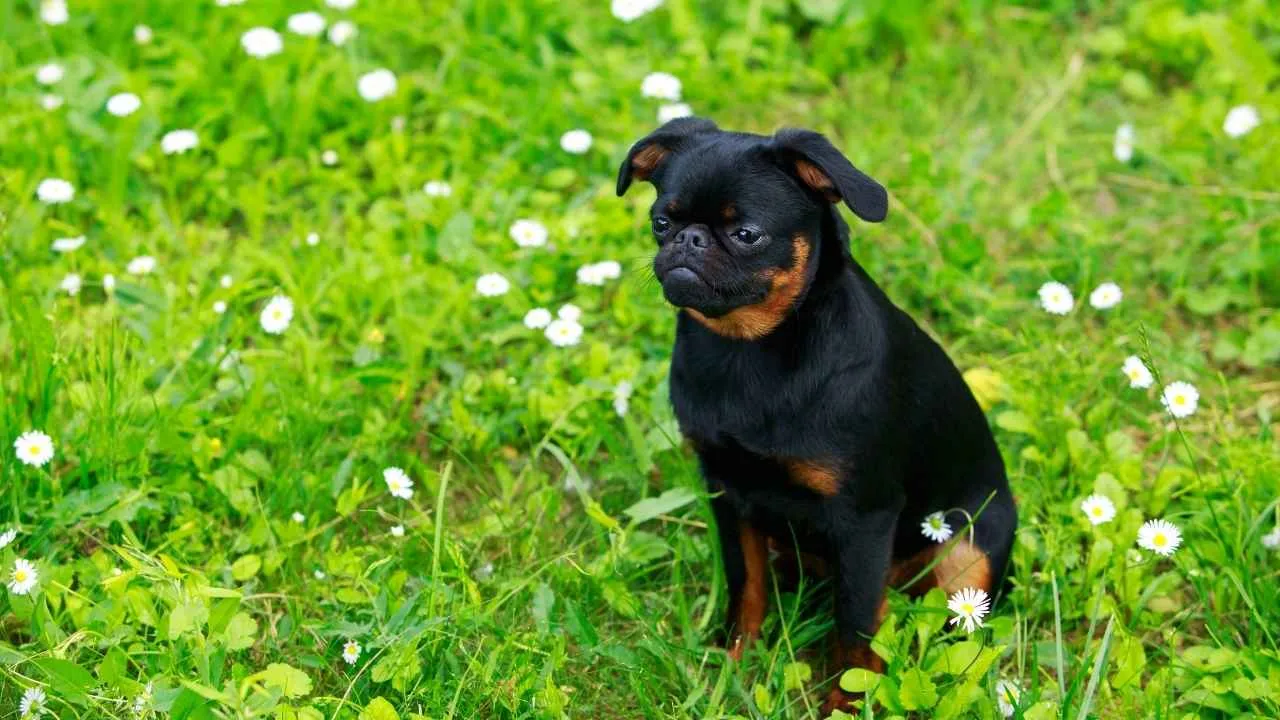
The Brussels Griffon is an alert, curious, and fiercely loyal toy breed that typically weighs between 8 and 10 pounds. Famous for their almost human-like facial expressions, these distinct pups have a flat-faced (brachycephalic) skull structure that requires a bit of extra attention.
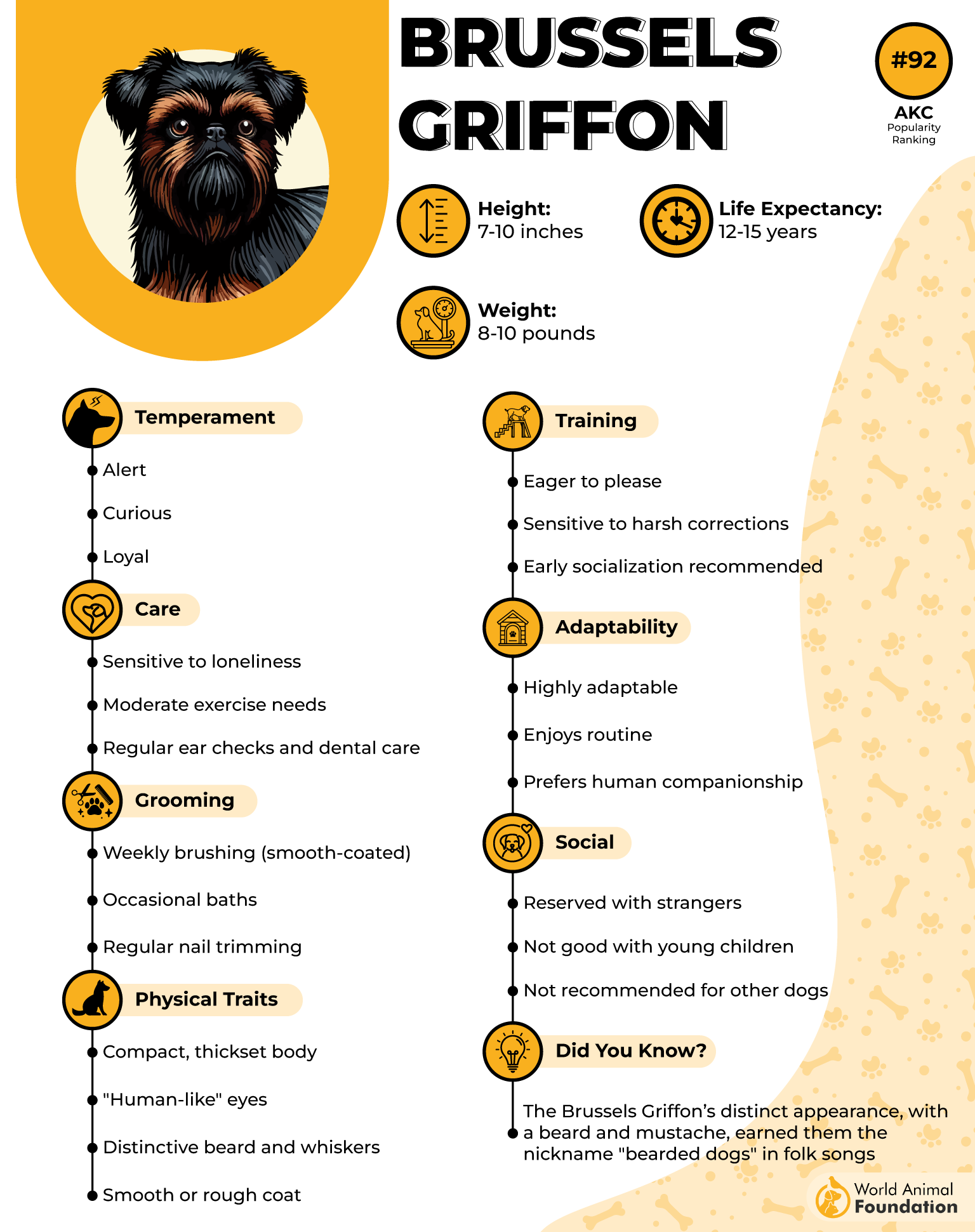
They are prone to frequent snoring and are highly sensitive to hot, humid weather, meaning they must never be left outdoors for extended periods and need a cool, climate-controlled indoor environment.
Despite their stocky appearance, the Brussels Griffon frequently astonishes owners with its surprising agility and speed. They do not require extensive exercise to stay healthy; a brisk 30-minute daily walk paired with short, engaging play sessions is perfect.
These fun-loving dogs thrive on learning intricate tricks and cuddling up with their favorite person. Because they possess a keen watchdog instinct, early obedience training is highly recommended to keep their bold personalities beautifully balanced.
Best Care Tips
Tailor Grooming to Their Coat Type: The Brussels Griffon comes in two distinct coat varieties—rough (wiry) and smooth (silky). The rough-coated variety requires more time-consuming brushing and occasional hand-stripping to prevent mats and maintain texture.
Clean Facial Wrinkles Weekly: Due to their flat faces and skin folds, moisture and debris can easily get trapped around their nose. Clean their nose wrinkles at least once a week with a damp, pet-safe wipe to prevent skin fold infections.
Monitor Temperature Closely: Always prioritize heat safety. Limit outdoor activities during peak summer hours, ensure they have constant access to fresh water, and rely on indoor mental stimulation games when the weather is humid.
Conclusion
These nine exceptional toy breeds are some of the best recommendations for anyone seeking a pocket-sized companion that excels in apartment living and indoor spaces. While they take up very little physical room in your home, they are guaranteed to win your heart with their adorable faces, fierce loyalty, and larger-than-life personalities.
However, to truly enjoy their incredible companionship, remember that their specialized grooming requirements, unique health vulnerabilities, and mental training needs must never be overlooked; neglecting these areas can easily lead to anxiety or destructive behaviors.
Choosing the right dog is a lifelong commitment. By carefully evaluating every aspect of a breed’s temperament and care routine, you can confidently choose the perfect miniature partner to welcome into your home.
