




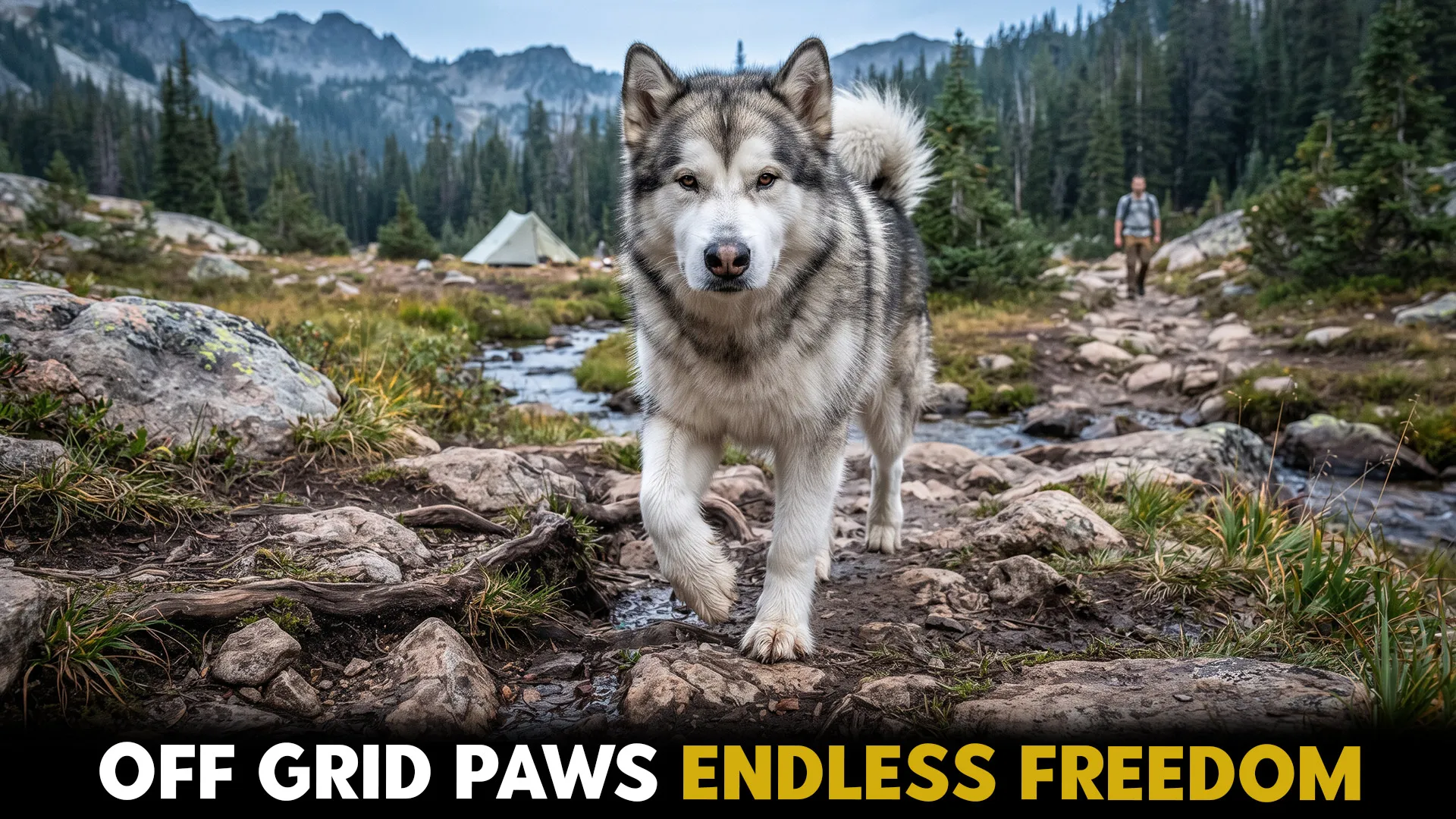
The best dog for off-grid camping may not be the one that looks toughest. What matters on a remote trail is how that dog handles distance, terrain, weather, and unfamiliar surroundings.
A powerful body means little if the dog cannot settle at camp or respond to commands when something catches its attention. Likewise, endless energy can become a problem if there is no reliable recall. Off-road adventures call for a useful mix of stamina, confidence, trainability, and physical soundness.
Dogs joining these trips may cross rocky paths, climb steep slopes, walk through mud, deal with temperature changes, and spend nights sleeping outdoors. Their owners also need to think about paw care, hydration, shelter, wildlife awareness, and recovery after long days.
The right breed can make these demands easier to manage. Here, you will find off-road dog breeds suited to off-grid camping, along with the traits that make them trail companions.
Key Takeaways
What makes a dog truly ready for an off-grid camping trip? It takes stamina, sure footing, a steady mind, and the ability to handle whatever the trail brings.
The Alaskan Malamute has been hauling heavy loads across difficult ground for more than 5,000 years, making this list one seriously rugged camper.
Siberian Huskies can cover long distances, while German Shorthaired Pointers can handle marathon-length hikes when properly conditioned.
Then there are breeds such as the Rhodesian Ridgeback and Australian Cattle Dog, whose hunting and herding instincts add another layer to life in the wild.
Off‑Road Dog Breeds Ready for Off‑Grid Camping Trips
1. Siberian Husky
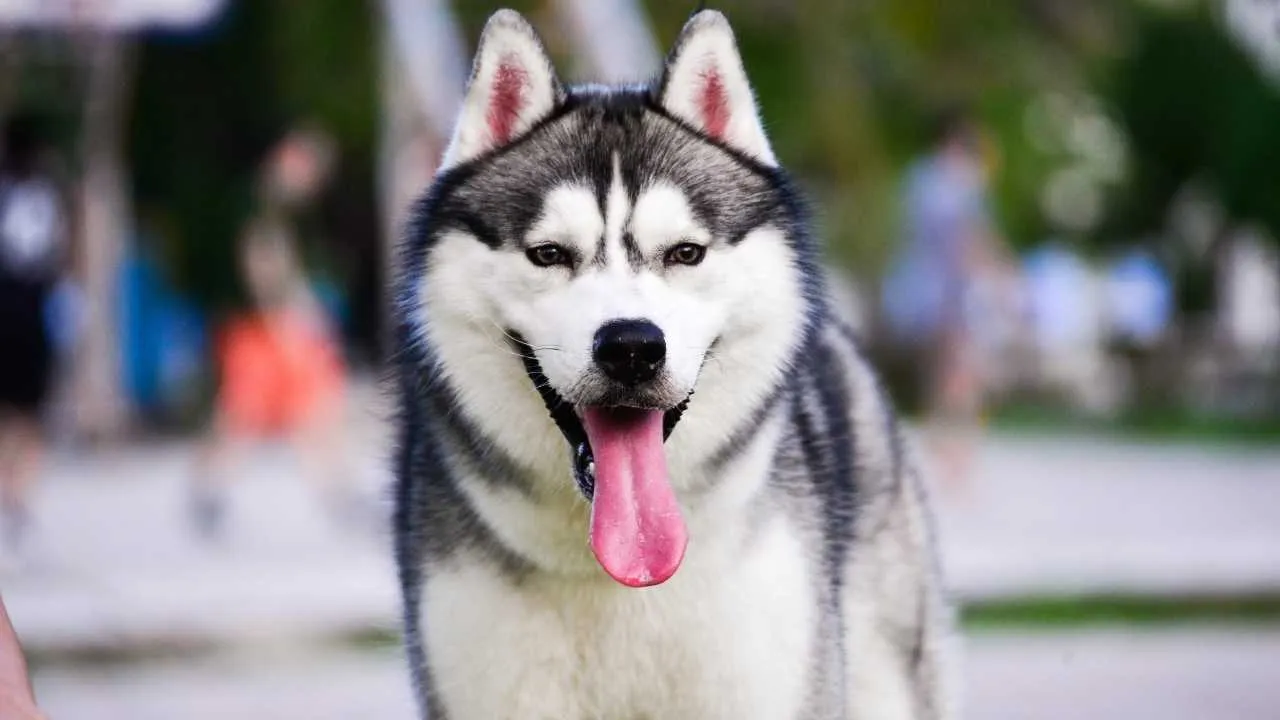
Siberian Husky has a working lineage reaching back 4,000 years or more, with early ancestors bred by the Chukchi people of Siberia. Families relied on these dogs for companionship, hunting support, and hauling loads across long distances in the severe Arctic climate.
Built for Distance
Siberian Husky was bred for long-distance sled work, giving it exceptional endurance for running and hiking once properly conditioned. For wilderness trips, that stamina can translate into impressive mileage.
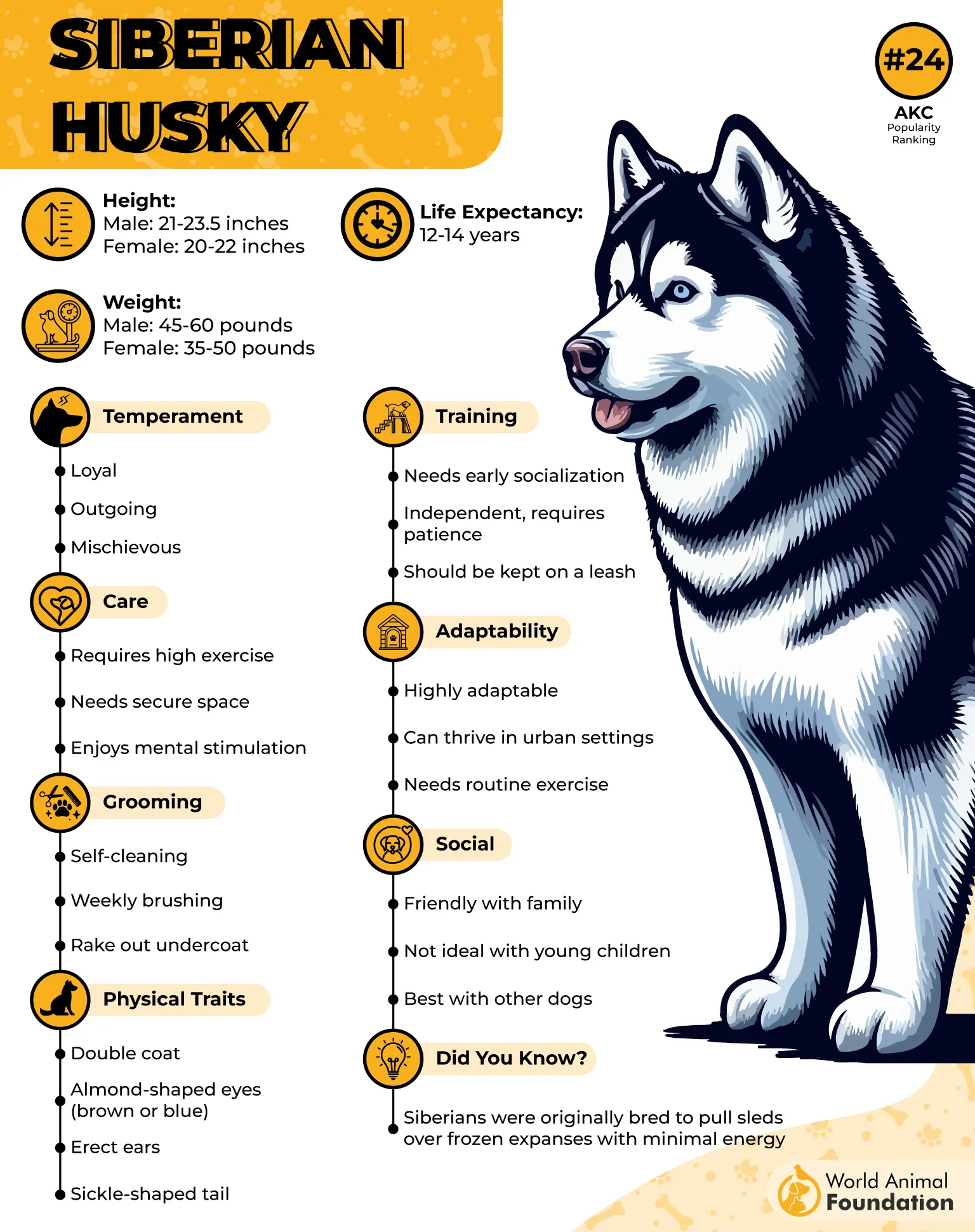
Its thick double coat provides insulation in frigid, even sub-zero temperatures, while warm weather requires careful timing, fresh water, and close attention.
These breed characteristics are especially useful to know:
Can handle extensive hiking distances
Better suited to distance than sprinting
Natural tendency to wander off-trail
A Very Vocal Companion
This adventure dog often communicates through loud howls and dramatic “awoos” rather than relying heavily on conventional barking, as PetMD writes. It also enjoys social interaction with people and other dogs, while insufficient daily activity can lead to chewing, digging, or other destructive behavior.
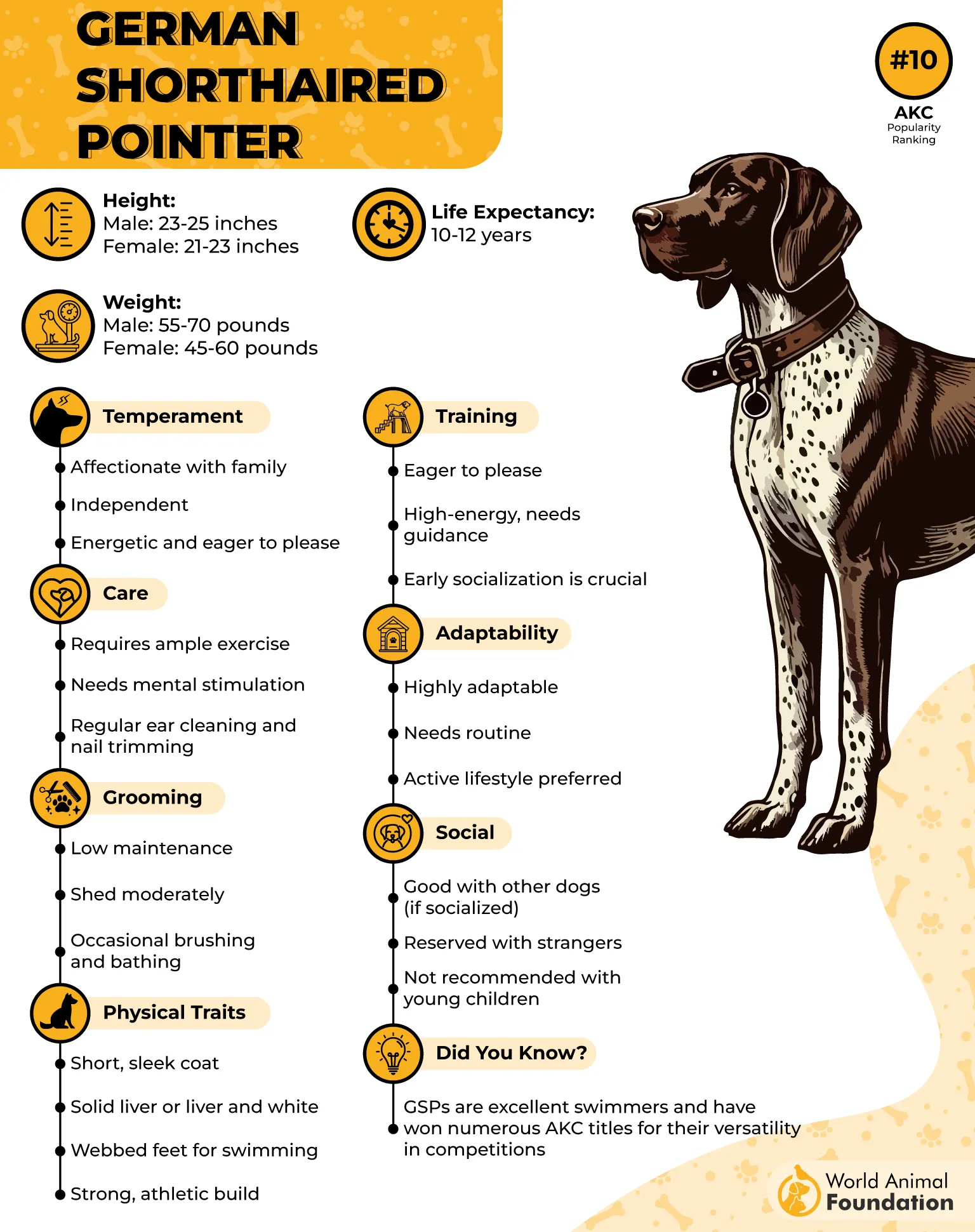
2. German Shorthaired Pointer
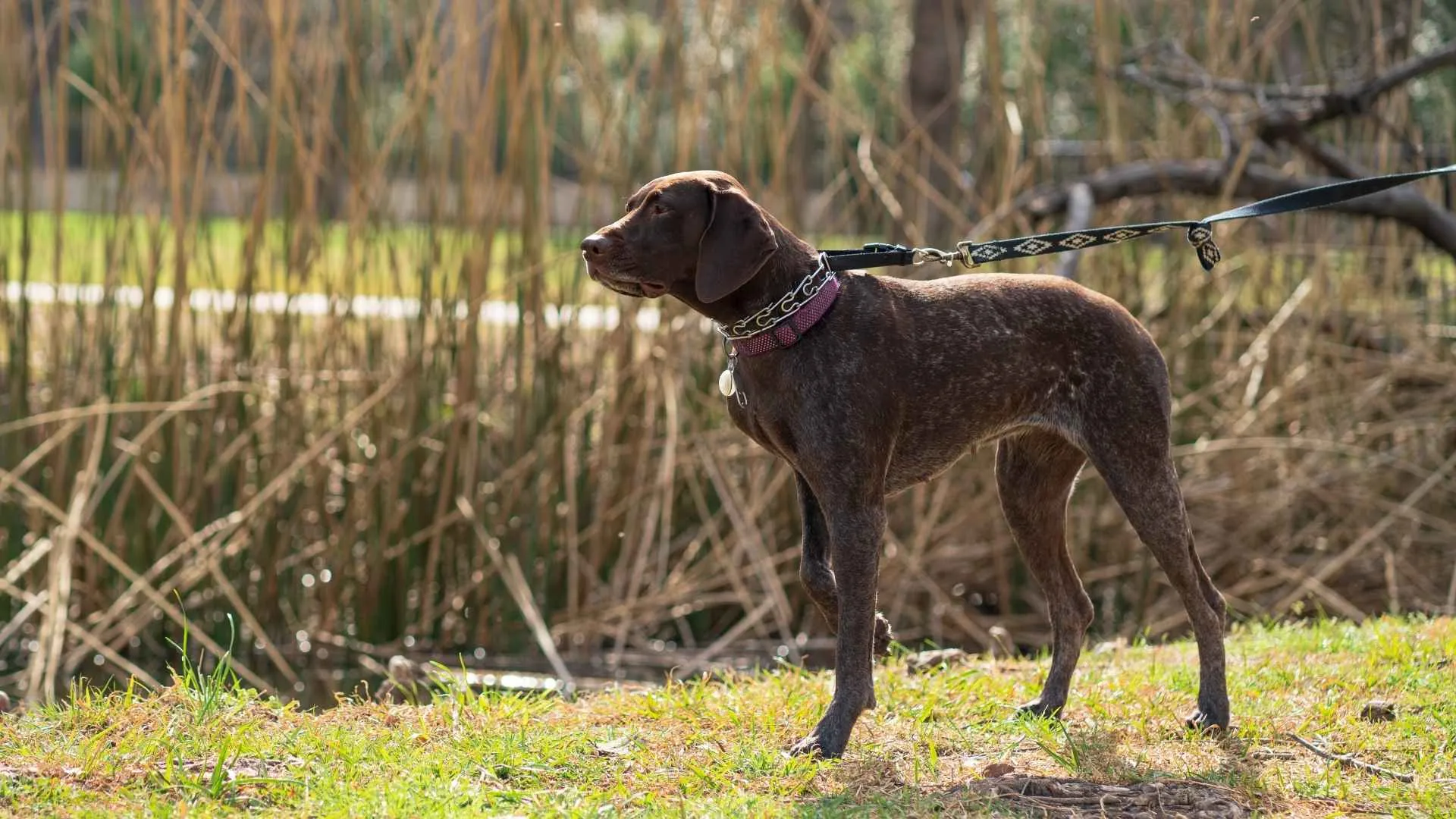
German Shorthaired Pointer emerged as a multipurpose hunting dog in Germany during the mid-to-late 19th century, with earlier forms possibly dating to the 17th century. Its lineage included the German Pointer or German Bird Dog, shaped through crosses involving Spanish Pointers and Bloodhounds.
Made for Distance
This hiking dog can handle demanding outdoor days once properly conditioned, with adults often needing 90 to 120 minutes of vigorous activity daily. Hiking, running, swimming, retrieving, and field work provide the kind of sustained effort this athletic breed was built around.
These numbers put that endurance into perspective:
Three to four miles for a conditioned run
Marathon-length hikes once conditioned
Running from 18 months after growth plates close
A Sharp Working Mind
As a high-energy dog, GSP also needs mental challenges alongside physical activity, with scent games, tracking, puzzle feeders, and structured training giving its intelligence useful direction.
According to Showsight Magazine, positive reinforcement suits this sensitive, eager learner and can help channel its energy into focused work.
3. Alaskan Malamute
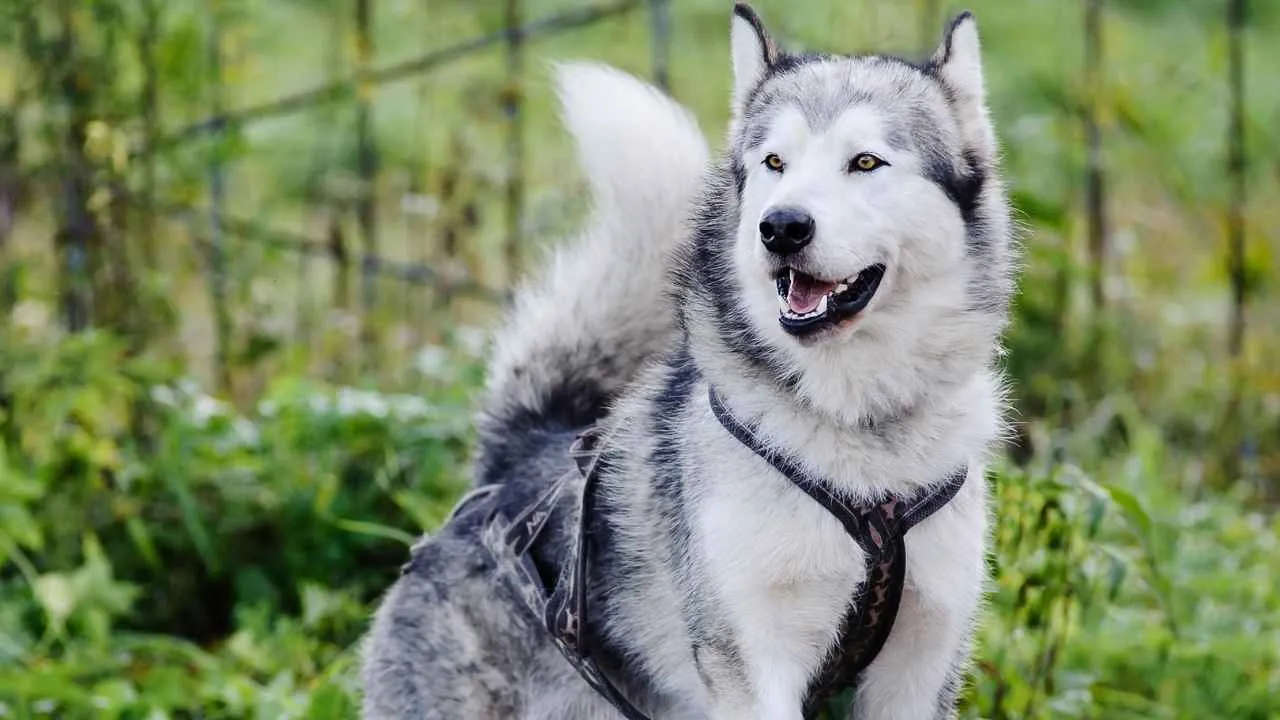
Alaskan Malamute is among the oldest northern sled dogs, with evidence suggesting its work alongside Alaska’s Mahlemut people dates back more than 5,000 years.
Teams were valued for hauling heavy loads across difficult ground, with a group capable of dragging roughly half a ton for hundreds of miles.
Made for Long Miles
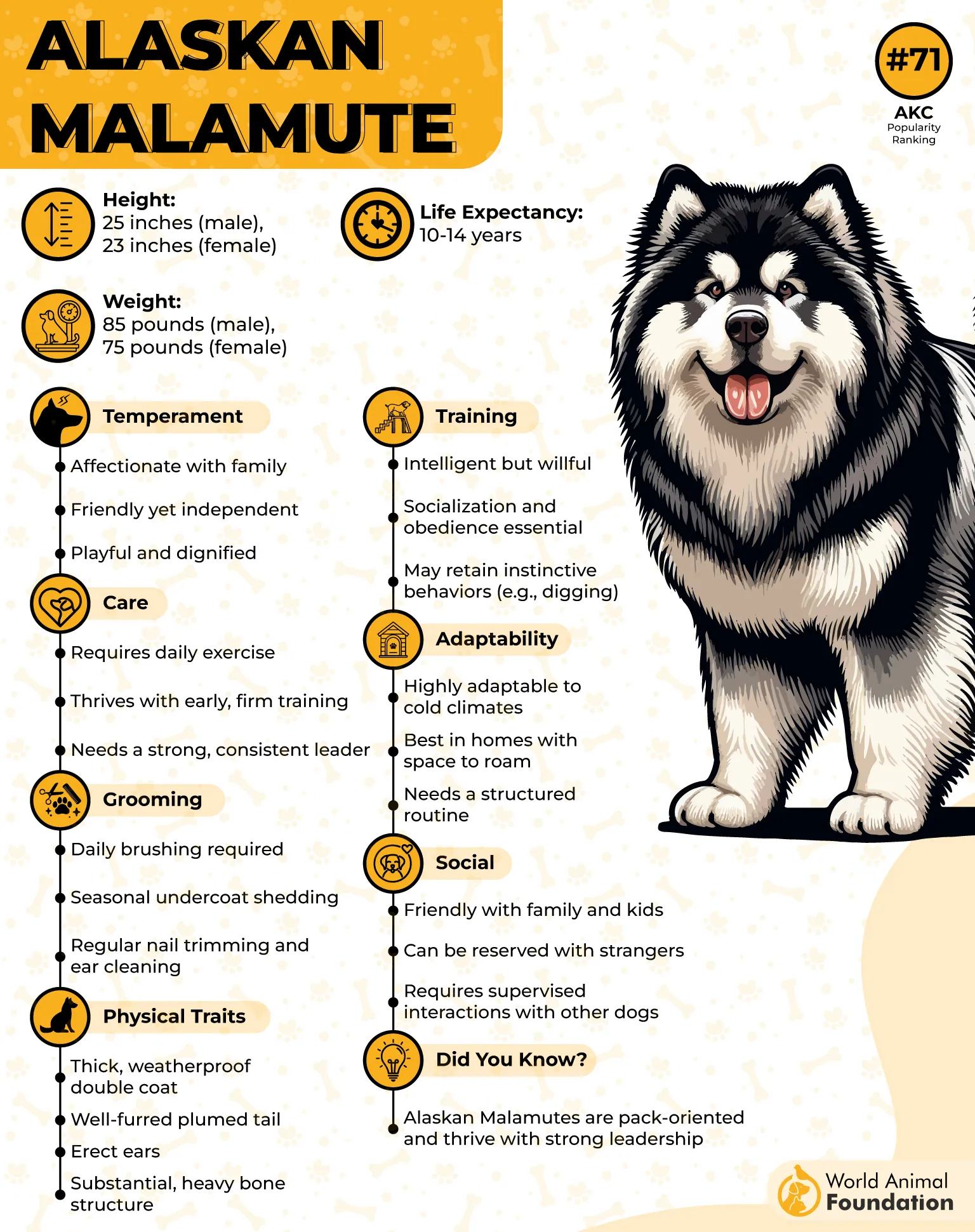
For off-grid trips, the breed’s sustained working ability is especially relevant because Malamutes were bred for extended effort rather than quick bursts. Their powerful build and efficient gait can support day-long hikes and, when fit, runs of 10 miles or more in cold conditions.
These specific figures put that endurance into perspective:
Multi-day hiking capability
Half-ton sled loads by a team
Unsuitable for strenuous outings in hot conditions
More Than Sled Work
Alaskan Malamute has taken on unusual duties beyond hauling, including mine detection, weapons transport, and search-and-rescue work during World War II, as Purina highlighted. Modern activities can include sledding, skijoring, weight pulling, backpacking, agility, and obedience trials.
4. Vizsla
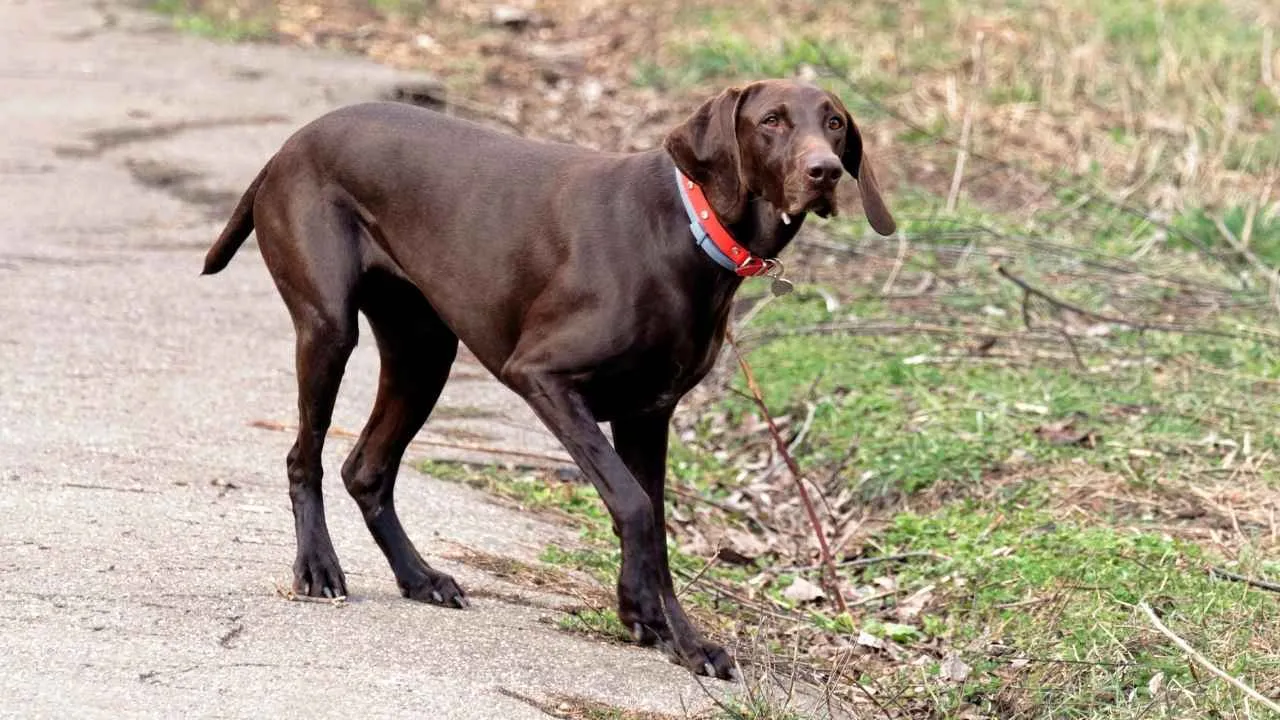
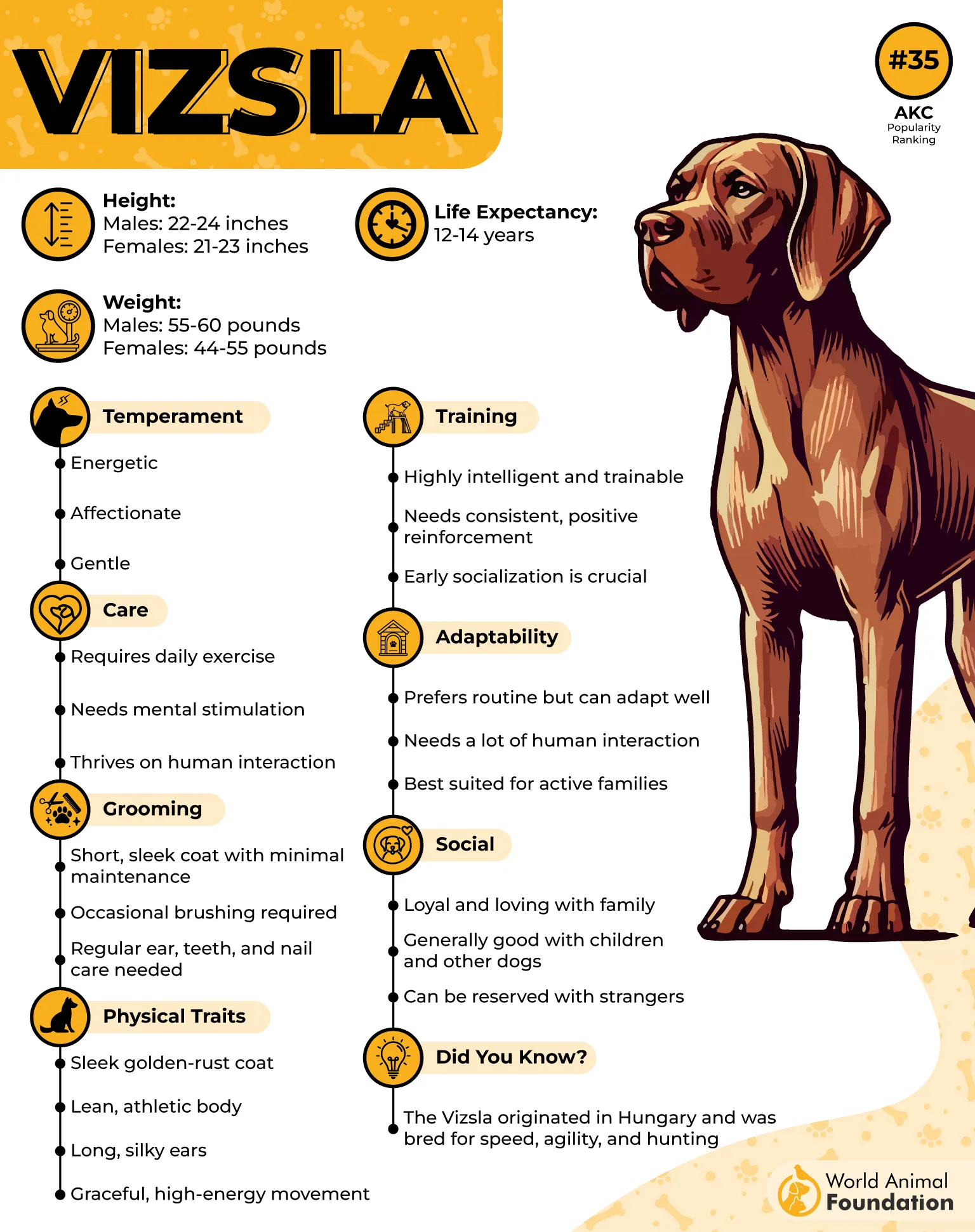
Vizsla’s story goes back to the Magyar people, who traveled across Asia and Europe before settling in what is now Hungary. Their swift horses often worked alongside reddish-brown hunting dogs, and those early companions eventually became the ancestors of today’s breed.
Built for Long Miles
This agile dog is well suited to active backcountry trips, with enough stamina for three to four miles of running and four to five miles of hiking in comfortable weather.
Moreover, the breed needs at least seven hours of exercise each week, with running, swimming, hiking, or training providing useful outlets.
These characteristics matter when planning longer outings:
Use a jacket in cool or rainy weather
Teach clear boundaries around camp
Schedule water breaks and rest periods
A Serious Outdoor Athlete
Vizslas can keep pace with demanding runners and enjoy activities such as hunting, agility, Frisbee, dock diving, and swimming. Younger dogs need sensible limits on long-distance running because their bones are still growing, making age-appropriate conditioning important.
5. Weimaraner
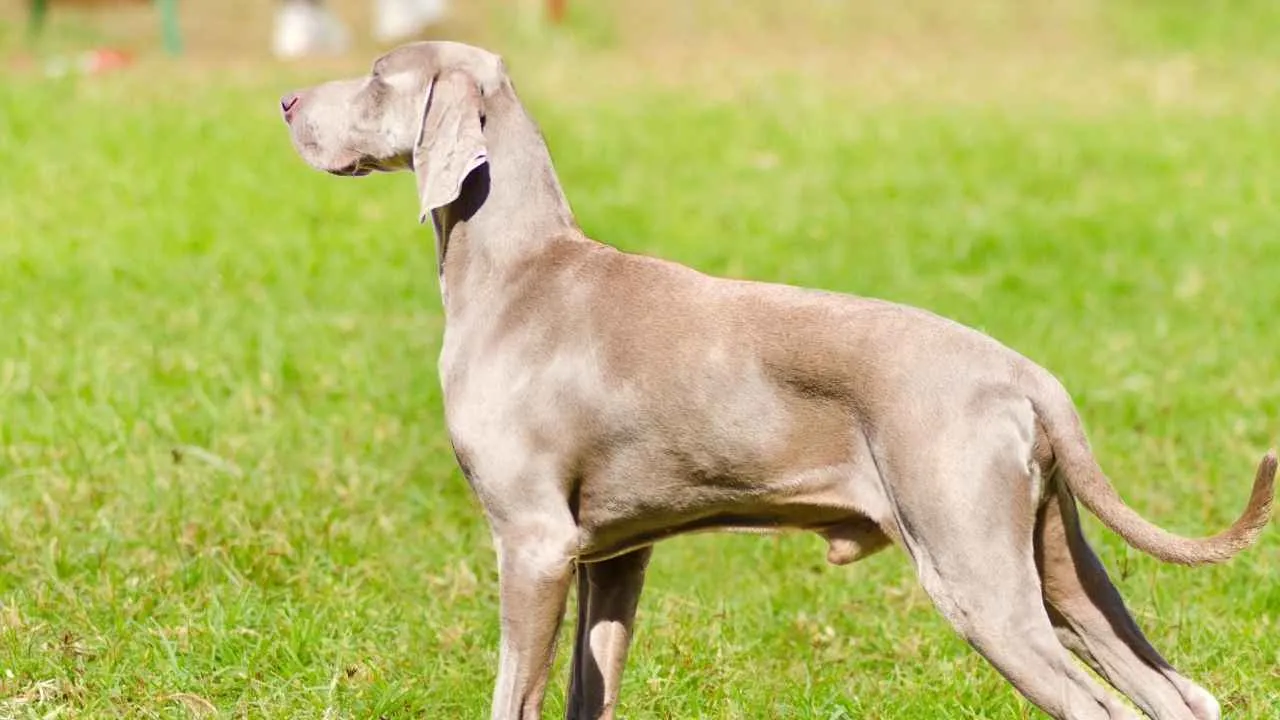
Weimaraners were originally bred among the nobles of Weimar in early 19th-century Germany, where these swift pointers were reserved for members of the German Weimaraner Club. Their original work centered on large game such as boar and deer before the breed later took on bird-hunting duties.
Built for Long Miles
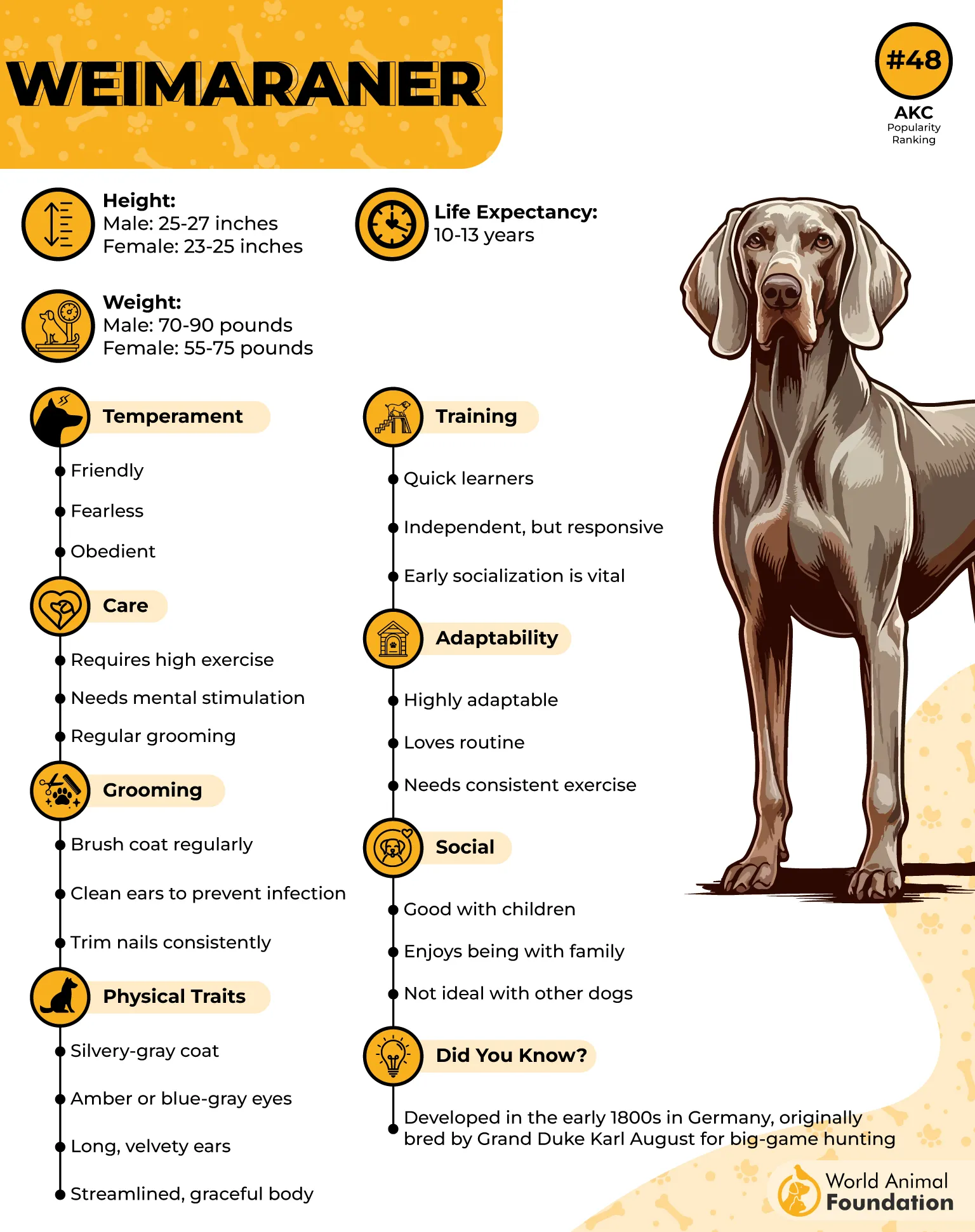
They have the endurance for serious outdoor mileage, with a well-conditioned adult potentially handling a 10-mile run and healthy dogs hiking up to 20 miles. For wilderness trips, vigorous activity fits this breed far better than a casual stroll around the neighborhood.
These practical details are worth knowing:
Full-size bones mature around two years
Safe off-leash areas matter because of prey drive
Tent acclimation helps prevent nighttime chewing or clawing
A Demanding Pace
Weimaraner needs roughly one to two hours of high-impact exercise each day, with running, hiking, fetch, and lure coursing among suitable outlets. Puppies need a slower progression because strenuous impact can place unnecessary stress on their still-growing bones.
6. Australian Cattle Dog
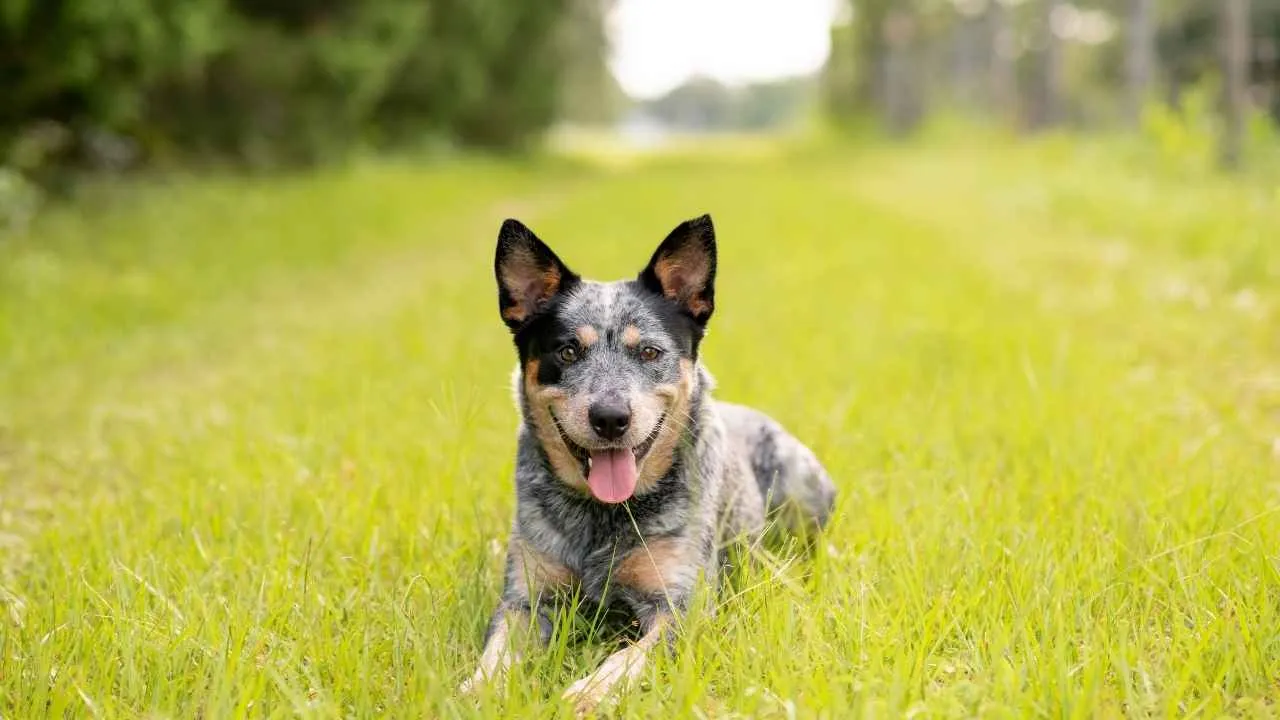
Australian Cattle Dog emerged in the early 1800s as cattle grazing expanded across vast areas of Australia. Thomas Hall crossed Blue Merle Highland Collies with Dingoes in 1840, producing the dogs later called Hall’s Heelers for work across rough, dense country.
Made for Distance
This herding dog has the stamina for demanding days outdoors, with healthy dogs capable of runs exceeding five miles and half-day hikes with rest stops. Their short, dense undercoat and water-resistant outer coat also help them handle both hot and cold climates.
That stamina needs somewhere to go:
Needs frequent physical and mental challenges
Enjoys agility, Frisbee, fetch, and farm work
Benefits from at least 45-minute daily runs or jogs
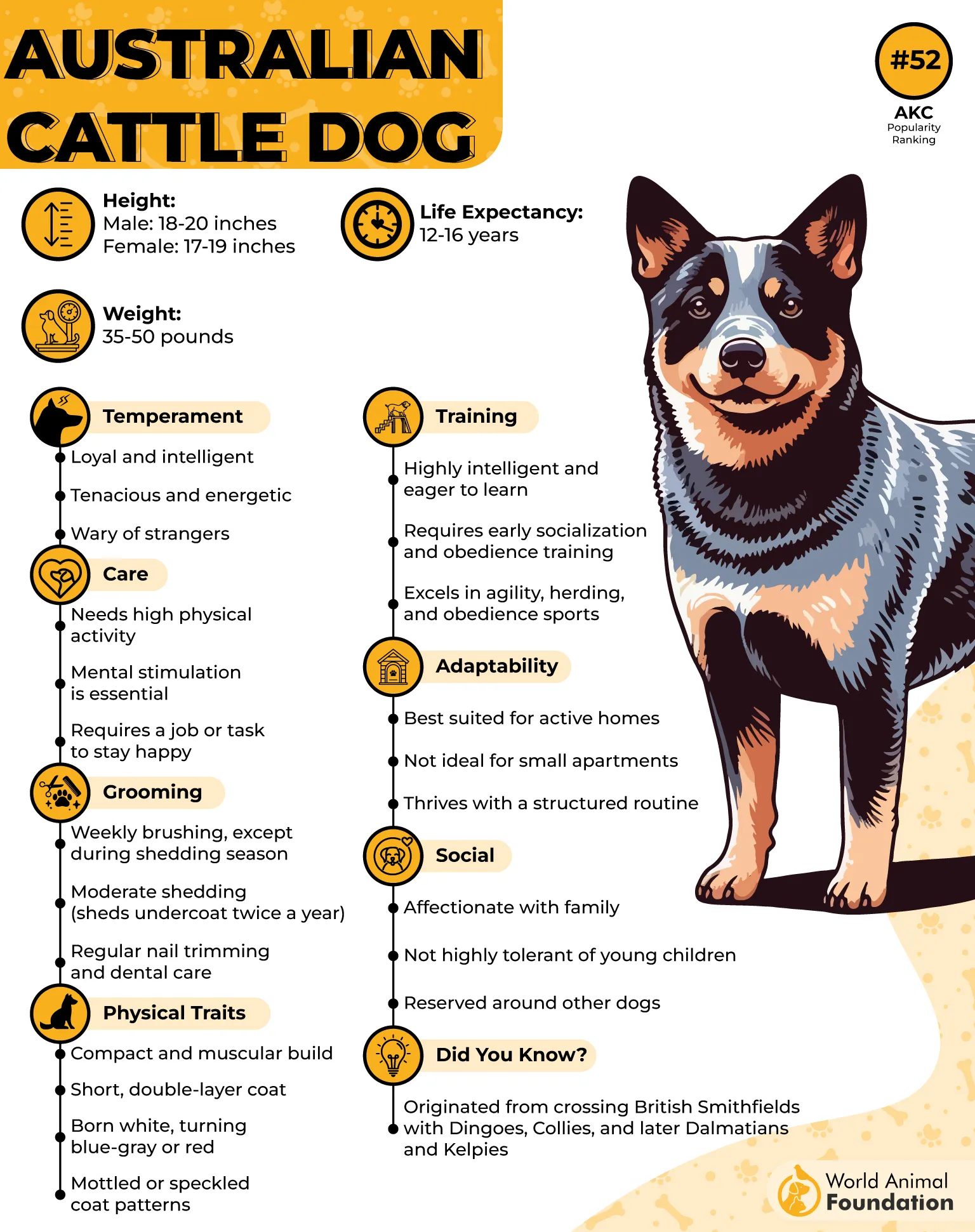
Herding Comes Naturally
Australian Cattle Dog may try to control small children, passing hikers, or other animals through barking and heel-nipping because its herding instinct is so strong. Teaching a reliable place command and rewarding calm observation can help manage that behavior around a campsite.
7. Rhodesian Ridgeback
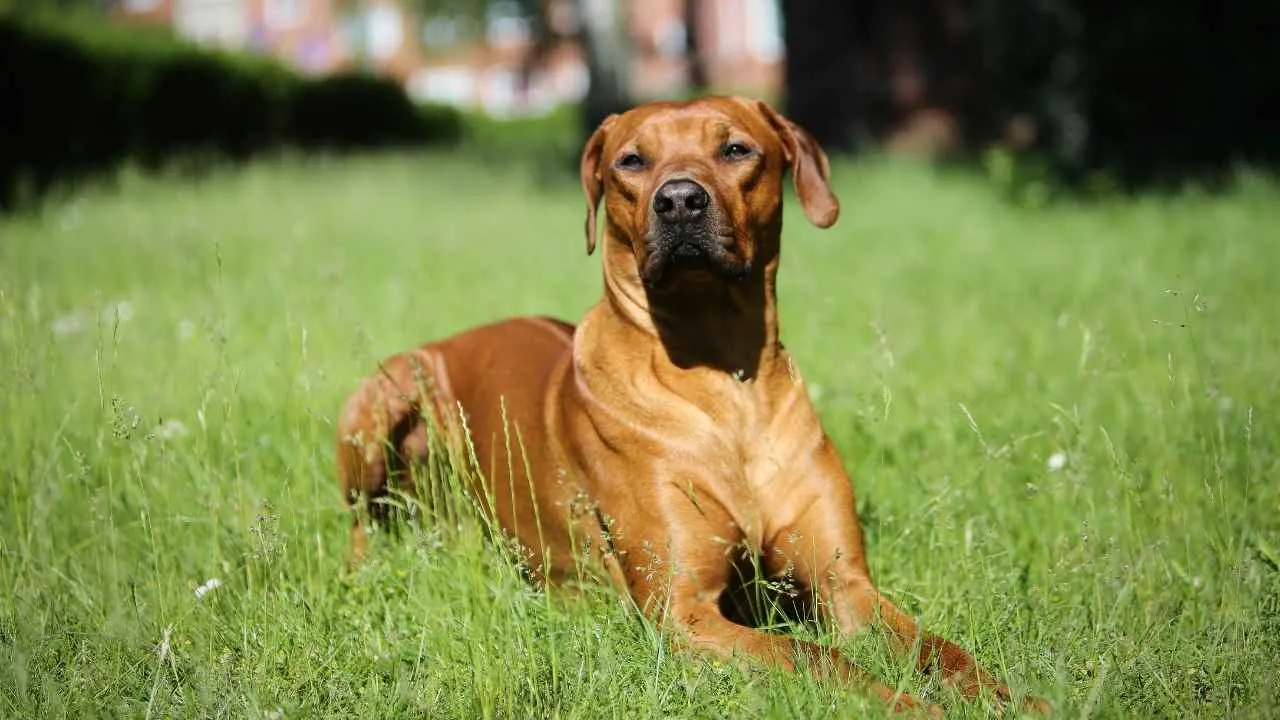
The Rhodesian Ridgeback traces its history to crosses between European dogs and native hunting dogs in southern Africa, resulting in a powerful hunter with its signature strip of backward-growing fur. By the late 1800s, the breed was used in Rhodesia, now Zimbabwe, to track and hunt lions.
Trail-Tested Athlete
This great companion brings serious endurance to remote outings, with a healthy, conditioned dog capable of running six to eight miles and potentially hiking 10 miles before needing a real break. Its heat tolerance and athletic build also suit demanding routes in warmer climates.
Their outdoor profile is further enhanced by these skills:
Keen eyesight for spotting distant activity
Strong sense of smell for tracking
Natural ability in swimming and hiking
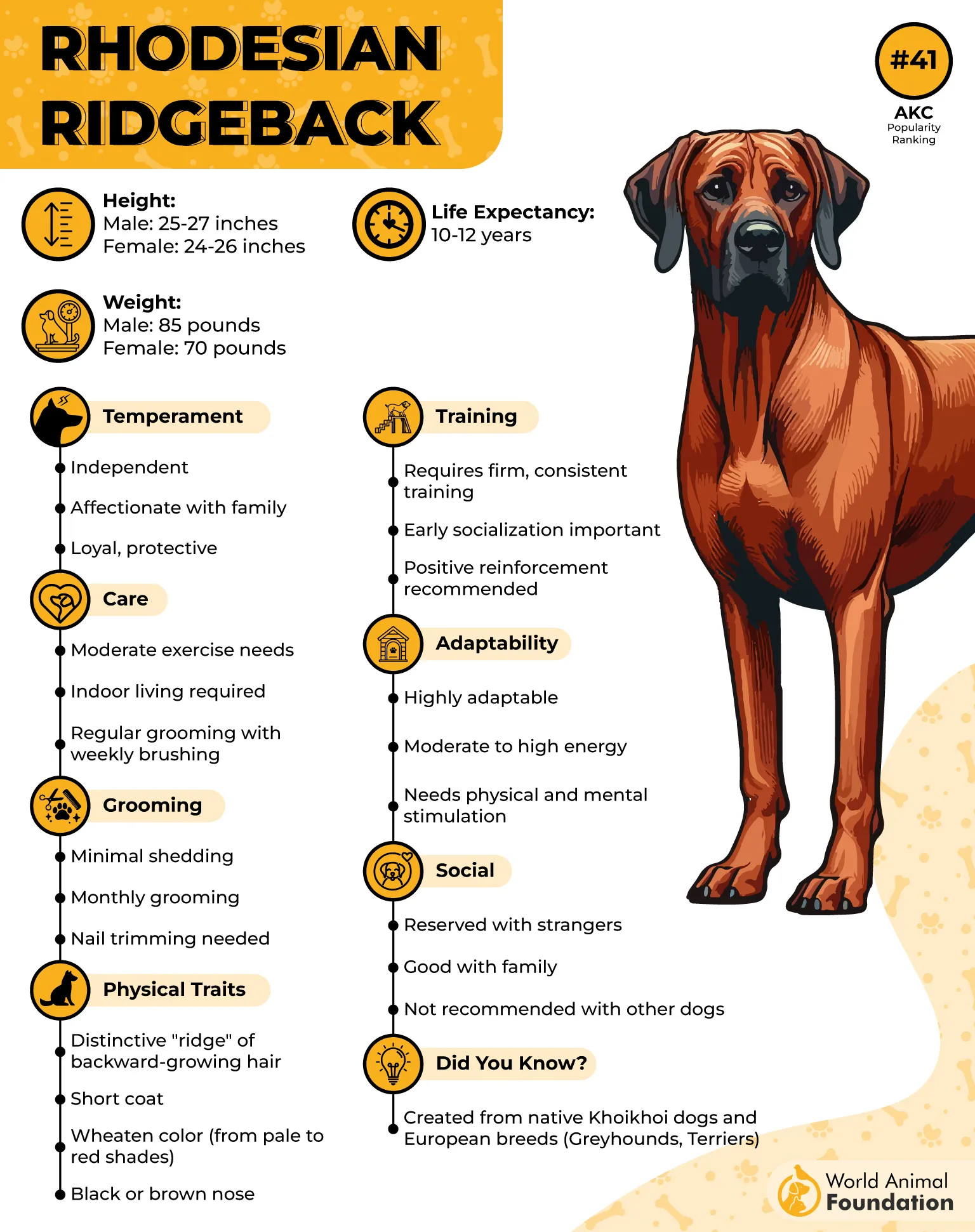
Independent Energy
Rhodesian Ridgebacks can be curious enough to investigate whatever catches their attention, including climbing over barriers when something interesting lies beyond a fence. Their high prey drive also makes impulse-control training valuable around wildlife, hikers, and other distractions.
Conclusion
Remote camping can be rewarding with the right canine companion, but the wilderness brings challenges that everyday walks do not. Rocky ground, steep climbs, long distances, weather changes, and unfamiliar wildlife can test even an athletic dog. Fitness should be built before demanding backpacking trips, while recall and calm behavior need regular practice at home.
Camp life also requires attention to hydration, paw condition, sleeping arrangements, and protection from changing temperatures. Great hiking buddies should have stamina and withstand cold without constant chaos, especially when space is limited and help may be far away. Careful preparation and enough mental stimulation make outdoor adventures safer, smoother, and more enjoyable for everyone.
