




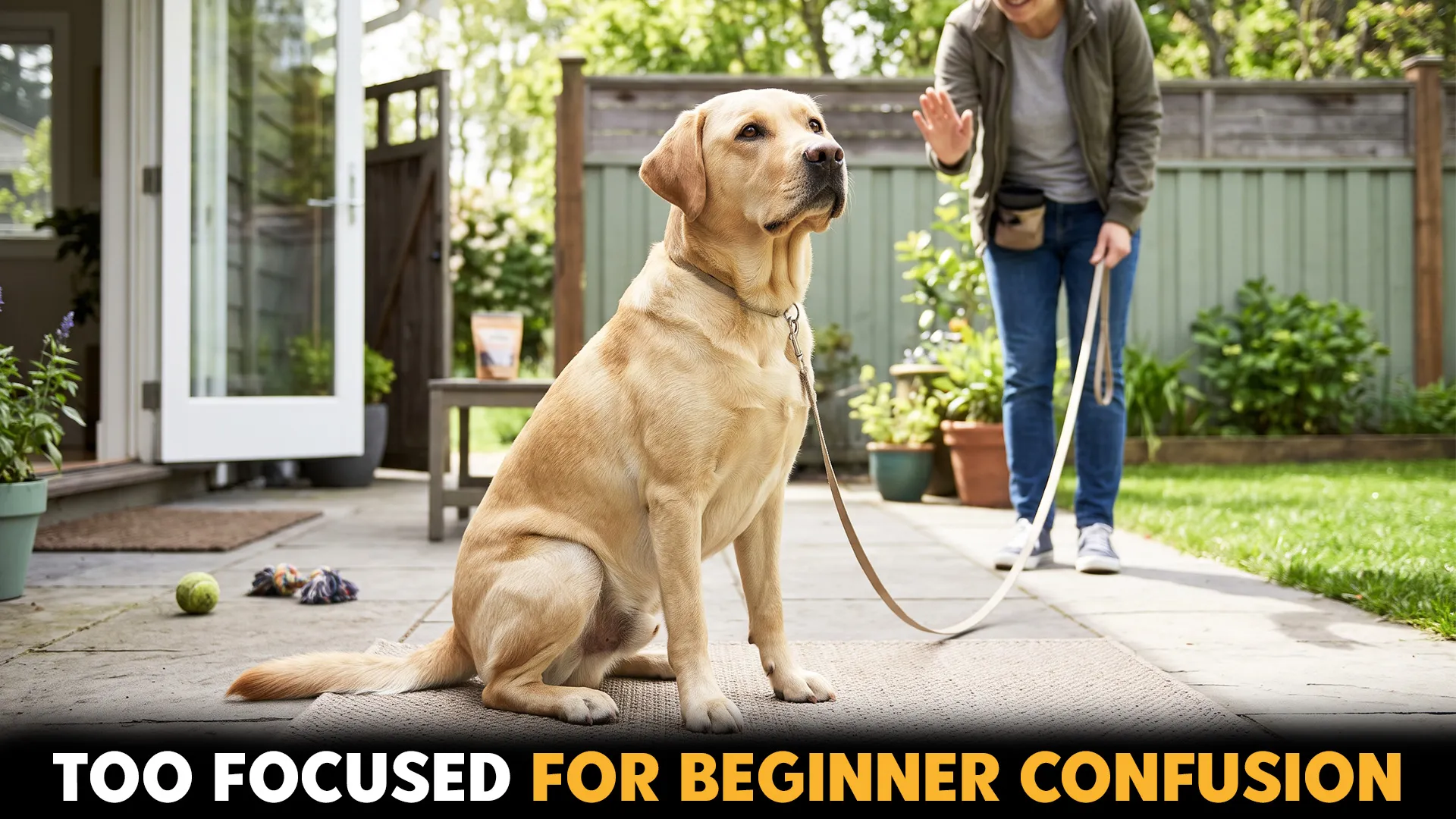
Bringing home your first dog is exciting, but knowing where to start can feel overwhelming. You want a loyal companion to share your daily life, enjoy playtime with your family, and fill your home with happy moments.
However, choosing the right dog involves more than finding one you find adorable. You also need a companion whose personality, energy level, and needs fit comfortably into your lifestyle.
Training is another important part of the journey, especially when you have never owned a dog before. Some dogs pick up commands quickly, respond well to praise, and enjoy learning new things.
These qualities can make everyday tasks, such as house training, teaching basic obedience, and building good walking habits, much easier. Still, every dog has its own personality, and even naturally trainable dogs need patience, consistency, and plenty of positive reinforcement.
With the right match and a little preparation, you’ll feel more confident handling the challenges of dog ownership and enjoy the rewarding experience of watching your furry friend grow into a well-mannered member of the family.
Obedient Dog Breeds for First‑Time Owners
1. Golden Retriever
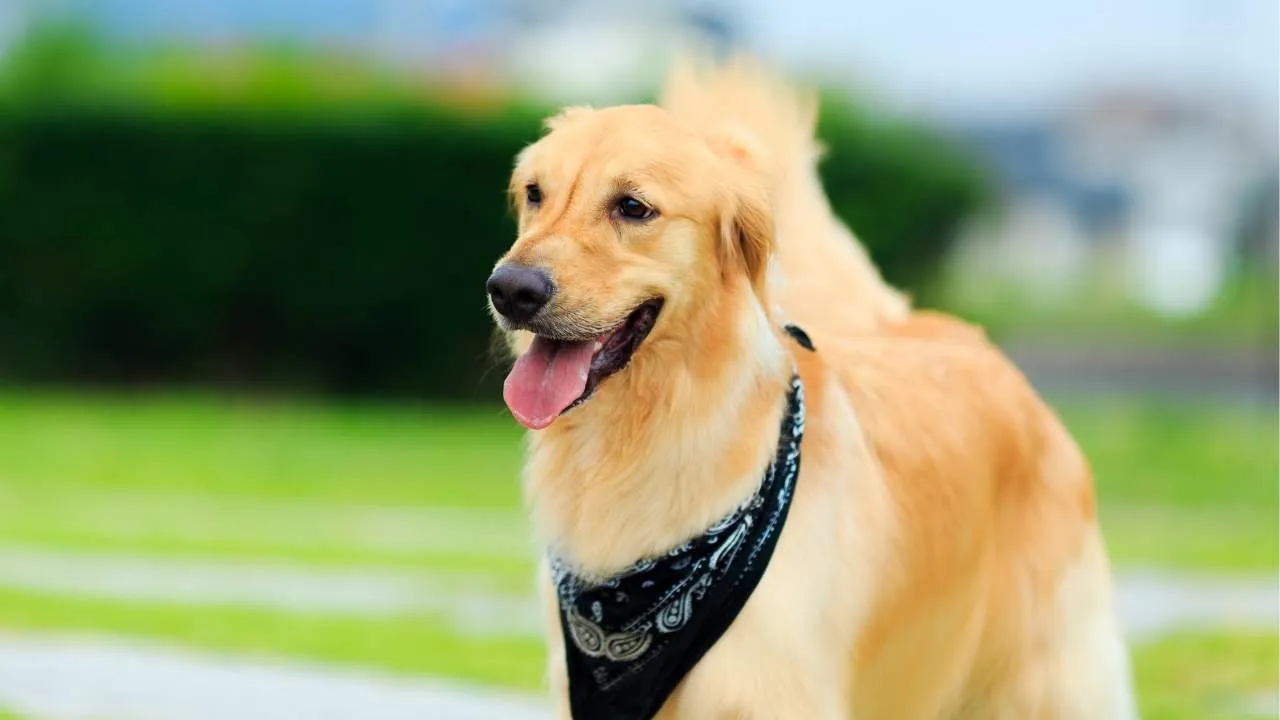
Golden Retrievers are friendly, intelligent dogs known for their gentle nature and eagerness to please. Originally bred in Scotland as gundogs, they helped hunters retrieve birds.
Today, they also work as guide dogs, therapy dogs, and search-and-rescue dogs. Their playful personalities and love for people make them popular family companions, as noted by the AKC.
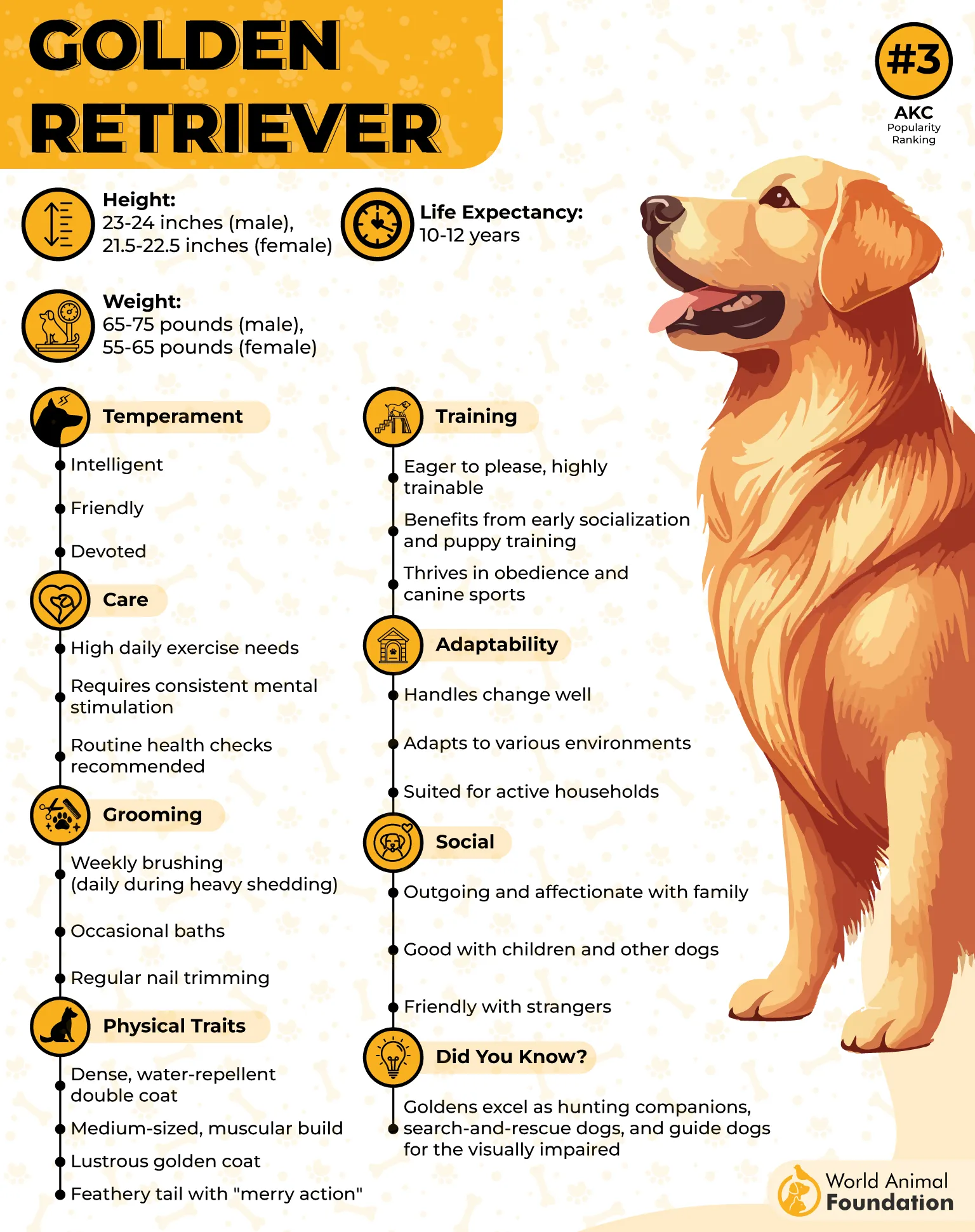
Training and Temperament
Golden Retrievers are quick learners and usually respond well to training. They enjoy learning commands and taking part in family activities.
However, they can be sensitive, so use gentle methods and positive reinforcement. Early socialization also helps them become comfortable around new people, children, and other pets.
Exercise and Care
Golden Retrievers have moderate energy levels but need plenty of exercise, including long walks, running, fetching, and swimming.
Their thick, water-repellent double coats shed heavily and need regular grooming to prevent mats behind the ears and on the hind legs.
They love carrying things in their mouths and enjoy being involved in daily activities. Keep them safe around water, and introduce them to cats and other household animals during puppyhood for better compatibility.
2. Labrador Retriever
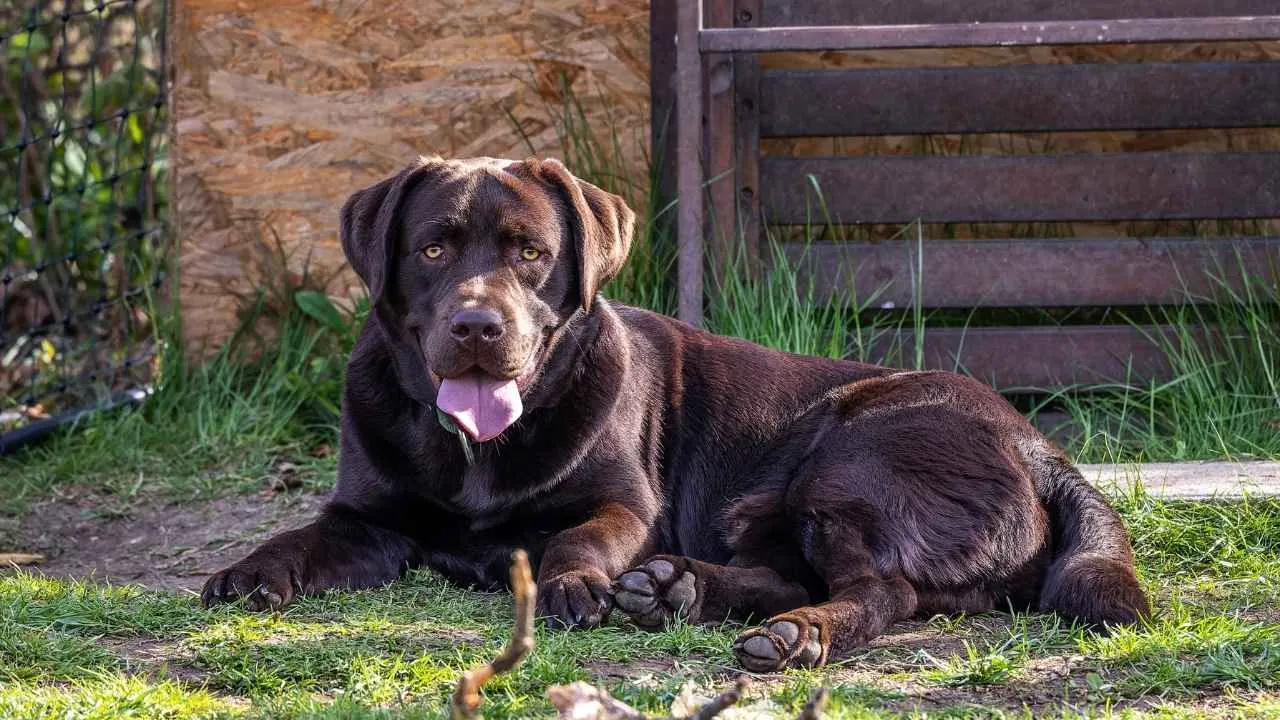
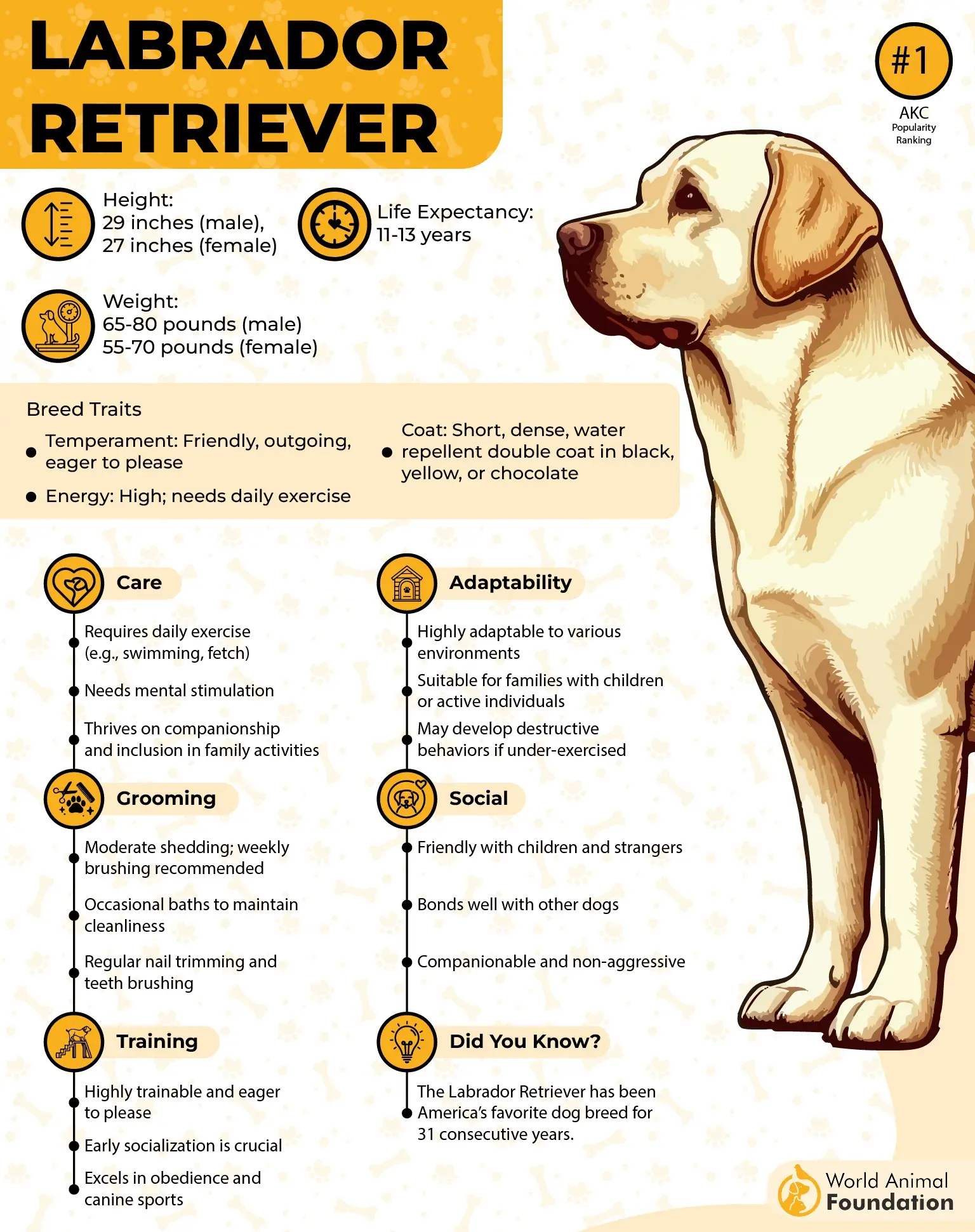
Labrador Retrievers are friendly, gentle, and intelligent dogs that make excellent companions for first-time owners. Developed in 19th-century Newfoundland, they originally worked alongside fishermen as water dogs.
Today, they are valued as family pets, hunting companions, service dogs, and therapy dogs. Their outgoing nature helps them bond with the whole family.
Training and Temperament
Labrador Retrievers are eager to please and quick to learn, making training easier for beginners. However, their high energy levels require consistent training from an early age. PetMD mentions puppy and obedience classes can help them learn good manners.
Early socialization with different people, pets, and environments is also important. Address biting, chewing, and picking up unwanted objects before these habits become harder to manage.
Exercise and Care
Labrador Retrievers need plenty of physical and mental activity. They enjoy swimming, hiking, and energetic games of fetch.
Their dense, water-resistant double coats shed heavily, especially during seasonal changes. Regular brushing helps manage loose hair.
They usually get along well with children, other dogs, and strangers. Supervise early introductions to family members and other pets to help everyone feel comfortable.
3. Toy Poodle
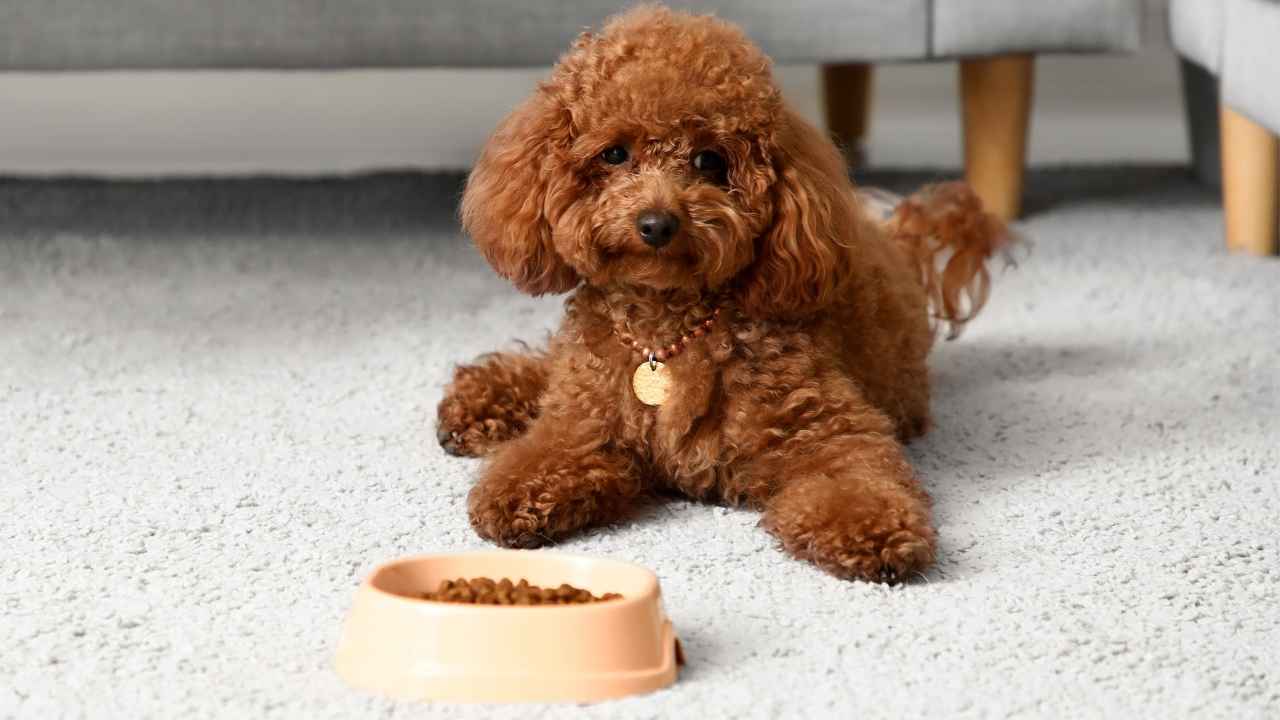
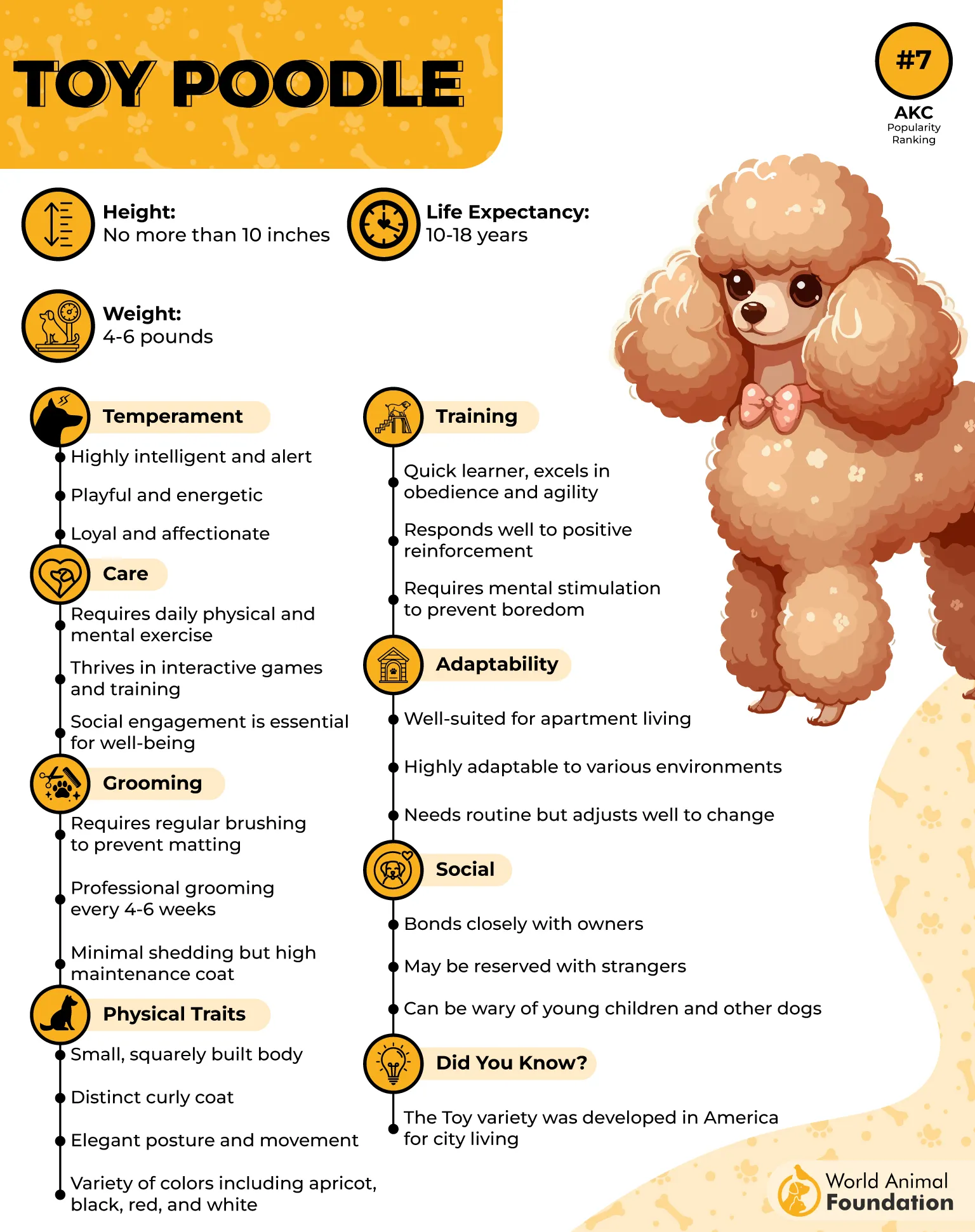
Toy Poodles may be small, but they have big personalities. Originally developed from larger Poodles, the breed has a history linked to duck hunting in Germany. These dogs are bright, affectionate, and playful. They love being part of family activities and can also alert their owners when visitors arrive.
Training and Temperament
Toy Poodles learn commands quickly and respond well to consistent, reward-based training. They enjoy learning tricks, playing games, and taking part in activities that challenge their minds.
Without enough attention and stimulation, they may become mischievous or develop destructive habits. They also form close bonds with their owners and can struggle when left alone for long periods.
Exercise and Care
Toy Poodles need daily walks, indoor playtime, and mental stimulation. They can also enjoy activities such as agility and obedience.
Their curly coats shed very little but require regular grooming and trimming every four to six weeks.
They can do well with children and other pets, but their tiny size makes them vulnerable to injuries. Supervise interactions with young children and larger dogs, especially during play.
4. Papillon
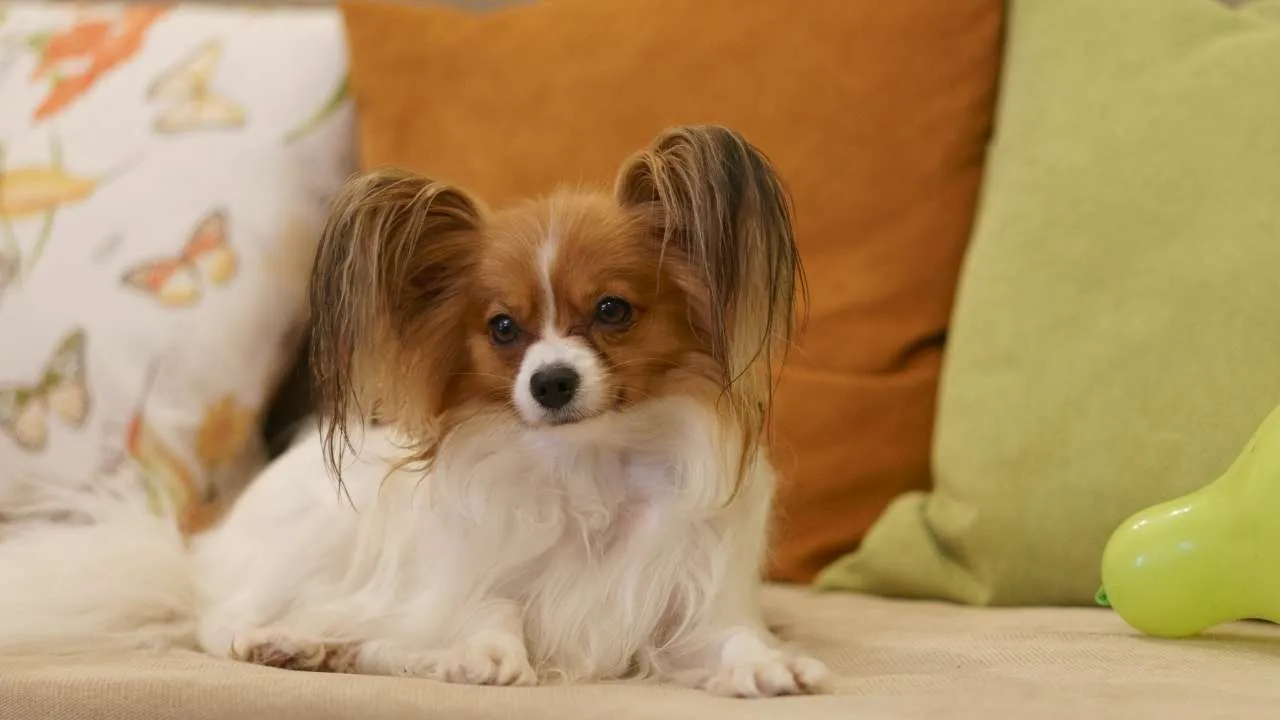
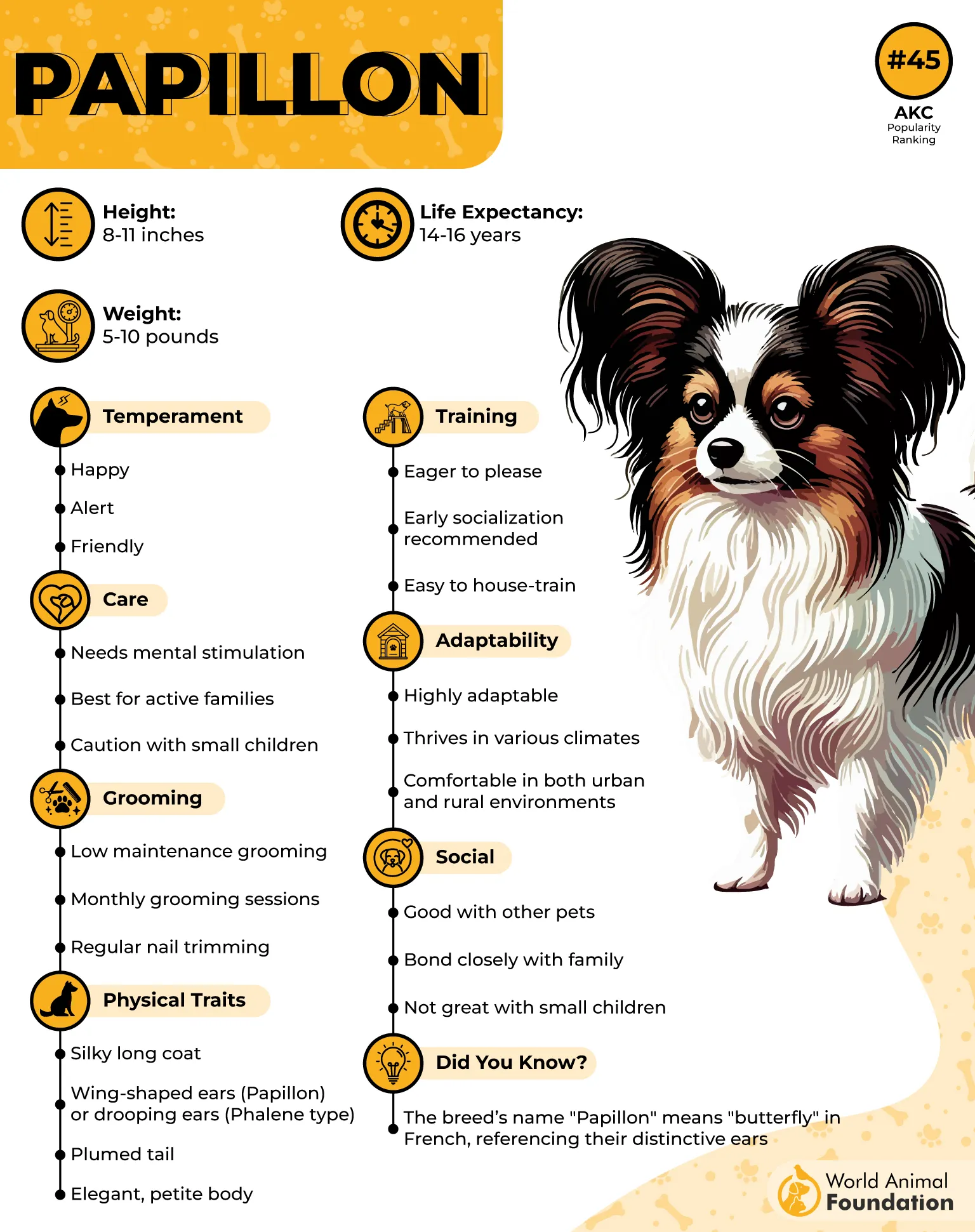
Papillons are lively, confident dogs with a love for learning and adventure. Their name means “butterfly” in French, inspired by their distinctive wing-shaped ears, according to Omlet.
These elegant toy dogs are more athletic than they look and enjoy being part of family activities. Their intelligence, friendly nature, and eagerness to please make them a great option for first-time owners.
Training and Temperament
Papillons are highly trainable and quick to pick up commands and tricks. They respond well to praise, play, and positive reinforcement. They also excel in obedience and agility activities.

Early socialization and puppy classes help them learn to behave around other dogs and people. Although friendly with strangers, they may bark excitedly or alert their owners when someone arrives.
Exercise and Care
Papillons are energetic dogs that enjoy daily walks, playing fetch, and learning new tricks. They need regular activity and attention to stay happy.
They usually get along well with other dogs, cats, and older children. However, supervise play with young children and larger dogs because their small size makes them vulnerable to accidental injuries.
They enjoy companionship but also appreciate having their own space. Encourage independence from an early age to prevent them from becoming overly dependent on their owners.
5. Havanese
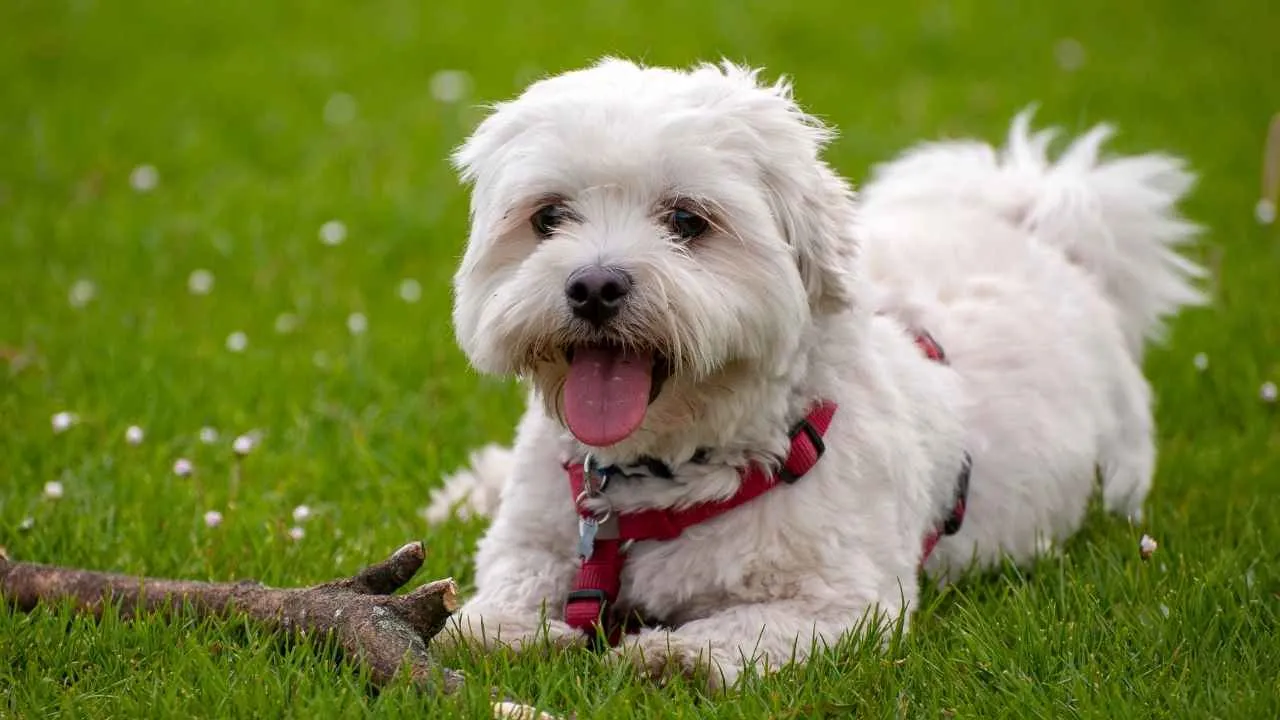
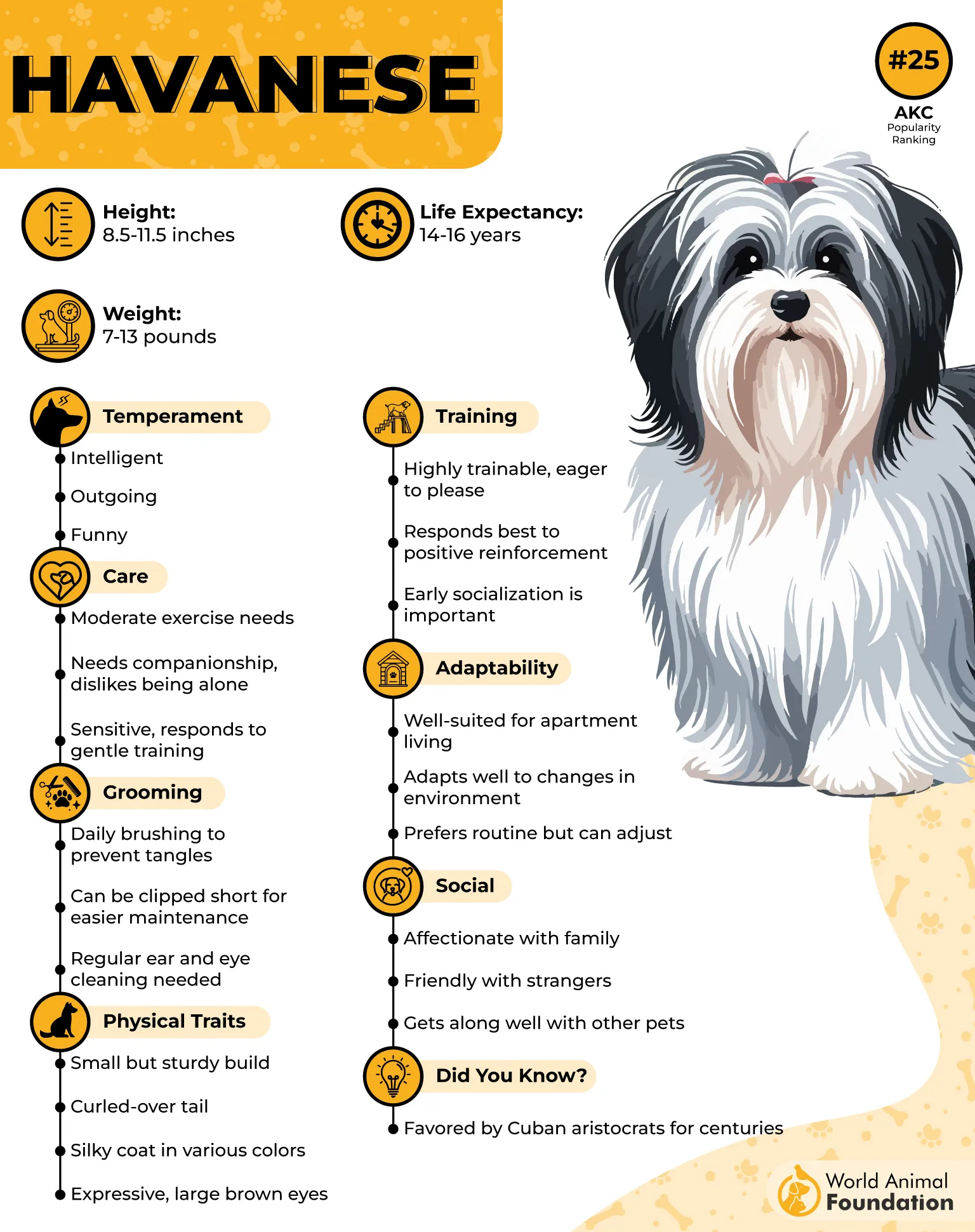
The Havanese is the only dog breed native to Cuba. Once known as the Havana Silk Dog, this cheerful companion has a lively personality and a love for being around people. Havanese dogs are intelligent, sociable, and naturally entertaining.
Their adaptable nature makes them suitable for city living, while their eagerness to learn helps them fit well into homes with first-time owners.
Training and Temperament
Havanese dogs are smart and highly trainable. They enjoy learning tricks and respond well to training games, praise, and positive reinforcement. Early socialization helps them behave comfortably around children, other pets, and strangers.
They also make alert watchdogs, though they may develop excessive barking if not trained properly. Since they love staying close to their owners, crate training and suitable toys can help them cope with time alone.
Exercise and Care
Havanese dogs need around 30 minutes of daily exercise through short walks and play sessions.
Their long, silky coats may be straight or wavy and require frequent brushing to prevent tangles. Short haircuts can make grooming easier.
These sociable dogs enjoy attention and family activities. Provide companionship and mental stimulation, and avoid leaving them alone for long periods.
6. Cavalier King Charles Spaniel
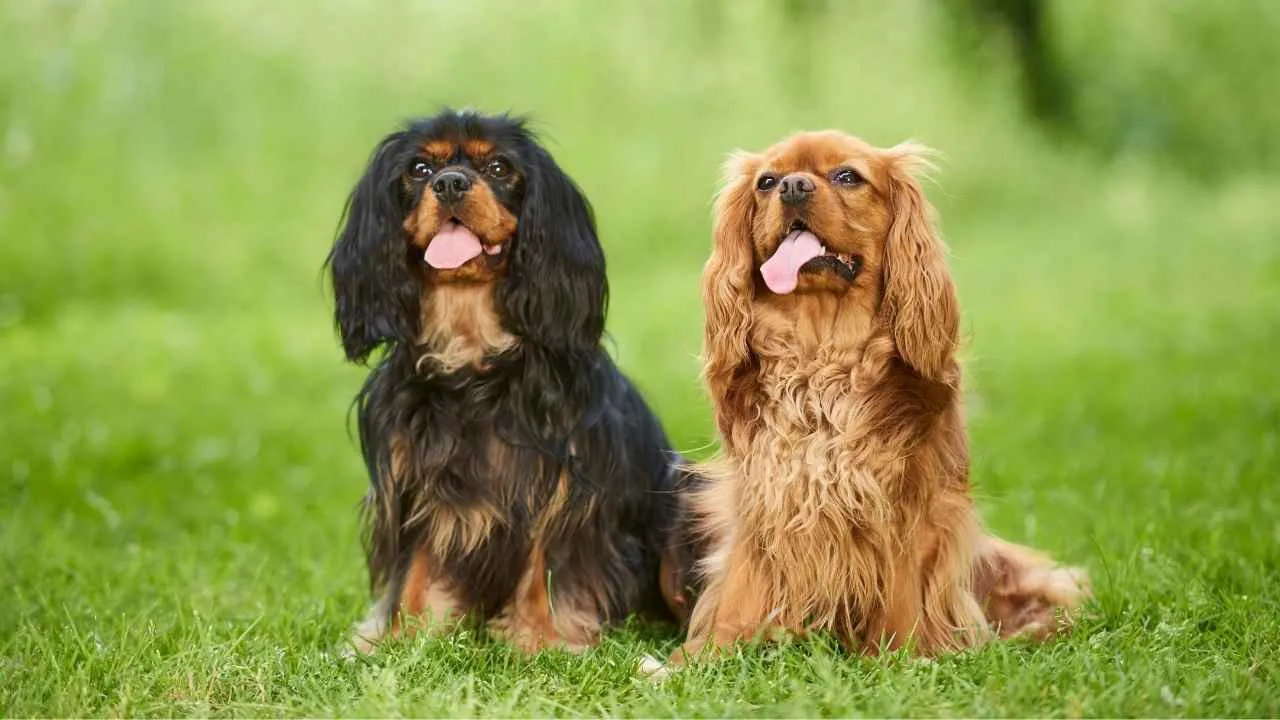
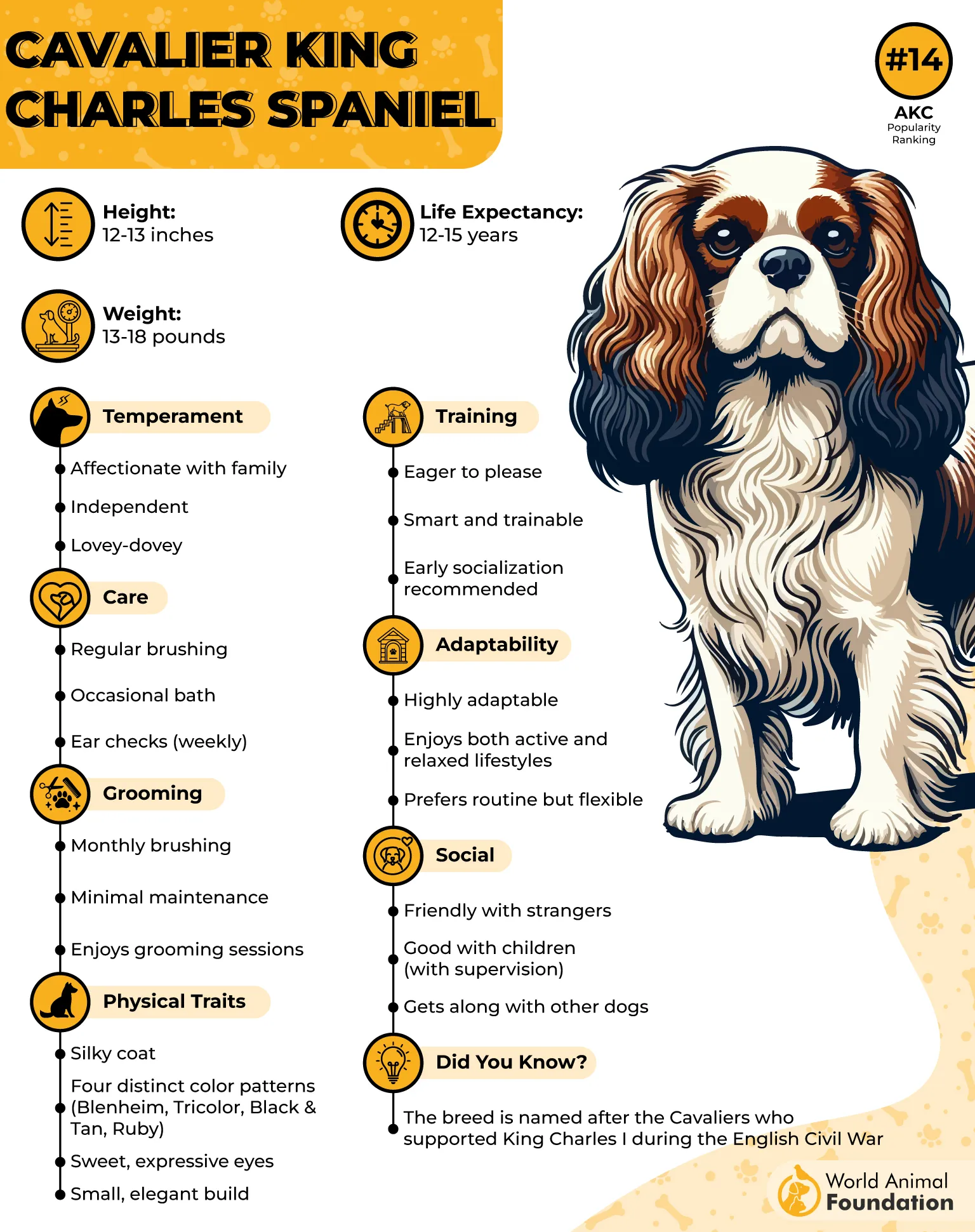
Cavalier King Charles Spaniels are affectionate companion dogs with a history of royal connections. They were named after King Charles I and Charles II of Britain, who adored the breed. Originally bred to warm their owners’ laps, these dogs remain devoted to human companionship.
Training and Temperament
Cavalier King Charles Spaniels are intelligent and eager to please, making them relatively easy to train. Short, fun sessions with treats, praise, and toys help them learn new commands. Early socialization also builds confidence around unfamiliar people and animals.
They are generally friendly with children, strangers, and other pets, including cats, but interactions with young children should be supervised.
Exercise and Care
Cavaliers need moderate daily exercise. Two walks of around 20–30 minutes each, along with playtime and mental stimulation, can help meet their needs.
Their silky coats benefit from regular brushing to manage loose hair. Check their ears and eyes weekly as part of their care routine.
They enjoy both outdoor activities and relaxing at home, but need plenty of human companionship. Avoid leaving them alone for long periods, and use a fenced area rather than allowing them off-leash in open spaces.
7. Pug
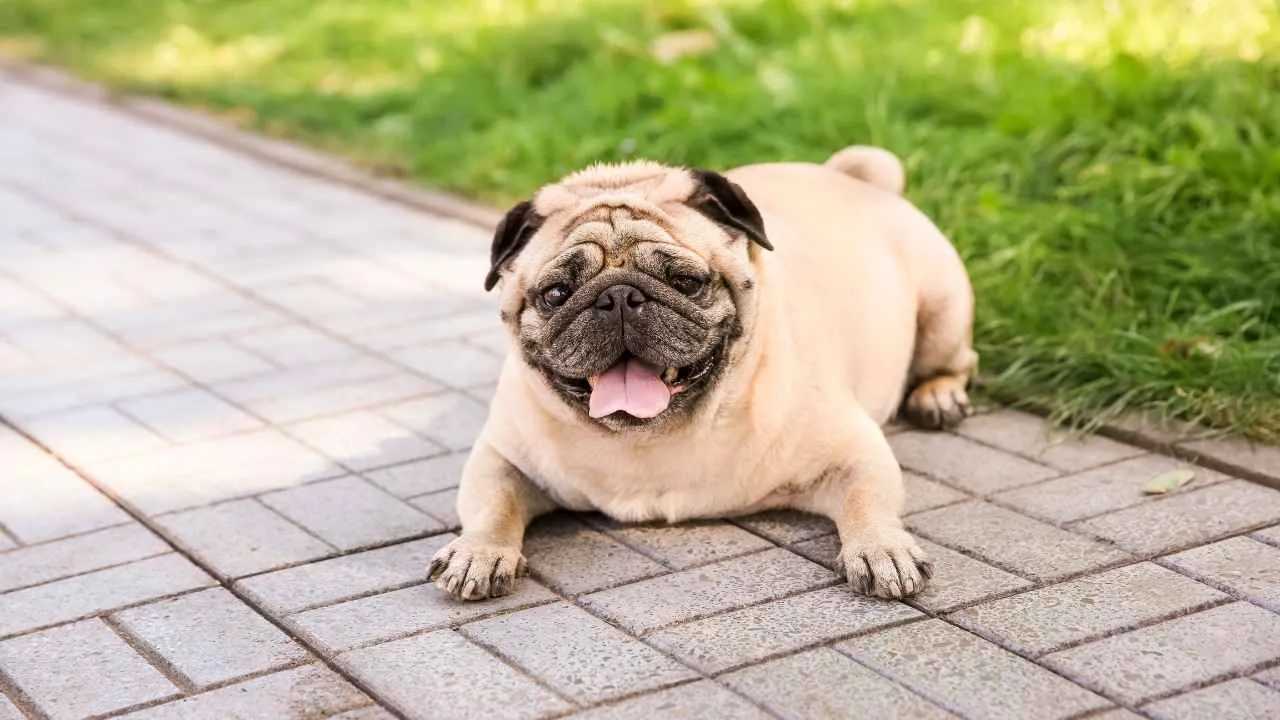
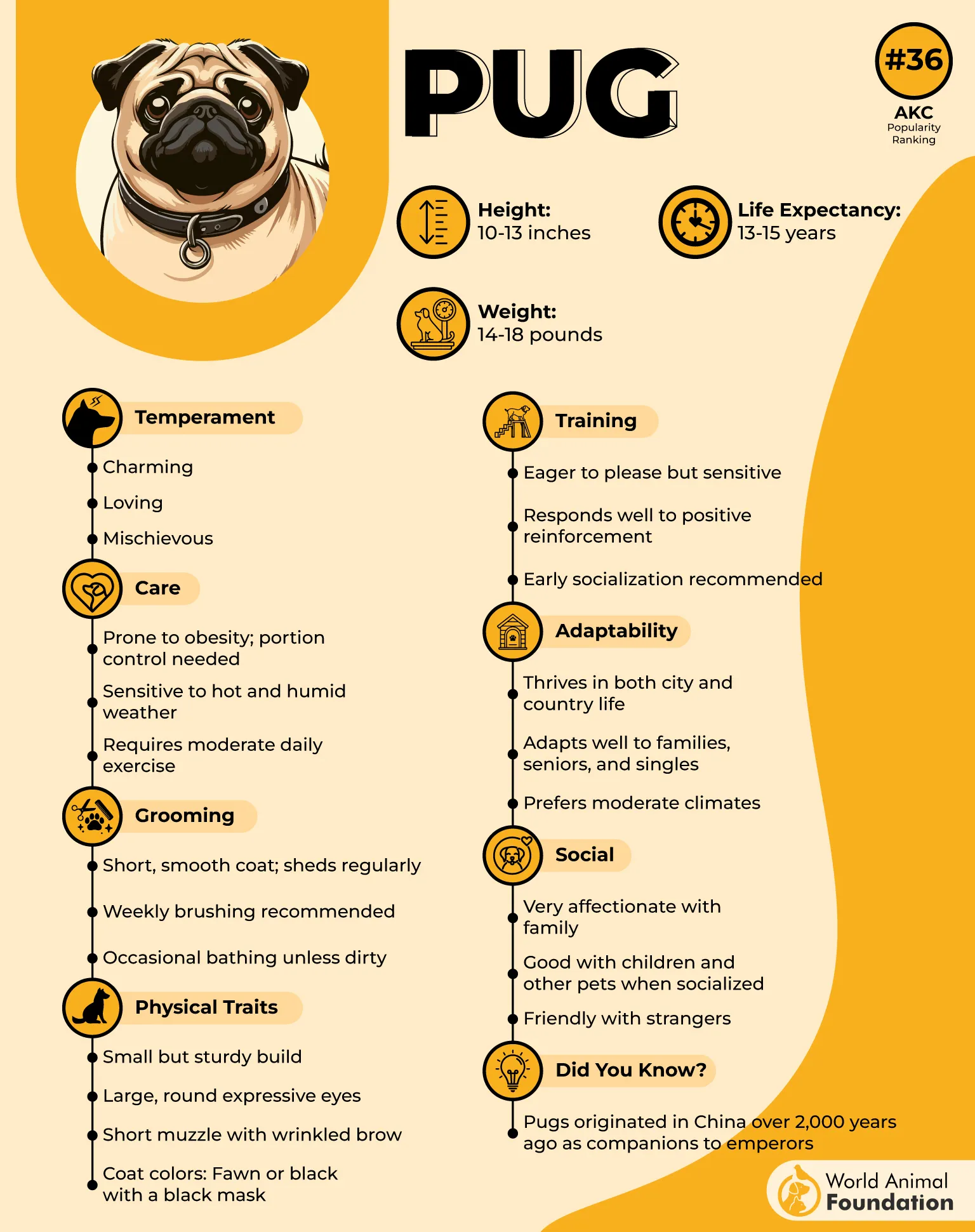
Pugs have been cherished companions for centuries, with origins in ancient China around 2,000 years ago. Once favored by royalty, these small dogs are now loved for their comical expressions, wrinkled faces, and curled tails. Pugs are affectionate, playful, and eager to join family activities.
Training and Temperament
Pugs enjoy human company and usually get along well with children and other pets. They are food-motivated, which can make training easier with treats and positive reinforcement.
Early socialization helps them become comfortable around different people and animals. They also need mental stimulation to prevent boredom and unwanted behavior.
Exercise and Care
Pugs benefit from several short walks of around 15–20 minutes each, along with gentle playtime. Avoid strenuous exercise, especially in hot weather, because their flat faces can make breathing difficult and increase their risk of overheating.
Their short coats shed moderately throughout the year, with heavier shedding in spring and fall. Brush them regularly to manage loose hair.
Their prominent eyes can be easily injured, so teach children to handle them gently and supervise playtime.
Conclusion
Choosing an obedient dog breed can make the journey into dog ownership easier and more enjoyable. The key is to find a dog whose temperament, exercise needs, and training requirements fit your lifestyle.
Before bringing a dog home, take time to research your preferred breed and consider the commitment involved. Remember, even the easiest dogs to train need patience, consistency, and positive reinforcement.
With the right match and a little effort, your first dog can become more than a well-behaved companion. They can be the beginning of a friendship that brings joy to your life for years to come.
Looking for more smart dog breeds ideal for first-time dog owners? You can also check out the Australian Shepherd, Bernese Mountain Dog, Miniature Schnauzer, English Springer Spaniel, Cocker Spaniel, Border Collie, German Shepherd, and Australian Cattle Dog.
