




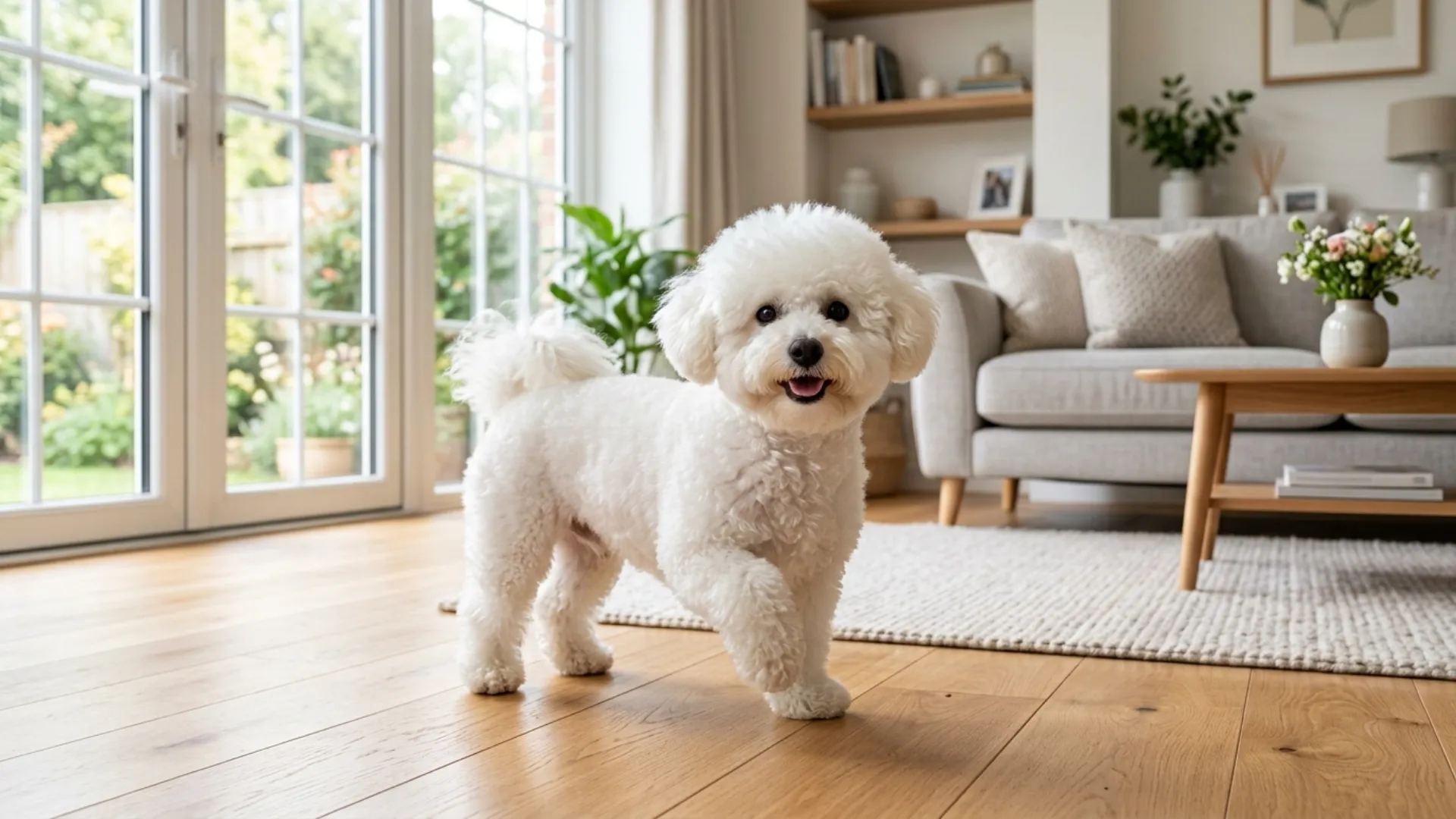
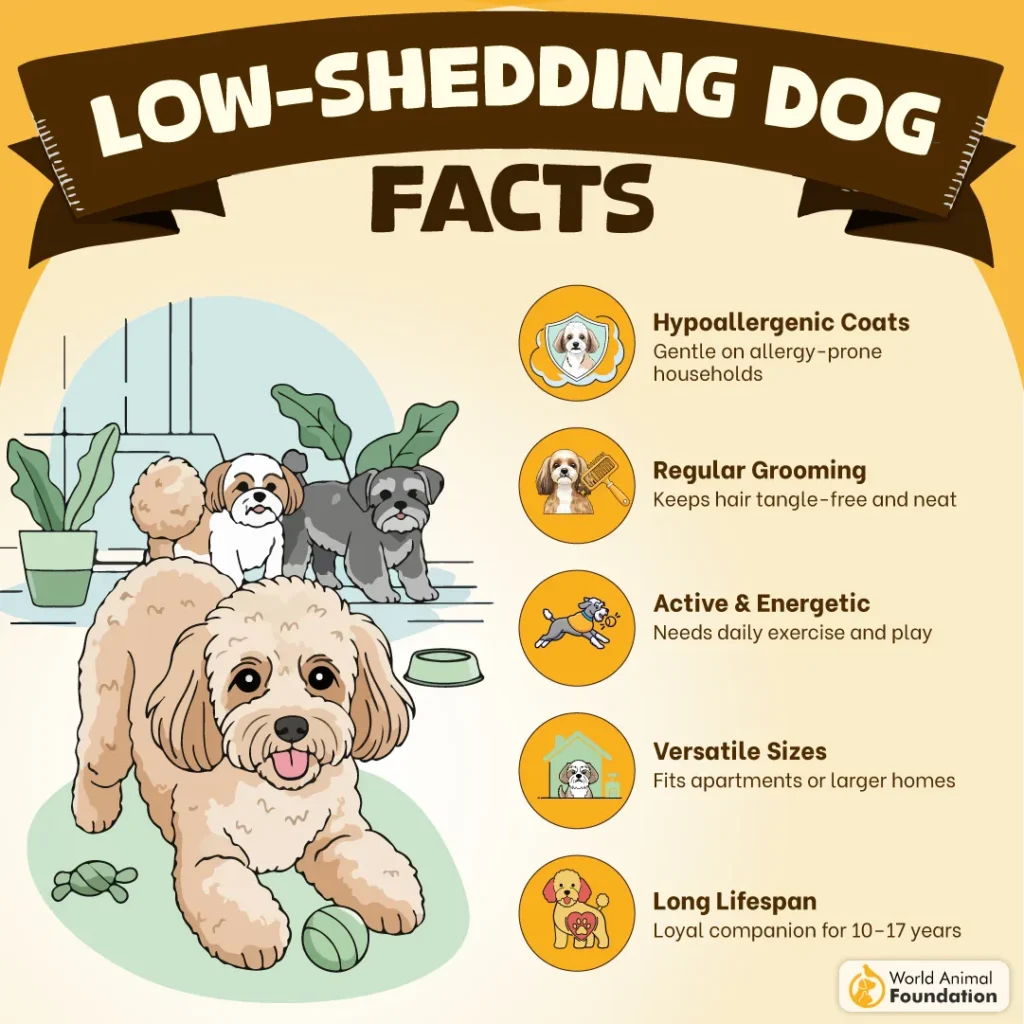
We all know that there is no dog that is 100% hypoallergenic, but there are some breeds with less dander production, and thus, they cause less trouble. A clean home is a dream of a cleanliness freak.
Love for the dogs and OCD is the deadliest combination for any person. But this can be catered to when you have the right dog. A dog that does not have to be bald to shed less.
Even celebrities like Barack Obama helped shine a spotlight on low-shedding dogs by choosing a Portuguese Water Dog for the White House.
This guide explores wonderful breeds that barely shed, what makes them unique, and how to choose one that fits your lifestyle.
Wonderful Dog Breeds That Barely Shed at All
1. Bichon Frise
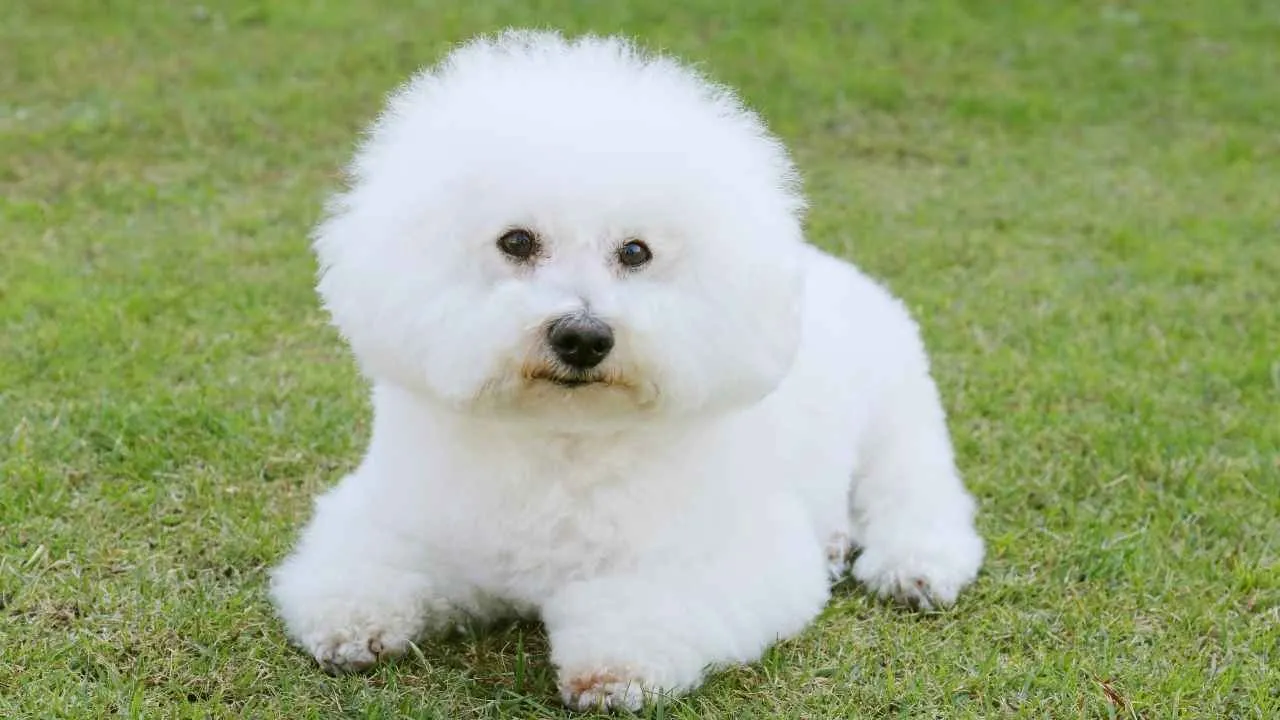
Once the royal breed in France and Japan, the Bichon Frise has been depicted in the artwork and portraits of both countries. Though developed in different regions in the Mediterranean, it is thought to have originated in Tenerife. Sailors from the 14th century brought the breed to Europe, says Purina.
This small dog has a velvety coat that gives it a ‘powder puff’ appearance. The undercoat acts as a thermoregulator, while the outer coat has spiraling curls. It has hair instead of fur, which means the coat grows continuously instead of shedding. The plumed tail is curved at the back.
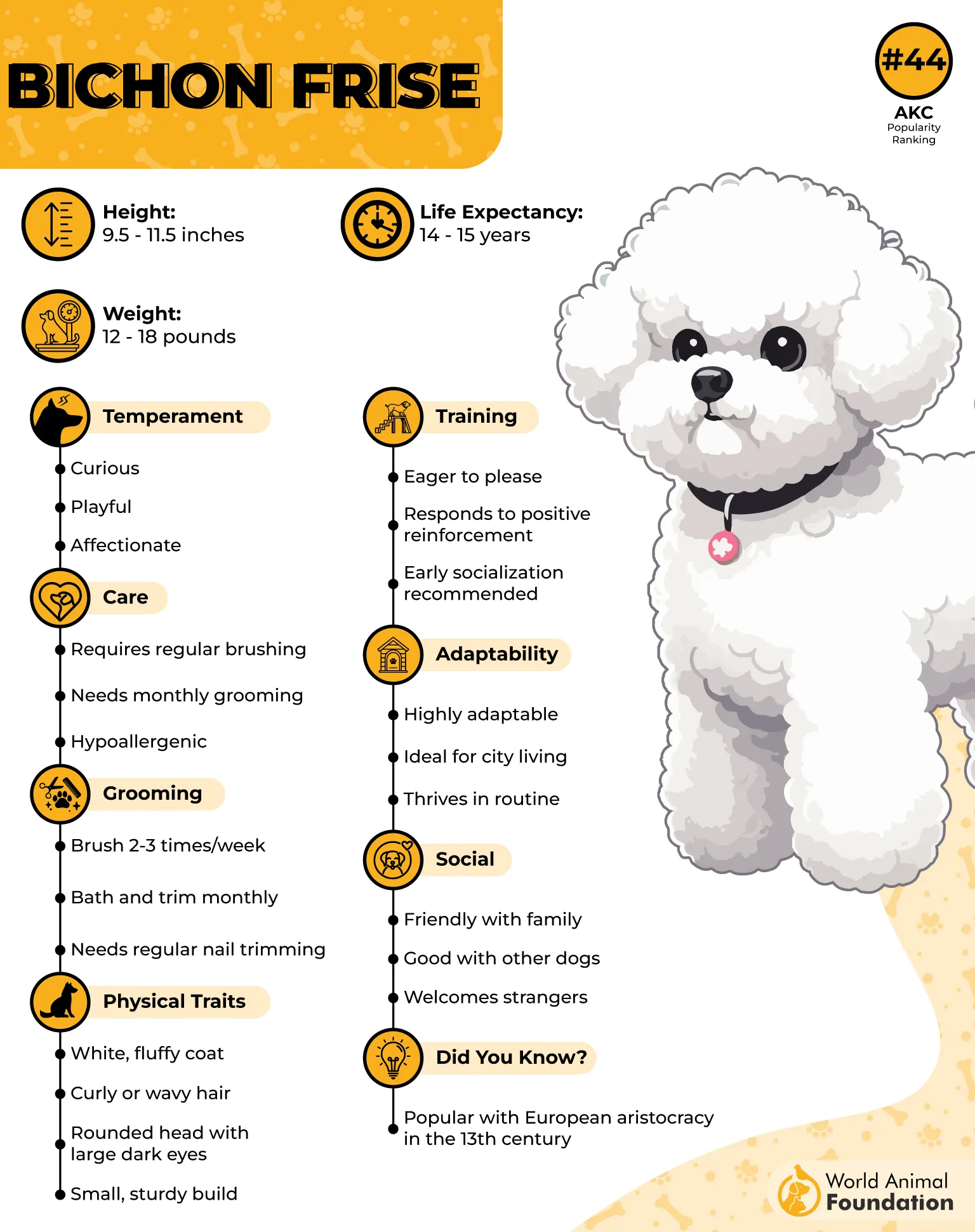
Though pure white in color, the puppies undergo various shades of cream, buff, or apricot on their ears or bodies. Line brushing is suggested weekly using a slicker brush to lift the coat and remove dead hair. Then use a metal Greyhound comb to check for hidden mats.
2. Maltese
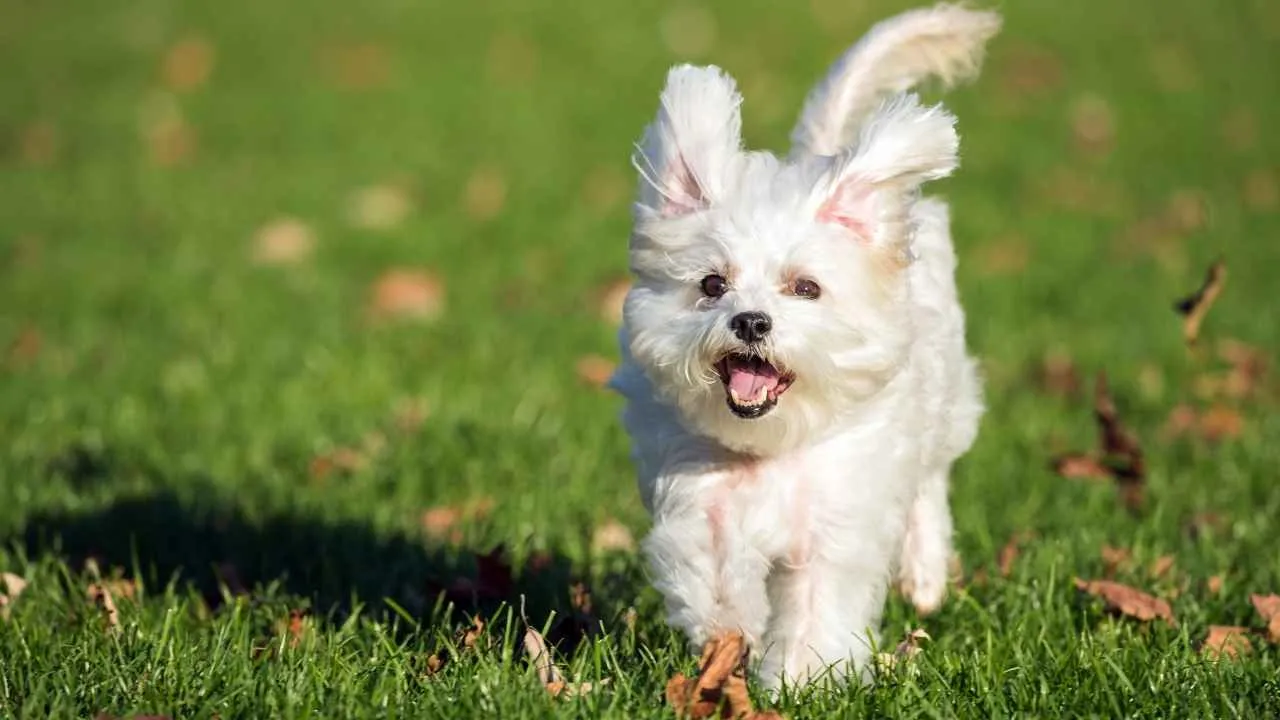
The history of the ancient breed dates back to the time of the Bible. It originated in Malta some 2,000 years ago when Malta was the trading hub for commodities like spices, gems, silks, and the Maltese lapdog. Later, it became popular among the noble ladies across the world.
The single coat grows straight and reaches the floor, completely covering their delicate legs. The family dog has a lion-like appearance because of the length of hair around the head and the droopy ears. The coat tends to have red or brown tear staining in the inner corners of the eyes.
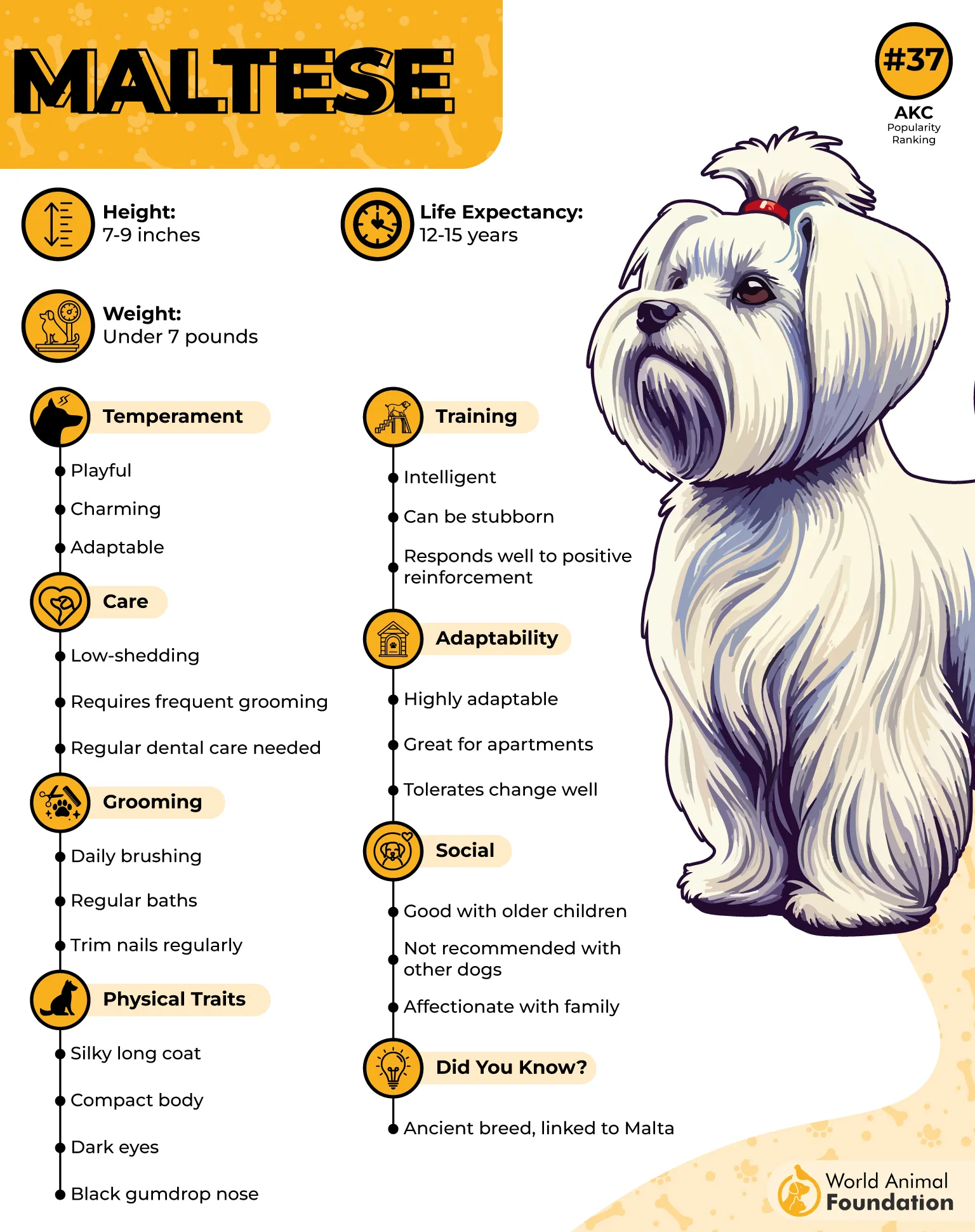
Lightly mist the coat with a detangling spray before brushing. Daily brushing is required to evenly distribute the natural oils. Use gentle wipes to clean the tear staining 2-3 times daily. Use a high-quality dog shampoo to bathe the breed every 2-3 weeks. Blow-dry completely with a low-heat setting.
3. Shih Tzu
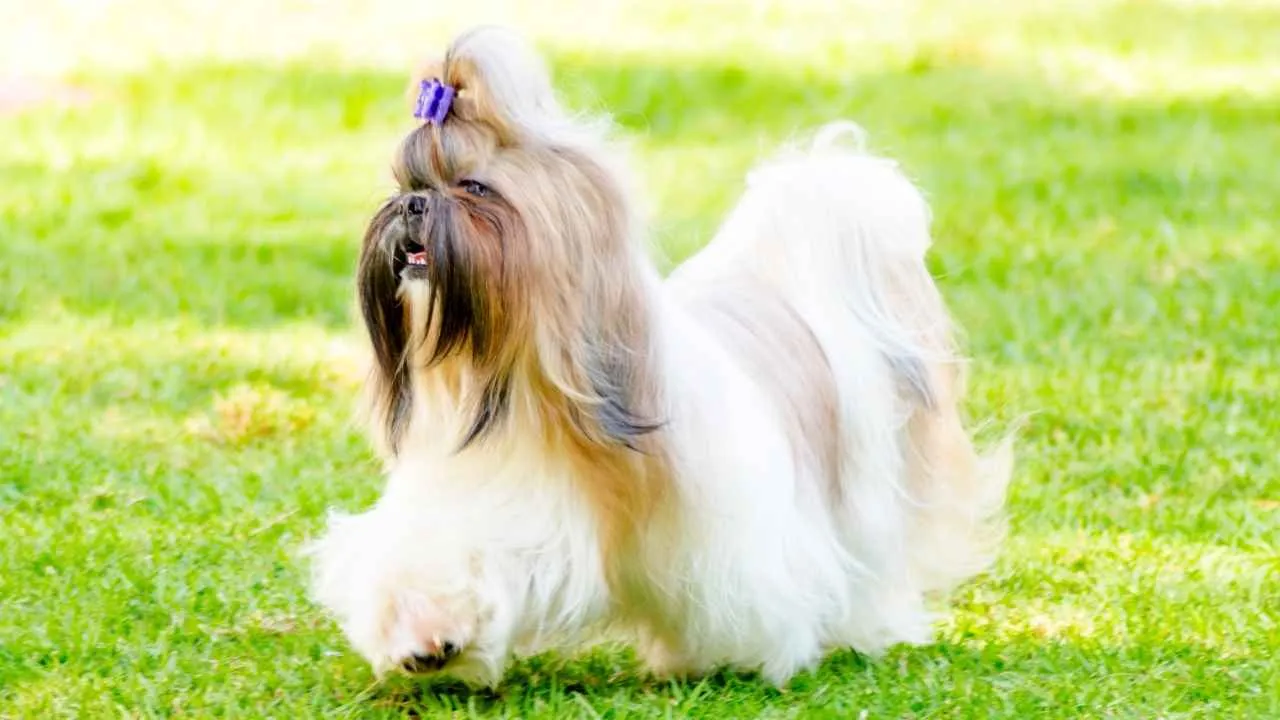
Also known as the ‘lion dog,’ the Shih Tzu originated in China and was bred by the Buddhist monks and the Chinese imperial family as a watchdog to alert the owner of a visitor with its sharp bark. With time, it eventually became a family dog instead of a working breed.
The dog has a fast-growing double coat. The top coat is long and naturally silky (a slight wave is also normal). The thick undercoat provides volume and insulation. The coat is made of keratin, giving it a flowing appearance. Puppies are born with a soft, single layer, and it transitions into a double coat within 10-12 months.
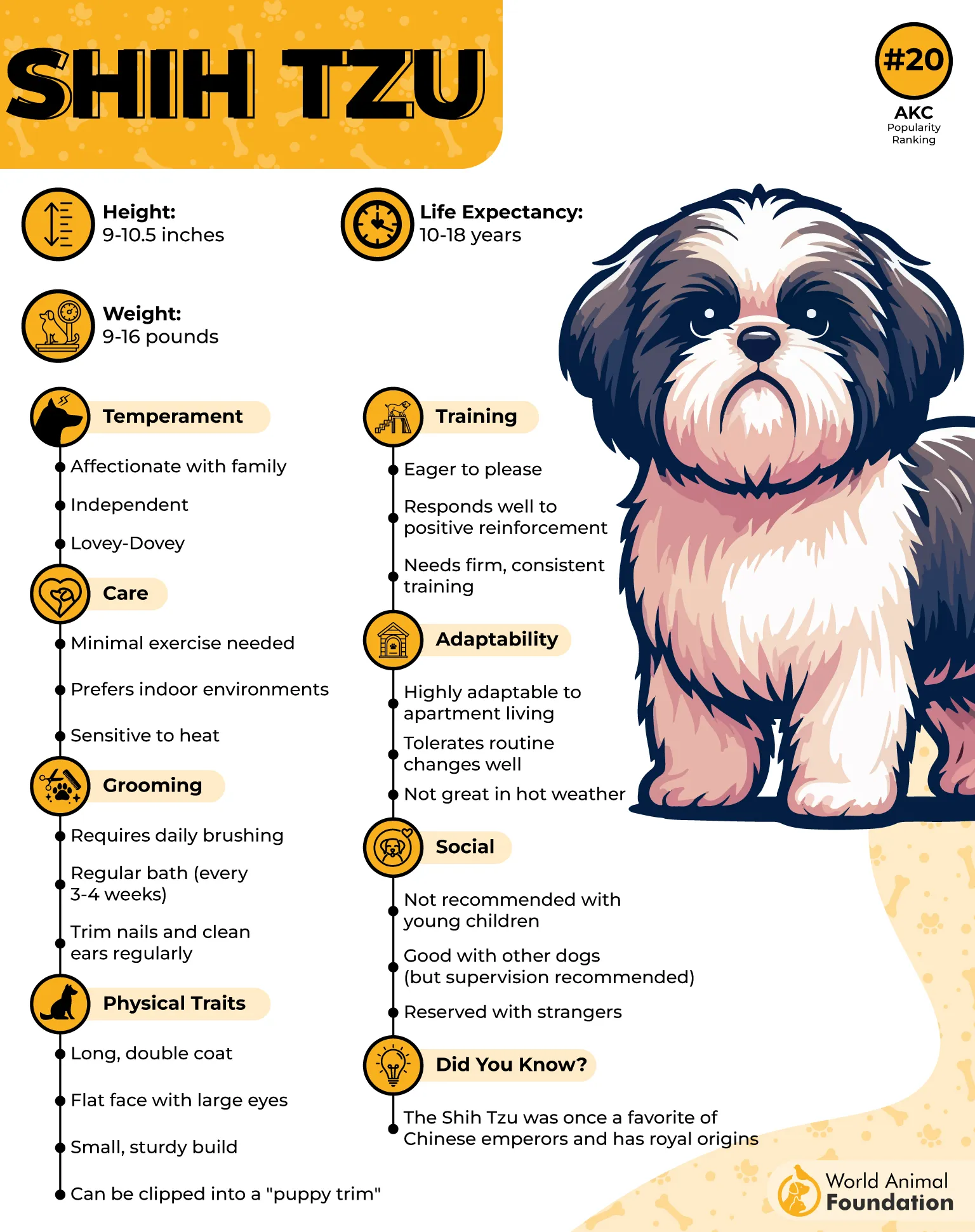
Use a line brushing technique (parting the hair and brushing from the skin outward) for daily brushing with a slicker brush and a metal comb. If you have a busy schedule, go for a puppy cut for low maintenance. Clean the ears to prevent infection because of trapped moisture.
4. Yorkshire Terrier
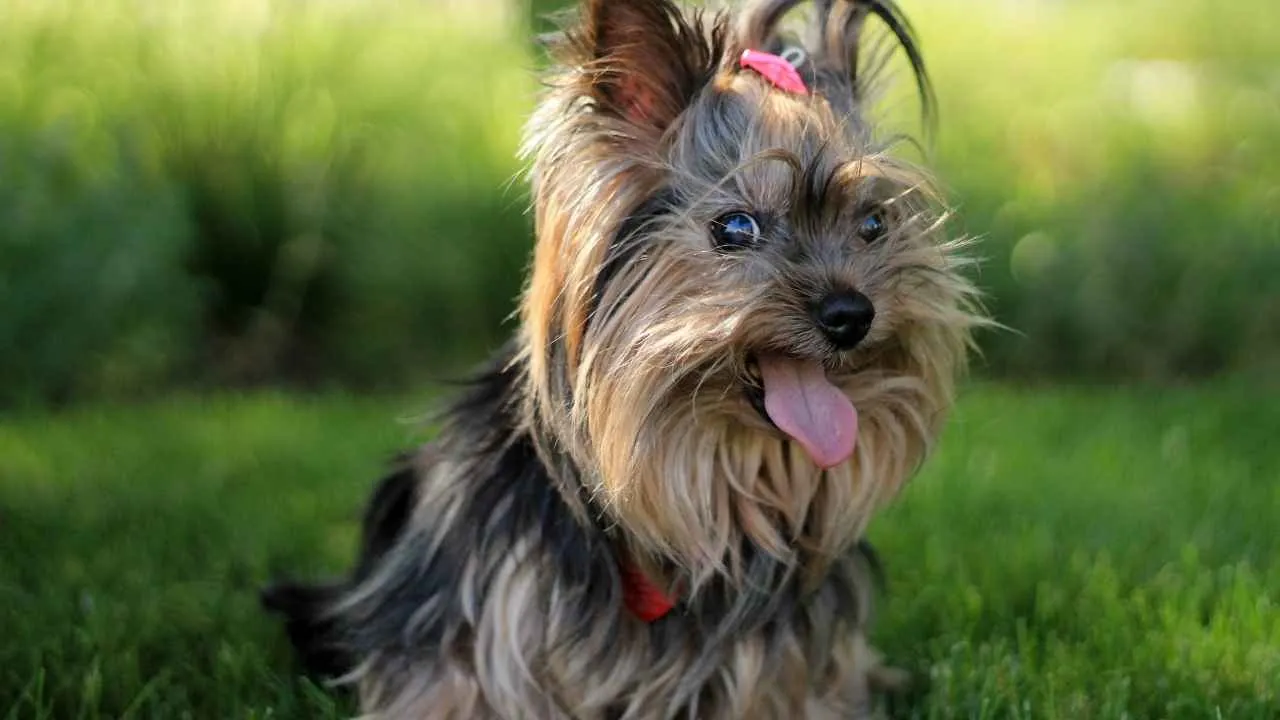
The hypoallergenic dog was developed in the region of Yorkshire, England, in the 19th century. Small Terriers from Scotland were brought by the workers to work in the cotton mills. This dog was crossed with Waterside, Paisley, and Skye terriers to produce a smaller breed that can hunt rats and rodents, as per Omlet.
It has a single coat with no undercoat. It has a glossy, straight, and silky texture. Puppies are born entirely black and tan. The color shifts into a rich tan on the head, chest, and legs, and a rich, dark steel-blue gray on the back and “saddle” in the first 1-3 years. Since it has a single coat, there is no ‘seasonal shedding.’
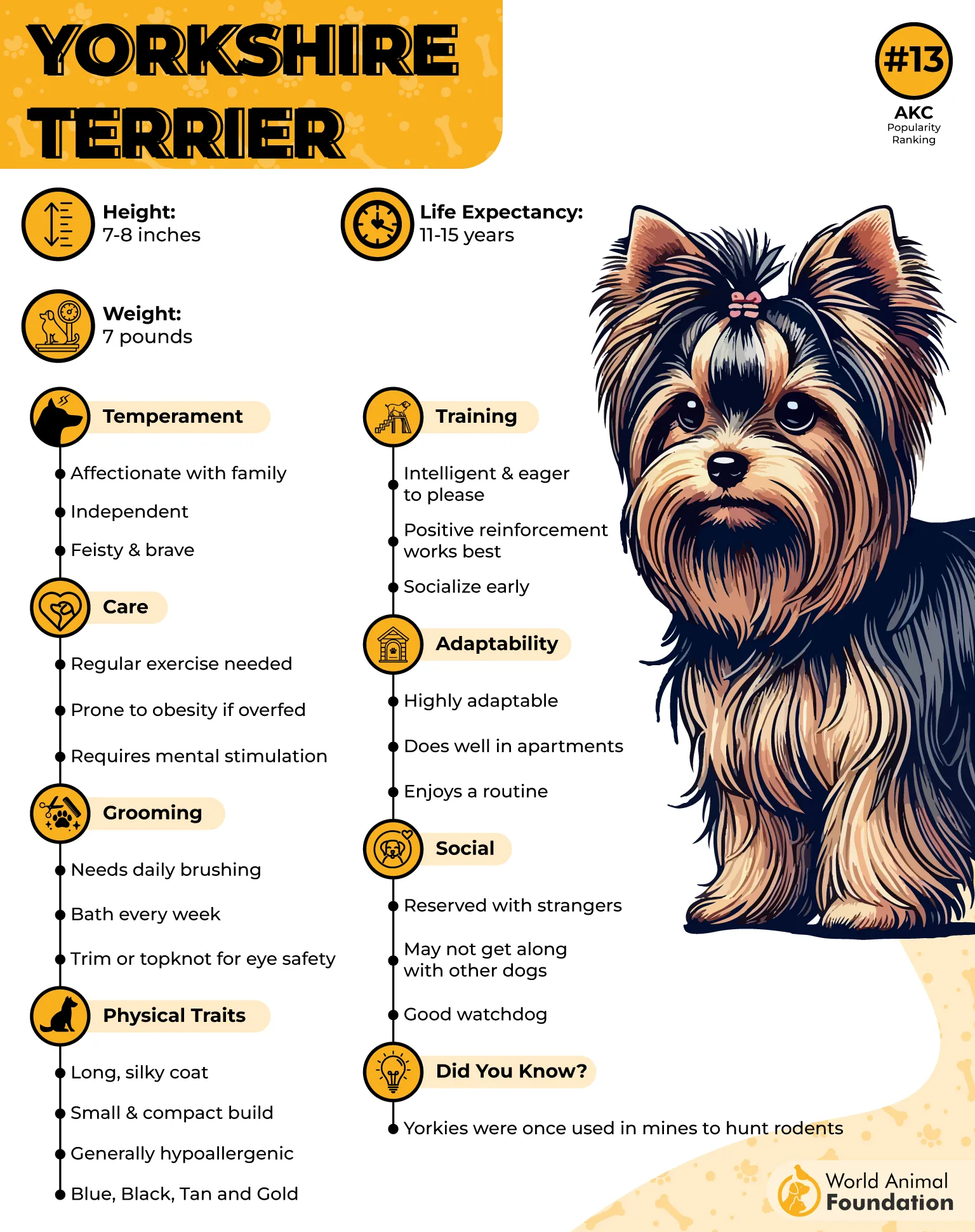
The Yorkies in long show coats need daily brushing. If you opt for a shorter “puppy cut”, you can reduce brushing to 3 to 4 times a week. Use a detangling spray before brushing to prevent hair breakage. Use an Oval Metal Pin brush to separate the strands. Focus on the friction points like under the armpits and behind the ears.
5. Chinese Crested
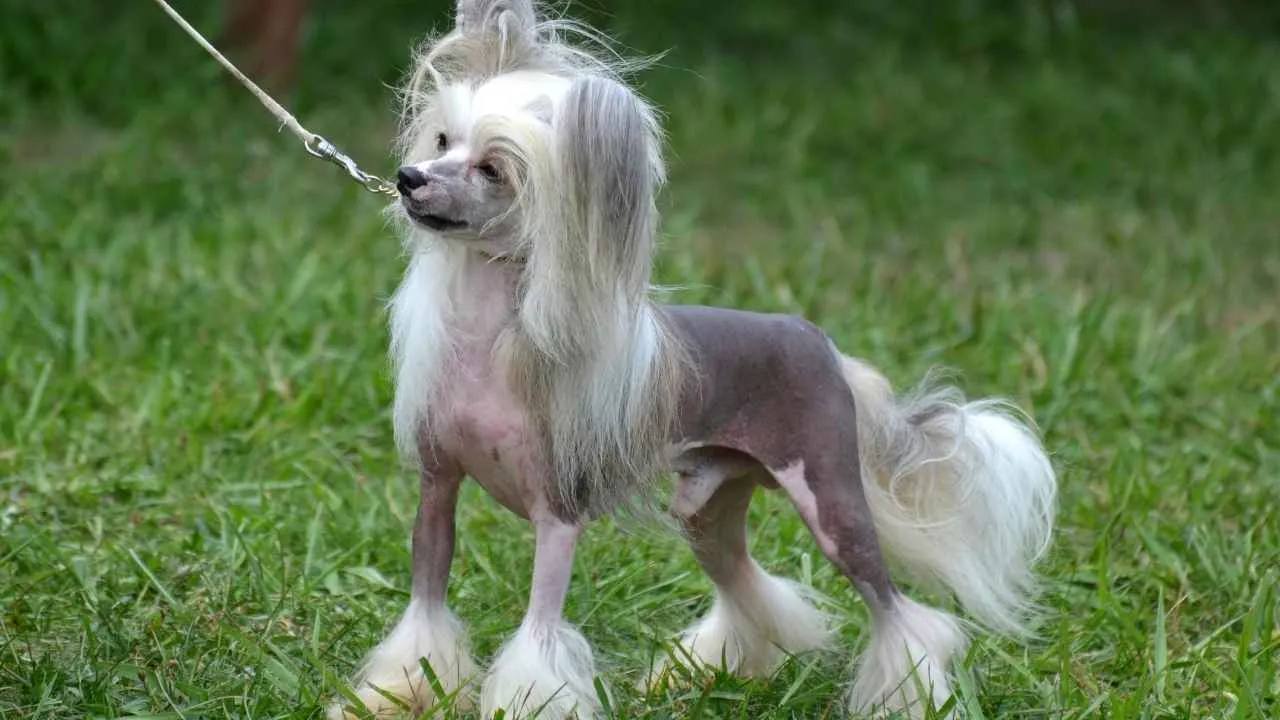
The breed has its ancestral roots with the hairless dog in Africa, and some DNA studies suggest that the breed has ancient connections with the hairless breeds in Mexico. When these dogs arrived in China, they were interbred with local dogs and formed into a smaller size to hunt small animals, such as rats and rodents.
The haircoat comes in two forms: the hairless breed (not entirely bald, has hair localized in some areas called furnishing) and the powder puff breed (has a thick double coat). Both breeds come in different standard colors, including tri-color, chocolate, apricot, and blue.
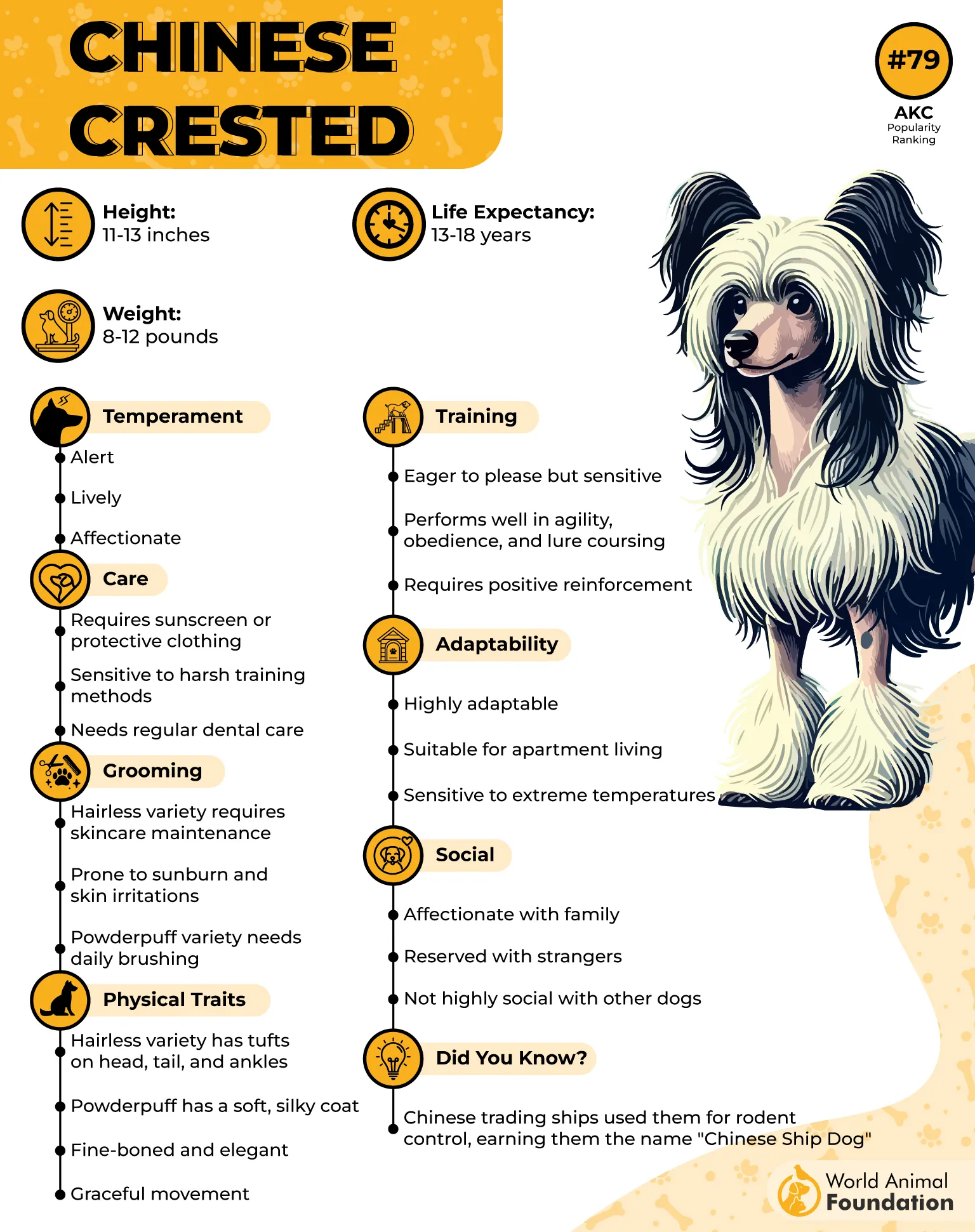
The hairless breed needs occasional brushing and is prone to acne, dryness, and sun damage. Avoid over-moisturizing, as excess lotion clogs pores. Always use sunscreen before going outdoors. Use clippers (blade 30) to keep the muzzle and face neat.
6. Bedlington Terrier
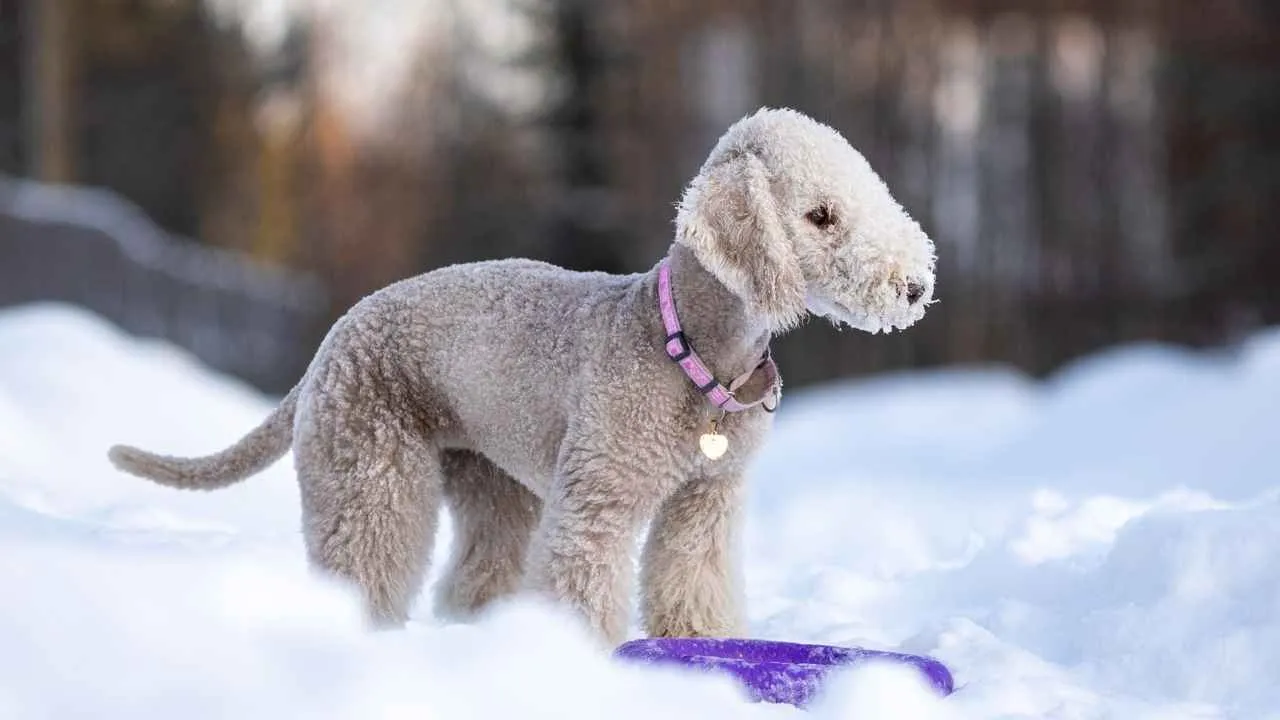
The breed was developed in Britain and was originally known as the Rothbury Terrier. Local miners actually developed the Bedlington Terrier, prizing it as the gamest terrier and the absolute best vermin killer around. It is a top choice as a vermin hunter because of its strong hunting instincts.
Known for its lamb-like appearance, this sweet dog has a soft, single-layered, and curly coat. It is one of the least shedding breeds, making it ideal for allergy sufferers.
It has a combination of both soft and harsh hair, giving it a ‘linty’ feel. Puppies are born solid black or dark brown, and the adults have only three color varieties: blue, sandy, and liver.
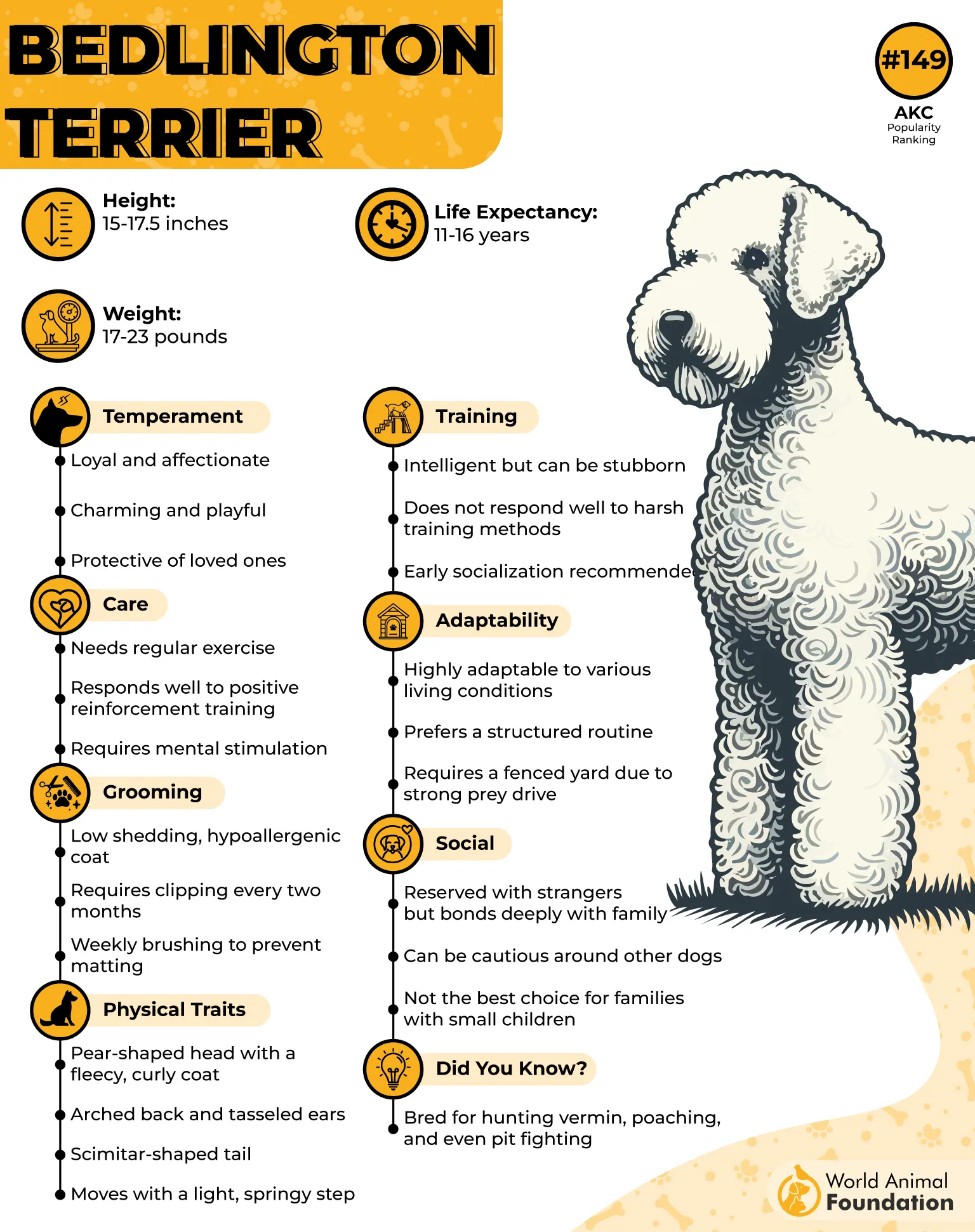
The coat quickly mats and needs extensive grooming. It needs brushing (moving from the neck to the tail) and comb-checking two to three times a week, bathing every 4 to 6 weeks, and a professional clipping every 6 to 8 weeks.
7. Poodle
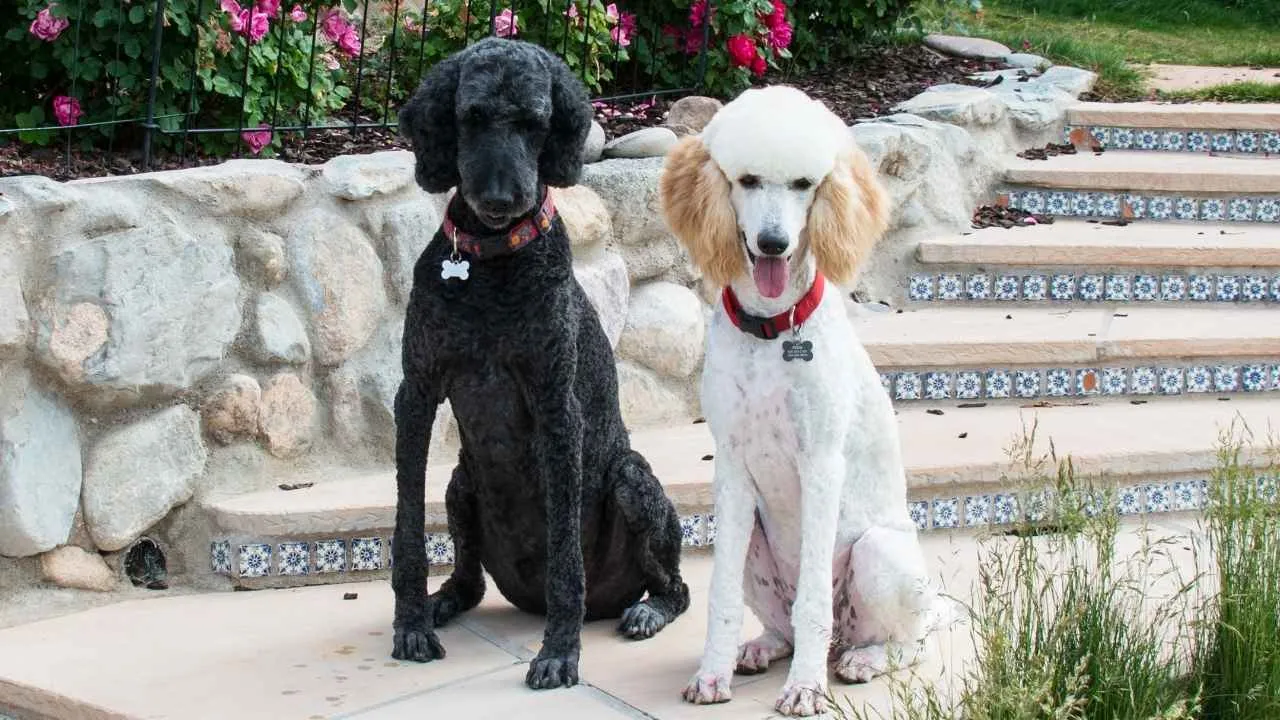
The Poodle was originally bred in Germany as a water retriever dog. The name comes from the German language, which means ‘to splash.’ Standard Poodle is the oldest of all types (miniature, toy, and standard). It has been used for pointing, flushing, and hawking since the 15th century, as reported by Orvis.
The tightly curled coat has elastic ringlets. The interwoven hair provides excellent weatherproofing but demands rigorous maintenance to keep the cords clean. The standard Poodle has a thicker coat; the miniature poodle has a softer and more cotton-like texture, and the toy poodle has a lint-like texture that is highly susceptible to matting.
This non-shedding dog needs daily line brushing, a full bath and blow-dry every 4 to 6 weeks, and professional or at-home clipping every 4 to 8 weeks. ‘Pat and pull’ the coat with a slicker brush. Use a wide-tooth comb to ensure no tangles or mats.
8. Portuguese Water Dog
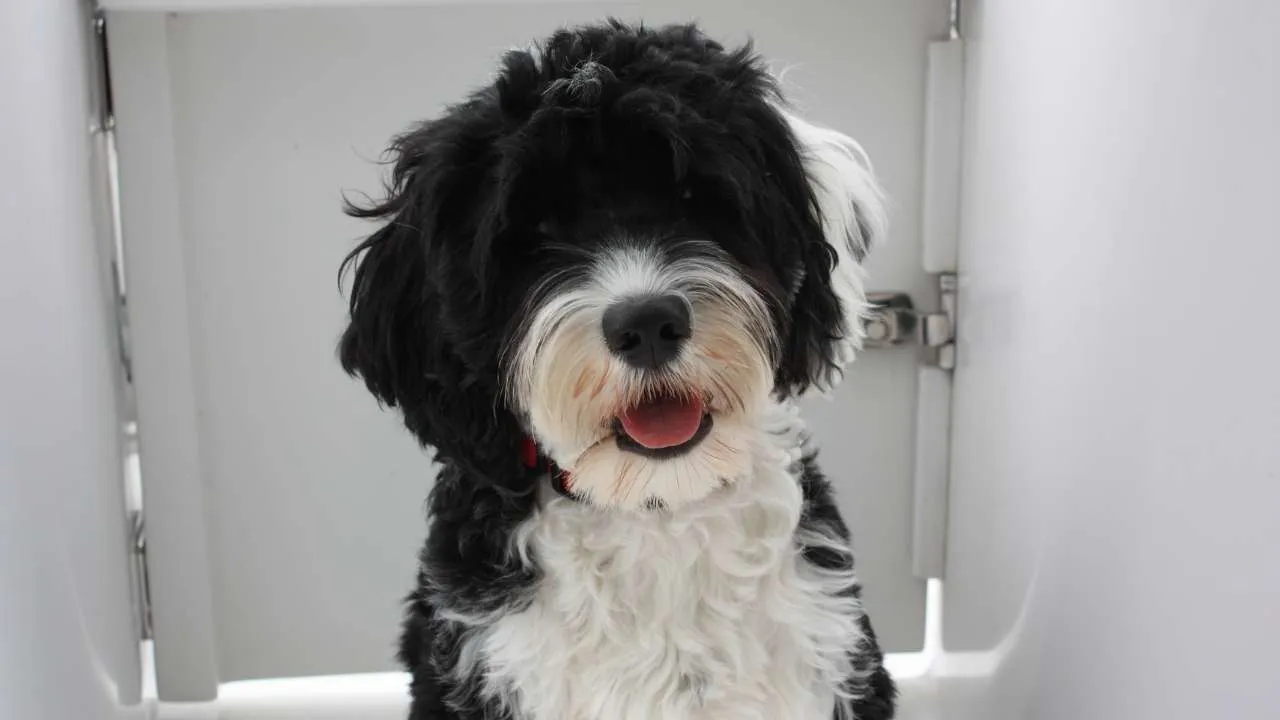
Also known as the Algarvian Water Dog or the Portuguese Fishing Dog, the Portuguese Water Dog originated in the Algarve region of Portugal. It was used to herd fish into fishermen’s nets, retrieve lost tackle or broken nets, and serve as a courier. It is one of the rarest breeds in the world.
There are two coat types: curly (with cylindrical curls) and wavy (with loose waves). It has a water-resistant single coat that protects the skin in a harsh marine environment. The coat produces less dander; thus, there is zero or minimal dog odor.
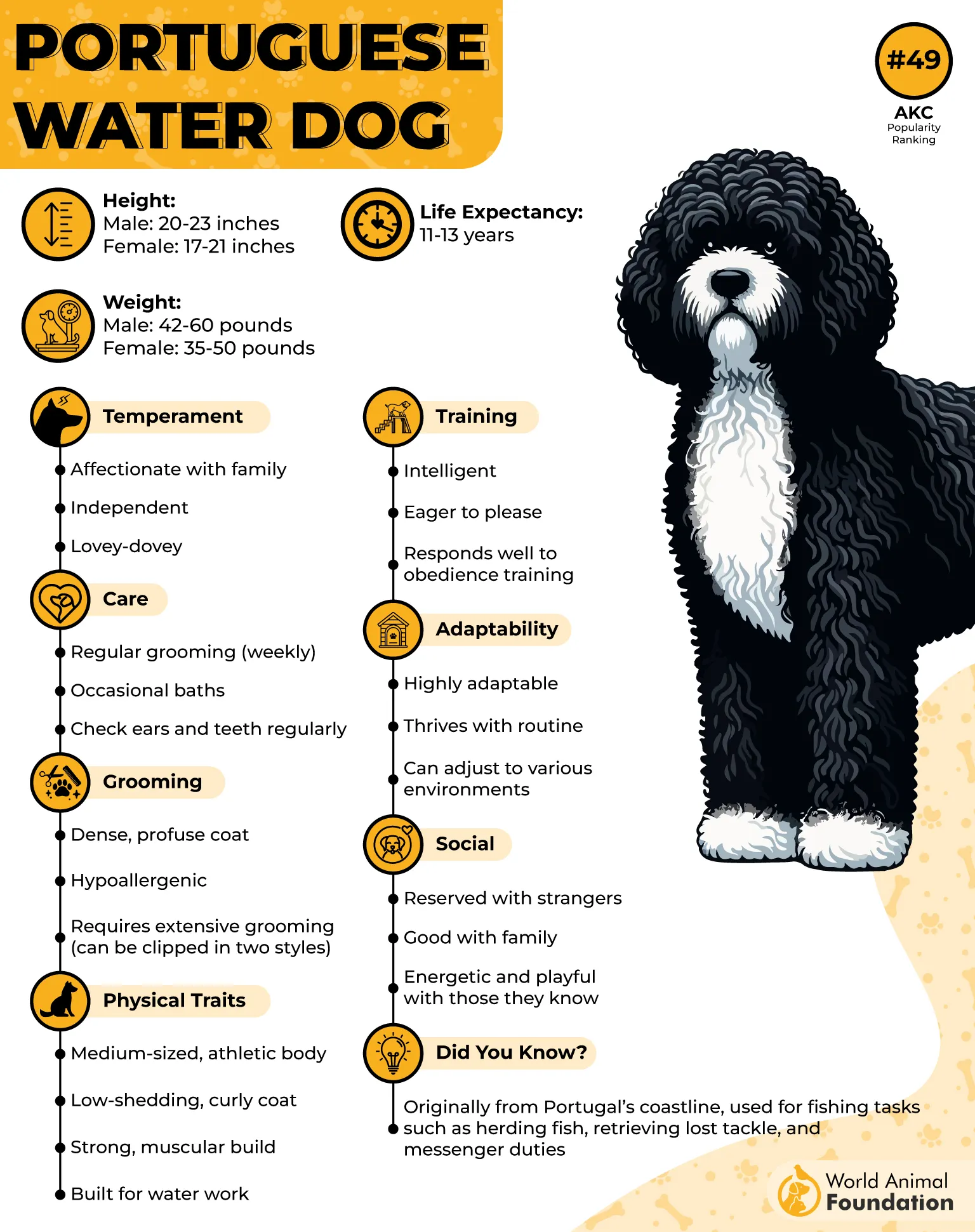
Though it has minimal shedding, the PWD requires extensive grooming because the loose hairs are trapped inside the coat. Use a slicker brush to remove tangles 3-4 times a week, and then a wide-toothed comb to ensure no knots are hidden near the skin.
9. Soft Coated Wheaten Terrier
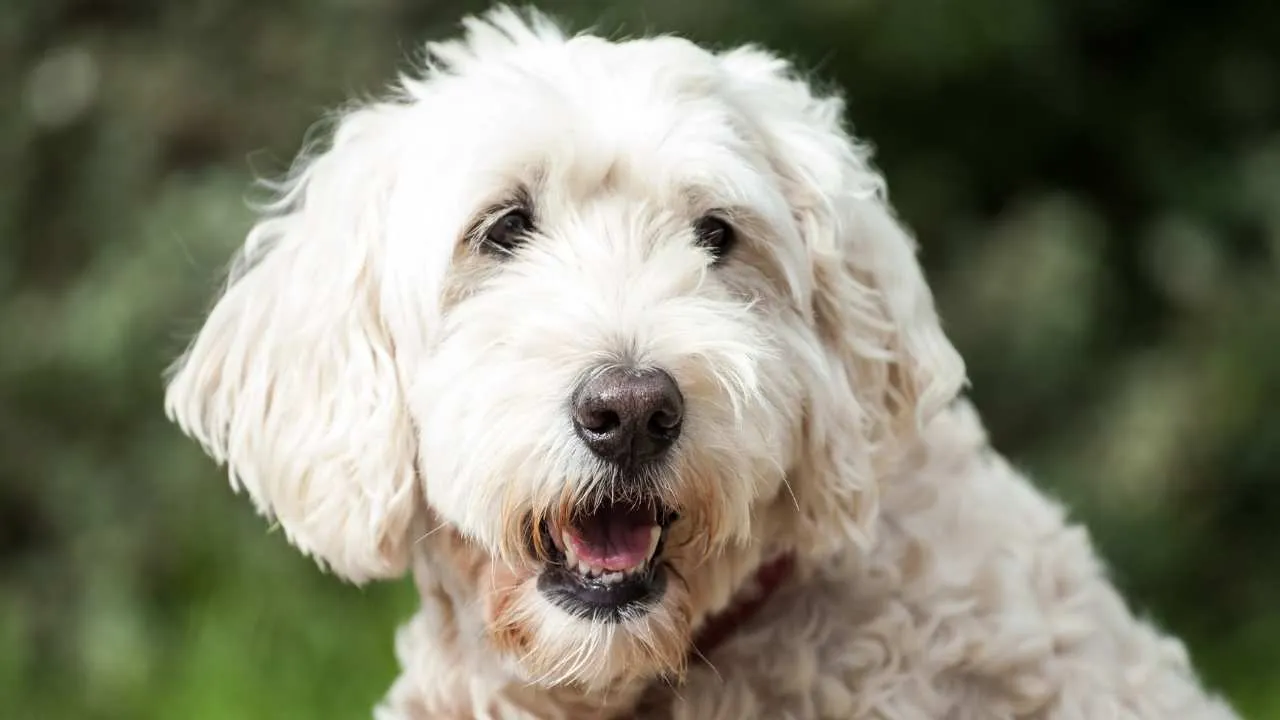
This low-shedding dog breed has been used as an all-purpose farm dog for centuries. It is descended from the Kerry Blue Terrier and the Irish Terrier and was officially bred in 1785 in County Kerry, Ireland. It was also used to remove rats from the farms, act as watchdogs, and accompany owners on the hunt.
It is a single-layer breed that has two coat types: the Irish coat (has a lighter texture with looser waves and requires less styling) and the American coat (has a thicker and fuller texture that requires regular styling). The true wheaten color is developed by the age of 2-3 years.
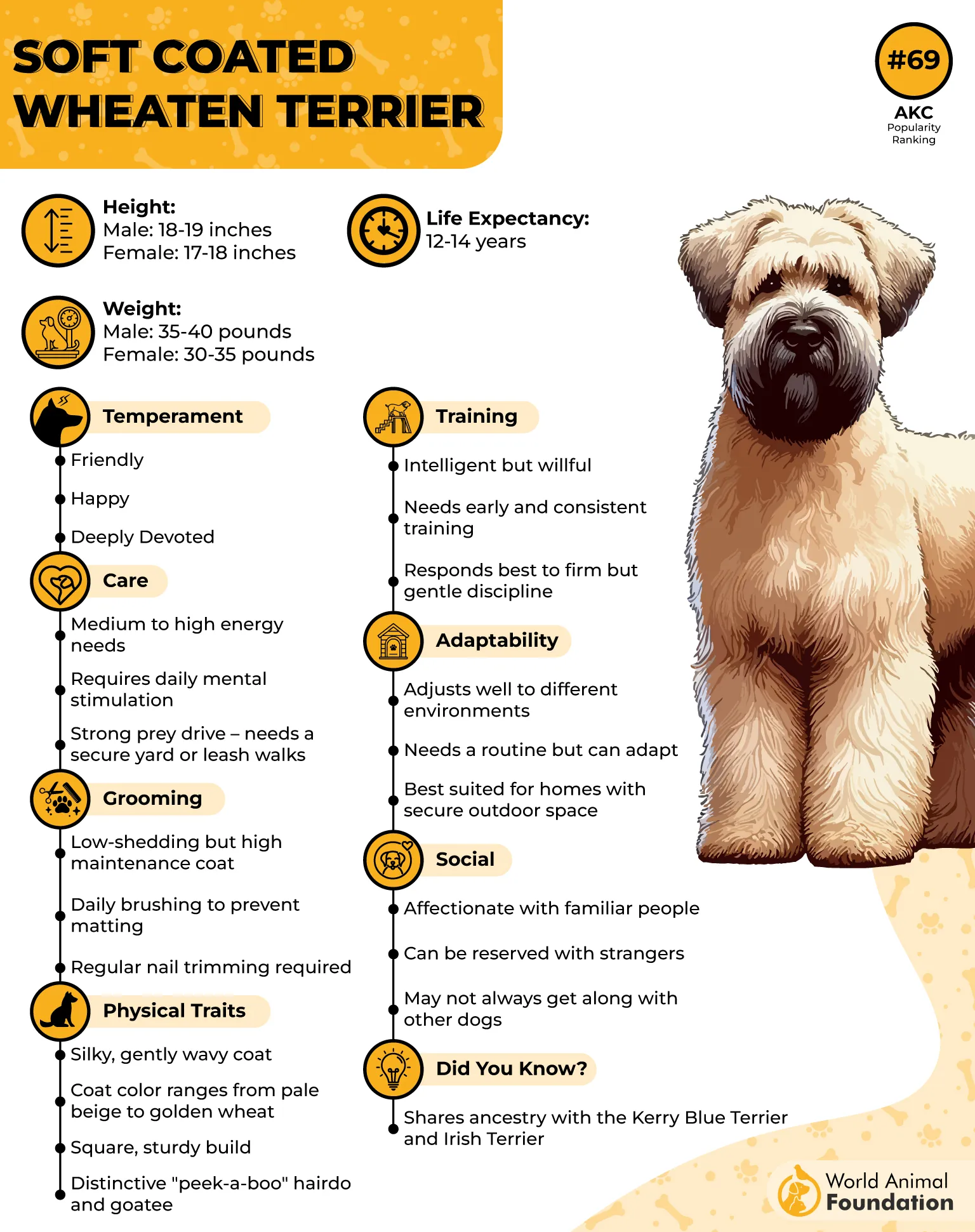
The coat requires regular brushing (3-4 times a week) using a Greyhound comb, dematting comb, and slicker brush. Bathe the breed every 4–6 weeks (do not over-bathe, as it can strip natural skin oils). Opt for a “puppy trim” or a single-length all-over clip to prevent constant matting.
Conclusion
Living with a low-shedding dog can mean less time cleaning and more time enjoying the moments that truly matter. Whether you prefer the playful charm of a Bichon Frise, the intelligence of a Poodle, or the cheerful personality of a soft-coated Wheaten Terrier, each breed offers something special beyond its coat. Keep in mind that low shedding does not mean low maintenance.
Most of these dogs need regular grooming to keep their coats healthy and comfortable. Choose a breed that matches your daily routine, activity level, and experience rather than appearance alone. When the right dog joins the right home, both owner and companion enjoy a happier, healthier life together.
