




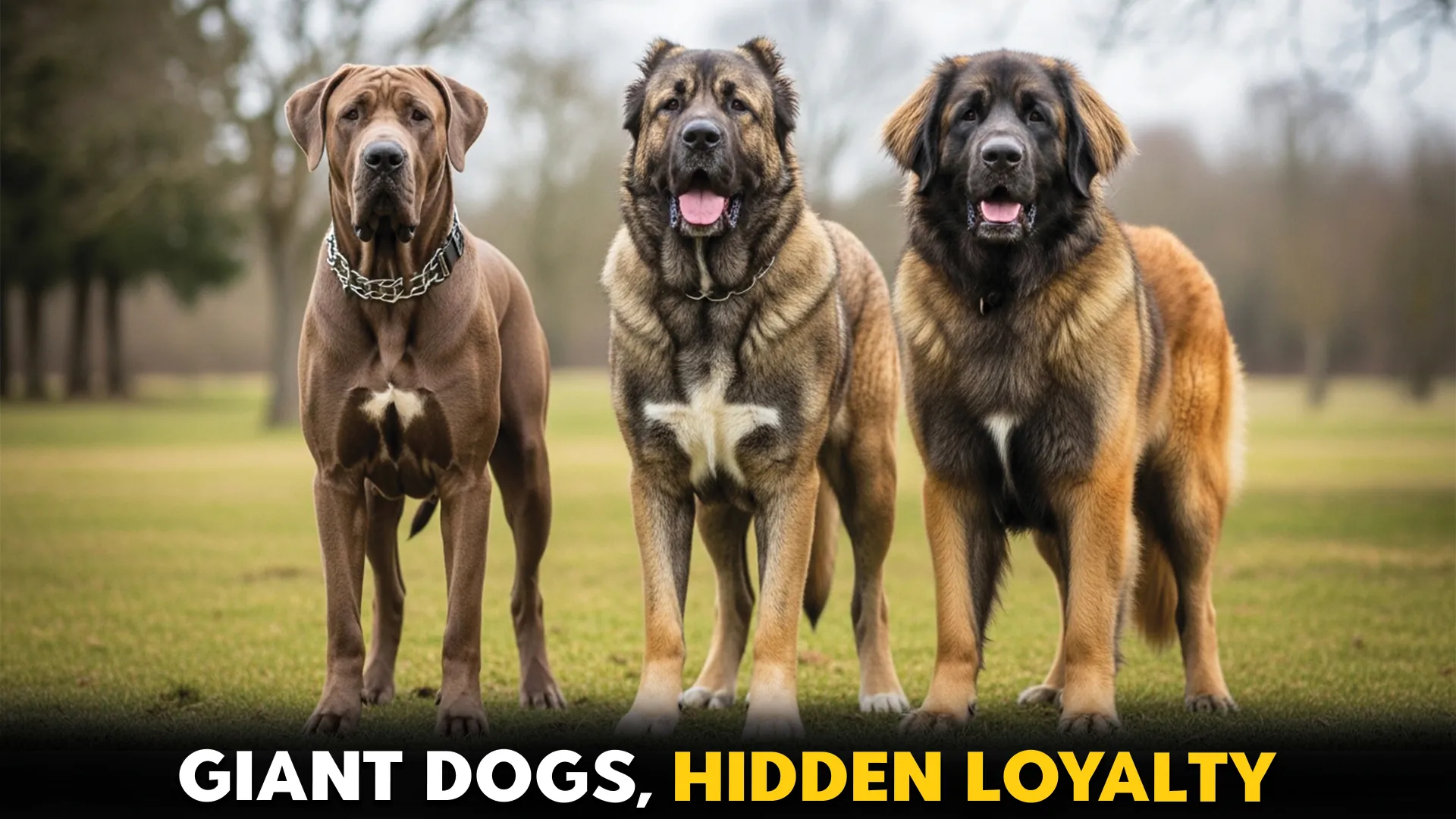
Popular opinion often suggests that the most loyal big dogs are already widely recognized and frequently recommended. That belief leaves little room for breeds that do not receive the same level of attention.
In reality, some of the strongest examples of loyalty come from dogs that rarely appear in mainstream discussions. These breeds are no less capable or less dependable. They are simply less exposed. Their loyalty tends to show in a more balanced and consistent way, without the need for constant validation or attention.
They stay connected to their owners through awareness, routine, and a natural sense of responsibility. This creates a relationship that feels steady rather than overwhelming. Ignoring these breeds means missing out on options that could be better suited for many households.
This article brings forward those lesser-known big dog breeds whose loyalty stands out in ways most people never expect.
Key Takeaways
Big dogs are often judged by popularity, yet some of the most dependable companions remain outside the spotlight.
Tosa shows controlled calmness in familiar spaces, while the Caucasian Shepherd Dog builds deep household bonds and stays highly selective with outsiders.
Leonberger, Black Russian Terrier, and Greater Swiss Mountain Dog each reflect loyalty shaped through work history, routine, and strong family connections.
Keep reading till the end to see how these seven big breeds redefine loyalty in ways most people rarely expect.
Little-Known Big Dog Breeds with Unmatched Loyalty
1. Tosa
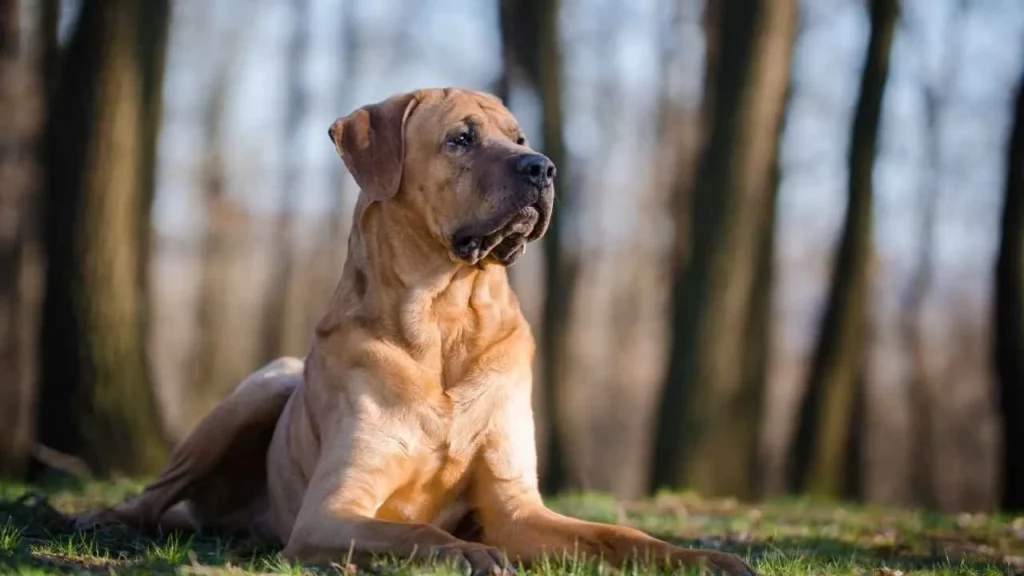
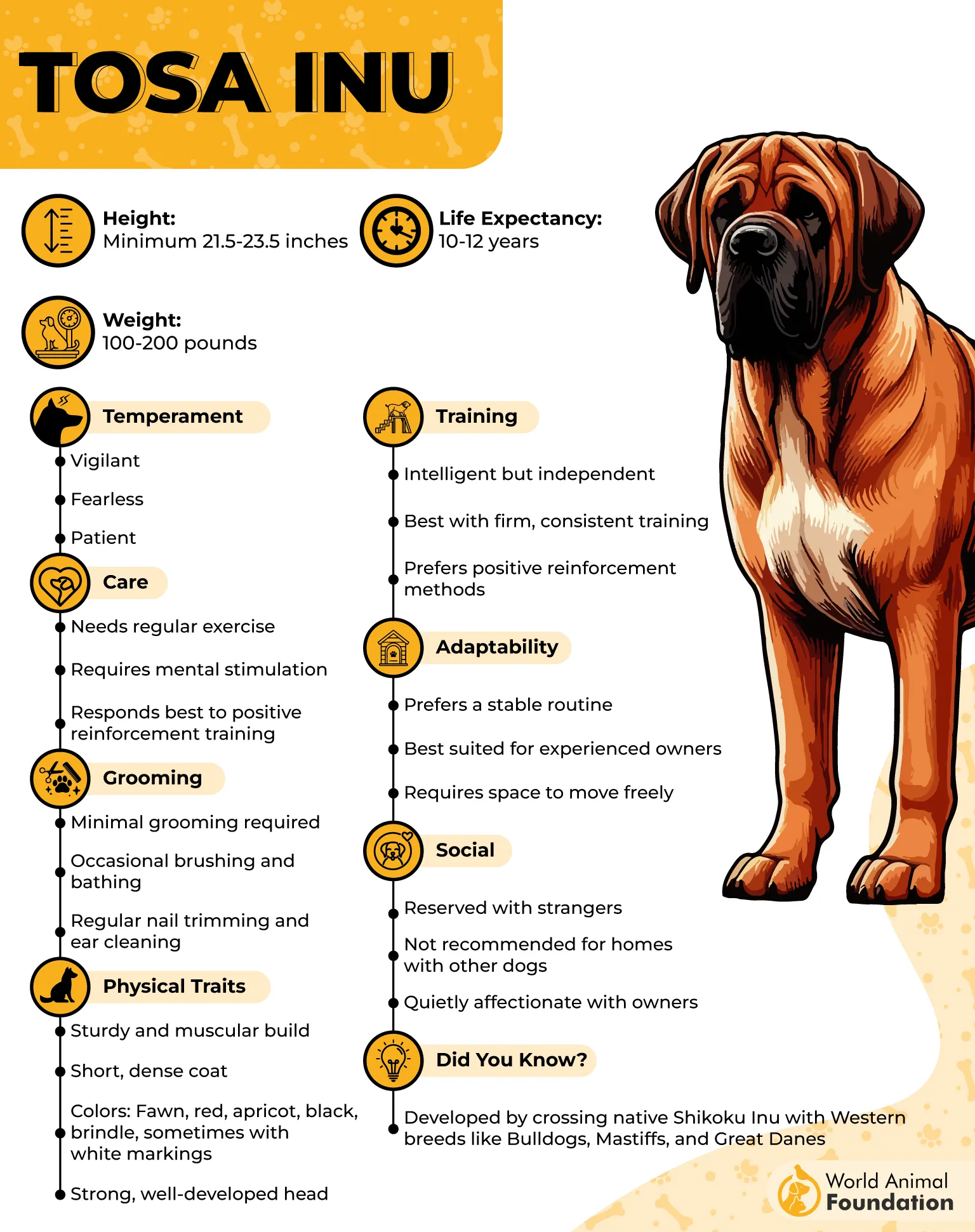
Tosa presents a large, heavy-built frame shaped by patience, courage, and steady composure. Its calm presence often sits alongside a watchful mindset, giving it a controlled and grounded behavior pattern. Despite its size, its temperament leans toward quiet obedience within familiar environments.
Measured awareness in daily behavior
As guard dogs, they observe their surroundings with restraint, showing affection mainly within their inner circle while keeping distance from unfamiliar people. Its interaction with other dogs can shift toward caution, especially when it senses intrusion.
This behavior reflects in clear physical and temperament cues:
Responds calmly within known surroundings
Reacts selectively toward unfamiliar dogs
Maintains steady, controlled alertness
Slow maturity with steady shaping
As stated by the AKC, this giant dog takes longer to reach full maturity, with behavioral stability forming gradually over time rather than in the early stages.
Its calm nature remains present, but consistent engagement helps balance both physical and mental energy levels. Short outdoor routines or structured indoor tasks often align with the pace of this loyal breed.
2. Caucasian Shepherd Dog
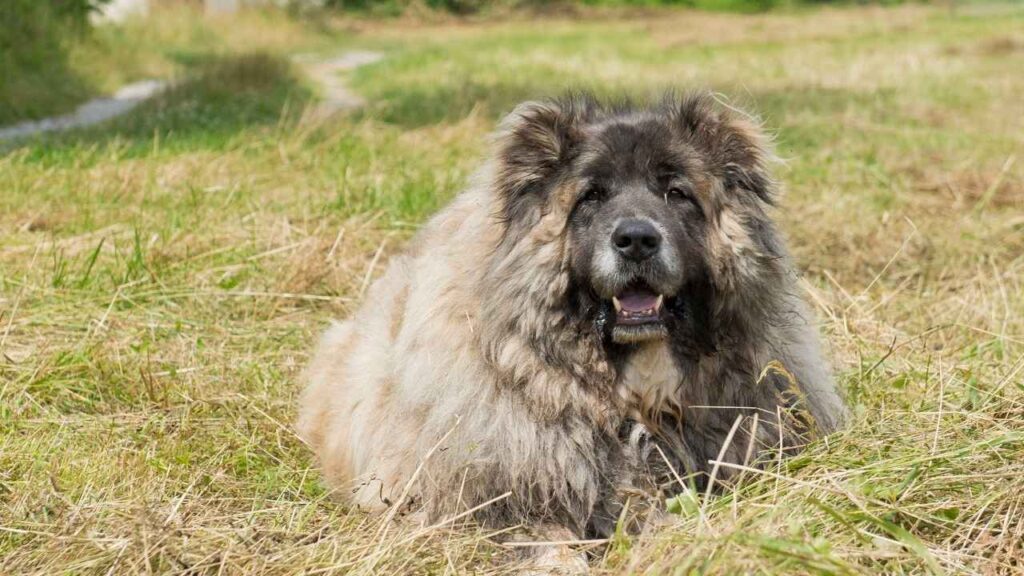
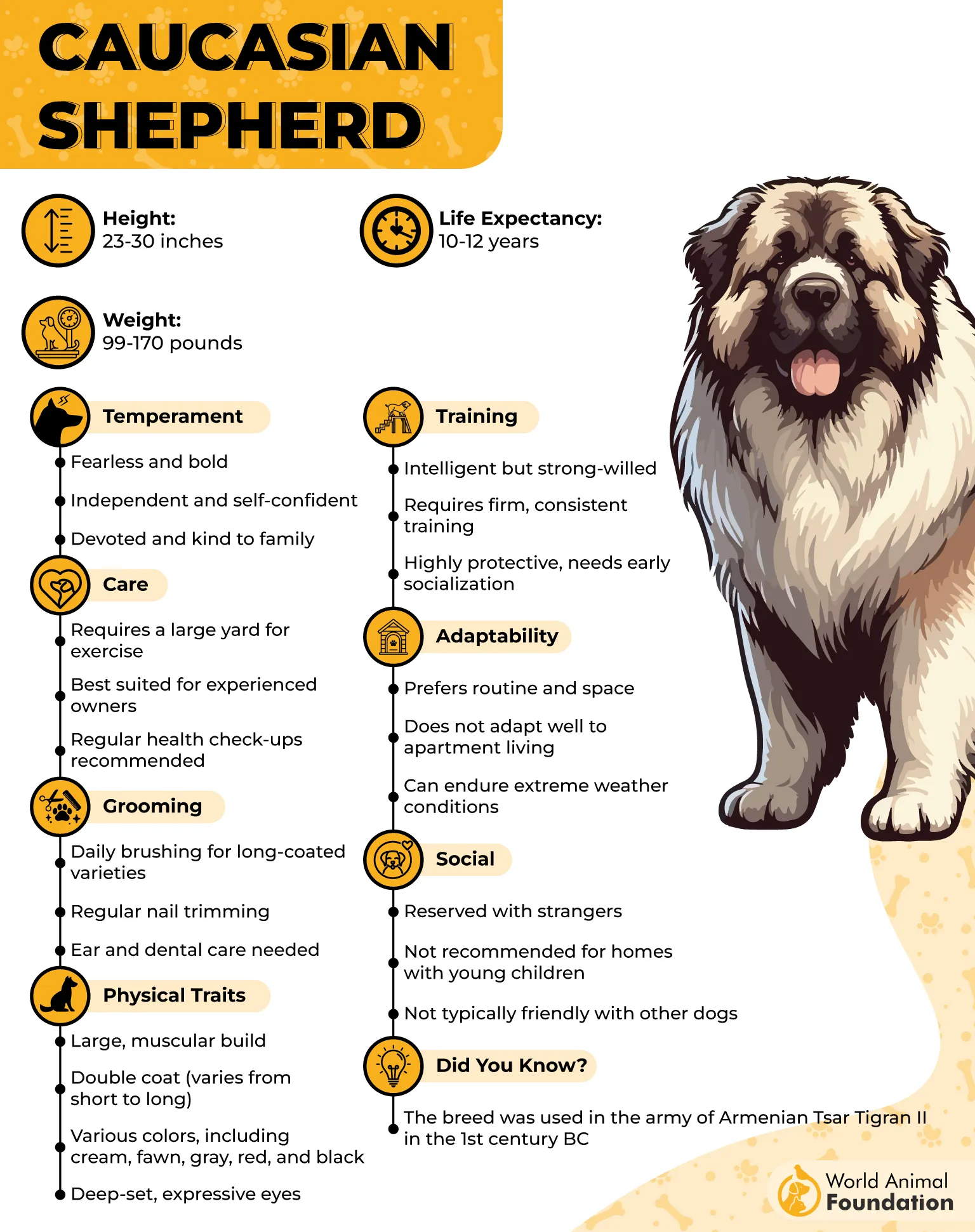
Caucasian Shepherd Dog reflects centuries of guarding use, where properties and livestock were protected from large predators across open regions. Its heavy frame and dense coat variations shape a dog that reads as grounded and firm in presence.
Independent guarding structure
This massive dog operates with a strong sense of autonomy, reacting only when it identifies a genuine threat. Its temperament combines deep family devotion with clear independence in decision-making, suitable for experienced dog owners.
This balance becomes clearer through core traits:
Responds strongly to perceived intrusion
Forms close bonds within its household circle
Handles wide, fenced environments with ease
Temperament shaped by boundaries
It shows a clear divide between its protective instincts and its gentle disposition toward familiar people, as per Purina. Within the home circle, it behaves calmly and forms steady connections, while remaining highly selective with outsiders. This separation of roles is a core part of its working background.
3. Leonberger
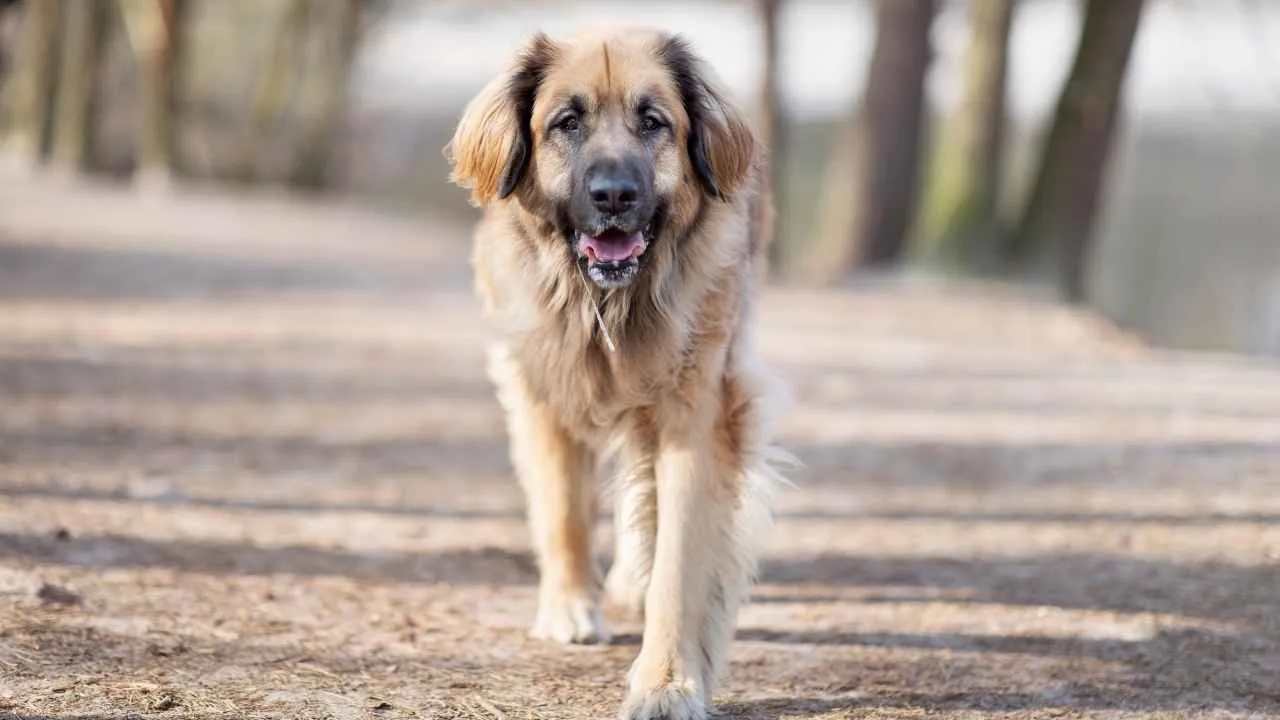
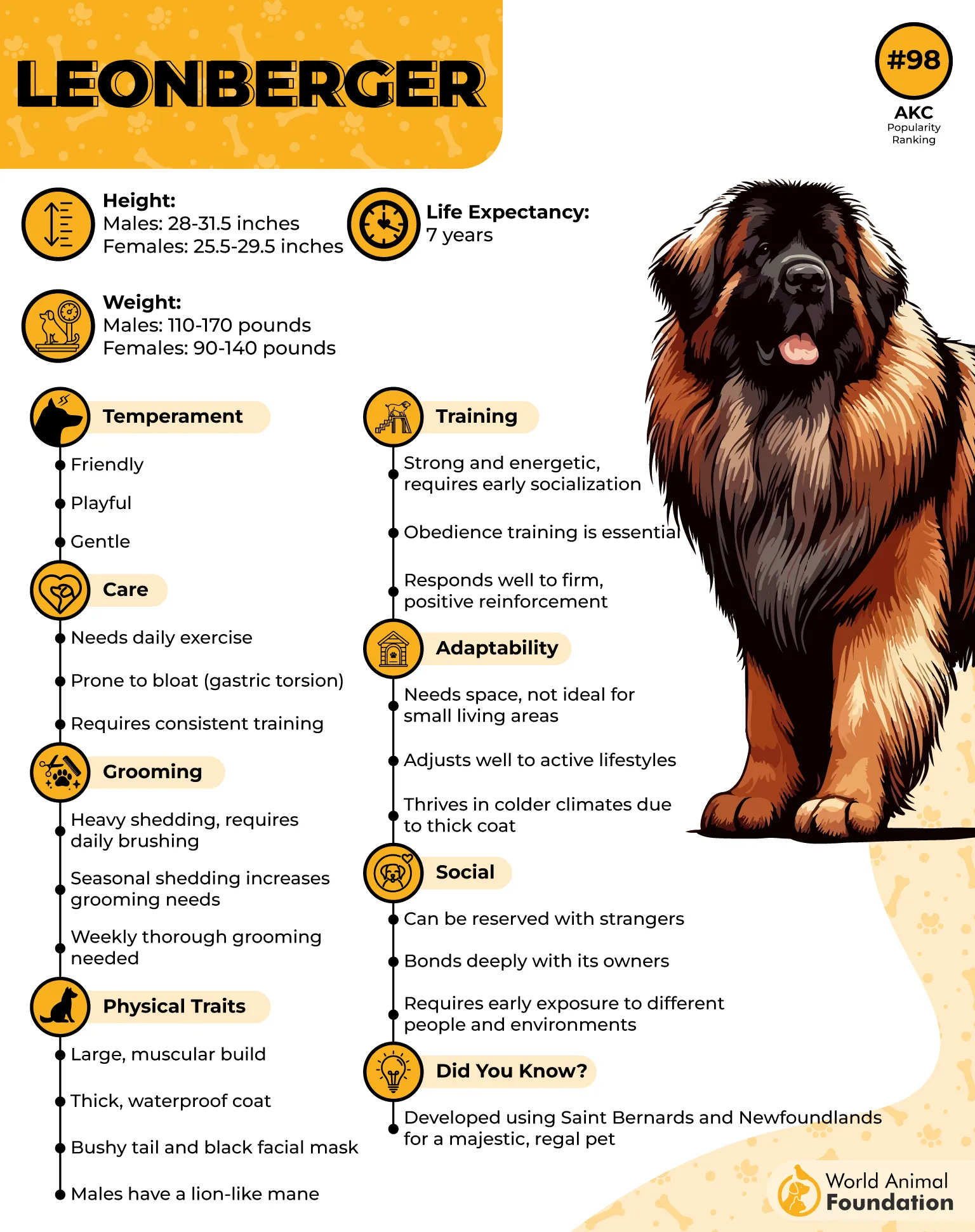
The Leonberger reflects its connection to Leonberg, Germany, with a giant frame, originally linked to breeds like the Newfoundland, Saint Bernard, and Great Pyrenees. Its lion-like appearance ties back to a historical intention of creating a powerful yet visually striking companion.
Balanced working temperament
This giant breed functions with a steady mindset shaped by farm work history and later search-and-rescue roles, as noted by PetMD. Its response to people reflects calm control paired with a willingness to engage in tasks.
This balance becomes clearer in structure and behavior:
Handles structured tasks with steady focus
Interacts gently with children and family members
Adjusts energy based on environment and activity
Behavior within home life
Leonberger shows an easygoing indoor presence, often shifting between play and quiet rest without tension. They are incredibly loyal and tied with a strong attachment to the people around them, requiring consistent attention. This adaptability shapes how it fits into shared living spaces.
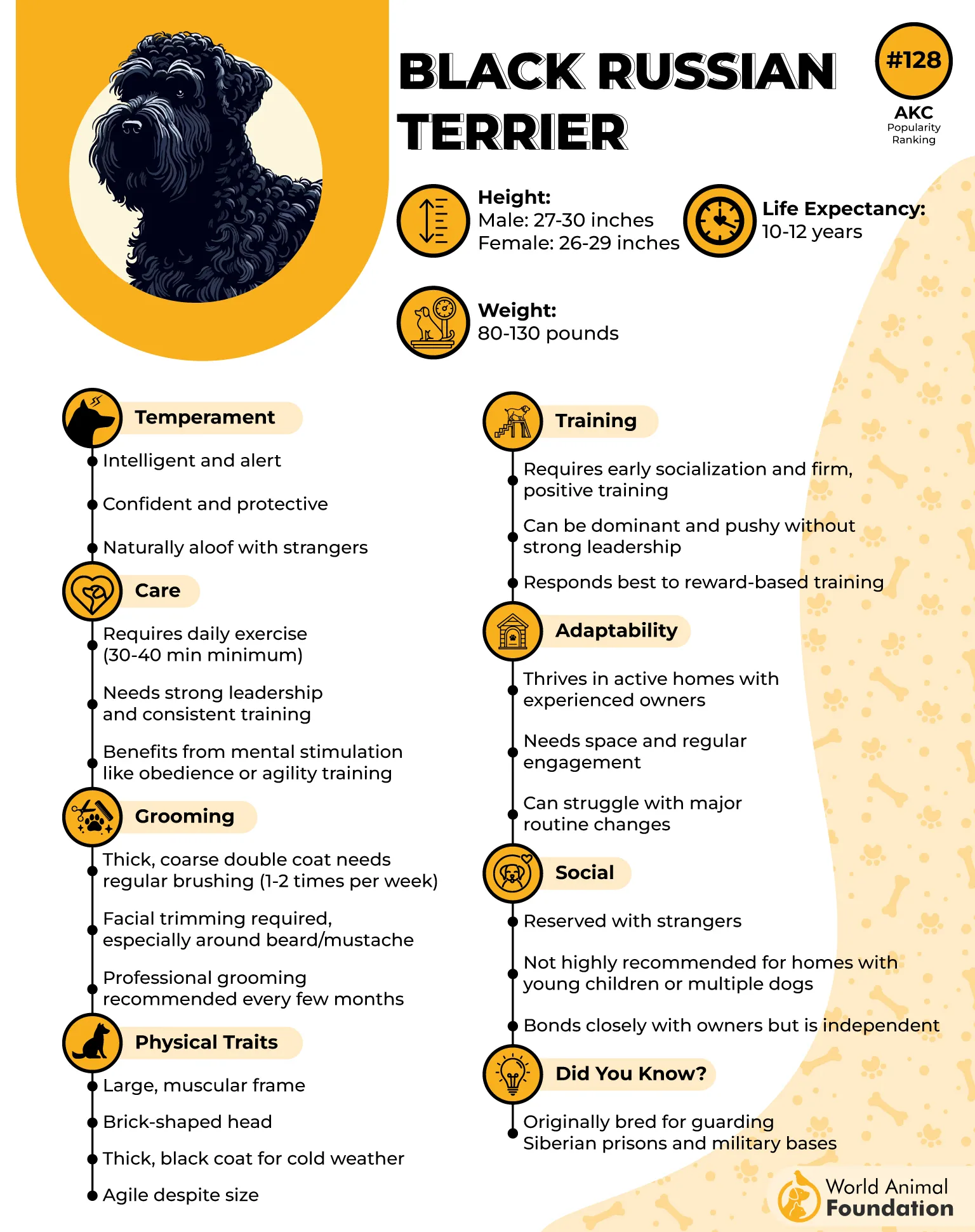
4. Black Russian Terrier
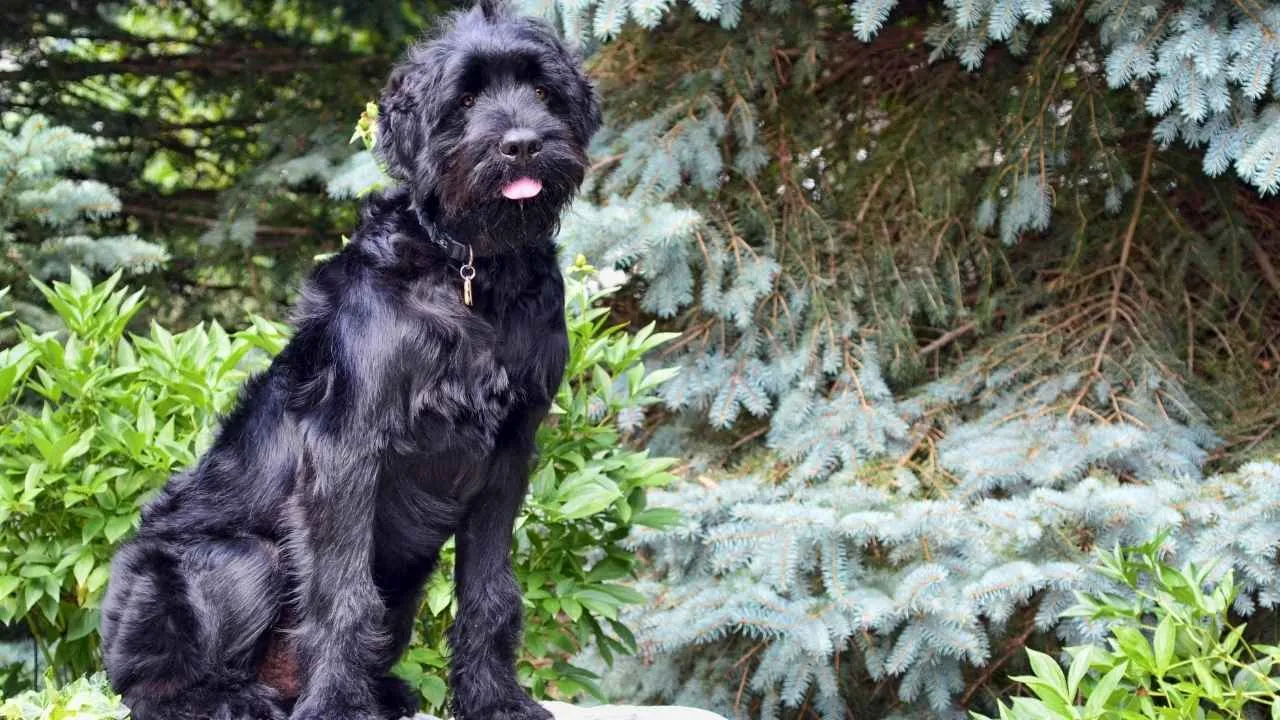
Black Russian Terrier was originally bred in mid-20th century Russia as a large working dog designed for demanding roles. Its size and composed temperament reflect a balance between control and capability. The breed maintains a steady, observant presence rather than reactive behavior.
Familiarity built through structure
This gentle giant shows reserved behavior around unfamiliar faces while forming strong attachments within its household circle. Consistent social exposure shapes how comfortably it handles new environments and interactions.
This balance becomes clearer in everyday behavior patterns:
Forms strong bonds within family settings
Requires gradual exposure to new situations
Responds better with steady guidance
Activity guided by balance
As a large dog, it maintains physical and mental balance through regular walks and structured engagement rather than constant activity. Its working background makes mental stimulation as relevant as physical exercise. Boredom tends to appear when routine lacks variation.
5. Greater Swiss Mountain Dog
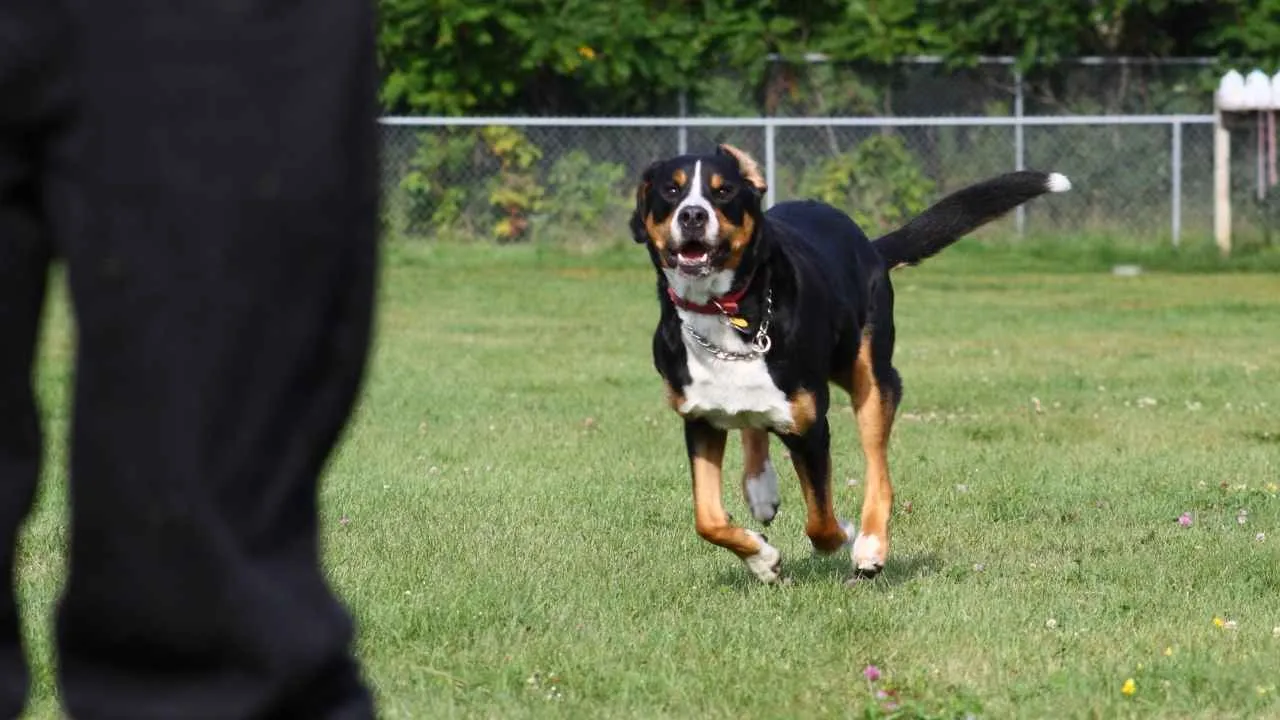
Greater Swiss Mountain Dog shows its history through a heavy, powerful frame shaped for farm work across European regions. Its presence feels steady, with strength balanced by a calm, approachable expression. Despite its size, its behavior reflects control rather than constant intensity.
Practical build and daily role
Greater Swiss Mountain Dog’s coat and structure reflect a working background that required durability without complexity in upkeep. Its interaction with people stays warm, especially in family settings where closeness is familiar.
The physical and behavioral traits of this deeply loyal dog are:
Dense coat needing simple brushing and washing
Natural comfort around children in home settings
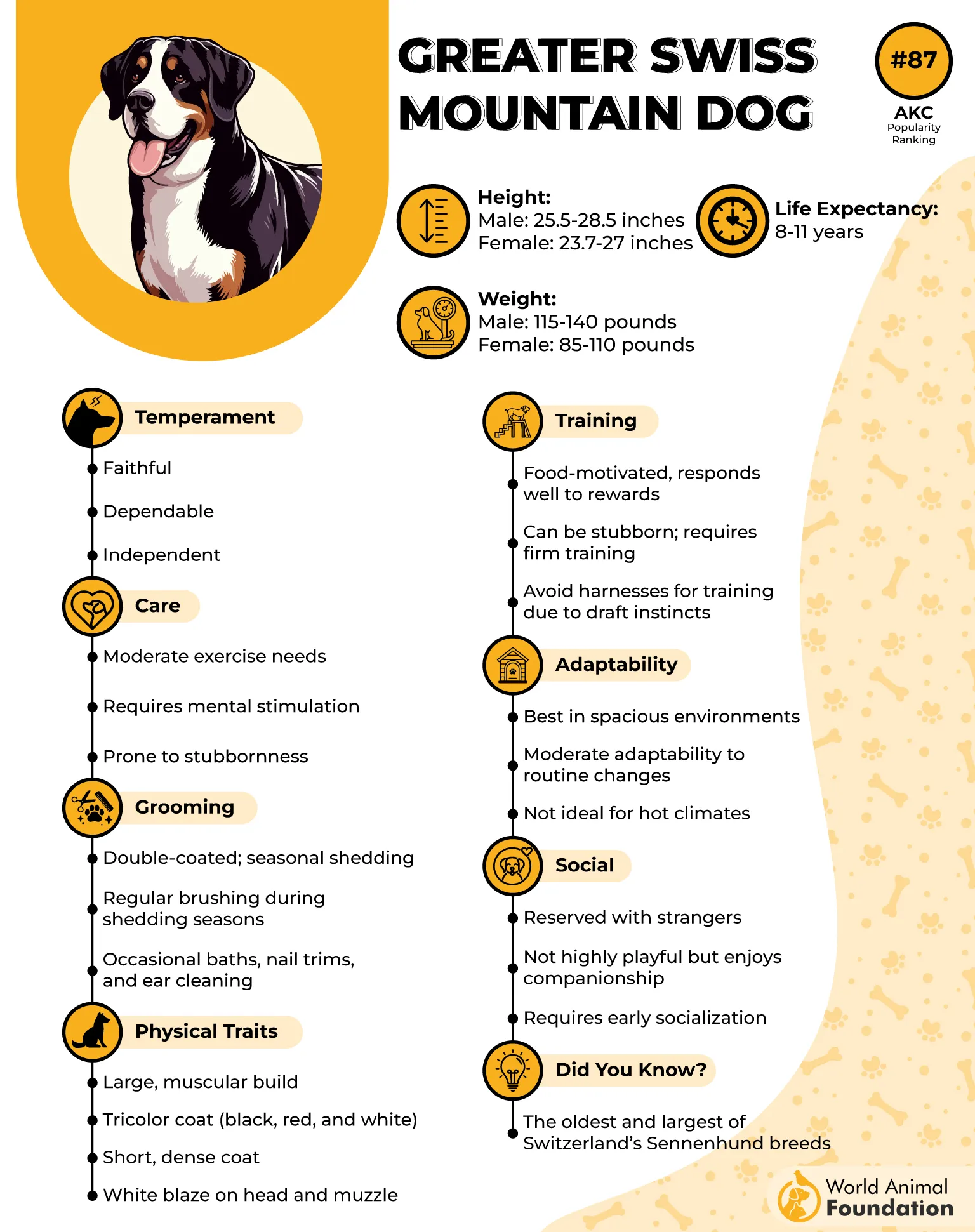
Strong alert bark when something feels unusual
Awareness shaped by instinct
It stays observant of its surroundings, reacting through sound when unfamiliar activity appears nearby. Early social exposure influences how comfortably one accepts new people during adulthood. Its behavior toward smaller dogs requires early direction to keep instincts balanced within shared spaces.
6. Estrela Mountain Dog
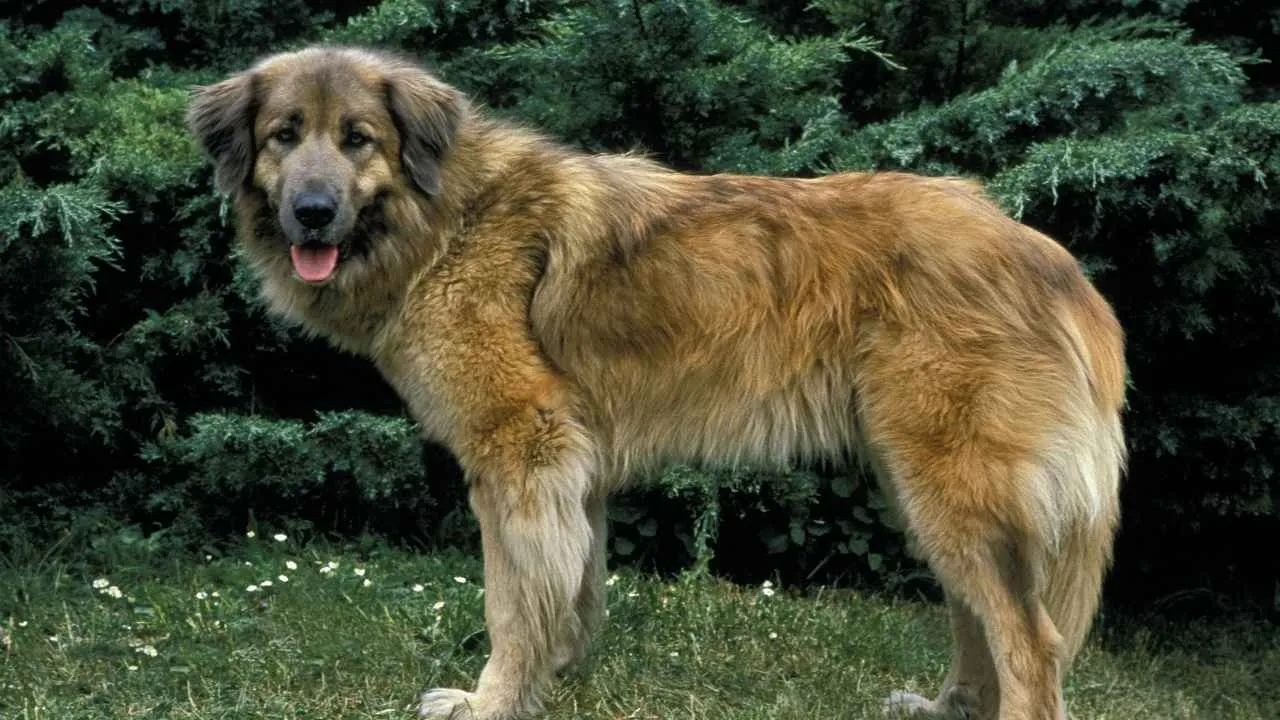
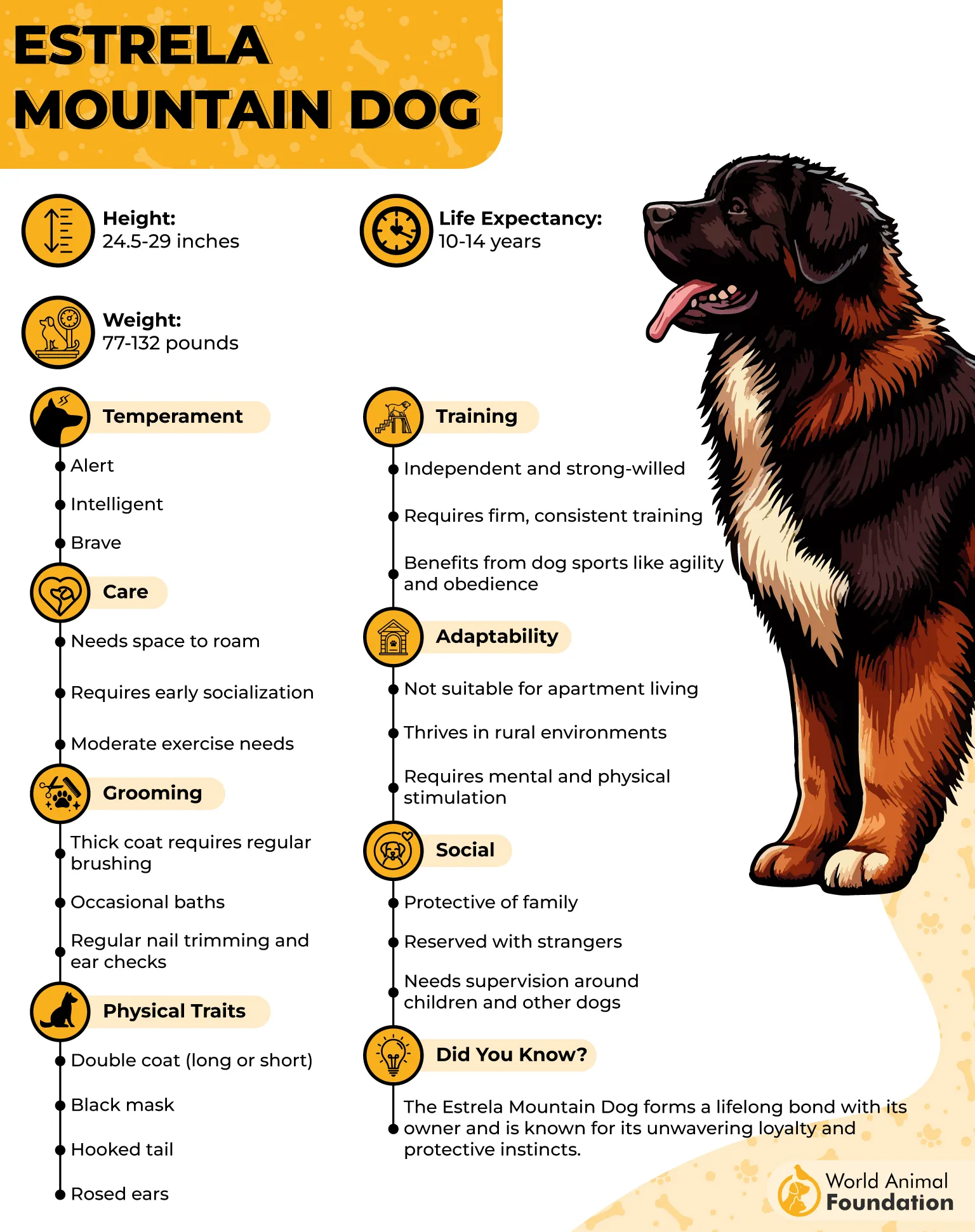
Estrela Mountain Dog shows a calm, grounded presence shaped by centuries of guarding work in Portuguese mountain regions.
Its behavior reflects a steady awareness of surroundings, especially in wide or open environments. Loyalty forms strongly within its known circle, while unfamiliar faces are approached with distance.
Family focuses with guarded awareness
It builds deep attachment with its household, often preferring closeness with familiar people over social openness. Its guardian background influences how it reacts to new individuals, requiring gradual exposure for balance.
This character becomes clearer in practical traits:
Maintains distance from unfamiliar people
Responds best to steady, early social exposure
Shows preference for secure, defined spaces
Space, routine, and outdoor rhythm
This breed connects well with environments that allow controlled roaming, especially within secure boundaries. Its comfort grows when daily movement becomes part of its routine rather than sporadic activity. A structured outdoor setting aligns closely with its natural behavior patterns.
7. Irish Wolfhound
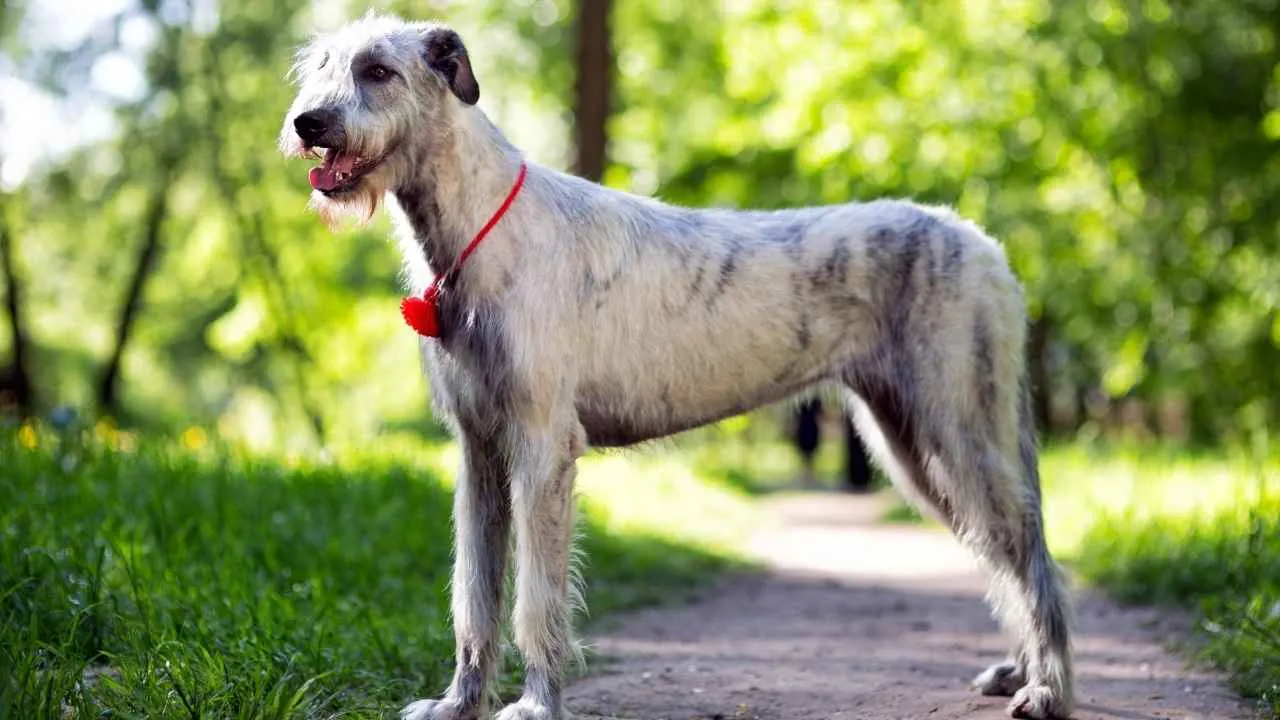
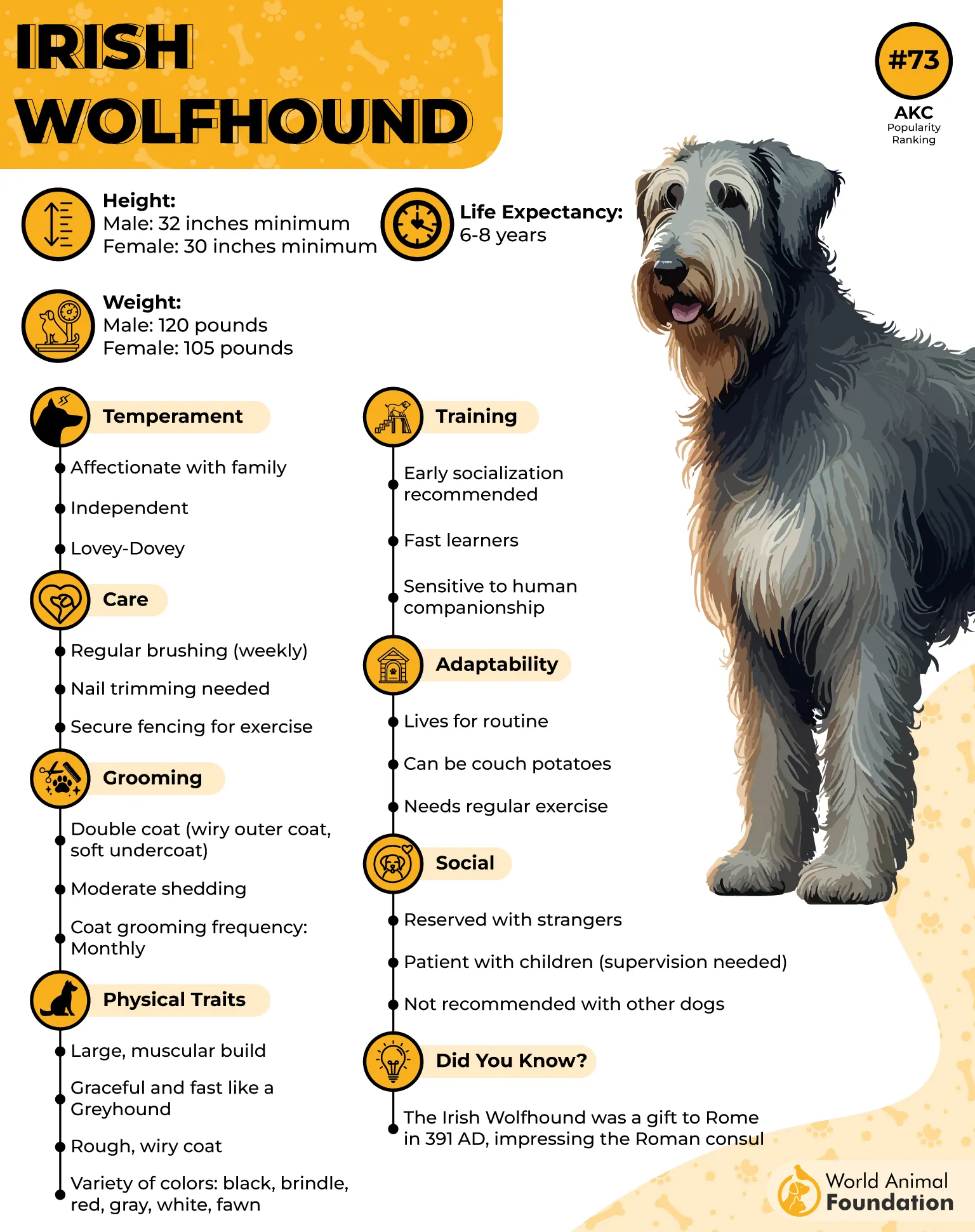
Irish Wolfhound presents a towering frame that feels calm rather than overwhelming, shaped by a history rooted in hunting roles. Its intimidating appearance contrasts with a composed, soft temperament that naturally leans toward affection.
Behavior shaped by early grounding
They respond best when early social exposure and basic training are introduced during growth stages, helping manage both size and instinct. Its comfort around people and other dogs forms gradually through familiarity.
That balance becomes clearer through key traits:
Responds calmly when properly socialized early
Shows friendly behavior toward familiar people
Needs managed space due to instinctive chasing drive
Instincts influenced by surroundings
It retains a strong chase response linked to its hunting background, especially around smaller animals or sudden movement outdoors.
A secure environment plays a role in reducing unwanted pursuit behavior during walks or open space activity. Its awareness often activates quietly before action follows.
Conclusion
Not every loyal dog stands in the spotlight, and these rarest dog breeds reflect that clearly. Their strength lies in how they stay connected without constant display, building trust through routine and awareness. Some remain watchful and quiet, while others show attachment through a steady presence that does not feel overwhelming.
This difference becomes clearer with time. Loyalty that feels natural does not demand attention or reassurance. It simply stays consistent in daily life. When the right match is made, the dog fits into the home without strain, creating a bond that feels stable, reliable, and easy to live with as each day passes.
