




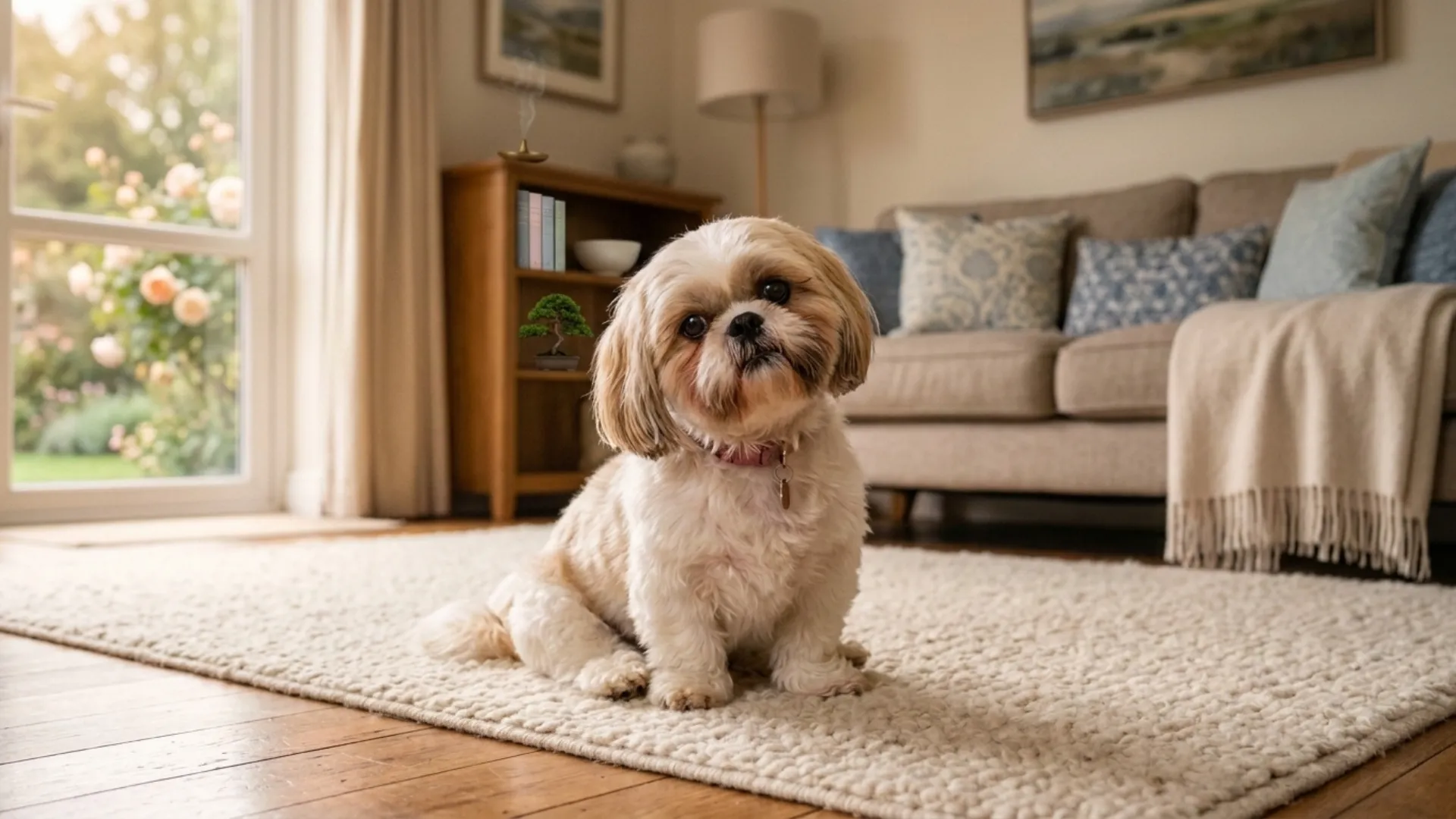
Some dogs enter a room like a furry tornado, while others quietly settle beside you and make the entire place feel calmer. Gentle dog breeds are often patient, affectionate, emotionally connected to their people, and less interested in turning every ordinary Tuesday into an extreme sport.
However, “gentle” does not mean inactive, maintenance-free, or automatically suitable for every household. A soft-tempered dog may still need daily exercise, consistent training, careful socialization, grooming, veterinary care, and respectful handling from children.
The top most gentle dog breeds for peaceful home life mentioned below are widely known for their sweet, patient, or easygoing personalities, but choosing a dog should never be based on temperament labels alone.
Top Most Gentle Dog Breeds for Peaceful Home Life
1. Cavalier King Charles Spaniel
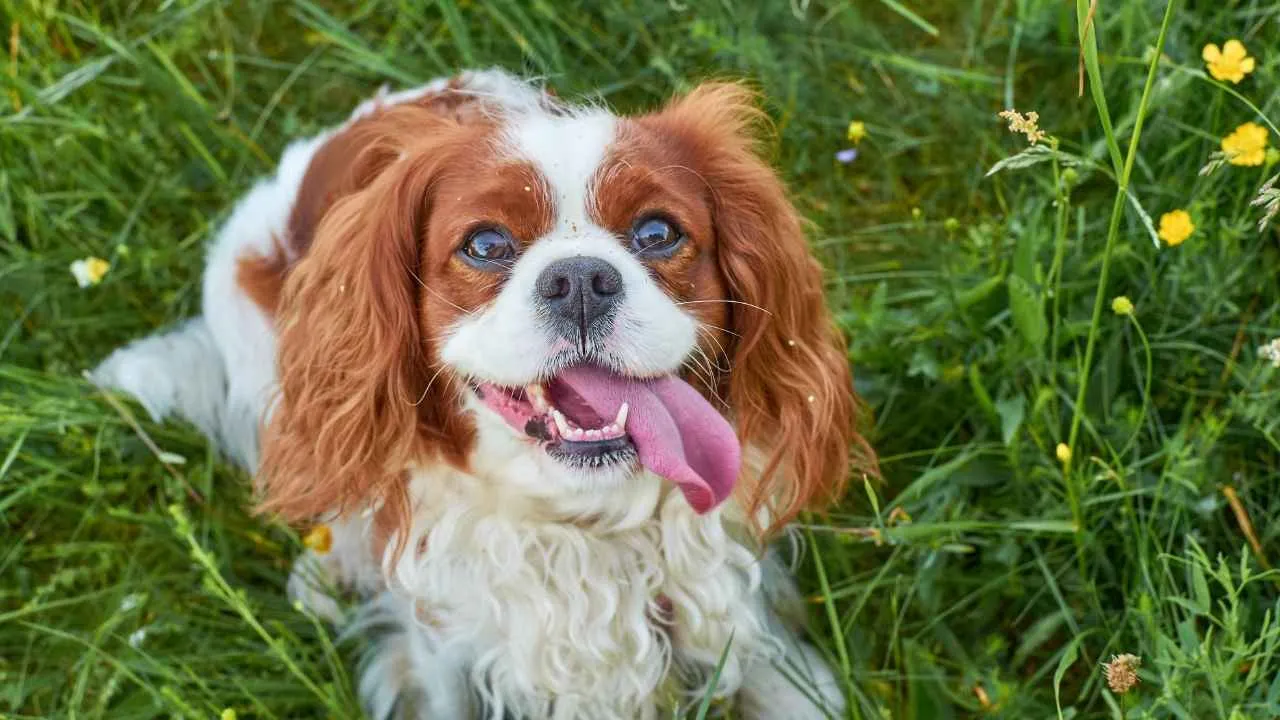
The Cavalier King Charles Spaniel is essentially a tiny royal with the emotional availability of your most supportive best friend. They are known for being affectionate, patient, and friendly, and for being closely attached to their families.
These dogs are serious about togetherness and usually want to be wherever their humans are, whether that means walking through the park or supervising a television marathon from your lap. Their adaptable personality can work well for active households and quieter homebodies.
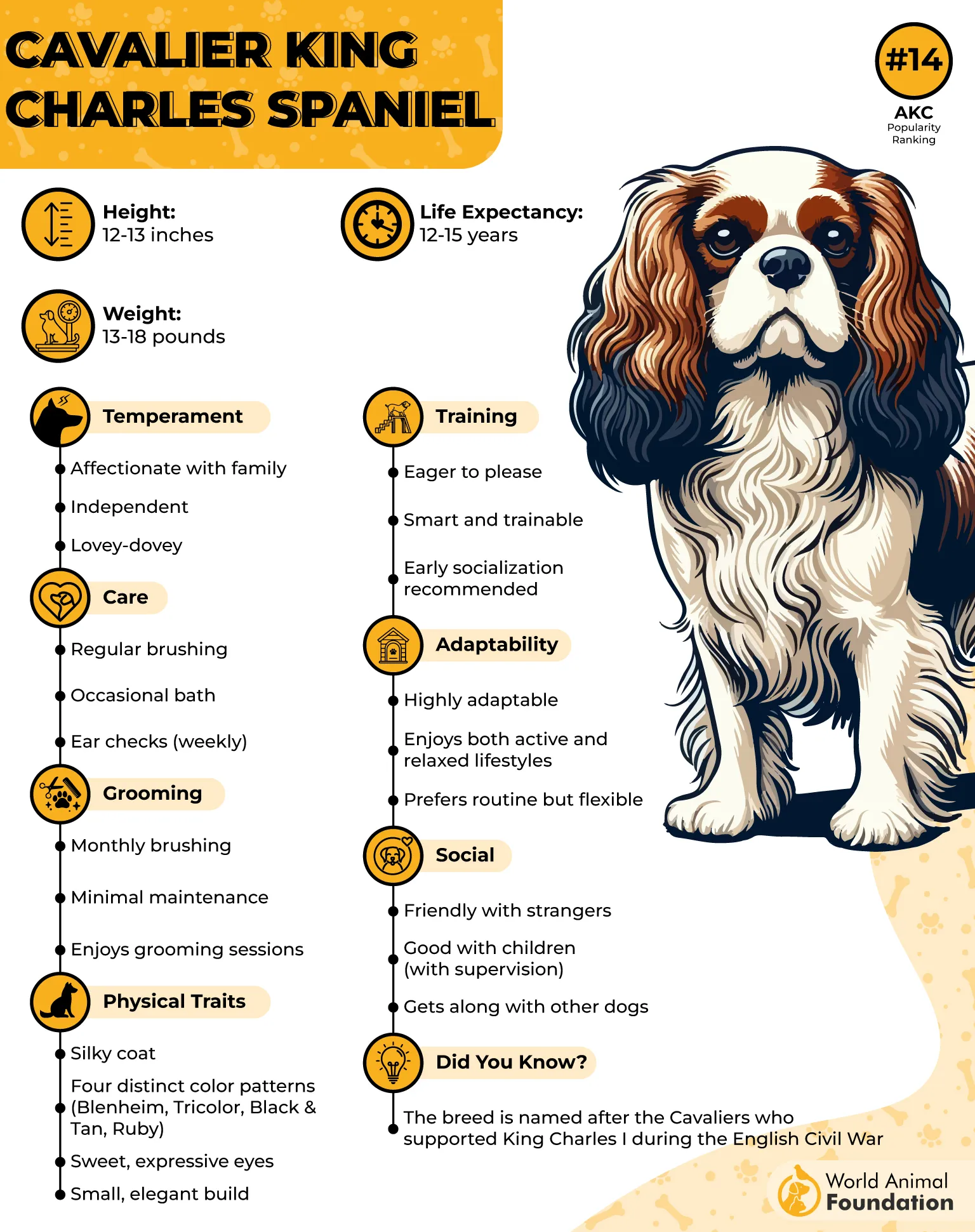
Although these small pups are famous lapdogs, Cavaliers are not decorative cushions with heartbeats. Many enjoy walks, games, beginner agility, scent activities, and outdoor adventures, but their exercise should be appropriate to their age, condition, and overall health.
This low-energy dog can fit into an apartment, detached home, or busy family setting when its emotional and physical needs are consistently met. Prospective owners should research responsible breeders, health screening, rescue options, grooming care, and the financial commitment involved before bringing one home.
2. Pug
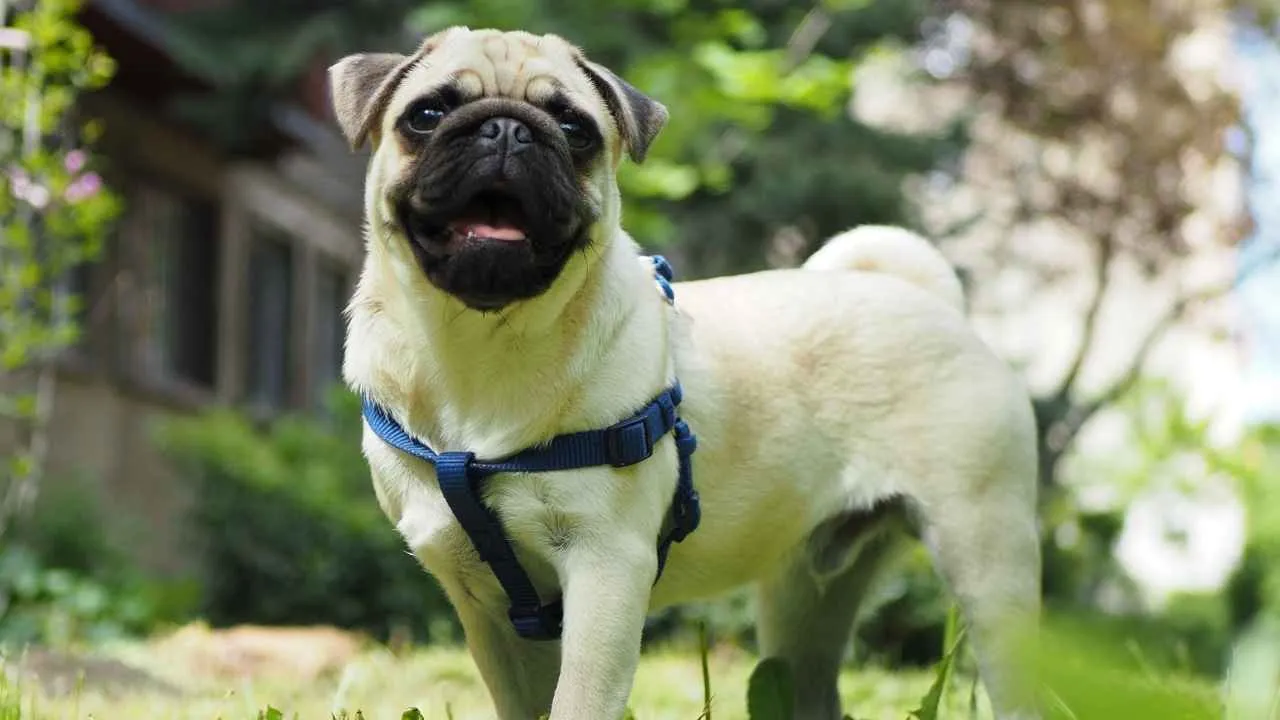
The Pug has mastered the art of being charming, dramatic, affectionate, and slightly ridiculous at the same time. The American Kennel Club describes them as charming, loving, and mischievous, which is basically the official version of saying they are tiny comedians with excellent networking skills.
Pugs usually adore human company and want to participate in whatever their household is doing, even when the activity is simply moving from one sofa to another. Their friendly, playful nature can make them appealing to first-time owners and families, although children must learn to handle them gently and respect their sleep and personal space.
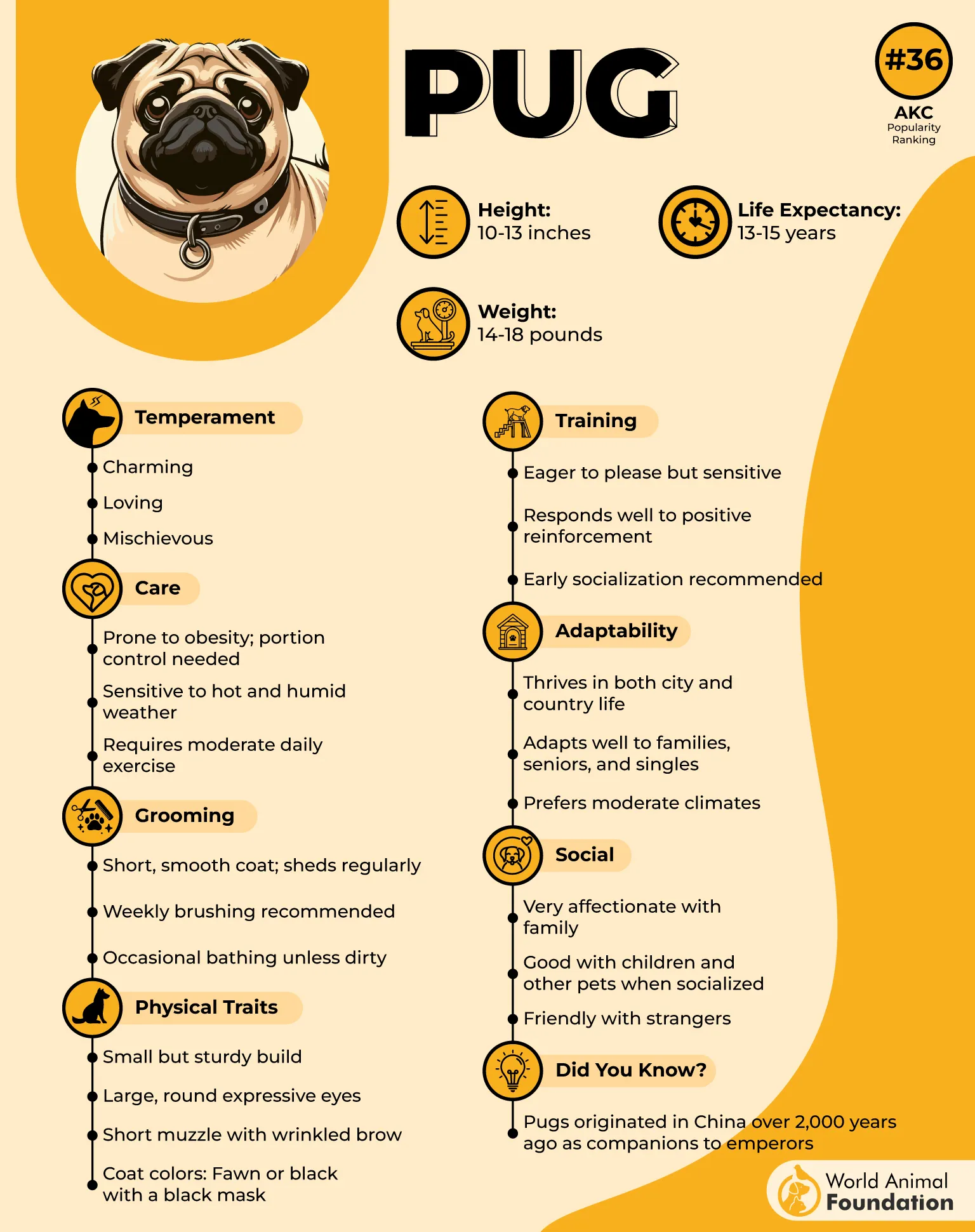
Food motivation can make Pug training entertaining and productive, but portion control matters because treat calories accumulate quickly in a small dog. Positive reinforcement, consistency, short lessons, and early socialization help develop polite behavior without damaging the breed’s sensitive feelings.
Despite their short coats, these couch potatoes shed more than many new owners expect, so weekly brushing can help collect loose hair before it decorates every black outfit you own. Their facial wrinkles, eyes, nails, teeth, and ears also require regular attention, while veterinary advice is important for managing breed-related health risks.
3. Shih Tzu
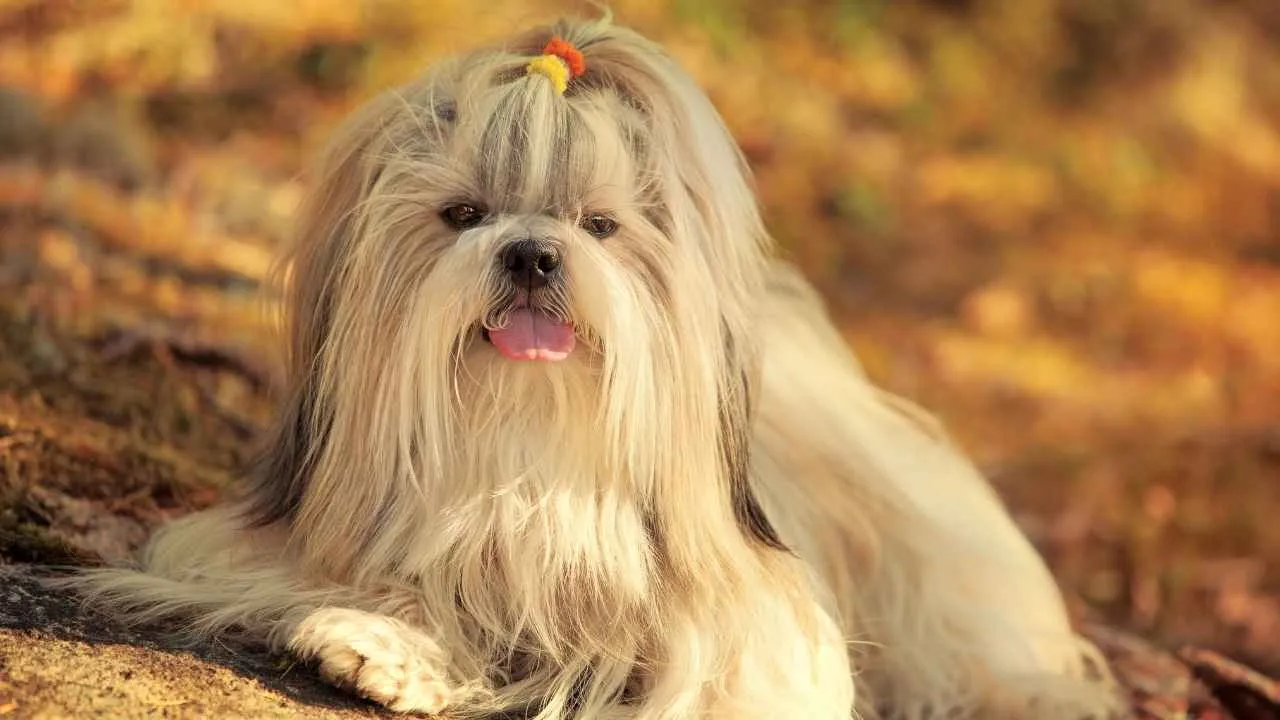
The Shih Tzu may look like it has a personal stylist and several important appointments, but underneath the glamorous coat is a warm, playful companion. Developed as a house dog, this breed generally wants closeness, comfort, and a reliable place near its favorite person.
These extremely loving dogs are often affectionate with family members and can live successfully with children and other animals when introductions are thoughtful and everyone understands gentle handling. PetPlan says they are small but solid, yet rough play can still frighten or injure them, especially when young children treat the dog like a stuffed toy.
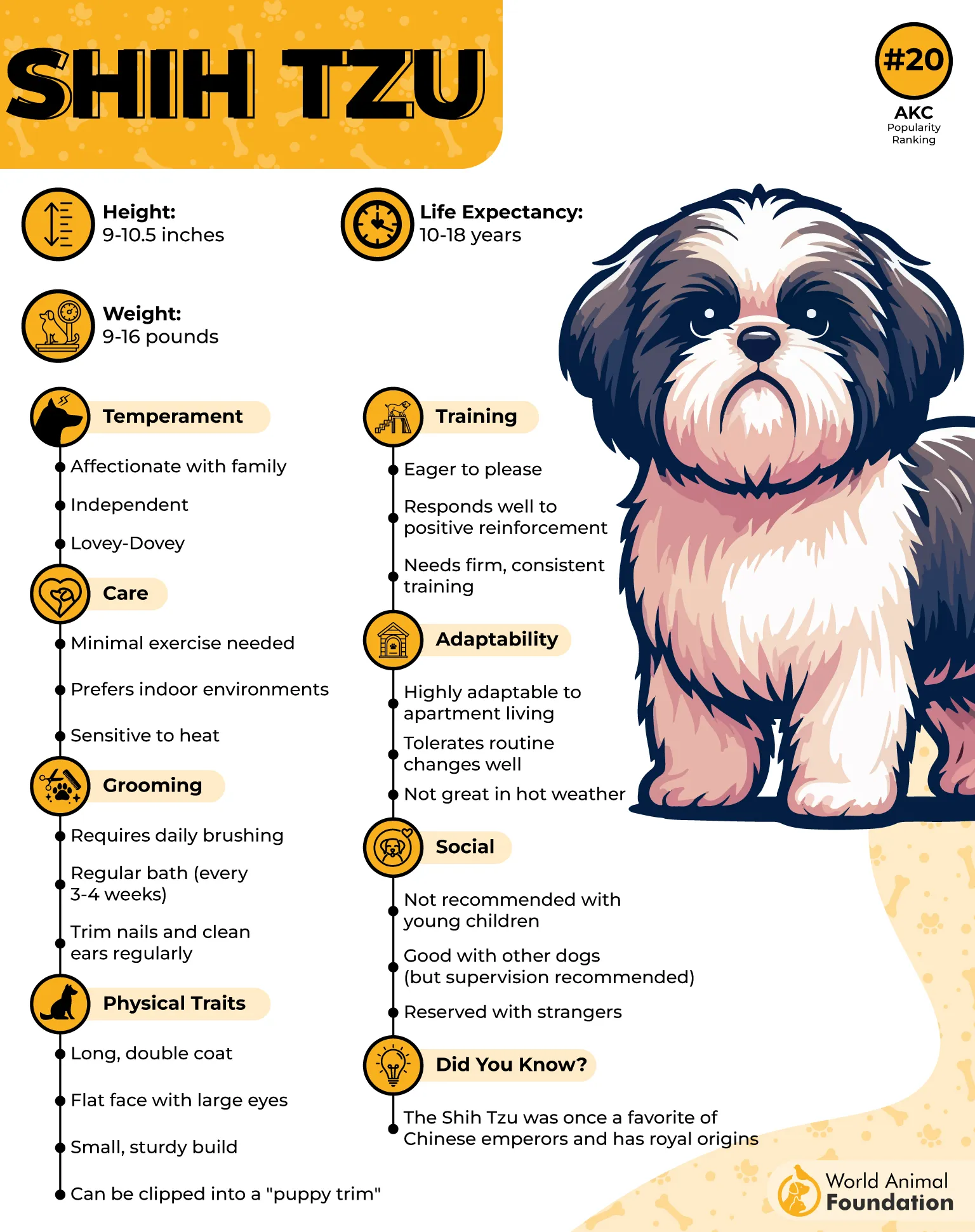
Their exercise requirements are fairly manageable, making them attractive to apartment dwellers and people who prefer relaxed daily routines. Short walks, indoor games, sniffing activities, and playful training sessions can provide enough physical and mental stimulation for many adult Shih Tzus.
The long coat requires daily brushing when kept at full length, along with regular bathing, facial cleaning, ear care, nail trimming, and professional grooming as needed. Many owners choose a shorter puppy trim because it is easier to maintain while preserving the breed’s adorable expression.
4. Japanese Chin
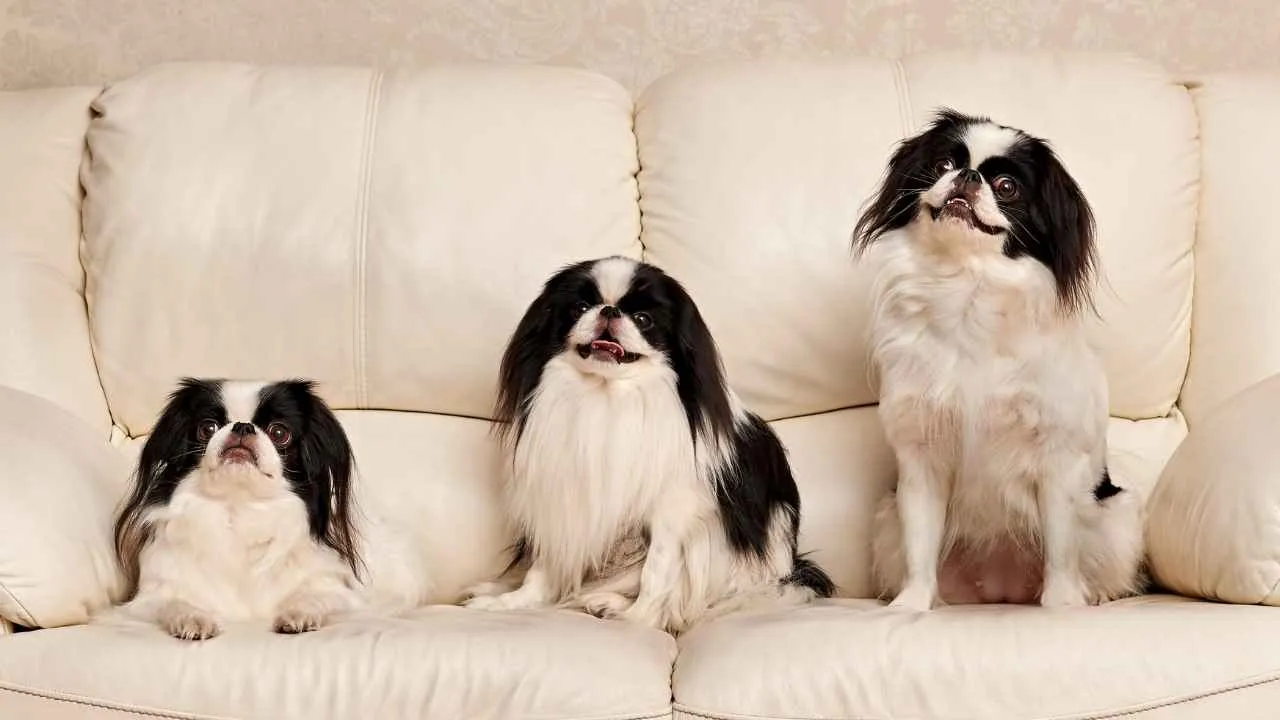
The Japanese Chin is a tiny companion with aristocratic energy, silky hair, and the mysterious confidence of a cat who has somehow obtained a dog license. The breed is commonly described as bright, graceful, amusing, clean, and generally quiet inside the home.
These companion dogs are often content to curl up on a lap, lounge in a comfortable chair, or calmly observe household life from a strategically selected cushion. Then, with no warning, they may launch into a playful burst of running and bouncing before returning to their royal resting position.
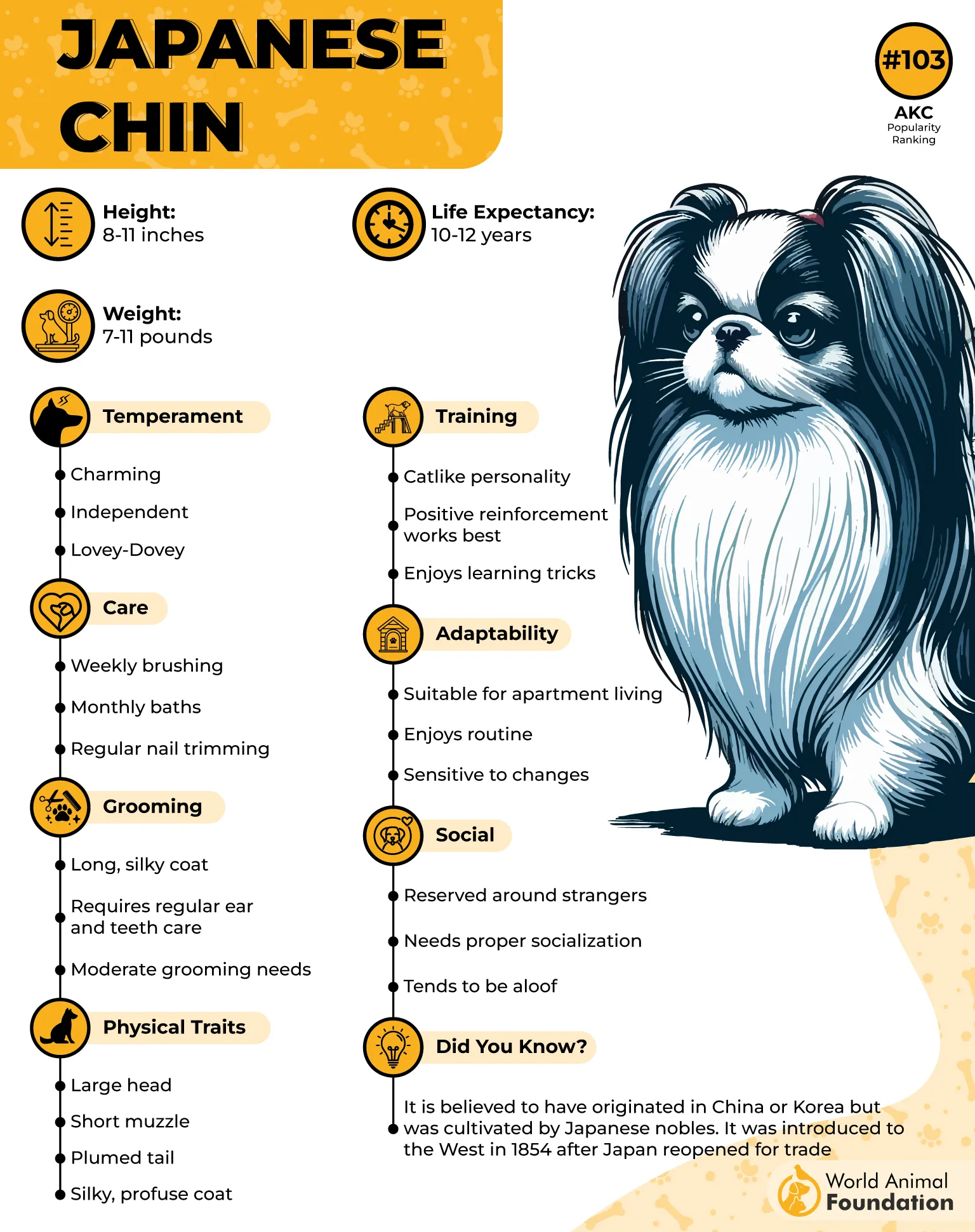
Their compact size and moderate exercise needs can make them suitable for apartments and smaller homes. Slow walks, supervised garden exploration, indoor play, and simple trick training are usually enough to keep them engaged.
Training should feel fun, respectful, and worth the Chin’s time, because repetitive drilling may cause this clever little thinker to mentally leave the meeting. Positive methods work best, while harsh discipline can make a sensitive Chin anxious or unwilling to participate.
These Japanese dogs may be better suited to adults, older people, child-free households, or families with calm children who understand how to handle them respectfully. They often enjoy other dogs and affectionate companionship but may become distressed if left alone for extended periods.
5. Whippet
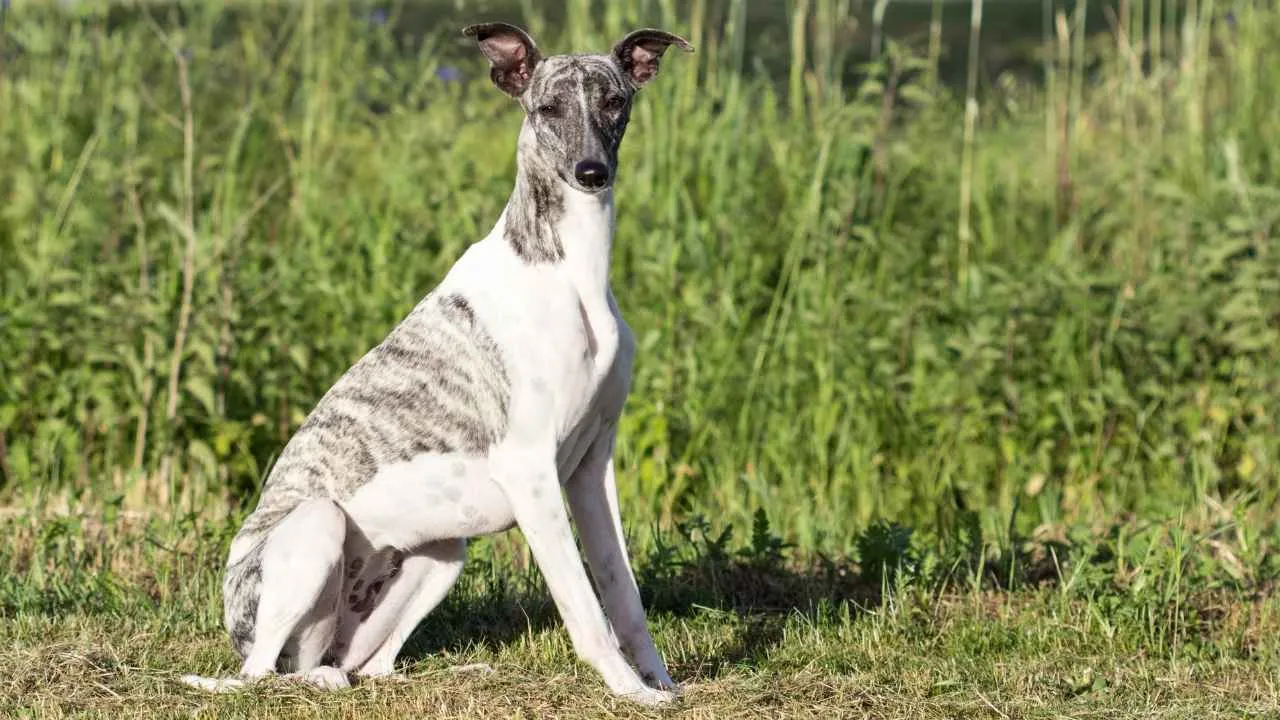
The Whippet looks like a sleek professional athlete but often behaves at home like somebody who has cancelled every plan in favor of a blanket. This medium-sized sighthound is affectionate, calm, graceful, and typically quiet indoors when its exercise needs are fulfilled.
These lap dogs can reportedly reach speeds of up to 35 miles per hour, so their peaceful indoor behavior should never be confused with a lack of athletic ability. They are sprinters rather than nonstop endurance machines, enjoying explosive running sessions followed by long periods of serious relaxation.
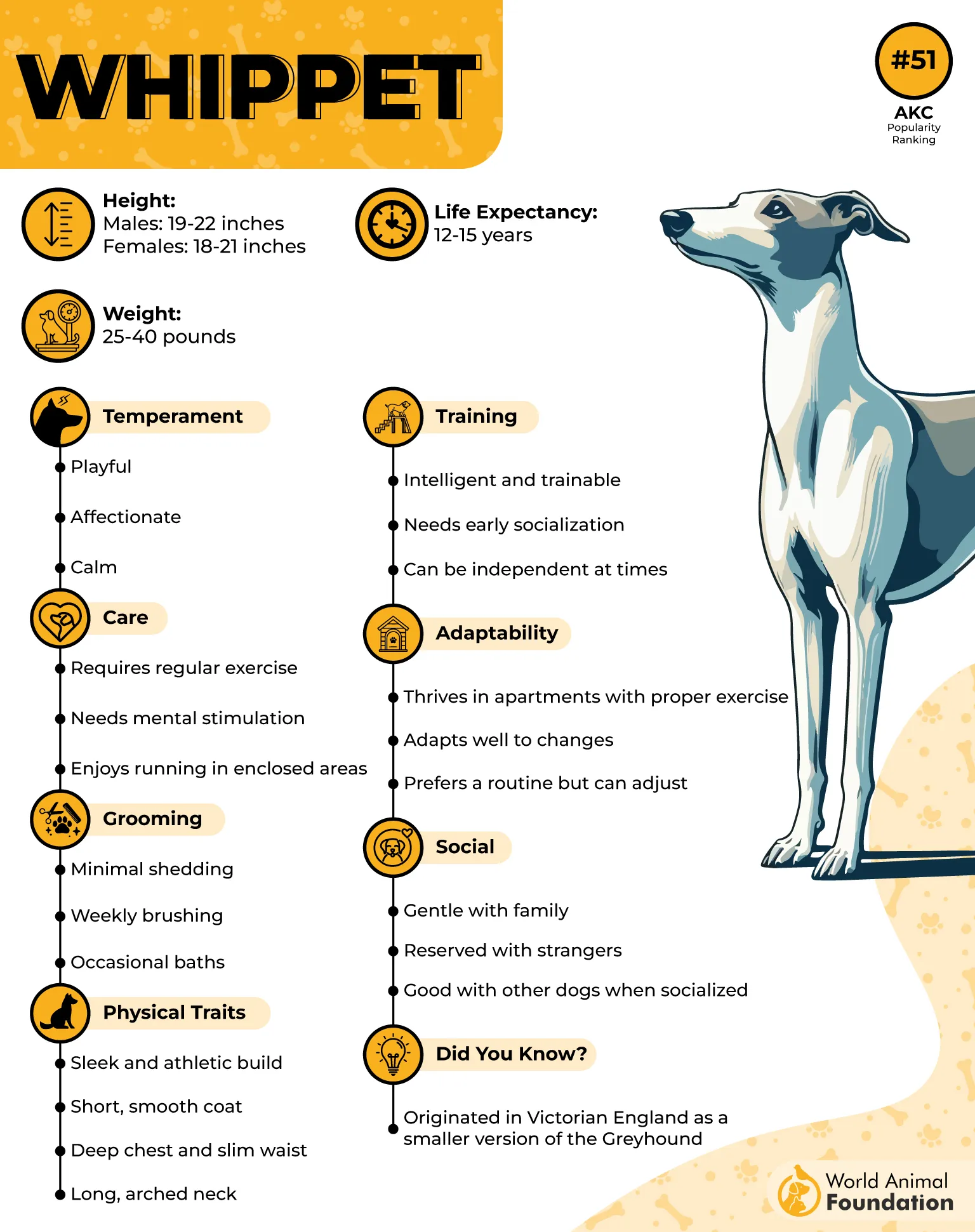
A securely fenced area is valuable because they were developed to pursue small game and may chase squirrels, rabbits, or other fast-moving animals. They should stay on a leash in unsecured spaces, even when their recall seems reliable under normal conditions.
Inside the home, Whippets are commonly gentle, affectionate, clean, and less vocal than many breeds. Their thin coats and lean bodies provide limited protection from cold, wet weather, so warm bedding and appropriate outdoor clothing may be needed in chilly conditions.
Whippets can do well with considerate children, couples, singles, and other dogs, although every introduction should be supervised and individual prey drive must be considered around smaller pets. T
6. Clumber Spaniel
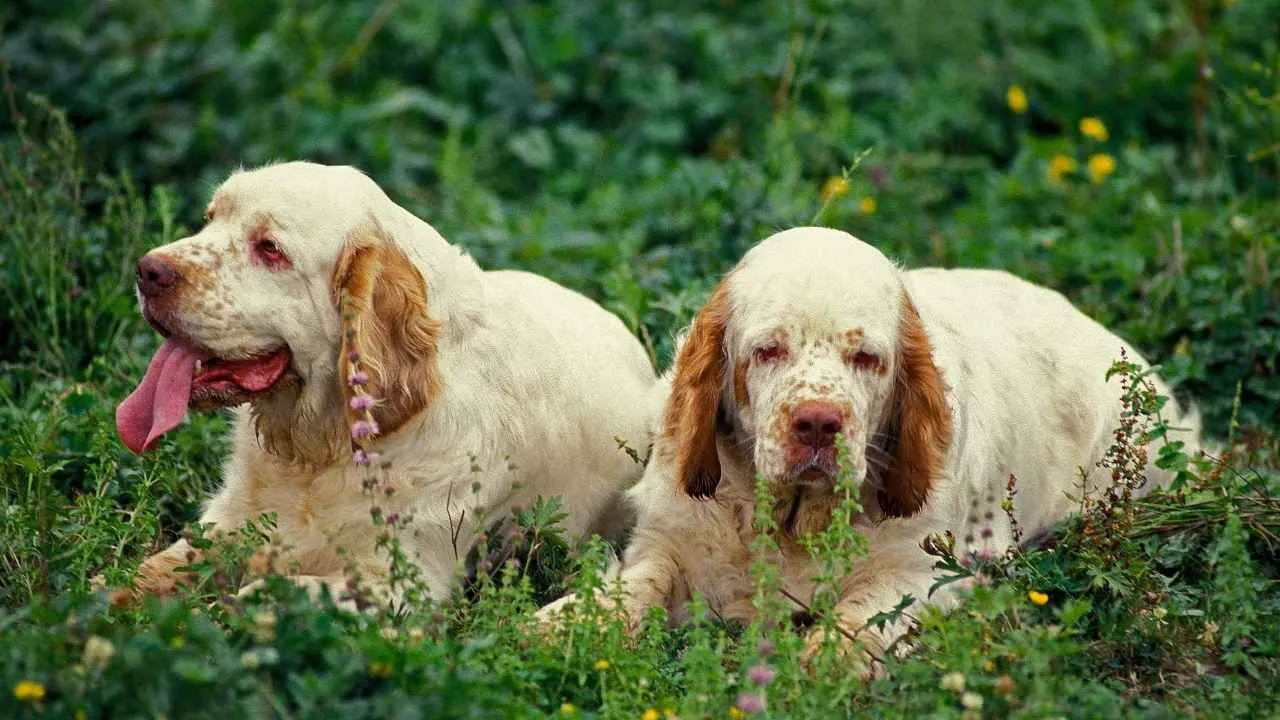
The Clumber Spaniel has the sturdy appearance of a dog who could help move your furniture but would honestly prefer a stroll first.
Clumbers were developed as slow, steady hunting dogs capable of working through thick vegetation to locate and retrieve game. Their strong noses and persistence remain very much present, so an interesting scent may transform a casual walk into a detailed forensic investigation.
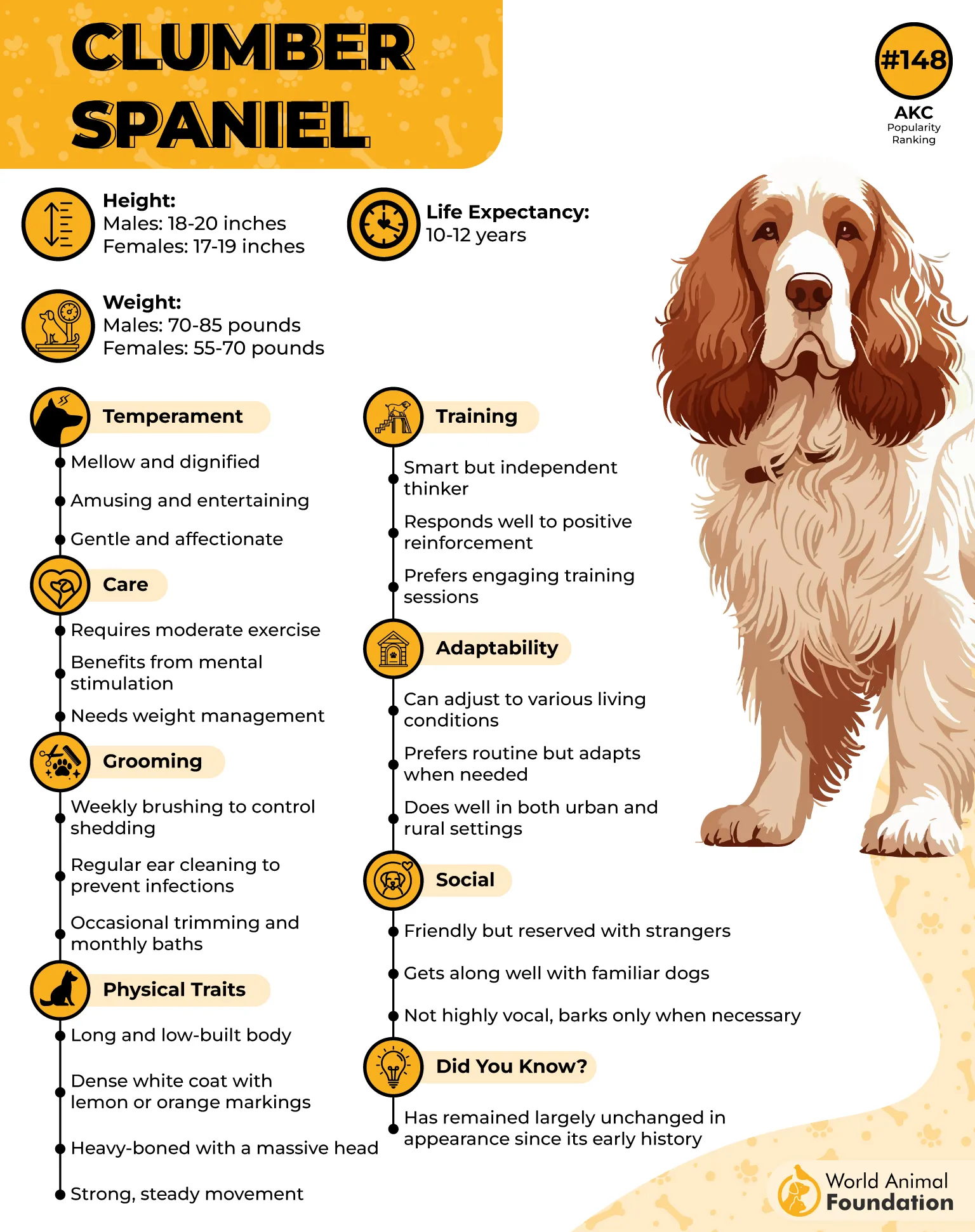
Although these dogs with a calm temperament appear heavy and unhurried, Purina says that they can be active and benefit from daily walks, retrieving games, swimming, and opportunities to use their noses.
Gentle, consistent training works well because they are intelligent and eager to please, though they may pause to consider whether your request aligns with their current agenda. Early socialization helps prevent excessive reservation around unfamiliar people and supports confident behavior in new environments.
Their coat requires regular brushing, while heavy ears, facial folds, nails, and feathered areas need routine inspection and cleaning. Prospective owners should also be prepared for shedding, occasional drool, and the space required by a low-set but substantial dog.
7. Newfoundland
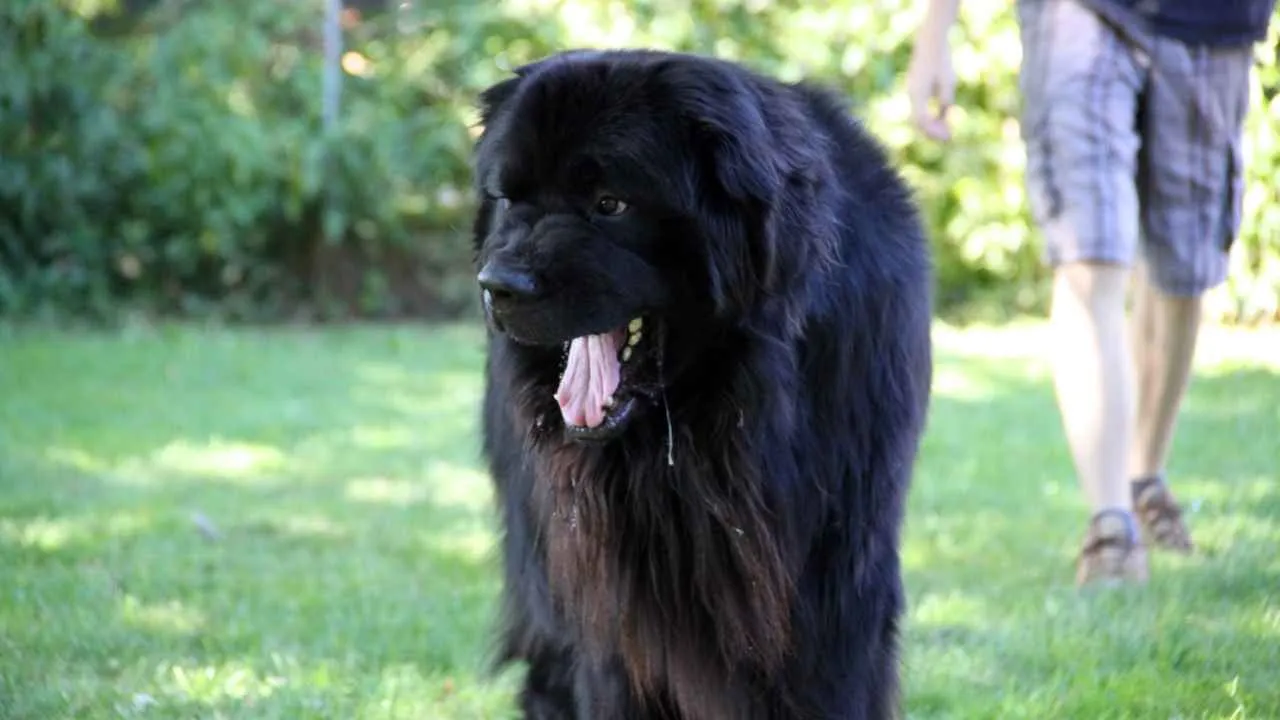
The Newfoundland is a massive working dog with the temperament of a thoughtful babysitter and the coat of a portable winter blanket. The breed is officially characterized as devoted, sweet, and patient, qualities that helped create its famous gentle-giant reputation.
Newfoundlands originated on the Canadian island of Newfoundland, where they worked alongside people as versatile land and water dogs. Their strength, swimming ability, thick coat, and natural lifesaving instincts made them valuable partners for fishermen and rescue work.
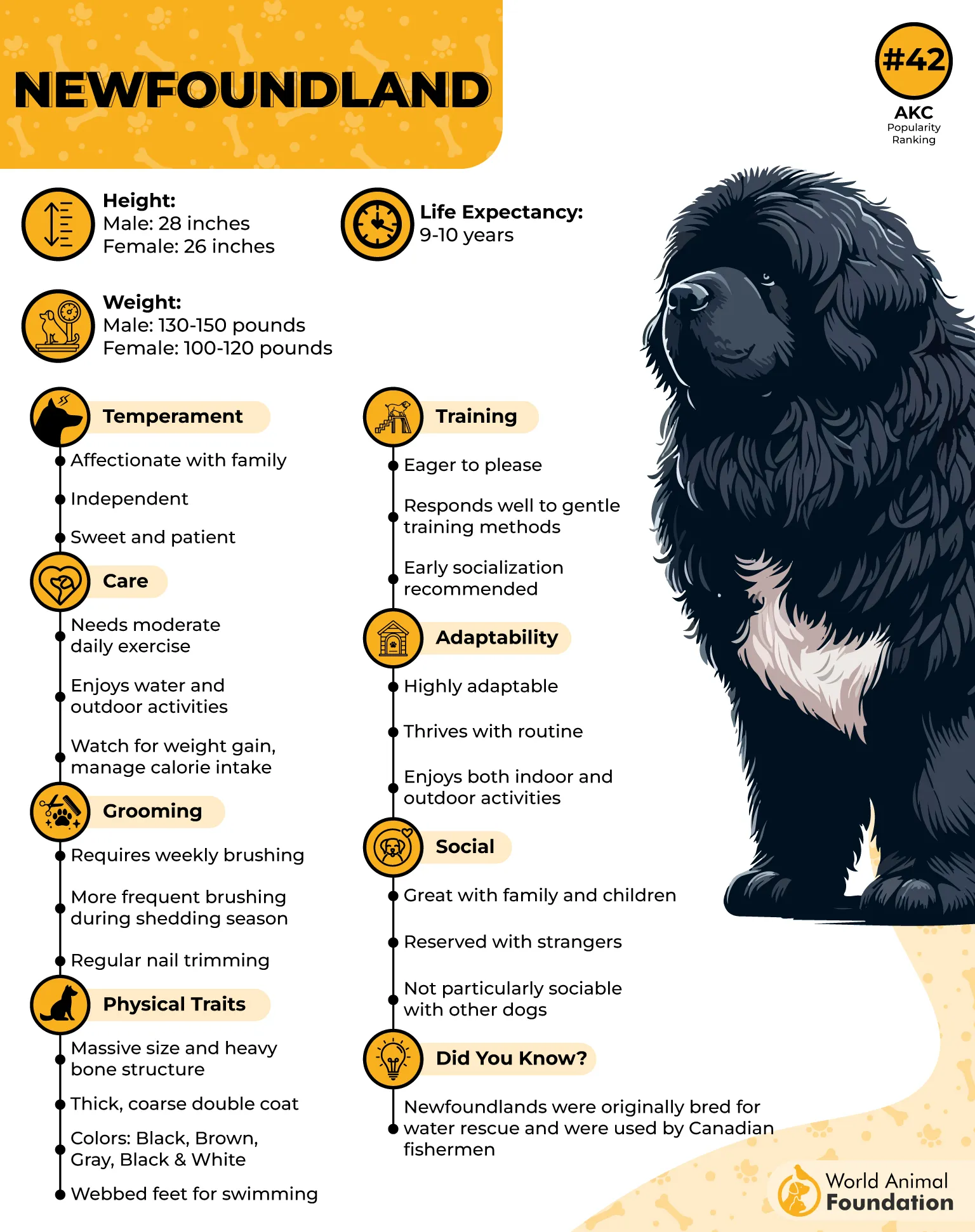
A well-socialized Newfoundland is often calm, affectionate, and patient with children, other dogs, and smaller household pets. However, gentle behavior does not cancel out giant size, and an enthusiastic Newfie may accidentally knock over a toddler without intending any harm.
These large dogs need at least moderate daily activity, and the Royal Kennel Club recommends roughly half an hour of exercise to help maintain health and happiness. Walks, swimming, training games, and gentle outdoor adventures can provide valuable stimulation without forcing excessive high-impact exercise.
Owning this incredibly affectionate dog requires space, training, grooming time, food budgeting, veterinary planning, and acceptance of drool as a recurring interior-design element.
8. Saint Bernard
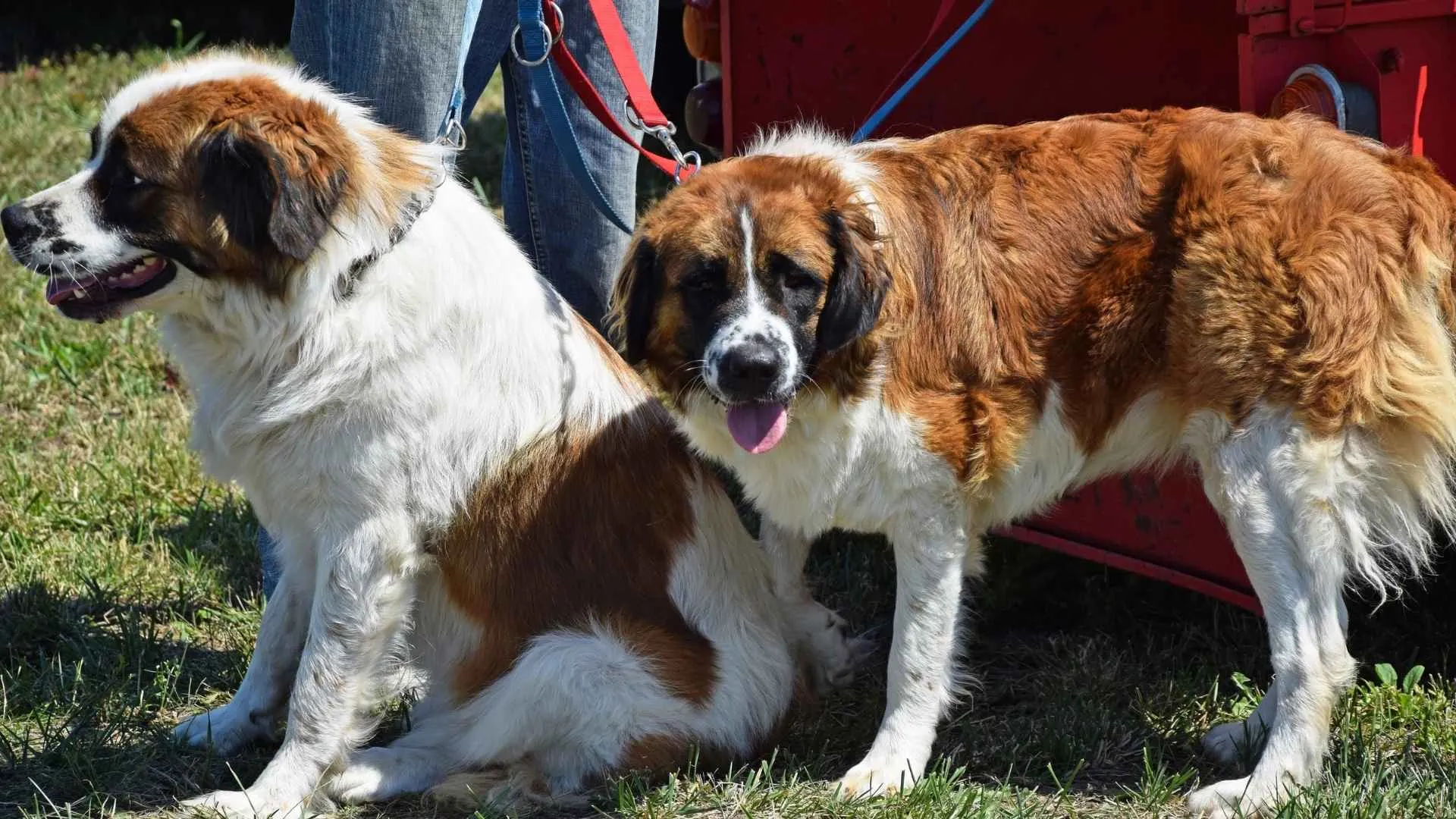
The Saint Bernard is a giant dog whose reputation combines mountain-rescue history, family loyalty, and legendary amounts of slobber.
Saint Bernards became closely associated with rescue work in the Swiss Alps, where dogs helped locate people lost or buried in dangerous mountain conditions. Their historical role required strength, steadiness, endurance, and the ability to work alongside humans in extreme environments.
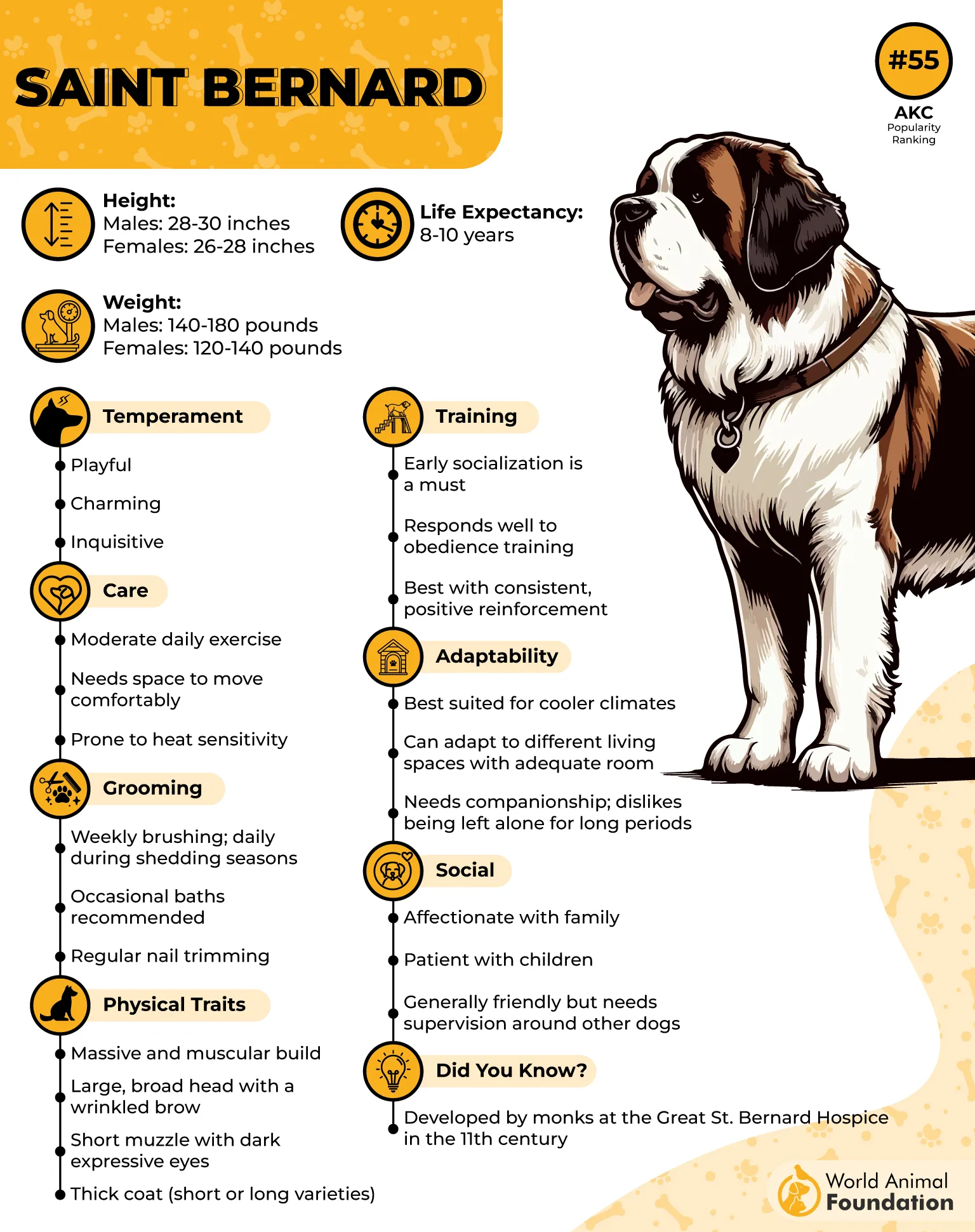
These dogs are often described as particularly gentle with considerate children, but supervision is essential because even a friendly Saint can accidentally bump or flatten a small person. Early obedience training helps prevent jumping, pulling, stealing food, and other behaviors that become more complicated when the student outweighs several adults’ suitcases combined.
Saint Bernards do not usually require extensive exercise, and a long walk or a half-hour play session may satisfy many healthy adults. They can enjoy hiking, carting, camping, and family activities, but exercise must account for age, joint development, physical condition, and weather.
9. Irish Wolfhound
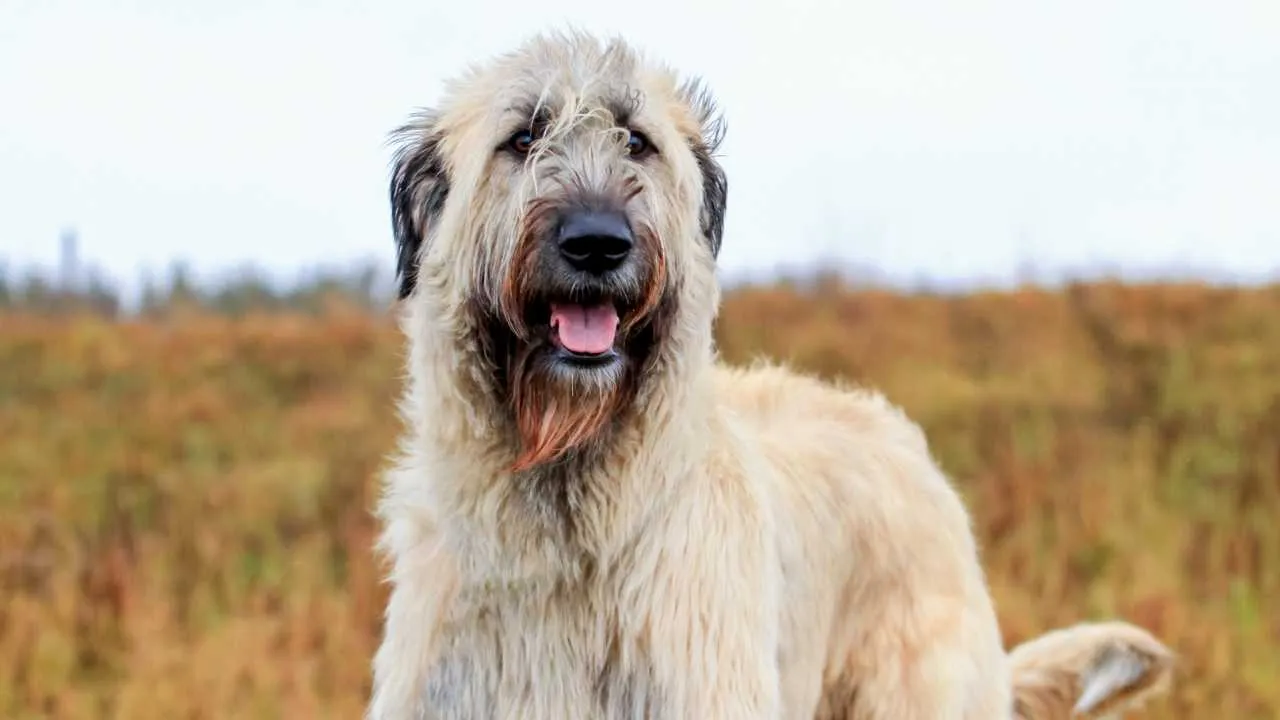
The Irish Wolfhound is so tall that meeting one can feel like being introduced to a small horse with excellent manners. WebMD identifies it as the tallest of its recognized breeds and describes the modern Wolfhound as calm, dignified, kindly, and agreeable.
Historically, these chill dogs were powerful hunting creatures that used to pursue wolves and other large game. That background explains their courage, speed, size, and continuing instinct to chase moving animals.
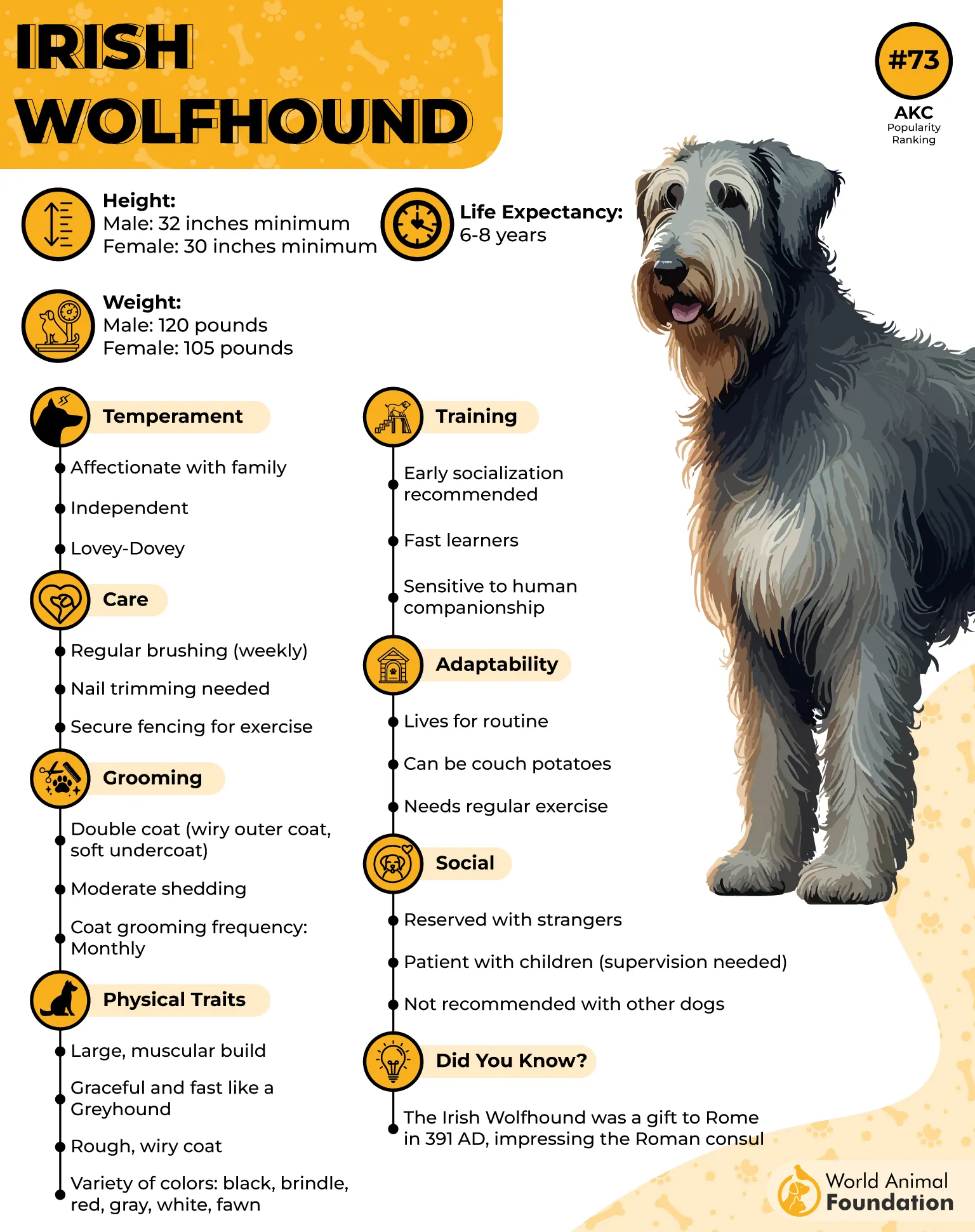
These calm dogs are usually affectionate with their people and can be patient family dogs when socialized and trained from an early age. Their size demands extra supervision around young children, since accidental collisions can happen even during friendly play.
Regular exercise remains important throughout their lives, with long walks, controlled play, tracking, agility, and lure coursing offering useful outlets for body and mind. They should run freely only in securely fenced areas and remain leashed elsewhere because of their chasing instincts.
Irish Wolfhounds require considerable space, appropriate nutrition, experience with giant breeds, early training, and realistic preparation for significant care costs.
10. Basset Hound
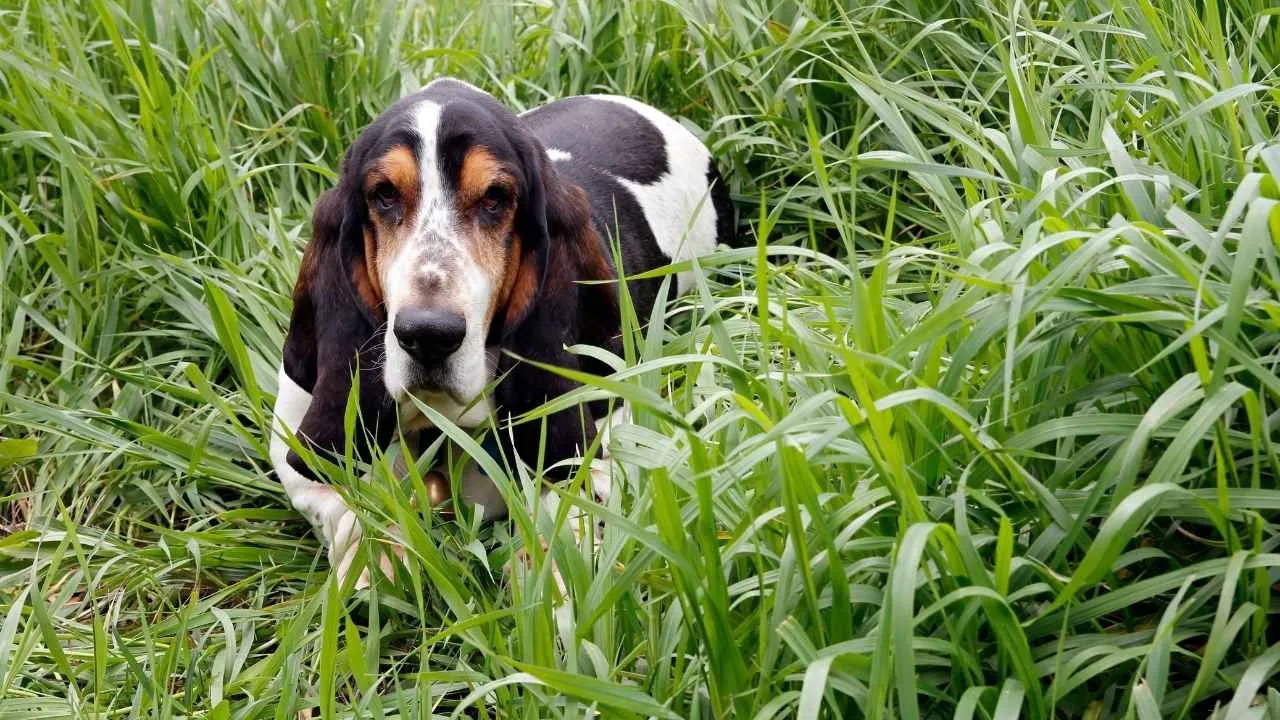
The Basset Hound walks into life with long ears, short legs, a mournful expression, and the unbothered energy of someone who has muted every group chat. The breed is commonly described as charming, patient, low-key, affectionate, and good-natured.
Now known for their gentle temperament, they were developed as scent hounds, and their powerful noses strongly influence how they experience the world. Their sense of smell is considered exceptional, with the Bloodhound traditionally ranking at the top among scent-tracking breeds.
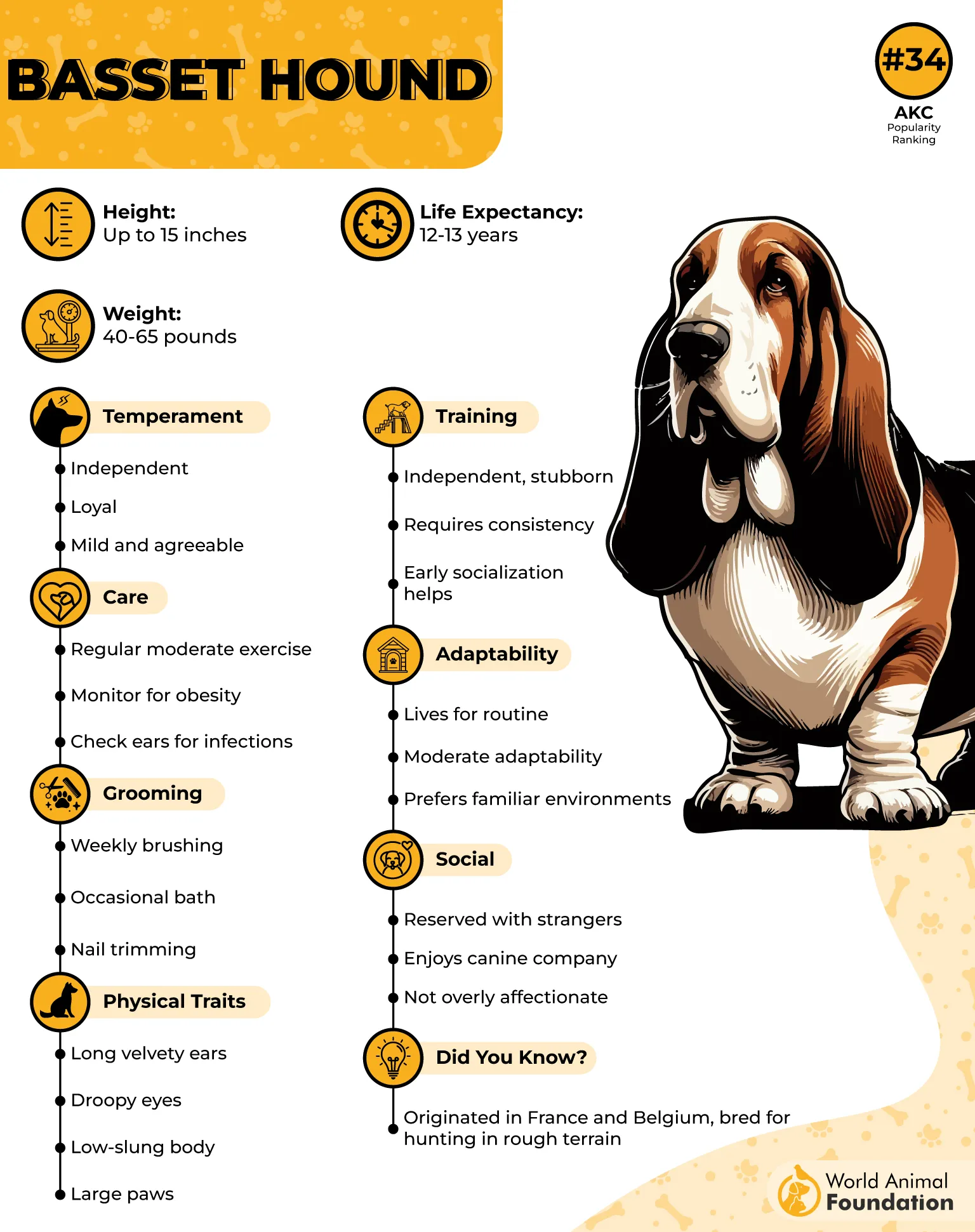
Their easygoing temperament can work well in family homes, but children must be taught never to pull the breed’s long ears or climb on its back. Bassets are patient, yet respectful handling and adult supervision remain necessary for safe relationships between dogs and young children.
PetMD says their training requires persistence because these dogs with a gentle nature were bred to follow scent trails independently rather than constantly look to a handler for instructions. Reward-based lessons, valuable treats, scent games, and consistent routines are more effective than expecting instant military-style obedience.
Conclusion
Gentle dog breeds for families come in every possible shape and size. What connects them is a reputation for affectionate, patient, calm, or sensitive companionship when they are responsibly bred, socialized, trained, and cared for.
Golden Retriever, Bernese Mountain Dog, Boston Terrier, Border Collie, English Bulldog, Great Dane, and Bichon Frise are also some gentle dogs that are a great addition to a calm house. Still, the best dog is not simply the breed with the sweetest online description or the most adorable face.
A successful match depends on your living space, daily schedule, budget, grooming tolerance, experience, climate, family members, and ability to provide lifelong veterinary and emotional care.
