




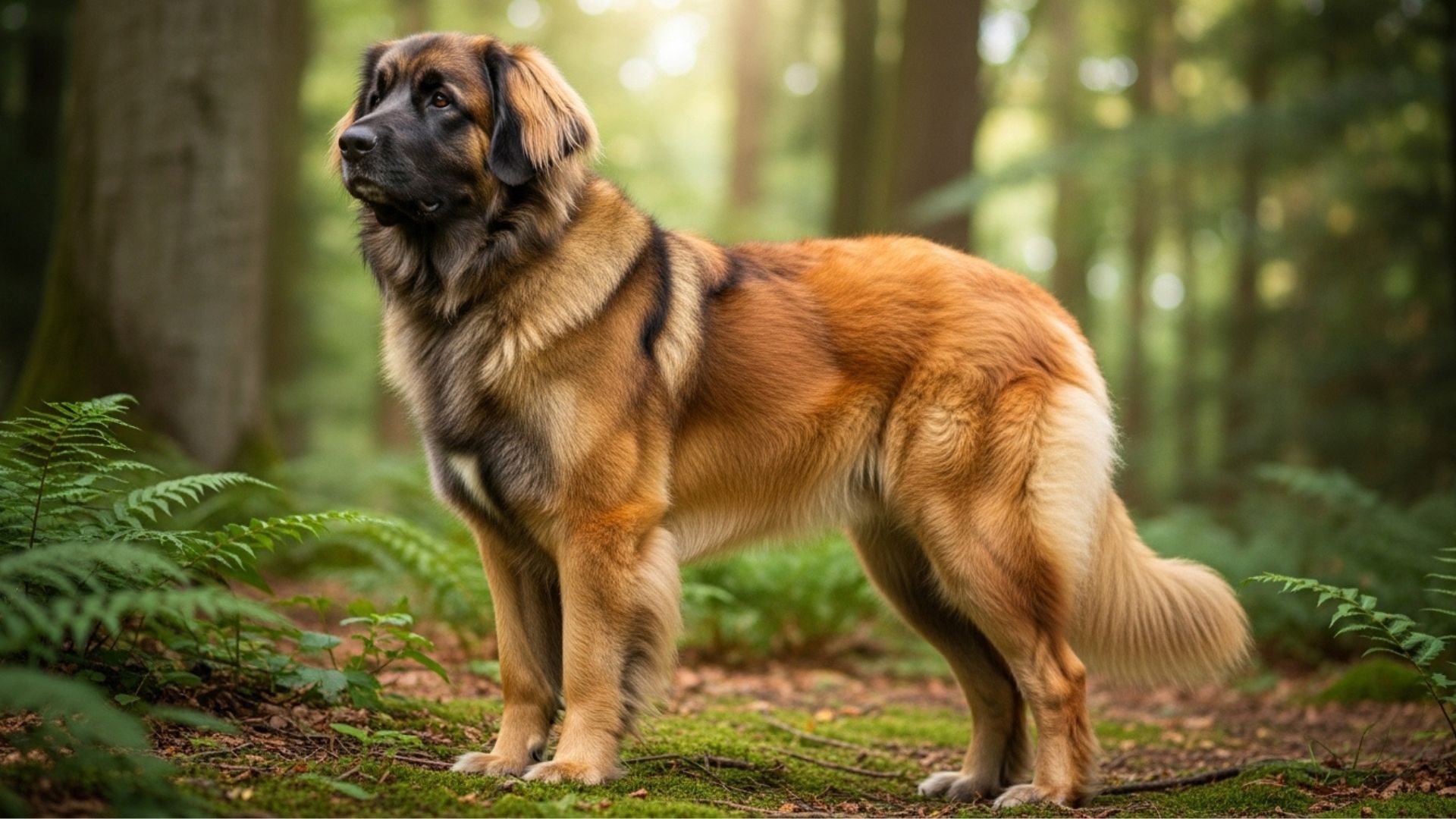
There’s something absolutely awe-inspiring about giant dog breeds.
When you see one of these magnificent creatures walking down the street, heads turn. People stop and stare. Children point in wonder. Because let’s face it—a dog that weighs as much as an adult human and stands nearly as tall is genuinely impressive.
But here’s what most people don’t realize: beyond the well-known giants, there’s a fascinating world of uncommon giant dog breeds most people have never heard of.
These are dogs with ancient histories, distinctive appearances, and personalities as big as their bodies. They’re the hidden gems of the large dog world, breeds that deserve far more recognition than they typically receive.
Today, we’re going on a journey to explore magnificent, uncommon giant dog breeds that combine size, beauty, and fascinating histories.
Magnificent, Uncommon Giant Dog Breeds to Explore
1. Leonberger
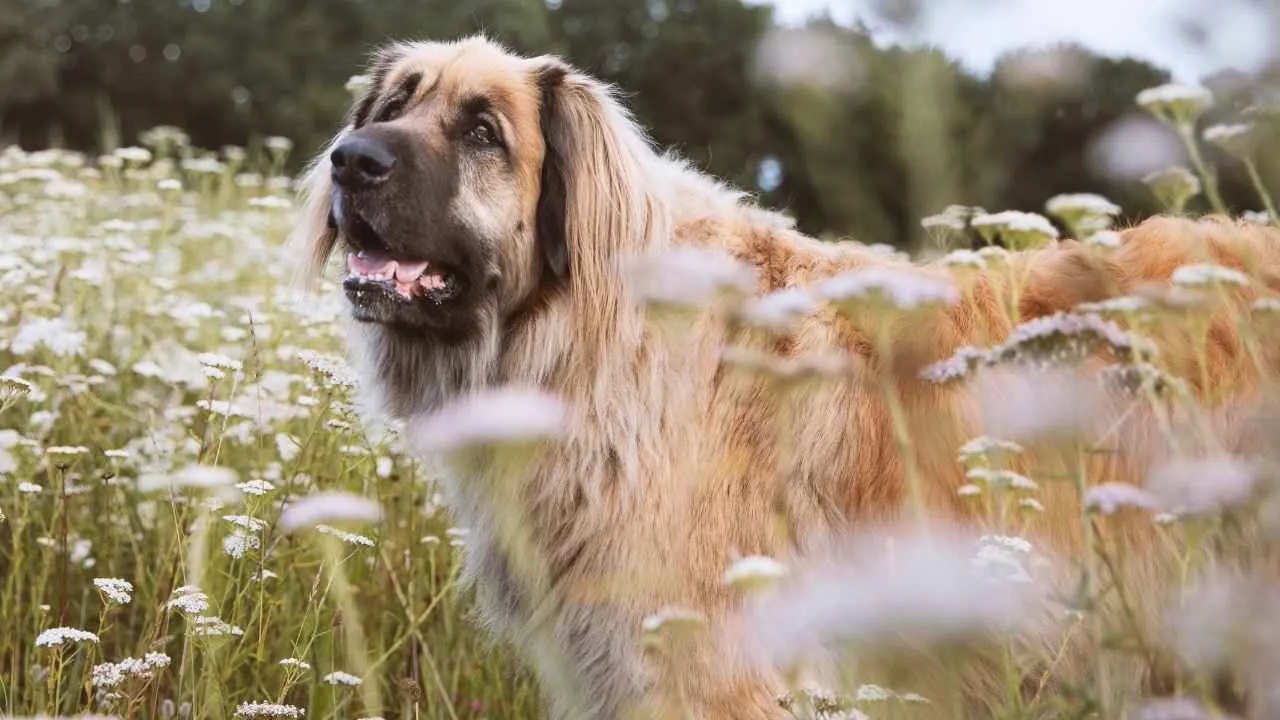
First up is the Leonberger, a breed that looks like someone crossed a lion with a teddy bear and added a sweet, gentle soul.
These magnificent dogs are genuinely large—males can weigh up to one hundred and seventy pounds and stand thirty-one inches tall at the shoulder. They’re impressive to look at, with their thick, water-resistant coat and distinctive black mask.
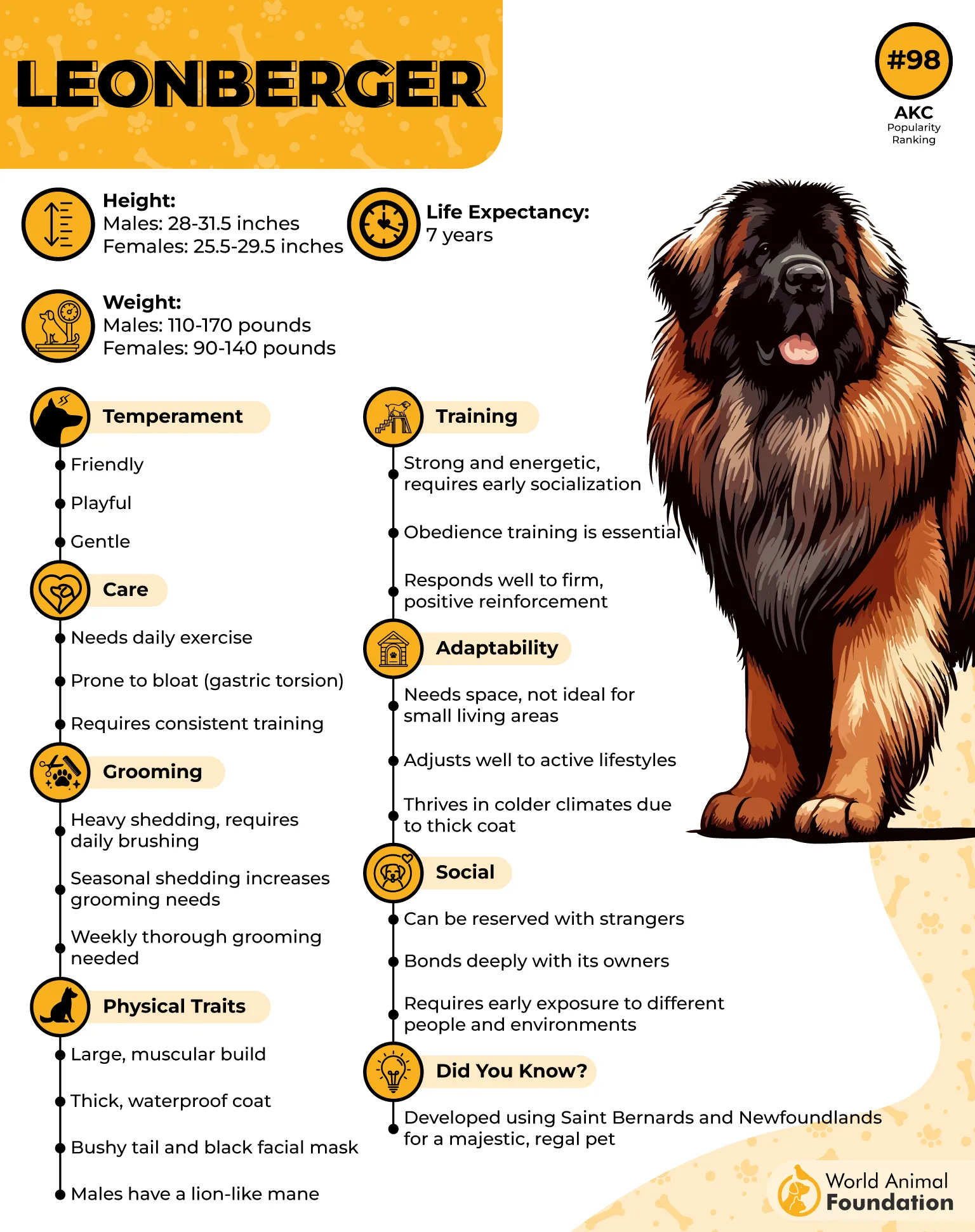
They were initially bred in Germany in the mid-1800s, specifically in the town of Leonberg, which gives them their name. The breed was created to resemble the lion on the town’s crest, and they succeeded—these dogs have a mane-like coat around their neck and chest that absolutely looks lion-like when they move.
What makes them special is their temperament. These are famously gentle giants, incredibly loyal to their families. They’re affectionate and playful, often maintaining a puppy-like enthusiasm well into adulthood. They’re the type of dog that thinks they’re a lap dog despite weighing more than most people.
Many Leonberger owners joke about their dogs trying to sit on them or lean against them with their full weight—it’s a gesture of affection, even if it might knock you over.
These dogs were initially bred to be working dogs, and they still excel at various tasks. They have webbed feet, making them excellent swimmers and well-suited for water rescue work.
They’re intelligent and trainable, often participating in search-and-rescue operations, therapy work, and obedience competitions. They need mental stimulation along with their daily exercise to stay happy.
2. Scottish Deerhound
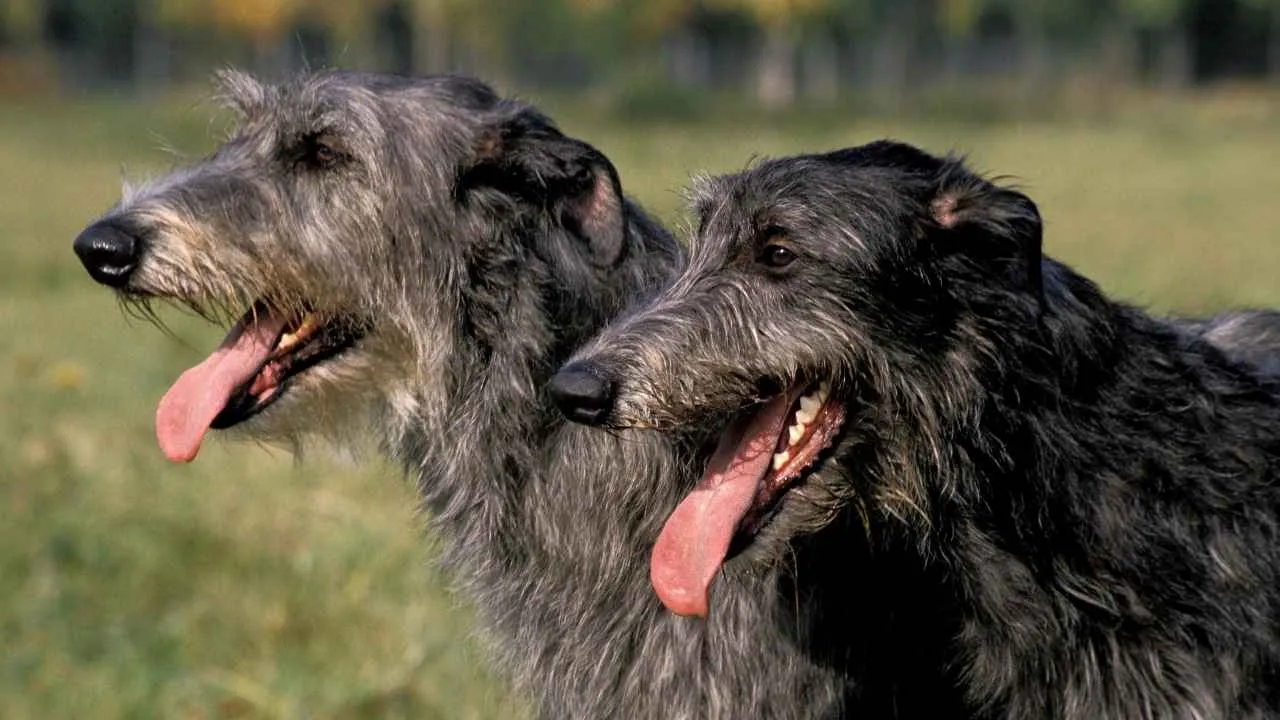
The Scottish Deerhound is a breed that exudes elegance and grace. These are large dogs—males can weigh up to one hundred and ten pounds and stand thirty-two inches tall—but they have a lean, athletic build that’s quite different from the heavy, muscular build of mastiff-type breeds.
They look like they could run forever, and historically, that’s precisely what they did.
They were initially bred to hunt deer in the Scottish Highlands. Not to track or point them out, but to actually chase them down and catch them. This required a dog with incredible speed, endurance, and courage. Today’s Deerhounds retain that athletic ability, though most spend their time as beloved companions rather than hunters.
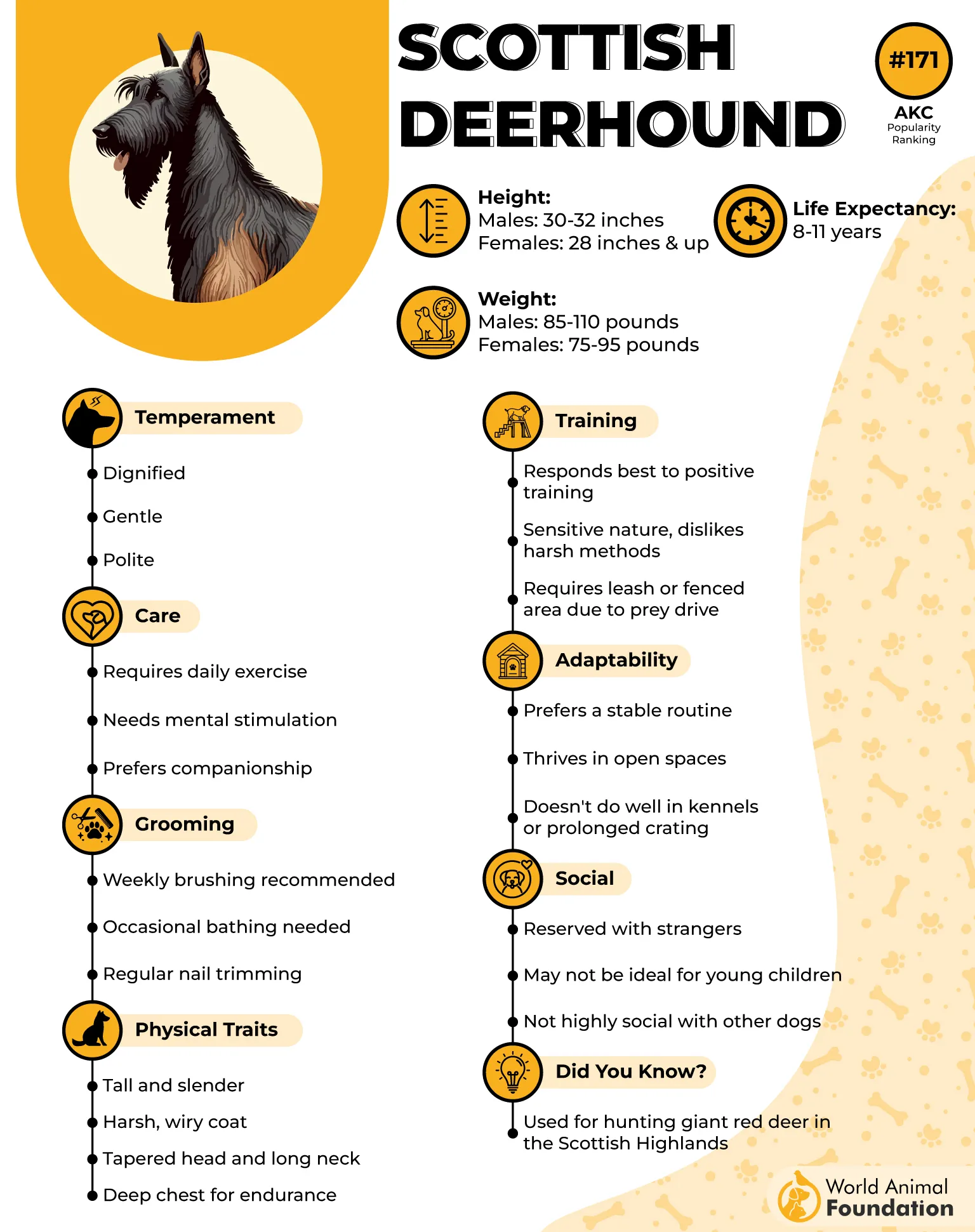
What strikes people about them is their calm, dignified temperament. These dogs have a gentle personality that makes them excellent family dogs despite their size. They’re affectionate with their families, generally good with children (though their size means supervision is wise), and often friendly with strangers. They lack the protective instincts of guard dogs—they’re lovers, not fighters.
One thing to understand about them: they have a strong prey drive. They were bred to chase, and that instinct remains strong. They may not be suited for homes with small pets like cats or rabbits unless raised with them from puppyhood. Even then, management and training are necessary.
They should always be walked on a leash, as their instinct to chase can override training if they spot something interesting.
3. Black Russian Terrier
Here’s a breed with a fascinating history—the Black Russian Terrier was developed in the Soviet Union after World War II, specifically for military and guard work.
These large dogs were created by crossing multiple breeds, including Giant Schnauzers, Rottweilers, and others, to produce a dog that could handle harsh Russian weather while serving as an effective working dog.
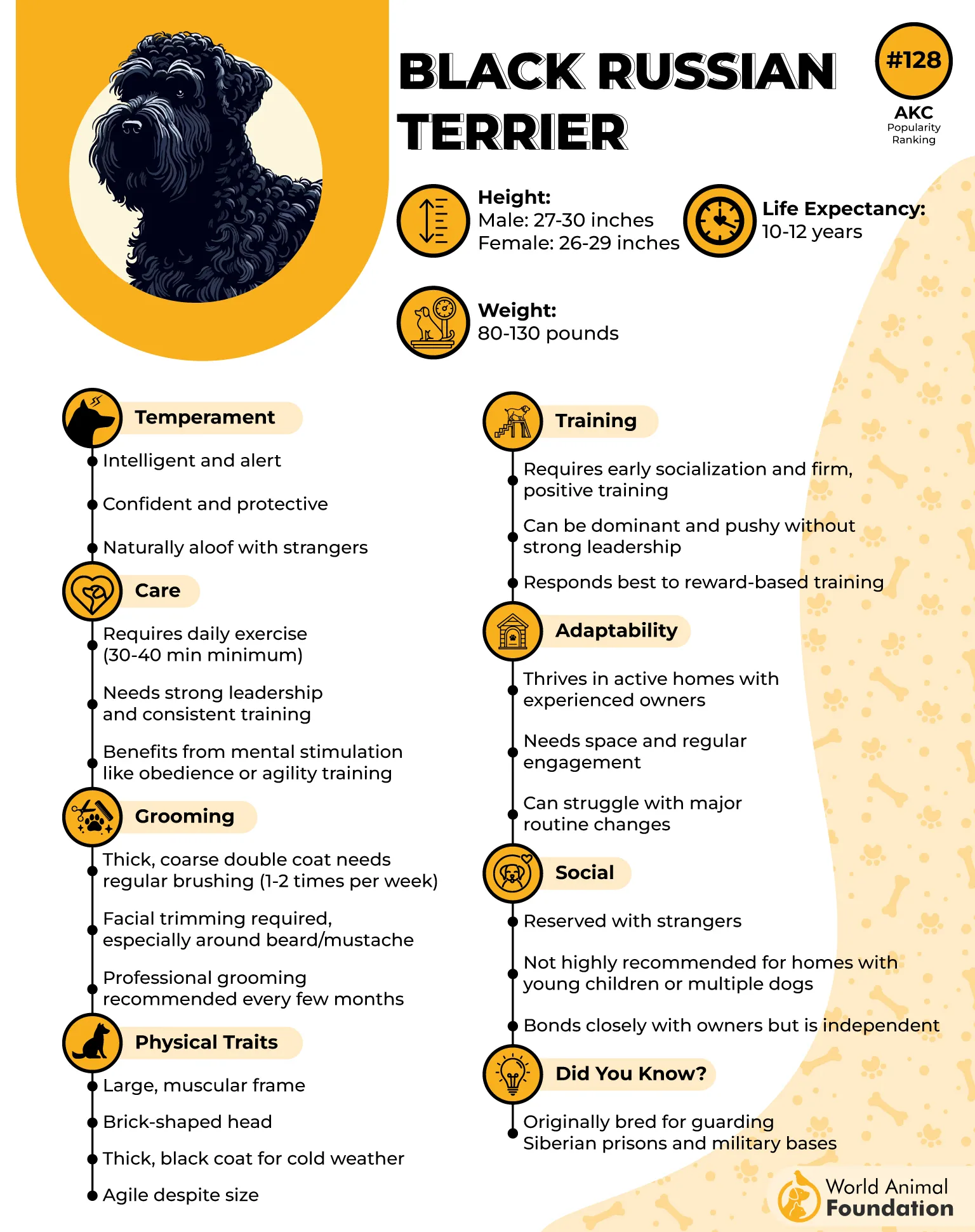
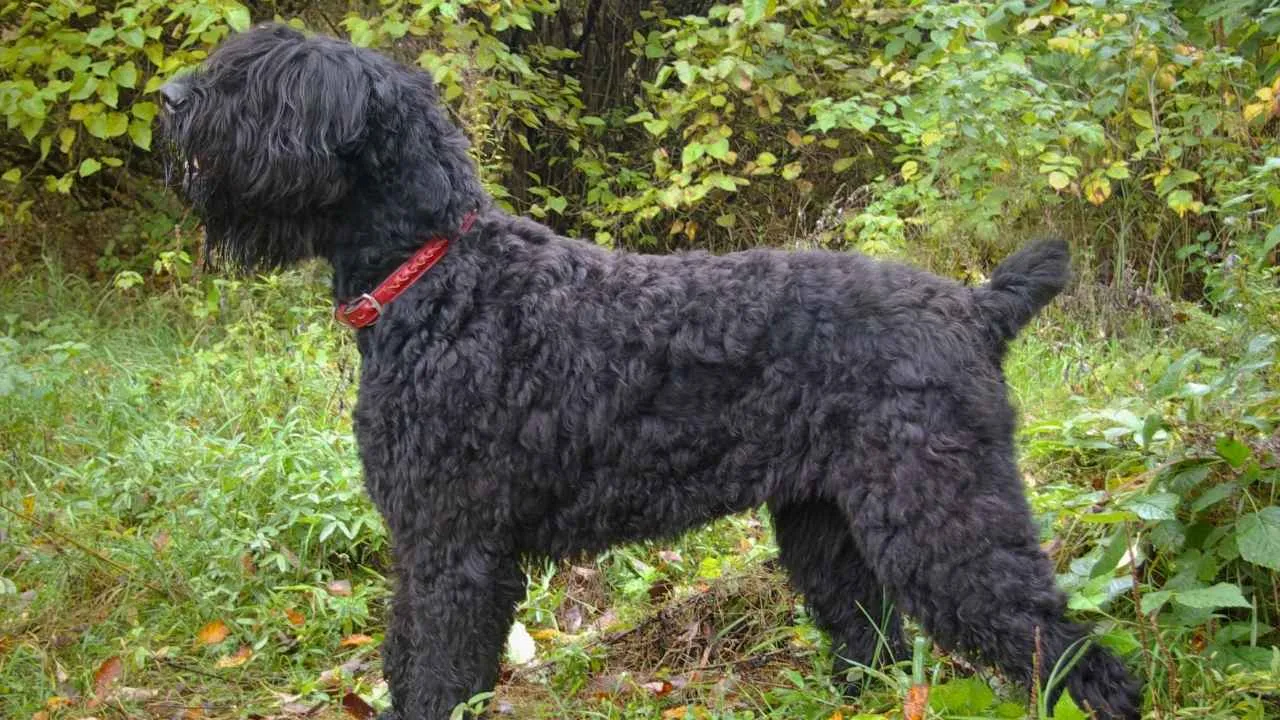
Black Russian Terriers are substantial dogs—males typically weigh between eighty and one hundred and forty pounds and stand up to thirty inches tall. They have a distinctive appearance, with a thick, slightly wavy black coat that forms a beard and eyebrows, giving them a dignified expression. They’re genuinely striking to look at.
What sets Black Russian Terriers apart is their combination of protective instincts and loyalty. These were bred to be guard dogs, and they take that role seriously. They’re naturally protective of their families and property, making them excellent watchdogs.
However, with their families, they’re affectionate and incredibly loyal. They form strong bonds with their people and want to be involved in family activities.
PetMD says they need both mental stimulation and daily exercise. These are working dogs bred to do jobs, and they thrive when given tasks and challenges. Training sessions, dog sports, and activities that engage their minds keep them satisfied.
Without adequate mental and physical stimulation, they can become bored and develop behavioral problems.
Their coat requires regular grooming—professional grooming every six to eight weeks is typical, plus brushing at home to prevent matting. Their coat doesn’t shed excessively, which is a bonus for such a large dog, but maintenance is still necessary.
4. Tibetan Mastiff
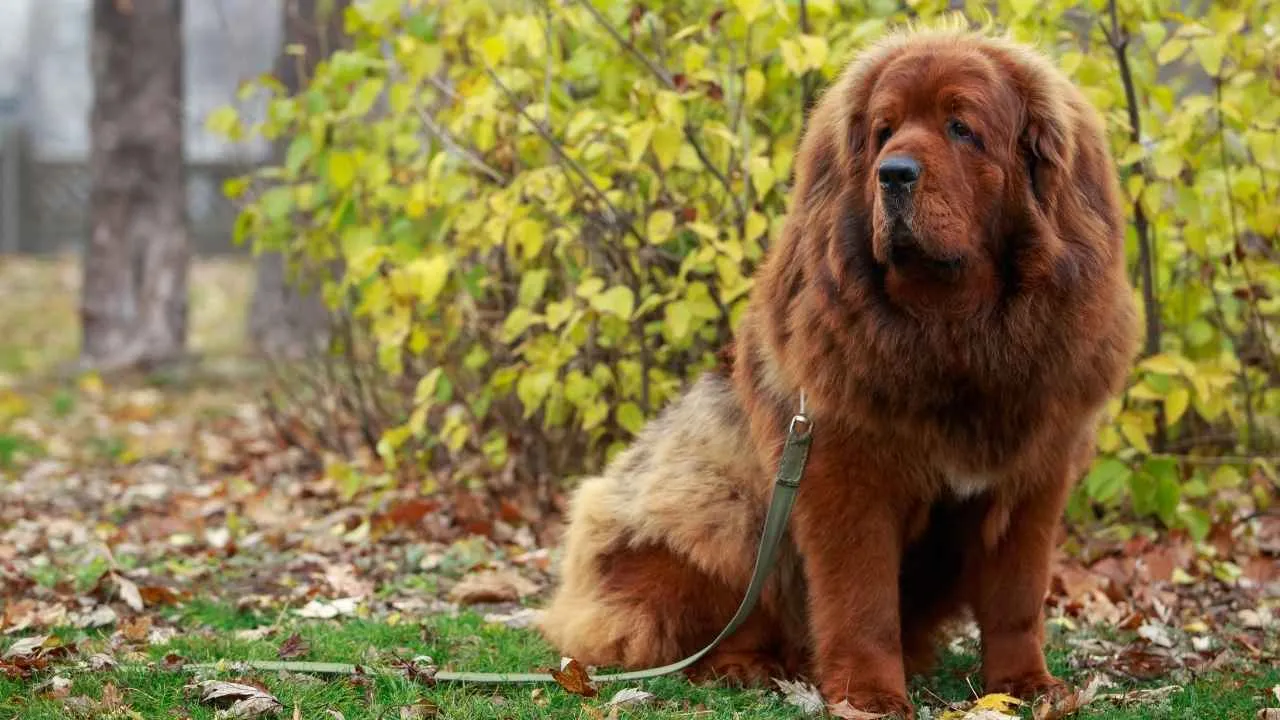
The Tibetan Mastiff is one of the world’s most ancient breeds, with a history stretching back thousands of years in the Himalayan mountains. These dogs are genuinely impressive—males can weigh between ninety and one hundred and fifty pounds, and their thick, mane-like coat makes them appear even larger. They look like they’re part lion, part bear, and altogether magnificent.
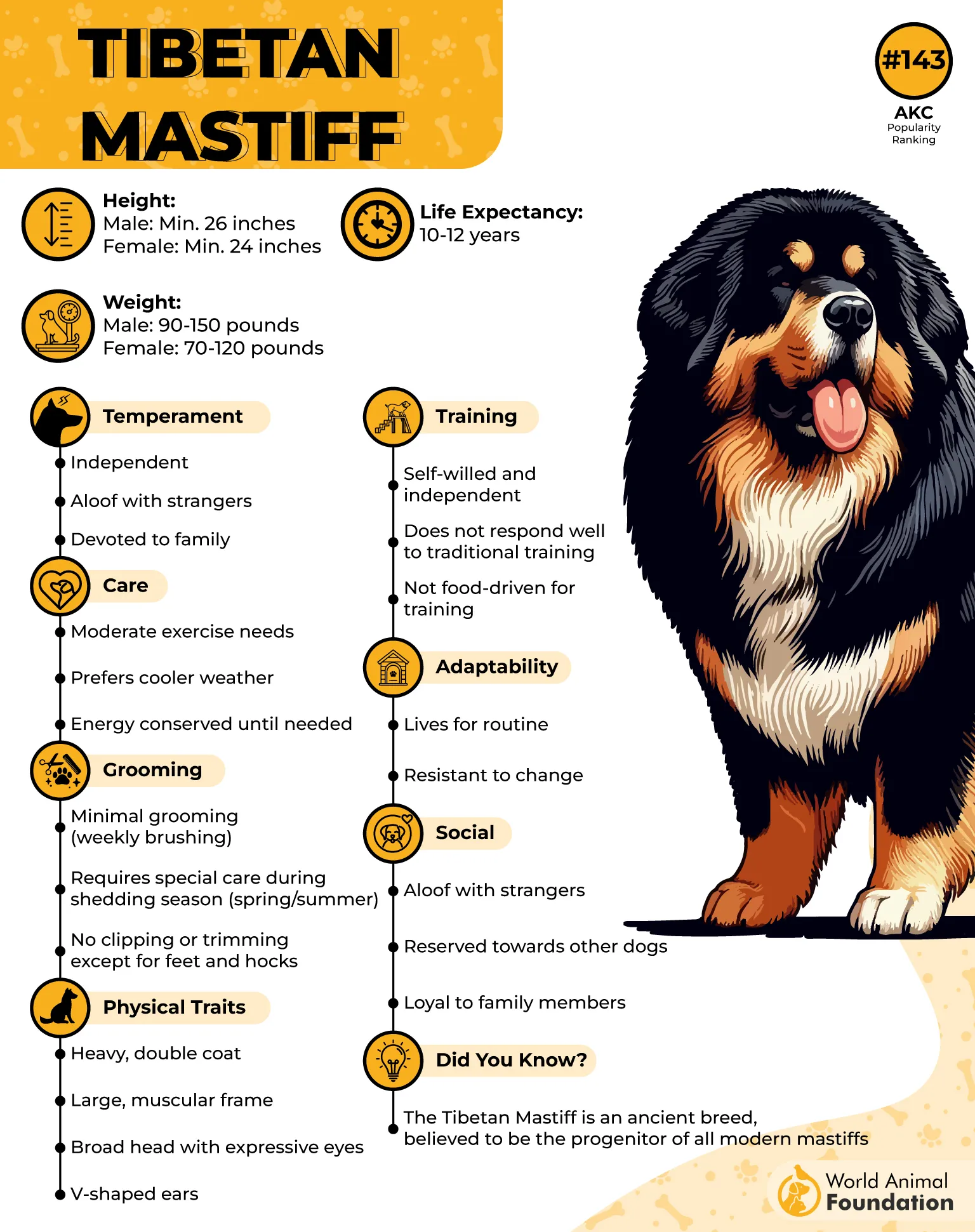
Tibetan Mastiffs were used to guard livestock and property in Tibet’s harsh mountain environment. They worked independently, making decisions about threats without human guidance. This independent nature remains strong today, making them one of the most challenging giant breeds to own.
What makes Tibetan Mastiffs special is their combination of independence, protective instincts, and calm presence. These dogs are naturally protective without being aggressive. They’re vigilant guardians, wary of strangers but generally calm and gentle with their families.
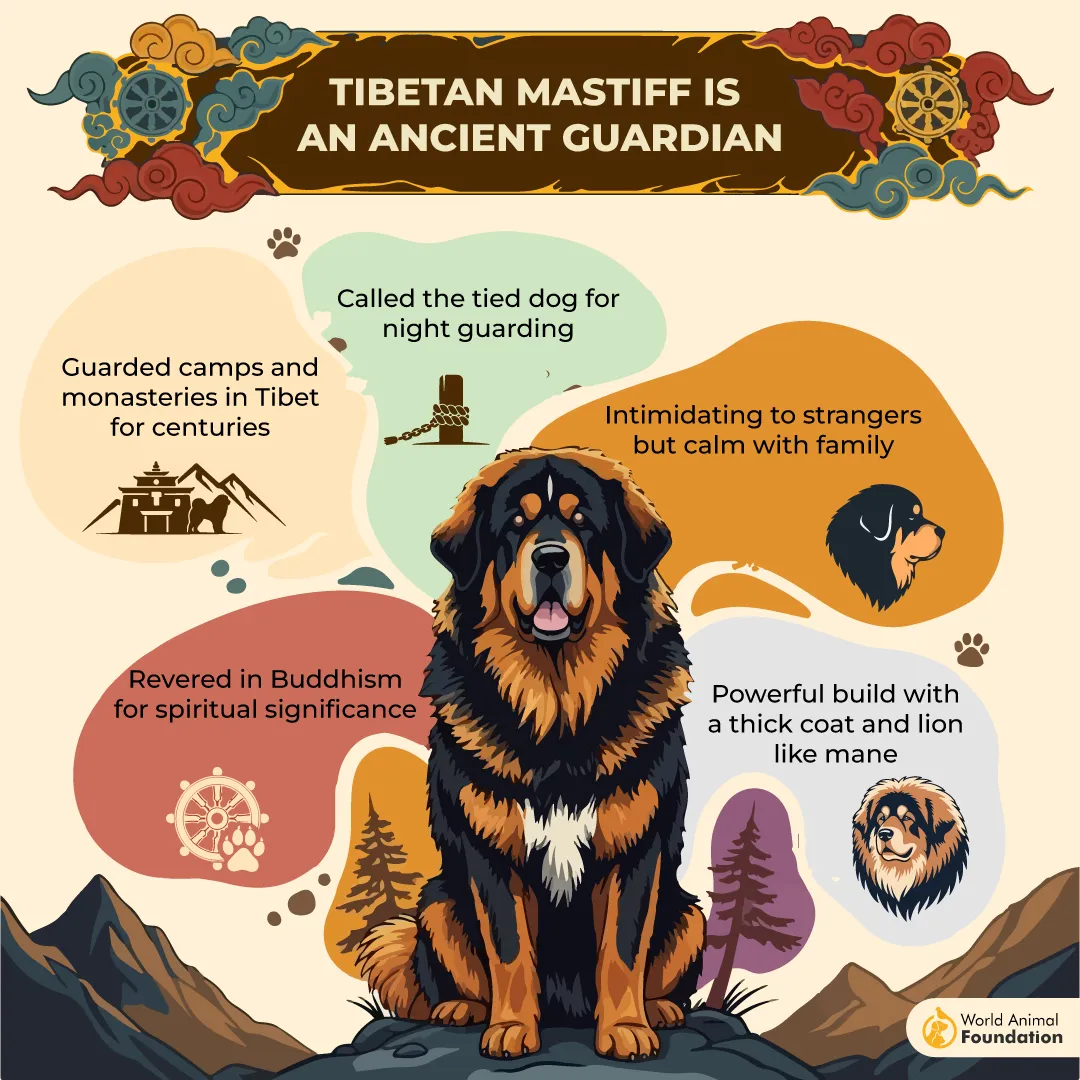
However, “gentle” doesn’t mean “cuddly”—Tibetan Mastiffs are more aloof than many breeds. They’re not the type to constantly seek affection, though they’re loyal and devoted in their own way.
The Tibetan Mastiff temperament is best described as dignified and independent. They think for themselves and aren’t particularly eager to please in the way that breeds like German Shepherds are. Training requires patience, consistency, and respect for their intelligence.
These dogs are nocturnal by nature, most active during evening and night hours when they would traditionally patrol and guard. This means they may bark at night, which is something to consider if you have close neighbors. Their deep, impressive bark is part of their guardian nature.
5. Neapolitan Mastiff
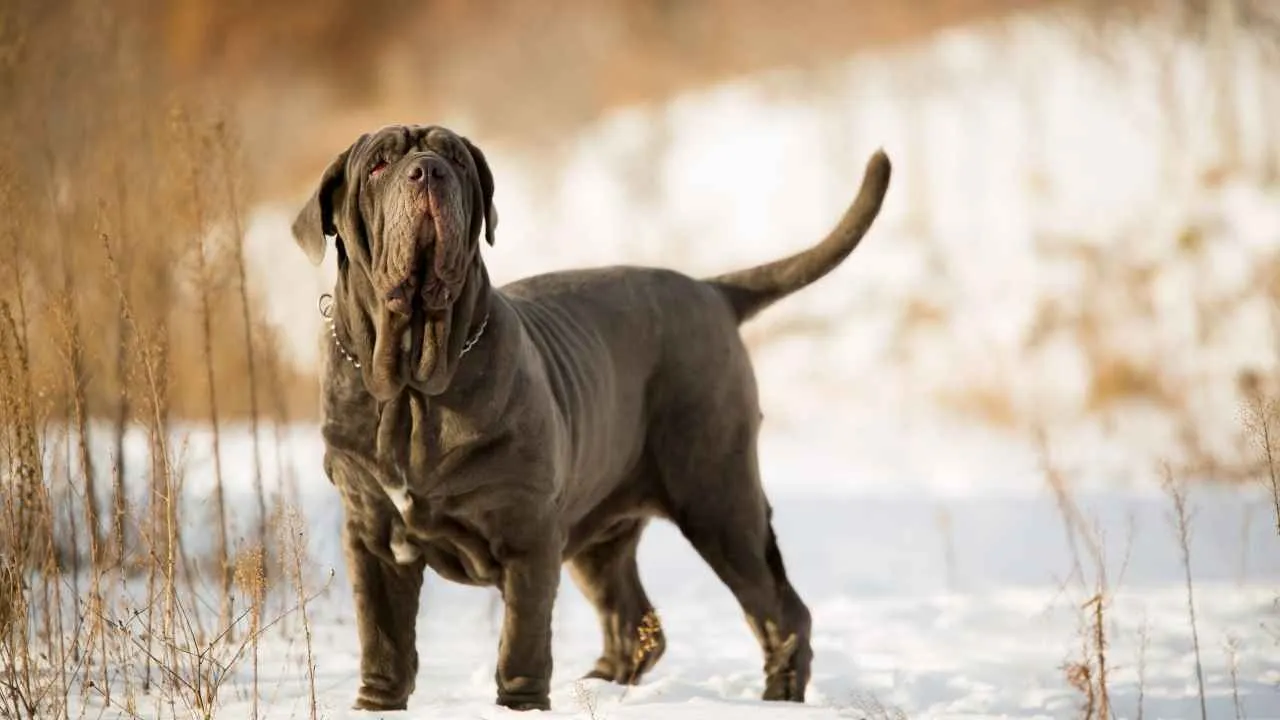
The Neapolitan Mastiff is a breed that definitely makes an impression. These massive dogs—males can weigh up to 150 pounds—have a distinctive appearance with loose, wrinkled skin, an enormous head, and a generally imposing presence.
They look like something from ancient Rome, which makes sense because they’re descended from Roman war dogs.
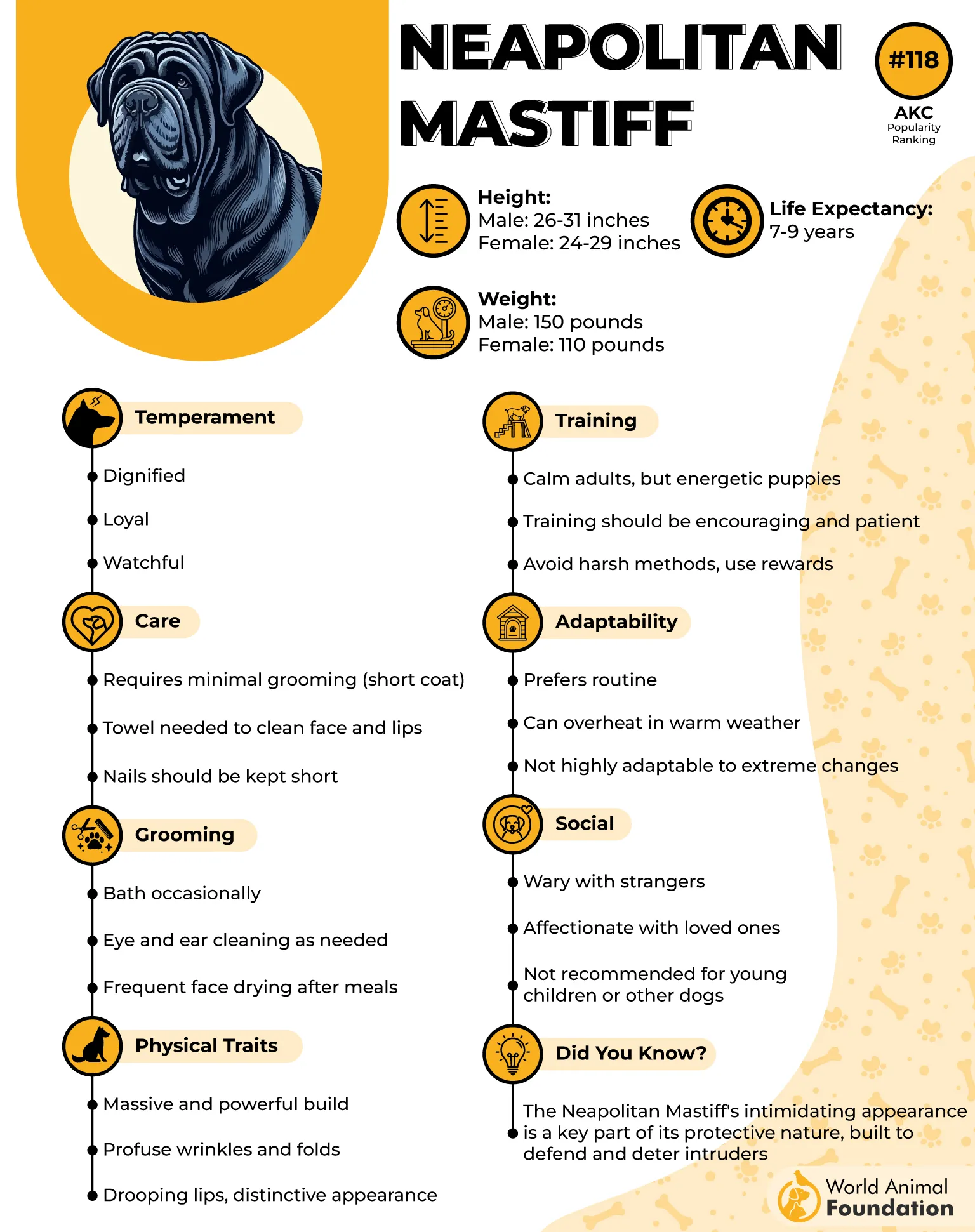
They were bred in Italy as guard dogs, and they retain strong protective instincts today. But here’s what surprises people: despite their fearsome appearance, these are often gentle, affectionate dogs with their families.
These dogs are calm and relatively low-energy, especially compared to many other breeds. They’re content to lounge around the house, often finding the most comfortable spot and claiming it as their own. They need daily exercise to maintain health, but they’re not dogs who need hours of activity. Moderate walks and some playtime typically satisfy them.
Their temperament is often described as sweet and loyal toward family members, while defensive and wary toward strangers.
They’re generally good with children in their family, though supervision is essential due to their size—an accidental bump from a one-hundred-and-fifty-pound dog can knock a child over. They tend to do best as only dogs or in carefully managed multi-dog households.
One unique aspect of these dogs is the care their wrinkled skin requires. Those folds need regular cleaning to prevent skin infections and irritation. They also drool—significantly. If you can’t handle drool, this breed isn’t for you. They’re also messy eaters and drinkers, often leaving trails of water and food around their bowls.
The lifespan of this dog is typically 7 to 9 years; unfortunately, it is on the shorter end, even for an oversized breed. They’re prone to various health issues, including hip dysplasia, bloat, and cherry eye, making preventive care and working with a reputable breeder important.
6. Greater Swiss Mountain Dog
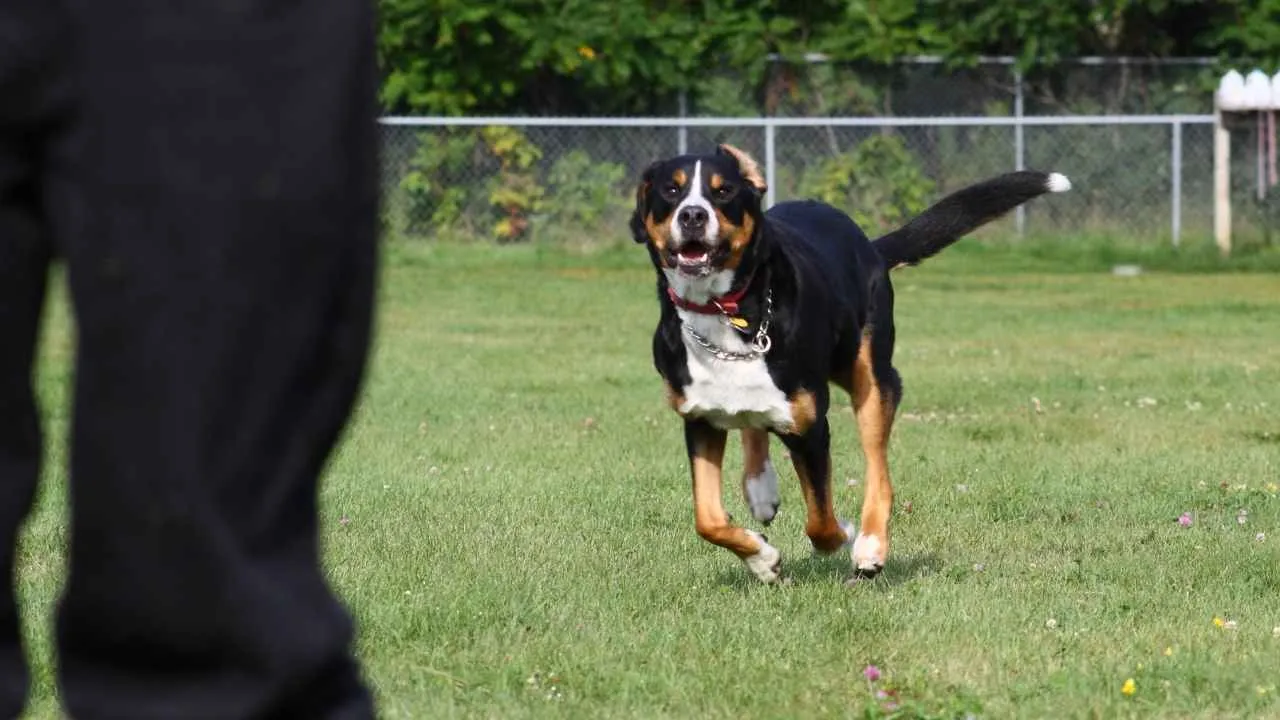
The Greater Swiss Mountain Dog, often called a “Swissy,” is the largest of the four Swiss Mountain Dog breeds. These are substantial dogs—males typically weigh between eighty-five and one hundred and forty pounds and stand up to twenty-eight inches tall.
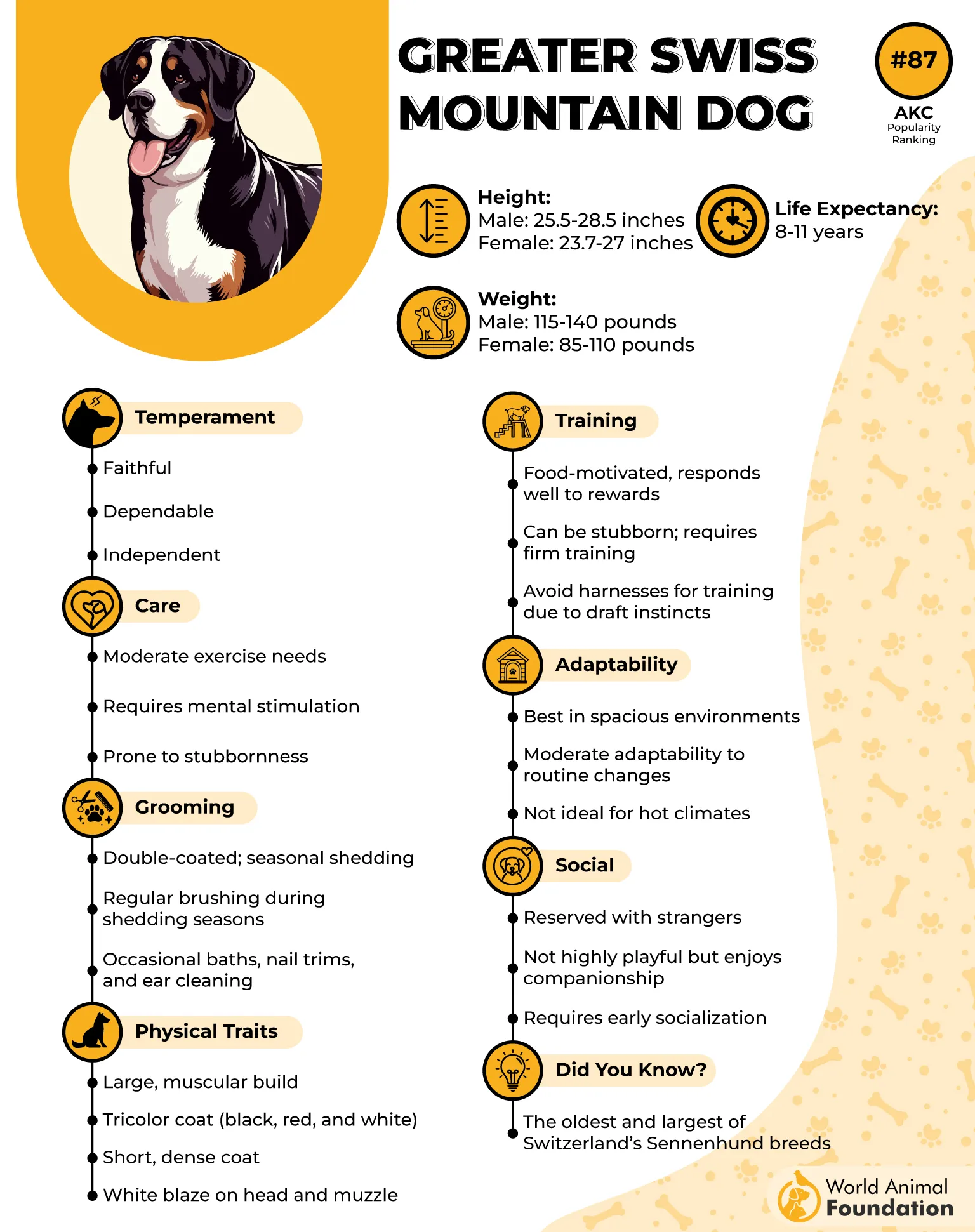
Bred as versatile working dogs in Switzerland, they pulled carts, herded livestock, served as security dogs, and were general farm helpers. This working heritage created a dog that’s strong, athletic, and eager to have jobs to do. Today’s Swissies still retain that working drive and thrive when given tasks.
Swissies are generally excellent family dogs. They’re typically good with children and are both gentle and protective. They’re also usually good with other pets when properly socialized. Their friendly, social nature makes them poor guard dogs in the traditional sense—they might bark to alert you to a visitor.
Still, they’re more likely to greet strangers with enthusiasm than with suspicion once you indicate that the person is welcome.
The Swissy coat is relatively low-maintenance despite being double-layered. Regular brushing helps manage shedding, which is moderate most of the year but heavier during seasonal changes. They’re generally clean dogs without the odor some large breeds can have.
The life expectancy of Greater Swiss Mountain Dogs is 8 to 11 years. They can be prone to hip dysplasia, bloat, and some other conditions, making choosing a reputable breeder who health tests important.
7. Kuvasz
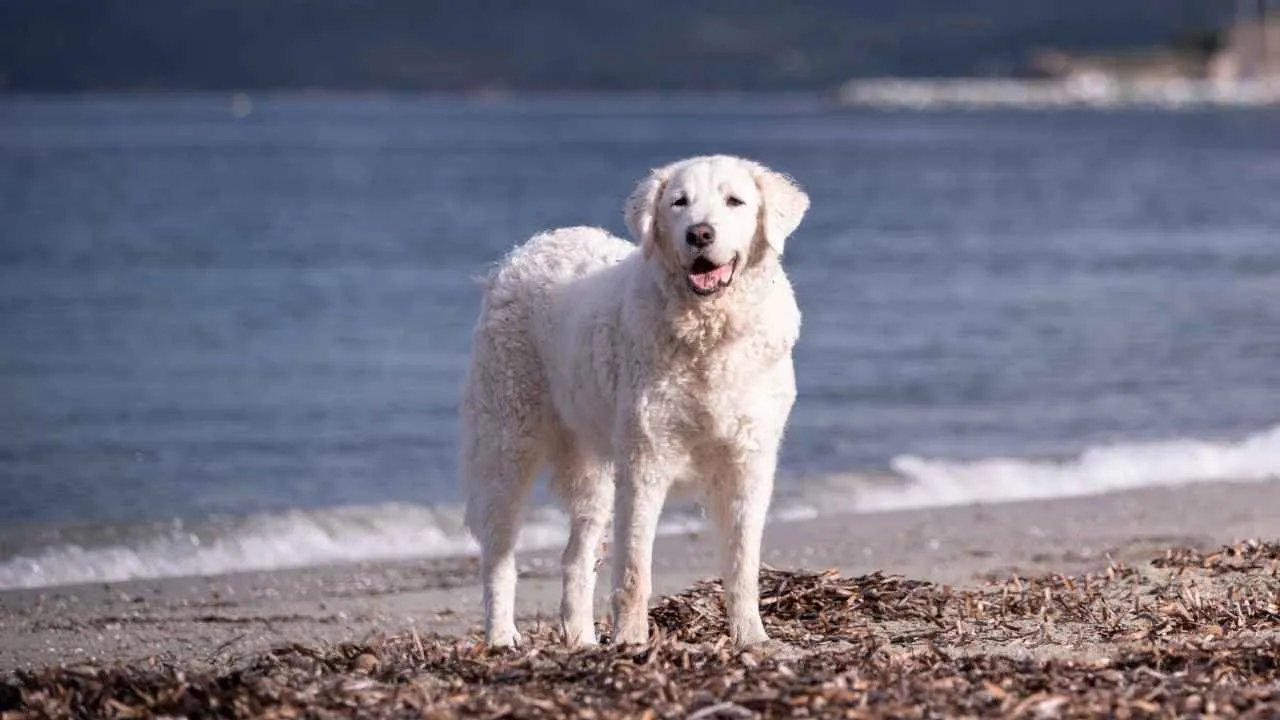
The Kuvasz is a large Hungarian livestock guardian breed with a stunning white coat and an independent spirit. Males typically weigh between one hundred and one hundred and fifteen pounds and stand up to thirty inches tall.
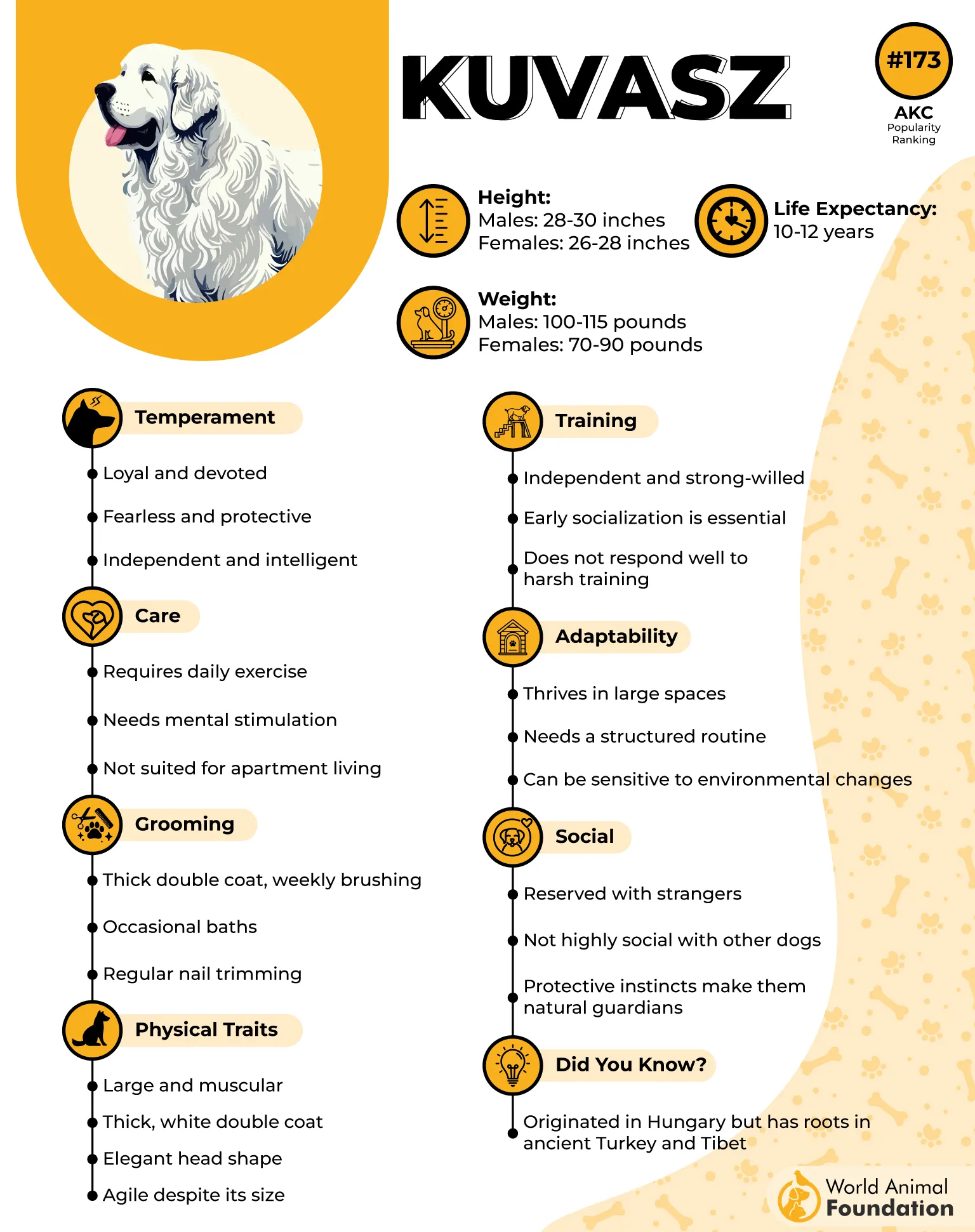
They were raised to guard livestock against predators such as wolves and bears in Hungary’s mountainous regions, as noted by Britannica. This required dogs who could think independently, assess threats, and act without human direction. Today’s Kuvasz retains this independence, making them one of the more challenging giant breeds to own.
What sets them apart is their combination of intelligence, protective instincts, and independence. These dogs are smart—genuinely intelligent—but they’re not eager to please in the way many breeds are. They think for themselves and need to understand the reasoning behind commands.
Training requires patience, consistency, and respect for their intelligence. Harsh methods don’t work with this breed.
They are incredibly loyal to their families and naturally protective. They’re extremely wary of strangers—which makes them effective watchdogs but also means extensive socialization is crucial.
These dogs need space, as per the American Kennel Club (AKC). They were bred to patrol large areas, and they maintain that territorial need. A Kuvasz in a small home without adequate outdoor space is likely to be frustrated.
They need room to move, observe, and feel like they’re fulfilling their guardian duties. They’re best suited to homes with property where they can patrol.
Conclusion
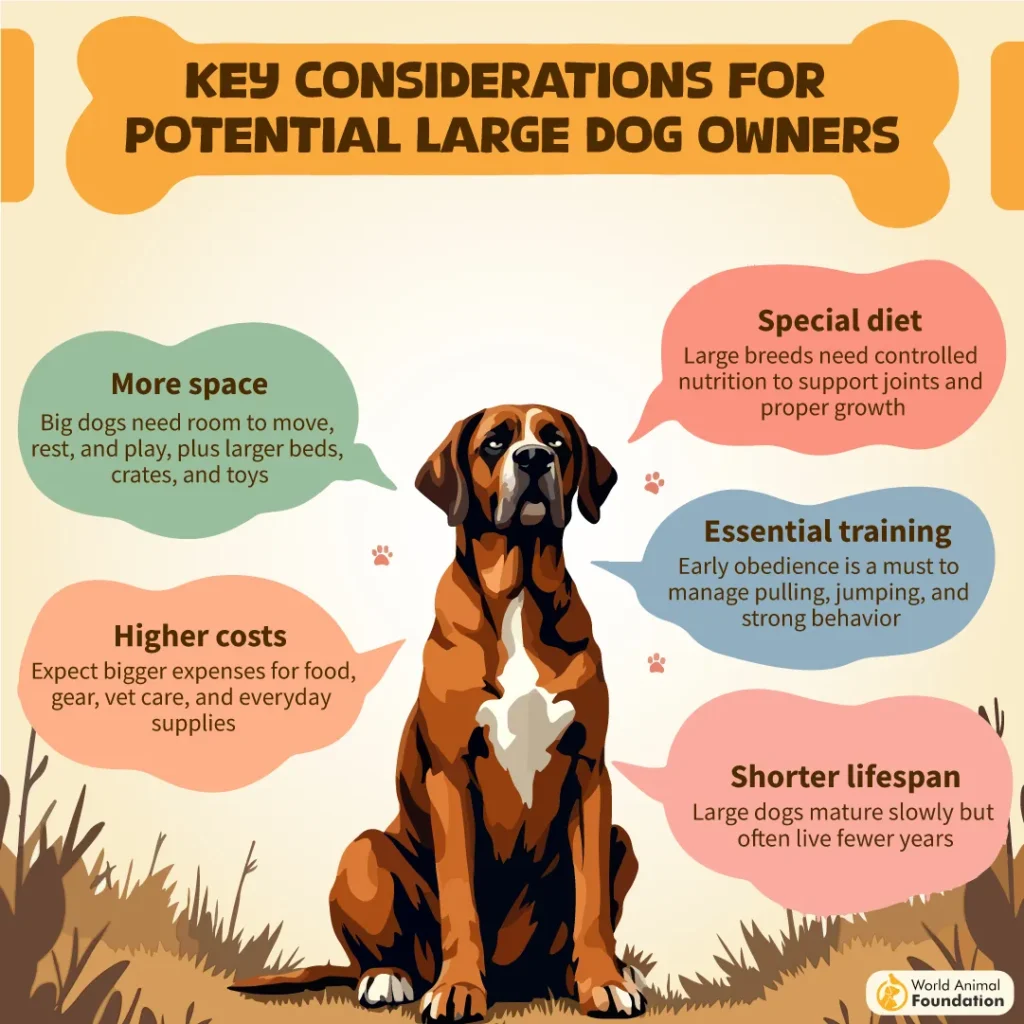
Giant dog breeds have a way of changing how you see dogs—and honestly, how you see space, furniture, and personal boundaries. These uncommon giants aren’t just oversized pets; they’re living pieces of history, shaped by centuries of work, loyalty, and partnership with humans.
From the lion-like Leonberger to the vigilant Kuvasz, each of these breeds brings something rare to the table: presence, purpose, and personality in truly epic proportions.
But here’s the real takeaway—owning a giant dog isn’t about bragging rights or jaw-dropping photos (though you’ll definitely get those). It’s about understanding what these dogs were bred to do and honoring that in modern life.
Space, training, time, patience, and a good sense of humor are all part of the deal.
In return, you get a companion whose loyalty feels monumental and whose quiet companionship can fill an entire room without saying a word.
