




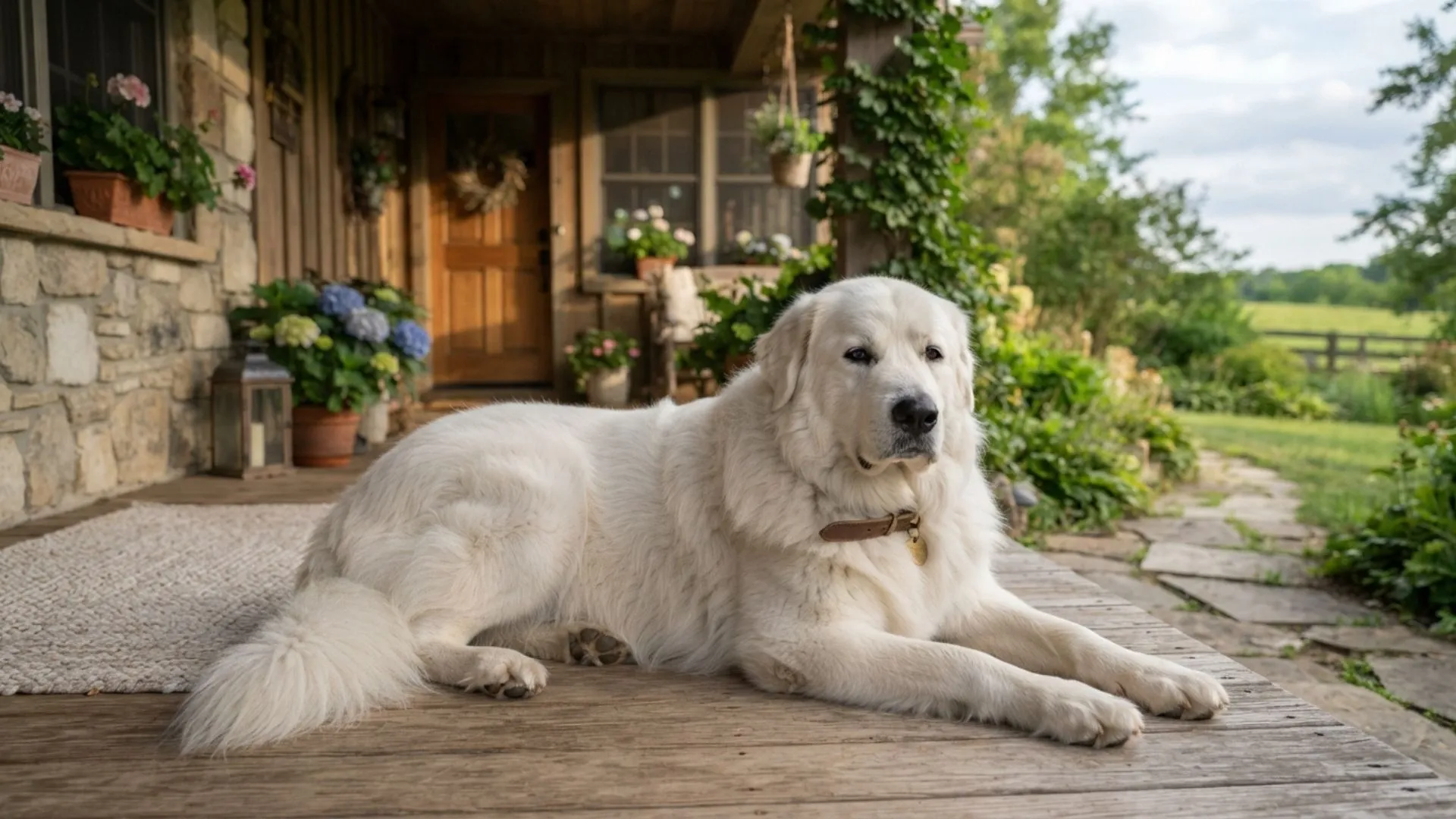
Finding a dog that can protect your home without being overly demanding may sound impossible, but the right breed can offer the best of both worlds. Some dogs are naturally alert and protective while also being calm, affectionate, and easy to care for, making them a great fit for busy households.
Many people assume guard dogs are aggressive, but that’s not always true. With early socialization and proper training, these dogs can be gentle, patient, and incredibly loyal. They know when to stay relaxed and when to step in, and often their confident presence alone is enough to deter unwanted visitors.
If you want a loyal companion that’s both easy to manage and naturally protective, you’re in the right place.
In this article, we’ll explore the best guard dog breeds with gentle temperaments and what makes them excellent choices for families, first-time dog owners, and anyone looking for a low-maintenance four-legged guardian.
Key Takeaways
Meet gentle protection dogs like the Bullmastiff, Great Dane, and Saint Bernard that guard without unnecessary aggression.
Discover low-maintenance breeds that need less grooming but still make good guard dogs.
See which dogs fit busy lifestyles, first-time owners, and families looking for an easygoing guardian.
Learn what makes these calm companions protective, loyal, and surprisingly easy to care for.
Low-Maintenance Guard Dog Breeds with Gentle Temperaments
1. BullMastiff
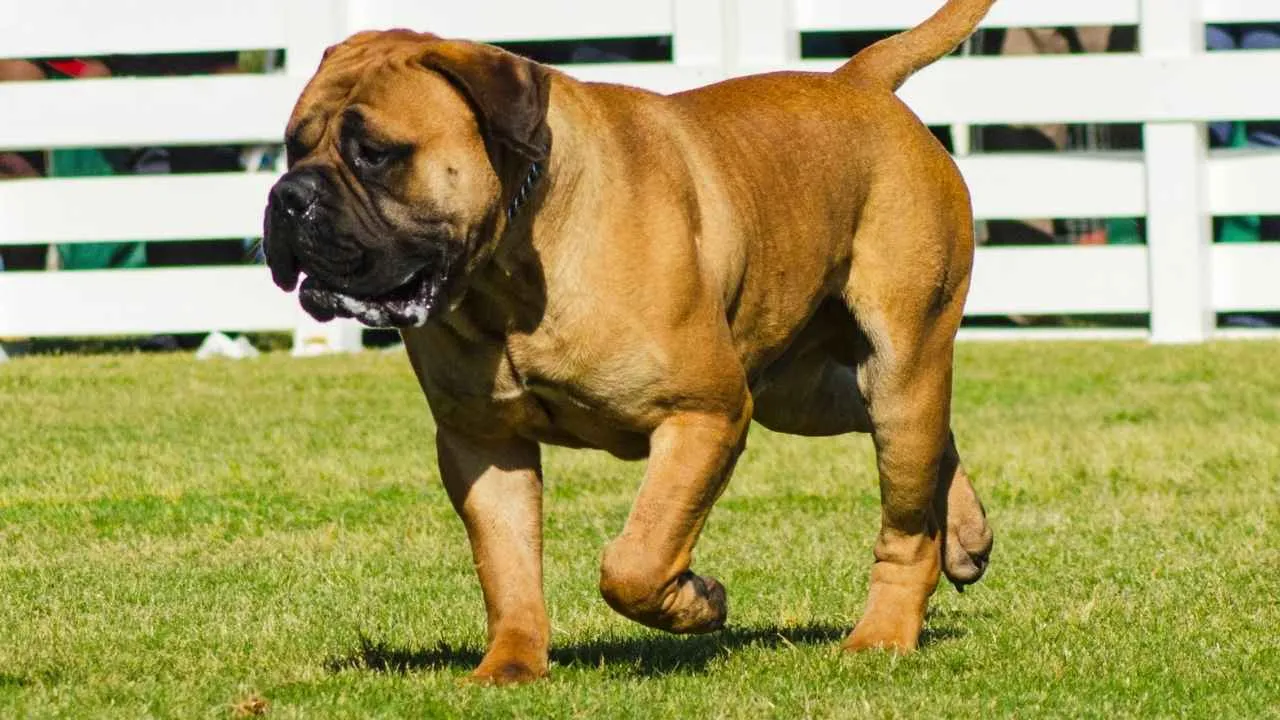
Bullmastiffs are one of the best examples of a low-maintenance guard dog with a gentle temperament. Originally developed in England by crossing Bulldogs and Mastiffs, they were bred to protect estates from poachers while staying calm and obedient.
Today, they are loyal family companions that naturally watch over their loved ones without being overly aggressive. Their confident presence alone is often enough to discourage intruders.
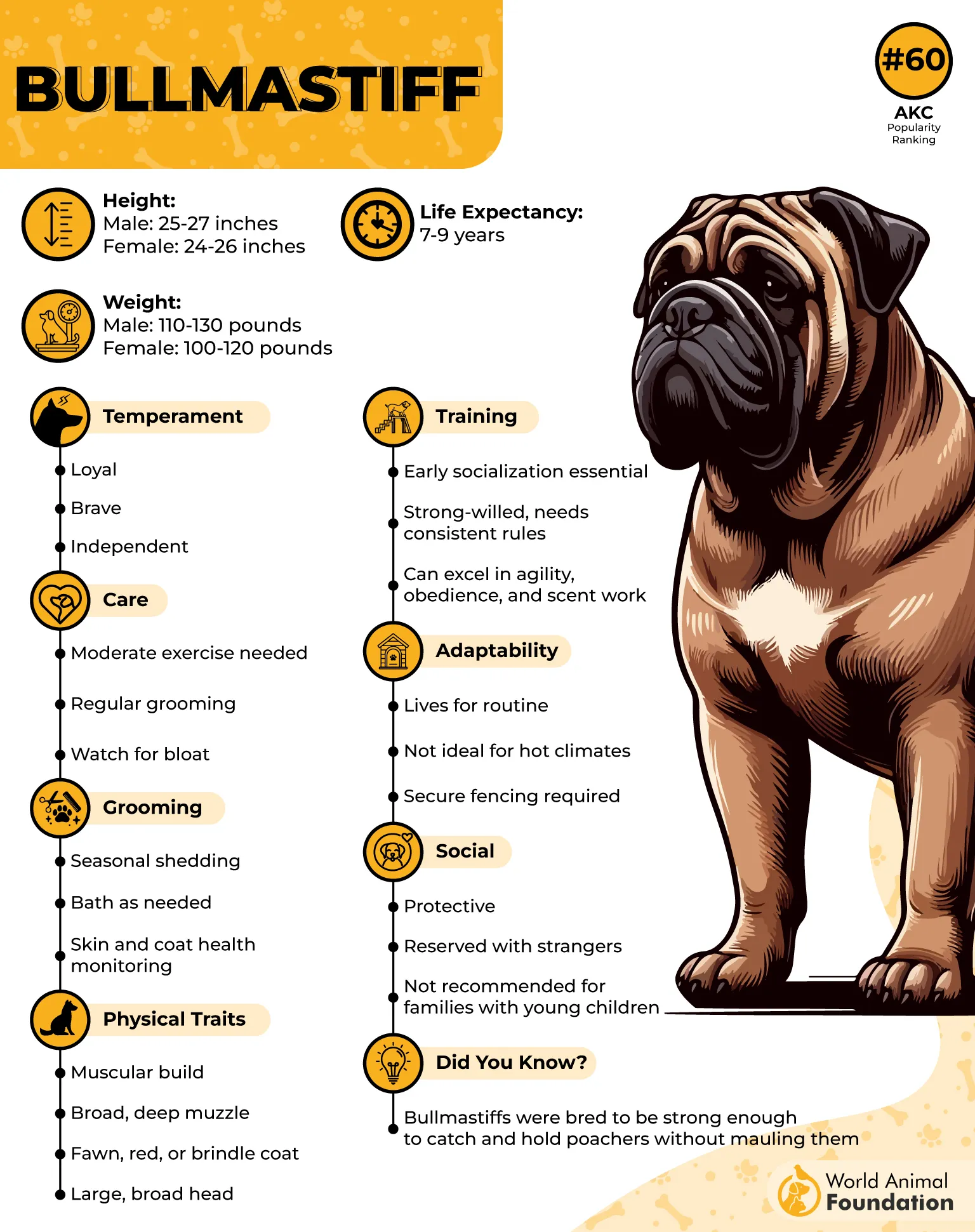
Why They’re Great Low-Maintenance Guard Dogs
Calm, affectionate, and deeply loyal to their families
Naturally protective but not excessive barkers
Short, dense coat that only needs occasional brushing
Moderate exercise needs, with daily walks and playtime
Intelligent and quick learners with consistent training
Bullmastiffs are gentle with children and can get along well with other pets when socialized early. They may be reserved around strangers, making early training and socialization essential.
While they don’t need frequent grooming, regular nail trims, occasional baths, and cleaning around their droopy jowls help keep them comfortable. They thrive with experienced owners who can provide firm, positive training from puppyhood, as these powerful dogs can become stubborn if left untrained.
2. Rhodesian Ridgeback
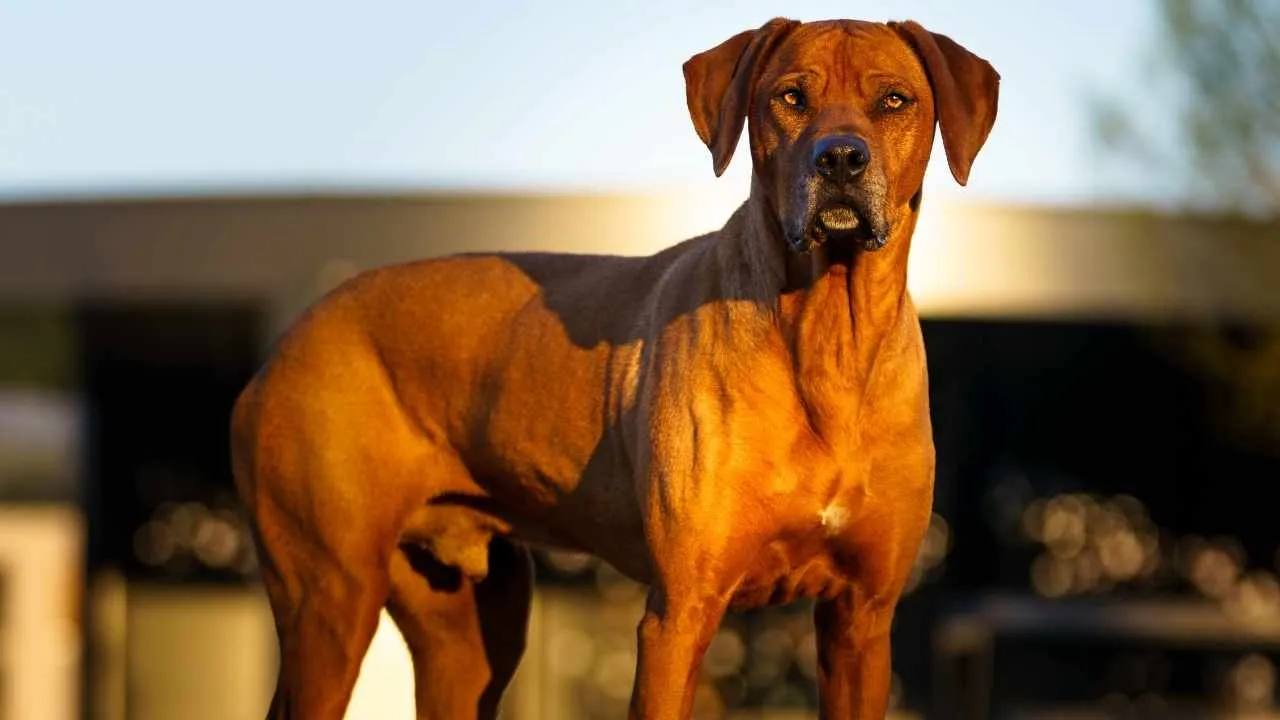
Rhodesian Ridgebacks are loyal, intelligent, and naturally protective dogs with a calm personality. Originally bred in Africa to track and hunt large game, they are best known for the distinctive ridge of hair running along their back.
Despite their hunting background, they form strong bonds with their families and can be gentle, affectionate companions when properly trained and socialized.
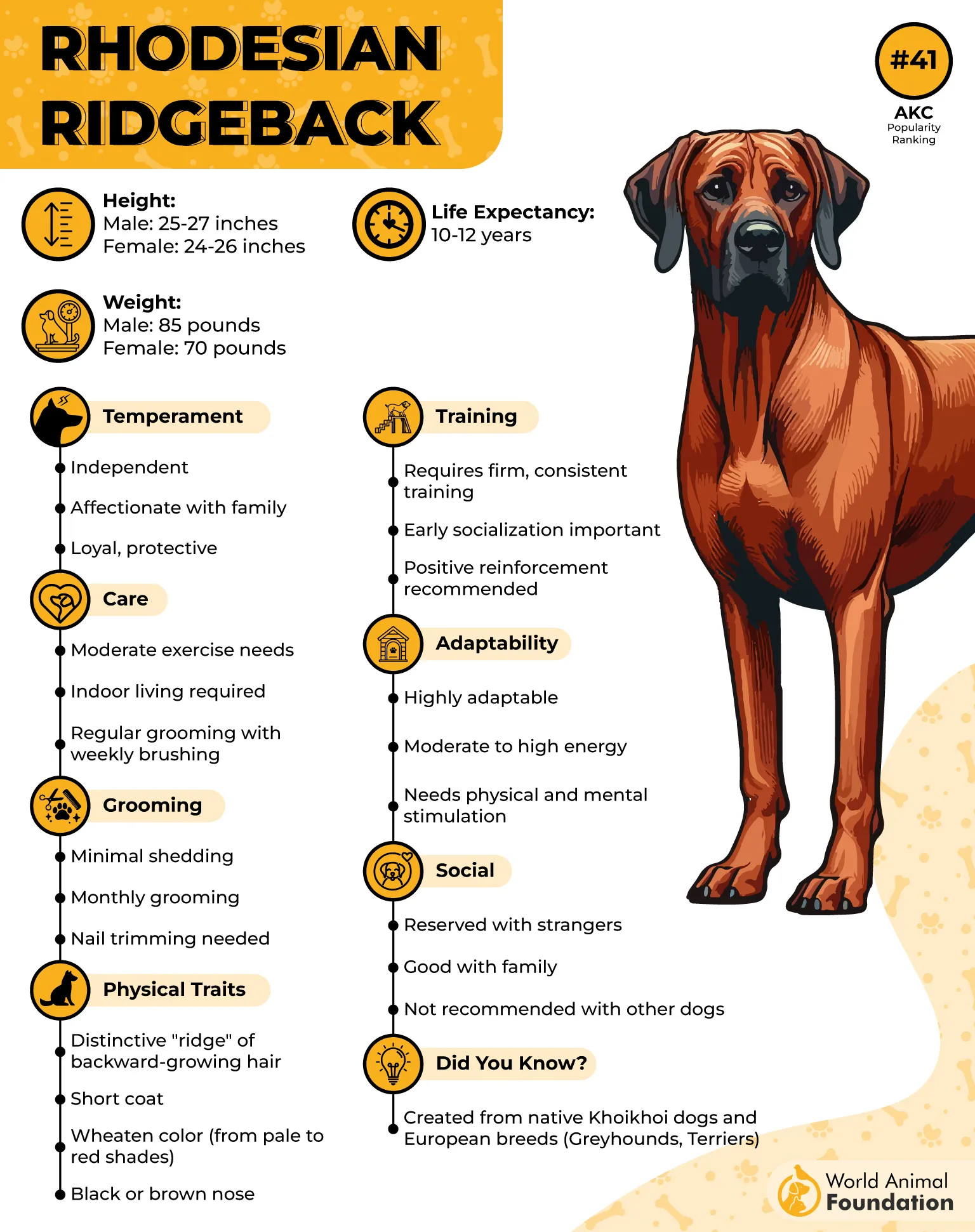
Why They’re Great Low-Maintenance Guard Dogs
Loyal and naturally protective without excessive barking
Short, smooth coat that only needs weekly brushing
Intelligent and quick to learn with positive training
Quiet and calm when given enough exercise and mental stimulation
Strong family bonds and being good with children when socialized early
Rhodesian Ridgebacks are often reserved around strangers, making them reliable watchdogs. Purina says they do best with experienced owners who can provide consistent training and early socialization.
They need daily exercise and mental enrichment to prevent boredom, but grooming is simple with occasional baths and routine ear, nail, and dental care. Their strong prey drive also means they may not be the best choice for homes with small pets.
3. Great Pyrenees
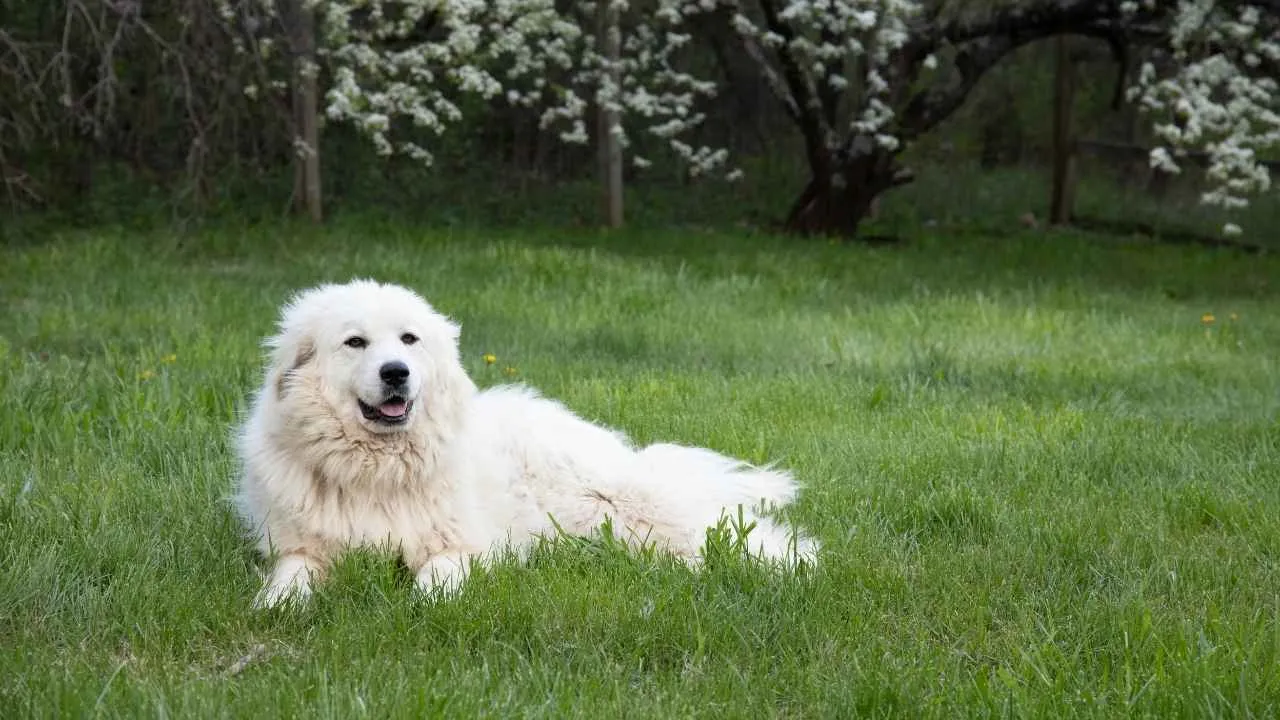
The Great Pyrenees is a gentle giant that was originally bred to guard livestock in the snowy Pyrenees Mountains between France and Spain.
Their calm nature, protective instincts, and independent personality make them excellent family guard dogs. They are devoted to their loved ones and stay watchful without being overly energetic.
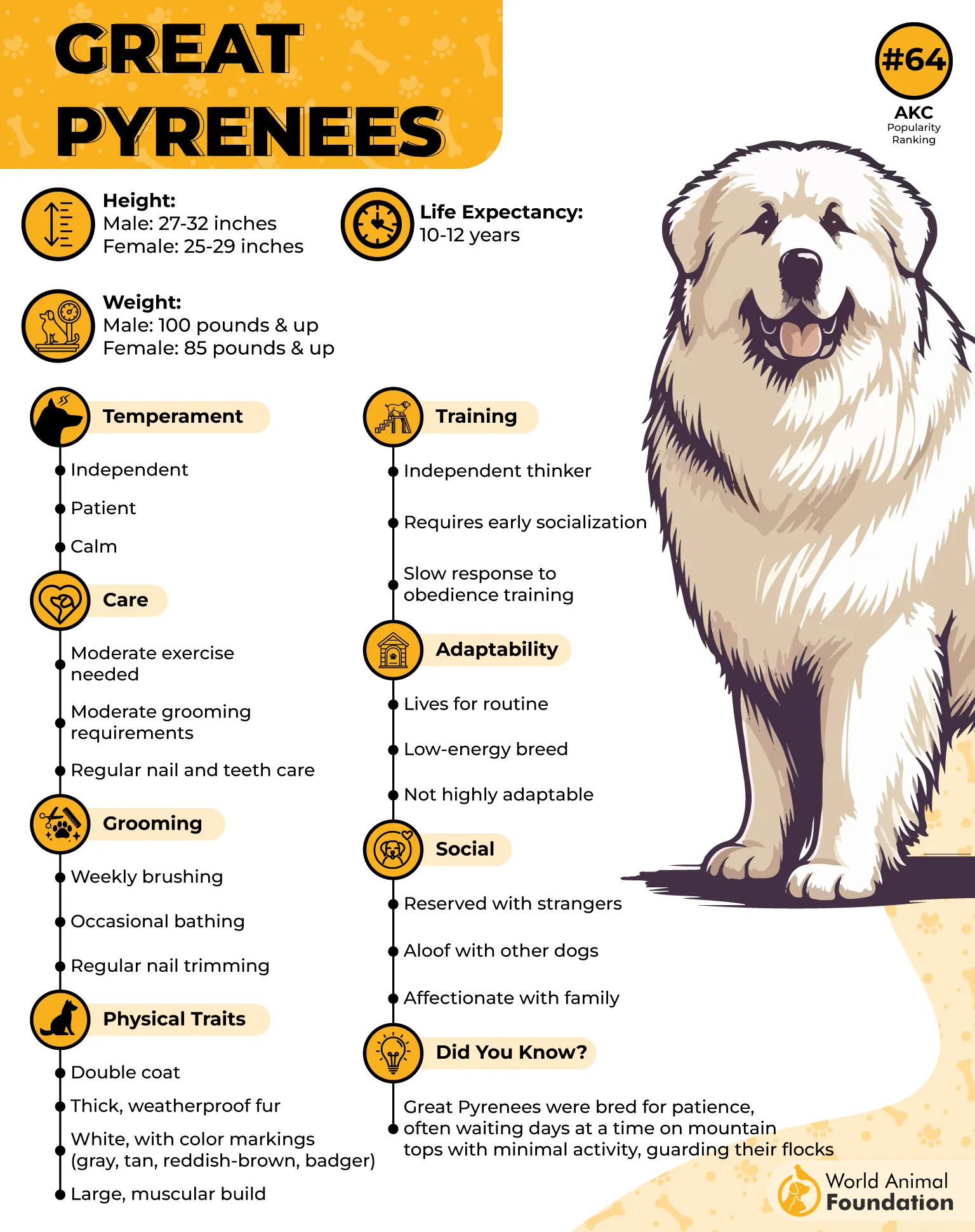
Why They’re Great Low-Maintenance Guard Dogs
Naturally calm, patient, and protective
Low energy and happy with moderate daily exercise
Thick coat resists dirt and tangles despite its length
Independent nature allows them to stay relaxed on their own
Gentle with families and other pets when socialized early
Great Pyrenees are affectionate at home but naturally alert, often barking to warn their family of anything unusual. Their coat only needs weekly brushing, though they do shed heavily throughout the year.
Early socialization and consistent training are important, as they can be strong-willed. Routine ear cleaning, occasional baths, nail trims, and regular vet checkups help keep these loyal guardians healthy and comfortable.
4. Newfoundland
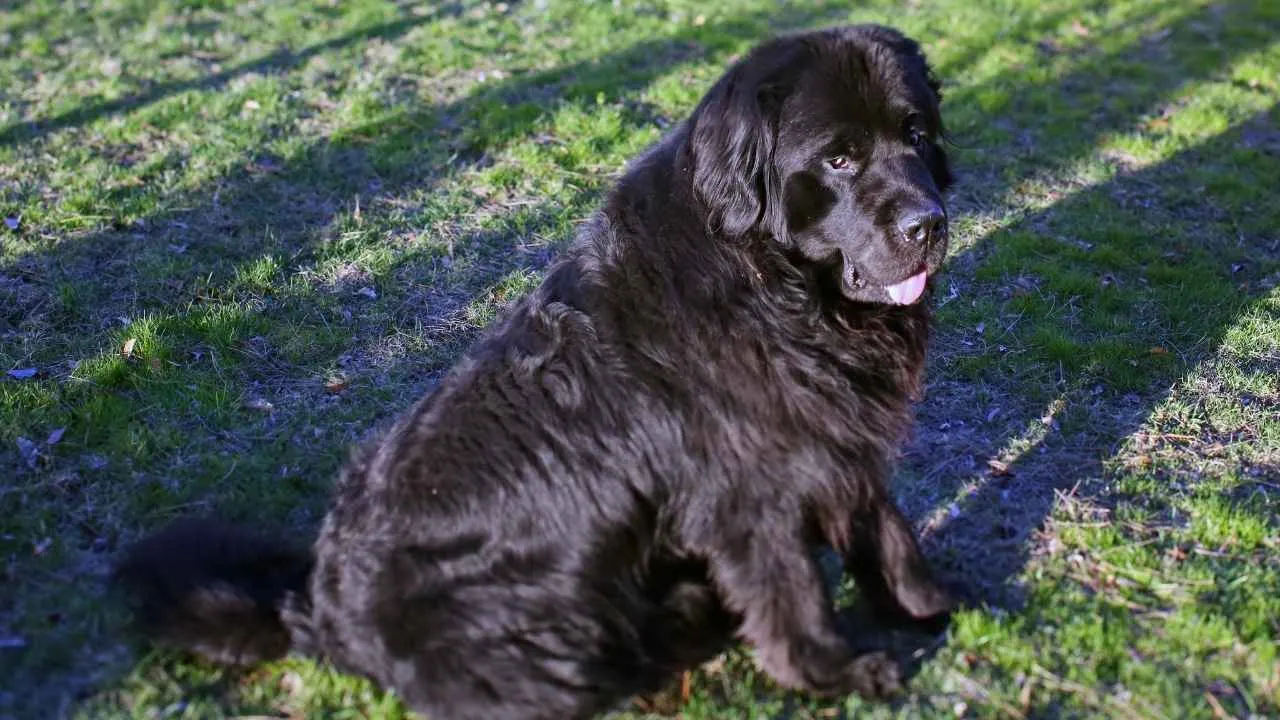
Newfoundlands are gentle giants that were originally bred in Newfoundland, Canada, to help fishermen and perform water rescues.
Their calm nature, impressive strength, and natural protective instincts make them dependable guardians and loving family pets. They are affectionate, patient, and especially gentle with children, earning them the nickname “nanny dogs,” as mentioned by Britannica.
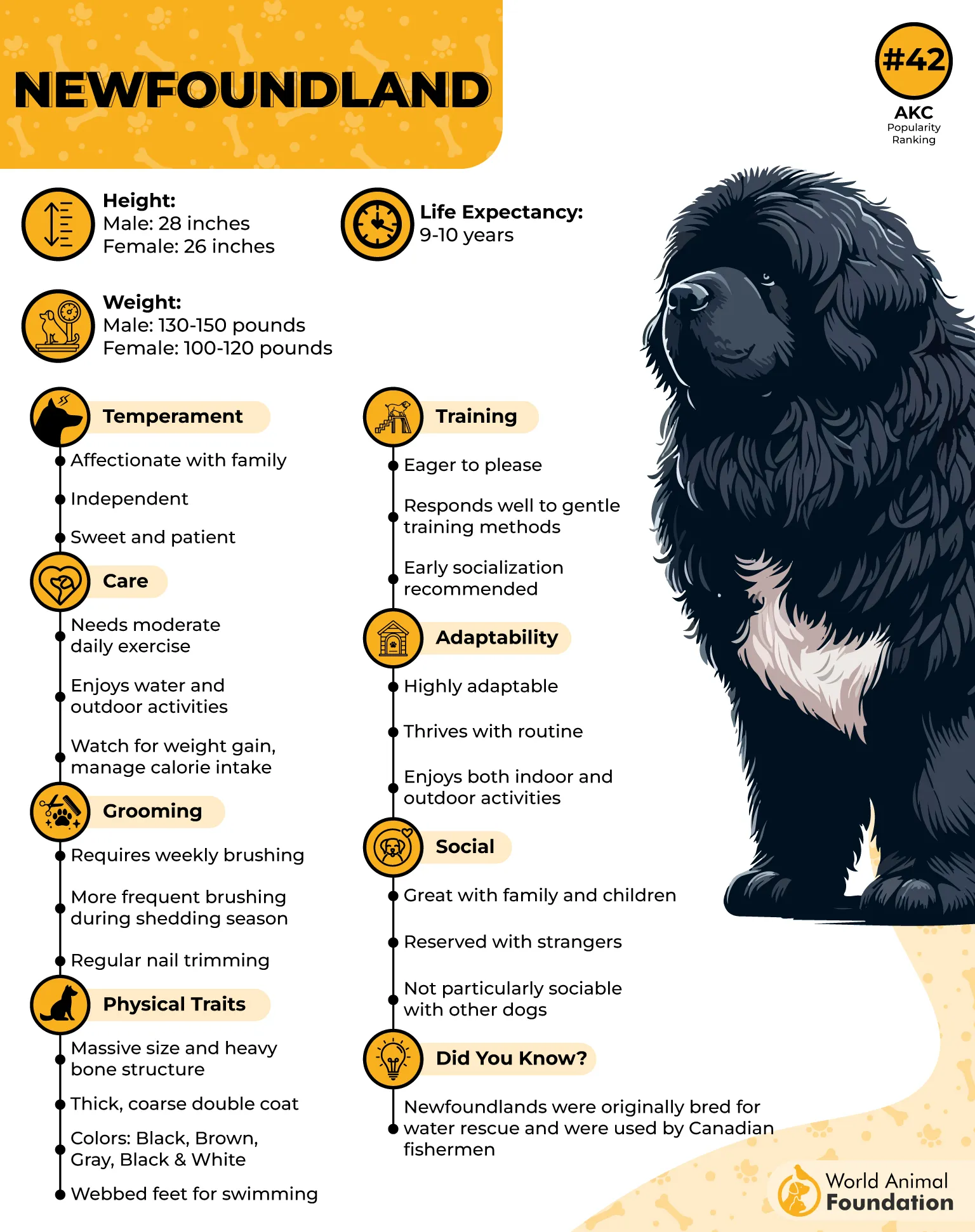
Why They’re Great Low-Maintenance Guard Dogs
Calm, friendly, and naturally protective
Gentle and patient with children and other pets
Intelligent and easy to train
Moderate exercise needs with a love for swimming
Loyal companions that stay watchful without being aggressive
Newfoundlands are happiest in homes with plenty of space and owners who don’t mind a little extra drool. Their thick double coat needs weekly brushing, with more frequent grooming during shedding seasons. Regular baths, nail trims, and routine vet care help keep them healthy.
While they require some coat maintenance, their easygoing temperament and low-energy lifestyle make them one of the most gentle and dependable guard dogs for families.
5. Great Dane
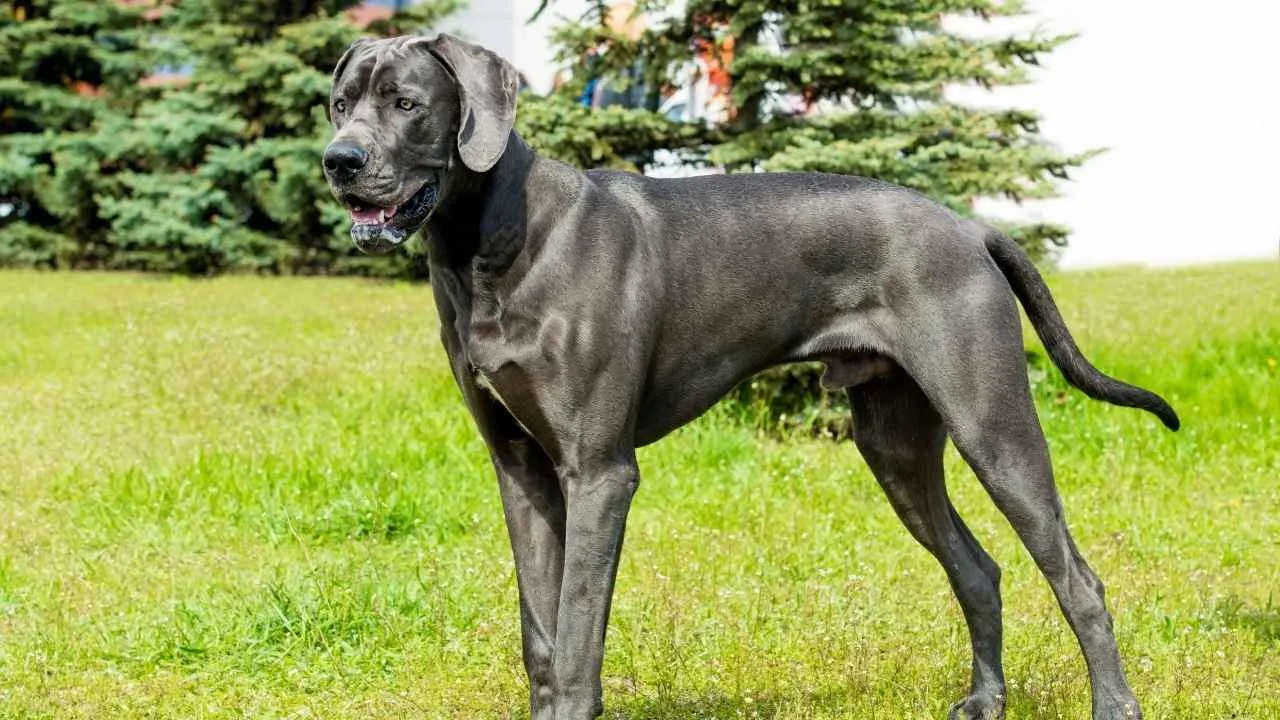
Great Danes are gentle giants that were originally bred in Germany to guard estates and hunt wild boar. Despite their massive size, they are affectionate, calm, and enjoy spending time with their families. Their protective instincts and quiet nature make them reliable guard dogs without being overly aggressive.
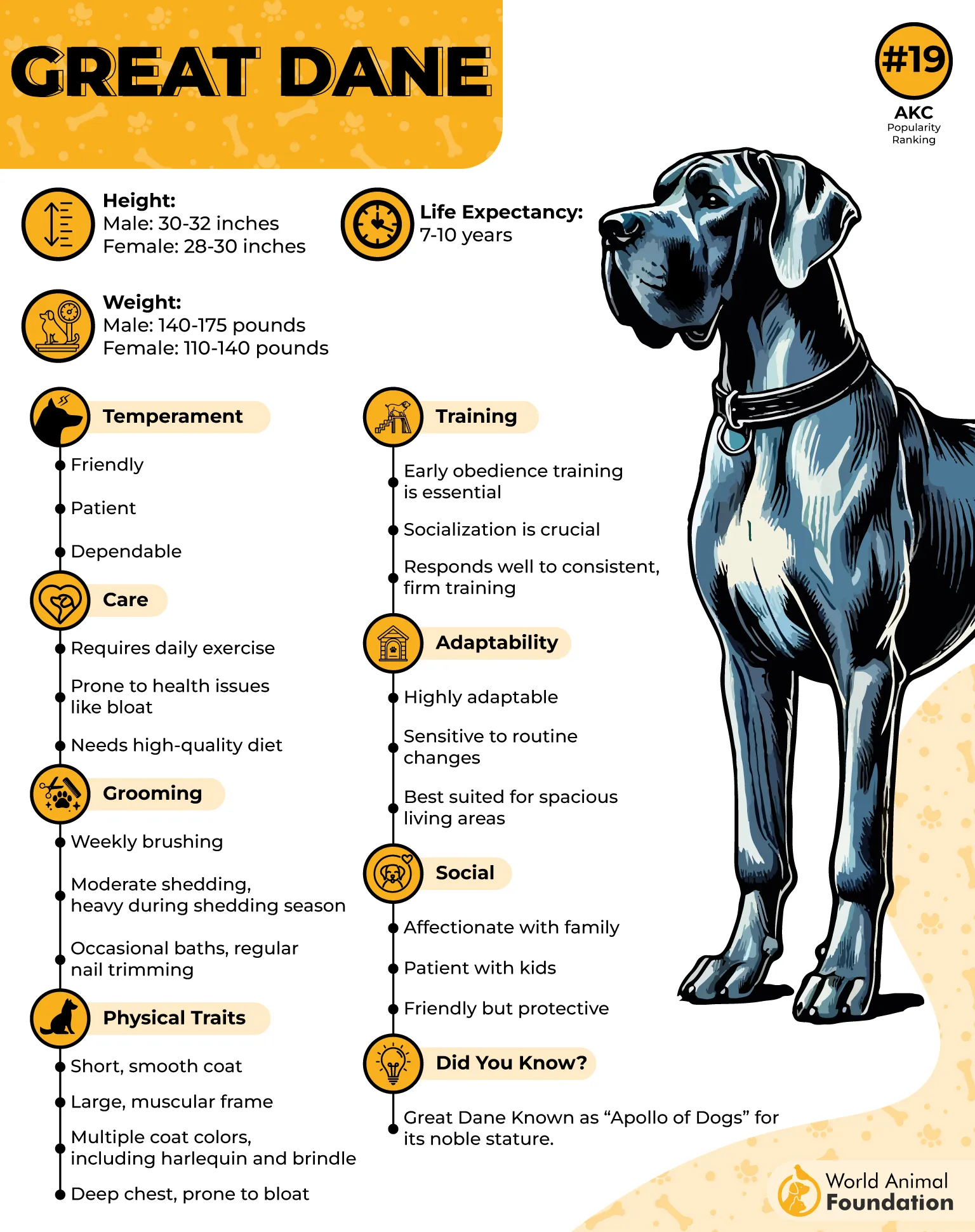
Why They’re Great Low-Maintenance Guard Dogs
Gentle, patient, and affectionate with their families
Naturally protective and alert without excessive barking
Short coat that only needs weekly brushing
Intelligent and easy to train with positive reinforcement
Moderate exercise needs with daily walks and playtime
Great Danes are generally good with children and other pets when socialized from an early age. They need plenty of space and consistent training to manage their size and strength.
Grooming is simple, with occasional baths, regular ear cleaning, nail trims, and weekly brushing. Although they have relatively low grooming needs, regular vet checkups are important because giant breeds are more prone to health conditions such as bloat.
6. Saint Bernard
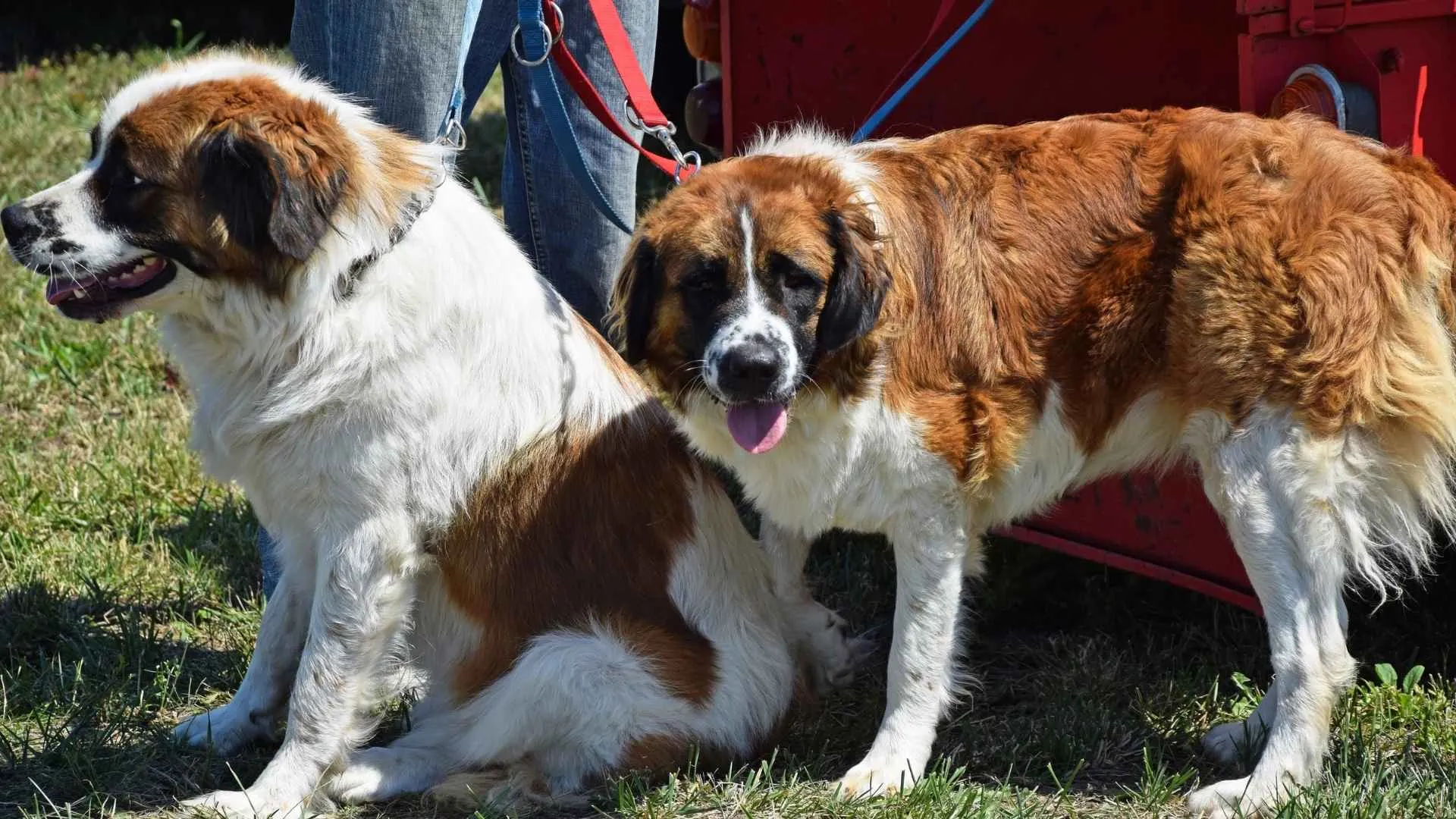
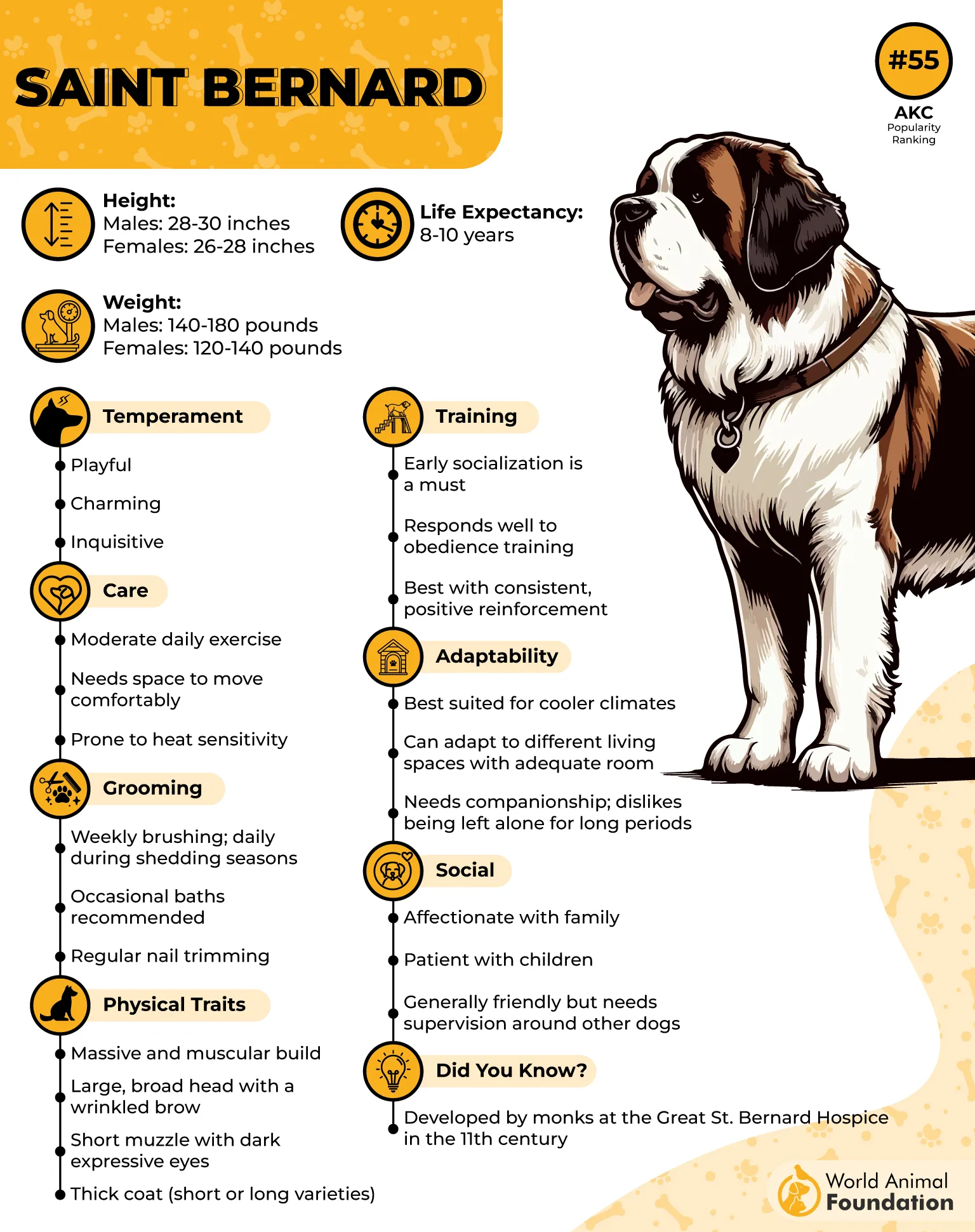
Saint Bernards are gentle giants that were originally used as watchdogs and rescue dogs in the Swiss Alps. Today, they are known for their calm personality, affectionate nature, and strong loyalty to their families.
While they are friendly with most people, they won’t hesitate to protect their loved ones if they sense danger.
Why They’re Great Low-Maintenance Guard Dogs
Calm, gentle, and naturally protective
Patient with children and friendly with other pets
Eager to please and generally easy to train
Low exercise needs with relaxed daily walks
Available in short- and long-coated varieties with simple grooming routines
Saint Bernards love being around their families and enjoy joining everyday activities. Early training is important because of their large size, even though they are naturally well-mannered. Regular brushing, routine nail trims, and basic coat care help manage seasonal shedding.
7. Kuvasz
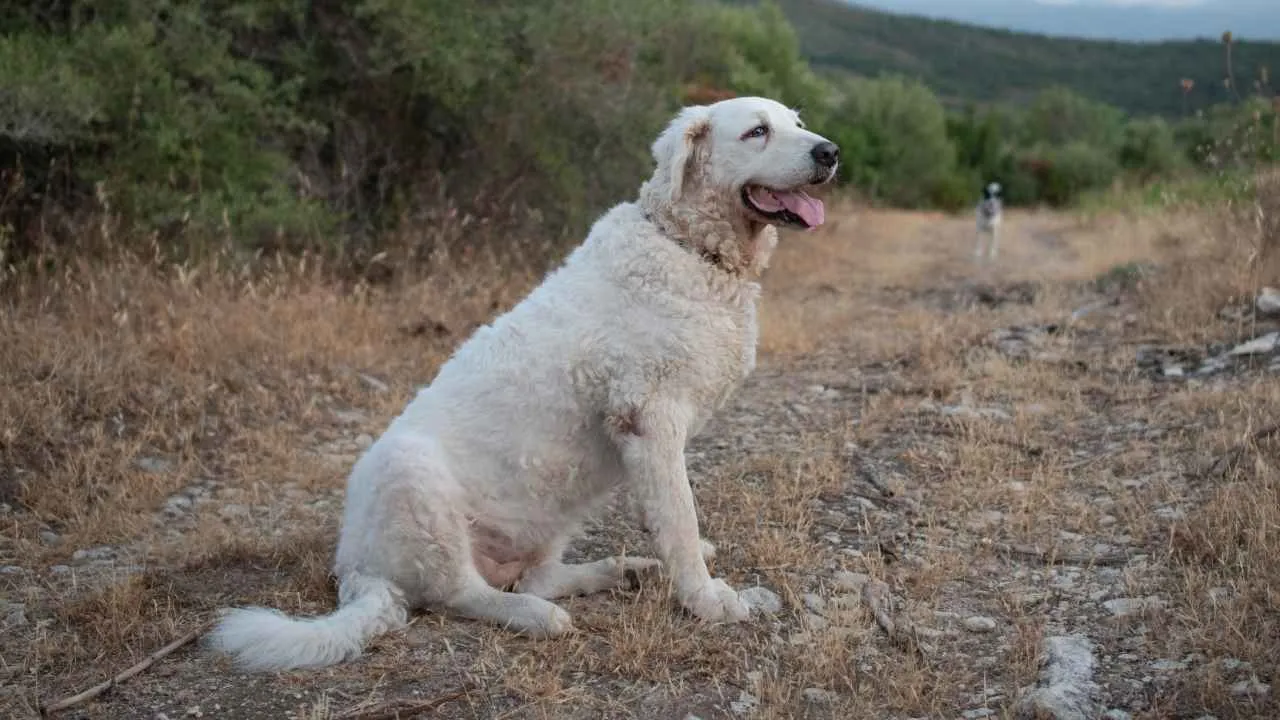
Kuvaszs are loyal livestock guardians with a long history of protecting farms and families. Originally brought to Hungary by the Magyar people, these intelligent dogs were bred to guard livestock while also serving as personal protectors.
Today, they remain calm, devoted companions with strong protective instincts and a gentle nature toward the people they know and trust.
Why They’re Great Low-Maintenance Guard Dogs
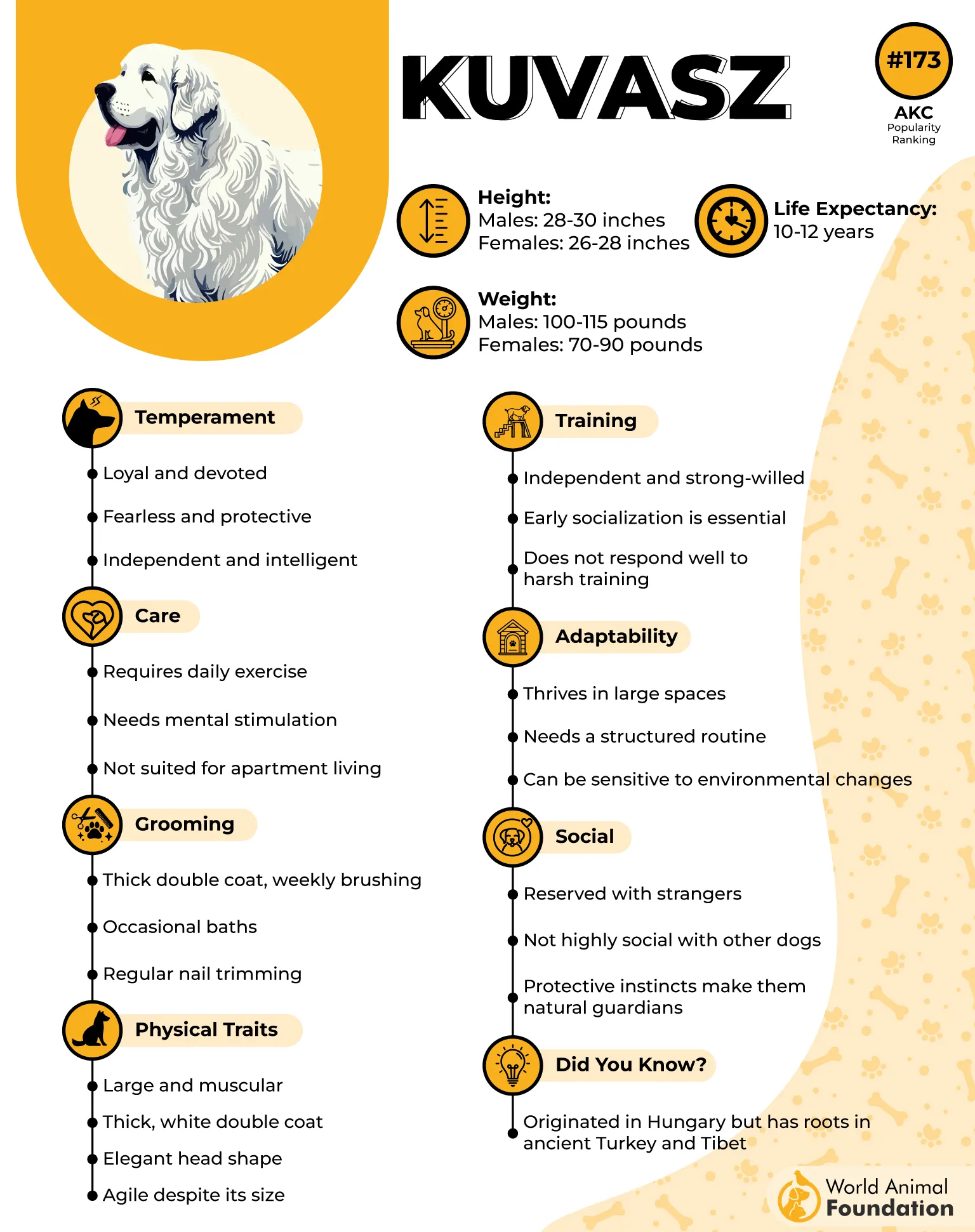
Loyal, courageous, and naturally protective
Gentle with children and other pets when socialized early
Thick white coat that only needs regular brushing
Intelligent and quick to learn with consistent training
Calm indoors but always alert to potential threats
Kuvaszs are best suited for experienced owners who can provide early socialization, positive training, and plenty of space to roam safely.
According to PetMD, they can be reserved around strangers and have a strong instinct to patrol their surroundings. Although their coat is thick, grooming is fairly simple with regular brushing, while routine nail trims, ear care, and vet checkups help keep them healthy.
Conclusion
Choosing a low-maintenance guard dog doesn’t mean giving up on protection or a loving companion. The right breed can offer calm confidence, natural guarding instincts, and a gentle temperament while fitting more easily into your daily routine.
With proper training, early socialization, and regular care, these dogs become loyal family members who are always ready to watch over the people they love.
Before bringing any dog home, take time to match their personality, exercise needs, and living requirements with your lifestyle.
A well-chosen breed is more likely to thrive and build a lasting bond with your family. When you find the right guard dog, you’ll gain more than a dependable guardian—you’ll welcome a devoted friend who brings comfort, security, and unconditional love every day.
