




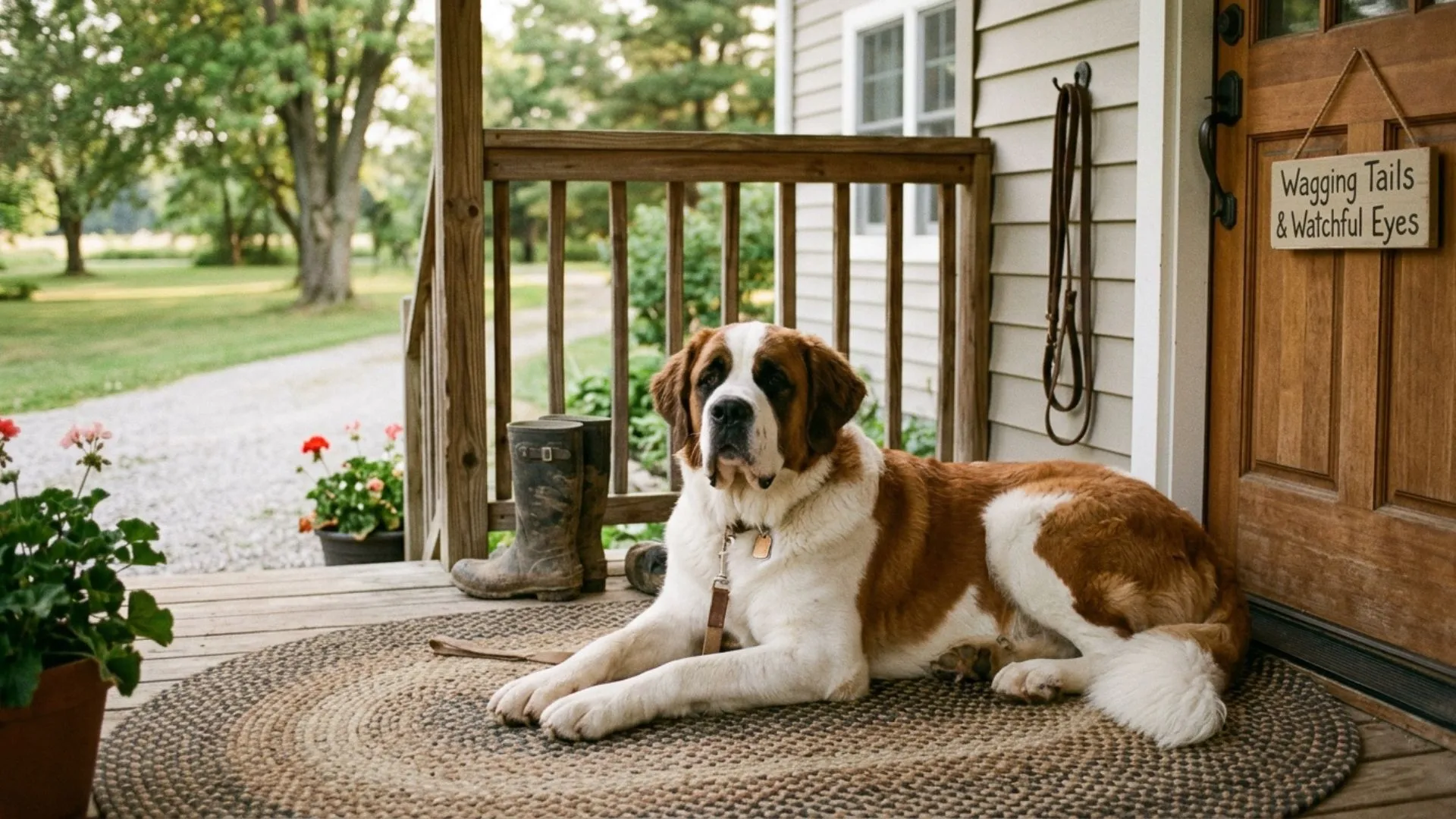
A good guard dog should make your home feel safer—not louder, more stressful, or harder to manage. The best ones are calm, confident, and aware of what is happening around them.
They do not need to bark at every small sound or act suspicious of everyone who walks by. Instead, they stay relaxed when things are normal, but quickly pay attention when something feels unusual.
That is why low-maintenance guard dog breeds that are easy to train and calm are such a smart choice for many families. These dogs can offer protection without becoming overwhelming.
They are usually loyal, watchful, and quick to learn, which makes daily life easier for owners who want both security and companionship.
Low maintenance does not mean they need no care, though. They still need regular exercise, basic grooming, early socialization, and clear training so they grow into well-mannered protectors.
The goal is not to have an aggressive dog—it is to have a steady, obedient, and trustworthy one. A good guard dog should know when to alert you, when to stay quiet, and when to follow your lead.
With the right breed, training, and home environment, you can have a dog that is gentle with family, calm indoors, and naturally protective when it truly matters.
Key Takeaways
Calm yet protective breeds like the Bullmastiff, Mastiff, and Great Pyrenees offer security without constant chaos.
Gentle giants such as the Newfoundland, Saint Bernard, and Broholmer are loving family companions and dependable guardians.
Loyal breeds like the Boerboel, Kuvasz, and Rhodesian Ridgeback need early training and socialization to thrive.
The best guard dog is the one that fits your home, lifestyle, and experience level.
Low-Maintenance Guard Dog Breeds That Are Easy to Train and Calm
1. Boerboel
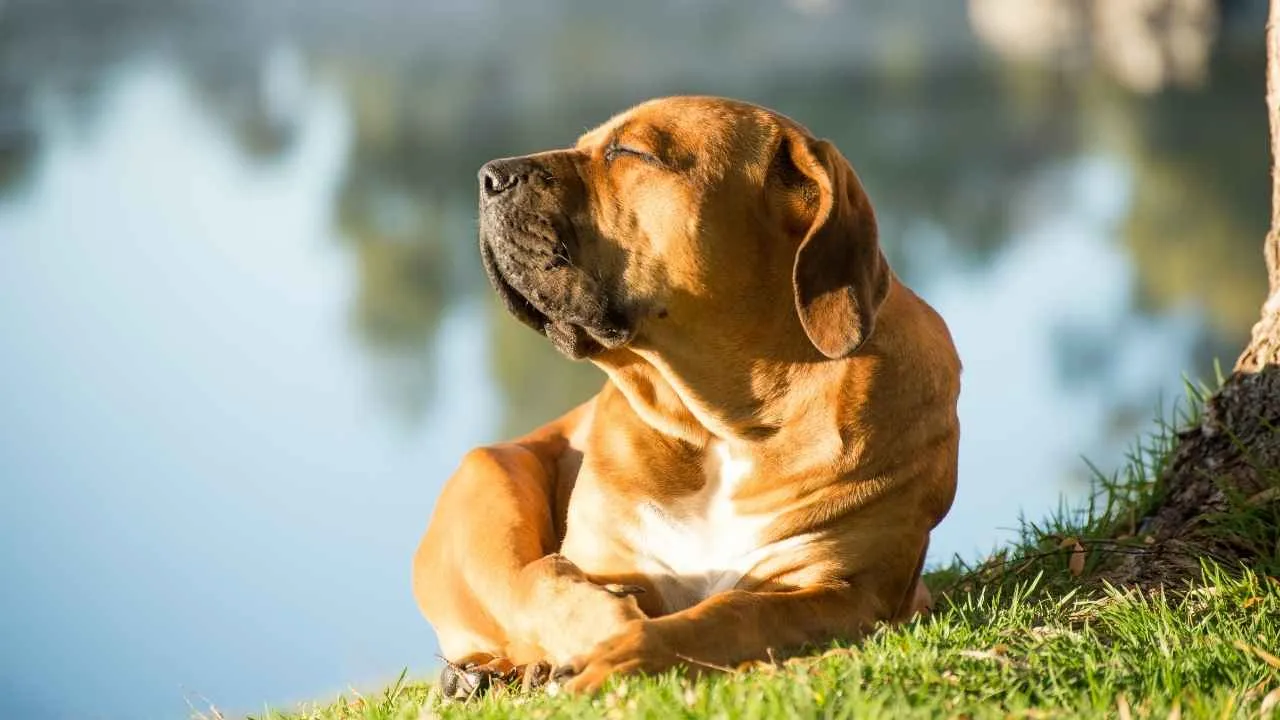
Boerboels are calm, loyal, and powerful guard dogs with a strong protective nature. They come from South Africa, where they were used to guard farms, homes, and families, as CKCUSA mentions.
Boerboels are confident and watchful, but they are also loving with their own people. At home, they can be affectionate, playful, and deeply attached to their family.
Boerboels are a good fit for people who want low-maintenance guard dogs with strong intelligence. Their short, dense coats are easy to care for and only need weekly brushing.
They are eager to learn, but they are also dominant and strong-minded. Early training and socialization are very important so they grow into calm, obedient, and well-mannered protectors.
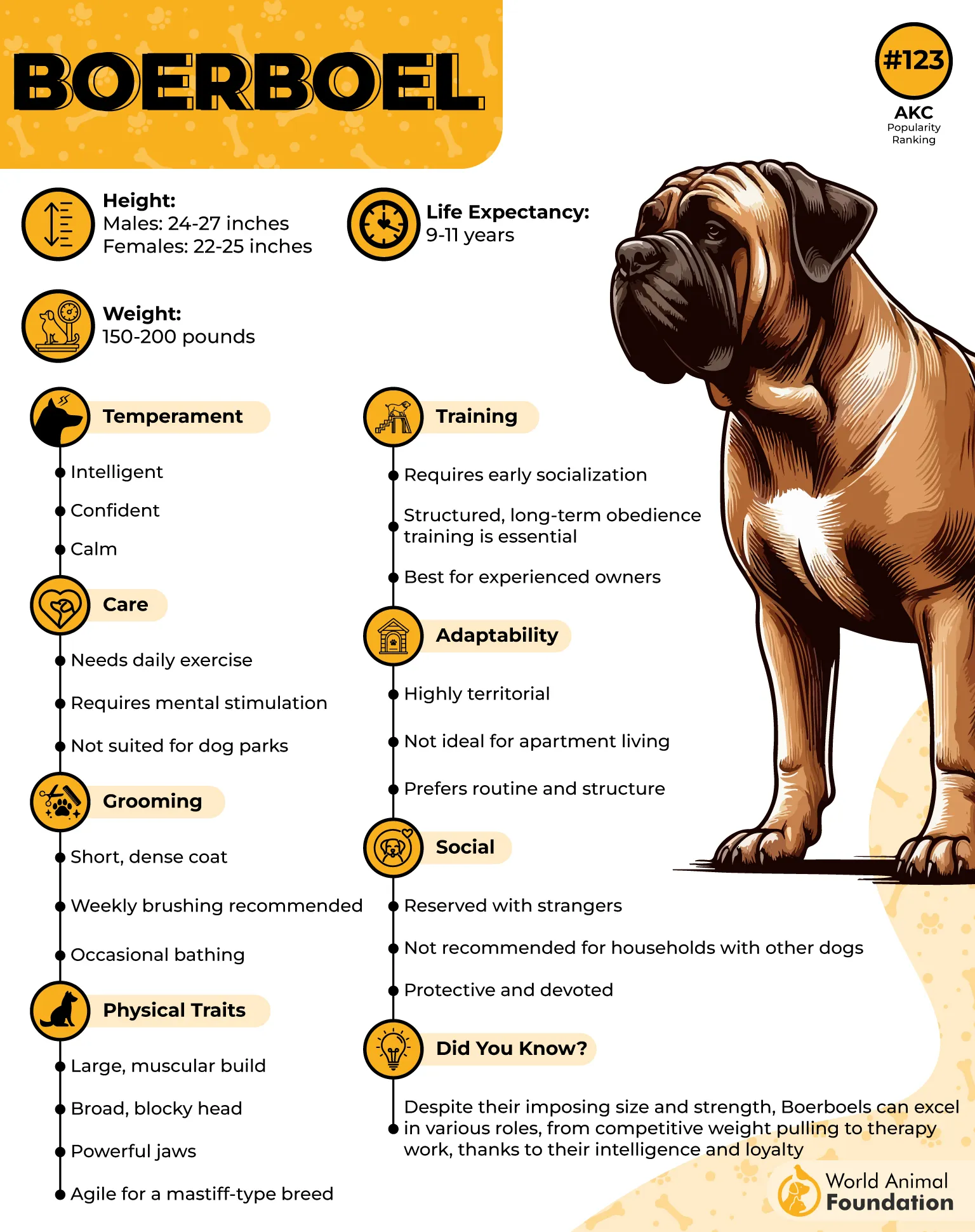
Temperament: Loyal, confident, protective, and affectionate with family.
Grooming: Low maintenance with weekly brushing and occasional baths.
Training: Intelligent and trainable, but they need firm, consistent guidance.
Best For: Experienced owners who can provide exercise, structure, and socialization.
Boerboels also need daily exercise and mental stimulation to stay happy and balanced. Long walks, secure playtime, puzzle games, and obedience work can help manage their energy.
They are not the best choice for dog parks or off-leash areas because of their protective instincts. With the right home, they can be calm, steady, and loving guardians.
2. Bullmastiff
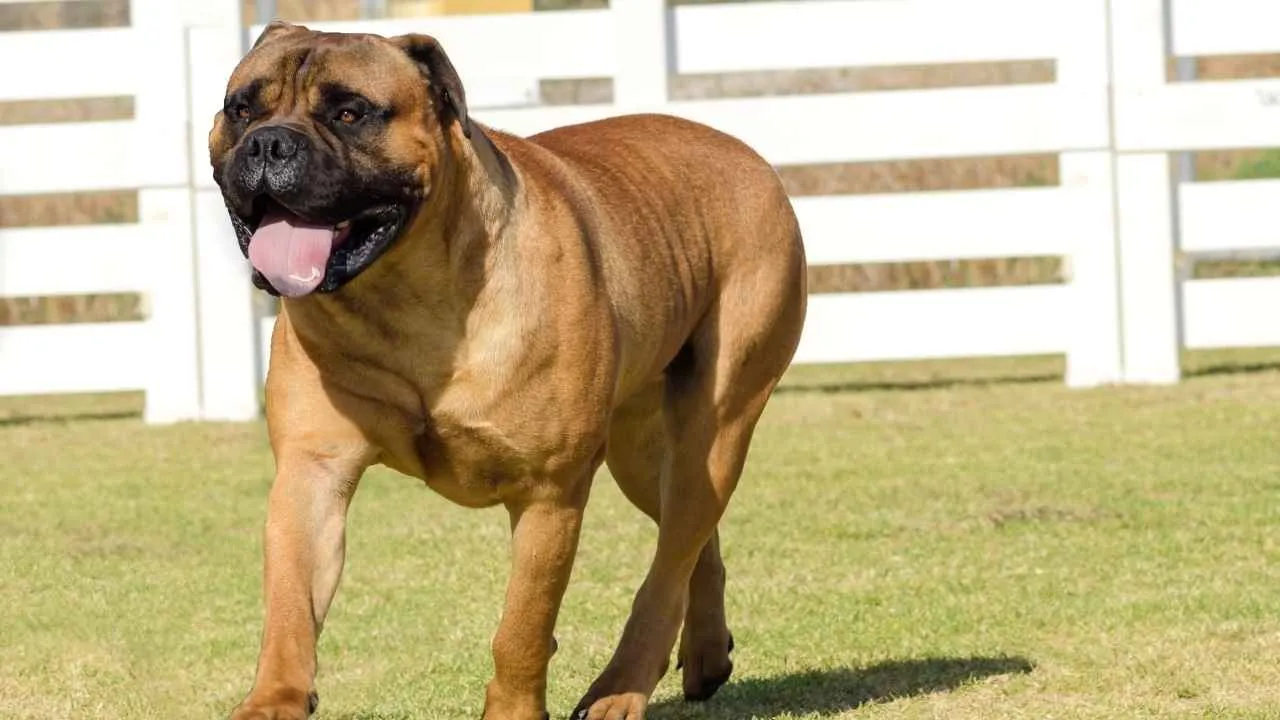
Bullmastiffs are calm, loyal, and powerful guard dogs with a gentle side at home. They were first developed in England by crossing Bulldogs with Mastiffs.
Their job was to help gamekeepers stop poachers, so they were bred to be brave, quiet, and dependable. Today, Bullmastiffs are still natural protectors, but they are also affectionate family companions.
Bullmastiffs fit well as low-maintenance guard dogs because they are usually calm, smart, and not known for excessive barking.
The ABA notes that they may be reserved around new people, but they are loving with their family. Their short, dense coats are easy to care for, though they do shed seasonally. Early training and socialization are very important because they can become strong-willed as they grow.
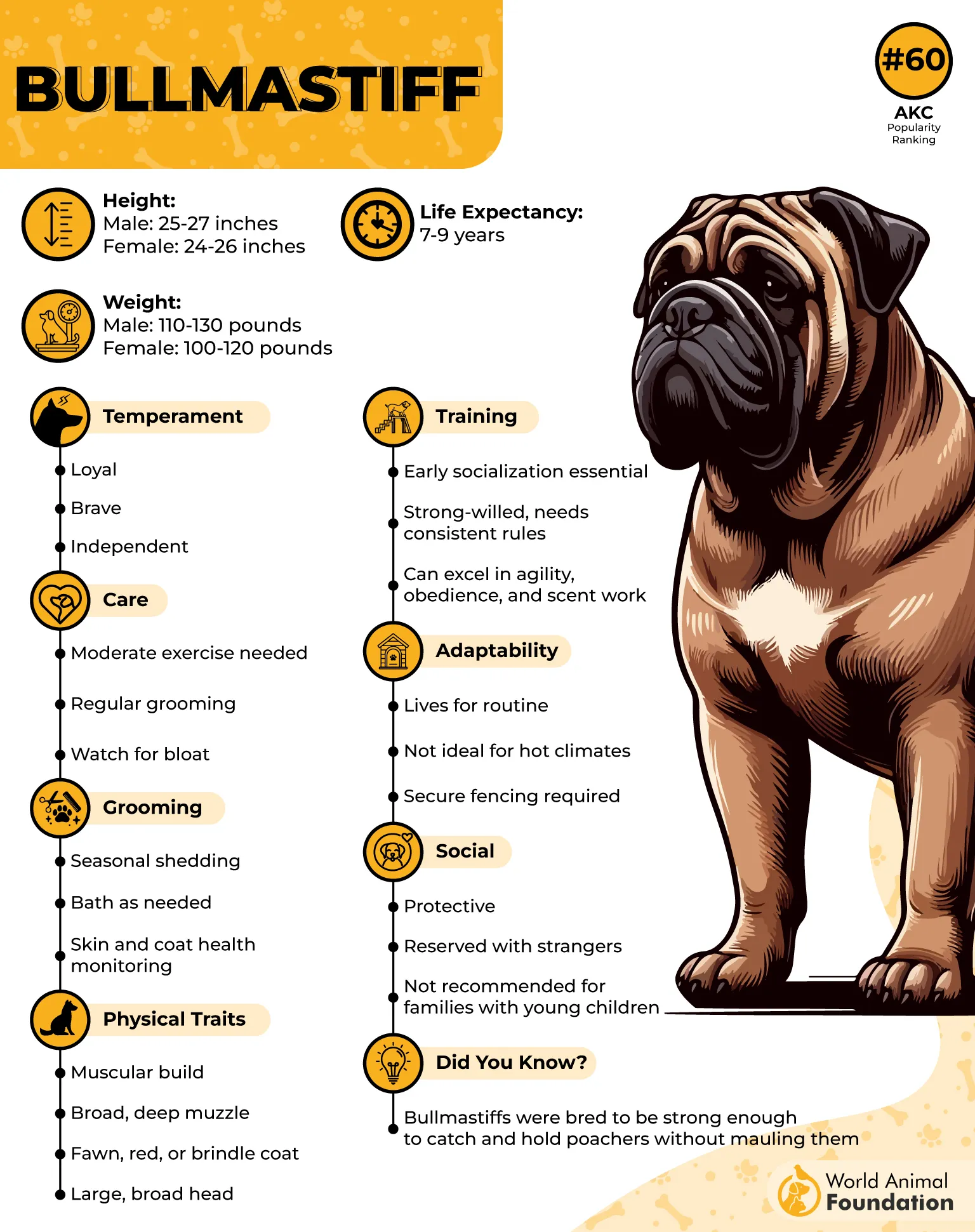
Temperament: Loyal, affectionate, calm, confident, and protective.
Grooming: Low maintenance with regular brushing, occasional baths, and jowl wipe-downs.
Training: Quick learners, but they need early rules, leash training, and socialization.
Best For: Experienced owners with a calm home, secure fencing, and older children.
Bullmastiffs need daily exercise, but they are not ideal running partners. Brisk walks, outdoor play, hiking, tracking, obedience, and nose work are better options for them. A fenced yard is helpful because they need safe space to move and play.
With steady training, clear routines, and positive guidance, Bullmastiffs can become calm, well-mannered, and reliable home guardians.
3. Great Pyrenees
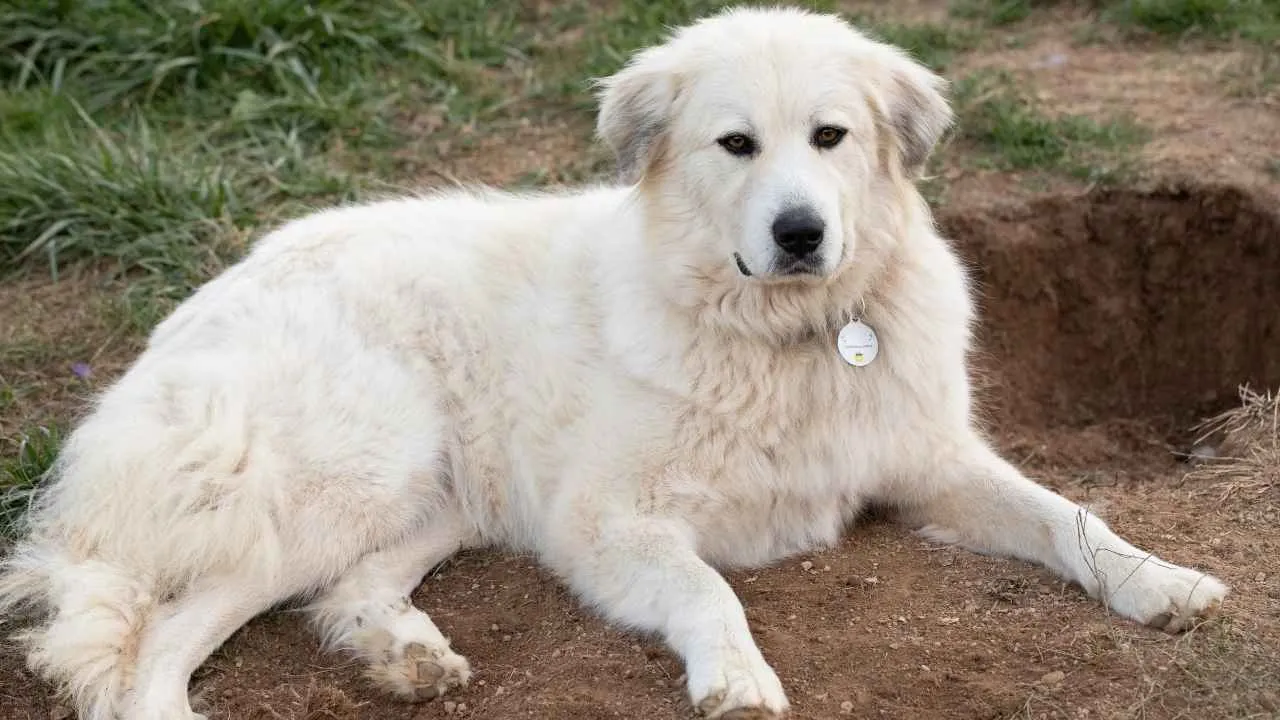
Great Pyrenees are calm, majestic, and powerful guard dogs with a long history as livestock protectors. They were bred in the snowy mountains between France and Spain to guard sheep from wolves, bears, and other threats.
GPCA states that their background gives them a naturally watchful nature. At home, they are usually mellow, gentle, and deeply devoted to their family.
Great Pyrenees fit well for people who want calm, low-maintenance guardians, but they need patient training.
They are intelligent, but they were bred to think on their own. This means they may respond slowly to basic obedience if they feel the task is boring. Early socialization and puppy training help them become better-mannered, more balanced companions.
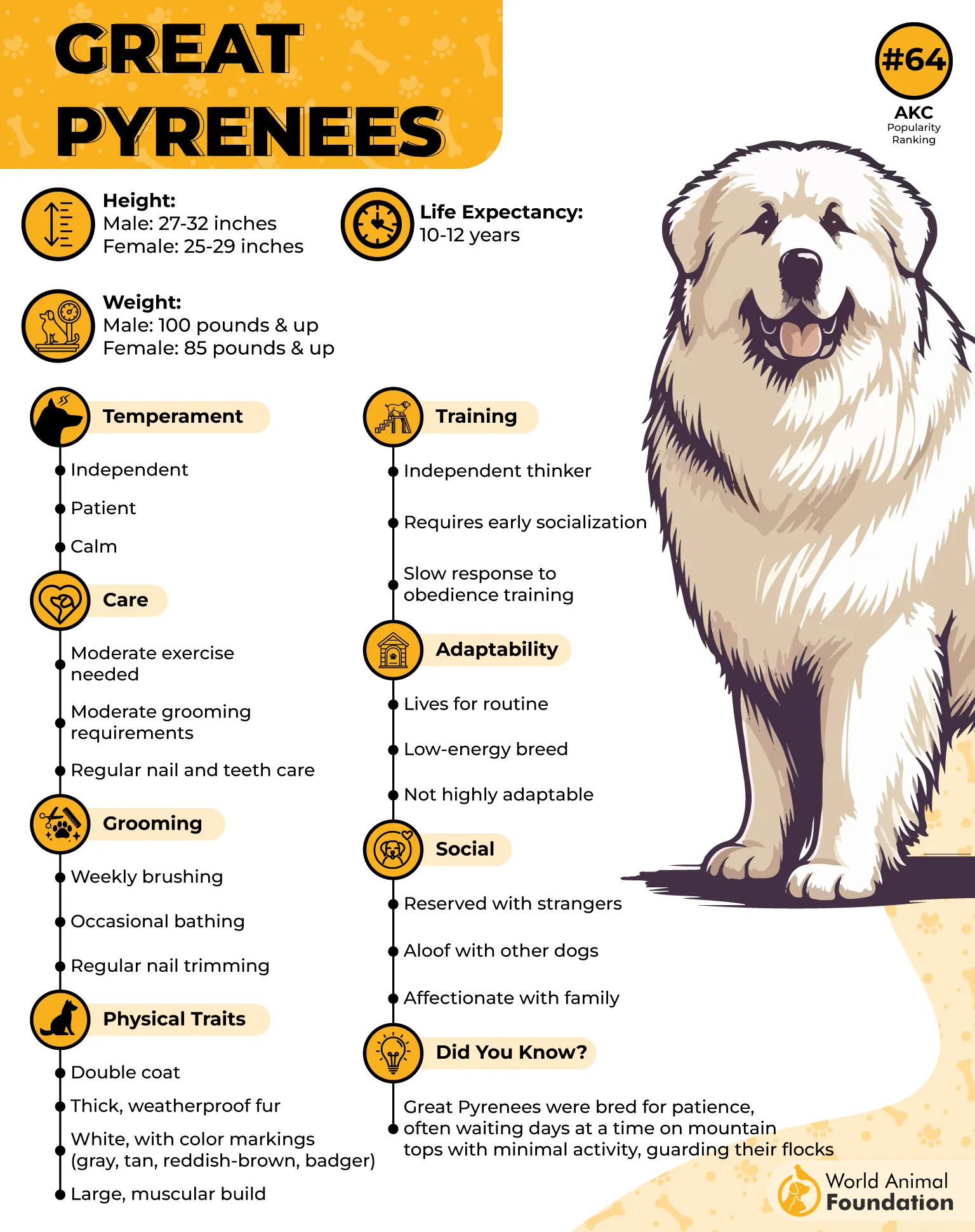
Temperament: Calm, loyal, watchful, gentle, and protective.
Grooming: Weekly brushing helps manage their thick, shedding coat.
Training: Smart but independent, so they need patience and early guidance.
Best For: Families with space, secure fencing, and a calm home routine.
Great Pyrenees are not highly active dogs. They usually do well with moderate daily walks and time to patrol a safe area.
Their coat is weatherproof, dirt-resistant, and tangle-resistant, but they can shed heavily. With steady care, early training, and enough space, Great Pyrenees can be calm, reliable, and loving home guardians.
4. Rhodesian Ridgeback
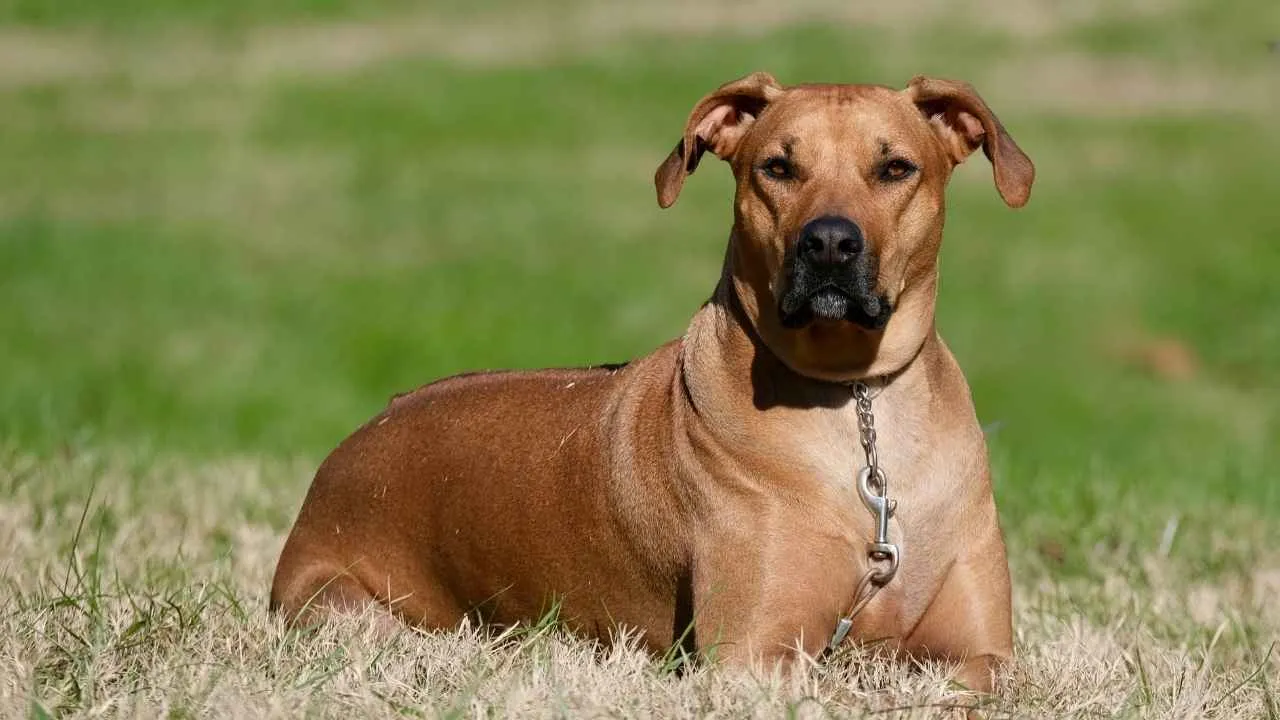
Rhodesian Ridgebacks are dignified, loyal, and athletic guard dogs with roots in Africa. They are also known as African Lion Hounds because they were bred to track and face large game, including lions.
Their most famous feature is the ridge of hair along their back, which grows in the opposite direction from the rest of the coat. They are affectionate with family, but they can be aloof around strangers.
Rhodesian Ridgebacks fit this topic because they are low-maintenance in grooming and calm when their needs are met. Their short coat has little odor and only needs weekly brushing and occasional baths.
They are intelligent and quick to learn, but they can also be independent. Training should start early and continue through life with patience, consistency, and positive reinforcement.
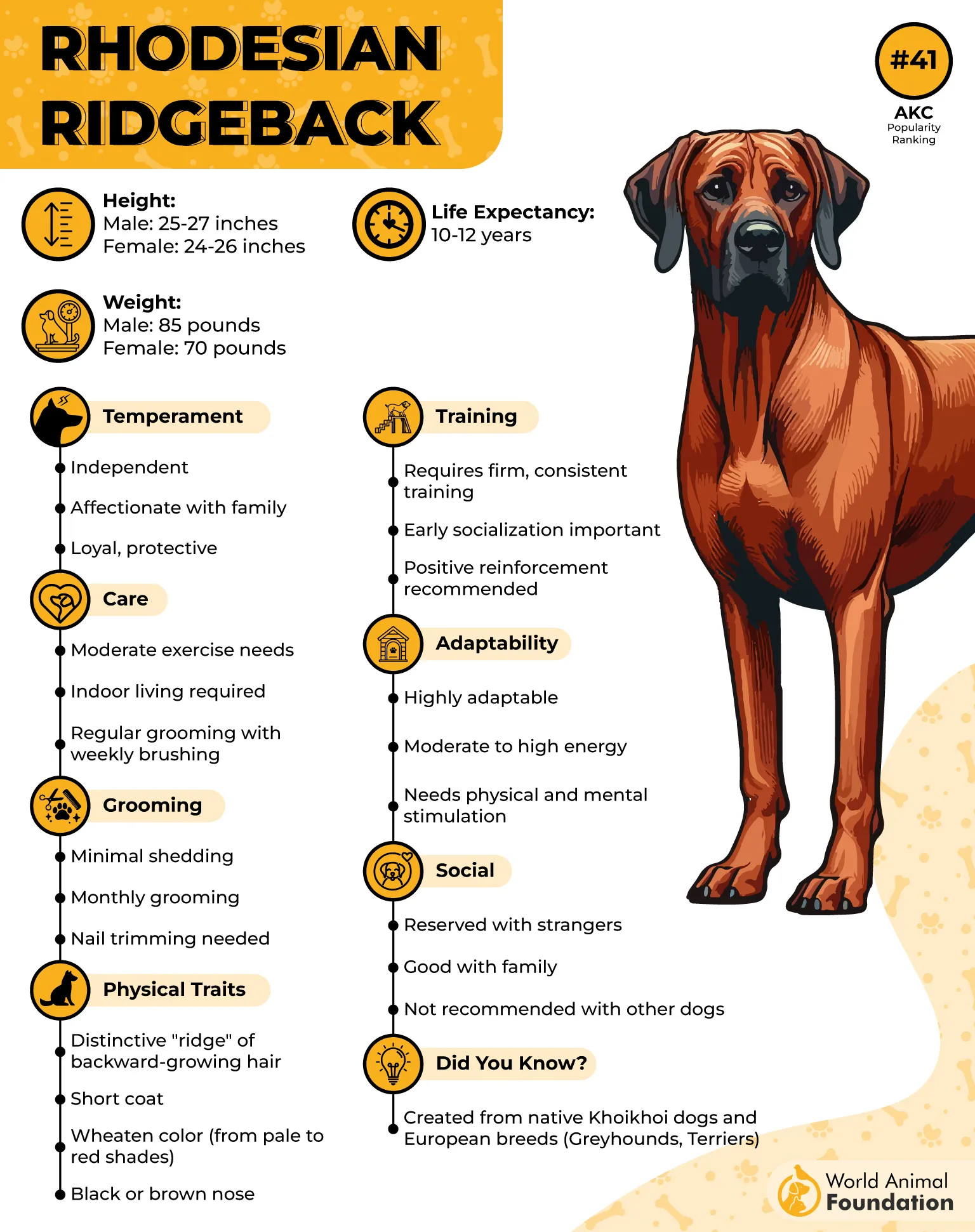
Temperament: Loyal, dignified, intelligent, protective, and reserved with strangers.
Grooming: Low maintenance with weekly brushing and monthly bathing.
Training: Smart and capable, but they need consistent guidance from an experienced owner.
Best For: Active homes that can provide exercise, socialization, and secure outdoor space.
Rhodesian Ridgebacks need daily exercise and mental enrichment to stay calm and well-behaved. Walks, jogging, hiking, swimming, fetch, puzzles, agility, tracking, and lure coursing can keep them busy.
They also have a strong prey drive, so leash control and secure fencing are important. When trained and exercised well, they are quiet, gentle, and reliable family guardians.
5. Newfoundland
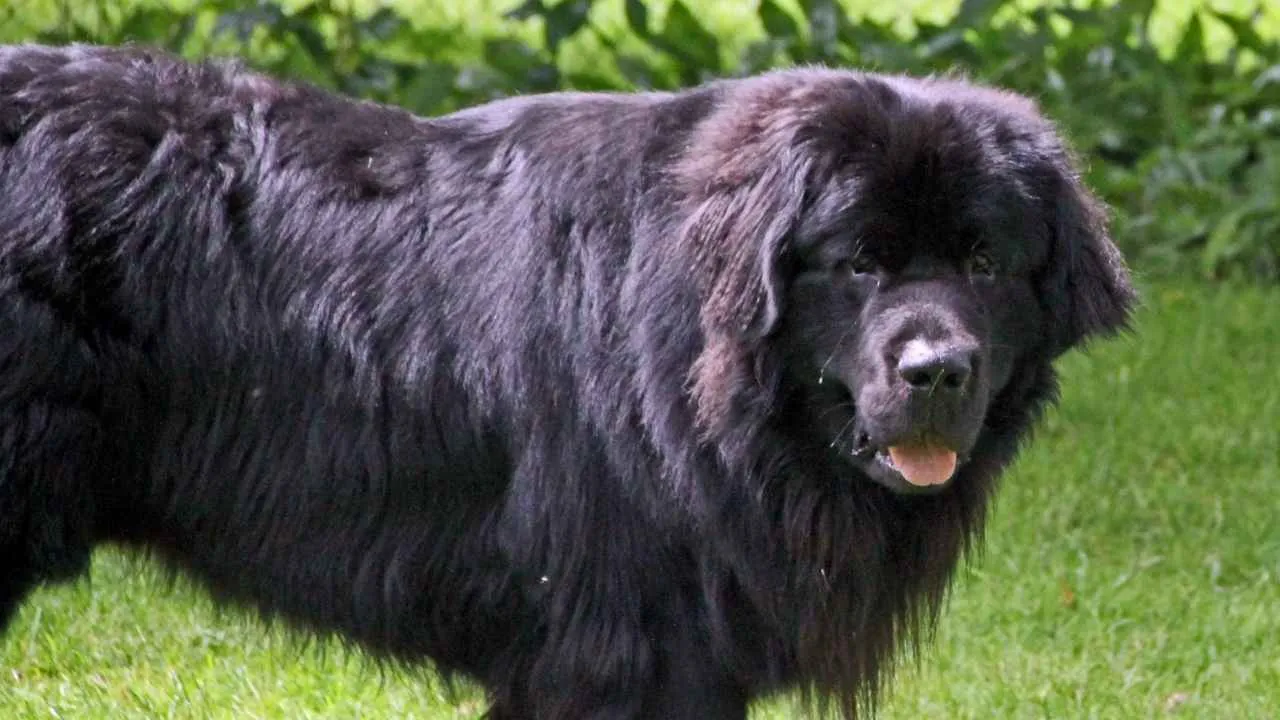
Newfoundlands are gentle, calm, and watchful guard dogs with a sweet family nature. They come from Newfoundland, Canada, where they worked beside fishermen and helped rescue people from cold water.
Their strong bodies, webbed paws, and thick coats made them excellent swimmers. Today, they are loved as patient family companions and steady home protectors.
Newfoundlands fit this topic because they are smart, trainable, and usually very calm indoors. They are affectionate with children, friendly with other pets, and often called “nanny dogs” because of their patient nature.
They need early training because they grow into very strong dogs. Gentle, positive guidance works best for them, while harsh corrections do not.
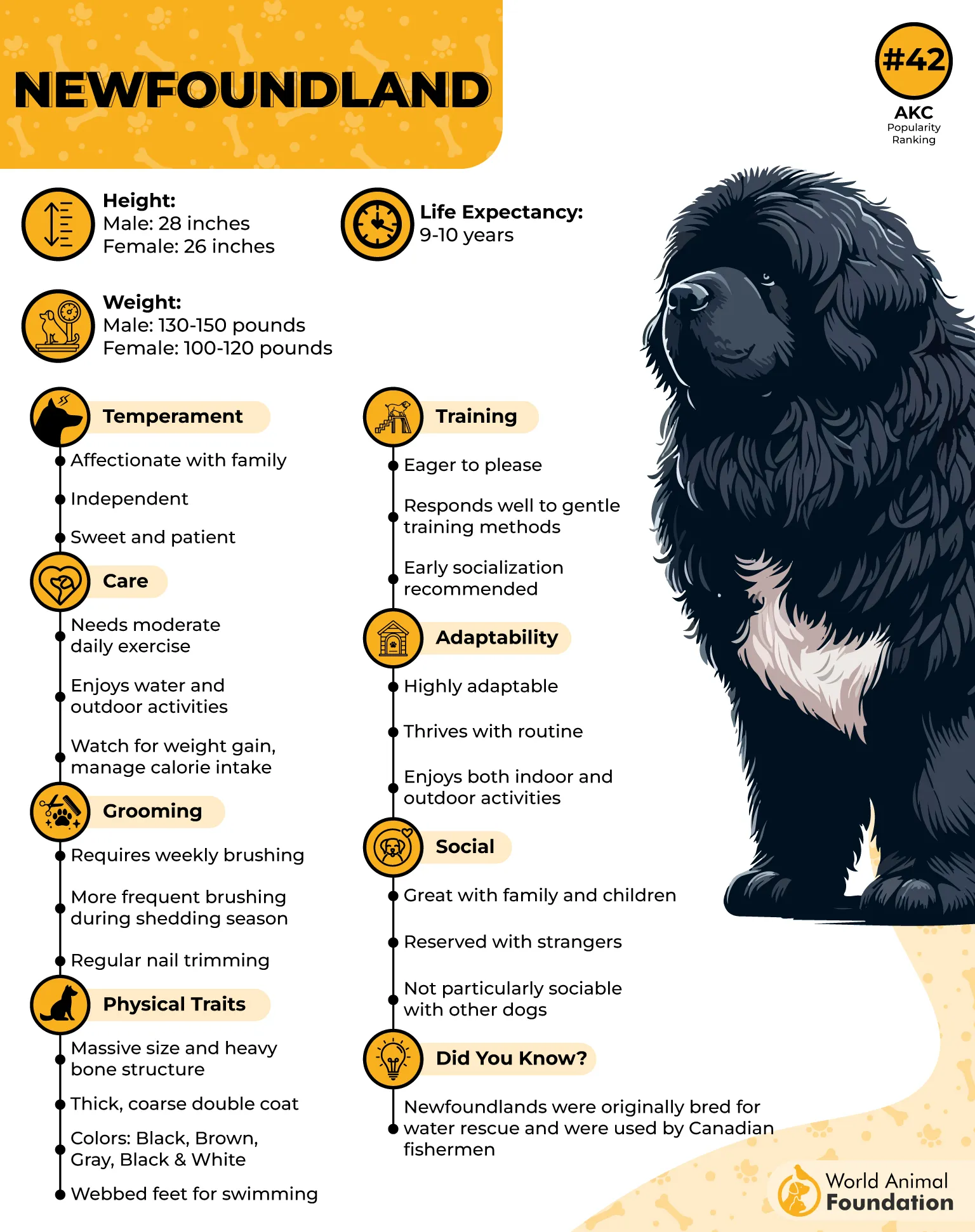
Temperament: Sweet, calm, patient, friendly, and watchful with family.
Grooming: Needs weekly brushing, extra brushing during shedding, and regular drool cleanups.
Training: Smart and eager to please, but early leash training is important.
Best For: Families with space, daily time, and a love for gentle giant dogs.
Newfoundlands do not need extreme exercise, but they still need daily movement. Walks, swimming, hiking, cart pulling, flyball, dock jumping, and obedience work can keep them healthy and happy.
They do best indoors with their family and may struggle if left alone too often. With care and training, Newfoundlands can be calm, loving, and dependable guardians.
6. Saint Bernard
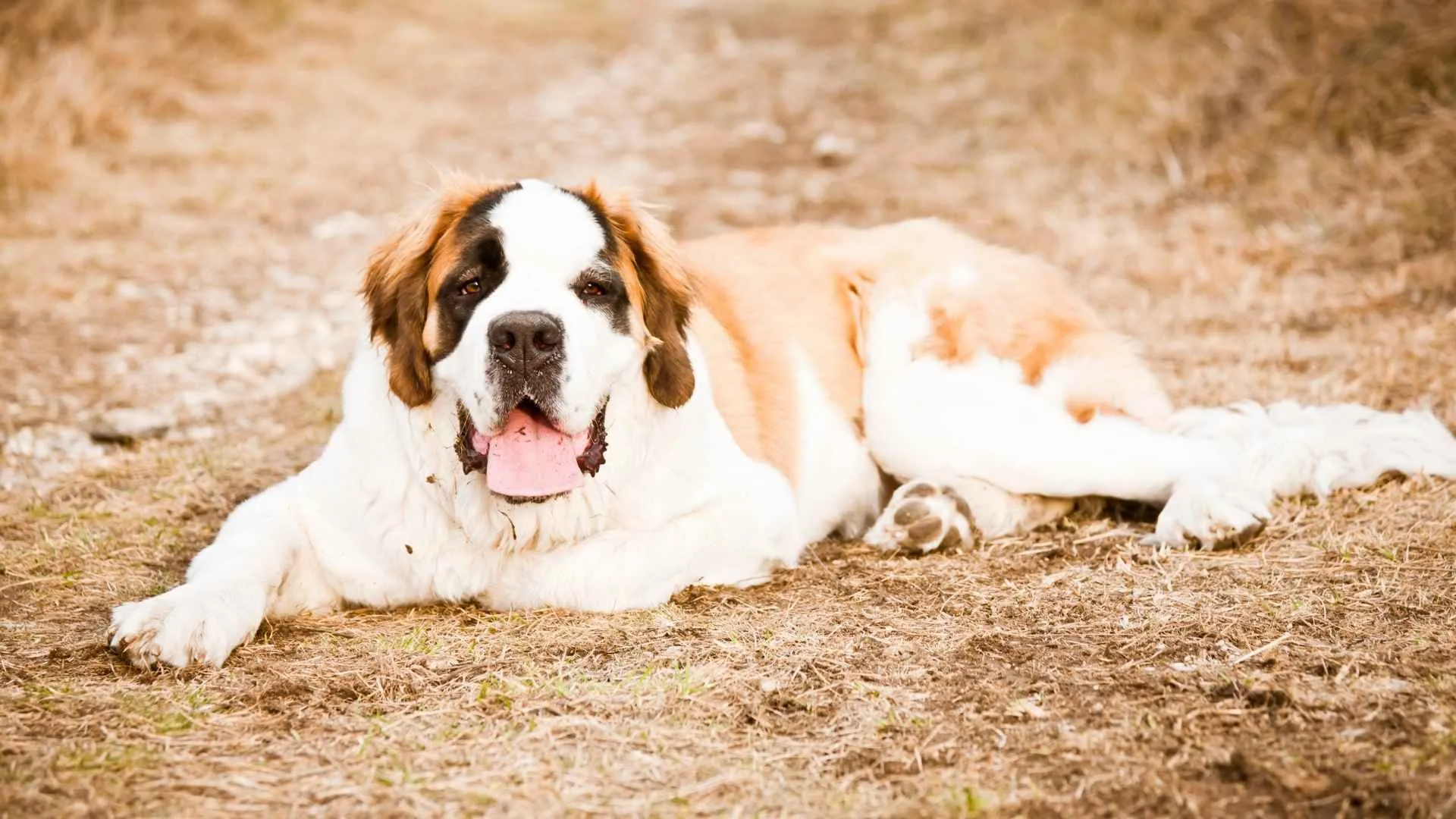
Saint Bernards are calm, gentle, and watchful guard dogs with a famously friendly nature. They come from the Swiss Alps and are loved for their patient, mellow personality.
They usually enjoy people, children, other dogs, and even cats. But when their family seems to be in danger, they can become protective and alert.
Saint Bernards fit this topic because they are easygoing, eager to please, and usually simple to train with early guidance. They are not high-energy dogs, so they do well with moderate daily exercise.
Their grooming needs are regular, especially during shedding season, but their calm nature makes daily life easier. Training should start early because they can accidentally knock people over or take advantage of their size.
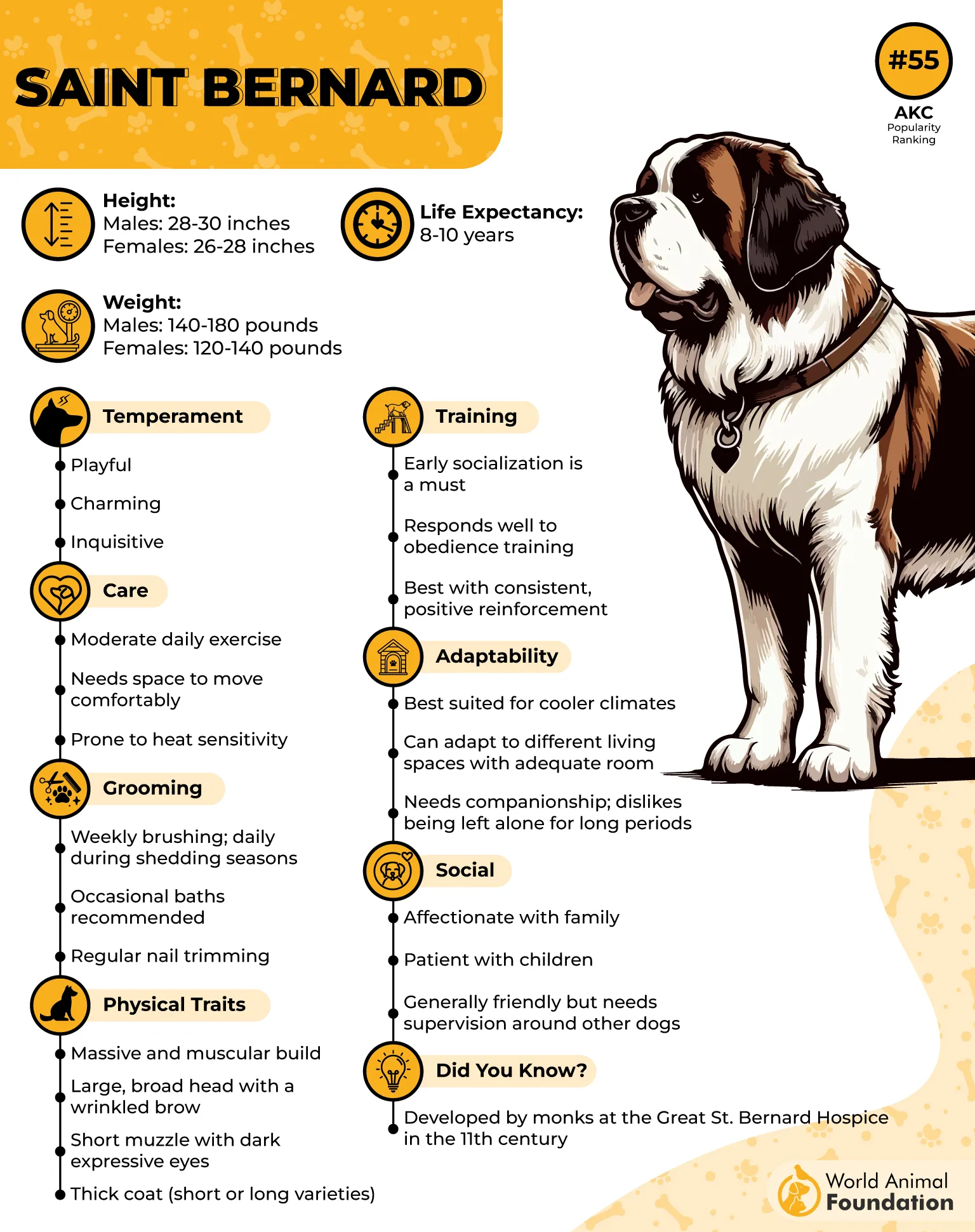
Temperament: Mellow, friendly, patient, loyal, and protective when needed.
Grooming: Weekly brushing, daily brushing during shedding, occasional baths, and drool cleanup.
Training: Eager to please, but they need early obedience and socialization.
Best For: Families with space, a calm routine, and time for training and grooming.
Saint Bernards enjoy being part of family life and do not like being left out for long periods. Walks, relaxed hikes, play sessions, cart pulling, and drafting activities can keep them happy.
They are not built for intense workouts, but they enjoy doing things with their owners. With gentle training and steady care, Saint Bernards can be loving, calm, and dependable family guardians.
7. Dogue de Bordeaux
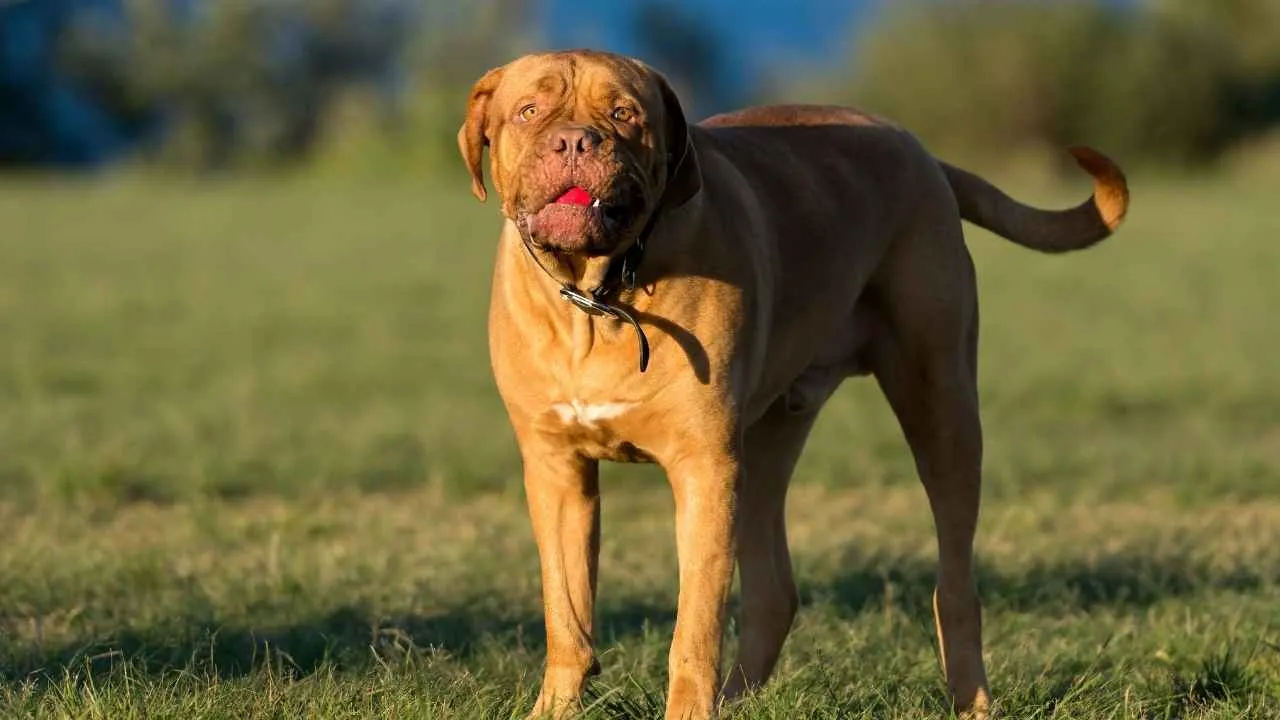
Dogues de Bordeaux are calm, loyal, and powerful guard dogs from France. They are also known as Bordeaux Mastiffs or French Mastiffs. In the past, they worked as estate guardians, livestock protectors, and hunting helpers. Today, they are known as gentle giants with a strong love for their family.
Dogues de Bordeaux fit this topic because they are not overly active and have low grooming needs. Their short, dense coats only need weekly brushing, though they do shed year-round. They are affectionate, patient with children, and naturally protective.
They may bark when they sense something unusual, so early training helps them stay calm and controlled.
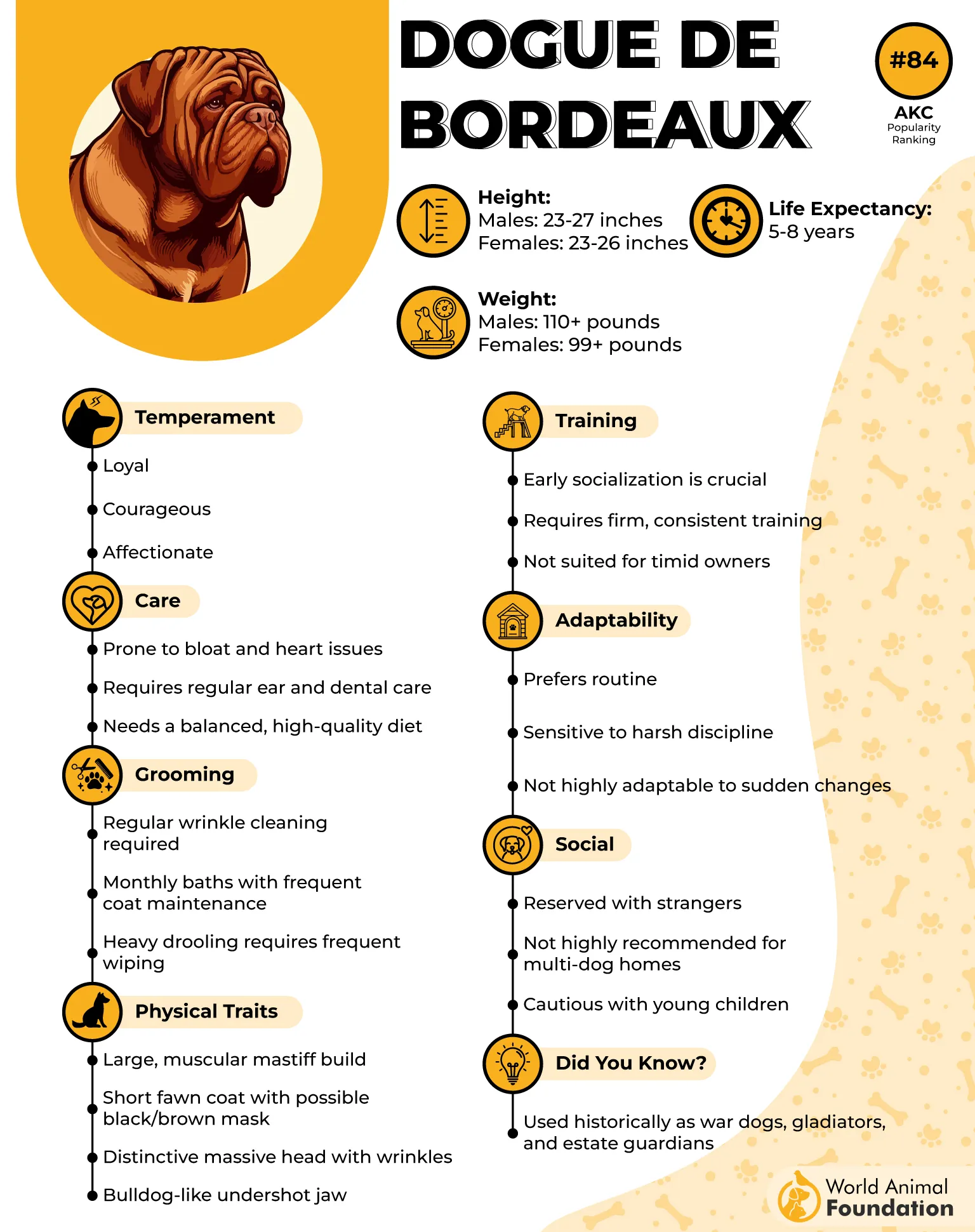
Temperament: Loyal, gentle, protective, calm, and affectionate with family.
Grooming: Low-maintenance coat, but they need wrinkle cleaning, ear checks, baths, and drool cleanup.
Training: Smart but sometimes willful, so they need firm, patient, and positive guidance.
Best For: Owners who can provide early socialization, leash training, and steady routines.
Dogues de Bordeaux need daily walks, playtime, and mental games like fetch or scent work. Young Dogues should avoid hard exercise, stairs, and jumping while their bones are still developing. Swimming is a great low-impact activity for them.
With trust, structure, and gentle training, Dogues de Bordeaux can become calm, loving, and dependable home guardians.
8. Kuvasz
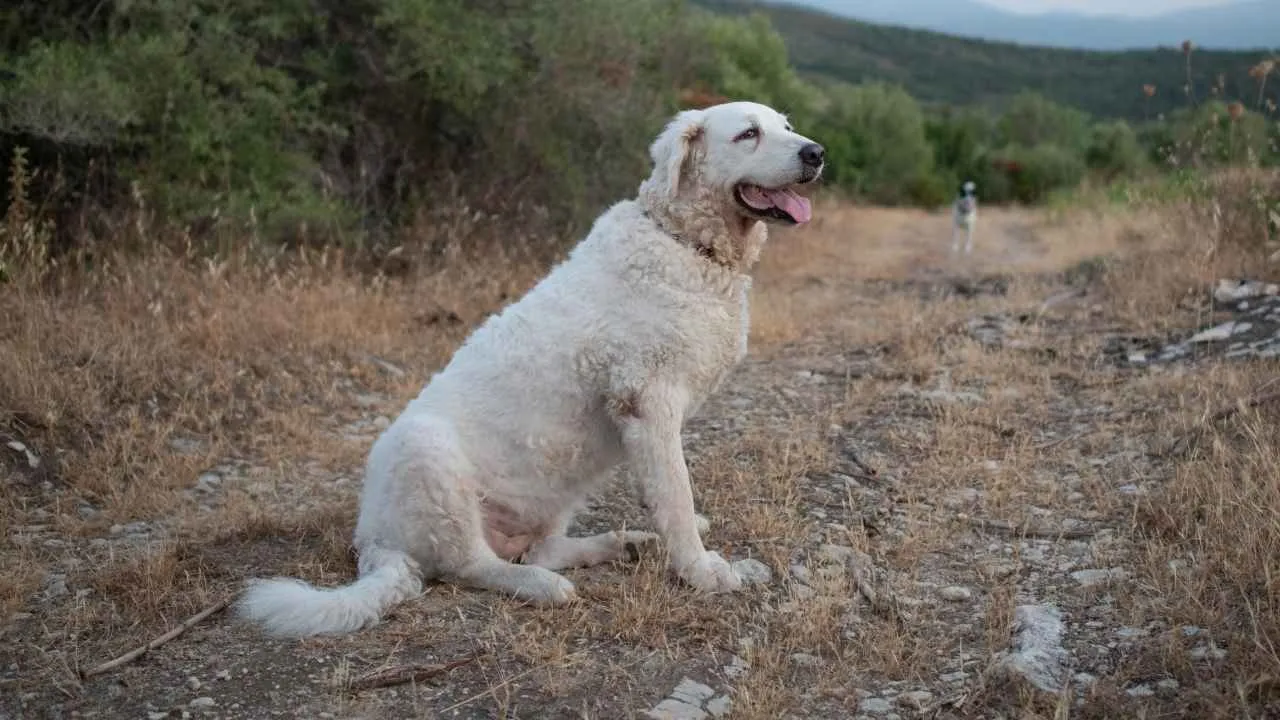
Kuvaszok are majestic, loyal, and watchful guard dogs with ancient roots. Their modern history traces back to the Ural Mountains in Siberia, before they became closely linked with Hungary.
Herders used them to guard livestock, while the Magyar people also valued them as hunting partners and personal protectors. Today, Kuvaszok still carry that strong guardian instinct.
Kuvaszok fit this topic because they are calm, nurturing, and low-maintenance in some ways. They are gentle with children and other animals when raised with proper training and socialization.
Their thick white coats can shed heavily at times, but mud and dirt often brush off easily. They may only need weekly grooming outside shedding season.
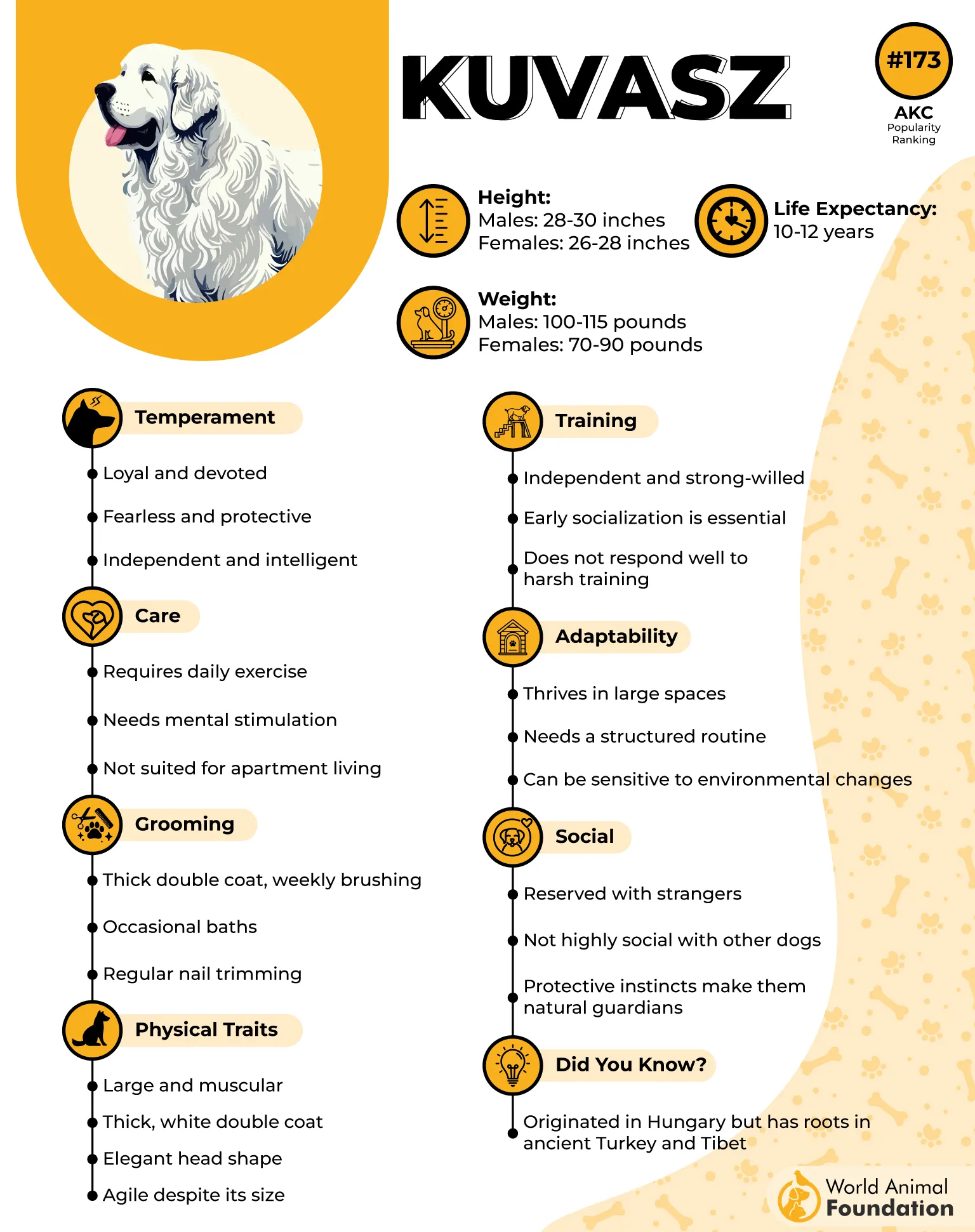
Temperament: Loyal, protective, intelligent, independent, and gentle with family.
Grooming: Weekly brushing is usually enough, but daily brushing may be needed during shedding.
Training: Smart and capable, but they need firm, patient, and consistent guidance.
Best For: Experienced owners with space, secure fencing, and time for socialization.
Kuvaszok need regular exercise, mental stimulation, and close family contact. Without enough activity or attention, they may bark, dig, roam, or become destructive.
They are not the best match for first-time owners because they can be strong-willed and suspicious of strangers. With structure, patience, and early training, Kuvaszok can become calm, devoted, and reliable home guardians.
9. Mastiff
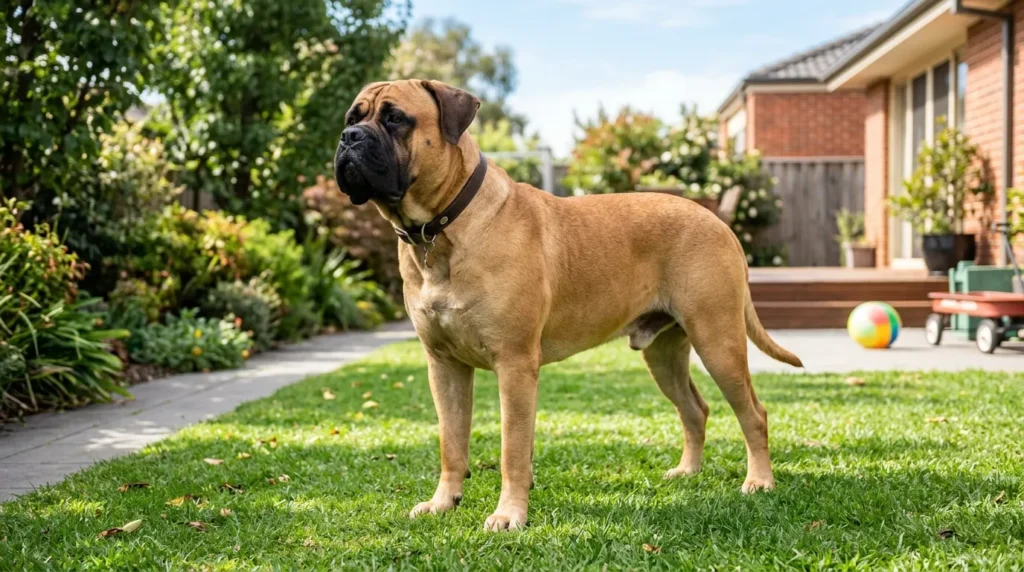
Mastiffs are ancient, powerful, and dignified guard dogs with a calm family nature. They were bred to protect homes, people, and property, so their guarding instinct is deeply rooted.
Despite their massive look, Mastiffs are usually patient, loving, and gentle with their family. They are naturally wary of strangers, but they do not bark often without reason.
Mastiffs fit this topic because they are calm indoors, easy to groom, and quick to learn with the right training style.
Their short, dense coats need only simple brushing, though extra brushing helps during heavy shedding. They respond best to praise, rewards, and gentle guidance. Harsh training can hurt their feelings, and repeated drills may bore them quickly.
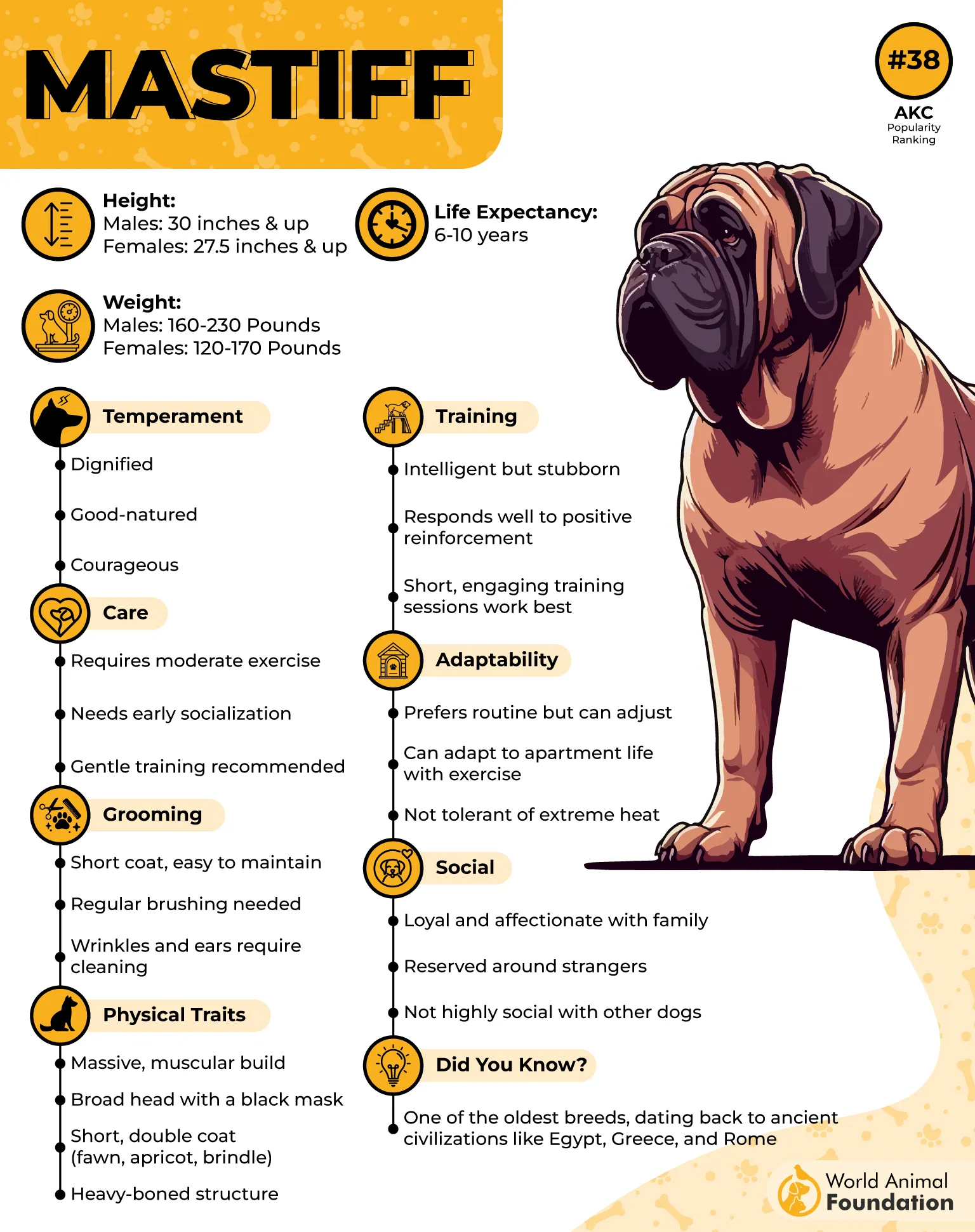
Temperament: Loyal, calm, dignified, protective, and affectionate with family.
Grooming: Low-maintenance coat, but they need wrinkle cleaning, ear checks, and drool cleanup.
Training: Smart and eager to please, but training should be short, fun, and positive.
Best For: Owners who want a calm guardian and can commit to early socialization.
Mastiffs need daily walks and free play, but they are not high-energy dogs. They can even live happily in an apartment if their needs are met. Puppies and young Mastiffs should not be overexercised, especially with stairs, jumping, or long walks.
With love, structure, and socialization, Mastiffs can become steady, gentle, and dependable home protectors.
10. Broholmer
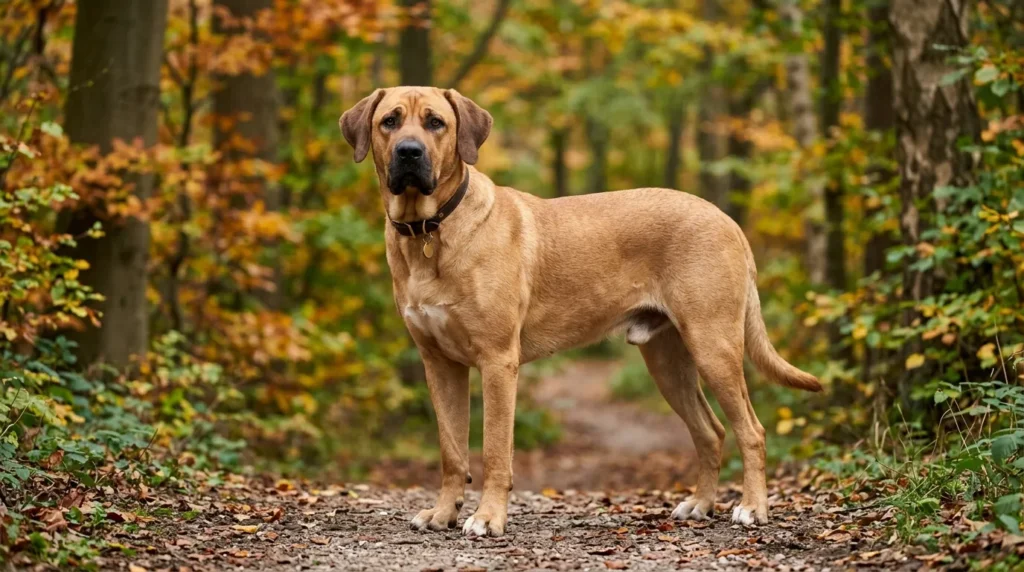
Broholmers are calm, loyal, and confident guard dogs from Denmark. They were once used for boar hunting, and later worked as guard dogs on castles, large manors, farms, and markets.
They were even known as “butcher’s dogs” because they were often seen resting near butcher shops. Today, Broholmers are loving family companions with a strong protective instinct.
Broholmers fit this topic because they are good-natured, watchful, and fairly easy to guide with the right training. They are usually kind and patient with family, including children, but they need supervision because of their large size.
Early socialization is important so they grow into calm, polite, and confident dogs. They respond best to kindness, trust, praise, and short, varied training sessions.
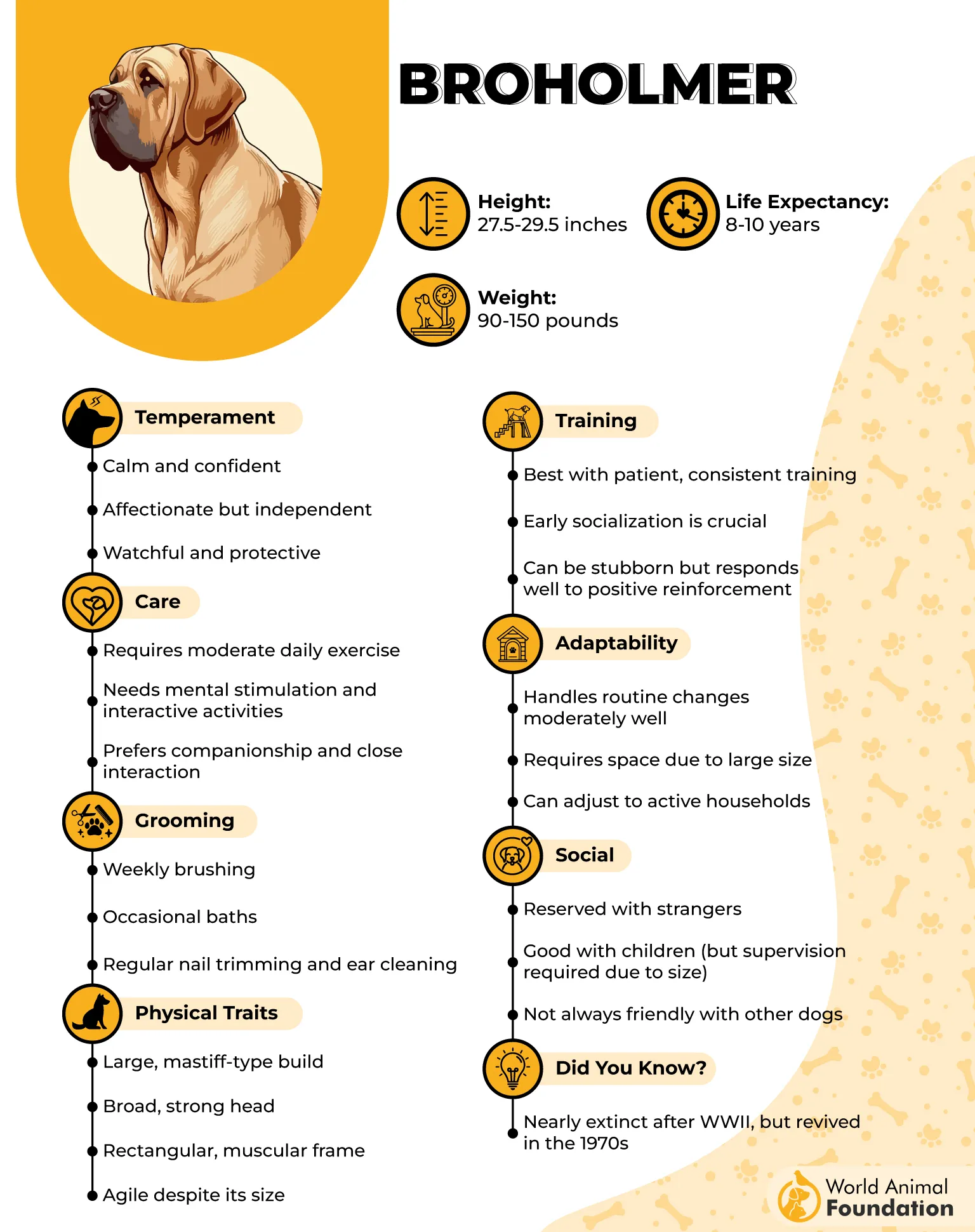
Temperament: Calm, loyal, confident, watchful, and affectionate with family.
Grooming: Low maintenance with weekly grooming, occasional baths, nail trims, ear checks, and tooth brushing.
Training: Cooperative and intelligent, but they need firm, gentle, and consistent leadership.
Best For: Families with space, a secure yard, and older children who understand large dogs.
Broholmers enjoy being close to their family and usually do not like being left out. They need daily exercise, but they are not overly intense dogs. Walks, backyard play, hiking, swimming, fetch, agility, obedience, and rally can help keep them healthy and well-behaved.
With socialization, structure, and regular activity, Broholmers can be calm, low-maintenance, and dependable home guardians.
Conclusion
Choosing the right guard dog is about more than finding a breed with strong protective instincts. The best guard dogs are loyal companions first—dogs that can stay calm at home, bond closely with their family, and step up when protection is needed.
Before bringing any guard dog home, take time to consider your lifestyle, experience level, available space, and commitment to training. Even the most naturally protective breed needs proper socialization, guidance, and care to thrive.
When matched with the right owner, these calm and low-maintenance guardians can become trusted family members who provide both peace of mind and unconditional loyalty for years to come.
