




Having a dog that can keep an eye on your home while still fitting into a busy routine sounds ideal, especially when your days are already packed with work, errands, and other responsibilities.
Protective dogs can offer companionship and a sense of security, but that does not mean you need a breed that demands hours of exercise or constant grooming every day.
The key is finding the right balance. A low-maintenance guard dog should have a natural protective instinct, manageable exercise needs, and a coat that is easy to care for. At the same time, it should be able to stay calm and observant rather than reacting to every sound or movement.
These qualities can make life easier for busy singles who want a protective companion without taking on an overwhelming daily routine.
In this article, we’ll look at some of the best guard dog breeds that can offer a balance of protection, companionship, and easier day-to-day care, so you can see what may fit your lifestyle.
Low‑Maintenance Guard Dog Breeds Perfect for Busy Singles
1. Great Pyrenees
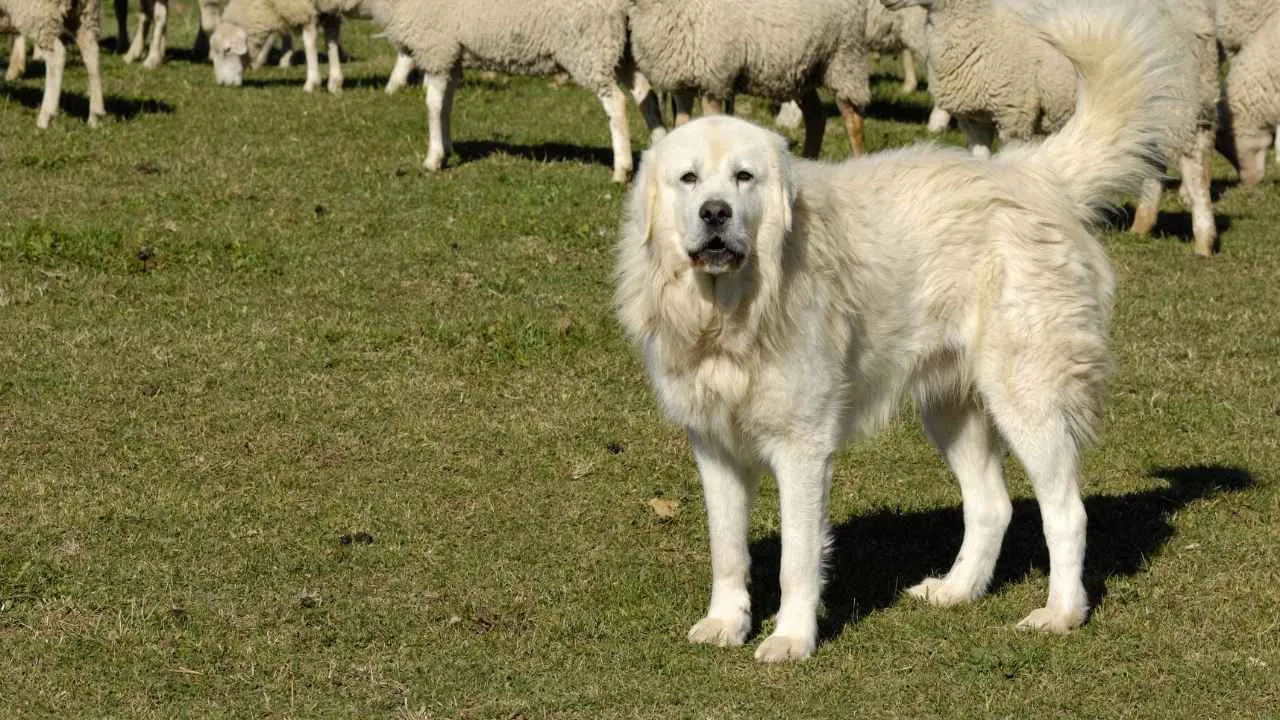
The Great Pyrenees, also known as the Pyrenean Mountain Dog, was bred to guard livestock in the Pyrenees Mountains between Spain and France.
According to PetMD, their thick white coat helped them blend into snowy landscapes while protecting sheep from predators such as bears and wolves. They were also used as messenger and pack dogs by the French army during World War II.
Temperament and Guarding
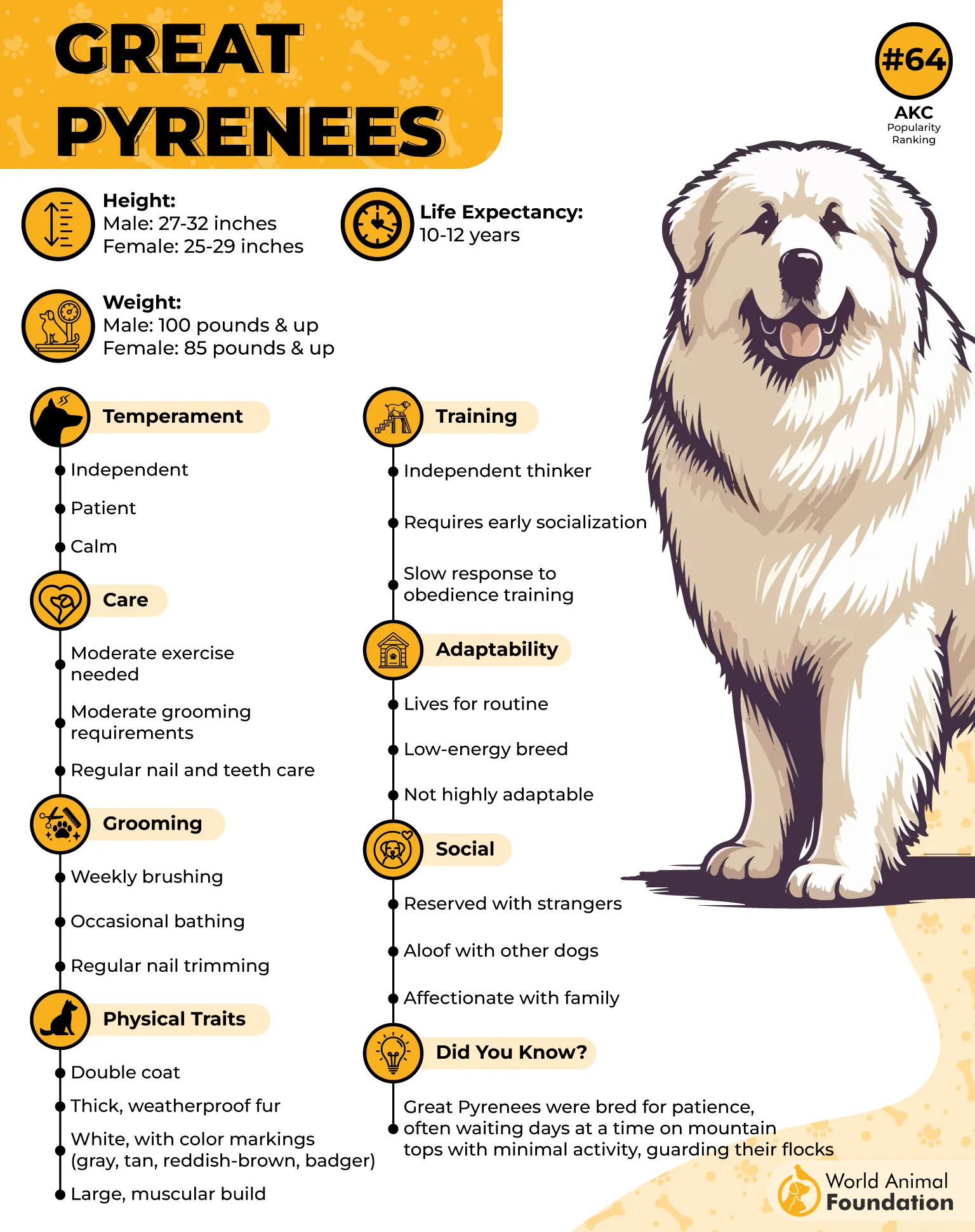
Great Pyrenees are strong and alert guardians, but they are usually calm and gentle at home. They are independent by nature and were bred to watch over flocks for long periods without constant direction.
They may bark to alert their owners when they notice strangers, other dogs, or even the mail carrier. Their size and territorial nature make early socialization and training important.
Care and Exercise
Despite their large size and thick coats, Great Pyrenees are not overly active. Daily walks or play in a securely fenced yard can help keep them fit and mentally stimulated.
Their outer coat is resistant to dirt and tangles, so weekly brushing is usually enough to help manage shedding. Their independent nature can make obedience training challenging, as they may become bored with repeated commands.
2. Great Dane
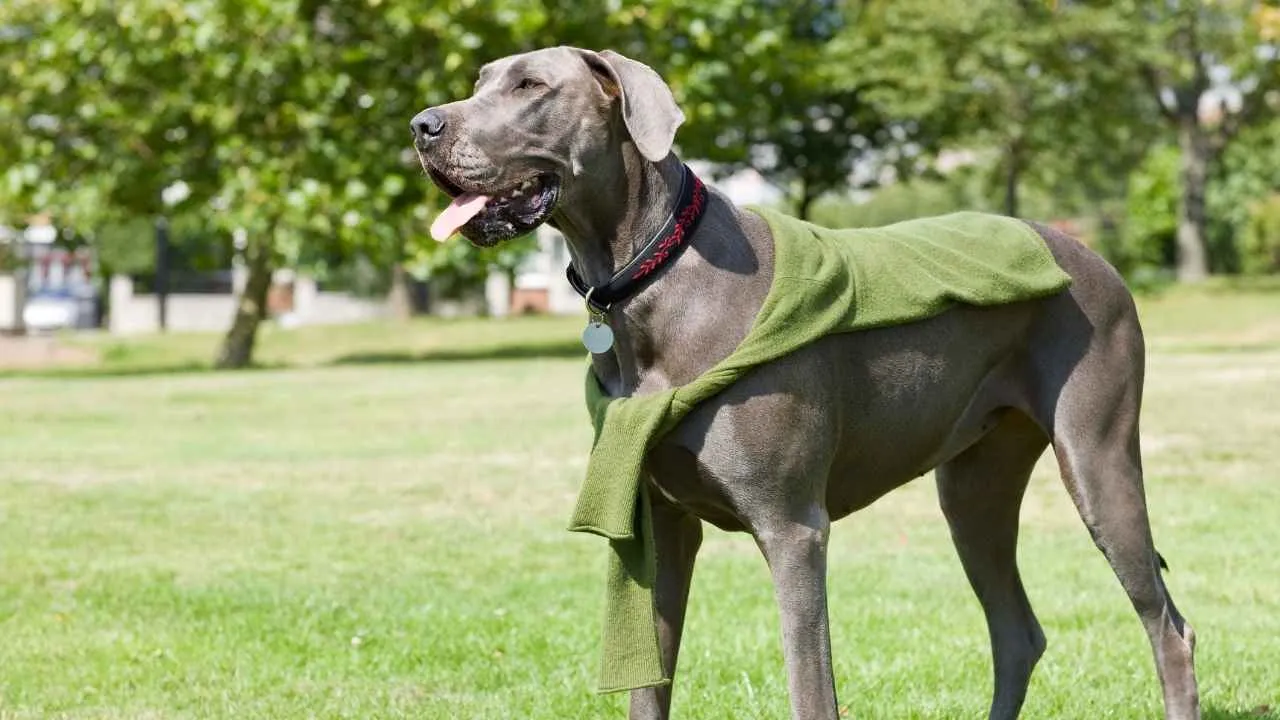
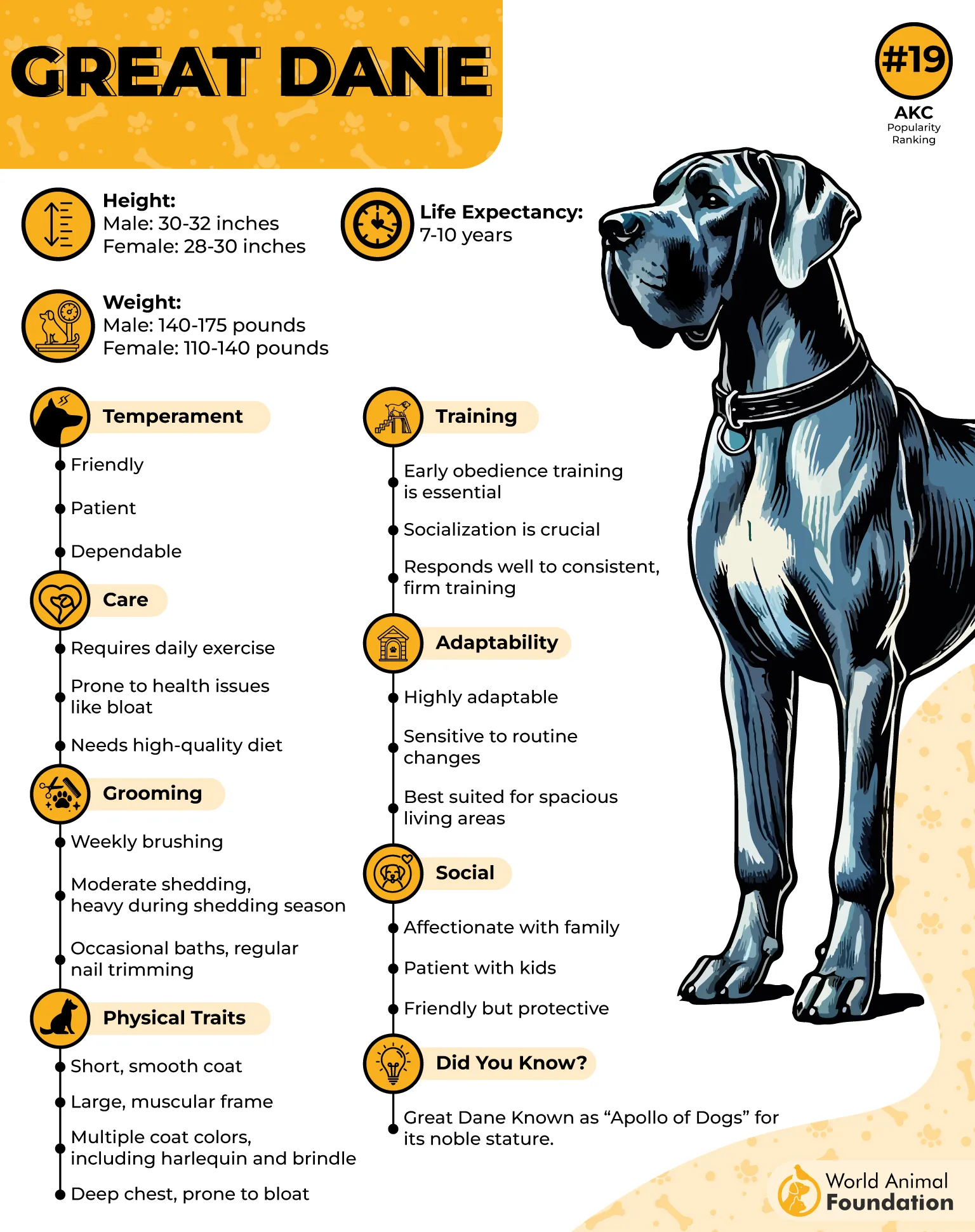
Great Danes are gentle giants with roots in Germany. They were originally bred in the 1800s to hunt wild boar and guard estates. Despite their name, the breed has no roots in Denmark. Often called the “Apollo of Dogs,” Great Danes are known for their regal appearance and their kind, loyal nature.
Temperament and Guarding
Great Danes may look intimidating because of their size, but they are usually sociable, friendly, and loving. They form close bonds with their people and enjoy family life.
They can also be gentle around children, smaller dogs, and cats when properly trained and supervised. Their calm and companionable nature makes them suitable for households that want a protective presence without a highly intense temperament.
Care and Exercise
Great Danes have short coats that are easy to maintain. A weekly brushing can help keep their coat in good condition.
Their size means they need enough space to move around comfortably, but they are not known for needing constant grooming. Like many giant breeds, they also have a shorter lifespan, usually around seven to 10 years.
3. Newfoundland
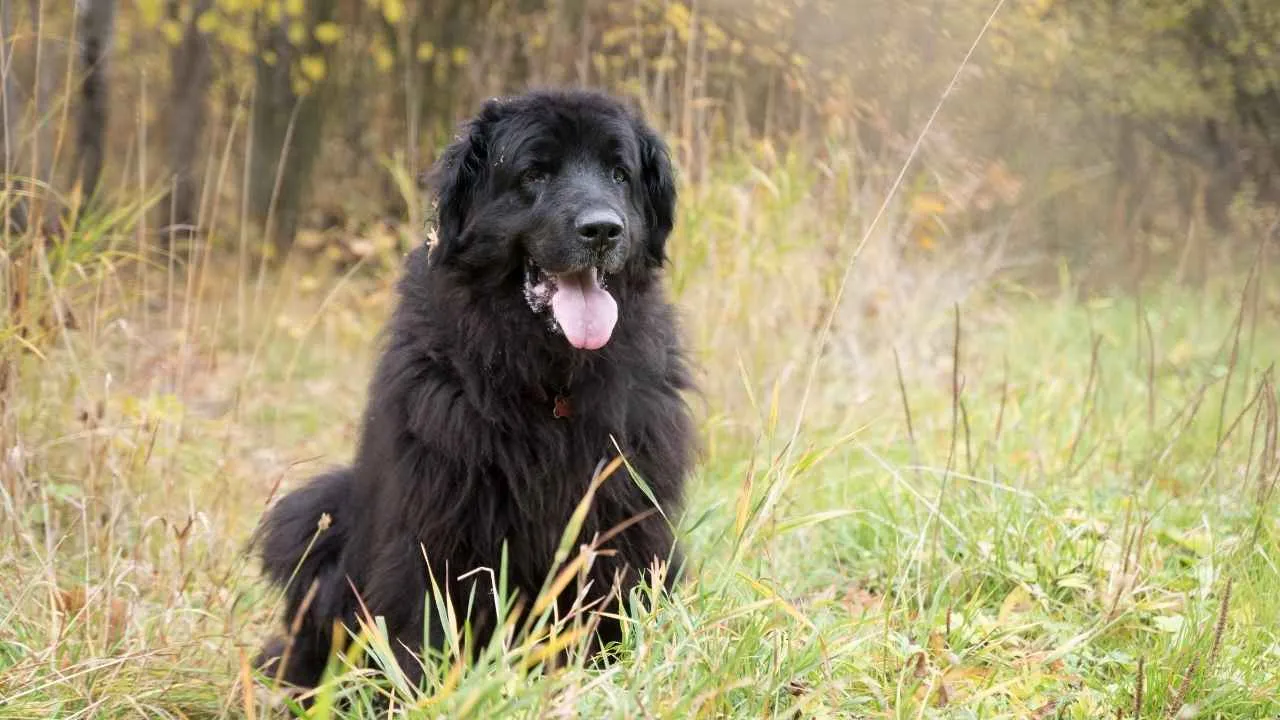
Newfoundlands, or Newfies, are calm and affectionate dogs from Newfoundland, Canada. They originally worked with fishermen, helping haul nets, pull carts, and rescue people from the water.
Their webbed paws and thick double coats make them excellent swimmers, even in cold water. Today, they are known as gentle, loyal companions that can also become protective when their family feels threatened.
Temperament and Guarding
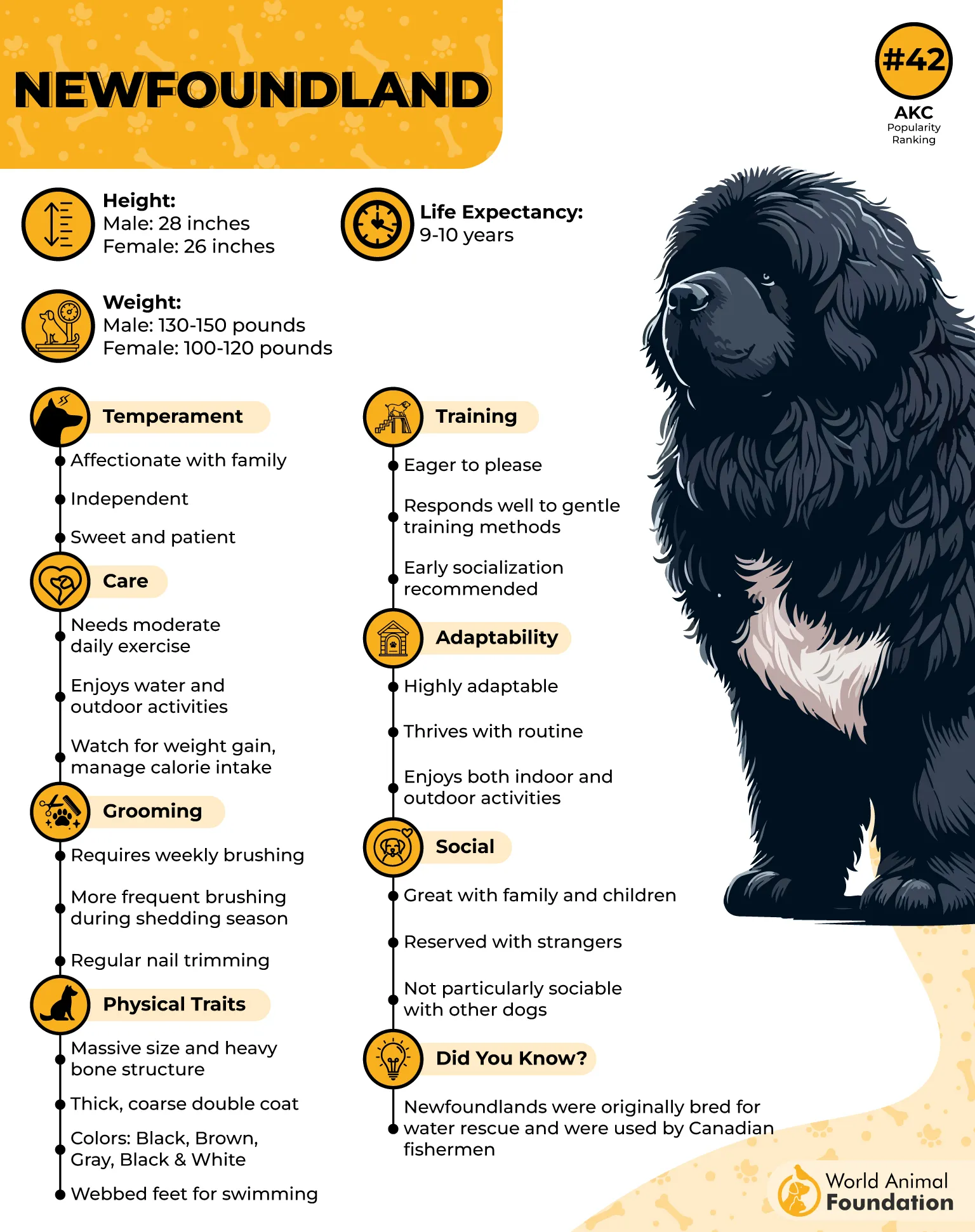
Newfoundlands are friendly with people, other dogs, and household pets. Britannica mentions that they are especially patient with children and are sometimes called “nanny dogs.” Despite their gentle nature, they are watchful and trustworthy.
They may place themselves between their family and a stranger if they sense a threat. They are not usually heavy barkers, but they can still act when protection is needed. Their size also means young children may need supervision around them.
Care and Exercise
Newfoundlands can adjust well to home life, but they need plenty of space for exercise and ideally safe access to water. Swimming is a favorite activity for many of them.
Their thick double coat sheds throughout the year, so regular brushing is important. They can also drool quite a bit. Early training is useful because they become very strong as they grow.
4. Rhodesian Ridgeback
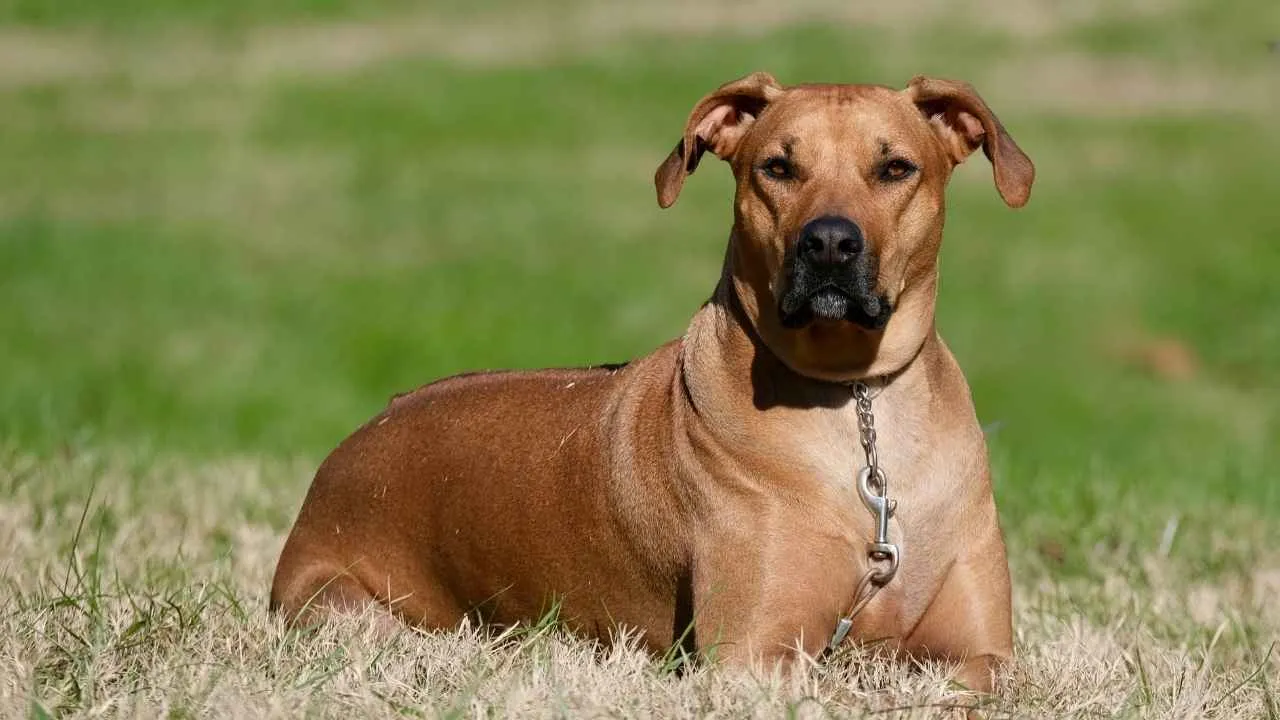
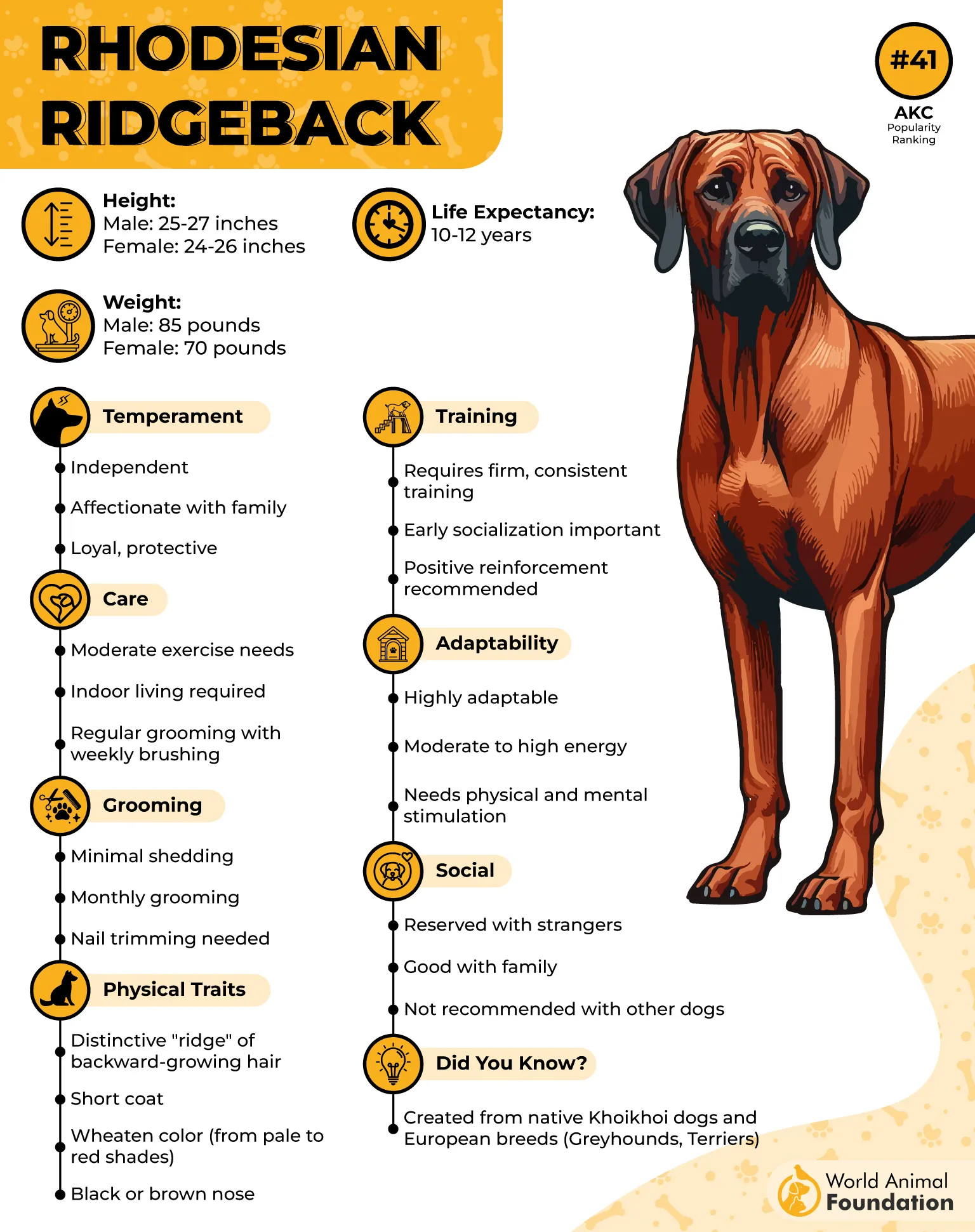
Rhodesian Ridgebacks are powerful, athletic dogs with a strong hunting heritage. Their history dates back to the 16th and 17th centuries, when European settlers bred their dogs with native hunting dogs.
The breed was later developed in Rhodesia, now Zimbabwe, for tracking and hunting lions. Their most recognizable feature is the ridge of hair along their back that grows in the opposite direction of the rest of the coat.
Temperament and Guarding
Rhodesian Ridgebacks are loyal, courageous, and naturally protective of their families. They are often reserved with strangers and can be wary of unfamiliar dogs. They are excellent watchdogs and usually do not bark without reason.
Early socialization and consistent training are important because they can be independent and stubborn. They can be affectionate with their families and may get along well with children and other pets when raised and socialized properly.
Care and Exercise
Their short, sleek coat sheds lightly and needs minimal grooming. However, these athletic dogs need regular exercise, with at least 45 minutes of activity each day, along with mental stimulation.
Younger Ridgebacks can have plenty of energy and may become destructive when bored. Running, jogging, play, tracking, and obedience activities can help keep them engaged.
5. Cane Corso
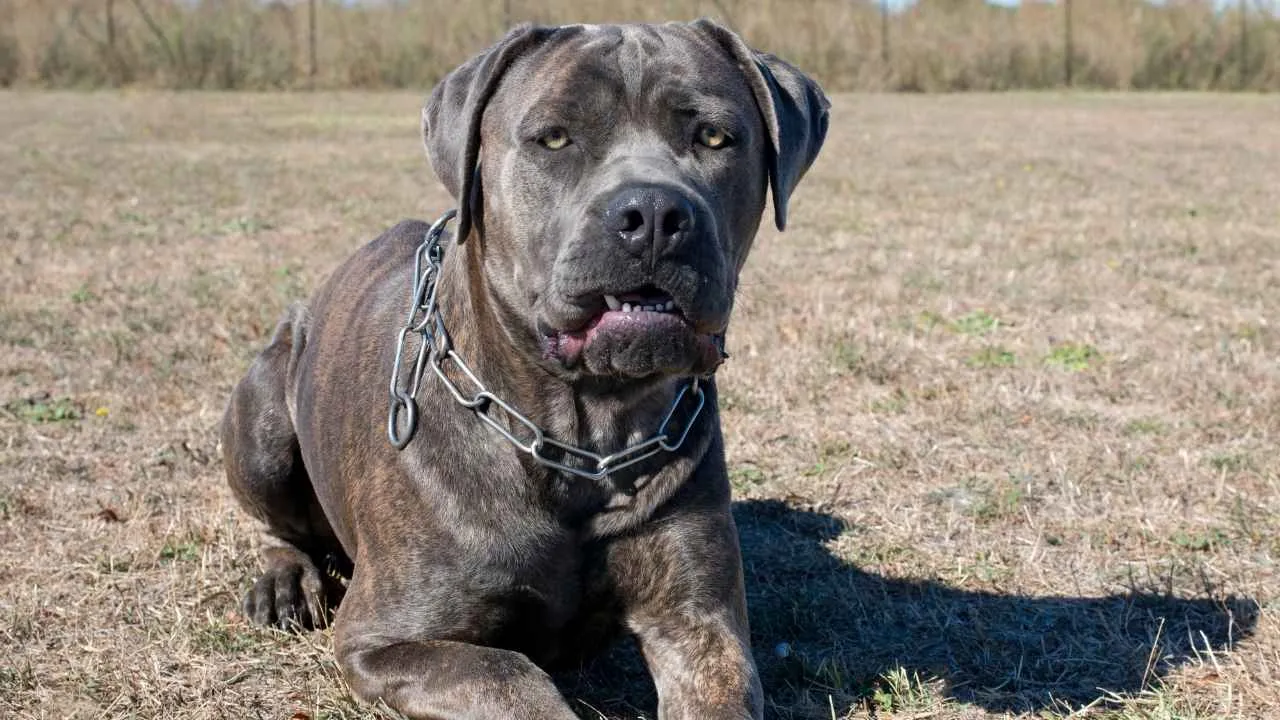
Cane Corsos, also known as Italian Mastiffs, are large working dogs with a long history as guardians. Their ancestry traces back to ancient Greece and Rome, and they later worked as watchdogs, farm dogs, and even canine soldiers.
Their name can be translated from Latin as “guard dog of the courtyard.” Today, they are known for being intelligent, affectionate, and deeply loyal to their families.
Temperament and Guarding
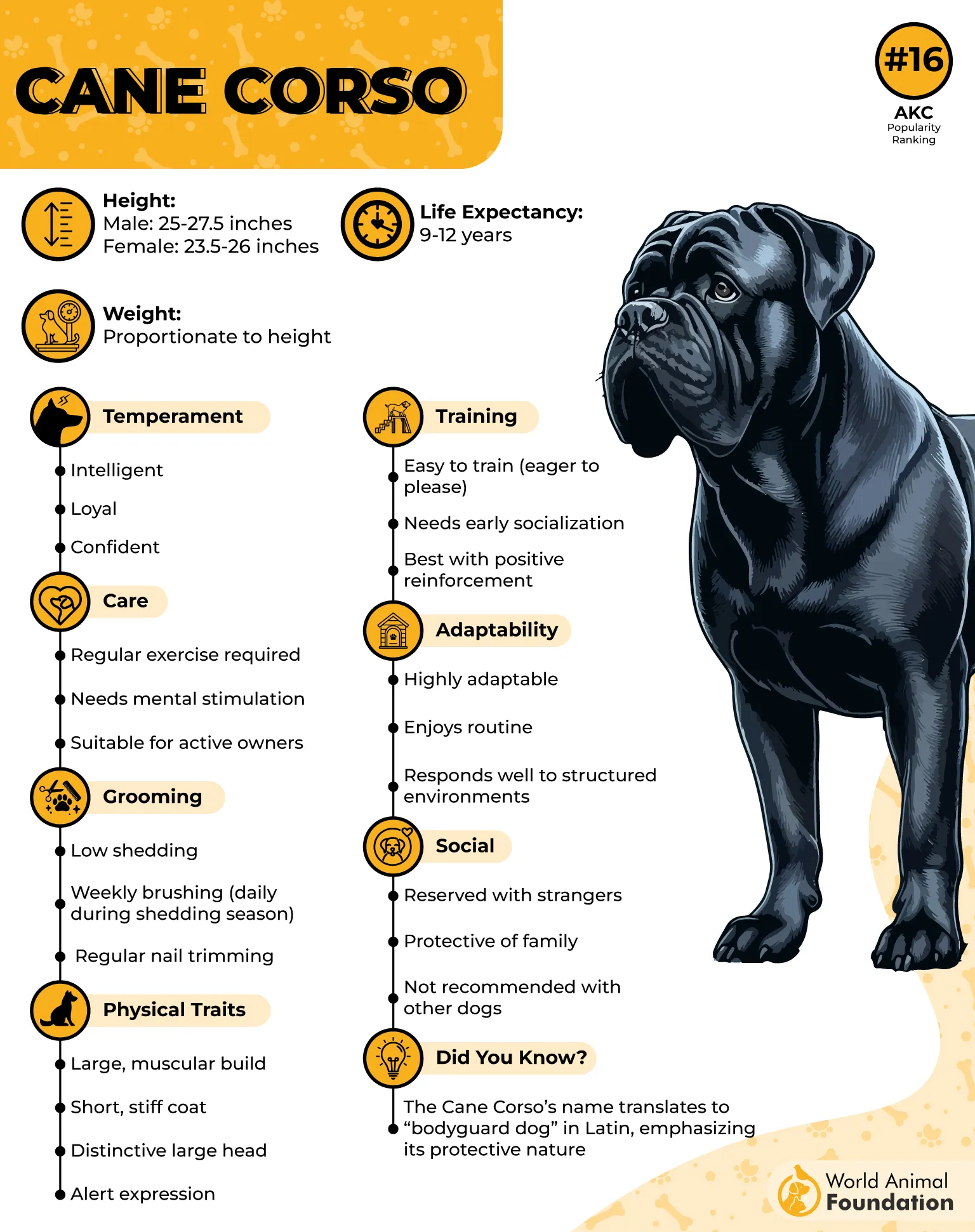
Cane Corsos are protective, serious, and devoted to their pet parents. They can be cautious around unfamiliar people, so early socialization is important. They respond well to love, rewards, and positive-reinforcement training, but their willful nature means they need consistent guidance.
When properly socialized, they can form close bonds with children and family members. They also enjoy activities such as obedience, tracking, agility, and protection sports.
Care and Exercise
Their smooth, short coat keeps grooming simple, although moderate shedding can occur throughout the year. Cane Corsos need plenty of daily exercise because they were bred to work.
Two walks a day are a good starting point, while running and other activities can provide additional exercise. They tend to do best in homes with plenty of space, such as a large yard or land.
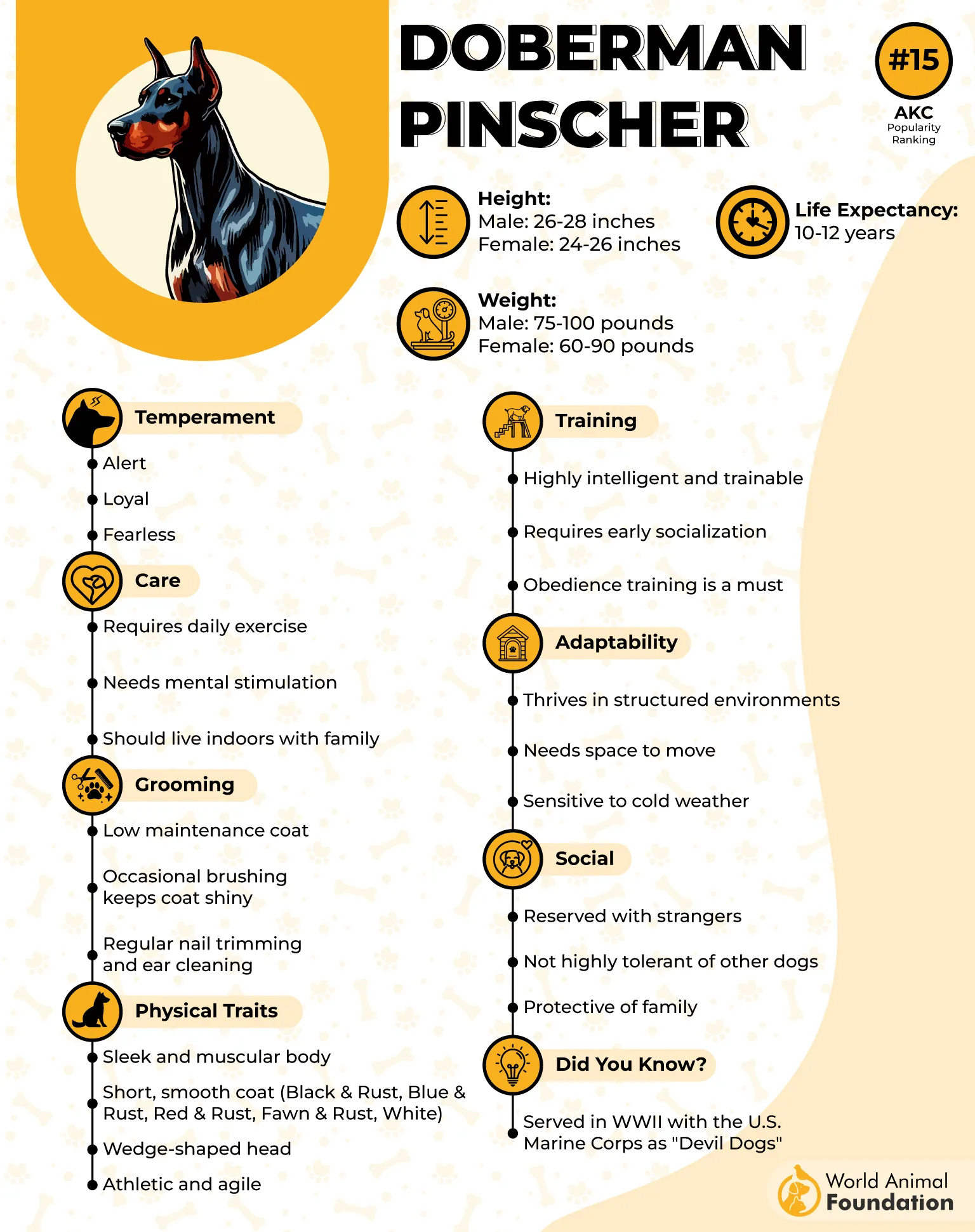
6. Doberman Pinscher
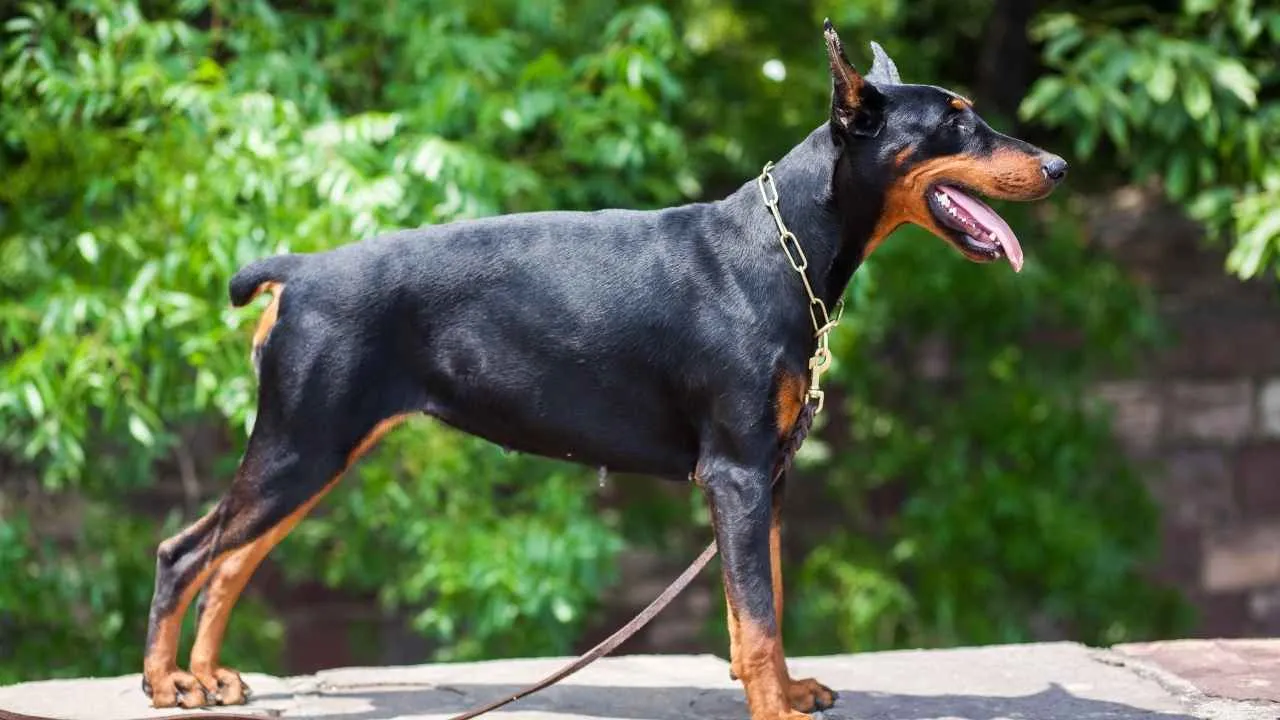
Doberman Pinschers were first bred in Germany in the late 1800s by Louis Dobermann, a tax collector. The breed likely developed from several dogs, including Old German Shepherds, German Pinschers, Black and Tan Manchester Terriers, and Greyhounds.
Today, Dobermans are known for their intelligence, loyalty, and alert nature. They are used as family dogs as well as in security, police work, and search and rescue.
Temperament and Guarding
Dobermans are highly protective of their families and territory. They are usually alert but fairly quiet, often sounding an alarm when they notice something unusual.
They can be wary of unfamiliar people and domineering toward strange dogs. With early and consistent socialization, they can become affectionate and playful family companions.
Care and Exercise
Dobermans have an energetic nature and need regular physical and mental stimulation. Long walks, runs, hikes, and play in a fenced yard can help keep them occupied. Without enough activity, they may become bored and develop unwanted behaviors.
They are intelligent and learn quickly, but training sessions should stay interesting to prevent boredom. Their short coat also makes everyday grooming relatively simple.
7. Boxer
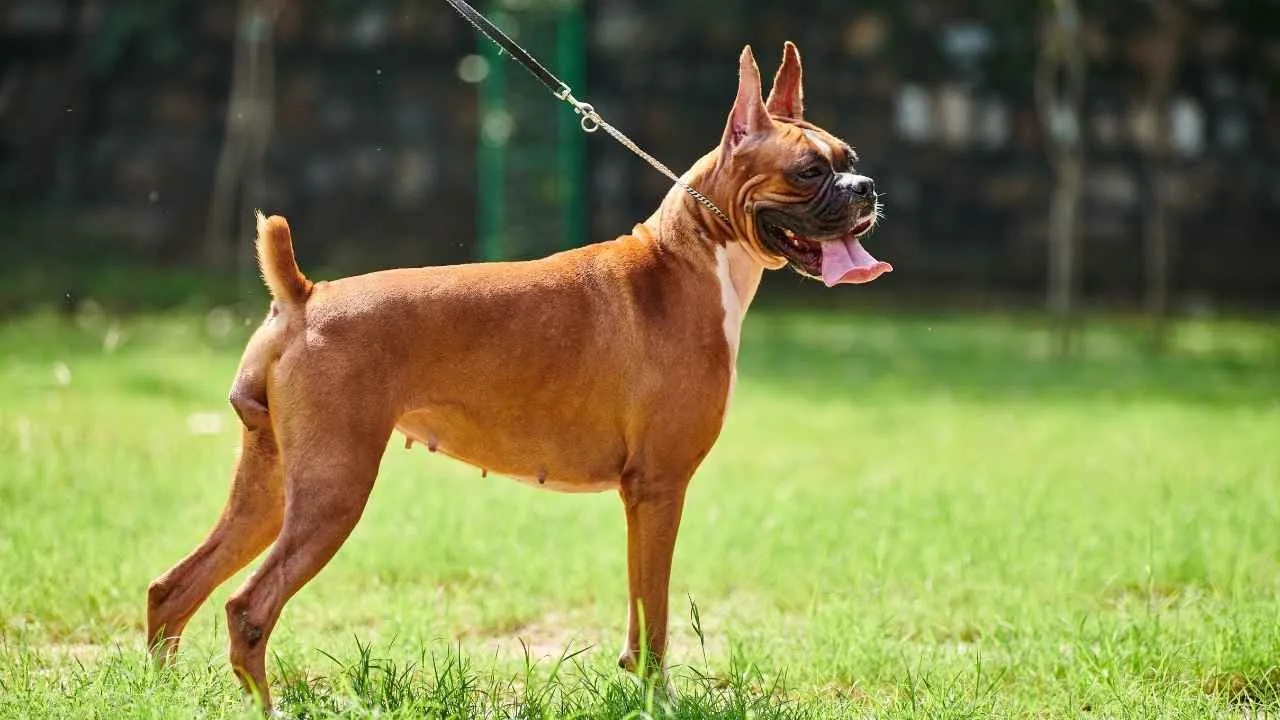
Boxers are playful, loving dogs with roots in Germany, where they were originally used for hunting. They later became popular in the United States after being imported in the 1930s.
Their name comes from the way they use their front paws when playing, almost like a fighter. Today, they are known for their lively personalities, loyalty, and strong bonds with their families.
Temperament and Guarding
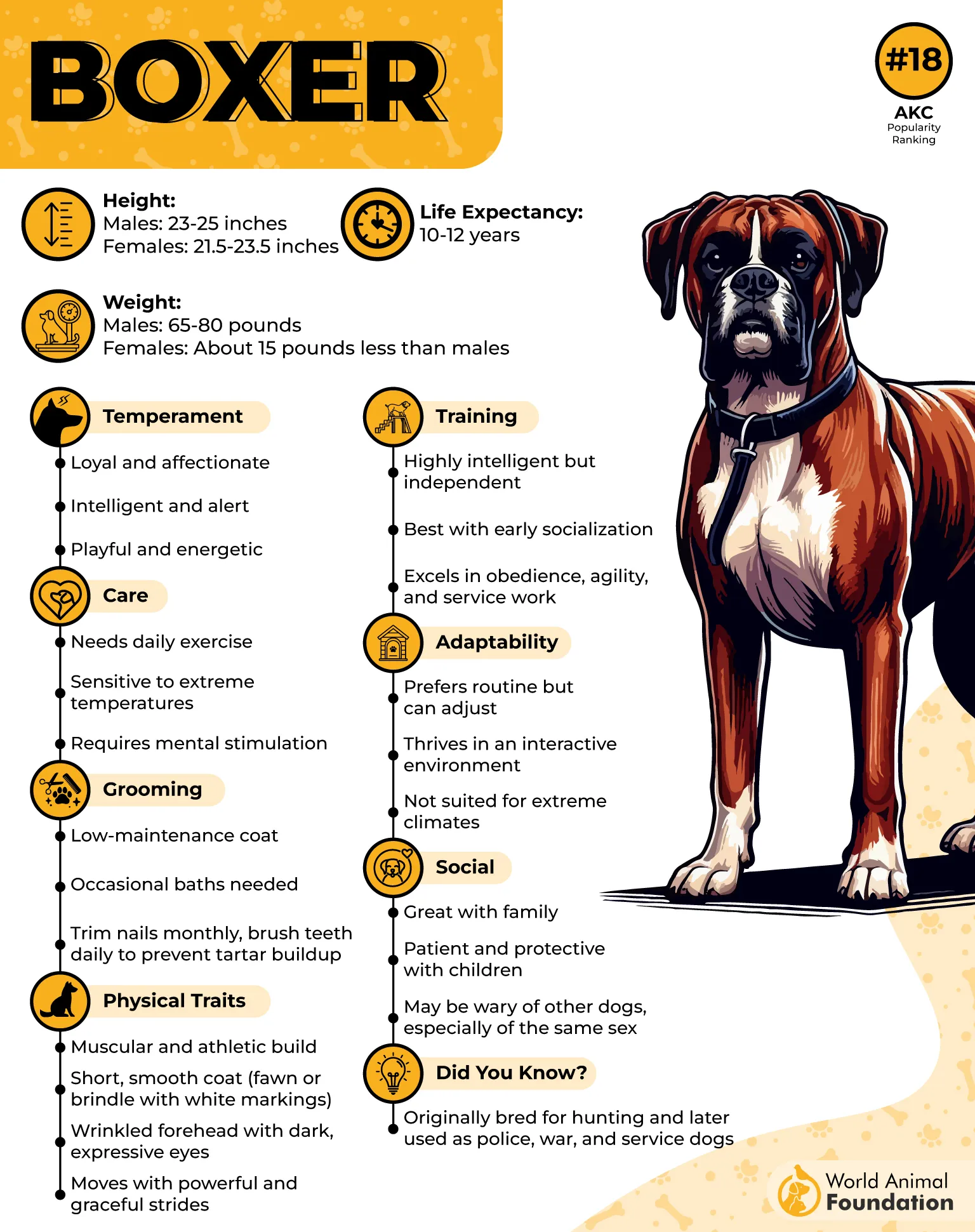
Boxers are highly affectionate with their families and can be good with children when properly trained. They are protective and usually bark when they have a reason to alert their owners. They are also intelligent and learn quickly, although they can sometimes be stubborn.
Their playful and boisterous nature can be too much for very young children or older people. They also dislike being left alone for long periods and may become bored or destructive.
Care and Exercise
Boxers have smooth, short coats that need very little grooming. Their bigger commitment is exercise. They need around 30 minutes to two hours of activity each day, along with mental stimulation.
Running, play, agility, rally, and lure coursing can help keep them engaged. They are best suited to active singles who have enough time to keep up with their energetic nature.
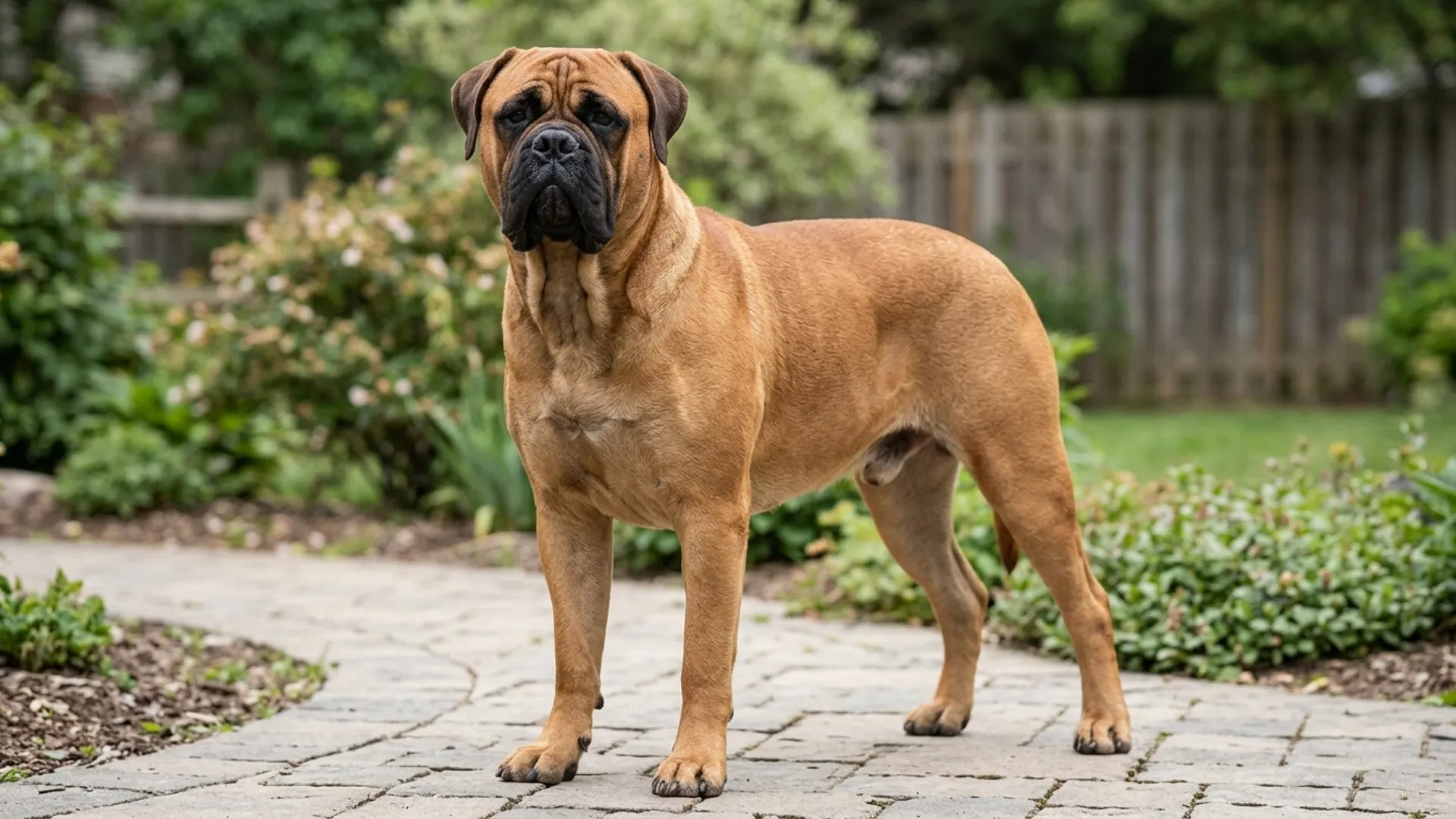
8. Bullmastiff
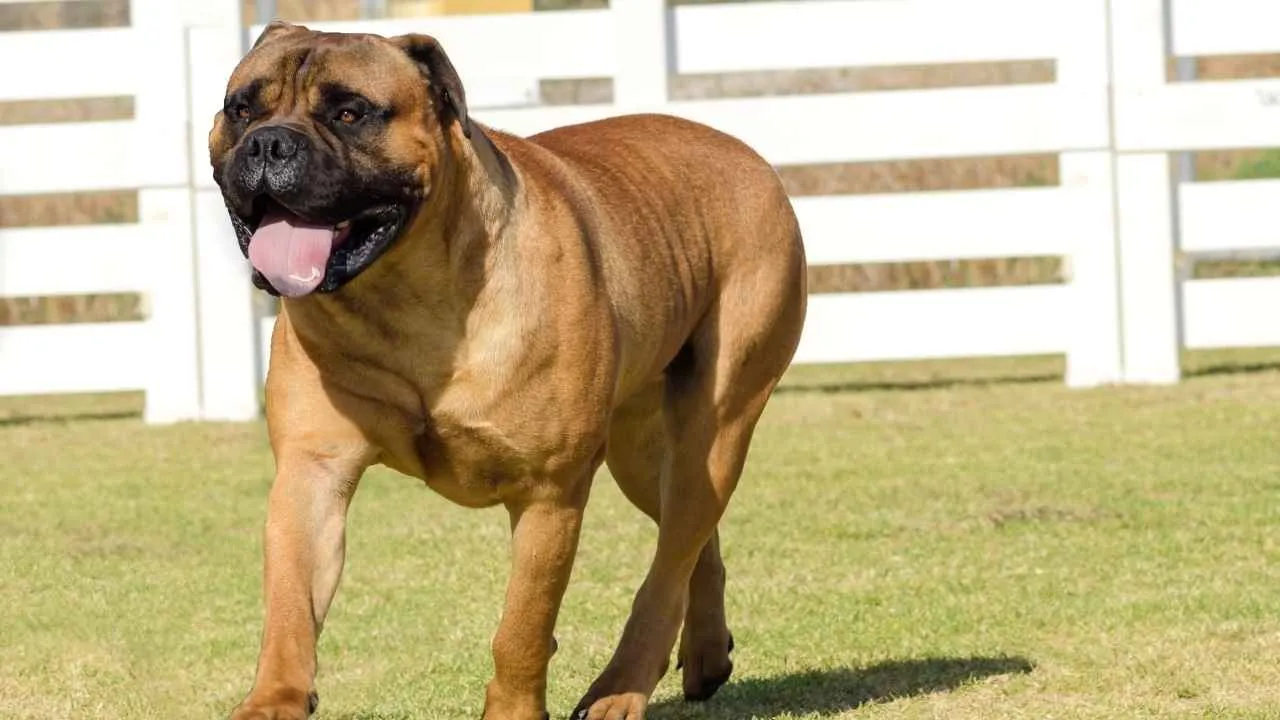
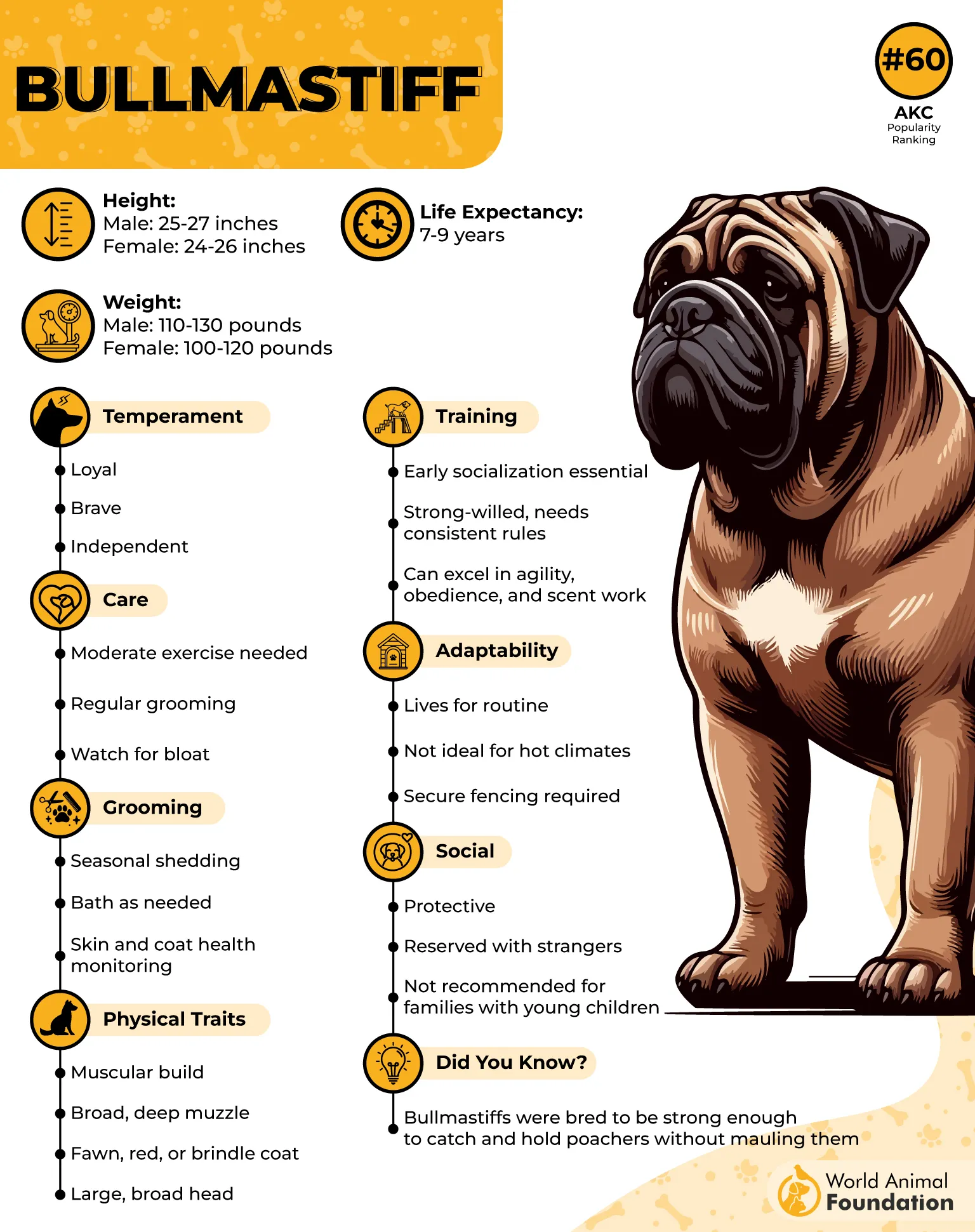
Bullmastiffs were developed in England in the mid-1800s by gamekeepers who needed a strong dog to guard estates against poachers. Royal Canin says they were created by crossing Bulldogs with Mastiffs.
This history gave them their powerful build, courage, and natural guarding instincts. Despite their imposing appearance, Bullmastiffs are loyal, affectionate, and devoted to their families.
Temperament and Guarding
Bullmastiffs are generally docile and loving with the people they know, but they can be suspicious of strangers. They may only accept unfamiliar people after being introduced by someone they trust.
Their protective nature makes early socialization and ongoing training important. They are intelligent and usually learn commands quickly, but they can also be strong-willed and stubborn.
Care and Exercise
Bullmastiffs have short, dense coats that are relatively easy to maintain. They need daily exercise, such as long walks and play in a secure yard, but they are not suited to long-distance running.
Keeping them at a healthy weight is important because excess weight can put more strain on their joints. As a brachycephalic breed, they can also be prone to respiratory problems.
9. Staffordshire Bull Terrier
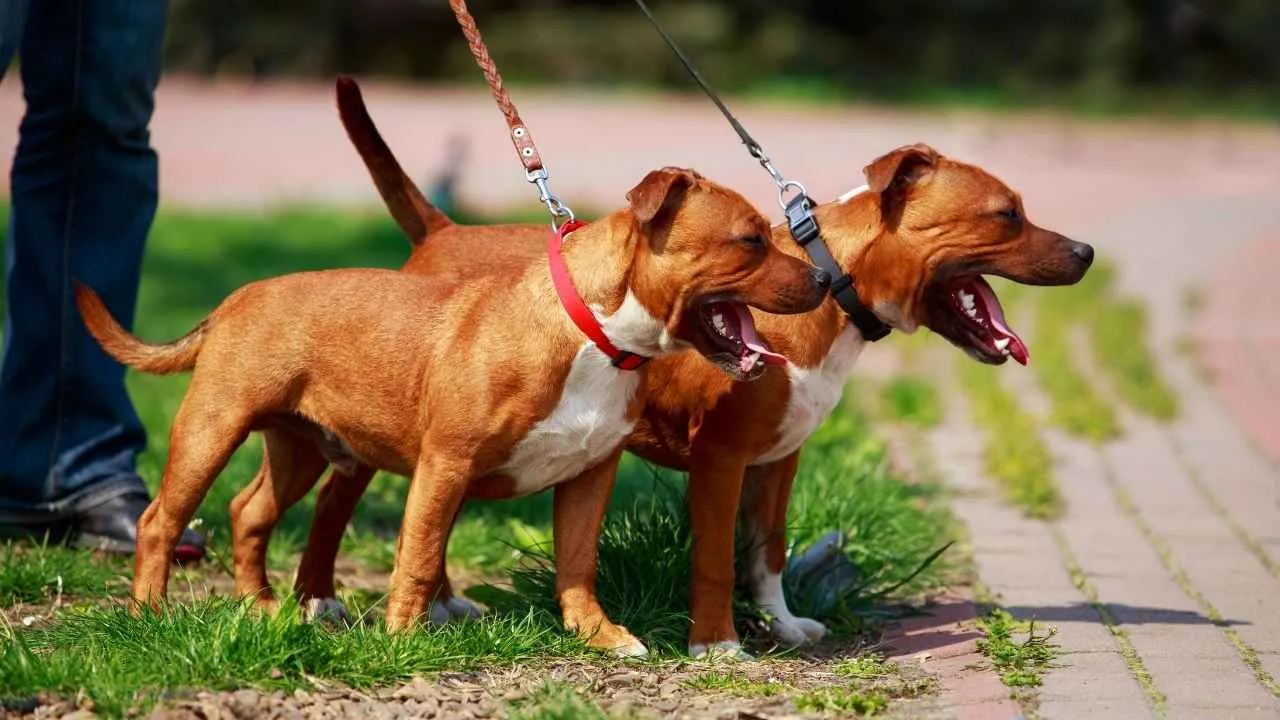
Staffordshire Bull Terriers, often called Staffies, are affectionate and loyal dogs with roots in England. The breed is believed to descend from 19th-century Bull Terriers, which were developed from Old Bulldogs and British Terriers.
Despite their muscular appearance, Staffies are known for their love of people and are sometimes nicknamed the “nanny dog.”
Temperament and Guarding
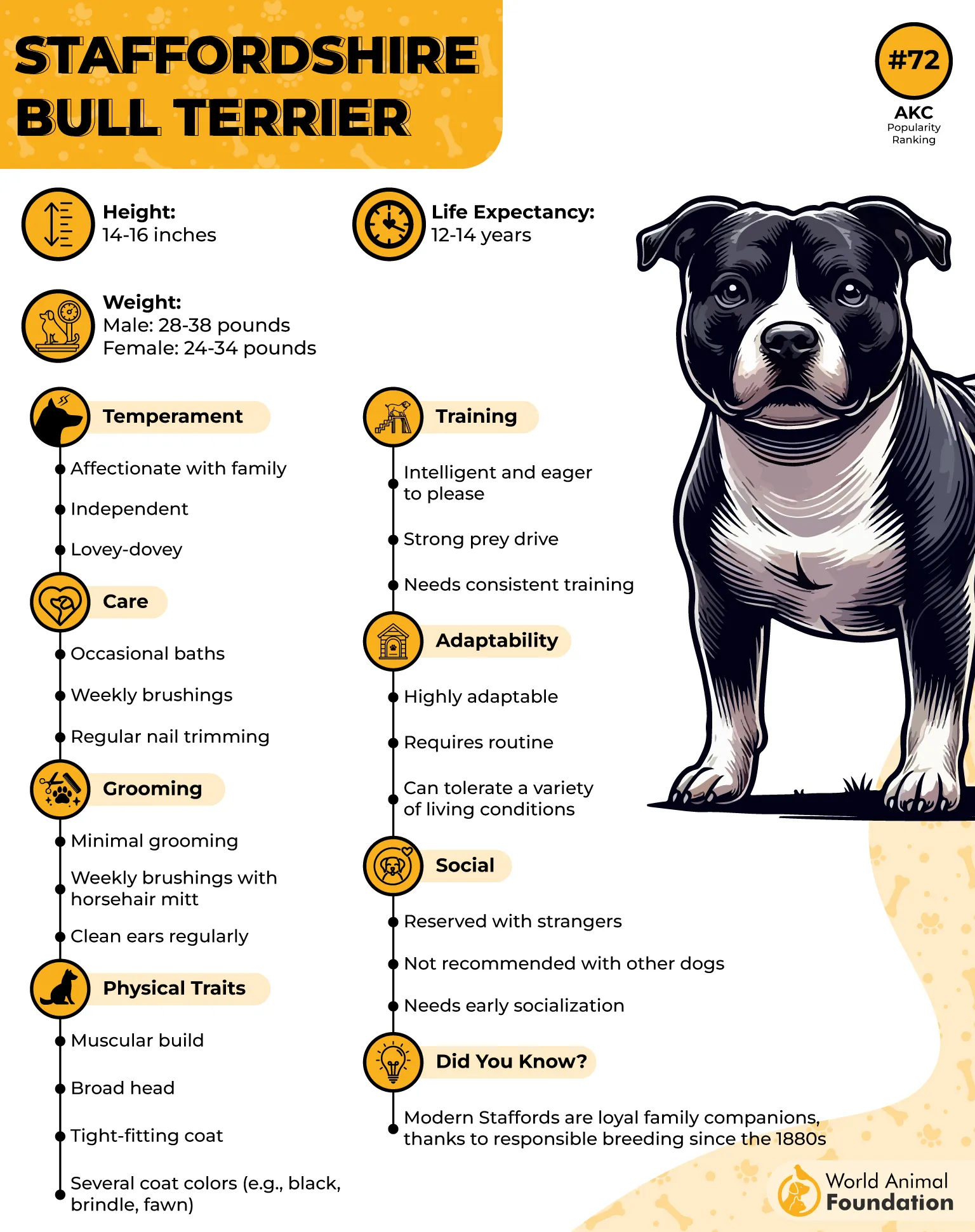
Well-socialized Staffies are generally good-natured and friendly with people, although they can be boisterous and play quite roughly.
Their behavior around other dogs and animals can vary. Some live peacefully with other pets, while others may be less tolerant. Early and ongoing socialization is therefore important.
Care and Exercise
Staffies are active, agile, and curious, so they need regular exercise and play. Long leash-led walks and games such as tug-of-war can help keep them occupied.
Their short, glossy coat sheds dirt easily and dries quickly, making grooming simple. They are strong for their size, so their energetic play may be too much for some young children, older adults, or other pets.
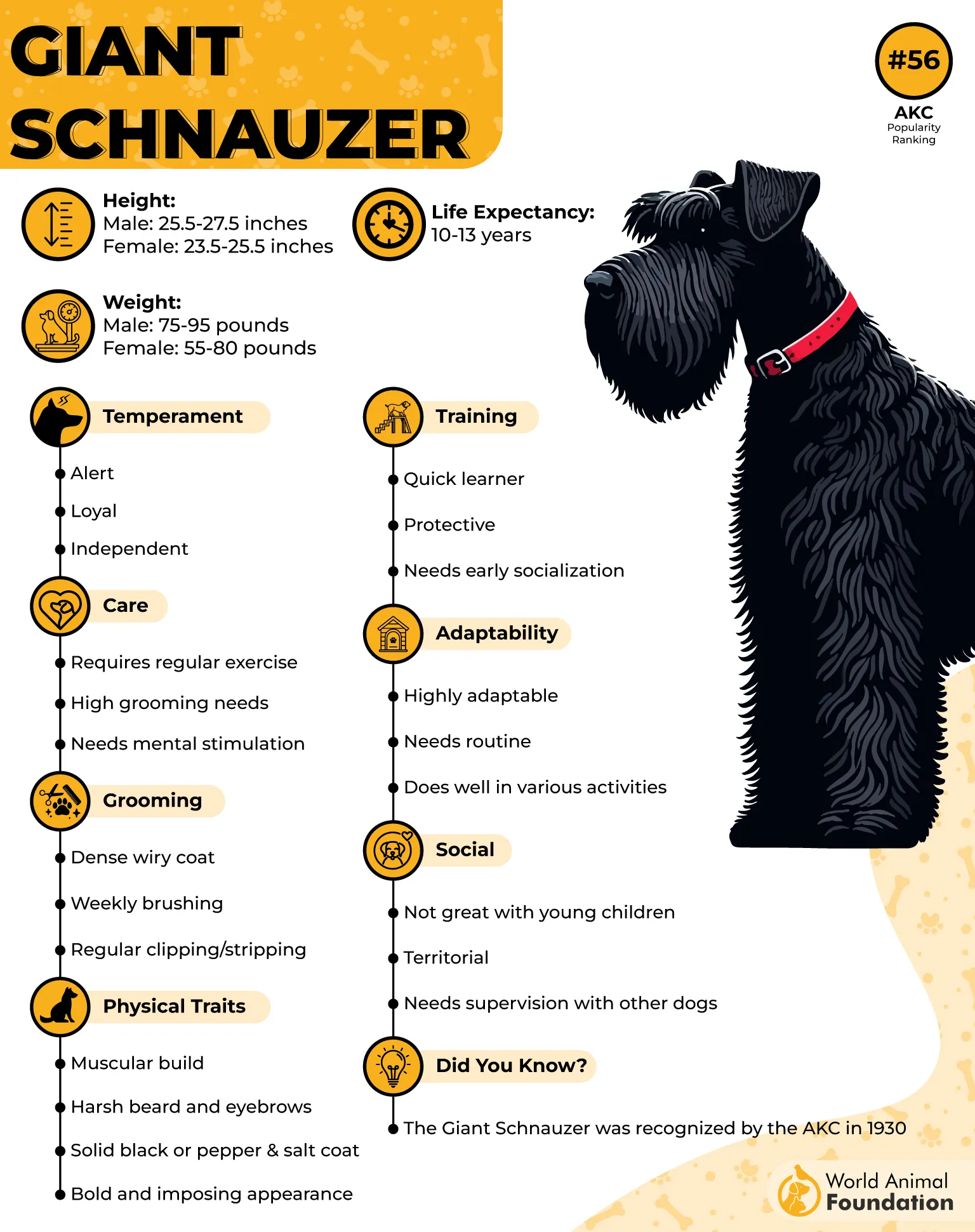
10. Giant Schnauzer
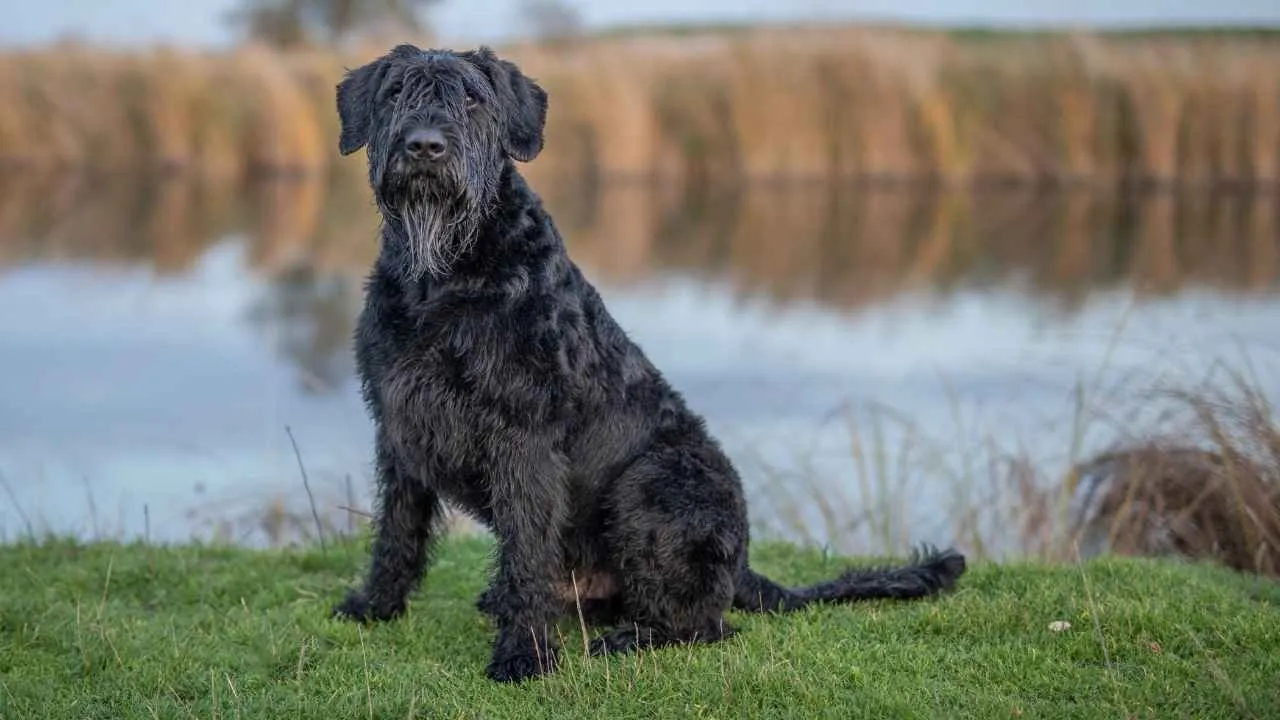
Giant Schnauzers are confident working dogs from Germany. They were originally bred to drive livestock and later served as police and military dogs.
Their name, Riesenschnauzer, means “the giant” in German. Despite the name, they are the largest of the three Schnauzer breeds. They are intelligent, loyal, and deeply attached to their families.
Temperament and Guarding
Giant Schnauzers take their protective role seriously. They are naturally cautious with strangers and watchful of their homes.
They are not inherently aggressive, but their territorial instincts need to be managed from an early age. Introducing puppies to plenty of different people can help them understand that visitors are welcome.
Care and Exercise
These energetic dogs need plenty of daily exercise and mental stimulation. They enjoy having a job to do and can thrive on activities such as fetching, training, and other tasks.
Their coarse coat sheds lightly but needs weekly brushing, along with clipping or stripping several times a year. At home, they can be playful and affectionate with their families while remaining quiet and alert when something seems unusual.
Conclusion
Choosing a low-maintenance dog breed means finding a balance between protection, companionship, exercise, and everyday care. The breeds mentioned above each bring different strengths, from natural guarding instincts to loyal and affectionate personalities.
Before bringing one home, consider how much time you can give to exercise, training, socialization, and companionship. A protection dog still needs attention and structure, even when its grooming needs are simple.
The right guard dog can give you a loyal companion and a reassuring presence without making your busy routine feel overwhelming.
