




If you want a guard dog but dread adding another demanding routine to your week, breed choice matters more than you might think. Protective dogs can vary widely in exercise needs, grooming demands, trainability, vocal behavior, and independence.
Those differences can determine whether your new companion fits smoothly into your household or constantly pushes your schedule around. A low-maintenance guard dog still needs proper care, including daily activity, socialization, training, veterinary visits, and meaningful interaction.
What makes one easier to manage is the overall level of effort required to meet those needs. Some dogs can remain satisfied with moderate activity and straightforward grooming while still staying alert to unfamiliar sounds or people. Others require much more structure and engagement.
Read on for low-maintenance guard dog breeds that combine protective qualities with routines that busy households can realistically manage over the long term.
Key Takeaways
Protection at home can come with a manageable routine when you choose a breed whose natural instincts already do much of the work.
Great Pyrenees stands out for its remarkable history of facing wolves and bears while guarding flocks with very little human direction.
Mastiffs bring a deep warning bark and moderate daily exercise, while Newfoundlands can become fiercely protective despite their famously gentle nature.
The real question comes with the more independent breeds such as Kuvasz and Boerboel, where the right training and home setup can make all the difference.
Low-Maintenance Guard Dog Breeds for Stress-Free Homes
1. Great Pyrenees
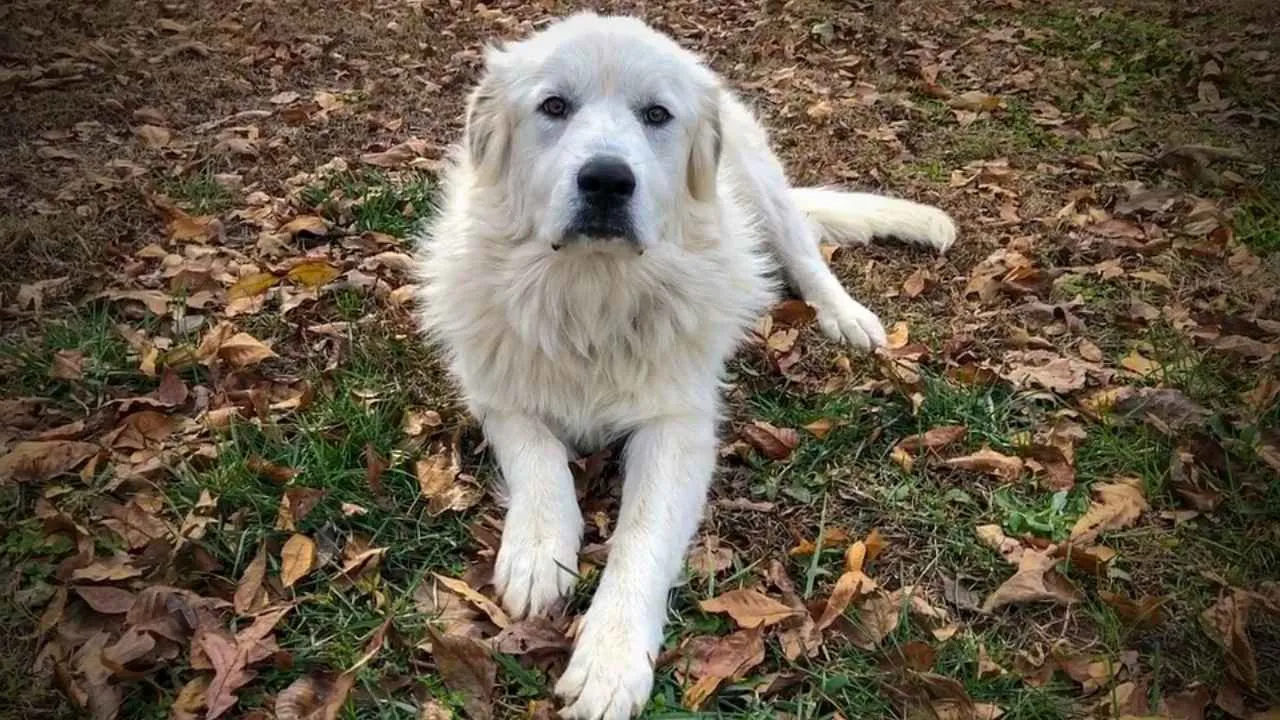
Great Pyrenees originated in the Pyrenees between France and Spain, where the Basque people relied on them to protect flocks from bears and wolves.
For more than a thousand years, selective breeding favored dogs that could handle predators independently across demanding mountain landscapes.
Quiet Protection
These protection dogs guard livestock at night, often working far from the shepherd and responding to danger without constant direction. That same nocturnal instinct can make the breed useful around a home, where nighttime barking may alert a sleeping household to unfamiliar activity.
The following characteristics add context to that protective role:
Kind and patient with vulnerable animals
Deeply protective of their family’s children
May misread roughhousing as aggression
Home Management
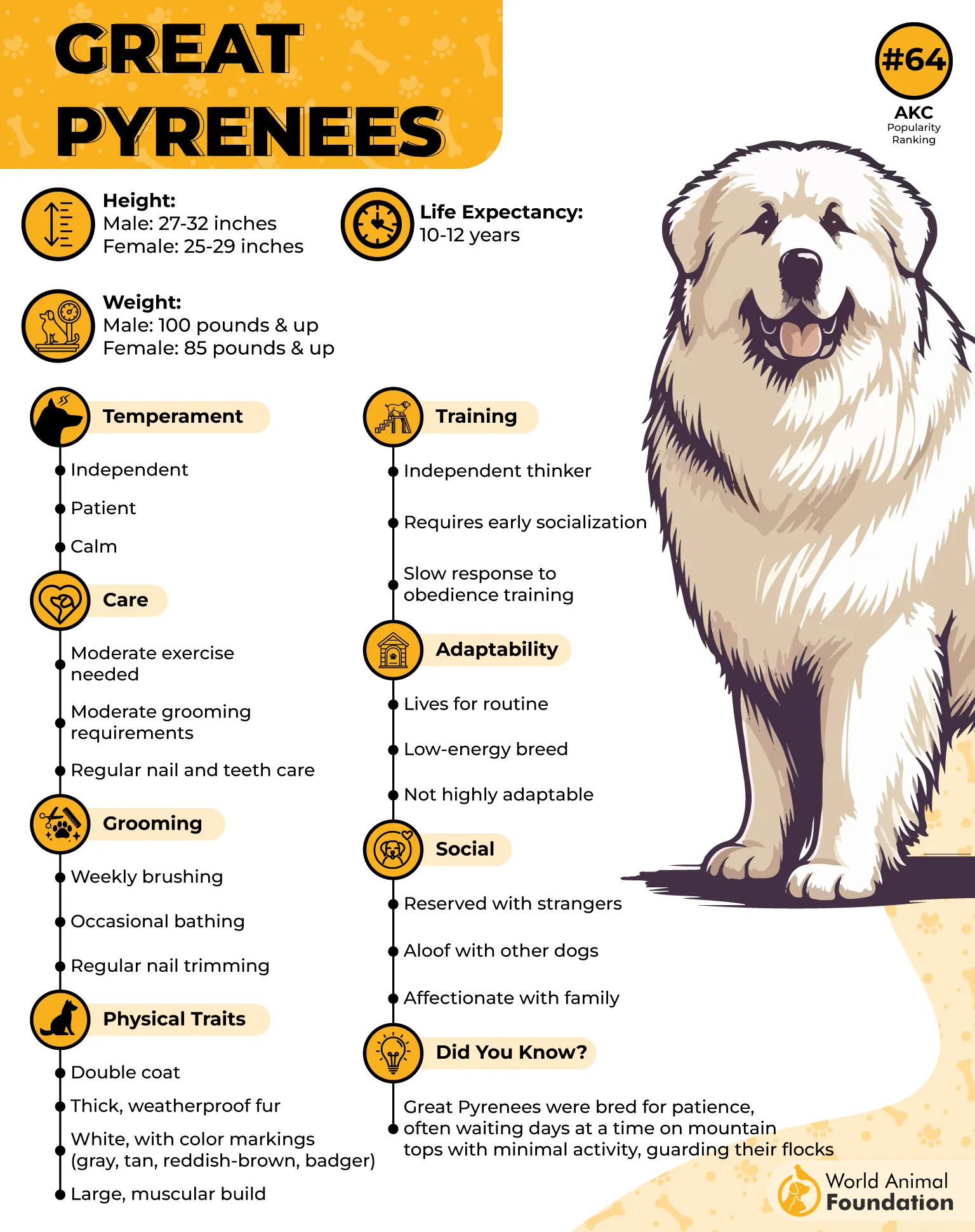
Great Pyrenees have a long outer coat that resists dirt and tangling, so their abundant fur does not require intensive grooming routines, as Showsight Magazine reports.
Moreover, they like to conserve their energy for the right time and generally need only moderate exercise, such as a good walk, while obedience work can provide useful mental engagement.
2. Newfoundland
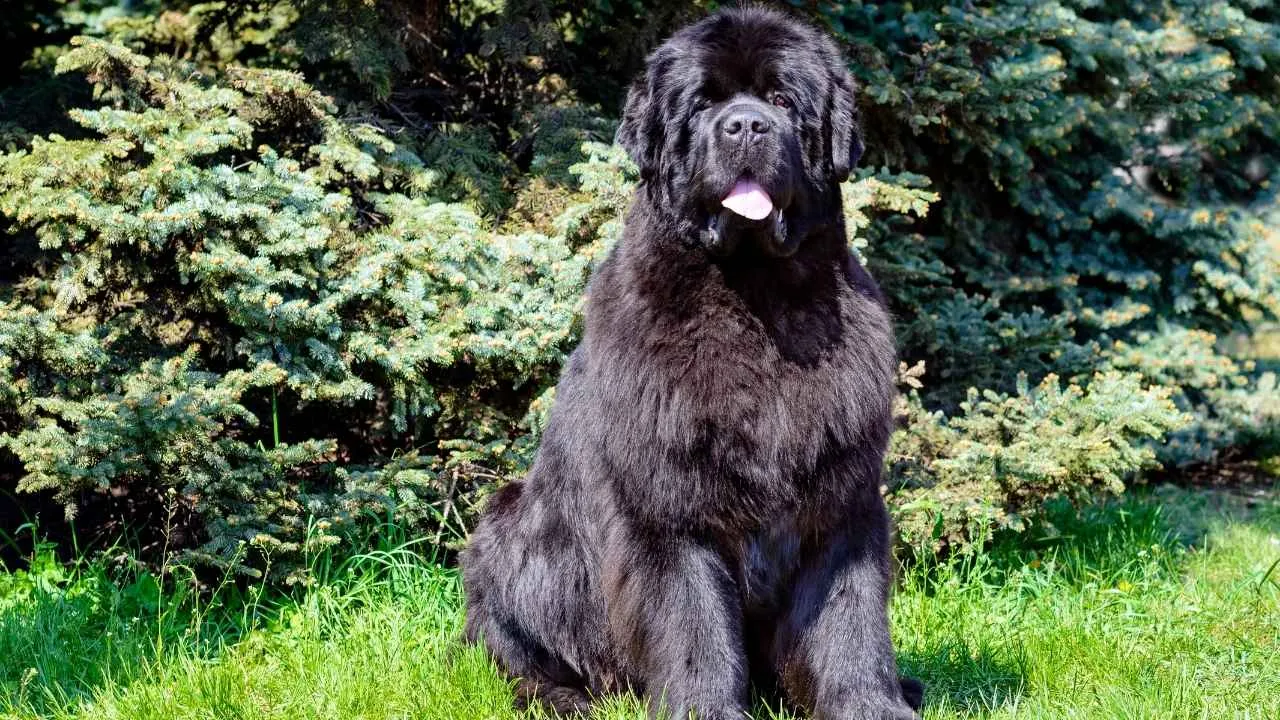
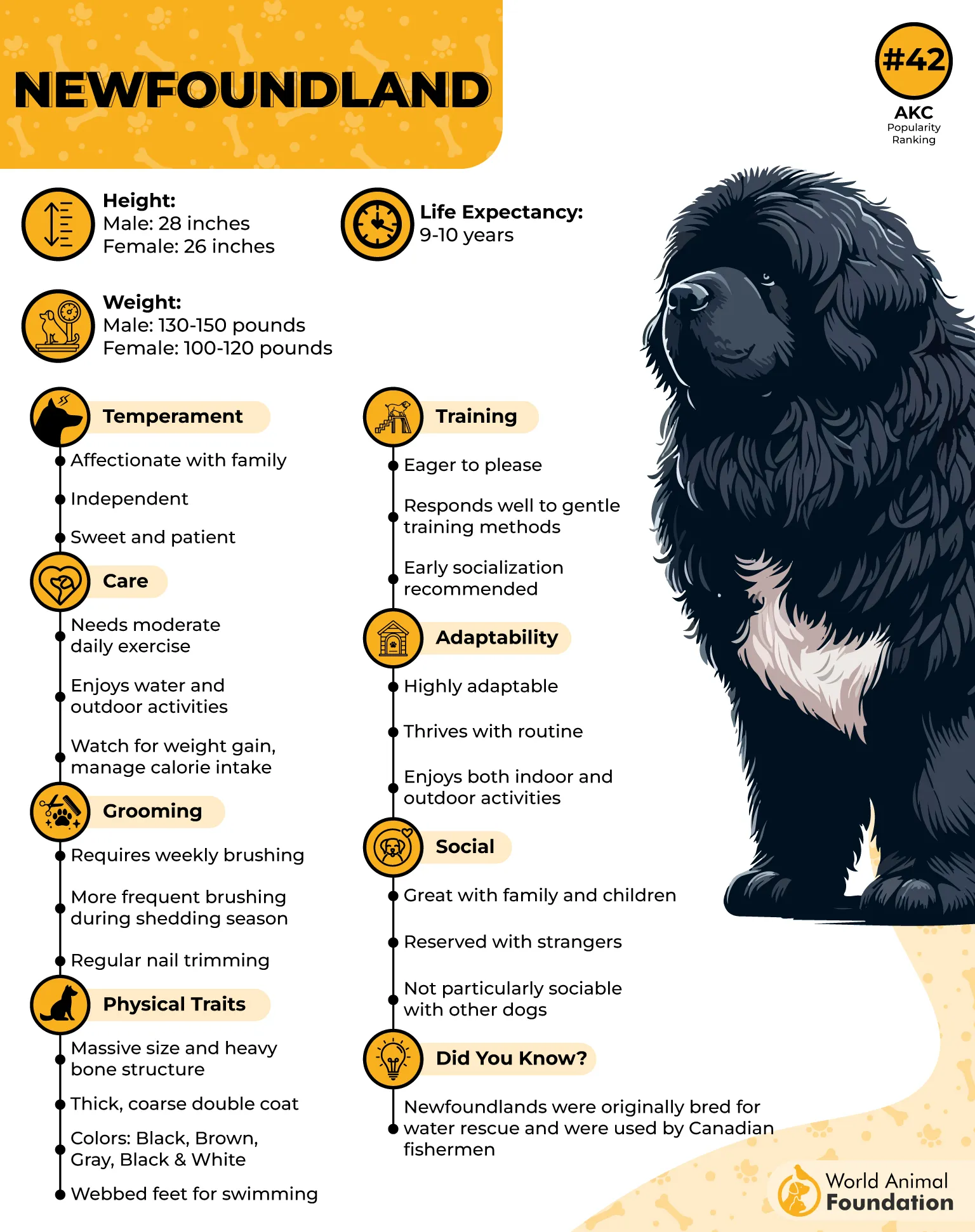
Newfoundland developed along Canada’s cold Atlantic coast, where it worked beside people on demanding jobs involving lumber, food, heavy loads, and shipping lines.
Its working life also included pulling lines through icy water from ships toward shore, giving the breed a close connection with both land and sea.
A Serious Home Guardian
Though not a traditional guard dog breed, the Newfies can become highly protective when their family faces danger, often placing their large body between loved ones and a perceived threat. They don’t usually bark, but they like to alert with their deep bark when something seems wrong.
Three details are especially useful for a quieter household:
Patient and gentle with children
Attacking is not typical of Newfies
Many Newfie owners believe these dogs have a sixth sense
Simple Activity Needs
Newfoundlands do not require intense daily workouts, with roughly 30 minutes of activity often sufficient through a leisurely hike, walk, or swim. Its thick coat handles cold temperatures well, while warm weather calls for cooler walking hours, shade, and plenty of fresh water, as WebMD suggested.
3. Saint Bernard
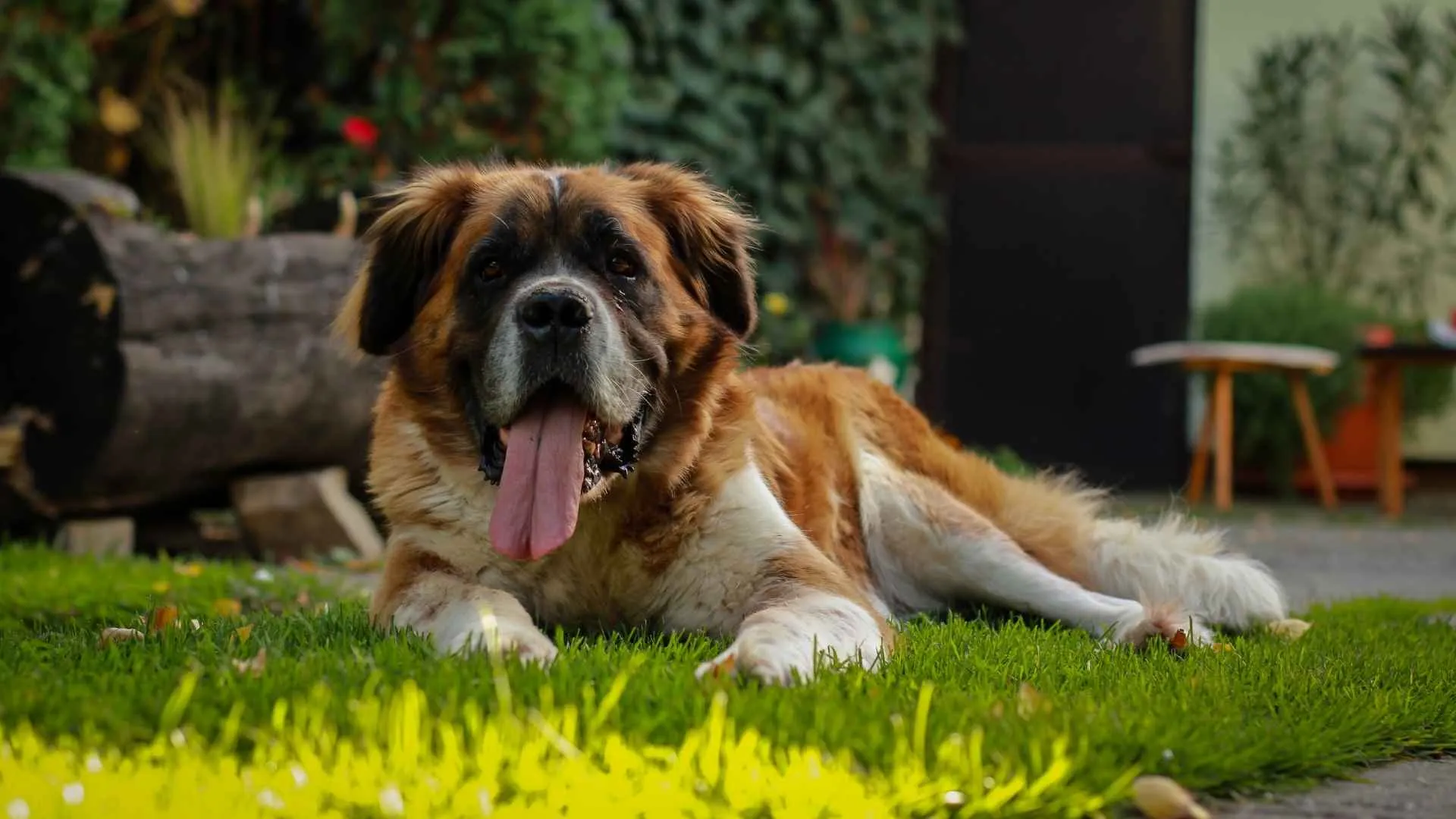
Saint Bernard began working around the Great St Bernard Hospice in the Pennine Alps between Switzerland and Italy during the late 1600s.
Originally used to pull carts and guard the remote site, these big dogs later became known for finding snowbound travelers and keeping them warm beside them.
A Natural Home Guardian
This protective dog brings a deep bark and a naturally watchful attitude to the household, with some placing themselves between family members and unfamiliar people. Their people-focused nature can also make them sensitive to being excluded from family activities.
A few specific qualities add another layer:
Learns basic cues in about 15 minutes daily
Understands one- and two-syllable commands quickly
Uses deliberate, energy-saving movement
Surprisingly Simple Grooming
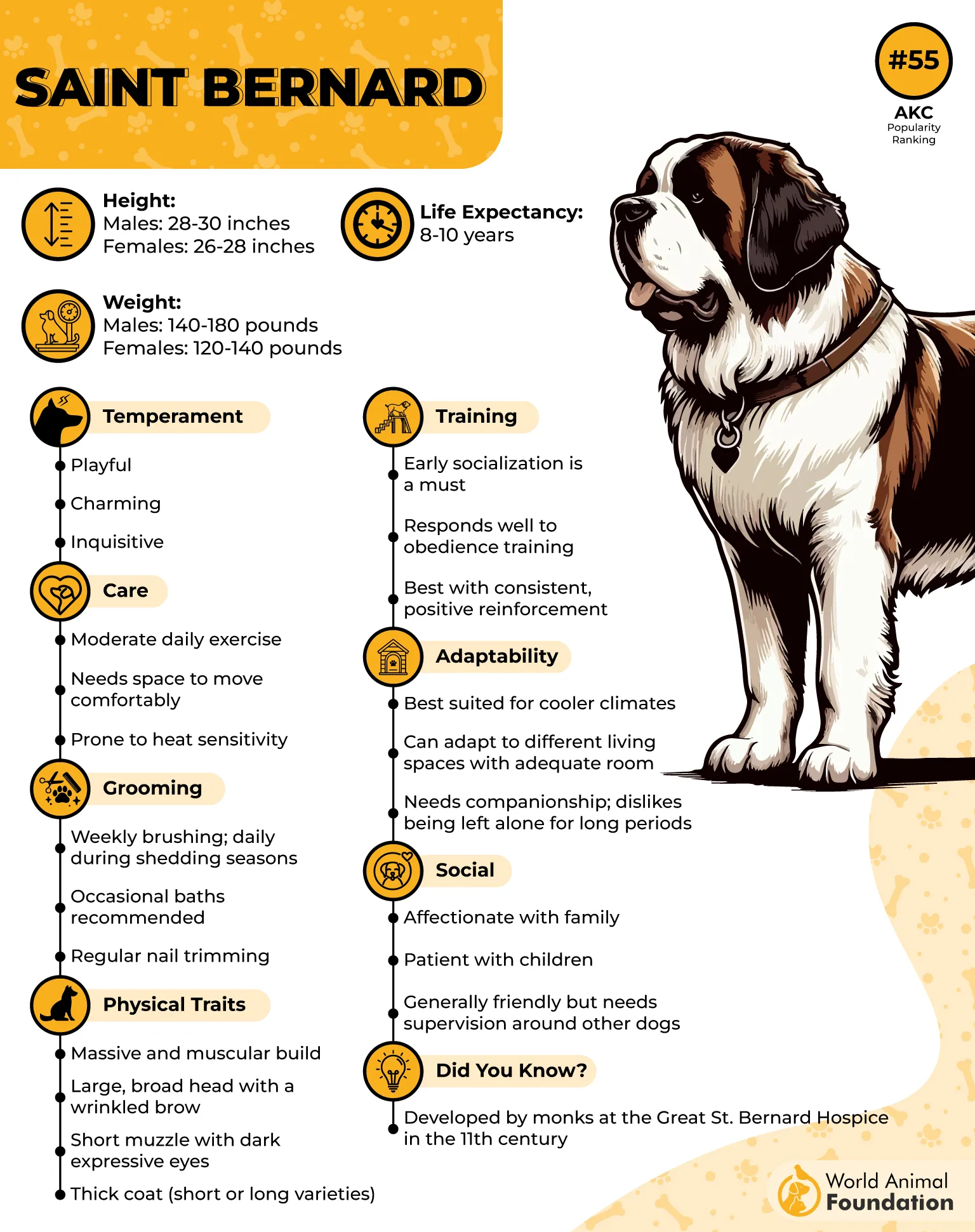
Saint Bernard comes in long-haired and short-haired varieties, and both have dense double coats that need brushing several times weekly. Shedding periods call for daily brushing, while occasional bathing helps prevent disruption of the skin’s natural balance.
4. Kuvasz
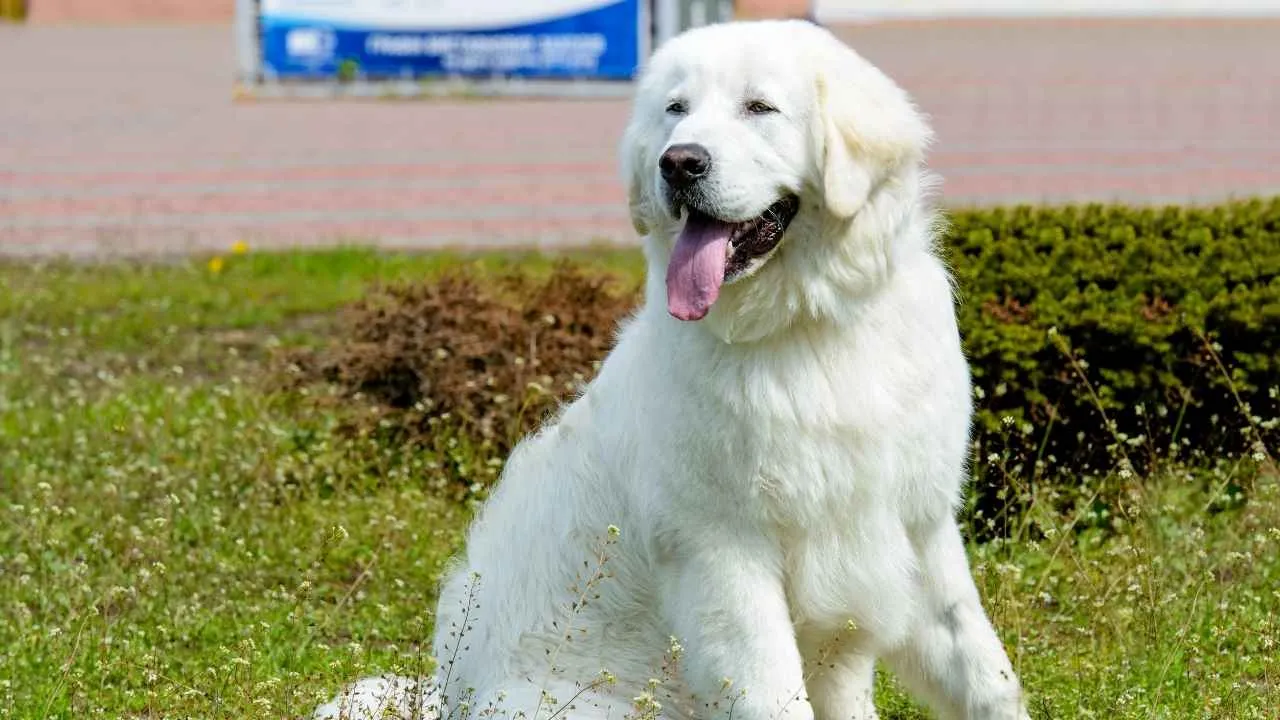
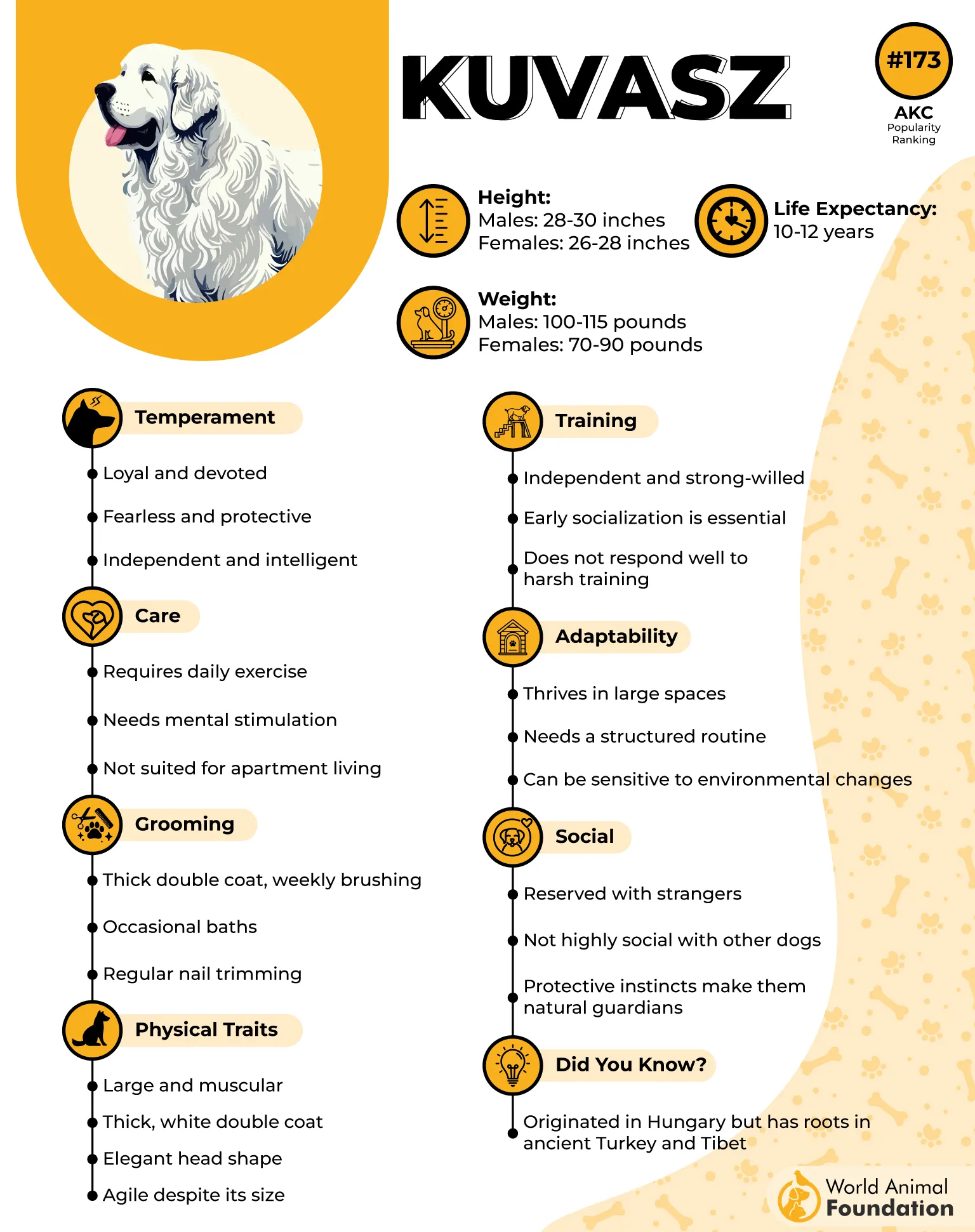
Kuvasz has roots linked to the Magyar tribes that entered the Carpathian Basin during the late ninth century, accompanied by powerful pale-coated dogs. Some theories place its deeper ancestry in Mesopotamia or Central Asia as far back as 5,000 to 7,000 years ago.
A Watchful Household Presence
These protective dog breeds were valued for guarding sheep, cattle, and homes, with their white coat helping shepherds distinguish them from wolves. The name comes from the Turkish word kavas, meaning guardian, and Hungarian kings once gave these dogs as gifts of honor to nobles.
The following characteristics add useful context to its role:
Forms a strong bond with one person
Prefers occasional physical affection
Makes decisions independently
Space Matters
Kuvasz does best with daily movement and enough fenced space to patrol, which can make apartment life difficult for such a large breed. According to Hill’s Pet, despite its thick double coat, grooming stays fairly simple with routine brushing and occasional baths, apart from heavier seasonal shedding.
5. Mastiff
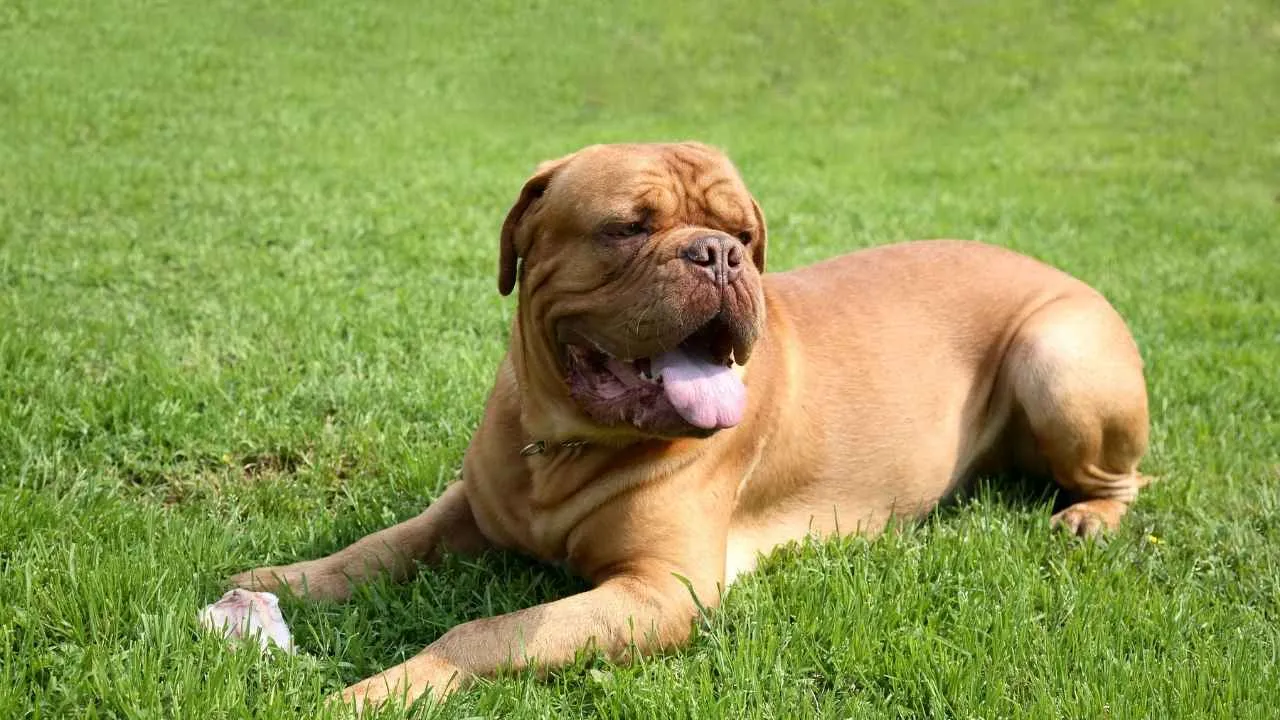
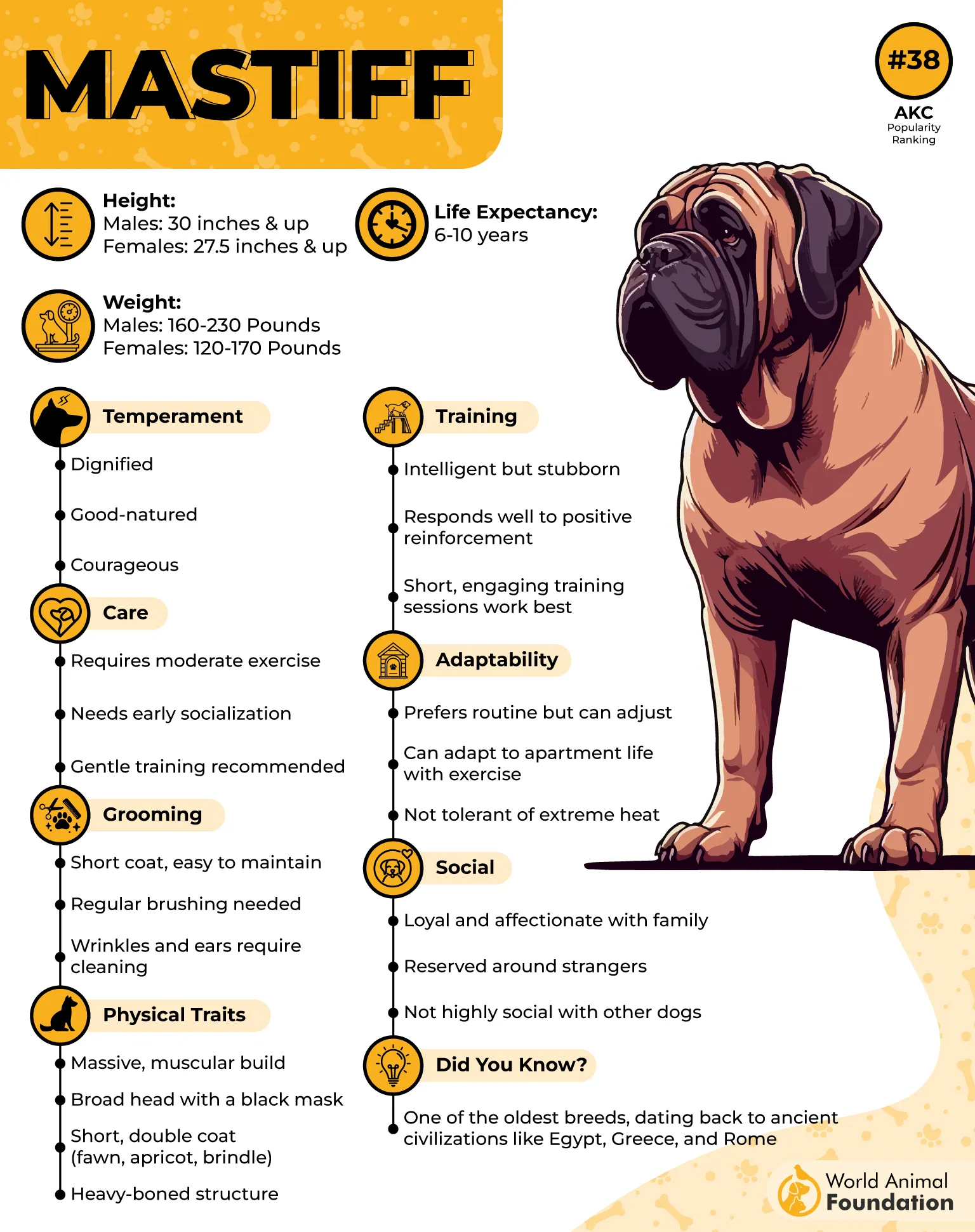
Mastiffs have a long record of serving as guard, war, and hunting dogs, with their imposing size making them powerful companions for demanding jobs. Its name may trace back to the Anglo-Saxon word “masty,” meaning “powerful,” though the exact origin remains uncertain.
Quiet Watchfulness
This good guard dog brings a useful kind of alertness to the household, usually barking when strangers or unfamiliar activity catch its attention. That warning comes with a deep, commanding bark that can be heard throughout the home without constant noise.
The following practical details matter for daily care:
Weekly brushing for the short coat
Monthly bathing is generally enough
Daily half-hour walks are recommended
Training Matters
Mastiffs are intelligent and eager to please, yet their immense strength makes early socialization and responsive training especially important. Introducing puppies to different people and surroundings can help them learn when protective behavior is appropriate.
6. Boerboel
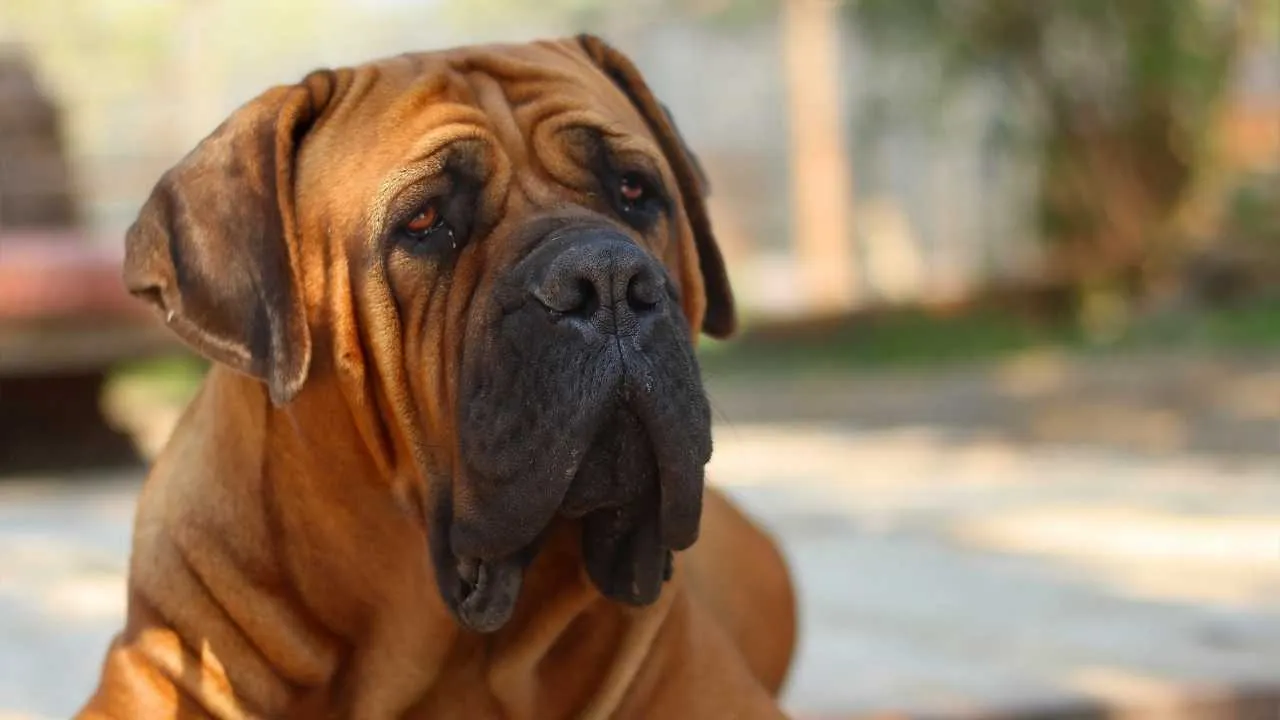
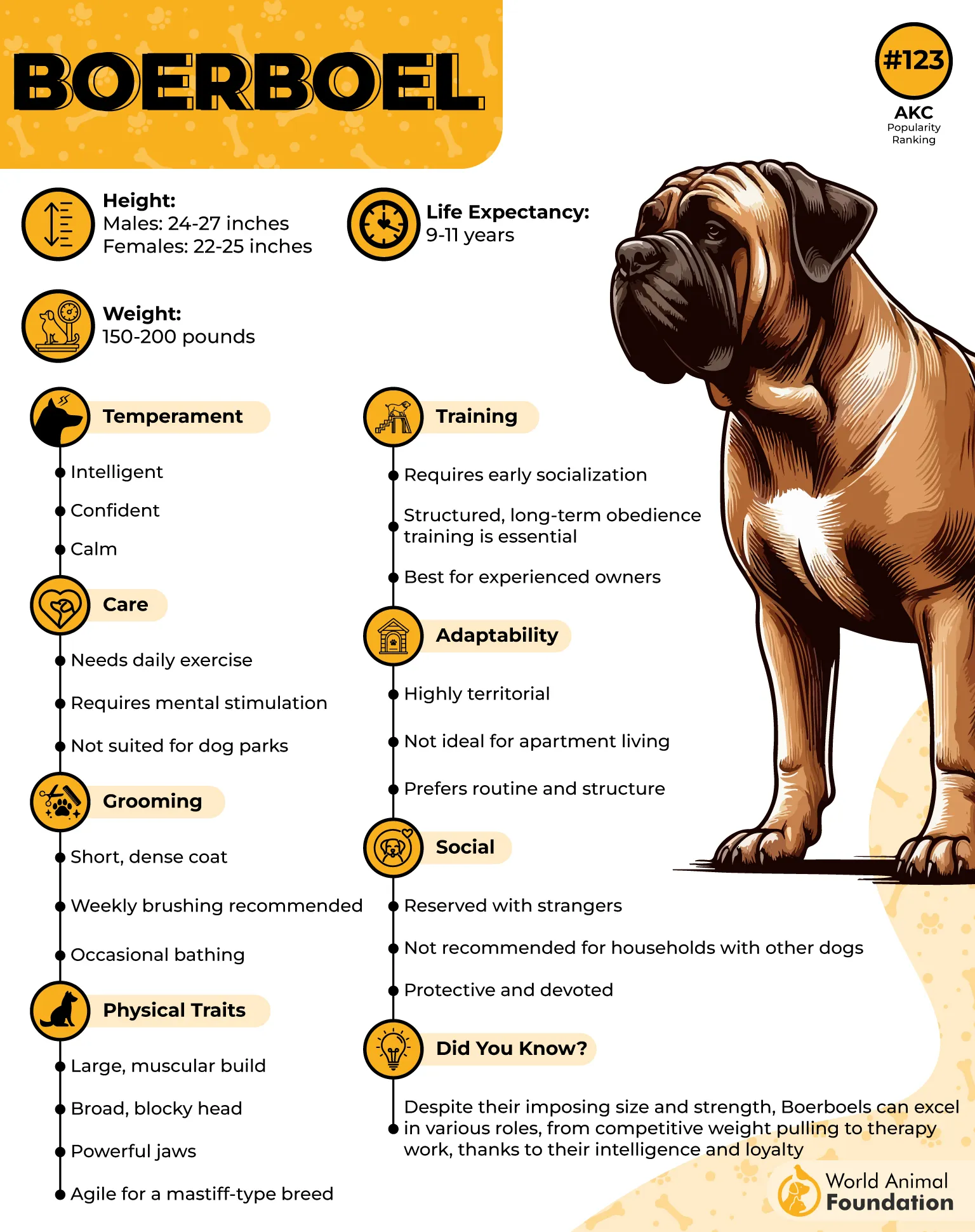
Boerboel was originally bred in South Africa during the 1650s, when Jan van Riebeeck’s family dog bred with indigenous domestic dogs in the region. The name comes from the Dutch word “boer,” meaning farmer, reflecting its close connection with the settlers who worked the land.
Serious Protection
As excellent guard dogs, they protect farms and people from dangerous wildlife, including lions, hyenas, and packs of baboons. Its imposing size can discourage an intruder before any confrontation begins, while a serious threat may bring the dog directly between its family and danger.
A few details explain how demanding this role can be:
Confident, experienced handling is essential
Early socialization requires continued attention
Other dogs can trigger aggressive responses
Easy Coat Care
Boerboel has a short, medium-shedding coat that generally needs brushing only once or twice a week. Frequent baths are rarely necessary and may dry the skin by stripping away its natural oils, so regular brushing remains the main part of its simple grooming routine.
7. Great Dane
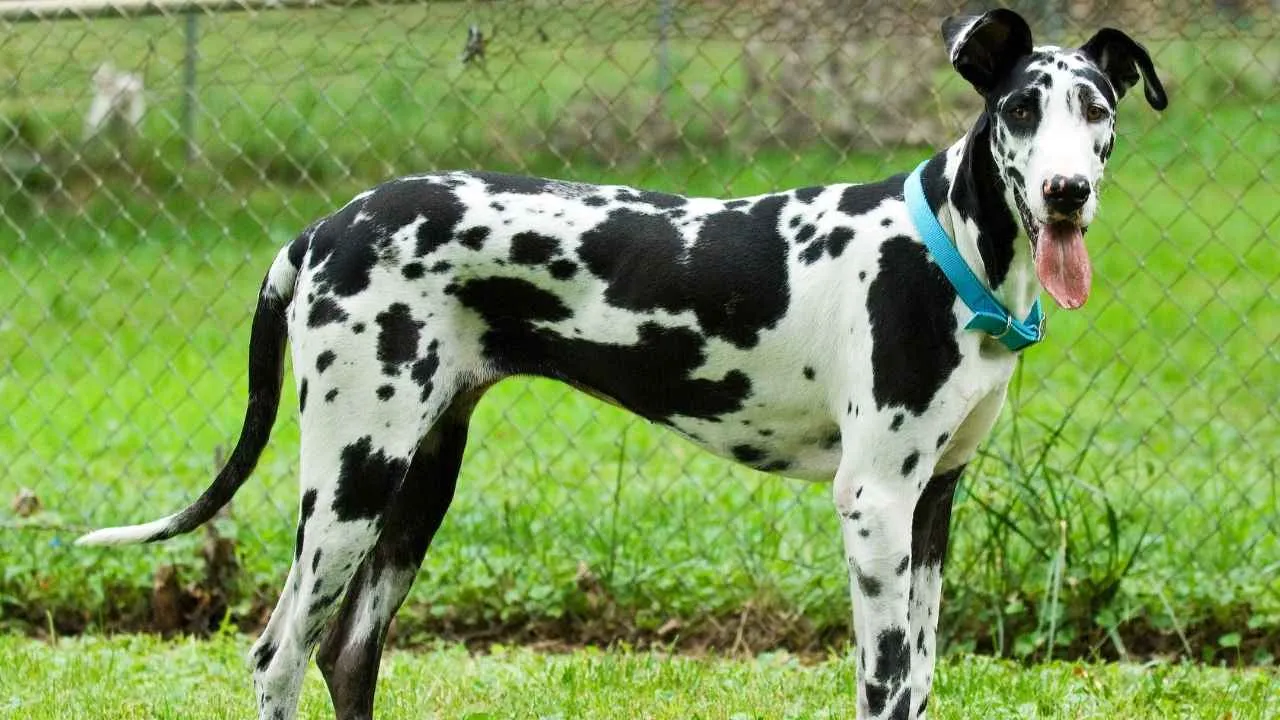
Great Dane has a much older story than its German association suggests, with evidence linking similar dogs to Tibet as far back as 3000 BC. Later accounts connect them with Assyrians, Greeks, and Romans, where breeding with mastiff and wolfhound-type dogs produced a leaner, faster form.
A Serious Presence
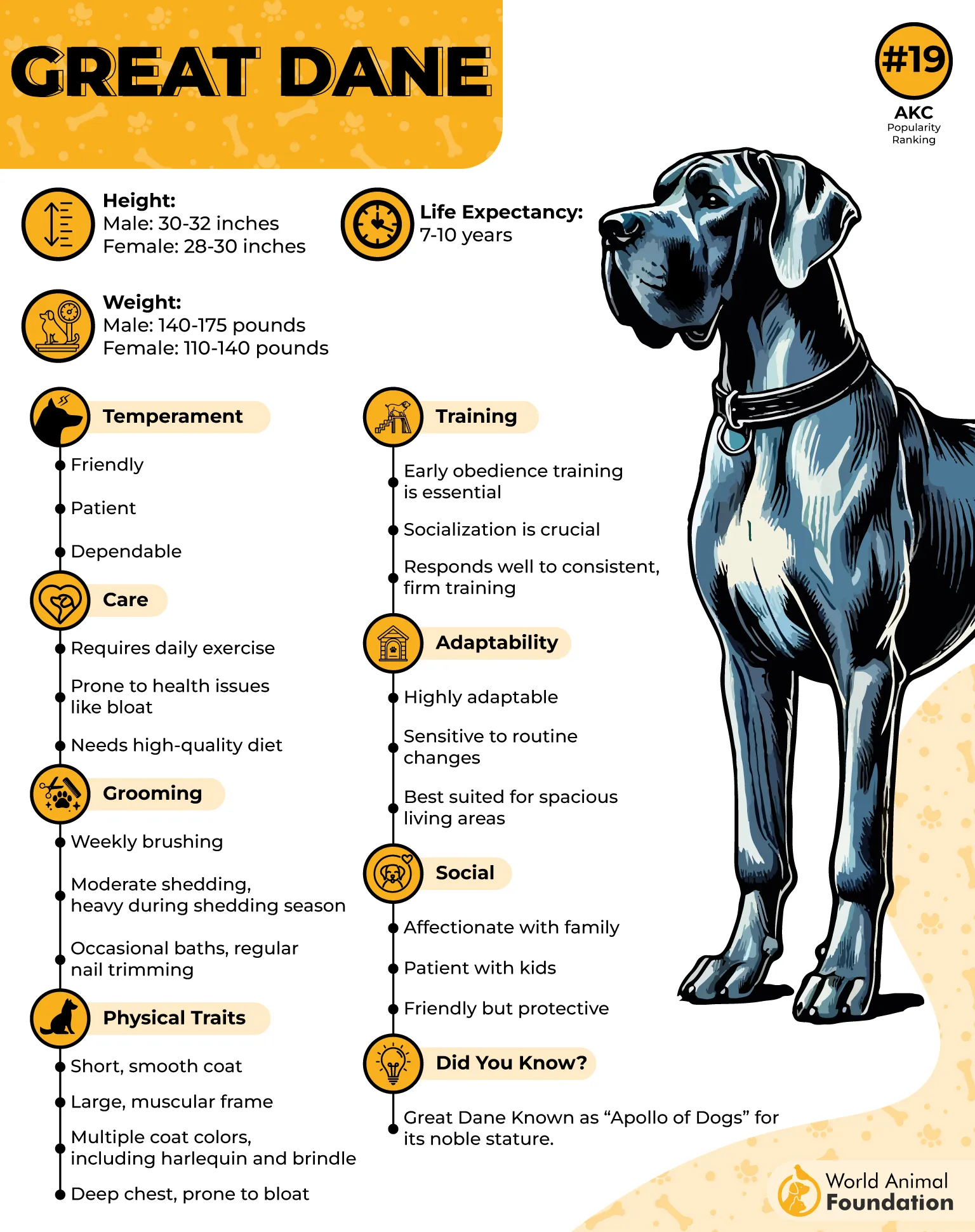
This big dog can make an immediate impression as one of the world’s largest dog breeds, and its deep, powerful bark can discourage an unfamiliar visitor before any confrontation occurs. For households seeking a visible deterrent, that sheer size can do much of the work.
A few details add useful context:
Historically used for boar hunting
Later served as estate guardians
They are not wired to attack
Manageable at Home
Great Dane can be surprisingly quiet indoors when their daily needs are met, with around 30 to 60 minutes of exercise recommended each day. Affection, play, and regular activity can help channel its energy without turning the home into a noisy space.
Conclusion
A good guard dog does not have to turn everyday life into a constant training project. The best guard dogs can provide a strong sense of security while fitting comfortably into a household routine. Exercise, grooming, socialization, and training still matter, but some low-maintenance dog breeds make those responsibilities easier to manage than others.
Size and protective instincts also deserve attention, especially when choosing among larger dogs for children, other pets, or limited space. The best choice is one whose natural temperament matches your home and experience level. With consistent care and clear boundaries, a protective companion can bring reassurance without making daily life unnecessarily complicated.
